Friday, August 20, 2021


Cargill building new canola processing facility at Regina’s Global Transportation Hub

Cargill says its new $350-milllion canola processing facility will be constructed on land at the Global Transportation Hub west of Regina. File / Global News

Cargill says the location of its new canola processing facility in Saskatchewan will provide easy delivery access for producers and customers.

The company announced Monday the $350-milllion facility will be constructed on land at the Global Transportation Hub (GTH), west of Regina.

READ MORE: Cargill planning to build $350M canola processing plant in Regina

Jeff Vassart, president of Cargill Canada, said the location offers excellent access to existing highway and rail infrastructure.

“The location of Cargill’s new facility will give canola farmers easy access for their deliveries and in turn, allow Cargill to efficiently deliver grain, oil and meal to end-use customers,” Vassart said in a release.

“We see strong potential in the growth and competitiveness of the canola processing industry and look forward to helping farmers access the increasing market demand.”

Cargill said construction on the facility will start once all approvals are received.

It is forecast to have an annual capacity of one million metric tonnes once operational in early 2024.

READ MORE: Ceres Global Ag unveils plan for canola crushing facility in Northgate, Sask.

Jim Reiter, the minister responsible for the GTH, said the facility supports the Saskatchewan government’s growth plan.

“Cargill’s new plant represents a significant investment in the local and provincial economy, and supports our government’s Growth Plan goal to crush 75% of the canola grown in our province right here in Saskatchewan,” Reiter said in a statement.

“The Global Transportation Hub is well suited to serve the needs of this world-class project, providing the infrastructure necessary to receive, process and export products to markets throughout the world.”

Once complete, the facility will add about 50 full-time positions, according to the company.

Cargill currently operates two canola crush facilities — one in Camrose, Alta., and the other in Clavet, Sask.


Levitation: Classic Magic Trick May Enable Quantum Computing

Abstract Particle Physics Technology

A new project will use the electric field in an accelerator cavity to try to levitate a tiny metallic particle, allowing it to store quantum information.

Quantum computing could solve problems that are difficult for traditional computer systems. It may seem like magic. One step toward achieving quantum computing even resembles a magician’s trick: levitation. A new project at the U.S. Department of Energy’s Thomas Jefferson National Accelerator Facility will attempt this trick by levitating a microscopic particle in a superconducting radiofrequency (SRF) cavity to observe quantum phenomena.

Typically at Jefferson Lab and other particle accelerator facilities, SRF cavities enable studies of the atom’s nucleus. They do this by accelerating subatomic particles, such as electrons. This project will use the same type of cavity to instead levitate a microscopic particle of metal, between 1 and 100 micrometers in diameter, with the cavity’s electric field.

“No one has ever intentionally suspended a particle in an electric field in a vacuum using SRF cavities,” said Drew Weisenberger, a principal investigator on this project, as well as Chief Technology Officer and head of the Radiation Detector and Imaging Group in the Experimental Nuclear Physics Division at Jefferson Lab.
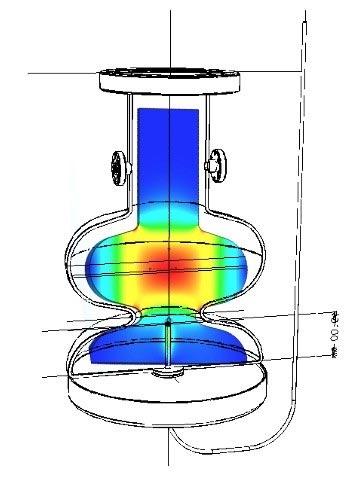
Accelerator Cavity Line Drawing


This is a line drawing of an accelerator cavity that will be used in a proof of principle project that aims to levitate a tiny metallic particle, allowing it to store quantum information. Credit: Jefferson Lab

If the project team is able to levitate a particle, they might be able to then impart a quantum state on it by cooling the trapped particle to its lowest possible energy level (because that’s when quantum properties occur).

“Storing quantum information on a levitated nanoparticle is our ultimate goal, but for now, it is a proof of principle experiment,” said Pashupati Dhakal, another principal investigator on the project and a staff scientist at Jefferson Lab in the Accelerator Operations, Research and Development Division. “We want to know if we can trap and levitate particles inside the cavity using the electric field.”

Exploring the Quantum with Accelerator Cavities

The idea for this project came from observations of accelerator experts. They think they have already unintentionally levitated unwanted and rare nanoparticles of metal, such as niobium and iron, inside SRF cavities during particle accelerator operations. They suspect that this unintentional levitation has impacted the performance of SRF cavity components.

Researchers are attempting to use a several-decades-old technique called “laser trapping”, as a step toward reliably imparting a quantum state on a particle suspended in a laser beam. But, the Jefferson Lab project team thinks that SRF cavities may provide a better tool for those researchers.

“An electric field could go potentially beyond the capabilities of laser trapping,” Weisenberger said.

Intrinsic characteristics of SRF cavities will overcome some limits of laser trapping. A levitated particle in an SRF cavity that is under vacuum and chilled to super cold temperatures will only interact with the cavity’s electric field and not lose information to the outside, which is important for maintaining a quantum state.

“Like storing information on a computer chip, the quantum state will stay and not dissipate,” Weisenberger said. “And that could eventually lead to applications in quantum computing and quantum communications.”

This project, titled “SRF Levitation and Trapping of Nanoparticles Experiment,” is funded by the Laboratory Directed Research & Development program, which provides resources for Jefferson Lab personnel to make rapid and significant contributions to critical science and technology problems relevant to the mission of Jefferson Lab and the DOE.

A Multidisciplinary Approach

The project was conceived and launched by Rongli Geng in October 2021 before he transitioned to Oak Ridge National Laboratory. It has now shifted to a larger and more multi-disciplinary team led by Weisenberger and Dhakal, the current co-principal investigators.

Weisenberger’s team researches detector technology for nuclear physics research, whereas Dhakal’s work focuses on developing SRF cavities to accelerate electrons at high speeds. Weisenberger says that the multidisciplinary approach will bring together their expertise as they branch out together into the less familiar territory of this LDRD project.

Both principal investigators remark that the project is moving forward well, thanks to the diligence and expertise supplied by every member of the team. Team members include John Musson, Frank Marhauser, Haipeng Wang, Wenze Xi, Brian Kross and Jack McKisson.

“It’s an interesting step outside of the usual things that we do,” Weisenberger said. “The LDRD program lets loose Jefferson Lab scientists and engineers on a research question that isn’t directly related to what we’re actually hired to do, but is making use of all the expertise that we bring and it’s a great resource to tap to try to stretch. That’s what we’re doing with this project, stretching.”

Building and Testing

Before turning the project over the Weisenberger and Dhakal, Geng and his colleagues had determined the required parameters of the cavity and electric field with simulations and calculations.

“We have everything on paper but we have to make it into a reality,” Dhakal said.

The team is currently setting up the experiment in real life.

“We have to see if what was simulated can actually happen,” Weisenberger said.

First, they’ll assemble a mock-up of the experiment at room temperature. Then, they’ll circulate liquid helium around the outer surfaces of the cavity to cool it to superconducting temperatures approaching absolute zero.

Next comes the most difficult part. They must get a single microscopic particle in the correct region of the cavity while the cavity is locked up inside a containment vessel at superconducting temperatures, under vacuum, and with the electric field on.

“We’ve come up with a way to remotely launch a particle in the cavity under experimental conditions, we just have to test it now,” Weisenberger said. “In the research and development world, you often can’t do what you thought you could do. We try and test and run into problems, try to solve the problems, and keep going.”

This is a year-long project with the possibility of another year of funding, depending on how things go. It is also an early stage, proof of principle project. If it is ultimately successful, there would still be a long road of R&D before the concepts could be applied toward building quantum computers. Such computers would require levitating and imparting quantum states on tens to hundreds to thousands of much smaller particles predictably and reliably.

Still, the researchers are looking forward to the discoveries they hope this study will enable regarding microscopic particle levitation and potential observation of a quantum state.

“I’m optimistic,” Dhakal said. “Either way, we’ll discover something. Failure is just as much a part of R&D as success. You learn from both. Basically, whether the particle levitates or not, or whether we can impart the quantum state to it or not, it’s something that’s never been done before. It’s very challenging and exciting.”

The team already has a research paper in the works for this project, but only time will tell whether they can realize this bit of magic in the laboratory.
Oil firms made ‘false claims’ on blue hydrogen costs, says ex-lobby boss

Chris Jackson believes companies promoted ‘unsustainable’ fossil gas projects to access billions in taxpayer subsidies

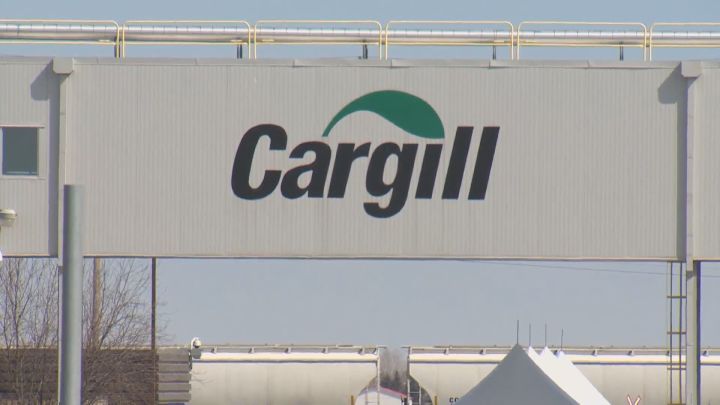
A vehicle at a hydrogen production plant in Germany. Hydrogen is far more expensive to produce than conventional fuels. Photograph: Friedemann Vogel/EPA


Jillian Ambrose Energy correspondent
Fri 20 Aug 2021

Oil companies have used false claims over the cost of producing fossil fuel hydrogen to win over the Treasury and access billions in taxpayer subsidies, according to the outgoing hydrogen lobby boss.

Chris Jackson quit as the chair of a leading hydrogen industry association this week ahead of a government strategy paper featuring support for “blue hydrogen”, which is derived from fossil gas and produces carbon emissions.

He said he could no longer lead an industry association that included oil companies backing blue hydrogen projects, because the schemes were “not sustainable” and “make no sense at all”.

The government’s strategy for the sector, announced this week, was criticised by environmental groups for taking a twin-track approach, giving equal weight to blue hydrogen and “green hydrogen”, which has no negative climate impact because it uses renewable electricity to split water into hydrogen and oxygen.

By contrast, blue hydrogen is made from natural gas, which has to be extracted from gas fields and then purified by the removal of carbon dioxide and methane, which have to be stored back underground. The process typically fails to capture 10-15% of its greenhouse gas emissions, which would accumulate as production ramps up.

Both kinds of hydrogen are much more expensive to produce than conventional fuels, so the government is proposing subsidies. It has launched a consultation to fund the difference between what producers can sell hydrogen for and what it costs them to manufacture it – similar to a scheme already used to drive down costs of offshore wind power.


Government reveals plans for £4bn hydrogen investment by 2030

“The Treasury has been told that blue hydrogen is cheap and will take millions of tonnes of carbon emissions out of the economy, which is all they need to hear. It checks the boxes they’re worrying about,” Jackson said.

“If the false claims made by oil companies about the cost of blue hydrogen were true, their projects would make a profit by 2030, after starting up in 2027 or 2028, because carbon prices are forecast to rise to £80 a tonne.

“Instead, they’re asking taxpayers for billions in subsidies for the next 25 years. They should tell the government they don’t need it. The fact that they don’t tells you everything you need to know.”

Jackson said energy companies had made the case for “big, bold” multibillion-pound blue hydrogen projects, which had proved a draw for ministers who were “trying to find ways to show that they really are doing something” to support the green agenda.

“They’re desperate to find something to put their hat on. It’s been easy for big energy companies to make the case for blue hydrogen, but we need to show that there is another way. We need to be better at that,” he said.

The UK’s future blue hydrogen projects include plans for BP to develop a hydrogen plant in Teesside, and for the Norwegian state oil company, Equinor, and SSE to build the world’s biggest hydrogen production plant with carbon capture and storage technology near Hull.

Jackson resigned from the UK Hydrogen and Fuel Cell Association on Monday, saying he could “no longer in good conscience” remain in a role in which he would be expected to hold a neutral stance.

“I believe passionately that I would be betraying future generations by remaining silent on that fact that blue hydrogen is at best an expensive distraction, and at worst a lock-in for continued fossil fuel use that guarantees we will fail to meet our decarbonisation goals,” he wrote in a post on LinkedIn.

He is the chief executive of Protium Green Solutions, which plans to develop green hydrogen projects. These will be “an essential part of the UK story towards net zero emissions”.

“The UK has all the ingredients to be a world leader in green hydrogen, which is an essential net zero technology – we just need the will and support from government to make that happen,” he said.

A government spokesperson said investing in both green and blue hydrogen would allow the foundation to be laid for a hydrogen economy that created tens of thousands of jobs and unlocked billions of pounds in investment.

“Achieving the scale we need would be more challenging if we just used green hydrogen,” the spokesperson said. “We have always been clear that affordability and fairness are at the heart of our plans to reach net zero, and our hydrogen strategy is completely transparent about the estimated costs for hydrogen technologies, which are all based on thorough analysis.”

BP and SSE have been contacted for comment. Equinor declined to comment.

 PERMANENT ARMS ECONOMY

Turkish Aerospace Signs MoU with GE Marine on Warship Engines Production

Our Bureau
August 18, 2021


Ada-class corvette

TUSAS Engine Industries Inc. (TEI), a subsidiary of Turkish Aerospace Industries (TAI), signed a Memorandum of Understanding (MoU) with GE Marine to explore opportunities pertaining to production of engines for warships.

The MoU was signed during the ongoing IDEF 2021 exhibition in Istanbul.

“On the second day of IDEF 2021, we signed a MoU wirh GE Marine where we discussed cooperation opportunities regarding the manufacture, installation and repair of the LM2500 and LM500 gas turbines,” TEI posted on its official Twitter account on Wednesday.

The LM2500 engine powers a number of vessels including Turkey’s Ada-class corvettes and Barbaros-class frigates.

LM2500 Engine

The LM2500 marine gas turbine is a simple-cycle, two-shaft engine. The 33,600-shp LM2500 is GE's most popular marine gas turbine, powering more than 400 ships in 33 world navies. Derived from GE's CF6-6 aircraft engines, the LM2500 consists of a gas generator, a power turbine, attached fuel and lube oil pumps, a fuel control and speed governing system, associated inlet and exhaust sections, lube and scavenge systems as well as controls and devices for starting and monitoring engine operation. Possible applications for the LM2500 include patrol boats, corvettes, frigates, destroyers, cruisers, cargo/auxiliary ships and aircraft carriers. The LM2500 is also available as a military generator set.

Signing of TEI-GE MoU on August 18, 2021, during IDEF-2021 exhibition in Turkey's Istanbul.

LM500 Engine

The simple-cycle, two-shaft LM500 offers an aerodynamically coupled power turbine, and is similar in design to GE’s LM2500 gas turbine. The 6,130-shp LM500 is adapted from the CF34 engine and has the highest fuel efficiency of any gas turbine in its output class. The LM500 is basically a CF34 engine without its fan and is very similar in materials. The LM500 incorporates a variable stator compressor driven by an air-cooled, two-stage turbine. The LM500 has the latest in proven design technology and corrosion-resistant materials to provide a mature design with maximum reliability and component life.

This gas turbine is suited for marine applications requiring light weight and fuel economy. The LM500 is ideal for patrol boats and hydrofoils, as well as a military generator set.

GE Marine, TEI To Explore More GE Gas Turbines Production And Maintenance Sites In Turkey

GE Marine, TEI To Explore More GE Gas Turbines Production And Maintenance Sites In Turkey

GE Marine and TUSAS Engine Industries, Inc. (TEI) signed a Memorandum of Understanding (MOU) whereby GE and TEI will explore additional localization efforts relating to the manufacture, assembly and repair of GE’s LM2500 and LM500 gas turbines, the companies announced today at the IDEF 2021 industry exhibition.

GE Marine press release

“GE Marine and TEI have partnered in Turkey for many years. With this MOU in place, we hope to discover other opportunities for TEI to play a critical role in supporting the Turkish shipbuilding industry in partnership with GE Marine.”

“Our philosophy is to provide in-country support from build to delivery to lifetime maintenance of GE’s gas turbines.”

Steve Rogers, EMEA Business Development and Sales Director, GE Marine.

Under the MOU, GE and TEI will continue discussions on localization relating to the manufacture, assembly, test, maintenance, inspection, repair, and overhaul of Turkey’s national and exported fleet of marine GE LM2500 family and LM500 gas turbines. The MOU also seeks ways to incorporate TEI into various design processes for potential naval programs.  

“Since 1985, with its partner GE, TEI has been a major player in the defense and aerospace industries by manufacturing high quality aero engine components, rendering preeminent in-service support for military and commercial engines, and producing and servicing its indigenous engines not only for national needs but also global OEMs and end-users.”

“With this signed MOU, TEI will have the opportunity to become an approved and certified OEM service provider to Turkey’s marine engines and exported fleet of LM2500 family and LM500 gas turbines. This collaboration also will enable the localization efforts in design, component manufacturing, assembly and test of such aeroderivative gas turbines and open new doors for utilizing the capability of other local companies and organic depots in the ecosystem.”

Mahmut Faruk Aksit, Ph.D., CEO and Prsident of TEI.

LM2500 for Turkish Naval Forces  

The LM2500 family — the base LM2500 (25.1 MW), LM2500+ (30.2 MW) and the LM2500+G4 (35.3 MW) — all are two spool engines that offer quick start capabilities, easy on-board maintenance, and an outstanding worldwide fleet performance of greater than 99% reliability and more than 98% availability.  

GE has long been a trusted supplier to the Turkish Naval Forces. In fact, all of Turkey’s MILGEM multi-purpose corvettes are powered by a GE LM2500 and two diesel engines in a combined diesel and gas turbine configuration. Additionally, 24 LM2500s operate aboard the Turkish Navy’s Barbaros– and Gabya-class frigates, and two LM2500 engines will power the DIMDEG Fleet Replenishment Ship currently under construction.  

GE Marine’s vast in-country experience makes the LM2500 and LM500 gas turbines ideal for the Turkish Naval Forces’ new TF2000 and Fast Attack ship programs, respectively.  

Lightweight composite module  

Graphic illustration of the future Independence-variant littoral combat ship USS Santa Barbara (LCS 32). U.S. Navy illustration by Mass Communication Specialist 2nd Class Paul L.

In 2020, GE delivered its first new lightweight LM2500 composite gas turbine module to Austal USA for the future USS Santa Barbara (LCS 32). GE also celebrated the completion of the first new module for the Arleigh Burke destroyer USS Ted Stevens (DDG 128).  

This new module, which was fully certified by the United States Navy in 2019 after receiving MIL-S-901D shock qualification, offers these benefits:  

  • One-piece composite carbon fiber construction eliminates corrosion
  • Shock, fire, and smoke tested
  • 5,500 lb wall weight reduction versus steel
  • Improved sound attenuation; 60% (4 dBA)
  • Reduced wall temperature (25°F to 50°F cooler)
  • Improved entrance with access doors that are 60% lighter, 6” taller than steel design; large 8”x 18” viewing window; new, large external plenum access panel; and larger, lighter rear panel for easier maintenance access.

Worldwide support 

With a GE gas turbine, navies have worldwide support whether onshore or at sea, and interoperability benefits with other allied ships. GE has delivered gas turbines onboard 646 naval ships serving 40 navies worldwide and provides 95% of the commissioned propulsion gas turbines in the United States Navy fleet. With GE’s split casing compressor and power turbine design, in-situ maintenance is allowed, often making a gas turbine removal unnecessary; navies save millions of dollars a year and weeks/months of ship unavailability.

-End-


Images courtesy of Wind Catching Systems

News

Supertall floating ‘Windcatchers’ will make wind farms affordable, company says

18 August 2021 | By Joe Quirke | 0 Comments

A new, floating offshore wind turbine system using stacked, square grids nearly as tall as the Eiffel Tower is being developed by Norwegian firms Wind Catching Systems, contractor Aibel AS and holding company Ferd.

The grids will be 1,000 ft tall, reports Asia Times, some three times the height of a typical turbine and nearly matching the Eiffel Tower’s 1,063 feet.

Wind Catching Systems says its ‘Windcatchers’ will cut land use by 80% and can be produced at cheap fixed prices.

The company says the system will make floating offshore wind farms financially competitive before 2023, at least a decade earlier than traditional floating offshore wind farms.

It plans a pilot project consisting of several 1 MW turbines using an Integrated “mother vessel” substation connecting all units.

Eventually, each Windcatcher will be able to produce enough electricity for 80,000 homes, with five units creating the equivalent of 25 conventional turbines, the company says.

Windcatchers are claimed to be able to generate two and a half times more electricity than a conventional turbine because their height exposes their rotors to higher wind speeds.

In addition, rotor blades are pitched, allowing for an energy output higher than a conventional turbine, Wind Catching Systems says.

Ole Heggheim, the company’s chief executive, said: “Our goal is to enable offshore wind operators and developers to produce electricity at a cost that competes with other energy sources, without subsidies.

“Simply put, we will deliver floating offshore wind at the costs of bottom-fixed technology solutions, which provides great opportunities on a global basis for the Norwegian supplier industry.”

Erik Bjørstad, Ferd investment director, said: “The goal is to complete the technical testing and verification during 2021 and to offer commercial development solutions in 2022.

“Wind Catching has significant competitive benefits compared to conventional floating offshore wind technologies and we see great opportunities for the Norwegian supplier and export industry.”

Images courtesy of Wind Catching Systems

LeBron James calls Edmonton community 'amazing' after it gifts basketball hoop to teen


CTV News EdmontonStaff
 Thursday, August 19, 2021
Community steps up for Edmonton basketball player


Anthony Muobike used to spend hours practising without a hoop.

EDMONTON -- The kindness of a north Edmonton community caught the eye of NBA superstar LeBron James.

On Tuesday, Anthony Muobike received a hoop and basketball from Canadian Tire and a $750 Sport Chek gift card from his community after a neighbour noticed the 14-year-old would always dribble and shoot into the air without a net.

A surprised and thankful Muobike told CTV News about his big dreams after he had what he needed to practice.

"You'll see me out there, in the NBA, that’s where you’ll find me."

'That really touches my heart': Edmonton teen gifted basketball, hoop

A guy who knows a thing or two about the NBA believes in him, and showed love to Edmonton's north side.

"This is pure and beautiful. That community is amazing. Nobody can fulfill their dreams alone," James, a four-time NBA champion and four-time MVP, wrote on Instagram.

"Anthony keep working kid. You have another fan in me."

In an interview with CTV News Edmonton, Muobike said he was surprised that one of his basketball idols commented on his post.

"I'm like, 'Wow. Lebron. Like, Lebron James is commenting on me,'" Muobike said. "I was really happy. It got me a little emotional. Lebron is my idol.

"(He) is the main reason why I started doing basketball," he added. "I did not know this would sky-rocket this way."

Muobike says he is simply trying to process everything that is happening and is grateful for all the support he has received.

"I am trying to process everything right now. I am still trying to process the net. I haven't gotten over that.

"What Lebron said just made my brain stop," he added. "Everything is just happening so fast."


Los Angeles Lakers forward LeBron James looks on during the first half of an NBA preseason basketball game against the Denver Nuggets, Sunday, Sept. 30, 2018, in San Diego. (AP Photo/Gregory Bull)