Cuban tourism in crisis; visitors repelled by fuel, power shortages
By AFP
February 2, 2026

Cuba's tourism sector suffered a sharp decline in 2025 due to acute shortages of fuel, power and other basics - Copyright AFP YAMIL LAGE
Cuba’s tourism sector suffered a sharp decline in 2025, with shortages of basic goods repelling visitors even before the United States began strangling the island’s fuel supply.
Around 1.8 million people visited the Caribbean island last year, down 17.8 percent from the previous year, the national statistics office ONEI said.
The government of the cash-strapped nation of 11 million people, which relies on tourism to bring in hard currency, had been hoping for 2.6 million arrivals.
The country’s main tourist markets all shrank last year.
Visits by Cubans living abroad, mostly in the United States, fell 22.6 percent.
Arrivals from Germany, Russia and Canada were down 50.5 percent, 29 percent and 12.4 percent respectively.
Last year “was terrible for international tourism to Cuba,” Cuban economist Pedro Monreal wrote on X, adding: “We knew that would happen.”
Cuba is in the throes of its worst economic crisis in decades, marked by power outages of up to 20 hours a day and critical shortages of fuel, medicines and food.
The outlook has worsened sharply since the January 3 overthrow of Cuba’s closest ally, Venezuelan leader Nicolas Maduro.
US President Donald Trump has been ratcheting up pressure on Havana ever since, predicting its communist leadership is “ready to fall.”
He has vowed to cut off the flow of Venezuelan oil to Havana — for years the island’s main supplier — and threatened tariffs on any other countries that provide oil to the country.
Several countries have revised their travel advice for Cuba since the start of the year.
While most advise caution due to the shortages of fuel, power and other basics, Argentina has advised its nationals to avoid the island altogether.
Cuba confirms ‘communications’ with US, but says no negotiations yet
By AFP
February 2, 2026

Huge queues have formed at petrol stations in Cuba as fuel supplies run dangerously low - Copyright AFP Alberto PIZZOLI
Rigoberto DIAZ
Cuba’s government on Monday told AFP that it was in “communication” with US President Donald Trump’s administration but not yet in formal talks on a deal to end Washington’s pressure campaign on the island.
“Today we cannot talk about having dialogue with the United States, but it is true that there have been communications between the two governments,” deputy foreign minister Carlos Fernandez de Cossio said in an interview.
Trump on Sunday claimed the United States was in talks with “the highest people” in communist Cuba and that he expected to “make a deal” with its leadership, without saying what a deal might look like.
De Cossio repeated that Cuba was “open to dialogue” with the United States amid calls from Cubans for the government to negotiate to avert a humanitarian crisis.
Trump has been ratcheting up pressure on Havana since the January 3 capture by US special forces of Venezuelan leader Nicolas Maduro, a top Cuba ally and financial backer.
Pressured by Washington, Venezuela’s new administration has cut crude shipments to Cuba.
Trump said Monday that Cuba’s other main supplier, Mexico, would also “cease sending them oil” after he threatened tariff hikes on any country that allowed Cuba to circumvent the de-facto blockade.
There was no immediate response from Mexico.
The United States’ largest trade partner had incurred Trump’s ire by sending oil to Cuba to make up for a sharp decline in Venezuela’s output under Maduro.
As recently as December, Mexico was still sending crude to Cuba.
President Claudia Sheinbaum had been loathe to cut the lifeline to Cuba, warning of a “far-reaching humanitarian crisis directly affecting hospitals, food supplies, and other basic services for the Cuban people.”
But she also admitted last week: “We don’t want to put our country at risk in terms of tariffs.”
A decree signed by Trump last week effectively forced her and other Cuban partners to choose.
– ‘The highest people’ –
The pressure tactics threaten to plunge Cuba into complete darkness, with its power plants already struggling to keep the lights on due to fuel shortages.
Jorge Grosso, a 23-year-old student who spent nearly 24 hours last week queueing at a petrol station to fill up his Lada, told AFP he backed talks “to see what conditions are imposed (by Trump) because in the end they’re strangling us.”
For months Cubans have been forced to cope with power outages lasting up to 20 hours a day in rural areas.
On Monday, Trump repeated his claim that Cuba, which is limping through its worst economic crisis in decades, is a “failed nation.”
He added he believed “we are pretty close (to a deal), but we are dealing with the Cuban leaders right now.”
His pressure on Sheinbaum comes as the United States and its southern neighbor begin talks on a review of a tripartite free-trade deal with Canada which is crucial to Mexico’s economy.
Over the past year, Sheinbaum has been scrambling to stave off the kind of tariffs pain Trump has imposed on other allies.
In a move widely seen as an attempt to appease him, Mexico in January imposed stiff tariffs on imports from China.
Rigoberto DIAZ
Cuba’s government on Monday told AFP that it was in “communication” with US President Donald Trump’s administration but not yet in formal talks on a deal to end Washington’s pressure campaign on the island.
“Today we cannot talk about having dialogue with the United States, but it is true that there have been communications between the two governments,” deputy foreign minister Carlos Fernandez de Cossio said in an interview.
Trump on Sunday claimed the United States was in talks with “the highest people” in communist Cuba and that he expected to “make a deal” with its leadership, without saying what a deal might look like.
De Cossio repeated that Cuba was “open to dialogue” with the United States amid calls from Cubans for the government to negotiate to avert a humanitarian crisis.
Trump has been ratcheting up pressure on Havana since the January 3 capture by US special forces of Venezuelan leader Nicolas Maduro, a top Cuba ally and financial backer.
Pressured by Washington, Venezuela’s new administration has cut crude shipments to Cuba.
Trump said Monday that Cuba’s other main supplier, Mexico, would also “cease sending them oil” after he threatened tariff hikes on any country that allowed Cuba to circumvent the de-facto blockade.
There was no immediate response from Mexico.
The United States’ largest trade partner had incurred Trump’s ire by sending oil to Cuba to make up for a sharp decline in Venezuela’s output under Maduro.
As recently as December, Mexico was still sending crude to Cuba.
President Claudia Sheinbaum had been loathe to cut the lifeline to Cuba, warning of a “far-reaching humanitarian crisis directly affecting hospitals, food supplies, and other basic services for the Cuban people.”
But she also admitted last week: “We don’t want to put our country at risk in terms of tariffs.”
A decree signed by Trump last week effectively forced her and other Cuban partners to choose.
– ‘The highest people’ –
The pressure tactics threaten to plunge Cuba into complete darkness, with its power plants already struggling to keep the lights on due to fuel shortages.
Jorge Grosso, a 23-year-old student who spent nearly 24 hours last week queueing at a petrol station to fill up his Lada, told AFP he backed talks “to see what conditions are imposed (by Trump) because in the end they’re strangling us.”
For months Cubans have been forced to cope with power outages lasting up to 20 hours a day in rural areas.
On Monday, Trump repeated his claim that Cuba, which is limping through its worst economic crisis in decades, is a “failed nation.”
He added he believed “we are pretty close (to a deal), but we are dealing with the Cuban leaders right now.”
His pressure on Sheinbaum comes as the United States and its southern neighbor begin talks on a review of a tripartite free-trade deal with Canada which is crucial to Mexico’s economy.
Over the past year, Sheinbaum has been scrambling to stave off the kind of tariffs pain Trump has imposed on other allies.
In a move widely seen as an attempt to appease him, Mexico in January imposed stiff tariffs on imports from China.
The Fight Builds against US Plan to Deprive Cuba of Imported Oil
February 4, 2026
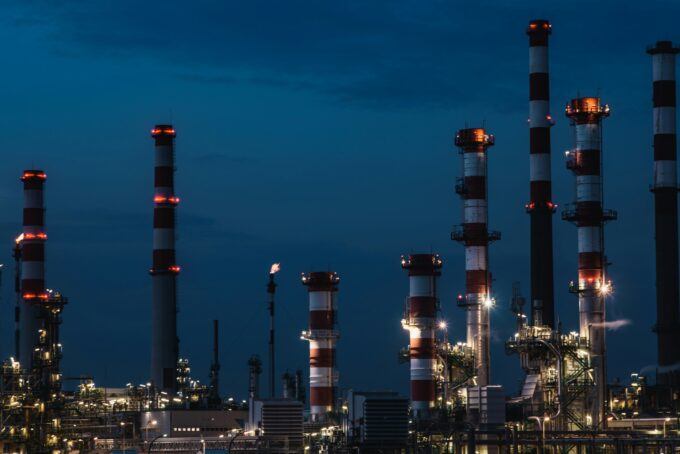
Image by Maksym Kaharlytskyi.
The U.S. president issued an executive order on January 29, “declaring a national emergency and establishing a process to impose tariffs on goods from countries that sell or otherwise provide oil to Cuba.” The order mentioned “confronting the Cuban regime” and “countering Cuba’s malign influence.” “I think we would like to see the regime there change,” declared Secretary of State Rubio, testifying before the Senate Foreign Relations Committee the day before.
Cuba faces catastrophe. At work now are the cumulative effects of six decades of the U.S. economic blockade, a tightened blockade during the two Trump administrations, increasingly desperate living conditions, worsening oil shortages, serious electrical power shortages, and the cut-off of oil from Venezuela after the U.S. invasion there on January 3.
Mounting humanitarian danger and U.S. assault on Cuba’s sovereign independence are moving the international and U.S. Cuba solidarity movements into action.
The matter is urgent. In a statement, the U.K Cuba Solidarity Campaign declares that, “This Latest Escalation … will cripple the electricity system and devastate every aspect of daily life …[T]his means. Hospitals without power. Incubators and life-support machines unable to function. Emergency surgeries carried out without light. Schools and workplaces forced to close. Bakeries unable to operate. Fuel shortages are preventing the transport of food and medical supplies. Food spoiling in fridges and freezers. Hunger, illness and suffering will spread. This is a deliberate attack on an entire civilian population, intended to inflict pain, deprivation and desperation. It is cruel, calculated, and it will cost lives.”
U.S. victory over Cuba’s socialist Revolution would have dire implications. A European analyst explains that, “Cuba remains the only living example of a country that continues to attempt socialist construction on the basis of social ownership, planning, and working-class power, rather than market dominance and capitalist accumulation.”
Trump’s executive order sanctioning suppliers of oil to Cuba prompted a crescendo of statements supportive of Cuba, including from many Communist Parties of the world, from China, Russia, Vietnam, the Arab league, the African National Congress, the Bolivarian Alliance for the Peoples of Our America, multiple Cuba solidarity organizations, organizations of Cubans living abroad, and the World Federation of Trade Unions.
Cuban President Miguel Díaz-Canel commented on January 30 that, “Under a false pretext and empty arguments, peddled by those who engage in politics and enrich themselves at the expense of our people’s suffering, President Trump seeks to stifle the Cuban economy by imposing tariffs on countries that trade oil with Cuba as is their sovereign right.”
Denying U.S. accusations, Cuba’s Foreign Ministry insisted that Cuba “does not harbor, support, finance, or permit terrorist or extremist organizations.” Nor does Cuba “harbor foreign military or intelligence bases” or represent “a threat to the security of the United States.”
Cuba soon may be unable to import any oil. According to financialpost.com on January 29, “Cuba has 15 to 20 days left of oil left as Donald Trump turns the screws.”
As explained by analyst Gabriel Vera Lopes, Cuba itself produces 30% of the 120,000 barrels of oil (BPD) used each day. Venezuela in 2025 provided up to 35,000 BPD, representing 29% of the total. Mexico provided 17,200 BPD during the first nine months of 2025, until oil exports lagged due to U.S. pressure. Russia supplies a tiny amount of oil.
Vera Lopes indicates that even oil sent for humanitarian reasons will be blocked, as will be the small amounts of oil sent to Cuba through China or Russia. Apart from oil produced in Cuba itself, all that remains is oil from Mexico. Crucially, “The new executive order now appears to be aimed directly at Mexican supplies.”
Mexican President Claudia Sheinbaum, speaking to reporters on January 30, highlighted humanitarian considerations and respect for international law. Insisting that Mexico’s government will negotiate with officials in Washington, she stated that “contractual considerations,” not political pressures, accounted for the PEMEX oil company’s recent suspension of shipments. Sheinbaum added that “ Mexico will always stand in solidarity, always seeking the best way to support the Cuban people.”
Mexico has been sending only 1% of its total oil production to Cuba. Up to 84% of it goes to the United States. In fact, Mexico and the United States have a mutually dependent but asymmetric relationship as regards hydrocarbon products. Maintaining that relationship may take precedence over Cuba’s needs.
Mateo Crossa’s recent article appearing in Monthly Review titled “The Shale Revolution, U.S. Energy Imperialism, and Mexico’s Dependence” is relevant. He writes:
“In the context of the Shale Revolution positioning the United States as the world’s top oil producer and as the leading exporter of refined oil, Mexico has become the largest market for the United States, importing $30 billion worth of refined oil in 2023—accounting for 28 percent of the $107 billion the United States exported that year.
He adds: “This pattern highlights a troubling shift in energy dynamics, with Mexico increasingly locked into a subordinate role that weakens its economic autonomy and energy independence … Mexico has not only become the largest importer of U.S. natural gas, but also plays a pivotal role in the broader U.S. imperial energy strategy, serving as a platform for liquefied natural gas exports to Asia.”
Cuba solidarity activists in the United States are responding. In a communication shared with the International US-Cuba Normalization Coalition Committee, labor activist Mark Friedman, associated with the Los Angeles Hands off Cuba Coalition stated, “[W]e need to go on an emergency footing and reach out to those forces who in the past have not been willing to take a stand … We need to fight for unity in the Cuba solidarity movement”
Having joined a hurry-up meeting of the Coalition on February 1, the present writer noted emphasis given to: significant expansion of the existing material aid campaign for Cuba, outreach to the labor movement and to activists mobilizing against ICE and U.S. wars, local teach-ins, and focus on defending Cuba’s sovereign independence.
Renewed action now on Cuba’s behalf is a continuation of the struggle for Cuba that began in earnest in the United States under the leadership of Cuba’s national hero, José Martí. Revolutionaries inside Cuba who opposed the U.S.-dominated pseudo-republic (1902-1959) carried it on. Anti-imperialist struggle intensified after 1959 with the defense of Cuba’s socialist Revolution. Under unprecedented threat now, the Revolution’s fall would undo the long struggle of untold numbers of people against U.S. imperialism.
Fidel Castro, is his “ “Second Declaration of Havana” (February 4, 1962) gave voice to Cuba’s struggle against U.S. Imperialism. A relevant excerpt follows:
In 1895, Martí already pointed out the danger hovering over America and called it by its name: imperialism. He pointed out to the people of Latin America that more than anyone, they had a stake in seeing that Cuba did not succumb to the greed of the Yankee … Sixty-seven years have passed. Puerto Rico was converted into a colony and still is a colony…. Cuba also fell into the clutches of imperialism. Their troops occupied our country. The Platt Amendment was imposed on our first Constitution, as a humiliating clause which sanctioned the odious right of foreign intervention. Our riches passed into their hands, our history was falsified, our government and our politics were entirely molded in in the interest of the overseers; the nation was subjected to sixty years of political economic, and cultural suffocation. But Cuba was able to redeem itself … Cuba broke the chains which tied its fortunes to those of the imperialist oppressor … and unfurled its banner as the Free Territory of America.
Image by Maksym Kaharlytskyi.
The U.S. president issued an executive order on January 29, “declaring a national emergency and establishing a process to impose tariffs on goods from countries that sell or otherwise provide oil to Cuba.” The order mentioned “confronting the Cuban regime” and “countering Cuba’s malign influence.” “I think we would like to see the regime there change,” declared Secretary of State Rubio, testifying before the Senate Foreign Relations Committee the day before.
Cuba faces catastrophe. At work now are the cumulative effects of six decades of the U.S. economic blockade, a tightened blockade during the two Trump administrations, increasingly desperate living conditions, worsening oil shortages, serious electrical power shortages, and the cut-off of oil from Venezuela after the U.S. invasion there on January 3.
Mounting humanitarian danger and U.S. assault on Cuba’s sovereign independence are moving the international and U.S. Cuba solidarity movements into action.
The matter is urgent. In a statement, the U.K Cuba Solidarity Campaign declares that, “This Latest Escalation … will cripple the electricity system and devastate every aspect of daily life …[T]his means. Hospitals without power. Incubators and life-support machines unable to function. Emergency surgeries carried out without light. Schools and workplaces forced to close. Bakeries unable to operate. Fuel shortages are preventing the transport of food and medical supplies. Food spoiling in fridges and freezers. Hunger, illness and suffering will spread. This is a deliberate attack on an entire civilian population, intended to inflict pain, deprivation and desperation. It is cruel, calculated, and it will cost lives.”
U.S. victory over Cuba’s socialist Revolution would have dire implications. A European analyst explains that, “Cuba remains the only living example of a country that continues to attempt socialist construction on the basis of social ownership, planning, and working-class power, rather than market dominance and capitalist accumulation.”
Trump’s executive order sanctioning suppliers of oil to Cuba prompted a crescendo of statements supportive of Cuba, including from many Communist Parties of the world, from China, Russia, Vietnam, the Arab league, the African National Congress, the Bolivarian Alliance for the Peoples of Our America, multiple Cuba solidarity organizations, organizations of Cubans living abroad, and the World Federation of Trade Unions.
Cuban President Miguel Díaz-Canel commented on January 30 that, “Under a false pretext and empty arguments, peddled by those who engage in politics and enrich themselves at the expense of our people’s suffering, President Trump seeks to stifle the Cuban economy by imposing tariffs on countries that trade oil with Cuba as is their sovereign right.”
Denying U.S. accusations, Cuba’s Foreign Ministry insisted that Cuba “does not harbor, support, finance, or permit terrorist or extremist organizations.” Nor does Cuba “harbor foreign military or intelligence bases” or represent “a threat to the security of the United States.”
Cuba soon may be unable to import any oil. According to financialpost.com on January 29, “Cuba has 15 to 20 days left of oil left as Donald Trump turns the screws.”
As explained by analyst Gabriel Vera Lopes, Cuba itself produces 30% of the 120,000 barrels of oil (BPD) used each day. Venezuela in 2025 provided up to 35,000 BPD, representing 29% of the total. Mexico provided 17,200 BPD during the first nine months of 2025, until oil exports lagged due to U.S. pressure. Russia supplies a tiny amount of oil.
Vera Lopes indicates that even oil sent for humanitarian reasons will be blocked, as will be the small amounts of oil sent to Cuba through China or Russia. Apart from oil produced in Cuba itself, all that remains is oil from Mexico. Crucially, “The new executive order now appears to be aimed directly at Mexican supplies.”
Mexican President Claudia Sheinbaum, speaking to reporters on January 30, highlighted humanitarian considerations and respect for international law. Insisting that Mexico’s government will negotiate with officials in Washington, she stated that “contractual considerations,” not political pressures, accounted for the PEMEX oil company’s recent suspension of shipments. Sheinbaum added that “ Mexico will always stand in solidarity, always seeking the best way to support the Cuban people.”
Mexico has been sending only 1% of its total oil production to Cuba. Up to 84% of it goes to the United States. In fact, Mexico and the United States have a mutually dependent but asymmetric relationship as regards hydrocarbon products. Maintaining that relationship may take precedence over Cuba’s needs.
Mateo Crossa’s recent article appearing in Monthly Review titled “The Shale Revolution, U.S. Energy Imperialism, and Mexico’s Dependence” is relevant. He writes:
“In the context of the Shale Revolution positioning the United States as the world’s top oil producer and as the leading exporter of refined oil, Mexico has become the largest market for the United States, importing $30 billion worth of refined oil in 2023—accounting for 28 percent of the $107 billion the United States exported that year.
He adds: “This pattern highlights a troubling shift in energy dynamics, with Mexico increasingly locked into a subordinate role that weakens its economic autonomy and energy independence … Mexico has not only become the largest importer of U.S. natural gas, but also plays a pivotal role in the broader U.S. imperial energy strategy, serving as a platform for liquefied natural gas exports to Asia.”
Cuba solidarity activists in the United States are responding. In a communication shared with the International US-Cuba Normalization Coalition Committee, labor activist Mark Friedman, associated with the Los Angeles Hands off Cuba Coalition stated, “[W]e need to go on an emergency footing and reach out to those forces who in the past have not been willing to take a stand … We need to fight for unity in the Cuba solidarity movement”
Having joined a hurry-up meeting of the Coalition on February 1, the present writer noted emphasis given to: significant expansion of the existing material aid campaign for Cuba, outreach to the labor movement and to activists mobilizing against ICE and U.S. wars, local teach-ins, and focus on defending Cuba’s sovereign independence.
Renewed action now on Cuba’s behalf is a continuation of the struggle for Cuba that began in earnest in the United States under the leadership of Cuba’s national hero, José Martí. Revolutionaries inside Cuba who opposed the U.S.-dominated pseudo-republic (1902-1959) carried it on. Anti-imperialist struggle intensified after 1959 with the defense of Cuba’s socialist Revolution. Under unprecedented threat now, the Revolution’s fall would undo the long struggle of untold numbers of people against U.S. imperialism.
Fidel Castro, is his “ “Second Declaration of Havana” (February 4, 1962) gave voice to Cuba’s struggle against U.S. Imperialism. A relevant excerpt follows:
In 1895, Martí already pointed out the danger hovering over America and called it by its name: imperialism. He pointed out to the people of Latin America that more than anyone, they had a stake in seeing that Cuba did not succumb to the greed of the Yankee … Sixty-seven years have passed. Puerto Rico was converted into a colony and still is a colony…. Cuba also fell into the clutches of imperialism. Their troops occupied our country. The Platt Amendment was imposed on our first Constitution, as a humiliating clause which sanctioned the odious right of foreign intervention. Our riches passed into their hands, our history was falsified, our government and our politics were entirely molded in in the interest of the overseers; the nation was subjected to sixty years of political economic, and cultural suffocation. But Cuba was able to redeem itself … Cuba broke the chains which tied its fortunes to those of the imperialist oppressor … and unfurled its banner as the Free Territory of America.
Socialist Alliance (Australia): Hands off Cuba! End the US blockade!
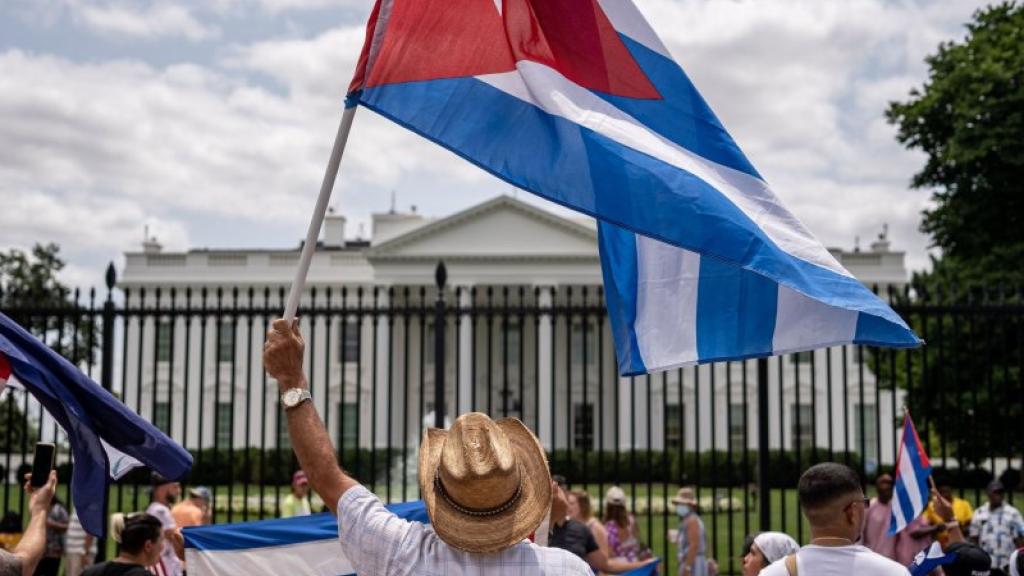
The Socialist Alliance strongly condemns the United States government’s latest threats against Cuba and stands in solidarity with the Cuban people resisting US imperialism.
US President Donald Trump recently signed an executive order declaring a national emergency due to the “unusual and extraordinary” threat the Cuban government supposedly poses to US security and foreign policy. The order announced that the US would impose tariffs on goods from any countries that, directly or indirectly, sell or provide oil to Cuba.
Since its imperialist attacks on Venezuela, the US has blocked all Venezuelan oil shipments to Cuba.
Trump is also pressuring the Mexican government, Cuba’s primary oil supplier, to halt shipments to the country. Mexico’s state-run oil company Pemex has already cancelled a shipment planned for this month.
Mexican President Claudia Sheinbaum has warned that Trump’s executive order “could trigger a large-scale humanitarian crisis, directly affecting hospitals, food supplies, and other basic services for the Cuban people”.
Cubans are already experiencing severe power blackouts due to fuel shortages, and from damage to its national energy grid from Hurricane Melissa last year.
Trump’s most recent threats are a continuation of US imperialist policy since the Cuban people overthrew the US-backed Fulgencio Batista dictatorship in 1959.
Since then, the US has undertaken or sponsored terrorist attacks, a military invasion and an economic blockade against the Cuban people, with the explicitly stated aim of bringing about “hunger, desperation and the overthrow of government”, as the US State Department admitted in 1960.
The US’s illegal 64-year blockade constitutes a form of economic warfare, impacting the Cuban people’s access to food, medicine, fuel and other critical goods.
The US maintains its cruel policy despite widespread international opposition, evidenced by the United Nations General Assembly voting almost-unanimously every year to end the blockade.
The US’s National Security Strategy, released last December, is an openly imperialist strategy aimed at control of or access to Latin America’s resources and projection of US power in the region. It reinforces the Monroe Doctrine — a 200-year-old imperialist ideology asserting the US’s “right” to dominate the Americas.
The US’s attacks on Venezuela were just the beginning. It has previously issued threats against Colombia, Mexico and now, Cuba.
Cuba has condemned US imperialist policies across the world, including its support for Israel’s genocide in Gaza. It plays a significant role in international solidarity, sending medical staff overseas to train and assist personnel in countries of the Global South.
Cubans are mourning the deaths of 32 of their citizens, killed by the US military during its January 3 attacks on Venezuela.
We condemn the US’s imperialist aggression and the Australian Labor government’s silence in the face of its ally’s flouting of international law.
We recognise that the US is the biggest threat to peace and democracy in the world, with its unprecedented military drive — the US’s military budget is set to surpass US$1 trillion for the first time in history — and aggressive foreign policy.
The Australian government is a willing party to US imperialist foreign policy, demonstrated in its total commitment to the AUKUS military alliance. We must pressure Labor to break its alliance with US imperialism and pursue a foreign policy based on peace and justice.
We support the global demand for an immediate and unconditional lifting of the US blockade on Cuba.
[The Socialist Alliance National Executive adopted this statement on February 3.]


No comments:
Post a Comment