NYS: Why Are Authoritarian Entities Needed to Create Charter Schools if They Are So Popular?
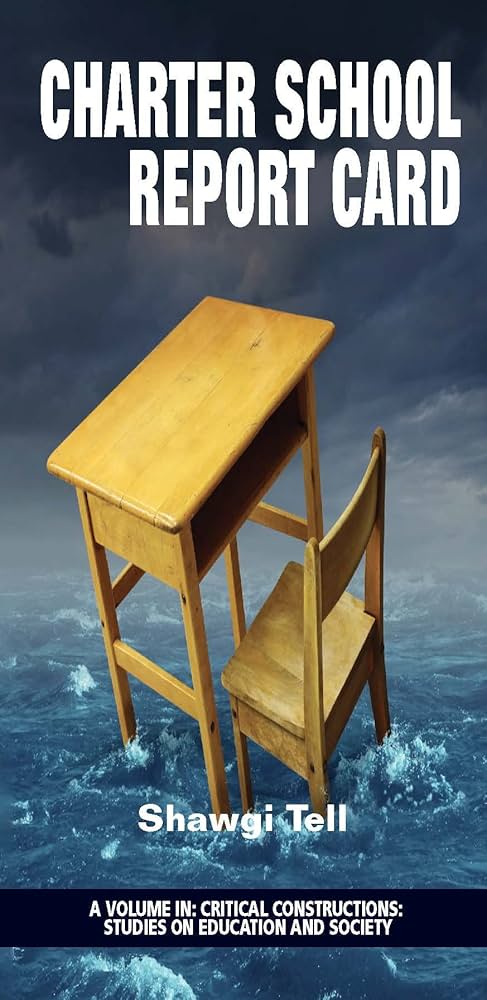 The charter school industry has been operating in overdrive for several decades, trying desperately to convince everyone that charter schools are amazing, unassailable, and always in high demand.
But if charter schools are marvelous and popular why have charter school promoters spent years using top-down heavy-handed entities comprised of unelected pro-privatization individuals to impose charter schools on communities across the country?
Many, if not most, charter school laws state that the residents of a community must be consulted and their input must be considered in a meaningful way when unelected private citizens or external organizations strive to open a charter school in their community.
Yet time and again this simple democratic principle is violated by many entities that authorize charter schools. New York State is a textbook example of this anti-democratic set-up.
A January 27, 2026 press release from New York State United Teachers (NYSUT) titled “NYSUT files lawsuit challenging SUNY charter approvals,” states: “Today, New York State United Teachers, alongside education and community partners, filed a lawsuit in Albany County Supreme Court to hold the State University of New York Charter School Institute accountable for its decision to authorize new charter schools in Brentwood and Central Islip, despite rejection by the State Education Department and clear opposition from local communities.” This is not the first time the Institute has ignored the will of the community.
The State University of New York Charter School Institute was established in 1999 and is one of four entities authorized to approve new charter schools in the State of New York. Institute members are appointed by the SUNY Board of Trustees, they are not elected officials.
The press release explains that, “The lawsuit challenges SUNY, its board of trustees and its Charter Schools Institute for approving charter school applications that do not appear to meet fundamental requirements under New York law, including demonstrated community support and evidence of likely educational benefit. In both Brentwood and Central Islip, parents, educators, and local leaders raised serious concerns about the impact of additional charter schools on already-strained public school districts. SED [State Education Department] considered those concerns and rejected the applications. SUNY did not.” Privately-operated charter schools are notorious for corruption, poor academic performance, and for siphoning huge sums of public money from continually-underfunded public schools.
NYSUT President Melinda Person stated that, “This entity [Charter School Institute] has repeatedly ignored state law by dismissing community voices and overriding education experts in order to rubber-stamp charter applications. That is an abuse of its authority as a charter authorizer and a threat to public schools and the communities they serve. Public education works best when decisions are made with communities — not imposed on them — and that principle is worth defending.”
Why should anyone support a school that is not based on democratic decision-making processes? Why would a charter school authorizer defy state laws and act in an unlawful manner, especially when it is part of the state apparatus? Why act in an authoritarian manner if charter schools are supposedly very popular?
The NYSUT press release concludes that the Charter School Institute’s top-down actions are part of a larger pattern of “approving schools with little evidence of community need or support, and at times those with clear opposition. It also highlights the dysfunction created by New York’s dual charter authorizing system — which allows rejected [charter school] applicants to shop their applications to SUNY Charter Schools Institute for likely approval without addressing concerns raised by state education department experts.”
The goal of NYSUT’s lawsuit is “to restore accountability, enforce the law as written, and protect the rights of local communities to have a meaningful voice in decisions that shape the future of their public schools.”
Clearly, in New York State and elsewhere there is a battle between the forces of authoritarianism and the forces of democracy. Private interests are working hard to avoid any democratic mechanisms and processes. They want to freely impose their will on the majority. This dynamic operate in many institutions. Would such a battle exist if the legitimacy and utility of charter schools was not in question? People today need democratic renewal so that their needs and rights, not the dictate of private interests, are put in first place.

No comments:
Post a Comment