Friday, August 20, 2021

Singh sees largest crowd of supporters in Alberta, attacks Kenney on campaign stop

Fakiha Baig
The Canadian Press Staff
Thursday, August 19, 2021 

EDMONTON -- NDP Leader Jagmeet Singh says he saw his largest crowd of supporters Thursday afternoon in Alberta where the party only has a stronghold over one riding.

Singh served ice cream and took selfies with locals while shooting double-barrelled attacks on Liberal Leader Justin Trudeau and Premier Jason Kenney throughout his campaign stop in Edmonton.

He started his day near the East Edmonton Health Centre to speak about health care and also capitalized on Kenney's declining popularity amid the pandemic.

The 42-year-old NDP leader also addressed the multiple violent attacks against Black Muslim women in the province all while attempting to paint Kenney and Trudeau with the same brush.

"We're seeing cut after cut that is driving health care workers out of the province," Singh told reporters as cars honked at him while he stood next to a busy Edmonton road.

"These cuts at the provincial level are only made worse because for years and years federal governments have been cutting health care as well. The Conservatives cut health care, and then Trudeau kept in those same cuts."

Throughout the pandemic, Kenney has been grappling with a public outcry over temporary bed closures and reports of dozens of nurses and doctors leaving the province due to wage cuts and other rollbacks. Public health experts have called what's happening in the province a health care crisis.


Singh said unlike his counterparts, he wants to actively work with any province or territory that wants to invest in health care.

He promised to create a national $250 million Critical Shortages Fund to address the shortage of nurses and health care workers across Canada.

Singh also addressed the rising rate of hate crimes across the country.

Over the last eight months, several Muslim and Black women who wear a hijab in Alberta have been targeted, violently assaulted, threatened and harassed while walking down the street or waiting for a light rail train.

He took a shot at Trudeau again while walking back to his campaign bus, saying the root cause of the increasing number of hate crimes across the country is online radicalization, which the prime minister has talked a lot about but hasn't done much to make any changes.

"Tackling online hate is a way to get at some of the root causes. A lot of misinformation and some of the conspiracy theories comes from social media posts that radicalized people with misinformation," Singh said.

"The other piece is making sure we use hate laws appropriately. Absolutely there's problems around making sure when a crime is identified as a hate crime, that it's prosecuted that way … that's something that absolutely needs to happen."

During his morning announcement, Singh stood next to Heather McPherson, the MP for the only NDP riding in Alberta, Edmonton Strathcona, while he insisted his relationship was solid with former New Democrat premier Rachel Notley.


She looms large in the federal NDP's quest to retain its Alberta seat and perhaps expand into other ridings.

The two hold opposing views on the Trans Mountain pipeline and Notley has been vocal about their disagreement with Singh, but the NDP leader said the two chat regularly.

"We know that people in Alberta benefit from more New Democrats both provincially and at the federal level," Singh said.

"We have far more in common and we're going to build on those things."

A spokesperson for the provincial NDP caucus said Notley is committed to creating jobs in Alberta by modernizing the province's electricity grid to net-zero carbon emissions by 2035, and reaching that goal economywide by 2050.


"She is open to working with all municipal, provincial and federal leaders who share that goal," said Benjamin Alldritt, director of communications for NDP caucus.

Singh ended his campaign stop in Edmonton with a visit to NDP candidate Blake Desjarlais' campaign office in the Edmonton Griesbach riding.

"This is the largest gathering we've had in this whole campaign so far," noted Singh, as dozens of his supporters cheered NDP.

He seemingly then took another jab at Kenney and said if the premier's government wasn't able to stand up for Albertans during one of the worst moments in human history, then the conservatives will never stand up for Canadians.

The Canadian Press was first published Aug. 19, 2021.

------

This story was produced with the financial assistance of the Facebook and Canadian Press News Fellowship.
RELATED IMAGES


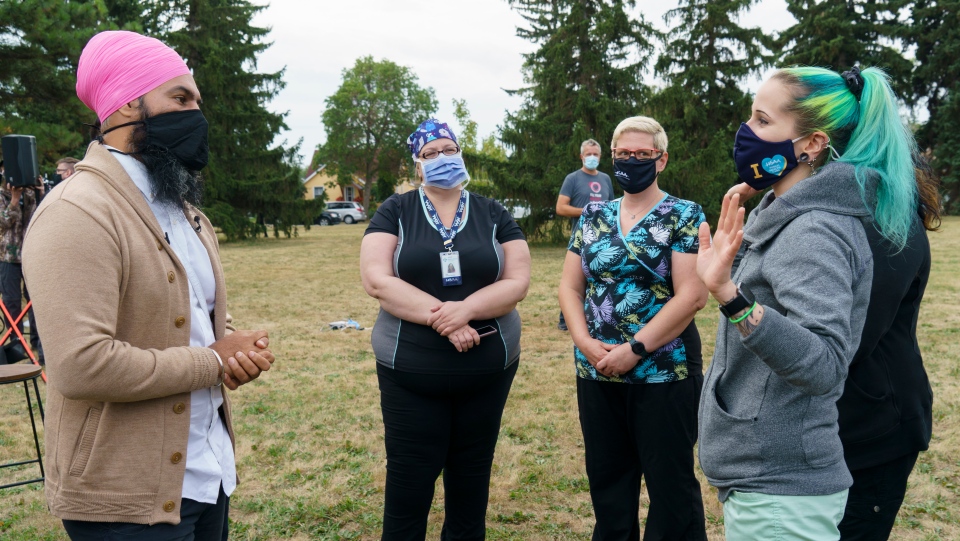
NDP leader Jagmeet Singh chats with health care workers in Edmonton, on Thursday, August 19, 2021. THE CANADIAN PRESS/Paul Chiasson

 THE MASS PSYCHOLOGY OF STUPID

Poll: 

More unvaccinated Americans blame vaccinated Americans

for the Delta surge than blame themselves


·West Coast Correspondent

More unvaccinated Americans blame vaccinated Americans for Delta’s devastating U.S. surge than blame themselves, according to a new Yahoo News/YouGov poll.

The survey of 1,649 U.S. adults, which was conducted from Aug. 16 to 18, found that just 6 percent of those who remain unvaccinated say they are the ones who deserve “the most blame for the new surge of COVID cases in the U.S.” The share who say vaccinated Americans deserve the most blame is slightly higher (7 percent).

Likewise, when asked “how much” blame each group deserves, just 9 percent of unvaccinated Americans say they themselves deserve a “great deal of blame.” Nearly twice as many (15 percent) say vaccinated Americans deserve a great deal of blame.

The fact that unvaccinated Americans say their vaccinated peers bear more responsibility for Delta’s spread flies in the face of data showing that it’s actually unvaccinated Americans who now account for a vast majority of new COVID cases, hospitalizations and deaths — and it underscores just how difficult it will be to convince most unvaccinated Americans that they have a role to play in ending the pandemic.

Indeed, unvaccinated Americans tend to blame everyone but themselves for the Delta wave, with a full third saying the Biden administration (34 percent) and the Centers for Disease Control and Prevention “and other public-health authorities” (33 percent) deserve a “great deal of blame” — nearly four times the share who say the same about themselves (again, 9 percent). Fewer (24 percent) place a great deal of blame on “Americans who refuse to wear masks and take other precautions.”

In stark contrast, nearly three-quarters of vaccinated Americans (71 percent) say unvaccinated Americans deserve a great deal of blame for Delta’s surge. Similar numbers say the same about Americans who refuse to wear masks and take other precautions (68 percent) and people who spread misinformation online and on TV (70 percent). But when asked to choose who deserves the “most blame,” the share of vaccinated Americans who say unvaccinated Americans (43 percent) dwarfs the share who say anti-maskers (26 percent) or misinformation peddlers (17 percent).

The widening divide between vaccinated and unvaccinated Americans couldn’t come at a more perilous moment, as the average number of new daily cases soars to more than 140,000 nationwide, new daily deaths top 1,000 for the first time since March and hot spots such as Florida, Louisiana and Mississippi set new hospitalization records nearly every day.

Overall, Americans recognize the danger of Delta, which is roughly twice as transmissible as the original version of the virus and can even be spread by vaccinated people. More than two-thirds (68 percent) say they are worried about the variant, and as a result, optimism about the U.S. pandemic has plummeted to a new low, with just 33 percent of Americans now maintaining that “the worst” of it is “behind us” and 38 percent predicting the worst is “yet to come.”

Notably, this represents the first time since Yahoo News and YouGov started asking the question in April that more Americans say the latter than the former. In May, 58 percent said the worst was behind us; just 15 percent said the worst was yet to come.

On a similar note, just 12 percent of Americans are now willing to say the pandemic is "over," down by almost half (from 21 percent) since June.

Behavior has changed in response. A full 55 percent of Americans now report wearing a mask outside their home “always” or “most of the time,” up 8 points over the last two weeks (and 12 points from a low of 43 percent in mid-July). Support for the CDC’s recent decision to recommend indoor masking in high-transmission areas has increased from 56 percent to 60 percent since the last Yahoo News/YouGov poll as well.

Yet even here, polarization is undermining progress. In mid-July, both vaccinated and unvaccinated Americans reported regularly wearing masks at exactly the same rate (43 percent). But since then, mask wearing by the vaccinated has increased by 22 points (to 65 percent) while mask wearing by the unvaccinated has actually fallen (to 39 percent).

In other words, the people who need the most protection from catching and spreading the virus are, paradoxically, masking up even less often now than they were before Delta took off. Instead, it’s the least vulnerable Americans — those who are vaccinated — who have been responsible for all of the recent uptick in regular masking.

What makes these findings particularly jarring is that unvaccinated Americans are more likely than vaccinated Americans to have experienced the ravages of Delta firsthand. A full 29 percent of Americans say that over the last month, either they, a family member or a close friend was infected with COVID-19, up from 23 percent two weeks ago; 14 percent say that either they, a family member or a close friend was hospitalized due to COVID-19, up from 11 percent; and 11 percent say that a family member or a close friend died due to COVID-19, up from 9 percent.

Yet across the board, it’s unvaccinated Americans who have been more exposed to such fallout, with 39 percent saying that over the last month, they or someone they know well has been infected; 20 percent saying that either they or someone they know well has been hospitalized; and 15 percent saying that someone they know well has died. For vaccinated Americans, those numbers are significantly lower: 29 percent, 12 percent and 9 percent, respectively.

Regardless, just as in the last two Yahoo News/YouGov polls, more unvaccinated Americans continue to say that the COVID-19 vaccines (38 percent) pose a greater risk to their health than the virus (30 percent) — and about half (49 percent) continue to say they will “never” get vaccinated.

Another 25 percent say they are still “waiting to see what happens to others before deciding.”

A pharmacist administers a third dose of the Pfizer-BioNTech Covid-19 vaccine to a customer at a pharmacy in Livonia, Michigan on  Aug. 17, 2021. (Emily Elconin/Bloomberg via Getty Images)
A pharmacist in Livonia, Mich., administers a third dose of the Pfizer-BioNTech COVID vaccine to a customer on Tuesday. (Emily Elconin/Bloomberg via Getty Images)

__________________

The Yahoo News survey was conducted by YouGov using a nationally representative sample of 1,649 U.S. adults interviewed online from Aug. 16 to 18, 2021. This sample was weighted according to gender, age, race and education based on the American Community Survey, conducted by the U.S. Bureau of the Census, as well as 2020 presidential vote (or non-vote) and voter registration status. Respondents were selected from YouGov’s opt-in panel to be representative of all U.S. adults. The margin of error is approximately 2.7 percent.

IN CANADA WE ARE RATIONAL WE KNOW WHO TO BLAME


Poll shows fully vaccinated Canadians not sympathetic towards unvaccinated who catch COVID-19


Kaylyn Whibbs
CTV News Regina Video Journalist
Tuesday, August 17, 2021

REGINA -- The majority of new COVID-19 cases in Saskatchewan have been confirmed in residents who are not fully vaccinated – and now a new poll shows that Canadians who have both shots don’t have a lot of sympathy for those who catch the virus after they decided to remain unvaccinated.

The province started reporting new cases broken down by vaccination status on Monday, detailing the number of COVID-19 cases seen in unvaccinated, partially vaccinated and fully vaccinated residents.

Premier Scott Moe said he is hoping this new information helps demonstrate the vaccine is the most effective tool in getting to a place where we are able to live with COVID-19.

Related Stories
87% of Monday's new COVID-19 cases were unvaccinated individuals

“Ninety-three per cent of the cases that we had (on Monday) were people that were not yet fully vaccinated in this province, which really drives home the message of how effective these vaccines are,” said Moe.

Moe said the province can look forward to some “additional guidance” early next week as to how “we are going to live with COVID in our communities, and in our families across Saskatchewan and possibly some additional guidance with respect to some that are not yet eligible for vaccines, namely those under the age of 12.”

LOW SYMPATHY LEVELS FOR UNVACCINATED

A recent poll by the Angus Reid Institute shows half of Canadians vaccinated against COVID-19 don’t have a lot of sympathy for unvaccinated people who catch the virus.

Results of the study showed 83 per cent of vaccinated Canadians had little to no sympathy for people who chose to not get vaccinated then caught COVID-19.

Dr. Gordon Pennycook, professor of behavioural science at the University of Regina, said this roots into people’s strong sense of personal responsibility, where if you have the opportunity to make a choice that not only affects you, but others in a more positive way.

“Part of the reason why people don’t feel sympathy, I think, for people who won’t get vaccinated against COVID is because they aren’t really viewing them as part of their own tribe, which is unfortunate I think because we are all a part of the same society,” said Pennycook.

He said this same responsibly is what leads people to wear masks indoors despite mandates being lifted, and continue to sanitize their hands.

The study found 35 per cent of people surveyed in Saskatchewan said the have never worn a mask indoors or when they are not able to keep a distance from others in the past week.

Twenty-four per cent said they always do, while 22 per cent said they do most of the time and 19 per cent said only sometimes.

In terms of encouraging people to get vaccinated, 37 per cent of the 126 Saskatchewan residents surveyed said the provincial government should do nothing to encourage vaccination.

While 33 per cent said they would like to see provincial regulations put in place, like mandatory vaccines in public places, to make life more difficult for unvaccinated people.

Six per cent of Saskatchewan residents surveyed said they would like to see incentives, such as lotteries and prizes, to encourage people and the remaining 24 per cent said they would like to see a combination of both.

Pennycook said incentives would only work for people on the fence, as strong opinions are difficult to change, even if they are forced to get vaccinated.

“There are people who are really hesitant they’re not going to feel good about having to do something they don’t want to do,” he said.

Moe said about 300,000 eligible Saskatchewanians make up the province’s unvaccinated population, and more people need to continue to get vaccinated as we move forward.

“I would hope that you would come to the conclusion that the best way for you to protect yourself, to protect your family and to protect those that are not yet eligible for a vaccine is to go out and get those two doses as soon as you’re able,” said Moe.

The Angus Reid Institute conducted an online survey from Aug. 7 to 10, 2021 among a representative randomized sample of 1,615 Canadian adults who are members of Angus Reid Forum. For comparison purposes only, a probability sample of this size would carry a margin of error of +/- 2 percentage points, 19 times out of 20. Discrepancies in or between totals are due to rounding. The survey was self-commissioned and paid for by ARI.
RELATED IMAGES


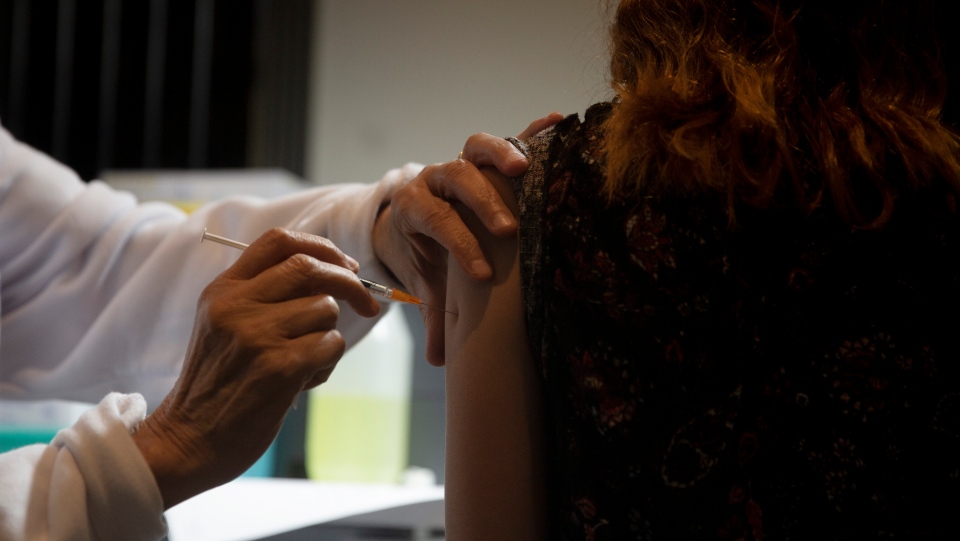
A medical professional administers a booster shot for the coronavirus vaccine, at Clalit Health Services, one of Israel's health maintenance organizations, in Jerusalem, Sunday, Aug. 15, 2021. (AP Photo/Maya Alleruzzo)


Skechers Donates $1 Million to Haiti Earthquake Relief Efforts
By Nikara Johns @NikaraJohns

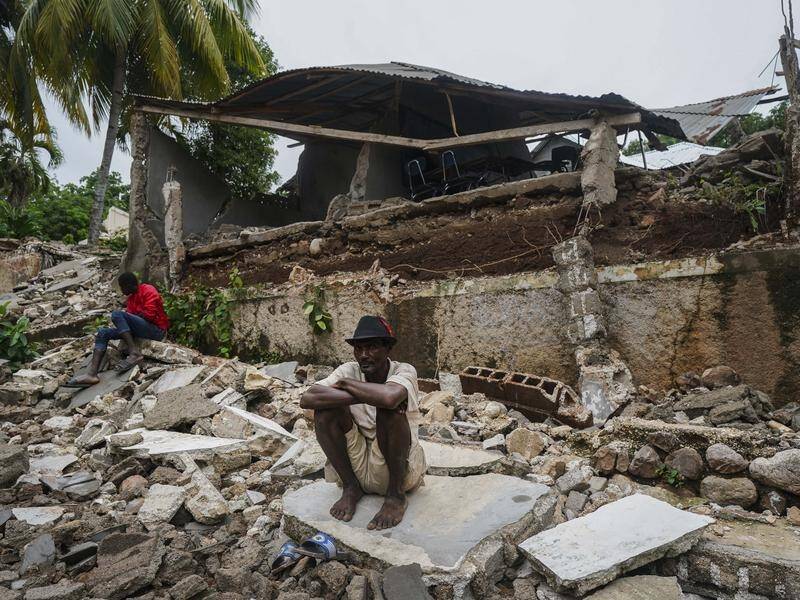
A man crouches on the rubble of the hospital destroyed by the earthquake in Haiti on Aug. 17.
CREDIT: AP

Skechers announced today that it supporting Haiti earthquake relief efforts with a $1 million donation. Over the weekend, a 7.2-magnitude earthquake hit the country and the death toll has since topped 2,000.

According to reports, more than 10,000 are injured and government officials estimate that 800,000 people have been affected by the earthquake. Aid has been slow to reach Haiti due to political turmoil as well as this week’s tropical storm Grace.

Skechers’ $1 million donation will be given to three charitable organizations that are working to provide Haiti with immediate assistance. Those include: CORE, Hope For Haiti and World Central Kitchen.

According to UNICEF, more than 84,000 homes were damaged or destroyed and over a half million children have been left without necessary food, shelter or clean water.

In addition to the $1 million, Skechers has launched the Million Dollar Challenge for Haiti with outreach through the Skechers Foundation and the creation of the Skechers Haiti Relief Fund to raise more money. Company employees, ambassadors, such as Howie Long, Meb Keflezighi, Brooke Burke and Jon Gruden, and licensees, including United Legwear and Apparel Company, Fossil Group, ONSKINERY GmbH and Floriey Industries, have already contributed.

“As soon as we heard about the devastation on Saturday, it was clear that Skechers needed to step up and help the people of Haiti,” Michael Greenberg, president of Skechers, said in statement. “This is just a kickoff. We are expecting to raise significant additional funds through the Million Dollar Challenge for Haiti — one that will encourage our ambassadors, partners and employees to donate with us as the need is tremendous. We are so proud of our associates and affiliates around the globe. We know that our teams and partners will come through for the people of Haiti whose lives have been upturned. Skechers is a culture of caring and making a difference is paramount to who we are.”

Non-profit Soles4Souls and Kenneth Cole are also collecting donations.
MORE STORIES BY NIKARA
Kenneth Cole, Soles4Souls Reveal Aid Plans for Haiti After Devastating Earthquake

Saturday’s devastation is Haiti’s worst earthquake in a decade. Just over 10 years ago, an earthquake hit Haiti, killing more than 200,000 people and displacing millions of its citizens.


Haiti's killer quake shows the reality of the disaster divide


Bryan Walsh
AXIOS
Wed, August 18, 2021, 

Disasters like the earthquake that struck Haiti on Aug. 14 are caused by nature but exacerbated by human inaction.

Why it matters: Natural disasters will always be with us — and some will be worsened by the effects of human-made climate change — but it's well within our power to keep them from becoming mass killers.

Driving the news: The 7.2-magnitude earthquake that struck southwestern Haiti has affected more than 1 million people and killed at least 1,941, though the number will surely rise in the days and weeks ahead.

What's happening: Much of Haiti's vulnerability stems from geographical factors that can't be changed — its location in the Caribbean puts it frequently in the path of tropical storms like the one that struck just days after the Aug. 14 quake, while it also sits on multiple seismic fault zones.

But what makes those disasters such killers has less to do with geography than with the country's extreme poverty and resulting inability to invest in preparation and adaptation to those risks.

According to the 2020 World Risk Report by the United Nations University, Haiti ranked 22nd overall in the world for risks from natural disasters, but ninth in lack of coping capacities — the ability to respond to a disaster — and eighth in lack of adaptive capacities.

Be smart: What's true of Haiti is true of the world more generally — what makes an earthquake or a storm or a flood or a drought truly deadly is poverty and everything that comes with it.


That's one reason why a richer and better-prepared region like the Bay Area in California can suffer a 6.9-magnitude quake in 1989 and lose 63 people, while Haiti lost hundreds of thousands in 2010 after a quake that was just slightly stronger.

The big picture: In the early to mid-20th century, the annual global death toll from disasters often reached 1 million or more per year, but over the past decade, the death toll has rarely risen above 10,000 per year.


The decline is even more impressive against the rate of global population growth — even as billions more people have been added to the planet, they're less likely to die in disasters.

And while the economic toll of natural disasters has generally risen over the past 40 years, that's in large part a function of a much richer world having more property in harm's way, with the result being that disaster losses as a share of global GDP have declined along with deaths.

What's next: While wealth is a powerful shield, it's not impenetrable, and climate change is likely to amplify many kinds of disasters in ways that severely stress rich countries — and punish poor nations even more.

Aftermath of earthquake in Haiti is ‘much worse’ than 2010 earthquake says Ann Young Lee
    
Aug 19, 2021
Washington Post Live
The CEO of CORE said the destruction left by the recent 7.2-magnitude quake is made more difficult by covid, political unrest in the country and widespread food insecurity.
“It really recalls [the earthquake] 2010 in a lot of ways but in so many more ways it’s much worse. Just the fact that we are seeing an incredible amount of destruction in homes and people that are still trapped under the rubble. To layer on top of that, the insecurity that’s making it difficult for the humanitarian assistance to get in, along with the huge amount of food insecurity that’s been happening that last few years.”


Haitian Earthquake 2021: The human and economic fallout from the disaster

Haiti was wracked by a major 7.2 magnitude earthquake on Aug 14, leaving over 2,100 dead, injuring thousands, and destroying the homes of millions of people across the island. The country’s economy and society were still struggling from the devastation of the 2010 earthquake, and while several other crises have hit the country, the most recent quake has exacerbated problems. See the cost of the most recent quake.


The death toll in Haiti after last weekend's devastating earthquake is now over 
2-thousand.
The quake has now claimed at least 2-thousand-189 lives as of Wednesday.
However, over 300 people are still missing.
On Thursday, a U.S. helicopter carrying aid, medicine, and volunteers in Haiti.
Tensions escalated as desperate people tried to swarm the airport to try and get supplies.
Police had to fire warning shots to disperse them.

One of the few orthopedic surgeons in Haiti was abducted by gang members Wednesday in Port-au-Prince, leaving dozens of patients injured during Saturday's 7.2-magnitude earthquake without anyone to treat them.

The victim, Dr. Workens Alexandre, works at the Bernard Mevs Hospital, where 45 of its 48 patients are waiting to have orthopedic surgery, The Associated Press reports. There has been an increase in gang violence in Haiti this year, and one official at the hospital told AP some health care workers, worried about their safety while driving to and from the hospital, have been staying on site for several days at a time.

On Tuesday, an obstetrician on his way to perform an emergency cesarean in Port-au-Prince was abducted by gang members, and because he was unable to get to the hospital, his patient and her baby died. Dr. Ronald La Roche, founder of the DASH network of hospitals, told AP he is "furious" at the gang members, adding, "They are responsible for the death of this woman and her child." In protest of the abductions, La Roche said his hospitals will be closed for two days to non-emergency cases.

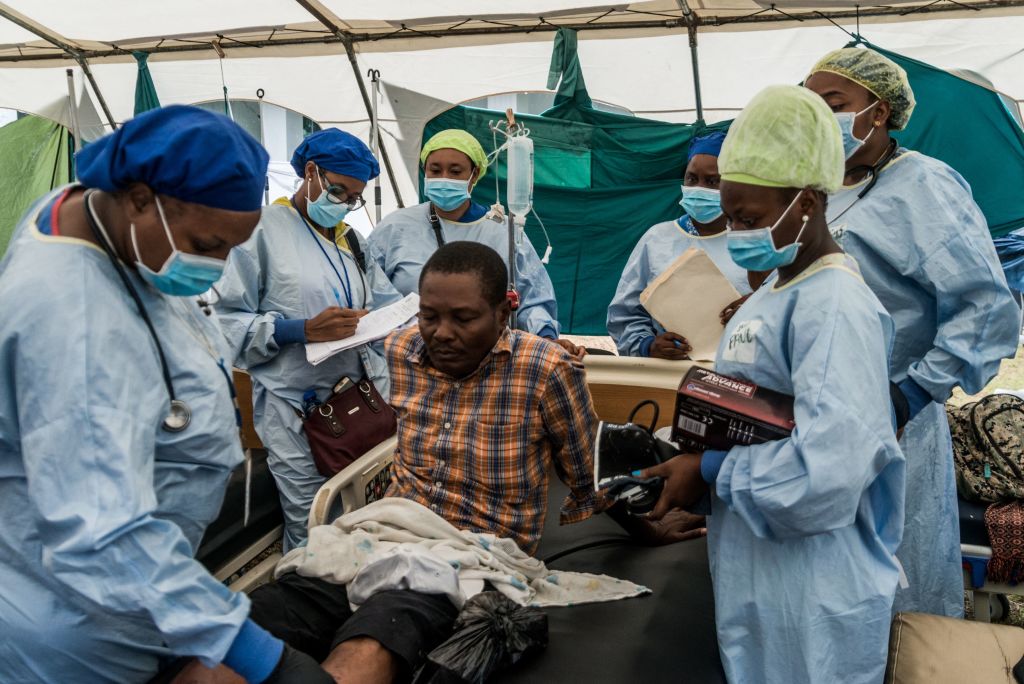
The death toll for the earthquake is close to 2,200, and that number is expected to rise. More than 12,000 people were injured, leaving hospitals already dealing with COVID-19 patients overwhelmed. AP reports that the families of the abducted doctors have been contacted by the kidnappers, but it is unclear how much they are asking for ransom.

Dr kidnaps force closure of quake hospital


MARK STEVENSON and EVENS SANON
AUGUST 20 2021 - 
 
A man crouches on the rubble of the hospital destroyed by the earthquake in Fleurant, Haiti.

Two doctors at hospitals treating earthquake victims in Haiti's capital have been kidnapped, forcing one of the institutions to a declare a two-day shutdown in protest, officials say.

The abductions Tuesday and Wednesday dealt a major blow to attempts to control criminal violence that has threatened disaster response efforts in Port-au-Prince.

Dr Workens Alexandre, who was seized, was among the country's few orthopedic surgeons, desperately needed for quake victims with broken limbs.

An official at the Bernard Mevs Hospital said 45 of the 48 quake victims being treated at the facility needed orthopedic surgery.

Gangs in the rough Martissant neighbourhood on the capital's outskirts had announced a truce earlier in the week to allow aid efforts to through to the the southwestern part of Haiti, which has hit hardest by Saturday's earthquake.

It was unclear if those gangs were involved in the latest abductions, but the founder of the DASH network of affordable hospitals, Dr Ronald La Roche, said criminals have engaged in kidnappings far beyond Martissant.

The Tuesday kidnapping of another doctor, an obstetrician who was on his way to perform an emergency Caesarean delivery, occurred in Petionville, long considered one of the safer and wealthier areas of the capital. The doctor's patient and her child both died due to the delay in treatment.

"We are furious at these people," La Roche said of the kidnappers. "They are responsible for the death of this woman and her child."

Of the supposed truce with gangs in Martisan, he said "we cannot depend on that."

"We feel that the gangsters are getting more daring. They are working now in Petionville, the centre of the city," said La Roche, whose network of eight hospital and clinics will close to non-emergency cases to protest the kidnapping.

The DASH hospitals are treating 27 earthquake victims, and they - and any emergency cases - will continue to receive care.

Kidnappers have contacted the families of both doctors, but there is no information on ransom demands.

The official at the Bernard Mevs Hospital, who asked not to be identified because of safety concerns, said the problem has gotten so bad that a program has been set up so that doctors can stay in hospital rooms for two or three days to avoid the risk of travel.

The quake has killed nearly 2,200 people and injured over 12,000. The abductions in Port-au- Prince directly affect the transfer of patients from the overwhelmed hospitals in the south to the capital, the last hope for the most severely injured.

Prime Minister Ariel Henri, himself the former head of neurosurgery at Bernard Mevs Hospital, had already recognised that the government cannot depend on the gang truce.

"I have already given orders that for travelling from Port-au-Prince to the south, security be provided on the route from Martisan to the worst hit areas," he said.

Australian Associated Press

How Haitian organizations are leading their own relief efforts
The earthquake in Haiti has revived anger over the aid response to the country’s 2010 disaster. Here’s how Haitian residents are leading recovery efforts now.

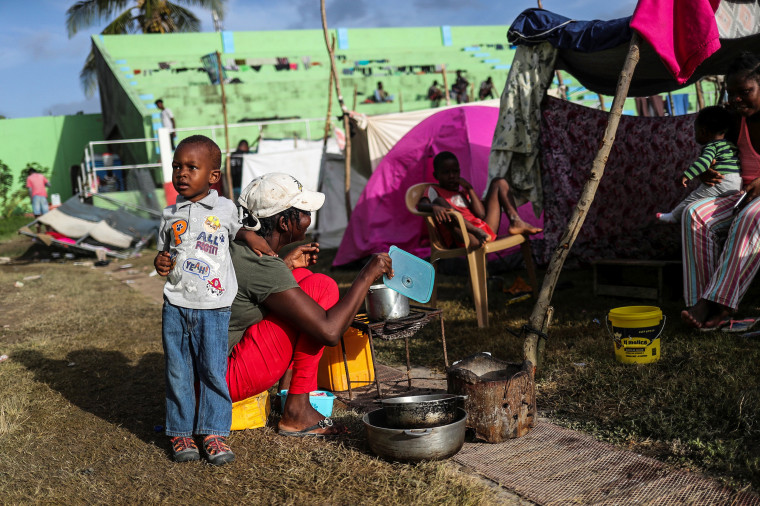
An evacuated woman prepares breakfast next to her son in the stadium used as shelter after Saturday's 7.2 magnitude quake, in Les Cayes, on Aug. 18, 2021.Henry Romero / Reuters


Aug. 18, 2021, 3:31 PM MDT / Updated Aug. 19, 2021
By Char Adams

Organizations in Haiti are on the front lines as the Caribbean country struggles to find its footing after the weekend’s 7.2-magnitude earthquake killed hundreds of people, injured thousands more and leveled homes and buildings. And a tropical depression packing heavy rain and wind is further complicating the earthquake response.

The devastation has revived anger over relief efforts after Haiti’s last massive earthquake, in 2010, which was estimated to have killed 200,000 people. Activists and others have urged the public to donate and provide resources to local organizations and groups directly connected to people in the country rather than give to large, disconnected organizations.


“It’s like we’re living this nightmare, reliving 2010, all over again, just in a different part of the country,” said Katiana Anglade, development and operations director for the Lambi Fund of Haiti, which provides resources to Haitian community groups.

“We all had concerns with the foreign aid that was coming in then. The money wasn’t disseminated in a way so people who actually needed it could get it. Do we know what happened to it? No one does,” Anglade said. “That’s why a lot of people now who want to help are making the necessary efforts to do the research and find grassroots organizations and Haitian-led organizations to donate to, where it will provide immediate relief to people who need it.”
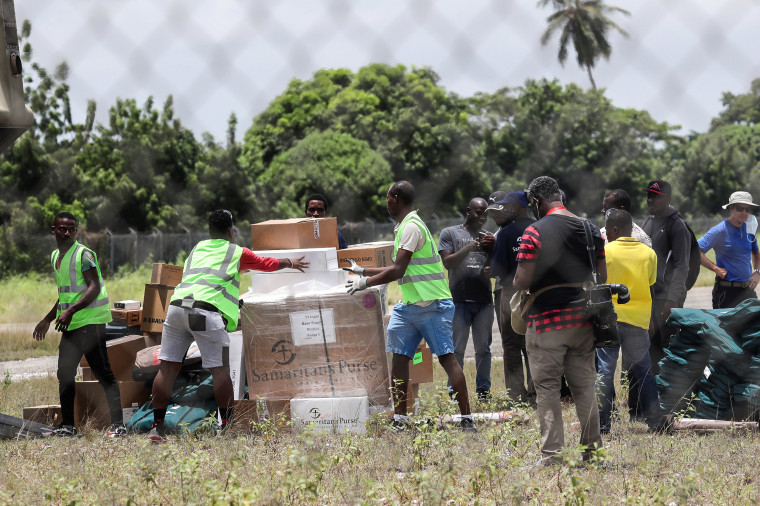
Workers unload humanitarian aid from a U.S. helicopter at Les Cayes airport in Haiti on Aug. 18, 2021.Henry Romero / Reuters

Saturday’s earthquake struck 78 miles west of the capital, Port-au-Prince, according to the U.S. Geological Survey, killing at least 2,189 people and injuring more than 12,000. The disaster struck as the country was still struggling to recover from the massive 2010 earthquake close to Port-au-Prince.

In the months leading up to the earthquake, Haitians were dealing with the Covid-19 pandemic, worsening poverty and the assassination of the president. Anglade said many Haitians were displaced, wandering through the rubble and seeking clean water. Lambi, whose main office is in Port-au-Prince, has been working with community groups to provide clean water and other aid.

The botched aid response after the 2010 earthquake made headlines. An NPR and ProPublica report found that the American Red Cross’ promise to help Haiti rebuild ended up in “poorly managed projects” and millions of dollars missing. The Red Cross said then that it had provided homes for more than 130,000 people, but, according to the report, it built only six permanent homes. Haitians told NPR and ProPublica that they hadn’t seen any results after the Red Cross promised a $13 million development effort in the northern part of the country.

As a result, activists have warned the public against donating to the American Red Cross. In a statement to NBC News, it said that it “strongly disputes” claims that it mismanaged funds after the 2010 disaster and that it is working with the Haitian Red Cross, the global Red Cross and the Red Crescent network to help earthquake victims. Officials noted that the American Red Cross isn’t accepting financial donations for Haiti and highlighted the difficulties of providing aid.

“The American Red Cross is heartbroken that a 7.2 magnitude earthquake struck the southern region of Haiti on Saturday,” the statement began. “Several factors complicate the humanitarian response, including multiple aftershocks having struck the area with at least four being a magnitude of 5.0 or higher. Emergencies of this scale remind us that disaster relief is a team effort. Organizations big and small each have a role to play to ensure gaps are filled.

Race to reach Haitians cut off after deadly earthquake, major storm
AUG. 18, 2021 01:21

The organization provided a breakdown of its 2010 aid spending, which shows it spent about $148.5 million in the first six months after the earthquake to provide food, water, medical care and emergency shelter. The breakdown also shows that millions of dollars were put toward shelter projects and food distribution.

Lambi is one of many groups that sprang into action to provide medical care, food, clothing and other resources, including Fonkoze, HaitiOne, the Haiti Emergency Relief Fund, the What If Foundation and the Health Equity International St. Boniface Hospital, which operates out of St. Boniface Hospital in Fond-des-Blancs. Most of the groups’ members are Haitian themselves, highlighting the importance of community members’ being heavily involved in rebuilding and repair efforts. Conor Shapiro, president of the Health Equity International, said that international aid has been scarce since the tragedy but that communities are banding together to help one another.

“Our team has been responding since the moment the earthquake hit on Saturday morning. We are receiving patients from all of the impacted areas,” Shapiro said, adding that the hospital's 525-person all-Haitian staff has seen earthquake victims with crushed limbs, massive blood loss and other injuries.

“We have people arriving constantly. We’ve seen over 30 emergency quake-related cases since Saturday. We anticipate many, many more over the next several days,” he said. “Of course, we also have our normal patient load — around 500 people daily, including births, emergency C-sections and, of course, Covid patients.”

The American Red Cross’ 2010 earthquake response wasn’t the only aid effort to have drawn criticism. An Associated Press report in 2010 found that less than 1 cent of each dollar the U.S. gave for Haiti’s earthquake relief was actually going to the country in the form of cash to the government.
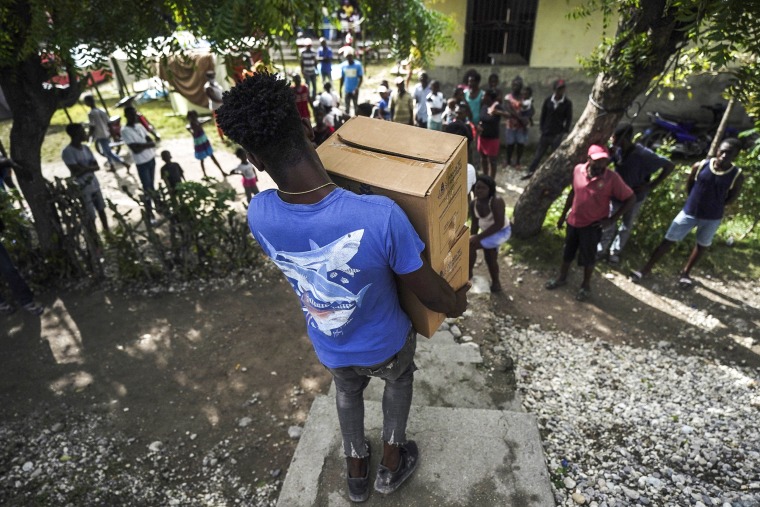
A man carries two of about 20 boxes of food aid from the city government to cook on site for residents displaced by the earthquake staying in improvised tents next to a school in Les Cayes, Haiti on Aug. 18, 2021.Fernando Llano / AP

Bill Clinton co-chaired the Interim Haiti Recovery Commission, with the U.S. promising Haiti a new port, an industrial park and a power plant to promote economic development, The Guardian reported in 2019. Plans for the industrial park all but failed; the operation even evicted about 366 families to make room for the project, according to a report from ActionAid, an international non-governmental organization that works to combat poverty. Plans for the port faltered, and the power plant’s progress was slow — it now powers only a limited area, and officials are trying to privatize it, according to the U.S. Agency for International Development.

Meanwhile, grassroots Haitian organizations like Na Rive, which is connected to the What If Foundation, stepped in to immediately give emergency relief in 2010 and today are providing mobile clinics to help earthquake victims.

Haitian residents with HaitiOne, an alliance of hundreds of churches, schools and nonprofit organizations, have built over 1,000 homes since the 2010 earthquake. Since Saturday, the organization has helped transport victims to hospitals, sent out thousands of meals and provided tents, tarps, sleeping bags, wheelchairs, water and medical supplies, HaitiOne President Brad Johnson said. The group is working to help rebuild schools and churches in the area.

“When you look at the problems we had in 2010, a lot of people who raised a lot of money weren’t working in Haiti. They raised money, then had to figure out how to work in Haiti, where the organizations that we’re primarily working with in Haiti are already in Haiti, and they’re going to be in Haiti in 10 years,” Johnson said.

“The funding goes a lot further when you’re letting a Haitian who knows the country and cares about their country spend it,” he said. “We want to hire Haitians, we want to support Haitians to do the work, and if you can do that, you can see the entire economy change for all people, versus so much of the money never getting to Haiti.”

Follow NBCBLK on Facebook, Twitter and Instagram.

Aid struggles to reach remote areas of Haiti quake zone
Haiti’s Convenient Disaster

Last weekend’s earthquake was a catastrophe. But for the country’s political class, it came at exactly the right time.

By Jonathan M. Katz, the author of the upcoming Gangsters of Capitalism: Smedley Butler, the Marines, and the Making and Breaking of America’s Empire.


A soldier stands over debris during rescue efforts after a 7.2-magnitude earthquake struck Haiti and Tropical Storm Grace moves over Jamaica in Les Cayes, Haiti, on Aug. 17. RICHARD PIERRIN/GETTY IMAGES

AUGUST 18, 2021, 

The difference between Saturday’s deadly earthquake in Haiti and the far more catastrophic one 11 years ago was about 50 miles. The 2010 earthquake’s epicenter was close to Port-au-Prince, Haiti’s capital and home to roughly a third of the country’s nearly 10 million people at the time. The 2021 temblor was farther along Haiti’s rural southern peninsula, near the town of Petit-Trou-de-Nippes. Despite releasing nearly twice as much energy than the earlier earthquake, it affected far fewer people in smaller cities like Les Cayes and Jérémie and even smaller surrounding villages and towns. This was still very bad for people in those places but a lucky break for those living in the capital. Earthquakes, like much in life, depend on where you stand.

For officials of Haitian Prime Minister Ariel Henry’s so-called caretaker government, the earthquake may have seemed like a particularly lucky break, not only because they and their homes were largely spared. The powerful shock offered a disruption—and perhaps a not-unwelcome distraction—from a political crisis that was threatening to spiral out of their control.

Henry, a 71-year-old neurosurgeon, had been nominated for the number-two job by then-Haitian President Jovenel Moïse just over a month ago on July 5. Two days later, Moïse was gunned down in his home. The assassination set off a frantic search for the perpetrators as well as a scramble for political power. In Haiti, that power doesn’t always mean much: Its leaders have long been made to answer to external forces, especially the United States, or risk being overthrown. Henry was made the country’s de facto leader on July 20—not by any Haitian democratic process but under pressure from a press release by the so-called Core Group: a consortium of ambassadors from the United States, France, Canada, Germany, Brazil, Spain, the United Nations, the Organization of American States, and the European Union, who, in the absence of a president or functioning parliament (and sometimes with them in place), call the shots.

None of this had been going particularly well in the weeks between the assassination and earthquake. Henry is still surrounded by, and was himself a part of, the same coterie of officials who served the late president—who came into office in a fraudulent, super low participation election five years before and whose popularity only plummeted from there. They served at the pleasure of the equally unpalatable, extremely tiny Haitian business elite, whose stranglehold on the country’s import-dependent economy gives them far more power than the nominal government.

Moïse’s position, and all of theirs, also relied on the third vertex of the triangle: the armed street gangs whose role in silencing critics and defending the government has become so blatant that major gang leader Jimmy “Barbecue” Chérizier openly led a rally of more than 1,000 mourners in the capital, where he vowed vengeance on behalf of his slain ally, Moïse, in late July. The precariousness of the government’s position and the exhausted and angry Haitian masses are likely why almost immediately following the assassination, the governing clique asked for a U.S. military intervention on its behalf. (U.S. President Joe Biden and U.S. Defense Secretary Lloyd Austin, busy with the now-unraveling withdrawal from Afghanistan, demurred.)

The investigation into Moïse’s assassination was also in shambles when the earthquake struck. Despite having quickly rounded up more than 40 suspects—including 18 Colombian mercenaries allegedly skilled enough to evade bodyguards and carry out Haiti’s first presidential assassination in over a century yet unprofessional enough to get almost immediately captured or killed—no one has yet been taken to court. Meanwhile, as the Washington Post reported on Aug. 8, some judges and clerks investigating the assassination have gone into hiding, “fearing for their lives and claiming they faced pressure to tamper with reports.” The farrago of investigation, cover-up, and revenge raised the immediate specter of a political operation aimed not primarily at finding perpetrators but eliminating would-be rivals.

The new earthquake may put an end to all of that. Political jockeying in the retraumatized capital will likely die down. Foreign powers’ appetite for a politically delicate—perhaps personally embarrassing—investigation into Moïse’s assassination can now likely be delayed even further if not completely swept under the rug. All eyes still on Haiti are now on the mostly rural quake zone, where the injured are in dire need of care and bodies are still being pulled out of the rubble.

Hampering—and thus prolonging—the crisis response is the affected areas’ remoteness from the capital, which is also the location of the nearest major airport. Few roads go in and out, and some of those that do were damaged by the earthquake or blocked by landslides provoked by the endless string of aftershocks. Making matters more delicate, the only road out of Port-au-Prince to the southern peninsula goes through Martissant, an impoverished area controlled by gangs. That means any materials or people meant to be transported to or from Port-au-Prince will have to be transported in coordination with, or at least with permission from, the gangs and their sponsors.

The earthquake victims, not to mention the rest of the Haitian majority, are left basically on their own. Haitian communities have an incredible capacity for self-reliance—one forged out of necessity in the face of repeated abandonment. Hospitals and civil protection officials are ill equipped. The so-called government can do little. Because Moïse refused to hold a single election, at any level, during his presidency, there are only 10 elected officials left in the entire country—all of them senators. (He simply appointed mayors to oversee districts like Les Cayes.) There is little accountability to Haiti’s citizens and few formal mechanisms left to ask for help.

That may occasion a renewed request for U.S.—and specifically U.S. military—involvement from the caretaker government. (I reached out to a few Haitian officials to see if such a renewed request was planned; the individual who got back to me said he did not know.) Biden has put U.S. Agency for International Development Administrator Samantha Power in charge of the Haiti operation. She tweeted on Saturday night that she had spoken to the head of U.S. Southern Command, Adm. Craig Faller, “about the impact of today’s earthquake in #Haiti and how the @DeptofDefense could support @USAID’s response.” Perhaps the hoped-for U.S. military intervention could be in the offing after all.


READ MORE
Haiti’s Foreign Language Stranglehold

Around 90 percent of Haitians speak only Haitian Creole. So why is school mostly conducted in French?   ARGUMENT | BENJAMIN HEBBLETHWAITE

Or perhaps things could go in an entirely different direction. With the death toll from the southwestern quake still horrific but apparently much lower than its predecessor (the latest count stood at 1,941 deaths), and foreign officials and media preoccupied with Afghanistan’s collapse, the prospects of a massive response in Haiti seem slim. So does the prospect of another flood of donations from the U.S. public on the scale of 11 years ago. But given the terrible results of that response, and the fact that only a tiny fraction of the money raised after the 2010 quake ever reached survivors or Haitian organizations, little will be lost if the same experience isn’t repeated now. Perhaps the relatively smaller, relatively more remote disaster will give space for local and Haitian-run organizations to take charge, and even create an opening for a new politics from below. On Tuesday, Barack Obama—who as president oversaw the top-heavy 2010 response and the manipulation of the ensuing Haitian presidential election—tweeted out a list of mostly local and locally-run organizations for his followers to donate to. It isn’t much, but it’s a start.


Jonathan M. Katz is a journalist. He is the author of The Big Truck That Went By: How the World Came to Save Haiti and Left Behind a Disaster. His next book, Gangsters of Capitalism: Smedley Butler, the Marines, and the Making and Breaking of America’s Empire, will be published in January by St. Martin’s Press. His newsletter, The Long Version, can be found at katz.substack.com. Twitter: @KatzOnEarth

Oxygen plant among earthquake-damaged buildings in Haiti

Posted 

LES CAYES, Haiti (AP) — As if Haiti’s 7.2 magnitude earthquake, a tropical storm and the coronavirus pandemic weren’t enough, the temblor damaged the only medical oxygen plant in the southern part of the country.

The building that housed the oxygen concentrator machines that the region depended on partially collapsed, and the machines were upended. The Etheuss company is run by the a family famous for their vetiver perfume oils plant in the city of Les Cayes, one of the areas hardest hit by Saturday's earthquake.

“We are trying to get the oxygen production started again. That is our responsibility, because many people depend on it,” said Kurtch Jeune, one of the brothers who run the plant, as he showed reporters through the damaged, rubble-strewn plants on Thursday.

The quake left concrete pillars and roofs at the facility leaning, and cement block rubble battered the tanks, electrical system and the delicate web of copper tubing that fills vital oxygen plants. “The oxygen generators are upside down,” Jeune said. “We did get a promise of help from the public works department to get the rubble out with excavators.”

Jeune said that, apart from two medical oxygen plants in the capital, Port-au-Prince, his factory was the only one serving local hospitals. As the COVID-19 pandemic grinds on, Jeune says demand for oxygen has gone up 200% in the last month.

“We have the capacity to supply 40 oxygen cylinders per day,” Jeune said. “We supply several hospitals.”

The powerful earthquake that struck Haiti's southwestern peninsula killed at least 2,189 and injured 12,268 people, according to official figures. More than 300 people are estimated to still be missing, said Serge Chery, head of civil defense for the Southern Province, which includes the small port city of Les Cayes.

More than 100,000 homes were damaged or destroyed, leaving about 30,000 families homeless, according to official estimates. Hospitals, schools, offices and churches also were demolished or badly damaged.

The earthquake was trailed by a tropical storm that brought heavy rain and strong winds at the beginning of the week.

Private relief supplies and shipments from the U.S. government and others began flowing more quickly into Haiti on Thursday, but the Caribbean nation’s entrenched poverty, insecurity and lack of basic infrastructure still presented huge challenges to getting food and urgent medical care to all those who need it.

Adding to the problems, a major hospital in the capital of Port-au-Prince, where many of the injured were being sent, closed for two days beginning Thursday to protest the kidnapping of two doctors, including one of the country’s few orthopedic surgeons.

The abductions dealt a blow to attempts to control criminal violence that has threatened disaster response efforts in the capital.

Further, a group of 18 Colombian volunteer search-and-rescue workers had to be escorted out of the quake-hit city of Jeremie under police protection after a false rumor circulated that they had been involved in the July 7 assassination of President Jovenel Moise. The workers took shelter Wednesday night at a civil defense office, and police escorted them to the airport on Thursday.

Moise’s killing, still unsolved, is suspected of being carried out by a group of Colombian mercenaries. Despite what happened to the Colombian rescue workers, Haiti is welcoming “everyone who is coming to bring assistance,” said Jerry Chandler, the head of the national Civil Protection Agency.

Health care facilities in the Western Hemisphere poorest nation were already at a critical point before the earthquake because of the pandemic. The country of 11 million people has reported 20,556 cases and 576 deaths of COVID-19, according to Johns Hopkins University.

Haiti received its first batch of U.S.-donated coronavirus vaccines only last month via a United Nations program for low-income countries.

The rest of Jeune’s factory, which produces an essential oil used in fine perfumes, was also badly damaged.

The family’s business processes bales of beige, stringy roots culled from the vetiver plant toil.

Vetiver oil is also used for cosmetics, soaps and aromatherapy. It generates an estimated $12 million in revenue a year and employs anywhere from 15,000 to 60,000 farmers.

The damage to the factory threatens Haiti’s already perilous rural economy, plagued by drought, soil erosion and tropical storms.

Haiti produces more than 70 tons of vetiver oil a year, surpassing Indonesia, China, India, Brazil and the neighboring Dominican Republic. It is one of the country’s top exports, with up to 10,000 hectares (24,700 acres) harvested annually. But more than 60% of the crop still comes from individual producers, many of whom are struggling financially, according to Gabriel Gelin, a spokesman for the United Nations Environment Program in Haiti.

___

Associated Press writer Regina Garcia Cano in Mexico City contributed to this report.


Tensions rise in Haiti over trickle of aid following quake and storm


A traffic sign pokes out from the debris of a landslide triggered by Saturday’s 7.2 magnitude earthquake, alongside a road in Rampe, Haiti 
(Matias Delacroix/AP), © AP/Press Association Images

19/08/2021 |
BY MARK STEVENSON AND EVENS SANON, ASSOCIATED PRESS

Tensions have been growing in Haiti over the slow pace of aid reaching victims of a powerful weekend earthquake that killed more than 2,100 people and was trailed by the drenching rain of Tropical Storm Grace.

Aid has trickled in, but distributing food and getting urgent medical care to those in need is another matter amid the deep poverty, insecurity and lack of basic infrastructure that characterised Haiti before the back-to-back disasters.

A major hospital in the capital of Port-au-Prince, where injured from the earthquake zone in the southwestern peninsula were being sent, was closed for a two-day shutdown to protest the kidnapping of two doctors, including one of the country’s few orthopaedic surgeons.

The tension is increasingly evident in the area hit hardest by Saturday’s quake.

At the small airport in the southwestern town of Les Cayes, people thronged a perimeter fence Wednesday as aid was loaded into trucks and police fired warning shots to disperse a crowd of young men.

Angry crowds also massed at collapsed buildings in the city, demanding tarps to create temporary shelters after Grace’s heavy rain.

Haiti’s Civil Protection Agency late Wednesday raised the number of deaths from the earthquake to 2,189 and said 12,268 people were injured.

A boy grimaces in pain, at the Immaculee Conception hospital in Les Cayes, Haiti 
(Matias Delacroix/AP)

Dozens are still missing.

The magnitude 7.2 earthquake destroyed more than 7,000 homes and damaged more than 12,000, leaving about 30,000 families homeless, according to official estimates. Schools, offices and churches also were demolished or badly damaged.

One of the first food deliveries by local authorities, a couple dozen boxes of rice and pre-measured, bagged meal kits, reached a tent encampment set up in one of the poorest areas of Les Cayes, where most of the one-story, cinderblock, tin-roofed homes were damaged or destroyed.

But the shipment was clearly insufficient for the hundreds who have lived under tents and tarps for days.

“It’s not enough, but we’ll do everything we can to make sure everybody gets at least something,” said Vladimir Martino, a camp resident who took charge of the distribution.

Gerda Francoise, 24, was one of dozens who lined up in the wilting heat for food.

“I don’t know what I’m going to get, but I need something to take back to my tent,” said Ms Francoise.

“I have a child.”

A man stands close to the rubble of a collapsed building in Jeremie, Haiti (Matias Delacroix/AP)


International aid workers said hospitals in the worst-hit areas are mostly incapacitated, requiring many to be moved to the capital for treatment.

But reaching Port-au-Prince from the southwest is difficult under normal conditions because of poor roads and gangs along the route.

Even with a supposed gang truce following the earthquake, kidnapping remains a threat, underscored by the seizure of the two doctors working at the private Bernard Mevs Hospital in Port-au-Prince, where about 50 quake victims were being treated.

The country’s prime minister Ariel Henry said Wednesday his administration will try not to “repeat history on the mismanagement and coordination of aid”, a reference to the chaos after the country’s devastating 2010 earthquake, when the government and international partners struggled to channel help to the needy amid the widespread destruction and misery.

Meanwhile, the Core Group, a coalition of key international diplomats from the US and other nations that monitors Haiti, said in a statement that its members are “resolutely committed to working alongside national and local authorities to ensure that impacted people and areas receive adequate assistance as soon as possible.”

Distributing the aid to the thousands left homeless will be challenging.

“We are planning a meeting to start clearing all of the sites that were destroyed, because that will give the owner of that site at least the chance to build something temporary, out of wood, to live on that site,” said Serge Chery, head of civil defence for the Southern Province, which covers Les Cayes.

“It will be easier to distribute aid if people are living at their addresses, rather than in a tent.”

The mountainside shows landslides triggered by the quake (Matias Delacroix/AP)

Mr Chery said an estimated 300 people are still missing.

While some officials have suggested an end to the search phase so that heavy machinery can clear the rubble, Mr Henry appeared unwilling to move to that stage.

“Some of our citizens are still under the debris. We have teams of foreigners and Haitians working on it,” he said.

He also appealed for unity.

“We have to put our heads together to rebuild Haiti,” Mr Henry said.

“The country is physically and mentally destroyed.”

Switzerland dispatches aid team to earthquake-hit Haiti

 
The 7.2 magnitude earthquake has left a trail of destruction in Haiti. 
Copyright 2021 The Associated Press. All Rights Reserved

Switzerland has sent a team of seven specialists to Haiti as the death toll from a recent earthquake tops the 2,000 mark.

This content was published on August 19, 2021 - 
swissinfo.ch/mga

The 7.2-magnitude earthquake that hit the southwestern part of the country on Saturday has also injured around 12,000 people and displaced thousands more.

The Swiss Agency for Development and Cooperation (SDC) team sent on Thursday consists of a logistician, two water and sanitation specialists, two structural engineers, a disaster area adviser and a team leader.

“Haiti is a priority country for the SDC, which immediately mobilised its staff on the ground – including architects, emergency shelter and disaster risk reduction specialists – to support the Haitian civil protection services in assessing needs,” read a press statementExternal link on Thursday.

Efforts are underway in Port-Salut and the Cayes district to deploy 3,250 tarpaulins and two drinking water distribution points of 5,000 litres in the areas that were at the epicentre of the earthquake.

Switzerland has also confirmed that it plans to spend CHF1 million ($1.1 million) to fund emergency relief, with half of this amount earmarked to support International Federation of Red Cross and Red Crescent Societies and United Nations activities.

The Catholic Church charity Caritas said on Thursday that it has raised CHF300,000 for the victims of the earthquake.

The Swiss authorities have not so far received any requests for support from Swiss citizens living in Haiti.