Saturday, October 23, 2021

CRIMINAL CAPITALI$M BIG PHARMA BIOTECH
Jury gets chance to hear Elizabeth Holmes’ bold promises



 In this Tuesday, Aug. 31, 2021, file photo, Elizabeth Holmes, founder and CEO of Theranos, arrives at the federal courthouse for jury selection in her trial, in San Jose, Calif. A jury weighing the fate of fallen Silicon Valley star Holmes got its first chance Friday, Oct. 22, to listen to recordings of her boasting to investors about purported breakthroughs in a blood-testing technology. (AP Photo/Nic Coury, File)

SAN JOSE, Calif. (AP) — A jury weighing the fate of fallen Silicon Valley star Elizabeth Holmes got its first chance Friday to listen to recordings of her boasting to investors about purported breakthroughs in a blood-testing technology.

The technology heralded as a quantum leap in blood testing, however, later dissolved into a scandal that now threatens to send her to prison.

The drama unfolded in a San Jose, California, courtroom with federal prosecutors playing a series of recordings from a December 2013 conference call that Holmes held with investors in Theranos, the company she started in 2003 after dropping out of college at 19 in hopes of becoming a revered visionary in the mold of Apple co-founder Steve Jobs.

The audio clips of Holmes capped the sixth week of a high-profile trial revolving around allegations that Holmes duped sophisticated investors and major retailers with bogus promises about a Theranos device dubbed Edison. The company’s machine was supposed to be able to quickly scan for hundreds of potential health problems with a few drops of blood taken with a finger prick.

In the recordings, Holmes — speaking in a husky voice that some critics said she adopted to sound more authoritative — boasted about partnerships with big pharmaceutical companies such as Pfizer that evidence in the trial has revealed didn’t pan out. She also mentioned contracts that never materialized because Theranos couldn’t get the Edison to work properly. The device’s repeated failures disillusioned former U.S. Defense Secretary James Mattis, a former Theranos board member ally who testified earlier in the trial.

“We could establish what has the opportunity to be the largest lab in the country,” Holmes told investors in one of the clips played Friday. She laid out that ambition just a few months after Theranos had struck a deal to set up blood-testing “wellness centers” in Walgreens stores across the country.

But Theranos wound up in only 40 Walgreens stores. After investing $140 million in Theranos, Walgreens wound up ending the Theranos alliance in 2016, not long after a series of explosive articles in The Wall Street Journal and regulatory audits exposed chronic flaws in the blood-testing technology.

Before everything blew up, Holmes raised hundreds of millions of dollars from a list of investors that included billionaires such as media mogul Rupert Murdoch, the Walton family behind Walmart, and Oracle co-founder Larry Ellison. The clips played Friday were recorded by Bryan Tolbert, an adviser to Dallas real estate developer Carl Hall, who invested $7 million in Theranos.

The flurry of investments at one point valued privately held Theranos at $9 billion, including a $4.5 billion stake owned by Holmes. Now she is facing up to 20 years in prison if she is convicted in a trial that is scheduled to continue until late this year.

As she has done throughout the trial, Holmes on Friday sat stoically alongside her lawyers while her voice filled the courtroom. She has yet to have a reason to speak during the trial, though her attorneys have signaled she make eventually take the witness stand to defend her actions as Theranos’ CEO.

Holmes, 37, has denied any wrongdoing, and blamed any misconduct on her former boyfriend, Ramesh “Sunny” Bulwani, who was Theranos’ chief operating officer. In court documents, Holmes’ lawyers have asserted she was manipulated by Bulwani, a charge his lawyer has vehemently denied. Bulwani faces a separate trial next year.

The jury that listened raptly to the recordings of Holmes was whittled down Friday when U.S. District Judge Edward Davila dismissed one member for an undisclosed reason. Originally composed of 17 people, including five alternates, the jury is now down to 10 men and four women.


Elizabeth Holmes trial Week 7 recap: a $1 billion IPO plan, and a former staffer testifies he was told to change numbers to make test results seem normal


Theranos founder Elizabeth Holmes and her partner Billy Evans stand outside a courtroom with a crowd of people nearby
Theranos founder Elizabeth Holmes and her partner Billy Evans leaves the Robert F. Peckham U.S. Courthouse after the delivery of opening arguments in her trial, in San Jose, California, U.S., September 8, 2021. Peter DaSilva/Reuters
  • The seventh week of Theranos founder Elizabeth Holmes' fraud trial has come and gone.

  • It featured revelations on plans for a $1 billion IPO and ways staff tried to skirt testing issues.

  • Here's everything that happened in the trial in its seventh week.

How Theranos tried to make unusual test results seem normal

Daniel Edlin, a college friend of Elizabeth Holmes' brother, Christian, and Theranos' former senior product manager, was pressed on his previous testimony about measures taken when guests like investors or business partners wanted to see the devices in action.

He spoke of a "demo app" that hid Theranos machine errors from view during demonstrations, as well as "null protocol," which meant the machines didn't actually analyze the samples, according to The New York Times. Edlin testified that, from there, Theranos staff would tell the guests their samples needed further analysis, and the blood would be sent to a lab, as Insider's Adam Lashinsky reported.

Jurors also saw emails from 2013 between Edlin, Holmes, former Theranos vice president Daniel Young, and former Theranos COO and president Ramesh "Sunny" Balwani.

In one email, Edlin pointed out a discrepancy in test results. Holmes replied, "The discrepancy will be a problem. We need to see if we can correct for it." Young asked Edlin to change the reference ranges on some of the results, which made results appear to fall within the normal range when they were actually abnormal.

Plans for a $1 billion IPO

Bryan Tolbert, the vice president of finance at investment firm Hall Group, which had invested $5 million in Theranos in 2013, testified that he had gathered from a meeting with Holmes that Theranos had raised $16 million in its first round, according to Law360 reporter Dorothy Atkins. His meeting notes also showed Theranos expected to raise $30 million in a second funding round with an eventual plan to go public in 2008 via an IPO valued at $1 billion.

Former Pfizer scientist unsure who approved Theranos' use of logo

Shane Weber, a former director of diagnostics at Pfizer, testified that he discouraged any deals with Theranos in a report about the now-defunct startup.

"Theranos unconvincingly argues the case for having accomplished tasks of interest to Pfizer," he wrote, according to The Wall Street Journal. Holmes' attorneys had repeatedly asked Judge Edward Davila to keep jurors from seeing the report, but Davila ultimately allowed prosecutors to present it.

Weber also wrote that Theranos was "non-informative, tangential, deflective or evasive" in its answers to due diligence questions.

Jurors also heard about Theranos' use of Pfizer's logo in a company report, implying that Pfizer had validated and supported Theranos' technology. The report boasted about Theranos machines' "superior performance," but Weber said he had never authorized the Pfizer logo use, and he didn't know of anyone at Pfizer who had, according to the East Bay Times. The report was later shared with Walgreens and other investors.

Theranos technology put to the test for possible use in the military

Some Theranos machines were sent to Africa to see if they could withstand high temperatures common in combat. Theranos had been having discussions with the Defense Department about possible uses of the company's machines in the military.

Theranos employees' emails, however, said the machines "did not have a way to cool down" and might run into performance issues if they operated outside of the range between 72 and 82 degrees, according to The Wall Street Journal.

A third juror departs

Yet another member of the 12-person jury has been dismissed. On Friday, a juror was excused and replaced with an alternate. This is the third juror to depart the trial; two of five alternates now remain with the case at roughly its halfway point. Judge Davila said there was "good cause" to excuse the juror but didn't provide a specific reason, according to CNBC. Each departure raises concerns about a possible mistrial.

You can catch up on Week 1 hereWeek 2 hereWeek 3 hereWeek 4 hereWeek 5 here, and Week 6 here. You can read how Holmes wound up on trial here and see the list of potential witnesses hereEverything else you need to know about the case is here.

Condoleezza Rice’s CRT stance proves she’s a foot solider for white supremacy

Touré
Fri, October 22, 2021

OPINION: Touré writes we are debating about whether we should teach our children real American history or if we should lie to them and protect their fragile white hearts.

Condoleezza Rice’s recent appearance on The View was offensive and disgusting for many reasons but she was who we thought she was: a soldier for white supremacy. Her thoughts on Critical Race Theory are completely white centric, as in, they revolve around the thoughts and needs of white people.

Her primary argument against Critical Race Theory is that history should not be taught in a way that makes white kids feel bad. What? We should whitewash U.S. history to protect the feelings of white children? Excuse me, I misspoke — we should whitewash U.S. history even more than we already do in order to protect the feelings of white children?


First of all, what about the feelings of Black children? What would their feelings be if they knew they were being taught a version of American history that was distorted to protect white kids? What message does that send to them? And what about the feelings they have when learning about the real American history?

Also this — white children and adults should absolutely feel bad about the past atrocities committed by white Americans. They should feel guilty. They should cringe at what their ancestors did. They should also understand that modern white power is directly related to those atrocities. White people gained economic and institutional advantages from slavery and segregation and the long-term subjugation of Black people that continue to help them to this day.


(Photo by Alex Pantling/Getty Images)

White people should know that American history is rated X and their relatives are the one who Black people had to fear. They didn’t arrive and have a nice dinner with the natives and buy Manhattan for a few trinkets.

The Europeans who settled early America made treaties with American Indians and then violated those treaties and slaughtered the natives as rapidly as possible. They didn’t merely own slaves and treat them kindly. They had a cruel and peculiar institution that kidnapped and human trafficked and then beat and raped and subjugated humans for generations.

Slavery was far more cruel and frightening than most people even know unless you read diaries written by former slaves. And the past is not done with us — slavery created the economy and the wealth that led to America becoming a global economic power. You didn’t have to own slaves in order to participate in that wealth-building but all of the wealth derived from it went to white people and was thus stolen from Black people.


In this Aug. 18, 2017, photo, a statue of Confederate Gen. Nathan Bedford Forrest sits in a park in Memphis, Tenn. (AP Photo/Adrian Sainz, File)

American history is a series of cycles where white people grow more powerful because of the legalized oppression of Black people. American history is a series of stories where white people knock us down and stand on our necks and then ask why we’re on the ground. If we don’t know history we don’t understand reality and how it was constructed. I really don’t care if learning this makes white kids feel bad — and if it doesn’t then they are too heartless.

Also this — yes the teaching of American history can sometimes make people feel bad. Terrible things happened and it’s traumatizing. We should not hide the truth from our kids; we should aim to teach them what happened and then, together, deal with how we feel about it. Because even if the history initially makes you feel bad, that’s not enough of a reason to not teach it.

I recall many days where I learned more about slavery or segregation or Jim Crow or lynchings, days in grade school or in college where I was a Black Studies major. I often walked out of a classroom in a rage, thinking about the indignities visited upon my ancestors. But when I calmed down I realized those lessons had filled me with a sense of purpose —knowing what my people had gone through from slavery to the Civil Rights and Black Power movements made me feel like I had to do something valuable with my life in order to honor the fights and the sacrifices they had made.


(Photo: Adobe Stock)

I could feel the shoulders that I was standing upon to reach up for the life that I had and I owed it to them to use my life in a way that might honor them and make them proud.

On The View, Rice suggests that learning about America’s racial history could make Black children feel disempowered by race but it had the exact opposite impact on me. Just because the stories are hard to hear does not mean that it will damage the listeners.

Our classrooms should not be another example of white privilege, they should reflect the ugly reality of American history. But really the whole discussion is bizarre — we are debating about whether we should teach our children real American history or if we should lie to them and protect their fragile white hearts.

I cannot accept a country that contorts itself to avoid causing white pain. I’m not here to help comfort white people. And Lord knows I am never, ever going to center them.


Touré, theGrio.com
Touré is the host of the podcasts Toure Show and Democracyish and the podcast docuseries Who Was Prince? He is also the author of six books.

Friday, October 22, 2021

Underwater volcanic activity reveals ghost ships from WWII in Japan

Naomi Ludlow, USA TODAY
Fri, October 22, 2021

Seismic activity of underwater volcano Fukutoku-Okanoba created a small island and revealed sunken warships from World War II about 808 miles from Tokyo, according to Vice Magazine.

The warships were from the Battle of Iwo Jima, an island roughly 760 miles from Japan's capital city, and considered the bloodiest battle in U.S. Marine's history, according to the National WWII Museum.

Although the ships are not a new discovery, the last time they were visible was 35 years ago because of seismic activity.

The ships were used byJapan to prepare for an invasion of U.S. troops. During the 1945 battle, the Marines seized the island and killed 20,000 Japanese soldiers.


Iwo Jima remains uninhabited except for members of the Japanese military.

According to the Japanese Coast Guard, the newly formed island is hardened lava and has already started to sink. It is made of pumice and volcanic ash that erodes easily by surrounding elements.

The islet was originally 0.62 miles and is now half its size.
Trump social network given 30 days to stop breaking software license


Nihal Krishan
WASHINGTON EXAMINER
Fri, October 22, 2021

Former President Donald Trump's new social media platform, TRUTH Social, has been given 30 days to comply with the software's terms of license before its access is terminated. If it fails to comply, the platform may face legal action or have to rebuild from scratch.

Trump Media and Technology Group, a new company started by the former president, announced Wednesday it would soon launch TRUTH Social, a new platform aiming to "stand up to the tyranny of Big Tech." The site is being built with the open-source software Mastodon.

The Software Freedom Conservancy, a nonprofit organization that provides support and legal services for open-source software, said Friday that while anyone can use Mastodon's code for free to build online platforms, they must comply with its license that requires offering the user's own source code, which TRUTH Social has not done.

TRUTH Social refers to its platform and software code as "proprietary." Unless it changes its approach and opens up its code for users to view within 30 days, the platform can no longer use the Mastodon software it has been built upon.

“The license purposefully treats everyone equally (even people we don’t like or agree with), but they must operate under the same rules of the copyleft licenses that apply to everyone else,” Bradley Kuhn, policy fellow and hacker-in-residence at Software Freedom Conservancy, wrote in a blog post. “Today, we saw the Trump Media and Technology Group ignoring those important rules — which were designed for the social good.”


TRUMP'S SOCIAL MEDIA PLATFORM, TRUTH SOCIAL, OVERWHELMED BY TROLLS IN FIRST HOURS

Although TRUTH Social hasn't launched yet — it is requiring users to join a waitlist — users on Thursday managed to access a trial version of the platform to create prank accounts and fake announcements, including grotesque posts from a fake Donald Trump account.

If TRUTH Social does not open up its source code for users to access within the next 30 days and continues to use the Mastodon software, the conservancy would have grounds to sue the Trum
p Media and Technology Group for violating the terms of the software license.

“We will be following this issue very closely and demanding that Trump’s Group give the corresponding source to all who use the site,” Kuhn wrote.

Trump is banned from almost every major social media platform — including Facebook, Twitter, YouTube, and Reddit — because of his role in the Jan. 6 Capitol riots. As a result, he has been eager to return to social media after struggling to get his message out to the public for the past few months.

"We live in a world where the Taliban has a huge presence on Twitter, yet your favorite American President has been silenced. This is unacceptable," Trump said earlier this week. "I am excited to send out my first TRUTH on TRUTH Social very soon. TMTG was founded with a mission to give a voice to all."
Apaches ask appeals court to oppose transfer of Arizona land


This June 15, 2015, file photo shows in the distance, part of the Resolution Copper Mining land-swap project in Superior, Ariz. An attorney for members of the San Carlos Apache tribe on Friday, Oct. 22, 2021, asked the 9th U.S. Circuit Court of Appeals in San Francisco to back a nonprofit group's efforts to halt a pending transfer to a copper mining company a piece of central Arizona land the Apaches consider sacred. 
(AP Photo/Ross D. Franklin, File)

ANITA SNOW

Fri, October 22, 2021

PHOENIX (AP) — An attorney for members of the San Carlos Apache tribe on Friday asked the the 9th U.S. Circuit Court of Appeals in San Francisco to back a nonprofit group’s efforts to keep a copper mining company from gaining federal Arizona land the Apaches consider sacred.

“We are talking about the survival of the Apache people,” attorney Luke Goodrich told the panel, arguing that an end to religious activities on the land known as Oak Flat would help spell an end to the tribe.

Joan Pepin, an attorney for the U.S. government, argued the land transfer must go ahead because it was part of legislation approved by Congress. The land has been set to be transferred to Resolution Copper, as part of a provision in a must-pass 2014 defense bill, once the final environmental impact statement is published.

The three-member panel did not immediately release a ruling. The judges will now confer in private and write a decision that may not be issued for as long as three months.

Goodrich said the group could take the case to the Supreme Court if the appeals court sides with the U.S. Forest Service, the agency that has planned the land transfer.

Apache Stronghold, a nonprofit organization representing tribe members, sued the federal government in Phoenix federal court in January to block the pending transfer of the land near the community of Superior, which the Apache tribe says is important to its religion.

The group has hoped to stop publication of the final environmental review that would let the transfer proceed.

“Our work continues,” Apache Stronghold leader Wendsler Nosie, Sr. said after Friday's hearing, encouraging all tribal governments and tribal members to stand together. “We have heard loud and clear (the government's) position."

U.S. District Judge Steven Logan in February rejected a request from Apache Stronghold to keep the U.S. Forest Service from transferring the land to Resolution Copper, a joint venture of global mining giants BHP and Rio Tinto.

Attorneys for the Forest Service have argued in filings that the land legally belongs to the United States and that transferring its own property isn’t a substantial burden to the Apache group’s ability to practice its religion.


But Apache tribal members argue otherwise.

They call the mountainous area Chi’chil Bildagoteel. The land has ancient oak groves and traditional plants that tribal members say are essential to their religion and culture.


Resolution Copper has said it would not deny Apaches access to Oak Flat after it receives the land and for as long as it’s safe. But the project would eventually swallow the site in a deep hole, something that ultimately would make any visits impossible.

Resolution Copper has said the mine could have a $61 billion impact over the project’s expected 60 years and employ up to 1,500 people. It would be one of the largest copper mines in the United States.
EXPLAINER: California proposes limits on community drilling

By KATHLEEN RONAYNE

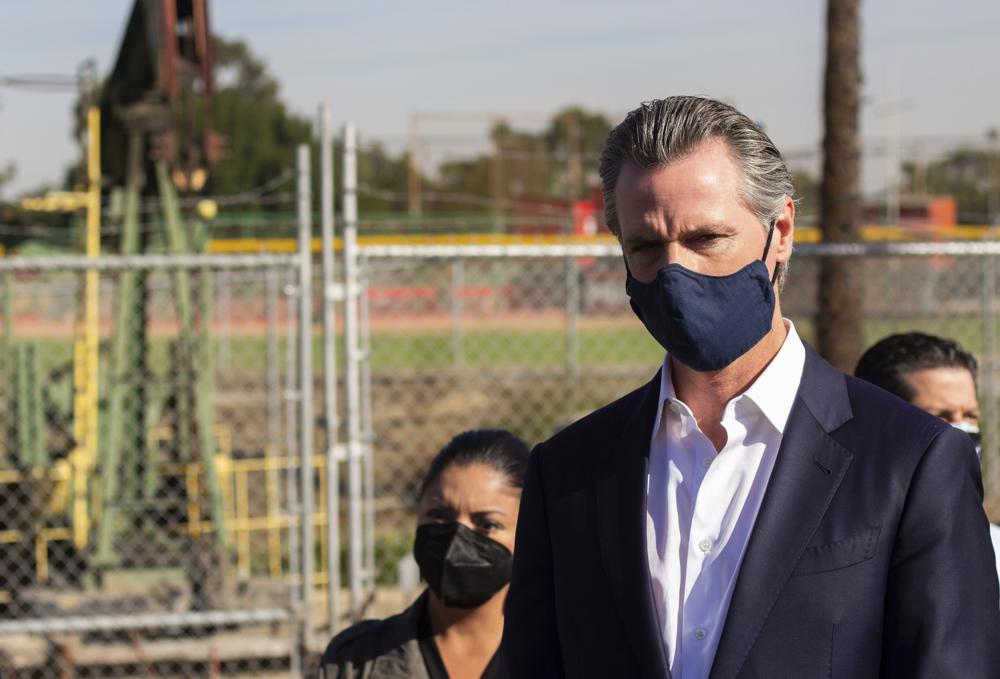
California Gov. Gavin Newsom speaks near oil fields by the Wilmington Boys & Girls Club Thursday, Oct. 21, 2021, in Wilmington, Calif. California's oil and gas regulator on Thursday proposed that the state ban new oil drilling within 3,200 feet of schools, homes and hospitals to protect public health in what would be the nation's largest buffer zone between oil wells and communities 
(Hunter Lee/The Orange County Register via AP)

SACRAMENTO, Calif. (AP) — An ambitious plan by California regulators to block new oil and gas wells within 3,200 feet (975 meters) of schools and homes is drawing protests from the oil industry and plaudits from environmentalists, who still want the state to go further.

But the plan released Thursday is just a first step, and things are far from settled. Here’s a look at what’s in the proposal, how it came about and what’s next:

WHAT WOULD HAPPEN UNDER THE PLAN?


It adopted as written, the state would stop allowing new oil and gas wells to be drilled within 3,200 feet of K-12 schools and daycares, homes and dorms, health care centers such as hospitals or nursing homes, and public-facing businesses.

It wouldn’t stop existing drilling within those zones but would create more than a dozen new pollution control measures designed to limit the negative health effects for people who live nearby.

WHY WAS IT PROPOSED?

Democratic Gov. Gavin Newsom has made bold pronouncements about his desire to wean the state from oil and gas production and use, declaring that oil won’t be part of the state’s future. When he took office in 2019, he told the state’s oil and gas regulator to make health and safety part of its mission. This proposal flows from that.

It would create the largest buffer zone around oil drilling and community sites in the nation if adopted, something the governor and his administration have touted repeatedly.

A 15-member panel of experts, including scientists and public health leaders, concluded that living within 3,200 feet, or about 1 kilometer, of oil and gas drilling increased the risks for respiratory problems or birth complications, based on studies conducted in California and other oil-producing states like Texas and Pennsylvania

Some people who live near drilling sites say they experience nosebleeds, headaches, respiratory issues and other problems.

WHAT WOULD HAPPEN TO EXISTING WELLS?


Wells that fall within the 3,200-foot zone wouldn’t have to close down. But they would have to meet new pollution controls. Administration officials say they hope those rules will prompt some well owners to shut them down.

One of those controls is a leak detection and response plan that would require operators to detect for chemicals such as methane or hydrogen sulfide with an alarm system. Operators would have to suspend use of the well or production facility until a leak is corrected and the state’s oil regulator gives the OK to resume. They must notify the community if the leak isn’t stopped with 48 hours.

Other controls include preventing and recovering the release of vapors, keeping sound and lighting low between 8 p.m. and 7 a.m., and conducting water sampling.

WHEN DOES IT TAKE EFFECT?


Not for a while — and it could change. The proposal released Thursday will now go through a 60-day public comment period, followed by an economic analysis and another year of bureaucratic wrangling. The final rule won’t take effect until at least 2023, and oil drillers would have a year or two to comply with the strictest parts.

WHERE IS THIS HAPPENING?

There are more than 18,000 active oil and gas wells in California within 3,200 feet of community sites, mostly in Los Angeles County and the Central Valley, particularly in oil-rich Kern County.

Low-income Californians and communities of color are the most likely to live in neighborhoods with oil drilling. In some places, people live right next door or across the street from drilling operations, exposing them to loud sounds, foul smells and, sometimes, emissions.

Oil development began in Los Angeles as early as the 1890s, said Bhavna Shamasunder, a professor of urban and environmental policy at Occidental College who focuses on environmental justice research. City planners allowed oil development to occur alongside residential and commercial buildings, with little to no environmental considerations, she said. Wealthier communities often had more power to fight development.


WHAT DO ENVIRONMENTAL GROUPS SAY?

Environmental groups are pleased with the proposed rules, but they plan to push the Newsom administration to go even further. They want to the state to block any new permits to do work at existing wells in the buffer zone except to plug and abandon them. Under the administration’s proposal, a well could get a permit to re-drill or go deeper.

They are also concerned about the eventual enforcement of the rule. The Geologic Energy Management Division, the state oversight body, has often faced pushback from critics who say it doesn’t do enough to regulate the oil industry.

Dan Ress, staff attorney at the Center on Race, Poverty and the Environment, said the proposal needs to be clearer about what happens to oil companies that break the rules for new pollution controls.

“There’s just a lot of these issues with enforcement that don’t make us comfortable trusting CalGEM,” Ress said.

WHAT ABOUT THE OIL COMPANIES?


The oil industry and its allies in organized labor, particularly the State Building and Construction Trades Council, are against the proposal. They warn it will reduce California’s access to reliable energy and raise prices. But they aren’t being specific on what changes they will push.

Kevin Slagle, a spokesman for the Western States Petroleum Association, said the oil industry lobbying arm would work toward regulations that consider “the unique needs of each community and region.” In other words, the group does not want a statewide rule. He said it was too early to know whether the petroleum association would file legal challenges.
INTERNECINE WARFARE KILLING CIVILIANS
Ethiopian airstrikes in Tigray force UN flight to turn back

By CARA ANNA

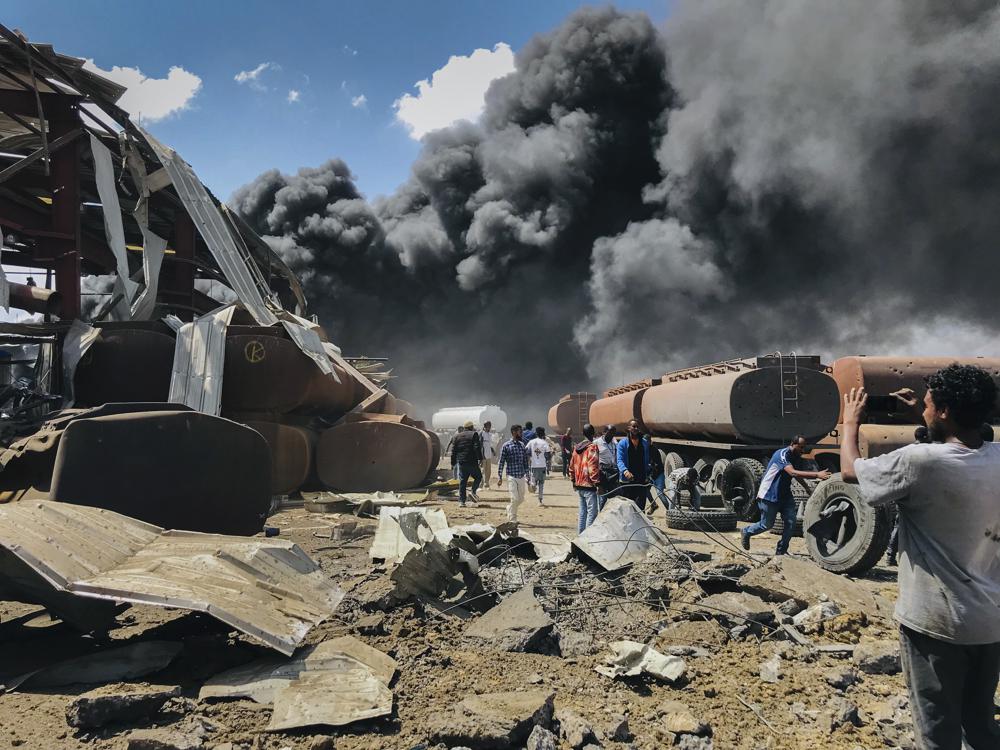
 In this Wednesday, Oct. 20, 2021 file photo, smoke from fires billows at the scene of an airstrike in Mekele, the capital of the Tigray region of northern Ethiopia Wednesday, Oct. 20, 2021. Aid workers say Ethiopian military airstrikes have forced a United Nations humanitarian flight to abandon its landing in the capital of the country’s Tigray region. A government spokesman confirms that authorities had been aware of the inbound flight. The development appears to be a sharp escalation in the intimidation tactics that authorities have used against aid workers amid the intensifying, year-long Tigray war. (AP Photo, File)


NAIROBI, Kenya (AP) — Ethiopian military airstrikes on Friday forced a United Nations humanitarian flight to abandon its landing in the capital of the country’s Tigray region, and a government spokesman said authorities were aware of the inbound flight. It appeared to be a sharp escalation in intimidation tactics authorities have used against aid workers amid the intensifying, year-long Tigray war.

Further U.N. flights have been suspended to Mekele, the base of humanitarian operations in Tigray, the World Food Program told The Associated Press. It said the flight with 11 passengers had been cleared by federal authorities but “received instructions to abort landing by the Mekele airport control tower.” It safely returned to Addis Ababa.

The friction between the government and humanitarian groups is occurring amid the world’s worst hunger crisis in a decade, with close to a half-million people in Tigray said to be facing famine-like conditions. The government since June has imposed what the U.N. calls a “de facto humanitarian blockade” on the region of some 6 million people, and the AP has reported that people have begun to starve to death.

Ethiopian government spokesman Legesse Tulu told the AP authorities were aware the U.N. flight was in the area but said the U.N. and military flights had a “different time and direction.” It wasn’t immediately clear how close the planes came to each other.

Tigray forces spokesman Getachew Reda in a tweet said “our air defense units knew the U.N. plane was scheduled to land and it was due in large measure to their restraint it was not caught in a crossfire.” He suggested that Ethiopian authorities were “setting up the U.N. plane to be hit by our guns.”

A military spokesman didn’t respond to questions.

Legesse said Friday’s airstrikes in Mekele targeted a former military training center being used as a “battle network hub” by rival Tigray forces. Residents said they hit a field near Mekele University. Tigray spokesman Kindeya Gebrehiwot told the AP about a dozen people were wounded.

Ethiopia’s government in recent months has accused some humanitarian groups of supporting the Tigray forces, and last month it took the extraordinary step of expelling seven U.N. officials while accusing them without evidence of falsely inflating the scale of the Tigray crisis. Authorities have subjected aid workers on U.N. flights to intrusive searches and removed medical cargo.

Meanwhile, the U.N. says just 1% of the targeted 5.2 million people in urgent need received food aid between Oct. 7 and 13. Now the airstrikes that began this week in Mekele have halted aid deliveries, humanitarian spokeswoman Gemma Connell told reporters, saying “not a single truck” has entered Tigray since Monday.

Thousands of people have been killed since November, when a political falling-out between the Tigray forces who long dominated the national government and the current administration of Prime Minister Abiy Ahmed erupted in fighting.

Tigray forces in recent months have retaken the Tigray region and brought the fighting into the neighboring Amhara and Afar regions. The U.N. says more than 2 million people are now displaced overall.

And yet “our operations will come to a grinding halt in the not so distant future” in Tigray if current conditions continue, Connell said.

The airstrikes in Mekele were the first in several months, killing three children and injuring more than a dozen people, despite repeated international calls for a cease-fire and the threat of further sanctions.

On Thursday, the government claimed a successful strike against another military base used by the Tigray forces near Mekele, but the Tigray forces spokesman asserted that air defenses prevented the plane from hitting targets.

An airstrike on Wednesday hit an industrial compound the government said was used by the Tigray forces to repair weapons. A Tigray spokesman denied that and said it was used to produce cars and tractors. Two other airstrikes hit the city on Monday.

Tigray remains under a communications blackout, making it difficult to verify claims, while areas of fighting in Amhara are largely unreachable as well.

The airstrikes come amid reports of renewed heavy fighting in Amhara. On Wednesday, the Tigray forces spokesman claimed advances had put the government-held towns of Dessie and Kombolcha “within artillery range,” prompting alarm.

Dessie hosts a large number of displaced people who have fled fighting further north. One resident told the AP he has seen many cars leaving the town with mattresses, cooking equipment and other household items strapped to their roofs in the last few days, but many displaced people are stuck because they can’t afford to leave.

He also reported plenty of vehicles carrying troops north to the front and the constant sound of shelling. He spoke on condition of anonymity for fear of retribution.


Amid air quality concerns, districts embrace electric buses

By MICHAEL CASEY

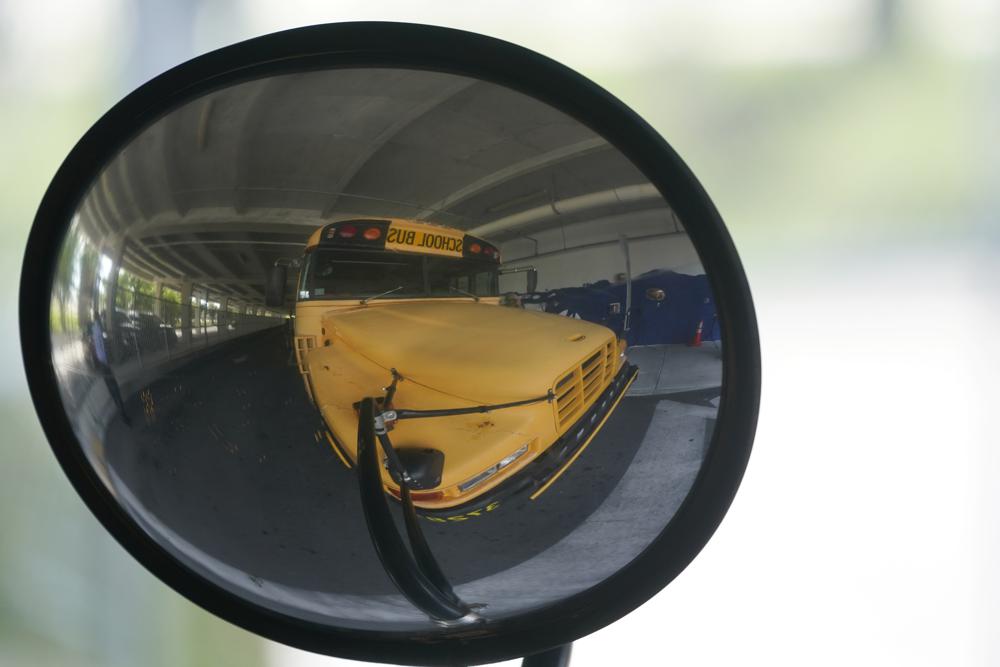
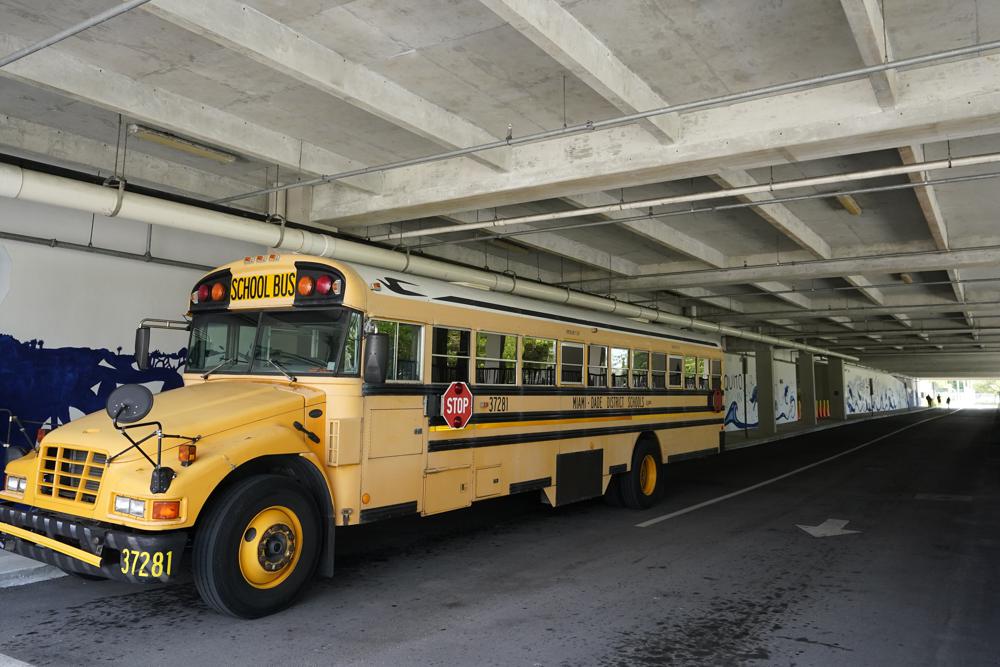
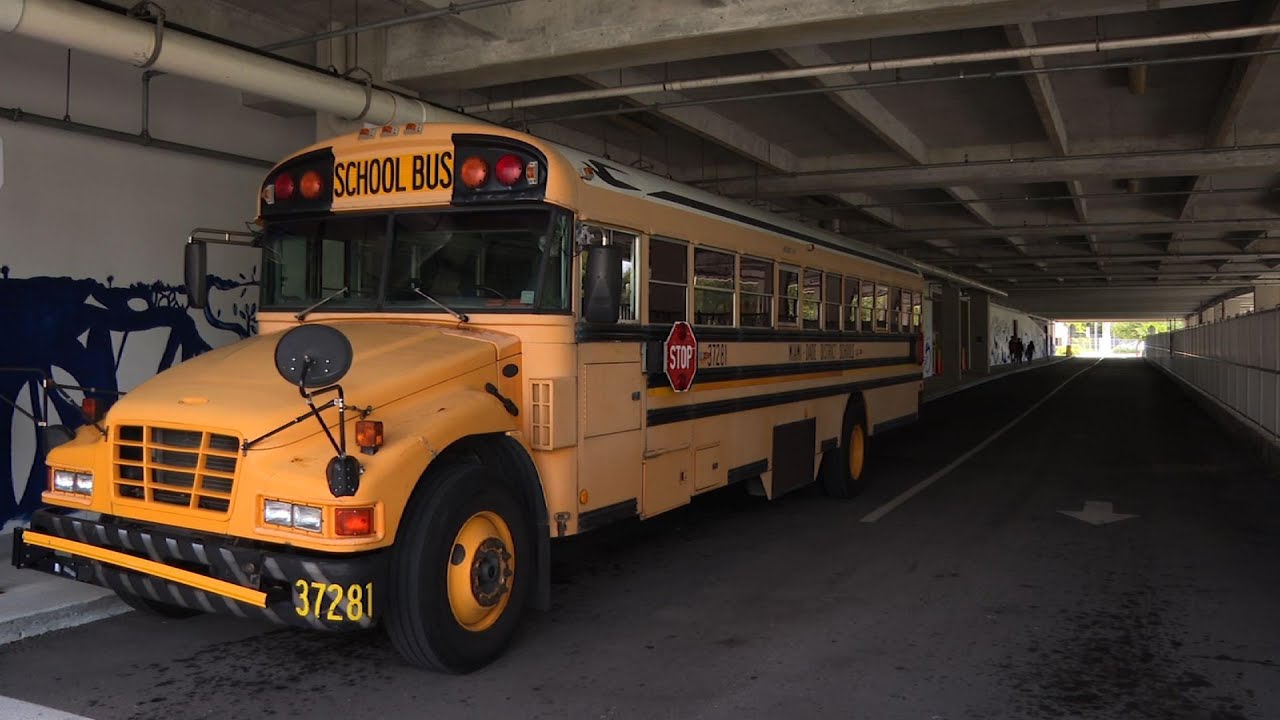
A diesel-powered school bus is reflected in a mirror at MAST Academy, Wednesday, Sept. 29, 2021, in Miami. 
 (AP Photo/Wilfredo Lee)

BOSTON (AP) — For several years, the Miami-Dade County Public Schools had toyed with replacing some of its 1,000 diesel buses with cleaner electric vehicles. But school leaders said the change would be too costly.

Then 12-year-old student Holly Thorpe showed up at a school board meeting to tout the benefits of going electric and returned to encourage the district to apply for a state grant.

Two years on, the school board on Wednesday approved a district plan to use state money to replace up to 50 diesel buses with electric models over the next several years.

Thorpe is overjoyed the district is making the switch. “It wasn’t imaginary any more,” she said. “It just wasn’t like an idea. It was coming to life.”

Holly Thorpe poses for a photo in front of a mural in the bus drop-off area at MAST Academy, that students painted with Carbon Dioxide (CO2) absorbing paint, Wednesday, Sept. 29, 2021, in Miami. Thorpe, 14, urged the Miami-Dade County Public Schools to considering replacing foul-smelling diesel school buses with electric vehicles. The school board voted this week to use a state grant to purchase up to 50 electric buses. Miami-Dade is joining a growing number of school districts transitioning from diesel to more environmentally-friendly electric school buses.
 (AP Photo/Wilfredo Lee)

The transition is part of a small but growing movement led by parents, students and lawmakers to purchase electric school buses to improve the health of students and cut planet-warming carbon dioxide emissions.

Roughly 25 million children ride school buses every year. And though only about 1% of 480,000 U.S. school buses are electric, there are signs the push to abandon diesel buses is gaining momentum:

— Late last year, the World Resources Institute announced a $37.5 million Bezos Earth Fund grant to help electrify all school buses in the country by 2030. The nonprofit will work over the next five years on the project with school districts, communities, environmental justice groups, utilities, bus manufacturers and policymakers.

— This year, a suburban Maryland district became the country’s largest to commit to going completely electric. It plans to replace 1,442 diesel buses by 2035. The first 326 electric ones will be leased from Massachusetts-based Highland Electric Transportation.

— California, the country’s electric school bus leader, has funded the purchase of 1,167 and budgeted for another 1,000 over the next three fiscal years.


“This is an opportunity to make sure that we are doing all we can to protect kids health,” said California Energy Commission member Patty Monahan. “Some of these kids in parts of Los Angeles are on the bus for an hour, two hours a day. So we want to make sure that they are breathing clean air.”

At Twin Rivers Unified School District in Northern California, where diesel buses have been replaced by 40 electric buses and 34 that run on compressed natural gas, officials say clouds of dirty air have disappeared.

“One of the drivers said ‘I can’t believe the change I’m seeing in my lifetime,‘” said Tim Shannon, the district’s director of transportation services. “He said ‘I used to have to hold a handkerchief over my face to walk through the yard because of the thick diesel soot.’”

The electric buses are 60% cheaper to operate and will pay for themselves over time, Shannon said.

Some districts are planning to sell excess energy from batteries back to the grid, a move welcomed by utilities who themselves have launched programs to buy electric school buses. This summer, a school bus in a Massachusetts district delivered power back to the grid.

Efforts to replace diesel school buses are driven by the fact that children are more susceptible to health impacts of air pollution. Exposure to diesel exhaust, according to the EPA, can lead to asthma and respiratory illnesses and worsen heart and lung ailments, especially in children and the elderly.

A study of school buses in Washington state found using cleaner fuels or upgrading older diesel reduced children’s exposure to airborne particles by as much as 50% and improved their health. Their findings suggest a nationwide switch to cleaner school buses could result in around 14 million fewer absences each year. The researchers at the universities of Washington and Michigan did not examine electric buses, which produce less local pollution than those using fossil fuels.

Lead author Sara Adar, an associate professor of epidemiology at the University of Michigan School of Public Health, said older diesel buses resulted in children in the Seattle area “getting higher levels of air pollution during their commute.”

“The pollutants those kids were experiencing also did seem to be linked to worse health,” she said. “We saw kids’ lungs weren’t quite as healthy.”

Diesel school bus engines are much cleaner, since the EPA implemented standards that required them to produce 90% less particulate matter. The EPA also has awarded $55 million to replace more than 2,700 old diesel school buses since 2012 and announced in October that $17 million more would be available.

With the improved standards, the diesel industry argues that switching to electric won’t significantly reduce emissions or address concerns about global warming — especially since electricity for buses still often comes from fossil fuels. They note that more than 54% of school buses are newer models with far fewer emissions.

“School districts should be able to choose the bus type and technology that works for them,” said Allen Schaeffer, executive director of the Diesel Technology Forum. “Some may find electric buses a good fit while others will stick with diesel and utilize low-carbon renewable fuels to cut their carbon footprint and other emissions.”

Advocates point out that nearly half of diesel buses are older ones that produce dangerous pollutants and are much more expensive to maintain. But they acknowledge the challenge is getting districts with older buses funds to transition to electric ones, which often cost three times more.


An electric school bus, leased by Beverly Public Schools in Beverly, Mass., rests in a bus yard, Thursday, Oct. 21, 2021, in Beverly, Mass. The district is planning to convert half its 44-bus fleet to electric by 2025 and the rest by 2030. Their transition is part of a trend in districts across the country to shift from diesel to electric school buses to improve air quality and combat climate change.
 (AP Photo/Michael Casey)

Many districts are eyeing funding from several bills in Congress.

The nearly $1 trillion infrastructure bill includes $5 billion for electric and hybrid school buses. Democratic U.S. Sen. Patty Murray, a former preschool teacher who chairs the Senate Committee on Health, Education Labor & Pensions, and other advocates want $5 billion more for electric school buses in President Joe Biden’s $3.5 trillion rebuilding plan.

Several congressional bills would provide billions more for electric school buses.

Some states, including Florida and Virginia, are buying electric buses with billions of dollars from the Volkswagen settlement of its diesel emissions cheating scandal.

Miami-Dade Superintendent Alberto Carvalho said the district will use $11.6 million from the settlement to start buying electric buses, but said a full transition would be impossible without federal help.

“If we as a nation prioritize environmental protection, the reduction of greenhouse gases, the maximization of new technologies that reduce our dependency on carbon fuels, then the federal investment must incentivize these transitions with actual funding,” he said. “And that’s exactly what our country needs. That’s exactly what Miami needs.”

___

#WATERISLIFE
Big tech data centers spark worry over scarce Western water

By ANDREW SELSKY and MANUEL VALDES

1 of 10
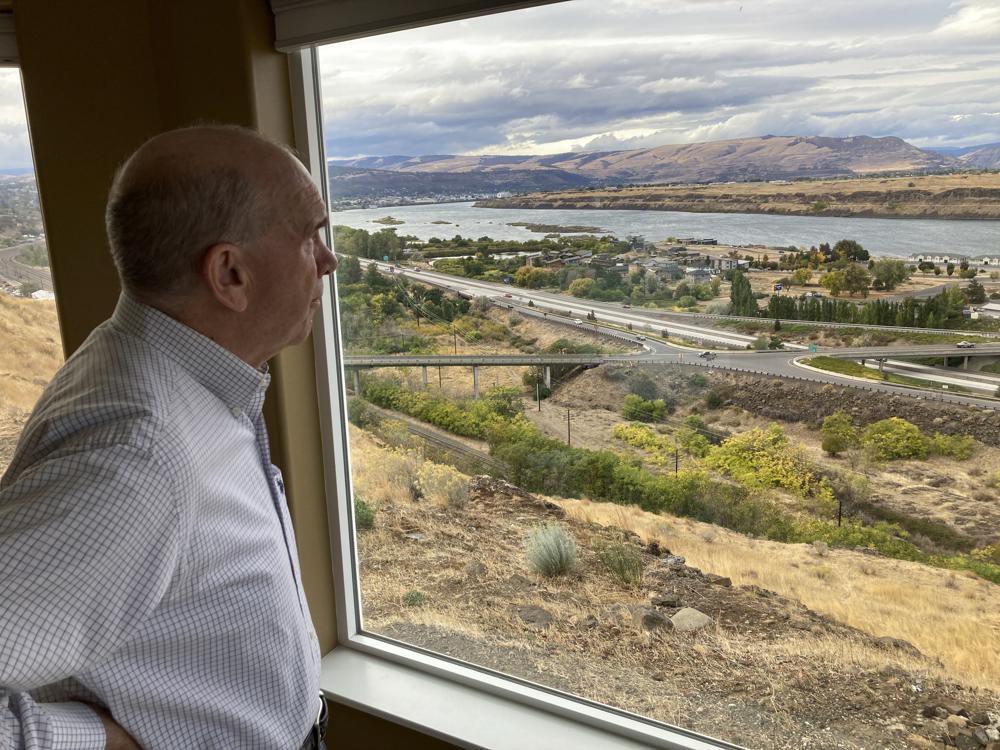
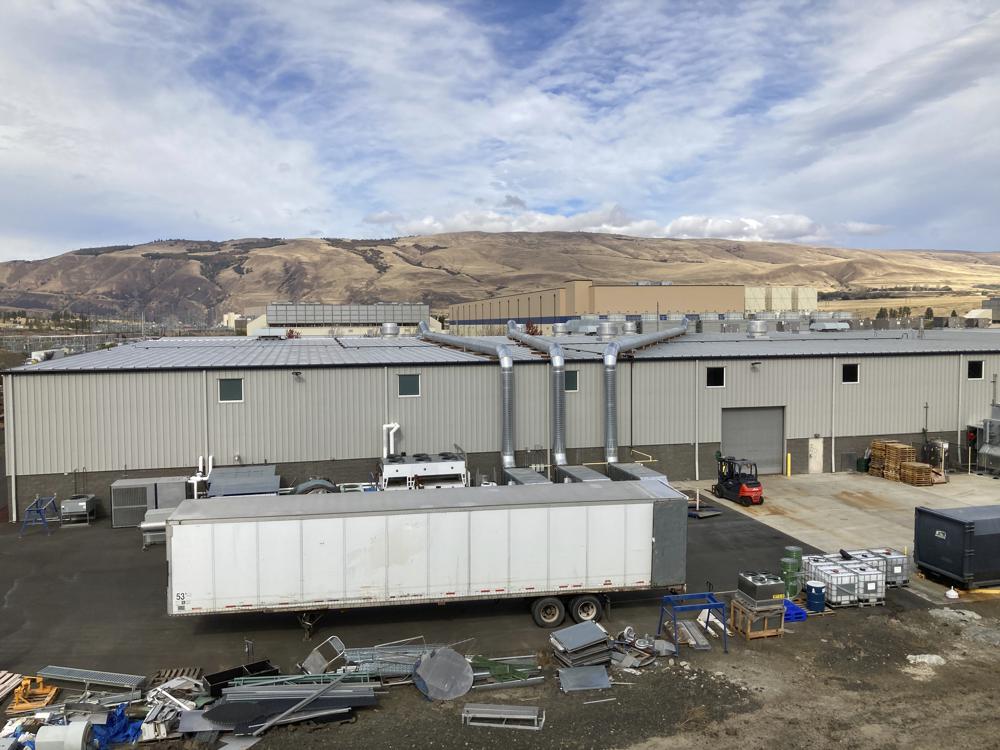
In this Tuesday, Oct. 5, 2021, photo, The Dalles Mayor Richard Mays looks at the view of his town and the Columbia River from his hilltop home in The Dalles, Oregon. Mays helped negotiate a proposal by Google to build new data centers in the town. The data centers require a lot of water to cool their servers, and would use groundwater and surface water, but not any water from the Columbia River. 
(AP Photo/Andrew Selsky)


THE DALLES, Ore. (AP) — Conflicts over water are as old as history itself, but the massive Google data centers on the edge of this Oregon town on the Columbia River represent an emerging 21st century concern.

Now a critical part of modern computing, data centers help people stream movies on Netflix, conduct transactions on PayPal, post updates on Facebook, store trillions of photos and more. But a single facility can also churn through millions of gallons of water per day to keep hot-running equipment cool.

Google wants to build at least two more data centers in The Dalles, worrying some residents who fear there eventually won’t be enough water for everyone — including for area farms and fruit orchards, which are by far the biggest users.

Across the United States, there has been some mild pushback as tech companies build and expand data centers — conflicts likely to grow as water becomes a more precious resource amid the threat of climate change and as the demand for cloud computing grows. Some tech giants have been using cutting-edge research and development to find less impactful cooling methods, but there are those who say the companies can still do more to be environmentally sustainable.

The concerns are understandable in The Dalles, the seat of Wasco County, which is suffering extreme and exceptional drought, according to the U.S. Drought Monitor. The region last summer endured its hottest days on record, reaching 118 degrees Fahrenheit (48 Celsius) in The Dalles.

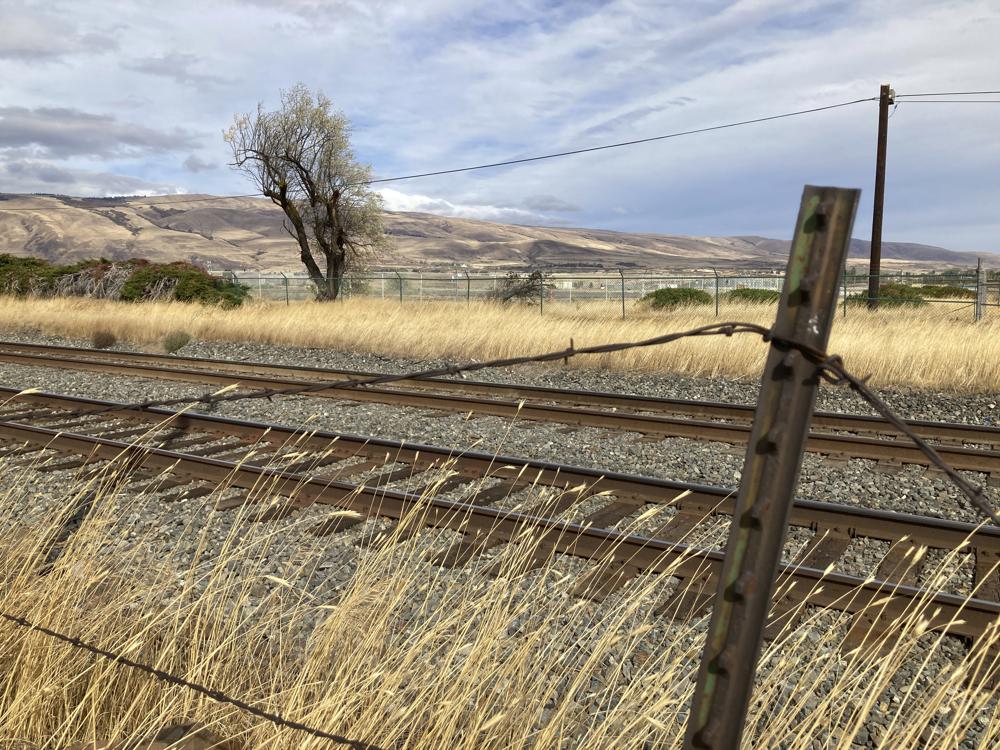
The Dalles is adjacent to the the mighty Columbia River, but the new data centers wouldn’t be able to use that water and instead would have to take water from rivers and groundwater that has gone through the city’s water treatment plant.

However, the snowpack in the nearby Cascade Range that feeds the aquifers varies wildly year-to-year and glaciers are melting. Most aquifers in north-central Oregon are declining, according to the U.S. Geological Survey Groundwater Resources Program.

Adding to the unease: The 15,000 town residents don’t know how much water the proposed data centers will use, because Google calls it a trade secret. Even the town councilors, who are scheduled to vote on the proposal on Nov. 8, had to wait until this week to find out.

Dave Anderson, public works director for The Dalles, said Google obtained the rights to 3.9 million gallons of water per day when it purchased land formerly home to an aluminum smelter. Google is requesting less water for the new data centers than that amount and would transfer those rights to the city, Anderson said.


“The city comes out ahead,” he said.

For its part, Google said it’s “committed to the long-term health of the county’s economy and natural resources.”

“We’re excited that we’re continuing conversations with local officials on an agreement that allows us to keep growing while also supporting the community,” Google said, adding that the expansion proposal includes a potential aquifer program to store water and increase supply during drier periods.

The U.S. hosts 30% of the world’s data centers, more than any other country. Some data centers are trying to become more efficient in water consumption, for example by recycling the same water several times through a center before discharging it. Google even uses treated sewage water, instead of using drinking water as many data centers do, to cool its facility in Douglas County, Georgia.

Facebook’s first data center took advantage of the cold high-desert air in Prineville, Oregon, to chill its servers, and went a step further when it built a center in Lulea, Sweden, near the Arctic Circle.


Microsoft even placed a small data center, enclosed in what looks like a giant cigar, on the seafloor off Scotland. After retrieving the barnacle-encrusted container last year after two years, company employees saw improvement in overall reliability because the servers weren’t subjected to temperature fluctuations and corrosion from oxygen and humidity. Team leader Ben Cutler said the experiment shows data centers can be kept cool without tapping freshwater resources.

A study published in May by researchers at Virginia Tech and Lawrence Berkeley National Laboratory showed one-fifth of data centers rely on water from moderately to highly stressed watersheds.

Tech companies typically consider tax breaks and availability of cheap electricity and land when placing data centers, said study co-author Landon Marston, assistant professor of civil and environmental engineering at Virginia Tech.

They need to consider water impacts more seriously, and put the facilities in regions where they can be better sustained, both for the good of the environment and their own bottom line, Marston said.

“It’s also a risk and resilience issue that data centers and their operators need to face, because the drought that we’re seeing in the West is expected to get worse,” Marston said.

In this Tuesday, Oct. 5, 2021, photo, Dawn Rasmussen stands at her well at her property on the outskirts of The Dalles, Oregon. She says the water table that her well draws from has dropped 15 feet in the last 15 years. She has deep concerns about Google's proposal to build more data centers, which use vast amounts of water, in the town. The city council is expected to vote soon on Google's proposal. As demand for cloud computing grows, the world's biggest tech companies are building more data centers, including in arid regions even though they use vast amounts of water per day.
 (AP Photo/Andrew Selsky)


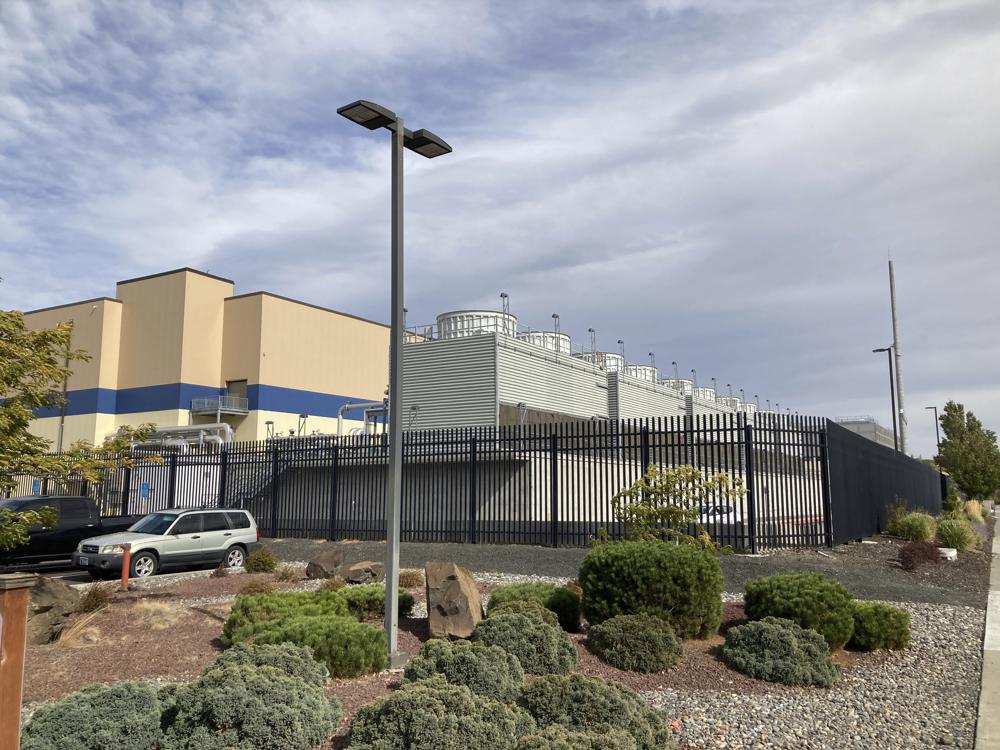
In this Tuesday, Oct. 5, 2021, photo, shows the exterior of a Google data center in The Dalles, Oregon. The Dalles City Council member Long-Curtiss wants to know more details about Google's proposal to build more data centers in the town before the city council votes on the matter. As demand for cloud computing grows, the world's biggest tech companies are building more data centers, including in arid regions even though they use vast amounts of water per day. Some residents of The Dalles, Oregon, are objecting to a proposal by Google to build more data centers there, fearing that, amid rising temperatures and drought, there won't be enough water for everyone. (AP Photo/Andrew Selsky)

About an hour’s drive east of The Dalles, Amazon is giving back some of the water its massive data centers use. Amazon’s sprawling campuses, spread between Boardman and Umatilla, Oregon, butt up against farmland, a cheese factory and neighborhoods. Like many data centers, they use water primarily in summer, with the servers being air-cooled the rest of the year.

About two-thirds of the water Amazon uses evaporates. The rest is treated and sent to irrigation canals that feed crops and pastures.

Umatilla City Manager Dave Stockdale appreciates that farms and ranches are getting that water, since the main issue the city had as Amazon’s facilities grew was that the city water treatment plant couldn’t have handled the data centers’ discharge.

John DeVoe, executive director of WaterWatch of Oregon, which seeks reform of water laws to protect and restore rivers, criticized it as a “corporate feel good tactic.”

“Does it actually mitigate for any harm of the server farm’s actual use of water on other interests who may also be using the same source water, like the environment, fish and wildlife?” DeVoe said.

Adam Selipsky, CEO of Amazon Web Services, insists that Amazon feels a sense of responsibility for its impacts.

“We have intentionally been very conscious about water usage in any of these projects,” he said, adding that the centers brought economic activity and jobs to the region.

Dawn Rasmussen, who lives on the outskirts of The Dalles, worries that her town is making a mistake in negotiating with Google, likening it to David versus Goliath.

She’s seen the level of her well-water drop year after year and worries sooner or later there won’t be enough for everyone.

“At the end of the day, if there’s not enough water, who’s going to win?” she asked.

___

Follow Andrew Selsky on Twitter at https://twitter.com/andrewselsky
WHAT'S COP26 GONNA DO
In South Sudan, flooding called ‘worst thing in my lifetime’


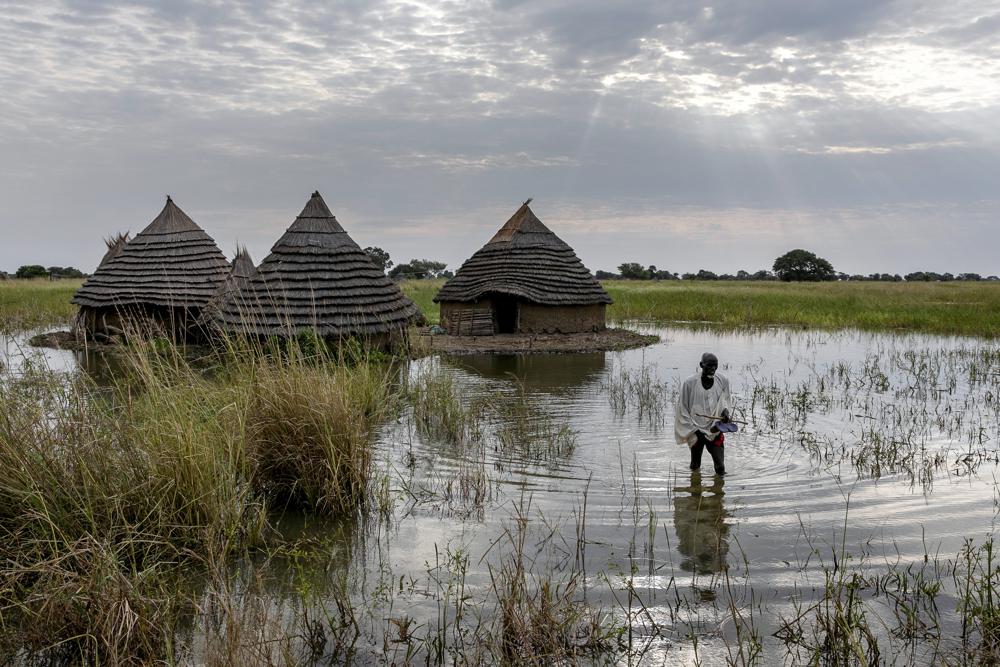
Yel Aguer Deng, who does not know his age, walks through water from his compound to the Wanyhok-Akon road, near Malualkon in Northern Bahr el Ghazal State, South Sudan, Wednesday, Oct. 20, 2021. The worst flooding that parts of South Sudan have seen in 60 years now surrounds his home of mud and grass. His field of sorghum, which fed his family, is under water. Surrounding mud dykes have collapsed. The United Nations says the flooding has affected almost a half-million people across South Sudan since May. (AP Photo/Adrienne Surprenant)
1 of 15

MALUALKON, South Sudan (AP) — He feels like a man who has drowned.

The worst flooding that parts of South Sudan have seen in 60 years now surrounds his home of mud and grass. His field of sorghum, which fed his family, is under water. Surrounding mud dykes have collapsed.

Other people have fled. Only Yel Aguer Deng’s family and a few neighbors remain.

This is the third straight year of extreme flooding in South Sudan, further imperiling livelihoods of many of the 11 million people in the world’s youngest country. A five-year civil war, hunger and corruption have all challenged the nation. Now climate change, which the United Nations has blamed on the flooding, is impossible to ignore.

As he empties a fishing net, Daniel Deng, a 50-year-old father of seven, recalls a life of being forced to flee again and again because of insecurity. “But this one event (the flood) is too much,” he said. “It is the worst thing that happened in my lifetime.”

The U.N. says the flooding has affected almost a half-million people across South Sudan since May. Here in Northern Bahr el Ghazal state, the Lol river has burst its banks.

This state is usually spared from extreme flooding that plagues the South Sudan states of Jonglei and Unity that border the White Nile and the Sudd marshlands. But now, houses and crops have been swamped.

A new report this week coordinated by the World Meteorological Organization warned of increasing such climate shocks to come across much of Africa, the continent that contributes the least to global warming but will suffer from it most.

In these rural South Sudan communities, shelters of braided grass put up a fragile resistance in a land of seemingly endless water.


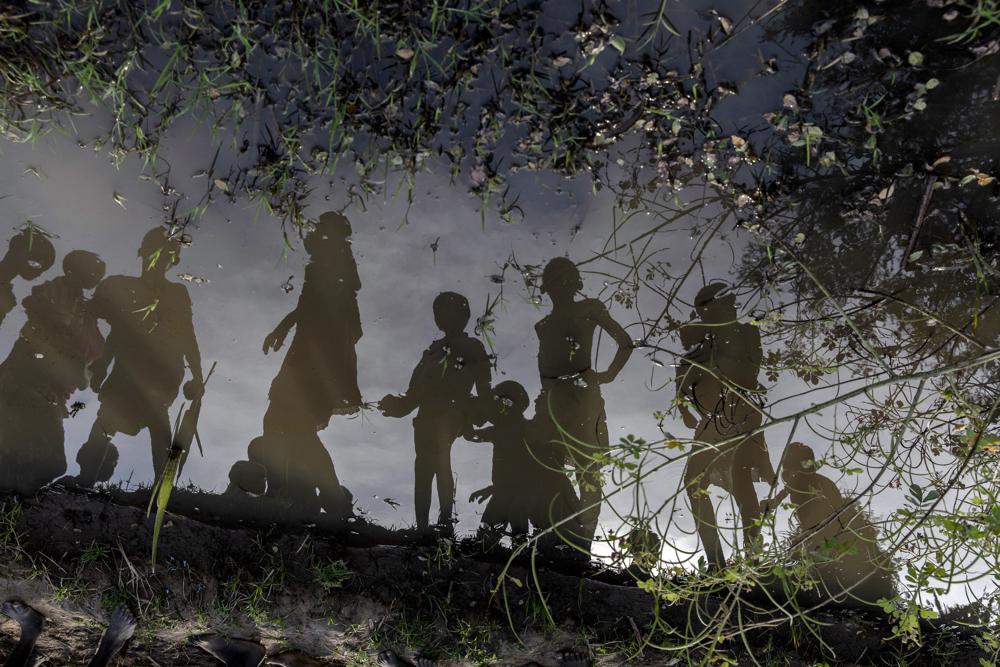
Children standing on a small mud dyke are reflected in the stagnant water, in Langic, Northern Bahr el Ghazal State, South Sudan, Wednesday, Oct. 20, 2021. This is the third straight year of extreme flooding in South Sudan, further imperiling livelihoods in the world's youngest country. A five-year civil war, hunger and corruption have all challenged the nation. Now climate change, which the United Nations has blamed on the flooding, is impossible to ignore.
(AP Photo/Adrienne Surprenant)

In Langic village, Ajou Bol Yel’s family of seven hosted nine neighbors who had lost their homes. The elders sleep outside on beds protected by mosquito nets, while the children share the floor.

In Majak Awar, some 100 families have been displaced twice, in June when homes were flooded and again in August when their shelters were ruined, too.

“I want to leave for Sudan,” whispered Nyibol Arop, a 27-year-old mother of five, as she boiled her morning tea just steps away from the stagnant water that threatens her current shelter.

It is hard to see a stable future when constantly on the move, a lesson learned during the civil war that displaced millions of people before a peace agreement in 2018.

“Floods are not constant. Some people will stay, and some will go,” said Thomas Mapol, a 45-year-old father of nine, as he showed off the destroyed houses of his village near Majak Awar. “But me, I cannot move anywhere. There is no other place that I know.”

Dozens missing in Nepal as floods, mudslides kill over 100 yesterday


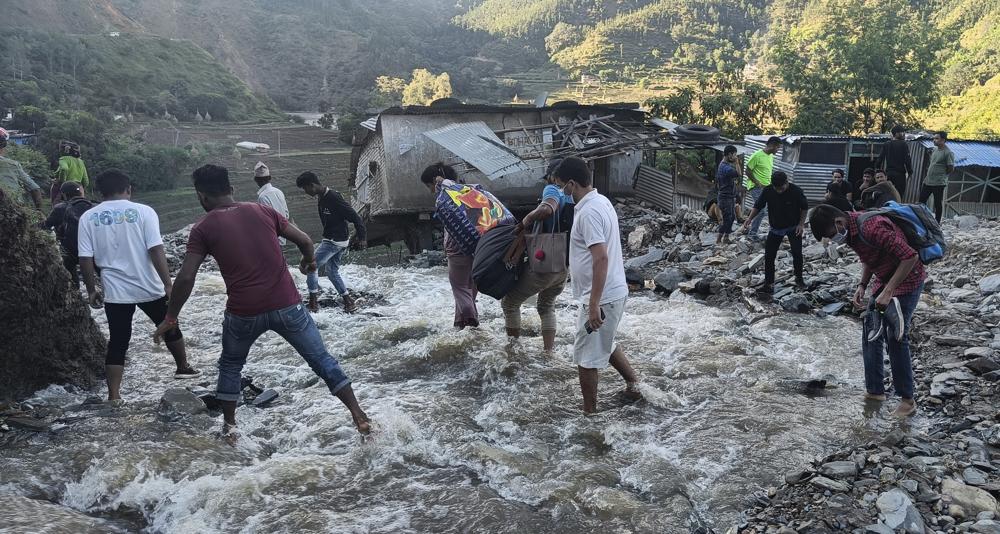
People wade past a flooded area in Dipayal Silgadhi, Nepal, Thursday, Oct. 21, 2021. Floods and landslides triggered by days of torrential rains have killed at least 99 people in Nepal since Monday, officials said. (AP Photo/Laxmi Prasad Ngakhusi)


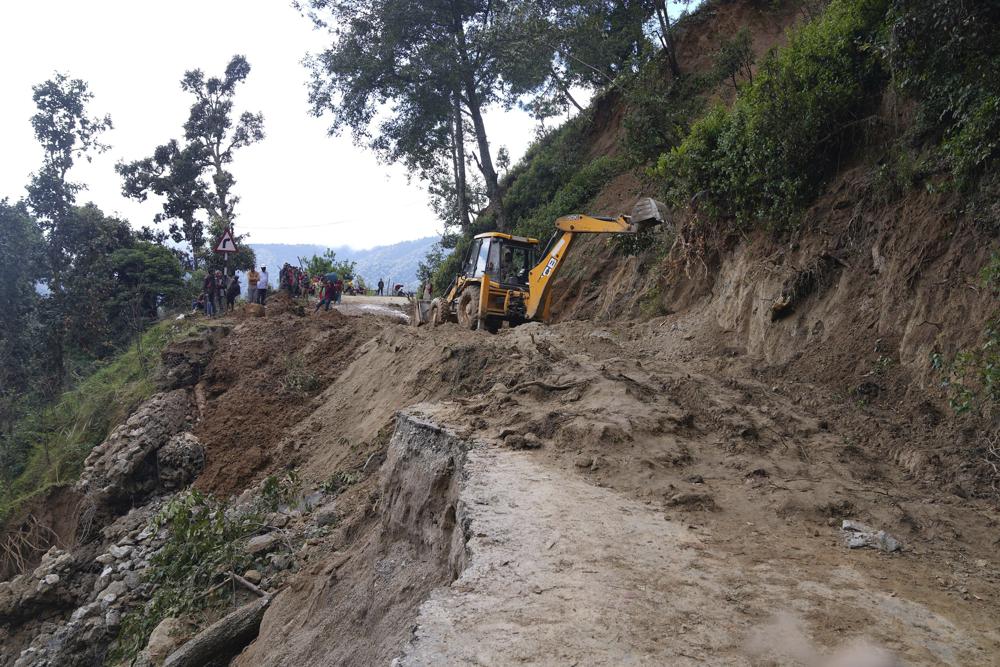
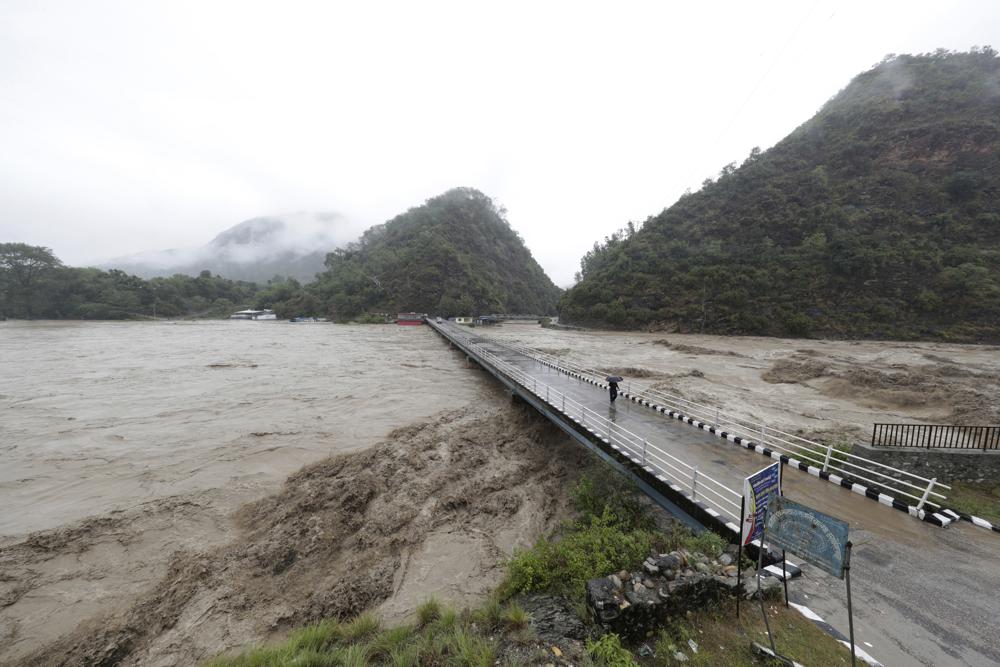
KATHMANDU, Nepal (AP) — Nepalese authorities on Friday searched for dozens of people missing in this week’s heavy rains, floods and landslides, as survivors complained they were yet to receive any government help.

The death toll has crossed 100 in the country’s eastern and western parts, said police spokesperson Basanta Bahadur Kunwar.

At least 40 others have been injured by landslides and house collapses, and another 41 people were missing, Kunwar said.

The downpour subsided in some parts and the weather is expected to improve across the Himalayan nation over the weekend.

Heavy rains also caused havoc in neighboring India this week, killing at least 88 people and flooding roads, destroying bridges and causing landslides that washed away several homes.

On Thursday, Nepal’s Prime Minister Sher Bahadur Deuba visited the flood-stricken areas in the western region and promised a government relief package. However, many families said they were still waiting for government supplies and facing tough times on their own.

Bhimraj Shahi, who lost six family members in landslides in remote Humla district, said rescue teams reached the site more than 10 hours after they were hit on Monday.

“Although there has been an announcement from the government, the actual help hasn’t yet arrived for the family,” said Shahi.


The disasters have wiped out crops and homes, dealing a blow to families already grappling with the devastating fallout of the COVID-19 pandemic, said Azmat Ulla of the International Federation of Red Crescent Societies in Nepal. Red Cross teams were aiding evacuation efforts in both countries.

“The people of Nepal and India are sandwiched between the pandemic and worsening climate disasters, heavily impacting millions of lives and livelihoods,” he added.

Kunwar said rescue teams have been relocating people to safer locations and taking dozens of injured to hospitals.

Authorities were still trying to ascertain the number of displaced and the full extent of damage.

Landslides and floods are common in India’s Himalayan north. Scientists say they are becoming more frequent as global warming contributes to the melting of glaciers.

In February, flash floods killed nearly 200 people and washed away houses in northern Uttarakhand state in India. In 2013, thousands of people were killed in floods there.