Wednesday, December 15, 2021

The world is so desperate for manure even human waste is a hot commodity


Sybilla Gross and Mumbi Gitau, Bloomberg News

Commodities Our nitrogen business can handle the spike in natural gas prices: Nutrien CEO

Mayo Schmidt, president and CEO of Nutrien, the world's biggest fertilizer company tells BNN Bloomberg how he is navigating the price surge in natural gas, a key input for his company.


The market for manure -- from pigs, horses, cattle and even humans -- has never been so hot, thanks to a global shortage of chemical fertilizers.

Just ask Andrew Whitelaw, a grains analyst at Thomas Elder Markets based in Melbourne, Australia who runs a commercial pig farm in his spare time. Whitelaw said that he’s completely sold clean of animal waste, as farmers hunt for alternatives to the more commonly used phosphate- and nitrogen-based fertilizers that are vital to boosting crop yields.

“We don’t have any left,” he said. “In a normal year, you’d probably get a couple phone calls a year, not a couple of phone calls a week.”

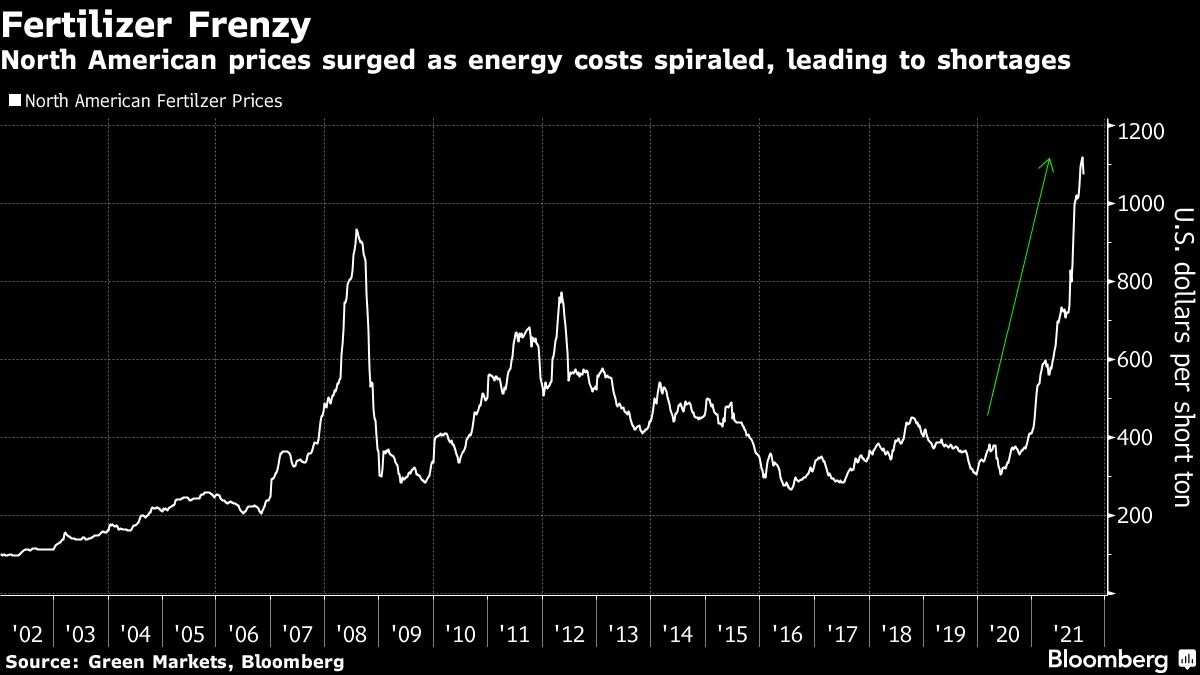
It may be some time before he sees the interest in pig poop taper. Prices of synthetic fertilizer, which rely on natural gas and coal as raw materials, have soared amid an energy shortage and export restrictions by Russia and China. That’s adding to challenges for agricultural supply chains at a time when global food costs are near a record high and farmers scramble for fertilizers to prevent losses to global crop yields for staples.

The Green Markets North American Fertilizer Price Index is hovering around an all-time high at US$1,072.87 per short ton, while in China, spot urea has soared more than 200 per cent this year to a record.

The demand for dung is playing out globally. In Iowa, manure is selling for between US$40 to US$70 per short ton, up about US$10 from a year ago and the highest levels since 2012, according to Daniel Anderson, assistant professor at Iowa State University and a specialist on manure.

Manure is mostly a local market and truckloads won’t go further than 50 miles (80 kilometers), Anderson said. When crop, fertilizer and manure prices soared about a decade ago, more farmers reintroduced animals such as hogs and cattle onto their land, in part for their manure. That option could again be on farmers’ minds as fertilizer costs soar.


In Australia’s Queensland state, Brian Mclean, general manager of an organic fertilizer company, said that sales of his poultry manure compost are going through the roof. If interest keeps up at the same rate, people seeking ready-treated manure in the area would soon miss out.

“There wouldn’t be enough in total,” he said. In just the last few months he’s sold about 15,000 tons of the stuff, compared to around 2,000 tons the same time last year, though some of the renewed fervor has been driven by a bounce-back in weather conditions after years of drought, Mclean added.

In the U.K., not only are farmers scrambling for animal compost, but many are even trying to get their hands on treated sewage sludge containing human excrement, or biosolids. David Butler, who farms wheat, oats and peas in Wiltshire in the southwest of England, has traditionally relied on his own herd of cows to produce animal waste that he uses for his crops.

“The arable area still requires significant tonnage of synthetic fertilizer, but this is reduced by the use of manures,” Butler said. Since the animal waste from his farm is not enough, he has been buying biosolids from utility Thames Water, which produces over 750,000 meters squared of sludge each year for farmers across Britain’s southeast.

However, Butler said that it’s increasingly difficult to source human excrement as “there is more demand than supply for biosolid materials.”

In the U.S., biosolids are regulated by the Environmental Protection Agency, and in Europe, biosolids have been in use since 1986 when it received regulatory approval from the European Union.

While manure is an inexpensive alternative to pricey synthetic fertilizers, it is a “poor replacement for those accustomed to traditional fertilizer products,” said Alexis Maxwell, an analyst at Bloomberg’s Green Markets. For example, the fertilizer diammonium phosphate has six times the nitrogen and 15 times the phosphate as manure on a per ton basis.

Commercial fertilizers, invented over a century ago, are among the technologies credited for raising crop yields to feeding billions of people on the planet. But even before prices for chemical fertilizers started surging, organic products had seen increased attention as proponents argue that the potent chemicals found in commercial materials can have a corrosive effect on soil health. Green manure and composting techniques, meanwhile, can boost crop nutrients with sufficient planning ahead around some natural variability in the greener products compared to their synthetic counterparts.

The recent price spike is likely to have turned more farmers into longer-term converts, even if fertilizer prices start to cool, said Mclean, the Queensland organic fertilizer seller.

“They’ve now realized how much better off they are using the organic products,” he said. “They’ll be making it a permanent thing in their rotations.”

38 C temperature in Siberia smashed Arctic heat record, UN agency confirms

54.4 C in Death Valley, Calif., among record number of heat records being investigated by WMO

A beach on the bank of the Yana River is empty due to hot weather outside Verkhoyansk, Russia, where a record-breaking temperature of 38 C was registered on June 20, 2020. That Arctic record has now been verified by the World Meteorological Organization. (Olga Burtseva/The Associated Press)

The UN weather agency said Tuesday it has certified a 38 C (100.4 F) reading in the Russian town of Verkhoyansk last year as the highest temperature ever recorded in the Arctic, the latest in a string of "alarm bells about our changing climate."

The World Meteorological Organization said the temperature "more befitting the Mediterranean than the Arctic" was registered on June 20, 2020, during a heat wave that swept across Siberia and stretched north of the Arctic Circle.

Average temperatures were up to 10 C higher than usual in Arctic Siberia, playing a key role in forest fires, loss of sea ice and global temperature rises that made 2020 one of the three hottest years on record.

"This new Arctic record is one of a series of observations reported to the WMO Archive of Weather and Climate Extremes that sound the alarm bells about our changing climate," said WMO Secretary-General Petteri Taalas in a statement.

WMO is looking into a number of possible heat records, including 54.4 C (129.9 F) recorded both this year and last in Death Valley, Calif., which could be a worldwide record-high temperature reading. (David Becker/Reuters)

Temperature never seen before in Arctic

Verkhoyansk is about 115 kilometres north of the Arctic Circle and a meteorological station there has been observing temperatures since 1885, WMO said.

Spokeswoman Clare Nullis said the record reading was the first of its kind in a new category of Arctic temperature monitoring, so there was no previous record to compare it with. But 38 degrees has never been seen before in the Arctic, she said.

WMO is looking into a number of possible heat records, including 54.4 C (129.9 F) recorded both this year and last in Death Valley, Calif., which could be a worldwide record high temperature reading, and 48.8 C (119.8 F) on Italy's southern island of Sicily this summer, which could be the hottest temperature ever recorded in Europe.

Taalas said WMO has never had so many investigations of possible heat records going at the same time, and they take time to verify.

The agency says the Arctic is among the fastest-warming regions of the world and is heating up at rates twice those of the global average.


WMO recognizes new Arctic temperature record of 38⁰C


Published
14 December 2021

Press Release Number:
14122021

Weather and Climate Extremes Archive reflects changing climate

GENEVA, 14 December 2021 (WMO) – A temperature of 38°C (100.4°F) in the Russian town of Verkhoyansk on 20 June 2020 has been recognized as a new Arctic temperature record by the World Meteorological Organization (WMO).

The temperature, more befitting the Mediterranean than the Arctic, was measured at a meteorological observing station during an exceptional and prolonged Siberian heatwave. Average temperatures over Arctic Siberia reached as high as 10 °C above normal for much of summer last year, fuelling devastating fires, driving massive sea ice loss and playing a major role in 2020 being one of the three warmest years on record.

“This new Arctic record is one of a series of observations reported to the WMO Archive of Weather and Climate Extremes that sound the alarm bells about our changing climate. In 2020, there was also a new temperature record (18.3°C) for the Antarctic continent,” said WMO Secretary-General Prof. Petteri Taalas.

“WMO investigators are currently seeking to verify temperature readings of 54.4°C recorded in both 2020 and 2021 in the world’s hottest place, Death Valley in California, and to validate a new reported European temperature record of 48.8°C in the Italian island of Sicily this summer. The WMO Archive of Weather and Climate Extremes has never had so many ongoing simultaneous investigations,” said Prof. Taalas.

The Arctic is among the fastest warming regions in the world and is heating more than twice the global average. The extreme temperature and ongoing climate change prompted a WMO panel of experts to add a new climate category “highest recorded temperature at or north of 66.5⁰, the Arctic Circle” to its international Archive of Weather and Climate Extremes.

The Archive of Weather and Climate Extremes includes the world’s highest and lowest temperatures, rainfall, heaviest hailstone, longest dry period, maximum gust of wind, longest lightning flash and weather-related mortalities.

The creation of the new category means that both Polar regions are now represented. Since 2007, the WMO has listed temperature extremes for the Antarctic region (polar regions at or south of 60⁰S, corresponding to the land and ice shelf areas included in the Antarctic Treaty.

Verkhoyansk is about 115 kilometres north of the Arctic Circle and the meteorological station has been observing temperatures since 1885. It is located in the northern part of Republic of Sakha (Yakutia), is in a region of Eastern Siberia which has an extreme very harsh dry continental climate (very cold winter and hot summer).

“Fundamentally, this investigation highlights the increasing temperatures occurring for a climatically important region of the world. Through continued monitoring and assessment of temperature extremes, we can remain knowledgeable about the changes occurring in this critical region of the world, the polar Arctic,” said Professor Randall Cerveny, Rapporteur of Climate and Weather Extremes for WMO.

“It highlights the need for sustaining long-term observations which provide us benchmarks of the state of the climate system,” said Prof. Cerveny.

Climate Snapshots

As with all WMO evaluations of extremes (e.g., temperature, pressure, wind, etc.), the extremes presented before the WMO for adjudication are ‘snapshots’ of our current climate. It is possible, indeed likely, that greater extremes will occur in the Arctic region in the future. When such observations are made, new WMO evaluation committees will be formed to verify the status of such observations as extremes.

“The record is clearly indicative of warming across Siberia,” said the noted UK climatologist and committee member Dr Phil Jones.

"Verifying records of this type is important in having a reliable base of evidence as to how our climate's most extreme extremes are changing,” said Dr Blair Trewin from Australia’s Bureau of Meteorology and another member of the evaluation committee.

Detailed verification

The committee of experts conducted an in-depth analysis of available data and metadata, including the European Centre for Medium-Range Weather Forecasts interim (ERA5) reanalysis.

They determined that observations taken at Verkhoyansk were consistent with surrounding stations and that the equipment, siting and logistics were certified by the Yakutia Department of Roshydromet. Weather conditions – with a very strong upper-level ridge sitting over the region – were also consistent with the record temperature.

Since this was a new climate category for the WMO Archive, the committee requested that climate data be checked for other possible past Arctic extremes of comparable value.

Historical research established from the national records of Arctic countries that there were no known temperatures of 38 °C or above at any Arctic locations. Specifically, after rigorous analysis the committee concluded that no past observations within Canada exceeded that value.

Concurrent with this investigation, the WMO Archive of Extremes also lists the official lowest recorded temperature for areas at or north of the Arctic Circle as -69.6°C (-93.3°F) recorded on 22/ 12 (December)/ 1991 at Klinck AWS, Greenland [72°18'N, 40°28'W, elevation: 3216m (10551ft)]. That value is also the coldest temperature recorded for the Northern Hemisphere.

The World Meteorological Organization is the United Nations System’s authoritative voice on Weather, Climate and Water

Notes to Editors

The WMO international evaluation committee consisted of polar science and climate experts from around the world:
Alex Sterin (Russian Federation)
Pierre Bessemoulin (France)
Manola Brunet (Spain)
Purevjav Gomboluudev (Mongolia)
Phil Jones (U.K.),
Dan Krahenbuhl (USA)
Blair Trewin (Australia)
Geert Jan van Oldenborgh (Netherlands)*
Randall Cerveny (USA).

*We sadly mourn the loss of the late Geert Jan van Oldenborgh (Netherlands) who served on this committee and we offer our condolences to his family, friends and colleagues.
Healthcare of Ontario Pension Plan names new global private equity head

PALASH GHOSH

Lori Hall Kimm

Lori Hall-Kimm was named head of global private equity at the Healthcare of Ontario Pension Plan.

She will officially join HOOPP on Jan. 24.

James Geuzebroek, a spokesman for HOOPP, said by email that Ms. Hall-Kimm succeeds Jim Walker, who formerly held the position. Mr. Geuzebroek added that Mr. Walker resigned from HOOPP last year to "start his own fund."

Ms. Hall-Kimm will work with HOOPP's private equity team to "develop the strategic and operational plan for private capital investments as well as oversee an $11 billion global portfolio across various industries and asset classes," according to a news release.

With 20 years of investment experience, Ms. Hall-Kimm most recently served as managing director, direct private equity, for CPP Investments, which oversees investments of the C$541.5 billion ($423.4 billion) Canada Pension Plan, HOOPP noted in the release. Before that, she worked on the private capital team at the C$227.7 billion Ontario Teachers' Pension Plan and in the investment banking division at Goldman Sachs.

Frank Switzer, a spokesman for Canada Pension Plan Investment Board, said by email that no replacement has been named.

Get the latest coverage of corporate and public defined benefit plans, as well as new developments at foundations, endowments and sovereign wealth funds. Sent every Wednesday.

"We're delighted that Lori has decided to join HOOPP and I look forward to working with her to build on HOOPP's highly successful private equity portfolio," stated Michael Wissell, chief investment officer at HOOPP, in the release.

Mr. Wissell added in the release that with latest hiring, HOOPP has now completed formation of the senior management of its private markets group, which also includes Eric Plesman, head of global real estate, and Steve Smith, managing partner, infrastructure. Mr. Geuzebroek said all three senior managers, including Ms. Hall-Kimm, will report directly to Mr. Wissell.

HOOPP managed more than C$104 billion ($81 billion) in assets as of Dec. 30, 2020, the spokesman added.
Two-thirds of Albertans feel Kenney deserves a leadership review, poll suggests

A new poll suggests large public support for Premier Jason Kenney’s leadership review, and even his resignation, while his party is trailing the NDP if a vote were held today.

Author of the article:Ashley Joannou
Publishing date:Dec 14, 2021 • 
Premier Jason Kenney. 
PHOTO BY DARREN MAKOWICHUK /Postmedia file

The latest Leger poll, conducted on behalf of Postmedia, suggests 66 per cent of Albertans polled think Kenney deserves a leadership review and 60 per cent think he should resign.

The numbers show the NDP continues to lead with 43 per cent of decided or leaning voters saying they are prepared to vote for Rachel Notley and the NDP compared to 32 per cent for Kenney’s UCP government.

The poll of 1,249 Albertans was conducted from Dec. 2 to 5, just prior to the United Conservative Party executive announcing that Kenney would face a leadership review in Red Deer on April 9, but not earlier as was called for by 22 dissenting constituency associations.

Leger’s executive vice president Ian Large said he thinks the polling results could influence the scheduled leadership review even though the vast majority of those polled aren’t the same people who will make the final decision.

“(Kenney) has to convince the party that despite these very low numbers, and this dissatisfaction, that he is re-electable. But when you’ve got six in 10 Albertans that think he should resign? That’s a tough row to hoe,” he said.

Half of those who intend to vote UCP want a leadership review of Kenney. Of those who intend to vote NDP, eight in 10 want Kenney to resign, the polling says.


While the NDP continues to lead, the gap between the two major parties is narrowing slightly, Large said, but that’s not necessarily because the UCP is gaining ground.

Polling from May showed the NDP with 46 per cent of the vote compared to the UCP’s 33 per cent. In March 2021 those numbers sat at 51 per cent and 30 per cent respectively.

While the UCP’s share of the vote has stayed relatively stable, in the December polling Paul Hinman’s Wildrose Independence Party showed up on the playing field with 10 per cent of decided voters. In previous polling the party was grouped in the “some other party” category.

“Those aren’t NDP voters … So what I’m thinking is there may be kind of a trickle from the NDP, back to the (United) Conservatives but at the same time, there’s some bleeding from the (United) Conservatives to the Wildrose Independence,” Large said.

Large said the Wildrose Independence Party is doing particularly well in rural Alberta and it will be important to understand why those voters are dissatisfied with the current government if the UCP wants to plot a path to remain in government come 2023.

“This time of the election cycle, it’s really easy to tell your pollster, I’m going to I’m going to show how angry I am by picking this virtually non existent party with no seats,” he said.

Hinman will be running in an upcoming byelection in Fort McMurray-Lac La Biche, he announced on Twitter last week.

Kenney has faced criticism of his leadership throughout the pandemic. Large said, but with oil prices climbing and job numbers improving that could benefit the government.

“All the things that the UCP promised are coming to fruition. And so do they come to fruition fast enough before either the April vote or the 2023 election?” he said.

Online polls cannot be assigned a margin of error because they do not randomly sample the population. If the data were collected through a random sample, the margin of error would be plus or minus 2.8 per cent, 19 times out of 20.

ajoannou@postmedia.com
GDP ignores the environment: why it’s time for a more sustainable growth metric


Researchers have estimated the gross ecosystem product (GEP) of Qinghai province in China. Jiaye Liu / shutterstock

December 13, 2021 

For more than 70 years, Gross Domestic Product, or GDP, has been the key yardstick by which nations have measured economic progress. But GDP is designed to exclusively account for the monetary benefits accrued from economic activity. It is blind to the degradation of the natural environment, finite resources and human wellbeing. It’s time we came up with something better.

Without ever having to acknowledge how nature has contributed to economic growth, GDP has promoted unsustainable practices that have contributed to the climate and biodiversity emergencies. To put it another way, GDP is like a ledger that will not accept red ink. Like an accounting trick, it has allowed us to vent greenhouse gasses into the atmosphere, destroy habitats and neglect human wellbeing without ever having to worry about the consequences.

Of course, the current environmental disaster was something that the economist Simon Kuznets did not have to consider when he developed the concept in the aftermath of the Great Depression in the 1930s. But notwithstanding its limitations, something Kuznets was himself aware of, GDP has become the main economic indicator in use today. This puts policy makers who are trying to limit global warming in somewhat of a bind.

Gross Ecosystem Product

As such, we need to start looking at alternative metrics such as Gross Ecosystem Product (GEP) so that we can account for nature’s contribution to economic activity and human wellbeing.

Written by academics, edited by journalists, backed by evidence.Get newsletter

Although research into calculating GEP is only in its infancy, it attempts to place a monetary value on things like clean water, soil quality, food security, healthcare and the culturally-significant landscapes that contribute to our happiness. In other words, GEP assigns a dollar value to the work of bees who act as nature’s pollinators, bogs that sequester carbon, and the stimulating effect nature has on our mental health.


Bees: good for GEP. RUKSUTAKARN studio / shutterstock

While GDP looks exclusively at the value of production – or outputs – GEP instead places a value on nature’s input and incentivises policy makers to invest in nature. It would be naive to simply add both measures together and come up with an overall figure, since both metrics overlap in numerous areas. But the two measures can still provide decision makers with complementary information that could help allow for sustainable economic growth into the future.

Exporting ecosystem services – and boosting GEP

For example, the Chinese government has been experimenting with the implementation of GEP in Qinghai province – a remote region of the Tibetan plateau that contains the source of the Mekong, Yangtze and Yellow Rivers.

There, researchers found that GEP was far greater than GDP in the year 2000, 81.5 vs. 26 billion Yuan. At that point, there was considerably more useful ecosystem activity than human economic activity.

However by 2015 GEP had shrunk to three quarters the size of GDP, 185.4 vs. 242 billion Yuan. This suggests greater investment had been made in traditional economic growth at the expense of the environment.


Several huge rivers begin on the high plateaus of Qinghai province. 
DMHJ / shutterstock

Intriguingly, as Qinghai is the source of three major rivers, the study also found that the province “exports” ecosystem services like drinking water and fertilising nutrients, which show up in the GEP accumulated by other Chinese provinces and neighbouring countries.

The ability to measure the value of Qinghai’s ecosystem “export” could set in train a process whereby financial compensation is paid to the province by neighbouring regions. Such a programme could create the economic incentive for communities to conserve and grow ecosystem assets. To put this in a global perspective, imagine if Brazilian farmers were paid by European countries to manage the rainforest based on the amount of carbon it sequesters.

Similarly, in Ireland where I live, GEP would allow bogs and woodlands to contribute to the economy. In such a scenario, Irish cities could be compelled to pay rural regions to store some of the carbon they produce or to maintain culturally significant landscapes that enhance mental health and wellbeing.

By placing a value on the benefits that we derive from our natural environment, GEP would also encourage us to think differently about how we manage, maintain and grow those regions that have been neglected in favour of centralised growth strategies.

However, for now at least, it would be impractical to implement a system like GEP or the UN’s System of Environmental-Economic Accounting. Apart from being hugely complex and largely unproven, adopting it would require a global economic consensus on a scale not seen since the international financial order was devised after the second world war.

Nevertheless, if we are to manage the complex trade-offs needed to mitigate the climate crisis, then radical new thinking is required.

Author
Stephen Onakuse
Senior Lecturer, Department of Food Business and Development, and Deputy Director of the Centre for Sustainable Livelihoods, University College Cork
Partners
University College Cork provides funding as a member of The Conversation UK.

Evidence for shared earthquakes between San Andreas and San Jacinto faults

Evidence for shared earthquakes between San Andreas and san Jacinto faults
A small fault lying between the San Andreas and San Jacinto faults provides evidence for
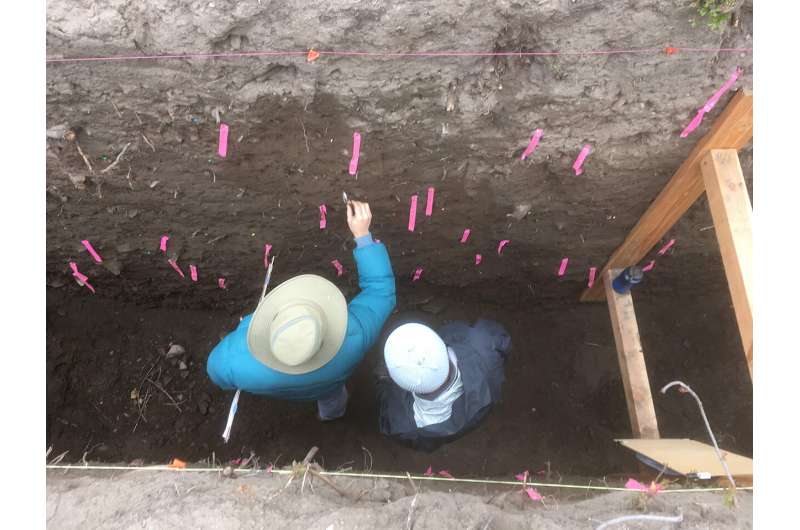
 past earthquakes that involved both major faults. Geologists Tom Rockwell
 (San Diego State) and Michael Oskin (UC Davis) work in a trench into the fault. 
Credit: Alba Rodriguez Padilla

The San Andreas and San Jacinto faults have ruptured simultaneously at least three times in the past 2,000 years, most recently in 1812, according to a new study by geologists at the University of California, Davis, and San Diego State University. The work was published Dec. 7 in the journal Geology

Large earthquakes involving multiple faults increase the threat of strong ground shaking. However, each of these faults on their own can generate a large-magnitude (7.5 or above) , said Alba Rodríguez Padilla, a  at UC Davis and first author on the paper. 

"Typically, we think earthquakes will remain confined to a single , especially for "mature" faults such as the San Andreas and the San Jacinto, which are well-established, geometrically simple plate boundary faults," Rodríguez Padilla said. But researchers previously have shown that it's theoretically possible for an earthquake to transfer from one fault to another where they come close together at Cajon Pass, north of Los Angeles, she said.

"However, prior to our study, there was no direct physical evidence that these joint ruptures, or shared earthquakes, do in fact occur," Rodríguez Padilla said. 

Between the south end of the San Andreas Fault and the northern end of the San Jacinto lies a small fault, the Lytle Creek Ridge Fault. This fault would slip only when there is an earthquake shared across the two bigger faults. 

The Lytle Creek Ridge Fault does not itself do any work during these shared earthquakes, just acting as a passive marker, Rodríguez Padilla said. 

Evidence for shared earthquakes between San Andreas and san Jacinto faults
The study involved digging a trench 15 meters long and up to 3 meters deep into the San 
Gabriel mountains. Credit: Alba Rodriguez Padilla

20% to 23% of earthquakes shared

To get evidence of potential shared earthquakes, Rodríguez Padilla and colleagues hand-dug a trench 15 meters long and 1.5-3 meters deep into the Lytle Creek Ridge Fault. They identified signs of three earthquake events in the past 2,000 years, based on radiocarbon and pollen dating. 

That compares to 15 known earthquakes on the San Andreas and 13 on the San Jacinto over the same time. Based on that, the team concluded that 20% to 23% of earthquakes on these major faults are shared with the other fault. 

Next, they simulated the historically recorded earthquakes of 1812 and 1857 to see if these could have been multi-fault earthquakes. Based on the simulations, they discarded the 1857 earthquake and found that the 1812 earthquake was capable of jumping faults. 

Evidence for shared earthquakes between San Andreas and san Jacinto faults
The San Andreas and San Jacinto faults lie close to each other in the San Gabriel 
mountains. Credit: Alba Rodriguez Padilla

Additional co-authors on the paper are Professor Michael Oskin and project scientist Irina Delusina, UC Davis Department of Earth and Planetary Sciences; and Thomas Rockwell and Drake Singleton, San Diego State University. Julian Lozos, California State University Northridge, and Kelian Dascher-Cousineau, UC Santa Cruz, helped dig the trench. 

The work was supported by the Southern California Earthquake Center, which is funded by the U.S. Geological Survey and the National Science Foundation.Can magnitude 4 earthquake rates be used to forecast large earthquake events?

More information: Alba M. Rodriguez Padilla et al, Joint earthquake ruptures of the San Andreas and San Jacinto faults, California, USA, Geology (2021). DOI: 10.1130/G49415.1

Journal information: Geology 

Provided by UC Davis 

Some Chinese shun grueling careers for 'low-desire life'


1 / 13

In this photo released by Guo Jianlong, Guo reads a book at the balcony of his home in Dali in southwestern China's Yunnan province on June 29, 2021. Guo joined a small but visible handful of Chinese urban professionals who are rattling the ruling Communist Party by choosing to "lie flat," or reject grueling careers for what they call a "low-desire life." That is clashing with the ruling party's message of success and consumerism as its celebrates the 100th anniversary of its 1921 founding. 
Guo Jianlong via AP

JOE McDONALD and FU TING

BEIJING (AP) — Fed up with work stress, Guo Jianlong quit a newspaper job in Beijing and moved to China’s mountain southwest to “lie flat.”

Guo joined a small but visible handful of Chinese urban professionals who are rattling the ruling Communist Party by rejecting grueling careers for a “low-desire life." That is clashing with the party's message of success and consumerism as its celebrates the 100th anniversary of its founding.

Guo, 44, became a freelance writer in Dali, a town in Yunnan province known for its traditional architecture and picturesque scenery. He married a woman he met there.


“Work was OK, but I didn’t like it much,” Guo said. “What is wrong with doing your own thing, not just looking at the money?”

“Lying flat” is a “resistance movement” to a “cycle of horror” from high-pressure Chinese schools to jobs with seemingly endless work hours, novelist Liao Zenghu wrote in Caixin, the country’s most prominent business magazine.

“In today’s society, our every move is monitored and every action criticized,” Liao wrote. “Is there any more rebellious act than to simply ‘lie flat?'”

It isn’t clear how many people have gone so far as to quit their jobs or move out of major cities. Judging by packed rush hour subways in Beijing and Shanghai, most young Chinese slog away at the best jobs they can get.

Still, the ruling party is trying to discourage the trend. Beijing needs skilled professionals to develop technology and other industries. China’s population is getting older and the pool of working-age people has shrunk by about 5% from its 2011 peak.

“Struggle itself is a kind of happiness,” the newspaper Southern Daily, published by the party, said in a commentary. “Choosing to ‘lie flat’ in the face of pressure is not only unjust but also shameful.”

The trend echoes similar ones in Japan and other countries where young people have embraced anti-materialist lifestyles in response to bleak job prospects and bruising competition for shrinking economic rewards.

Official data show China’s economic output per person doubled over the past decade, but many complain the gains went mostly to a handful of tycoons and state-owned companies. Professionals say their incomes are failing to keep up with soaring housing, child care and other costs.

In a sign of the issue’s political sensitivity, four professors who were quoted by the Chinese press talking about “lying flat” declined to discuss it with a foreign reporter.

Another possible sign of official displeasure: T-shirts, mobile phone cases and other “Lie Flat”-themed products are disappearing from online sales platforms.

Urban employees complain that work hours have swelled to “9 9 6,” or 9 a.m. to 9 p.m., six days a week.

“We generally believe slavery has died away. In fact, it has only adapted to the new economic era,” a woman who writes under the name Xia Bingbao, or Summer Hailstones, said on the Douban social media service.

Some elite graduates in their 20s who should have the best job prospects say they are worn out from the “exam hell" of high school and university. They see no point in making more sacrifices.

“Chasing fame and fortune does not attract me. I am so tired,” said Zhai Xiangyu, a 25-year-old graduate student.

Some professionals are cutting short their careers, which removes their experience from the job pool.

Xu Zhunjiong, a human resources manager in Shanghai, said she is quitting at 45, a decade before the legal minimum retirement age for women, to move with her Croatian-born husband to his homeland.

“I want to retire early. I don’t want to fight any more,” Xu said. “I’m going to other places.”

Thousands vented frustration online after the Communist Party's announcement in May that official birth limits would be eased to allow all couples to have three children instead of two. The party has enforced birth restrictions since 1980 to restrain population growth but worries China, with economic output per person still below the global average, needs more young workers.

Minutes after the announcement, websites were flooded with complaints that the move did nothing to help parents cope with child care costs, long work hours, cramped housing, job discrimination against mothers and a need to look after elderly parents.

Xia writes that she moved to a valley in Zhejiang province, south of Shanghai, for a “low-desire life” after working in Hong Kong. She said despite a high-status job as an English-language reporter, her rent devoured 60% of her income and she had no money at the end of each month.

She rejects the argument that young people who “lie flat” are giving up economic success when that's already is out of reach for many in an economy with a growing gulf between a wealthy elite and the majority.

“When resources are focused more and more on the few people at the head and their relatives, the workforce is cheap and replaceable,” she wrote on Douban. “Is it sensible to entrust your destiny to small handouts from others?”

Xia declined an interview request.

Guo, the writer in Dali, said he puts in more hours as a freelancer than he did at a newspaper. But he is happier, and life is more comfortable: He and his wife eat breakfast on their breezy sixth-floor apartment balcony with a view of trees.

“As long as I can keep writing, I’m very satisfied,” Guo said. “I don’t feel stifled.”

A handful who can afford it withdraw from work almost entirely.

A 27-year-old architect in Beijing said she started saving as a teenager to achieve financial freedom.

“From last September, when I saw all my savings had reached 2 million (yuan) ($300,000), I lay down,” said the woman, who would give only the name Nana, in an interview over her social media account.

Nana said she turned down a job that paid 20,000 yuan ($3,000) per month due to the long hours and what she saw as limited opportunities for creativity.

“I want to be free from inflexible rules,” said Nana. “I want to travel and make myself happy.”

___

Fu reported from Bangkok. Associated Press researcher Chen Si in Shanghai contributed to this report.

  1. The Right To Be Lazy

    www.slp.org/pdf/others/lazy_pl.pdf · PDF file

    The Right To Be Lazy BEING A REPUDIATION OF THE “RIGHT TO WORK” OF 1848 By Paul Lafargue Translated and adapted from the French by Dr. Harriet Lothrop. Published by …


China’s Solar Giants Make a Bid to Dominate Hydrogen Power

Bloomberg News
Sun., December 12, 2021


(Bloomberg) -- Chinese companies spent 10 years aggressively maneuvering to become the dominant players in solar power. Now they’re seeking to lead the way in developing the next big thing in clean energy: hydrogen.

Top solar manufacturers including Longi Green Energy Technology Co. are ramping up the production of electrolyzers, the equipment needed to make green hydrogen, the cleanest form of the fuel. They are accelerating investments on a bet that a market will boom as industries and consumers switch to lower-carbon fuels.

To come out in front in the global hydrogen race, Chinese companies are following the same playbook used to dominate solar -- slashing prices and production costs, dramatically increasing installations and accelerating the development of new technologies.

“In the solar supply chain, Longi played the role of leading the industry’s progress with technology,” said Wang Yingge, deputy general manager of Longi’s hydrogen energy technology unit. “In hydrogen equipment, Longi will continue to focus on and invest heavily on research and development.”

Longi plans to build 1.5 gigawatts of production capacity of electrolyzers by the end of next year, up from 500 megawatts now. The world’s largest renewable asset owner, State Power Investment Corp., aims to build 10 gigawatts of electrolyzer manufacturing capacity by 2027.

China will account for more than 60% of global electrolyzer installations globally in 2022, with the market increasing fivefold over this year, according to BloombergNEF. The China Hydrogen Alliance said earlier this year that the fuel could make up 20% of the nation’s energy mix by 2060, the deadline that President Xi Jinping has set for China to become a carbon-neutral country.

Yet despite the positive outlook, the solar giants face steep challenges in developing the hydrogen market. The industry still has a long way to go to bring down prices, and it is missing the key government incentives that helped light a fire under the solar and wind sectors.

Green hydrogen is far from competitive compared to other fuels. Hydrogen produced by renewables currently costs at least $3.22 per kilogram in China, nearly double the price using coal, according to BloombergNEF. And dirtier gray hydrogen, produced by fossil fuels, makes up the bulk of China’s hydrogen market. It accounted for more than 63% in 2020, compared with only 1.5% for green hydrogen, according to a white paper published by China Hydrogen Alliance.

“The biggest challenge ahead is the cost,” said Libby Zhong, co-leader of Ernst & Young’s greater China energy and resources sector. Without policies like those that boosted solar and wind power development, it will be very difficult for green hydrogen to receive sufficient support at this early stage, she said.

China has yet to introduce a national hydrogen plan, and the only state-wide subsidy program is limited to supporting fuel cell batteries, which will directly drive the consumption of hydrogen but won’t necessarily favor a clean production process or bolster electrolyzer development.

Longi’s Wang said he hopes the government will introduce subsidy programs that set benchmark prices for hydrogen produced by renewables, and expects the rising cost of emitting carbon in China could boost green hydrogen consumption. The company projects the price for electrolyzers will fall more than 30% in the next three to five years.

Xi’an-based Longi rose as much as 2.8% in Monday trading as of 1:45 p.m. in Beijing.

Another big difference between the development of solar panels and hydrogen electrolyzers is the market they’re selling into. While solar customers can plug panels into existing grids and immediately begin selling the electricity, allowing for fast adoption, the uses for hydrogen are more limited and disjointed.

China’s state-owned giants are trying to close that gap. Sinopec, the top oil company, has started to build the world’s largest green hydrogen project, with a capacity to supply 20,000 tons of the clean fuel each year starting in mid-2023.

Over one-third of state-owned companies are making plans for hydrogen production, storage, distribution and utilization, according to China’s State-Owned Assets Supervision and Administration Commission. Much of the enthusiasm is being driven by pressure to cut emissions to meet climate targets and the increasing cost of carbon, said Mao Zongqiang, a professor at the Institute of Nuclear and New Energy Technology at Tsinghua University in Beijing.

While the state-owned firms are making bigger bets across the board on hydrogen, private companies such as Longi and Sungrow Power Supply Co. for now are sticking with the more limited focus on electrolyzer development.

Longi hasn’t built capacity in downstream applications such as fuel cell batteries or hydrogen production as it “has not seen a clear direction” of where the greatest potential will be, Li Zhenguo, president of Longi, said in a recent interview.

Nonetheless, the solar giants expect to remain at the forefront of the industry as companies from oil refiners to steel-makers gravitate toward hydrogen.

“Solar mainly addresses the carbon reduction issue in the electricity field, but as the industrial sector deepens emission cuts, we see hydrogen as an indispensable clean secondary energy,” Longi’s Wang said.

Global Survey of Film, TV Unions Lays Bare Excessive Hours Culture, Mental Health Consequences (EXCLUSIVE)


By K.J. Yossman


Brisbane
Colleen Hayes/NBC


A global survey of film and television workers has laid bare the effects of the screen industry’s long-hours culture on crews’ mental and physical wellbeing.

UNI Global Union’s media, entertainment and arts sector (MEI), which represents workers in the skills and services sector, surveyed 150,000 crew members across 22 countries in feature film production, independent television production and streaming content production.

UNI MEI counts IATSE among its affiliates.

“The survey reveals global trends of recurrent overtime, insufficient rest, extensive use of weekend work and disrespect for basic safety requirements that that make working in the film and TV industry, unfair, unequal, unsafe and unsustainable for many workers,” UNI said in a statement.

62% of those surveyed said their mental wellbeing had been “negatively impacted” by their work schedules and more than 25% in independent television production said “extreme fatigue” had resulted in serious incidents.

The survey, which asked about collective agreements, working hours and terms and conditions, revealed that film and TV workers toil an average of 12-13 hours per day, of which one to two hours include “prep and wrap.” In the U.K., a 50-hour working week is the average in the industry, the survey found, a figure that does not include prep and wrap time.

Other aspects of the survey dealt with pressing issues such as turnaround time, which is the time between finishing work and returning the next day, overtime and weekend work.

35% of members surveyed said they are always required to do overtime during the week, while 41% said weekday overtime is “frequent.” The same percentage said weekend work is common and 18% said it was “always necessary.” The survey also found out that “Fraturdays” – where Friday shoots bleed into the early hours of Saturday – are becoming more common.

While unions in 12 countries out of the 22 surveyed said they had collective bargaining agreements in place, which set out the mandated hours for work and rest, in some countries countries these – along with local laws on workings hours – are flagrantly disregarded.

In particular, members reported that in practice, they often get much less than the mandatory 10-12 hours turnaround time required in collective bargaining agreements, especially since travel time between home and set (which, depending on the location of the studio, can be significant) is included in the turnaround time, eating into the time crews have to eat, unwind and sleep.

In Argentina, the survey found, crews average more than 50 hours per week and often work overtime on weekends, in contravention of their collective agreement while in Australia crew members are working on average 12 hours more per week than allowed by the law.

UNI MEI also collected anonymous testimonies from members across the world, including one from a member of the U.K.’s crew union BECTU who reported working on an entertainment show where crew members were expected to do overtime every night for no extra pay, were scolded for drinking tea in the morning and questioned when they went to use the restrooms.

Meanwhile an Australian crew member said work that would normally take a week was being squeezed into one or two days due to unreasonable scheduling. “Workers are being worked too hard with no let up,” said the anonymous Australian crew member. “We feel expendable.”

The global survey, which in total surveyed 28 unions across the globe, has resulted in a report by UNI MEI that lists a number of recommendations including the right to collective bargaining, respecting collective agreements that are in place and for overtime to be voluntary and compensated at a premium rate.

UNI MEI is now spearheading a global campaign to ensure safe working conditions and hours across the world, including reducing working hours and raising minimum standards.

“The media industries have long-relied on people’s passion to drive long-hours, often at workers’ expense, but we’ve reached a breaking point where workers are saying that creating quality productions cannot rest on exploitation,” said Johannes Studinger, head of UNI MEI. “Workers in the film and TV industry, which is dominated by multinational companies, are too often operating under sweatshop conditions that allow dangerously little time for rest and painfully little time for family life. That’s why we are demanding change across the board.”

IATSE international president and UNI MEI president Matt Loeb added: “Member unions from across the world are committed to bring about change in the global film and TV industry putting an end to the long hours culture everywhere entertainment is produced. This is a long-term engagement and requires a global effort. Change will not happen overnight, and we are committed to work together across countries and support each other in our fight to improve conditions step by step. Our global campaign seeks to raise awareness across the industry about the impact of unsafe working conditions and hours, empower union action and engage employers as well as stakeholders.”

Global Unions Call to End “Long Hours Culture” for Film, TV Workers

Unions and guilds across 70 countries, including IATSE, want reduced working hours, more minimum standards and safe working hours and conditions worldwide.


BY ETAN VLESSING
DECEMBER 14, 2021 

A camera crew wearing masks waits to film a scene on set of the
 'FBI' TV Series in Times Square on March 16, 2021. 
ALEXI ROSENFELD/GETTY IMAGES

Global unions and guilds have called for the film and TV production industry worldwide to end a “long hours culture” that has only worsened during the current post-COVID-vaccine surge in filming.

In a report titled “Demanding Dignity Behind The Scenes” released on Tuesday, UNI Global Union, which represents 20 million film, TV and arts workers worldwide, called for production wages and working hours to respect collective agreements, “or in their absence national legal standards.”

The organization, which includes 140 unions and guilds in over 70 countries, including the International Alliance of Theatrical Stage Employees in North America, urged that overtime on film and TV sets be voluntary, “not required on a regular basis, and must always be compensated at a premium rate.”

Related Stories

BUSINESS
Constantin Film to Pay Over $1M in Residuals in Writers Guild Settlement

BUSINESS
iHeartMedia Podcasters to Unionize With Writers Guild East

The report and its recommendations follow a survey of UNI Global Union members that found 60-hour workweeks are normal across the film and TV industry worldwide, leading to excessive hours, insufficient rest and “life-threatening levels of fatigue.”

UNI Global Union added, “Abuses increased significantly in 2021 as companies tried to make up for time lost during the pandemic hiatus.” Minimum standards urged for film and TV workers worldwide include adequate daily and weekly rest time, meal breaks, health care “and the opportunity to connect with family and friends” denied by weekend work.

The call to action from UNI-affiliated unions follows on the heels of IATSE voting to ratify a new three-year Basic Agreement with the studios and streaming services amid an emboldened labor movement in Hollywood and concerns over key issues such as pension and health plans, livable wages, and rest periods among the membership.

“What happens in Hollywood is setting a pattern for working conditions globally,” the UNI affiliated unions wrote. The report indicates some international locales like Germany and Sweden have secured improved working hours for film and TV workers through labor negotiations, while other markets, like Latin America and other parts of Europe, remain trouble spots for labor relations.

For example, in France, requirements for film and TV crewmembers to work overtime and on weekends are increasing.

“This becomes a problem for all workers when the provisions of collective bargaining agreements are not followed and when producers ask crews to work the maximum hours allowed more often than the standard workday,” the UNI Global Union report stated.