Wednesday, December 15, 2021


Study: Deep-Sea Mining Could Wipe Out Multiple Rare Species
deep sea molluscs
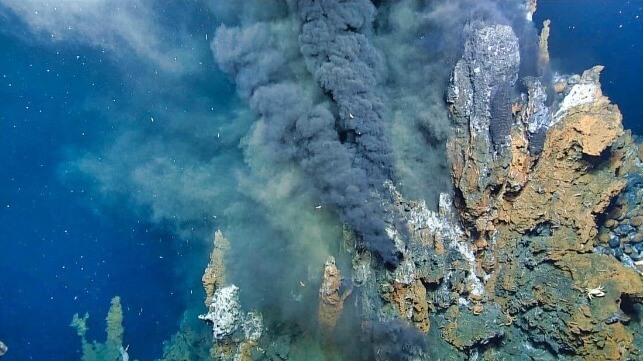
Deep sea hydrothermal vent community (USGS / Schmidt Ocean Institute)

PUBLISHED DEC 12, 2021 6:27 PM BY THE CONVERSATION


]By Elin Angharad Thomas]

Deep sea hydrothermal vents harbor some of the most extraordinary species on our planet. Lying at two to three kilometers below the surface, these extreme, insular ecosystems are powered, not by the sunlight-driven photosynthesis that we’re used to, but by energy from superheated mineral-rich seawater jetting from cracks in the seafloor. This supports thriving and unique animal communities with a density of life that rivals tropical rainforests or coral reefs. From giant red tubeworms to iron-armoured snails, these species were once considered to be untouchable by human activity, but that may not be the case for very long.

There is growing industrial interest in the deep sea. Most importantly, this includes mining for metals like copper, lead and zinc which form the towering hydrothermal vent structures. The International Seabed Authority, the UN body responsible for managing the seafloor beyond national jurisdictions, has already granted 31 exploratory deep sea mining contracts, seven of them at hydrothermal vents.

It is still unclear exactly how these huge mining machines will impact the deep seafloor. But there’s no reason to expect it will be any more eco-friendly than mining on land. At the very least, mining will destroy habitats and release toxic sediment plumes, so scientists agree it’s not good news for deep-sea creatures.

With these growing concerns, my colleagues and I saw a need for a simple but effective approach to help identify conservation priorities and clearly communicate the mining threat. The obvious choice was to collaborate with the world’s foremost conservation authority, the International Union for Conservation of Nature (IUCN), which publishes the Red List of Threatened Species. The IUCN Red List uses a series of universally renowned categories like “endangered” or “critically endangered” to raise awareness of threats and inform everyone of the extinction risk facing species.

We then applied the Red List criteria to all 184 vent-restricted mollusc species (snails, bivalves, and so on), one of the most dominant groups at hydrothermal vents. We found that almost two-thirds are threatened with extinction by deep-sea mining, with more than 20 percent listed as critically endangered. Our findings are now officially part of the updated Red List.

One species, the dragon snail Dracogyra subfusca, is only known from a single hydrothermal vent site around the size of two football fields in the Indian Ocean. This area of seafloor is under one of the exploration-phase mining contracts agreed by the International Seabed Authority and as a result the dragon snail, a species only discovered in 2017, is now considered critically endangered.

Another group of my favorite vent molluscs are the spiky-shelled punk rock snails Alviniconcha. All six species are now listed as vulnerable or endangered because of the threat of mining.

An ecosystem under threat

These molluscs are likely representative of an entire ecosystem under threat. Unsurprisingly, since mining is the single biggest reason these animals are listed as threatened, any other groups of vent species assessed under the same Red List criteria would face the same levels of extinction risk.

Hydrothermal vents aren’t even the only target of the deep-sea mining industry. Further afield, there are contracts to mine the potato-sized lumps of metal found scattered on the seafloor and the cobalt-rich crusts of underwater mountains. Both ecosystems are similarly home to a host of unique species that may take decades to millennia to recover from any human impacts.

Why does this all matter? Deep-sea mining and its sustainability is a global issue – the deep seafloor is meant to be the “common heritage of mankind”, as defined by the UN’s Convention on the Law of the Sea, yet it’s easy to forget about the deep sea and its many wonders. In fact, you are likely reading this article on a phone or a laptop, possibly entirely unaware of the ongoing debate over whether to mine the deep to source the valuable metals needed to power these devices.

But the clear vulnerability of these habitats has already begun to dissuade people – just in the past few months, global corporations like Google and BMW have committed not to source materials from the seabed or to finance deep-sea mining. Delegates of the recent IUCN World Conservation Congress overwhelmingly voted in support of a moratorium on deep-sea mining.

There is an opportunity here not to make the same mistakes in the deep sea as were made on land. Ultimately, colleagues and I hope the vent Red List can provide a new platform to ensure the conservation of these unique deep-sea habitats. And if commercial-scale mining at hydrothermal vents is given the green light in the coming months, the extinction of some of the deep-sea’s most charismatic species is likely to be its legacy.

Elin Angharad Thomas is a PhD researcher in deep-sea biology at Queen's University Belfast.

This article appears courtesy of The Conversation and may be found in its original form here.

Study: Climate Change Puts Farmed Seafood Production At Risk

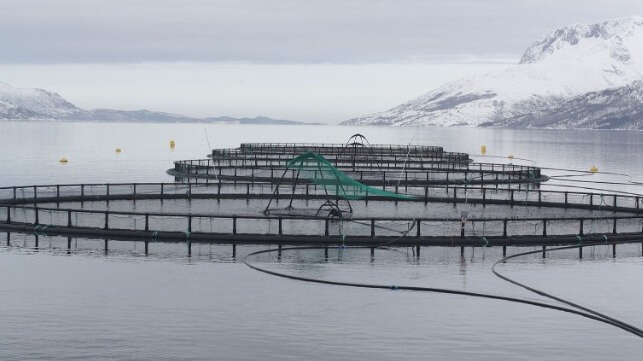
file image
File image courtesy Thomas Bjørkan / CC BY-SA 3.0

PUBLISHED DEC 14, 2021  BY UBC


The supply of farmed seafood such as salmon and mussels are projected to drop 16 per cent globally by 2090 if no action is taken to mitigate climate change, according to a new UBC study.

Ocean-farmed seafood or mariculture is often seen as a panacea to the problems of depleted stocks of wild fish and growing human demand, and is expected to grow substantially in the coming years, says lead author Dr. Muhammed Oyinlola (he/him), a postdoctoral research fellow at the Institute for the Oceans and Fisheries (IOF). But the new modelling study highlights the industry is as vulnerable to the effects of climate change as any other. “If we continue to burn fossil fuels at our current rate, the amount of seafood such as fish or mussels able to be farmed sustainably will increase by only eight per cent by 2050, and decline by 16 per cent by 2090.”

By comparison, in a low emissions scenario where the action is taken to mitigate climate change, mariculture is projected to grow by about 17 per cent by the mid-21st century and by about 33 per cent by the end of the century, relative to the 2000s.

The model takes into account many factors, including changing ocean temperatures, suitable mariculture areas in the future, and the supply of fishmeal and fish oil. It examined approximately 70 per cent of the world’s mariculture production as of 2015, focusing on Exclusive Economic Zones, where most of the world’s seafood farming occurs.

Climate change will affect mariculture production differently depending on where farms are in the world, and what they produce, says Dr. Oyinlola. The hardest-hit regions in the high-emissions scenario— Norway, Myanmar, Bangladesh, the Netherlands, and China—could see their mariculture production decline by as much as 40 to 90 per cent.

Climate effects on mariculture include changes in the area of viable ocean in which to farm fish as well as the stock of food used to feed them. Fish farms tend to use fishmeal and fish oil, which are largely composed of smaller fish such as herring and anchovy – stocks which are also threatened by climate change.

“Some regions produce more bivalves, such as mussels, oysters and clams, and in these regions, the impact is smaller,” Dr. Oyinlola said. “In regions that produce more finfish, such as salmon, the impact will be high due to reduction in the supply of fishmeal and fish oil.”

Under current carbon emission rates, finfish farming, such as salmon, is projected to decrease globally by three per cent by 2050, and 14 per cent by 2090. Bivalve farming is projected to increase by 2050 and decrease by 2090 under both climate scenarios.

Countries where mariculture is prominent especially for finfish production, such as Norway, Iceland, Finland, Chile, and Bangladesh, will be hit hardest, according to Dr. Oyinlola, whereas regions that produce more bivalves will be more stable or in Canada’s case, will grow.

Vegetarian fish: feeding fish soybeans

The study also found that substituting fishmeal and fish oil for plant-based foods such as soybeans could help alleviate the effects of climate change for fish farms.

When a quarter of the fish food was substituted with alternatives, under a low emissions scenario, mariculture production was projected to increase by 25 per cent by 2050 and 31 per cent by 2090.

With no change to current emissions, when a quarter of the fish food was substituted with alternatives, mariculture production was projected to increase by 15 per cent by 2050 and four per cent by 2090. When half the food was substituted in both climate scenarios, these percentages increased.

“This study highlights the need to diversify mariculture development from the current focus on fish,” said senior author Dr. William Cheung (he/him), IOF professor and director. Climate-adapted mariculture would include species that are not dependent on fishmeal and fish oil, such as shellfish or algae, or those that can utilize non-fish-based feed. “Farming these species generally helps to reduce exposure of seafood farming to climate hazards.”

While there is enthusiasm about ocean mariculture helping to increase the production of seafood, the study shows if humans don’t relieve climate change, such enthusiasm will be tempered, says Dr. Cheung. “Climate change affects everything, including aspects of seafood farming we’ve not previously considered. We need to act, and quickly, to mitigate climate change rather than rely on one solution to solve all our seafood production problems.”

This article appears courtesy of UBC and may be found in its original form here

Top image: Fish cages at a Norwegian fish farm (File image courtesy Thomas Bjørkan / CC BY-SA 3.0)

The opinions expressed herein are the author's and not necessarily those of The Maritime Executive.

Bulker with Burning Cargo Fire to be Moved to Port Saturday Morning

bulker with cargo fire to be moved to port
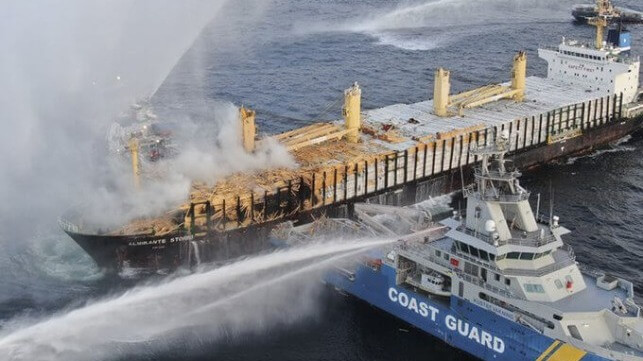
Preparations are underway to move the vessel Saurday morning (Swedish Coast Guard photo)

PUBLISHED DEC 10, 2021 

BY THE MARITIME EXECUTIVE


Swedish authorities approved a salvage plan for the Almirante Storni that calls for the vessel with its cargo fire still burning to be moved into the port of Gothenburg. They believe that the tricky operation is their only chance to extinguish the fire and that it must be done before bad weather reaches the area later this weekend.

The Swedish Transport Agency reported that it received an official request from the owners of the bulker to move the vessel to a protected port and after reviewing the plan with all the involved agencies has granted permission for it to proceed. Local newspapers are reporting that salvage experts from the Netherlands flew to the site and are prepared to assist in the complicated effort of moving the vessel to a berth. Once there, they plan to begin to unload the timber to reach the heart of the fire. Weather conditions have been favorable, which is also contributing to the decision to move the ship to port.

Barring any last-minute developments, they plan to start work at around 6:00 a.m. Saturday morning and they expect it will take two to three hours to complete the salvage operation. The Swedish Coast Guard and the commercial vessels will escort the ship to port and it will berth in Gothenburg, where crews will work on the fire.

“Good salvage planning has been done,” said Per Nyqvist, head of rescue at the Greater Gothenburg Rescue Service. “The challenge now is to have enough resources for the possible relapses that may occur. We do not really know what will happen when we start lifting the load.”

The Coast Guard reports that 600 tons of fuel remain aboard the vessel. Preparations were made to pump it to another ship, but so far it has not been necessary. The Coast Guard has however requested assistance from a broad range of agencies, including the Sea Rescue Society and the Swedish Armed Forces. 


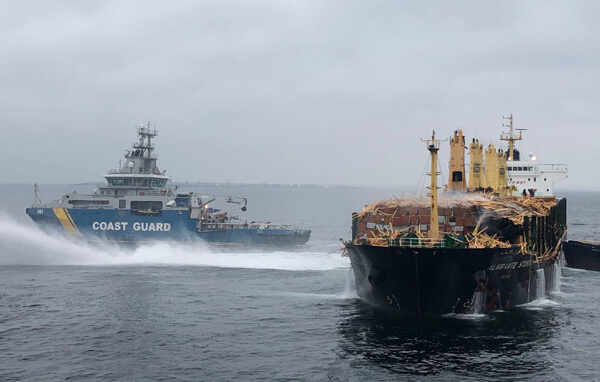
(Swedish Coast Guard photo)


“Now the event enters a new phase of moving the ship towards port,” said Nyqvist during the briefing. “There we can better attack the fire together with the rescuers who are contracted by the shipowner and the resources that are already working with on the incident.”

The firefight has lasted for a week with the Coast Guard saying they were only successful in containing the fire but not extinguishing it due to the tightly packed nature of the timber cargo. The Coast Guard said it has had 150 people on duty at all times since the beginning of the effort along with personnel changes and resupplying efforts. 

During the briefing, Swedish Coast Guard officials said this was the largest rescue effort they had ever undertaken. The authority is now preparing to demand compensation from the vessel’s owners for its work, saying that it believes it has prevented an environmental disaster.

Feasibility Study Finds LNG Carriers Beat
Tankers When It Comes to Carbon Capture
and Storage Use
lng carrier


Mike Schuler

December 14, 2021

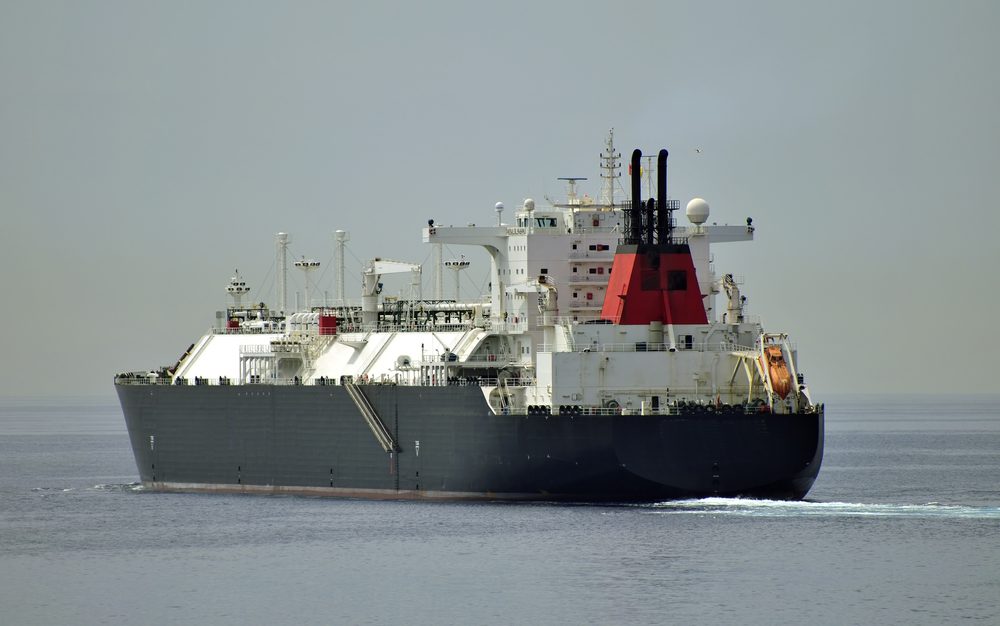
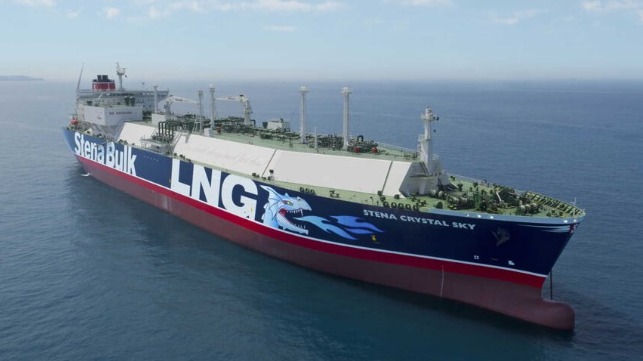
A feasibility study into shipping’s use of carbon capture and storage (CCS) technology shows that the LNG sector is currently better suited than tankers to benefit from the use of CCS, although tankers could also benefit as costs come down.

The study was conducted as part a partnership between tanker company Stena Bulk and the Oil and Gas Climate Initiative (OGCI) and aimed at exploring the potential of capturing carbon from the exhaust of large ships as the shipping industry races to decarbonize.

Stena Bulk provided data from three vessels of different types in its fleet, specifically a medium range (MR) oil/chemical tanker and a Suezmax crude oil tanker currently running on heavy fuel oil (HFO), and an LNG carrier fueled by LNG. Data collected included information on deck space, fuel use, and the availability of heat and energy in the exhaust stream, among other considerations.

The findings showed that the LNG carrier offered the most straightforward path to implementing viable CCS because it had the right mix of onboard infrastructure, while the Suezmax and MR tankers presented more technical challenges to implementing a CCS system.

That’s not to say tankers don’t have the potential to successfully use CCS technology. The study showed that carbon capture and storage is also technically feasible on a large tanker (in this case the suezmax benefitted over the MR tanker), but the biggest barrier is the cost of installation and operation. Upfront capex requirements of installing storage tanks, compressors, and other equipment create a barrier to entry, while operation expenses also increase because of the energy requirements for using a CCS system effectively. However, the study found that these costs could be substantially reduced if the engine was adapted for compatibility with carbon capture and storage.

The study concluded that while costs were likely to be a hurdle to deployment of CCS in the near and medium term, the technology could be a viable long-term option to meeting decarbonization targets as technology improves and costs come down. Commodity prices for captured carbon dioxide could also potentially offset some the costs to install and operate.

“We think that it’s right that the industry is honest about the challenges it faces from a technical and commercial perspective on the pathway to decarbonisation,” said Erik Hånell, President and CEO of Stena Bulk. “This study proves once again that there is no silver bullet solution to meet the IMO’s climate targets, and that we must promote and adopt a wide variety of proven and commercially sensible solutions if we are to successfully decarbonise.”

Dr. Michael Traver, Transport Workstream Chair for the Oil and Gas Climate Initiative, said: “Carbon capture and storage is expected to play a key role in meeting the ambitions of the Paris Agreement and is a familiar process for many of the member companies of OGCI. Extending and adapting the technology to marine vessels poses unique challenges, but also represents a great opportunity to reduce emissions from a difficult to abate sector within transportation. Our partnership with Stena Bulk has been a great example of the type of cross-industry collaboration that will be necessary to meet the challenges we face.”

PHOTO Oleksandr Kalinichenko / Shutterstock

Study: Carbon Capture is Costly but Feasible for Tankers

carbon capture and storage aboard ships is operation
LNG carriers would have the most straight forward path to CCS (Stena Bulk)


PUBLISHED DEC 13, 2021  BY THE MARITIME EXECUTIVE


Some experts have predicted that carbon capture and storage aboard operating ships would not be practical and best suited to land installation, but a new study highlights the technical feasibility on a larger tanker while also saying cast would be a challenge. The Oil and Gas Climate Initiative (OGCI), an industry-led initiative working with data from Stena Bulk has found that mobile carbon capture in shipping is technically feasible and has a long-term role to play in meeting the industry’s decarbonization targets. It supports similar results for efforts in Japan and elsewhere.

The first phase of the study explored three classes of tankers, medium range oil/chemical tanker, a Suezmax crude oil tanker currently running on heavy fuel oil, and an LNG carrier fueled by LNG. The research used vessel technical information such as deck space, fuel use, the availability of heat and energy in the exhaust stream, from Stena Bulk. 

The study findings showed that the LNG carrier offered the most straightforward path to implementing viable CCS because it had the right mix of onboard infrastructure. The Suezmax and MR tankers presented more technical challenges to implementing a CCS system. A full feasibility study was however also conducted based on the Suezmax tanker’s technical specifications because of the positive impact that a potential carbon capture and storage system would have, and to test feasibility on a ship that was representative of the global fleet.  

“Carbon capture and storage is expected to play a key role in meeting the ambitions of the Paris Agreement and is a familiar process for many of the member companies of OGCI,” said Dr. Michael Traver, Transport Workstream Chair for the Oil and Gas Climate Initiative. “Extending and adapting the technology to marine vessels poses unique challenges, but also represents a great opportunity to reduce emissions from a difficult to abate sector within transportation.”

Based on these technical reviews, the study identified the biggest challenges were likely to be the cost of installation and operation, with storage tanks, compressors, and other equipment generating a large upfront CapEx barrier. Operating expenses would also increase, the study found, because of the energy required to use the CCS system effectively. However, the study found that these costs could be substantially reduced if the engine was adapted for compatibility with carbon capture and storage and they are reporting that they do not believe the challenges are unsurmountable.

The study concluded these costs were likely to be a hurdle to the deployment of CCS in the near and medium-term, but that as the technology improves and becomes cheaper to operate, it could be a persuasive option for the industry’s decarbonization trajectory. Wider context could influence this as well, the study pointed out, with commodity prices for captured carbon dioxide potentially offsetting some of the costs for owners and operators.
 
Erik Hånell, President and CEO of Stena Bulk, said: “These results show promise, but also make clear that there are commercial and technical challenges that our sector must overcome if we are to use CCS as a decarbonization solution. We think that it’s right that the industry is honest about the challenges it faces from a technical and commercial perspective on the pathway to decarbonization. This study proves once again that there is no silver bullet solution to meet the IMO’s climate targets, and that we must promote and adopt a wide variety of proven and commercially sensible solutions if we are to successfully decarbonize.”

The study, launched in October 2020, investigated the potential of capturing carbon from the exhaust gases of the large internal combustion engines that large ships predominantly use for propulsion. OGCI published the complete results online.

A similar research program was also launched in 2019 including companies from Japan, Russia, Norway, and Denmark among others while the Japanese shipping companies have been moving forward with demonstration programs. Japan’s National Maritime Research Institute (NMRI) has been studying incorporating CCS into the scrubbers fitted on ships while in October 2021, Japan’s K Line working with Mitsubishi Shipbuilding announced that they have successfully tested a demonstration unit aboard one of the line’s bulkers. Wartsila plans to install another CCS test system on a vessel by 2023.

Big earthquakes are rare in Alberta, but small ones happen often — even if you don't feel them

5.0 magnitude quake that shook Rocky Mountain House in October was rare event

A freight train travels around Morant's Curve in the Rocky Mountains south of Lake Louise, Alta. Though higher-magnitude earthquakes are rare in the province, data shows smaller quakes occur frequently — even if people might not feel them. (Jeff McIntosh/The Canadian Press)

Marion Osborne was reading a book on a quiet night in October when a loud bang made her jump. The windows of her house rattled for about 10 to 15 seconds.

Osborne knew it couldn't have been her furnace, but she checked anyway before scanning for anything outside, as her brain tried to register what happened.

"It scared the crap out of me," said Osborne, who lives with her husband in Rocky Mountain House, Alta., a town 215 kilometres southwest of Edmonton.

At 9:20 p.m. on Oct. 20, seismographs registered a natural earthquake about 40 km northwest of Rocky Mountain House. Initially, the earthquake measured a magnitude of 4.2, but Natural Resources Canada later upgraded it to a magnitude 5.0.

The upgrade made it the second-strongest earthquake ever in Alberta.

Though earthquakes of such magnitude are rare in this province, data shows smaller quakes occur frequently — even if people might not feel them.

CBC News analyzed publicly available data from Earthquakes Canada, which has tracked natural and induced earthquakes since Jan. 1, 1985.

Since that date, nearly 1,000 natural and induced quakes have occurred in Alberta or on its borders, data shows.

That figure is likely lower than the actual total. Depending on an earthquake's magnitude, depth and the number of seismographs installed in the province, some earthquakes may go undetected, said Camille Brillon, a seismologist with Natural Resources Canada.

The province's strongest natural earthquake — a magnitude 5.4 — occurred in April 2001 near the Alberta-B.C. border, about 40 km northeast of Dawson Creek, B.C.

How earthquakes occur

The Earth's crust is made up of tectonic plates. These plates are constantly moving relative to each other along what are called faults — fractures between two blocks of rock. Interactions between the tectonic plates cause them to deform and energy to build up.

If the energy overcomes the strength of the rocks, the rocks can break suddenly, releasing the energy as an earthquake.

Most earthquakes happen along faults, but some earthquakes happen far from plate boundaries, Brillon said. The latter are usually due to stresses in the Earth's crust reactivating zones of weakness in the rock created millions of years ago, when there was more movement between the tectonic plates.

"We don't see any cyclical nature of earthquakes, they just happen all the time," she said.

Relative to other parts of Canada, Alberta and the other Prairie provinces record fewer and weaker quakes, data shows.

British Columbia records the most by far. More than 55,000 natural earthquakes have occurred in the province, along its borders and off the Pacific coast, since 1985.

The amount of seismic activity — or seismicity — in B.C. is caused primarily by converging tectonic plates beneath the Pacific Ocean. The Juan de Fuca Plate is being pulled under the North American Plate.

Alberta is situated on top of the North American Plate and has less seismicity as a result, said David Eaton, a University of Calgary geophysics professor.

Most quakes in Alberta occur near Rockies

In Alberta, most earthquakes occur along the Rocky Mountains and along the B.C. border in the southwest.

Earthquakes there are related to faults created when the Rockies were formed about 60 million years ago, said Rebecca Salvage, a University of Calgary postdoctoral researcher of geophysics.

"There's likely to be an increased stress in that area, which are remnants of those mountain-building processes," Salvage said. Northern Alberta, in comparison, experiences fewer earthquakes because that region doesn't have the same geological constraints.

Some of the earthquakes around the Rockies also relate to the last ice age — about 15,000 years ago — and the melting of continental ice sheets, Eaton said.

"Some of the seismicity that we're seeing now actually dates back to then, because there is a sudden change in the level of stress because of the removal of the glaciers," Eaton said.

This phenomenon is called the isostatic or post-glacial rebound. Kienan Marion, a U of C geophysics PhD student, likened it to an ice cube floating in a glass of water: if it's pushed down, it pops back up again.

An aerial view of the Clearwater River, west of Rocky Mountain House, Alta. Researchers say the Rocky Mountain House Seismogenic Zone should be studied further. (Amber Bracken/The Canadian Press)

The geological bounce-back just happens much more slowly, she said.

There are other clusters of earthquakes, however, that occur in specific areas, such as west of Fox Creek, a town 260 km northwest of Edmonton.

The region has seen a significant increase in earthquakes since 2013, most of which are believed to be induced by nearby fracking operations.

Alberta researchers linked the earthquakes around Fox Creek to the volume of hydraulic fracturing fluid and location of well pads in 2018.

The largest induced earthquake had a magnitude 4.8, according to the Alberta Energy Regulator (AER). It occurred near Fox Creek in January 2016. Fracking in the area was shut down for nearly three months before the AER approved a plan for operations to resume.

Brillon says it's important for people to be aware that humans can induce earthquakes, but the public shouldn't have to worry about any massive quakes happening as a result.

Rocky Mountain House area needs further study: experts

Marion Osborne was surprised to learn via social media that what she felt back on Oct. 20 had been an earthquake. But at the time, she shrugged her shoulders and went back to reading her book.

"I've heard that there have been earthquakes in this area on occasion," she said. "I never really expected that I would ever feel one."

Some researchers suggest it's worth further study. Data shows there is a cluster of earthquakes that have occurred southwest of Rocky Mountain House, in what's called the Rocky Mountain House Seismogenic Zone.

The first case of induced earthquakes occurred in that zone, and they are associated with gas production that took place decades ago, according to the AER website.

"There's a big gas pool that's located here, which we've known about for a long time. As the gas was removed from that reservoir, that actually caused the earthquakes in this region," said Kienan Marion, whose research focuses specifically on the Rocky Mountain House area.

Since 2014, there have been more earthquakes occurring in that zone, which interests researchers, she said.

It's unusual because the increase comes well after peak gas production, said Salvage, whose work focuses on induced seismicity.

There are few examples of such quakes after peak production, especially in Alberta, because companies are still trying to produce as much oil and gas as possible, she said.

The earthquake that occurred on Oct. 20 was natural and not within the cluster.

Former space agency engineer charged by Mounties claimed to have overseen major Canadian projects

RCMP charged Wanping Zheng with breach of trust last week

The RCMP accuses Wanping Zheng of using his status as a Canadian Space Agency engineer to negotiate satellite station installation agreements with Iceland on behalf of a Chinese aerospace company. (YouTube)

Wanping Zheng, who was charged last week in what police are calling "a matter of foreign actor interference," claimed publicly to have overseen a number of major Canadian aerospace projects.

Last week the RCMP charged 61-year-old Wanping Zheng of Brossard, Que. with breach of trust. He's accused of using his status as an engineer at the Canadian Space Agency to negotiate satellite station installation agreements with Iceland on behalf of a Chinese aerospace company. Documents filed in court show the alleged crime happened back in 2018.

"We do consider this to be a matter of foreign actor interference," RCMP Inspector David Beaudoin, the officer in charge of operations for the Integrated National Security Enforcement Team (INSET) in Quebec, said late last week.

A source with knowledge of the investigation said the company Zheng is accused of helping is called Spacety. It's a Chinese company specializing in satellites that can take high-resolution images.

In 2019, Zheng stopped working for the CSA — which the RCMP described as part of Canada's critical infrastructure and "a strategic asset needing protection."

According to his Spacety biography, Zheng — who sometimes goes by James as a first name — was a vice-president of international business at Spacety as of June 2020.

A number of his fellow executives used to work for the Chinese Academy of Sciences — an arm of the Chinese government — and China's space program.

Zheng's Spacety biography says he led "the establishment and implementation of a number of major Canadian national aerospace projects" while at the Canadian Space Agency.

The biography says he "presided over and participated in large-scale space projects such as the International Space Station, space radar, radar satellite, scientific satellite, and experimental satellite."

His LinkedIn profile said he "participated in most of the recent Canadian space missions as a technical expert or a manager."

Spacety specializes in high-resolution satellites 

Spacety has said publicly it plans to build, launch and operate a constellation of 56 small Synthetic Aperture Radar (SAR) satellites.

Earlier this year, it published high resolution, wide-coverage images captured by one of its satellites launched on China's Long March 8 rocket last year. The satellite took images over Asia, North America, South America, Europe and Antarctica, according to Spacety's website.

In a press release, the company said its images are comparable to those produced by larger SAR satellites such as Canada's Radarsat-2.

According to the trade publication Space News, that Long March rocket also carried a classified remote sensing technology test satellite developed by the China Academy of Space Technology as part of its payload.

CBC has contacted both Zheng and Spacety for comment.

Earlier this year Spacety, one of China's first commercial space companies, published high resolution, wide-coverage images of Tennessee captured by one of its Hisea-1 satellites. (Spacety )

While much is still unknown about Zheng's case, Canada's spy agency has been warning publicly of the threat of economic espionage and has named Russia and China as two of its main sources of concern.

The FBI in the U.S. also has issued public warnings about economic espionage.

Earlier this year, a former senior scientist at the National Aeronautics and Space Administration (NASA) was sentenced to 30 days in prison for lying to the FBI about working for a China-funded project that has been accused of espionage.

And last year, American police arrested an Arkansas professor who allegedly failed to disclose his ties to Chinese entities while securing funding for a NASA project.

Zheng in court Wednesday 

Akshay Singh, a non-resident research fellow with the Council on International Policy, said China has been seeking to grow its aerospace and aviation industries and has a history of leveraging talent abroad. 

It's not clear whether something similar is at play in this case.

"I think actually this is not, pardon the pun, rocket science in terms of what China is interested in ... Their main goal is to become a world leader in technology and to be competitive with the West," Singh said.

"It's not just always about the organization they work for and the stuff that they're doing specifically. It's not just about the bits and bytes, if you'll forgive me, but it's also about the knowledge, the expertise that these people gain from doing business with various stakeholders."

Singh said not all of China's espionage is done through covertly planted spies. It also relies on what's known as non-traditional collection.

"You might think that you've got a wonderful job offer from [a] country to do some unique research and they might rely on your current knowledge and expertise. You don't mention it to your employer," he said.

"You collect a paycheck and you move on, and you don't realize that perhaps what you've done is you've been recruited by a foreign government to provide materials or act on their behalf. "

Zheng is scheduled to make a court appearance on Wednesday.

WATCH | Space agency employee accused of using status to help Chinese company

A former engineer at the Canadian Space Agency is accused of using his position to benefit a Chinese aerospace company and now faces criminal charges. 2:01

‘If I’m not on social media, I’m dead’: Qatari feminist activist feared killed or detained


Rights groups warn 23-year-old Noof al-Maadeed is at imminent risk, despite reassurances from Qatar authorities

Noof Al-Maadeed has not been heard from since 13 October. 
Photograph: Handout

Rights and freedom is supported by


Ruth Michaelson
Wed 15 Dec 2021 

Human rights groups are demanding Qatari authorities show proof of life for a feminist activist, amid growing fears that she has been killed or detained.

Noof al-Maadeed has been missing since mid-October after returning to Qatar from the UK. The young activist fled the Gulf kingdom two years ago, documenting her escape on social media, after alleged attempts on her life. She had recently returned to Qatar after being given reassurance by the authorities that she was safe.

Before abruptly breaking her pattern of posting daily updates to Twitter and Instagram on 13 October, the 23-year-old told her followers to fear for her safety if she fell silent. Concerned supporters quickly began using #whereisNoof, demanding to know why she had disappeared.

A Qatari official told the Guardian that al-Maadeed is safe and in good health, but said they were unable to speak publicly due to a request for privacy.

“She said that if she is not posting on social media then it means she is dead. So we are just acting based on what she told us to do,” said Khalid Ibrahim, head of the Gulf Centre for Human Rights (GCHR), a Beirut-based organisation which tracks violations in the Middle East. “The Qatari government can easily prove to the international community that she is alive. They have no proof, and that is of concern for us.”

GCHR said they had received multiple reports that the Qatari authorities handed al-Maadeed to her family on 13 October.

Ibrahim and other supporters of al-Maadeed have said it is the responsibility of the Qatari authorities to prove that the activist is alive and safe.

“What we know for sure is that she is at imminent risk at the moment. She was either killed or detained, there is no doubt about it,” said Ibrahim.

Ibrahim accused the Qatari authorities of reneging on their private assurances to al-Maadeed that she would be protected on her return. As a result of those assurances, al-Maadeed rescinded her application for political asylum in the UK and returned to the Gulf nation to stay in a hotel under the watch of security officials.


‘We’re treated as children,’ Qatari women tell rights group

Al-Maadeed tweeted in early October that her father had accessed the hotel and that her life was put at risk, after three alleged previous attempts to kill her by members of her family. On 12 October she tweeted “Sheikh Tamim is the only one who can prevent the danger to my life,” a reference to the Emir of Qatar, Sheikh Tamim bin Hamad al-Thani.

She tweeted “still not safe”, and later “a bit more OK”, the following day, followed by a thumbs up emoji. She has not spoken publicly since.

Al-Maadeed documented her flight from Qatar two years ago, which included stealing her father’s mobile phone to request an exit permit, as Qatari guardianship laws prevent unmarried women under the age of 25 from travelling alone outside the country without the permission of a male guardian.

Her exile followed years of alleged domestic abuse and efforts by her family to curtail her movements. She told Human Rights Watch that “[I was] only allowed to go to school and back. Anything else [and I] can expect a beating.”

The group raised concerns about al-Maadeed on 15 October, two days after her last social media update.

Human Rights Watch reported earlier this year that Qatari guardianship laws restrict women’s access to many basic rights, including access to some jobs, travel outside the country and reproductive healthcare. They added that a lack of clarity around guardianship legislation means socially conservative policies remain, despite changes to the law.

“Many women in Qatar do not know what the official male guardianship rules are, or their legal basis, and only know of them because of their experiences or [those] of others … in many aspects of their lives, adult women are treated as legal minors in Qatar,” they said.
ONTARIO
Fanshawe College faculty to begin work-to-rule as contract talks stall


Teachers at Fanshawe College will begin a work-to-rule campaign next week over issues that include a contracting-out dispute, but a full-blown strike is "a last option," its union president says.

Author of the article:Heather Rivers
Publishing date:Dec 14, 2021 

Fanshawe College. (Derek Ruttan/The London Free Press)


Teachers at Fanshawe College will begin a work-to-rule campaign next week over issues that include a contracting-out dispute, but a full-blown strike is “a last option,” the president of the union representing faculty says.

The job action, set to start Saturday, will affect departmental and committee meetings, not teaching or grading, said Darryl Bedford, president of OPSEU Local 110, the faculty union that represents about 800 instructors.

“Those actions will not affect students,” he said.

In a online vote during the weekend, members provincewide voted 59 per cent in favour of giving the union a strike mandate, he said.

About 15,000 college faculty members, including professors, instructors and librarians, have been working under the terms of a collective agreement that expired Sept. 30.

“Students can be assured we are not looking at a strike. That is our last option,” Bedford said. “We are going to begin with work-to-rule.”

Work-to-rule means employees follow work rules and hours exactly, which can slow productivity and affect operations.

Substantial outstanding issues include subcontracting, transparency and workload, Bedford said.

The union also is disappointed about Fanshawe’s newly announced partnership with ILAC International College, a private college that will offer some of Fanshawe’s programs to international students in downtown Toronto in the spring of 2022.

Negotiations had come to a standstill, Bedford said, after Fanshawe “imposed terms and conditions at work” the union deems unacceptable.

“What they are doing is tearing up the collective agreement, saying, ‘This no longer applies, and here is a brand new document,’” he said.

“It’s unfortunate,” Bedford said. “We want to get back to the bargaining table.”

The College Employer Council, meanwhile, says it announced the changes last week before the strike vote took place.

It says the conditions taking effect Monday are meant to improve working conditions for employees, and include a wage increase.

The council says it has not left the bargaining table and has been clear about items to which it can’t agree.

The union says it has proposed continued negotiations or binding interest arbitration, as well as extending the existing collective agreement until at least Jan. 3.

­- with files from The Canadian Press