Thursday, December 16, 2021


Size doesn't matter: Rock composition determines how deadly a meteorite impact is

Size doesn't matter: Rock composition determines how deadly a meteorite impact is
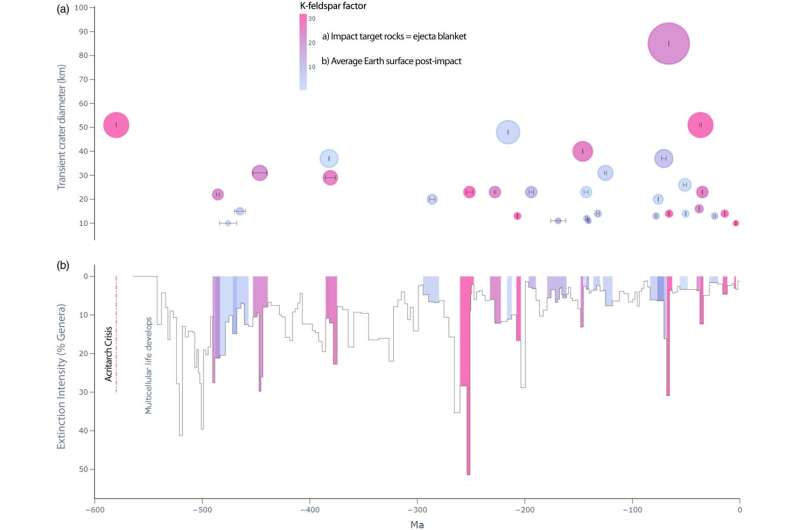
Comparison of meteorite impact stratigraphy and extinction intensity of well-resolved 
marine genera. (a) Impact database of the 33 largest and best-dated impacts in the past
 600 myr (Coldwell and Pankhurst 2019). Transient crater diameters ≥10 km with age 
precision better than ±8 myr are shown as colored circles: circle size scaled to crater
 diameter, and color the KFF factor. Updated from Coldwell and Pankhurst (2019) using
 revised age data (Schmieder and Kring 2019) and plotted by size and the K-feldspar 
factor (color) of the target rocks. Fifteen of 33 ejecta blankets correlate with mass
 extinction events. (b) Extinction intensity for the entire duration of multicellular life
 highlights times of global environmental crises. The timing of the Acritarch Crisis also
 shown. Extinction intensity is expressed as the percentage of marine genera in their last
 appearance. Each K-feldspar-rich ejecta blanket corresponds to an Earth crisis and 
accounts for the majority of severe spikes in extinction intensity, including almost all since
 c. 250 Ma, when both records are most complete. Credit: DOI: 10.1144/jgs2021-055

A new study has found that the minerology of the rocks that a meteorite hits, rather than the size of the impact, determines how deadly an impact it will have.

The earth has been bombarded by meteorites throughout its long history. Meteorite impacts generate atmospheric dust and cover the Earth's surface with debris and have long been considered as a trigger of mass extinctions through Earth's history.

A multidisciplinary research team from the University of Liverpool and the Instituto Tecnológico y de Energías Renovables, Tenerife with expertise in paleontology, asteroid stratigraphy, mineralogy, cloud microphysics and climate modeling, sought to explore why some meteorites have caused mass extinctions, for example the K/Pg Chixulclub impact that killed off dinosaurs, yet many which are larger in size have not.

They analyzed 44 impacts over the past 600 million years using a new method: assessing the mineral content of the dust ejected into the atmosphere upon impact.

Their findings, published in the Journal of the Geological Society of London, reveal that meteorites that hit rocks rich in potassium feldspar (a common and rather benign mineral) always correspond with a mass extinction episode, irrespective of size.

Potassium feldspar is non-toxic. However, it is a powerful ice-nucleating mineral aerosol that strongly affects cloud dynamics, which makes them let through more solar radiation. This in turn warms up the planet and changes the climate. The atmosphere also becomes more sensitive to warming from , such as large volcanic eruptions.

Liverpool sedimentologist, Dr. Chris Stevenson, from the University's school of Earth, Ocean and Ecological Sciences co-authored the study.

He said: "For decades scientists have puzzled over why some meteorites cause mass extinctions, and others, even really big ones, don't.

"It's surprising when we put together the data: life carried on as normal during the 4th largest impact with a crater diameter of ~48 km, whereas an impact half the size was associated with a mass extinction only 5 million years ago.

"Many kill mechanisms have been proposed, such as large volcanic eruptions, but just like meteorites, these don't always correlate with mass extinctions.

"Using this new method for assessing the mineral content of the  ejecta blankets, we show that every time a meteorite, big or small, hits rocks rich in potassium feldspar it correlates with a mass  event.

This opens up a whole new avenue of research: what exactly kills off life during these episodes, and how long do the potassium feldspar effects last? Until now, only meteorites have changed the aerosol regime of the climate. However, present day human activities represent a similar mechanism with increasing emissions of mineral aerosols into the atmosphere."

The paper, "Meteorites that produce K-feldspar-rich ejecta blankets correspond to  extinctions," is published in the Journal of the Geological Society.

Earth's meteorite impacts over past 500 million years

More information: M.J. Pankhurst et al, Meteorites that produce K-feldspar-rich ejecta blankets correspond to mass extinctions, Journal of the Geological Society (2021). DOI: 10.1144/jgs2021-055

Journal information: Journal of the Geological Society 

Provided by University of Liverpool 


Einstein finally warms up to quantum mechanics? Research team redefines energy to explain black holes

black hole
Credit: CC0 Public Domain

Einstein was no stranger to mathematical challenges. He struggled to define energy in a way that acknowledged both the law of energy conservation and covariance, which is general relativity's fundamental feature where physical laws are the same for all observers.

A research team at Kyoto University's Yukawa Institute for Theoretical Physics has now proposed a novel approach to this longstanding problem by defining  to incorporate the concept of . Although a great deal of effort has gone into reconciling the elegance of general relativity with quantum mechanics, team member Shuichi Yokoyama says, "The solution is shockingly intuitive."

Einstein's field equations describe how  and energy shape  and how in turn the structure of spacetime moves matter and energy. Solving this set of equations, however, is notoriously difficult, such as with pinning down the behavior of a charge associated with an energy-momentum tensor, the troublesome factor that describes mass and energy.

The research team has observed that the conservation of charge resembles entropy, which can be described as a measure of the number of different ways of arranging parts of a system.

And there's the rub: Conserved entropy defies this standard definition.

The existence of this conserved quantity contradicts a principle in basic physics known as Noether's theorem, in which conservation of any quantity generally arises because of some kind of  in a system.

Surprised that other researchers have not already applied this new definition of the energy-momentum tensor, another team member, Shinya Aoki, adds that he is "also intrigued that in general curved spacetime, a conserved quantity can be defined even without symmetry."

In fact, the team has also applied this novel approach to observe a variety of cosmic phenomena, such as the expansion of the universe and . While the calculations correspond well with the currently accepted behavior of entropy for a Schwarzschild black hole, the equations show that entropy density is concentrated at the singularity in the center of the black hole, a region where spacetime becomes poorly defined.

The authors hope that their research will spur deeper discussion among many scientists not only in gravity theory but also in basic physics.Studying cosmic expansion using methods from many-body physics

More information: Sinya Aoki et al, Charge conservation, entropy current and gravitation, International Journal of Modern Physics A (2021). DOI: 10.1142/S0217751X21502018

Provided by Kyoto University 

Astronomers peer deeper into Milky Way's heart than ever before with new telescope images

Tereza Pultarova 
SPACE.COM

Astronomers have captured the deepest and sharpest images of the Milky Way's center ever, enabling scientists to estimate the mass of the giant black hole at our galaxy's heart with unmatched precision.
Stars orbiting close to the Sagittarius A* black hole at the center of the Milky Way captured in May this year.

The Milky Way observations, made with the Very Large Telescope Interferometer (VLTI) at the European Southern Observatory (ESO) in Chile, also revealed a previously unknown star orbiting close to our galaxy's mysterious central black hole, called Sagittarius A*.

The Very Large Telescope is one of the world's most advanced optical space observatories. Consisting of four main telescopes, each 27 feet in diameter (8.2 meters), and four auxiliary telescopes, 6 feet in diameter (1.8 m), the observatory can detect stellar objects four billion times fainter than what can be seen with the naked eye.

A technique called interferometry enables astronomers to combine the light coming through the four main telescopes into a single image. Astronomers have been using interferometry for years, but its latest iteration provides a jaw-dropping 20-fold improvement in sharpness and detail compared to the images obtained by the individual telescopes, researchers said.

Related: Milky Way's galactic core overflows with colorful threads in new panorama

"The VLTI gives us this incredible spatial resolution and with the new images we reach deeper than ever before," Julia Stadler, a postdoctoral researcher at the Max Planck Institute for Astrophysics in Garching, Germany, who led the imaging campaign, said in a statement. "We are stunned by their amount of detail, and by the action and number of stars they reveal around the black hole."

Since the black hole in the Milky Way's center emits no light, it cannot be directly observed. Astronomers can only learn about its properties by studying the motions of the stars in its vicinity.

"Following stars on close orbits around Sagittarius A* allows us to precisely probe the gravitational field around the closest massive black hole to Earth, to test general relativity, and to determine the properties of the black hole," Reinhard Genzel, the director of the Max Planck Institute for Extraterrestrial Physics and recipient of the Nobel Prize in Physics 2020 for his decades-long research of Sagittarius A*, said in the statement. Genzel is also a co-author of the new study.


The measurements, conducted between March and July 2021, revealed that Sagittarius A* has a mass of 4.3 million suns and sits at a distance of 27,000 light-years from Earth. Both of these figures are the most precise estimates of their kind to date.

During the campaign, the astronomers observed the star S29, the closest known star to Sagittarius A*, zooming by the black hole at a distance of just 8 billion miles (13 billion kilometers). That is only about 90 times the distance from Earth to the sun. During this close pass, the star travelled at a record-breaking speed of 5,430 miles per second (8,740 kilometers per second).

But the observations also discovered a completely new star in this dense region close to the galaxy's heart. Named S300, the star's discovery is a promising development for further research into this intriguing part of the galactic system.

The research is part of an international project called GRAVITY, which is developing new techniques for analyzing images of the Milky Way's galactic center with the goal of mapping the surroundings of Sagittarius A* in the greatest possible detail. The astronomers hope that in the future, they will be able to detect stars much fainter than S29 and S300 and orbiting even closer to the black hole. The orbits of these close stars may reveal information about the black hole's rotation. The astronomers hope to make major leaps after the completion of ESO's Extremely Large Telescope, which will become the world's largest optical space observatory when it comes online in about 2025.

"With GRAVITY and the ELT's powers combined, we will be able to find out how fast the black hole spins," Frank Eisenhauer, an astronomer at MPE and principal investigator of the GRAVITY project, said in the statement. "Nobody has been able to do that so far."

The new research is described in two papers published in the journal Astronomy & Astrophysics on Tuesday (Dec. 14).

Follow Tereza Pultarova on Twitter @TerezaPultarova
Geologists uncover 'treasure trove' of dinosaur tracks in Poland

WARSAW (Reuters) - Hundreds of dinosaur footprints, so well-preserved that even the scaly skin can be seen, have been found in Poland, giving an insight into a complex ecosystem around 200 million years ago, geologists said.

Described by the Polish Geological Institute-National Research Institute as a treasure trove, the fossilised tracks and bones were found in an opencast clay mine in Borkowice, 130 km (80 miles) south of Warsaw.

"In the traces left by dinosaurs, you can read their behaviour and habits... we have traces left by dinosaurs running, swimming, resting and sitting," said geologist Grzegorz Niedzwiedzki.

The largest footprints of carnivorous dinosaurs are 40 cm long and in many cases the skin can be seen in detail.

"In order for such a state of preservation to be possible, a very special sequence of events had to take place in a short time," geologist Grzegorz Pienkowski said in a statement.

Several hundred dinosaur tracks, representing at least seven species, have been found and geologists say they are likely to find more. They have also discovered bone fragments from animals and fish.

(Writing by Alan Charlish and Anna Wlodarczak-Semczuk; Editing by Janet Lawrence)

Stanford Researchers Test Physics of Coral as an Indicator of Reef Health

 
Video by Farrin Abbott
New research shows that physics measurements of just a small portion of reef can be used to assess the health of an entire reef system. The findings may help scientists grasp how these important ecosystems will respond to a changing climate.

BY DANIELLE TORRENT TUCKER

Vast amounts of energy flow around the ocean as waves, tides and currents, eventually impacting coasts, including coral reefs that provide food, income and coastal protection to more than 500 million people. This water movement is foundational to reef success, bringing nutrients and food and removing waste, yet far less research has been focused on the physics in comparison to the biology of these living communities.

New research shows that physics measurements of just a small portion of reef can be used to assess the health of an entire reef system. The findings may help scientists grasp how these important ecosystems will respond to a changing climate.

Stanford scientists recently addressed this imbalance by demonstrating that measuring the physics of just a small portion of reef with a single instrument can reveal insights about the health of an entire reef system. The findings point to low-cost methods for scaling up monitoring efforts of these enigmatic living structures, which are at risk of devastation in a changing climate. The results appeared in the Journal of Geophysical Research: Oceans Dec. 14.

“This approach is like building a weather station for coral reefs,” said lead study author Mathilde Lindhart, a PhD student in civil and environmental engineering. “If we have a couple of weather stations around, we can then determine the weather everywhere on the reef.”
Limited resources

For decades, marine scientists have often relied on a single instrument to calculate the flow around reefs because the measurements must be made with limited time and costly tools that can only be anchored in certain locations. As a result, they have had to assume that one measurement is representative of flow over the entire reef. This new work confirms that assumption is correct, bringing renewed credibility to previously collected data.

“Replication is the foundation of our ability to trust science,” said senior study author Rob Dunbar, a professor of Earth system science in Stanford’s School of Earth, Energy & Environmental Sciences (Stanford Earth). “Our results are building a solid foundation for other studies of coral reef physics.”

The study authors tested a suite of current meters, which send out sound waves that scatter off the currents and suspended particles, including sediment and plankton, then return with a shift in frequency that translates into flow velocities. They measured the fluid dynamics at different resolutions, with ranges from about 3 to 40 feet, depending on the instrument.

“Marine biologists that do research on specific fish or corals or other organisms need to measure the flow,” said study co-author Alexy Khrizman, a PhD student in Earth system science. “It’s very important to know that the choice of the instrument is not going to affect the research. It’s also important that we get the flow and turbulence work correct, otherwise our calculations of production and calcification will not be correct.”
Serendipitous science

The researchers conducted field work in different locations within the Salomon Atoll in the Chagos Archipelago in the Indian Ocean, south of the Maldives. They were collecting data about a reef off Île Anglaise as part of a larger initiative to study the British Indian Ocean Territory Marine Protected Area when they realized they were prepared to test the assumption that one instrument would provide enough information to understand the flow of the entire reef.

“We were sort of testing our toolbox,” Lindhart said. “We had all these instruments in the water already and were actually looking for something else – it’s rare that you have the opportunity to measure the same thing, but in different ways.”

The researchers used the data they collected to construct a three-dimensional model of the reef and its flow, bringing new clarity to the life of these underwater cities.

“This is the first three-dimensional construct that tells us how the roughness and its variability from place to place impacts water flow over the reef,” Dunbar said. “There’s a direct correlation between the roughness of the coral reef and the biodiversity of the reef.”
Fundamental insights

Through their research, the study authors aim to answer foundational questions about how these incredibly complex structures interact with incoming energy.

“There are so many ways to study reefs, what we sometimes call the currency by which you’re going to see what’s going on. For most people, it’s fish or the corals themselves,” Dunbar said. “What’s really new is that our currency is different – this paper is about using the physics of moving water as currency.”

They also hope the findings will be useful to conservation managers. Coral reefs are like “super-efficient cement factories,” according to Dunbar, producing architectures and buildings that are self-healing. Although they comprise less than 1 percent of the surface area of the ocean, reefs are home to about 25 percent of all marine life.

“In order to make any kind of projection about climate change, we need to know how they are working right now,” Lindhart said. “The beautiful thing about physics is that it’s the same everywhere – once we’ve established some principles, you can take them and use them somewhere else.”

Dunbar is the W.M. Keck Professor at Stanford Earth and a senior fellow at the Stanford Woods Institute for the Environment. Study co-authors include Stephen Monismith, the Obayashi Professor in the School of Engineering, and David Mucciarone, lab manager in the Department of Earth System Science.

This research was supported by the Bertarelli Program in Marine Science, a Stanford Graduate Fellowship, the Gerald J. Lieberman Fellowship and National Science Foundation grant OCE-1948189.


Ontario researchers create chemical compounds that can neutralize COVID-19, some variants

Christy Somos
CTVNews.ca Writer
 Tuesday, December 14, 2021
This undated electron microscope image made available by the U.S. National Institutes of Health in February 2020 shows the Novel Coronavirus SARS-CoV-2. Also known as 2019-nCoV, the virus causes COVID-19. The sample was isolated from a patient in the U.S. (NIAID-RML via AP)

Ontario researchers have created chemical compounds that can neutralize SARS-CoV-2, the virus behind the COVID-19 pandemic, as well as several of its variants.

Detailing their findings in a recent paper published in the Journal of Medicinal Chemistry, researchers at the University of Toronto (UofT) created “D-peptides” that can neutralize the virus and stop infection of cultured human cells.

D-peptides, also known as “mirror-image peptides” are chemical compounds that have properties that allow them to be developed into low-cost antiviral therapeutics, according to a release.

“Our peptides act similar to antibodies that block the virus from entering the cells, but there are certain advantages in that they are cheaper to make [and] they have long stability,” said UofT professor and senior study author Philip Kim on CTV’s Your Morning Tuesday.

Generally, peptides are rapidly broken down inside the body by enzymes that attack harmful bacteria and pathogens. However, mirror peptides are resistant to degradation.

Kim’s team designed several D-peptides that mimic the portion of the SARS-CoV-2 spike that binds to the surface of cells, via the ACE2 receptor. The peptides bind to the receptor before the virus makes contact with the cell, preventing infection.

Two high-security labs in South Korea confirmed the experiment with cultured human cells, and the peptides working against the infection of the Alpha, Beta and Gamma COVID-19 variants.

Kim is confident that the peptides can be formulated to work against the Omicron variant as well.

“Based on the testing we have done over the past week or two, we believe it would be effective against Omicron and updating our compound to be effective against Omicron would be very straight forward,” he said.

Kim said that since D-peptides can be used to fight diseases in highly targeted ways, his technology could be used against Alzheimer’s, cancer or any future coronaviruses.

Kim and his team have partnered with a Boston biotech company called Decoy Therapeutics to commercialize his research, but Kim said there was no reason why it couldn’t be produced in Canada.

“It will be at least two years before it is available to the public,” he said.


BREAKING: 
Carlsen Might Only Defend Title Vs. Firouzja
Did Magnus Carlsen play his last title match? 
Photo: Maria Emelianova/

PeterDoggers
Updated: Dec 14, 2021
Chess.com

GM Magnus Carlsen might be letting go of his world title in classical chess unless GM Alireza Firouzja will be his opponent for the next match. "If someone other than Firouzja wins the Candidates Tournament, it is unlikely that I will play the next world championship match," the world champion said in a podcast on Tuesday.

The Candidates Tournament is scheduled for June 2022, and the next world championship is tentatively planned for early 2023. The reigning champion might not be part of it.

At the final press conference after game 11, Carlsen already seemed to be hinting at this possibility when he gave a slightly puzzling answer to the question of whether he expects to eventually let go of his title on his own terms or by losing to a new challenger. "First of all, that's a very good question. I cannot answer it right now," he said.

Four days later, Carlsen provided more details in a new podcast for sponsor Unibet with his good friend Magnus Barstad, recorded in Dubai (also covered by VG). The bomb has been dropped: Carlsen feels he only wants to defend his title in another match if Firouzja will win the 2022 Candidates.


"If someone other than Firouzja wins the Candidates Tournament, it is unlikely that I will play the next world championship match," Carlsen said. "Then I think I can say that I am happy."

At the closing ceremony in Dubai, the Norwegian superstar mentioned that his motivation for the match hadn't always been at its highest. In the podcast, he said that the joy of winning was "not close to" what he envisioned.

In general, Carlsen wasn't as motivated as before: "It has been clear to me for most of the year that this world championship match should be the last. It does not mean as much anymore as it once did," he said, adding: "I have not felt that the positive has outweighed the negative. I want to quit when I am at my best."

In the podcast, Carlsen noted that Firouzja's fast rise to the top somewhat changed his mind. He repeated what he had said at the final press conference: "I have to say I was really impressed with his performance in the Grand Swiss and in the European Team Championship, and I would say that motivated me more than anything else."
Is Alireza Firouzja the only player with a chance to play Carlsen in 2023? 
Photo: Maria Emelianova/Chess.com.

The world champion emphasizes that he does not intend to quit chess in general. For example, he is very motivated to defend his rapid and blitz titles in Warsaw (Dec. 26-30).

"I will continue to play chess; it gives me a lot of joy. Already in the middle of the world championship here in Dubai, I started to look forward to playing the world rapid and blitz this Christmas."

And it seems we don't need to worry about losing Carlsen for classical chess either as he has set a new goal: that of breaking 2900 Elo.

"I have never had it as a goal before because I felt that it was too difficult. I have improved my rating again a bit now, to 2865, and it is at least a goal you can set. It does not feel completely impossible, but at the same time, I know that I have to be on top every time I play. There is no room for error. It is something to motivate oneself for."

If Firouzja fails to win the Candidates, we might see a repeat of the scenario in 1975, when the chess world got a new world champion without the reigning champion losing a match. The 11th world champion Bobby Fischer forfeited his title after failing to agree with FIDE on the details for a match against Anatoly Karpov, who was then awarded the title.

As the Norwegian GM Jon Ludvig Hammer points out, this time around we might see a match between the winner and the runner-up of the Candidates.

Magnus Carlsen may opt against world chess defence due to lack of motivation

Carlsen retained world championship title in Dubai
‘It doesn’t mean as much any more as it once did’

Magnus Carlsen insists he has other priorities outside of the world championship. 
Photograph: AFP/Getty Images


Sean Ingle
THE GUARDIAN
Tue 14 Dec 2021 

Magnus Carlsen says he is ready to shock the chess world by giving up his world championship title – because defending it no longer motivates him. The five-time world champion retained the classical title in emphatic style in Dubai last week, crushing his Russian challenger Ian Nepomniachtchi 7½-3½, but now says he has other priorities.

“It’s been clear to me for most of the year that this world championship should be the last,” he said. “It doesn’t mean as much any more as it once did. I haven’t felt that the positive outweighs the negative.


Carlsen’s epochal world title triumph proves an antidote to perfection

“For those who expect me to play the world championship next time, the chance that they will be disappointed is very great.”

The 31-year-old said the only thing likely to persuade him to keep defending his title would be if his next opponent was the brilliant 18‑year‑old Alireza Firouzja, who recently broke Carlsen’s record as the youngest 2800-rated player and is now ranked world No 2.

However, Firouzja still has to qualify from an eight-man candidates tournament to earn the right to play Carlsen.

“It is important for me to say that I do intend to play chess,” said Carlsen, who has hinted before that he is unhappy with the format of the classical world championship, which he thinks should have shorter time controls. “I will continue to play chess, it gives me a lot of joy. But the world championship has not been so pleasurable.”


How Magnus Carlsen won chess back from the machines


Speaking to the Løperekka podcast for his sponsor Unibet, Carlsen said: “If someone other than Firouzja wins the candidates tournament it’s unlikely I will play the next world championship match.”

Instead Carlsen, who is already the highest ranked chess player in history, has set his sights on becoming the first man to break the 2900 barrier.

“There is so much more I can try to do,” he said. “I am very motivated to get the rating to 2900. I have never had it as a goal before, because I felt it was difficult. I have raised the rating a bit again now, to 2865, and it is at least a goal you can set. It does not feel completely impossible.”


Wednesday, December 15, 2021

NUKE NEWS

Nuclear makes a comeback in the Netherlands

15 December 2021


The Netherlands' new coalition government has placed nuclear power at the heart of its climate and energy policy. Some EUR500 million (USD564 million) has been earmarked to support new nuclear build in the period to 2025.

Borssele, the Netherlands' only operating nuclear power plant (Image: EPZ)

"We want to make every effort to keep our country and our planet liveable and habitable," wrote the VVD, D66, CDA and ChristenUnie parties. Today they released the coalition's plans for the period to 2025 as the result of negotiations that began after the general election in March.

"Nuclear energy can complement solar, wind and geothermal energy in the energy mix and can be used to produce hydrogen," the document said. "It also makes us less dependent on gas imports."

"That is why the nuclear power plant in Borssele will remain open longer, with due regard for safety," said the government. The 482 MWe single-unit plant has operated since 1973 and meets around 3% of the country's electricity needs.

"This government is also taking the necessary steps to build two new nuclear power stations," the policy continued. "This means, among other things, that we will facilitate market parties in their explorations, support innovations, invite tenders, review the government's contribution (financial and otherwise), and put legislation and regulations in order where necessary."

Accordingly, the government said it would provide financial support to the goal of building new nuclear power plants. It outlined EUR50 million (USD56 million) for this in 2023, EUR200 million in 2024 and EUR250 million in 2025.

It anticipated that cumulative support for new nuclear would reach EUR5 billion by 2030, while not assuming the power plants would be online by that time.

This nuclear investment will support higher ambition on climate. "In order to be climate-neutral by 2050 at the latest, we are raising the 2030 target in the Climate Act to at least 55% CO2 reduction," the policy said. "In order to meet this target, we have agreed to focus our policy on a higher target, which is around 60% in 2030." Subsequent goals are a 70% reduction in CO2 emissions by 2035 and 80% by 2040.

Elsewhere in the energy sector, the government will support wind deployment while focusing solar deployment on rooftops rather than open land. Gas production will be phased out in Groningen and the government will not issue new licences for production in the Wadden Sea, close to the coast. Gas production in the North Sea will be supported because it reduces imports. The use of woody biomass will be restricted to fuels sourced within the EU so that its sustainability can be closely monitored.

Polish support for nuclear on a high

15 December 2021


Support for nuclear energy in Poland is overwhelming with 78% of people supporting the technology as a response to climate change, according to opinion polling. It comes as the country experiences a series of developments towards nuclear deployment.
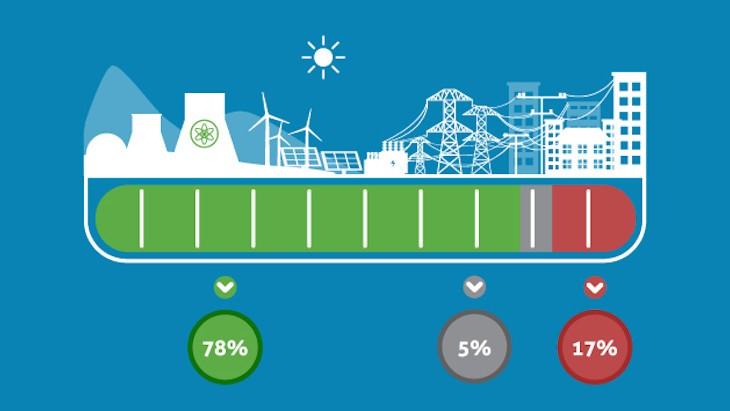
Nuclear energy is strongly supported in Poland, with few undecided (Image: Polish Ministry of Climate and Environment)

"These are the best results in the history of research carried out since 2012," said Poland's Ministry of Climate and Environment, which commissioned the annual poll. The market research company DANAE used the CATI method to find the views of a representative group of 2148 people aged 15 to 75 years of age during November.

Results indicated that 74% of people support nuclear power plants in Poland, with 20% opposed. This was an increase in support of 11%, the government noted.

A similar increase was found among people who would be supportive of a nuclear power plant in their area. Some 58% said they would support this, up from 46% last year, with 39% opposed.

These results come in the context that 80% of respondents said they had heard of plans to introduce nuclear power to Poland.

Constructing nuclear power plants in Poland was "a good way of fighting climate change" agreed 78% of people, with only 17% in disagreement.

A large majority of 82% said that building nuclear power plants would be a good way to increase Poland's energy security, which the government noted was up 9% from last year.

Energy prices have been high across Europe through the last quarter of 2021 as the economic recovery from the COVID-19 pandemic collided with low stocks of gas. At the same time, Poland has seen a series of positive developments in nuclear energy.

Run of developments


In September it was announced that six new large reactors could be built by 2040 as part of Poland's plan to reduce its historic heavy reliance on coal, which is incompatible with climate commitments. EDF of France submitted an offer to supply six large EPR reactors in October, and Westinghouse has stepped up its engineering centres in Poland.

Separately Polish heavy industry is embracing small reactors as a way to avoid burning coal for process heat and power. Chemical producer Synthos has established a subsidiary which has right to develop projects around GE-Hitachi's BWRX-300, and is working with chemical producers PKN Orlen and Ciech on the potential for the BWRX to replace coal at their plants. Synthos is also working with power company ZE Pak to examine whether BWRX-300s could replace coal at the Pątnów power plant.

NuScale is working with liquid fuel supplier Unimot and USA-based Getka to explore whether its power modules could be used instead of coal. NuScale also has a similar project with KGHM Polska Miedź SA and Piela Business Engineering.

THEY WILL DUMP RADIOACTIVE WASTE WATER INTO LAKE MICHIGAN

Licence transfer expands Holtec decommissioning fleet

15 December 2021


The US Nuclear Regulatory Commission (NRC) has approved the transfer of the licences for the Palisades nuclear power plant from Entergy Nuclear Operations Inc to Holtec International following the plant's retirement next year. Holtec plans to take control of the Michigan plant and begin its decommissioning with a month of its retirement.

The Palisades plant on the shores of Lake Michigan (Image: Holtec)

Holtec said it looks forward to completing the ownership transfer from Entergy in mid-2022 when it will "assume ownership of the site, real property and all nuclear waste, including used nuclear fuel." The licence transfer also includes Palisades' independent spent fuel storage installation (ISFSI) - an associated facility where some of the plant's used fuel is in dry storage - as well as the licences for the decommissioned Big Rock Point nuclear power plant and its associated used fuel storage facility.

A new subsidiary called Holtec Palisades will be the owner of the site, while Holtec Decommissioning International (HDI) will be the operator and therefore responsible for nuclear safety as it is decommissioned. Holtec said it uses a fleet management model across the Oyster Creek, Pilgrim and Indian Point sites it is in the process of decommissioning.

Palisades is an 805 MWe pressurised water reactor, which has operated for 50 years. Big Rock Point operated from 1962 to 1997. It is fully decommissioned and only the dry fuel storage facility remains.

Entergy in 2018 agreed to sell the Pilgrim nuclear power plant, in Massachusetts, and Palisades to Holtec after their closures. Pilgrim shut down for the last time on 31 May 2019, and Holtec completed its acquisition of the plant in August of that year. Holtec plans to decommission Pilgrim (with the exception of the ISFSI) on an eight-year schedule to permit NRC partial site release.

"The ongoing dose, safety, and environmental protection metrics garnered by Holtec Decommissioning provide definitive proof that the dismantling of a nuclear plant can be a non-intrusive societal presence and an environmentally safe undertaking," the company said.

Palisades is scheduled to shut down on 31 May 2022. Holtec and Entergy expect to conclude the transaction by 30 June, and Holtec plans to move all the fuel in the plant's used fuel pool into dry cask storage within three years of shutdown. NRC's order approving the licence transfer is effective immediately, but the transfer will not be finalised until after the plant's permanent shutdown and the completion of the transaction between Entergy, Holtec and HDI, NRC said.

Separately, Holtec International is developing a small modular reactor called SMR-160. It said in November it is "actively exploring the possibility" of deploying an SMR-160 at Oyster Creek as well as its other sites.


Second community partnership forms in Cumbria

14 December 2021


The second of two community partnerships has been formed in Copeland, Cumbria, UK, to take forward discussions around siting a geological disposal facility (GDF) for high-level radioactive waste. Following the formation of the Mid Copeland GDF Community Partnership last month, neighbouring South Copeland has now put itself forward as a possible host for the facility.
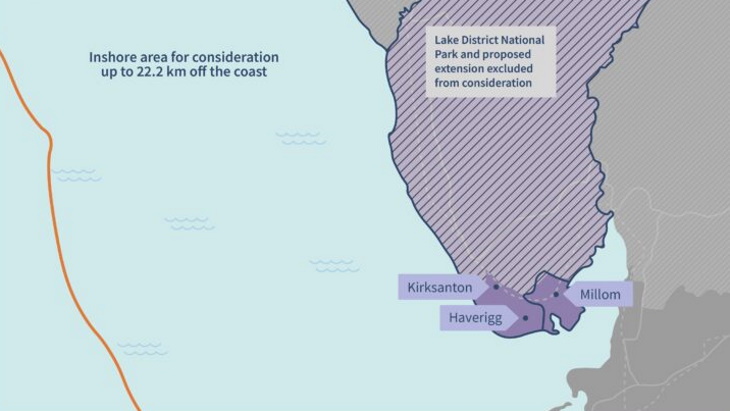
The South Copeland search area (in solid purple) identified by the Copeland GDF Working Group for consideration (Image: RWM)

As well as Copeland Borough Council and Radioactive Waste Management (RWM), initial membership of the South Copeland GDF Community Partnership also includes local councillors and the Cumbria Association of Local Councils.

South Copeland GDF Community Partnership will now focus further engagement activities in a search area covering the electoral wards of Millom and Black Combe & Scafell.

"The formation of a second Community Partnership in Copeland marks another step forward in the nationwide search to find a willing community and suitable site for a geological disposal facility for the safe and secure disposal of higher-activity radioactive waste," said RWM.

Initially, RWM will explore the potential of deep geology beyond the coast for the underground elements of a GDF, as recommended by Copeland GDF Working Group. This would mean a land-based surface facility could provide access to a disposal area in rock deep below the seabed. The Lake District National Park and proposed extension will not be considered.

Now that two Community Partnerships have formed, the Copeland Working Group comes to an end as it has fulfilled its remit to begin conversations about GDF, identify search areas and identify initial members for Community Partnerships.

Community Partnerships are longer-term groups made up of a larger number of people to consider the possibilities of hosting a GDF within the identified search areas in more detail. Progressing to the formation of Community Partnerships unlocks access to GBP1.0 million (USD1.3 million) per year investment funding for communities, per partnership, for local projects, rising to GBP2.5 million per year if deep borehole investigations to assess geology take place.

"We're delighted to see the formation of another Community Partnership in Copeland. It provides a platform to increase community engagement and trigger investment funding for projects that should really benefit the communities involved," said RWM CEO Karen Wheeler. "We look forward to continuing discussions and beginning investigations in these areas for a site that could be suitable for a GDF."

Construction of a GDF requires both a suitable site and willing community. If a suitable site is eventually found in Copeland - which could take 10-15 years - a Test of Public Support, which would give people a direct say, would be held with those living in the wards affected. Without public support the project would not go ahead.

During an earlier site selection process, two communities in Cumbria - Copeland and Allerdale - had expressed interest in hosting a repository, but the process stopped in January 2013 when the local county council voted against moving to the next stage of the process. A new search for a site was launched in December 2018.

The Allerdale GDF Working Group has identified an area for further investigation covering 320 square kilometres comprising 13 electoral wards of Allerdale Borough Council, as well as an inshore area up to 22.2 kilometres off the coast. The working group has recommended that a community partnership is formed in the borough.

A GDF comprises a network of highly-engineered underground vaults and tunnels built to permanently dispose of higher activity radioactive waste so that no harmful levels of radiation ever reach the surface environment. Countries such as Finland, Sweden, France, Canada and the USA are also pursuing this option.


Opal conducts self-review of safety

14 December 2021


The Australian Nuclear Science and Technology Organisation (ANSTO) has undertaken a review of safety and security performance at the Opal research reactor, saying its future plans are "very much anchored on high standards."

The Opal research reactor at ANSTO's Lucas Heights site (Image: ANSTO)

"Challenging our approach is something we do well at Ansto," said Opal Reactor Manager David Vittorio.

The review looked at Opal managers' performance on 15 safety factors and 19 security factors over the last ten years "to give a view on future performance", ANSTO said. "The outcome provided a strong vote of confidence in Australia’s expertise in nuclear activities and research," it stated in an announcement of the work.

Vittorio said the review "has led to an action plan that will ensure Opal continues to maintain its position as one of the world's best multi-purpose research reactors." More specifically, “the report considered the performance over the past decade and how to sustain and enhance the safety, security and reliability of the reactor over the next decades."

ANSTO said it followed an approach advocated by the International Atomic Energy Agency for the Period Safety and Security Review.

ANSTO CEO Shaun Jenkinson said the oganisation "is the custodian of Australia's most significant national infrastructure for research, and Opal, as the only nuclear reactor in the country, is the centrepiece." 

Jenkinson added, “Our future plans to progress cutting-edge developments in nuclear medicine production, research, and partnerships with industry, are very much anchored by the high standards achieved through the safe and secure operation of Opal.”

Opal is a 20 MWt open-pool research reactor that started up at ANSTO's Lucas Heights site, near Sydney, in 2007. It was designed by Invap of Argentina and is the design reference for the Brazil Multipurpose Reactor under construction in that country as well as the RA-10 reactor under construction in Argentina, although those units will be larger at 30 MWt.

In September, the Australian government announced AUD30 million (USD12.8 million) would be spent on the design of a new nuclear medicine manufacturing facility at Lucas Heights. It would replace a facility which is said to be nearing the end of its service life, but has an important role providing up to 12,000 doses of nuclear medicine annually.

Researched and written by World Nuclear News
Bugs across globe are evolving to eat plastic, study finds

Surprising discovery shows scale of plastic pollution and reveals enzymes that could boost recycling

Plastic washed ashore on Berawa Beach, Bali, Indonesia. 
Photograph: Anadolu Agency/Getty Images


Damian Carrington
Environment editor
THE GUARDIAN
Tue 14 Dec 2021 

Microbes in oceans and soils across the globe are evolving to eat plastic, according to a study.

The research scanned more than 200m genes found in DNA samples taken from the environment and found 30,000 different enzymes that could degrade 10 different types of plastic.

The study is the first large-scale global assessment of the plastic-degrading potential of bacteria and found that one in four of the organisms analysed carried a suitable enzyme. The researchers found that the number and type of enzymes they discovered matched the amount and type of plastic pollution in different locations.

The results “provide evidence of a measurable effect of plastic pollution on the global microbial ecology”, the scientists said.

Millions of tonnes of plastic are dumped in the environment every year, and the pollution now pervades the planet, from the summit of Mount Everest to the deepest oceans. Reducing the amount of plastic used is vital, as is the proper collection and treatment of waste.

But many plastics are currently hard to degrade and recycle. Using enzymes to rapidly break down plastics into their building blocks would enable new products to be made from old ones, cutting the need for virgin plastic production. The new research provides many new enzymes to be investigated and adapted for industrial use.

“We found multiple lines of evidence supporting the fact that the global microbiome’s plastic-degrading potential correlates strongly with measurements of environmental plastic pollution – a significant demonstration of how the environment is responding to the pressures we are placing on it,” said Prof Aleksej Zelezniak, at Chalmers University of Technology in Sweden.

Jan Zrimec, also at Chalmers University, said: “We did not expect to find such a large number of enzymes across so many different microbes and environmental habitats. This is a surprising discovery that really illustrates the scale of the issue.”

The explosion of plastic production in the past 70 years, from 2m tonnes to 380m tonnes a year, had given microbes time to evolve to deal with plastic, the researchers said. The study, published in the journal Microbial Ecology, started by compiling a dataset of 95 microbial enzymes already known to degrade plastic, often found in bacteria in rubbish dumps and similar places rife with plastic.

The team then looked for similar enzymes in environmental DNA samples taken by other researchers from 236 different locations around the world. Importantly, the researchers ruled out potential false positives by comparing the enzymes initially identified with enzymes from the human gut, which is not known to have any plastic-degrading enzymes.

About 12,000 of the new enzymes were found in ocean samples, taken at 67 locations and at three different depths. The results showed consistently higher levels of degrading enzymes at deeper levels, matching the higher levels of plastic pollution known to exist at lower depths.

The soil samples were taken from 169 locations in 38 countries and 11 different habitats and contained 18,000 plastic-degrading enzymes. Soils are known to contain more plastics with phthalate additives than the oceans and the researchers found more enzymes that attack these chemicals in the land samples.

Nearly 60% of the new enzymes did not fit into any known enzyme classes, the scientists said, suggesting these molecules degrade plastics in ways that were previously unknown.

“The next step would be to test the most promising enzyme candidates in the lab to closely investigate their properties and the rate of plastic degradation they can achieve,” said Zelezniak. “From there you could engineer microbial communities with targeted degrading functions for specific polymer types.”

The first bug that eats plastic was discovered in a Japanese waste dump in 2016. Scientists then tweaked it in 2018 to try to learn more about how it evolved, but inadvertently created an enzyme that was even better at breaking down plastic bottles. Further tweaks in 2020 increased the speed of degradation sixfold.

Another mutant enzyme was created in 2020 by the company Carbios that breaks down plastic bottles for recycling in hours. German scientists have also discovered a bacterium that feeds on the toxic plastic polyurethane, which is usually dumped in landfills.

Last week, scientists revealed that the levels of microplastics known to be eaten by people via their food caused damage to human cells in the laboratory.