Thursday, December 23, 2021

Michigan GOP candidate says public schools are plotting to 'eliminate the white people'

Matthew Chapman
RAW STORY
December 22, 2021

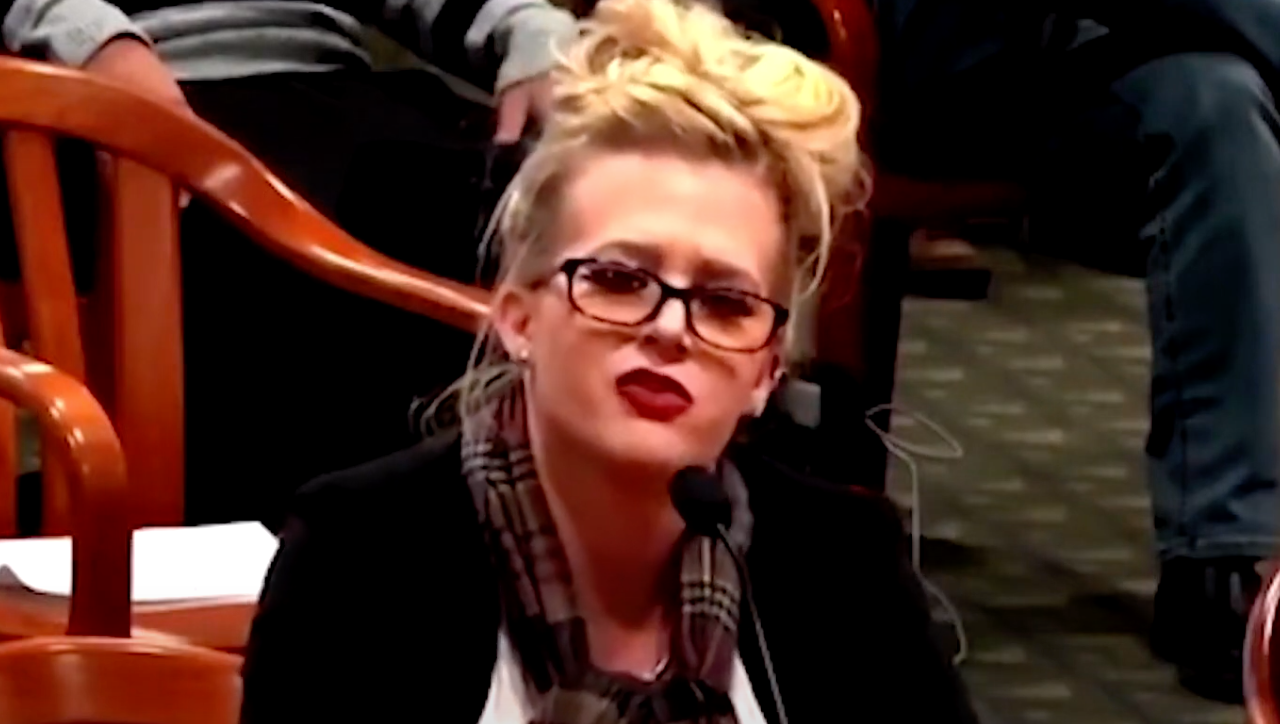
Mellissa Carone (screengrab).

On Wednesday, Michigan Advance reported that Mellissa Carone, a GOP anti-"voter fraud" activist who is running for state legislature in Michigan, espoused white supremacist propaganda to supporters on social media.

"During a Facebook live video Tuesday, Mellissa Carone ... said that public schools and the government are trying to 'eliminate' white people in America," reported Allison Donahue. "'They’re trying to eliminate the white people in America, particularly the white male in America,' Carone said after criticizing public schools for asking students for their pronouns and calling transgender rights 'government control.'"

"These comments are similar to what is said by far-right extremists against critical race theory, which is a graduate-level course examining the systemic effects of white supremacy in America. It is not taught in any of Michigan’s K-12 schools," continued the report. "In the nearly 90-minute video, Carone also criticized the COVID-19 vaccine, statewide shutdowns during the pandemic and defended insurrectionists who stormed the U.S. Capitol on Jan. 6. "

Carone gained national attention after she served as the star witness for Trump ally Rudy Giuliani during a Michigan hearing on election integrity, where she baselessly claimed to have seen Dominion Voting Systems rigging electoral counts and claimed that the Republican state lawmaker questioning her looked like a penis. She has also claimed that the COVID-19 vaccine is a sign of the Biblical apocalypse.

Until recently, Carone was on probation for a "computer crime" after she allegedly harassed her fiancé's ex-wife with sexually explicit videos.

THIRD WORLD USA
Infrastructure bill to aid US tribes with water, plumbing

By GILLIAN FLACCUS, FELICIA FONSECA and BECKY BOHRER
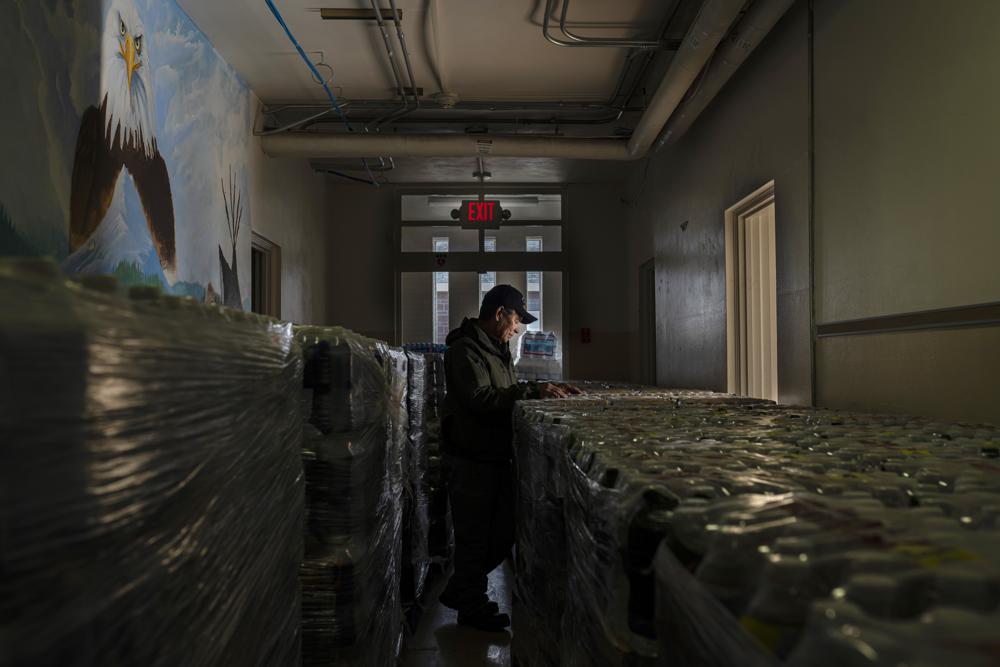
Dan Martinez, emergency manager for the Confederated Tribes of Warm Springs, pauses in the hallway of a storage building filled with donated water on Tuesday, Dec. 7, 2021, in Warm Springs, Ore. “The infrastructure bill brought joy to my heart because now it gives me hope — hope that it’s going to be repaired,” said Martinez, the tribes’ emergency manager, who expects to receive federal funds to replace underground pipes and address the 40-year-old treatment plant.
 (AP Photo/Nathan Howard)


WARM SPRINGS, Ore. (AP) — Erland Suppah Jr. doesn’t trust what comes out of his faucet.

Each week, Suppah and his girlfriend haul a half-dozen large jugs of water from a distribution center run by the Confederated Tribes of Warm Springs to their apartment for everything from drinking to cooking to brushing their teeth for their family of five. It’s the only way they feel safe after countless boil-water notices and weekslong shutoffs on a reservation struggling with bursting pipes, failing pressure valves and a geriatric water treatment plant.

“About the only thing this water is good for is cleaning my floor and flushing down the toilet,” Suppah said of the tap water in the community 100 miles (160 kilometers) southeast of Portland. “That’s it.”

In other, more remote tribal communities across the country, running water and indoor plumbing have never been a reality.

Now, there’s a glimmer of hope in the form of a massive infrastructure bill signed last month that White House officials say represents the largest single infusion of money into Indian Country. It includes $3.5 billion for the federal Indian Health Service, which provides health care to more than 2 million Native Americans and Alaska Natives, plus pots of money through other federal agencies for water projects.

Tribal leaders say the funding, while welcome, won’t make up for decades of neglect from the U.S. government, which has a responsibility to tribes under treaties and other acts to ensure access to clean water. A list of sanitation deficiencies kept by the Indian Health Service has more than 1,500 projects, including wells, septic systems, water storage tanks and pipelines. Some projects would address water contamination from uranium or arsenic.

About 3,300 homes in more than 30 rural Alaska communities lack indoor plumbing, according to a 2020 report. On the Navajo Nation, the largest Native American reservation, about one-third of the 175,000 residents are without running water.

Residents in these places haul water for basic tasks such as washing and cooking, sometimes driving long distances to reach communal water stations. Instead of indoor bathrooms, many use outhouses or lined pails called “honey buckets” that they drag outside to empty. Some shower or do laundry at community sites known as “washeterias,” but the equipment can be unreliable and the fees expensive.

“You look at two billionaires competing to fly into outer space, yet we’re trying to get basic necessities in villages of interior Alaska,” said PJ Simon, a former chairman of an Alaska Native nonprofit corporation called the Tanana Chiefs Conference.

Many more tribal communities have indoor plumbing but woefully inadequate facilities and delivery systems riddled with aging pipes.

The coronavirus pandemic, which disproportionately hit Indian Country, further underscored the stark disparities in access to running water and sewage systems.

In Warm Springs, the water crisis has overlapped with COVID-19.

“During a worldwide pandemic, we’ve had a boil-water notice. How are we supposed to wash our hands? How are we supposed to sanitize our homes to disinfect, to keep our community members safe? How can we do that ... when our water isn’t even clean?” said Dorothea Thurby, who oversees the distribution of free water to tribal members and food boxes to those who are quarantined.

A 2019 report by a pair of nonprofit groups, US Water Alliance and Dig Deep, found Native American homes are 19 times more likely than white households to lack full plumbing. And federal officials note tribal members without indoor toilets or running water are at increased risk of respiratory tract, skin and gastrointestinal infections.

On the Navajo Nation, Eloise Sullivan uses an outhouse and often drives before dawn to beat the crowd at a water-filling station near the Arizona-Utah border to get water for the five people in her household. They use about 850 gallons (3,200 liters) a week, she estimated.

Sullivan, 56, doesn’t mind hauling water, but “for the younger generation, it’s like, ‘Do we have to do that?’”

“It’s kind of like a big issue for them,” she said.

She once asked local officials what it would cost to run a water line from the closest source about 2 miles (3.2 kilometers) away. She said she was told $25,000 and never pursued it.

Libby Washburn, special assistant to President Joe Biden on Native American affairs, recently told tribes the infrastructure bill included enough money to complete all the projects on the Indian Health Service list. The agency said it’s consulting with tribes and won’t make allocation decisions before that process is over.

Until now, tribes and outside organizations have worked to address needs with their own funding, donations or federal money, including pandemic relief.

“If you live without running water, you understand the importance and the connection you have with it, deep down as a person, as a human being,” said Burrell Jones, who sets up water systems and delivers water around Dilkon, Arizona, with Dig Deep’s Navajo Water Project. “You can’t exist without water.”

Andrew Marks recently moved back to Tanana, a community of about 190 people in Alaska’s interior. He initially relied on a washeteria but found the equipment unreliable. He now has running water and plumbing where he lives but hauls water for family members who don’t.

“I believe if we had more people with water, more people connected to the grid, it would drastically improve their life,” he said.

In Oregon, tribal officials have handed out about 3 million gallons (11 million liters) of water — almost all of it donated — from a decommissioned elementary school on the reservation. A steady stream of residents pick up a combined 600 gallons (2,270 liters) of water a day from the building. Former classrooms overflow with five-gallon (19-liter) containers and cases of bottled water.

“The infrastructure bill brought joy to my heart because now it gives me hope — hope that it’s going to be repaired,” said Dan Martinez, the tribes’ emergency manager, who expects to receive federal funds to replace underground pipes and address the 40-year-old treatment plant.

“If you came to work one day and someone said, ‘Hey, you need to go and find water for a community of 6,000 people.’ ... I mean, where do you start?’”

The money won’t provided immediate relief. Funding to the Indian Health Service is supposed to be distributed over five years. There is no deadline for its use, and projects will take time to complete once started. The money won’t cover operation and maintenance of the systems, a point tribes have criticized.

In Warm Springs, tribal members don’t pay for their water, and proposals to charge for it are deeply unpopular. That provides little incentive for tribal members to conserve water and raises questions about how new infrastructure will be maintained.

“There are some Natives who say — and I believe this myself — ‘How do you sell something you never owned? The Creator has given it to us,’” said Martinez, a tribal member.

Building out infrastructure in remote areas can be onerous, too. Most roads on the Navajo Nation are unpaved and become muddy and deeply rutted after big storms.

In Alaska, winter temperatures can fall well below zero, and construction seasons are short. Having enough people in a small community who are trained on the specifics of a water system so they can maintain it also can be a challenge, said Kaitlin Mattos, an assistant professor at Fort Lewis College in Colorado who worked on a 2020 report on water infrastructure in Alaska.

“Every bit of funding that is allocated is going to help some family, some household, which is wonderful,” she said. “Whether it’s enough to help every single household, I think, remains to be seen.”

____

Fonseca reported from Flagstaff, Arizona. Bohrer reported from Juneau, Alaska.

Did COVID-19 change life expectancy in America?

A new CDC report tracks homicides, drug overdose deaths and whether those numbers rose or fell amid the pandemic
DESERT NEWS
 Dec 22, 2021
Medical staff tend to a patient with coronavirus, on a COVID-19 ward inside the Willis-Knighton Medical Center in Shreveport, La., Aug. 18, 2021. 
Gerald Herbert, Associated Press

In 2020, COVID-19 joined what had been a fairly stable list of leading causes of death in the United States, coming in at No. 3 behind heart disease and cancer. The pandemic also contributed heavily to a dip in projected lifespan compared to 2019.

Life expectancy at birth in 2020 was 77 years overall in the United States, down nearly two years from the projection for those born in 2019, according to data released Wednesday by the National Center for Health Statistics in the Centers for Disease Control and Prevention. Females are expected to live 5.7 years longer than males, at 79.9 years vs. 74.2 years. Both those numbers dropped compared to 2019 predictions.

The age-adjusted death rate for the whole population rose from 715.2 per 100,000 in 2019 to 835.4 in 2020. Increases in the age-adjusted death rate for ethnic and racial groups varied from just over 12% for non-Hispanic white females to a nearly 48% jump for Hispanic males.

Overall, age-adjusted death rates rose the most for Hispanics, followed by non-Hispanic Blacks, whose rates were double those of non-Hispanic whites. An age-adjusted death rate weights age-specific rates for each group by the proportion of each group in the population. The new report notes that the age-specific death rate increased in each age group 15 and older between 2019 and 2020.

Unintentional injuries, stroke, chronic respiratory disease, Alzheimer’s, diabetes, influenza/pneumonia and kidney disease rounded out the top 10 list of leading causes of death in the U.S. in 2020.

Overall, the report said, 3,383,729 resident deaths were recorded in the United States in 2020, up 528,891 compared to 2019.

The 16.8% increase in the age-adjusted death rate for the total population was the biggest single-year increase since the data collection began, and the decrease in life expectancy was the largest single-year decrease in more than 75 years.
COVID-19 toll

As of Dec. 20, 2021, 804,046 deaths had been attributed to COVID-19 on death certificates. In 90% of cases, CDC reported, COVID-19 was listed as the underlying cause of death, while the others listed it as a contributing cause of death. The report said the largest number of COVID-19 deaths reported in a single week came in early January of 2021, when 25,984 deaths were attributed to the pandemic.

COVID-19 changed a trajectory that had been trending toward longer life. A year ago, the final data on 2019 deaths compared to 2018 showed that life expectancy had increased for the second year in a row, “despite an increase in deaths from drug overdoses and an all-time high of over 2.85 million deaths in the U.S.,” that earlier report said

.
Workers wearing personal protective equipment bury bodies in a trench on Hart Island, Thursday, April 9, 2020, in the Bronx borough of New York.
 John Minchillo, Associated Press

Drug overdose and homicide


The CDC said that drug overdose deaths make up more than a third of all accidental deaths in the country and had increased in 2019, after they declined in 2018 for the first time in 28 years.

2020 brought other death-related challenges, as well. In July, the CDC reported that drug overdose deaths were up 30% compared to the previous year. And in October the agency reported that 2020 brought the “largest one-year increase in the U.S. homicide rate.”

Provisional data found that in 2020, the homicide rate in the United States was 7.8 per 100,000, compared to 6.0 the year before — and the highest rate since 1995, “but significantly lower than the early 1980s, which topped 10 homicides per 100,000.”
Infant deaths

The new report said 19,582 children younger than age 1 died in 2020, which was 1,339 fewer than in 2019.

Among infants, the leading causes of death were the same as in 2019: congenital malformations, low birth weight, sudden infant death syndrome, unintentional injuries, maternal complications, cord and placental complications, bacterial sepsis, respiratory distress, diseases of the circulatory system and neonatal hemorrhage.

There was a statistically significant increase in sudden infant death syndrome, from 33.3 to 38.4 per 100,000 live births in 2019 compared to 2020. Low birth weight was the only category where deaths among infants decreased meaningfully, from 91.9 to 86.9 per 100,000.

The CDC has an interactive web dashboard where the leading causes of death are regularly updated.

Analysis: Shadow of collapse, internal conflict over declining US

  
Analysis: Shadow of collapse, internal conflict over declining US

As we approach the first anniversary of the deadly insurrection at the U.S. Capitol, we — all of us former senior military officials — are increasingly concerned about the aftermath of the 2024 presidential election and the potential for lethal chaos inside our military, which would put all Americans at severe risk," they wrote.

AhlulBayt News Agency (ABNA): As about two weeks remain to anniversary of Trump supporters' attack on the US Congress,  a large number of political observers and even military commanders express concerns about the deepening gaps in the US and even go further and warn about a danger of collapse and even an internal conflict in the country. Over the past few days, the retired Major General Paul Eaton, retired Brigadier General Steven Anderson, and retired Major General Antonio Taguba in an article published by The Washington Post have warned that the US is broken apart and that it needed to prepare for the worst scenarios after next elections. 

"As we approach the first anniversary of the deadly insurrection at the U.S. Capitol, we — all of us former senior military officials — are increasingly concerned about the aftermath of the 2024 presidential election and the potential for lethal chaos inside our military, which would put all Americans at severe risk," they wrote. The fact is that contrary to several-decade media-presented pink picture from the US, the country presently stumbles saving its unity. 

Why are concerns about collapse growing? 

The events of the Capitol on January 6, like any other major event, grabbed, undoubtedly, the focus of American think tanks and researchers. Earlier, "Trumpism" as a type of American neo-Fascism had been a topic of study of political research centers, with all agreeing that the US was divided between Trump proponents and opponents. 

On the eve of the anniversary of the assault, two issues are giving rise to concerns about possible US collapse. First, polls suggest that about half of voters feel it is time for the country to break down. Second, and more important issue, is that the possibility of military coup following 2024 elections is occupying the mind of the political observers. 

This seems even more serious when the evidence shows that many of the participants in Congress storming were veterans or even serving military personnel. From the perspective of a political sociologists, this means that a radical section of American society seeking to seize Congress is in the US military and ready to take up arms if in next elections a confrontation erupts between Trump supporters and opponents. 

Biden did poorly bridging the gaps 

Joe Biden's performance in domestic and foreign policy since taking office on January 20 has accelerated American society's movement to partition and decline. 

During the election campaigns, the Democrats and Biden claimed the American people should vote Biden to restore unity to a divided nation, and constantly warned that if they did not win, the country would fall into disunity and collapse. Now and nearly a year after Biden took office, he has acted in such a way that many hardline Democrats have joined the president's opposition. 

Over the past few months, the vast majority of polls have clearly shown American citizens' dissatisfaction with Biden and the declining popularity of the White House leader. A new poll result, published by PBS / NewsHour / Marist Poll on December 20 showed president's public acceptance is in new records low, with over half of the voters dissatisfied with his performance. 

In that poll, about 55 percent of Americans disapproved of Biden's first year in the White House, with 44 percent of them strongly discontented with his first-year performance. The result shows that Biden's popularity has fallen by 20 percent since he took Biden's place in last January. The poll was conducted between December 11 and 13 among 1,400 adults with a 4-percent margin of error. 

Also, a new poll by Ipsos and ABC News showed that only 28 percent of the Americans are happy with the way Biden is trying to curb inflation and 69 percent others are discontented. These polls have one message to convey: The Americans not only do not see Biden a savior of peace and stability in the country but also find him a divisive factor politically and socially. 

Social gaps of the states 

Just contrary to the image the American political and media circles try to demonstrate from the US, the country has a broad political fault line. The most important and active fault line currently is racism that is taking fascism's color and smell. Today, the Republican Party has virtually become the hotbed of neo-Fascist and white supremacist activity. Trump's assumption of power in 2017 gave a chance of surfacing for the activities of these groups that for years lived on in the bottom layers of the society.  

At present, a large number of the Republicans and white rightists believe that they are at an existential struggle with the blacks and other people of color, as well as those they label "illegal foreigners" who, the radical whites think, want to replace the whites. The more worrisome point is that this racist population, to Trump they are supporters, have a deep belief that Biden's victory was fraudulent and that they do not recognize him as their legitimate president. 

Moreover, the citizens in many states of America have held deep belief in split and birth of independent new countries. For decades, people especially in Alaska, Texas, New Hampshire, New York, and other states have been speaking out about secession but their agenda went nowhere. At present, too, in many states such as Florida, Pennsylvania, Wisconsin, and Michigan there are deep differences, with pro-separation factions thriving.

ECOCIDE
Louisiana firm to pay $475M over longest-running U.S. oil leak

Rebecca Falconer
AXIOS

A Louisiana-based oil company will pay $43 million in civil penalties and damages and $432 million to a clean-up trust fund to resolve liability for a spill in the Gulf of Mexico, the Justice Department announced Wednesday.

Why it matters: Taylor Energy's former Gulf of Mexico offshore oil production facility is the source of the longest-running oil spill in U.S. history, ongoing since 2004, per a Department of Justice statement.

Nicole LeBoeuf, director of NOAA's National Ocean Service said in a statement the proposed settlement "represents an important down payment to address impacts" of the spill — which began when a Taylor Energy production platform some 10 miles off Louisiana's coast collapsed during Hurricane Ivan.

The resulting oil discharge "continues to this day," the DOJ noted.

Details: Under the settlement agreement that's subject to final court approval, Taylor must dismiss three existing lawsuits it filed against the federal government. But it does not admit any liability.

The big picture: Ivan triggered a mudslide, causing the Taylor production platform to collapse, with 16 of the 25 damaged undersea wells leaking since then, per the New York Times.
Taylor managed to cap the others but said it couldn't do so with the rest because were "buried under so much mud and debris," per the NYT.

U.S. Coast Guard Capt. Will Watson, sector commander in New Orleans, noted in a statement that for the past three years teams had removed more than 800,000 gallons of oil that had been discharging into the Gulf of Mexico.

What they're saying: "Despite being a catalyst for beneficial environmental technological innovation, the damage to our ecosystem caused by this 17-year-old oil spill is unacceptable," said Duane Evans, U.S. attorney for the Eastern District of Louisiana.

For the record: Taylor "sold its oil and gas assets in 2008 and ceased all drilling and production operations," according to a website statement. It now exists today solely to respond to the spill.

The other side: Taylor couldn't immediately be reached for comment.

The company said in a statement to CBS' "60 Minutes" when the show covered the spill last month that Taylor "has retained and relied upon the world's foremost experts to study and then recommend a plan of action... We continue to advocate for a response driven by science."

What's next: The US District court will decide whether to approve the settlement's proposed consent decree at a date to be scheduled.
Manchin the menace

December 23, 2021

Earlier this week Sen. Joe Manchin III of West Virginia continued to be the mess of a menace to the Biden administration, particularly the $2 trillion Build Back Better bill. This would not be a grave concern if the senate was not 50-50, thereby making his vote so pivotal.

Manchin’s opposition has long been a problem on climate change, but here lately he has taken a stand against the Child Tax Credit, which expired on Dec. 15, leaving millions of Americans deprived of the $300 monthly allotment. His reluctance, as a Democrat, to go along with the party line has flummoxed his colleagues but it is consistent with his aim to please his donors from the coal, gas, and oil industry—to say nothing of his personal investments on these energy matters.

His opposition to the Child Tax Credit is on the unsubstantiated grounds that the recipients would use the payments to buy drugs, according to sources familiar with his comments. More directly, his rationalization of resistance was based on the nation’s debt and inflation.

“I cannot vote to move forward on this mammoth piece of legislation,” he said in a statement last Sunday. “My Democratic colleagues in Washington are determined to dramatically reshape our society in a way that leaves our country even more vulnerable to the threats we face. I cannot take that risk with a staggering debt of more than $29 trillion and inflation taxes that are real and harmful to every hard-working American at the gasoline pumps, grocery stores and utility bills with no end in sight.”

A White House response to his remarks contradicted what he had previously stated. “Senator Manchin promised to continue conversations in the days ahead and to work with us to reach that common ground. If his comments on Fox and written statement indicate an end to that effort, they represent a sudden and inexplicable reversal in his position, and a breach of his commitments to the president and the senator’s colleagues in the House and Senate,” White House Secretary Jen Psaki said.

In private conversations, according to the Huffington Post, Manchin said he believed paid family leave would be exploited by Americans to go hunting during deer season, especially in his home state. This report was countered by his spokesperson who noted that “Senator Manchin has made clear he supports the Child Tax Credit and believes the money should be targeted to those who need it most. He has also expressed support for a paid leave program that has a dedicated, sustainable funding mechanism.”

Meanwhile, on Sunday, President Biden and Sen. Manchin met after Manchin’s appearance on Fox News, in what was described as a cordial meeting.

One thing seems predictable, Manchin will flip flop on issues and find every justification to block Biden’s plans, even if some of his reasonings are absolutely outrageous and reprehensible.

 US delays intelligence center targeting foreign influence

 BY NOMAAN MERCHANT 

ASSOCIATED PRESS

 DECEMBER 22, 2021 

 As Russia was working to subvert U.S. elections and sow discord among Americans, Congress directed the creation of an intelligence center to lead efforts to stop interference by foreign adversaries. But two years later, that center still is not close to opening. Experts and intelligence officials broadly agree the proposed Foreign Malign Influence Center is a good idea. 

The U.S. has lacked a cohesive strategy to fight influence operations, they say, with not enough coordination among national security agencies. Adversaries that tried to interfere in the last two presidential elections continue to bombard Americans with disinformation and conspiracy theories at a time of peril for democracy in the U.S. and around the world. But the intelligence community and Congress remain divided over the center's mission, budget and size, according to current and former officials. 

While separate efforts to counter interference continue, a person identified this year as a potential director has since been assigned elsewhere and the center likely will not open anytime soon. “It really is just giving a gift to Russia and China and others who clearly have their sights set not only on the midterm elections but on ongoing campaigns to destabilize American society,” said David Salvo, deputy director of the Alliance for Securing Democracy and a senior fellow at the German Marshall Fund. 

The nation's top intelligence official had advocated for the center before taking office. Director of National Intelligence Avril Haines last year co-chaired a German Marshall Fund task force supporting it. In a statement, spokeswoman Nicole de Haay said the director's office "is focused on creating a center to facilitate and integrate the Intelligence Community’s efforts to address foreign malign influence.” 

But some lawmakers are concerned about further expanding the mission of the Office of the Director of National Intelligence. ODNI was originally envisioned as a small coordinating body to address the intelligence-sharing failures preceding the Sept. 11 attacks. It has several centers that critics say are well-meaning attempts to solve problems but end up causing unnecessary duplication. 

Senate Intelligence Committee Chairman Mark Warner said that while he supports the center, there were “legitimate questions about how large such an organization should be and even about where it would fit" with existing government efforts to fight foreign interference. “We want to be sure that this center enhances those efforts rather than duplicating them or miring them in unnecessary bureaucracy,” the Virginia Democrat said in a statement. “I don’t have any real doubt that we will ultimately stand the center up in the relatively near future, but we need to be sure we get it right.”

 It's unclear who would lead the center. Separately, there is also a vacancy for a new election threats executive after the previous executive, Shelby Pierson, ended her term and returned to another intelligence post. Pierson had been in the spotlight last year after giving lawmakers a closed-door briefing on Russia's efforts to intervene in the 2020 election in favor of President Donald Trump. That angered Trump, who berated the then-director of national intelligence and later replaced him. Trump has promoted falsehoods about elections and pushed Republicans to follow his lead. Experts on democracy have long warned that what the government refers to as “malign influence” is a national security threat. Social media has helped make disinformation a cheap and powerful tactic for adversaries who can push false or altered stories, videos and images, and amplify falsehoods already circulating among Americans to promote their own interests and create chaos. 

 U.S. and other Western authorities have accused Russia of spreading disinformation about the coronavirus and vaccines, stealing data from local and state election servers, and pushing false stories intended to exploit divisions over race and civil rights. Intelligence agencies have found that Russia used influence operations to interfere with the 2016 presidential election in favor of Trump's campaign and conducted operations in Trump's favor in 2020. 

The U.S. assessed China ultimately did not interfere in the 2020 election, but Beijing has been accused of promoting false theories about the COVID-19 pandemic and trying to sway businesses and all levels of government. Iran was accused of sponsoring emails intended to intimidate Democratic-leaning voters into supporting Trump. 

Experts say the new center can warn Americans about interference and produce better information for policymakers. While the FBI, the National Security Agency and several other government agencies have long worked on foreign interference, “we are not organized in a way where we are building a coherent threat picture,” said Jessica Brandt, an expert on foreign interference and disinformation at the Brookings Institution. But there are risks in the intelligence community ramping up its monitoring of what Americans see and read. 

The FBI and NSA have been accused of unlawfully spying on Americans. That history contributes to many Americans' distrust of the intelligence community, as do Trump's attacks on intelligence professionals and what he has derided as the “deep state.” Opponents note the U.S. also has a history of covert interference in other countries and has helped overthrow governments seen as anti-American. 

A column published by the Kremlin-backed RT.com alleged the proposed center “is just official cover for American intelligence interference in domestic politics.” The intelligence community also risks being seen as political or infringing on First Amendment rights if it takes the same untruths spread by Americans and labels them as foreign interference when they're spread by an adversary. The center “is going to have to figure out this enormous challenge to convey threats to American elections, American democracy, at a time when there seem to be two completely different realities,” said Salvo of the German Marshall Fund. 

Congress authorized the center in late 2019 and directed ODNI to create it. Several people who worked in intelligence matters at that time, speaking on condition of anonymity to describe confidential discussions, say they didn't know of any effort by the Trump White House to stop the center. Instead, leaders within ODNI disagreed on how to structure the new center or whether it should be a “virtual center" without an office. According to one of the people, William Evanina, the former chief of ODNI's counterintelligence center, offered to take the malign influence center under his authority, but the office ultimately did not choose that option. Evanina declined to comment. After Biden took office, ODNI presented a plan for a small center with a few dozen staff members to the intelligence and appropriations committees in the House and Senate.

 But even as Congress required the center's creation, key lawmakers from both parties have expressed concerns about the plan. A proposal to fund the center this summer failed and it is unlikely to be completed while the government is operating with temporary funding. The center may now be included if a full spending plan is approved in early 2022. Suzanne Spaulding, an election security expert at the Center for Strategic and International Studies, called for the U.S. government to act quickly. “Time is not on our side,” Spaulding said. “Disinformation is a national security threat and should be treated with the urgency that a national security threat engenders.”

 https://www.bellinghamherald.com/news/article256810177.html#storylink=cpy
Congressional Panel Launches Investigation Into Promoter Of Deadly Astroworld Concert

Ten people were killed during a massive crowd surge at the concert and attendees were packed so tightly that many could not breathe or move their arms. 

The people killed at the concert died from compression asphyxia.

Juan A. Lozano
12/23/2021 


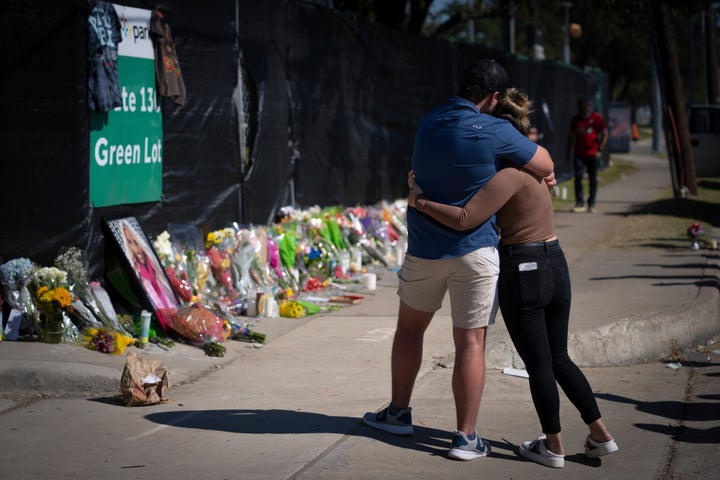
HOUSTON (AP) — A congressional committee has launched an investigation into the promoter of the Astroworld music festival in Houston, in which 10 people were killed during a massive crowd surge and attendees were packed so tightly that many could not breathe or move their arms.

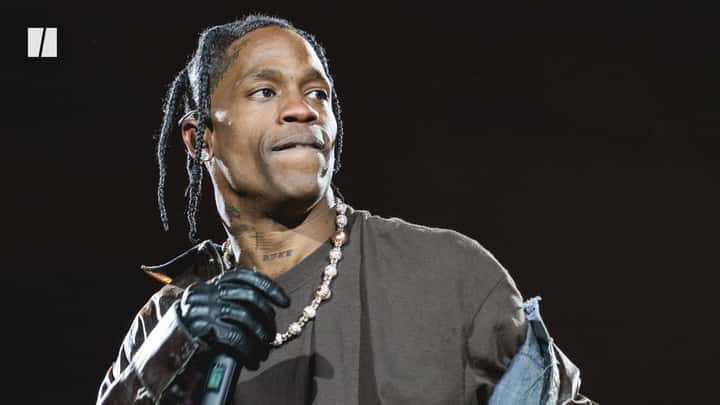
The House Oversight and Reform Committee sent a letter Wednesday to Live Nation Entertainment Inc.’s president and CEO, Michael Rapino, asking for information about the company’s role in the Nov. 5 festival and concert by rap superstar Travis Scott.

Information the committee requested included details about security, crowd control and mass casualty incident planning; details about any pre-show briefings by Live Nation or is subsidiaries on any safety concerns; and what steps the concert promoter will take to prevent injuries or deaths at future events.

“Recent reports raise serious concerns about whether your company took adequate steps to ensure the safety of the 50,000 concertgoers who attended Astroworld Festival,” the committee said in the letter.


The youngest of the 10 victims was 9-year-old Ezra Blount. The others who died as headliner Travis Scott took to the stage ranged in age from 14 to 27.
ROBERT BUMSTED VIA ASSOCIATED PRESS

The committee is requesting that Live Nation provide documentation on the questions by Jan. 7 and that it provide a briefing to committee members by Jan. 12.

Such a briefing would be behind closed doors and not open to the public.

“We are assisting local authorities in their investigation and will of course share information with the Committee as well. Safety is core to live events and Live Nation engages in detailed security planning in coordination with local stakeholders including law enforcement, fire and EMT professionals. We are heartbroken by the events at Astroworld and our deepest sympathies go out to the families and friends of the victims,” Live Nation said in a statement.

The youngest of the 10 victims was 9-year-old Ezra Blount. The others who died as headliner Scott took to the stage ranged in age from 14 to 27.

Some 300 people were injured and treated at the festival site and 25 were taken to hospitals.

Last week, officials announced that the people killed at the concert died from compression asphyxia.
A medical expert says the pressure from the crowd surge at the event was so great that it quickly squeezed all the air from the lungs of the victims, causing them to pass out within a minute or so and die because critical organs, such as the heart and brain, were depleted of oxygen.


Nearly 400 lawsuits have been filed over injuries and deaths at the concert, including many against Live Nation and Scott.
FUNDAMETALISM IS ANTI HUMANISM
Thousands of LGBTQ+ Israelis received text messages to ‘repent’ or face ‘death’
Sarah Toce, 
The New Civil Rights Movement
December 22, 2021


The Jerusalem Post has reported that thousands of LGBTQ+ Israelis received text messages saying they "deserve severe punishment, death and deportation" and calling on them to "repent." The Association for LGBTQ Equality in Israel confirmed the news Monday.

"You are LGBT and an apostate. You deserve severe punishment, death and deportation from Israel," the message read. "Come to Yeshiva Ohr Elhanan in order to repent. We would be glad if you undergo conversion to faith."

According to The Jerusalem Post, "The message included a phone number and a Telegram account to contact and stated that it was sent by Rabbi Chaim Aryeh Hadash, the rosh yeshiva of Yeshiva Ohr Elhanan. The rabbi has denied that he has any connection to the message, saying he has never talked about the issue and the issue is not addressed in his yeshiva."

The Agudah and the Havruta organization for LGBTQ+ religious Jewish men invited Hadash to a dialogue with the LGBTQ+ religious Jewish community. They also called in a letter for Hadash to publish a public condemnation of the messages sent in his name and to "prevent the further great desecration of God that has already been done." The director-general of the Israel Internet Association, Yoram Hacohen, called for police to investigate whether the person who sent the text used data from the Black Shadow attack, adding that "Since these are text messages, it is possible to find out their source and take criminal action against the perpetrators...These are, on the face of it, elements who have grossly violated the Privacy Protection Law - I call on Israel Police to act immediately to locate the perpetrators. They have the tools to do that." This latest incident comes just days after a seminar hosted by the 105 hotline for the protection of children online concerning harm against LGBTQ+ youth online.
US will never completely eliminate Covid, says Dr Anthony Fauci


Gino Spoochia
December 23 2021

As Americans prepare for a second Christmas with Covid, health chief Dr Anthony Fauci has warned that the United States will never be able to completely eradicate the disease.

The top medical adviser to US President Joe Biden argued in an interview on Tuesday that without an availability of vaccines worldwide, there was no way Covid could be eradicated.

It follows only one disease, smallpox, being fully suppressed through scientific intervention, Dr Fauci told The Atlantic.

“I don’t think it’s possible that we’re going to eradicate this infection,” Dr Fauci said. “Because we’ve only eradicated one infection in human history, and that’s smallpox.”

“And I don’t think you’re going to eliminate it, because you have to have essentially a universal campaign for vaccination like we did for polio and measles,” he added.

While the director of the National Institute of Allergy and Infectious Diseases (NIAID) has made similar claims about Covid before, his warning on Tuesday was among the starkest yet about what life will look like in the future.

Asked whether or not testing would still be needed, in addition to public health measures, Dr Fauci said he did not know for sure, but that the current situation of “worrying” about every social interaction was not going to stay.

“What we can do is reach a level of ‘control’ that we can live with – where it doesn’t disrupt society, it doesn’t disrupt the economy, and it doesn’t have us always looking over our shoulder wondering whether we’re going to get infected,” the NIAID director said.

“I see that there will be persistence of Covid-19, or at least SARS-CoV-2, but there’s not going to be the profound impact that it’s currently having right now in our society. Whether that’s this coming spring and summer or a year from now, I don’t know. But it’s not going to stay the way it is, for sure.”

The US also has one of the lowest proportion of adults fully vaccinated against Covid among developed nations, with around 61pc of the population immunised. That compares to roughly 80pc of the population in the UK, and many other European nations.

It comes as Mr Biden addressed the nation with a call for millions of Americans to get vaccinated or boosted against Covid after 800,000 deaths in the US. He said there was a “patriotic duty” to get the shot.

He also acknowledged the Trump administration’s work on researching and funding Covid vaccines, in what was an apparent attempt at persuading vaccine-hesitant Americans on the right to protect themselves and others.

Meanwhile Fox News has defended political commentator Jesse Watters after he used the phrase “kill shot” in a speech urging young conservatives to confront Dr Fauci in public with a hostile interview. Dr Fauci, asked about it on CNN, said that Mr Watters should be fired “on the spot” but predicted he wouldn’t be held accountable for his language.

Fox said Mr Watters’ words had been “twisted completely out of context”.

Mr Watters, also a host on Fox News Channel’s panel show The Five, who made his initial mark doing aggressive interviews for Bill O’Reilly, spoke on Monday to a group of college and high school conservatives. His audience booed at the mention of Dr Fauci’s name.

Mr Watters said Dr Fauci should be confronted on the subject of whether the National Institute of Health funded research at a lab in Wuhan, China. He said an interviewer should suggest he lied about the topic – something Dr Fauci has disputed.

“Now you go in for the kill shot, the kill shot with an ambush, deadly, because he doesn’t see it coming,” Mr Watters said.

A partial clip of Mr Watters’ speech, beginning with the “kill shot” quote, spread around the internet, with some commentators suggesting that he had advocated assassinating Dr Fauci. (© Independent News Service).