Thursday, January 13, 2022

Biden hailed for appointing 1st Somali-American senior adviser to State Department

Hamse Warfa will help advance president’s democracy and human rights agenda both in US and overseas

Hassan Isilow, Mohammed Dhaysane |13.01.2022

JOHANNESBURG/MOGADISHU, Somalia

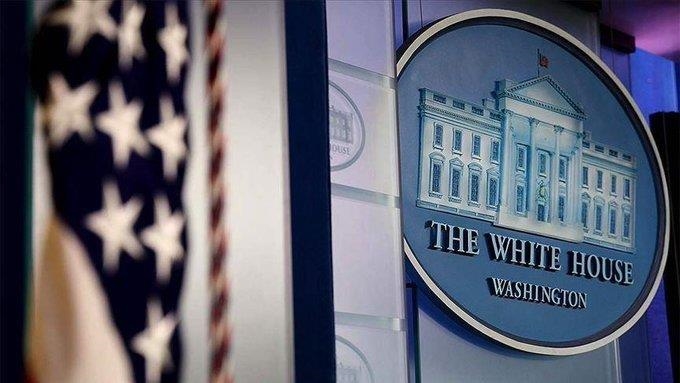
The Somali government and intellectuals hailed US President Joe Biden on Wednesday for appointing Hamse Warfa, a Somali-American, as a senior adviser to the State Department.

“We are happy and welcome the appointment of Warfa by the US president. We extend our congratulatory messages to him and all Somali people," Somali government spokesman Mohamed Ibrahim Moalimuu told Anadolu Agency.

Moalimuu said Warfa’s appointment is an indication that Somalis are very active wherever they live.

Warfa was born in Mogadishu, Somalia. His family fled the Somali civil war and moved to neighboring Kenya, where they lived in refugee camps. He later relocated to the US.

He has been working as the deputy commissioner for workforce development at the Minnesota Department of Employment and Economic Development (DEED).

Warfa, who has held the position since April 2019, has been the highest-ranking African immigrant in the state government.

“We congratulate Warfa. It’s a fantastic opportunity for a young, well-educated Somali-origin lad,” said Abdurahman Sheikh Azhari, director of the Centre for Analysis and Strategic Studies, a Somalia-based think tank.

He said it is not easy to be appointed to a role in an administration like that of Biden-Harris with the eyes of the world on it, especially for a Black Muslim immigrant from the Horn of Africa.

“It’s a golden opportunity for the Somali diaspora as a community across the world, the US, and Hamse particularly to serve the US’s highest office in which he can influence the policies towards Africa and the Muslim world,” Azhari said.

He said the appointment shows exactly how well-integrated immigrants and refugees can contribute to a large nation like the US.

“If the Somali communities continue to integrate, settle and contribute to the Western world, they will produce more successful leaders who can be role models to young Somalis inside Somalia. This appointment deserves to be celebrated and commended,” Azhari added.

Prof. Hassan Sheikh Ali Nur, a lecturer at Somali National University in Mogadishu, said “Warfa's nomination for senior adviser on democracy and human rights by President Biden is a milestone in race and religious recognition in the United States of America's political participation and citizenship.”

Warfa said in a tweet that he is “excited and so ready to get to work along with incredible public servants in the Biden-Harris administration.”​​​​​​​

According to reports, Warfa has become the first Somali-American presidential appointee in history. Another Somali immigrant, Ilhan Omar, made history in 2018 when she became the first Somali-American elected to the US Congress.
There are disturbing parallels between the 2020s and 1940s in America

John Stoehr
January 11, 2022

The National Guard at the US Capitol (AFP)

Regular readers are familiar with my obsession with political time – or how one party and its ideas prevail with a majority of Americans for four or five decades before falling into a period of transition, after which the other party and its ideas prevail.

But most don’t know why I’m obsessed. I’ll tell you. It’s because I have been feeling hopeless. I hate feeling hopeless. Knowing that history isn’t static – knowing that it moves in recurring cycles rather than in a straight line with a beginning and an end – well, that gives me hope. It gives me hope to know, good or bad, nothing stays the same.

These “paradigms” have been for more than a year a regular subject of discussion between me and Jay Weixelbaum. He’s a writer and business historian who’s producing a streaming mini-series about the time a Nazi spy joined US businessmen to toast the fall of France in a Manhattan hotel while a Jewish FBI agent investigated.

Jay’s project is called A Nazi on Wall Street. (You can donate to the cause here.) During our conversation, he explained why he believes we are moving into a new paradigm and how the choices made in the 1940s seem to mirror choices being made in the 2020s. We could have turned fully fascist back then. Let’s hope we don’t do that now.

READ: Prominent QAnon anti-vaxxer who called for Anthony Fauci’s execution dies of COVID-19

In a recent thread, you said the J6 insurrection was a watershed moment between “paradigms.” Can you explain what you mean by “paradigms.” What does J6 have to do with them?

A “paradigm shift” describes a major change in our lives. The term "status quo" describes a time when we have a shared understanding about how politics work, how economics work and how culture works. When a paradigm shift happens, the status quo changes.

Paradigm shifts can take many years, and my belief is that we know we're in one when it's not just scholars pointing this out – but when everyone sees it and feels it. January 6 was a moment like that.

Many historians have observed that the Republican Party had been in the business of rejecting democratic ideals since the passage of the Civil Rights Acts in the 1960s. They were unwilling to share democracy with people they deemed were less than them.

READ: 'Traitor' Jim Jordan mocked for refusing to comply with Jan. 6 committee — after declaring 'nothing to hide'

Watergate was part of this. The 2000 election and the 2016 election were other watershed moments of the GOP's slide toward a full rejection of American democracy. I see J6 as a culmination.

Can you characterize the paradigm we are leaving and perhaps the one we are entering?

Paradigms are a buildup of chaos in our political, economic and social systems, as unresolved problems feed off each other. In chaotic periods, even small events can have enormous impact. We're right in the middle of the shift, so it's hard to see where we are going.

The reason I'm adapting my research on American businessmen working with Nazis in 1940 into a streaming mini-series is because in 1940, it really wasn't clear which way things were going. That was a paradigm shift, too.

READ: Cult survivor explains how Trump 'weaponizes' the 'us vs. them' tactics of a 'cult leader'

We grow up with stories about a triumphant America that won World War II, but in 1940, it wasn't at all clear how history was going to play out. I want American audiences to understand that, especially as we inevitably look back and reflect on our current moment,

Just as 2020 was a crucial year. I believe 2022 will also decide our fates for the next era, however long it will be. Democrats in Congress are beginning the process of altering the filibuster to pass voting rights legislation this week, which is a direct response to GOP legislatures passing laws to throw out millions of votes they may happen to dislike. Democratic leaders call this a "continuation of January 6."

That's crucial, and we don't know how this will play out.

Another big, unpredictable factor is the pandemic. I think future historians (provided humanity survives) will debate how covid helped push the previous president out of power, particularly his lack of ability to address it effectively.

READ: Noam Chomsky: 'Proto-fascism' and 'white nationalism are prime ingredients of the GOP’s slow-motion coup

A third major factor is the midterms. Yes, the previous status quo predicts the party holding the White House to take losses. But if we are headed toward a new status quo, the rules may no longer apply.

Corporate donations to GOP House candidates is about half of what it was. And gerrymandering, while still a major threat to democracy, hasn't played out as badly as it could have after the 2020 census.

Also, depending on how the Supreme Court rules on reproductive choice, this may dramatically affect turnout.

So there's still a bunch of unknowns that could have a major impact in this critical turning point.

READ: Automated killer robots aren't science fiction anymore — and the world isn't ready

When did this start? With the white backlash against civil rights?

The civil rights era and feminism in particular, as well as a hostility to the New Deal, animated the right. They built up religious and allegedly libertarian factions in the 1970s that coalesced in the “Reagan Revolution,” which could then be escalated for four decades.

History is always events leading to and from each other. There are certainly antecedents in the 1920s and 1930s GOP. It was taking money from literal Nazi spies in order to try to sweep FDR out of power.

Our government knew this was happening. There was an intense and often unseen struggle to fight back against this Nazi-American rightwing coalition.

READ: Indiana Republican under fire after saying teachers must be ‘impartial’ about Nazis and fascism

Is this the 1940s fork in the road you were talking about?

Yes, precisely. Like with other paradigm shifts, there were years of building to this point, and years of aftermath. Nazi spies were operating in the US in the 1930s. The FBI was tasked with tracking them down. Meanwhile, US companies had businesses operating within Nazi Germany.

Beyond these lesser known activities, rightwing groups and personalities espoused the Nazi cause to millions of Americans. Many Americans found this ideology enticing. It's easy to blame immigrants for problems; many Americans believed the US should stay out of European affairs; some Americans were sympathetic to Germany post-World War I. The radio priest, Charles Coughlin, broadcast these views to millions. He was kind of the Rush Limbaugh of his day.

Nazi influence in the US culminated with a huge march and rally in New York City in 1939. Thousands gathered in Madison Square Garden to listen to blatantly fascist speeches under the banners of George Washington adorned with swastikas.

In 1940, FDR gave a fresh directive to hunt down Nazis. The FBI built a secret spy headquarters inside the 30 Rock building to spy on Nazi activities worldwide, but especially in South America where they could get raw materials a war machine needs to be effective.

Without recapping the story of WWII, FDR was reelected, despite Nazi groups funneling money into Charles Lindbergh's campaign. FDR started providing aid to Britain and preparing for war against fascism. Thus, the paradigm shift started to turn on the events of 1940.

The president pinned blame for J6 on Trump. No sitting president in my lifetime came within an inch of calling his predecessor a traitor. That seems like an indicator of paradigm shifting no?

Absolutely. I don't think we've seen anything like this since at least the Civil War. The evidence is so overwhelming, I think Biden was on safe political ground to take off the gloves.

It's also important to point out that fascist violence often starts with the war on the truth. Biden was making a clear point to push back on fascist lies.

I'd call the Republicans' sabotage of pandemic recovery a form of fascist violence, but that's just me.

I think that's also a fair observation. Fascism is unsustainable as a form of government. It's inherently irrational and destructive. It's an extreme form of populism based on emotions – feelings of grievance, more specifically. That's an inherently unstable foundation to attempt to run a society.

Economies need stability. Political regimes need economic stability to stay viable long-term. But fascists don't care about the long term. They care about feeding grievance addictions. They build policy around that.

Perhaps this ties into your observation about "civil war." It would take sacrifice of an order that most people would reject.

Exactly. I think the potential for violence and destruction is great. But I don't see that as long term, because people won't tolerate a consumer economy being interrupted so drastically by violence and disruption.

Scholars of Nazi Germany saw this. Just below their fake bravado, the Nazis were terrified about economic problems. We'll never know how the Nazi regime might have worked if it hadn't made foolish military choices, but it's pretty clear that things were quite unstable.

I think the Republican Party has been able to lean toward anti-democracy and fascism precisely, because it still rested on a liberal democratic order. Take that away and it's a new status quo

Agree. It's parasitic.

Yes! Fascism is a parasite on liberal democracy, but it can kill its host. Then all bets are off on how long it will survive.

What would tell you the coming midterms are different from previous midterms?

Preserving democracy is a key policy issue. It will be a particular policy point discussed in numerous midterm campaigns. Typically it's healthcare, guns, climate, etc. Democracy as policy is a new norm.

Telling people that they need to vote now or they won't be able to depend on the vote in the future is pretty drastic and I'd argue a new development. We saw it in 2020. It'll be here for 2022.

Wednesday, January 12, 2022

The white Christian nationalism tearing America apart at the seams
Common Dreams
January 12, 2022

Silhouette of crosses held up at sunset (Shutterstock)


“If you are neutral in situations of injustice, you have chosen the side of the oppressor. If an elephant has its foot on the tail of a mouse and you say that you are neutral, the mouse will not appreciate your neutrality.” — Archbishop Desmond Tutu

The world lost a great moral leader this Christmas when Archbishop Desmond Tutu passed away at the age of 90. I had the honor of meeting him a few times as a child. I was raised by a family dedicated to doing the work of justice, grounded in the Constitution, the Declaration of Independence, and also sacred texts and traditions. We hosted the archbishop on several occasions when he visited Milwaukee — both before the end of apartheid and after South Africa’s Truth and Reconciliation Commission was formed in 1996.

"To combat [White Christian Nationalism]... it’s necessary to build a multiracial moral movement that can speak directly to the needs and aspirations of poor and dispossessed Americans and fuse their many struggles into one."

In the wake of one visit, he sent a small postcard that my mom framed and placed on the bookcase near our front door. Every morning before school I would grab my glasses resting on that same bookcase and catch a glimpse of the archbishop’s handwritten note. This wasn’t inadvertent on my mom’s part. It was meant as a visual reminder that, if I was to call myself a Christian — which I did, serving as a Sunday school teacher from the age of 13 and a deacon at 16 — my responsibility was to advocate for policies that welcomed immigrants, freed those held captive by racism and injustice, and lifted the load of poverty.

Given our present context, the timing of his death is all too resonant. Just over a year ago, the world watched as a mob besieged the U.S. Capitol, urged on by still-President Donald Trump and undergirded by decades of white racism and Christian nationalism. January 6th should have reminded us all that far from being a light to all nations, American democracy remains, at best, a remarkably fragile and unfinished project. On the first anniversary of that nightmare, the world is truly in need of moral leaders and defenders of democracy like Tutu.

The archbishop spent his life pointing to what prophets have decried through the ages, warning countries, especially those with much political and economic power, to stop strangling the voices of the poor. Indeed, the counsel of such prophets has always been the same: when injustice is on the rise, there are dark forces waiting to demean, defraud, and degrade human life. Such forces hurt the poor the most but impact everyone. And they often cloak themselves in religious rhetoric, even as they pursue political and economic ends that do anything but match our deepest religious values.

Democracy At Stake


“What has happened to us? It seems as if we have perverted our freedom, our rights into license, into being irresponsible. Perhaps we did not realize just how apartheid has damaged us, so that we seem to have lost our sense of right and wrong.” — Archbishop Desmond Tutu

By now, lamenting the condition of American democracy comes almost automatically to many of us. Still, the full weight of our current crisis has yet to truly sink in. A year after the attempted insurrection of January 6, 2021, this nation has continued to experience a quieter, rolling coup, as state legislatures have passed the worst voter suppression laws in generations and redrawn political maps to allow politicians to pick whom their voters will be. The Brennan Center for Justice recently reported that more than 400 voter suppression laws were introduced in 49 states last year. Nineteen of those states passed more than 30 such laws, signaling the biggest attack on voting rights since just after the Civil War. And add to that another sobering reality — two presidential elections have now taken place without the full protections of the 1965 Voting Rights Act.

This attack on democracy, if unmet, could alter the nature of American elections for at least a generation to come. And yet, so far, it’s been met with an anemic response from a painfully divided Congress and the Biden administration. Despite much talk about the need to reform democracy, Congress left for the holidays without restoring the Voting Rights Act or passing the For the People Act, which would protect the 55 million voters who live in states with new anti-voter laws that limit access to the ballot. If those bills don’t pass in January (or only a new proposal by Republican senators and Joe Manchin to narrowly reform the Electoral Count Act of 1887 is passed), it may prove to be too late to save our democracy as well as any hopes that the Democratic Party can win the 2022 midterm elections or the 2024 presidential race.

Sadly, this nation has a strikingly bipartisan consensus to thank for such a moral abdication of responsibility. Democratic Senators Joe Manchin and Kyrsten Sinema, in particular, have been vocal in refusing to overturn the filibuster to protect voting rights (though you know that, were the present Republicans in control of the Senate, they wouldn’t hesitate to do so for their own grim ends).

And of course, democracy isn’t the only thing that demands congressional action (as well as filibuster reform). Workers have not seen a raise in the minimum wage since 2009 and the majority of us have no paid sick leave in the worst public-health crisis in a century. Poor and low-income Americans, 140 million and growing, are desperately in need of the child tax credit and other anti-poverty and basic income programs at precisely the moment when they’re expiring and the pandemic is surging once again. And Manchin has already ensured weakened climate provisions in President Biden’s Build Back Better agenda that he claims he just can’t support (not yet anyway). If things proceed accordingly, in some distant future, sadly enough, geological records will be able to show the impact of our government’s unwillingness to act quickly or boldly enough to save humanity.

As Congress debates voting rights and investing in the people, it’s important to understand the dark forces that underlie the increasingly reactionary and authoritarian politics on the rise in this country. In his own time, Archbishop Tutu examined the system of white-imposed apartheid through the long lens of history to show how the Christianity of colonial empire had become a central spoke in the wheel of violence, theft, and racist domination in South Africa. He often summed up this dynamic through parables like this one: “When the missionaries came to Africa, they had the Bible and we had the land. They said, ‘Let us pray.’ We closed our eyes. When we opened them, we had the Bible and they had the land.”

In our own American context, they have the Bible and, as things are going, they may soon have the equivalent of “the land,” too. Just look carefully at our political landscape for evidence of the rising influence of white Christian nationalism. While it’s only one feature of the authoritarianism increasingly on vivid display in this country, it’s critical to understand, since it’s helped to mobilize a broad social base for Donald Trump and the Republicans. In the near future, through control over various levers of state and federal power, as well as key cultural and religious institutions, Christian nationalists could find themselves well positioned to shape the nation for a long time to come.

Confronting White Christian Nationalism


“There are very good Christians who are compassionate and caring. And there are very bad Christians. You can say that about Islam, about Hinduism, about any faith. That is why I was saying that it was not the faith per se but the adherent. People will use their religion to justify virtually anything.” — Archbishop Desmond Tutu

Christian nationalism has influenced the course of American politics and policy since the founding of this country, while, in every era, moral movements have had to fight for the Bible and the terrain that goes with it. The January 6th assault on the Capitol, while only the latest expression of such old battlelines, demonstrated the threat of a modern form of Christian nationalism that has carefully built political power in government, the media, the academy, and the military over the past half-century. Today, the social forces committed to it are growing bolder and increasingly able to win mainstream support.

When I refer to “Christian nationalism,” I mean a social force that coalesces around a matrix of interlocking and interrelated values and beliefs. These include at least six key features, though the list that follows is anything but exhaustive:

* First, a highly exclusionary and regressive form of Christianity is the only true and valid religion.
* Second, white supremacy, patriarchy, and heteronormativity are “the natural order” of the world and must be upheld by public policy (even as Latino Protestants swell the ranks of American evangelicalism and women become important gate-keepers in communities gripped by Christian nationalism).
* Third, militarism and violence, rather than diplomacy and debate, are the correct ways for this country to exert power over other countries (as it is our God-given right to do).
* Fourth, scarcity is an economic reality of life and so we (Americans vs. the world, white people vs. people of color, natural-born citizens vs. immigrants) must compete fiercely and without pity for the greater portion of the resources available.
* Fifth, people already oppressed by systemic violence are actually to blame for the deep social and economic problems of the world — the poor for their poverty, LGBTQIA people for disease and social rupture, documented and undocumented immigrants for being “rapists and murderers” stealing “American” jobs, and so on.

* Sixth, the Bible is the source of moral authority on these (and other) social issues and should be used to justify an extremist agenda, no matter what may actually be contained in the Good Book.

Such ideas, by the way, didn’t just spring up overnight. This false narrative has been playing a significant, if not dominant, role in our politics and economics for decades. Since childhood — for an example from my own life — I’ve regularly heard people use the Bible to justify poverty and inequality. They quote passages like “the poor you will always have with you” to argue that poverty is inevitable and can never be ended. Never mind the irony that the Bible has been one of the only forms of the mass media — if you don’t mind my calling it that — which has had anything good to say about the poor (something those in power have tried to cover up since the days of slavery).

In many poor communities — rural, small town, and urban — churches are among the only lasting social institutions and so one of the most significant battlegrounds for deciding which moral values will shape our society, especially the lives of the needy. Indeed, churches are the first stop for many people struggling with poverty. The vast majority of food pantries and other emergency assistance programs are run out of them and much of the civic work going on in churches is motivated by varying interpretations of the Bible when it comes to poverty. These range from outright disdain and pity to charity to more proactive advocacy and activism for the poor.

Geographically, the battle for the Bible manifests itself most intensely in the Deep South, although hardly confined to that region, perhaps as a direct inheritance of theological fights dating back to slavery. For example, although there are more churches per capita than in any other state and high rates of attendance, Mississippi also has the highest child poverty rate, the least funding for education and social services for the needy, and ranks lowest in the country when it comes to overall health and wellness. It’s noteworthy that this area is known as both the “Bible Belt” and the “Poverty Belt.”

This is possible, in part, because the Bible has long been used as a tool of domination and division, while Christian theology has generally been politicized to identify poverty as a consequence of sin and individual failure. Thanks to the highly militarized rhetoric that goes with such a version of Christianity, adherents are also called upon to defend the “homeland,” even as their religious doctrine is used to justify violence against the most marginalized in society. These are the currents of white Christian nationalism that have been swelling and spreading for years across the country.

A moral movement from below


We live in a moral universe. You know this. All of us know this instinctively. The perpetrators of injustice know this. This is a moral universe. Right and wrong do matter. Truth will out in the end. No matter what happens. No matter how many guns you use. No matter how many people get killed. It is an inexorable truth that freedom will prevail in the end, that injustice and repression and violence will not have the last word.” — Archbishop Desmond Tutu

In the Poor People’s Campaign (which I co-chair with Reverend William Barber II), we identify Christian nationalism as a key pillar of injustice in America that provides cover for a host of other ills, including systemic racism, poverty, climate change, and militarism. To combat it, we believe it’s necessary to build a multiracial moral movement that can speak directly to the needs and aspirations of poor and dispossessed Americans and fuse their many struggles into one.

This theory of change is drawn from our study of history. The most transformative American movements have always relied on generations of poor people, deeply affected by injustice, coming together across dividing lines of all kinds to articulate a new moral vision for the nation. This has also meant waging a concerted battle for the moral values of society, whether you’re talking about the pre-Civil War abolition movement, the Populist Movement of the late nineteenth century, labor upsurges of the 1930s and 1940s, or the Civil Rights Movement of the 1950s and 1960s. Today, to grasp the particular history and reality of America means recognizing the need for a new version of just such a movement to contend directly with the ideology and theology of Christian nationalism and offer an alternative that meets the material and spiritual needs of everyday people.

Archbishop Tutu was clear that injustice and heretical Christianity should never have the last word and that the world’s religious and faith traditions still have much to offer when it comes to building a sense of unity that’s in such short supply in a country apparently coming apart at the seams. At the moment, unfortunately, too many people, including liberals and progressives, sidestep any kind of religious and theological debate, leaving that to those they consider their adversaries, and focusing instead on matters of policy. But as Archbishop Tutu’s deeds and words have shown, to change our world and bring this nation to higher ground means being brave enough to wrestle with both the politics and the soul of the nation — which, in reality, are one and the same.
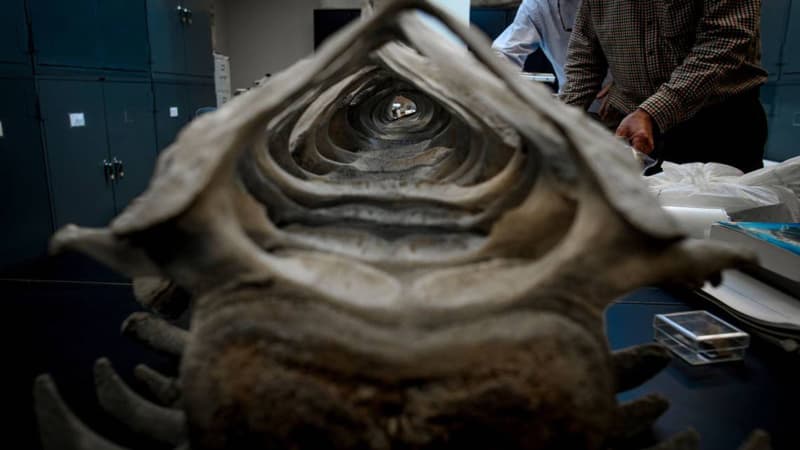
Bones of whale extinct for 300 years that were once stored in North Carolina couple’s garage are headed for Smithsonian

2022/1/12 
© Miami Herald
These bones originated from whales that have been extinct for 300 years or more, officials said. - 
Jeff Janowski/University of North Carolina WIlmington/TNS

A couple walking on a North Carolina beach made a rare discovery that could help researchers solve mysteries from long ago.

Rita and Tom McCabe were used to finding shells during their walks on West Onslow Beach in the 1970s — but then they started stumbling upon large bones. After years of keeping the remains in their garage, the couple gave them to the University of North Carolina, Wilmington.

It turns out, the bones belonged to a whale species extinct for about 300 years.

“We grew very excited because there was very little scientific information on the North Atlantic gray whale population because it was no longer here,” David Webster, a longtime professor and senior associate dean for the College of Arts and Sciences at UNCW, said in a news release.

The whale specimen — believed to be the “most complete” of its kind — found a new home at UNCW, where it remained for decades.

Now officials say the bones began a new chapter at the Smithsonian in late 2021.

Webster said he thinks the couple, who have both since died, would find joy in knowing their collection could continue to help researchers.

“I’m sure they are just tickled pink,” he said in the news release. “They are probably saying, “Can you believe it? We made it big time.”

The Smithsonian said it hopes the donated specimen will help offer clues about North Atlantic gray whales and what life was like hundreds of years ago.

“Specimens like these, tie to place and time,” Nicholas Pyenson, curator of fossil marine mammals at the National Museum of Natural History, said in a Smithsonian Ocean article. “They tell us how the world once was.”

The museum will have the bones on display, according to UNCW. But getting the massive load more than 300 miles from North Carolina to Washington, D.C., was no easy feat.

The bones were loaded onto a van that “looked more like a minibus” and were cushioned with “layers and layers of bubble wrap,” David Bohaska, a vertebrate paleontology collections specialist, told Smithsonian Ocean.

The journey was reminiscent of the time the couple first dropped the bones off at UNCW.

“They drove a small Chevy S10 pickup truck to campus, and they had bones hanging out all over the place,” Webster said in the news release for the school, which today has about 18,000 students.

After initially thinking the specimen was a humpback whale, researchers said closer examination revealed a more rare surprise. The bones have stains that helped them determine where the animal may have been.

“UNCW researchers discovered through radiocarbon tests that the bones are hundreds of years old and probably washed ashore after the young whale died of natural causes during a migration period,” the college said. “They theorize that the carcass floated into the New River Inlet and ended up in the nearby salt marshes.”

The remains, found along West Onslow Beach near the Camp Lejeune military base, also have marks that indicate Native Americans may have butchered the whale after it died, UNCW professor David La Vere said in the news release.

North Atlantic gray whales weighed up to 90,000 pounds and were found in the northern part of the world before they were last seen in the 1700s. Though the exact cause of their extinction isn’t known, their habitats near the shore made them vulnerable to whaling, the Smithsonian Ocean website said.
Student who worked on radiation project to represent Ireland at US science fair

Research Lives: Clare Reidy, SciFest STEM champion 2021 and sixth-year student at Our Lady’s Bower in Athlone


Claire O'Connell

SciFest STEM champion 2021 Clare Reidy

You won the SciFest National Final in November 2021, what was your project about?

I wanted to figure out the most effective way to build a brick that would block cosmic radiation on Mars. We are protected from cosmic radiation on Earth, but it would be a hazard for humans on Mars, and I looked at whether we could use material that is already on Mars to help build that protection.

Clever idea – what did you come up with?

I recreated Martian soil, or regolith, in a beaker, and used it along with different polymers to build bricks. These kinds of polymers would be pretty easy to transport to Mars. Then I tested to see how well the bricks could block gamma radiation, and I found that a brick containing regolith and about 20 per cent polyethylene is the most effective.

How did you know what Martian soil contains?

I found a paper online that detailed findings from space missions to Mars – particularly from the Pathfinder and Viking 1 rovers. Those missions analysed samples of the Martian regolith and the paper listed the components, which include a lot of oxides. The regolith I made in the beaker turned out a lovely purple colour, probably because of the high levels of iron oxide, which is rust.

Were the components easy to find?

Some were harder to find than others. I was struggling to find magnesium oxide, but then I saw that it is given to horses as a food supplement. We have a neighbour who has horses so I asked if he had any and he did.

You are due to represent Ireland at the Regeneron International Science and Engineering Fair in Atlanta, Georgia, in May – what are your plans for that?

I am going to do some more work on my project, maybe figure out the optimum thickness for bricks to block radiation, as well as the composition.

Are there scientists in your family?

Yes, both my parents are chemistry lecturers at the Technological University of the Shannon at Athlone, and I have siblings who are scientists and engineers.


How does doing your own research project compare with the experiments you learn at school?

They feed off each other. You can get lots of ideas about projects to do and how to do them based on what you learn in school. Then if you do a project yourself, you understand more about what you are learning in school, you know the applications and why you are learning it. I think that makes it more interesting.

What would your advice be to anyone in secondary school considering entering a science competition?

I would say go for it. I have taken part in SciFest several times already and I did the BT Young Scientist & Technology Exhibition one year too. Every time you do a project you are learning about the scientific method and you are getting better at research. Talk to your teacher about it; my teacher Julie-Anne Greaney was very supportive.

Between all the science and studying for your Leaving Cert, you are busy. How do you take a break from the books and experiments?

I love music, I have played piano, violin and cello since I was about five years old and I find it really relaxing. I also play Gaelic football, which I love. And tennis too.
NAMED AFTER A #CRYPTID
AFCON: Comoros 'Coelacanths' at AFCON for the first time

Nicknamed after an endangered fish, the footballers from Comoros are far from dying out. The Coelacanths have qualified for the Africa Cup of Nations for the first time thanks to minimalist tactics and team spirit.


Comoros kick off their campaign against Gabon on Monday

"My nose still hurts a bit," admitted Said Bakari.

The 27-year-old Comoros midfielder arrived in Cameroon with his teammates last week ahead of the small island nation's first appearance at the Africa Cup of Nations, and is still feeling the effects of the numerous COVID-19 tests.

Comoros — an archipelago with a population of around 850,000 in the Indian Ocean, just off the eastern coast of Africa — are the surprise entry at the 33rd AFCON and already one of the greatest sensations in the tournament's history.

In Group C against African giants Morocco, Gabon and Ghana, qualification for the last 16 appears unlikely on paper — but not impossible, according to Bakari.

"With all due respect, we're not scared of anybody," he told the Brabants Dagblad, a daily newspaper in the Netherlands where he plays club football for Eredivisie side RKC Waalwijk. "We've made it to this tournament, which means we're also good."
'We've made an entire people happy'

The national team of Comoros is nicknamed "the Coelacanths" (pronounced see-la-canths) after a endangered species of exotic fish found in the region.

But while the fish may be dying out, the team is enjoying an improbable new lease on life, qualifying for the tournament in March 2021 ahead of Kenya and Togo. After the decisive 0-0 draw with the latter, fans accompanied the team from the stadium to the team hotel and celebrated together late into the night.

"We have made an entire people happy," Bakari told DW at the time.


Midfielder Said Bakari was born in Paris and plays for RKC Waalwijk in the Netherlands — but has Comorian roots

Only a few years earlier, the prospect of Comoros competing at AFCON would have been unthinkable; the footballers from the three main islands Grande Comore, Anjouan and Moheli (plus contested Mayotte) only joined FIFA in 2005, a move which sparked a footballing boom.

Even the smallest FIFA members receive annual subsidies from the world governing body, especially when — like on the Comoros islands — sporting infrastructure is lacking.

Since 2005, the Comoros have benefited from $1.3 million (€1.1 million) a year in FIFA support, and have also become members of FIFA's development program. As such, they have been able to renovate the Twamaya Academy near the capital Moroni, while $11.4 million will have flowed into a new administrative building by the end of 2022.

What's more, the Mohamed Cheikh national stadium has been expanded to include an artificial pitch and floodlights.


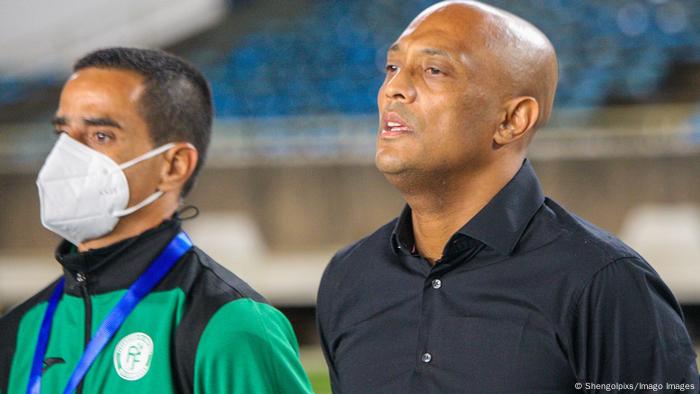
The head coach for Comoros, Amir Abdou (right), had previously only worked in the French sixth division

Amir Abdou: Coach by coincidence

On the pitch, however, the key to success has been the appointment of Amir Abdou as national team coach. Initially, the 49-year-old was supposed to assist former Marseille and Raja Casablanca coach Henri Stambouli, but took full control when the Frenchman withdrew.

Abdou, born in Marseille but with Comorian ancestry, had previously only worked in the French sixth division but immediately set about restructuring the national team.

Finding players with Comorian roots predominantly in the south of France in the second or third divisions, Abdou slowly improved the Coelacanths' performance. Discipline and organization are key pillars of his work, but midfielder Bakari also describes an unshakable team spirit.

"At our clubs, we all work rather selfishly on our own careers," he said. "But with the national team, individual ambitions take a back seat and we fight as one for our country."

Bakari's own story is a good example. Born in a Parisian suburb, his talent saw him accepted into Paris Saint-Germain's youth academy — but he wasn't taken on when he reached adulthood. Instead, he spent a few seasons in the lower leagues in France and Belgium before signing for Dutch side Waalwijk in 2017. He has since made 92 league appearances, scoring four goals, helping the team to promotion to the Eredivisie in 2019.
Minimalist football

Comoros' progression through AFCON qualification was symbolic of Abdou's disciplined and organized approach: in the first five games, they conceded only two goals and scored only four themselves.

In the goalless draw against Togo which secured qualification, the Comoros didn't register a single shot on goal, but the "minimalist" approach had worked.


The Comoros didn't manage a single shot on goal against Togo in qualifying

"I wouldn't say I'm either defensive or offensive," said Abdou, who also coaches FC Nouadhibou in nearby Mauritius. "I adapt my tactics to the opposition."

The team's biggest strength lies in familiarity, having barely changed in terms of personnel since 2016. Abdou runs the group like a club team, regularly gathering the squad together in Comoros for training camps. The players know and trust each other. "We're like one big family," said Bakari.

Recently, however, the team has become somewhat nomadic, being unable to travel to Comoros for a year due to COVID-19 restrictions.

"We wanted to meet and train there but it just didn't work," said Bakari, lamenting what a shame it has been for the fans who have only been able to watch their heroes on TV. Due to the pandemic, fans won't be able to travel to Cameroon either — so at least they won't have to undergo the same painful COVID tests as Bakari.

"They'll still be behind us though," he said. "We want to make them happy."

This article was originally written in German (and translated by Matt Ford).


Jonathan Henderson's (PhD 2021) "Anechoia Memoriam" is a unique memorial to lost lives of color

A closeup view of the Selectric typewriter used in the installation Anechoia Memoriam
Anechoia Memoriam typewriter setup

Anechoia Memoriam is a participatory installation for the Selectric Piano, an IBM Selectric typewriter that electromechanically controls an acoustic piano. The score for the piece is composed of a list of 180 unarmed people of color killed by law enforcement in the United States. The score unfolds over seven hours, whether anyone engages with it or not. When typists participate, each letter typed is enunciated by specific notes on the piano. If no one types, the score scrolls by, accumulating on the floor in silence. Participation and non-participation, attention and inattention, ringing piano strings and silence are all elements of the performance.

View a short video demonstrating Anechoia Memoriam.

About Anechoia Memoriam, Henderson writes:

"The scenario of the performance allows for the list to pass by unnoticed. When typists participate, the names become music.... The presence or absence of a typist renders the composition indeterminate. The piece will transpire in part, or even largely, in silence."

Anechoia Memoriam with participant

"John Cage transformed our notion of silence from an absence to a presence. For Cage, part of what we call silence is simply inattention. Or perhaps we notice a sound but deem it unimportant: silence as judgement. Can Cage’s capacious notion of silence be useful in approaching political silences?  The growing mainstream awareness of state violence towards people of color is, in part, a reckoning with silence. As 'say their names' becomes a refrain of the Black Lives Matter movement, is a silence breaking? Anechoia Memoriam invites participants and observers both into and out of that silence.... We hope the play of sound, memorialization and listening invites embodied reflection on the politics of silence and the realities of state violence against communities of color."

Jonathan Henderson is Professor of Music at College of the Atlantic in Bar Harbor, Maine. Find out more about him and his work at https://jhendersonmusic.com/.

Mark Dixon is an Associate Professor of Art at Guilford College in Greensboro, NC. Find out more about him and his work at https://www.fmarkdixon.com/.


I PUT OUT UNDERGROUND NEWSPAPERS USING A SELECTRIC AND GESTETNER PRESS

US to close Gulf ports to Mexican fishing boats for poaching

The U.S. government will prevent Mexican fishing vessels from entering U.S. ports on the Gulf of Mexico, arguing the Mexican government has not done enough to prevent its boats from illegally fishing in U.S. waters


By The Associated Press
12 January 2022

MEXICO CITY -- The U.S. government will prevent Mexican fishing vessels from entering U.S. ports on the Gulf of Mexico, arguing the Mexican government has not done enough to prevent its boats from illegally fishing in U.S. waters.

Starting Feb. 7, Mexican fishing boats in the Gulf “are prohibited from entering U.S. ports, will be denied port access and services,” the National Oceanic and Atmospheric Administration wrote in a report made public Wednesday.

The move caps a years-long problem with U.S. efforts to protect valuable red snapper stocks along its Gulf shores.

Small Mexican boats frequently use prohibited long lines or nets to haul in snapper in U.S. waters, and then sometimes apparently even sell it back to U.S. customers. Such nets and lines can indiscriminately trap marine life.

The NOAA report slammed Mexico for “its continued failure to combat unauthorized fishing activities by small hulled vessels (called lanchas) in U.S. waters.”

“The United States is committed to working with the Government of Mexico to support its actions to address the issues identified in 2019 and 2021, and is ready to re-establish U.S. port privileges for Mexican fishing vessels operating in the Gulf of Mexico once actions are taken by Mexico,” according to the report.

Mexico's Environment and Economy Departments did not immediately respond to requests for comment on the ruling.

NOAA said in a previous report that the U.S. Coast Guard apprehended dozens of Mexican boats in the Gulf, including "a large number of Mexican nationals who are repeat offenders, some having been interdicted more than 20 times since 2014."

It noted the United States imported almost five tons of fresh and frozen snapper from Mexico in 2018, “raising concerns that these imports may have included fish harvested illegally in U.S. waters.”

The environmental group Oceana Mexico said in a statement that “Mexico has yet to implement fully its USMCA (US-Mexico Canada free trade pact) environmental commitments with respect to sustainable fishing practices."

Environmentalists say that Mexico's attitude on the Gulf fishing dispute mirrors its lack of effort to stop gill net fishing in the Sea of Cortez, or Gulf of California, that has driven the vaquita marina porpoise to the brink of extinction.

Sarah Uhlemann, director of the Center for Biological Diversity’s International program, said “The United States has again rightfully sanctioned the Mexican government for failing to get a handle on illegal fishing."

“This time, Mexican officials didn’t stop boats from illegally entering U.S. waters to fish. Last fall, they couldn’t get fishermen to use gear that protects imperiled sea turtles," Uhlemann said, adding Mexico "can’t manage to stop rampant illegal fishing in the upper Gulf of California to save the endangered vaquita porpoise. The clear U.S. message is that the Mexican government has to clean up its fishing practice or lose a critical seafood trade partner.”
Workers push to unionize at the Jewish Museum in New York

The Jewish Museum workers would be following in the footsteps of the staff at the Museum of Jewish Heritage, also in New York, who voted in to unionize in November 2020.


By ASAF SHALEV/JTA
Published: JANUARY 13, 2022 

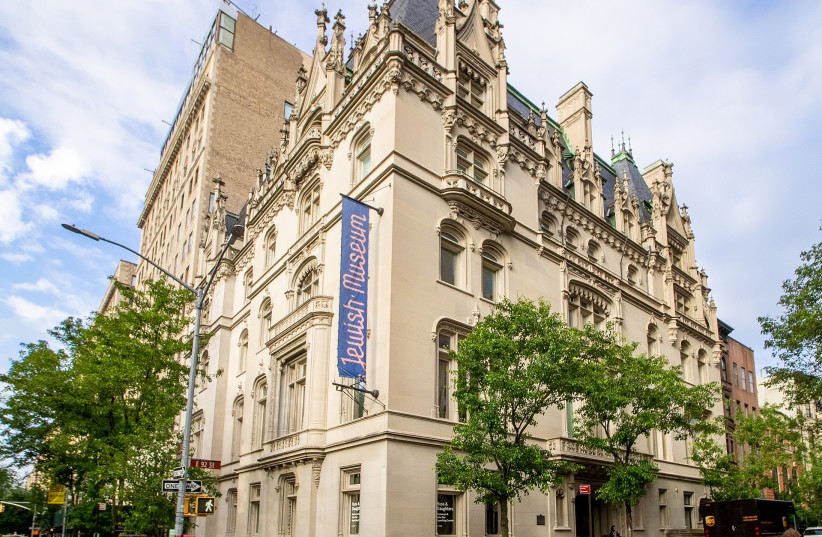
The Jewish Museum in Upper East Side, New York City.
(photo credit: VIA WIKIMEDIA COMMONS)

Employees at the Jewish Museum in New York have launched a unionization drive, adding to a trend across cultural institutions that have been destabilized by the pandemic.

The process officially began on Monday, when representatives of Local 2110 UAW filed a petition for a union election on behalf of Jewish Museum employees with the National Labor Relations Board. If the effort succeeds, the union will encompass art handlers, curators, development staff, educators, visitor experience and retail employees, and other administrative staff.

The workers organizing the drive said the union is needed because of job insecurity, wage inequities, hazardous working conditions, and a lack of sufficient transparency around employment policy at the Jewish Museum.

“Our goal is to create a workplace built upon communication, respect, and integrity, where staff are involved in setting the terms of employment and are allowed to sustainably grow their careers,” the unionizing workers said in a mission statement. “In keeping with our love of the Jewish Museum’s exhibitions, collection, and rich history, the staff is eager to realize a fairer, more inclusive, and more diverse workplace. We believe that collective bargaining with leadership can achieve these goals and strengthen our institution.”


The workers would be following in the footsteps of the staff at the Museum of Jewish Heritage, also in New York, who voted in to unionize in November 2020. That effort was organized through a different union, District Council 37.

''LEGO Concentration Camp'' by Zbigniew Libera, is pictured at the Jewish Museum in New York March 13, 2002. The sculpture is part of an exhibit called ''Mirroring Evil: Nazi Imagery/Recent Art'' which opens at the museum on March 17. The work of thirteen artists will be presented in the exhibit, which (credit: REUTERS)

Before petitioning for the workers of the Jewish Museum, Local 2110 UAW won union elections at several other institutions including the Guggenheim Museum, the Whitney Museum of American Art, the Brooklyn Museum and the Hispanic Society of America.

The Jewish Museum released a statement through a spokesperson: “The Jewish Museum is aware that staff have petitioned for a union election. The Museum greatly values its staff and will respectfully engage in any process that transpires.”

Labor organizing at museums has ramped up during the pandemic as many institutions closed their doors to visitors or shifted toward virtual exhibits, causing workers in public-facing positions to face layoffs and furloughs.

At least one unionized staff at a museum with Jewish roots, the Tenement Museum in New York City, filed a complaint with the National Labor Relations Board last year after the museum laid off 80% of its workers. Those workers, too, are organized by Local 2110 UAW.


“Unionization has become a necessity for museum staff,” Rebecca Shaykin, a Jewish Museum curator, said in a statement released by the workers behind the unionization drive. “As museum professionals, we’re expected to work long hours for low wages with little assurance of promotional opportunities. By forming a union, we can join together for conditions that recognize our value as a staff.”

‘A protective bubble’: Covid-sniffing dogs help scientists – and Metallica – spot infection

Researchers find four dogs can identify biomarkers associated with the virus with 97.5% accuracy


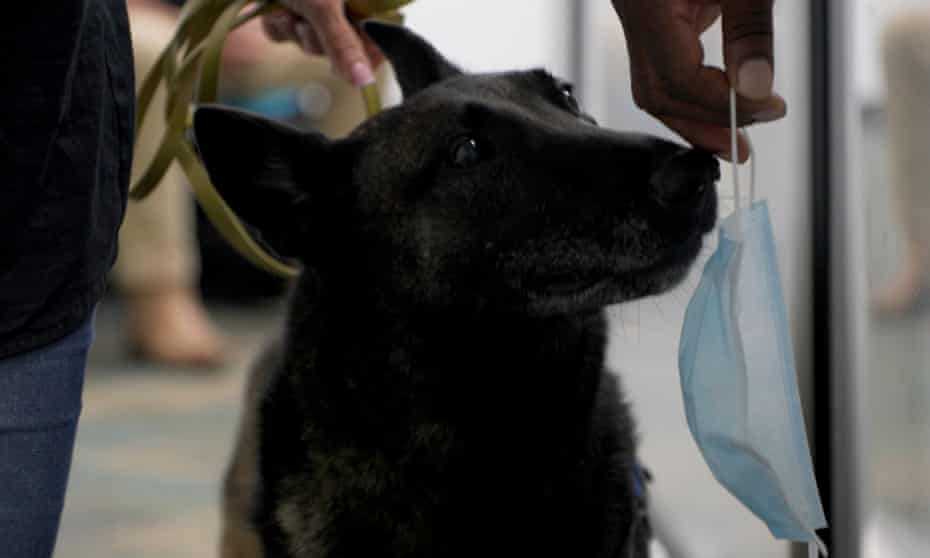
Cobra the dog sniffs a mask, a means of detecting Covid.
 Photograph: Florida International University

Adrienne Matei
Wed 12 Jan 2022 

With a sense of smell up to 100,000 times more sensitive than humans’, dogs have been employed in the service of sniffing out everything from contraband to crop molds to cancer.

Yet while researchers first began exploring whether canines could be effective agents in the fight against Covid-19 early in the pandemic, only in recent months have conclusive, peer-reviewed studies begun verifying the hypothesis that dogs know Covid when they smell it.

In late 2021, scientists at Florida International University published a double-blind study of canine Covid detection in which the four participating pups demonstrated a 97.5% accuracy rate in identifying biomarkers associated with Covid-19.

“It’s one of the highest percentages I’ve ever seen, and I’ve been doing this work for over 25 years with all kinds of detector dogs,” says FIU’s Dr Ken Furton, a leading scholar in forensic chemistry specializing in scent detection. “It’s really remarkable.”

Another study from the London School of Hygiene and Tropical Medicine found dogs could identify Covid 82%-94% of the time, whereas recent German research put their success rate at 95%.

Dogs are capable of generalizing odors, meaning they can detect all currently known Covid-19 variants, similar to how they can recognize all manner of explosives when trained, explains Furton.

Yet Omicron has affected search protocols used by the Ohio-based Bio-Detection K9, a company that trained dogs to identify crop diseases prior to the pandemic, and that began providing Covid detection services in October 2020 to clients including Nascar and the rock bands Metallica and Tool.

“Omicron more than any other variant has changed the biology of the infection,” explains the company’s president, Jerry Johnson. Prior to Omicron, Johnson’s team of 14 dogs were trained to approach a line of people and sniff their hands or feet – where humans have many sweat glands – before sitting in front of those they considered infected. Because Omicron is expressed less through the lungs, which transfer the virus throughout the body and into our sweat, and more through the bronchial tube, people must now offer the dogs their worn mask for a sniff.

Johnson’s dogs are able to screen between 200 and 300 people ran hour, and require breaks every 20 minutes to maintain their enthusiasm for the job. When they work with musicians, the dogs are not screening audience members at live shows; rather, they hang out backstage, focusing on a much smaller group of talent, engineers and entourage.


US delivery apps have a new high-end ‘wellness’ product: Covid tests


“This is not a tool that you’re going to use to get 70,000 fans into the Rose Bowl,” says Johnson. “But we can be very effective if you’re trying to maintain a protective bubble.” That efficacy comes at a price; the daily rate for one of Bio-Detection K9’s teams – comprising one dog and its trainer – is $5,000.

Based on his experience with detector dogs, Johnson has a theory that canines are particularly adept at finding viruses because of a biological predisposition towards identifying and avoiding disease among their ranks. The logic is that a wolf in the wild couldn’t care less about cocaine and explosives, or other things we train dogs to find, but would be naturally interested in the health of their pack.


Some institutions are training their own dogs to detect Covid, such as the Freetown-Lakeville regional school district in Massachusetts, which worked with FIU to turn Labradors Huntah and Duke into school safety inspectors last summer.

Dogs are not yet an FDA-approved diagnostic tool, so if they flag someone as infected, that person still must take a Covid-19 test to confirm it. However, some research indicates that dogs may be more sensitive to the virus than PCR tests, identifying infected individuals even before they have amassed sufficient viral load to register on a test.