Thursday, January 13, 2022

Meet the new boss 

After helping to create Russia’s ‘sovereign Internet,’ the son of one of the Kremlin’s most powerful officials takes the helm at the country’s most popular social network

Source: Meduza


Vladimir Kiriyenko presenting at a Rostelecom conference in September 2018
Kirill Kallinikov / Sputnik / Scanpix / LETA

On Monday, December 13, Vladimir Kiriyenko was appointed to serve as the new CEO of Vkontakte’s parent company, VK. The son of Sergey Kiriyenko (President Putin’s first deputy chief of staff and the Kremlin’s unofficial domestic policy czar), Vladimir previously worked as a vice president at Rostelecom. His appointment followed a major sale of shares that transferred control over VK to Gazprombank and the insurance giant Sogaz. Meduza explores key details of the new CEO’s life.

The Investor


The transfer of VK’s (previously Mail.ru Group’s) ownership was unexpected. On December 2, Alisher Usmanov’s USM holding company announced its sale of shares in MF Technologies, the holding group that controls VK. As a result, structures affiliated with Gazprom now own 90 percent of the shares in MF Technologies.

Both RBC and The Bell had reported that VK would change its CEO as well. According to both outlets, outgoing CEO Boris Dobrodeev (son of VGTRK head Oleg Dobrodeev) would be replaced with Vladimir Kiriyenko — the son of First Deputy Chief of Staff of the Presidential Executive Office Sergey Kiriyenko. VK confirmed these reports in a press release on December 13.

Vladimir Kiriyenko previously held an executive role at Rostelecom. He became the company’s vice president in 2016 at the age of 33. His appointment coincided with his father Sergei Kiriyenko’s new position in the Presidential Administration — he became its deputy chief of staff in charge of domestic policy. When he assumed the role, Rostelecom’s president at the time, Sergey Kalugin, explained that the young VP was responsible for charting “a more active direction for the company to enter new and growing segments of the market.” Kalugin gave no details about how Kiriyenko would achieve such a goal.

Prior to his role at Rostelecom, Vladimir Kiriyenko had no experience in the telecommunications industry. He had spent his entire career in his home region of Nizhny Novgorod. The younger Kiriyenko studied at the local branch of the Higher School of Economics, and after graduating at 22 years of age, immediately became the chairman of the board of directors of a local television company, Volga. At the time Vedomosti reported that the company belonged to a friend of his father, Lukoil vice president Vadim Vorobyov. Vladimir Kiriyenko also co-owned Sarovbusinessbank with Vladimir Travin, another close friend of his father.

In 2007, Vladimir Kriryenko’s company, Capital, received a 25-percent stake in an agricultural holding along the Volga River, NZhMK, after its owner Nikolai Nesterenko appealed to Kiriyenko Sr. for help thwarting an unwanted acquisition by another company, Rinako. According to Forbes, Nesterenko wrote to Prime Minister Mikhail Kasyanov and sought assistance from law enforcement, thereby preventing “an attempted hostile takeover.”

Vladimir Kiriyenko always hoped that his son would be viewed as a successful businessman, according to a source interviewed by Forbes. As a result, he started “receiving all these assets,” and he began managing the family’s business. Forbes estimated that Kiriyenko Jr.’s assets in industrial enterprises are worth $50 million.

Vladimir’s biography on Rostelecom’s says that he “has experience with direct investment in Russian companies and the IT-sector.” In 2013, he began leading a venture capital fund called Titanium Investments. This fund did indeed invest in startups. Among them is Factory of Online, a business that Russifies popular foreign video games (though the last game it worked on was released in 2014). The fund was also involved in the peer-to-peer lending service Mirdeneg.ru, which is currently defunct and whose website no longer works. A more successful investment was 365score, an Israeli app for sports fans which is used by 40 million people around the world.

Following his appointment at the state-owned Rostelecom, Kiriyenko pledged to divest from Titanium Holdings, even though he was not formally obliged to do so. However, iStories reported that in that same year, Kiriyenko Jr. registered a similarly-named offshore company — Titanium VC Limited — in the British Virgin Islands and used it to invest in foreign startups. Vladimir Kiriyenko was its beneficiary until at least mid-2017.

The Lobbyist


Rostelecom emerged in its current form about ten years ago. In the past, it had been a part of the state-owned Svyazinvest holding, and managed intercity and international telephone networks. But demand for traditional telephony services was falling. As a result, the company pivoted to Internet and wireless services. For example, network operator Tele2 is a wholly owned subsidiary of Rostelecom.

Rostelecom’s growth was also driven heavily by the state. In 2009, Vladimir Putin awarded the company a state contract to create the “Gosuslug” (Public Services) website. Since then, the government has signed contracts with Rostelecom for maintaining the “electronic government’s” infrastructure. The most recent contract for 2020 and 2021 is valued at 11.9 billion rubles ($162 million).

Since then, the number of government contracts received by Rostelecom only grew further. Rostelecom is uniquely tasked with streaming video from presidential and parliamentary elections, video-monitoring of Russia’s standardized Unified State Exam, and Russia’s electronic voting system.

After Kiriyenko joined the company’s leadership, Rostelecom became the sole provider of wireline services to an array of federal government departments. In 2019, moreover, Rostelecom won an auction to connect “socially significant places” to the Internet across half of the country. Such places include schools, various municipal and governmental functions, and police and fire stations. Besides these activities, Rostelecom is part of an initiative to reduce digital inequality within the country, achieved by extending telecommunications networks to smaller towns and settlements.

In addition to other governmental projects, Rostelecom digitized the All-Russian census. Now, census workers have replaced their traditional paper notebooks with Russian-made tablets procured by Rostelecom. In exchange for the 360,000 tablets, Rostelecom received 9 billion rubles ($123 million). Now, Rosstat’s situation centers can track census workers and remotely provide direction through a network also managed by Rostelecom.

Rostelecom also received exclusive contracts to “establish data protection and traffic filtration systems for schools and electoral commissions” — including functionality to prevent access to blocked websites and “extremist materials.”

Experts point to Vladimir Kiriyenko’s influence as a key factor in Rostelecom’s success. “Kiriyenko is an effective manager; thanks to his lobbying capabilities, he strengthened Rostelecom’s position in securing government procurements,” explained Yuri Bryuvkin, the director of the analytics firm Rustelecom.

Kiriyenko Jr. himself said that Rostelecom is first and foremost focused on working with “government clients” and large businesses. At the same time, he has also spoken negatively about certain government initiatives. For instance, Kiriyenko argued that Rostelecom should not take advantage of its wealth of customer data, which it is obliged to collect and retain in accordance with Russian anti-terrorism laws. Per this legislation, network operators are also required to transmit these data to law enforcement upon request.

The Defender


In recent years, the interests of Sergey and Vladimir Kiriyenko have become ever more interconnected. After an unsuccessful attempt to block Telegram, officials became interested in creating a so-called “sovereign Internet.” A 2019 law provides the legal basis for it: network providers would be obliged to install special devices — “technical tools for threat prevention,” which would enable Roscomnadzor to control users’ traffic.

Sergei Kiriyenko was a key figure in initiating Russia’s sovereign Internet, according to Forbes and the BBC. Originally, the concept was framed as defensive, to protect the Russian internet from external attempts to disconnect it. But when Roscomnadzor obtained the ability to control networks, it began to exercise it. For instance, the agency can now independently decide to “slow down” Twitter inside Russia.

Roscomnadzor’s technical tools, which it installs on provider networks, are equipped with software from RDP.ru — a company owned by Rostelecom.

Alexey Danichev / Sputnik / Scanpix / LETA

Rostelecom’s role does not end there. The largest node in Russia’s Internet traffic was a company called MSK-IX. In the early 2010s, the company was absorbed by the Safedata group, which combined several large data centers. Today, Safedata (now named RTK-TsOD) is wholly owned by Rostelecom.

MSX-IX’s technological resources provided the basis for the Internet Technical Center, which was the technical administrator of Russia’s Web domains (.ru, .РФ, and .su). The firm was owned by KTs – the Coordination Centre of national internet domains – and it was an independent domain regulator.

Over time, the Coordination Center lost its independence: in 2015, the government was listed as one of its founders. Then in 2017, Rostelecom created its own private company — TTsI — which received technical control over the root servers of Russia’s domains. Now, Rostelecom has control over servers that have records of each domain, its owners, and their IP addresses. According to Meduza’s source at Rostelecom, Kiriyenko Jr. oversaw the activities of both RTK-TsOD and TTsI.

Rostelecom enjoyed financial success while Vladimir Kiriyenko worked there. Company profits stood at 297 billion rubles ($4 billion) when Kiriyenko assumed his post in 2016 and had risen to 546 billion rubles ($7.4 billion) by 2020. Contracts with the government and large corporations constituted 33 percent of the company’s total profits. The digital services under Kiriyenko’s management were a particularly strong driver of growth. For instance, he oversaw the successful launch of the multimedia platform Wink. “Rostelecom today has a much clearer and more transparent ecosystem of digital services. Sure, not all of them are in high demand, but they are interconnected,” telecom analyst Sergei Polovnikov told Meduza.

The manager

For its previous owners (Alisher Usmanov’s holding structures), an asset like VK was unattractive, according to The Bell. The company was not highly profitable. While Usmanov’s Metalloinvest delivered $1.34 billion in profits, VK mustered a comparably paltry $138 million. And in 2021, VK’s first three quarters posted consecutive losses, while its stock shed 40 percent of its value. “It was obvious that VK wasn’t what USM wanted to invest in. Whereas VK was a pressing issue for the Presidential Administration,” a source told The Bell.

“Market data painted a clear picture: foreign social networks were gaining users while Vkontakte was falling behind. For the government, it was politically undesirable if VK lost contact with its Russian audience. And for Usmanov, such a state of affairs was uncomfortable, too, since he has a certain responsibility to the state,” added The Bell’s source. Someone working for the federal government’s cabinet told Forbes Russia that Sergey Kiriyenko has been tapped to resolve the solve the problem within two or three years.

But Kiriyenko Sr. reportedly did not embrace the recruitment of his son for this assignment. According to Meduza’s own source with ties to the Putin administration, Sergey Kiriyenko wanted his son to remain at Rostelecom, earning “good money” and doing “substantive work” — all “without any politics.”

The source also noted, however, that Kiriyenko Jr. may have been relieved to get away from Rostelecom in light of a police raid on the company’s offices in the spring of 2021. “Who knows what they’ll dig up in the end?” Meduza’s source reasoned.

Kiriyenko Jr. has always been known as an extremely careful manager and not the easiest colleague, recalls a source who works for one of Rostelecom’s partner companies. “He always seemed to be afraid. He was never decisive when it came to doing mundane things, like signing off on internal strategy documents and giving comments for press releases, fearing the questions he might be asked later.” Meduza’s source summed Kiriyenko up as “neither fish nor fowl.”

“He was annoyingly meticulous,” a source at Rostelecom told Forbes Russia. “He’s not the type to listen to a positive answer and be satisfied. He always remembers the details and is keen to question whatever isn’t going as well.”

Another Rostelecom subcontractor described Vladimir Kiriyenko in the following terms: “People who grew up in powerful families can end up weird. But Kiriyenko Jr. gives off the impression of an intelligent and calm person. He understands finance and business and is a respectful communicator. He doesn’t offend anyone.”


In bad news for US cloud services, Austrian website’s use of Google Analytics found to breach GDPR

Natasha Lomas@riptari •January 12, 2022

Image Credits: Thomas Trutschel / Getty Images

decision by Austria’s data protection watchdog upholding a complaint against a website related to its use of Google Analytics does not bode well for use of US cloud services in Europe.

The decision raises a big red flag over routine use of tools that require transferring Europeans’ personal data to the US for processing — with the watchdog finding that IP address and identifiers in cookie data are the personal data of site visitors, meaning these transfers fall under the purview of EU data protection law.

In this specific case, an IP address “anonymization” function had not been properly implemented on the website. But, regardless of that technical wrinkle, the regulator found IP address data to be personal data given the potential for it to be combined — like a “puzzle piece” — with other digital data to identify a visitor.

Consequently the Austrian DPA found that the website in question — a health focused site called netdoktor.at, which had been exporting visitors’ data to the US as a result of implementing Google Analytics — had violated Chapter V of the EU’s General Data Protection Regulation (GDPR), which deals with data transfers out of the bloc.

“US intelligence services use certain online identifiers (such as the IP address or unique identification numbers) as a starting point for the surveillance of individuals,” the regulator notes in the decision [via a machine translation of the German language text], adding: “In particular, it cannot be excluded that these intelligence services have already collected information with the help of which the data transmitted here can be traced back to the person of the complainant.”

In reaching its conclusion, the regulator assessed various measures Google said it had implemented to protect the data in the US — such as encryption at rest in its data centers; or its claim that the data “must be considered as pseudonymous” — but did not find sufficient safeguards had been put in place to effectively block US intelligence services from accessing the data, as required to meet the GDPR’s standard.

“As long as the second respondent himself [i.e. Google] has the possibility to access data in plain text, the technical measures invoked cannot be considered effective in the sense of the above considerations,” it notes at one point, dismissing the type of encryption used as inadequate protection.

Austria’s regulator also quotes earlier guidance from German DPAs to back up its dismissal of Google’s “pseudonymous” claim — noting that this states:

” …the use of IP addresses, cookie IDs, advertising IDs, unique user IDs or other identifiers to (re)identify users do not constitute appropriate safeguards to comply with data protection principles or to safeguard the rights of data subjects. This is because, unlike in cases where data is pseudonymised in order to disguise or delete the identifying data so that the data subjects can no longer be addressed, IDs or identifiers are used to make the individuals distinguishable and addressable. Consequently, there is no protective effect. They are therefore not pseudonymisations within the meaning of Recital 28, which reduce the risks for the data subjects and assist data controllers and processors in complying with their data protection obligations.”

The DPA’s wholesale dismissal of any legally relevant impact of the bundle of aforementioned “Technical and Organizational Measures” (such as standard encryption) — which were cited by Google to try to fend off the complaint — is significant because such claims are the prevailing tactic used by US-based cloud giants to try to massage compliance and ensure EU-to-US data transfers continue so they can continue business as usual.

So if this tactic is getting called out here, as a result of a single website’s use of Google Analytics, it can and will be sanctioned by EU regulators elsewhere. After all, Google Analytics is everywhere online.

(See also the extensive list of extremely standard measures cited by Facebook in an internal assessment of its EU-to-US data transfers’ — in which it too tries to claim ‘compliance’ with EU law, per an earlier document reveal.)

The complaint back story here is that back in August 2020 European privacy campaign group noyb filed a full 101 complaints with DPAs across the bloc targeting websites with regional operators that it had identified as sending data to the US via Google Analytics and/or Facebook Connect integrations.

Use of such analytics tools may seem intensely normal but — legally speaking, in the EU — it’s anything but because EU-to-US transfers of personal data have been clouded in legal uncertainty for years.

The underlying conflict boils down to a clash between European privacy rights and US surveillance law — as the latter affords foreigners zero rights over how their data is scooped up and snooped on, nor any route to legal redress for whatever happens to their information when it’s in the US, making it extremely difficult for exported EU data to get the necessary standard of “essentially equivalent” protection that it gets at home when it’s abroad.

To radically simplify: EU law says European levels of protection must travel with data. While US law says ‘we’re taking your data; we’re not telling you what we’re doing; and you can’t do anything about it anyway, sucker!’.

US cloud providers that are subject to Section 702 of the Foreign Intelligence Surveillance Act (FISA) are all in the frame — which takes in a broad sweep of tech giants, including Google and Facebook, since this law applies broadly to “electronic communications services”.

While Executive Order 12,333, a Reagan era mandate that’s also relevant as it also expanded intelligence agency powers to acquire data, is thought to target vulnerabilities in telecoms infrastructure.

The EU-US legal clash between privacy and surveillance dates back almost a decade at this point.

It was catalyized by the 2013 Snowden disclosures which revealed the extent of US government mass surveillance programs — and led, back in 2015, to the EU’s Court of Justice to invalidate the Safe Harbor arrangement between the bloc and the US on the grounds that EU data could no longer be considered safe when it went over the pond.

And whereas Safe Harbor had stood for around 15 years, its hastily agreed replacement — the EU-US Privacy Shield — lasted just four. So the lifespan of commercially minded European Commission decisions seeking to grease transatlantic data flows in spite of the massive privacy risks has been shrinking radically.

Some complaints about risky EU-to-US data transfers also date back almost a decade at this point. But there’s fresh enforcement energy in the air since a landmark ruling by the CJEU in July 2020 — which struck down the Commission’s reupped data transfer arrangement (Privacy Shield), which — since 2016 — had been relied upon by thousands of companies to rubberstamp their US transfers.

The court did not outlaw personal data transfers to so-called third countries entirely. Which is why these data flows didn’t cease overnight smack bang in the middle of 2020.

However it clarified that such data flows must be assessed on a case by case basis for risks. And it made it clear that DPAs could not just turn a blind eye to compliance — hi Ireland! — rather they must proactively step in and suspend transfers in cases where they believe data is flowing to a risky location like the US.

In a much watched for follow-on interpretation of the court ruling, the European Data Protection Board’s (EDPB) guidance confirmed that personal data transfers out of the EU may still be possible — if a set of narrow circumstances and/or conditions apply. Such as the data can be genuinely anonymized so that it is truly no longer personal data.

Or if you can apply a suite of supplementary measures (such as technical stuff like applying robust end-to-end encryption — meaning there’s zero access to decrypted data possible by a US entity) — in order to raise the level of legal protection.

The problem for adtech firms like Google and Facebook is that their business models are all about accessing people’s data. So it’s not clear how such data-mining giants could apply supplementary measures that radically limit their own access to this core business data without a radical change of model. Or, well, federating their services — and localizing European data and processing in the EU.

The Austrian DPA decision makes it clear that Google’s current package of measures, related to how it operates Google Analytics, is not adequate because it does not remove the risk of surveillance agencies accessing people’s data.

The decision puts heavy underscoring on the need for any such supplementary measures to actually enhance standard provisions if they’re to do anything at all for your chances of compliance.

Supplementary of course means extra. tl;dr you can’t pass off totally standard security processes, procedures, policies, protocols and measures as some kind of special Schrems II-busting legal magic, no matter how much you might want to.

(A quick comparable scenario that might hammer home the point: One can’t — legally speaking — hold a party during a pandemic if lockdown rules ban social gatherings simply by branding a ‘bring your own bottle’ garden soirée as a work event. Not even if you’re the prime minister of the UK. At least not if you want to remain in post for long, anyway… )

It’s fair to say that the the tech industry response to the Schrems II ruling has been a massive, collective putting of heads into sand. Or, as the eponymous Max Schrems himself, honorary chair of noyb, puts it in a statement: “Instead of adapting services to be GDPR compliant, US companies have tried to simply add some text to their privacy policies and ignore the Court of Justice. Many EU companies have followed the lead instead of switching to legal options.”

This charade has been possible because — to date — there hasn’t been much regulatory renforcement following the July 2020 ruling.

Despite the European Data Protection Board warning immediately that there would be no grace period for coming into compliance.

To the untrained eye that might suggest the industry’s collective strategy — of ignoring the legal nightmare wrapping EU-to-US transfers in the hopes the problem would just go away — has been working.

But, as the Austria decision indicates, regulatory gears are grinding towards a bunch of rude awakenings.

The European Commission — which remains eager for a replacement to the EU-US Privacy Shield — has also warned there will be no quick fix this time around, suggesting major reforms of US surveillance law are required to bridge the legal divide. (Although negotiations between the Commission and the US on a replacement data transfer agreement are continuing.)

In the meanwhile Schrems II enforcements are starting to flow — and orders to cease US data flows may soon follow.

In another sign of enforcement ramping up, the European Data Protection Supervisor (EDPS) — just this week — upheld a complaint against the European Parliament over US data transfers involving use of Google Analytics and Stripe.

The EDPS’ decision reprimands the parliament and also orders it to fix outstanding issues within one month.

The other 101 complaints noyb filed back in 2020 are also still awaiting decisions. And as Schrems notes EU DPAs have been coordinating their response to the data transfer issue. So there’s likely to be a pipeline of enforcements striking at usage of US cloud services in the coming months. And, well, a lot of sand falling out of eyes.

Here’s Schrems on the Austria DPA’s reasoning again: “This is a very detailed and sound decision. The bottom line is: Companies can’t use US cloud services in Europe anymore. It has now been 1.5 years since the Court of Justice confirmed this a second time, so it is more than time that the law is also enforced.”

“We expect similar decisions to now drop gradually in most EU member states,” he adds, further noting that Member State authorities have been coordinating their response to the flotilla of complaints (the EDPB announced a taskforce on the issue last fall).

“In the long run we either need proper protections in the US, or we will end up with separate products for the US and the EU,” Schrems also said, adding: “I would personally prefer better protections in the US, but this is up to the US legislator — not to anyone in Europe.”

While netdoktor has been found to have violated the GDPR, it’s not clear whether it will face a penalty as yet.

It may also seek to appeal the Austrian DPA’s decision.

The company has since moved its HQ to Germany, which complicates the regulatory jurisdiction component of this process — and means it may face additional enforcement, such as an order banning transfers, in a follow on action by a German regulator.

There is another notable element of the decision that has gone Google’s way — for now.

While the regulator upheld the complaint against netdoktor it did not find against Google’s US business for receiving/processing the data — deciding that the rules on data transfers only apply to EU entities and not to the US recipients.

That bit of the decision is a disappointment to noyb which is considering whether to appeal — with Schrems arguing: “It is crucial that the US providers cannot just shift the problem to EU customers.”

noyb further flags that Google may still face some pending sanction, however, as the Austria DPA has said it will investigate further in relation to potential violations of Article 5, 28 and 29 GDPR (related to whether Google is allowed to provide personal data to the US government without an explicit order by the EU data exporter).

The DPA has said it will issue a separate decision on that. So Google may yet be on the hook for a GDPR breach in Austria.

Penalties under the regulation can scale as high as 4% of a company’s annual global turnover. Although orders to ban data transfers may ultimately prove a lot more costly to certain types of data-mining business models.

To wit: Long time EU privacy watchers will be aware that Facebook’s European business is on penalty time in Ireland over this same EU-US transfers issue. A preliminary order that Facebook suspend transfers was issued by Ireland in fall 2020 — triggering legal action from the social media giant to try to block the order.

Facebook’s court challenge failed but a final decision remains pending from the Irish regulator — which promised noyb a swift resolution of the vintage complaint a full year ago. So the clock really is ticking on that data transfer complaint. And someone should phone Meta’s chief spin doctor, Nick Clegg, to ask if he’s ready to pull the plug on Facebook’s European service yet?

AUSTRALIA
OPINION
Boycotts are an essential and necessary part of public life


Osman Faruqi
Journalist and podcaster
January 13, 2022 — 

In 1880, in the west of Ireland, an English land agent had become notorious for the exploitative and mean-spirited way in which he treated the farmers on the property he managed. On this particular estate, negotiations over rent had turned sour and 11 of the farmers were threatened with eviction.

In protest, other farmers withdrew their labour and stopped harvesting the farm’s crops. Townspeople also shunned the land agent and shopkeepers refused to serve him. At the end of the year he fled Ireland as a result of the sustained social and economic ostracism. This particular land agent’s name was Charles Boycott, and it’s thanks to him and his actions that we use the term “boycott” to describe an organised campaign of non-participation.


The story of Charles Boycott has a particular resonance in Australia right now.
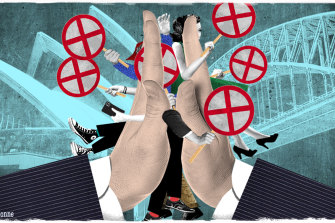
CREDIT:ILLUSTRATION BY DIONNE GAIN

The story of Charles Boycott has a particular resonance in Australia right now. Not only due to the current boycott of the Sydney Festival by dozens of artists opposed to the festival’s financial relationship with the state of Israel – a state that Human Rights Watch has found committed crimes of apartheid, a claim that the Israeli government for its part described as “preposterous” – but also due to fresh calls to ban the very act of boycotting.

Opposition arts spokesman, Labor’s Walt Secord, has called on the NSW government to introduce legislation to cut off funding to arts organisations that participate in a boycott of Israel. The proposed law mirrors legislation, resolutions and executive orders that exist in more than 30 US states.


If it seems extraordinary that a politician affiliated with the Labor Party, a party formed out of the union movement, is attempting to use the levers of the state to dissuade artists from collectively withdrawing their labour by threatening them with financial punishment, that’s because it is.

The Australian labour movement has a long history of deploying boycotts to achieve social change. In the late 1930s Australian dock workers refused to load pig iron onto ships because it was going to be used to aid the Japanese invasion of China. Throughout the 1970s, during the “green ban” movement, building workers refused to work on projects they believed were socially and environmentally destructive.

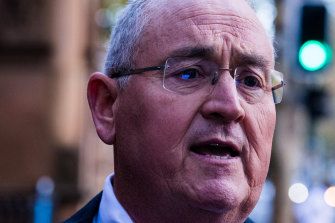
NSW shadow arts minister Walt Secord.
CREDIT:JAMES BRICKWOOD

Workers were also the vanguard of the anti-apartheid boycott movement targeting South Africa. Shipping unions refused to load ships trading with South Africa. Unionised Qantas staff refused to fly the South African rugby union team, the Springboks. In 1971, a general strike was declared in Queensland after the Premier Joh Bjelke-Petersen implemented a state of emergency in an attempt to crush protesters organising against the all-white Springbok tour in the state.

The organised boycotts during the era of South African apartheid are the most analogous to the current situation around the Sydney Festival, which is precisely why it’s so bizarre to see a Labor politician not only condemning collective action but demanding a punitive state response.

The call for artists to boycott the festival was made in response to revelations that it had secured a $20,000 sponsorship deal with the Israeli embassy in Australia, to help conduct a dance performance. Organisers of the boycott have described the arrangement as an example of “art-washing” – where the Israeli government uses its resources to patronise the arts and receives public support for doing so (Israel is described as a “star” partner on the Sydney Festival’s website). This association with the arts, generally seen as a radical and progressive space, helps distract from Israel’s policies targeting Palestinians.


An anti-apartheid demonstration is held at Perth airport as the Springboks arrive for their Australian tour on June 26, 1971. 
CREDIT:TED GOLDING

Whatever any individual person, patron or politician might think about Israel, its settlements or its bombing of Gaza, it’s completely fathomable, and in fact quite likely, that a number of artists associated with the Sydney Festival, might feel uncomfortable being associated with an event that is partly sponsored by the Israeli government.

Withdrawing from the festival in response is an entirely rational decision, one that is understandable on both the individual moral level of the artist, and as part of a broader collective effort to make a statement about these kinds of partnerships.

The call to financially punish artists or organisations who choose to take this kind of action smacks of desperation. The idea that a dancer, a singer, a writer, or a comedian should be compelled, by government edict, to stand on a stage and perform is absurd. No artist should be forced to perform in collaboration with an organisation whose values don’t align with theirs.

Federal Liberal MP Dave Sharma has also criticised the boycott, describing it as “fundamentally at odds with the purposes of art and culture”, a statement that is completely ahistorical. According to Sharma, “cultural and artistic exchange is seen as a way to promote peace and coexistence”.

It’s true that art can be used to bring people together and help forge a common sense of purpose. But it’s equally true that deciding when and on what terms to perform is also a lever artists have to spark discussion and advocate for social change. That’s been the case throughout history.


Sydney Festival
New arts minister says Sydney Festival boycott is ‘censorship’

Sharma is a member of a government that has no problems withdrawing funding from all manner of institutions and initiatives based on ideology. Just recently the federal government has been heavily criticised for vetoing research funding, approved by an independent agency because it didn’t believe the research projects were in the “national interest”. Some of those projects included research into climate change attitudes and Australia’s relationship to China.

These kinds of policies are far more stifling of discussion, debate or cultural learning than a boycott of one arts festival could ever be.

Whether it’s through the frame of labour rights, the right to free expression, or even more fundamentally the right of people to do, or not do, whatever they want, for whatever reason they choose, boycotts are an essential and necessary part of public life.

ANOTHER PERSPECTIVE

Opinion
Sydney Festival
‘It’s not about peace’: The endgame behind the boycott of the Sydney Festival
Alex Ryvchin

Of course it’s likely that both Secord and Sharma actually know this. Their opposition to this boycott probably has more to do with their pro-Israel politics (Secord is the deputy chair of the NSW Parliamentary Friends of Israel, while Sharma is a former Australian ambassador to Israel) than any actual coherent theoretical position on boycotts themselves.

But if that’s the case, that’s the argument they should be making. If they want to defend Israeli government policy then they should do so, rather than hiding behind a smokescreen and pretending as though artists making decisions about how and when they perform their art is some kind of nefarious activity.

AUSTRALIA
Qld union officials who refused to leave M1 worksite taken to court

By Jocelyn Garcia
January 12, 2022 —

Two state representatives of the Construction, Forestry, Maritime and Energy Union will be taken to court over allegations they contravened entry requirements and did not comply with directions at a Queensland motorway worksite.

The Australian Building and Construction Commission has started court action against the union and its two representatives over incidents in April last year.

It is alleged the officials entered exclusion zones and refused to leave when told to.
CREDIT:FILE PHOTO/LOUISE KENNERLEY

In its statement of claim, the ABCC alleged officials Dean Rielly and Paul Fitzpatrick entered an M1 worksite on April 19 using a vehicle access point at Burleigh Heads, ignoring signs requiring all visitors to report to the main site office.

The officials were then alleged to have entered a cordoned-off exclusion zone where heavy machinery, including a crane, was in operation.

“Despite repeated directions to leave the high-risk area the officials refused to do so, placing themselves and workers at risk. As a result of their presence work had to be stopped,” an ABCC statement claimed.

“During his presence in the exclusion zone Mr Rielly was told words to the effect of: ‘We’re asking you not to go in the area … It’s dangerous for you to be in there. Don’t go in the area, it is unsafe, you’re unsupervised…’ ”

It was also believed Mr Rielly entered an exclusion zone at the site on April 23, ignored directions to leave and approached operating vehicles.

The ABCC alleged the CFMEU, Mr Rielly and Mr Fitzpatrick contravened the Fair Work Act by failing to comply with the site’s occupational health and safety requirements and acting in an improper manner, including by entering a designated exclusion zone and then refusing to move to a safe location.

The maximum penalty for each contravention of the Fair Work Act is $66,600 for a body corporate and $13,320 for an individual.

The ABCC sought personal payment orders against Mr Rielly and Mr Fitzpatrick.
AUSTRALIA
Teachers can be sacked over sexuality under bill, A-G’s department confirms


By Dana Daniel
January 13, 2022 —

The Attorney-General’s department has confirmed religious schools’ right to sack teachers for their views on sexuality under the federal government’s revised Religious Discrimination Bill and signalled protections for LGBTQI students will be delayed.

A parliamentary inquiry into the bill also heard many teachers whose lifestyles diverged from strict doctrine upheld by the religious schools they worked for feared losing their job and had experienced discrimination.


Attorney-General Michaelia Cash’s department confirmed religious schools’ right to sack teachers for their views on sexuality under the government’s proposed religious discrimination bill.
CREDIT:ALEX ELLINGHAUSEN

In a submission to the inquiry, Michaelia Cash’s department said the new law “would allow a religious school to consider a person’s religious beliefs about issues such as sexuality” if it is part of its religious “doctrines, tenets, beliefs or teachings”.

The department also signalled changes to the separate Sex Discrimination Act aimed at safeguarding LGBTQI students – reportedly agreed to by Prime Minister Scott Morrison in exchange for four moderate Liberal backbenchers’ support of the religious discrimination bill – would be delayed.

The Religious Discrimination Bill would not affect the operation of the Sex Discrimination Act, the department wrote, with existing exemptions for religious schools to remain intact pending the outcome of an Australian Law Reform Commission inquiry, due to report back 12 months after the bill passes.

RELATED ARTICLE

Religious freedom
Religious discrimination bill and protection for gay students are ‘separate issues’: Attorney-General

Section 38.3 of the Sex Discrimination Act, which the backbenchers want removed, allows religious schools to discriminate against another person because of sexual orientation, gender identity, marital or relationship status or pregnancy.

Mr Morrison wants the Religious Discrimination Bill to be passed before the election, but religious schools, teacher’s unions and advocacy groups remain at loggerheads over the reform.

Association of Heads of Independent Schools of Australia chief executive Beth Blackwood told Thursday’s hearing that while the organisation supports the “move to protect religious freedom in Australia ... we don’t fully support the bill in its current form”.
Advertisement

“We are concerned about social cohesion,” Ms Blackwood said, calling for the establishment of a religious discrimination commissioner ahead of, and separate to, the bill’s passage, as “an opportunity for more dialogue” around issues like how to define a statement of religious belief.

Leaving this question to the courts would only continue “to politicise religious freedom”, she said.

RELATED ARTICLE

Opinion
LGBTQI
I lost my job for coming out as gay. This needs to change
Steph Lentz

The Sydney Anglican church in its submission defended the Christian school reported to have sacked teacher Stephanie Lentz for her belief “that a person can be Christian and gay”, saying this was not the same as terminating her employment because of her sexuality.

Australian Catholic Bishops Conference president Archbishop Peter Comensoli told the hearing parents wanted their children to receive “a good education in the context of Catholic faith and culture” and that schools must remain free to employ staff “in accordance with the ethos of the organisation.”

Independent Education Union assistant federal secretary Christine Cooper said many teachers whose lifestyles were at odds with the doctrine upheld by the religious schools they worked for were living in fear.

In its submission to the inquiry, the union revealed that a survey found almost a third of teachers at Catholic schools and one-sixth of those working at independent schools had experienced discrimination related to their marital, relationship or parental status.

One teacher reported being denied time off to care for, and then grieve, their dying partner, while others described being discriminated against over their single parent status, decision to undergo IVF or return to work months after having a baby.

Teachers with same-sex partners or who identified as LGBTQI said they were pressured to hide the truth about their personal lives.

“The element of fear that exists in our schools can’t be ignored, in these schools where employers seek to use discriminatory practices,” Ms Cooper told the hearing.

RELATED ARTICLE

Explainer
Religion
What’s the proposed religious discrimination law about?

Employer peak body AI Group said in a submission to the inquiry the revised bill was an improvement on earlier drafts, but further changes were needed to ensure employers could “maintain appropriate standards of conduct in the workplace”.

The bill in its current form would not allow employers to “address any inappropriate workplace conduct engaged in on the basis of an employee’s religious belief and activity”, such as unwelcome proselytism in the workplace, the submission said.

“Section 39 in the bill should be amended to enable employers to take reasonable management action to deal with unreasonable religious activity in the workplace,” AI Group chief executive Innes Willox said.

Hottest temperature in Australia since 1960 recorded in WA’s north as mercury soars to 50.7 degrees


By Holly Thompson
January 13, 2022 — 

A small town in Western Australia’s Pilbara endured the hottest temperature recorded in Australia in 62 years on Thursday, with the mercury soaring towards 50 degrees across most of the region.

In Onslow it hit 50.7 degrees at 2.26pm, the hottest day in Australian history since 1960, when temperatures in Oodnadatta Airport in South Australia also hit 50.7.


The Bureau of Meteorology MetEye map shows the extent of the area that will 
experience temperatures over 45 degrees.
CREDIT:BUREAU OF METEOROLOGY

In Roebourne and Mardie, temperatures hit 50.5 degrees about midday, both tied with the hottest day recorded in the state’s history and the second-hottest day in Australian records.

The maximum temperature ever recorded in WA before was 50.5 degrees in Mardie in 1998.


Bureau of Meteorology meteorologist Luke Huntington said the heatwave meant a high chance of multiple towns hitting 50 degrees in the worst-affected areas across the next few days.

“The Pilbara region has had persistent hot temperatures over the last few months and there has been no rainfall to really take away the hot air that has built up,” he said.

“Over the next few months there is a high chance that temperatures on a day-to-day basis will be above average, at least until the wet season rains hit properly.”


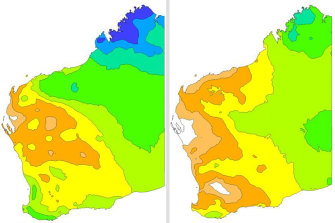
A map from the Bureau of Meteorology showing the average rainfall from November 1 to December 31, 2020 (left) compared to the same period in 2021 (right). Orange areas show lower rainfall in the state’s north in 2021, compared to heavy rain indicated by green and blue regions in 2020. CREDIT:BUREAU OF METEOROLOGY

This year’s rainfall has been well under average, between 0-50 millimetres across November and December, compared to 2-300 millimetres in 2020.

Onslow’s average temperature at this time of year is usually 36.5 degrees, and so the 49-degree temperatures will be more than 10 degrees hotter than usual.

RELATED ARTICLE

Biodiversity
Ocean temperatures set heat records, raising fresh concerns for marine life

“I am sure most people living up there are used to the heat, but with these extremes people should take extra care to stay indoors with air conditioning or, if they have to be outdoors, to stay in the shade and keep up with fluids,” Mr Huntington said.

By 2030, the annual average temperature in the Pilbara is projected to increase by 0.6 to 1.5 degrees.

Although the next few days are predicted to be cooler across Perth, the state capital did experience a heatwave at the end of 2021, with Christmas temperatures reaching well over 40 degrees across most of WA.

It was the hottest Christmas period since records began more than 100 years ago.

Bureau of Meteorology WA state manager James Ashley said the heatwave had been “unusual” and meant even minimum temperatures had remained relatively high.
Work longer, die younger: report shines light on life in the UK's 'left behind communities'

The North East has the highest concentration of left behind areas, where people were 46% more likely to die from Covid

By Graeme Whitfield
Business and Agenda Editor
13 JAN 2022
Fifth Street in Horden, County Durham (Image: Newcastle Chronicle)

People in “left behind” communities in regions like the North East work longer hours and live shorter lives, with more years suffering poor health, a new report has found.

The report - drawn up partly by academics at Newcastle University - found that people living in those areas were 46% more likely to die from Covid-19 than people living in other parts of the country, with ill health costing the country nearly £30bn a year in lost productivity.


The findings have been revealed in a joint report released by the All-Parliamentary Party Group for left behind neighbourhoods and Northern Health Science Alliance, which looks at the 225 areas of England which are ranked in the most deprived areas of the country and the areas with the worst public services.

It finds that in those areas - which are mostly found in the North and the Midlands - life expectancy for men was 3.7 years lower than average and three years lower for women. People in those neighbourhoods can also expect 7.5 fewer years in good health than their counterparts in the rest of England.

All but two of those areas have higher levels of bad or very bad health than the national average, while there is a higher prevalance of high blood pressure, obesity and chronic lung conditions. People living in left behind communities claim almost double the amount of incapacity benefits due to mental health related conditions as in England as a whole.

All-Party group co-chair Paul Howell, Tory MP for Sedgefield, said: “Health is at the forefront of all our minds right now.

“The findings from this report are clear, people living in ‘left behind’ neighbourhoods are overall worse off when it comes to health and something needs to change.”

Co-author Professor Clare Bambra, a public health expert at Newcastle University, said: “Levelling up needs to urgently focus on health inequalities by addressing the unequal conditions in which we live, work and age.

“For too long, a lack of investment in key services has meant that more deprived, ‘left behind’ neighbourhoods – particularly in the North – have suffered disproportionately.

“The Covid-19 pandemic has worsened these inequalities and it will cast a long shadow across our future heath and economic prosperity as a country unless we act now. That’s why levelling up health needs to be central to the Government’s overall approach to levelling up the country.”

County Durham has the highest number of ‘left behind’ neighbourhoods in England at 16, while nine of England’s 20 most vulnerable areas to the Covid pandemic are in the North East.

In the County Durham village of Horden, 29.9% of working age people live with a limiting long-term illness, more than twice the national average.

The report’s authors make a series of recommendations to level up the health inequalities in left behind neighbourhoods, including an increase in NHS funding in more deprived local areas.

Despite being England’s smallest region, the North East has the country’s most ‘left behind’ areas at 54, including Byker and Walker, in Newcastle, the Choppington and Kitty Brewster areas of Northumberland, and Hendon in Sunderland.

Bolsonaro “welcomes” Omicron – angers WHO

Thursday, January 13th 2022 -

WHO's Michael Ryan replied that “no virus that kills people is welcome.”

Brazilian President Jair Bolsonaro Wednesday said the Omicron variant of the SARS-CoV-2 was “welcome” in Brazil, because it “may point to the end of the pandemic.”

“Some studious and serious people, who are not linked to pharmaceutical companies, say that Omicron is welcome and, in fact, may point to the end of the pandemic,” Bolsonaro said in an interview with the Gazeta Brasil website.

Bolsonaro added that the omicron variant, which is causing an increase in COVID-19 cases worldwide, could be dubbed a “vaccine product virus.”

The President has stood out worldwide for his defiant stance in the face of the pandemic, repeatedly calling it “a little flu” despite the more than 600,000 Brazilians who have died from the virus. He has also vowed not to let his 11-year-old daughter be vaccinated against COVID-19.

Omicron has led to a sharp increase in cases in the country, causing infections to exceed 70,000 per day. During most of December, daily cases rarely exceeded 10,000. But while hospitalizations went up, there has not been a similar increase in the need for Intensive Care Units (ICU) beds like in 2021, before vaccines were widely available.

Despite the seemingly milder effects of the variant, medical experts warn that it could still overwhelm hospitals and healthcare systems due to how quickly it spreads. Omicron has become the dominant variant in many places, including the UK, the US, and Brazil.

“Perhaps we have reached herd immunization and I did not get vaccinated,” said Bolsonaro. “There are people who die from other things and they say they died from Covid,” he added.

World Health Organization (WHO) CEO Michael Ryan replied that “No virus that kills people is welcome, especially if death and suffering are avoidable. It is not time to give up, to declare that this is a welcome virus,” said Ryan. “There are many people who are in intensive care rooms with respirators, needing oxygen, who would say that this is not a mild ailment,” he added.

Here’s how scientists pulled off the first pig-to-human heart transplant

The effort involved genetic engineering, an experimental drug, and cocaine

12 JAN 2022
BYKELLY SERVICK
Surgeons examine the genetically engineered pig heart transplanted into a person last week.
UNIVERSITY OF MARYLAND MEDICAL CENTER

Surgeons announced this week they had performed the first transplant of a pig heart to a human. The 7 January surgery was a milestone for research on transplants between species, known as xenotransplantation. It’s still unclear how well or how long the heart will function, but researchers hope the technique can someday make up for a shortage in human organs for ailing patients.

The procedure, done by a team at the University of Maryland School of Medicine (UMSOM), was a major test for several experimental innovations designed to keep the pig heart functioning in a human chest, including 10 genetic changes in the pigs, a novel immunosuppressant given to the recipient, and a cocaine-laced solution used to incubate the heart. Here’s how science and ethical considerations informed the complex procedure.
Why did this patient get a pig heart?

The transplant recipient, 57-year-old David Bennett, had advanced heart failure and a type of arrhythmia called ventricular fibrillation. Because he had not taken steps to control his high blood pressure and other health problems, physicians at the University of Maryland Medical Center and nearby institutions deemed him ineligible for a human heart transplant, says Muhammad Mohiuddin, director of the cardiac xenotransplantation program at UMSOM. “A human organ is considered a very precious thing,” he says. “The main concern was whether to give the heart to a person who may not be able to take care of it.”

Instead, with Bennett’s consent, the UMSOM team sought a “compassionate use” authorization from the U.S. Food and Drug Administration (FDA) to give him a heart from a genetically modified pig created by Revivicor, a biotech company. Mohiuddin and colleagues have worked with pig organs provided by Revivicor for years. In 2016, they reported that pig hearts could remain healthy for more than 2 years when transplanted into a baboon's abdomen, and have since done transplants into baboons’ chests, where the hearts sustain life. In recent experiments, baboons relying on Revivicor’s pig hearts survived up to 9 months, Mohiuddin says. (Those primates died with functioning hearts after contracting lung infections unrelated to the transplant, he says.)

What genes were changed in the donor pig, and why?


Xenotransplantation risks provoking rejection, an immune response in the recipient that can cause the organ from another species to fail. A key problem is that antibodies produced by people recognize certain sugars on the surface of pig cells as foreign. “You really need to get rid of as much antibody binding as you can upfront to get the graft to survive longer,” says Joseph Tector, a transplant surgeon at the University of Miami who was not involved with the new surgery.

So, in one of its lines of engineered pigs, Revivicor knocked out three genes for enzymes that enable pig cells to synthesize those sugars.

Six tweaks were additions of human genes: two anti-inflammatory genes, two genes that promote normal blood coagulation and prevent blood vessel damage, and two other regulatory proteins that help tamp down antibody response.

A final modification removed the gene for a growth hormone receptor to reduce the chance that a pig organ, roughly matched in size to the patient’s chest, will outgrow it once implanted. In September 2021, Mohiuddin and colleagues reported that this modification reduced the growth of pig hearts transplanted into baboons—a change they expect will help prevent heart failure in people.

Were all 10 genetic changes necessary?


That’s not clear, xenotransplantation researchers say. In collaboration with Revivicor, the UMSOM team has studied baboons with progressively more genetic modifications and seen increasing longevity in the hearts. But baboon experiments are costly, and limits on the number of animals in a study make it difficult to test the effects of each modification independently. “We don’t know how much each of those genes is helping,” Mohiuddin says.

That uncertainty is “one of my reservations about this,” says Megan Sykes, a transplant immunologist at Columbia University. “We really do need to do more science … to determine which [modifications] are important and useful.” Certain changes can prove helpful in some types of transplants and harmful in others: Inserting the human anti-inflammatory gene CD47 improved outcomes of bone marrow transplants from pigs to baboons, but pig kidneys with that modification in all of their cells seem prone to inflammation and swelling, she says.

As xenotransplantation scales up to treat more people, the need for consistency might also limit the number of added human genes, Tector notes. He founded the biotech company Makana Therapeutics, acquired by Recombinetics Inc., which is preparing to launch a clinical trial of genetically engineered pig-to-human kidney transplants this year. “The level of expression from animal to animal, even when they’re clones, can be quite different,” Tector says. “If you’re a regulator … you want to say, ‘OK, this kidney is the same as that kidney.’”
Is the patient’s immune system being suppressed?

Even with the modifications to the heart, to prevent rejection, the UMSOM team is giving Bennett a strong immunosuppressant: an experimental antibody drug called KPL-404, made by Kiniksa Pharmaceuticals, Ltd.

Standard immunosuppressants used in human-to-human organ transplants aren’t effective if the immune system makes lots of antibodies against the organ, as surgeons feared would be the case with the pig heart. KPL-404 shuts down production of these antibodies by binding to a cellular receptor called CD40, suppressing the activity of antibody-producing B cells, and inhibiting their cross-talk with T cells that coordinate the immune system’s response to an invader. “The 10 [altered] genes help, but the anti-CD40 antibody, which had been my main focus throughout my career, I think is the game changer,” Mohiuddin says.

Kiniksa has been working on KPL-404 as a treatment for rheumatoid arthritis and announced positive results from a safety trial in healthy volunteers in May 2021.
How was the heart prepared for transplant?

Immune rejection aside, pig hearts transplanted into baboons seem to sputter out in a matter of days unless they’re perfused with a nutrient solution before the transplant, Mohiuddin says. The mechanisms behind the hearts’ failure are unclear, though he speculates that being deprived of blood flow and oxygen when removed from the pig chest somehow depletes the energy-producing mitochondria in the organ’s cells.

The UMSOM team relied on a method developed by Lund University surgeon Stig Steen and commercialized by the Swedish company XVIVO for storing and treating the donor heart after it’s harvested. The heart is bathed in a circulating broth that includes water, hormones such as adrenaline and cortisol—and dissolved cocaine.

How cocaine helps keep the bodiless heart healthy isn’t clear, Mohiuddin says, but its presence in the solution creates a headache when his team imports a new batch from Sweden; each shipment needs a permit from the U.S. Drug Enforcement Administration.
Will more patients get pig hearts now?

The authorization UMSOM received from FDA only applies to one patient. “There’s a chance that if we get another patient like this, we will apply for [another],” Mohiuddin says. But his team’s main goal is to advance the approach into a multicenter clinical trial. The team will have to do more tests showing long-term survival in baboons to get FDA approval for the trial, he says.

“This is not a one-off,” says Revivicor CEO David Ayares of Bennett’s surgery. “We’re going to take this all the way through to human clinical trials, and hopefully have an unlimited supply of donor organs.” The company is constructing a new clinical-grade facility for raising its pigs to meet FDA standards for such a trial, which he expects to launch by the end of 2023.
The Milky Way's central black hole is a powerful, fickle enigma of a void

Sagittarius A is flashing the rest of the galaxy in a way that scientists have yet to fully understand.


Eric Mack
Jan. 12, 2022 

Sag A is at the center of this X-ray image of the Milky Way's galactic nucleus.
NASA/Swift/N. Degenaar

A mysterious monster lies at the center of our galaxy and after intensive study by researchers the supermassive black hole Sagittarius A (Sag A) appears just as unpredictable and chaotic.

An international team analyzed fifteen years worth of data and concluded that Sag A flares irregularly from day to day as well as over the longer term.
"How the flares occur exactly remains unclear," Jakob van den Eijnden, a researcher at the University of Oxford, said in a statement. "It was previously thought that more flares follow after gaseous clouds or stars pass by the black hole, but there is no evidence for that yet. And we cannot yet confirm the hypothesis that the magnetic properties of the surrounding gas play a role either."

Jakob van den Eijnden is co-author of a paper soon to be published in the journal Monthly Notices of the Royal Astronomical Society.

For decades we've known that Sag A is an active, dark maw and a strong source of radio, X-ray and gamma ray emissions. As it roils and presumably consumes everything that comes near it lets off daily flashes of radiation that can be 10 to even 100 times brighter than normal background emissions coming from the black hole.

Supermassive black hole at Milky Way's core gives up a secret
 (images) See all photos


+7 More

The team used observations from NASA's Swift observatory in orbit and were unable to distinguish a pattern in Sag A's flaring activity from day-to-day or over the span of years. For example, the black hole was hyperactive from 2006 to 2008, then relatively quiet until 2012 before seeing an increase in activity again.

"The physical process producing the flares is not fully understood and it is unclear if the flaring rate varies, although some recent works suggest it has reached unprecedented variability in recent years," the paper reads.

Members of the research team say they will request more data and observing time on Swift to continue studying the little understood celestial object, which also happens to be the most powerful force within at least 100,000 light years. Seems worth taking a second look.