Friday, January 28, 2022

Morocco starts construction of anti-Covid vaccine plant


Morocco's King Mohammed VI (C) chairs a ceremony to launch
 the construction of a Covid-19 vaccine manufacturing plant in the region of Benslimane

Thu, January 27, 2022

Morocco on Thursday inaugurated construction of an anti-Covid vaccine manufacturing plant in partnership with Swedish firm Recipharm, the official news agency MAP reported.

The factory to be known as Sensyo Pharmatech will produce vaccines against coronavirus and other diseases, with production expected to reach 116 million units in 2024, MAP said.

It was launched in Benslimane, a region of Morocco's economic hub Casablanca during a ceremony attended by King Mohammed VI, it said.

The plant will need investments of between 400-500 million euros ($445 million-$557 million).

It is aimed at ensuring vaccine "self-sufficiency" for the North African kingdom, MAP said.

Its goal is to make, between 2022 and 2025, "active substances for more than 20 vaccines, three of which would be against coronavirus... to cover 70 percent of the kingdom's needs and more than 60 percent of needs across Africa", the agency said.

Morocco is already producing the Chinese anti-Covid Sinopharm vaccine, with more than three million doses being made per month.

By next month it plans on producing five million doses and more than 20 million by the end of the year.

Home to 36 million inhabitants, Morocco is hoping that its vaccination drive will help eradicate Covid-19. More than 23 million people have already received a second dose against coronavirus, according to the health ministry.

Authorities hope to vaccinate 80 percent of the population with either Sinopharm or Pfizer-BioNTech.

In July, Recipharm said it had signed a memorandum of understanding with Morocco and a consortium of the country's leading banks to build a factory to produce vaccines and biotherapeutics in the kingdom.

As part of the deal, it said in a statement at the time, $500 million would be invested into the project by the Moroccan government and consortium.

"The investment is primarily to supply the African continent and help it gain vaccine sovereignty and access to future biotherapeutics," it said.

ko-agr/hkb/it
Your State Probably Still Allows Forced Sterilizations

California’s reparations program for forced sterilization survivors is an important step—but it's one of 31 states where this can still legally happen.


By Kylie Cheung
JEZEBEL

Last November, a California judge finally freed Britney Spears from her 13-year-old conservatorship, which was originally put in place because she was deemed mentally unfit to care for herself. Spears testified that during her conservatorship, overseen by her father, she had been forced to keep an IUD in despite wanting to have more children.

“Britney’s experience shocked a lot of people, but the horrible reality is it’s not unusual for guardians to have this power over disabled people’s bodily autonomy and reproductive rights,” Ma’ayan Anafi, senior counsel at the National Women’s Law Center, told Jezebel. “What’s unusual was her platform to share this. Most disabled people don’t get to share their stories of experiences like that, and they go under the radar, not recognized as as a major issue.”

According to a new study from NWLC and Autistic Women and Nonbinary Network (AWN), California is one of 31 states and the District of Columbia that continue to allow nonconsensual sterilizations, particularly targeting disabled and incarcerated people and migrants. At the height of the eugenics movement between 1909 and 1979, there were an estimated 20,000 forced sterilizations in California. During roughly this same period, at least 70,000 people in 32 states were subjected to involuntary sterilizations, primarily targeting Black, Indigenous, Latinx, and disabled people, as well as poor people and migrants.

All of this was legal due to the 1927 Supreme Court case Buck v. Bell, which ruled that the forced sterilization of a young disabled woman was constitutional. For decades, states and the federal government allocated thousands of dollars in public funding toward nonconsensually sterilizing populations deemed “undesirable” by the white supremacist eugenics movement.

Starting Jan. 1, survivors of forced sterilizations in California can apply for compensation from a $4.5 million state fund. California’s reparations program for survivors is an important step in the right direction, but it erroneously implies that involuntary sterilizations can no longer happen in the state. Between 2006 and 2010, doctors in California sterilized almost 150 incarcerated women.

Spears’ conservatorship ended just two months ago. Reports about an ICE doctor performing unwanted hysterectomies on migrant women came out in 2020. Still, we often discuss forced sterilizations as if they’re a relic of the past; this distant framing obscures how they remain legal in most states to this day.

“When you look at ways judges, guardians, and others talk about disabled people today, you see narratives persisting from the eugenics era—that disabled people can’t or shouldn’t make their own decisions about their bodies, that the state needs to make these decisions for their own good, that they’re a burden or threat or drain on the public,” Anafi said.

“Far too many disabled people have survived forced sterilization, which is part of a long, sordid history of forcibly sterilizing disproportionate numbers of Black, Native, Mexican/Chicanx, Japanese and Borikén/Puerto Rican women,” Lydia X. Z. Brown, director of policy, advocacy, and external affairs at AWN, said in a statement. “Unfortunately, not enough people know that forced sterilization is still widespread and completely legal.”

Most states threw out their original sterilization laws from the early 20th century shortly after World War II led to public rejection of Nazi ideas like eugenics. But this only paved the way for “a new type of forced sterilization law” that lets a judge decide whether to sterilize someone who can’t give consent, NWLC and AWN’s report says. These laws were passed relatively recently: California’s current law allowing forced sterilizations approved by judges passed in the 1990s, while the most recent laws took effect in Iowa and Nevada in 2019. Only two states—Alaska and North Carolina—explicitly ban forced sterilizations, while all other states are ambiguous on the issue.

Like Spears, people with or perceived to have disabilities can be legally assigned a conservator or guardian, and lose many of their basic rights and bodily autonomy in the process. NWLC and AWN note that conservators often “decide where they live, who they can be friends with, how to spend their money,” and even “what health care they can get”—they can prohibit someone from having an abortion, and seek the approval of a judge to have someone nonconsensually sterilized.

Despite the popularization of the term “marriage equality,” Anafi says disabled people under conservatorships can lose their right to marry (and vote, and care for their own children, for that matter). Disabled people who do get married can lose government support and other life-saving benefits, which can render them dependent on abusive partners. According to the CDC, disabled people are up to 10 times more likely than non-disabled people to face abuse.

An abusive spouse or partner can notably become a disabled person’s conservator, and ask a judge to approve their disabled partner’s forced sterilization. Reproductive coercion, a form of intimate partner violence, is already more prevalent than many realize in general: 15% of women experiencing physical violence from a male partner also reported birth control sabotage. A quarter of adolescent girls have reported that an abusive male partner attempted to nonconsensually impregnate them by interfering with their contraception. And disabled people are even more vulnerable to reproductive coercion from an intimate partner, especially as they’re often infantilized and denied comprehensive sexual health education and resources.

NWLC and AWN’s research shows traditionally “red” and “blue” states alike still have laws allowing forced sterilizations. Yet the issue slips under the radar at least in part because people of color, disabled people, incarcerated people, migrants, and other marginalized groups who are more likely to be targeted by forced sterilizations aren’t always centered in the reproductive rights movement. Anafi notes that widespread forced sterilization laws and the legal war on abortion rights that’s currently front and center at the Supreme Court “both stem from the same culture and policy landscape of reproductive coercion.”

That policy landscape notably includes abortion bans and restrictions supposedly passed out of concern for people with disabilities or people of color, via so-called sex, race, and disability-selective abortion bans. These laws, in addition to anti-abortion politicians’ racist talking points that call abortion “Black genocide,” allow them to “claim they’re acting on behalf of disabled people, of people of color,” Anafi says, “but they’re really attacking the reproductive rights of disabled people and people of color” by policing their reasons for seeking care.

Following 2020 reports about forced sterilizations at ICE facilities, some anti-abortion politicians and leaders offered hollow condemnations. But their movement draws many of its talking points and racist concerns—like its obsession with perceived threats to the white, American birth rate—from the eugenics movement, which regarded the pregnancies and birth rates of people of color and other “undesirable” populations as an existential threat to white civilization. The white nationalist group Patriot Front attended last week’s March for Life rally, echoing its usual “strong families make strong nations” dog whistle.

Across the country, state and federal lawmakers regularly attempt to write reproductive coercion into the law via abortion restrictions, normalizing similar coercive, abusive behaviors among intimate partners, and among conservators and disabled people. So long as the systematic control of marginalized people’s reproductive lives remains as widely accepted as it is, forced sterilization laws will continue to exist in most states with minimal public awareness or protest.

Since Spears first testified about her conservatorship last summer, her testimony that she was prohibited from having children was a wake-up call for many. Anafi hopes now that Spears is free, the vigilant activism and dedication to disability justice issues that #FreeBritney inspired will continue. “It’s really important we take this moment where people are becoming aware of the issues that those under conservatorships face, and turn it into large-scale change, rethinking all the systems and assumptions that allow disabled people to have their rights taken away.”
Gates Foundation adds more members to its board after the billionaires' divorce


Photo by: Elaine Thompson/AP
In this photo taken Feb. 1, 2019, Bill and Melinda Gates are interviewed in Kirkland, Wash.

By: The Associated Press & Scripps National
Posted Jan 26, 2022

The Bill and Melinda Gates Foundation announced Wednesday that it will add four new members to its board of trustees. It's a first for the Seattle-based philanthropic giant, whose decision making has been guided by very few hands since its incorporation in 2000.

Wednesday's announcement means the global charitable group will now have six people to guide its work and its $50 billion endowment. The new additions include Gates Foundation CEO Mark Suzman and Zimbabwean telecoms billionaire Strive Masiyiwa. Also, the African Union's COVID-19 vaccine envoy, economist Minouche Shafik and Thomas J. Tierney, the co-founder and co-chair of the influential philanthropic consulting firm The Bridgespan Group.


As the Wall Street Journal reports, the changes will allow the organization to add more governance, as well as independence, to the foundation, considered one of the world's largest philanthropic organizations. The Bill and Melinda Gates Foundation has an endowment of over $50 billion.

After their divorce, Bill Gates and Melinda French Gates remained co-chairs, but the foundation has not had additional trustees after the death of Bill Gates Sr. in 2020, and another major donor, Warren Buffett. He resigned in 2021, the Wall Street Journal reported.
KGHM gives employees 10% raise
Reuters | January 27, 2022 | 

Image courtesy of KGHM

Polish mining company KGHM Polska Miedz has reached agreement with trade unions to offer workers a 10% wage raise starting this month, the company said on Thursday.


Management’s decision, which follows two rounds of talks with unions, also provides employees with a one-off payout of 2,000 zlotys ($489.49).

“KGHM’s workforce is paid fairly for solid work … For the past several years raises have been significant and we share earned profits with our employees,” CEO Marcin Chludzinski said in a company statement.

KGHM Polska Miedz, one of the world’s biggest copper and silver producers, employs more than 18,500 on average gross wages of 13,500 zlotys a month.


($1 = 4.0859 zlotys)

(By Karol Badohal; Editing by David Goodman)
Biden administration kills Antofagasta’s Minnesota copper project
Reuters | January 26, 2022 

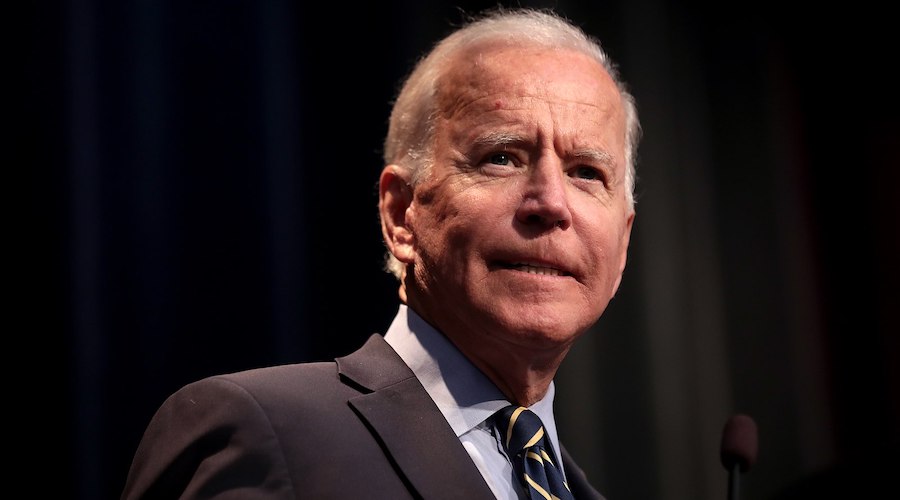
US President Joe Biden. (Image by Gage Skidmore, Wikimedia Commons).

The U.S. Department of the Interior canceled two mineral leases for Antofagasta Plc’s proposed Twin Metals copper and nickel mine in Minnesota on Wednesday, effectively killing the project and handing a major win to environmentalists.


The decision shows President Joe Biden’s administration is increasingly comfortable prioritizing domestic conservation efforts even as demand for minerals used to build electric vehicles rises amid efforts to combat climate change

The leases for the proposed mine in northern Minnesota had first been pulled by then-President Barack Obama’s administration in 2016. But President Donald Trump’s administration reversed that decision.

Biden officials on Wednesday said Trump erred in giving the leases back.


“We found the leases were improperly renewed in violation of applicable statutes and regulations, and we are taking action to cancel them,” said U.S. Interior Secretary Deb Haaland, adding that her department has a responsibility to “ensure that no lessee receives special treatment,” though she did not elaborate.

Twin Metals, which is controlled by Chile’s Antofagasta, said it feels the decision was based on politics and not science.

“We will challenge this attempt to stop our project and defend our valid existing mineral rights. We expect to prevail,” said Twin Metals spokesperson Kathy Graul.

The step was in addition to a plan announced last fall by the White House to impose a 20-year ban on mining in Minnesota’s Boundary Waters region, where Antofagasta hopes to build an underground mine to supply copper for electric vehicles, which use twice as much of the red metal as those with internal combustion engines.

Related Article: To go electric, America needs more mines. Can it build them?

The leases were first granted in 1966 and have been passed between successor companies. No mining has taken place at the site.

Environmentalists have long feared mining would pollute the Boundary Waters Canoe Area Wilderness, a 1 million-acre (405,000-hectare) preserve on the U.S.-Canada border.

“It is heartening to have an administration making decisions with integrity. Twin Metals leases should never have been reinstated in the first place, and this announcement should stop the Twin Metals mine threat,” said Becky Rom of the Campaign to Save the Boundary Waters, a Minnesota conservation group.

Reuters reported last year that Biden aims to look abroad for metal supplies and focus on domestic processing into battery parts. The strategy was a move by Biden to shore up support with environmentalists and counter to his private commitment to miners during the 2020 presidential campaign to allow more domestic mining.

The U.S. Forest Service, part of the Agriculture Department, controls the surface land at the site. The U.S. Bureau of Land Management, part of the Interior Department, controls the underground copper deposit and must approve plans to extract minerals.

(By Ernest Scheyder; Editing by Jonathan Oatis)
How Latin America wastes billions of dollars worth of valuable metals
MINING.COM Staff Writer | January 27, 2022 

Copper wire. (Reference image by Tudor Barker, Flickr).

Latin America has a big opportunity to recover valuable materials from e-waste but has been throwing it into the garbage, according to a new report produced by the Sustainable Cycles Programme, co-hosted by the UN University and the UN Institute for Training and Research.


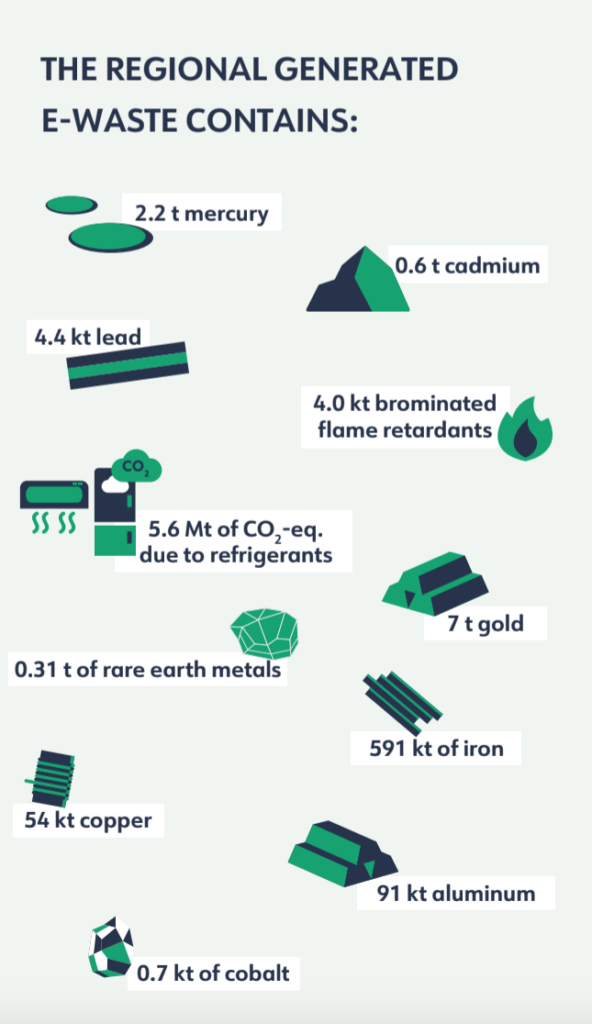
Data compiled for the report show that the e-waste generated regionally in 2019 contained 7000 kilos of gold, 310 kilos of rare-earth metals, 591 million kilos of iron, 54 million kilos of copper, and 91 million kilos of aluminum, representing a total value of roughly $1.7 billion of secondary raw materials.

The dossier also shows that electronic waste in 13 Latin American countries rose by 49% between 2010 and 2019, roughly the world average. The issue is that just 3% was collected and safely managed, a fraction of the 17.4% global average.

In fact, out of the 13 participating countries, only Bolivia, Chile, Costa Rica, Ecuador, and Peru have instituted specific legislation for e-waste and Extended Producer Responsibility (EPR) systems focusing on e-waste regulation. The rest of the countries have some legal and regulatory frameworks for general waste management.
Some figures
Graph from M. Wagner, C.P. Baldé, V. Luda, I. C Nnorom, R. Kuehr, G. Iattoni. Regional E-waste Monitor for Latin America: Results for the 13 countries participating in project UNIDO-GEF 5554, Bonn (Germany), 2022.

In 2019, e-waste generated by 206 million citizens in the 13 countries under scrutiny reached 1,300,000 tons —equal in weight to a 670 kilometers line of fully-loaded 40-ton trucks. The comparable figure in 2010 was 900,000 tons, generated by about 185 million citizens.


The study found that one-third of the region’s e-waste consists of small equipment such as microwaves, grills and toasters, speakers, cameras. The next largest categories are large equipment such as dishwashers, washing machines, ovens, and central heating systems, as well as temperature exchange equipment like fridges, freezers, air conditioners, and heat pumps.

The UN’s assessment determined that while informal recyclers cherry-pick some valuable elements from waste electronics and electrical equipment, 97% is improperly managed and just 3% is known to be collected and treated in facilities using environmentally sound methods.


Of the countries evaluated, Costa Rica has the highest e-waste collection of 8% or 1 kilo per inhabitant of its total e-waste generated, followed by Chile with 5% or 0.4 kg per inhabitant.

In addition to valuable materials, toxic substances were also found in the region’s e-waste. Such substances include at least 2200 kilos of mercury, 600 kilos of cadmium, 4.4 million kilos of lead, 4 million kilos of brominated flame retardants, and 5.6 megatonnes of greenhouse gas equivalents.

These elements “are poorly managed within the region and are likely to be untreated, generating various risks to the stability of a healthy environment,” the report reads.

Given this situation, the document calls on all countries in Latin America to introduce and enforce either a robust legal and policy framework focused on environmentally sound management of e-waste and persistent organic pollutants contained in e-waste, or monitor and reinforce existing systems to make them more efficient and effective.
Chilean Senate commission approves adjusted mining royalty bill
Reuters | January 27, 2022 

Senate of Chile. Credit: Wikipedia.

Chile’s Senate on Thursday pushed forward an amended version of the country’s mining royalty bill, which would raise tariffs on firms operating in the world’s top copper producing nation despite being watered down amid industry pushback.


The upper chamber’s Mining Commission waved through the amended draft, which seeks to address concerns within the copper and lithium industries that higher tariffs will hit Chile’s competitiveness and hurt new investment.

The commission approved the adjusted bill that proposes royalties based on two areas: first the value of gross copper sales and a second calculated according to profitability, similar to the current tax model for the industry.

The commission said the bill would see an ‘ad valorem’ tax corresponding to 1% of annual sales of copper products applied to firms producing under 200,000 metric tonnes of copper per year. Mines producing under 50,000 tonnes would be exempt.


Related Article: Chile’s constitution drafters want to annul mining concessions on indigenous lands


“For companies that produce higher levels, the royalty will be applied depending on the average annual copper price registered according to the prices of the London Metal Exchange,” the commission added.

Chile’s mining industry has strongly opposed plans to raise taxes, arguing that the level is already at its limit. Lawmakers, especially from the leftist opposition, have pushed to increase taxes to bolster funds for social spending.

Leftist President-elect Gabriel Boric, 35, comes into office in March after his strong election victory last year. He does, however, face a divided Congress which is likely to temper any reform plans.

The modified bill includes a sales tax of some 3% for lithium, but excludes contracts signed with a development office in the Salar de Atacama, where the two main current lithium miners Albemarle and SQM operate.

The bill will now move to the Senate Treasury Committee and then will be reviewed in a plenary session of the chamber, to later return to the lower Chamber of Deputies.

“We hope that the Treasury Commission can quickly deal with this initiative and that before March 11 of this year we can send this project into law,” said Senator Yasna Provoste, president of the parliamentary body.

The global price of copper has hit a decade high fueled by expectations about a recovery from the coronavirus pandemic.

In addition to state mining firm Codelco, the world’s top copper producer, multinationals such as BHP, Anglo American, Glencore, Antofagasta Minerals and Freeport operate in Chile.

(By Fabian Cambero; Editing by Adam Jourdan and Paul Simao)
UCC/CUC ARE RIGHT WING NATIONALISTS

'Nightmare': Ukrainians in Canada worry for their home country


Issued on: 27/01/2022

Montreal (AFP) – Worried and helpless, members of the Ukrainian community in Canada are closely following the crisis involving their home country from the other side of the globe.

Many in the community, the second-largest overseas population of Ukrainian origin in the world, are pessimistic about how the increasingly tense situation on the border between Ukraine and Russia will play out.

"Despite all the difficulties, we always hoped that things would progress like a normal European country," said Michael Lichacz, a 77-year-old Montreal resident whose father was Ukrainian.

But the current crisis between Moscow and Kiev is "worse than a nightmare," Lichacz, who was born in Canada but speaks Ukrainian fluently, told AFP while shopping at an Eastern European grocery store.

Hostilities have only grown in recent months as Moscow has been accused by the West of amassing more than 100,000 troops on the border as a lead-up to a potential invasion.

Russia, for its part, has demanded guarantees for its own security, including pushing back on the idea of its neighbor and former Soviet state joining the NATO alliance.

Lichacz says he is so overwhelmed by the circumstances that he still has trouble believing it's all real.

His grandparents were part of the "first wave" of Ukrainian immigrants to arrive in Canada more than a century ago, before the first World War.

The second large influx of immigrants from Ukraine came during the inter-war period of the last century, when they joined already established communities in Canada's central-west region. A third wave came after World War II.

Nearly 1.4 million Canadians, or 3.8 percent of the population, is of Ukrainian origin, the majority of whom were born in Canada.

"We're very nervous about the escalation of aggression by the Russian president and forces," Ihor Michalchyshyn, the head of the community organization Congress of Ukrainian Canadians (CUC), told AFP.

Angel Zytynsky, a third generation Ukranian and deli owner in the Rosemont area of Montreal, Canada, is among several in the community closely monitoring the crisis between their country of origin and Russia Andrej Ivanov AFP

"We're hopeful that Canada will quickly join the growing list of countries that sends weapons, and sanctions the Russian Federation" in response to Russian "aggressions," he said.

"The nightmare scenario for me -- for the world, I think -- is a full-scale, large invasion by Russian air and ground forces," Michalchyshyn said.
'So worried'

Fears over Eastern European relations are just as acute across the country in Alberta, the province that has the second-largest community of Ukrainians in Canada after Ontario.

"I'm feeling so worried," Valentina, who has lived in the city of Edmonton for about a decade and prefers to not share her full name, told AFP. "Everyone is."

"Everybody's understanding who Putin is," she said.

Valentina, who was born in a town 200 kilometers (125 miles) from Kyiv, said she is worried for her brothers and other members of her family who still live there, referencing their fear that the situation will deteriorate further.

"Everybody knows that Russian armies are stronger than other countries," said the 35-year-old, who works at a Ukrainian restaurant in the Alberta capital.

"We have seen the Russian armed forces on the border, and nobody knows exactly what is going to happen," said Michael Schwec, a CUC member in Quebec recalling Russia's 2014 seizure of Ukraine's Crimea.

The Sainte-Sophie Ukrainian Orthodox Cathedral is seen in an area heavily populated by the overseas Ukrainian community in Rosemont, Montreal, Canada Andrej Ivanov AFP

For now, many are still hopeful that diplomatic efforts between NATO allies will pay off, and urge Canada to step up aid to the Ukrainian government.

After announcing a CAN$120 million (84.3 million euros) loan to Ukraine last week, the government of Prime Minister Justin Trudeau said Wednesday that Canada would extend an ongoing military training exercise and send non-lethal supplies such as bulletproof vests and other equipment.

© 2022 AFP
Filipino dictator's son loses 1 of 3 votes on elections bid


FILE - Former senator Ferdinand "Bongbong" Marcos Jr. greets a small group of supporters after filing his certificate of candidacy for next year's presidential elections with the Commission on Elections at the Sofitel Harbor Garden Tent in Manila, Philippines on Wednesday, Oct. 6, 2021 in Manila, Philippines. The son of former Philippine dictator Ferdinand Marcos defeated on Monday Jan. 17, 2022 a bid to disqualify him from the May 9 presidential race but still faces other petitions from human rights victims and others who have raised alarm over atrocities under his late father's rule. 
(AP Photo/Aaron Favila, File) 

JIM GOMEZ
Thu, January 27, 2022

MANILA, Philippines (AP) — One of three Philippine election commissioners handling petitions to disqualify late dictator Ferdinand Marcos’ son from the May presidential polls said Thursday that she voted in favor of the petitions and suspected there were efforts to nullify her vote against the leading candidate criticized by human rights groups.

Commissioner Rowena Guanzon said she voted to uphold the petitions, which sought Ferdinand “Bongbong” Marcos Jr.’s disqualification from the race because of a previous tax conviction. An offense of “moral turpitude” is one of the grounds to bar a candidate from seeking and holding public office.

Two other commissioners, however, have not disclosed their votes on the petitions. A majority vote is needed to either uphold or reject the petitions, most of which were filed by left-wing and anti-Marcos activists.

The 64-year-old Marcos Jr. had already served as a provincial governor and a senator. He has been leading in pre-elections polls to succeed President Rodrigo Duterte.

Any ruling by Guanzon and two other commissioners can be appealed.

Guanzon said she voted against Marcos' candidacy “because he was convicted of an offense involving moral turpitude,” citing his non-payment of taxes for four years starting in 1982, when he was still governor of northern Ilocos Norte province.

Marcos Jr. did not comment immediately.

Last week, another group of election commissioners rejected a separate bid to oust Marcos Jr. from the race. The petitioners in that case said he falsely stated that he had not been convicted of any crime. Guanzon said any decision by the Commission on Elections on his candidacy would most likely be challenged before the Supreme Court.

Guanzon, who is retiring from the commission on Feb. 2, said she disclosed her vote ahead of two fellow commissioners to preempt what she said was an effort to nullify her vote. “I believe there is political interference here,” she said without elaborating. “They think if I retire, my vote will not count, which is not true.”

She tweeted separately without providing details on Thursday: “To whom it may concern: Do not influence the commissioners. And do not try to buy me, threaten me, or seduce me."

The other major contenders for the presidency include Vice President Leni Robredo, an opposition leader who narrowly defeated Marcos Jr. in the 2016 vice presidential race, Manila Mayor Isko Moreno, Sen. Panfilo Lacson and former boxing champion Manny Pacquiao.

The elder Marcos placed the Philippines under martial rule in 1972, a year before his term was to expire. He padlocked Congress and newspaper offices, ordered the arrest of political opponents and ruled by decree.

He was toppled in an army-backed “people power” revolt in 1986. He died in exile in Hawaii three years later without admitting any wrongdoing, including accusations that he and his family amassed an estimated $5 billion to $10 billion while he was in power.

A Hawaii court found him liable for human rights violations and awarded $2 billion from his estate to compensate more than 9,000 Filipinos who filed a lawsuit against him for torture, incarceration, extrajudicial killings and disappearances.

His widow, Imelda Marcos, and her children were allowed to return to the Philippines in 1991. They have made a political comeback, winning seats in Congress and powerful provincial posts that brought them closer to the top job they said was stolen from them.

Marcos Jr. has called the allegations against his father “lies,” angering human rights and pro-democracy activists.

He has joined hands with Davao city Mayor Sara Duterte, Duterte’s daughter, as his vice presidential running mate. Duterte backs his daughter’s run but opposes her pairing with Marcos Jr. and has vowed to never support him.
US Navy officer 'bribed by cash and prostitutes'

Thu, January 27, 2022

A ship in the US Navy 7th fleet, from which dozens of officers were bribed

A US Navy Commander has pleaded guilty to receiving $250,000 in cash and prostitution services from a foreign defence contractor in exchange for state secrets.

Information Commander Stephen Shedd provided to the firm helped it defraud the navy of $35m (£26.1m).

The plea is the latest in the 'Fat Leonard' case, considered one of the worst corruption scandals faced by the navy.

Dozens of officials have been ensnared.

Shedd is one of nine members of the Okinawa-based 7th US fleet indicted by a federal grand jury in March 2017 for their role in the scandal, and the third officer to plead guilty.

According to the Justice Department, Shedd and the other officers received "sex parties with prostitutes and luxurious dinner and travel" in exchange for military secrets and "substantial influence" for the Glenn Defense Marine Asia (GDMA) company, a Singapore-based firm founded by a Malaysian national, Leonard Glenn Francis.

The scandal became widely known as the "Fat Leonard" scheme due to Francis's then-corpulent figure. He was arrested in California after being lured there by US officials in 2013. He has since pleaded guilty to bribery and conspiracy charges and has remained in prison or home detention.

According to prosecutors, information Shedd and others provided helped GDMA to win and maintain contracts and overbill the Navy by $35m for services such as providing tugboats, security and waste removal to ships at port.

As part of a plea deal, Shedd admitted that he and the other defendants gave Francis schedules of naval movements and other information, and lobbied on behalf of GDMA to other naval officials.

The defendant knew these efforts would result in the service paying GDMA's claims, the Justice Department said.

A total of 34 naval officials, defence contractors and GDMA employees, including Francis, have been charged with crimes related to the scheme. Of these, 28 have pleaded guilty, including two other 7th fleet officers.

Shedd is scheduled to be sentenced on 21 July in a California federal court, while the trial of the remaining six 7th fleet officers is due to begin on 28 February.

"Fat Leonard" himself is expected to testify in the February trial of the officers.