It’s possible that I shall make an ass of myself. But in that case one can always get out of it with a little dialectic. I have, of course, so worded my proposition as to be right either way (K.Marx, Letter to F.Engels on the Indian Mutiny)
Monday, March 07, 2022
Mechatronic Reforestation could be a Weapon to Fight Climate Change
Click to print (Opens in new window)
Published March 6, 2022 at 5:00 PM
Brazilian entrepreneur, Marcelo Guimaraes, has invented what he claims is the fastest tree-planting machine on earth. Fast enough, he says, to realistically address climate change. His third-generation version of the planting machine, called Forest Bot, can plant multiple species of trees at a speed of up to 3.600 trees per hour. But the inventor has an even bigger vision. By using even more sophisticated GPS-location technology, ground-penetrating radar, and artificial intelligence that can map each seedling, his fourth-generation autonomous robotic planter is capable of navigating the roughest terrain to rehabilitate ecosystems and is on the fast track to being mass-produced.
Homeless advocacy group calls on Denver leaders to better prepare for winter weather
DENVER — A group of volunteers with Mutual Aid Monday dropped off some much-needed winter gear Sunday morning at a homeless camp ahead of forecasted below-freezing lows overnight this week.
"I don't care why they're out here. Doesn't matter to me. Doesn't matter to us. We just want to stop the suffering," volunteer Kelsang Virya said.
The camp, located at East 19th Avenue and North Grant Street, houses about a dozen people. Among the items the volunteers distributed were coats, blankets, food, water and candles.
"Terracotta pots really work well because they radiate out the heat, so that's really a good, good way to make heaters," Virya said.
For the group, this is the best it can do this time around.
"I hope this is our last cold spell, because people are getting worn down," Virya said.
During the stretch of below-freezing temperatures last month, Denver residents donated more than $20,000 to help house 75 people in hotels and buy winter gear, according to the group. But it's a responsibility Virya says they shouldn't have to take on.
"Where's the mayor? Where's the city council?" she asked Sunday.
In a letter to the city shared with Denver7 Saturday, the group criticized the city's decision to open warming centers halfway through the freezing spell in February and only during the day.
"At night, when people really need to get in and get warm, they didn't even have them open," Virya said.
It's a sentiment shared by District 9 Council Member Candi CdeBaca, who doubted those who needed the warming centers heard about them in time.
"I could tell you story after story. It's just ... I am at this point so frustrated," Virya said.
With temperatures expected to drop below 20-degrees overnight this week, she hopes city leaders are better prepared.
Campaigners, Nations Encourage Japan to Close Ivory Market
March 6, 2022on Campaigners, Nations Encourage Japan to Close Ivory Market
LYON, France, March 6, 2022 (ENS) – Africa’s elephants top a packed agenda for the CITES Standing Committee meeting opening Monday that covers protection for 30+ species of plants and animals. Delegates will consider the live trade in elephants, management of ivory stockpiles, and the closure of domestic ivory markets.
Due to coronavirus restrictions, this is the first in-person meeting of the UN Convention on International Trade in Endangered Species, CITES, since 2019.
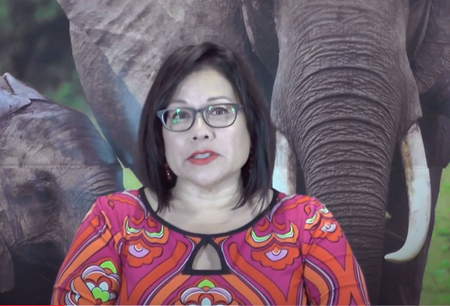
CITES Secretary-General Ivonne Higuero stands in front of elephant sculptures as she speaks to the audience gathered for the Asia Environmental Enforcement Awards, November 13, 2019, UN Conference Center, Bangkok, Thailand (Screengrab from video courtesy CITES)
Ivonne Higuero of Panama, Secretary-General of CITES, said, “The impressive agenda of the Standing Committee is a clear signal of the confidence that Parties and stakeholders are placing on the capacity and capability of the Convention and its entities to contribute to addressing the planetary biodiversity crisis. We are very excited to be able to meet in-person for the first time since CoP18 in Geneva in August 2019.”
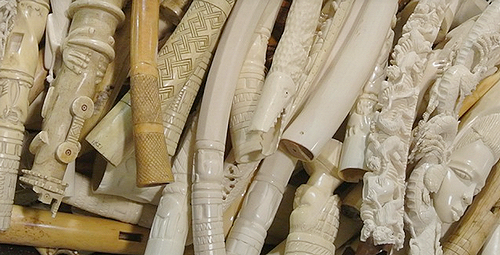
Since a recommendation to close domestic ivory markets contributing to poaching or illegal trade was adopted by CITES back in 2016, most ivory-consuming nations have taken steps to close or nearly close their illegal markets, including the United States, China, Hong Kong SAR of China, the United Kingdom, European Union, and Singapore. Japan still conducts an open ivory market.
The CITES Decision 18.117, adopted in 2019, directs countries “that have not closed their domestic markets in raw and worked ivory are requested to report to the Secretariat for consideration by the Standing Committee…on what measures they are taking to ensure that their domestic ivory markets are not contributing to poaching or illegal trade.”
Japan’s report in response to this Decision states that it “has been implementing stringent measures to ensure that its domestic ivory market is not contributing to poaching or illegal trade.”
But a study released by the Japan Tiger and Elephant Fund, JTEF, in March 2021 finds that such stringent measures have never been implemented. The study found that the scale of Japan’s ivory market is vast. With a stockpile of 244 tonnes, it includes 89 percent of ivory stockpiles in Asia and 31 percent of the world’s ivory stockpiles.
“For years we have documented the Government of Japan’s failure to control its loophole-ridden ivory trade and prevent illegal trade and export,” says JTEF executive director Masayuki Sakamoto. “Nothing has changed.”
Many ivory smugglers purchase products in Japan, where domestic trade is legal, and smuggle them to China, where demand is high.
“There’s clear evidence proving that the legal ivory market of Japan has been facilitating illegal export. Japan must not continue to violate the unanimous decision on closure of domestic ivory markets contributing to poaching or illegal trade by the Convention on International Trade in Endangered Species of Wild Fauna and Flora,” said Sakamoto.
Members of the African Elephant Coalition, 32 African nations dedicated to protecting Africa’s elephants, have lobbied Japan to close its ivory market for years.
Representatives from the governments of Burkina Faso, Liberia, Niger, and Sierra Leone, in letters to Tokyo Governor Yuriko Koike in March 2021, wrote, “From our perspective, to protect our elephants from the trade in ivory it is vitally important that Tokyo’s ivory market be closed, leaving only limited exceptions.”
And now, with the worldwide closure of domestic ivory markets in sight, CITES is backtracking.
In Standing Committee Document 39, the Secretariat recommends that the Standing Committee “invite the Conference of the Parties (which will meet in November) to agree that Decisions 18.117 to 18.119 have been fully implemented and can be deleted.”
The African nation Senegal challenges Japan’s report and notes its disagreement to the Secretariat’s recommendation.
Campaigners from Fondation Franz Weber, the David Shepherd Wildlife Foundation, Environmental Investigation Agency, and Japan Tiger and Elephant Fund will be in Lyon urging CITES parties to oppose this recommendation in order to allow reporting to continue, and will again demand that Japan close its ivory market.
“Africa’s elephants are once again in crisis due to the explosive demand for ivory. African elephants are undeniably in the midst of another poaching crisis. Tens of thousands of elephants are be slaughtered annually in a killing spree fueled by the global demand for ivory,” says the Environmental Investigation Agency, an international NGO with offices in London and Washington D.C.
CITES Issues of Importance Alongside Elephants
The Standing Committee will be looking at pressing issues that include:
assistance to Parties to effectively comply with the CITES Convention through its tools to avoid overexploitation of wild species,
how to track and manage specimens produced through biotechnology,
more concerted action against the illegal trade in endangered species,
work done on reducing global demand for illegally traded animal and plant products
how to better enforce the Convention
The Standing Committee will also consider the contribution that CITES could or should make to help reduce the risk of future zoonotic diseases that may be associated with the international wildlife trade. Zoonotic diseases are those that can be transferred from animals to humans.
The Standing Committee will look at ways to better engage with indigenous people and local communities. “CITES Parties have recognized that the implementation of CITES decisions are better achieved with the engagement of indigenous people and local communities, especially those which are traditionally dependent on CITES-listed species for their livelihoods,” the CITES Secretariat said.
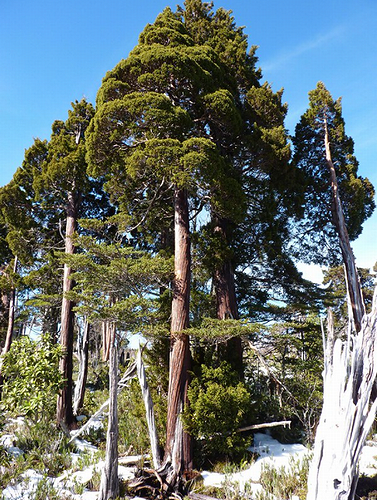
Fitzroya cupressoides, a species of larch listed on CITES Appendix I, which forbids international trade because of its endangered status. August 24, 2011 (Photo courtesy Jardín Botánico Nacional, Viña del Mar, Chile)
A new study on the illegal trade in jaguars will be presented and issues related to tree species, elephants, rhinos, cheetahs, eels, totoaba, marine turtles, seahorses and pangolins will be discussed.
The recent meeting of the Task Force on the illegal trade in CITES-listed trees will report to the Steering Committee. More than 30 percent of the world’s tree species are at risk of extinction and international trade in more than 500 tree species is regulated under CITES.
“Progress can and must be made on implementing and enforcing CITES provisions. We risk losing more and more of the diversity of tree species, with the consequent threat to biodiversity and the ecosystems that sustain human beings, as well as the consequences for climate change,” the CITES Secretariat said.
The Standing Committee gives policy guidance and recommendations to CITES and is holding its five-day meeting ahead of the meeting of the Conference of the Parties in November (CoP19), where all 184 Parties to the Convention will meet in Panama.
CITES is an international, legally binding instrument that must be implemented and enforced by the 184 Parties (183 countries and the European Union) that have agreed to be bound by it. The Steering Committee will consider any measures that it may need to take to help Parties fulfil their obligations to the Convention. This could include trade suspensions for those that may not yet have put in place adequate legislation or carried out the scientific assessments required to authorize trade in listed species or who may be in violation of key provisions of the Convention that ensure trade in CITES-listed species is always sustainable, legal and traceable.
Chair of the Standing Committee is Carolina Caceres of Canada, whose day job is as director of the International Biodiversity department at the federal government agency Environment and Climate Change Canada.
Caceres highlighted the importance of the Steering Committee meeting, saying, “I appreciate the efforts undertaken by all involved in making this meeting happen in Lyon, and I am looking forward to working with Parties and observers on addressing the many important issues on the agenda of the Committee. It will be a critical milestone towards CoP19 in Panama in November of this year.”
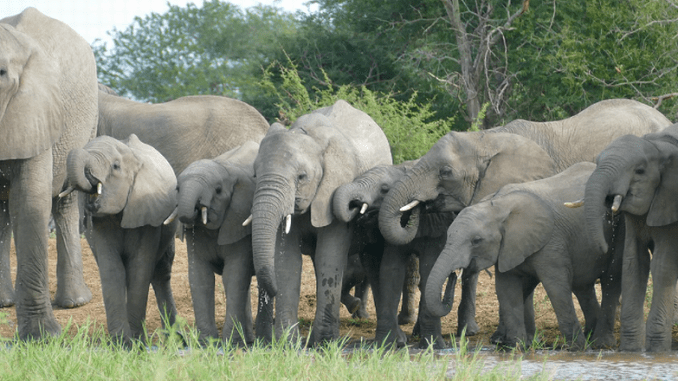
Featured image: Male savannah elephants drinking in Kruger National Park, Mpumalanga, South Africa, February 22, 2022 (Photo by
Southern Highlands commander Chief Inspector Daniel Yangen (left) with Assistant Commissioner (Western) John Kale in Mendi ... ensuring suspects in the torturing and killing of women are arrested. Image: Peter Wari/The National
A Papua New Guinean primary school teacher has been arrested for allegedly torturing a woman with a hot knife in sorcery-related violence in Southern Highlands’ Kagua Erave last year.
Southern Highlands commander Chief Inspector Daniel Yangen said the 35-year-old teacher, from Aiya’s Pawayamo village, was arrested on Monday.
He said the teacher was sighted in Mendi town by an informant who alerted the Mendi Criminal Investigation Department.
The teacher is charged with three counts of murder, two counts of attempted murder and five counts of kidnapping.
Chief Inspector Yangen said the three women who died from the sorcery-torture had been identified as Yondopame Kama, Nancy Gibson and Bale Mana. The two survivors are Magdah Michael and Maria Cedric.
He said the five women were accused of killing a man through sorcery and were held captive on December 4 in Pawayamo village.
Three died from injuries suffered in the ordeal and the two survivors are now under police protection.
Video went viral Chief Inspector Yangen said the teacher was believed to have pressed a hot knife onto the body of Mana who was crying in the middle of video a that went viral on social media. Mana died.
“The teacher was clearly identified in the last part of the video wearing a black round neck shirt, long trousers carrying a bilum bag,” Chief Inspector Yangen said.
“He is armed with a bush knife with his left hand which he used in the middle of the video with a piece of cloth as mask covering his face to protect his identity and [sunglasses] on his head.
“A well-educated man is supposed to educate and refrain people from humiliating innocent mothers and women in public. We will hunt down his accomplices,” Chief Inspector Yangen said.
“The first arrest in the murders was a ward councillor charged under the Summary Offences Act for obstruction of police duties. He is now out on K500 court bail.
“Our next target is the Usa ward councillor. He was the one who assured Deputy Commissioner (Operations) Anton Billie that he would work with the police to identify the suspects, but has gone into hiding.
‘More arrests soon’ “We will continue with investigations and more arrests will be made soon. We will not rest until the uncivilised perpetrators are arrested.”
He said police needed help from the local government presidents, councillors, village court magistrates, women leaders and church groups to provide information to arrest the suspects.
The video of the torture of the women posted on social media prompted urgent police investigations.
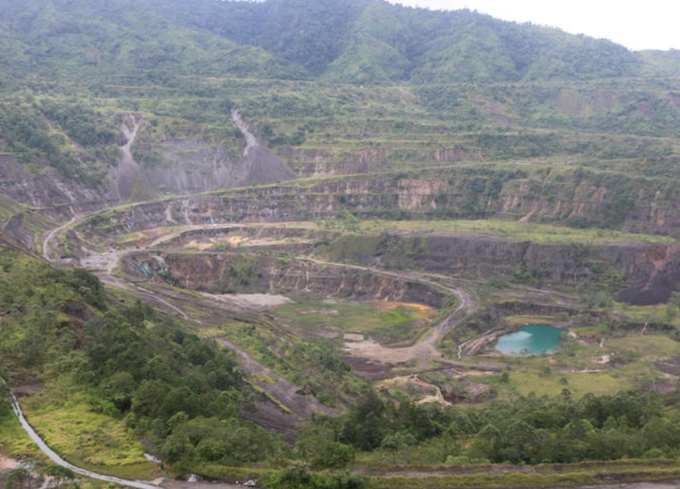
The rich Panguna gold and copper mine - idle for three decades, Bougainville and independence ... the future depends on the skill of the negotiators. Image: Johnny Blades/RNZ Pacific
Last week the Bougainville Autonomous Government announced an agreement had been reach with Panguna landowners to reopen the island’s controversial gold and copper mine.
Once the backbone of the Papua New Guinea economy, Panguna has been idle since the civil war began more than 30 years ago — a war the mine was at least partly responsible for.
But now the leaders of the five major clans in the Panguna area — Basikang, Kurabang, Bakoringu, Barapang and Mantaa — have said they will allow the mine to reopen.
KMcQ: “This is hugely significant. It’s significant for the people of Bougainville, the Bougainville Autonomous Government, the national government, and, dare I say, probably the whole region. But on the other hand, it also creates a huge dilemma for the national government. Panguna was probably the second biggest copper and gold mine in the world, and at one point and accounted for two fifths of Papua New Guinea’s GDP.
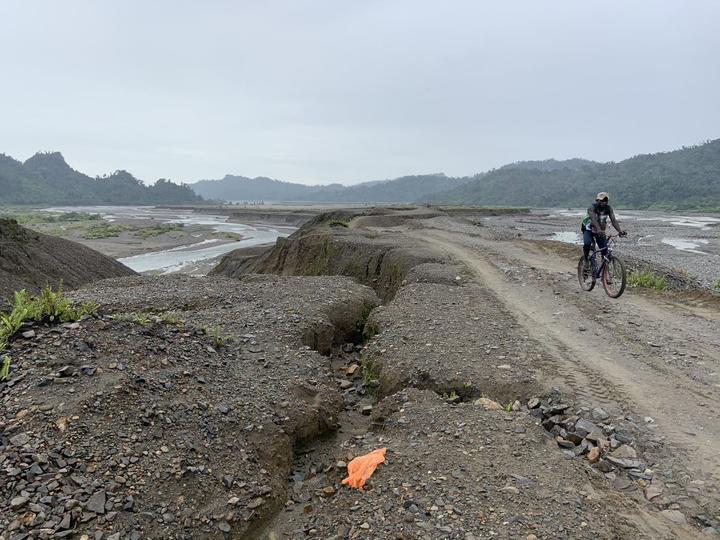
“So when it was operating, that was a huge source of income for the national government. But it wasn’t so much of course, for the people of Bougainville, which prompted the 10 years civil war in part. The other element of that civil war, apart from the poor income that the operators gave the people of Bougainville was the environmental damage to the island of Bougainville.”
DW: President Ishmael Toroama has said that being able to open Panguna again is a critical step on the road to independence, in terms of showing economic viability.
KMcQ: “Yes. And that’s reflected also in the fact that there’s been mounting pressure over the last probably 10 or more years for the mine to open because the generations coming through have had very little in the way of food, shelter, clothing, educational opportunities, so on and so forth. And a lot of that pressure to reopen has come from the younger generation, because they want the opportunities that they know exist.
“For the national government it creates the dilemma of having agreed to discuss Bougainville breaking away, but not wanting to break away. What does it do to keep Bougainville within the fold, because the potential income for not just for Bougainville but for the country as a whole is enormous — 42 percent of GDP when it was operating.
“It may not be as much when it does get back up and running, but it will certainly be a significant contributor to the PNG economy. So where [Prime Minister James] Marape and whoever takes over as prime minister, if he loses the election this year, goes with discussions on Bougainville and its independence is hugely significant for the country as a whole.”
DW: This idea that President Toroama has of it being a conduit to independence may in fact work in the other direction.
KMcQ: “Well, it all depends on the negotiating skills really. The other element that comes into play is that BCL — Bougainville Copper Ltd — is now jointly controlled by the Papua New Guinea government and the Bougainville Autonomous Government, through a company called Bougainville Minerals Ltd. They both own a 36.4 percent share in Bougainville Copper.
“Over the past few years there have been promises from the national government to transfer that 36.4 percent shareholding that the national government has to the people Bougainville, which would give it roughly 72 percent shareholding in Bougainville Copper. It’s never happened.
“The national government has held off transferring that money despite the promises that it would do so. And this is going to be a key negotiating point in the future of independence. The national government, of course, does not want Bougainville to go independent. And there are options. There are other options.
“It’s not a binary choice of either independence or not. It could be that the negotiations see the Bougainville area stay within, if you like the parameters of Papua New Guinea, but having a high degree of independence. But whatever that actually means, nobody’s really going to know until the negotiations finish.”
DW: Yes. So the PNG government could hold on to shareholding and still earn from Panguna. Even if it went to this lesser form of independence.
KMcQ: “Yes, it could. But you can really bet your bottom dollar that if the national government holds on to its 36.4 percent shareholding, which was given to it by Rio Tinto, despite those promises, that will be a matter of a court case.”
DW: Now you talk about a lot of people being very keen to see the mine reopened. But there are also many, many people who certainly don’t want to see it reopen.
KMcQ: “They do but what has given this announcement the impetus is that clan chiefs’ representatives from the five major clans from the area have agreed to this resolution to re-open the mine.
“There will always be opposition to reopening the mine. There always has been, even over the last 10 years, when previous president of Bougainville, Fr John Momis, wanted the mine to reopen.
“There was a significant minority. Well, a vocal minority is probably more accurate, deeply opposed to the reopening of mine on environmental grounds.”
Panguna tailings wasteland … “There will always be opposition to reopening the mine … on environmental grounds.” Image: HRLC/RNZ Pacific
DW: With these announcements the minuscule share price for Bougainville Copper has soared.
KMcQ: “Well, it has doubled on news of this announcement. And it means that BCL has a market capitalisation of around about NZ$260 to NZ$265 or NZ$270 million . The point about the doubling of the share prices is the support that it reflects for the re-opening of mine.
“Plus it also, it paves the way for a company to be a little bit more settled in the prospects of the process of reopening the mine. The last valuation that they had to reopen the mine, which was several years ago now, said that it would cost between around about NZ$6 billion to reopen the mine. But over its lifetime, it would earn roughly $75 billion.
“So it’s a high risk, high reward investment. But the fact that this resolution has been made, declared, share prices doubled. It means that Bougainville Copper is probably a lot more confident this week than it was last week that it could go ahead and do some preparatory work for the reopening of the mine, which could take five to seven years.”
DW: They are just eyewatering figures aren’t they?
KMcQ: Well, it shows the potential. I mean this is a mine that was the second biggest gold and copper mine in the world. And there will be a lot of companies, global companies keen to get involved. Rio Tinto has put its fingers into the air and sniffed the wind and it realises that this could finally happen.
DW: You mean Rio Tinto is lining up to to work with its former company?
KMcQ: “Well, it certainly looks that way. In 2016, because of the criticism that Rio Tinto had, or was receiving because of the huge environmental damage that it caused to the Bougainville area, it gave away its mine.
“It had a choice of either fixing up the environment or walking away, as it saw it. So it walked away — gave those shares equally to the Bougainville government and the national government. But now it wants to get back involved.
“And over the last week it has been talking about repairing some of the environmental damage that it caused during the mine’s operation. But there are other companies involved around the world, which could get involved.
“I’m thinking Glencore, the Swiss-based development company could get involved as well. Now, the reason why this is important is because BCL does not have the financial wherewithal to go and reopen the mine at a cost of $6 billion.
“And it’s only gotten roughly NZ$260 million in play. And really, it doesn’t have the expertise to reopen the mine, develop it, run it. It would have to go into partnership with one of the big mining companies Rio Tinto, or Glencore, or somebody else.
“The former president, Sir John Momis, had negotiations or had talked to China about the possibility of a Chinese company moving in and developing the mine. So in the current climate of debate around China’s role in South Pacific, one has to wonder just what impact that might have on the Australian, New Zealand, American governments.”
This article is republished under a community partnership agreement with RNZ.
Wenda backs urgent UN call for action over Papuan child killings, disappearances
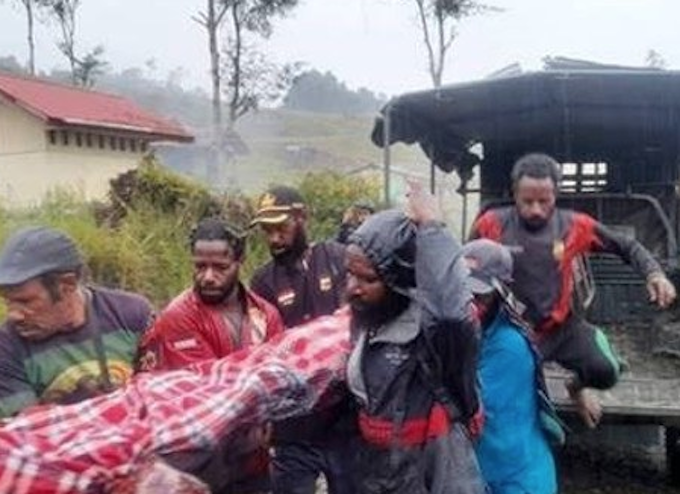
Relatives of a 12-year-old Papuan boy and residents carry his body to be cremated in Sinak, a district of Puncak regency in Indonesia’s Papua region last month. Image: Benar News
A West Papuan leader has praised the “bravery and spirit” of Ukrainians defending their country against the Russian invasion while condemning the hypocrisy of a self-styled “peaceful” Indonesia that attacks “innocent civilians” in Papua.
Responding to the global condemnation of the brutal war on Ukraine, now into its second week, United Liberation Movement for West Papua (ULMWP) interim president Benny Wenda highlighted a statement by United Nation experts that has condemned “shocking abuses” against Papuans, including “child killings, disappearances, torture and mass displacement of people”.
Wenda also stressed that the same day that Indonesia’s permanent representative to the UN said that the military attack on Ukraine was unacceptable and called for peace, reports emerged of seven young schoolboys being arrested, beaten and tortured so “horrifically” by the Indonesian military that one had died from his injuries.
“The eyes of the world are watching in horror [at] the invasion of Ukraine,” said Wenda in a statement.
“We feel their terror, we feel their pain and our solidarity is with these men, women and children. We see their suffering and we weep at the loss of innocent lives, the killing of children, the bombing of their homes, and for the trauma of refugees who are forced to flee their communities.”
Wenda said the world had spoken up to condemn the actions of President Vladimir Putin and his regime.
“The world also applauds the bravery and spirit of Ukrainians in their resistance as they defend their families, their homes, their communities, and their national identity.”
Russian attack unacceptable Wenda said Indonesia’s Permanent Representative to the UN, Arrmanatha Nasir, had stated that that Russian attack on Ukraine was unacceptable and called for peace. He had said innocent civilians “will ultimately bear the brunt of this ongoing situation”.
“But what about innocent civilians in West Papua? asked Wenda.
“At the UN, Indonesia speaks of itself as ‘a peaceful nation’ committed to a world ‘based on peace and social justice’.
“This, on the very same day that reports came in of seven young boys, elementary school children, being arrested, beaten and tortured so horrifically by the Indonesian military that one of the boys, Makilon Tabuni, died from his injuries.
“The other boys were taken to hospital, seriously wounded.”
“These are our children that [Indonesian forces are] torturing and killing, with impunity. Are they not ‘innocent civilians’, or are their lives just worth less?”
Urgent humanitarian access Wenda said that this was during the same week that UN special rapporteurs had called for urgent humanitarian access and spoken of “shocking abuses against our people”, including “child killings, disappearances, torture and mass displacement of people”.
This was an acknowledgement from the UN that Papuan people had been “crying out for”.
Wenda said 60-100,00 people were currently displaced, without any support or aid. This was a humanitarian crisis.
“Women forced to give birth in the bush, without medical assistance. Children are malnourished and starving. And still, Indonesia does not allow international access,” he said.
“Our people have been suffering this, without the eyes of the world watching, for nearly 60 years.”
In response, the Indonesian Ambassador to the UN had continued with “total denial, with shameless lies and hypocrisy”.
“If there’s nothing to hide, then where is the access?”
International community ‘waking up’ Wenda said the international community was “waking up” and Indonesia could not continue to “hide your shameful secret any longer”.
“Like the Ukrainian people, you will not crush our spirit, you will not steal our hope and we will not give up our struggle for freedom,” Wenda said.
The ULMWP demanded that Indonesia:
Allow access for the UN High Commissioner for Human Rights, and for humanitarian aid to our displaced people and to international journalists;
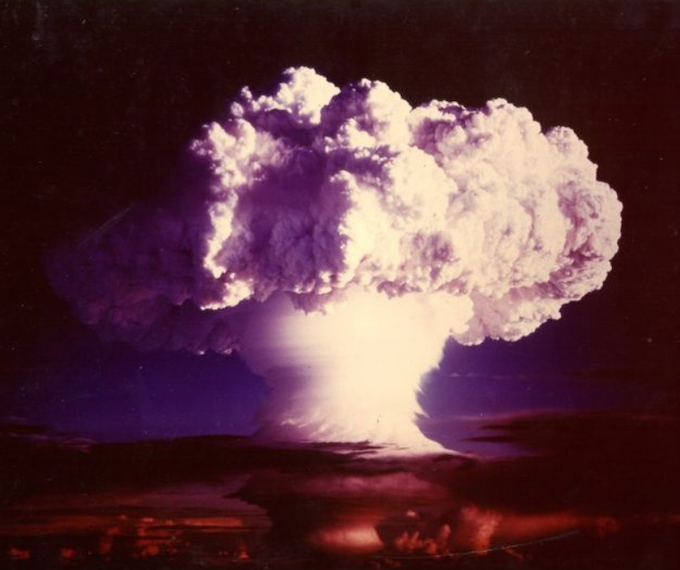
Ivy Mike was an atmospheric nuclear test conducted at Enewetak Atoll on 1 November 1952. It was the world's first successful hydrogen bomb. Image: RNZ/Public domain
Three members of the United States Congress have introduced a resolution to recognise the legacy of US nuclear testing in the Marshall Islands.
Congresswoman Katie Porter along with Senators Mazie Hirono and Ed Markey brought in the resolution to coincide with Nuclear Victims Remembrance Day on March 1.
On 1 March 1954, the US exploded the biggest of its dozens of nuclear tests in the Marshall Islands, a country that is still measuring the impacts.
Congresswoman Porter, who is from California’s Orange County said it was “fortunate to be enriched by one of the oldest Marshallese American communities, but the reason the Marshallese came to the United States remains one of the darkest chapters in our history”.
She said: “Our government used the Marshallese as guinea pigs to study the effects of radiation and turned ancestral islands into dumping grounds for nuclear waste.
“By finally taking responsibility for the harm we caused, the United States can send a powerful signal in the region and around the world that we honor our responsibilities and are committed to the Indo-Pacific region,” Congresswoman Porter said.
The United States conducted 67 atmospheric nuclear weapons tests in the Marshall Islands from 1946 to 1958 while the US was responsible for the welfare of the Marshallese people.
Most powerful test These tests had an explosive yield equivalent to roughly 1.7 Hiroshima-sized bombs every day for 12 years.
The most powerful test took place on 1 March 1954, when the United States detonated a hydrogen bomb over Bikini Atoll. The damage and displacement from these tests in part drove Marshallese migration to the United States, including to Orange County.
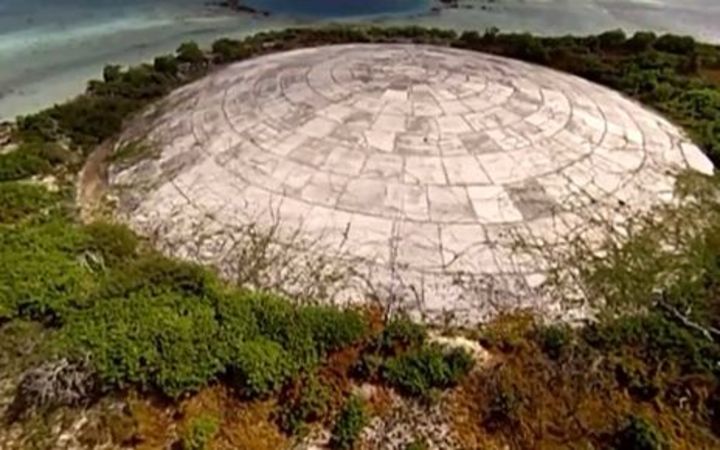
The Runit Dome was constructed on Enewetak Atoll in the Marshall Islands during 1979 to temporarily store radioactive waste produced from nuclear testing by the US military during the 1950s and 1960s. Image: RNZ
The United States is currently negotiating to extend its Compacts of Free Association with the Republic of the Marshall Islands, as well as the Republic of Palau and the Federated States of Micronesia.
These agreements give the United States control over an area of the Pacific Ocean the size of the continental United States, stretching from Hawaii to the Philippines, in exchange for modest economic assistance and access to certain federal programmes.
Senator Hirono from Hawai’i said: “The United States’ nuclear testing programme in the Pacific led to long-lasting harms to the people of the Marshall Islands.”
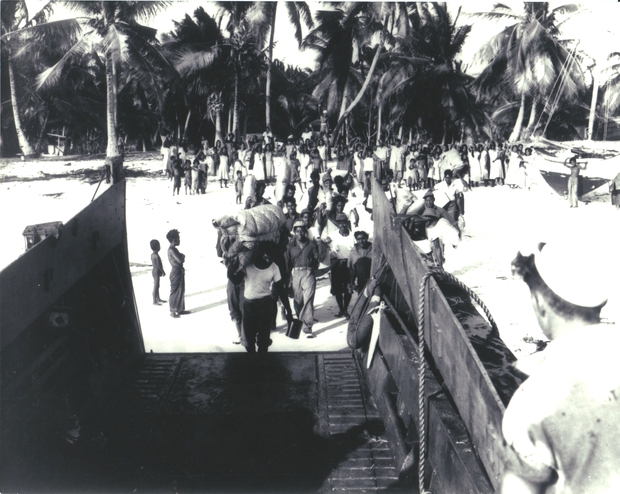
Bikinians in the Marshall Islands being evacuated from their home island after nuclear testing in the area by the United States. Image: US Navy/RNZ
Bikinians in the Marshall Islands being evacuated from their home island after nuclear testing in the area by the United States. Photo: US Navy
Senator Markey said “a formal apology is long overdue to the Republic of the Marshall Islands for the harmful legacy of U.S. nuclear testing.”
He said,”the resolution calls on the United States to prioritize nuclear justice in its negotiations with the Marshall Islands on an extended Compact of Free Association and to help Marshallese battle the existential threat of the climate crisis.”
This article is republished under a community partnership agreement with RNZ.
Doctor Gets 2 Years in Prison for Taking Pharmaceutical Company's Bribes
(AP)
By Nick Koutsobinas | Sunday, 06 March 2022 0
A Colorado physician who owned and operated a rehab facility was sentenced to two years in prison for taking $344,000 in bribes or "kickbacks" from a pharmaceutical company while prescribing its fentanyl-based spray product to drug rehab patients.
CBS 4 Denver reports that Dr. Jeffrey Kesten, 61, was sentenced Feb. 28 to 24 months in federal prison by a Denver federal judge.
According to the grand jury's indictment, Kesten was charged for conspiring with employees of Insys Therapeutics, a company accused of playing a role in the opioid epidemic, and supplying rehab patients with Subsys, a powerful sublingual fentanyl-based spray originally used to treat pain in cancer patients
"As the number of speaker programs for which [Insys Therapeutics] paid Kesten increased, so did the number of prescriptions he wrote for the Fentanyl Spray," the indictment reads.
From late 2012 to 2015, Kesten was paid as a "national speaker" by the pharmaceutical company. He presented at nearly 100 events, 16 of which were held at his own rehab facility, Red Rocks Center for Rehabilitation. In some cases, when Kesten was speaking, only two people were in the audience.
When Kesten wanted to be paid for more speaking engagements, he allowed a sales rep associated with Insys "access to his patient files" and the authority to "[review] his patient schedule with her to facilitate identification of patients for whom he could prescribe [Subsys]."
Members of the clinic's staff began to notice that as the number of Kesten's speaking engagements began to increase, so, too did the number of fentanyl prescriptions.
U.S. Attorney Cole Finegan later commented in a press release, "you have to be able to trust your doctor's medical judgment. We'll hold physicians and medical professionals accountable for taking bribes and kickbacks, especially when they are prescribing powerful drugs to vulnerable patients."
The Colorado Medical Board suspended Kesten's medical license after it had found that in May of 2020 he prescribed a 32-year-old patient pain medication even after assessing the patient as having "drug-seeking" behavior and evidence of drug abuse history.
"As we've seen over the past several years fentanyl abuse has become an existential threat across the nation," DEA Denver Acting Special Agent in Charge David Olesky commented.
"There is no greater threat to our community than a doctor who violates a patient's trust with no regard to patient safety and well-being beyond what profits it can bring him. We applaud this sentencing and will continue to work with our counterparts in the U.S. Department of Health and Human Services Office of the Inspector General and the U.S. Attorney's Office to ensure other doctors who manipulate the system will be held accountable."