Friday, June 10, 2022

THE STATE IS THE HOOLIGAN
Champions League chaos caused ‘severe damage’ to France’s image: government report


Liverpool’s Mayor Steve Rotheram is displayed on a screen during a senate hearing on the incidents at the Stade de France during the UEFA Champions League final, at the French senate in Paris, on Thursday. 

AFP
June 10, 2022

The 30-page report did not point fingers at the police or other actors in particular for the mayhem


The report recommended the creation of a national committee to pilot major international sporting events

PARIS: A chain of “failures” by French authorities marred the chaotic Champions League football final in Paris on May 28, inflicting “severe damage” on the image of the country, a government report said Friday.

The scenes at the Stade de France “raised questions from outside observers about our country’s ability to deliver and succeed in the major sporting events for which we will soon be responsible” said the report, as Paris prepares to host the 2023 Rugby World Cup and 2024 Olympics.

But the 30-page report did not point fingers at the police or other actors in particular for the mayhem that marred the final between Real Madrid and Liverpool, emphasising the extraordinary nature of the situation

The author of the report, Michel Cadot, the government’s inter-ministerial envoy for Olympics and other major sporting event preparations, wrote the triggering factor was the “uncontrolled influx of additional members of the public without tickets or with fake ones, in unprecedented proportions.”

But Cadot said Interior Minister Gerald Darmanin’s initial claim that as many as 40,000 Liverpool fans who massed at the stadium were to blame for the chaos should be “relativised.”

The report recommended the creation of a national committee to pilot major international sporting events, similar to the one already created for the Olympics.

“Prime Minister Elisabeth Borne has asked the interior and sports ministers to take up the recommendations to put them in place without delay,” the prime minister’s office said in a statement.
'This Is Terrifying': Explosion at Texas Gas Plant Spotlights Threat of LNG Industry

"We shouldn't have to live in fear just so gas executives like Michael Smith can get rich," said one local resident, referring to Freeport LNG's CEO.


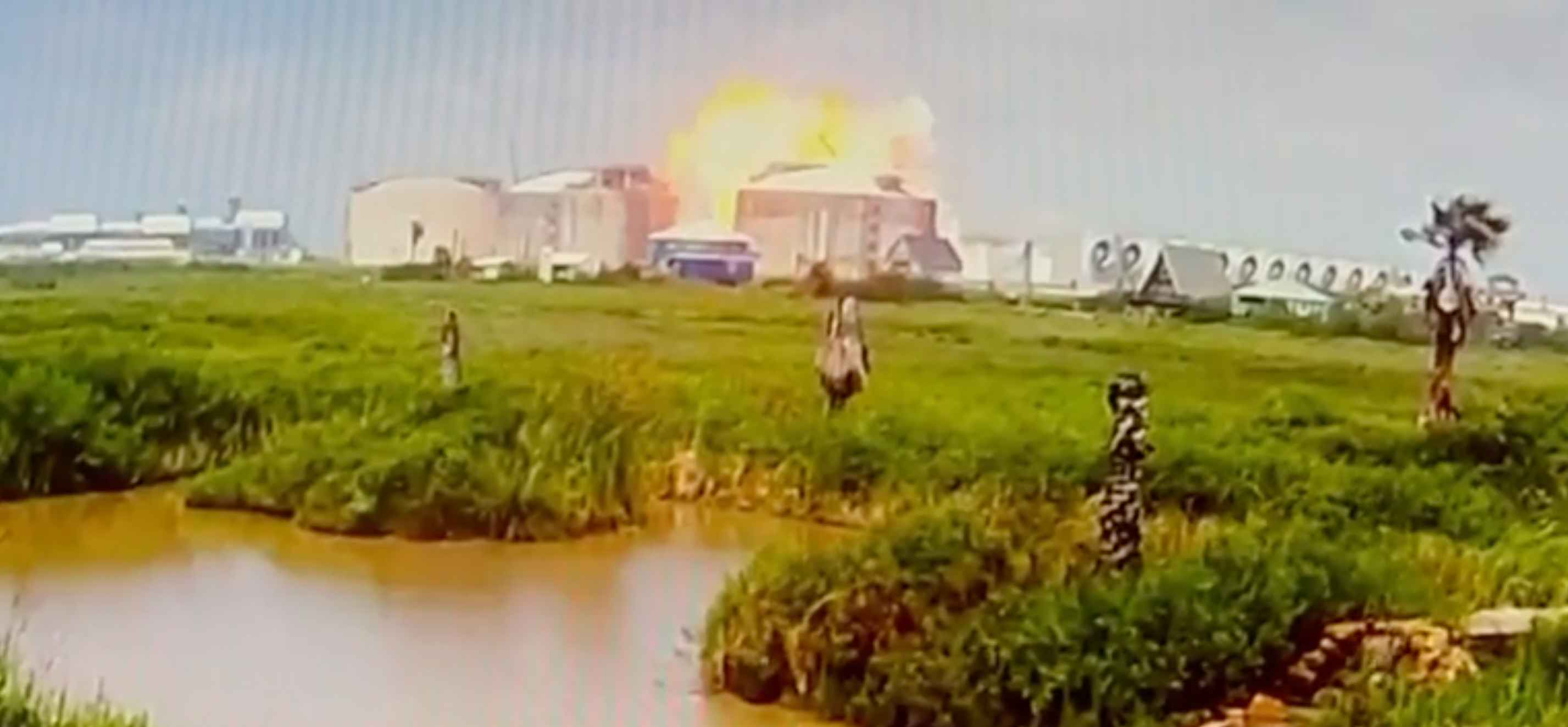
Surveillance footage captures the explosion at the Freeport LNG plant on Quintana Island in Texas on June 8, 2022. (Photo: Quintana Beach County Park/Facebook)

JAKE JOHNSON
June 9, 2022

An explosion at a major liquefied natural gas plant in Texas on Wednesday heightened fears of pollution and other impacts in nearby communities—and served as the latest example of the threat the booming LNG industry poses to the climate.

"Freeport LNG really doesn't care about us. This is not the first fire."

The blast at Freeport LNG's export terminal on Texas' Quintana Island was reported around noon local time, and no injuries have been disclosed. Authorities said the fire and "release" from the explosion were swiftly contained and that an investigation into the cause is underway, but local residents voiced concern that they're going to be kept in the dark.

"This is terrifying," said Melanie Oldham, founder of Citizens for Clean Air and Clean Water in Brazoria County, where the Freeport LNG facility is located. "We've been afraid of a disaster happening ever since Freeport LNG started exporting gas. We shouldn't have to live in fear just so gas executives like [company CEO] Michael Smith can get rich."

"This is dangerous business," Oldham added. "What kind of air monitoring are they doing out there? Will they even be able to tell what the explosion released? And will they tell us? Thankfully it looks like none of the workers or anyone else was injured or killed. We may not be so lucky the next time there's an explosion at this plant, or any of the polluting facilities surrounding us, for that matter."

Surveillance video footage posted to Facebook by Quintana Beach County Park appears to show the first moments of the explosion, which reportedly shook nearby buildings.

"I saw it blow up from my job site—biggest fireball I've ever seen," said one Freeport resident.

The facility, one of the largest LNG export plants in the United States, is expected to shut down for at least three weeks in the wake of the explosion and fire, injecting further chaos into global energy markets already roiled by Russia's war on Ukraine.

One industry analyst told Reuters that the temporary shutdown will likely take 1 million tonnes of LNG off the market.

But Harold Doty, who lives on Quintana Island, warned that "there is still no emergency action plan for that plant" despite Wednesday's explosion.

"Originally, the plant said that people on the island should go to the beach and have the Coast Guard pick them up in boats," said Doty. "Freeport LNG really doesn't care about us. This is not the first fire. There are often fire alarms at the plant that I can hear from my house. I can never get any explanation when I call, so I've quit calling."

The explosion came as U.S. LNG exports to Europe are surging as part of the Biden administration's plan to help E.U. nations wean themselves off Russian fossil fuels. According to federal data released this week, U.S. LNG exports averaged 11.5 billion cubic feet per day during the first four months of this year, an 18% jump compared to the 2021 annual average.

While the fossil fuel industry often characterizes LNG as a more climate-friendly alternative to coal and other dirty energy sources that are driving global warming, environmentalists stress that LNG is a major emitter of methane—a greenhouse gas roughly 80 times more potent than carbon dioxide.

"In the United States, natural gas accounts for more than one-third of carbon emissions and almost half of methane emissions," notes Marisa Guerrero of the Natural Resources Defense Council.

In a statement Wednesday, Citizens for Clean Air and Clean Water in Brazoria County and the Texas Campaign for the Environment said that "the oil and gas industry has been benefiting from an 'export boom' that is sending gas and crude oil overseas in record amounts, but has resulted in leaks, explosions, and wrecked communities back home—from flaring and pollution in the Permian Basin to explosions like the one today on Quintana Island."

"Officials rarely disclose the contents of the tanks that explode, leaving local residents to just have to wonder whether or not they are in danger," the groups continued. "The boom is also jeopardizing global climate agreements, as the window to rein in emissions is closing."


Freeport LNG Fire Cuts Key Source Of U.S. Gas Supply To Europe, Asia

By Marwa Rashad
06/09/22 
Model of LNG tanker is seen in front of the EU flag in this illustration taken May 19, 2022. 
 Photo: Reuters / DADO RUVIC

By Marwa Rashad

LONDON (Reuters - An at least three-week shutdown at Freeport LNG, operator of one of the largest U.S. export plants producing liquefied natural gas (LNG), is expected to delay cargoes to Europe, further stressing the continent's drive to phase out Russian gas.

The outage at the plant, which provides around 20% of U.S. LNG processing capacity, began with an explosion at its Texas Gulf Coast facility on Wednesday. It has triggered alarm bells among players in market already struggling with reduced Russian supplies and resurgent demand in Asia.

The plant historically sent most of its cargoes to Japan and Korea, but the outage will affect Europe, which has been pulling U.S. cargoes from the east because of the higher prices. Russia's invasion of Ukraine - actions that Moscow calls a "special military operation" - shifted flows to Europe from Asia.


A three-week shutdown will mean the loss of around 13-15 cargoes, although Europe should be able to make up its losses from gas storage. But the risk remains if the shutdown extends for a longer period, said analysts.

"An outage for three weeks minimum is a loss of around 940,000 tonnes of LNG. If you took an average cargo size around 70,000 tonnes, that's about 13 cargoes," said Alex Froley, LNG analyst at data intelligence firm ICIS.

The outage coincides with Nord Stream 1 maintenance and some Norwegian gas maintenance measures; however the market might be able to deal with it by withdrawing some volumes from storage potentially, said a person familiar with the market.

"If the outage lasts months rather than weeks, the total loss can be much greater, and Europe's more comfortable inventory situation will not be quite as reassuring. We would then expect the strong European LNG price premium over Asia to return," said Tamir Druz, managing director at Capra Energy.

The news has initially sent U.S. natural gas futures down as much as 14% as traders anticipated the outage would free up supplies and help rebuild U.S. storage for winter demand.

However, prices recovered later on Thursday and were up about 2% as the market focused more on high air conditioning demand from a heatwave blanketing parts of the United States, especially Texas. [NGA/]

In Europe, gas prices rose by up to a fifth on Thursday morning on fears lost U.S. shipments would stress a market already struggling with reduced Russian supplies. Prices cooled off at the market close. [NG/EU]

Japan-Korea-Marker (JKM) prices - which are widely used as a benchmark for Asian LNG - also rose, with The Platts JKM LNG assessed at $23.486 per metric million British thermal units (mmBtu) on Thursday, an increase of $1.694, or 7.8%, from the previous day.

FREEPORT'S BUYERS


BP, TotalEnergies, Osaka Gas, Japan's biggest power generator JERA and South Korea's SK Gas Trading are listed as the buyers of Freeport LNG cargoes, industry sources said. BP has the largest contract at 4.4 million tonnes per annum through 2040.

Japan typically imports 6-7% of its total LNG supply from the United States during June, with LNG from Freeport accounting for at least half of the volume, said Kpler gas and LNG analyst Ryhana Rasidi.

South Korea has imported an average of about 20% of its LNG from the United States in June over the last two years. It could potentially lose at least 0.13 million tonnes of LNG, about 17% of its consumption, from the facility, she said.

In March, 21 cargoes loaded at the Freeport facility, carrying an estimated 64 billion cubic feet of gas to destinations in Europe, South Korea and China, according to the U.S. Department of Energy. That was up from 15 cargoes in February and 19 in January.

Around 70% of Freeport's monthly supplies in the past few months went to the European Union and Britain. France, Britain, Turkey and the Netherlands have been the biggest European importers from Freeport LNG this year, industry sources said.

"Of 14 Freeport cargoes arriving at destinations in May, 10 of them went to Europe, two to Asia and two to the Americas." Froley said. (Graphic: Freeport exports by destination -
CRIMINAL CRYPTO CAPITALI$M
Terra Controversy Continues: TFL Employee Under Investigation In Korea For Allegedly Stealing Bitcoin

By Nica Osorio @techcentrik
06/09/22 

KEY POINTS

Terraform Labs already bogged by collapse of Terra's UST and LUNA

Authorities did not reveal the amount of Bitcoin involved in the embezzlement
LUNA was trading down 14.99% at $2.94


As Terraform Labs (TFL) tries to wiggle out of the phenomenal fall of its token by creating a new Terra blockchain and LUNA 2.0, it is being haunted by further controversy. A report from South Korea claims that a TFL employee is now under investigation for allegedly stealing not LUNA but Bitcoin (BTC) from the company's coffers.

Terraform Labs, including its CEO Do Kwon, and all of its employees are being investigated by the South Korean government following the crash of Terra's algorithmic stablecoin UST and native token LUNA. While the probe is still ongoing, the Seoul Metropolitan Police Agency has accused one of Terraform Labs employees with embezzlement of Bitcoin.

The employee was allegedly found stealing Bitcoin, the corporate fund of Terra and LUNA, in May 2021, a local news site claimed. The allegation, which apparently came from an "intelligence source," was relayed to the authorities last month.

Terra UST Photo: Terra - Twitter

"It was intelligence about an employee’s personal embezzlement," the South Korean Police reportedly said. Because of this turn of events, authorities requested a crypto exchange platform to freeze the funds involved in the alleged embezzlement.

So far, it appears that the TFL employee acted on their own in regards to the alleged crime. The South Korean police did not reveal the amount of Bitcoin stolen or if this issue is connected to TFL's CEO Kwon.

Last month, the Seoul Metropolitan Police Agency requested major crypto platforms to restrict Luna Foundation Guard (LFG) from taking any action. This was due to recently discovered clues seemingly pointing at the possible embezzlement of funds linked to the organization.

However, the request is not a demand and not enforceable by law, which means cryptocurrency exchange platforms may or may not heed it. Investigation into the collapse of LUNA and UST is still ongoing in South Korea.

LUNA 2. 0, the native token of the new Terra blockchain launched last month, is having a hard time getting its price up. LUNA was trading down 14.99% at $2.94 with a 24-hour volume of $719,545,623 as of 2:04 a.m. ET on Thursday, as per CoinMarketCap's data.
Prosecutor Seeks Jail Terms Over Banksy Work Theft From Paris Attack Site


By AFP News
06/10/22 

French prosecutors on Friday sought prison terms for eight men accused of stealing a Banksy artwork painted on the door of the Bataclan concert venue in Paris to honour 90 people killed in the 2015 terror attacks.

The seven French defendants and one Italian are suspected of removing the metal door from the building before dawn in January 2019 and transporting it to Italy.

It was decorated in 2018 with the stencil of a mournful young woman by the anonymous British street artist, giving it an estimated value of up to one million euros ($1.1 million).

Prosecutor Valerie Cadignan told the court Friday that the three men who had confessed to the theft should be given three or four years.

She said the suspected mastermind of the heist, Mehdi Meftah, should be sentenced to three years in prison with an additional three-year suspended sentence, and fined 150,000 euros.

The prosecutor recommended 18-month prison sentences or more for the others.
"The theft of the door sparked much emotion and great disruption of public order," the prosecutor told the court.

She acknowledged that the perpetrators had not sought to debase the memory of the attack victims, but "being aware of the priceless value of the door were looking to make a profit".

The work was found in an abandoned farmhouse in Italy
 Photo: AFP / Filippo MONTEFORTE

She said the thieves "acted like vultures, like people who steal objects without any respect for what they might represent".

A white van with concealed numberplates was seen stopping on January 26 in an alleyway running alongside the Bataclan in central Paris.

Many concertgoers fled via the same alley when the Bataclan became the focal point of France's worst ever attacks since World War II, as Islamic State group jihadists in November 2015 killed 130 people at a string of sites across the capital.

Three of those on trial, in their 30s, confessed to the theft when they were arrested, though two said they were only carrying out the orders of Meftah who was not present when the door was removed.

On the morning of the theft, three masked men climbed out of the van, cut the hinges with angle grinders powered by a generator and left within 10 minutes, in what an investigating judge called a "meticulously prepared" heist.

Investigators pieced together the door's route across France and into Italy, where it was found in June 2020 on a farm in Sant'Omero, near the Adriatic coast.

Closing defence statements are expected for later Friday, and the court is to hand down its verdict on June 23.

Meanwhile the sole surviving member of the November 2015 attack team, Salah Abdeslam, is risking a life term in prison at an ongoing marathon trial, with the verdict to be pronounced on June 29.
Scientists make ‘slightly sweaty’ robot finger with living skin

Japanese innovation thought to have potential to ‘build a new relationship between humans and robots’


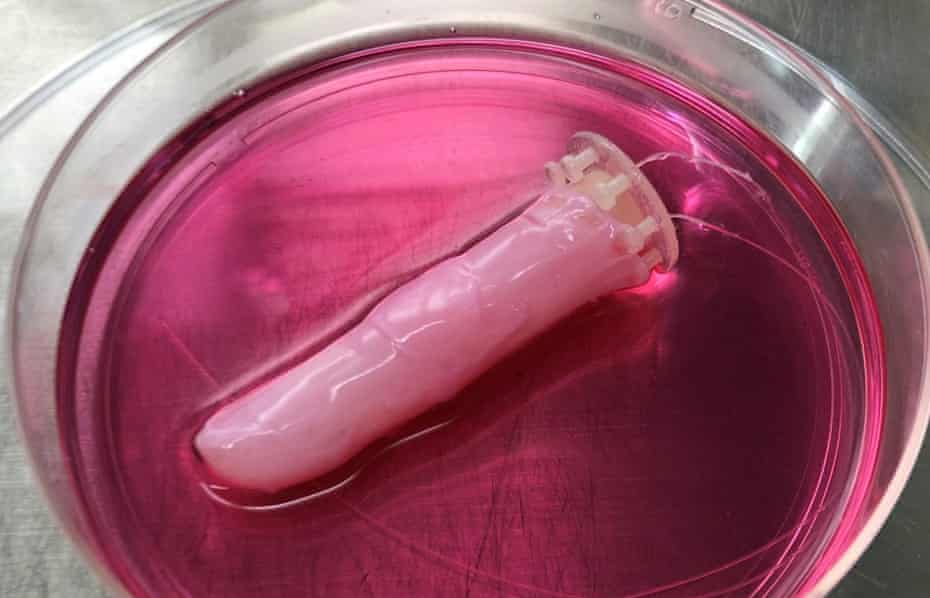
The robotic finger, covered in living skin, can self-heal when covered in a collagen bandage. Photograph: Shoji Takeuchi

Hannah Devlin 
Science correspondent
THE GUARDIAN
Thu 9 Jun 2022

Japanese scientists have developed a “slightly sweaty” robotic finger covered in living skin in an advance they say brings truly human-like robots a step closer.

The finger, which was shown to be able to heal itself, is seen as an impressive technical feat that blurs the line between living flesh and machine. But scientists were divided on whether people would warm to its lifelike anatomy or find it creepy.

“We are surprised by how well the skin tissue conforms to the robot’s surface,” said Shoji Takeuchi, a professor at the University of Tokyo, who led the work. “But this work is just the first step toward creating robots covered with living skin.”

The team argue that more lifelike humanoids would be able to interact with people more naturally in a range of roles, including in nursing care and the service industry.

“I think living skin is the ultimate solution to give robots the look and touch of living creatures since it is exactly the same material that covers animal bodies,” Takeuchi said. He added that such advances had the potential to “build a new relationship between humans and robots”.
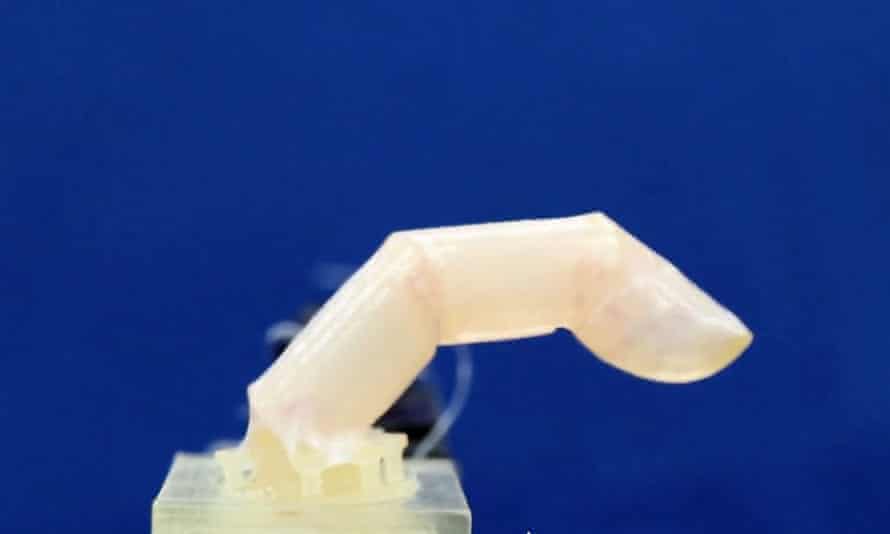
The human-like appearance of the mechanical finger may trigger a sense of revulsion known as the ‘uncanny valley’ effect, say experts. Photograph: Shoji Takeuchi

Scientists have previously produced skin grafts – sheets of skin that can be stitched together in reconstructive surgery, for instance – but have struggled to create living skin on three-dimensional, dynamic objects.

In the latest work, the team first submerged the robotic finger in a cylinder filled with a solution of collagen and human dermal fibroblasts, the two main components that make up the skin’s connective tissues. These coated the surface like a paint primer, providing a seamless layer for the next coat of cells – human epidermal keratinocytes – to stick to. Bending the finger back and forth caused natural-looking wrinkles to develop on the knuckles and when wounded, the crafted skin could self-heal like humans’ with the help of a collagen bandage and, according to the scientists, feels like normal skin.

The finger is a work in progress: its skin is much weaker than natural skin and has to be kept moist as without a circulatory system the cells would die if they dried out. Its movements are also distinctly mechanical.


“The finger looks slightly sweaty straight out of the culture medium,” said Takeuchi. “Since the finger is driven by an electric motor, it is also interesting to hear the clicking sounds of the motor in harmony with a finger that looks just like a real one.”

However, experts say that it is this combination of very lifelike and mechanical that can trigger a sense of revulsion, known as the “uncanny valley” effect.

Dr Burcu Ürgen, of Bilkent University in Ankara, Turkey, said: “It is possible that the human-like appearance [of some robots] induces certain expectations but when they do not meet those expectations, they are found eerie or creepy.”

Prof Fabian Grabenhorst, a neuroscientist at the University of Oxford who also studies the so-called uncanny valley effect, said: “It seems like a fantastic technological innovation.”

He agreed that people might have an initial negative reaction to the mixture of human and robot features, but said research showed this response could shift depending on interactions with a robot. “Initially people might find it weird, but through positive experiences that might help people overcome these feelings.”

The team now plans to incorporate more sophisticated functional structures within the skin, such as sensory neurons, hair follicles, nails and sweat glands. They are also working on a skin-covered robotic face. The advance is described in the journal Matter.

 
Somalia to lift Kenyan khat ban as ties improve

Hillary ORINDE
Fri, June 10, 2022


Somalia has agreed to lift a two-year ban on air shipments of khat from Kenya as part of a new trade deal, a Kenyan minister announced Friday, a further sign of rekindled ties after several years of tensions.

The move comes after Kenyan President Uhuru Kenyatta attended the inauguration of Somalia's newly elected President Hassan Sheikh Mohamud on Thursday, signalling a shift away from the frosty relations under the previous government in Mogadishu.

Ties have been dogged by a long-running maritime border dispute as well as Somali accusations of Kenyan meddling in its affairs, while Nairobi has accused Mogadishu of using it as a scapegoat for its own political and security problems

Kenyan Agriculture Minister Peter Munya announced that Nairobi would resume exports of khat or miraa, a mildly narcotic leaf popular in Somalia,
while its Indian Ocean neighbour was looking to sell fish and other products to Kenya.

He said the agreements would be signed within two weeks.

The ban imposed in March 2020 led to a loss of more than 50 tonnes of Kenyan khat a day valued at around six million shillings ($50,000), according to Kimathi Munjuri, chairman of the Nyambene Miraa Traders Association in central Kenya.

The two countries will also complete an aviation agreement on the sidelines of a regional gathering in Nairobi on Tuesday, Munya said.

- 'Prosper together' -


Somalia severed diplomatic ties with Kenya in December 2020 after Nairobi hosted the political leadership of Somaliland, a breakaway region not recognised by the central government in Mogadishu.

They agreed to reset relations when Somalia's Prime Minister Mohamed Hussein Roble held talks with Kenyatta in August 2021.

"A peaceful and prosperous Federal Republic of Somalia is the dream of every Kenyan," Kenyatta said at Mohamud's inauguration.

"Your brothers and sisters in Kenya look forward to working with you so that we can all benefit economically and prosper together."

Kenyan exports to Somalia of 13 billion shillings (over $110 million) accounted for nearly five percent of its total exports to African countries in 2021, according to government data released last month.

Imports from Somalia meanwhile were just 106 million shillings ($905,000) last year, the data showed.

Kenya and Somalia share a 680-kilometre (420-mile) land border and have been locked in a dispute for years over a potentially oil-and-gas rich chunk of the Indian Ocean.

In October 2021, the UN's top court handed control of most of the area to Somalia but Kenya rejected the ruling.

Kenya is a major contributor of troops to the African Union military operation against the Al-Qaeda-linked Al-Shabaab fighters waging a violent insurgency across Somalia.

txw-ho/amu/ri

https://www.emcdda.europa.eu/publications/drug-profiles/khat_en

Khat (also known as qat or chat) comprises the leaves and fresh shoots of Catha edulis Forsk, a flowering evergreen shrub cultivated in East Africa and the ...

https://www.ncbi.nlm.nih.gov/pmc/articles/PMC3905534

Khat is a natural stimulant from the Catha edulis plant that is cultivated in the Republic of Yemen and most of the countries of East Africa. Its young buds and ...

https://www.webmd.com/vitamins/ai/ingredientmono-536/khat

Khat is a plant. The leaves and stem have been traditionally chewed by people in East African countries as a recreational drug to elevate mood (as a ...

170,000 join in Tel Aviv Pride Parade

DPA -

Tens of thousands participated in the Gay Pride Parade in the Israeli city of Tel Aviv on Friday.

The parade in support of equal rights for the lesbian, gay, bisexual and trans (LGBT) community drew a crowd of around 170,000 people, according to the organizers.

In advance of the event, organizers had hoped for up to 250,000 participants, which would have been a return to the numbers seen before the Covid-19 pandemic.

Even unvaccinated tourists can travel to Israel again, whereas last year only a limited number of vaccinated tourists were allowed to enter the country to attend the parade.

In 2020, it was cancelled altogether due to the Covid-19 pandemic.

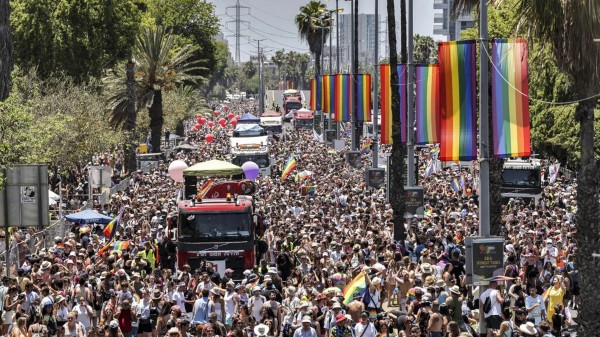
Under the motto "Back to Pride," people danced to music and waved the rainbow flags symbolic of the LGBT movement in 30-degree heat.

According to the city administration, Australian rapper Iggy Azalea and DJs, including Boris from the famous Berlin techno club Berghain, will perform at the closing party.


© DPA
Police officers secure the annual Gay Pride Parade in Tel Aviv. 
Ilia Yefimovich/dpa


© DPA
Participants take part in the annual Gay Pride Parade in Tel Aviv. 
Ilia Yefimovich/dpa


Over 170,000 Israelis march in Tel Aviv 2022 Pride Parade

By TAMAR URIEL-BEERI AND JERUSALEM POST STAFF - 
© (photo credit: AVSHALOM SASSONI/MAARIV)

Tel Aviv Pride Parade 2022 kicked off with a bang on Friday morning with hundreds of thousands in attendance, donned in rainbows and glitter.

Several warnings were issued prior to the event as the heat in Tel Aviv reached new heights, with serious concern that attendees would overheat or become dehydrated.

Nevertheless, some 170,000 in attendance dressed to impress, with drag queens as tall as the heavens left and right and proud couples marching hand-in-hand.

The parade began near the Sporteque on Rokach Boulevard, where flags, hats, stickers and more were distributed.

Then, the parade began, making its way down Rokach to a massive performance area in Ganei Yehoshua within Yarkon Park.


© Provided by The Jerusalem Post
Tel Aviv Pride Parade 2022. 
(credit: AVSHALOM SASSONI/MAARIV)

This is not the traditional parade route; throughout the past decade, the event began at Gan Meir and made its way down to the famed Tel Aviv beach.

"For the first time in 20 years, the Pride March route is running through here; there is nothing more exciting than that," said Transportation Minister and Labor head Merav Michaeli.


A spokesperson for the Tel Aviv mayor's office estimated over 170,000 people participated. Attendance in 2019 was around 250,000, while last year saw some 100,000 revellers, in the city's first Pride event since the Covid-19 pandemic 
RONALDO SCHEMIDT AFP


"But," she added, "as happy as we are here today, it's important to remember those who are not here, because they are being silenced into fear. We will not allow them!"

Michaeli pointed to the drones above the crowd, noting the transportation ministry's dedication to public protection and leading position in public drone use.


Revellers in colourful outfits celebrated in the sweltering heat, waving rainbow flags and dancing to electronic music as floats slowly drove through the streets of Tel Aviv RONALDO SCHEMIDT AFP


"As the sitting leader of the Labor party, I am telling you: Labor is your home! Labor knows that equality is a non-negotiable right that applies to everyone."


Some of the artists performing on the main stage at the huge party are Agam Buhbut, Anna Zak, Harel Skaat, Zehava Ben, Jasmin Moallem, Raviv Kanner Liran Daninno and more.

Jerusalem Post Staff contributed to this report.

Climate: Africa's energy future on a knife's edge


Marlowe HOOD
Fri, June 10, 2022


With more than half its population lacking mains electricity and still using charcoal and other damaging sources for cooking, Africa's energy future –- torn between fossil fuels and renewables -- is up for grabs.

As nations discuss the climate crisis at the UN's mid-year negotiations in Bonn, AFP spoke to Mohamed Adow, founder of think tank Power Shift Africa, about the forces pulling the continent in opposing directions.

The stakes, he warns, are global.

Q. You have said rich nations owe the rest of the world a climate debt


"The prosperity they enjoy was, in effect, subsidised by the rest of the world because they polluted without paying the cost for doing so.

"Africa is home to 17 percent of Earth's population but accounts for less than four percent of global greenhouse-gas emissions and only half-a-percent of historic emissions. The continent emits less than 1 tonne of CO2 per person, compared to seven in Europe or China, and more than 15 in the United States.

"If the least-developed continent on our planet is going to leapfrog fossil fuels to renewables, rich nations must pay the climate debt they owe."

Q. How will Africa's energy choices impact the rest of the world?


"My continent is at a crossroads with two possible futures. Africa can become a clean energy leader with decentralised renewables powering a more inclusive society and a greener economy, or it can become a large polluter that is burdened with stranded assets and economic instability.

"We have the opportunity to make a difference for Africa and for the world."

Q. US envoy John Kerry says climate change in Africa could see "hundreds of millions of people looking for a place to live." Is he right?

"Absolutely. It is important to acknowledge that climate-induced migration is a threat. As climate impacts increase, people in Africa -- where almost all agriculture is rain-fed -- will be forcefully displaced from their land.


"In wealthy nations, that is seen mostly as a security issue. But this is a humanitarian disaster in which people are already losing lives, homes and livelihoods.

"The only way to prevent climate-induced migration in the long-run is to reduce carbon pollution at the scale needed."

Q. Is the war in Ukraine affecting energy development in Africa?


"To attain energy security after Russia's invasion, Europe is effectively pushing Africa to pour its limited financial resources into developing its fossil gas extraction and export industry, primarily for consumers in Europe."

"Last month German Chancellor Olaf Scholz, during a three-day tour of Senegal, said his country wants to 'intensively pursue' projects to develop and import Senegal's huge gas reserves. Germany, of course, has been especially dependent on Russian gas.

"So now Europe wants to shackle Africa with new fossil fuel infrastructure that we know will be redundant within a few years, not to mention self-harming for the continent. And lest we forget: gas from Africa will emit the same amount of emissions as gas from Russia."

Q. What is the balance of power in Africa between fossil-fuel interests and those striving to leapfrog to renewables?


"Last month, the Sustainable Energy for All summit in (Rwandan capital) Kigali issued a communique supporting 'Africa in the deployment of gas as a transition fuel'. But only 10 out of 54 African countries signed that statement.
"I think the majority of African nations recognise the tremendous opportunity that renewables present for job creation, innovation, reduced air pollution and sustainable industrialisation. But this majority is a silent majority -- they have not yet leveraged their moral voice to make a case for a cleaner, sustainable Africa.

"There are some leaders. My country, Kenya, is currently powered by 90-percent renewable energy and has set a target of 100 percent by 2030."

Q. The trillions needed to engineer a rapid transition to renewables will not come from public sources alone. How do you mobilise private capital?


"We need to think about long-term investment security in Africa. This is the most expensive continent for securing loans or credit. We need to introduce payment guarantee schemes that are backed by international finance to facilitate safe investment in renewable energy.

"But you still need public money to leverage international investment and finance. We also have to unlock Africa's domestic sources -- public funds, sovereign wealth funds. And then there's debt. If we could swap some foreign debt for the kinds of investment Africa needs, it could make a big difference."

mh/klm/ri
WW3.0
China will 'not hesitate to start war' if Taiwan declares independence, Beijing says

AFTER BIDEN FAUX PAS

Beijing will "not hesitate to start a war" if Taiwan declares independence, China's defence minister warned his US counterpart Friday, the latest salvo between the superpowers over the island.

© Chiang Ying-ying, AP

The warning from Wei Fenghe came as he held his first face-to-face meeting with US Defence Secretary Lloyd Austin on the sidelines of the Shangri-La Dialogue security summit in Singapore.

Beijing views democratic, self-ruled Taiwan as its territory and has vowed to one day seize the island, by force if necessary, and US-China tensions over the issue have soared in recent months.

Wei warned Austin that "if anyone dares to split Taiwan from China, the Chinese army will definitely not hesitate to start a war no matter the cost", defence ministry spokesman Wu Qian quoted the minister as saying during the meeting.

The Chinese minister vowed that Beijing would "smash to smithereens any 'Taiwan independence' plot and resolutely uphold the unification of the motherland", according to the Chinese defence ministry.

He "stressed that Taiwan is China's Taiwan... Using Taiwan to contain China will never prevail", the ministry said.

Austin "reaffirmed the importance of peace and stability across the (Taiwan) Strait, opposition to unilateral changes to the status quo, and called on (China) to refrain from further destabilising actions toward Taiwan", according to the US Department of Defense.

Tensions over Taiwan have escalated in particular due to increasing Chinese aircraft incursions into the island's air defence identification zone (ADIZ).

US President Joe Biden, during a visit to Japan last month, appeared to break decades of US policy when, in response to a question, he said Washington would defend Taiwan militarily if it is attacked by China.

The White House has since insisted its policy of "strategic ambiguity" over whether or not it would intervene has not changed.

Japan PM issues warning


With concerns mounting over China-Taiwan tensions, Japanese Prime Minister Fumio Kishida issued a stark warning at the summit: "Ukraine today may be East Asia tomorrow".

The world must be "prepared for the emergence of an entity that tramples on the peace and security of other countries by force or threat without honouring the rules," he said.

He did not mention China by name in his address, but repeatedly called for the "rules-based international order" to be upheld.

Austin is the latest senior US official to visit Asia as Washington seeks to shift its foreign policy focus back to the region from the Ukraine war.

As well as on Taiwan, China and the United States have been locked in a range of other disputes.

They have been at loggerheads over Russia's invasion of Ukraine, with Washington accusing Beijing of providing tacit support for Moscow.

China has called for talks to end the war, but has stopped short of condemning Russia's actions and has repeatedly criticised American arms donations to Ukraine.

China's expansive claims in the South China Sea have also stoked tensions with Washington.

Beijing claims almost all of the resource-rich sea, through which trillions of dollars in shipping trade passes annually, with competing claims from Brunei, Malaysia, the Philippines, Taiwan and Vietnam.

Austin arrived in Singapore late Thursday, and held a series of meetings with his counterparts on Friday.

At a meeting with Southeast Asian defence ministers, he spoke about Washington's "strategy in maintaining an open, inclusive and rules-based regional security environment", according to a statement from the Singapore government.

His comments were a veiled reference to countering China's increasing assertiveness in the region.

Austin will deliver a speech at the forum on Saturday, followed by Wei on Sunday. The summit runs from June 10 to 12 and is taking place for the first time since 2019 after twice being postponed due to the Covid-19 pandemic.

(AFP)


China Tells Japan To Stop Playing With Fire Over Taiwan

By Panos Mourdoukoutas Ph.D.
06/09/22 

China has a few harsh words for every country that tries to tame its ambitions to dominate the South China Sea and reunite with what it calls Taipei, its breakaway prefecture.

So one day, the strong words targeted the Philippines over sovereign rights, followed by a few strong words against Vietnam the next day and against Japan, the old enemy, the third day.

In two Global Times editorials posted last week, China told Japan to stop "playing with fire on its reckless moves over [the] Taiwan question" and that Tokyo needs a "head blow to wake up."

Beijing's harsh words against Tokyo came after reports in the Japanese media that Japan is planning to step up its intelligence-gathering operation in Taiwan by having an incumbent official with the Japanese Ministry of Defense stationed in Taipei this summer.

The editorials quoted Chinese military expert and TV commentator Song Zhongping saying that "no matter the status of the Japanese military officer stationed in Taiwan, it is clear that Tokyo keeps making more and more reckless moves over the Taiwan question."

Zhongping warned Tokyo that "if it dares to provoke China and interfere in China's internal affairs, particularly the Taiwan question, it had better get ready to suffer a blow from China."

While the editorials didn't specify what kind of actions Beijing could take, it isn't hard to guess. Japan has an extensive presence in the Chinese market, both as a seller and local manufacturer of consumer and capital goods, which could be targeted by Beijing. It happened before when relations between the two countries soured, and it will happen again. And it's something Tokyo doesn't need as it tries to shake off its three decades of stagnation.

"The fundamental problem is that China has become such a big, strong, influential country in recent years, and no country could ignore its existence," Tenpao Lee, economist and professor emeritus at Niagara University, said. "They were forced to make adjustments to compete and deal with challenges created by China."

Lee thinks it is a bad idea for Japan and its allies to try to contain China by playing the Taiwan card.

"We need to excel ourselves rather than ask China to slow down. Nor do we wish for confrontations among China, Taiwan, Hong Kong, Xinjiang and Tibet. The sanctions on Russia have demonstrated an ineffective policy to a larger country with its strengths in the global economy. Plus, China is the second-largest economy in the world, with nuclear capabilities," he explained.

RELATED STORIES

What's the alternative?


"We need to acknowledge China as a partner and work with China to make the world better, peacefully," he added. "We must realize that an unstable China will make the world 10 times worse than the Russia-Ukraine war has."

Retired Vice Admiral Robert B. Murrett, professor of practice and deputy director of the Syracuse University Institute for Security Policy and Law, takes a different approach.

"It is difficult to overstate the critical importance of Japan with respect to security in East Asia and our overall allied posture with regard to China," he said. "Japan has gradually assumed a more vigorous posture in relations with China over the past few years, and this trend is likely to continue."

He thinks Tokyo is "unlikely to get rattled about statements from Beijing that they are 'playing with fire over Taiwan' — as they will continue to balance their economic interests with a firm policy stance on regional security issues."

Apple will let a state-owned firm control iCloud data in China. 
Photo: Daderot/Wikimedia Commons

I HAVE SAID THIS FOR YEARS
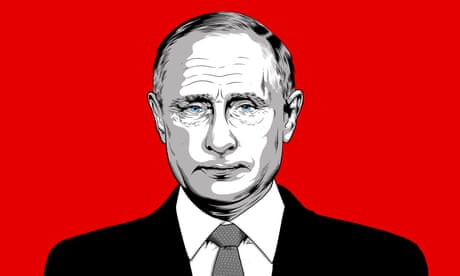
Putin compares himself to Peter the Great in quest to take back Russian lands

President draws parallel with tsar who waged war on Sweden and says campaign in Ukraine stems from ‘basic values’


01:10 Putin compares himself to Peter the Great in Russian territorial push
 – video

Andrew Roth and agencies
THE GUARDIAN
Fri 10 Jun 2022 

Vladimir Putin has compared himself to the 18th-century Russian tsar Peter the Great, drawing a parallel between what he portrayed as their twin historic quests to win back Russian lands.

“Peter the Great waged the great northern war for 21 years. It would seem that he was at war with Sweden, he took something from them. He did not take anything from them, he returned [what was Russia’s],” the Russian president said on Thursday after a visiting an exhibition dedicated to the tsar.

After months of denials that Russia is driven by imperial ambitions in Ukraine, Putin appeared to embrace that mission, comparing Peter’s campaign with Russia’s current military actions.


Understanding Vladimir Putin, the man who fooled the world

“Apparently, it is also our lot to return [what is Russia’s] and strengthen [the country]. And if we proceed from the fact that these basic values form the basis of our existence, we will certainly succeed in solving the tasks that we face.”

Putin, now in his 23rd year in power, has repeatedly sought to justify Russia’s actions in Ukraine, where his forces have devastated cities, killed thousands and forced millions of people to flee, by propounding a view of history that asserts Ukraine has no real national identity or tradition of statehood.
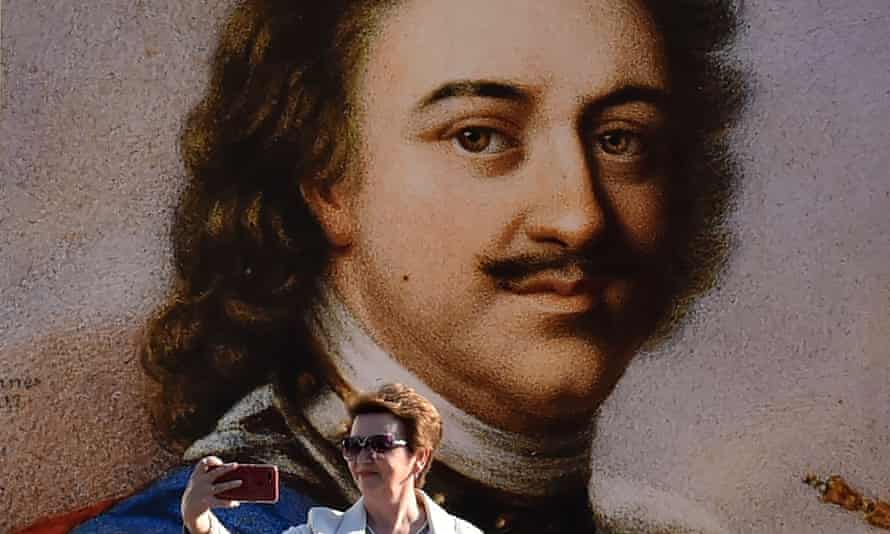
A woman takes a selfie in front of a poster with an image of Peter the Great in Saint Petersburg on Thursday, the 350th anniversary of his birth. Photograph: Olga Maltseva/AFP/Getty Images

Critics said Putin’s remarks proved that his complaints about historical injustice, eastward Nato expansion, and other grievances with the west were all a facade for a traditional war of conquest.

An adviser to the Ukrainian government said the comments showed that attempts to negotiate with Putin or find an “off-ramp” from the conflict for Putin, as the French president, Emmanuel Macron, has sought to do, were misguided.

“Putin’s confession of land seizures and comparing himself with Peter the Great prove: there was no ‘conflict’, only the country’s bloody seizure under contrived pretexts of people’s genocide,” said Mykhailo Podolyak. “We should not talk about [Russia] ‘saving face’, but about its immediate de-imperialisation.”

Carl Bildt, a former prime minister of Sweden, called Putin’s desire to take back lands claimed by Russia a “recipe for years of wars”.

Peter the Great, an autocratic moderniser admired by liberal and conservative Russians alike, ruled for 43 years and gave his name to a new capital, St Petersburg – Putin’s home town – that he ordered built on land he conquered from Sweden.

It was a project that cost the lives of tens of thousands of serfs, conscripted as forced labourers to build Peter’s “window to Europe” in the swamps of the Baltic Sea coast.

Before Putin’s visit to the exhibition, state television aired a documentary praising Peter the Great as a tough military leader, greatly expanding Russian territory at the expense of Sweden and the Ottoman empire with the modernised army and navy he built.

Putin denied that Russia was seeking to occupy new land in its Ukraine invasion, but the Kremlin’s actions show that is not true. Russia has steadily sought to integrate newly captured land in Donetsk and Luhansk, as well as the Kherson and Zaporizhzhia regions in southern Ukraine.

Meduza, a Russian-language outlet, reported this week that the Kremlin was planning to combine all the lands into a new federal district that could be annexed by Russia as soon as this autumn. Amid rumours that new “referendums” could be held to rubber-stamp an annexation, the Kremlin has only said that it is up to those regions that are under military occupation to decide their future.

Vladimir Putin, centre, at the exhibition marking the 350th anniversary of the birth of the first Russian emperor, Peter the Great, in Moscow. Photograph: Sputnik/Reuters

In recent years, Putin’s interest in Russian history has loomed ever larger in his public appearances.

In April 2020, as Russia entered its first coronavirus lockdown, he drew bemusement in some quarters when, during a televised address to the nation, he compared the pandemic to ninth-century Turkic nomadic invasions of medieval Russia.

In July 2021, the Kremlin published an almost 7,000-word essay by Putin, entitled “On the historical unity of Russians and Ukrainians”, in which he argued that Russia and Ukraine were one nation, artificially divided. It laid the groundwork for his deployment of troops to Ukraine in February.


Moscow attempted to justify its war in Ukraine by saying it was sending troops over the border to disarm and “denazify” its neighbour, an unfounded claim.


In the run-up to the launch of what Russia calls its “special military operation”, Putin blamed Vladimir Lenin, the founder of the Soviet Union, for creating Ukraine on what Putin said was historically Russian territory, and for planting the seed of the USSR’s eventual collapse.

By contrast, the Russian leader offered cautious praise for Joseph Stalin for creating “a tightly centralised and absolutely unitary state”, even as he acknowledged the Soviet dictator’s record of “totalitarian” repression.

Putin has a history of praising leaders sharing his own conservative views, including tsar Alexander III and pre-revolutionary prime minister Pyotr Stolypin, both of whom have had monuments in their honour erected across the country.

Meanwhile, leaders seen as antithetical to a strong, unitary Russian state – including Lenin and Nikita Khrushchev – have seen their contributions played down.

“Putin, celebrating the 350th anniversary of Peter the Great’s birth, is confused about history again,” wrote Andrei Kolesnikov, a Russian political analyst. “Peter the Great has opened a window to Europe, Putin is hammering it up with rotten planks from the time of Ivan the Terrible.”

Reuters contributed to this report

Putin undermined his own rationale for invading Ukraine, admitting that the war is to expand Russian territory

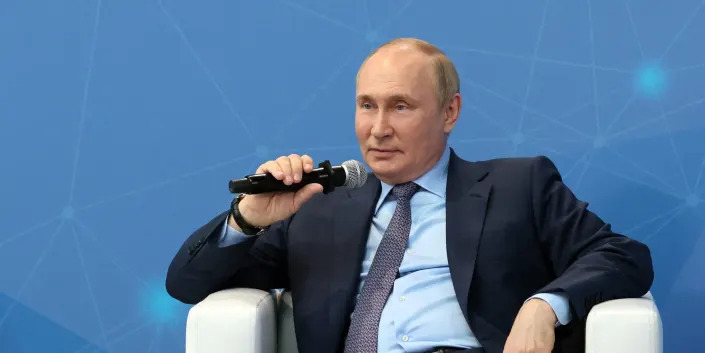
Russian President Vladimir Putin meets young entrepreneurs in Moscow on June 9, 2022. (Photo by Mikhail Metzel / SPUTNIK / AFP) (Photo by MIKHAIL METZEL/SPUTNIK/AFP via Getty Images)
Russian President Vladimir Putin in Moscow.MIKHAIL METZEL/SPUTNIK/AFP via Getty Images
  • Putin said on Thursday that the Ukraine invasion is about expanding Russian territory.

  • Until now Putin had insisted that Russia was freeing Ukraine from so-called Nazis and preventing genocide.

  • Putin said it was his destiny to "return and reinforce" Russia as the 17th-century ruler Peter the Great did.

Russian President Vladimir Putin said publicly for the first time Thursday that his invasion of Ukraine is about expanding Russian territory, as Western leaders have long maintained.

To date, Putin has justified the invasion by saying, baselessly, that he is preventing Ukraine and what he described as a neo-Nazi government from committing genocide against ethnic Russians. He has also said that NATO's eastward expansion threatens Russia's national security.

Speaking to students Thursday after visiting an exhibition about Peter the Great, Russia's first emperor credited with making the country a major power in the early 18th century, Putin compared himself to the ruler and said they were both destined to expand Russia.

"Clearly, it fell to our lot to return and reinforce [Russia] as well. And if we operate on the premise that these basic values constitute the basis of our existence, we will certainly succeed in achieving our goals," he said.

As well as seizing territory in a 21-year war with Sweden in the late 17th century, Peter also captured the territory of Azov from Crimean Tatars, who were aligned with Turkey, in 1696, and seized territory on the Caspian Sea from Persia in 1723.

"On the face of it, he was at war with Sweden taking something away from it," Putin said of Peter. "He was returning and reinforcing, that is what he was doing."

In a tweet Friday, Mykhailo Podolyak, an advisor to Ukrainian President Volodymyr Zelenskyy, said Putin's comments prove his "contrived pretexts of people's genocide" in Ukraine were false and demanded "immediate de-imperialization" of Russia.

Putin's attempts to expand Russian territory started long before his invasion of Ukraine on February 24.

Putin invaded Georgia in 2008 and is currently backing pro-Kremlin factions there. In 2014, it annexed the Crimean Peninsula from Ukraine and invaded the Donbas region of eastern Ukraine via proxies that same year.

Just two days before invading Ukraine, Putin said claims he wanted to restore the Russian empire were false.

However, Western leaders have long maintained that this was not the case.

"He has much larger ambitions than Ukraine. He wants to, in fact, reestablish the former Soviet Union. That's what this is about," President Joe Biden said on February 24, the first day of the invasion.