Tuesday, September 20, 2022

Qatar World Cup 2022: Fan plea to 'abolish sexual and gender identity penalties'

Unflattering terms were used at a German Football Association human rights congress aimed at "intensifying the discussion" ahead of the World Cup. One speaker in particular made waves with an impassioned personal plea.

The German Football Association, the DFB, has to find the right balance

 between addressing human rights and focusing on success on the pitch

"I'm a man, and I love men. This is normal. So please get used to it or stay out of football. Because the most important rule in football is: football is for everyone.

"So abolish the death penalty — abolish all the penalties regarding sexual and gender identity."

A brave statement and impassioned plea made by fan representative Dario Minden in the midst of a two-hour long "Sport and Human Rights" congress hosted by the German Football Association (DFB) and aimed at "intesifying the discussion."

The criticism leveled at organizers and world governing body FIFA certainly was intense. Minden's words were aimed at Abdulla Bin Mohammed bin Saud Al-Thani,Qatar's ambassador to Germany, who was in attendance at the congress held just 62 days before the 2022 FIFA World Cup gets underway.

The ambassador acknowledged that the rights situation is "not perfect yet — it's not at 100%, it's a journey." But he was not able to brush aside the disapproval as prominent representatives from politics, trade unions, independent organizations and fan groups used unflattering terms on stage.

The managing director of Reporters Without Borders, Christian Mihr, described Qatar as an "absolute, autocratic monarchy" that wants to "conceal" the situation regarding freedom of the press and freedom of opinion through its investments in sport, the media and internet surveillance.

FIFA President Gianni Infantino was referred to as the "chief cynic" of a "mafia bunch" by Minden, second chair of Unsere Kurve, an interest group representing active football supporters. Of all the speakers, Minden minced his words the least as he called for the DFB to be part of a "progressive alliance" so that German football fans could "look forward to football festivals" again in the future.
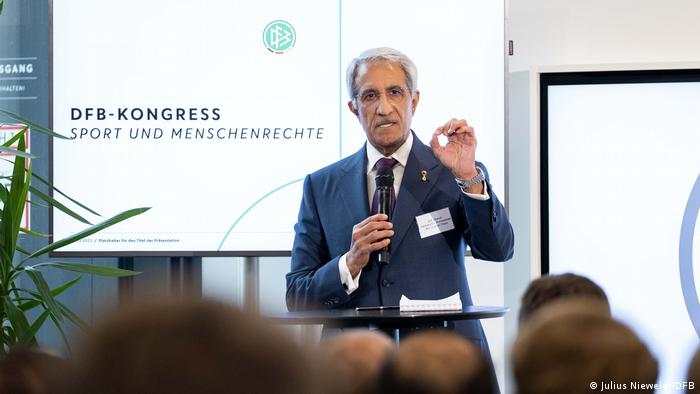
Bin Saud Al-Thani wanted the congress to focus more on the "enjoyment of football."

The sentiments shared are the reason the German national team is facing a difficult "balancing act," according to national teams director Oliver Bierhoff.

"We have to be careful when finding this balancing act between the responsibility and awareness that we have as human beings," Bierhoff said.

"On the other hand, we're traveling as the German national team, we're representing our country, we want to play football successfully," he added. "We're looking forward to a World Cup, to measuring ourselves against the best in the world and excited to represent Germany."

'It's how we move from policy to impact'

Bierhoff's sentiments were shared by the president of the Norwegian Football Federation, Lise Klaveness. At the FIFA Congress in Doha in March, she said that World Cups were awarded in "unacceptable ways with unacceptable consequences" in 2010. 

"Human rights, equality and democracy — the core interests of football — were not in the starting XI," Klaveness said. "These basic rights were pressured onto the field as substitutes, mainly by outside voices. FIFA has addressed these issues, but there is still a long way to go."

Six months later, speaking as at the DFB Campus, Klaveness admitted that football associations are on a "steep learning curve" and "still exploring" where their responsibilities lie. 
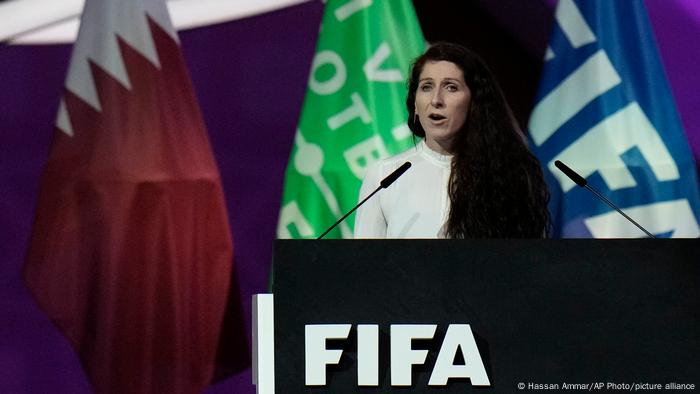
Klaveness says FIFA and football need to take responsibility for how Cups were awarded

"We have to admit and realize that what football associations did before on human rights was not good enough," the former Norwegian international said.

"It's not a Qatar question," she added. "It's a FIFA, UEFA, Norwegian Football Federation, DFB question — but it should be a balancing of responsibility.

"From the FIFA, the federation's perspective, the most important thing is that we lean in now. That we’re now present in the game of human rights, so we learn, so that when we go into the next stage after the World Cup in a better stage."

"When it comes to FIFA, Qatar and this arrangement, I think it's very important to get a compensation fund because we're obligated to do it as it states in Article 6," Klaveness said, citing the FIFA Human Rights policy. "It's how we move from policy to impact."

Impassioned plea for inclusion

With her closing remarks, Klaveness also addressed the issue of LGBTQ+ rights in the Gulf state and called for "better guarantees" during and after the World Cup — guarantees that people are "not more in danger because of the World Cup and because the tension the World Cup brings to the country."

Her words were echoed by Minden, of Unsere Kurve. He opened by talking of fans' "shame" when it comes to how easily their beloved sport can be bought, Qatar's "bloody exploitation" of migrant workers and the fact that human rights "are once again being used as bargaining chips." 

Minden's closing statement though, was directed at ambassador Abdulla Bin Mohammed bin Saud Al-Thani.

"I'm a man, and I love men," Minden said. "I do, please don't be shocked, have sex with other men. This is normal. So please get used to it or stay out of football. Because the most important rule in football is: football is for everyone.

"So abolish the death penalty — abolish all the penalties regarding sexual and gender identity. The rule that football is for everyone is so important. We can't allow you to break it no matter how rich you are. You're more than welcome to join the international football community and to host a big tournament. But in sports it is how it is: You have to accept the rules."

And as several speakers at the congress on the DFB campus stated, the rules when it comes to human rights "cannot be compromised."

Edited by Chuck Penfold.

In mustard-loving France, shortage of condiment is nothing to sneeze at

France's favorite condiment has disappeared from stores due to a drought in Canada. The shortage has shocked consumers and hobbled the mustard industry. But there's a silver lining to the crisis, Sonia Phalnikar reports.

A rare commodity — France's beloved mustard has all but vanished from

 supermarket shelves this year

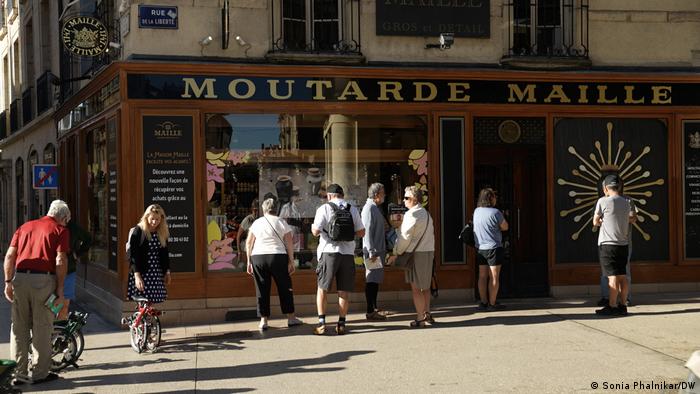
On a recent morning in Dijon, the capital of Burgundy and famous for the mustard that bears its name, a small group of people gathered at a downtown boutique run by the well-known mustard brand Maille, waiting for the doors to open.

The high-end store normally caters to foreign tourists touring the region's famous vineyards. But on this sunny morning, customers included a number of French nationals like Cecile Martin from northern France, combining a trip to the region with a mission to get their hands on mustard. A sign in the store window said sales were limited to just one jar per household.

Mustard lovers have flocked to this boutique run by mustard brand Maille in Dijon

"There's no mustard to be found in the supermarkets. At least no Djion mustard," Martin told DW, referring to the acidic, nose-tickling condiment made by combining brown mustard seeds with white wine. 

The retired teacher rattled off a list of foods she used Dijon mustard in — salad dressings, meat, cold cuts, seafood, sauces, mayonnaise, French fries, sandwiches and even pasta.

"My whole family is a big fan of Dijon mustard. This mustard shortage is a big deal for us," Martin said. "It’s really hard to imagine French cuisine without it.

Using less to cope with scarcity

That love of mustard — at an estimated kilo per person per year, France is the world's largest consumer per capita — explains why the country has been awash in stories this year of consumers hoarding the prized condiment and trying to dodge the one-jar rule in supermarkets. Many restaurants have found inventive ways to cope with the shortage.

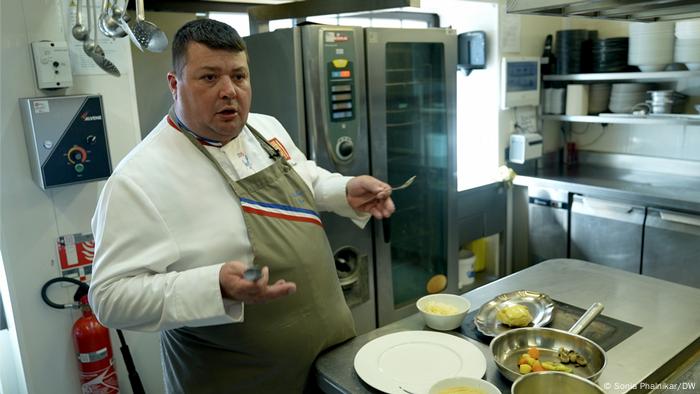
Guillame Royer, chef at Au Clos de Napoleon in the Burgundy countryside, told DW that the restaurant normally goes through six to seven kilograms (13-15 pounds) of mustard a month. But, now the establishment has stopped serving mustard on the side to its customers and is rationing the supplies it stocked at the beginning of the crisis.

Royer said he'd even modified the signature dish — a mustard chicken called "le poulet Gaston Gerard" — to ensure that the restaurant doesn't run out of mustard.

Royer adapted his cooking to use less mustard in dishes at a restaurant in Burgundy

"We try and make fewer dishes based on mustard. We've adapted our cooking to use less of it," Royer said. "We try and replace mustard often with a spice, or another dressing or some lemon juice or citrus fruit juice to compensate."

Seeds of crisis sown far away

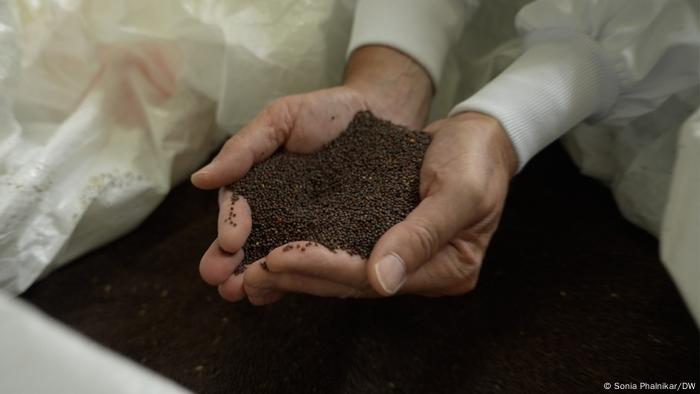
The reason for the mustard shortage lies far away in Canada, a country that provides a whopping 80% of the brown-grain seeds needed for the French industry. A devastating 2021 heat wave in the provinces of Alberta and Saskatchewan, blamed on climate change, halved production and left French companies scrambling to secure seed supplies.

Russia's invasion of Ukraine also plays a role. Though the two countries are big mustard seed producers as well, they mainly grow the much milder, yellow mustard seed, popular in places like Germany and Hungary, but generally not the brown seeds, or "brassica juncea," used in classic Dijon mustard.

France mainly uses brown-grain mustard seeds and relies heavily 

on Canada for supply

The near collapse of exports from Russia and Ukraine has meant that demand has risen heavily for mustard in general, with countries that primarily use yellow mustard seed seeking other types of mustards, including French Dijon.

A big blow to French mustard players

The shortage of seeds has dealt a blow to French mustard makers, most of which are concentrated in the region of Burgundy, which has a history of mustard production dating back centuries. Currently, local seed production accounts for under 20% of supplies to the sector.

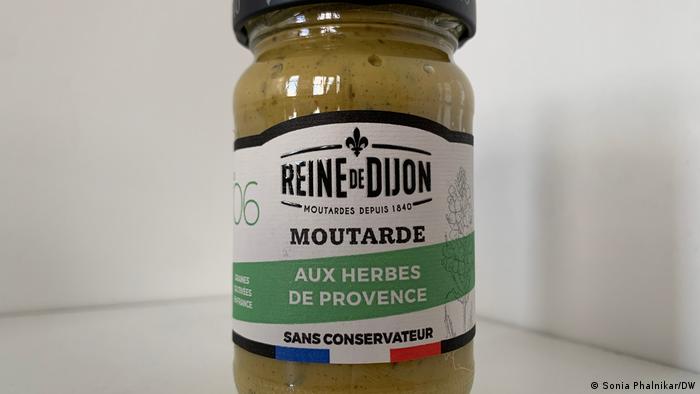
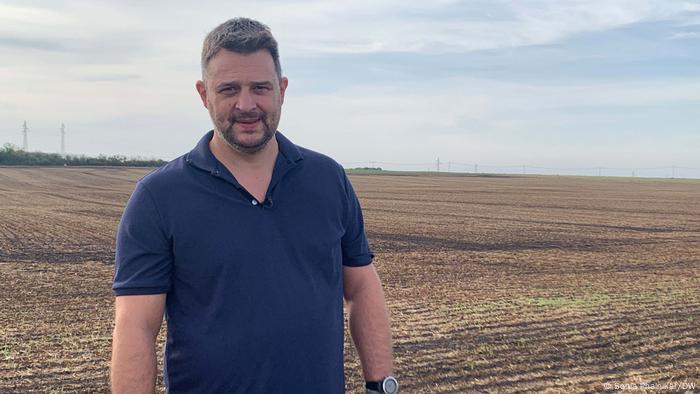
"The drought in Canada coupled with an unusually mild winter in France last year meant that harvests in both places were ravaged," Luc Vandermaesen, CEO of Reine de Dijon, told DW.  "For us that meant both our main sources of seed supplies dried up."

Reine de Dijon, France's third-largest mustard maker, usually makes about 16,000 tons of mustard a year. The double whammy has meant that the company's overall production is down 25% this year, it's been forced to raise the prices of its mustards and its factory near Dijon has at times been struggling to meet orders. 

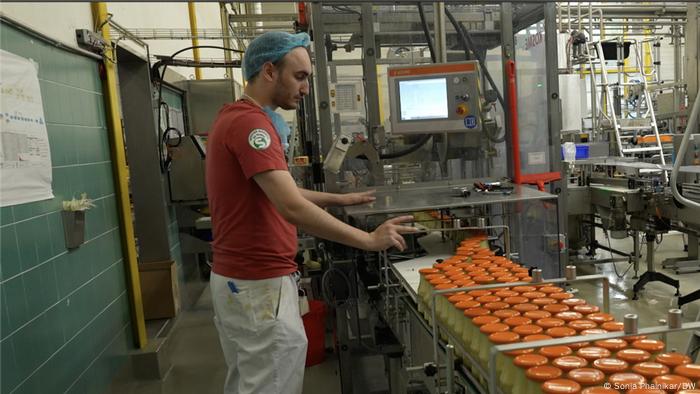
Production lines at Reine de Dijon have not run at full capacity because of the shortage

Vandermaesen, who said the company is bombarded by calls from people looking for mustard, said the priority was to hold on to the workforce of 165.

"Our biggest problem is the huge uncertainty over supplies. There are weeks when we get some seeds and others when we don't get any at all," Vandermaesen said. "So we're still trying to figure out how to keep our production going."

Bringing production back 

Reine de Dijon's factory currently has a few sacks of brown-grain Burgundy seeds. And it's this local resource, Vandermaesen said, that's key to digging themselves out of the crisis.

Vandermaesen is also the president of the Burgundy Mustard Association, which brings together the four big mustard players in the region along with growers. In the wake of the Canadian seed crisis, the companies have embarked on a concerted effort to raise local seed production by paying farmers higher prices — €2,000 ($2,000) per ton of mustard seeds for next year against €900 last year. 

In June, the association launched a call for regional farmers to increase land devoted to growing the seeds from 4,000 hectares (9,900 acres) to 10,000 next year.

"For the future, we need to diversify our sources of mustard seeds. We can't put all our eggs in one basket," Vandermaesen said. 

Can the plan work?

Fabrice Genin, president of the Association of Burgundy Mustard Seed Producers, and a mustard farmer himself, told DW that raising local production won't be easy.

Genin, who represents Burgundy mustard farmers, says raising 

production won't be easy

One problem Burgundy producers face is that the European Union has banned an insecticide long used to combat the black flea beetle, a scourge which has decimated harvests in the past. Another is the unpredictability of the weather and its impacts — last year's unusually mild winter ravaged harvests but this year's French harvest is reported to have been very good. 

Genin, however, agreed that the problems in Canada had revived the importance of the sector in the French region. "The plan to raise local production from 20% to 40-50% is a good thing for everyone," he said. "It balances the risks for mustard companies. And we would have production here in the region." 

"It wouldn't be huge," he said, "but it's still emblematic of our region because it's Dijon mustard after all."

Edited by: Uwe Hessler

GREY PUPON COMMERCIALS 1990'S

CRIMINAL CRYPTO CAPITALI$M

South Korea asks Interpol to issue red notice for 'Terra' crypto founder

The collapse of Do Kwon's Terra cryptocurrency cost investors billions. Now authorities in South Korea say Kwon is "on the run" and are moving to cancel his passport while asking Interpol for help in arresting him.

Terraform labs co-founder Do Kwon is wanted by police in South Korea

South Korean prosecutors have asked Interpol to issue a red notice for Do Kwon, the co-creator of failed cryptocurrency TerraUSD, saying he refused to cooperate with their investigation into its $40 billion (€40 billion) collapse.

A red notice is a request to law enforcement worldwide to locate and provisionally arrest a person pending extradition, surrender, or similar legal action, according to the Interpol website. 

Kwon had flown to Singapore before Terra crashed, but over the weekend, Singapore police said he is not in the city-state, raising questions about his whereabouts. 

Meanwhile, South Korean authorities have moved to prevent Kwon from traveling.

"We have begun the procedure to place him on the Interpol red notice list and revoke his passport," an official from the Seoul Southern District Prosecutors' Office told the AFP news agency on Tuesday.

"We see him as being 'on the run' from the moment when he left for Singapore," the official said, adding: "We are aware that he has no will to cooperate with all investigations since then."

Kwon denies being on the run

A South Korean court recently issued arrest warrants for Kwon and five other people connected to Terraform Labs, the company behind the TerraUSD cryptocurrency. Authorities claimed Kwon said through his lawyers that he would not cooperate with their investigation.

However, Kwon, who remains active on Twitter, denied he was "on the run" on Sunday.

"For any agency that has shown interest to communicate, we are in full cooperation and we don't have anything to hide," he said in a tweet.

Hundreds of thousands of South Korean investors affected

The May collapse of Terraform Labs' cryptocurrencies, TerraUSD and Luna, affected an estimated 280,000 investors in South Korea.

TerraUSD was touted as a stablecoin, which are typically pegged to a real-world commodity or currency. However, TerraUSD was algorithmic and used code to maintain its price at around 1 US dollar.

Kwon's Terra/Luna system disintegrated in May, with the price of both cryptocurrency tokens plummeting to near-zero. Amid the $40 billion collapse, many investors lost their life savings.

The crash is also believed to have caused more than $500 billion in losses across the wider crypto market globally, according to industry analysts.   

zc/wmr (AP, AFP)

Germany considering nationalization of Uniper gas company

Uniper's situation has looked increasingly vulnerable following the closure of the Nord Stream 1 pipeline. Previously, Germany's largest importer of natural gas said soaring energy prices had hit the company hard.

Uniper's headquarters are in Düsseldorf

Germany is nearing a provisional agreement to nationalize energy company Uniper amid the ongoing fallout from Russia's invasion of Ukraine, according to reports released by Bloomberg and later by other German media. 

A spokesperson for the company on Tuesday said parties involved in discussions were looking at a possible capital injection that would mean the German government taking a significant majority stake in the ailing gas importer.

Uniper's largest shareholder currently is the Finnish state-owned energy company Fortum. News agency Reuters cited unnamed sources familiar with the negotiations as saying that Fortum's exit from Uniper's ownership structure would be a part of the rescue package. 

"All those involved are working intensively on a sustainable stabilization solution for Uniper," the company said in a statement on Tuesday. 

Uniper had already said last week that "talks are under way" on a second  capital injection that would result in a "significant majority stake" for the German government. At that time, though, the company spokesman declined to comment on reports of a possible complete government takeover.

A spokeswoman for Germany's Economy Ministry also said that talks were ongoing and "concentrated" but declined to discuss specifics, saying "when they [the talks] are complete, we will provide information on them."

Reuters reported that a finalized deal would likely be announced as soon as Wednesday.

Consequences of Russia's invasion of Ukraine

Uniper's situation has looked increasingly vulnerable ever since Russia's invasion of Ukraine; the German government effectively bought a 30% stake in the company in July in exchange for a capital injection.

At that time, German Chancellor Olaf Scholz said Uniper was in "big trouble" owing to the worsening energy crisis.

The company was one of those involved in building the Nord Stream 2 pipeline, which was not activated after construction and is frozen indefinitely as part of the package of sanctions imposed in response to the invasion. 

But the situation for Uniper became trickier still earlier this month. Russian energy giant Gazprom said gas supplies to Western Europe via the Nord Stream 1 pipeline had completely stopped due to equipment issues, giving no time frame on when it would resume activities.

The ailing energy importer has been burning through cash reserves sourcing gas on the expensive spot market after Moscow slashed flows to Germany, also trying to fill up storage facilities in anticipation of winter shortfalls.

Last month, Uniper said high energy prices and a threat by Russia to cut gas supplies had hit the Düsseldorf-based company hard. It also warned a tough winter lay ahead.

Contentious gas levy thrown into further question? 

A nationalization of Uniper could put in doubt another recent government policy designed to help deal with high gas prices. Berlin announced plans last month for a gas surcharge for consumers of 2.4 euro cents per kilowatt hour of electricity starting in October. This was supposed to help importers like Uniper deal with rising market prices. 

German news agency dpa and other media on Tuesday reported that Economy Minister Robert Habeck, already facing criticism over the proposal, had "financial doubts" about the constitutionality of the levy, and on whether the potential nationalization of Uniper might affect it.

The decision on whether the levy would be legal would however ultimately rest with either the Finance Ministry, or potentially German courts.

The opposition Christian Democrats had already been appealing for the levy to be scrapped. 

The government, meanwhile, had earlier said that it was working on alterations and improvements to the proposal.

Cheetahs make a comeback to India, fingers crossed

More than 70 years after India declared the Asiatic cheetah domestically extinct, their African cousins have been introduced in an ambitious project to have the world's fastest land animal roam again in India.


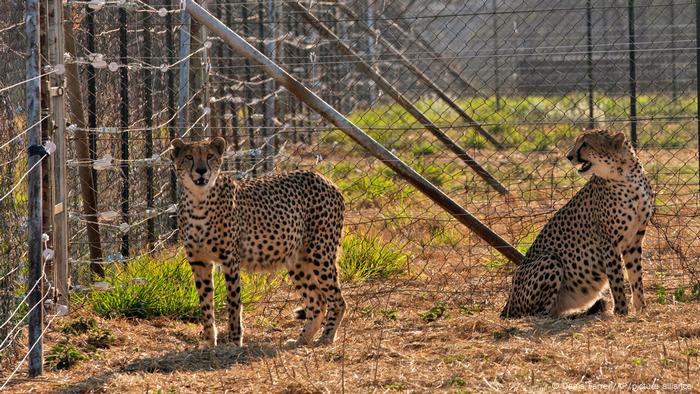
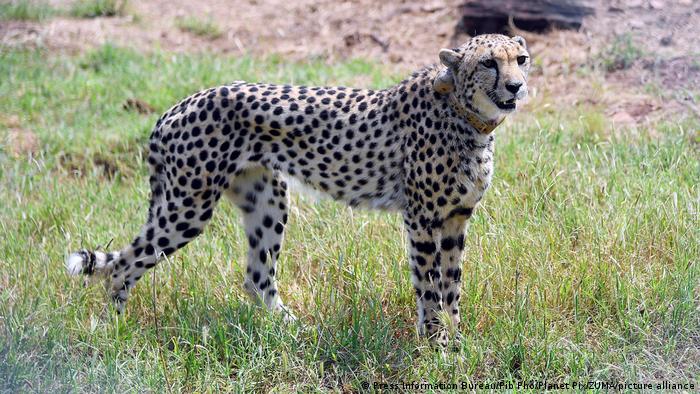
Cheetahs were once widespread in India but became extinct in 1952 from hunting and loss of habitat


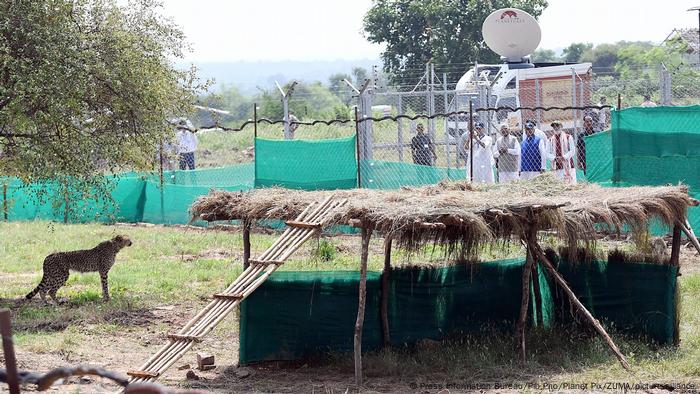
Eight wild cheetahs — three males and five females flown from Namibia — were set free from their transport cages inside a holding area at India's Kuno National Park last week.

It is the first step in an ambitious attempt to reintroduce the feline species to the South Asian country, seven decades after they died out there.

The cheetahs will quarantine for a month before being released into a larger enclosure inside the sprawling park in the state of Madhya Pradesh in central India.

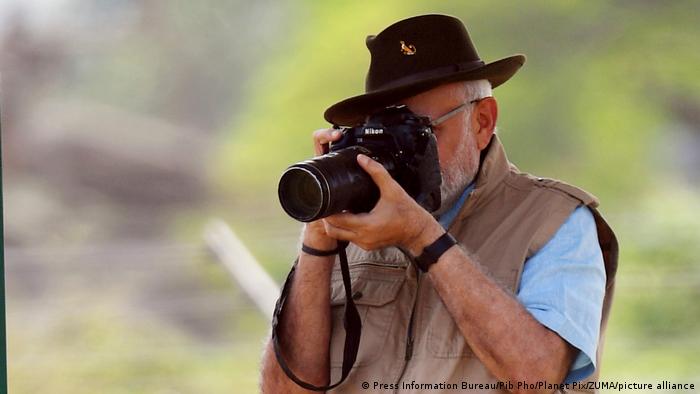
Indian Prime Minister Narendra Modi — who was celebrating his 72nd birthday — was there to welcome the cheetahs to their new home.

"A long wait is over," Modi wrote on Twitter together with pictures of the cheetahs in their new environment.


Indian PM Narendra Modi, pictured, says that reintroducing the cheetah to India will increase biodiversity and boost eco-tourism

For now, the cats will be kept in a specially built compound where they will be monitored for disease and adaptation before being released into the bigger enclosure.

The Asian cheetahs were native to India before they were declared extinct in 1952 — largely due to habitat loss and hunting for their distinct spotted pelts.
Will the cheetahs survive?

It's the first attempt to relocated cheetah's from Africa to India and there were mixed reactions to the animals' move.

"As a conservationist, I am thrilled, and as Cheetah Conservation Fund's leader, I am exceptionally proud of the work of our reintroduction team," said Laurie Marker, the founder and executive director of the Namibian-based CCF, in a press release.

"Without research and dedication to cheetah conservation, this project could not take place."

Marker has been a advisor to the Indian government's Project Cheetah on behalf of the Namibian government.

As the international media spotlight shines on Kuno National Park, other experts are taking a more cautious stance towards the program, which plans to release 50 cheetahs into various national parks over the next five years.

Some worry that the reintroduction plan is premature and question whether the cheetahs will survive.
A costly mistake?

Ravi Chellam, a wildlife biologist and conservation scientist, described the program to reintroduce cheetahs to India as a "vanity project" which was rushed through to meet some goals other than conservation.


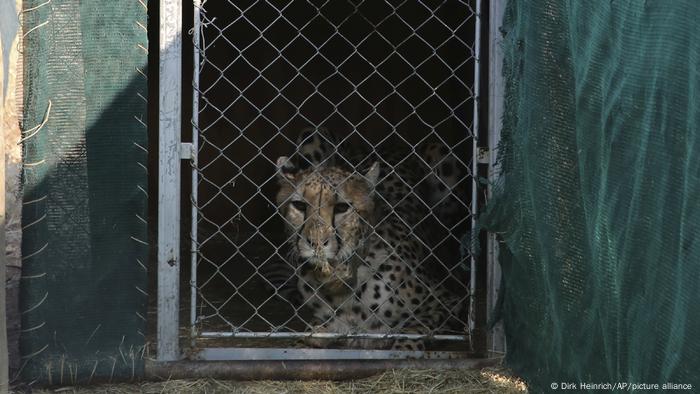
The cheetahs tentatively emerge from their cages — nervously scanning their new surroundings

"Facts should always speak louder than opinions. This is not even mentioned in India's National Wildlife Action Plan [2017-2031] and will divert attention from far more important and critical conservation issues such as the great Indian bustard, caracal and Asiatic lion," Chellam told DW.

"The conservation goals are unrealistic and unfeasible. Tragically, despite all the investment this will most likely be a very costly mistake," said Chellam, who also suggested it was a bid to stall the relocation of Asiatic lions.

The Kuno National Park was originally identified for the relocation of the Asiatic lions from Gujarat's Gir sanctuary, currently the only home of the Asiatic lions in India. But despite work from 2006, the plans have remained on the back burner.
Boon or bane?

Naturalist and conservationist Valmik Thapar is even more critical of the cheetah relocation program. He believes the experiment is flawed and the cheetahs shouldn't go through what he calls a "traumatic experience."

"We do not have the habitat or prey species for wild, free-roaming cheetahs," Thapar told DW. "Captive cheetahs survive with difficulty and they are being introduced into tiger habitat that has more forest than open grassland."

"They prey on mostly on smaller antelope like springbok, steenbok and Thomson's gazelle," he added, animals that aren't found in India.

He is also worried the cheetahs will fall prey to other predators.

"This area is full of hyenas and leopards, who are key enemies of the cheetah. If you see in Africa, hyenas chase and even kill cheetahs. Some of the villages around the park also have wild dogs," he said.

However, wildlife officials maintained that such concerns are baseless because cheetahs are highly adaptable animals and the Kuno National Park has been fully examined for habitat, prey and the potential for man-animal conflict.

Thapar pointed to Tanzania's Serengeti Park, which had just over 300 cheetahs for more than a million prey. But their population declined, he said, because the cats lacked genetic diversity and were susceptible to disease.


Compared to other big cats, cheetahs are smaller in size

'Huge challenge' to saving the cheetah


Despite the skepticism, the project's supporters say the cheetahs' existence will reinforce both conservation efforts and the local economy.

"The project will be sustainable if the action plan is followed to establish three to five populations in India, not just Kuno," Yadvendradev Jhala, the dean of the Wildlife Institute of India, told DW. "These then need to be managed as a metapopulation by moving cheetahs between populations and southern Africa."

Jhala said he believes the long-term impact would be to rewild systems and this is a global effort to undo the wrong people have done and to restore ecosystem elements that have been removed.

"The project also contributes to the global effort to save the cheetahs by allowing them to expand into their historic range," added Jhala, who also serves as the principal scientist for India's Project Cheetah.


Experts hope that Indian forests could offer these cats space to thrive
System for success

Pradnya Giradkar, India's first cheetah conservation specialist, said the process of bringing a species back that has become extinct locally was a huge challenge.

"The cheetah needs massive amounts of support to survive, and it is my hope that we, as conservationists, can provide what the species requires for success," Giradkar told DW. "Success is generally based on reproductive output and important characteristics of the release site include habitat and prey availability."

Compared to other big cats, cheetahs are smaller in size. The cat is best known for being the fastest land animal, with the ability to sprint at high speeds of up to 120 kilometres an hour (75 miles an hour).

Today, cheetahs are found in the wild in several locations in Africa, and a tiny population of another subspecies, the Asiatic cheetah, is found in Iran.

Scientists estimate that fewer than 8,000 African cheetahs are living in the wild and that there may be fewer than 50 Asian cheetahs left in the world. The African cats are visually identical to their Asian cousins but have minor genetic differences.

A dozen more cheetahs are currently quarantining in South Africa and are due to arrive at Kuno National Park in October.

Edited by: Keith Walker


75 YEARS OF INDEPENDENCE: 10 REASONS FOR INDIA
Magnificent architecture
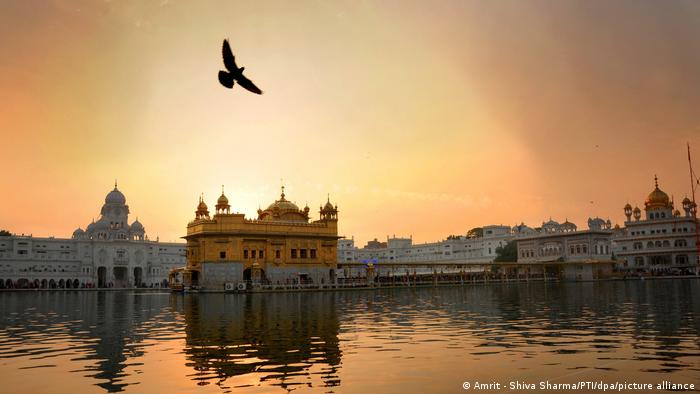
India's most-famous landmark is a worldwide icon: the Taj Mahal tomb mosque in Agra. But there are many other imposing buildings, such as the Golden Temple of Amritsar (pictured), located in Punjab, which is the most spiritually significant sanctuary of the Sikh religion. A visit in the evening is especially beautiful, when the gilded temple walls are bathed by the gentle light.
12345678910


Date 20.09.2022

SEE


Iran: How close is it to building its own nuclear bomb?

The International Atomic Energy Agency recently warned that Iran will have enough enriched uranium to make an atomic bomb within several weeks. But that's not what Iran really wants to do.

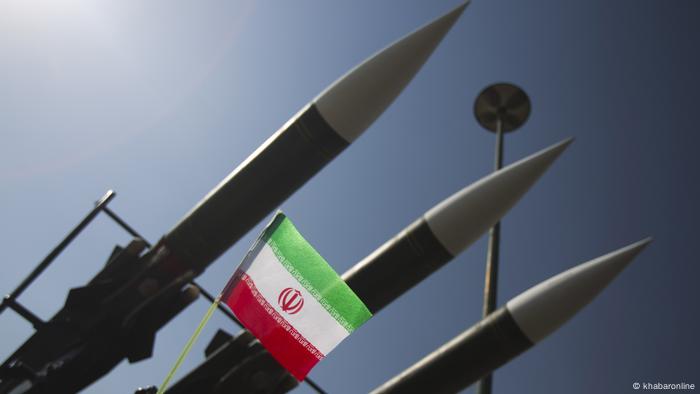
Currently negotiators are trying to revive a 2015 deal that saw Iran

 curtail nuclear weapons activities

Could it be that Iran's nuclear program is actually meant for military purposes? That's the suspicion that the International Atomic Energy Agency seemed to raise in a report presented last week.

Iran had continued enriching uranium beyond the limits set by the 2015 nuclear deal, which it had agreed upon together with China, France, Russia, the UK, the United States, Germany and the European Union, the agency report said. But by late August, Iran's stockpile of enriched uranium totaled an estimated 3,940 kilograms, That is more than 19 times the contractually agreed limit, the report said.

The IAEA said it was "not in a position to provide assurance that Iran's nuclear program is exclusively peaceful." It had been asking Iran about nuclear material at undeclared sites and the IAEA's director Rafael Grossi was "increasingly concerned that Iran has not engaged with the agency on the outstanding safeguards issues during this reporting period and, therefore, that there has been no progress towards resolving them."

The IAEA pressed Iran to adhere to the 2015 nuclear agreement it had signed. In another earlier report, the agency also said it regretted Iran's decision to remove 27 surveillance cameras that had allowed inspectors to monitor the country's nuclear activities from afar. This had reduced the IAEA's ability to guarantee that Iran's nuclear program was not military, the Vienna-based agency said.

According to the IAEA, Iran had continued to accumulate enriched uranium even while it restricted access to the agency's monitors. In Vienna, diplomatic insiders have suggested that it would now only take Iran between three and four weeks to make enough enriched uranium to create a nuclear weapon.

No point in just one nuclear bomb

But that doesn't necessarily mean that it will.

It is true that Iran will have enough enriched uranium to make a nuclear bomb, said Mohammadbagher Forough, a researcher at the GIGA Institute for Middle East Studies in Hamburg.

"However that is just enough to make one single bomb, not a series of bombs," he told DW. "A single bomb makes no sense militarily. The world's nuclear powers don't rely on just a single bomb. No war could be fought like that. A single nuclear bomb is not enough because you would assume that other nations will have multiple nuclear bombs that they would use against you to much more serious effect," he argued.

There are also other reasons why Iran is far from making its own nuclear bomb, Forough continued. The country doesn't have the right ingredients to make one — that includes the lack of materials for a detonator.

"The history of nuclear powers indicates that it actually takes years to build a bomb from nuclear weapons grade materials," he pointed out. "The IAEA has certainly described the seriousness of the current situation well. But from that you cannot conclude that Iran is really on the verge of having its own nuclear bomb."

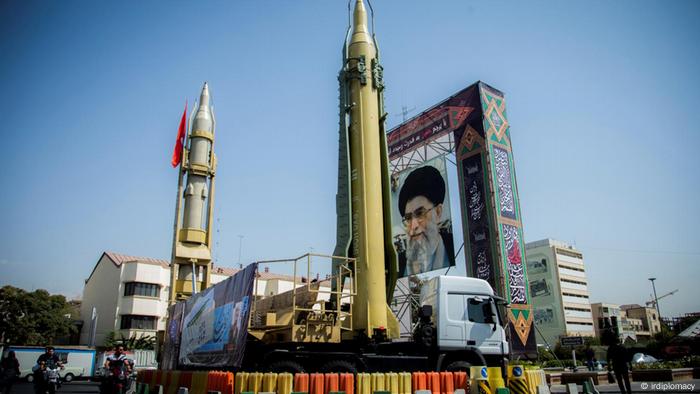
Iran manufactures many of its own weapons, tanks and other

 military equipment

It is certainly worrying that Iran has more enriched uranium than was permitted under the 2015 nuclear agreement, agreed Oliver Meier, a senior researcher at Hamburg University's Institute for Peace Research and Security Policy. At one stage the country also had a heavy water nuclear reactor, that would have been capable of producing plutonium, which can also be used to make  a nuclear bomb.

"But that path is closed [to them] at the moment," Meier noted.

What Iran does have though are centrifuges inside its nuclear reactors that are more advanced than would have originally been permitted under 2015's nuclear deal — this is also known as the Joint Comprehensive Plan of Action, or JCPOA.

"Centrifuges raise serious nuclear weapons proliferation concerns because exactly the same machines that are used to enrich uranium for a nuclear reactor can enrich uranium for a nuclear bomb," the Federation of American Scientists explains on its website. "In general, a nuclear reactor needs a small degree of enrichment of a large amount of material, and a bomb needs a large degree of enrichment of a small amount of material." 

Iran has also exceeded the amount of uranium it has, and the levels at which it has been enriched, Meier said.

"There, all the limits have been exceeded," he told DW. "So technically, they would be able to produce enough weapons-grade uranium for a nuclear weapon within a few weeks."

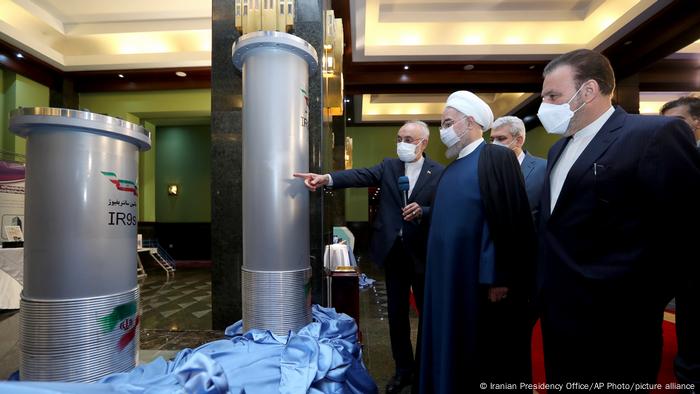
Former Iranian President Hassan Rouhani said he ready for "serious"

 talks on Iran's nuclear program at the beginning of his tenure

But Meier also confirmed that the Iranians needed more than this to build a nuclear bomb.

"Iran has been working on that as well," he conceded. "There has also apparently been research into making warheads for the missiles. However, as far back as 2009, there is no indication that this research has continued, or that it has resumed."

Political pressure 

In that case then, why is Iran enriching uranium at such a fast pace?

For Tehran it's all about political pressure, Forough said. From the perspective of Iranian leadership, the conditions set out in the JCPOA were voided after the US government, when it was being led by the Donald Trump administrationpulled out of the deal unilaterally in 2018.

Since Joe Biden became president, the US has been leading the push to renegotiate a new version of the JCPOA.

"So uranium enrichment is primarily a means to get the US and other players to sign the agreement, which has almost been fully negotiated in Vienna," Forough said.

That political pressure counts even more as the midterm elections approach in the US, when members of Congress and some in the Senate will be chosen.

"It is not impossible that the Democrats, led by US President Biden, will lose their majority in Congress," Forough said. "In that case, the [new JCPOA] agreement will never be signed. That's another reason why Tehran is putting so much pressure on."

For the Iranian government, the agreement is about ending the crippling sanctions regime imposed on their country because of attempts to potentially make nuclear weapons. If the renegotiated JCPOA is signed by all parties, then sanctions would ease.

On the other hand, GIGA's Meier said, Iran is getting in the way of the negotiations itself: The negotiations are currently being complicated by the fact that the IAEA can't verify what's going on inside Iran's nuclear program.

"That's why the IAEA has now said more clearly that an agreement on the restoration of the JCPOA requires additional measures to better verify Iran's nuclear program," he told DW. "There are many outstanding issues and it's important to resolve them quickly."

This story was originally published in German.

Iran-Belgium prisoner swap: Belgian Court to decide on controversial exchange treaty

In a controversial move, Belgium wants to swap an Iranian diplomat convicted of terrorism for one of its own citizens, an aid worker being held in Iran. Critics say Belgium is giving in to Iranian blackmail.

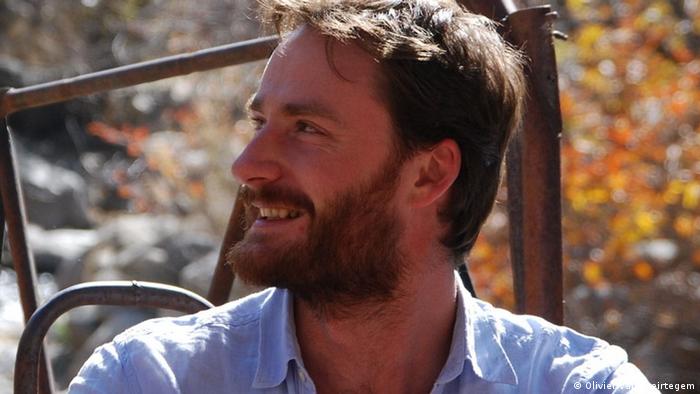
Belgian aid worker Olivier Vandecasteele has been held prisoner in Iran

 since February 2022

"It's been more than 203 days since I last saw my best friend," said Olivier Van Steirtegem as he runs his fingers swiftly across his piano in his home in Brussels, playing a mesmerizing jazz tune. It's a tribute to his friend, Olivier Vandecasteele, who was arrested on February 24 by Iranian authorities on charges of spying.

"This song I'm playing is 'John Boy' by Brad Mehldau. It was the last one Olivier and I listened to together, before he was arrested by Iran," Van Steirtegem, 42, who is the owner of an office furniture store, told DW. "He is now in complete isolation in a cell and in a poor psychological state. He isn't eating well, has an infection and has lost a lot of weight." 

Vandecasteele, a 41-year-old humanitarian aid worker, had been living and working in Iran since 2015. He had been exploring options to move out of the country and eventually start a new project.

"But the Iranian authorities had different plans for him," said Van Steirtegem.

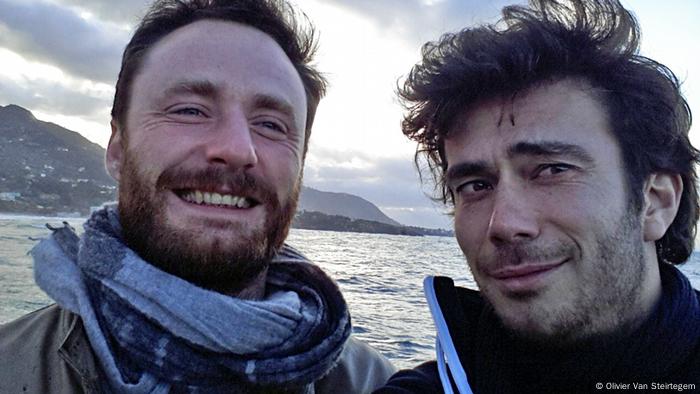
Olivier Van Steirtegem, right, has started a petition asking the Belgian

 government to take action to free his friend

Flipping through an album of pictures together, he remembered the fateful day in February when he got the phone call about Vandecasteele's arrest.

"The neighbors said he was in his apartment in Tehran and was waiting for a pizza delivery. But when his doorbell rang, instead of the pizza delivery person, Iranian authorities forced themselves into his flat and arrested him," Van Steirtegem said.

'We are sending a message that we are weak'

In order to get him released, on July 21, the Belgian government ratified a prisoner exchange treaty with Iran. According to the treaty, Iranians imprisoned in Belgium, would be allowed to serve their sentence in Iran and vice versa. 

But the treaty has been slammed by some members of the Belgian parliament, including some Iranian dissidents, critics of the regime in Teheran, as well as human rights groups who fear that this would lead to the release of Assadollah Assadi — an Iranian diplomat who has been serving a 20-year prison sentence in Belgium for trying to plot a bomb attack on a rally organized by rivals of the Iranian regime, in France in 2018.

They also say that the accord will give Iran a free pass to continue engaging in terrorism and taking people hostage in Iran and around the world.

"If Belgium appeases the regime in Iran in this manner, we are sending across a message that we are weak and are ready to give them what they want," Darya Safai an Iranian-Belgian Member of the Belgian Parliament, from the Flemish nationalists party, told DW.

"I have been imprisoned in Iran myself for fighting for women's rights. I completely understand what Olivier's family is going through. But this is not the only isolated case. There are other European hostages in Iran and we need a better solution to ensure they're all released," she said.

'Not fair to keep an innocent man in jail'

Vandecasteele was arrested and imprisoned in Iran on espionage charges 

which the Belgian government  says are baseless

Besides Vandecasteele, Swedish-Iranian academic Ahmadreza Dijalali and French tourist Benjamin Briere are some of the other Western nationals being held hostage in Iran.

Out of 131 Belgian parliamentatians, 79 voted in favor of the prisoner-exchange treaty, while 41 rejected it and 11 abstained from voting. 

Belgian Prime Minister Alexander De Croo acknowledged that it was a tough decision, but said it was not "blackmail" and Belgium had to consider the pleas of Vandecasteele's family.

"Whar do you say to his family, that we will let him rot in his cell?" he said in response to criticisms of the treaty.

According to AFP, a lawyer representing the National Council of Resistance of Iran (NCRI), an Iranian opposition group in exile, said the Brussels appeal court had agreed to cross-examine the case before allowing the swap.

The court is legally challenging the Belgian government's decision at a hearing that began on September 19.

'Negotiate with force'

Prisoner swaps often takes place between autocracies and democracies where the latter is keen to bring their citizens back home, and the former is keen to use this tactic to achieve their political goals.

Exchanges can take place by either exchanging people held captive, or by exchanging money as in the case of British Iranian aid worker Nazanin Zaghari-Ratcliffe, where the UK transferred money to Iran in order to guarantee her release.

But Belgian parliamentarian Safai believes that prisoner swaps don't work with Iran, and the only true way to negotiate with the country is with force.

"That is the only language that the Ayatollahs understand. So solutions in the form of sanctions could work better. It is important for the West to take a united stance in confronting Iran. That's the only way that you can ensure security in Europe and stop the process of Iran taking people hostage," she told DW.

A man protests outside the Antwerp Criminal Court, during the trial of 

Iranian diplomat Assadollah Assadi, who was sentenced to prison in Belgium

 last year for his role in a bomb plot.

At a press conference in Brussels last week organized by the NCRI, John Bercow, a former British politician who was speaker of the House of Commons, shared a similar view and highlighted that such a prison swap would not prove fruitful in the long run.

"If you give the beast what the beast wants, then the beast will repeatedly follow the same tactics. We have to look at the wider picture and not just focus on isolated cases," he said.

Van Steirtegem understands the complexity of this case since it involves swapping an innocent person in exchange for a terrorist. But he believes it is the only way to get his friend released.

"I might be biased but I think right now, Olivier needs all the support from the Belgian government. This will also give Belgians the impression that their government cares for innocent people like Olivier," he said.

Van Steirtegem has also started a petition asking the Belgian government to enable the prompt release of his friend. More than 25,000 people have signed it so far.

Could the Iranian nuclear deal provide an opportunity?

While a final decision is still pending from the court, Roxane Farmanfarmaian, a British lecturer in international politics at the University of Cambridge specializing in Iran, told DW that the Iran nuclear talks could also provide an opportunity for the West to negotiate with the Islamic republic.

"The Americans have advised Belgium not to proceed with this prison swap since they wish to add on to the nuclear negotiations a larger swap of prisoners, which would involve prisoners from a number of European countries as well as Americans,” she told DW.

Three members of US Congress — Randy K.Weber, Louie Gohmert and Brian Fitzpatrick — have sent a letter to the Belgian prime minister asking him to oppose the treaty.

"I think Belgium feels as though the time is right and there is no guarantee that the negotiations with the nuclear deal will go through. So they don't want to wait and make their citizens in Tehran wait until something on a larger international scale takes place," Farmanfarmaian added.

Irrespective of how the law and politics shape the future of the treaty, Van Steirtegem has not lost hope.

"I know it is going to be a long fight, but I hope to get a call from the government telling me, okay, listen, everything has been cleared and Olivier will be back before Christmas," he said.

"That's what his family and I are looking forward to right now," he added.

Edited by: Sonia Phalnikar