Tuesday, September 20, 2022

UPDATED
Fiona wallops Turks and Caicos, Puerto Rico still stunned

By DÁNICA COTO
1 of 15
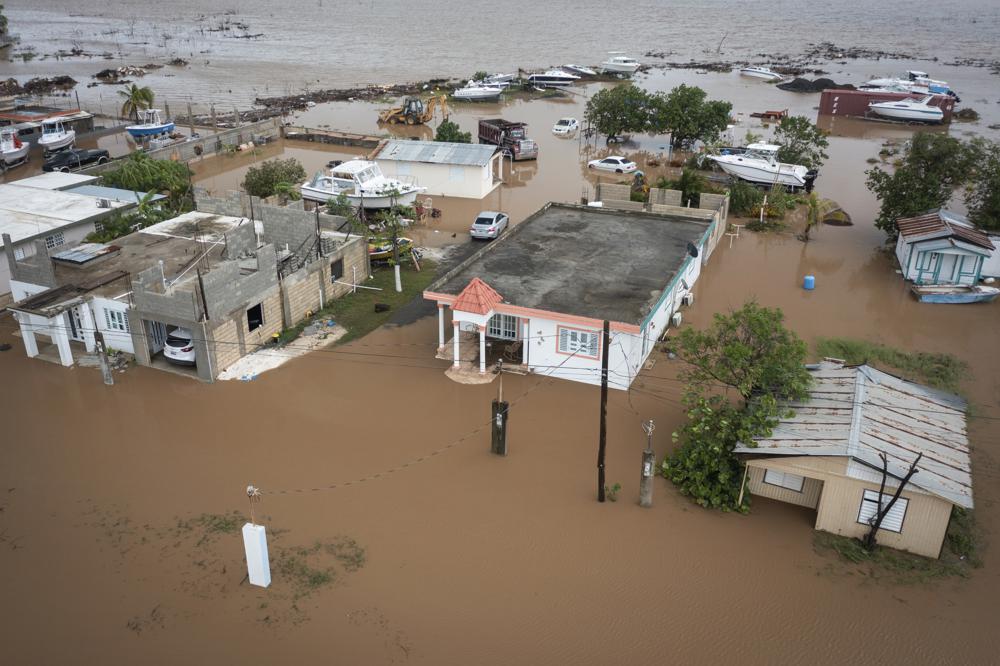
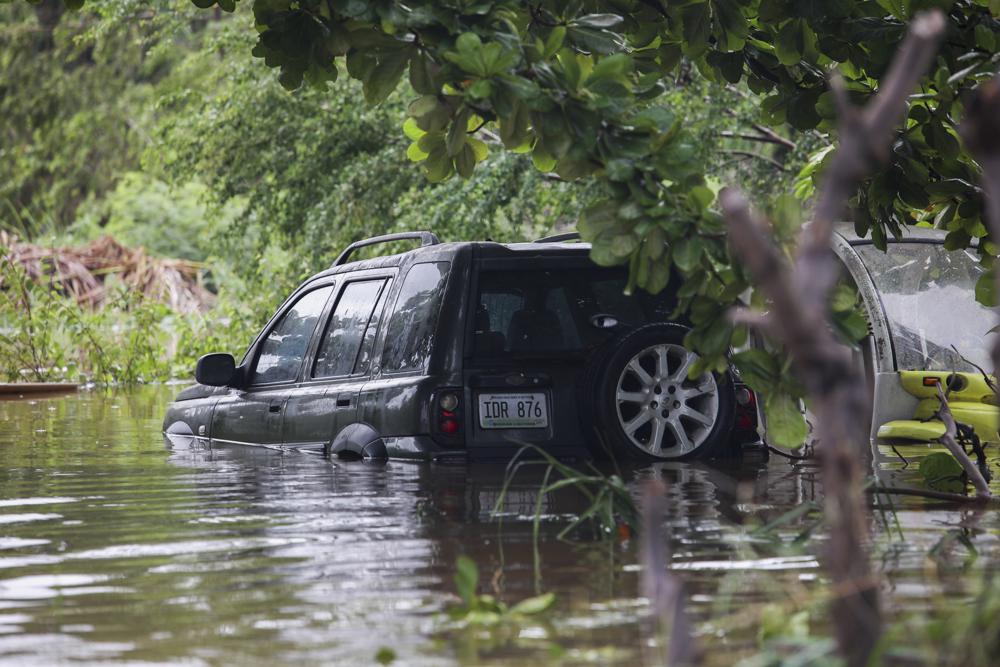
A vehicle is submerged after Hurricane Fiona in Salinas, Puerto Rico,  Monday, Sept. 19, 2022. 
(AP Photo/Stephanie Rojas)

SAN JUAN, Puerto Rico (AP) — Hurricane Fiona blasted the Turks and Caicos Islands on Tuesday as a Category 3 storm after devastating Puerto Rico, where most people remained without electricity or running water and rescuers used heavy equipment to lift survivors to safety.

The storm’s eye passed close to Grand Turk, the small British territory’s capital island, on Tuesday morning after the government imposed a curfew and urged people to flee flood-prone areas. Storm surge could raise water levels there by as much as 5 to 8 feet above normal, according to the U.S. National Hurricane Center.

Late Tuesday morning, the storm was centered about 40 miles (65 kilometers) north-northwest of that island, with hurricane-force winds extending up to 30 miles (45 kilometers) from the center.

“Storms are unpredictable,” Premier Washington Misick said in a statement from London, where he was attending the funeral of Queen Elizabeth II. “You must therefore take every precaution to ensure your safety.”

Fiona had maximum sustained winds of 115 mph (185 kph) and was moving north-northwest at 9 mph (15 kph), according to the Hurricane Center, which said the storm is likely to strengthen further into a Category 4 hurricane as it approaches Bermuda on Friday.

It was forecast to weaken before running into easternmost Canada over the weekend.

The broad storm kept dropping copious rain over the Dominican Republic and Puerto Rico, where a 58-year-old man died after police said he was swept away by a river in the central mountain town of Comerio.

Another death was linked to a power blackout — a 70-year-old man was burned to death after he tried to fill his generator with gasoline while it was running, officials said.

Parts of the island had received more than 25 inches (64 centimeters) of rain and more was falling on Tuesday.

National Guard Brig. Gen. Narciso Cruz described the resulting flooding as historic.

“There were communities that flooded in the storm that didn’t flood under Maria,” he said, referring to the 2017 hurricane that caused nearly 3,000 deaths. “I’ve never seen anything like this.”

Cruz said 670 people have been rescued in Puerto Rico, including 19 people at a retirement home in the northern mountain town of Cayey that was in danger of collapsing.

“The rivers broke their banks and blanketed communities,” he said.

Some people were rescued via kayaks and boats while others nestled into the massive shovel of a digger and were lifted to higher ground.

He lamented that some people initially refused to leave their homes, adding that he understood why.

“It’s human nature,” he said. “But when they saw their lives were in danger, they agreed to leave.”

The blow from Fiona was made more devastating because Puerto Rico has yet to recover from Hurricane Maria, which destroyed the power grid in 2017. Five years later, more than 3,000 homes on the island are still covered by blue tarps.

Authorities said Monday at least 2,300 people and some 250 pets remained in shelters across the island.

Fiona triggered a blackout when it hit Puerto Rico’s southwest corner on Sunday, the anniversary of Hurricane Hugo, which slammed into the island in 1989 as a Category 3 storm.

By Tuesday morning, authorities said they had restored power to more than 285,000 of the island’s 1.47 million customers. Puerto Rico’s governor, Pedro Pierluisi, warned it could take days before everyone has electricity.

Water service was cut to more than 837,000 customers — two thirds of the total on the island — because of turbid water at filtration plants or lack of power, officials said.

Fiona was not expected to threaten the U.S. mainland.

In the Dominican Republic, authorities reported one death: a man hit by a falling tree. The storm displaced more than 12,400 people and cut off at least two communities.

The hurricane left several highways blocked, and a tourist pier in the town of Miches was badly damaged by high waves. At least four international airports were closed, officials said.

The Dominican president, Luis Abinader, said authorities would need several days to assess the storm’s effects.

Fiona previously battered the eastern Caribbean, killing one man in the French territory of Guadeloupe when floodwaters washed his home away, officials said.

Hurricane Fiona: More than 1 million still without power in Puerto Rico


Heavy rains and strong winds from Hurricane Fiona lash an area near Nagua in the Dominican Republic on Monday. Photo by Orlando Barria/EPA-EFE

Sept. 20 (UPI) -- More than a million people in Puerto Rico were still without electricity on Tuesday after Hurricane Fiona swept across the U.S. territory with powerful winds and drenching rains.

Fiona made landfall in Puerto Rico on Sunday and immediately impacted the island's power grid. Monday, utility officials said 1.3 million people were without electricity. On Tuesday that number was just under 1.2 million, according to PowerOutage.us.

"We want our customers to know that [we have] been and will continue to work around the clock to restore power," Abner Gomez, public safety manager at Puerto Rico utility company LUMA, said in a statement.

"We will continue to work nonstop until every customer is restored and the entire grid is re-energized. While these efforts continue over the coming days, we strongly encourage customers to continue to exercise caution and stay away from any downed power lines."

Hurricane Fiona dumped more than 2 feet of rain on Puerto Rico before it moved to the west toward the Dominican Republic. The storm caused rivers on the Caribbean island to spill over and create severe flooding and landslides.

At the peak of the storm, Puerto Rico saw winds of more than 100 mph, according to the National Hurricane Center.


The impact of Hurricane Fiona is seen in San Juan, Puerto Rico, on Sunday.
 The storm strengthened into a major hurricane on Tuesday. 
Photo by Thais Llorca/EPA-EFE

Officials from the Federal Emergency Management Agency are in Puerto Rico to coordinate relief efforts.

"This is a disaster, honestly. The situation in this area is going to be very bad," San German Mayor Virgilio Olivera said according to El Nuevo Dia, adding that the flooding has blocked many roads.

Meanwhile in the Dominican Republic, officials said that more than 700,000 people were without power Tuesday -- and that dozens of aqueducts are out of service, leaving more than a million residents without clean drinking water.

Fiona strengthened into a major hurricane on Tuesday and headed northwest toward Bermuda. A storm is considered a major hurricane when maximum sustained winds exceed 110 mph.


An area of San Juan, Puerto Rico, is seen on Sunday amid severe weather conditions from Hurricane Fiona. 
Photo by Thais Llorca/EPA-EFE

Fiona dumps more rain on Puerto Rico; troops rescue hundreds

By MARICARMEN RIVERA SANCHEZ and DÁNICA COTO
Homes are flooded on Salinas Beach after the passing of Hurricane Fiona in Salinas, Puerto Rico, Monday, Sept. 19, 2022. (AP Photo/Alejandro Granadillo)


SAN JUAN, Puerto Rico (AP) — Hurricane Fiona unleashed more rain on Puerto Rico on Monday, a day after the storm knocked out power and water to most of the island, and National Guard troops rescued hundreds of people who got stranded.

The governor warned that it could take days to get the lights back on.

The blow from Fiona was made more devastating because Puerto Rico has yet to recover from Hurricane Maria, which killed nearly 3,000 people and destroyed the power grid in 2017. Five years later, more than 3,000 homes on the island are still covered by blue tarps.

The storm stripped pavement from roads, tore off roofs and sent torrents pouring into homes. It also took out a bridge and flooded two airports.

Authorities reported two deaths from the hurricane — a Puerto Rican man who was swept away by a flooded river and a person in the Dominican Republic who was hit by a falling tree.

The storm was still expected to dump up to 15 inches (38 centimeters) of rain in some places as it spun away from the U.S. territory that is home to 3.2 million people.

Forecasts called for the storm to grow into a major hurricane of Category 3 or greater. It was on a path to pass close to the Turks and Caicos islands on Tuesday and was not expected to threaten the U.S. mainland.

One death in Puerto Rico was associated with the blackout — a 70-year-old man who was burned to death after he tried to fill his generator with gasoline while it was running, officials said.

Gov. Pedro Pierluisi declined to say how long it would take to fully restore electricity, but he said for most customers it would be “a question of days.”

Since the start of the storm, National Guard troops have rescued more than 900 people, Gen. José Reyes told a news conference.

Meanwhile in the Dominican Republic, authorities closed ports and beaches and told most people to stay home from work. Nearly 800 people were evacuated to safer locations, and more than 700 were in shelters, officials said.

The hurricane left several highways blocked, and a tourist pier in the town of Miches was badly damaged by high waves. At least four international airports were closed, officials said.


The Dominican president, Luis Abinader, said authorities would need several days to assess the storm’s effects.

Back in Puerto Rico, the National Weather Service office said flash flooding was occurring in south-central parts of the island and tweeted, “MOVE TO HIGHER GROUND IMMEDIATELY!”

Up to 22 inches (56 centimeters) of rain fell in some areas of Puerto Rico, and forecasters said another 4 to 8 inches could fall as the storm moves away, with even more possible in some places.

“It’s important people understand that this is not over,” said Ernesto Morales, a weather service meteorologist in San Juan.

He said flooding reached “historic levels,” with authorities evacuating or rescuing hundreds of people across Puerto Rico.

“The damages that we are seeing are catastrophic,” Pierluisi said.

Water service was cut to more than 837,000 customers — two thirds of the total on the island — because of turbid water at filtration plants or lack of power, officials said.

Before dawn Monday, authorities in a boat navigated the flooded streets of the north coast town of Catano and used a megaphone to alert people that the pumps had collapsed, urging them to evacuate as soon as possible.

Authorities said at least 1,300 people spent the night in shelters across the island.

Brown water poured into streets and homes and closed airports in Ponce and Mayaguez.

The system also ripped asphalt from roads and washed away a bridge in the central mountain town of Utuado that police said was installed by the National Guard after Maria hit as a Category 4 storm.

Fiona also tore the roofs off homes, including that of Nelson Cirino in the northern coastal town of Loiza.

“I was sleeping and saw when the corrugated metal flew off,” he said as he watched rain drench his belongings and wind whip his colorful curtains into the air.

After roaring over the Dominican Republic, Fiona moved into the open Atlantic, where it was projected to strengthen, according to the National Hurricane Center.

On Monday evening, it was centered about 130 miles (205 kilometers) southeast of Grand Turk Island and heading northwest at 10 mph (17 kph), with maximum sustained winds of 105 mph (165 kph).

Tropical storm-force winds extended for 140 miles (220 kilometers) from the center.

U.S. President Joe Biden declared a state of emergency as the eye of the storm approached the island’s southwest corner.

Fiona previously battered the eastern Caribbean, killing one man in the French territory of Guadeloupe when floodwaters washed his home away, officials said.

The system hit Puerto Rico on the anniversary of Hurricane Hugo, which slammed into the island in 1989 as a Category 3 storm.



World's fossil fuel reserves could generate 3.5 trillion tons of greenhouse gases


Activists gather in front of Los Angeles City Hall in February 2020. 
Activists spoke about the health problems people experience when
 living near oil and gas extraction, particularly in low-income neighborhoods. 
File Photo by Jim Ruymen/UPI | License Photo

Sept. 19 (UPI) -- Burning the world's fossil fuel reserves could emit about 3.5 trillion tons of greenhouse gases, according to a new analysis.

Carbon Tracker Initiative, with data support from Global Energy Monitor, developed and launched on Monday the Global Registry of Fossil Fuels -- what the group described as the "first-ever fully transparent, public database" that tracks fossil fuel production and global impact.

Extracting and using all identified reserves of coal, oil and gas would emit more global warming emissions than all that have been released into the atmosphere since the industrial revolution, an analysis of data from the registry shows.

The database shows that Russia and the United States each have enough fossil fuel reserves to raise the temperature of the planet by 2.7 degrees Fahrenheit, a temperature that the United Nations and climate scientists worldwide has said passing would lead to catastrophic climate change effects.

The United States has the potential to release 577 billion tons of emissions, mostly from coal.

"You've got governments issuing new licenses or permits for coal that are completely decoupled from their own climate commitments," Mark Campanale, founder of Carbon Tracker Initiative, told The Guardian.

The database shows that about 27 billion tons of emissions that the United States has the potential to release come from fossil fuel projects that are already being developed.

RELATED Scientists surprised to learn Mexico mangroves have trapped carbon for millennia

"It's like a country announcing that they're going on a climate change diet and they're going to eat salad for lunch and then sneaking back to their office and working their way through a box of donuts," he said.

"You're not on a diet if you're stuffing your face with donuts, but that's what's happening with countries and their developers of fossil fuels."

Russia, before the war in Ukraine, was a major supplier of oil and gas -- particularly to most of Europe. Even as countries move away from dependency on Russian fossil fuels, Moscow has identified enough that would release 490 billion tons of greenhouse gases.

RELATED Kamala Harris meets with Caribbean leaders to discuss climate change

The maximum amount of global carbon dioxide emissions that would result in limiting climate change to that 2.7 degrees Fahrenheit temperature is known as the carbon budget. The database shows enough fossil fuel reserves have been identified worldwide to blow the remaining budget seven times over.

"Countries like to talk about emissions, they don't want to talk about fossil fuels," Campanale said.

"Emissions are from the use of fossil fuels and you can't do anything about emissions until you've actually come to a conclusion about what you're going to do about fossil fuels."
U.S. diets among the worst, with little improvement seen globally

By HealthDay News

Nations with the highest diet scores included Vietnam, Iran, Indonesia and India, while the lowest scoring countries included Brazil, Mexico, the United States and Egypt, researchers found.
 Photo by FotoshopTofs/Pixabay

Despite everything people have learned about good nutrition, folks around the world aren't eating much healthier than they were three decades ago, a new global review has concluded.

Diets are still closer to a poor score of zero -- with loads of sugar and processed meats -- than they are to a score of 100 representing lots of fruits, vegetables, legumes, nuts and whole grains, Tufts University researchers report.

"Intake of legumes/nuts and non-starchy vegetables increased over time, but overall improvements in dietary quality were offset by increased intake of unhealthy components such as red/processed meat, sugar-sweetened beverages and sodium," said lead author Victoria Miller. She's a postdoctoral scholar at Tufts' Friedman School of Nutrition Science and Policy in Boston.

For the study, researchers measured eating patterns among adults and children across 185 countries, based on data gathered from more than 1,100 diet surveys.

RELATED Something 'fishy' may help avoid or live longer with diabetes, studies suggest

The world's overall dietary score is around 40.3, representing a small but meaningful 1.5-point gain between 1990 and 2018, researchers found.

But scores varied widely between regions, with averages ranging as low at 30.3 in Latin America and the Caribbean to as high as 45.7 in South Asia.

Only 10 countries, representing less than 1% of the world's population, had diet scores over 50.

RELATED Walnuts may 'act as a bridge' for healthier aging, study suggests

Nations with the highest diet scores included Vietnam, Iran, Indonesia and India, while the lowest scoring countries included Brazil, Mexico, the United States and Egypt.

Women were more likely to eat healthier than men, researchers found, and older people more so than younger adults.

"Healthy eating was also influenced by socioeconomic factors, including education level and urbanicity," Miller said in a university news release. "Globally and in most regions, more educated adults and children with more educated parents generally had higher overall dietary quality."

Poor diets are responsible for more than a quarter of all preventable deaths worldwide, the researchers said in background notes.

Countries can use this data to guide policies that promote healthy eating, said Dr. Dariush Mozaffarian, a cardiologist and dean for policy at the Friedman School.

"We found that both too few healthy foods and too many unhealthy foods were contributing to global challenges in achieving recommended dietary quality," he said in the release. "This suggests that policies that incentivize and reward more healthy foods, such as in health care, employer wellness programs, government nutrition programs, and agricultural policies, may have a substantial impact on improving nutrition in the United States and around the world."

The findings were published Monday in the journal Nature Food.

More information

The World Health Organization has more about a healthy diet.

Copyright © 2022 HealthDay. All rights reserved.


U.N. says number of people facing hunger increased in 2021


A farmer harvests black ginger, known for its medicinal properties, and endemic in Phnom Kulen in Cambodia. 
Photo courtesy of United Nations

Sept. 19 (UPI) -- The United Nations began a global forum Monday to highlight the "Decade of Family Farming," aimed at identifying policies to help global agriculture, which began three years ago.

Qu Dongyu, the director-general of the U.N.'s Food and Agriculture Organization, said that the number of people facing hunger worldwide increased in 2021 and has faced further pressure this year amid Russia's war in Ukraine.

"Family farmers need to be at the center of efforts to transform agrifood systems if we are to make real progress towards ending hunger," Qu said.

Qu added that family farming "is the main form of agriculture" globally and responsible for producing 80% of the world's food in terms of value.

The initiative that began Monday will provide a way to discuss the "unique role" of family farmers, as well as "tale stock" of achievements in the implementation of the forum and strengthen collaboration to ensure global food security.

Data from the United Nations published in July shows that the number of people affected by hunger globally increased to as many as 828 million last year, a rise of about 46 million since 2020 when the COVID-19 pandemic began.

Around 45 million children under the age of five were suffering from wasting, the "deadliest form of malnutrition," in 2021 alone, according to the United Nations. Another 149 million children suffered stunted growth and development because of malnutrition.

The administration of President Joe Biden will host a White House conference on hunger, nutrition and health later this month.

CRIMINAL CAPITALI$T
Tom Barrack, friend and former fundraiser for Trump, faces trial for UAE ties


Thomas J. Barrack Jr., who was chairman of Donald Trump's 2016 Inaugural Committee, speaks to the press at Trump Tower in New York City on January 10, 2017. 
File Photo by Anthony Behar/UPI | License Photo

Sept. 19 (UPI) -- Jury selection in New York City was scheduled to begin Monday in the trial of Thomas Barrack, a close friend and former fundraiser to Donald Trump who's accused of improperly acting as a foreign agent during Trump's presidency.

Barrack, a billionaire investor, was arrested and indicted by a grand jury a year ago over accusations that he unlawfully used his friendship with Trump to lobby his administration on behalf of the United Arab Emirates.

Barrack was released on a $250 million bond and has pleaded not guilty to the charges in U.S. District Court for the Eastern District of New York.

Matthew Grimes, an employee of Barrack's, was also charged and pleaded not guilty and a third man, Rashid Al Malik, has not yet been located.

According to the indictment, Barrack informally advised senior U.S. officials on foreign policy in the Middle East and sought to be appointed as special envoy to the region beginning in January 2017 when Trump took office.

Individuals acting as an agent of a foreign government are required to notify the U.S. attorney general.

In its indictment, the grand jury found that there was enough evidence to show that top UAE officials "tasked" Barrack and his co-defendants with "influencing public opinion" and "obtaining information about foreign policy positions" as well as "developing a back channel line of communication" to Trump.

Prosecutors say that Barrack continued to promote UAE foreign policy interests during media appearances through October 2017 "after soliciting direction" from Al Malik.

The grand jury indictment says Al Malik, Grimes and Barrack at one point began drafting a proposed strategy for the UAE to increase its political influence in the United States beginning in mid-2016. The strategy recommended the UAE use its financial investments to increase "influence with USA and European governments and people."

The indictment says UAE officials, through Al Malik and Barrack, also sought to influence the Trump administration to consider designating the Muslim Brotherhood as a foreign terrorist organization. The co-defendants further arranged discussions between the top UAE officials and Trump, including phone calls and meetings at the White House with senior officials from Saudi Arabia.

Prosecutors say that Barrack also repeatedly lied to the FBI about his activities and was charged with obstruction of justice.

Former federal prosecutor Antonia Apps told CBS News that the charge of working as an undisclosed foreign agent has been used for decades in cases involving espionage.

Barrack has denied wrongdoing and filed a lawsuit against the Justice Department in July, which seeks an injunction to force the department to provide a list of current and recent registrations of foreign agents he'd requested under the Freedom of Information Act.

"The information requested has a strong likelihood of constituting exculpatory evidence in connection with Mr. Barrack's upcoming trial, and as such, is critical to the preservation of Mr. Barrack's due process rights," the suit says.

Barrack's trial is expected to last about five weeks.
FACED RACISM IN HOCKEY
Veteran defenseman P.K. Subban retires from NHL

New Jersey Devils defenseman P.K. Subban, who announced his retirement Tuesday, spent the past three seasons with the franchise. 
File Photo by Alex Edelman/UPI | License Photo

Sept. 20 (UPI) -- Veteran defenseman P.K. Subban will retire from the NHL, ending a decorated 13-year hockey tenure, he announced Tuesday on social media.

"I remember my dreams of playing in the NHL and winning a Stanley Cup, similar to the guys on the Don Cherry Rock'em Sock'em tapes at the end of every volume, with the black eyes, broken bones, and tears of joy," Saban wrote on Twitter and Instagram.

New Jersey Devils defenseman P.K. Subban appeared in 77 games
 last season. File Photo by Archie Carpenter/UPI | License Photo

"To this day, I still dream about it. However, the end of this chapter is closing and after 13 years in the NHL, I have made the decision to retire," the unrestricted free agent wrote.

Subban, 33, spent seven seasons with the Montreal Canadiens, three with the Nashville Predators and three with the New Jersey Devils. He scored five goals and logged 17 assists in 77 games last season for the Devils.

He totaled 115 goals and 467 points in 834 career appearances.

The three-time All-Star also won last season's King Clancy Memorial Trophy, an honor given by the NHL for leadership and humanitarian contributions.


He also won the 2012-13 James Norris Memorial Trophy, given to the league's top defenseman. He also won a gold medal with Canada at the 2014 Winter Games.

"I never looked at myself or ever felt I was 'just a hockey player,'" Subban wrote. "I always looked at myself as a person who happened to play hockey.

"Having that perspective allowed me to enjoy every shift like it was my last, celebrate every goal with emotion, and play every game as if someone paid to watch me play who had never seen me play before."

Subban also thanked his family, fans, teams and the league for their support throughout his career.

"I look forward to the road ahead, and the many exciting opportunities to come," Subban wrote. "I'm excited to share what those are with you all when the time comes!"

The NHL preseason will start Saturday. The regular season will start Oct. 7.


Former Nashville Predators defenseman P.K. Subban (R)
 scored 115 goals during his 13-year NHL career. 
File Photo by Archie Carpenter/UPI |


Longtime NHL defenseman P.K. Subban (76) was a three-time All-Star.
 File Photo by Bill Greenblatt/UPI | License Photo
PRISON NATION U$A
Senate report finds nearly 1,000 uncounted deaths in prisons


Reporters get a tour of the improvements made on the third floor at the St. Louis Justice Center in St. Louis on Wednesday, May 4, 2022. A new report found nearly 1,000 deaths each year in state and local prisons are uncounted. 
Photo by Bill Greenblatt/UPI | License Photo

Sept. 20 (UPI) -- Nearly 1,000 deaths in state and local prisons went uncounted by the federal government in fiscal year 2021, according to a newly released bipartisan Senate report.

The Senate Homeland Security and Governmental Affairs Permanent Subcommittee on Investigations will hold a hearing on the report Tuesday.

Sen. Jon Ossoff, D-Ga., the subcommittee's chairman, said that there were "shocking long-term gaps in federal oversight."

The 10-month investigation into how the Justice Department oversees the Death in Custody Reporting Act accuses the agency of missing deaths in counts that are available to the public. The law also requires state and federal agencies to report in-custody death information to the attorney general, who must then provide the results to Congress. That information was due at the end of 2016, but it won't be ready until 2024, according to the report.

Seventy percent of records supplied to the Justice Department were also missing at least some information related to the deaths.

"DOJ's failure to implement DCRA has deprived Congress and the American public of information about who is dying in custody and why," the report says. "This information is critical to improve transparency in prisons and jails, identifying trends in custodial deaths that may warrant corrective action -- such as failure to provide adequate medical care, mental health services, or safeguard prisoners from violence -- and identifying specific facilities with outlying death rates."

Christine Tartaro, a professor of criminal justice at Stockton University in New Jersey, told NBC News that she was befuddled by a lack of transparency in mortality data when she was writing a book on suicide in prisons.

"We can't fix what we don't know is broken," Tartaro said, "and if we don't have the data, we can't tell where the problems are."

According to the most recent Justice Department data, 4,234 people died in state and federal prisons in 2019, a 6.6% decrease from 2018. But the 143 homicides in state prisons in 2019 were the most recorded since collection began in 2000.

Stuck in a neocolonialist past: Is the migration brain drain an outdated concept?

The movement of highly skilled labor from developing countries to richer ones is largely seen as a negative trend. But voluntary migration is nuanced and complex.

Specialists leaving their home countries leave a gap — but it's far more complex than that

There is only one cancer treatment center in all of Zambia, a country of nearly 20 million people. So for many there a cancer diagnosis also means racking up costs in travel to and from the Cancer Diseases Hospital in the capital Lusaka. That's where my former schoolmate Dorothy Lombe worked as a radiation oncologist until summer 2021 when she left her job for a position in New Zealand.

"I'm not sure that my particular skill set would have been utilized anyway," she tells me in a video call, "and that was one of my biggest drivers to move."

"It wasn't really to move away, but it was more to do what I love, which is radiation oncology," she adds.

It's the first time we are speaking in years, but I have been seeing Dorothy's updates on social media. Her studies in medicine and oncology took her to Russia, South Africa and Canada. Unlike me and a few other schoolmates who left Zambia for university abroad, she has been back to work there. But it wasn't easy, she tells me.

There were only three radiation therapy machines for the whole country, and only one was functioning. She was seeing as many as 60 patients a day.

Dorothy wanted to change that by launching Zambia's first private cancer treatment center to help ease the burden on the public hospital. But she couldn't follow through. Despite Zambia's glaring need for more cancer treatment facilities, Dorothy could get neither the funds nor the support she needed.

Migration brain drain: a 'neocolonialist flavor?'

Setting up a radiotherapy center in a country like Zambia requires an investment of around $6 million (€6 million), according to the Vienna Center for Disarmament and Non-Proliferation. The return on investment would have taken years, so Dorothy's idea wasn't convincing enough for investors. That contributed to her decision to leave Zambia.

Dorothy's work in Zambia went beyond oncology, she had to help patients 

deal with socioeconomic problems

While the cancer burden is growing in lower- and middle-income economies, there were only 664 oncologists practicing in these countries in 2018. It wouldn't be unusual to conclude that Dorothy should have remained in Zambia. Her departure led to the loss of a much needed health care worker

But skilled workers shouldn't be forced to stay, says economist and poverty researcher Johannes Haushofer.

"Wanting someone to stay where they are, even though they might want to migrate, is quite patronizing," he says. "This worry about brain drain has a neocolonialist flavor to it ... to want to keep people trapped in the places where they are, whether or not they want to leave."

Haushofer is the founder of Malengo, a charity that facilitates international education migration from Uganda to Germany. The organization funds the first year of study at German universities for high-achieving low-income Ugandan students, who agree to pay back that money through an income share program upon graduation.

While the initiative aims to foster education for the students it neither expects nor encourages them to return to their home country.

"Migration may not just be good for the person who migrates but also for the people who stay behind," Haushofer says.

Emigration creates opportunities beyond remittances

Remittances are often touted as the direct benefit for the families and countries of migrants. The Ugandan students sponsored by Malengo send an average of $165 a month back to their families, and that amount could rise with their earnings.

Skilled-worker migration can also encourage more investment in human capital, according to economist Haushofer. It shows others that studying can pay off and provide a path to professional development.

The Philippines is a good example when it comes to training nurses. Filipino migrants account for 4% of registered nurses in the US alone.

Zambia, where Dorothy and I went to school, has also been training more nurses as a result of the so-called brain drain of its health professionals — many of whom have gone to South Africa and the UK. Today, the southern African country is churning out more nursing graduates than can be employed by both Zambia's public and private sectors.

More than 20,000 registered nurses were unemployed, according to one figure cited in a BBC radio document earlier this year. In March, the government pledged to hire more than 11,000 health workers. Still, the numbers clearly show that a Zambian nurse who leaves the country potentially creates an opportunity for someone else.

However, it's worth noting that those who leave also tend to be more educated and experienced. It's often professionals with a specialty. Individuals like Dorothy who have skills they can't always use in the country.

Beyond a desire for a better salary and working conditions, they look for opportunities abroad where they can better thrive and grow in their professions. And that can be a good thing for their country. 

The 'brain drain' return?

Working in another country doesn't necessarily prevent emigrants from contributing to their countries' economies beyond remittances.

"I'm definitely still involved in the Zambian health care system as far as I can be," Dorothy tells me, "I'm very happy to mentor upcoming Zambians who are interested in research."

And she's already done that in the past. While on a medical fellowship in Canada, she helped organize a trip for her Zambian peers to get exposure to radiation oncology there. And Dorothy still wants to return to Zambia to work one day. So she believes she will one day use the skills she is gaining in New Zealand, especially if she can set up a cancer treatment center in Zambia.

That doesn't come as a surprise to Haushofer.

"Many of the ones who migrate do it with a view towards coming back," the economist tells me.

"And the training that they get abroad is often high quality training that then benefits the home country," he adds. 

Return migration, remittances and membership in global networks that enable trade, capital flows and knowledge diffusion to their countries are just some of the many benefits that skilled migrants can have for their countries, according to the World Bank.

So while an expert's departure may very well create a gap, especially in the health sector, there are many other obvious benefits for the home countries of professionals who move abroad.

Digital transformation is also helping increase their potential to play a role in those economies. Remote work is also increasingly creating more opportunities for emigrants to contribute to their home country. And it also enables someone like Dorothy to mentor health professionals in Zambia or to link up with others, including diasporan Africans like myself.

While brain drain is conventionally understood to involve creation of a gap, some believe the term no longer describes the reality of voluntary migration. Critics of the term say new terminology is needed that reflects the complexity and nuance of the movement of skilled labor between countries.

Eritrea launches 'full-scale offensive,' say Tigrayan forces in Ethiopia

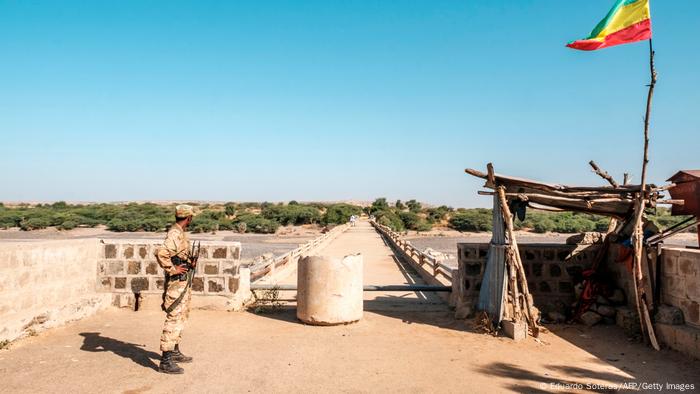
Eritrea is bordered by Ethiopia to the south, where Tigrayan forces have been locked in conflict with government forces since 2020.

The offensive is occurring along the border of the two countries

An advisor to the President of Tigray said Tuesday that Eritrea has launched a "full-scale offensive" along its border with northern Ethiopia.

"Eritrean forces have launched full scale offensive in all fronts today," Getachew Reda said on Twitter.

"Eritrea is deploying its entire army, as well as reservists. Our forces are heroically defending their positions."

Tuesday's development would mark an escalation in a war-torn region. Millions have been displaced amid a humanitarian disaster across northern Ethiopia.

US Special Envoy for the Horn of Africa Mike Hammer on Tuesday confirmed and condemned Eritrea's troop movement into Ethiopia's Tigray region.

"We have been tracking Eritrean troops' movement across the border ... and we condemn it."

Hammer made the comments after a trip to Ethiopia to help facilitate African Union-led peace talks between the Ethiopian government and Tigrayan forces, saying, "All external foreign actors should respect Ethiopia's
territorial integrity and avoid fueling the conflict."

Conflict in Tigray 

Eritrean forces fought on the side of Ethiopian federal troops in Tigray when war broke out in the region in November 2020. Eritrean forces withdrew from most areas last year.

Ethiopian forces have not commented on what role they are playing in the latest skirmishes. However, Tigrayan adviser Reda said that Eritreans are fighting alongside Ethiopian federal forces. This could not be independently verified. 

The war in Ethiopia, between the federal government and the Tigray People's Liberation Front (TPLF), resumed on August 24, breaking a ceasefire in place since March of this year.

Earlier this month, Tigrayan forces said they were ready to lay down their arms again, adding they were open to an African Union-led peace process.

Inside the cosmos: James Webb Space Telescope continues to dazzle

Images from the James Webb Telescope reveal never-before-seen details and 

beauty of the universe.


Webb's first images of Mars

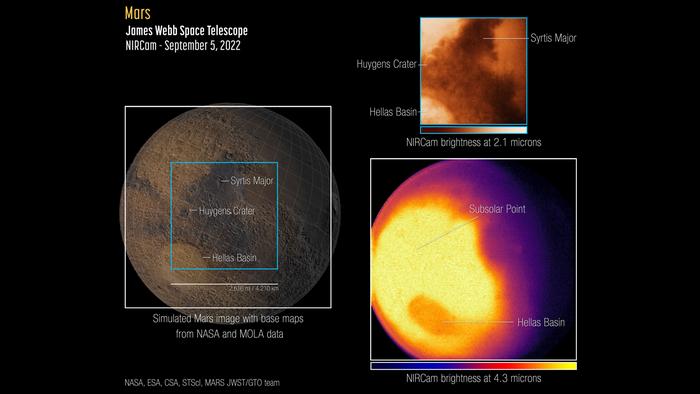
The James Webb Space Telescope has taken its first images of Mars. They show part of its eastern, sunlit hemisphere. The close-up image on the left shows surface features such as Huygens Crater, the dark volcanic Syrtis Major and the Hellas Basin. The "heat map" on the right shows how Mars emits light when it loses heat.

12345678

James Webb Space Telescope sends back pictures of Mars


NASA shared the first images of Mars captured by the James Webb Space Telescope Monday. Photo by NASA, ESA, CSA, STScI, Mars JWST/GTO team.

Sept. 19 (UPI) -- NASA announced Monday that the James Webb Space Telescope captured the blinding infrared light from Mars earlier this month.

The images show the eastern hemisphere of Mars in different wavelengths of infrared light. NASA said that the new images will help advance scientific study of the red planet.

"Webb can capture images and spectra with the spectral resolution needed to study short-term phenomena like dust storms, weather patterns, seasonal changes, and, in a single observation, processes that occur at different times (daytime, sunset, and nighttime) of a Martian day," the agency said in a blog post.

In fact, the telescope was so sensitive that astronomers had to make adjustments to prevent the blinding light from saturating the telescope's detectors.

Some of the images show the rings of the Huygens Crater, the dark volcanic rock of Syrtis Major and brightening in the Hellas Basin.

"The Hellas Basin is a lower altitude, and thus experiences higher air pressure. That higher pressure leads to a suppression of the thermal emission at this particular wavelength range [4.1-4.4 microns] due to an effect called pressure broadening," Geronimo Villanueva, the principal investigator of NASA's Goddard Space Flight Center, said. "It will be very interesting to tease apart these competing effects in these data."

The researchers are preparing a paper they will submit to a scientific journal for peer review and publication.

German data retention rules not compatible with EU law, says top court

The European Court of Justice (ECJ) has ruled that EU citizens' "traffic and location" data may not be stored except in cases of a "serious threat" to national security.

Data retention as a surveillance tool has been controversial in Germany for years

The European Court of Justice (ECJ) ruled Tuesday that data retention in Germany is not compatible with EU law.

The ECJ in Luxembourg said that internet and phone service providers may not store citizens' communications data without cause.

Limited data retention is only permissible under certain strict conditions, including fighting a "severe threat to national security."

German Justice Minister Marco Buschmann hailed the decision on Twitter saying it was "a good day for civil rights."

He said it clears the way for the introduction of new regulations. "Germany's data retention without cause is illegal. We will now swiftly and finally remove unjustified data retention from the law," Buschmann wrote. 

Buschmann favors what's being called a "quick-freeze" solution where data should be stored when there is a specific reason to do so and on the basis of a court order. 

Why the German regulations were controversial

Germany's Telecommunications Act required service providers to store their customers' telephone and internet data for four or ten weeks and to make it available, if necessary, to law enforcement authorities.

But Deutsche Telekom and internet service provider SpaceNet AG challenged it, arguing it breached EU rules.

Germany's Federal Administrative Court subsequently sought the advice of the ECJ which said such data retention can only be allowed under very strict conditions.

"The Court of Justice confirms that EU law precludes the general and indiscriminate retention of traffic and location data, except in the case of a serious threat to national security," the judges said.

ECJ makes similar ruling in French case 

On Tuesday the ECJ also ruled that a French law on mass data retention violates EU law.

"The general and indiscriminate retention of traffic data ... is not authorized, as a preventive measure, for the purpose of combating market abuse offences including insider dealing," the ECJ found.

EU member states have repeatedly argued at the ECJ that investigators need access to communications data.

In 2020 however the Luxembourg-based court ruled that storing data about citizens' communications, even if not the actual content itself, is generally illegal in the bloc.

lo/wmr (AFP, dpa, Reuters) 

While you're here: Every Tuesday, DW editors round up what is happening in German politics and society. You can sign up here for the weekly email newsletter Berlin Briefing.