Saturday, November 19, 2022

CLIMATE CRI$I$ CO$T

Alistair Vigier: Floods will have a larger impact on B.C. real estate prices than interest rates

TheOrca Author
Flooding in Abbotsford, 2021 | Photo: Stefan Labbe

Many people ignore the looming threat of climate change, despite the ever-present haze of summer wildfire smoke, and now – just weeks later – flood warnings.

Climate change will undoubtedly upend life as we know it all over the province, but some regions will surely be hit harder than others. 

Real estate prices in flood-prone regions will tank. Young families looking to get a foothold in less pricey parts of the province will have to balance their desire for stability with the economic realities of buying into a potentially disaster-prone market. People who live in places like Richmond and Delta already know the flood dangers of living at or below sea level. Ocean levels are predicted to rise, and those who can afford it might seek out higher terrain in places such as North and West Vancouver.

For people living in Metro Vancouver, the board’s own projections warn of warming temperatures, waning snowpacks and more extreme rainfalls the rest of the time. In general, Metro Vancouver residents can bet on more extreme weather events in the future as global climate change takes hold. 

Whether it’s another extended deadly heat dome or catastrophic flooding after an atmospheric river rainfall event, there’s little that will remain untouched by the destructive hand of climate change. We will, unfortunately, be forced to adapt to more frequent extreme weather events. But what about everyone’s favourite subject, real estate prices in Vancouver B.C.?

Real estate prices in Vancouver

The picture for areas affected by flooding is not pretty. According to Metro Vancouver, there is a problematic trend of increased demand for water as populations increase while snowpacks decrease. 

The city says that increased extreme rainfall events will lead to mudslides and erosion, which will impact real estate prices, and affect the drinking water supply.

As well, every city in the province will have to find the money to shore up their drainage and sewer systems, as projections indicate that more intense storm activity will “put significant pressure” on regional infrastructure. If they fail to do so, they can expect to get sued by people who lose their livelihoods in flood events that were either predictable or preventable or both. 

Devastating flooding and heavy rain

This is not speculation, since the City of Abbotsford, the Province of British Columbia and the Fraser Valley Regional District are all facing a lawsuit from residents of Sumas Prairie, which was devastated by flooding and heavy rain in November 2021. The plaintiffs in the class action claim municipal, provincial and regional governments were all aware as far back as 2015 that the dikes in the area weren’t good enough to hold back the swelling waters of the Nooksack River

It’s not only governments that need to fear lawsuits over flooding, either. The logging industry, despite how vital it is to the provincial economy, is also in the legal crosshairs of residents affected by flooding. Two years ago, people living in Grand Forks sued the provincial government and several logging companies, claiming clear cutting in the area caused or contributed to devastating flooding back in 2018. 

But the toll on the provincial economy caused by climate change is hard to focus on when the human toll is measured in people losing their homes and livelihoods and, by extension, their futures.

There are still reasons to be optimistic, though. Most cities and towns in British Columbia have plans in place to deal with and adapt to the effects of climate change. This offers a faint light at the end of the tunnel. 

With that in mind, new city councillors and mayors across the region should avoid the short-sightedness bred by the short shelf lives of municipal administrations, and continue to tackle the problem head-on. If they fail to do so, they run the risk of that faint tunnel light revealing itself to be a runaway train barrelling towards them and derailing our collective future. 

None of these issues are unique to Vancouver. Every city around the world will need to think about how climate change will affect them. If politicians do not take serious action on climate change, real estate prices in places like Richmond will be destroyed.

Alistair Vigier is CEO of ClearWaylaw.com, an online legal marketplace, and is deeply concerned about climate change.


Saskatchewan

SGI, other Sask. organizations prepare followers for the possibility of Twitter's demise

Sask. RCMP, SGI, province say they have other ways to

communicate with the public

Many on Twitter are worried the site is in its end days, due to mass amounts of employees exiting the company. (Dado Ruvic/Reuters)

The future of Twitter has been a hot topic on the social media site over the last two days. The Saskatchewan government, businesses and influencers are responding to that uncertainty.

Late Thursday evening, as the hashtag #RIPTwitter continued to trend on the troubled platform, SGI tweeted to its followers, directing them to other platforms where they can follow the government service in case Twitter does indeed kick the bucket.

"Seeing a bunch of tweets about the potential imminent demise of Twitter, it made me think, well, maybe this is something that we should remind our audience. Part of it was a bit tongue in cheek, I would say," said Tyler McMurchy, manager of media relations for SGI and overseer of all the company's social media accounts.

The Crown corporation tweets every day from two accounts. But it also uses Facebook, Instagram, LinkedIn and a TikTok account.

So what is causing all this uncertainty on billionaire Elon Musk's new toy?

Thousands of Twitter employees are estimated to have decided to leave the beleaguered social media company following a Thursday deadline from new owner Elon Musk that told staffers to sign up for "long hours at high intensity," or leave.

The departures highlight the reluctance of some of Twitter's employees to remain at a company where Musk earlier fired half of the workforce, including top management, and is ruthlessly changing the culture to emphasize long hours and an intense pace.

Musk took to Twitter late on Thursday and said that he was not worried about resignations as "the best people are staying."

Now, many of the site's users are scrambling to download their data.

The departures from the company include many engineers responsible for fixing bugs and preventing service outages, raising questions about the stability of the platform amid the loss of employees.

On Thursday evening, the version of the Twitter app used by employees began slowing down, according to one source familiar with the matter, who estimated that the public version of Twitter was at risk of breaking during the night.

What would happen

Even though Twitter is not where SGI has its biggest audience — that accolade goes to Facebook — McMurchy said the platform is still very important, as its two accounts have been live since 2010 and 2011.

"In spite of what my personal feelings about Twitter and my own personal consumption of it is, which is probably not always healthy, we would definitely lose out not having Twitter," said McMurchy.

He said Twitter allows SGI two-way communication with its audience.

"When you are on Twitter, you are able to share info very quickly with people and that's obviously something that we've appreciated, whether it's a sharing company news or information about traffic safety."

Twitter employees are seen entering the offices in New York City on Nov. 9, 2022. (Brendan McDermid/Reuters)

SGI has also used the platform to warn people about scams.

"The fact that people can quite easily retweet that, that amplifies that message and help, hopefully providing information that will keep others out of trouble."

McMurchy said SGI also uses the platform to engage with partners like law enforcement and organizations like MADD, SADD and other safety organizations. 

"If Twitter were to disappear tomorrow and we weren't able to do that, we would miss out."

Still, McMurchy said he wouldn't describe Twitter's potential demise as "catastrophic."

Tyler McMurchy, manager of media relations for SGI and overseer of all the company's social media accounts, says losing Twitter would be unfourtunate. But the company is confident it can mantain communication with its audience. (Kirk Fraser/CBC)

Meanwhile, the Saskatchewan RCMP told CBC in a statement that it does not rely solely on any one platform, such as Twitter, to share stories, news or public safety information. 

"Should any of these communication tools —Twitter, for example — cease to exist, we will continue using a variety of other means to share our messaging," said the RCMP.

The Saskatchewan government echoed this sentiment in its statement to CBC on the matter. 

"We are confident in our ability to continue communicating effectively with the people of Saskatchewan," said the province. 

In fact, the province recently launched a new Highway Hotline app. Highway Hotline's Twitter account is known for its frequent tweets on weather conditions, but the province is confident the app will fill that need. 

For now, the world waits for more dramatic news about Twitter and its new owner. 


You Can’t Code Your Way Out of the Culture 

Problem


BY GREG LAVALLEE
SLATE
NOV 18, 2022
Elon Musk at Twitter HQ -/Getty Images

On Friday afternoon, we learned that Elon Musk had asked any of the Twitter employees who “actually write software” to “email [him] a bullet point summary of what your code commits have achieved in the past ~6 months, along with up to 10 screenshots of the most salient lines of code.”

As VP of technology at Slate, my first thought when I read this was “what a tremendous waste of engineering time.” Second only to “that’s a lot of bullets to read.”

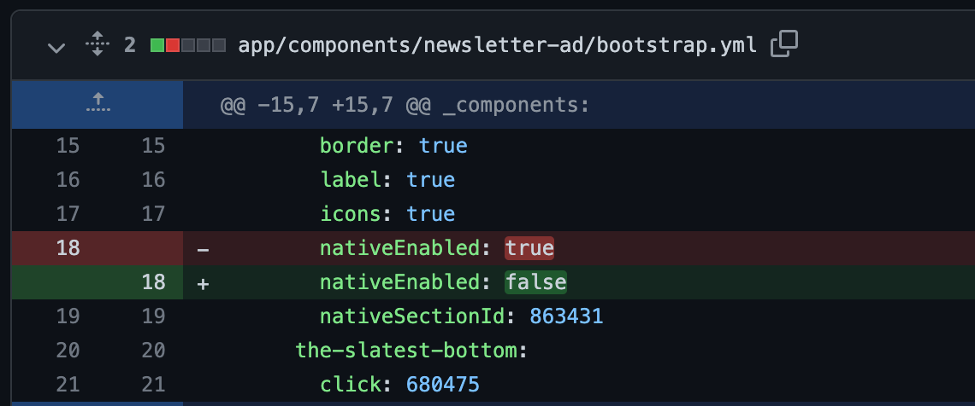
“Code commits” in software development are the changes that engineers make to a code base. Typically, software engineers use systems called “version control” that keep track of the changes that they make with notes about why they made them (sort of like “Track Changes” in Microsoft Word). Commits in isolation can be pretty boring. For example, here’s one of mine from a few days ago:

Greg Lavallee

As you can see, this code commit changed the word true to false for a configuration of an ad in one of our newsletters. Really gripping stuff!

Not all commits are one line. Some commits are huge! To ship a really big feature on a site or app, you might change thousands of lines of code. Of course, most software engineers will tell you that this is a terrible practice. Ideally, code changes touch as few lines as possible so that when products inevitably have bugs, it’s easier to track down which commit caused the issue and isolate the problem.

If we squint and put on our CEO-of-too-many-companies hats, we can kind of imagine what Musk’s hoping for with his request. It’s like a self-review for software engineers. If you ignore the “code commits” part, you could read this as him asking engineers to talk about their achievements. But we can’t ignore that “code commits” part because then he followed it up with an ask for screenshots.

Being judged by your ability to self-promote is a time-honored American mistake, but adding judgment of screenshots of your code by a guy who has never committed to your code base is an extra level of dumb. There are numerous problems with the idea of looking at a screenshot of a piece of code and then using it to judge an engineer’s abilities.

First, Musk lacks the context for why the code was written at the time it was written and who was writing it. Code written at the last minute to satisfy some advertiser’s specific request is going to be a lot different than code resulting from a multimonths effort to re-architect a system. Code written by a junior engineer probably won’t be as terse as a senior developer’s code.

Code that’s undergone only one iteration will probably look worse than a more mature product that’s been built over time. Often, the first commit for a feature is the simplest version that lets a product team test whether it will work—not whether it’s scalable or bulletproof. Should engineers show that to Musk, or is he after mature code that makes him say “wow”?

There’s also the matter of coding style. As we say in software development, There’s More Than One Way To Do It (or TMTOWTDI, pronounced tim-toady). In practice, teams will often develop preferred ways to do things to keep there from being a dozen variations of the same basic concepts. Some teams are comfortable with terseness where a lot gets done in one line of code (like list comprehensions in Python, for example). Other teams will flag cleverness during code review as hard to read and a trap for more junior programmers when they’re introduced to the code base. Would Musk understand these tradeoffs as he flips through hundreds or thousands of screenshots on his phone while he flies around in his private jet?

Even more fraught, in most real code bases, the same files are touched by dozens if not hundreds of different developers over time. One screenshot is very likely the conglomeration of hundreds of code commits over a dozen years.

This last point is, perhaps, the biggest pitfall to Musk’s approach and telling of what he doesn’t seem to understand at Twitter. Code is written by teams. Musk is asking for presentations from individuals. Many of the engineers at Twitter have worked there a long time with the same teammates. They’ve developed camaraderie, culture, and a way of doing things.

As of Friday evening, this meeting may have already taken place. I can’t help but wonder how this actually went. Did he ask engineers to get up in front of each other and explain their screenshots? Were they even allowed into the building? Did he actually get any value out of this or was it a loyalty test?

In October, there were reports of Musk authorizing Tesla engineers to review Twitter code. Bringing in senior engineers who write software for cars because they are “10x programmers” isn’t necessarily going to make a team more productive. In fact, it might have the opposite effect as those more familiar with the product feel sidelined or like they have to waste their time trying to explain the context for all their coding decisions to someone who is probably aching to type code and not listen to their explanations.

Musk is clearly going with what he knows (code) and not what he should be working on (culture). Assuming that he can read the code of Twitter’s software engineers and use it for any kind of decision making is pure hubris. But what did we expect? This is Elon Musk. He will likely continue to plow headfirst into Twitter pushing anyone out of his way that pushes back. He’ll look at a room full of engineers and silently judge them because he’s sure he’s the smartest one in the room all the while confusing cleverness with wisdom.

Just like Musk said in December 2017, I love Twitter. I hope it doesn’t go away. I’m still not sure I entirely understand what needs fixing about it. But if he thinks Twitter is going to code its way out of its problems or that code was the problem with Twitter in the first place, he’s got some surprises ahead of him.

Future Tense is a partnership of SlateNew America, and Arizona State University that examines emerging technologies, public policy, and society.

Saskatchewan

Sask. Landlord Association warns of 'alarming trend' in evictions of low-income renters

Rising rental, utility rates among the contributing factors,

association says

'As temperatures cool down and natural gas and power rates rise, it's squeezing [low-income renters] more and more,' says the CEO of the Saskatchewan Landlord Association. (David Donnelly/CBC)

The recent rise in rental and utility costs across the province — on top of increasing inflation — is leading to an "alarming trend" of evictions among low-income renters, according to the CEO of the Saskatchewan Landlord Association.

"It's kind of a perfect storm for the cost-of-living crisis that we're seeing right now," Cameron Choquette said.

Last July, SaskEnergy said it would implement a 17 per cent increase to its natural gas rates effective Aug. 1, which works out to roughly $12 more per month for the average ratepayer. The Saskatchewan Rate Review panel will have until next month to review the hike and provide its recommendations.

The provincial government also approved a four per cent increase to SaskPower rates in July, which — starting in September — added another $5 to the average ratepayer's monthly power bill.

"Especially as temperatures cool down and natural gas and power rates rise, it's squeezing [low-income renters] more and more," Choquette said. 

"It could lead to utility arrears for Crown corporations — but, ultimately, it will lead to eviction, if those arrears aren't paid."

He said that at the start of the COVID-19 pandemic, rental costs remained mostly steady due to reduced demand — largely because immigration was down and fewer post-secondary students were attending in-person classes.

But this year, with more students returning to class full time and immigration picking up again, most landlords across the province played catch-up with inflation and increased their rent by 10 to 15 per cent, Choquette said. 

Income support inconsistencies

He said another major factor contributing to the spike in evictions is inconsistency with financial assistance benefits, such as the Saskatchewan income support program.

Before 2019, a similar program saw the province paying landlords directly for rent. It also covered utilities, ensuring that housing costs didn't fall into arrears and result in evictions.

However, when the SIS program was introduced, that responsibility was passed over to the recipient.

After months of criticism, the Saskatchewan government announced last fall it would tweak the income support system to allow direct payments for rent and utilities on behalf of some "high-needs" clients who are at risk of homelessness. 

Peter Gilmer, an advocate with the Regina Anti-Poverty Ministry, said the income support program remains one of the biggest housing barriers his clients face.

"Even people with homes are in crisis because, after they're done paying their rent, they're looking at issues of food insecurity and not being able to meet their other basic needs," Gilmer said. 

Two rallies were held in Regina and Saskatoon in October 2021 to demand changes to the Saskatchewan income support program. (Dayne Patterson/CBC)

Under SIS, a single adult in Saskatoon or Regina receives $575 per month for shelter and utilities, and another $285 each month for food and all other expenses. 

Choquette said the landlord association is still pushing for the province to directly cover rent for more people in order to prevent evictions.

"Ultimately, it's a personal decision and if a tenant or a rental housing provider agree that direct payment needs to be reinstated, it should be," he said. 

"If we're going to use a housing-first model here in Saskatchewan to prevent homelessness and protect our citizens, then let's do that by making sure the rent is paid to keep a roof over their head."

ABOUT THE AUTHOR

Jessie Anton

Journalist

Jessie Anton is a Regina-based journalist with CBC Saskatchewan. She began sharing stories from across the province on television, radio and online in 2016, after getting her start in the rural weekly newspaper world. Email her at jessie.anton@cbc.ca.

NO PROVINCIAL COPS

BC

Rob Shaw: Don’t be surprised if Surrey transitions back to the RCMP

Rob Shaw 2
Photo: Surrey Police Service

There’s an old axiom in politics: The voters are never wrong. That goes doubly so in Surrey, where voters comprise one of the most important blocks of support in B.C. politics.

As Surrey goes, quite often, so does the government. So the voters there are, to use a highly technical political term, super never wrong.

Keep that in mind if you’re wondering what the BC NDP government will do over the conundrum with Surrey’s on-and-off-again switch to a municipal police force.

The NDP has bent over backwards to accommodate the wishes of the Surrey electorate during its term in office. It scrapped bridge tolls. It backed the taxi sector over ride-hailing companies. It funded an outrageously expensive $4 billion Skytrain line to Langley, after a promise by Doug McCallum garnered public support and swept him into office. And it authorized the original plan to switch Surrey from the RCMP to its own municipal police force, again because of McCallum’s dominant 2018 win.

Much of the approvals were borne out of fear of getting on the wrong side of Surrey voters.

The NDP worried McCallum had tapped into a wellspring of local discontent over transit and policing that it didn’t fully understand. Better to give the resoundingly popular mayor what he wanted, and hope the complicated network of political power brokers in Surrey’s various regional and ethnic communities remained satisfied enough to continue to support local New Democrat MLAs.

But the times have changed.

McCallum was drummed out of office in October’s municipal election, and now faces charges of public mischief over allegations he made misleading claims to police about whether his foot was run over by a pro-RCMP supporter outside a grocery store.

New Mayor Brenda Locke won with a promise to halt McCallum’s transition to a Surrey police force, and restore the RCMP. She reiterated it after her victory on election night, and this coming week the fledgling Surrey police department is expected to halt hiring new officers.

The BC NDP will get dragged into this mess whether it likes it or not, because Solicitor General Mike Farnworth has the final say over whether to allow the switcheroo back to the RCMP.

To try and influence his decision, there is immense pressure being exerted from the police department’s leadership, and its newly hired members.

The Surrey Police Service union recently released a pledge saying 94 per cent of its 275 members will refuse to rejoin the RCMP because they say it’s a toxic work environment, and lacks accountability to the local public, among other things.

The chief of the new police force and the chair of its board have also publicly challenged Locke and claimed she can’t follow through on her promise.

Other critics are pointing to the $100 million already spent on the transition, along with the complicated headache that would be required for municipal officers to transition back into the Surrey RCMP, given the different federal training standards, ranks, pensions and pay scales.

There’s a persuasive factual case that going back to the Surrey RCMP makes no sense. But there was a persuasive factual case there wasn’t enough rider density to justify building a Skytrain line to nowhere too, and that still happened. And the original plan to cancel Surrey RCMP in favour of a new force didn’t look great when you drilled down into the details either.

None of that is going to matter.

When it comes to Surrey and this provincial government, the calculus is simple: Whatever voters voted for in the last municipal election, voters get.

The NDP’s hold of 10 of the 12 seats in the region is not by accident. It is by, at almost every turn, appeasing the voters there in recognition that there are more seats to be won in Surrey than in the entire northern half of the province.

Don’t be surprised if Farnworth approves the transition back to the RCMP.

Rob Shaw has spent more than 14 years covering B.C. politics, now reporting for CHEK News and writing for Glacier Media. He is the co-author of the national bestselling book A Matter of Confidence, and a regular guest on CBC Radio.

rob@robshawnews.com

Sask. RCMP commanding officer questions province's decision to put resources into new marshal service

Money might be better spent adding resources to RCMP,

says Assistant Commissioner Rhonda Blackmore

A woman in a police uniform speaks into a microphone as she sits in a chair. Behind her is a banner reading "SARM: Over 100 years of service to rural Saskatchewan."
Saskatchewan RCMP Assistant Commissioner Rhonda Blackmore says the $20 million the province expects to spend annually on a new marshals service might be better spent on providing more resources for the RCMP. (Trevor Bothorel/CBC)

The commanding officer of Saskatchewan's RCMP is questioning the expense of creating a new law enforcement entity in the province, saying that money might be better spent providing more resources to the RCMP.

Earlier this month, the province announced plans to create a new marshals service, which will have 70 officers and cost $20 million annually.

"Why is money being put into creating a new infrastructure with a new police service when we have the infrastructure available?" RCMP Assistant Commissioner Rhonda Blackmore said during a Thursday panel discussion on rural crime at the Saskatchewan Association of Rural Municipalities midterm convention in Saskatoon.

"We have vehicles, we have buildings, training is already in place, and equipment. All of those startup costs are significant," Blackmore said.

The province has previously said the new police service is not meant to take over the duties of the RCMP or municipal forces, but will support them by responding to areas with high crime rates, arresting people with outstanding warrants, and investigating farming-related offences like theft and trespassing.

SARM president Ray Orb said the municipalities association is still learning about the marshals service plan, but anything to help the RCMP is welcome.

"The key, I think, is to be able to reduce the amount of rural crime," Orb said. "We simply don't want someone else to replace the RCMP, but we want to complement them."

Orb said the SARM board will be meeting with Christine Tell, the provincial minister for corrections, policing and public safety, to find out more about the service.

Rural crime

Blackmore said RCMP are seeing an uptick in rural crime, especially around fuel and vehicle theft.

"We've had a report of 61 thefts of fuel this year from fuel tanks and from jerry cans and [an] additional 12 thefts from actual farm equipment. So a significant number, and we're seeing those on the rise," Blackmore said.

Tim Brodt, a farmer and president of the Rural Crime Watch Association, said his association is trying to be the eyes and ears to help RCMP thwart criminal activity.

Tim Brodt is president of the Saskatchewan Rural Crime Watch Association. (Geneviève Patterson/Radio-Canada)

Brodt, who is also a councillor with the rural municipality of Edenwold, said his RM is just 15 minutes from Regina and sees a lot of vehicles pass through the area.

"The big thing is just to watch out for new vehicles and stuff because we are so close to the city," Brodt said. "The biggest part of it is just to get to know your neighbours."

Blackmore said any piece of information can help the RCMP when crime occurs.

"You never know what piece of information … might lead to that ability for us to get a judicial authorization, a search warrant, to be able to search somewhere because we were able to place someone at a location based on the information."

RCMP staffing shortage

Blackmore said her police service is looking at a number of ways to increase the number of RCMP officers in rural areas.

"We're really working hard to work on our recruiting from individuals from Saskatchewan so that we have more applicants going into our training facility," she said.

"Since April 1, 103 new cadets are coming into the province, and there's another 18 that have been posted to Saskatchewan that are still finishing up their training," she said.

Orb said it's nice to have the RCMP training facility in Regina, which could help with recruitment, but law enforcement agencies across the country are having a hard time recruiting at the moment.

"We just simply need more officers," he said.

A man in a brown suit jacket speaks into a reporter's microphone, standing in front of a banner reading "SARM."
SARM president Ray Orb says the municipalities association is looking into the new marshals service, but does not want it to replace the RCMP. (Trevor Bothorel/CBC)

One way the force is trying to find new officers is with its Indigenous recruiting unit.

"Not only do we want to better represent the population in our province and have Indigenous RCMP officers, but it also allows those individuals to have policing experience as First Nations move toward self-administered policing in years to come," Blackmore said.

Orb said the response time it takes for RCMP to respond to calls is an ongoing issue in rural Saskatchewan.

Blackmore said several factors are at play when responding to calls, like weather and road conditions as well as the priority of each call.

"But at the end of the day, the geography is simply one of the challenges that's not going to change," she said.

"One of the best things about living in rural Saskatchewan is that you have lots of open space and lots of room to move. But it's also one of the challenges that causes us some difficulty when it comes to response times."

Changing the boundaries that each RCMP detachment patrols is also an option being looked at, Blackmore said.

"Some of those boundaries were created in the 1950s and haven't necessarily changed, [while] our population has changed in the years since that time."

Shifting the boundaries could make the process of getting to calls more efficient and quicker, she said.

ABOUT THE AUTHOR

Scott Larson works for CBC News in Saskatoon. scott.larson@cbc.ca