Wednesday, December 07, 2022

Largest-ever strike by higher education workers disrupts University of California classes

Dec 6, 2022 

The largest strike of the year in the U.S. and the largest strike in higher education ever is in its fourth week. The battle is playing out at the University of California over fair compensation for graduate students, teaching assistants and postdoctoral workers, who do much of the research and teaching on campus. Tim Cain of the University of Georgia joins William Brangham to discuss.

Read the Full Transcript

Judy Woodruff:

The largest strike of the year in the U.S. and the largest strike in higher education ever is in its fourth week in California.

This battle is playing out at the University of California. And at its core is a fight over compensation for graduate students, teaching assistants and postdoctoral workers, who do much of the research and teaching on campus.

William Brangham looks at the stakes of this showdown.

William Brangham:

Judy, since mid-November, more than 48,000 of these academic workers across 10 campuses in the U.C. System have left the classroom. They have taken to the streets and the airwaves, advocating for higher wages, improved housing, and more generous leave for parents and caregivers.

This group does not include tenured professors. The university system reached a tentative agreement with some workers last week, but the strike continues, as most of the workers are saying they will stay out for as long as it takes until their demands are met.

Tim Cain is watching all of this closely. He is an associate professor of higher education at the University of Georgia, as well as associate editor of "The Review of Higher Education."

Tim Cain, very nice to have you on the "NewsHour."

Could you just lay out the stakes here? Who is it that is striking, and what is it that they're demanding?

Tim Cain, University of Georgia: Sure. It's nice to be here.

There are four groups of workers at the University of California who are on strike currently. As you mentioned, two of the groups have reached tentative agreements. Those are about to go — those are being voted upon right now.

The four groups are graduate student researchers, graduate student teaching assistants and graders, postdoctoral workers, and academic researchers. So, the academic researchers are full-time employees, but not tenure line faculty members.

So a central issue of the strike, of course, is salaries, which the unions argue are woefully low, considering inflation and the rising cost of living in California, and especially the cost of housing near U.C. campuses.

The majority of U.C. graduate students and postdocs are rent-burdened, paying more than half — more than a third of their salary on housing per month. Many pay more than half.

Again, on salaries, the unions have been negotiating for significant increases in childcare benefits and parental leave, for longer appointments to provide stability, for benefits to support eco-friendly transit, and a respectful work environment.


William Brangham:

Can you give us a sense, for people who are not that familiar with higher education and how it's structured and how work is divided, who are these individuals within that ecosystem?


Tim Cain:

I think that's a really good point, an important question.

We have these pictures of tenured faculty members doing the teaching and research in higher education, but, in the modern era, that's a really small percentage. If we think of instructional workers, it's about 25 percent are on the tenure track.

That means 75 percent of the people doing the academic work, the research in the labs or in libraries or in archives and the teaching of undergraduate students, about 75 percent of those are not tenured faculty members. They're graduate students. They're people on short-term contracts. They're postdoctoral researchers.

They are among the most precarious of workers in higher education. Many times, they're hired on a semesterly or a yearly basis. And so one of the things that, for example, the postdoctoral workers have negotiated for in the tentative agreement is a two-year appointment at the beginning of their contract, rather than a one-year appointment, to provide some stability, so that the work can be improved, but also that they can have an understanding of what their living conditions will be for a short period.


William Brangham:

So, when these workers say to the university, look, we are an enormous and integral part of your educational mission, and we are the workers in this big structure of the university system, and we need better pay and better wages and better conditions, what has the university been saying in response?


Tim Cain:

The university has been saying that the conditions are good relative to other institutions. They have said that their current offer had — would put the graduate students, for example, on par with graduate students at some of the most elite private institutions, and that, for a public institution, that the conditions are quite good.

The university does recognize the real challenges around housing at U.C. institutions. And they argue that the housing that they provide is subsidized and 25 or so percent below what the common — what the larger market would bear. So they argue that, yes, the conditions are real, but that they are working to do everything they can to meet students and other academic workers' needs.


William Brangham:

As we said, this is a huge strike in California. Do you have a sense that this is going to resonate outside of the state?


Tim Cain:

I think so.

I think it's resonating in higher education specifically. Other institutions are looking to California to see what's going to happen. The other workers in higher education are looking to California to see how this is playing out and what their options are moving forward, whether they're unionized or might have an inkling inclination to do so.

I also think this is part of the larger sort of labor movement, labor unrest that we have seen in the United States in the past year-plus. Coming out of the works of COVID, we have certainly seen people discontented with their working conditions.

We have also seen a number of people discontented with the great disparities in salaries and in compensation and in working conditions between those who own and manage businesses and those who do a lot of the work in business.

So, right now, I think that we are in an important labor moment in the country's history, and that this is going to have an impact, both in higher education writ large and in the larger economy writ large.


William Brangham:

All right, Tim Cain at the University of Georgia, thank you so much for being here.


Tim Cain:

Thank you for having me.

AS GEORGIA SHOWED

Young people believe in Democracy, and they’re disrupting elections for the better

Brianna McCullough, 20, a sophomore at Chatham University in Pittsburgh, walks through campus on Thursday, Nov. 10, 2022.
AP Photo/Gene J. Puskar
Brianna McCullough, 20, a sophomore at Chatham University in Pittsburgh, walks through campus on Thursday, Nov. 10, 2022. Support for abortion rights did drive women to the polls in Tuesday’s elections. But for many, the issue took on higher meaning, part of an overarching concern about the future of democracy. “If they can take this away, they can take anything away from people. And I don’t think that’s right.” McCullough said.

Despite fears that the youth voter turnout would fail to measure up to election trends in years past, young voters turned out in historic numbers for the 2022 midterms. As these new voters claim their power, they bring with them critical lessons for those who care about our increasingly fragile democracy.

Voters in this emerging generation are differentiating themselves in unprecedented ways — and donors, campaigns, organizations, pollsters, and consultants need to keep up. Not only do we need to be investing as early as now in the 2024 youth vote, we need to pay close attention and shape better strategies to reach them.

The youth vote can no longer be an afterthought.

One thing that differentiates this new electorate is their faith in the power of democratic institutions, including our elections.

Despite incessant attacks on the functioning of our democracy, young voters are more optimistic about its legitimacy and the future of the country overall than older votes. This is a hopeful generation that believes in our democracy and in change, and it is a positive sign for their civic engagement as voters and leaders.

Early post-election data quashes stereotypes that youth voters are apathetic, ambivalent, or cynical. Perhaps their optimism is rooted in the trust they have in their generation’s ability to make a difference. At its core, democracy functions for the will of the people, so not only do young people believe in the power of democracy, they are dedicated to making it work for each and every one of us.

It is clear that young people are tired of politics as usual. Young people are also more likely to identify as independent, or with neither majority party. This is a generation deeply in touch with their values. They want to see bold action taken on the issues impacting their communities, but they don’t see traditional political parties as the vehicle to do that.

In 2022, data shows that unlike inflation for every other age group, access to abortion was young people’s top concern, and it had the biggest impact on their likelihood of voting. Candidates’ innovative policy solutions on these issues, experiences, and qualifications will likely continue to guide young people’s votes more than party identification.

We need candidates willing to connect with voters beyond the traditional party apparatus if they want to bring these passionate young voters into their campaigns. Party leadership on both sides of the aisle should be wary of taking these new voters for granted.

Even with their faith in democracy and deep concern for issues, young people are often rightfully skeptical of a political system that seems broken, a system that both remains unresponsive to their concerns and unwelcoming of their participation. Silencing young voters in particular poses huge risks to our democracy, to progress, and to the lives of young people, especially young people of color. Various voter suppression tactics are sure to continue to surge in the coming years.

We must invest in the youth vote and we have to start today. We should put their issues front and center: fight against voter suppression and for pro-voter policies, and fund year-round voter registration, education and mobilization efforts. Every day, roughly 11,000 young people in the U.S. turn 18 and become eligible to vote. Between today and the 2024 Presidential election, approximately 8 million more young people will be able to vote.

Any party, campaign, donor, or organization failing to organize young people is already behind.

The stakes for our democracy are too high to ignore the power of this rising electorate. To leverage this moment is to support young people’s political power and the ways they are disrupting traditional election turnout.

2024 starts now.

Carolyn DeWitt is president and executive director of Rock the Vote, a national organization focused on building long-term political power for this country’s youth generation.

UN to Mark Nakba Day, Calls for End of Settlements

December 5, 2022

Amid rising violence in the occupied territories, the General Assembly passed a set of resolutions on the Middle East last week and Palestine’s U.N. envoy said “this is the end of the road for the two-state solution.”

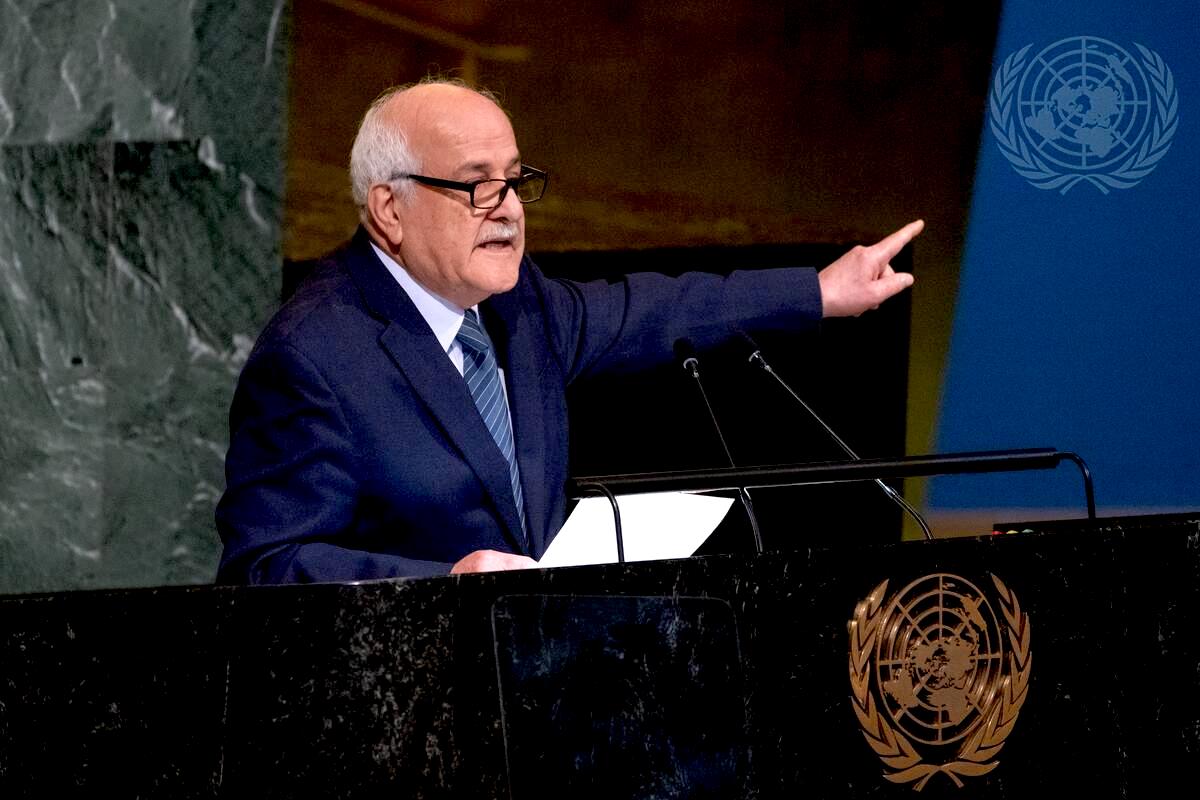
Riyad Mansour, Palestine’s envoy to the U.N., addressing the General Assembly on the question of Palestine, Nov. 30
. (UN Photo/Eskinder Debebe)

By Peoples Dispatch

The United Nations General Assembly adopted a slate of resolutions on Palestine during its 77th session last week, with Palestine’s representative declaring the two-state solution over and denouncing Israel for its continuing impunity.

Among the many resolutions, the Assembly voted with 90 votes in favor, 30 against, and 47 abstentions to commemorate the 75th anniversary of the Nakba by organizing a high-level event at the General Assembly on May 15, 2023. Israel, Australia, Austria, Canada, Denmark, Germany, Greece, Hungary, Italy, the Netherlands, the U.K. and the U.S. voted against.

The Nakba, or “The Catastrophe,” refers to the series of mass atrocities committed by Zionist forces that accompanied the creation of the State of Israel in 1948.

At least 15,000 Palestinians were killed and over 750,000 were forcibly expelled from their homes, as over 500 villages were completely destroyed. Though the Nakba certainly did not begin or end in 1948, May 15 is internationally observed as Nakba Day each year as an acknowledgment of this historic and ongoing violence and colonization of Palestine.

Israel predictably opposed the resolution, with Gilad Erdan, its U.N. ambassador, claiming the Nakba was something Palestinians had “brought upon themselves with their own aggression by waging a war against Israel,” accusing Arab states of using the Palestinian people as “political tools.” He also warned that the approval of the resolution on the Nakba would impede any chance of a peace deal between Israel and the Palestinian Authority.

“Try to imagine the international community commemorating your country’s Independence Day by calling it a disaster. What a disgrace,” Erdan said. “The Palestinians’ lies must no longer be accepted on the world stage, just as this body must stop allowing the Palestinians to continue pulling its strings. I urge you all to stop blindly supporting the Palestinians’ libels.”


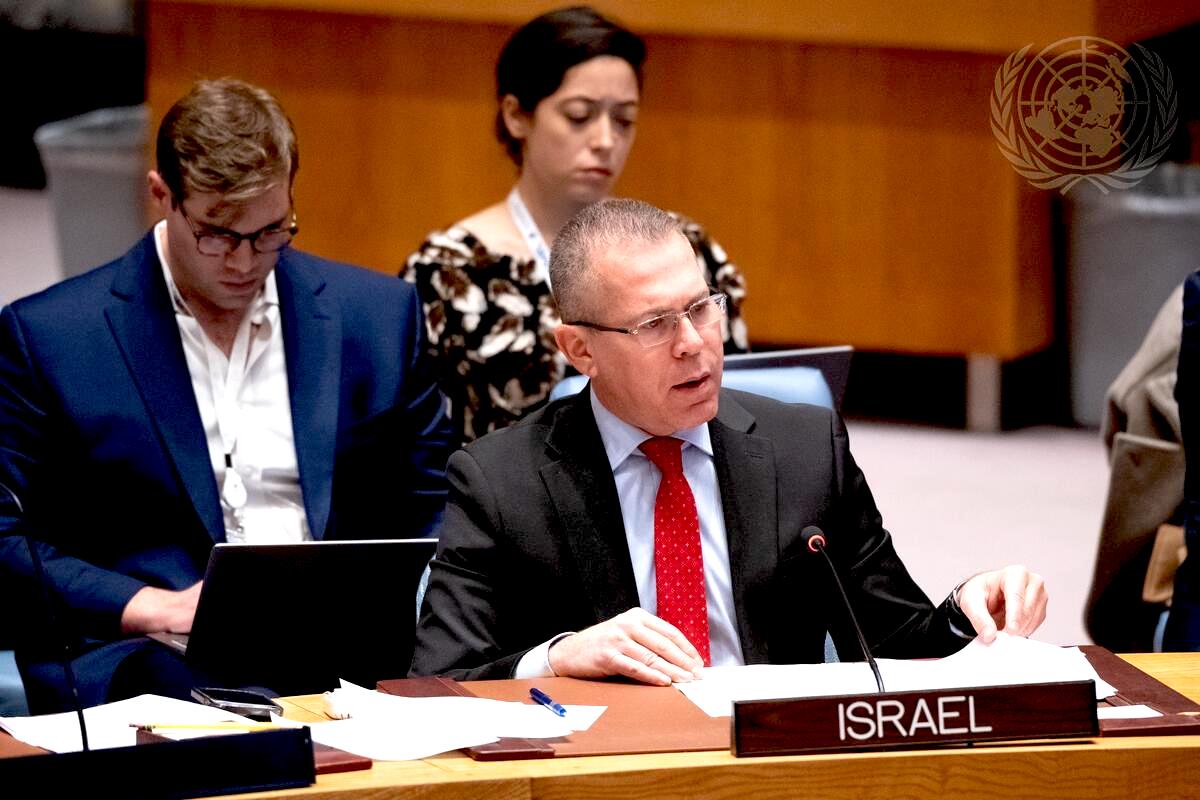
Gilad Erdan, Israel’s U.N. ambassador, addressing Security Council session on the Middle East, Oct. 28. (UN Photo/Evan Schneider)

Meanwhile, the General Assembly also adopted a resolution on the “peaceful settlement of the question of Palestine” by calling for an “immediate halt to all settlement activities, land confiscation, and home demolitions, for the release of prisoners, and for an end to arbitrary arrests and detentions.”

The Assembly underscored the need to “urgently exert collective efforts to launch credible negotiations on all final status issues and for intensified efforts by the parties towards a just, lasting peace in the Middle East…” based on existing U.N. resolutions, the Arab Peace Initiative, the Madrid terms of reference and the Quartet road map.

The text was passed with 153 countries in favor, 10 abstentions and nine against including Israel, Canada and the U.S.

The General Assembly also condemned the killing of Palestinian-American journalist Shireen Abu Akleh and voted to name a journalism training program in her honor.

Syrian Golan Resolution

Importantly, the General Assembly also passed a resolution titled “The Syrian Golan,” declaring Israel’s decision to impose its laws and jurisdiction on the occupied Syrian Golan on Dec. 14, 1981, as null and void and called upon Israel to rescind that decision.


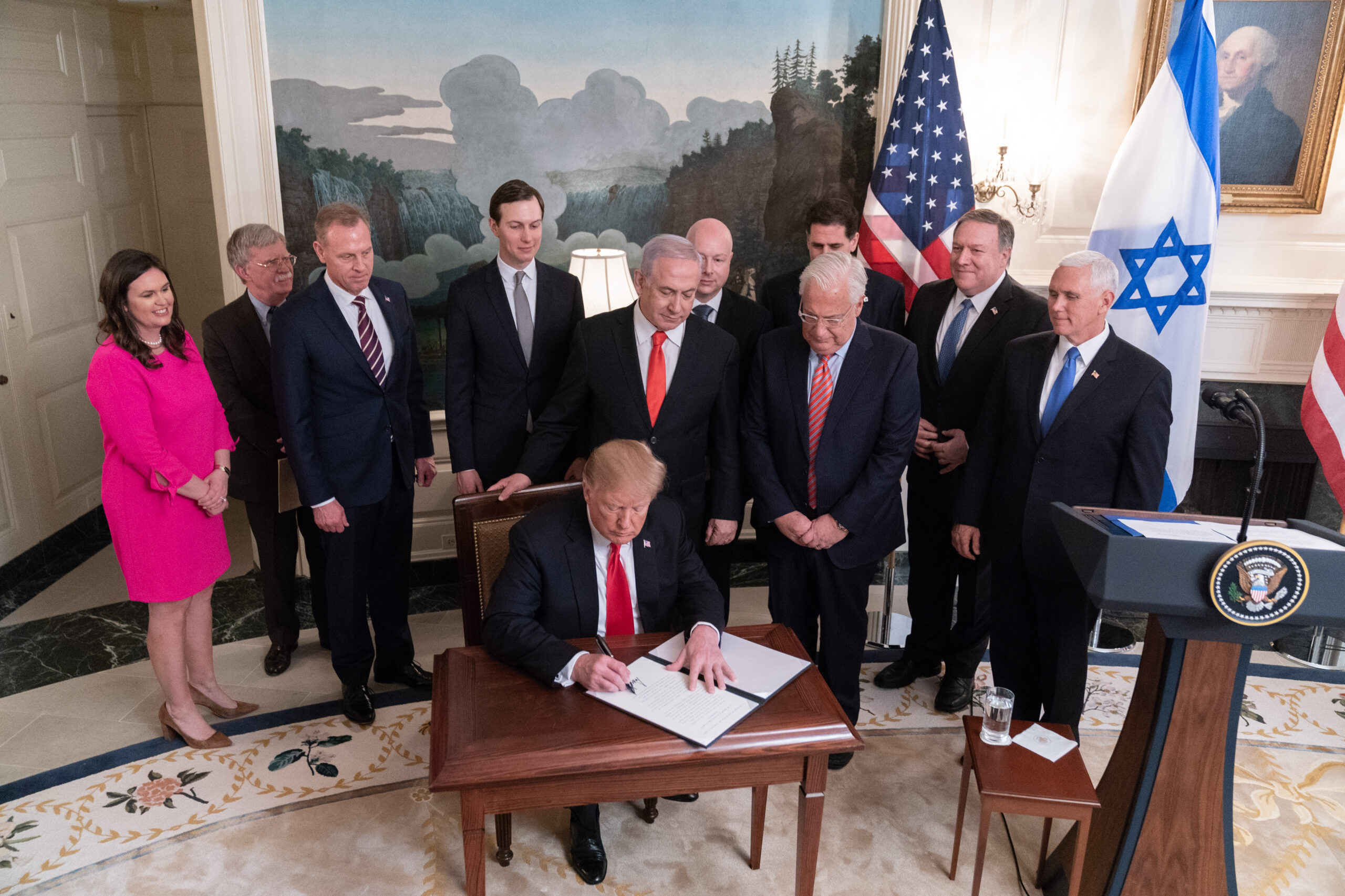
March 2019: U.S. President Donald Trump, with Israeli Prime Minister Benjamin Netanyahu looking over his shoulder, signs proclamation recognizing Israel’s 1981 annexation of the Golan Heights. (White House, Shealah Craighead)

Addressing the assembly debate on the “Question of Palestine and the Situation in the Middle East,” Riyad Mansour, the Palestinian envoy to the U.N., said that existing policies “have effectively shielded and emboldened Israel to such a point that the we are witnessing the formation of the most colonial, racist and extremist Government in the history of Israel, and that is saying something,” referring to the incoming coalition led by Benjamin Netanyahu. Mansour said:

“Some countries keep denouncing what they refer to as ‘singling out Israel,’ but what truly singles out Israel is not the amount of criticism legitimately directed against its crimes and violations, but the level of impunity it enjoys despite these condemnations .…That is not defending Israel, that is shielding its illegal occupation and annexation of our [Palestinian] land.”

He warned:

“This is the end of the road for the two-state solution…. Either the international community summons the will to act decisively or it will let peace die passively. Passively, not peacefully. Anybody serious about the two-state solution must help salvage the Palestinian state …. There is no two-state with annexation. There is no two-state without respect for our dignity, our humanity, and our rights. And if there is no two-state solution then the alternative is what we are living under now, a regime that has combined the evils of colonialism and apartheid.”

The General Assembly saw strong interventions by member countries on the lack of accountability for Israel’s violence against the Palestinian people, its practice of apartheid and the ongoing siege of Gaza. Despite what Mansour said, many countries called for meaningful steps to advance the two-state solution.

The Israeli Air Force bombed the al-Jalaa Building which housed AP press offices in Gaza, May 15, 2021. (Osama Eid, CC BY-SA 3.0, Wikimedia Commons)

A product of the negotiation process which can be traced to the 1970s, the “two-state solution” calls for the establishment of an independent Palestine, “side by side [with Israel] within secured and recognized borders.”

While the two-state solution continues to dominate discussions on Palestine in the international community, including during last week’ Assembly meetings, Palestinians have long drawn attention to the glaring deficits of this approach, including the emphasis on pre-1967 borders as a starting point, without acknowledging that these borders were themselves a product of ethnic cleansing and colonization.

Not only that, Israel has continued to expand its illegal settlements in the occupied West Bank, approved an expansion of the apartheid wall, and maintain its occupation and siege of the Gaza Strip. “The two-state solution in principle does not offer the Palestinian people their basic rights under international law — equality and right of return,” argues Haidar Eid, a professor at the Al-Aqsa University in Gaza.

The General Assembly meeting was held in the context of severe violence in the occupied Palestinian territories. At least 207 Palestinians have been killed in 2022 so far, making it the deadliest year since records began in 2005.
Al Jazeera Sues Israeli Forces in Intl Criminal Court

The news network said the killing of Palestinian-America journalist Shireen Abu Akleh in May was part of a wider attack on journalists in Palestine.


Mourners carry Shireen Abu Akleh’s body, wrapped in a Palestinian flag and a blue press jacket. (alwatan_live, CC BY 3.0, Wikimedia Commons)

By Julia Conley
Common Dreams
December 6, 2022

Following an investigation that Al Jazeera said uncovered new evidence regarding the fatal shooting of Palestinian-America journalist Shireen Abu Akleh in May, the international news network said Tuesday that it has filed a lawsuit against Israeli military forces at the International Criminal Court.

“Al Jazeera‘s legal team has conducted a full and detailed investigation into the case and unearthed new evidence based on several eyewitness accounts, the examination of multiple items of video footage, and forensic evidence pertaining to the case,” said the network in a statement.

The investigation reportedly showed that Abu Akleh and her colleagues “were directly fired at by the Israeli occupation forces” when they were covering a raid by the forces in Jenin in the occupied West Bank on May 11.

“The claim by the Israeli authorities that Shireen was killed by mistake in an exchange of fire is completely unfounded,” said Al Jazeera.

Rodney Dixon, a lawyer for the network, told reporters that the ICC should identify the individuals responsible for Abu Akleh’s killing.

“The rulings of the International Criminal Court stipulate that those responsible be investigated and held accountable,” said Dixon. “Otherwise, they bear the same responsibility as if they were the ones who opened fire.”


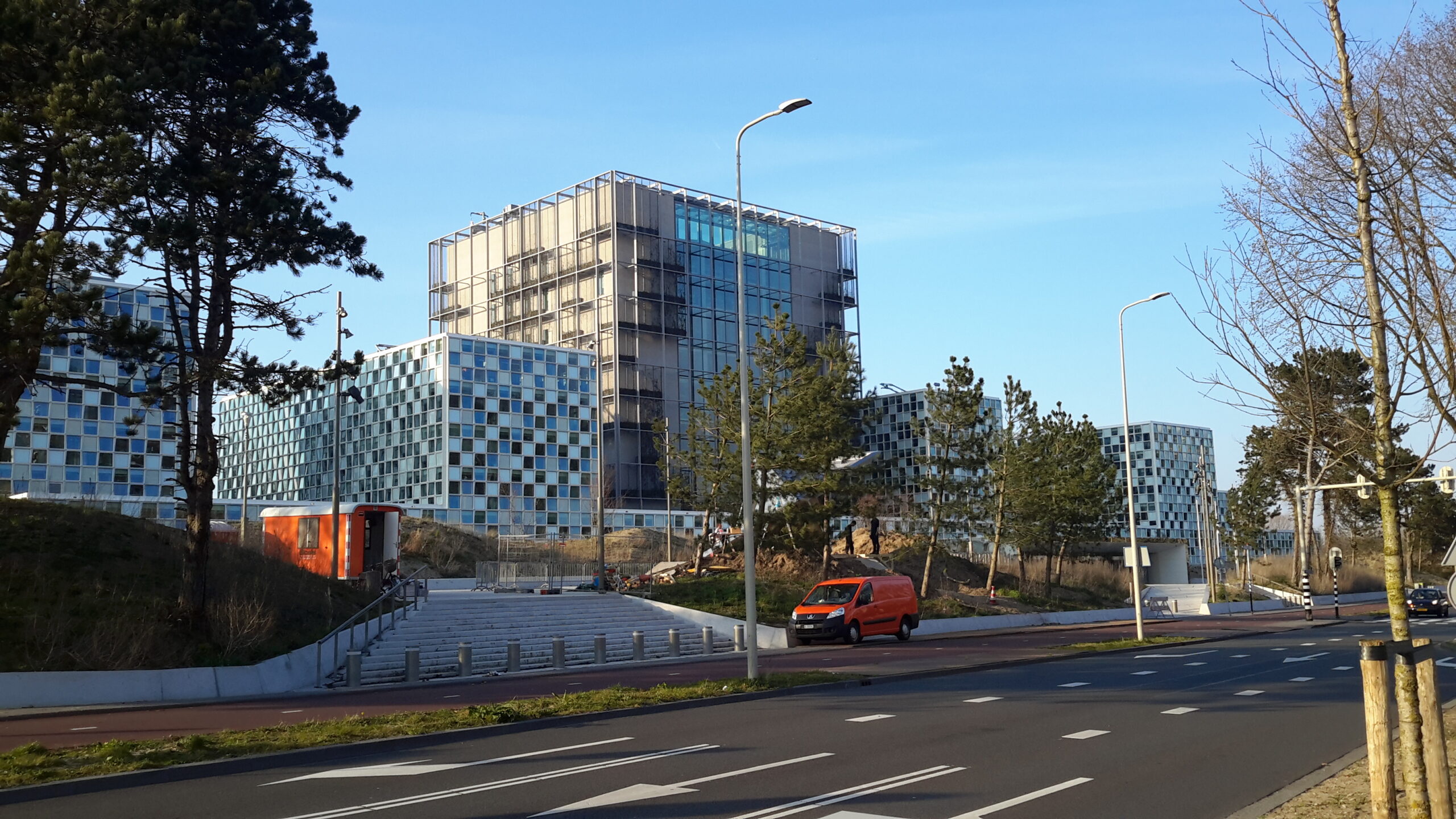
ICC in The Hague, Netherlands. (Hypergio, CC BY-SA 4.0, Wikimedia Commons)

The legal filing comes weeks after Israeli officials said they would not cooperate with an F.B.I. investigation into the death of Abu Akleh, who was wearing a vest and helmet identifying her as a member of the press when she was shot in the head.

Israel has said it conducted an investigation which found the origin of the bullet that killed the veteran Al Jazeera journalist could not be determined because it was too damaged, suggesting that Palestinian forces could have fired the bullet.

Other investigations — including a U.S.-led forensic and ballistic probe and one by the Office of the U.N. High Commissioner for Human Rights — found that Israeli forces may have unintentionally fired the weapon that killed Abu Akleh, while an independent investigation by Forensic Architecture in the U.K. and the Palestinian human rights group Al-Haq concluded that Israel Defense Forces had intentionally killed the journalist.

Dixon said the ICC should consider the lawsuit “in the context of a wider attack on Al Jazeera, and journalists in Palestine,” referring to the bombing of a building that housed Associated Press and Al Jazeera offices in May 2021.

“It’s not a single incident, it’s a killing that is part of a wider pattern that the prosecution should be investigating to identify those who are responsible for the killing, and to bring charges against them,” said Dixon.

Julia Conley is a staff writer for Common Dreams.

This article is from Common Dreams.

 Watch: Capitol cops and their families refuse to shake hands with McConnell and McCarthy


Travis Gettys
December 06, 2022

C-SPAN

Police officers and their family members refused to shake hands with Senate minority leader Mitch McConnell and House minority leader Kevin McCarthy during an awards ceremony.

The officers were awarded Tuesday with Congressional Gold Medals, the legislative branch's highest expression of national appreciation, for their defense of the U.S. Capitol during the Jan. 6 insurrection, but video showed them snub the Republican leaders in a receiving line.

"Exactly 23 months ago, our nation suffered the most staggering assault on democracy since the Civil War," said House speaker Nancy Pelosi during the ceremony. "Jan. 6 was a day of horror and heartbreak. It is also a moment of extraordinary heroism. Staring down deadly violence and despicable bigotry, our law enforcement officers bravely stood in the breach, ensuring that democracy survived on that dark day."

IN OTHER NEWS: Trump left a 'time bomb' for Republicans that can blow up in 2024: former adviser

McConnell and McCarthy each publicly condemned the riot and Donald Trump in the days that followed, but neither lawmaker voted to hold the former president accountable during his impeachment trial and they each attempted to block a congressional investigation into the insurrection.

The officers and their relatives shook hands with Senate majority leader Chuck Schumer but passed by a smiling McConnell's outstretched hand, while McCarthy held onto a box containing a ceremonial medal with both hands.

Watch videos below or at this link.

CANADA

Unemployment rate drops slightly to 5.1% in November, labour market still hot

Canada's unemployment rate is still holding near historical lows even as the Bank of Canada cranks up interest rates to slow the economy and stifle inflation.  

Statistics Canada says employment was little changed in November, with a modest gain of 10,000 jobs.

In its latest labour force survey, the federal agency says Canada's unemployment was 5.1 per cent last month, down from 5.2 per cent in October.

"The main overriding feature of today's report was that you were continuing to gain jobs in Canada," TD's director of economics James Orlando said Friday. 

"If you add up just the number of jobs gained [in] November and October, it's pretty substantial."

In October, the economy added a whopping 108,000 jobs, taking forecasters by surprise with the strong jobs gain. 

Employment rose in several industries in November, including finance, insurance, real estate, rental and leasing, manufacturing and in information, culture and recreation, while it fell in construction as well as wholesale and retail trade.

Statistics Canada also noted in its report that the employment rate among core-aged women aged 25 to 54 hit 81.6 per cent in November, a record high in comparable data going back to 1976.

Canada’s labour market has remained remarkably strong despite signs of an economic slowdown. The unemployment rate fell to a record-low of 4.9 per cent in the summer and has edged up only slightly since then.

"The economy is clearly still doing very well. When you look at the labour market, you have not seen a slowdown," Orlando said. 

Centre for Future Work director Jim Stanford noted Canada's unemployment rate is quite low by historical standards. At the same time, he said, it's difficult to gauge where the labour market is headed. 

"We had several months of very weak reports through the summer and early autumn, then we had a gangbusters report in October. And now we're kind of back to a treading water kind of report," he said. 

Wages have continued to growth in October, though at a rate that lags inflation. 

In November, wages were up 5.6 per cent compared to a year ago, marking the sixth consecutive month of above 5.0 per cent growth.  In October, the annual inflation rate was 6.9 per cent.

Bank of Canada governor Tiff Macklem has characterized Canada’s low unemployment rate as unsustainable and said it’s contributing to high inflation.

"If you think the unemployment rate was already too low, then today's number is bad news." Stanford said. 

The central bank is hoping to see the labour market ease in response to its aggressive interest rate hikes this year.

Recent research from the Bank of Canada suggests it believes it can bring inflation down without causing a large increase in unemployment.

Stanford is critical of the Bank of Canada's assertion that a tight labour market is to blame for inflation given real wages have fallen. 

"It's, I think, mathematically impossible to say that wages are the source of inflation," he said. 

The central bank began raising interest rates in March, when it delivered the first of six consecutive rate hikes, and is expected to deliver another interest rate increase next week.

As the Bank of Canada nears the end of the rate hiking cycle, markets will be watching out for any indication next week on whether to expect another rate hike in January.

Orlando said job report Friday supports the forecast of a half-percentage point rate hike next week, with the door open to another rate hike in January. 

"I don't think by January you're going to have enough data to convince you that the economy has turned enough," he said. 

"So you probably will likely see the policy rate getting into about 4.5 per cent [in] early 2023."

This report by The Canadian Press was first published Dec. 2, 2022.

Outgoing Enbridge CEO talks pipelines, industry transition

ENBRIDGE INC (ENB:CT)

53.79 0.47 (0.87%)
As of: 12/07/22 4:01:40 am
REAL-TIME QUOTE. Prices update every five seconds for TSX-listed stocks
Jan '22Apr '22Jul '22Oct '224550556065
Chart Type - 1year
See Full Stock Page »

The outgoing chief executive of Enbridge Inc. discussed how the energy giant has changed during his 10 years at the helm, with an expanded roster of energy sources and responses to growing environmental concerns that have been aimed at the industry.

Al Monaco spoke with BNN Bloomberg's Tara Weber ahead of his Jan. 1 retirement from the president and chief executive officer position. Current Enbridge board chair Greg Ebel is set to replace him in the top job.

Monaco said he’s seen the industry improve in response to political opposition over the last decade, with a greater focus on building relationships with Indigenous communities and responding to consumer demand for more sustainable energy sources.

RENEWABLE ENERGY TRANSITION, NATURAL GAS

Enbridge has tried to look to the “future of energy,” Monaco said.

The company has focused on growing its natural gas assets, he said, and has added a “small component of renewables” as Enbridge looks to expand its wind, solar, hydrogen and carbon capture positions.

That has been balanced with what Monaco calls “conventional energy” like oil. He predicted the global energy transition may take some time as companies like Enbridge diversify their assets.

“I do think we're on the right track,” he said. 

PIPELINE OPPOSITION

Pipelines and other energy infrastructure have been a “point of attack” as opposition to fossil fuels has grown, Monaco acknowledged, saying the company has had to focus its messaging to the public in response.

Opposition has plagued some of Enbridge’s expansion plans over the last decade. The Line 3 replacement pipeline project was completed years behind schedule after controversy in Minnesota. Enbridge is still facing legal battles related to the Line 5, an oil supply conduit that the state of Michigan is seeking to shut down over environmental concerns.

Monaco said he’s not surprised that Line 5 has seen such pushback because pipelines have become a focal point of environmental and climate change concerns for many.

“It’s sort of the meat in the sandwich and it’s very critical, so if you want to attack conventional energy that’s the place to start, and I think it’s been effective if you want to look at it from an opposition point of view,” he said.

In response, Monaco said the company has focused on communicating with the public about the purpose of energy infrastructure, and has stressed the importance of affordable and reliable energy sources – an issue he said came into greater focus during the pandemic.

COMMUNITY ENGAGEMENT, FIRST NATIONS OWNERSHIP

Completing energy projects now takes strong “ground game” and engagement with communities, Monaco said, pointing to that strategy as key to the ultimate completion of the beleaguered Line 3 project.

He said Enbridge had to engage more with Indigenous communities in the U.S. and Canada to complete the project and said such relationships are critical to the future of the industry, pointing to the growing trend of Indigenous ownership stakes in energy infrastructure projects.

“Today, it's very common to talk about Indigenous ownership as part of how you run assets in the future,” Monaco said. “I think it's going to be a critical component.”

NEXT STEPS

Looking back at his time as CEO, Monaco said he’s “pleased” with the safety changes the company made after a 2010 oil spill in Michigan. He said he’s also proud of the company’s expanded presence on the U.S. Gulf Coast – allowing for more participation in the global energy market – and its engagement with Indigenous communities, as well as steps to reduce the company’s carbon footprint like using carbon capture technology and adding renewable sources.

Monaco did not give hints about his next career move, but said he’s “looking forward to doing some other things.”