Monday, March 27, 2023

WORKERS CAPITAL
Retirement funds for teachers and firefighters are caught in ESG crossfire


Nidhi Sharma
Sun, March 26, 2023 

A growing wave of public pension administrators, business groups and labor unions are sending a message to Republicans looking to curb so-called “woke” investing: our money, our choice.

Regulatory efforts to stop money from going to funds that consider environmental, social and governance issues, commonly known as ESG investing, have typically targeted big Wall Street asset managers. Now, public pensions are increasingly caught in the crosshairs and with them the retirement funds of teachers, librarians, firefighters and other public service employees.

But while opponents of the anti-ESG restrictions are getting louder, their dissent hasn’t yet stopped the tide.

ESG investing — a market forecast to hit $33.9 trillion globally, or more than one-fifth of all assets under management, by 2026 — remains loosely defined, and some proponents have resisted regulatory efforts to tighten criteria around what qualifies for the label. Nevertheless, many conservatives have decried the practice as part of an activist liberal agenda and are pushing to limit it.


At least seven red states have implemented or are considering regulations banning public entities from considering ESG factors when investing state resources, according to a Harvard University report. Eight states have advanced bills or directives that target companies or banks accused of boycotting investments in oil and gas or firearms.

In Indiana, Texas and Kansas, Republicans have introduced bills that would prohibit ESG investing by state retirement systems, drawing fresh blowback from labor groups and others.

“These states talk about limited government, the free market, and now are using government regulations and legislation to actually curtail the responsibilities and the fiduciary obligations of retirement systems,” said Randi Weingarten, the president of the American Federation of Teachers, which boasts some 1.7 million members. “They are using the government to intrude upon and undermine the needs of retirees.”

Public pension assets in the United States total some $5.2 trillion, according to data from both the National Association of State Retirement Administrators and the Federal Reserve. Industry watchers say limited public information, among other factors, makes it difficult to estimate how much of those funds are invested in ESG-related products.


However, state and municipal pension funds have shown strong support for ESG investing, backing resolutions in favor of the practice about 90% of the time in 2021, compared with 63% among general shareholders, Morningstar researchers found last summer.

Whether ESG investments advance the goals under which they’re marketed has been debated for years. For example, some major asset managers with substantial pension holdings, such as BlackRock, continue to invest in fossil fuel companies while also advocating publicly on behalf of ESG investing.

That has drawn criticism from anti-ESG conservatives, as well as from its proponents who want tighter and more standardized criteria. In his annual letter to shareholders last week, BlackRock CEO Larry Fink omitted the term “ESG” altogether and treaded lightly around climate and energy policies, while acknowledging, “For years now, we have viewed climate risk as an investment risk. That’s still the case.”

“But as I have said consistently over many years now,” he wrote, “it is for governments to make policy and enact legislation, and not for companies, including asset managers, to be the environmental police.”

According to Lisa Sachs, director of the Columbia University Center on Sustainable Investment, ESG investing doesn’t automatically guarantee sustainability — and its critics tend to misrepresent the practice for political reasons.

“The anti-ESG movement is a political show because it’s creating an enemy when there isn’t one, in order to appear defensive of the fossil fuel industry,” she said.

This month in Texas — the center of the U.S. oil and gas industry — Republican state Sen. Bryan Hughes proposed adding pension funds to the list of entities already barred from considering social, political or ideological factors when making fiduciary decisions.

The state passed a law in 2021 requiring the comptroller to maintain a list of public companies and funds that have engaged in alleged boycotts of energy companies. It requires all state entities to divest from the listed financial institutions or funds, which include certain banks that underwrite municipal bonds.

Criteria for the list include scoring high on indicators that describe engagement from board members on climate risk. BlackRock is on the list, despite publicly emphasizing that it has invested $170 billion in U.S. public energy companies.

BlackRock referred a request for comment to Fink’s letter.

As Sachs sees it, the energy transition is underway with or without ESG investing, and legislators who blacklist businesses involved in the practice are only hurting their own economies. She said that limiting the pool of investment options available to pension funds can increase the costs and lower the returns for retirees.

“It’s the firefighters and the municipal workers who are really going to see the financial impact on their pension funds, as a result of constraints on financial institutions and options,” she said.

Rick Levy, president of the Texas AFL-CIO labor union, said legislators are playing politics with working people’s money. “It’s extremely upsetting that state leaders are taking aim at investment companies trying to maximize returns for their shareholders — by turning it into a political event that negatively impacts our pensions.”

The partisan rhetoric may be overstating the policy impacts. As researchers at S&P Global Market Intelligence wrote in October, many states that banned retirement funds from ESG investments hadn’t yet implemented those rules, limiting the practical impact on fund managers’ activities.

Still, several state research agencies have flagged potentially substantial costs to pensioners from the proposed restrictions on ESG investing.

In late February, the Republican-led Indiana House approved a bill that would require the Indiana Public Retirement System and the Indiana State Police Pension Trust to divest from any ESG funds and cease business with offending companies.

Weeks earlier, the Indiana Legislative Services Agency, a nonpartisan government office, had published an analysis concluding ththe bill could cut investment returns for retirees by $6.7 billion over the next decade, a finding that fueled opposition to the legislation.

The Indiana Chamber of Commerce, a business group that has long maintained friendly ties with Republican lawmakers, came out against the measure. “We’ll continue to voice our strong opposition to House members as well as key senators,” the group tweeted after the cost analysis was released.

Indiana Chamber CEO Kevin Brinegar said he has heard concerns from several members, many of whom are in the banking industry. He added that the chamber has always believed markets should function with minimal government interference.

State Rep. Ed DeLaney, a Democrat who opposes the legislation, described ESG investing as a critical tool for weighing the full set of potential risks to the performance of certain assets.

“The fundamental proposition is that our pension should not be invested in the most productive way, to get the best return at the lowest risk — but instead should be invested in a way to protect certain favored industries,” he said.

A spokesperson from the Indiana Public Retirement System said it doesn’t consider ESG factors in its investment decisions, adding that “INPRS has and will continue to engage with the Indiana General Assembly on any financial impacts created by HB 1008 and work toward a solution.”

Indiana’s bill echoes similar legislation in Kansas, where GOP state senators recently proposed the Kansas Protection of Pensions and Businesses Against Ideological Interference Act. A state-issued impact statement found that the measure could cost the Kansas Public Employees Retirement System as much as $3.6 billion in returns over the next 10 years. The state retirement system has pushed back against it.

And in Kentucky, a law passed last year that requires the state treasurer to maintain a list of companies that allegedly boycott energy companies drew pushback from the Kentucky County Employees Retirement System. In February, the group stated that it would not divest as instructed from ESG holdings, including BlackRock, citing its fiduciary duties to retirees.

Not all state pension funds have been fighting for the right to apply ESG principles. Vermont’s pension commission has raised concerns about Democratic efforts to compel the state’s roughly $6 billion in pension assets to divest from fossil fuels — a category that has seen strong returns after the war in Ukraine drove up energy costs last year.

The ESG battle has been bubbling up in Washington, too. On Thursday, the House failed to override President Joe Biden’s first veto, in which he blocked a bipartisan bill that would have nullified Labor Department rules permitting some retirement plans to consider ESG factors.

This article was originally published on NBCNews.com
Germany braces for transport 'mega-strike'

Deborah COLE
Sun, March 26, 2023 


Transport staff across Germany are set to stage a major strike on Monday to push for wage hikes in the face of brisk inflation, as passengers brace for serious disruptions.

Workers at airports, ports, railways, buses and metro lines throughout much of Europe's top economy are expected to heed a call by the Verdi and EVG unions to the 24-hour walkout.

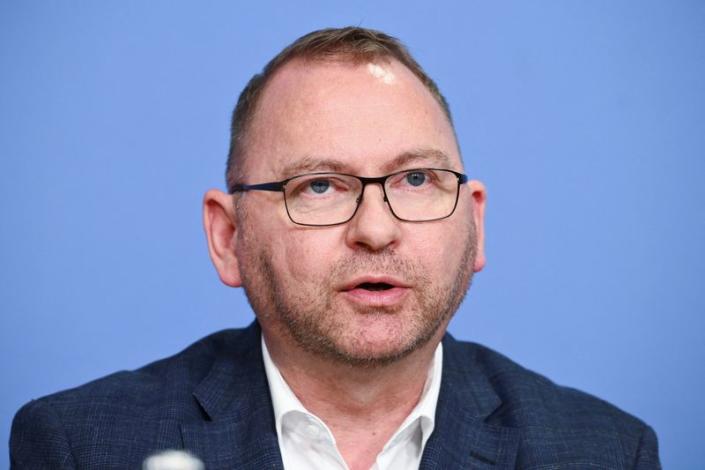
"A labour struggle that has no impact is toothless," Verdi chief Frank Werneke told public broadcaster Phoenix.

He acknowledged that it would inflict pain on many commuters and holidaymakers, "but better one day of strain with the prospect of reaching a wage agreement than weeks of industrial action".

To prevent supply gaps, Transport Minister Volker Wissing has ordered states to lift restrictions on truck deliveries Sunday, while asking airports to allow late-night takeoffs and landings "so stranded passengers can reach their destinations".

Verdi represents around 2.5 million public sector employees, while EVG represents 230,000 workers on the railways and at bus companies.

The rare joint call for a strike in Germany marks an escalation of an increasingly ill-tempered dispute over a pay packet to blunt the impact of surging inflation.

Employers, mostly the state and public sector companies, have so far refused the demands, instead offering a rise of five percent with two one-off payments of 1,000 ($1,100) and 1,500 euros, this year and next.

Verdi is demanding a rise of 10.5 percent in monthly salaries, while EVG is seeking a 12-percent rise for those it represents.

- 'Massive impact' -

State-owned rail company Deutsche Bahn (DB) has completely suspended all long-distance trains for the day and many regional and local connections will be at a standstill.

DB's Martin Seiler, responsible for human resources on the company's management board, described the nationwide strike as "groundless and unnecessary" and urged the unions to return to the negotiating table "immediately".

The company expects the walkout to have a "massive impact" on its entire rail network and has pledged to inform its customers "as quickly and comprehensively as possible" about cancellations and delays.

The German airport association, which estimated about 380,000 air travellers would be affected, said the walkout "went beyond any imaginable and justifiable measure".

Employers have accused labour representatives of contributing to a wage-price spiral that will only feed inflation, while unions say their members have been asked to bear the burden of the soaring cost of living.

"Petrol and food prices have risen, I'm feeling it in my wallet," Timo Stau, 21, told AFP at a protest on Thursday in Berlin.

- 'Economic hardship' -


Like in many other countries, Germans are struggling with high inflation -- it hit 8.7 percent in February -- after Russia's invasion of Ukraine sent food and energy costs soaring.

The "mega-strike", as local media have dubbed it, follows industrial action in recent months in several German sectors, from the postal service to airports and local transport.

A third round of salary negotiations for public-sector workers is due to begin on Monday.

Earlier in March, Bremen, Berlin, Hamburg and Hanover airports cancelled more than 350 flights after security staff walked out. Bus and metro staff in Frankfurt also staged a strike.

Some unions however have succeeded in winning big pay increases.

Postal workers won average monthly increases of 11.5 percent earlier in March, and in November IG Metall, Germany's biggest union, won hikes totalling 8.5 percent for almost four million employees that it represents.

Although Monday's walkout is set to create travel chaos, it pales in comparison to the industrial disputes rocking neighbouring France, where President Emmanuel Macron's pension reform plans have ignited voter anger.

Rubbish is gathering in the streets of Paris due to a rolling strike by garbage collectors, while blockades of oil refineries by striking workers are beginning to create fuel shortages around the country.

bur-dlc/hmn/jj/lb

In inflation-hit Germany, massive strike over pay to cripple transport

Sun, March 26, 2023 
By Klaus Lauer and Tom Sims

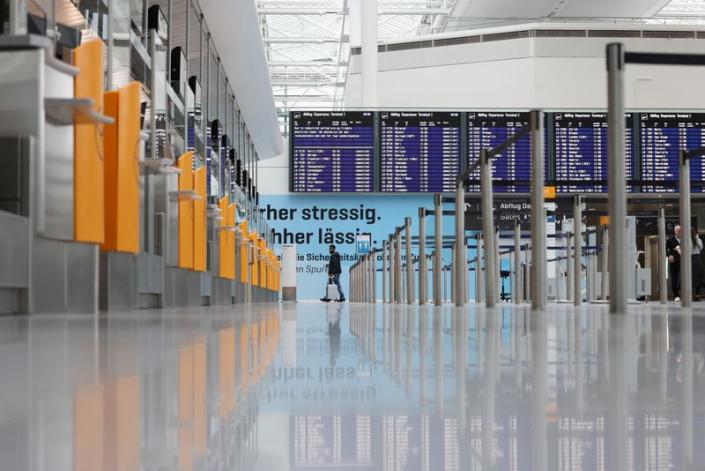
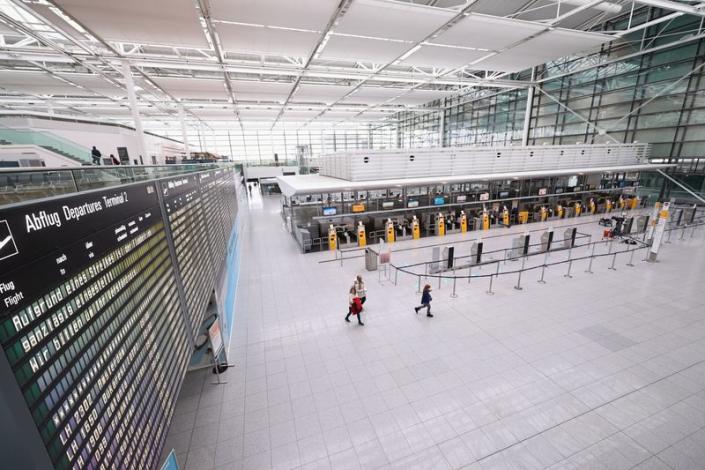
BERLIN/FRANKFURT, March 27 (Reuters) - A massive strike in Germany was set to begin early Monday, crippling mass transport and airports in one of the biggest walkouts in decades as Europe's largest economy reels from soaring inflation.

In the hours running up to the strike, both sides dug in their heels, with union bosses warning that considerable pay hikes were a "matter of survival" for thousands of workers and management calling demands and the resulting action "completely excessive".

The strikes, which were scheduled to mainly start just after midnight and affect services throughout Monday, are the latest in months of industrial action that has hit major European economies as higher food and energy prices dent living standards.

Germany, which was heavily dependent on Russia for gas before the war in Ukraine, has been particularly hard hit by higher inflation as it scrambled for new energy sources, with inflation rates exceeding the euro-area average in recent months.

German consumer prices rose more than anticipated in February - up 9.3% from a year earlier - pointing to no let-up in stubborn cost pressures that the European Central Bank has been trying to tame with a series of interest-rate increases.

It has been a painful adjustment for millions of workers throughout the country as costs of everything from butter to rents rise after years of fairly stable prices.

"It is a matter of survival for many thousands of employees to get a considerable pay rise," Frank Werneke, head of the Verdi labour union, told Bild am Sonntag.

France has also faced a series of strikes and protests since January as anger mounts over the government's attempt to raise the state pension age by two years to 64.

But officials in Germany have made clear that their fight is only about pay.

The Verdi union is negotiating on behalf of around 2.5 million employees in the public sector, including in public transport and at airports. Railway and transport union EVG negotiates for around 230,000 employees at railway operator Deutsche Bahn and bus companies.

Verdi is demanding a 10.5% wage increase, which would see pay rising by at least 500 euros ($538) per month, while EVG is asking for a 12% raise or at least 650 euros per month.

Deutsche Bahn on Sunday said the strike was "completely excessive, groundless and unnecessary".

Employers are also warning that higher wages for transport workers would result in higher fares and taxes to make up the difference.

($1 = 0.9295 euros) (Reporting by Tom Sims and Klaus Lauer; Editing by David Holmes)


German workers' strike over pay is matter of survival, union boss tells Bild
Strike called by the German trade union Verdi in Munich

Sunday, March 26, 2023

Labour vows to ‘secure BBC’s independence’ after Lineker row

Toby Helm, Political Editor
Sun, 26 March 2023 

Photograph: Peter Byrne/PA

A root and branch review of the BBC’s operations – including how its chairman and board are appointed – was announced on Sunday by Labour amid growing doubts about the corporation’s political independence under the Tories, and its future as a public service broadcaster.

The move follows bruising rows over Gary Lineker’s suspension from Match of the Day for criticising language used by ministers to describe immigration policy, and the appointment by former prime minister Boris Johnson of Conservative donor and supporter Richard Sharp as the BBC’s chairman.

In recent weeks there have also been reports of the BBC having come under pressure from the government to change its coverage of Brexit and the Covid-19 pandemic for political reasons.

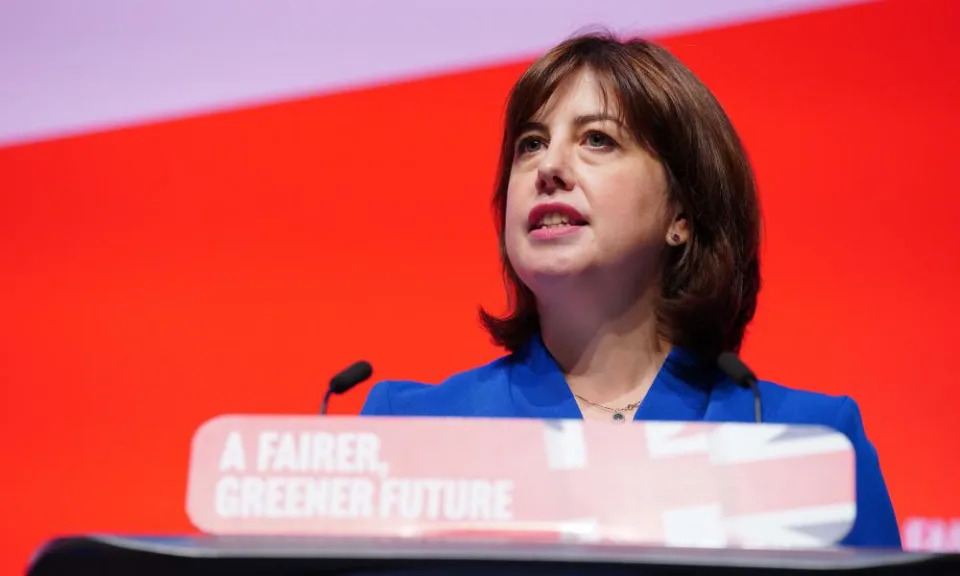
Labour’s BBC review panel, made up of leading media and business figures, will meet for the first time this week. It is being set up by Lucy Powell, the shadow culture secretary, who said the appointment of Sharp after he had helped Johnson secure an £800,000 loan, epitomised the lack of transparency and “revolving door” culture between government and corporation that had damaged the BBC’s reputation.

“The whole appointment of Sharp stank,” she said. “We need to cherish the BBC as a great national institution at the heart of British life and that involves looking at how we secure its reputation for independence from government and its place in a rapidly changing global media landscape.”

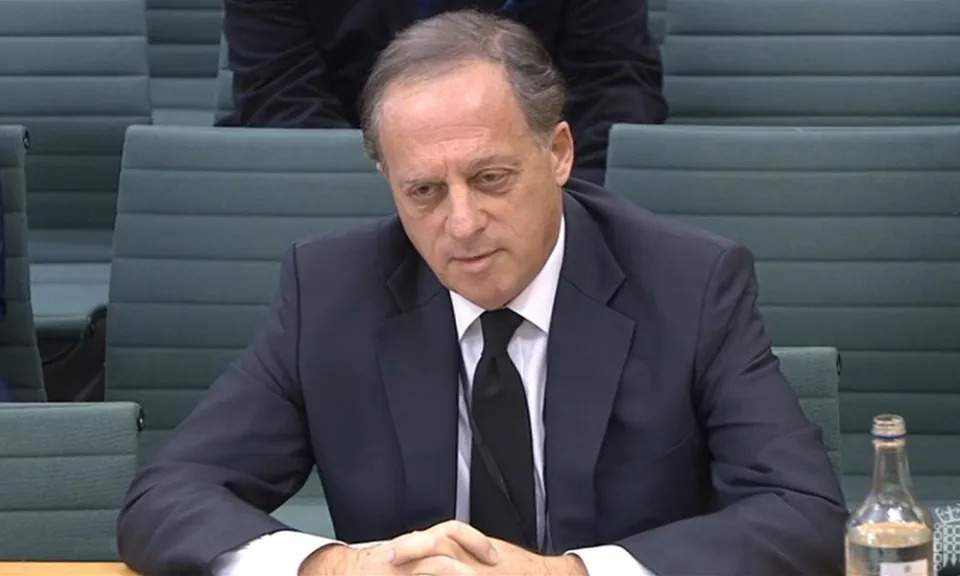
BBC chairman Richard Sharp is questioned by MPs about how he helped Boris Johnson secure a loan. Photograph: House of Commons/PA

She added: “There are serious headwinds. The media climate is changing, with competition from online streaming giants, the switch to digital over linear TV, rising costs and stalled progress on prominence. The BBC consistently finds itself at the centre of culture wars and questions over its impartiality and independence. Continuing the status quo is not an option.”

While Rishi Sunak’s government has toned down the hostile attitude adopted by Boris Johnson’s culture secretary, Nadine Dorries, who seemed intent on scrapping the licence fee altogether, many Tories still see the corporation as having an ingrained leftwing bias that needs to be erased by radical reform. Labour, by contrast, wants to position itself as a supporter of the best traditions of the BBC and its role at home and overseas, while also being open to change, including about the precise form the licence fee should take.

The Labour panel includes TV producer Steve Morrison, a former Granada TV director of programmes and chief executive who has had roles in the BBC; James Purnell, a former BBC director of strategy and culture secretary under Labour; TV presenter June Sarpong, who was formerly the BBC’s first director of creative diversity, and Lou Cordwell, chair of the Greater Manchester Local Enterprise Partnership, who worked with the BBC on a range of high-profile digital projects.

Labour’s move to highlight the importance of the BBC to the country and its image abroad reflects its determination to stress patriotic themes in the run-up to the next general election. It is also keen to play up the growing impression of Tory influence over the BBC before an election in which it fears an onslaught by rightwing sections of the media, such as the Daily Mail and Daily Telegraph, and will need to rely on the BBC for impartiality.

The panel’s terms of reference will include how to prepare for the BBC’s next charter renewal in 2027; future funding, including the licence fee and what services the BBC would provide from it; independence and impartiality; and how the BBC can compete and thrive in the digital age.

Related: Stop kicking the BBC on bias. A right turn was needed, but now it’s gone too far | Roger Harrabin

Labour has been planning the review for months as major decisions on funding and the charter approach. But the BBC’s role has come into the political spotlight following explosive claims last year by the former presenter Emily Maitlis that a Tory “agent” was “acting as the arbiter of BBC impartiality” from his seat on the corporation’s board. Although Maitlis did not name him, she was referring to Theresa May’s former director of communications, Robbie Gibb, who has denied the claims. Gibb is one of four BBC board members whose posts are in the gift of the government.

Sharp is now the subject of two separate investigations. The appointment is being probed by an “independent person” after William Shawcross, the commissioner for public appointments, recused himself for having met Sharp previously, and the BBC itself is investigating whether there has been any breach of its conflict of interest rules since he joined the corporation.

Last month the Commons digital, culture, media and sport committee criticised Sharp for omitting details about his involvement in connecting the Cabinet Office with a businessman interested in offering Johnson financial assistance when he was applying for the post of BBC chairman. It said such omissions “constitute a breach of the standards expected of individuals” applying for prominent public appointments. A spokesman for Sharp expressed regret that he had not made information available to the MPs who vetted his appointment.

Labour says it is committed to retaining the BBC as a universal, publicly owned, publicly funded public service broadcaster.

A BBC spokesperson said: “The BBC plays an important part in national life and we look forward to engaging with the review.”

• This article was amended on 26 March 2023 to add a statement from the BBC received after publication.
‘Shaming’ level of misery caused by UK social care uncovered by major survey

Michael Savage
Sun, 26 March 2023 

Photograph: Alamy

Dissatisfaction at social care services among those who have had to deal with them has spiralled to “unbelievably distressing” levels, according to Britain’s most comprehensive study of the public’s experiences.

Two-thirds of people who have used or had contact with social care – for themselves or someone else – were dissatisfied, an analysis of the British Social Attitudes survey has revealed.

And among the public as a whole, only one in seven British people are satisfied with social care services, according to the survey, which is regarded as the gold standard for measuring public opinion.

The findings, revealed by leading health thinktanks the Nuffield Trust and the King’s Fund, show that unhappiness has been growing since 2018, and come against a background of continued complaints that the system is underfunded, that low pay makes it difficult to retain staff and that a promised cap on costs has been delayed until after the next election.

Andrew Dilnot, the economist behind the plan to cap social care costs, said the results were “something we should be ashamed of”, and that inaction was causing misery – for people delivering care and for the people who need it.

He told the Observer: “The reason British Social Attitudes survey numbers are so important is that they show how miserable we’re making the lives of people who need care and their families at a time when we should be looking after them. We’re just going to get more and more of that. It doesn’t have to be like this.

“Compared with our health service or our education system, the amounts of money involved in social care are small. We have somehow not managed to make it a big enough priority.”

Broken services, demoralised staff and the increasing strain on friends, family create a sobering reality
Laura Schlepper, researcher

The alarming care findings have been released ahead of the survey’s full health and care report later this week. According to the survey,, carried out by the National Centre for Social Research (NatCen) in September and October 2022, the main source of dissatisfaction is people not getting all the social care they need. Other issues cited were inadequate pay, working conditions and training for social care workers and lack of support for unpaid carers.

There were 165,000 unfilled vacancies in social care in England last year. Nuffield Trust researcher Laura Schlepper, the report’s author, said the results came after decades of neglect. She added: “Broken, complicated and fragmented services, demoralised staff in short supply and the increasing strain on friends, family and informal carers to pick up the pieces all create a sobering reality. These results are yet another reason for politicians to replace words with action on social care reform.”

Sally Warren, director of policy at the King’s Fund, said the results made the continued delays to reforming the system all the more frustrating. “We can expect dissatisfaction to rise further still if social care provision continues to decline, with people who draw on care and support, their carers and those working in the sector feeling the pain of this,” she said.

Professor Martin Green, chief executive of Care England, said the government “starves the social care sector of money, and individuals who have to pay for their own care are aggrieved because they feel it should be free at the point of need, exactly as the NHS is”. The Guardian revealed this week that a third of care homes across England have considered closing during the past year because of “financially crippling” running costs. Meanwhile, about £480m in public funds is estimated to have been spent on “inadequate” care homes in the last four years.

A Department of Health and Social Care spokesperson said: “We recognise the challenges faced by families who rely on social care – and those in the adult social care sector – which is why we are committed to working closely with providers to ensure people receive the highest-quality care. We are providing up to £7.5bn of additional funding over the next two years to support care services, the biggest increase in history. This will help local authorities address waiting lists and workforce pressures.

“We are working to reduce vacancies through a national recruitment campaign, and we have made care workers eligible for the Health and Care visa. We are also making available £15m investment in international recruitment.”
French pension protests: Brav-M, the special police unit accused of brutality

FRANCE 24
Sun, 26 March 2023

© Geoffroy Van der Hasselt, AFP


They ride in pairs, are armed with handguns, expandable batons and tear gas grenades, and have been specially trained to prevent protests from spiralling out of control. But since France’s pension protests began, officers belonging to France’s special Brav-M motorbike unit have increasingly been accused of taking the law into their own hands, intimidating and threatening people, and in some cases, resorting to the use of excessive force.

On Friday, four days after Paris was the scene of one of the most violent demonstrations in years as hundreds of thousands of people thronged the streets to protest the government’s pension reform, French daily Le Monde and online video broadcaster Loopsider published a troubling audio recording.

In the nearly 20-minute-long clip, police officers are heard humiliating and menacing a young man, who claims to be from Chad, telling him that if they see him on the streets again “you won’t be getting into a police van to go to the station, you will be getting into something else, called an ambulance, and go to hospital”.

Two slaps can also be heard in the audio.

Paris police chief Laurent Nuñez immediately condemned the incident, calling the behaviour both “unacceptable” and unethical, telling French broadcaster France 5 that: “Like everyone else, I’m very shocked.”
UK
Climate group call on pension fund to divest from oil and gas


Matthew Norman
Sun, 26 March 2023 

Andrew Finney of Fossil Free Oxfordshire on divestment day, at county hall. 
Credit: Zoe Broughton (Image: Zoe Broughton


Campaigners gathered outside county council offices calling for urgent funding to help tackle climate change.

Fossil Free Oxfordshire marked national divestment Day on Friday by calling on Oxfordshire Local Government Pension Fund to accelerate and broaden the changes it is making in its investments away from oil and gas.

They could be seen outside County Hall in Oxford on Friday (March 24) to call on the county’s pension fund committee to act more rapidly in divesting from climate-damaging investments.

They were joined by Oxford Friends of the Earth and Extinction Rebellion (XR) members to leaflet council employees and sing.

READ MORE: Cars parked illegally outside religious centre in Oxford

Fossil Free Oxfordshire member Andrew Finney said: “This week United Nations Secretary General, Antonio Guterres, said that we all have the tools we need to solve climate change challenges.

"We just have to deploy them, everything, everywhere, all at once.

Oxford Mail: Jo Gill from XR joined Fossil Free Oxfordshire outside County Hall. Credit: Zoe Broughton

Jo Gill from XR joined Fossil Free Oxfordshire outside County Hall. Credit: Zoe Broughton (Image: Zoe Broughton)

“Organisations like the Oxfordshire Local Government Pension Fund, and the larger Brunel Partnership that it’s part of, have the financial levers that can make those changes actually happen.”

In November 2019, the Oxfordshire Pension Fund Committee held a workshop about climate change and investment and heard from experts in climate-friendly investment, representatives from the Brunel Pension Partnership and from climate-concerned NGOs such as Carbon Tracker.

Pension scheme member Pete Wallis said: “After the climate change workshop held in 2019, the councillors on the Pension Fund Committee do seem to have listened to lobbying by Fossil Free Oxfordshire.

Oxford Mail: Councillor Robin Bennett
Councillor Robin Bennett (Image: Zoe Broughton)

"And also from scheme members like me, who don’t want our pensions to be supporting climate-destroying industries.

“But investment changes so far have not been ambitious enough and the fund still has huge investments in companies like Shell that are having devastating effects on the climate.”

Since 2019, the Oxfordshire Pension Fund has set a target for reducing greenhouse gas emissions from its investment portfolio by seven per cent each year.

They have moved most of the scheme’s passive equity investments to funds that are aligned with criteria set by the Paris Agreement.

The Pension Fund Committee has recently decided to investigate moving its UK Equities investment to a UK Paris Aligned fund, which would trigger the divestment of most of its holding in Shell plc.

“Oxfordshire councils have declared a climate emergency and now their actions must be stepped up”, said Mr Finney.

“If we are to keep temperatures to 1.5 degrees above pre-industrial levels, we need rapid, immediate reductions in greenhouse gas emissions.

“Major investors such as pension funds have a massive role in making this happen.

"We call on the Oxfordshire Pension Fund to step up changes in its investment policy – everything, everywhere, all at once.”

Deep-sea mining for rare metals will destroy ecosystems, say scientists

Robin McKie
Sun, 26 March 2023 

Photograph: GSR/Reuters

An investigation by conservationists has found evidence that deep-seabed mining of rare minerals could cause “extensive and irreversible” damage to the planet.

The report, to be published on Monday by the international wildlife charity Fauna & Flora, adds to the growing controversy that surrounds proposals to sweep the ocean floor of rare minerals that include cobalt, manganese and nickel. Mining companies want to exploit these deposits – which are crucial to the alternative energy sector – because land supplies are running low, they say.

However, oceanographers, biologists and other researchers have warned that these plans would cause widespread pollution, destroy global fish stocks and obliterate marine ecosystems.

“The ocean plays a critical role in the basic functioning of our planet, and protecting its delicate ecosystem is not just critical for marine biodiversity but for all life on Earth,” said Sophie Benbow, the organisation’s marine director.

Fauna & Flora first raised concerns about ocean mining in a 2020 report. Since then, scientists have intensified their study of deep-sea zones and highlighted further dangers posed by mining there. These form the focus of the organisation’s report. “It has become increasingly clear in the last couple of years that, apart from other dangers, deep-sea mining poses a particular threat to the climate,” said Catherine Weller, Fauna & Flora’s director of global policy.

“The deep sea holds vast reservoirs of carbon which could be completely disrupted by mining on the scale being proposed and exacerbate the global crisis we are experiencing through rising greenhouse gas levels.”

Corals could be destroyed by mining. Photograph: James Cook University/EPA

Recent research has also emphasised that our knowledge and understanding of biodiversity is woefully incomplete. “Each time an expedition is launched to collect species, we find that between 70% and 90% of them are new to science,” said Benbow. “It is not just new species, but whole genera of plants and creatures about which we had previously known nothing.”

This view is supported by David Attenborough, who has called for a moratorium on all deep-sea mining plans. “Mining means destruction, and in this case it means the destruction of an ecosystem about which we know pathetically little,” he said.

Delicate, long-living denizens of the deep – polychaete worms, sea cucumbers, corals and squid – would be obliterated by dredging, researchers have warned. Nor would there be any chance of a quick recovery. At depths of several kilometres, food and energy are limited, and life proceeds at an extraordinarily slow rate. “Once lost, biodiversity will be impossible to restore,” says the report.

The battle over our planet’s deep-sea resources focuses primarily on the trillions of nodules of manganese, nickel and cobalt that litter the ocean floor. These metals are critical to the manufacture of electric cars, wind turbines and other devices that will be needed to replace carbon-emitting lorries, power plants and factories.

As a result, mining companies are now jostling to dredge them up in vast quantities using robot rovers – attached by pipelines to surface ships – that would trundle over the ocean floor, sucking up nodules and pumping them to their mother craft.

But operations like these would devastate our already stressed oceans, destroy their delicate ecosystems and send plumes of sediments, laced with toxic metals, spiralling upwards to poison marine food-chains, say marine biologists.

For their part, mining companies have defended their plans by pointing out that drilling for mineral reserves on land is even more damaging to the planet’s stressed ecosystems. If we focus all our efforts to dig up cobalt, nickel and manganese there, we will degrade the environment ever further. Better turn to the ocean depths instead, it is argued.

The claim is dismissed by Weller. “These companies are presenting deep-sea mining as a new frontier but they really mean it to be an additional frontier – for none of these companies is suggesting that if we started mining the deep seabed then they would stop mining on land. We would just be adding to our woes.”

Ocean experts are concerned about the prospects of deep-sea mining operations beginning in the near future, following the decision of the Pacific Island state of Nauru to accelerate exploitation of the sea bed. In June 2021, it notified the International Seabed Authority (ISA) – responsible for regulating mining in areas beyond national jurisdiction – of its intention to sponsor an exploitation application for nodule mining in the Pacific.

In doing so, Nauru triggered a ‘two-year rule’ – a legal provision which creates a countdown for the ISA to adopt its first set of exploitation regulations for deep-seabed mining and could result in the green light for deep-seabed mining this year. Discussions among the 167 member states of the ISA are now under way.

“This is a critical year,” said Weller. “The newly agreed UN High Sea treaty signifies a clear global recognition of the importance of ocean conservation but collaborative efforts are still needed to keep the brakes on deep-sea mining.”
Italian authorities detain Banksy-funded migrant rescue boat

Lorenzo Tondo in Palermo
Sun, 26 March 2023 

Photograph: Elio Desiderio/EPA

Italian authorities have detained a migrant rescue boat financed by the British street artist Banksy after it responded to a distress call in the central Mediterranean.

The vessel, painted in bright pink and named Louise Michel after a French feminist anarchist, was impounded in the port of Lampedusa on Sunday in relation to an alleged breach of new Italian rules for rescue boats operated by non-governmental organisations.

“We know of dozens of boats in distress right in front of the island at this very moment, yet we are being prevented from assisting. This is unacceptable!” the crew from Louise Michel said in a tweet.

On Sunday at least 29 people from sub-Saharan Africa died while trying to reach Italy after two boats carrying them across the Mediterranean sank off the coast of Tunisia.

Over the weekend, Italian authorities instructed the Louise Michel to head to the seaport of Trapani, after it had performed a first rescue operation on Saturday, according to an Italian coastguard press release issued on Sunday afternoon.

Owing to the high number of calls from people in distress, the crew decided to perform another rescue, resulting in a violation of the new protocols introduced by Italy’s far-right government.

“One of the boats capsized, the crew said on Twitter. “And 34 people were recovered from the water at night. A mother and her unconscious baby had to be evacuated, along with another person in a life-threatening condition. An Italian coastguard vessel was also present, but ignored repeated calls for assistance for about 37 minutes before finally supporting, while people were in the water just in front of them.

“Even after responding to multiple mayday relays from an aircraft about boats in distress, the Italian MRCC [Maritime Rescue Coordination Centre] repeatedly pressured the crew not to react accordingly, but to sail north without engaging in another rescue.”

The Italian coastguard complained that the NGO vessel was “complicating a delicate rescue coordination work”, as hundreds of other migrant boats arrived in Lampedusa over the weekend.

The incident comes weeks after an overcrowded wooden vessel carrying as many as 200 people fell apart in stormy seas just a few metres from the beach of Cutro, in Calabria. The bodies of at least 90 people have so far been recovered by the authorities, including dozens of children from Afghanistan, Syria, Iran, Pakistan and Iraq who were seeking refuge in Europe.

“European authorities are fully aware of people in distress in their SAR zone,” replied the NGO. “Still, they block #LouiseMichel from leaving port and rendering assistance. Several lives were lost in two shipwrecks yesterday. These deaths are not an accident nor a tragedy. They are wanted.”

Featuring a Banksy artwork depicting a girl in a life vest holding a heart-shaped safety buoy, the Louise Michel sails under a German flag. The 31-metre motor yacht, formerly owned by French customs authorities, is smaller but considerably faster than other NGO rescue vessels.

Banksy’s involvement in the rescue mission goes back to September 2019 when he sent an email to Pia Klemp, the former captain of several NGO boats that have rescued thousands of people over recent years.

“Hello Pia, I’ve read about your story in the papers. You sound like a badass,” he wrote. “I am an artist from the UK and I’ve made some work about the migrant crisis, obviously I can’t keep the money. Could you use it to buy a new boat or something? Please let me know. Well done. Banksy.”

Klemp, who initially thought it was a joke, believes she was chosen by Banksy due to her political stance. “I don’t see sea rescue as a humanitarian action, but as part of an anti-fascist fight,” she previously told the Guardian, making clear that Banksy’s involvement in the operations was limited to providing financial support. “Banksy won’t pretend that he knows better than us how to run a ship, and we won’t pretend to be artists.”

With a top speed of 27 knots, the Louise Michel would be able to “hopefully outrun the so-called Libyan coastguard before they get to boats with refugees and migrants and pull them back to the detention camps in Libya,” said Klemp.

Record-breaking number of migrants reach Italy in 48 hours

The recent controversial speech by the country's President

Euronews
Sun, 26 March 2023 

In the past 48 hours, more than 4000 migrants have reached Southern Italy - a new record - with some 2,000 people disembarking on the island of Lampedusa alone.

According to government figures, arrivals have tripled in the first three months of 2023.

So far this year, more than 20,000 migrants landed on Italian shores. Some 6,500 people arrived in Italy during the same period in 2022.

Crossing the Mediterranean is the most dangerous migration route in the world, according to the International Organisation for Migration.

Migrants are often crowded into unsafe, rickety rafts, which are prone to sinking, while the Italian coastguard has been accused of deliberately delaying rescues - something it denies.

More than 26,000 migrants have either died or gone missing in the sea since 2014.

30 people drown 'due to non-assistance' by Italy coastguard, alleges monitor

Italy and Malta have seen the number of boats travelling in the central Mediterranean multiply this weekend.

Most of the recent migrants set out from Tunisia, where a recent controversial speech by the country's president against its migrant population sparked a series of violent attacks, pushing people to risk the voyage.

On Sunday, 29 migrants were killed in two shipwrecks off the coast of Tunisia.

Another 12 people were killed in shipwrecks on Friday in international waters off Malta.

Tunisia claimed to have stopped the departure of more than 70 boats over the weekend.

Watch the report above to find out more.

Italy detains rescue ship ‘Louise Michel’ in Lampedusa for violating safe harbour migration law

Story by Barbara O’Sullivan • Yesterday 

The maritime authorities of the Italian island of Lampedusa have proceeded to detain the rescue vessel 'Louise Michel' for violating the safe harbor regulations stipulated by Italian law, the Italian Coast Guard has learned in a statement.


Archive - The 'Louise Michel' rescue ship - Europa Press/Contacto/Lmp© Provided by News 360

The detention of the ship occurred during the disembarkation of about 180 migrants saved in at least three operations carried out during the previous days.

The law stipulates in this regard that NGO rescue ships operating in the central Mediterranean must proceed to safe harbor the moment they receive permission to do so and in no way carry out additional rescues thereafter.

On its Twitter account, the NGO acknowledged having received safe harbor on up to two occasions but argued that the gravity of the situation in the area led its crew to make additional rescues.

''The instructions given to the NGO ship, considering its small size,'' the Coast Guard explained, ''were also aimed at preventing it from embarking a number of people that would endanger both its safety and that of the migrant boats it would be assisting.''

The authorities add that the law is aimed, above all, at not overloading the concession permits and thus facilitating the management of new arrivals.

''To this behavior, which already complicated the delicate work of rescue coordination, were added the continuous calls from NGO aircraft that overloaded the communication systems of the national rescue coordination center,'' the coastguards add.

Related video: Record-breaking number of migrants reach Italy in 48 hours (Euronews)
Duration 1:00   Euronews  View on Watch


ReutersOver 700 migrants rescued off Italy’s coast
0:23


ReutersMigrants at sea rescued by Italian coastguard boats
0:48


DailymotionAt least 45 bodies recovered after destroyed migrant boat washes up in southern Italy
0:47


The organization, for its part, denounces that the Rescue Coordination Center put pressure on the ship's crew on several occasions to refrain from further operations and has denounced that an Italian coastguard patrol ignored the migrants' pleas during one of the rescue procedures.

''The European authorities are fully aware of the people in distress in their rescue and rescue waters. Yet they prevent this ship from leaving port and providing assistance. Lives such as those lost in shipwrecks are neither an accident nor a tragedy. They are looking for it to happen,'' the organization lamented.

About 3,000 migrants have been rescued or have reached the Italian coasts since Friday, according to official estimates collected by the RAI channel.

PERSECUTION AGAINST THE 'OCEAN VIKING' On the other hand, the Italian Coast Guard has disavowed any responsibility in the incident that occurred on Saturday around the rescue boat 'Ocean Viking' of the NGO SOS Mediterranée, whose crew members claim to have been chased by the Libyan Coast Guard, who even fired shots in the air, during a rescue operation.

According to the organization's account, a Libyan patrol boat interfered in the rescue of 80 migrants in distress and began to pursue the 'Ocean Viking'. SOS Mediterranée denounces that the coast guard ''fired shots in the air'' to drive their ship away from the area.

The Seabird 2 aircraft, operated by the NGO Sea Watch, captured the entire incident, which ended with the forced return to Libya of the 80 intercepted migrants.

In this regard, the Italian Coast Guard argues that the operation of the Ocean Viking was not communicated to the flag country as required by the safety of navigation regulations, but to the Italian coordination center, continuously ''ending up also by overloading it in particularly intense moments due to the salvages in progress''.

It must be said that the governor of the Italian region of Lazio, Francesco Rocca, has condemned the interception of the Libyan coast guard against the 'Ocean Viking'.

''Shocking and worrying: the Libyan Coast Guard blocked a rescue operation of the 'Ocean Viking', getting dangerously close and firing several shots in the air,'' he has denounced on Twitter, where he has recalled that ''humanitarians are not a target'' and that ''saving lives is a humanitarian imperative and a legal obligation''.

Source: (EUROPA PRESS

UK
Nostalgia: Strikes and protests nothing new as we look back at demos in Colchester


Macaully Moffat
Sun, 26 March 2023

Arrest - police deal with protestors in Wivenhoe in 1984 (Image: N/A)

STRIKES and demonstrations have become part of our daily lives.

From doctors and nurses to teachers and railway workers, they have become widespread as workers protest against real loss fall in wages and highlight concerns about working conditions.

However, these are not a new phenomenon and have always been part of history.


In Colchester and North Essex, there have been some major strikes and demonstrations.

In April 1984, protestors in Wivenhoe clashed with police during miners' strikes that flared up across the UK.

Gazette: Removed - a protestor being dragged away in Winvehoe

Removed - a protestor being dragged away in Winvehoe (Image: N/A)

It was of major industrial action to prevent colliery closures with picket lines and demonstrations led by Arthur Scargill, president of the National Union of Mineworkers.

Gazette: Keeping watch - there was a high police presence in Wivenhoe during the miners' strike

Keeping watch - there was a high police presence in Wivenhoe during the miners' strike (Image: N/A)

North Essex became a focal point when miners started picketing the dock gates at Wivenhoe - one of five privately-owned ports along the River Colne estuary.

Gazette: Group - police pictured at Wivenhoe Port in 1984

Group - police pictured at Wivenhoe Port in 1984 (Image: N/A)

Freighters carrying coal had begun to unload and the aim of the pickets was to turn back lorries sent to collect it.

Gazette: Brawl - protestors in Wivenhoe clashed with police during the miners' strikes

Brawl - protestors in Wivenhoe clashed with police during the miners' strikes (Image: N/A)

The miners’ strikes eventually ended on March 3, 1985, nearly a year after it had begun.

In 1990, residents marched and fought in Colchester High Street against the unpopular Poll Tax.

Gazette: Demo - protestors making their thoughts known on the Poll Tax

Demo - protestors making their thoughts known on the Poll Tax (Image: N/A)

The Poll Tax – or community tax – was first unveiled by former Prime Minister Baroness Thatcher in 1990.

It was a change in the way the levy, used to fund councils, was worked out.

Gazette: Fight - protestors clash with police during the Poll Tax rally

Fight - protestors clash with police during the Poll Tax rally (Image: N/A)

Instead of being based on a home’s value, the tax was worked out according to the number of adults living in a property.

It became a priority in the Conservative manifesto for the 1979 elections and was introduced in England and Wales from 1990.

Gazette: Tackle - one protestor is taken down during the Poll Tax rally in Colchester

Tackle - one protestor is taken down during the Poll Tax rally in Colchester (Image: N/A)

But opponents said the tax – which was the same for a mansion as a bedsit – was a tax on the poor and they took to the streets to protest.

Gazette: Rise up - protestors climbed onto the Castle Park gates to make their feelings known

Rise up - protestors climbed onto the Castle Park gates to make their feelings known (Image: N/A)

Colchester was transformed in March and May from a shopping centre to the epicentre of running battles between the police and protesters voicing their opposition to the unpopular tax.

Protestors scaled the Castle Park gates, carried placards through the main precincts and shouted anti-Government chants.

Gazette: Protest - people from all walks of life took part in the rally

Protest - people from all walks of life took part in the rally (Image: N/A)

The opposition never abated and, in 1993, the Government relented and introduced the council tax which has been in place ever since.
UK
Health Secretary accused of ‘trying to pinch pennies’ in junior doctors pay row


Lucas Cumiskey, PA
Sun, 26 March 2023

The co-chairman of the British Medical Association (BMA) junior doctors committee has accused the Health Secretary of “trying to pinch pennies” after fresh strikes were announced in a row over pay.

On Sunday, Dr Robert Laurenson apologised for the disruption further walkouts will cause but said he does not think they will put patients’ lives at risk.

It comes after the BMA announced on Thursday that a 96-hour walkout will take place for shifts starting between 6.59am on Tuesday April 11 and 6.59am on Saturday April 15, as it claimed that Cabinet minister Steve Barclay has failed to make any “credible offer”.

Health Secretary Steve Barclay has been accused of ‘trying to pinch pennies’ over junior doctors’ pay (Jordan Pettitt/PA)

Dr Laurenson told Sky News’ Sophy Ridge on Sunday programme: “We have a healthcare crisis at the moment, we have 500 excess deaths, 500 British people dying needlessly a week in winter, and we’re trying to address real healthcare crises.

“And so we’re trying to approach this from a perspective of doctors looking after patients and wanting to deliver high-quality healthcare, and Mr Barclay is just trying to pinch pennies.

“I think, if you were to ask the ordinary person on the street would they be happy to pay a doctor, 7pm on a Friday night, £19 an hour, I think you’d get a resounding ‘Yes, that’s reasonable’.”

He added: “We’re very happy to get around the table. So, next week will mark six months since we started our formal trade dispute, and Mr Barclay has only come to the table twice.

“It’s really very difficult to be able to talk to someone who doesn’t even want to invite us in, and indeed on Wednesday he left the room.

“He asked us what we would like to talk about, we presented our opening position on what we think would constitute full power restoration and how we’d like to work with him.

“But he didn’t ask us any further questions.”


On demands for a 35% pay rise, Dr Laurenson said: “So, doctors have lost 26.1% over the last 15 years in real terms and what we’re asking for is for that to be restored. So we’re asking for it to go back to a cost-neutral point of view from 2008, and what that looks like is about a £5 to £10 an hour increase.

“At the moment doctors start on £14 an hour and we’re just asking for that to be restored to £19 an hour.”

Asked if their pay demands are too high, he said: “So, I think £1 billion for 75,000 junior doctors, to be able to try and treat the massive workforce crisis and to be able to deliver high-quality care so that people this country, I think that’s value for money.”

He added: “This strike action, yes, it causes disruption and I’m sorry for that, but it just demonstrates that we have 9,000 vacancies in secondary care, we have 6,000 fewer GPs, and it’s very difficult for patients to access healthcare that they deserve.”

On Thursday, a Department of Health and Social Care spokesman said: “Further strikes will risk patient safety and cause further disruption.

“The Health and Social Care Secretary met the BMA’s junior doctors committee yesterday in the hope of beginning constructive talks to resolve the current dispute.

“The BMA placed a pre-condition on these talks of a 35% pay rise. That is unreasonable.

“Our door remains open to constructive conversations, as we have had with other health unions, to find a realistic way forward which balances rewarding junior doctors for their hard work while being fair to the taxpayer.”

The BMA later denied it had placed a pre-condition on talks of a 35% pay rise.