It’s possible that I shall make an ass of myself. But in that case one can always get out of it with a little dialectic. I have, of course, so worded my proposition as to be right either way (K.Marx, Letter to F.Engels on the Indian Mutiny)
Saturday, November 18, 2023
CRIMINAL CAPITALI$M
UK
Seven Arrested in Investigation of Law Firm Axiom Ince's Collapse
80 SFO investigators searched for evidence and arrested seven people in the criminal ivnestigation (SFO)
In a series of dawn raids, the UK’s Serious Fraud Office joined the widening investigation into the downfall of historic London legal firm Ince & Company, which had been in the shipping trade for more than 150 years. Due to the complexity of the alleged fraud, London’s Metropolitan Police referred the case to the Serious Fraud Office (SFO) which is now assisting in the investigation.
Over 80 SFO investigators, accompanied by Metropolitan Police, spread out at locations across the South East of England today searching for potential evidence and bringing individuals in for questioning related to the fraud that includes reports of approximately $82.5 million missing from client accounts. According to the accusations which first surfaced in August 2023, the law firm Axiom DWFM is alleged to have used client monies in the purchase of Ince Group in April 2023 and another law firm, Plexus, in July as well to renovate several properties.
The SFO reports its investigators are examining how the money passed from the firm’s client accounts, which were held at Barclays, to the State Bank of India. The monies were then used they report to fund the purchases made by Axiom DWFM. The SFO confirmed that it has launched a formal criminal investigation and will be working with the police going forward.
“There are a number of significant questions that need to be answered: clients from this law firm are missing many millions of pounds and more than 1,400 of its staff have lost their jobs. The impact on those affected is extremely serious,” said Nick Ephgrave, Director of the Serious Fraud Office. “This morning, we have used our specialist powers to obtain important information that will help us get to the bottom of what happened.”
The missing monies and accusations of fraud surfaced in August and at the time the firm’s managing partner Pragnesh Modhwadia and two other directors were suspended. Private accountants were brought in to review the records and in September, the Solicitors Regulation Authority ordered the firm including all of its divisions to close. Lawyers representing Modhwadia said he had been questioned during today’s raids but he was not arrested. The SFO reported arresting seven individuals during the raids.
Axiom DWFM was a smaller legal firm with reports saying it had just 19 partners and 150 employees when it stepped in at the end of April to save the well-known Ince Group which was going into administration after its own questionable financial deals. The firm, which was founded in 1870, was a fixture in the maritime world and grew to become one of London’s leading practices. The shipping and corporate law practice was expanded and strengthened with the October 2020 launch of Ince Cyprus.
Ince merged into Axiom and the firm was rebranded Axiom Ince in May 2023. The head of Ince’s shipping practice called it an exciting time saying they were looking forward to growing the international business now that the firm was out from under its financial problems.
The order to close the business encompassed all 14 branches of Axiom Ince including the former Ince office in Briston, England. The firm had over 1,400 people on staff when it ceased operations last month
AI IN SHPPING
Setting Sail for Progress: The Upcoming World Maritime Forum in Copenhagen
Copenhagen will be the background for the World Maritime Forum in February 2024
Copenhagen, the charming Danish capital, is preparing to host the World Maritime Forum on February 27th and 28th, 2024. This eagerly anticipated event promises to be a catalyst for change, as it brings together global maritime leaders, policy-makers, and experts to discuss and shape the future of the maritime sector. In the ever-evolving world of maritime, this forum will serve as a compass, guiding the industry toward sustainable, efficient, and advanced and interconnected waters.
The World Maritime Forum will address a diverse array of topics, with sustainability, digitalization, artificial intelligence, and safety at the forefront. Given the increasing concerns about climate change and environmental degradation, the forum will place a strong emphasis on the need for green and sustainable practices in the maritime sector. The discussions will revolve around reducing greenhouse gas emissions, adopting cleaner fuels, and implementing eco-friendly technologies to chart a more sustainable course for the industry.
As part of the dialogue on sustainability and digitalization at the World Maritime Forum, Industrial AI Strategist Oliver-Andreas Leszczynski (Meyer Werft) will be a keynote speaker at the event sharing his insights and placing a spotlight on the pivotal role of artificial intelligence in shaping the maritime industry's future.
Leszczynski, who has pioneered a 3+1 pillar model for AI integration, emphasizes the transformative impact of AI technologies when strategically deployed. "AI is the cornerstone of maritime innovation, enabling us to navigate through the complexities of today's challenges towards a more efficient and sustainable future,“ says Leszczynski.
Leszczynski will address the challenges of integrating disparate data types and bridging the skill gap. He advocates for standardized data frameworks and investments in training programs, ensuring a workforce equipped to sail the seas of a data-driven maritime landscape.
"Creating a synergy between maritime operations and AI necessitates a robust infrastructure and a skilled crew" Leszczynski remarks, "and these are the tides we must turn to lead the industry forward."
The opportunities Leszczynski identifies are as broad and deep as the ocean itself. From optimizing vessel routes to pioneering autonomous ships, AI stands as the helmsman of this revolution. "Leveraging AI for route optimization not only enhances efficiency but also heralds a new era of green maritime practices.“ His vision is clear: AI-driven technologies promise a leap in operational efficiency, safety standards, and environmental stewardship.
Leszczynski's perspective is encapsulated in his thought-provoking reflections: "The true compass for progress in the maritime industry is the intelligent application of AI. By steering this course, we not only navigate the complexities of the present but also set sail towards a horizon of limitless potential."
The event will offer a unique platform for fostering extensive networking opportunities between a wide spectrum of stakeholders within the maritime sector. It's not just a conference; it's a melting pot of ideas, expertise, and collaboration, where shipowners, ship managers, port representatives, government bodies, classification societies, technology companies, and service providers come together to connect, exchange insights, and establish valuable partnerships.
At the end of the first day, delegates will gather for a Gala Cocktail Party in the exhibition area. This activity promises exceptional networking opportunities. Attendees will unwind, forge valuable connections, and engage in discussions that extend beyond the conference room, fostering collaboration.
The World Maritime Forum in Copenhagen promises to be a pivotal event for the industry in 2024. It's a compass pointing toward a brighter maritime future, where sustainability, innovation, and collaboration take center stage. As we navigate towards an interconnected, eco-friendly, and technologically advanced horizon, this forum will be a testament to the industry's commitment to change and progress. The stage is set for maritime leaders, experts, and stakeholders to collectively shape a more resilient, responsible, and efficient maritime sector.
World Maritime Forum Dates: February 27-28, 2024 Location: Copenhagen, Denmark Organizer: IGGS Group Website:https://worldmaritime-forum.com/
America's Only Heavy Icebreaker Gets Under Way for Antarctic Mission
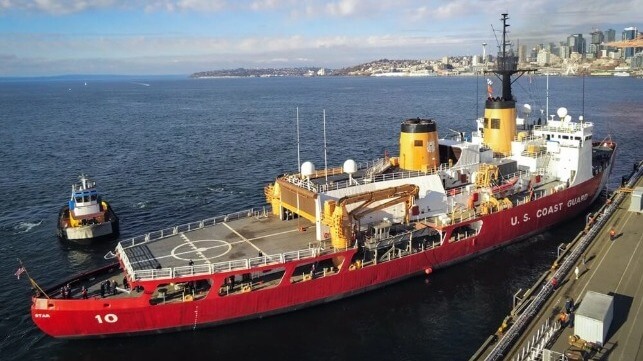
The U.S. Coast Guard heavy icebreaker USCGC Polar Star has departed on her annual mission to McMurdo Sound, Antarctica, where she will break out the harbor for America's main research station. This regular resupply run - Operation Deep Freeze - is an essential part of the National Science Foundation's activities on the frozen continent, and it will be the 27th time that the aging Polar Star makes the 24,000 nautical mile round trip run.
"This mission requires year-round effort from the crew to prepare this 47-year-old cutter for the 20,000 nautical mile round trip and extreme environmental conditions we will face. We have an incredible and dedicated team; I couldn’t be more excited or more proud to make this journey with them," said Capt. Keith Ropella, Polar Star's commanding officer.
As the sole remaining U.S. vessel capable of performing the NSF Antarctic supply mission, Polar Star must be kept running long beyond her design lifespan. The Coast Guard is building a series of replacement icebreakers, but the delivery of the first-in-class vessel has been delayed until 2028. Defense officials have noted that it has been five decades since the United States built a heavy icebreaker, and some of the special techniques have to be relearned. The Polar Star may well serve beyond her 50th anniversary.
Preservation of a ship of this age for a mission this rigorous is a substantial investment. Most ships go into drydock once every five years, but Polar Star undergoes a major yard period every year, spending months in overhaul status between operational deployments. This year, the service invested $15.6 million in upgrades and repairs over a 132-day stay in shipyard. In addition to work performed by contractors, the crew put in an "immense amount of time and effort" to get the icebreaker ready. The ship will likely spend up to 145 days under way, including 65 days in Antarctica.
Polar Star dates back to the Cold War era of defense technology, when solid-state analog control systems were state-of-the-art. Decades of rolling and vibration took a toll on these complex systems, and the Coast Guard has allocated $75 million in funding to replace Polar Star's cantankerous electronics and perform other deep-dive improvements. Upgrades began in 2021 and are now in year three of a five-year life extension plan.
SHIPPING IN WAR ZONES
Bulker Chartered by Cargill Lightly Damaged by Likely Black Sea Mine
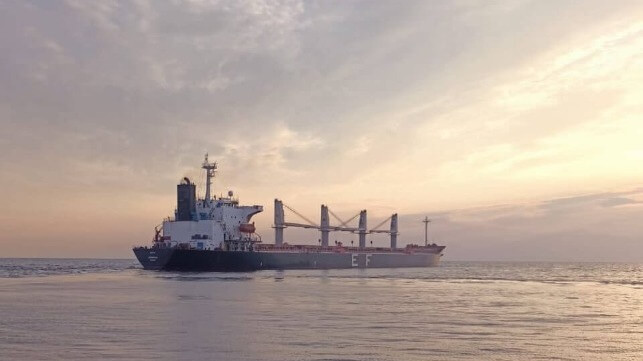
Ukraine reports bulkers are continuing to sail the corridor despite another incident today (file photo)
Media reports from Ukraine are saying that a bulker departing the port of Pivdennyi (Yuzhne) reported an explosion that was likely caused by a floating mine. While the vessel is reported to be lightly damaged and proceeding under its own power, it came as efforts were underway to introduce a new war risk insurance program to encourage more ships to undertake grain exports from Ukraine and Russia also reported that it has commenced grain exports.
According to unnamed Ukrainian officials and security consultants who spoke with Reuters and Bloomberg, the vessel is believed to be the Georgia S, a 75,000 dwt bulker registered in Liberia. The reports are that the vessel, which is managed by Sea Gate Navigation of Greece, is operating under charter to Cargill. The vessel is reported to be loaded with a cargo of wheat.
The last AIS signal from the vessel on the evening of November 17 shows her off the Romanian coast, although some reports were that she was heading to Constanta, Romania for an inspection. She was following the standard practice of limiting her AIS signals while she was in Ukrainian waters and not declaring destinations on AIS. She was shown heading to the Bosporus, where she was due on November 18.
This latest incident came as one of Ukraine's deputy ministers, Yuriy Vaskov highlighted to the news agency Interfax-Ukraine the continuing volumes on Ukraine’s Black Sea shipping corridor. They reported that it has now surpassed 150 ships that have made the transit. A total of 3.2 million tons of grain has been exported since August and an additional 1.2 million tons of other material.
Ukraine reported that 30 more ships were currently loading in its Black Sea ports with 22 ships that would be carrying more than 700,000 tons of grain. The eight additional vessels were reported to be loading other cargo.
Insurance broker Marsh said on Wednesday that it was launching a new facility to provide affordable insurance to support the grain exports from Ukraine’s Black Sea ports. It was previously reported that the UK’s Prime Minister Rishi Sunak had helped to broker the new program. Marsh had provided a similar service starting in July 2022 to support the Black Sea Grain Initiative set up by the United Nations.
Marsh said the new effort was being underwritten by insurers based at Lloyd’s of London and it was developed in coordination with Ukrainian financial institutions and banks. They said it would be providing up to $50 million in hull and separate protection & indemnity war risk insurance. The Ukrainian institutions will be issuing standby letters of credit confirmed by DZ Bank.
The goal was to offset some of the concerns that emerged in the market after another bulker docked in Ukraine was stuck last week by a likely errant Russian missile. The UK Defense Ministry believed the Russian pilot was attempting to target a Ukrainian radar signal but that the missile instead locked on the vessel’s transmissions. Risk insurance costs reportedly tripled after the prior attack, but it is unclear how the markets would respond to today’s incident.
While Ukraine continues to move aggressively to maintain its grain exports, Russia’s Agricultural Minister Dmitry Patrushev announced that they have also begun exports. He wrote on Telegram that Russia was fulfilling the promise of Vladimir Putin and two vessels had departed each carrying 25,000 tons of free grain. He said these ships were heading to Somalia and Burkina Faso and that other ships would be following.
International Security Warning Issued for Ships in the Red Sea
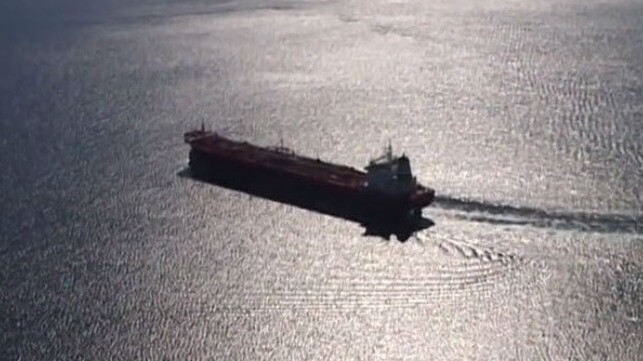
Ships transiting the Red Sea region are being warned to take extra steps due to heightened concerns (file photo)
An international coalition set up to maintain maritime security and freedom of navigation across the Middle East region released a warning on Thursday, November 16, for shipping operating in the Red Sea region. The warning comes after a series of provocations as well as threats from the Houthi rebels in Yemen to shipping in the region.
“We continue to be concerned with a heightened threat level in the Red Sea,” the International Maritime Security Construct writes in its message. “The approaches to the Bab al Mandeb continue to be an area of concern,” they write advising ships on procedures for transiting the Red Sea and Bab al Mandeb.
The strait between Yemen on the Arabian Peninsula, and the area known as the Horn of Africa where Djibouti and Eritrea are located, is a vital shipping lane. Oil tankers departing the Middle East as well as numerous containerships sailing the routes between Asia and Europe pass through the area. The strait is the link between the Indian Ocean, the Suez Canal, and the Mediterranean.
The IMSC does not point to any specific incidents in its advisory. However, it has been widely reported that the Houthis, the Iranian-backed militia that controls large sections of Yemen along the Red Sea issued a direct threat at the beginning of the week. Israeli shipping and vessels that they believed were linked to the U.S. and the Hamas war were viewed to be in the greatest danger.
Both the U.S. and UK have increased their naval presence in the region with the U.S. reporting several recent incidents. The guided-missile destroyer USS Carney, which was operating with the Gerald R. Ford Strike Group, was directed through the Suez Canal and into the Red Sea in mid-October. The vessel reported on October 19 intercepting at least three missiles fired from Yemen. While at the maximum range of the weapons, the U.S. Pentagon said they believed they were being fired toward Israel. The same vessel took down an unspecified number of drones that had been launched from Yemen, with some later news reports saying the assault lasted for at least four hours, although the U.S. said it did not believe the Carney was targeted.
Shortly after the Houthi rebel group threatened to attack Israeli shipping in the Red Sea this week, the USS Thomas Hudner reported that it too had shot down a suspicious drone. The Pentagon confirmed the incident on Wednesday, November 15, saying the destroyer “engaged and shot down the drone to ensure the safety of U.S. personnel.”
Based on the heightened threat level, IMSC and the Coalition Task Force Sentinel from Bahrain issued recommended procedures for all vessels transiting the area.
They are saying that vessels, when possible, should make the transit at night to reduce the likelihood of visual identification by “malign actors.” They are also recommending that vessels communicate to either the UKMTO or U.S. Naval Forces Central Command their movements ahead of time or if there is there is reason for elevated concern.
“Should your vessel be threatened, don’t stop and be a hard target through your maneuver,” they write in the advisory signed by the commander of IMSC.
New EU Waste Rules Open Door for Ship Recycling Says Danish Shipping
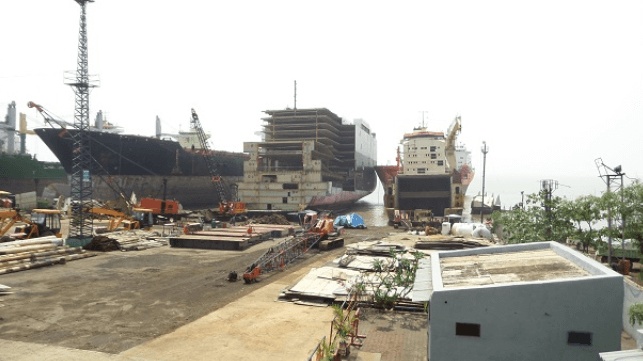
Danish Shipping highlights that the EU's new regulations provide opportunities for ship recycling (GMS file photo)
The European Parliament and the Council reached political agreement yesterday, November 16, on sweeping new rules designed to place stronger controls on the export of waste and create greater barriers to prevent exporting waste to countries not able to handle the materials. Hailed for its efforts at preventing pollution and environmental inequalities around the world, Danish Shipping highlights that the agreement also “opens the door for responsible recycling of EU-flagged ships,” at a time when the shipping industry is expected to begin a large push to dispose of older ships to meet emerging environmental regulations.
“Danish Shipping is pleased with the new agreement and expects it will raise the standards at ship recycling facilities around the world,” the group which represents the interest of the Danish industry wrote in its statement.
EU shipping companies have been especially challenged by the lack of authorized recycling options for their retired ships. Only a relatively small number of organizations have met the tough standards for safety and environmental protection presenting challenges to the industry. According to Danish Shipping, the agreement reached yesterday within the EU will provide the opportunity for responsible recycling outside the EU and OECD (Organisation for Economic Co-operation and Development).
The EU says the new agreement overall ensures that members will take greater responsibility for waste and will not export environmental challenges to third countries. The new legislation includes for example a strict ban on the export of plastic waste from the EU to non-OCED countries unless countries meet strict environmental conditions. There are also new provisions for tracking waste and stronger enforcement along with efforts aimed at cooperation in fighting waste trafficking.
Other waste suitable for recycling, however under the new agreement, will be exported from the EU to non-OECD countries when they indicate that they are willing to receive the waste and can deal with it sustainably. According to Danish Shipping, these provisions mean that facilities outside the EU, if they meet EU standards, will now be able to receive EU approval, which gives them an incentive to seek to attract customers with EU-flagged ships. The group writes that they believe this will raise the quality of ship recycling facilities while also providing new options for shipowners.
“Recycling of ships must be done in a safe, responsible, and environmentally sound manner and we believe this new agreement will help secure exactly that,” said Nina Porst, Director of Climate, Environment and Safety at Danish Shipping.
The shipping industry is believed to be on the verge of a wave of recycling both as ships are getting older and new environmental regulations make it harder for older ships to continue in service. Industry trade group BIMCO, for example, recently highlighted that containerships have reached their highest average age ever. Carriers held on to their tonnage and capacity during the last few years as demand surged. Data from Linerlytica shows however that the number of containerships going to the breakers jumped dramatically in 2023 with more than 80 ships sent to the yards this year. Yet, that represents less than 150,000 TEU capacity with many more ships idled.
“We expect that a growing number of ships will be recycled over the coming years, so I am very pleased that an agreement on waste shipments has been reached. Increasing the global facility capacity for recycling ships according to the high EU safety and environmental standards is good news for all parties,” said Porst.
The European Parliament and the Council have to formally adopt the regulation in line with the political agreement reached last night. The agreement is expected to be formally approved before the end of the year.
EU to Add Sewage, Garbage, and Scrubber Water Discharge to Pollution Rules
EU is moving for regulations to add sewage, garbage, and scrubber water to the definition of pollution from ships (file photo)
The European Union is moving toward stricter measures designed to decrease pollution by increasing the number of materials that would be banned as discharges from ships in European waters. The Transport and Tourism Committee put forward a series of proposed steps expanding the limits on illegal discharges from ships as part of an overall review launched in June 2023 designed to modernize and reinforce EU maritime rules on safety and pollution prevention.
Among the steps adopted in a draft mandate by the committee on Thursday, November 16, was the proposal to extend current EU rules on discharges to include sewage, garbage, and residues from scrubbers. This would expand on the current rules preventing the discharge of oil and other liquid substances that are judged to be noxious or pollutants. According to the committee, the draft that was adopted is designed to ensure that all international standards on preventing illegal discharges from ships, developed by the International Maritime Organization, become part of the EU.
“The current EU rules do not work, because they are weakly applied by member states,” said Romanian member of the EU Parliament Marian-Jean Marinescu speaking on behalf of the committee. “It is time for member states to step up and protect European seas from the harmful effects of ships illegally dumping waste. It is necessary to effectively detect illegal discharges and set penalties at levels that serve as a real deterrent.”
In addition to widening the ban on pollution from ships, the committee is proposing steps to enhance the enforcement and increase the penalties imposed. The draft calls for expanding the responsibility of shipowners for any environmental damage caused by one of the ships they operate. In the case where the master of the vessel or its crew responsible for the illegal discharge can not be located or cannot afford to pay the penalty, the draft calls for the responsibility to fall to the shipowner. In addition, they want EU governments to avoid setting maximum or minimum penalties for infringements to “ensure that the effectiveness and proportionality of penalties are not undermined.”
They also highlighted that the current European satellite-based alert system for oil spill and vessel detection, CleanSeaNet, lacks reporting on how pollution incidents are followed up and the outcome. They are calling for member states to increase the sharing of information as well as a requirement to advise the European Commission on pollution incidents.
As part of the enforcement efforts, they are also calling for increased verification on the spot and as soon as possible after an alert is issued by CleanSeaNet. Under the draft mandate, they are calling for a requirement that half of the incidents be verified on the spot. The committee highlights that increasing the speed of verification is critical to prevent an illegal discharge from dispersing and becoming undetectable by the time authorities arrive at the location.
The draft was adopted by the Transport and Tourism Committee by a vote of 36 to one. There also was unanimous agreement that talks should begin with member states on the final shape of the legislation. The new rules from this session would focus on administrative fines for pollution from ships, while separate negotiations are also underway for criminal sanctions which would be put forth in separate legislation.
To Project Power Globally, China Has Become the Superpower of Seafood
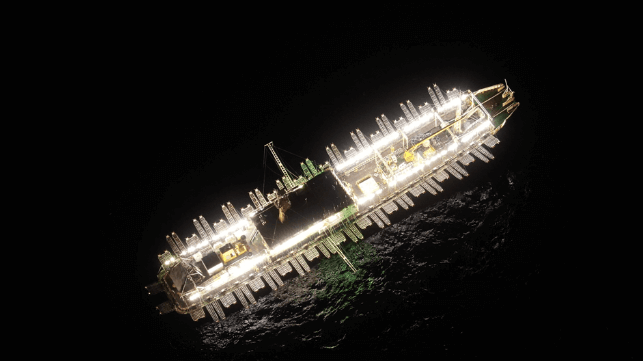
A Chinese squid jigger at night (Credit: Einar Ollua and Esteban Medina San Martin, March 22, 2022)
In the early morning hours of March 8, 2021, a small inflatable boat powered by an outboard motor covertly made its way into the port of Montevideo to unload a dying deckhand, and then sped away.
The deckhand, a slight 20-year-old Indonesian named Daniel Aritonang, had been at sea for the previous year and a half, working on a Chinese squid-fishing ship called the Zhen Fa 7. Now he was dumped dockside, barely conscious, with two black eyes, bruises along the sides of his torso, and rope marks around his neck. His feet and hands were bloated, the size of melons.
Paramedics put Aritonang in an ambulance and rushed him to a nearby hospital. Jesica Reyes, a local interpreter, was summoned, and when she arrived she found Aritonang in the ambulance bay. He told her that he’d been beaten, choked and deprived of food for days. As doctors took him away to the emergency room, he began crying and shaking. “Please, where are my friends?” he asked her, and then whispered, “I’m scared.”
Montevideo, one of the world’s busiest fishing ports, is popular among Chinese squid ships, several hundred of which in recent years have been targeting the rich high-seas fishery that lies off South America’s southeastern coast. The ships are drawn to Montevideo as an option for refueling, making repairs and restocking, in part because the next best options, in Brazil, Argentina and the Malvinas Islands, are either too expensive or closed to them.
Many of the crew on Chinese ships are Indonesian, and when they arrive in Montevideo dead, injured or sick, port officials contact Reyes, who is among the only interpreters in the city who speaks Bahasa, Indonesia’s official language. She gets calls often to manage the families of dead workers. For most of the past decade, one dead body has been dropped off every other month on average in this port, mostly from Chinese squid ships.
In taking the job on the Zhen Fa 7, Aritonang had stepped into what may be the largest maritime operation the world has ever known. Fueled by the world’s growing and insatiable appetite for seafood, China has dramatically expanded its reach across the high seas, with a distant-water fleet of as many as 6,500 ships, which is more than double its closest global competitor. China also now runs terminals in more than 90 ports around the world and has bought political loyalties, particularly in coastal countries in South America and Western Africa. It has become the world’s undisputed seafood superpower.
But China’s pre-eminence on the water has come at a cost. Fishing is ranked as the deadliest job in the world and, by many measures, Chinese squid ships are among the most brutal. Debt bondage, human trafficking, violence, criminal neglect, and death are common in this fleet. When the Environmental Justice Foundation interviewed 116 Indonesian crew members who had worked between September 2020 and August 2021 on Chinese distant-water vessels, roughly 97 percent of them reported having experienced some form of debt bondage or confiscation of guaranteed money and documents, and 58 percent reported having seen or experienced physical violence.
The fleet is also ranked as the largest purveyor of illegal fishing in the world. A 2022 review of illegal fishing incidents that occurred between 1980 and 2019, commissioned by the European Parliament, found that nearly half of the cases where the vessel type was identified were committed by squid ships.
Compared to other countries, China has been not only less responsive to international regulations and media pressure when it comes to labor rights or ocean preservation, but also less transparent about its fishing boats and processing factories, said Sally Yozell, the director of the Environmental Security Program at the Stimson Center, a research organization in Washington, D.C. Since a large proportion of fish consumed in the U.S. is caught or processed by China, she said, it is especially difficult for companies to know whether the products they sell are tainted by illegal fishing or human rights abuses.
When this seafood reaches land, it often goes through processing plants in China using Uyghur labor. In the past decade, the Chinese government has been forcibly relocating tens of thousands of Uyghur workers, loading them onto trains, planes and buses under tight security, and sending them to seafood processing plants on the other side of the country in Shandong province, a fishing hub along the eastern coast. In 2022, the U.N. said that Chinese government documents indicated coercion was used to place Uyghur “surplus laborers” into transfer programs. In the same year, the International Labor Organization expressed “deep concern” over China’s labor policies in Xinjiang, noting that coercion was built-in to the regulatory and policy framework for labor transfers.
By searching company newsletters, annual reports, state media stories, and Chinese social media, the investigation found that in the past five years, more than a thousand Uyghurs and other Muslim minorities have been sent to work in at least ten seafood processing plants.
The Chinese government also bolsters its seafood industry with workers from North Korea, primarily in processing plants in the border province of Liaoning, located in northeast China. The North Korean government has, for the past thirty years, sent citizens to work in factories in Russia and China and made them put up to ninety per cent of their earnings—amounting to hundreds of millions of dollars per year—into accounts controlled by the government. As of November 2022, more than 80,000 North Koreans were employed in Chinese border cities, including hundreds in seafood plants. Videos from the Chinese social media app Douyin show North Korean female workers in seafood factories as recently as November 2022 in Dandong and Donggang.
***
The Zhen Fa 7 began its journey on August 29, 2019, when it left the port of Shidao, in China’s Shandong province, and sailed to the port of Busan, South Korea, to pick up its Indonesian crew.
It was a festive time. The final week of August marks the start of the autumn fishing season in China and sees more than 20,000 ships launch each year. Amid fireworks and drum-playing, villagers in Shidao hung red flags on fishing boats to celebrate hopes for a hearty haul. Three days after the Zhen Fa 7 launched, a headline in a provincial newspaper declared, “Open the sea! Let's open our appetite and eat seafood.”
Daniel Aritonang had worked hard to secure himself a position on board. After graduating from high school, in 2018, he had struggled to find work. The rate of unemployment in Indonesia was high: over 5.5 percent nationally, and more than 16 percent for youth. So, when Anhar, a local friend, suggested that the two of them go abroad together on a fishing boat, Aritonang agreed. Friends and family were surprised at his decision, because the demands of the job were so high and the pay so low. But a job was a job, and both he and Anhar desperately needed one. “On land, they ask for my skill.” Anhar said, recalling why he decided to go to sea. “To be honest, I don’t have any.”
In the summer of 2019, Aritonang and Anhar contacted PT Bahtera Agung Samudra, a “manning” agency based in Central Java. In the maritime world, manning agencies recruit and supply workers to fishing ships, handling everything from paychecks, work contracts, and plane tickets to port fees and processing visas. They are poorly regulated, frequently abusive, and have been connected to human trafficking. On July 5, 2019, following the agency’s instructions, Aritonang and Anhar took a boat to Java and then made their way to Tegal. There they took a medical exam and handed over their passports and bank documents, along with several headshots and copies of their birth certificates. (PT Bahtera does not have a license to operate, according to government records, and did not respond to requests for comment.)
For the next two months, they waited in Tegal to hear if they got the job. Money ran short. Through Facebook messenger, Aritonang wrote to his friend Firmandes Nugraha, asking for help to pay for food. Nugraha urged him to return home. “You don’t even know how to swim,” Nugraha reminded him. Eventually assignments came through, and, on Sept. 1, Aritonang appeared in a Facebook photo with other Indonesians waiting in Busan to board their fishing vessels. “Just a bunch of not high ranking people who want to be successful by having a bright future,” said Aritonang.
That day, Aritonang and Anhar boarded the Zhen Fa 7, and the ship set sail across the Pacific. They numbered 30 men: 20 from China, and the remaining 10 from Indonesia.
***
For most of the 20th century, distant-water fishing was dominated by three countries: the Soviet Union, Japan, and Spain. These fleets shrank in size after the Soviet collapse, and as labor and environmental standards made fishing more costly. But during this period, China invested billions of dollars in its fleet and took advantage of new technologies to muscle in on a very lucrative industry. China has also attempted to fortify its autonomy by building its own processing plants, cold-storage facilities and fishing ports overseas.
Those efforts succeeded beyond any predictions. China has now become the world’s undisputed seafood superpower. In 1988 it caught 198 million pounds of seafood; in 2020, it caught 5 billion. No other country comes close.
For China, the vast armada has great value that extends beyond just maintaining its status as a seafood superpower. It also helps the country create jobs, make money, and feed its population. Abroad, the fleet helps the country forge new trade routes, flex political muscle, press territorial claims, and increase China’s political influence in the developing world.
Political analysts, particularly in the West, say that having just one country controlling a global resource as valuable as seafood creates a precarious power imbalance. Navy analysts and ocean conservationists also fear that China is expanding its maritime reach in ways that are undermining global food security, eroding international law, and heightening military tensions.
“Plenty of countries are engaging in destructive fishing practices but China is distinct because of the size of its fleet and because it uses the fleet for geopolitical ambitions,” said Ian Ralby, CEO of I.R. Consilium, a global consultancy that concentrates on maritime security. “No one else has the same level of state ownership in this industry, no one else has a law that obligates their fishing ships to actively gather and hand over intelligence to the government and no one else is as actively invading other countries’ waters.”
According to Greg Poling, a senior fellow at Center for Strategic and International Studies, there’s another wrinkle in all of this: Not all Chinese fishing vessels actually fish. Instead, hundreds of them serve as a kind of civilian militia that works to press territorial claims against other nations. Many of those claims concern seafloor oil and gas reserves. Taking ownership of the South China Sea is part of the same project for the Chinese as taking control of Hong Kong and Taiwan. The goal is to reclaim “lost” territory and restore China’s former glory.
China’s dominance has come at a moment when the world’s hunger for products from the sea has never been greater. Seafood is the world’s last major source of wild protein and an existentially important form of sustenance for much of the planet. During the past 50 years, global seafood consumption has risen more than fivefold, and the industry, led by China, has satisfied that appetite through technological advances in refrigeration, engine efficiency, hull strength, and radar. Satellite navigation has also revolutionized how long fishing vessels can stay at sea, and the distances they travel.
Industrial fishing has now advanced technologically so much that it has become less an art than a science, more a harvest than a hunt. To compete requires knowledge and huge reserves of capital, which Japan and European countries have in recent decades been unable to provide. But China has had both, along with a fierce will to compete and win.
China has grown the size of its fleet predominantly through state subsidies, which by 2018 had reached $7 billion annually, making it the world’s largest provider of fishing subsidies. The vast majority of that investment went toward expenses such as fuel and the cost of new boats. Ocean researchers consider these subsidies harmful, because they expand the size or efficiency of fishing fleets, which further deplete already diminished fish stocks.
The Chinese government’s support of its fleet is vital. Enric Sala, the director of National Geographic’s Pristine Seas project, said that more than half of the fishing that occurs on the high seas globally would be unprofitable without these subsidies, and squid jigging is the least profitable of all types of high-seas fishing.
China also bolsters its fleet with logistical, security, and intelligence support. For example, it sends vessels updates on the size and location of the world’s major squid colonies, allowing them to work in a coordinated manner.
In July of 2022, a reporter watched an armada of about 260 Chinese squid ships jigging a patch of sea west of the Galapagos Islands. The group suddenly pulled up anchors, in near simultaneity, and moved a hundred miles to the southeast. “This kind of coordination is atypical,” Ted Schmitt, the director of Skylight, a maritime-monitoring program, told me. “Fishing vessels from most other countries wouldn’t work together on this scale.”
***
During the past four years, a team of reporters conducted a broad investigation of working conditions, human-rights abuses, and environmental crimes in the world’s seafood supply chain. Because the Chinese distant-water fishing fleet is so large, so widely dispersed, and so notoriously brutal, the investigation centered on this fleet. The reporters interviewed captains and boarded ships in the South Pacific Ocean, near the Galapagos Islands; in the South Atlantic Ocean, near the Malvinas Islands; in the Atlantic Ocean, near Gambia; and in the Sea of Japan, near Korea.
The visits to these ships revealed in stark detail a broad pattern of human rights and labor abuses, including debt bondage, wage withholding, excessive working hours, beatings of deckhands, passport confiscation, prohibiting timely access to medical care, and deaths from violence. Workdays on many Chinese open-water fishing vessels routinely last 15 hours, six days a week. Crew quarters are cramped. Injuries, malnutrition, illness, and beatings are common.
One of these trips, facilitated in February 2022 by Sea Shepherd, an ocean-conservation group, included an invitation to board a Chinese squid-fishing ship near the Malvinas Islands. The captain of the vessel granted reporters permission to roam freely as long as they did not name his vessel.
Whenever squid ships are fishing, the heaviest labor happens at night. The ships are festooned with hundreds of bowling-ball-sized light bulbs, which hang on racks on both sides of the vessel and are used to lure squid up from the depths.
As squid are hauled in, the scene on deck often looks like a brightly lit auto-body shop where an oil change has gone terribly wrong. When pulled onboard, squid squirt purplish black ink. Warm and viscous, the ink coagulates within minutes and coats all surfaces with a slippery mucus-like ooze. Because deep-sea squid have high levels of ammonia in their tissue, for buoyancy, the air on board smells powerfully like urine.
The mood on board felt like that of a watery purgatory. The ship had about 50 “jigs” hanging off each side, each operated by an automatic reel. Crew members stationed around the deck were responsible for monitoring two or three reels at a time, to ensure that they didn’t jam. The men’s teeth were yellowed from chain smoking, their skin a sickly sallow, their hands torn and spongy from sharp gear and perpetual wetness.
Two Chinese deckhands wearing bright orange life vests stood on deck babysitting the automatic reels. One man was twenty-eight, the other eighteen. It was their first time at sea, and they had signed two-year contracts. They earned about ten thousand dollars a year, but, if they missed a day of work for sickness or injury, they were docked three days’ pay. The older deckhand recounted watching a crew member’s arm get broken by a weight from the jig that swung wildly. The captain stayed on the bridge, but another officer shadowed one of the reporters wherever he went. At one point, the officer was called away, and the younger deckhand ducked into a dark hallway to whisper his plea for help.
“Our passports were taken,” he said to the visiting reporter. “They won’t give them back.”
Instead of speaking more, he began typing on his cell phone, for fear of being overheard. “Can you take us to the embassy in Argentina?”
“I can’t disclose too much right now given I still need to work on the vessel if I give too much information it might potentially create issues onboard,” he wrote. “Please contact my family,” he said, before abruptly ending the conversation when the minder returned.
Stories of deckhands held captive on these vessels continue to surface: More recently, in June 2023, a bottle washed on shore a beach in Maldonado, Uruguay, with a message inside from a distressed deckhand on another Chinese squidder: “Hello, I am a crew member of the ship Lu Qing Yuan Yu 765, and I was locked up by the company. When you see this paper, please help me call the police! S.O.S. S.O.S.” (The owner of the ship, Qingdao Songhai Fishery, said that the claims were fabricated by crewmembers.)
***
Aritonang fell severely ill in late January 2021. The whites of his eyes turned yellow, his legs and feet grew swollen and achy, and he lost his appetite and ability to walk. In all likelihood, he was suffering from a disease known as beriberi, caused by a deficiency of vitamin B1, also known as thiamine. Sometimes called “rice disease,” beriberi has historically broken out on ships and in prisons, asylums, and migrant camps—anywhere that diets have consisted mainly of polished or white rice or wheat flour, both poor sources of thiamine. When beriberi happens on ships, it is considered a possible indicator of criminal neglect because it is slow-acting, treatable and reversible, according to forensic pathologists.
The other Indonesians on board begged the captain to get Aritonang onshore medical attention, but the captain refused. Later, when asked to explain the captain’s refusal, Anhar, Aritonang’s friend and fellow crewmate, said, “There was still a lot of squid. We were in the middle of an operation.”
By February, Aritonang could no longer stand. He moaned in pain, slipping in and out of consciousness. Incensed, the Indonesian crew threatened to strike. “We were all against the captain,” Anhar recounted. The captain finally acquiesced on March 2 and had Aritonang transferred to a nearby fuel tanker called the Marlin, whose crew six days later dumped him off in Montevideo.
But by then it was too late. For several hours, the emergency room doctors struggled to keep him alive, while Reyes, the Bahasa translator, waited anxiously in the hall. Eventually they emerged from the emergency room to tell her that he had died.
A day later, the local coroner conducted an autopsy. “A situation of physical abuse emerged,” it reads. Nicolas Potrie, who runs the Indonesian consulate in the city, recalls getting a call from Mirta Morales, the prosecutor who investigated Aritonang’s case, who told him, “We need to continue trying to figure out what happened. These marks—everybody saw them.” Morales declined to say whether the investigation was closed but added that, as with most crimes at sea, she had very little information to work with.On April 22, Aritonang’s body was flown from Montevideo to Jakarta, then driven to his family home in the countryside, where a solemn crowd of villagers lined the road to pay their respects. The family opted not to open the coffin.
A funeral was held the next day, and Aritonang was buried a few feet from his father in a cemetery plot not far from his church, near the side of a road. His grave marker consisted of two slats of wood joined to make a cross. That night, an official from Aritonang’s manning agency visited the family at their home to discuss a “peace agreement.” Anhar said that the family ended up accepting a settlement of 200 million rupiah, or roughly $13,000. The family was reluctant to talk about the events on the ship. Aritonang’s brother Beben said that he didn’t want his family to get in trouble, and that talking about the case might cause problems for his mother. “We, Daniel's family,” he said, “have made peace with the ship people and have let him go.”
More than 9,000 miles away, the Zhen Fa 7 soon began its long journey home. In May 2021, it reached Singapore, where it disembarked its remaining Indonesian crew, who had not stepped on land for nearly two years. The ship then at last returned to Shandong where it unloaded 330 tons of squid, marked in port records as destined for export.
In an email, the Zhen Fa 7’s owner, Rongcheng Wangdao Deep-Sea Aquatic Products, declined to comment on Aritonang’s death but said that the company had found no evidence of misconduct on the ship: “There was nothing regarding your alleged appalling incidents about abuse, violation, insults to one’s character, physical violence or withheld salaries.” The company added that it had handed the matter over to the China Overseas Fisheries Association, which regulates the industry. Questions submitted to that agency went unanswered.
On April 10, 2022, a year after Aritonang’s death, his mother, Sihombing, sat on a leopard-print rug in her living room with Leonardo, her other son. Sihombing apologized that it had no furniture, and no place other than the floor to sit. The house underwent repairs, using money from the settlement, according to the village chief; in the end, Aritonang had managed to fix up his parents’ house after all. Asked about Daniel, Sihombing began to weep. “You can see how I am now,” she said.
“Don't be sad,” Leonardo said, patiently trying to console his mother. “It was his time.”
This story was produced by The Outlaw Ocean Project, a nonprofit journalism organization in Washington, D.C. Reporting and writing was contributed by Ian Urbina, Joe Galvin, Maya Martin, Susan Ryan, Daniel Murphy and Austin Brush.
The opinions expressed herein are the author's and not necessarily those of The Maritime Executive.
Water Cannons and "Boxing": Chinese Flotilla Tries to Block Convoy
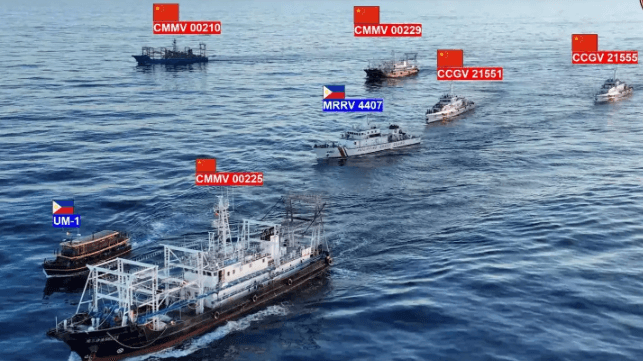
The Philippine Coast Guard is used to encountering resistance from Chinese maritime forces at Second Thomas Shoal, where the Philippine military maintains a small outpost, but the latest resupply run was more challenging than ever. 38 China Coast Guard, PLA Navy and Chinese maritime militia vessels - a new record - were anchored around the reef or under way nearby, and more than half a dozen shadowed the convoy in an attempt to harass it. One of the Chinese cutters also used its water cannon to intimidate the Philippine vessels.
At about 0630 hours on Friday, the PCG cutters BRP Cabra, Sindangan, and Melchora Aquino arrived in waters just off the shoal with two small supply boats in tow. The outpost is in a shallow lagoon, and larger ships can't access it, so the Philippine military charters small indigenous boats for the run. They encountered a substantial Chinese force, but with carefully planned maneuvering, they evaded it and completed the supply mission without risk of collision.
The PCG records its interactions with China's maritime "gray-zone" vessels at the shoal, and it usually brings embedded reporters to document the encounters. Videos the PCG released on Saturday appear to show a China Coast Guard cutter (CCG 5203, familiar from previous confrontations) using a high-capacity water cannon to intimidate a nearby Philippine supply boat. The cutter appeared to keep a distance of several hundred meters from the smaller vessel.
Another video shows four Chinese vessels - one cutter and three extra-large trawlers of the Chinese maritime militia - circling a single Philippine Coast Guard cutter, BRP Cabra. A third recording shows a slow-motion race to the reef, with five large Chinese vessels "boxing in" a small Philippine supply boat.
Despite the pressure from Chinese ships, the PCG cutters got closer to the channel entrance into the shoal's lagoon than they ever have before, the service told Rappler. The PCG deployed RIB boats to escort the supply vessels for the final mile to their destination, the grounded WWII landing ship BRP Sierra Madre, which has served as a makeshift base and a marker of sovereignty for the last 24 years.
"The dangerous maneuverings of the CCG vessels are illegal and irresponsible actions that put into question and significant doubt their narrative of law enforcement and their real identity as a coast guard organization,” said Philippines Coast Guard (PCG) commandant Admiral Ronnie Gavan in a statement. “Ironically, they are supposed to ensure safety of life at sea, but they are the one that deliberately violate [COLREGS]."
Chinese forces only contest the Philippines' access to Second Thomas Shoal, PCG personnel told reporters during the mission. The Philippines has other bases in the Spratly Islands, but these are never subjected to quasi-military blockade, at least not to the same degree.
China's military has protested the Philippine presence at the land feature since at least 1999, when the BRP Sierra Madre was run aground to defend against China's sweeping maritime claims. Over the past decade, Chinese dredging and construction companies have built a string of military bases on nearby atolls, covering over similar low-tide elevations with sand in order to build strategic runways, radar installations and city-sized complexes to house large garrisons.


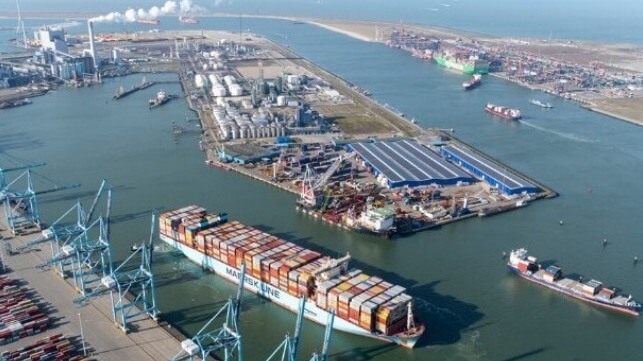
 As part of the dialogue on sustainability and digitalization at the World Maritime Forum, Industrial AI Strategist Oliver-Andreas Leszczynski (Meyer Werft) will be a keynote speaker at the event sharing his insights and placing a spotlight on the pivotal role of artificial intelligence in shaping the maritime industry's future.