Monday, February 05, 2024


Another Royal Navy Carrier Sidelined by Shaft Issues
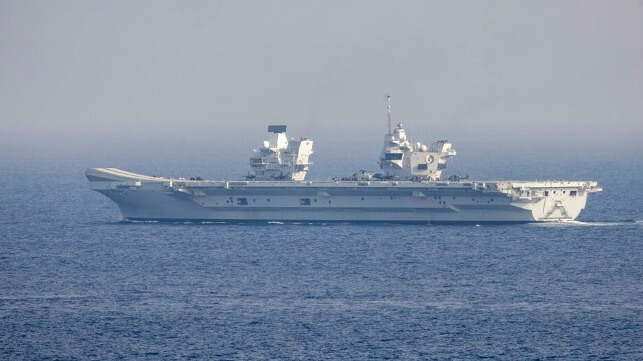
Royal Navy Queen Elizabeth
Royal Navy file image

PUBLISHED FEB 4, 2024 2:33 PM BY THE MARITIME EXECUTIVE


Just days before departing port on a high-profile mission on a NATO exercise, the Royal Navy carrier HMS Queen Elizabeth has had to stand down because of problems with a shaft coupling. It is the second time that a shafting issue has sidelined one of the Royal Navy's two new carriers on the eve of a significant deployment. 

After the disastrous shaft damage incident aboard HMS Prince of Wales in August 2022, the Royal Navy decided to carry out a heightened inspection schedule for HMS Elizabeth to head off any similar problems in advance. On Friday - the same day as a formal announcement celebrating the carrier's "historic" departure - a pre-sailing check revealed problems with one shaft coupling on the starboard side. 

Though the ship is still technically fit to sail, according to the service, the decision has been taken to cancel her departure and to shift the mission to sister ship HMS Prince of Wales, which just had her own shaft coupling issues resolved in September. (A Ministry of Defense official told the BBC that the shaft coupling problem on Queen Elizabeth was "separate and not linked.")

Prince of Wales has just returned from a voyage to the U.S. East Coast, and she was due for a routine maintenance and R&R period. The necessary repair work will have to be accelerated, parts and stores cross-decked from HMS Queen Elizabeth, and the crew recalled early to shipboard service. 

HMS Prince of Wales will now lead NATO Exercise Steadfast Defender, a multinational carrier strike group exercise operating off Norway. The carrier will be accompanied by frigate HMS Somerset, two fleet oilers, and an assortment of American, Spanish and Danish escorts. Prince of Wales will carry an air wing of F-35B fighters and an assortment of helicopters on deck. 

All told, the exercise will draw 40 NATO ships from more than two dozen nations. The conditions will likely be difficult: the forecast calls for heavy seas, sleet, snow and subzero temperatures - plus the long winter nights of the north. 

“The exercise allows us to train with our neighbors in a truly challenging environment, especially at this time of year – but that is why we have to operate up there; the weather cannot put us off," said Commodore James Blackmore, Commander UK Carrier Strike Group.

The 40-day exercise will also bring in tens of thousands of troops on the ground for a scenario involving the defense of Norway and newly-joined NATO members Sweden and Finland, which all share a border with Russia. 

Before the shaft issue aboard HMS Queen Elizabeth was discovered, UK Armed Forces Minister James Heaped had mooted the idea that a British carrier might relieve USS Dwight D. Eisenhower on station off Yemen. The task set would include the recurring duty of destroying Houthi antiship missiles and drones.  


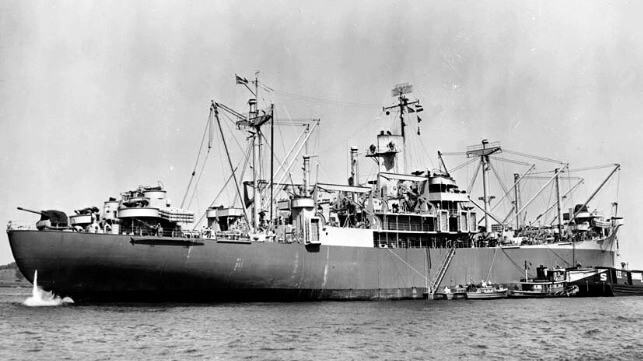
Rollin Fitch, Hero of the Attack Transport Callaway

USS Callaway
USS Callaway at anchor off New York, 1943 (USN)

PUBLISHED FEB 4, 2024 11:51 PM BY U.S. COAST GUARD NEWS


[By PAC Corinne Zilnicki]

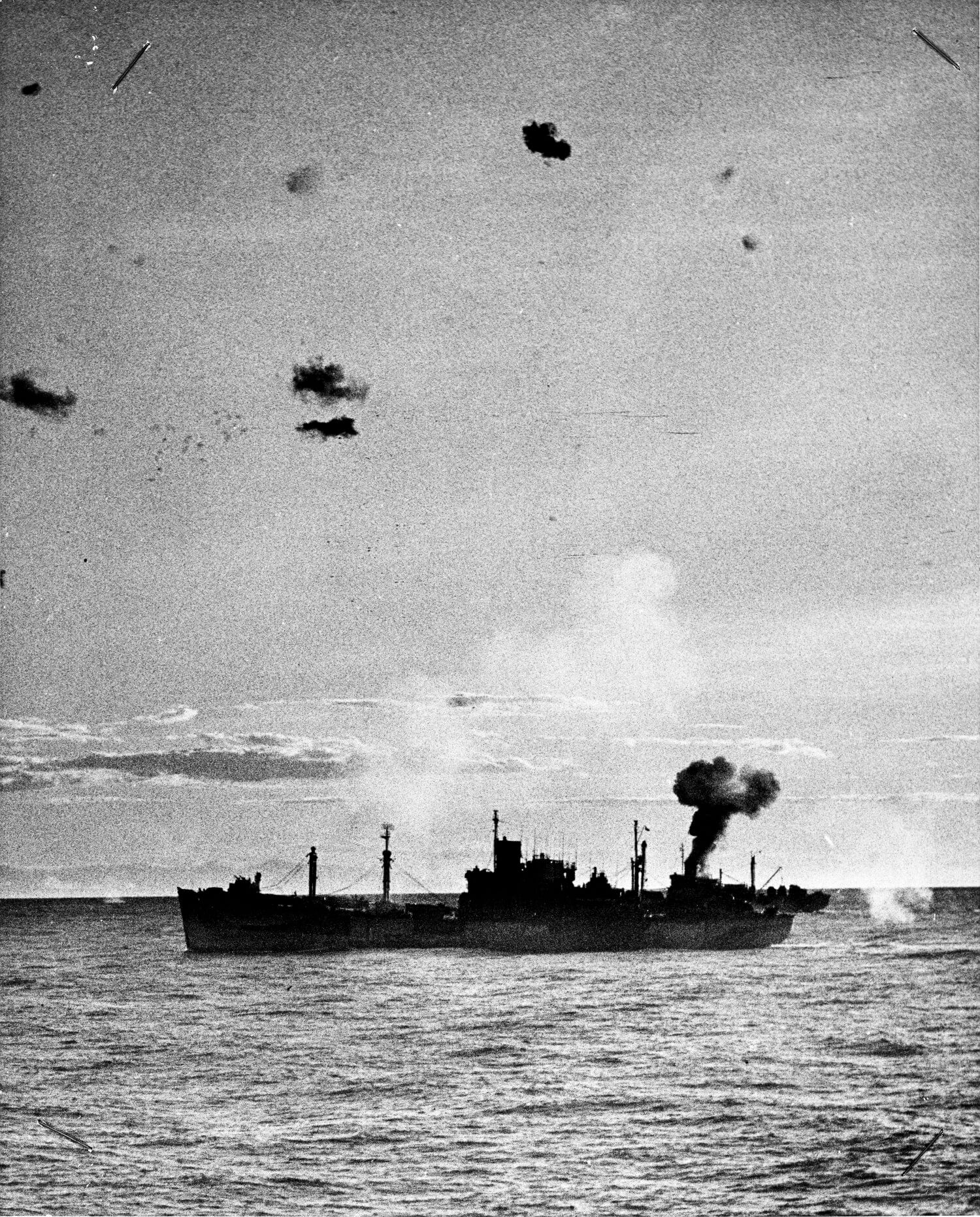
An imposing convoy of warships cut through the waters of the Lingayen Gulf northwest of the Philippines, the ships forming an orderly parade of slow-moving silhouettes. Six hulking transport ships led the charge, followed closely by cargo ships, landing craft and smaller amphibious assault vessels. 

It was Jan. 8, 1945, and the Allied forces had been deeply ensconced in the Southwest Pacific theatre of World War II for more than three years. 

The convoy made a beeline for Luzon, the largest of the Philippine islands and an invaluable target that would deny Japan passage through the South China Sea. Once captured, Luzon would also grant the Allies access to the capital city of Manila and sheltered anchorage of Manila Bay. 

When the warships of Blue Beach Attack Group were only 35 miles from Luzon’s shores, three Japanese aircraft materialized near the rear of the convoy, sweeping suddenly into an attack. 

“Planes! They’re coming from the stern!” cried a chorus of voices aboard the USS Callaway, one of the attack transport ships leading the convoy. 

Gunners aboard the Callaway had but seconds to react. Coast Guard Seaman First Class Rollin A. Fritch was one of the gunners who immediately leaped into action and peppered the incoming kamikaze aircraft with a hail of 20mm anti-aircraft gunfire. Fritch and his fellow gunners brought down two of the planes, but the third evaded the barrage and plunged down toward the bridge, unswerving in its deadly course. 

USS Callaway under attack, Jan. 8, 1945 (USCG)
Even as the kamikaze plane came hurtling toward him, Fritch remained at his post, forfeiting all chance of escape as he continued to fire his weapon. He fought bravely until the very moment the aircraft crashed into the starboard side of the bridge in a burst of flames that rattled the ship to its very keel. 

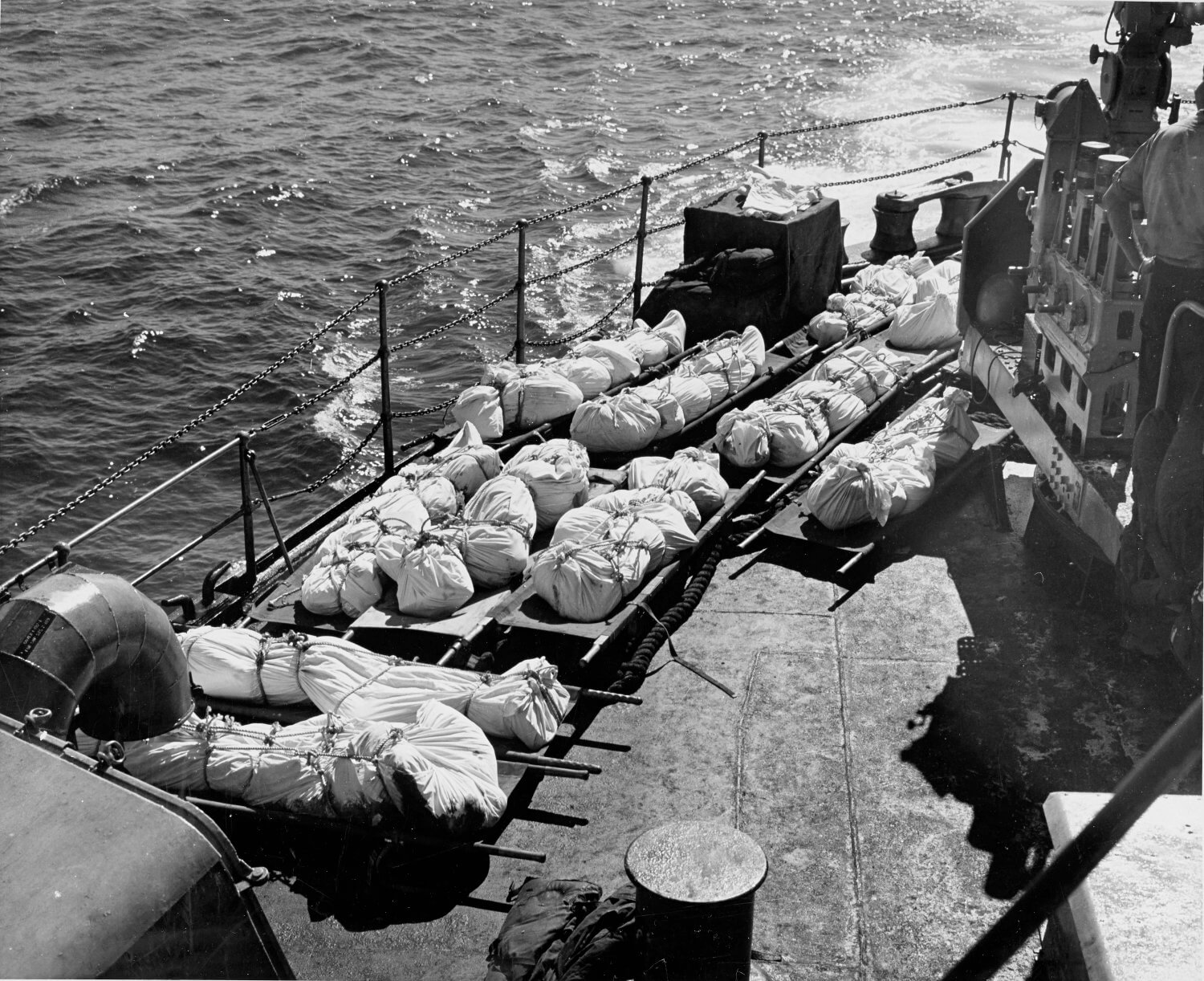
Fritch, along with 28 other members of the crew, died in the fiery explosion.

The deceased from the attack awaiting burial at sea (USCG)

The news of his death deeply affected even the youngest members of his large family back home. 

“I was only five years old when he was killed,” said Donna Fuller, Fritch’s niece, now 77 years old. “But I remember that my whole family was devastated. Uncle Rollin was such a sweet, kind person.” 

Born in Blue Rapids, Kansas, on May 9, 1920, Rollin Fritch was the youngest in a family of eight children. His parents, Frank and Mary Fritch, owned over 80 acres of farmland and relied on their children to help tend the chickens and grow corn, wheat, and soybeans. 

“Times were rough for them,” said Fuller. “It was a hard way to live.” 

The family relocated to Pawnee City, Nebraska, and, after high school, Fritch struck out on his own. He moved to Sioux City, Iowa, and was working there at the Cudahy Packing Company plant when he decided to enlist in the U.S. Coast Guard on March 17, 1942. 

“I remember he said he enlisted just to do his part,” Fuller recalled. “When he visited us on leave and we saw him in uniform, we were in awe.” 

After completing basic training, Fitch served on the Coast Guard Cutter Galatea, whose missions consisted of escorting convoys along the Eastern Seaboard and conducting antisubmarine patrols. 

In September 1943, he joined the crew of the USS Callaway and took part in five island invasions in the Southwest Pacific before the Lingayen Gulf assault in January 1945. 

Donna Fuller, who avidly gathered and chronicled her family’s history since the late 1970s, was not alone in admiring her uncle’s heroism and valor. 

Fritch was posthumously awarded the Purple Heart Medal and the Silver Star Medal, the third-highest decoration a service member can receive. Decades later, Fritch’s ultimate sacrifice received a more lasting tribute. 

In November 2014, the Coast Guard announced the names of the ten newest 154-foot Sentinel-Class cutters, also known as Fast Response Cutters. One of them would be homeported in Cape May, New Jersey, and officially commissioned on November 19, 2016. That ship’s name would be Coast Guard Cutter Rollin Fritch. 

“It was a complete shock when we found out,” said Fuller, who accepted the role of the cutter’s official sponsor. “To have Uncle Rollin chosen among so many heroes is such an honor.” 

“I think it’s fitting that the Coast Guard chose to honor enlisted heroes in such a way,” said Rear Adm. Meredith Austin, commander of Coast Guard District Five in Portsmouth, Virginia. “The enlisted force is what makes up the backbone of the Coast Guard, after all.” 

This article appears courtesy of The Long Blue Line and can be found in its original form here

The opinions expressed herein are the author's and not necessarily those of The Maritime Executive.


ICS Proposes $20-40 Carbon Levy With No Automatic Increases

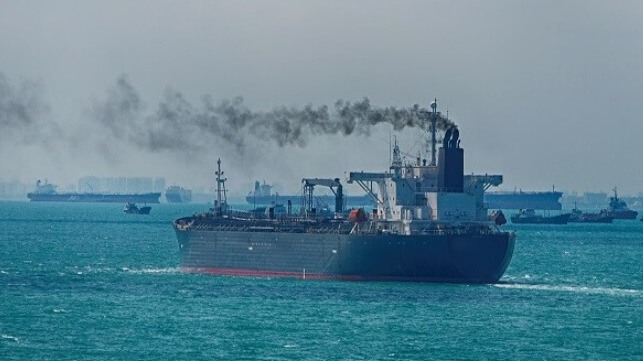
Ship with smoke
iStock

PUBLISHED FEB 4, 2024 4:28 PM BY THE MARITIME EXECUTIVE


The International Chamber of Shipping has formulated a revised proposal for an IMO carbon emissions fund. As with earlier proposals, it would see two-way financial flows going in and out of one fund - carbon-emitting shipowners would pay money in, while low-carbon shipowners would take money out - but it incorporates new details.

Conceptually, the idea is a variation on ICS' previous call for a tax and subsidy system, which would raise the cost of conventional bunker fuel and lower the cost of expensive green fuel. This would have the effect of leveling the playing field and making green bunkering competitive on the global market. Zero-carbon fuels are expected to be about four times as expensive as conventional fossil bunker fuel, and most stakeholders predict that a tax and subsidy system will be required to achieve commercial scale. 

The new ICS plan draws on an earlier flat-rate "levy-based" proposal endorsed by Japan and by EU member states, but substitutes a lower proposed tax value and adds new details on transparency and accountability.

The proposal calls for a flat-rate levy in the range of $20-40 per tonne of bunker fuel, far less than other independent proposals. The price is calculated to raise up to $5-10 billion per year, enough to subsidize zero-carbon fuels for 5-10 percent of global shipping, but not more. To increase the levy rate further to align with increasing climate targets, IMO MEPC would have to debate and revise the regulation again at each step.  

The values are at the lower end of the spectrum. The Marshall Islands has long called for $300 per tonne, former Maersk CEO Soren Skou has called for $450 per tonne, and Trafigura has advocated for as much as $900 per tonne. (Maersk has parted ways with ICS' board over climate differences.)

The Japanese levy plan - the blueprint for the new ICS plan - called for a worldwide tax starting at about $175 per tonne of bunker fuel from 2025, ratcheting up to about $2,000 per tonne by 2040. (Note: These figures have been converted to dollars per tonne of bunker fuel for consistency.) 

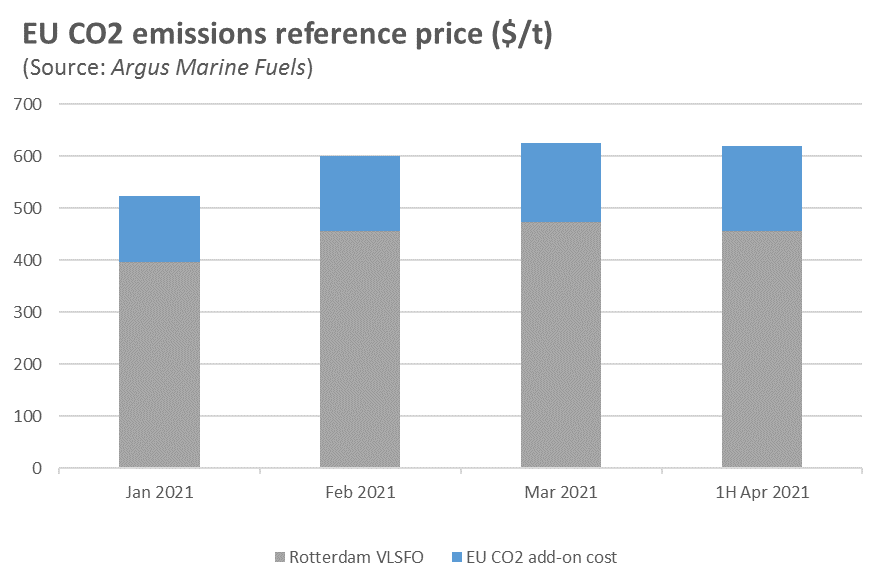
ICS' most recent study assesses that carbon fees of up to $300 per tonne of bunker fuel would have little effect on national economies. This range is comparable to the price spread between HFO and VLSFO, which are both competitive fuels in the open market. 

The ICS proposal is co-sponsored by Liberia and the Bahamas, two of the largest flag state administrations. 

In a statement, ICS Secretary General Guy Platten called the mechanism "equitable, transparent and simple." He called for rapid action on a plan to hit the first IMO targets for 2030 - now just six years away - as a necessary stepping stone to reaching the net-zero target set for 2050. 

"A global GHG pricing mechanism for shipping urgently needs to be agreed on next year," he said. "The groundwork has been done and the regulatory architecture has been carefully laid out. All that is needed is political will from governments to implement this fit-for-purpose solution quickly and effectively."

This is not the first time that ICS has floated a carbon plan. The first ICS carbon proposal called for a $2 per tonne "research" fee over an initial ten-year period. It was panned by environmentalists, who believed it was too small to be effective. It was withdrawn after it twice failed to gain enough support from IMO members.  


India Invites Bids for Four Gigawatts of Offshore Wind Capacity

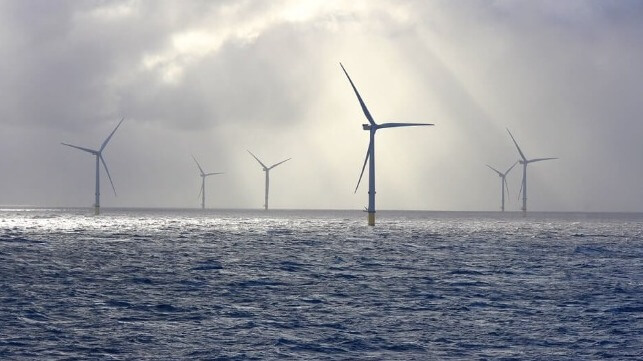
offshore wind farms
iStock

PUBLISHED FEB 4, 2024 8:36 PM BY THE MARITIME EXECUTIVE


India has opened the first round of auctions for its planned development of four gigawattts of offshore wind capacity. In a statement released on Friday, the Ministry of New and Renewable Energy (MNRE) said that the bids invited are for four blocks of one gigawatt each on open-access basis.

The sites are located off the coast of Tamil Nadu. The developers who wins the bid for each block will sell electricity directly to consumers and industrial customers.

The bids have been invited through Solar Energy Corporation of India (SECI), a government-owned energy company under MNRE. The last date of bid submission is May 2.

This bid announcement is a follow-up to another public notice issued back in September by MNRE, stating that the government intends to allocate seven areas off Tamil Nadu. The proposed zones cover an area of 550 square miles and have capacity for a total of seven gigawatts of wind power. With four blocks already advertised, the remaining three are planned to be put on offer in 2025.

According to World Bank estimates, India has 112 GW of bottom-fixed and 83 GW of floating offshore wind potential, with Tamil Nadu and Gujarat as the most suitable locations. The country has planned to auction 37 GW of offshore wind capacity by 2030. India, which is heavily dependent on coal for its power generation, has committed to reach net zero by 2070.

Meanwhile, finance minister Nirmala Sitharaman in her budget speech on Thursday announced that the government would provide Viability Gap Funding (subsidization) for an initial one gigawatt of offshore wind energy development. Although the minister did not offer details on how this would be funded, some analysts interpreted the message as an important guarantee to galvanize the offshore wind market in India.


How Maritime Businesses Can Navigate a New Carbon Regulatory Landscape

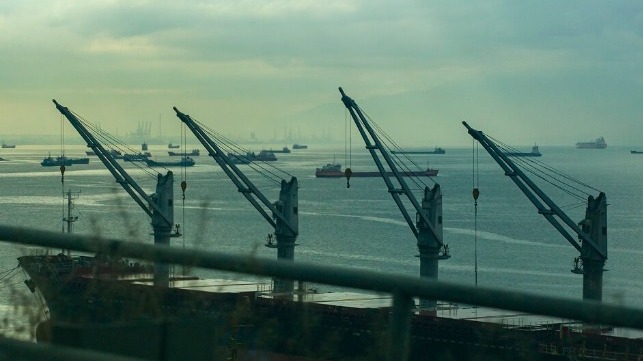
Ships in harbor istock
iStock

PUBLISHED FEB 4, 2024 3:15 PM BY FRANZISKA DANZ


On June 5, 2023, a legislative amendment came into force for the maritime industry that – for many shipowners, charterers, and managers – will transform the operational landscape as they know it.

The amendment to the EU Emissions Trading Directive brings the maritime sector under the coverage of the EU’s Emissions Trading Scheme (ETS), a carbon market introduced in 2005 to reduce greenhouse gas (GHG) emissions. It builds on the revised GHG strategy already set in motion by the International Maritime Organisation (IMO), which has committed to ensuring net-zero in GHG emissions by 2050, and a significant uptake in alternative zero and near-zero GHG fuels by 2030.

After extensive deliberation, the implementation of the new rules brings some certainty to the industry. However, businesses still face a changed regulatory landscape and must adapt. Only with a rich understanding of the carbon market they now operate in, a functional carbon strategy, and the technology to apply this efficiently, will they be able to chart a more sustainable and profitable course for the future.

Changing regulations

Starting with an EU member state vote in September 2020, the journey to including the maritime industry under the ETS has not been easy. The new amendment was submitted as part of a “Fit for 55” package of proposals, which aimed to reduce GHG emissions across the EU by at least 55% (compared to 1990 levels) by 2030. Negotiation between the European Commission, the Council of the EU and the European Parliament eventually yielded the amendment’s present form, which entered into force last June and will affect businesses from January onwards.

Under the amendment, shipping companies with ships equal to or exceeding a gross tonnage of 5,000 – approximately 24,000 ships – will fall under the ETS. As a result, they will be required to purchase and surrender ETS emission allowances for each tonne of reported CO2 emissions they produce. While ships between 400 and 5000 GT are technically exempt, this remains up for review in the future.

The new regulation caps maritime transport emissions across three categories: (1) the total emissions from intra-EU maritime voyages; (2) the total emissions from ships at berth in EU ports; and (3), half of emissions from voyages which start or end at EU ports, where the other destination is outside of the EU. Even the traditional definition of ‘port of call’ will change to some extent, now excluding stops at any neighbouring container transhipment port less than 300 nautical miles from a port inside the EU. This will deter ships from calling at a local, non-EU port and surrendering fewer allowances in respect of the short voyage from the nearby port to the EU.

The outcome is positive: creating a price signal that incentivizes improvements in energy efficiency and low-carbon solutions while reducing the price difference between alternative and traditional maritime fuels.

New adaptations

The adaptations required of the average business – relevant to shipowners, managers, operators, and all others responsible for the choice of fuel, route, and speed of their ships – are complex.

Businesses need to install rigorous emissions-reporting processes, at cost, to manage the extensive administrative element of ETS compliance. Processes such as calculating, forecasting and monitoring CO2 emissions are critical. This involves efficiently checking your allowances against your free allocation so that you can confidently judge the need to buy surplus in case of more emissions. Having the capability to forecast emissions based on your fuel and chosen route ensures this can be hedged via futures in the market – avoiding adverse earnings effects so that your business is not exposed to dramatic swings in European Union Allowance (EUA) pricing.

Legacy operational systems can be tempting to retain, but the new regulations call for automation and analysis far beyond the average spreadsheet. Carbon costs, for example, will now contribute a significant share of a ship’s final fuel costs while exhibiting a different volatility pattern, linked more to electricity generation than anything else. The result? Fuel costs will become far riskier and more complex to predict without the right tools.

Tools for success

Implementing an effective reporting, forecasting, and risk management system can be difficult. Tailored technology is key.

To develop a proper hedging strategy based on estimated yearly consumption, free allocation, and additional purchasing or selling needs, the best option for businesses is to automate their reporting and hedging processes. Automation begets greater transparency, which helps hugely in assessing the most suitable risk position in terms of size. Businesses can then make a more informed decision on whether to hedge back-to-back or leave their positions partially open based on two key considerations: minimizing carbon costs while staying compliant.

Careful consideration should be afforded to the choice of fuel. Sustainable fuels are less carbon intensive, alleviating the need for carbon certificates. They may, however, be difficult to obtain in the short term and can come with complexities – such as managing the associated environmental certificates throughout their lifecycle. Dedicated processes, tools, and automation are necessary to manage this part of renewable fuel sourcing and prevent compliance from developing into a highly labor-intensive task.

Innovative businesses are already seizing the growth opportunities in active or voluntary carbon-neutral strategies. Increasingly, ready-made technology models are emerging that can view what needs to be hedged, track how many allowances or credits need to be bought, create visibility of forecasted and actual emissions, and compare high-carbon and low-carbon (bunker) fuels.

Looking ahead

While the inclusion of maritime under the ETS has been a long time coming, businesses are likely to have questions and concerns. As seen in other industries, carbon measures bring complexity. The evolving nature of compliance, reporting and profit generation means they require something beyond the manual systems of before.

Shipping companies that invest in a functional carbon strategy, supported by modern technology, will stand apart from the rest. This is how they can save time and ensure compliance while forging new avenues for profit and opportunity.

Franziska Danz is VP Product Management at ION Commodities.


Trade Lane Upheavals Divert More Container Cargo to U.S. West Coast

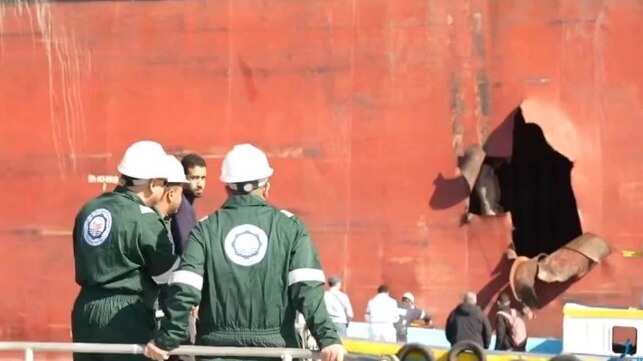
Excellent repair facilities are available in Egypt to repair missile damage (above), but all leading container lines have decided to avoid the risk area altogether (SCA image)
All leading container lines have quit the Red Sea in order to avoid the risk of missile attack (above, courtesy SCA)

PUBLISHED FEB 4, 2024 9:26 PM BY THE MARITIME EXECUTIVE


With the Panama Canal restricted by drought and the missile-prone Red Sea abandoned by ocean carriers, U.S. West Coast container ports are getting a back-to-the-future moment - back to the days when they had an ample share of the box shipments from Asia to the East Coast.

The Pamana Canal is currently allocating 24 slots per day for east-west transits, down by a third from the normal 36 slots. This has driven up the price and the waiting time for canal-bound shipping, and has discouraged shipowners from using the waterway. 

In the meantime, Yemen's Houthi rebels continue to attack merchant ships in the Red Sea with missiles, armed UAVs and suicide drone boats. The risk is high enough that virtually all container carriers have quit the waterway. (Even CMA CGM, which had been a final holdout among the top-10 operators, is said to have called off using the Red Sea/Suez route after a recent near-miss.)

Asia-U.S. East Coast services that skip the Red Sea must go around the Cape of Good Hope instead, adding thousands of nautical miles to the voyage. For container ships, this equates to an additional 10-14 days of sailing time, plus an extra bunkering stop for smaller vessels. 

Luckily for U.S. East Coast retailers and consumers, there is another way to get goods to market: the vast, unencumbered Pacific Ocean. Given the disruption for all-water routes to the Atlantic and Gulf coasts, ″[retailers] have decided to bring cargo into the West Coast ports and then use intermodal rail to get the cargo back to the East Coast,” National Retail Federation VP Jonathan Gold said in congressional testimony last week. 

The rising demand for this trade lane is large enough that the Department of Transportation is keeping an eye on possible congestion. Little has been reported yet, but Gold says that his members need to anticipate a surge of traffic in four to six weeks. 

Congestion and tight capacity are worth their weight in gold for ocean carriers, and freight prices have been rising rapidly. According to Gold, retailers have reported freight price quote hikes of up to 75 percent in recent weeks. Carriers suggest that the price adjustments are linked to higher operating costs (extra sailing days, extra fuel, bringing more ships into rotation) - but investors have been signaling otherwise. The markets have been bidding up the share price of the top boxship operators by double digits, demonstrating an expectation that the extra revenue will outpace the extra cost.


Vietnam's Ports Benefit From Geopolitics and Trade Wars

Cai Mep port
Cai Mep International Terminal (APMT file image)

PUBLISHED FEB 4, 2024 5:19 PM BY THE LOWY INTERPRETER


[By Selwyn Parker]

Vietnam’s main ports have shot up the world rankings in terms of volumes of container-based traffic as manufacturers increasingly pull out of China in the wake of the tariff-based trade war with America.

As the latest data on Vietnam’s growing “connectivity” – essentially the smooth and cost-effective movement of cargo – with the shipping sector shows, it jumped five places to ninth on the basis of a nearly 14% increase in volumes in the fourth quarter of 2023.

An increase in volumes of this amount is pretty much off the scale. According to supply-chain analyst Sea-Intelligence, Vietnam’s ports grew connectivity by comfortably the highest percentage of all the top 20 nations in the global index, supporting predictions of a few years ago.

Within the Asia-Pacific region, Vietnam was out on its own. For instance, Japan’s connectivity slipped by 7% on the global index, Singapore gained 3%, Malaysia nearly 4%, South Korea a little more than 5% and Hong Kong 11%.

Vietnam’s popularity as a container destination has not come out of the blue. “Vietnam’s connectivity has been on a consistent upward trajectory,” notes Sea-Intelligence’s latest report, citing a substantial jump during the pandemic that has since been maintained.

There are also geopolitical causes for the sustained burst of activity in Vietnam’s main ports. For instance, the extraordinary surge in containerized trade into North America, up by no less than 44% between January and November 2023, is a reflection on the unforeseen consequences of the trade war launched between the United States and China under the Trump administration. Just one notable example is electronics as manufacturers hurriedly relocate production from China to Vietnam.

As the International Monetary Fund’s first deputy managing director, economist Gita Gopinath, told the International Economic Association in late 2023, Vietnam has become the beneficiary of US-imposed tariffs between 2018 and 2019 as Chinese manufacturers and exporters moved quickly to circumvent them. “US imports of Chinese goods subject to the tariffs have been primarily replaced by exports from Vietnam and Mexico of firms that are intricately linked to China’s supply chains,” Gopinath explained.

And, citing nearly new 3,000 trade restrictions imposed globally during 2022, up by nearly three times compared with 2019, Gopinath lamented how trade and foreign direct investment “is now increasingly driven by geopolitical preference rather than by business fundamentals” in a fracturing environment. This is very much the case in Vietnam which is turning into a “connector country”, in economists’ parlance. Not only is the nation of 97 million posting big gains in its share of exports from China, it is also achieving even bigger gains in exports to America.

With ports leading the way, the country’s one-party government plans to carry on where it left off in 2023. Currently, Vietnam ranks only 80th in the world in terms of quality of port infrastructure but, with much of its 3,444-kilometer coastline lying on the South China Sea, it occupies an advantageous natural position from a shipping perspective.

The trade ministry has set a target of boosting exports by 6% through 2024, which most economists consider achievable. After all, Vietnam’s trade deal with the European Union agreed in mid-2019, jumped to a value of more than $50 billion in 2021, its first full year of operation.

The government also aims to double its ports’ capacity to 400 million tonnes by 2030 in a much-needed investment in modernization and expansion. Although most of Vietnam’s 320 ports handle only coastal vessels, some “serve as nodes for the trans-shipment of goods while the larger ports are being upgraded continuously for foreign trade,” explains analyst and publisher Marine Insight.

While 400 million tonnes is seen as ambitious, the government has made a start. For instance, current works at the port of Hai Phong, built by the French 150 years ago in the north of the country, are designed to accommodate bigger vessels up to 100,000 deadweight tonnes.

In contrast with its ports, the government’s shipbuilding aspirations have stumbled. The industry was forecast to post a compound annual growth rate of 6% between now and 2032, but the state-run Shipbuilding Industry Corporation, supposedly the flagship operation, has just collapsed into bankruptcy with enormous debts and the government is trying to rescue it.

More broadly, Vietnam’s current trade boom puts it in the frame as the next Asian tiger. Nearly 20 years ago Goldman Sachs predicted Vietnam would be ranked 21st among global economies by 2025. Today the IMF puts it at 37th with a gross domestic product of $433 billion, nearly the same as Malaysia but lagging a long way behind Poland, the current occupant of 21st position, with a GDP of $842 billion.

However, Vietnam’s prospects appear set to improve in a world of fracturing supply chains.

Selwyn Parker is an author and journalist specialising in Asia-Pacific, European and Latin American issues.

This article appears courtesy of The Lowy Interpreter and may be found in its original form here

The opinions expressed herein are the author's and not necessarily those of The Maritime Executive.


University of Gothenburg AUV Goes Missing Under Antarctic Ice Shelf

Ran
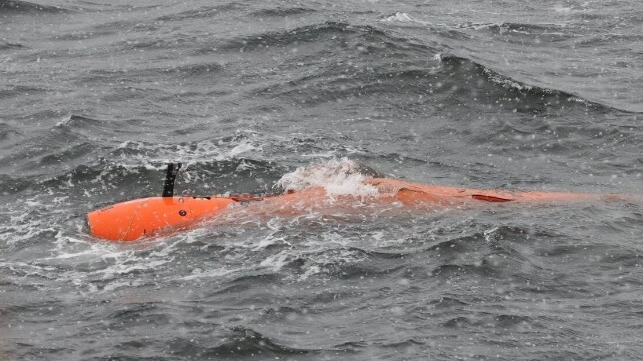
Ran, a high-specification variant of Kongsberg's HUGIN series of AUVs (Anna Wahlin)

PUBLISHED FEB 4, 2024 9:59 PM BY THE MARITIME EXECUTIVE


In a blow to research in West Antarctica, Sweden’s University of Gothenburg is reporting that it has lost an unmanned underwater vehicle (AUV) under a glacier in the region. The vehicle, owned by the university, was one of a small number of units in the world that have the unique capabilities needed to operate beneath the unstable Thwaites Glacier, also commonly referred to as the “Doomsday Glacier.”

The seven-meter long AUV - called Ran - disappeared last weekend during an expedition with the South Korean icebreaker Araon. The AUV was part of a project led by Professor Anna WÃ¥hlin, one of the six participants from University of Gothenburg on board the icebreaker.

“This was the second time we took Ran to Thwaites Glacier to document the area under the ice. Thanks to Ran, we became the first scientists in the world to enter Thwaites in 2019, and during the current expedition we have visited the area again. Even if you see melting and movements in the ice from satellite data, from Ran we got close-ups of the underside of the ice,” said Prof. WÃ¥hlin.

With scientists increasingly mapping the impacts of climate change in the polar regions, melting glaciers and ice sheets have become a primary concern. Most studies are trying to focus on the nexus between ice loss and sea level rise, which could be detrimental to ecosystems far away from polar regions.

According to recent polar studies, the Antarctic ice sheet contains enough ice to raise global sea-levels by about 58 meters (190 ft) if melted entirely. Most of this ice is held in East Antarctica, which is relatively stable.

However, a sizeable portion is held in West Antarctica, which is considered less stable and has been losing mass in the past decade. This poses a threat of raising sea-levels by around five meters (16ft). Much of the ice-loss has been recorded within the Thwaites Glacier, which flows into Amundsen Sea in West Antarctica. The glacier is considered highly vulnerable to warming being recorded in the Antarctica.

If the Thwaites Glacier collapses entirely, scientists project that it would raise global sea levels by around 65 cm (25 inches).

It is for this reason that Ran’s measurements received a lot of attention, and not only among polar scientists.

During its dives under the 200-500 meter thick ice, Ran did not have continuous contact with the research vessel. Its route was always programmed in advance, and thanks to its advanced navigation system, Ran could find its way back to the open water.

Last month, Ran completed several successful dives under Thwaites. Unfortunately, during the last planned dive of the expedition, something went wrong. The AUV did not appear at the programmed rendezvous point, and after an extensive search, Ran was declared lost.

The AUV – based on Kongsberg’s ubiquitous HUGIN platform - was financed with $3 million from the Knut and Alice Wallenberg Foundation in 2015. WÃ¥hlin notes that the university team got five years of service and 10 research missions out of the AUV, and that the importance of the study made it worth the risk to the equipment. 

“Our aim is to replace Ran. We will be looking for a financier to cover the deductions made by the insurance company and the price increase that has occurred over the years,” says Anna WÃ¥hlin.

CANADA
Air Transat's Flight Attendants Reject January's Tentative Agreement

BYANDREW CRIDER
PUBLISHED 1 DAY AGO

The union representing the inflight workers and the airline have been negotiating a new contract for several months.

SUMMARY

Air Transat flight attendants union rejects tentative agreement in ongoing contract dispute.

Union members have voted to renew the strike mandate if no deal is made.

The previous tentative agreement was also rejected last month.


The Canadian Union of Public Employees (CUPE) announced that Air Transat’s flight attendants union rejected the tentative agreement on January 7th, continuing the months-long contract dispute. While the agreement was negotiated between airline executives and union representation, the 10-day voting period on the agreement resulted in 81.9% of the 2,100-strong flight attendant union members voting to reject the deal, according to a statement.

The vote to reject the proposed agreement included a vote to renew the mandate to strike if a deal is not made, earning 94.6% approval among the union. While union votes can sometimes be difficult in the airline industry as employees are constantly moving, more than 88.7% of the union participated in the vote.


Before the vote, the union spent several days in general meetings to review the deal. At the time, the airline said it was pleased to have reached the agreement. Previous statements from CUPE indicated that the union was responding to rising living costs, which led it to seek salary increases.

With the vote concluded, both parties will resume negotiations, which have been ongoing since April of last year. The union pledged not to issue further comments on the refusal to vote, per the CUPE statement. The previous collective agreement began on October 31, 2022.

Long history of rejection

It is not the first time the union has rejected a tentative agreement reached with the airline. A previous tentative agreement reached in December was rejected on January 2nd, and the previous mandate to strike received nearly 99.8% support.

After that vote, CUPE’s Air Transat President Dominic Levasseur said, "The Air Transat flight attendants clearly indicated to us that the agreement did not relieve the suffering and financial insecurity they experience on a daily basis."

Air Transat is not the only airline facing union difficulties. Weeks ago in the United States, negotiations between Avelo Airlines and its flight attendants heated up ahead of a vote for its flight attendants to unionize, while other passenger and cargo airlines have all had high-profile contract negotiations and strikes in the past year. Several airport work groups in Europe have also gone on strikes, shutting down operations at airports in France and Germany.

Last week in Germany, Lufthansa’s cabin crew union called for a 15% pay increase at Lufthansa Cityline, while German inflation increased close to 4%. Other airlines like EVA Air had their pilots' union vote to go on strike during the Lunar New Year, which runs February 10-15th. Meanwhile, carriers such as Southwest Airlines, American Airlines, and United Airlines have reached deals with their respective pilot's unions.

Air Transat, reached net profits in 2023 for the first time since the pandemic. The airline's fleet is comprised of one Airbus A320, 23 A321s, 13 A330s, and five Boeing 737s. Several A321s are A321LRs, which the airline has utilized to expand service to the Caribbean. At the same time, Air Transat also expects to ground some of its A321LR fleet due to issues with its Pratt & Whitney engines.

Sunday, February 04, 2024


Canada provides support to U.S. for strikes on Yemen’s Houthis

Canadian Armed Forces personnel continue to provide support under a multinational coalition formed to counter the Houthis' attacks

Article content

Canada was among several allies that provided support to the United States and United Kingdom during their second wave of attacks against Houthi targets in Yemen, the Department of National Defence said Saturday.

Canada issued a joint statement with the U.S., U.K., Australia, Bahrain, Denmark, the Netherlands, and New Zealand in response to the Houthis’ continued attacks against international and commercial ships travelling in the Red Sea and the Gulf of Aden.

Advertisement 2

This second wave of assaults came after a series of strikes in early January and are aimed at further disabling Iran-backed groups that have attacked international interests in the wake of the Israel-Hamas war.

Three Canadian Armed Forces personnel continue to provide planning support under Operation Prosperity Guardian, a multinational coalition formed in December to counter the Houthis’ attacks. That includes two planners and one intelligence analyst.

No Canadian military weapons were used in the strikes against the Houthi positions, a Department of National Defence spokesperson said on Sunday.

U.S. warships along with American and British fighter jets struck 36 Houthi targets across 13 locations in Yemen, the coalition said.

The strikes targeted sites associated with the Houthis’ deeply buried weapons storage facilities, missile systems and launchers, air defence systems and radars.

And the coalition warned that they will not back down.

“Our aim remains to de-escalate tensions and restore stability in the Red Sea but let us reiterate our warning to Houthi leadership: we will not hesitate to continue to defend lives and the free flow of commerce in one of the world’s most critical waterways in the face of continued threats,” the statement said.

Houthis have launched more than 30 attacks on commercial and naval vessels since mid-November, and the offensive continues to be an international challenge, the coalition said.

RAF Typhoon aircraft
U.K. Royal Air Force Typhoon aircraft takes off to conduct further strikes against Houthi military targets in Yemen at RAF Akrotiri on Feb. 3, 2024 in Akrotiri, Cyprus. PHOTO BY HANDOUT /MoD Crown Copyright via Getty Im

U.S. Central Command said its forces launched an additional strike on Sunday “in self-defence against a Houthi anti-ship cruise missile prepared to launch against ships in the Red Sea,” said a post on X, formerly Twitter.

“U.S. forces identified the cruise missile in Houthi-controlled areas of Yemen and determined it presented an imminent threat to U.S. Navy ships and merchant vessels in the region. This action will protect freedom of navigation and make international waters safer and more secure for U.S. Navy vessels and merchant vessels,” U.S. Central Command said.

Advertisement 4
Article content

The recent wave of strikes followed an air assault in Iraq and Syria on Friday that targeted other militias and the Iranian Revolutionary Guard in retaliation for the drone strike that killed three U.S. troops in Jordan last weekend.

While there has been no suggestion the Houthis were directly responsible, they have been one of the prime U.S. adversaries since Hamas attacked Israel on Oct. 7. Hamas killed more than 1,200 people that day in Israel and took about 250 hostages.

The Health Ministry in Hamas-ruled Gaza said more than 26,000 people have been killed and more than 64,000 wounded in the Israeli military operation since the war began.

The Houthis have been conducting almost daily missile or drone attacks against commercial and naval ships transiting the Red Sea and Gulf of Aden and have made clear that they have no intention of scaling back their campaign.

With files from The Associated Press