Monday, February 05, 2024


Researchers develop algorithm that crunches eye-movement data of screen users

eye data
Credit: Pixabay/CC0 Public Domain

Window to the soul? Maybe, but the eyes are also a flashing neon sign for a new artificial intelligence-based system that can read them to predict what you'll do next.

A University of Maryland researcher and two colleagues have used  and a new deep-learning AI  to predict study participants' choices while they viewed a comparison website with rows and columns of products and their features.

The algorithm, known as RETINA (Raw Eye Tracking and Image Ncoder Architecture), could accurately zero in on selections before people had even made their decisions.

"This is something AI technology is very good at—using data to make predictions," said Michel Wedel, a Distinguished University Professor and PepsiCo Chair in Consumer Science in the Robert H. Smith School of Business. He worked with Moshe Unger of Tel Aviv University and Alexander Tuzhilin of New York University to develop RETINA. Their research is published in the journal Data Mining and Knowledge Discovery.

Researchers using eye  data typically synthesize it into aggregated chunks of information, which can miss some information and certain types of eye movements. With their advanced machine-learning method, Wedel and his colleagues could use the full scope of raw data from the eye-tracking rather than the snippets current methods record.

Unusually, the algorithm is able to incorporate raw eye movement data from each eye, Wedel said.

"It's a lot of data—several hundreds of thousands of , with millions of parameters—and we use it for both eyes separately," he said.

The algorithm could be applied in many settings by all types of companies. For example, a retailer like Walmart could use it to enhance the virtual shopping experiences they are developing in the metaverse, a shared, virtual online world. Many of the VR devices people will use to explore the metaverse will have built-in eye tracking to help better render the virtual environment. With this algorithm, Walmart could tailor the mix of products on display in their virtual store to what a person will likely choose, based on their initial eye movements.

"Even before people have made a choice, based on their eye movement, we can say it's very likely that they'll choose a certain product," Wedel says. "With that knowledge, marketers could reinforce that choice or try to push another product instead."

RETINA has applications outside of marketing as eye tracking becomes more ubiquitous in many other fields, including medicine, psychology and psychiatry, usability and design, arts, reading, finance, accounting—anything where people are making decisions based on some kind of visual assessment.

The biggest players in tech, including Meta and Google, having recently acquired eye-tracking companies and are considering a range of applications. With front-facing cameras, it is now possible to track people's eye movements from any personal smartphone, tablet or computer. Such consumer device-based approaches can't yet be as accurate yet, as the advanced eye-tracking hardware that researchers currently use, said Wedel, and there is still the big issue of privacy concerns—companies need to ask permission from users.

The researchers are already working to commercialize the algorithm and extend their research to optimize decision-making.

"We think eye tracking will become available at very large scales," said Wedel. "The processing of the eye movement data typically has been very laborious. With this algorithm, we sidestep a lot of that, so there may be many applications that we haven't even thought about."

More information: Moshe Unger et al, Predicting consumer choice from raw eye-movement data using the RETINA deep learning architecture, Data Mining and Knowledge Discovery (2023). DOI: 10.1007/s10618-023-00989-7


Provided by University of Maryland Companies are increasingly tracking eye movements—but is it ethical?


China's Tencent fires more than 120 workers for fraud

FEBRUARY 4, 2024
The Hong Kong-listed company is the world's top video game maker and the owner of the popular super-app WeChat
The Hong Kong-listed company is the world's top video game maker and the 
owner of the popular super-app WeChat.

Chinese tech giant Tencent said it last year dismissed more than 120 employees for violating its anti-fraud rules, including for corruption and embezzlement.

The Hong Kong-listed  is the world's top video game maker and the owner of the popular super-app WeChat, which is installed on almost every phone in the country.

Tencent's founder Pony Ma in 2022 described the level of corruption in his company as "shocking", and the firm promised to take action, according to  reports.

Last year, more than 70 breaches of the code of conduct were reported, Tencent said.

"More than 120 people were dismissed" from the company and nearly 20 were reported to the authorities, the group said in a statement released on Friday.

Some of the sacked employees belonged to the group's PCG branch, responsible for broadcasting content such as news, sport and films.

Others worked in the group's medical services arm, a sector where Tencent's telemedicine applications have a huge market share in China.

One of the employees implicated by Tencent was sentenced to four years in prison and fined 100,000 yuan ($14,000), according to the .

The announcements come after years of difficulties for China's tech giants.

After a period of meteoric growth, the sector underwent a broad regulatory crackdown by Chinese authorities that started in late 2020.

As a result, billions of dollars in  have been lost, and the profits of powerful internet companies have plummeted.

Tencent, which currently has just over 100,000 employees, was not spared.

Restrictions in China to online gaming time for under-18s were also a blow to the group's profitability.

Tencent is now looking for more opportunities abroad, particularly in Europe, where it is strengthening its position by acquiring stakes in major gaming studios.

© 2024 AFP

How wood is making a comeback in construction

How wood is making a comeback in construction
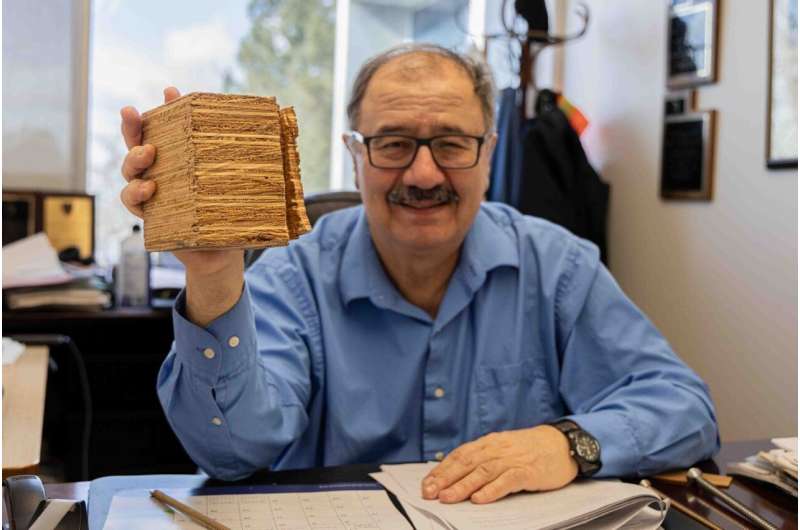
University of Utah engineering professor Chris Pantelides displays a piece of
 engineered wood used in mass timber construction. 
Credit: Mark Draper, University of Utah

We've been using wood to build things for a very long time. According to the recently discovered remains of a half-a-million-year-old wooden structure in Africa, we've been building with wood before we were even fully human. From those early beginnings to the stave churches of Scandinavia to Lincoln's log cabin, wood as a construction material has been favored for its abundance, its workability and its beauty.

Yet in the past 150 years, as cities and skyscrapers have boomed, wood has been eclipsed by newer materials such as concrete and steel. These materials can support more weight, allowing for bigger buildings, and aren't as susceptible to fire, earthquake and moisture damage. However, they cost more to produce, are not renewable and exact a heavy carbon footprint; steel and concrete production accounts for more than 10% of global emissions.

But talk to University of Utah engineering professor Chris Pantelides, and he'll tell you that we shouldn't accept the dominance of the steel-and-concrete jungle just yet. Thanks to the work of civil engineers like Pantelides, our oldest  material is experiencing a revival—one that can even withstand earthquakes.

Wood represents both the past and the future for building

Sitting in his office at the John and Marcia Price College of Engineering's Department of Civil and Environmental Engineering, he held up a block of composite wood, about 12 inches long and 10 inches wide, and smiled.

"What you're looking at here is the future," Pantelides said.

The deceptively simple piece of lumber is an example of "mass timber" technology, a category of "engineered wood product" set to revolutionize the construction industry, which Pantelides has spent the last seven years studying and developing.

On the desk before him, among other pieces of wood and long metal dowels, sat his latest research paper, titled "Design and Cyclic Experiments of a Mass Timber Frame with a Timber Buckling Restrained Brace," published in the Journal of Structural Engineering. It explores the best ways to build a buckling restrained brace (BRB)—a type of building support that protects against earthquake damage—with mass timber.

As a construction technique, mass timber is defined by its use of columns, beams and boards, made of multiple wood layers or pieces tightly laminated or otherwise bound together. The two mass timber types Pantelides works with are known as mass plywood panel and mass ply lam, which have several advantages, environmental and structural, over the usual building materials.

"The timber that we're talking about, it's very strong. It can take the place of steel or concrete in many building frames, but it's much lighter," Pantelides explained. "A mass timber building is one-quarter the weight of a concrete building too, requiring a much smaller foundation."

Thanks to its super-compressed makeup, mass timber is effectively fireproof, resistant to moisture damage and highly durable. With today's sustainable forestry techniques, using wood is more sustainable and "renewable" than ever.

Wood sequesters carbon while concrete emits it

"It takes only seven seconds for European forests to grow enough timber required for a three-bedroom apartment," Pantelides said. "Canada alone has enough timber to house a billion people in perpetuity, with forested trees replenishing faster than the population."

Every ton of timber grown sequesters 1.8 tons of carbon dioxide from the atmosphere. A mass timber building could be 25% faster to build compared to a concrete building and result in 90% less construction traffic. Once the structure is finished, the wood goes from benefiting nature to having natural benefits.

"People simply like to be in buildings that have lots of exposed wood," Pantelides said. "The sense of being connected to nature, the biophilic design, makes for healthier living and working environments."

Thanks to its ability to bend and not break under pressure, steel remains the go-to for tall buildings, especially in areas with high risk of earthquakes or hurricanes. Maintaining a building's structural integrity relies on a deep understanding of such properties—an understanding we don't have with stiffer mass timber. This is where Pantelides's research comes in.

With its varied compositions, mass timber is far from one-size-fits-all; the type of wood used, the size and shape of the wood particles, how they're stuck together, or even whether individual layers are stacked parallel or perpendicular to each other will greatly influence how the finished product reacts under stress.

Since he first started investigating mass timber, Pantelides has been troubleshooting and experimenting with different "recipes," eventually arriving at one that calls for shaving dark fir wood into chips, tightly compressing the chips together into planks or boards and then laminating those layers together with ultra-strong glue. The resulting plywood can then be securely fastened to other pieces of wood with joints made of steel dowels and plates.

Using this formula, Pantelides and his team experimented with mass timber versions of earthquake-resistant architectural elements, including the Timber Buckling Restrained Brace (T-BRB)—the focus of Pantelides's most recent publication.

More information: Emily Williamson et al, Design and Cyclic Experiments of a Mass Timber Frame with a Timber Buckling Restrained Brace, Journal of Structural Engineering (2023). DOI: 10.1061/JSENDH.STENG-12363


Provided by University of Utah 


Exploring the potential of tall timber buildings

Governments spend US$22 billion a year helping the fishing industry empty our oceans. This injustice must end


Overfishing has dire consequences for ocean health and for the millions of people who depend on fish for food and well-being. Globally, catch has been steadily declining since the 1990s. It's a trend that's likely to continue if we fail to act now.

Nearly all governments, including Australia's, subsidize their fishing industries. Financial support comes in many forms, from taxpayer-funded fuel to reduced boat-building costs. These subsidies are harmful because they encourage overfishing. Some of the most environmentally damaging and least efficient fishing activities, such as bottom trawling and distant water fishing, would become unprofitable and cease without government subsidies.

Scientists worldwide are rallying for stringent regulations to eliminate harmful fisheries subsidies, which totaled a whopping US$22 billion in 2018. Safeguarding the ocean will strengthen food security and allow more equitable distribution of marine resources.

Trade ministers from around the world are set to convene later this month in Abu Dhabi at a key meeting of the World Trade Organization (WTO). In an open letter published today, we are among 36 marine experts calling on the WTO to adopt ambitious regulations promoting fisheries sustainability and equity, and to eliminate harmful fisheries subsidies.

A long-awaited agreement

International pressure from scientists helped to broker an earlier agreement on fishing subsidies, which is yet to be ratified.

In October 2021, 300 experts published an article in Nature calling for an end to harmful subsidies in the fishing sector.

After decades of fruitless negotiations, the WTO finally reached an agreement on fisheries subsidies in June 2022.

Once ratified by two-thirds of WTO members, this agreement will partially address the United Nations Sustainable Development Goal Target 14.6 to eliminate harmful subsidies.

Unfortunately, while this agreement is historic, it is narrow. It only prohibits member governments from financing illegal fishing activities and the exploitation of already overfished stocks. But it's obvious illegal fishing should be banned and the focus on overfished stocks is too little, too late.

Experts argue the agreement fails to specifically address harmful subsidies across global fisheries and as such only affects a trivial component of subsidy-driven exploitation. The subsidies that reduce operating costs and increase fishing capacity, allowing vessels to travel further and remain at sea longer, remain in place.

Fisheries subsidies affect more than just fish

Scientists have been sounding the alarm for decades. Many published studies document the destabilizing effects of fisheries subsidies on ecosystems. In addition to impacting biodiversity and ecosystems, subsidies also increase the CO₂ emissions that contribute to climate change.

More recently, studies have also applied a social perspective to this issue. Seafood lifts millions of people out of hunger, malnutrition and poverty. Yet more people will lose a secure source of food and nutrients if  continue to decline due to industrial overfishing.

Research shedding light on the concept of "equity" shows subsidies don't just harm the ocean, they also affect human communities. These communities are largely in developing countries which are rarely the source of harmful fisheries subsidies. Rather, their waters are exploited by foreign vessels supported by wealthy governments' fisheries subsidies.

Fisheries subsidies foster unfair competition not only among countries but also between industrial and community led fishing fleets. In the Indian Ocean, the level of subsidies provided to industrial fisheries corresponds to the amount of seafood exported to , largely supplying rich and food-secure countries. This shows governments are deliberately empowering their industrial fleets to fish for seafood largely exported and consumed elsewhere, instead of sustaining fisheries providing food for locals.

The good, the bad and the ugly

While most nations contribute to harmful subsidies, 10 nations are responsible for 70% of this unsustainable financing. Chief among them are China, Japan and the European Union, reflecting the significant size of their distant water fishing fleets that typically access the resources of less-developed nations.

In contrast, Australia contributes only 0.1% of global harmful subsidies. Only 6% of Australia's annual US$400 million in fisheries subsidies is considered harmful. While Australia should give attention to its ongoing annual taxpayer contribution of US$25 million to the fishing sector, it is well placed to demonstrate global leadership on how fishing can deliver sustainable and equitable outcomes without harmful subsidies.

An essential opportunity

second wave of negotiations on fisheries subsidies is expected during the WTO Ministerial Conference this February in Abu Dhabi. This conference represents an invaluable opportunity to better protect the ocean.

In anticipation of this meeting, we are urging nations to adopt more ambitious regulations that eliminate harmful subsidies, prioritizing fisheries sustainability and ocean equity.

Harmful fisheries subsidies are not only unsustainable but profoundly unfair. Based on the extensive body of evidence, the WTO should agree to eliminate harmful subsidies once and for all.

Provided by The Conversation 

This article is republished from The Conversation under a Creative Commons license. Read the original article.The Conversation


Can ocean energy power carbon removal?

Can ocean energy power carbon removal?
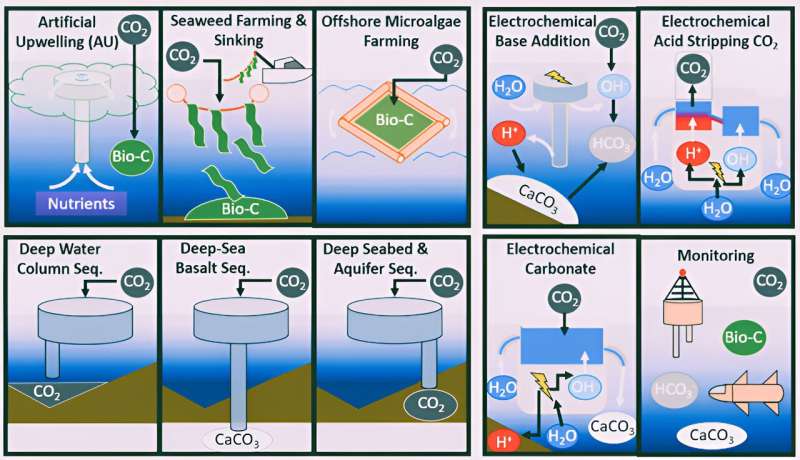
The team examined many marine carbon management methods, including 
marine carbon capture, which separates carbon dioxide from the air or ocean; 
sequestration, which permanently stores that captured carbon; and removal, 
which does both. None are faultless.
 Credit: James Niffenegger, NREL

The Caribbean has a problem, and it stinks.

Atop the Caribbean Sea's famously pristine waters floats a 5,000-mile-wide heap of rust-colored, brambly seaweed. When that seaweed, a form of sargassum, clumps up on beaches and decomposes, it emits hydrogen sulfide gas (also known as swamp gas), which smells like rotten eggs and, in high doses, can be toxic. For obvious reasons, this seaweed swarm is a huge problem for the Caribbean's tourism industry and residents—and potentially for Florida, where the heap is headed next.

But this stinky seaweed could also be part of a solution.

"If you sink that seaweed into the deep sea, you can potentially avoid those issues," James Niffenegger said. "And with seaweed sinking, the deeper you go, the longer you can store the  it absorbed from the air and water."

Niffenegger, a researcher at the National Renewable Energy Laboratory (NREL), is an author of a new study that examined various methods to capture carbon dioxide from the air or ocean and permanently sequester or store it—or, better yet, do both simultaneously.

These techniques—called marine carbon capture, marine carbon sequestration, and marine carbon dioxide removal—are almost as diverse as marine wildlife: Some involve farming or sinking seaweed, others inject captured carbon into deep-sea rocks, and some capitalize on clever chemistry to remove carbon directly from the ocean. But almost all are relatively new and untested technologies, and their costs, environmental impacts, and potential efficacy are still largely unstudied.

Until now.

For their study, Niffenegger and his colleagues—David Greene, Robert Thresher, and Michael Lawson—analyzed the benefits and drawbacks of each of the most promising marine carbon management techniques. But they also looked at how the country—and the world—could power these carbon-snatchers, especially those that operate in the remote ocean, far from any .

The ocean, the team found, could be a valuable partner. Offshore energy technologies, including  and marine energy devices—which generate energy from , currents, tides, and other watery power sources—could help meet global carbon removal goals. And they could do that with the energy available in U.S. waters alone.

"This is not a cure-all," Niffenegger said, meaning carbon removal alone cannot halt climate change.

Still, it is one remedy we can no longer do without.

A sinking ship: Why carbon removal is no longer optional

Like on-land carbon capture technologies, which can extract carbon from our air, marine carbon capture harvests the molecules from seawater or the air above. Carbon causes problems for both: Excess carbon dioxide gas in the atmosphere creates a kind of blanket around our world, trapping more heat as more carbon crams in. And even though the ocean absorbs a lot of that airborne carbon, those waters can only trap so much. Plus, too much carbon causes ocean acidification—a steady increase in seawater acidity—which puts marine ecosystems and wildlife at risk. Today, the ocean is basic, with a pH similar to baking soda.

"Basically, we're in a sinking ship now. Our boat is taking on water and we've got to plug up the holes," Niffenegger said. "But even after we plug up the holes, we've got to bail the water out. And if we take too long to do that, there might still be too much water in there for us to avoid the most significant impacts."

According to the Intergovernmental Panel on Climate Change, carbon dioxide removal is now essential to keep global warming to 1.5 degrees Celsius. If we cross that marker, today's climate change crises—superstorms, wildfires, floods, extreme droughts, lethal heat waves, crop devastation, and more—will only get worse.

To avoid those catastrophes (and their economic and human costs), the world needs to limit warming to 1.5°C by 2100. And to do that, we need to remove about 3 to 7 billion tons of carbon from our atmosphere per year by 2050. (For context, humans emitted about 40 billion tons of carbon dioxide in 2022 just by burning fossil fuels).

More information: Mission Analysis for Marine Renewable Energy To Provide Power for Marine Carbon Dioxide Removal. www.nrel.gov/docs/fy23osti/87165.pdf

Climate change: Challenges of capturing sufficient carbon through large-scale seaweed farming


Smarter eco-cities, AI and AI of Things, and environmental sustainability

Smarter eco-cities, AI and AIoT, and environmental sustainability
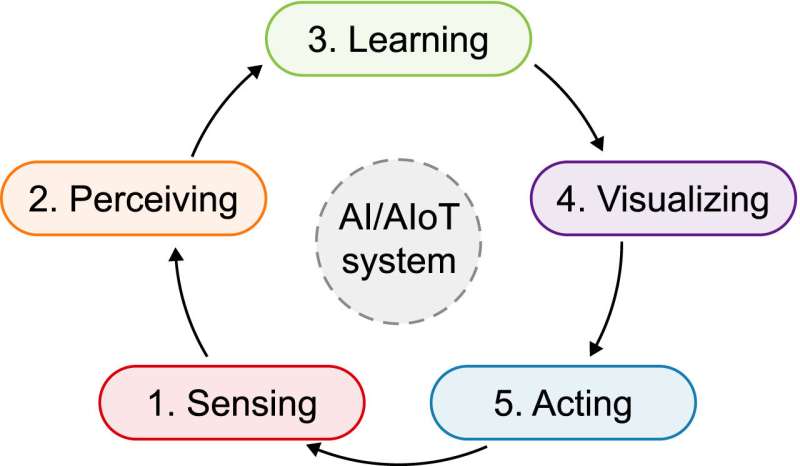
The five pillars of an AI/AIoT-driven system: 1-sensing in charge of collecting raw data, 
2-perceiving in charge of extracting semantically meaningful information from raw data,
 3-learning in charge of learning to predict patterns, 4-visualizing in charge of
 communicating key insights, and 5-acting in charge of taking action to achieve a certain 
goal.
Credit: Environmental Science and Ecotechnology (2023). DOI: 10.1016/j.ese.2023.100330

Smarter eco-cities, characterized by their advanced technological landscape, are at the forefront of ushering in a new era of environmental sustainability. These intelligent urban environments leverage cutting-edge Artificial Intelligence of Things (AIoT) solutions to address and mitigate environmental challenges.

The integration of AIoT technologies enables these cities to harness , optimize resource utilization, and implement innovative approaches for ecological conservation and resilience. In doing so, they contribute significantly to the creation of more sustainable and resilient urban ecosystems, fostering a harmonious balance between technological advancement and environmental well-being. As we explore the realm of smarter eco-cities, several questions emerge:

  • What foundational elements define the emergence of smarter eco-cities, and how do they intertwine?
  • What factors serve as the key enablers and drivers propelling the evolution of smarter eco-cities?
  • What constitutes the primary AI and AIoT solutions that can be leveraged in shaping the development of smarter eco-cities?
  • What challenges and barriers arise in implementing AI and AIoT solutions for the development of smarter eco-cities?

In a  published in Environmental Science and Ecotechnology, invaluable insights and novel perspectives are presented. These findings serve as a crucial resource for policymakers, practitioners, and researchers, providing them with the necessary knowledge to advance the integration of eco-urbanism and AI- and AIoT-driven urbanism.

Since the mid-2010s, the gradual influence of data-driven technologies and solutions in smart cities has been reshaping the dynamics of eco-cities. This transformation aligns with a smarter approach to environmental sustainability, characterized by the integration of core eco-city domains with those of smart cities.

This trajectory is expected to persist as the technologies and solutions of smart cities—including AI, IoT, and Big Data—advance and seamlessly integrate with sustainable technologies and strategies. This integration enables the development of innovative approaches, showcasing the capability to address increasingly complex challenges.

Consequently, the continual advancement in AI and AIoT applications contributes to the ongoing evolution of smart eco-cities, making them even more intelligent in their commitment to achieving environmental sustainability.

In response to the pressing need for effective solutions, these technologies are poised to offer novel applications that not only overcome current challenges but also pave the way for sustained improvements.

Moreover, a positive feedback loop is anticipated, wherein the more these solutions are implemented, the higher the likelihood of their further adoption. This can be attributed to the amplifying effects of network dynamics, continuous learning, adaptive capabilities, and enhanced coordination, creating a reinforcing cycle of positive impact on environmental sustainability efforts.


More information: Simon Elias Bibri et al, Smarter eco-cities and their leading-edge artificial intelligence of things solutions for environmental sustainability: A comprehensive systematic review, Environmental Science and Ecotechnology (2023). DOI: 10.1016/j.ese.2023.100330

Provided by Eurasia Academic Publishing Group

E-scooters are linked with injuries and hospital visits, but we can't say they are riskier than bikes yet


 FEBRUARY 4, 2024

E-scooters are linked with injuries and hospital visits—but we can't say they are riskier than bikes yet
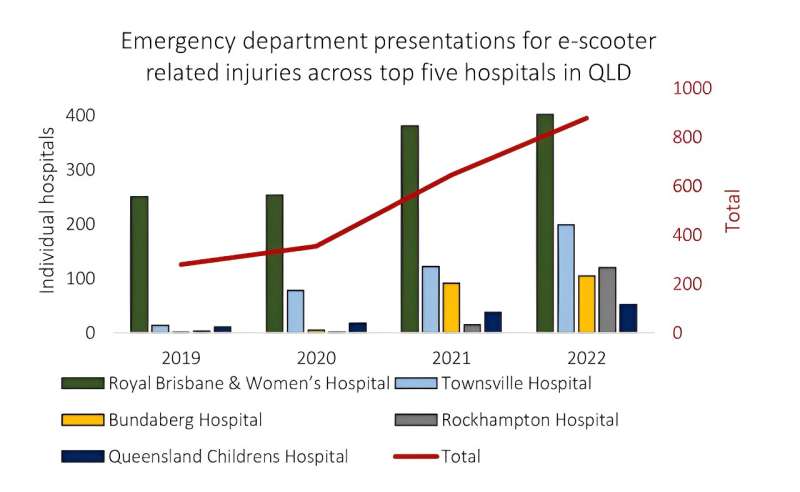
Data source: Royal Automobile Club of Queensland. Credit: CC BY-SA

E-scooters are a popular new feature of urban mobility, offering an eco-friendly solution with zero exhaust emissions and agility in city spaces. They make an attractive option for "last-mile" commuting—bridging the gap between public transport and final destinations.

Tourists like them, too, as a convenient way to explore new cities.

Launched in Singapore in 2016, the global electric scooter market is valued at more than US$33.18 billion (A$49 billion) and is growing each year by around 10%.

More than 600 cities globally have embraced  sharing programs, yet reactions to these micro-mobility vehicles vary, making them a contentious urban planning issue.

Cities such as San Francisco and Madrid initially banned e-scooters, citing safety and public space concerns, but later introduced regulations for their use. Paris conducted a referendum, resulting in an e-scooter ban.

In Australia, the response has been more welcoming, though regulations differ across states and territories. What do we know about how safe e-scooters are? And what can we learn from other cities?

More e-scooters means more injuries

The growing popularity of e-scooters worldwide, including in Australian cities, has been mirrored by a significant rise in related injuries and hospital admissions.

Most of these incidents involve males in their late 20s or early 30s, commonly sustaining head, face and limb injuries. There is consistently low helmet use in those injured. Also, about 30% of people who go to hospital with e-scooter injuries have elevated blood alcohol levels. Crashes involving riders under the influence of alcohol are associated with more severe head and face injuries.

A study examining data from the Royal Melbourne Hospital reported 256 e-scooter-related injuries in the year to January 2023—including nine pedestrians—with a total hospitalization cost of A$1.9 million.

In Queensland, e-scooter-related presentations to hospitals rose from 279 in 2019 to 877 in 2022. By September of 2023, this figure had already reached 801 (full-year figures weren't available yet). Similar trends are seen in almost every city that has introduced e-scooters.

But are e-scooters riskier than other transport?

All modes of transport come with inherent safety risks. While trauma patient records in Western Australia show an almost 200%  between 2017 and 2022 in e-scooter related admissions, these figures still remain well below those for cyclist injuries.

We need to understand the relative risk of e-scooters—a newcomer to the mobility market—and compare it to other established forms of transport. A proper assessment also considers exposure—the total number of trips and the distance covered.

study in the United Kingdom, incorporating exposure factors using data from an e-scooter rideshare operator and hospital admissions combined, indicates that although hospital presentations increased during the e-scooter trial period, the  rate was comparable to that of bicycles.

But it might be a different story when it comes to the severity of injuries. Some studies suggest a higher incidence of severe trauma among e-scooter users compared to cyclists. One study of more than 5,000 patients treated at a major trauma center in Paris found that, while the mortality rate from e-scooter crashes wasn't higher than that of bicycles or motorbikes, the risk of severe traumatic brain injuries was slightly higher than bicycles (26% compared to 22%).

There is evidence e-scooter riders tend to engage in significantly more risky behavior than cyclists. Compared to injured bicyclists, those injured while riding e-scooters:

  • tend to be younger
  • are more frequently found to be intoxicated
  • exhibit a lower rate of helmet use
  • and are more commonly involved in accidents at night or on weekends.
  • Provided by The Conversation This article is republished from 
  • The Conversation under a Creative Commons license. Read the original article.The Conversation

Parisians vote in anti-SUV parking and pollution referendum

Cars weighing more than 1.6 tonnes would be slapped with swingeing parking charges if the vote passes
Cars weighing more than 1.6 tonnes would be slapped with swingeing parking charges if
 the vote passes.

Polling stations opened in Paris on Sunday for a referendum on tripling parking costs for hefty SUV-style cars, a campaign that has drivers' groups up in arms against city hall.

Some 1.3 million Parisians are eligible to cast their ballot on the change, which would see cars weighing 1.6 tonnes or more charged 18 euros ($19.50) per hour for parking in central areas, or 12 euros further out.

Fully  would have to top two tonnes to be affected, while people living or working in Paris, , tradespeople, health workers and people with disabilities would all be exempt.

"The bigger they are, the more they pollute," Paris' Socialist mayor Anne Hidalgo said in December to justify the step.

On her watch, the city has pedestrianized many streets, including the banks of the river Seine, and built a network of cycle lanes in an effort to discourage driving and reduce harmful transport emissions.

Environmental group WWF has dubbed SUVs an "aberration", saying they burn 15 percent more fuel than a classic coupe and cost more to build and purchase.

City hall has further pointed to safety concerns about taller, heavier SUVs, which it says are "twice as deadly for pedestrians as a standard car" in an accident.

The vehicles are also singled out for taking up more public space—whether on the road or while parked—than others.

Paris authorities say the average car has put on 250 kilograms (550 pounds) since 1990.

Hidalgo, whose city will this summer host the 2024 Olympics, rarely misses a chance to boast of the environmental credentials of the town hall and its drive to drastically reduce car use in the center.

35 mn euros per year

But drivers' groups have attacked the scheme, with Yves Carra of Mobilite Club France saying the "SUV" classification is "a marketing term" that "means nothing".

He argued that compact SUVs would not be covered by the measures, which would however hit family-sized coupes and estate cars.

Conservative opposition figures on the Paris council say this imprecise targeting of the referendum "shows the extent of the manipulation by the city government".

Even among fuel-burning cars, "a new, modern SUV... does not pollute more, or even pollute less, than a small diesel vehicle built before 2011", said a drivers' group 40 million automobilists.

Maud Gatel, an MP from the centrist MoDem party, said that "if this was really about limiting pollution, there would be a distinction made between  and hybrid or electric vehicles".

The wide range of exemptions would leave almost 27 percent of SUVs in Paris unaffected by the higher parking fees, she added, citing figures from research firm AAA Data.

Hidalgo's transport chief David Belliard, of the Green party, says around 10 percent of vehicles in Paris would be hit by the higher parking fees, which could bring in up to 35 million euros per year.

Paris's anti-SUV push has not gone unnoticed elsewhere in France, with the Green party mayor in Lyon planning a three-tier parking fee for both residents and visitors from June.

The last city referendum in Paris, on banning hop-on, hop-off rental scooters from the capital's streets, passed in an April 2023 vote—but only drew a turnout of seven percent.

© 2024 AFP


Paris plan targeting SUVs hits bumpy road