Tuesday, October 29, 2024

Experiencing intense emotions with others makes people feel more connected, study finds

Nicola Davis Science correspondent
THE GUARDIAN
Tue 29 October 2024 

Pairs that could see each other while watching the films rated their emotions as more intense.Photograph: Blue Planet Studio/Getty Images/iStockphoto


Whether it is laughing at a classic comedy or watching a horror film from behind a cushion, movies can generate myriad feelings. Now researchers say experiencing intense emotions alongside others makes people feel more connected – provided you can see them.

It has long been known that experiencing emotional events together can strengthen bonds between people, with a previous study finding that watching emotional films with another person makes people feel more connected.

But it has been unclear whether individuals needed to experience intense emotions, similar emotions or both to produce a greater bond. It has also been unclear whether the effect is seen when people watch both joyful and sad films, and whether it occurs only when individuals can see each other.


Writing in the journal Royal Society Open Science, Victor Chung of the École Normale Supérieure in France and colleagues report how they probed the matter by inviting strangers to watch videos together in same sex pairs.

Related: Can you solve it? The enigma of Randall Munroe

The pairs were each shown three five-minute videos in a random order while wearing a face mask and headset. These videos were either positive (a comedy), negative (a film showing the suffering of captive animals) or neutral (footage of a university library). While half the pairs watched the films with a curtain open between them, the other half had the curtain closed.

For each participant the team also recorded an electrocardiogram as well as respiratory activity and skin conductance, to track physical metrics that indicated how the strength of their emotions changed.

At the start of the experiment the researchers asked each participant whether they’d like to meet the other member of their pair again, and whether they identified with them.

After watching each video, participants reported their emotions and feelings of connectedness, and after seeing all three videos they were asked once again about their feelings towards the other participant.

The results from 39 pairs revealed participants’ own reports and their measures of heart rate, respiratory rate and skin conductance showed the emotional films generated stronger responses than the neutral film. In addition, pairs that could see each other while watching the films rated their emotions as more intense.

Related: Ten children drew their favourite sea creatures. Then Australia’s leading artists responded – in pictures

Crucially, the team say participants’ feelings of connectedness within the pairs was boosted when they experienced more intense emotions, as recorded by skin conductance measures which, Chung noted, is the physiological measure of emotional arousal that is easiest to interpret. However, this was only the case when participants watched the films with the curtain between them open.

The researchers said that whether or not the pairs could see each other had no impact on how positively or negatively they felt about the films.

“We found that silently watching emotional films together with another individual is associated with social bonding, even when this person is a stranger and without any verbal communication,” said Chung.

However, Chung noted the study cannot prove social bonding results from intense emotions, and does not rule out the possibility that having similar emotions increases social bonding in other contexts.

“Our findings suggest that experiencing intense emotions with others, even during brief interactions with strangers, plays a role in the emergence of social relationships and the formation of social groups,” he said.


Sharing a cry over a sad film ‘can strengthen connections between people’

Nilima Marshall, PA Science Reporter
Tue 29 October 2024


Sharing a cry over a sad film can strengthen connections between people – even if they are strangers, research has suggested.

Previous studies have shown reaching for the tissues while watching tragic films can boost levels of feelgood chemicals produced in the brain known as endorphins.

A new study, published in the journal Royal Society Open Science, suggests sharing emotions with others – while watching a comedy or a sad film – can also foster social bonds.

The team, led by Victor Chung of PSL University in Paris, recruited 112 people aged between 18 and 35 and split them into pairs.

The pairs, who did not know each other, were invited to watch emotional videos together as well as separately.

The researchers monitored their physiological and emotional responses, as well as how they felt towards each other after watching the videos together.

Results showed people felt more connected when they could see each other while watching the videos, and when they were both experiencing strong emotions, regardless of whether they were positive or negative.

In a follow-up online experiment involving 50 people, those taking part were asked to watch excerpts of French comedy Intouchables, the documentary Earthlings, which depicts the suffering of captive animals, and a YouTube video designed not to evoke strong emotions.

The team wrote: “Our results supported the hypothesis that emotion has a bonding function, as it could explain how brief one-shot interactions with strangers can contribute to satisfying the need to belong to social groups.

“The current study could also explain why people seek out group activities that induce intense and arousing emotions, even participating in sad commemorations or attending dramatic narrative fictions that induce negative emotions.”

AI being used to detect heart murmurs in dogs

Alice Cunningham
BBC News, Cambridgeshire
University of Cambridge
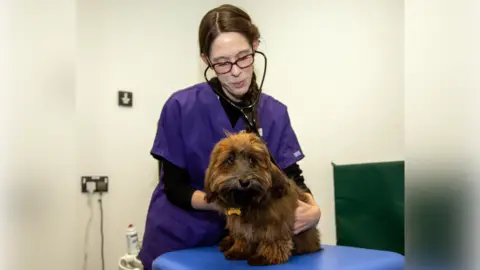
Researchers at the University of Cambridge have developed an AI algorithm that can detect heart murmurs in dogs

Researchers have said they are using Artificial Intelligence (AI) to accurately detect heart murmurs in dogs.

A team at the University of Cambridge has developed an algorithm - a set of coded instructions - that was originally designed for humans, but can also detect and grade murmurs in dogs.

Heart murmurs are one of the main indicators of heart disease, which can affect a large number of smaller breeds like King Charles Spaniels.

Dr Andrew McDonald, the first author of the research, said: "Heart disease in humans is a huge health issue, but in dogs it’s an even bigger problem."


He added: "As far as we’re aware, there are no existing databases of heart sounds in dogs, which is why we started out with a database of heart sounds in humans.

"Mammalian hearts are fairly similar, and when things go wrong, they tend to go wrong in similar ways."
University of Cambridge
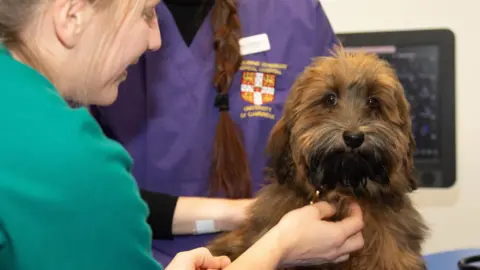
Heart murmurs are a key indicator of heart disease in dogs

Researchers started with a database of heart sounds from about 1,000 human patients and developed a machine-learning algorithm to replicate whether a heart murmur had been detected by a cardiologist.

This algorithm was then adapted, so it could be used with heart sounds from dogs.

Almost 800 dogs undergoing routine heart examinations at four specialist vet centres across the UK were used for the research.

They received a full physical examination, as well as a heart scan by a cardiologist to grade any heart murmurs and identify cardiac disease.

Their heart rhythms were recorded using an electronic stethoscope.

It is believed this was the largest dataset of dog heart sounds ever created.

Co-author Prof Jose Novo Matos said the team wanted to get data "from dogs of all shapes, sizes and ages".

He added: "The more data we have to train it, the more useful our algorithm will be, both for vets and for dog owners."

Analysis of the algorithm found it agreed with the cardiologist's assessment in over half of cases.

In 90% of cases, it was within in a single grade of the cardiologist's assessment which researchers said was a promising result.

People missing as flash floods sweep across Spain sending cars floating down street amid 'historic' weather event


James Holt
Tue 29 October 2024 

-Credit: (Image: Getty Images)

Several people have been reported missing after flash floods swept cars through village streets and trapped people inside their homes amid a 'historic' weather event in large areas of eastern and southern Spain.

Rushing mud-coloured waters caused havoc in a huge arc of the European country, running from the provinces of Malaga in the south to Valencia in the east. The country was under severe weather alert for Storm Dana, which warned of flash flooding and landslides.


Images shot by people with smartphones reproduced on Spain’s national broadcaster RTVE showed frighteningly swift waters carrying away cars and rising several feet into the lower level of homes.

READ MORE UK tourists warned of ‘extreme’ weather in Spain as new red alert issued

A high-speed train with nearly 300 people on board derailed near Malaga, although rail authorities said no-one was hurt. The high-speed train service between Valencia city and Madrid was interrupted as were several commuter lines.

The national government office for the Castilla La Mancha region told radio channel Cadena Ser that six people in the region were missing. Spanish news agency EFE said that one truck driver was missing in L’Alcudia, a town in Valencia.

Also in Valencia, the mayor of Utiel, Ricardo Gabaldon, told RTVE that several people were trapped in their homes. Police and rescue services used helicopters to lift people from homes and cars.

Footage posted on social media appeared to show a police car being swept away by flood waters in Valencia. Spanish authorities in the worst-hit areas urged citizens to remain in their homes and avoid all non-essential travel.

AEMET, the country's state weather agency, issued a red alert for the eastern Valencia region with the second-highest level of alert put in place for parts of Andalusia in the south.

Cars submerged in floodwater in Valencia -Credit:Getty Images

Footage captured in the Valencian town of Alzira showed firefighters rescuing trapped drivers and flooded streets as heavy rain pummelled the area.

Nick Finnis, a Netweather forecaster, shared a clip on X showing flood waters barrelling through Albacete in central Spain. He wrote: "Scary fast-flowing flash floods through streets of Albacete, Spain today, these aren't rare incidents anymore, this is one of several Spanish communities quite far apart seeing streets turn into raging rivers yesterday, today and likely tomorrow too".

An emergency rescue brigade of Spain’s army deployed to help rescue efforts. Storms were forecast to continue until Thursday (October 31), according to Spain’s national weather service.

AEMET had anticipated that Valencia would bear the brunt of the storm, with more than 3.5 inches (90mm) forecast in less than an hour, or 180 mm in less than 12 hours.

Spain has experienced similar autumn storms in recent years. The country has recovered somewhat from a severe drought this year thanks to rainfall. Scientists say that increased episodes of extreme weather are probably linked to climate change.

You can find the latest AEMET forecasts and weather advice in here.

Severe flash flooding hits southern and eastern Spain

Taylor Ward, CNN and Mauricio Torres, CNN en Español
Tue 29 October 2024 

Parts of southern and eastern Spain were hit by severe flash flooding on Tuesday, as some locations received up to 12 inches of rain in just a few hours.

Footage from the city of Valencia showed mud-colored water flooding through the streets, tearing down walls, and sweeping away parked cars.

Spanish Prime Minister Pedro Sánchez said an unspecified number of people are missing due to the flooding, and asked citizens to act with “great caution” and avoid moving around if it is not necessary.

The Spanish government set up a crisis committee on Tuesday, according to the Palace of La Moncloa. It will be chaired by Sánchez and, from Wednesday, will coordinate the work of the Civil Guard, the National Police, the General Directorate of Civil Protection, and the Military Emergency Unit.

Extreme rain warnings were in effect on Tuesday for some areas including around Valencia, according to Spain’s Meteorological Agency, AEMET. These warnings called for the potential of 200 mm (4 inches) of rain in less than 12 hours.

In some locations, the rainfall estimates were exceeded in even shorter periods of time. Chiva, which is east of Valencia, received 320 mm of rain in just over four hours, according to the European Severe Weather Database.

The Valencia area averages 77 mm (3.03 inches) for the entire month of October.

A person reacts to heavy flooding on a street in Valencia, Spain, October 29, 2024. - Eva Manez/Reuters

Flooding was also reported in and around Murcia and Malaga with over 100 mm (4 inches) of rain falling in some of these areas.

A strong upper level low pressure is moving northward into the region from Africa. The strong system is bringing a significant amount of atmospheric instability to the region. Extreme amounts of rainfall are also being enhanced with moisture from the Mediterranean Sea and upslope flow into higher terrain which acts to squeeze out additional moisture.

Rainfall warnings continue through Wednesday for portions of eastern and southern Spain, according to AEMET. The warnings north of Valencia are for rainfall totals in excess of 100 mm (4 inches) and rainfall rates of 30 mm per hour (1.18 inches per hour).

Areas of southwestern Spain will see the threat of heavy rain continue through the end of the week

Several bodies found as heavy rains, flash floods slam Spain

NEWS WIRES
Tue 29 October 2024

A car is pictured on a flooded street in Alora, near Malaga, on October 29, 2024, after a heavy rain hit southern Spain.


Emergency service workers recovered multiple bodies in the eastern Spanish region of Valencia after heavy rains battered the country's eastern and southern areas, causing flash floods and disrupting air and rail travel.

Several bodies have been recovered by emergency service workers in Spain's eastern region of Valencia after torrential rains triggered flash floods, the head of the regional government said Wednesday.

"We can confirm that some bodies have already been found," Carlos Mazon told reporters, without saying how many.

Authorities could not give further details until relatives had been informed, he added.

Heavy rain lashed much of eastern and southern Spain on Tuesday, flooding streets with muddy water and disrupting rail and air travel.

Images shot by residents with smartphones and broadcast on Spanish TV showed raging waters washing away cars and flooding buildings.

In some areas, more than a month's rain fell in a single day, Spanish media reported.

"We are facing an unprecedented situation, which nobody remembers," Mazon said.

Officials said on Tuesday that at least seven people were missing -- a truck driver in the Valencia region and six people in the town of Letur in the eastern province of Albacete.

Emergency services workers backed by drones would work through the night to look for the missing in Letur, the central government's representative in Castilla-La Mancha, Milagros Tolon, told Spanish public television station TVE.

"The priority is to find these people," she added.

(AFP)

Several missing in Spain after heavy rain causes flooding

Christina Thykjaer
Tue 29 October 2024 at 2:41 pm GMT-6·1-min read


Several missing in Spain after heavy rain causes flooding

Several people were reported missing by Spanish authorities after flash floods swept cars through village streets and disrupted rail service in large areas of eastern and southern Spain on Tuesday.

A high-speed train with nearly 300 people on board derailed near Malaga, although rail authorities said no one was hurt. The flooding also disrupted high-speed train services between Valencia and Madrid, as well as other commuter lines across the affected regions.

The State Meteorological Agency has issued a red alert for heavy rainfall in the Valencian Community, where flooding caused a bridge to collapse in Picanya.

Municipalities such as Turís and Utiel received around 200 litres of rain per square metre, with many localities in the south and east seeing over 100 litres on Tuesday alone, according to official reports.

Authorities has warned that the adverse weather conditions are expected to persist, and urged locals to remain cautious. “This Tuesday is the most adverse day of the episode, but very heavy showers will continue during the following days,” the agency said on social media platform X.

Spain has faced similar autumn storms in recent years. The country has recovered somewhat from a severe drought this year thanks to rainfall. Scientists say that the increase in extreme weather events is likely linked to climate change.

Spain issues rare weather alert

Liv Clarke
Mon 28 October 2024 

-Credit: (Image: aemet.es)


A rare weather alert has been issued for Spain as storms and heavy rain are set to batter the country in the coming days. Aemet, the country’s national weather agency, has released a special advisory notice covering mainland Spain and the Balearic Islands.


It’s due to a DANA (isolated depression at high levels), which is slowly moving across the country, “producing widespread rainfall in the Peninsula and the Balearic Islands.” It’s set to last until Thursday, October 31.

Several weather warnings have been put in force across the country this week, with rare amber alerts in place for storms and heavy rainfall in Almeria, Ceuta and the Castellon region from 6pm tonight until midnight. Coastal alerts warning of waves of up to 4, and winds of up to 60km/h have been issued along the coast of Almeria, while waves of up to 3m could occur off the coast of Barcelona. The region of Girona could see possible hail.

READ MORE: UK tourists warned of ‘transport disruption’ across Spain, Canary Islands and Balearics

Forecasting for Monday, Aemet warns of “locally strong and/or persistent showers and thunderstorms in in the Balearic Islands, Girona, Albacete and coastal and pre-coastal areas of Tarragona, Castellón, Murcia, Almería, Málaga and the Strait of Gibraltar.”


Heavy rain and storms are set to batter Spain and the Balearic Islands including Majorca -Credit:Getty Images

On Tuesday yellow warnings for heavy rain and storms are in place for large swathes of eastern Spain and the Balearic Islands. Amber warnings for rain and storms have been issued for the Valencia region, while coastal warnings for waves of up to 4m and winds of 60km/h cover the east coast.

Ibiza is expected to experience winds of up to 70km/h and waves of up to 4m, while Majorca and Menorca are set to be battered by winds of up to 60km/h in coastal regions. Forecasting for Tuesday, Aemet said: “The Peninsula and the Balearic Islands are likely to continue with unstable weather under the influence of low pressure. With a margin of uncertainty, precipitation and storms are likely in the southern half, areas of the northeast, the Strait, the Alboran and the Balearic Islands, without ruling out neighbouring areas.”

By Wednesday the majority of warnings had been removed, but precipitation remains “probable” across mainland Spain and the Balearics. Storms could occur in Catalenona, the Valencian Community, Aragon and the Strait of Gibraltar.

World's first green energy island sails into cost storm


Umberto Bacchi
Tue 29 October 2024

Belgium's energy island will host transformers and other high-voltage equipment (Nicolas TUCAT) (Nicolas TUCAT/AFP/AFP)


At a shipyard on the North Sea, workers in luminiscent vests are building dozens of massive, hollow concrete boulders, each the size of an apartment block.

These are to be floated out to sea and sunk to become the foundations of a giant Belgian green energy development -- a world first -- which is itself, however, in choppy waters amid surging costs.

Named after Belgium's Princess Elisabeth, the "energy island" was launched in 2021 to support a huge expansion in wind energy production that would drastically reduce the country's dependence on planet-warming fossil fuels.

But supply chain snags have made costs more than triple to more than seven billion euros ($7.56 billion), according to some estimates, sparking calls for construction to be stopped at a time of growing political pushback against ambitious green targets across Europe.

"This cost increase is a huge worry," Belgium's energy minister Tinne Van der Straeten told AFP.

Just over 10 percent of Belgium's energy supply comes from renewable sources, the government says.

Nuclear, gas and oil provide the bulk of its needs, according to the International Energy Agency.

But Belgium will have to lower its dependence on fossil fuels as a European Union target requires 42.5 percent of the bloc's energy to be renewable by 2030.

"That's why we need transformative projects, huge projects like this," said Van der Straeten, sporting a yellow construction helmet during a visit to the shipyard in Vlissingen, a Dutch port near the Belgian coast.

- 'Multiple sockets' -

Belgium plans to install 3.5 gigawatts of offshore wind capacity in coming years -- enough to cover 30 percent of the country's needs, according to the government.

Building an artificial island is what Belgian grid operator Elia believes is the most efficient way of bringing that energy to shore.

Located 45 kilometres (28 miles) off the coast, the island will host transformers and bundle together undersea cables to bring electricity to land.

It will also connect the Belgian grid with wind-power-producing North Sea neighbours, such as Britain and Denmark, allowing for a more stable energy supply.

The island is like "an extension cord with multiple sockets", said Joannes Laveyne, a researcher at Ghent University.

Proponents say placing it at sea avoids Nimbyism -- "not in my backyard" -- complaints from locals in a densely populated nation, and shortens international connections. Proximity to wind farms reduces energy losses.

The project won the blessing of environmental groups appeased by its green purpose and nature-friendly design. The island will have ledges for seabirds to breed and an artificial reef to boost marine life.

But Russia's invasion of Ukraine in 2022 threw a spanner in the works.

It triggered a European push to wean off Russian gas, which further accelerated the continent's rush to build more renewable plants.

The cost of related works and equipment has since skyrocketed, Elia said.

"In all countries people want to buy the same equipment, and supply can't meet demand," Frederic Dunon, CEO of Elia Transmission Belgium, told AFP.

- 'Throwing away the baby' -

From an initial 2.2 billion euros ($2.4 billion), the island's cost has soared to more than seven billion euros, according to an estimate cited in parliament last week that Elia would not confirm.

That is partly because the EU's green drive has not seen adequate investment in the capacity of firms tasked with building the infrastructure, said Laveyne.

As Elia can pass the cost onto consumers via their utility bills, some have called for a rethink.

A group representing industrial energy consumers said the project should be put on hold.

The controversy comes as far-right gains in several countries have resulted in growing calls for the EU to tame its climate ambitions.

EU chief Ursula von der Leyen has pledged to reconcile "climate protection with a prosperous economy" in her second term.

Van der Straeten said she would like to see the bloc make more money available for projects like the energy island -- which secured a 650-million-euro credit facility from the European Investment Bank last week.

Meanwhile, a cost-benefit assessment has started and the government was seeking additional financing, she added.

But environmentalists are worried that an incoming new government might have different ideas -- and delaying the project would keep the door open for dirtier energy.

Halting wind-power plans because of associated costs was like "throwing away the baby with the bathwater", said Almut Bonhage of environmental organisation Bond Beter Leefmilieu.

ub/raz/sco/tw
Earth is becoming ‘increasingly uninhabitable,’ scientists warn

Julia Musto
Tue 29 October 2024


Earth is becoming “increasingly uninhabitable” as the planet continues to warm due to climate change.

A group of 80 researchers from 45 countries is warning this week of global challenges driven by human-made emissions.

Those challenges include surging methane emission levels, continued air pollution, intense heat and humidity, increasing health risks exacerbated by climate extremes, concerns about global climate patterns, threats to biodiversity and the Amazon, impacts to infrastructure, and more.


“This report confirms that the world faces planetary scale challenges ... yet it also provides clear pathways and solutions, demonstrating that with urgent, decisive action, we still can avoid unmanageable outcomes,” the researchers wrote.

These findings, the 10 New Insights in Climate Change, are released annually by scientists at Future Earth, The Earth League, and the World Climate Research Programme. The group aims to provide timely insights to help policymakers and negotiators in the United Nations Framework Convention on Climate Change, also known as COP.

The authors said that climate-warming is increasing natural methane emissions, making cuts to human emissions more urgent. Methane, a powerful greenhouse gas that is emitted during the production of coal, natural, gas, and oil, and by the agriculture industry and landfills, is the second-largest contributor to climate warming after carbon dioxide. Methane levels are surging, driven primarily by human activities.

“We have enough information about our methane emissions to take action, but more enforceable policies to drive reductions are vital. While reductions in the fossil fuel and waste sectors are most feasible, addressing agricultural emissions is also critical,” the report noted.

The report said that reductions in air pollution have aided public health in several regions. But, at the same time, changes in the amount of airborne particles in the atmosphere have reduced the cooling effect these particles have on the climate. Some particles can reflect sunlight, helping to cool the atmosphere.

“Further reduction of anthropogenic aerosol emissions will reduce health impacts and directly save lives, and is beneficial for climate and the environment,” the report said. “It will, however, amplify climate warming, and can also strengthen precipitation change and extreme events in many regions.”

This could be Earth’s hottest year and increasingly warm and humid weather is making more of the planet unlivable, with 600 million people living outside habitable climatic conditions. With each degree of warming in the future, an estimated 10 percent of Earth’s population will join them. Those in the Global South are more exposed than others.


Three men inspect damage caused by flooding in Malaga, Spain, where heavy rain ripped through the region, sweeping away cars. Scientists say that increased episodes of extreme weather are likely tied to climate change ((AP Photo/Gregorio Marrero))

And, pregnant women, infants, and unborn children are also facing increased risks from climate extremes, like heat and flooding. Those living in high levels of poverty and “entrenched” gender norms that prevent women from changing practices that could expose them to those conditions are disproportionately affected.

In the Amazon, which has felt multiple climate extremes this year, biodiversity and the ecosystem have also suffered. The scientists note some areas are shifting “from carbon sinks to carbon sources,” with “far-reaching consequences” for both regional and global climate.

“Due to climate change, Amazon forests are approaching multiple thresholds (related to temperature, rainfall, and seasonality), beyond which significant ecological changes can be triggered, potentially leading to a large-scale forest collapse,” the report said.

A drone image shows a deforested plot of Brazil’s Amazon rainforest last August. Hundreds of millions of trees have been cut down in the country. Climate change could lead to a ‘large-scale forest collapse,’ scientists said (REUTERS/Adriano Machado/File Photo)

The Amazon, which is home to billions of trees that absorb carbon dioxide, produces 20 percent of Earth’s oxygen. However, hundreds of millions have been cut down down to make room for cattle ranchers. The International Union for Conservation of Nature Red List said Monday that more than a third of the world’s tree species are threatened with extinction and the United Nations says species are disappearing 10 to 100 times faster than in the past 10 million years, with three-quarters of Earth’s land altered by humans.

The scientists say critical human infrastructure is also increasingly exposed and vulnerable to hazards, suggesting artificial intelligence could help enhance resilience.

Perhaps most worryingly, the scientists highlighted “heightened concerns” about large-scale ocean and atmosphere interactions, including concerns about more extreme and costly climate patterns and the collapse of a critical system of currents that circulates water within the Atlantic Ocean, bringing warm water north and cold water south.

Recently, scientists alerted that the circulation’s collapse could be much sooner than previously estimated, with “potentially catastrophic consequences” like widespread droughts, floods, and plummeting temperatures in Europe.

“The consequences for global climate, weather patterns, and human well-being would be severe,” the report said.

 UK ARACHNOLOGY

Rare jumping spider spotted in Suffolk for first time


Johnny Amos
Tue 29 October 2024 

Jumping spiders have been found at Orford Ness
 (Image: British Arachnological Society)

A rare jumping spider is among 55 different species of spider that have been found at a Suffolk nature reserve.

A survey by the British Arachnological Society found that of the 55 species of spider discovered at Orford Ness 12 of them are believed to be rare including the Neon Pictus which is believed to be the first time the breed of spider has been seen along the Suffolk coast.

The Neon Pictus is a type of jumping spider that has previously only been found in six other locations in Britain and typically measure around just 3mm in length and found in shingle habitats.


The spiders have been found at Orford Ness (Image: British Arachnological Society)

The discovery was made during two surveys that were carried out at the site throughout this year.

The fragile coastal habitat at Orford Ness consists of 2,000 acres of reed marshes, mud flats, brackish lagoons and delicate shingle ridges and valleys.

Orford Ness along the Suffolk coast (Image: Newsquest)

Matt Wilson, the National Trust’s Countryside Manager for the Suffolk and Essex Coast, says: “It’s great to have identified a new species of spider on Orford Ness along with confirming that the other rare species last recorded in the early 2000’s can still be found here. Whilst the photographs we have may make them look fierce, many are so small that they were unlikely to have been found by non-experts and their equipment.

"The coastal marshes along with the challenging shingle environment here offer habitats for several different types of 'specialist’ species, and the presence of so many of these, as well as their high numbers, indicates a generally healthy habitat.

The Shingle environment at Orford Ness (Image: National Trust)

"Although shingle habitats are prone to damage by leisure and commercial activity, we believe the remote nature of Orford Ness, where disturbance is limited, may be helping these spider species to succeed.”

Orford Ness is currently closed to the public for the winter and will reopen in April 2025.
Polar bears are back in Britain. But should they really be living here?

Patrick Barkham
Mon 28 October 2024 
THE GUARDIAN

Flocke and her daughter Tala, who were relocated to Jimmy’s Farm in Suffolk from Yorkshire Wildlife Park.Photograph: Joshua Bright/The Guardian


A small boy calls out the sights as the train speeds through the Suffolk countryside from London Liverpool Street.

“Tractor. Church. Pigs. Polar bear! Dad! A polar bear!”

The dad doesn’t glance up. “We don’t have polar bears in this country.”

But the boy isn’t dreaming. There they are: four polar bears lumbering across a big green meadow beside a pond, a few miles outside Ipswich.

The arrival of the bears beside the railway line is causing plenty of double-takes from passengers. Sometimes, the bears are announced by the conductor. Occasionally, the driver appears to slow down. It’s only a matter of time before this train is renamed the Polar Express.

Polar bears belong in the frozen Arctic, above 70 degrees north. And yet these magnificent carnivores, one of the largest surviving land mammals on Earth, have been kept in captivity at much hotter latitudes since Egyptian times. King Henry III housed one in the Tower of London. In the 20th century, they became the charismatic inmates of concrete enclosures in flourishing urban zoos. Screaming crowds loved them.

Sailors visit the polar bear enclosure at London zoo in 1930. Below: a bear at Dudley Zoo in Worcestershire, 1937 (left), and Brumas, the first baby polar bear to be successfully reared in the UK, at London Zoo in 1950. Photographs: Fox/Getty Images; Mirrorpix/Getty Images

By the 1990s though, polar bears had become the focus of campaigns to end the caging of big, intelligent, far-roaming animals. British zoos seemed to accept the argument that these carnivores, whose wild home range could be as vast as 135,000 square miles, could not flourish in a zoo enclosure less than a millionth of that size. By the turn of the century, just one polar bear remained in Britain.

Now, however, the polar bears are back. In the last year, Jimmy’s Farm, the farm and wildlife park run by farmer, conservationist and TV presenter Jimmy Doherty, has taken in four. A further 12 bears live in three other British parks. Are these captive animals the best hope for a climate-challenged species whose wild population has dwindled to 26,000? Or should they not be here at all?

Ewa at Jimmy’s Farm, unperturbed by a passing Ipswich-London train. Photograph: Joshua Bright/The Guardian

The fact that a 49-year-old pig farmer owns four polar bears could be the most bizarre farm diversification ever. “Owner of polar bears. It makes me sound like I’m a Nordic god,” muses Doherty, resplendent in double denim. How about the British Tiger King? “Jimmy Exotic. That would be something. I haven’t got the outfits he’s got,” says Doherty of the eccentric Joe Exotic from the Netflix series. “And I won’t be ringing up Trump to get me out of jail.”

The story of how Doherty built the largest polar bear enclosure in Europe stretches back to his childhood, when he was school friends with Jamie Oliver. The young Doherty was mad-keen on nature, worked at a wildlife park and spent his earnings (he still remembers his wage: £1.12 an hour) on his own menagerie: polecats, terrapins, stick insects. “In my bedroom were loads of snakes. I kept my pocket money in a glass jar inside a snake tank so no one would nick it.”

Later, Doherty studied zoology before dropping out of an entomology PhD to rear pigs. He’d been inspired by John Seymour’s self-sufficiency books, and with his entrepreneurial instincts he realised he could sell rare-breed pork and bacon directly to new farmers’ markets. He rented 40.4 hectares (100 acres) of derelict ground and lived in a caravan; he was assisted by the Jimmy’s Farm documentary series and a £55,000 loan from Oliver. When he opened a farm shop he saw that visitors were fascinated by the animals. “So I put a sow and a litter out, and then a trail, and it became a farm park,” he says.

‘It’s a massive commitment – like getting married again.’ Jimmy Doherty stands just outside the five acres of woodland at the polar bears’ disposal. Photograph: Joshua Bright/The Guardian

Then the phone calls began. The RSPCA asked him to take emus found in a shed in Ipswich. A snapping turtle was discovered by a local garage. “She’s called Peaches,” he says. “More and more exotic stuff.” When Doherty opened a butterfly house, his farm became a registered zoo.

Doherty sees nothing odd about the pigs and polar bears combo – it’s all part of his mission to champion global and local conservation, farming and rewilding, and reconnect children with nature and local food production, as he explains when we walk through his park.

There’s a rescued South American ring-tailed coati and racoons saved from a shed in Felixstowe. You may say Doherty’s a rescuer. He also can’t resist a big idea. “There’s always another one around the corner,” he says. “Someone says ‘we need your help’ and it somehow gives you permission.” Doherty once said that he never wanted his park to be one of those places with polar bears and tigers. But that changed in 2022 when he heard that Orsa Predator Park in Sweden was closing and needed to rehome two polar bears.

“Ewa had a tough life – alopecia, a broken claw. She couldn’t go back to the wild and they were going to put her down,” says Doherty. “Time was of the essence.” He borrowed money from the bank and, using donated telegraph poles, built 15km of 4m-high fencing around a 6.5-hectare (16-acre) enclosure, which includes a 16m-deep purpose-built pool, two dens, a state-of-the-art ventilated house, a saltwater dipping pool and a large natural woodland area. This facility cost £1m. “It’s a massive commitment. It’s like getting married again,” he says. Was it a big risk? “Was? Still is.”

Two bears, Ewa and her adult cub Miki, were shipped from Sweden to Suffolk last autumn. Within days of arriving, Miki was dead. “That was horrific,” says Doherty. Miki had an undiagnosed heart condition. “She was a ticking timebomb. She could’ve gone at any time. It was really sad.”

Tala cools off in Jimmy’s pond. Photograph: Joshua Bright/The Guardian

Since then, Ewa has been joined by fellow females Hope (a former companion from Sweden), and Flocke and Tala from Yorkshire Wildlife Park. These two are part of the European Endangered Species Programme (EEP) for polar bears, an official zoo breeding programme which aims to safeguard healthy populations of threatened species in captivity.

On a bright autumn day, Tala is playing in a lake, while Flocke and Hope are quickly drawn to a keeper arriving with melons, which they love. Ewa is ambling alone – it’s important they can find private space, explains park director Stevie Sheppard. “There’s two big things we try to do with all our animals. One is to give them space. And the second is choice. If they want to walk in the woods because it’s cooler, they can walk in the woods. They can dive in the deep lakes, bathe in the shallow pool or roll around in the grass or go in a den – it’s their choice.”


You see them sliding down the hill in the woodland. They pile up the mud and roll about

How an Arctic species copes with sunny Suffolk at 52 degrees north may be the most-asked question. Doherty points out that mean high summer temperatures in Hudson Bay – polar bear country – are higher than Suffolk’s 22C. “Our worry was the high temperatures – that’s when they get heat stress,” says Doherty. “If they want to regulate their temperature they can go in the woodland, which is about 4C cooler. Having that woodland and the deep pool has really helped.”

Enrichment includes a varied, seasonal diet, whole-carcass feeding (a dead horse or cow), food in blocks of ice, foraging for blackberries, watching the small fish in the ponds and plenty of toys. Doherty particularly enjoys letting them into the woods. “You see them sliding down the hill in the woodland. They pile up the mud and roll about,” he says.

The enclosures at Jimmy’s Farm are a far cry from traditional zoo pens. For critics, however, they are still a much, much smaller space than the wild species enjoys. “We acknowledge that the facilities in the UK are some of the larger facilities in Europe,” says Chris Lewis of the Born Free Foundation. Ultimately, the charity believes that no polar bears should be kept in captivity. They point to evidence of stress in captivity: shortened lifespans, a high level of stress-related fatalities, high infant mortality (a 2003 study put it at 65%), and a high risk of captivity-induced diseases. “Our short-term asks of the zoo industry would be to stop breeding polar bears and then look to phase out the existing population,” says Lewis, “because there’s no meaningful or direct conservation benefit to keeping polar bears in captivity.”

Lewis says it is “hard to understand” why polar bears have returned to British zoos. Are they irresistible? Back in 2007, one bear powerfully demonstrated their box-office status to the rest of the European zoo community. Knut, a cub rejected by his mother at Berlin zoo, was hand-reared by a devoted keeper and became a global media sensation. Knutmania saw Berlin zoo enjoy the most profitable year in its 163-year history, with 30% more visitors and €5m in revenue. Merchandise, books and films followed – and tragedy. Knut’s keeper died, and so did Knut, aged just four, of a seizure triggered by encephalitis.

Bringing polar bears to Jimmy’s Farm was clearly a decision of the heart for Doherty – but he had his financial head on too. “The sums have to add up, otherwise you’re being foolish. You make sure you repay the loans,” he says. They had a 50% increase in visitors over summer half-term and are aiming for 300,000 this year.

A polar bear in its cage at London Zoo, 1960. Photograph: Frederick Wilfred/Getty Images

Another reason for British zoos bringing back polar bears is the innovative work of Douglas Richardson. At Highland Wildlife Park in 2009, he oversaw the creation of a new polar bear enclosure, so Britain’s ageing last polar bear, Mercedes, could be relocated from Edinburgh. Bear enclosures were once expensively made from concrete and steel, which necessarily made them small. Richardson deployed much more cost-effective deer fencing, reinforced with electric fencing, which was cheap enough to build a four-hectare (10-acre) enclosure.

“Using what one colleague called ‘chicken wire and harsh language’ to contain polar bears allowed you to enclose very large areas very economically,” says Richardson, who has since advised all three British zoos that keep them. Yorkshire Wildlife Park set up a new four-hectare (10-acre) enclosure in 2014; they now have six bears. Staffordshire’s Peak Wildlife Park keeps two bears in two hectares (five acres). Under Richardson’s guidance, the first British polar bear cub for 25 years, Hamish, was born at Highland Wildlife Park in 2017.

Hamish as a cub and just three years later, at Yorkshire Wildlife Park in Doncaster. Photographs: Royal Zoological Society of Scotland/PA; Danny Lawson/PA

“The way polar bears were kept in zoos historically was, to be frank, nothing short of appalling,” says Richardson. But he argues the new enclosures are a different world. He didn’t recognise Ewa when he checked on her at Jimmy’s Farm in September: her alopecia has vanished, she’s off medication and has returned to her natural cycle. Of Doherty’s woodland, Richardson says: “It’s not exactly polar bear habitat but there’s lots of shade and lots of interesting smells. And it turns out polar bears like mushrooms.”

The idea of zoos being arks for imperilled wild populations remains a popular one. But a zoo-kept polar bear has never been successfully returned to the wild. “Common zoo reintroduction successes are usually invertebrates they’ve been able to breed in large numbers,” says Lewis. “Other examples that the zoo industry uses are always the same because there’s so few – the Arabian oryx, the California condor. There’s not enough space to keep [polar bears] in enough numbers to have a genetically diverse population that is healthy enough to release into the wild. Zoos are almost a distraction. Conservation action needs to be taken to address the threats facing these species in the wild – the climate crisis, pollution, human encroachment.”

Richardson, who advises the European captive-breeding programme for polar bears, admits that “reintroducing polar bears from a captive population would be hugely, hugely difficult” but argues that at least a captive population retains that option. He says the European population of 120 animals, based on 60 founder animals, is genetically viable because there has been a steady addition of new wild individuals via Russia. “If you have a regular infusion of new founders your actual population need not be enormous,” he says.

In the near future, Richardson predicts that global heating will lead to more climate change refugee polar bears requiring rescue from the wild. He hopes that new, massive fenced reserves more reflective of the polar bears’ natural range may be established, mimicking how many African safari animals live in fenced reserves.

Ewa enjoying a carrot in the autumn sunshine. Photograph: Joshua Bright/The Guardian

Back at Jimmy’s Farm, Doherty is not ruling out breeding polar bears. “Maybe one day, if we were called upon, and there was good reason to do it, and it was that we need more paws on the ground,” he says.

Meanwhile, there’s another big idea – or animal rescue – to attend to. Despite being “skint”, Doherty crowdfunded to save the last brown bear, Diego, from Orsa Predator Park, and is now importing another brown bear from a Romanian sanctuary. I can imagine Michaela, Doherty’s wife, rolling her eyes at his latest rescue. Does he get told off for all the new burdens he acquires? “Quite a lot. There’s always someone that needs help. That’s the problem.”

Poland reopens discussion on Sunday trading as consumers call for an extra shopping day

CONSUMERS ARE WORKERS WITH THE DAY OFF

Poland has reopened its discussion on Sunday trading following consumer calls for an additional day to run errands.

Under the current law it is forbidden to trade and perform activities related to trade in commercial establishments on Sundays, although this does not cover postal services, confectioneries, ice cream parlours, liquid fuel stations, flower shops, newsagents, or cafes.

The ban was introduced by the former national-conservative Law and Justice (PiS) government, following a campaign by the Solidarity trade union and Catholic church.

However, the new ruling coalition of the centrist Poland 2050 party and Donald Tusk’s Civic Coalition pledged to end the ban after it replaced the PiS in December 2023.

Earlier this year, a bill easing the restrictions and allowing two shopping Sundays per month was submitted to Poland’s parliament. Under the proposals, those working on a Sunday would receive double pay and an extra day off.

Poland 2050 MP Ryszard Petru claims that by loosening Sunday trading, the retail sector would see an increase of about 4% in turnover with employment rising by 40,000.

Roman Rogalski of the Vistula Employers' Association Lewiatan says the choice on whether to trade on Sundays should be left to businesses and their employees.

"If it pays off for the employer, it also pays off for the employee. This is their decision. One wants to work on Sunday for a higher salary, and the other wants to earn on Sunday because maybe he has such a need. I want to point out that we are in a time of a large budget deficit and taxes are very important. Consumption is falling for us this year. As a result, VAT revenue is also lower. Perhaps these shopping Sundays would partially solve this problem," Rogalski told reporters.

Changes in trade regulations, one of the 100 points in the election program of the current government, are being processed by the parliamentary Economic and Development Commission.

Some of the most important changes propose that work on Sunday would be paid at double the wage, and the employer would be obliged to provide an extra day off to the employee.

The Association of Polish Trade and Services Employers also says the proposal to restore Sunday trading should include some restrictions, such as shorter opening hours for establishments.


Alzheimer's patient 'relieved' at Quebec's assisted suicide policy shift

Anne-Marie PROVOST
Tue 29 October 2024 
AFP

Sandra Demontigny, who was diagnosed with early-onset Alzheimer's at age 39 in 2018, sits at her home in Levis, Quebec, on April 4, 2023 
(Anne-Sophie THILL) (Anne-Sophie THILL/AFP/AFP)

Sandra Demontigny was afraid of being a prisoner in her own body: a 45-year-old diagnosed with early-onset Alzheimer's, she worried about losing control of her life and burdening those she loves for years.

But the Quebec resident said she is now "relieved" after the Canadian province approved advanced requests for medical assistance in dying (MAID), its voluntary euthanasia program.

As of Wednesday, Quebec has expanded access to euthanasia for people with neurodegenerative diseases. They will now be able to fill out a form -- like a will -- in anticipation of the time when they can no longer consent to care.


"I feel like I finally have control over what's left of my life," said Demontigny, a mother and midwife who lives in Quebec City.

MAID has been offered to the terminally ill in Quebec since 2015, and is widely accepted in the French-speaking province. By authorizing advance requests, Quebec joins a handful of countries where this is also legal -- the Netherlands, Belgium, Luxembourg and Colombia.

"My condition is degenerating," Demontigny said.

"I would have been a prisoner of my body for years," added Demontigny, who remains shaken by her father's experience with Alzheimer's, an incurable disease.

Before dying at age 53, he "talked to himself in the mirror" thinking it was someone else, she said. He also walked "on all fours, banging his head on the wall," before falling to the floor in tears from exhaustion.

For her, it was inconceivable that she would experience such "atrocities" and make her loved ones suffer them. She has been campaigning for years for advance requests to be allowed.

- 'Very strict' criteria -


Polls have steadily shown support for MAID above 80 percent, but individual cases have attracted international headlines about whether the program is too permissive.

Particular scrutiny has focused on whether assisted suicide should be available to people solely suffering from mental illness, or those citing disability as a primary justification to end their life.

Before Wednesday's eligibility expansion, Quebec already had the highest proportion of deaths attributable to medically assisted suicide in the world: it was administered to 5,686 people in 2023, representing 7.3 percent of deaths in the province.

The majority were 70 years of age or older, had cancer, and a survival prognosis of one year or less.

Marie-Eve Bouthillier, medical professor at the Universite de Montreal, said criteria for advanced bookings are "very strict."


Two specialized doctors or nurse practitioners will have to, as prescribed by law, assess whether the patient is experiencing "persistent, unbearable physical or psychological suffering" that cannot be relieved -- which does not systematically happen in people with dementia, for example.

The patient will also have to clearly explain what clinical circumstances he or she considers intolerable -- for example, no longer recognizing their children, or incontinence -- to set a bar for when they should be provided an assisted death.

Federal Health Minister Mark Holland noted Monday that "it is still illegal in this country under the Criminal Code to enact advance requests" for MAID.

But, he added, "it is the responsibility of the provinces to pursue violations of the Criminal Code," and Ottawa will not challenge Quebec's new rules.

- An 'execution'? -


Criminality aside, doctors have voiced concern.

At the final stage, "what will be the most difficult will be to administer medical assistance in dying to someone who is not aware of it and who will not remember having asked for it," explained David Lussier, a member of the Commission on End-of-Life Care of Quebec.

If the patient makes a "gesture of refusal," the doctor must cancel the procedure. But if a patient "resists, and it is part of their illness, we can still give it" -- which could raise ethical questions for professionals, he added.

Claude Rivard, a doctor who has administered euthanasia hundreds of times over the past decade, fears that it will be necessary to use restraint measures to install intravenous lines.

"In the family's mind, it could appear as an execution," said Rivard, who has decided not to get involved in advance requests.

Laurent Boisvert, another doctor who has administered assisted deaths since 2015, downplayed these as "theoretical" fears and said he saw no issues with Quebec's new policy.

"The person who is in his right mind, who communicates with his loved ones and society, will be gone," he explained.

"If we take the human being as a whole, it is not the same person and I will respond to the wishes of the person who was fit, who had a life that he considers to be dignified and decent, and who is no longer here."

amp/tib/amc/bs/nro


First World War superbug treatment could save NHS millions – but is blocked by red tape

Joe Pinkstone
Tue 29 October 2024\
THE TELEGRAPH

The use of bacteria-killing viruses known as phages to treat patients dates back to the First World War


William Stocking, 81, has spent much of the last four years in and out of hospital as an infection slowly destroys his leg.

He caught a superbug, an antimicrobial-resistant strain of Staphylococcus aureus, after going to the Royal Devon and Exeter Hospital in early 2020 with a chest infection.

Superbugs are notorious for being hard to treat because of their immunity to antibiotics. Around 52,000 people a year catch superbugs in the UK, causing around 2,000 deaths and costing the NHS around £180 million annually.

However, a little-known treatment dating back to the First World War is available, if NHS doctors are prepared to spend hundreds of hours fighting a mountain of government red tape.

Bacteriophages, known as phages, are bacteria-killing viruses that inject their own DNA into a bacteria to seize control of the cell and produce more phages until the bacteria bursts.

It is an effective killing mechanism and phages are the most abundant entity in the world.

They are highly precise with only specific strains of bacteria targeted by a certain phage, and phages can be effective against superbug infections impervious to all known medication.

Doctors are increasingly looking at phage therapy to help patients who are otherwise out of options, and Mr Stocking is a pioneering patient in the UK.

The superbug bacteria was attracted to the metal in his knee replacement which he had in the late 1980s following a career-ending injury suffered in the line of duty while a sergeant in the Hampshire Constabulary.

William Stocking and his wife Lorraine hope the treatment will allow him to walk properly again - Eddie Mulholland

“It works a bit like [the video game] Pac-Man and goes around eating the infection. It’s been a partial success so far, and time will tell,” Mr Stocking told The Telegraph from his hospital bed at the Royal National Orthopaedic Hospital (RNOH) in north-west London after receiving his third and final dose of phage therapy last week.

“I’ve had numerous pills, potions, antibiotics, transfusions and none of them worked. We have exhausted the available options and are down to phage which was raised as a last resort,” Mr Stocking said.

The cost of this bespoke and unique treatment, which was paid for and administered by the NHS, is thought to be similar to a course of the most premium and highly-preserved antibiotics, at a few thousand pounds. The procedure is a last hope for him and his wife, Lorraine, 72, also a retired police officer.

After retiring, the couple moved to a smallholding in Devon and ran a rural B&B for a decade. On Wednesday, they celebrated their 48th wedding anniversary by sharing a Mars bar in hospital.

Mr Stocking now has three sinuses on his left leg from his infection which weep constantly and need regular tending.

“It’s got more and more painful, and it’s got worse and worse to the point where I can’t walk very far and I am very unstable,” Mr Stocking said.

“It has prevented us doing lots of things we would have wanted to have done. Everything has just been put on hold,” adds Lorraine.


The couple were not put off by the therapy’s experimental nature, and hope it could allow Mr Stocking’s leg to heal enough to allow him to walk with greater ease.

“I thought it was brilliant when it was first suggested to me,” Mr Stocking said.

“It was put to me that I would be the first one to have phage for something like this and that it was an experiment that could work for a lot of people and, if it works, also help a lot of people.

“I am 81 and I can’t pioneer much more with my life so whatever I can do to be of use to anybody then let’s give it a go.

“I’m never going to win a Butlins Knobbly Knees competition, but I’d like to see my leg sufficiently well to use it and walk. Walking is the main thing, to get about for the final few years of my life.”

But the path to this point, the couple say, has been exhausting. Endless red tape has delayed treatment and made access to phage a multi-year struggle.


Phage therapy is not a licensed medicine in the UK and a phage from the UK can not be provided to an NHS patient unless it reaches Good Manufacturing Practice (GMP) standard. There is no GMP facility for phages in the UK.

However, a “GMP-like” phage from abroad can be used for compassionate use if it is approved by the Medicines and Health Products Regulatory Agency (MHRA) and imported.

Proving this, and sourcing an importer to bring an unlicensed, non-GMP medicine from a laboratory in Brussels required more than 200 hours of work from Mr Stocking’s clinical team and caused most of the delays.
‘Get on with it’

The Stocking family and the doctors both urged politicians and regulators to alter the current legislation to make it easier for other patients to access phage therapy through the NHS.

“While all the faceless bureaucracy goes on we are left 200 miles away with no answers,” said Mr Stocking.

“It’s not been a very pleasant time. Phage could be useful to a lot of people but red tape is holding it all up. It has been months and months of hanging around.

“Give it a chance, expedite it,” he urged politicians. “Money is money but lives are lives and limbs are limbs. Get on with it.”


A medic treats Mr Stocking - RNOH Images

Lorraine said phage therapy could save the NHS millions of pounds a year and help treat thousands of different people around the country who have run out of options.

“Behind the delays and red tape are mental, emotional and physical impacts,” she said.

“His condition three-and-a-half years ago was not so bad and maybe phage would be more effective had we not been this far down the line before getting it.”

Tariq Azamgarhi, the principal antimicrobial pharmacist at RNOH, and Dr Antonia Scobie, research lead for the Bone Infection Unit at RNOH, were central in securing phage therapy for Mr Stocking.

Mr Azamgarhi said phages “fall between the cracks” of much of the existing UK regulation, and urged politicians to make changes to help doctors better access phages for compassionate use in patients with no other option.
‘Huge potential’

Dr Scobie, who is also lead for the UK Clinical Working Group for bacteriophage therapy, told The Telegraph: “We are in the camp of strongly supporting phage therapy and I think it has a huge amount of potential.

“We’re under no illusion that on its own, phage therapy is never going to be able to replace antibiotics but what it does offer is a safe treatment that can be an adjunct to our existing therapies.

“We would never dream of injecting the phage and just crossing fingers and hoping that would be enough. It needs to be used in the right way, but it’s an extra tool. I think it has huge potential and it just needs to be used in the right way.”

The RNOH team is now beginning the long-winded process again for three other superbug patients with joint infections and is helping other hospitals around the country tackle the paperwork.

“We hope that by opening various doors in the process that it may be easier for them and help the next patient,” Dr Scobie said.

A report by MPs on the science and technology committee said earlier this year that the MHRA should change its rules to allow for compassionate use in last-resort medical cases, like those of Mr Stocking.

They also urged the agency to set out new guidance for how doctors can use non-GMP phages.

The MHRA has missed some deadlines set out by the committee at the start of the year and is currently reviewing proposed guidance. It says this will be published “in due course”.

The MHRA declined to comment.