Sunday, December 01, 2024

Kalkan: The PKK is a women’s party, as well as a party of young people

The PKK is a women’s party, as well as the PKK is a party of the youth


ANF
BEHDINAN
Saturday, 30 November 2024


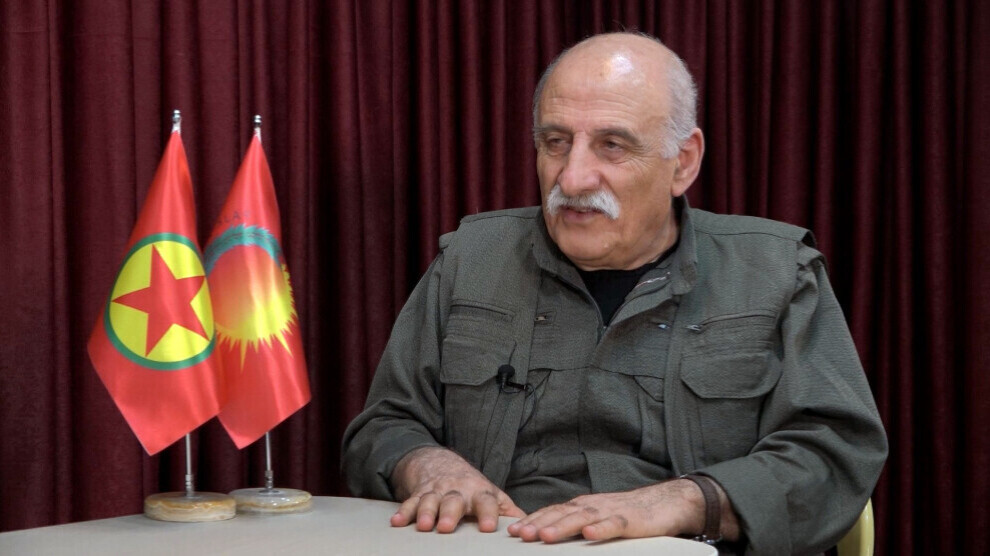
In the last part of this in-depth interview, Duran Kalkan, member of the KCK Executive Council, spoke about the PKK being a party of women and young people.

The first part of the interview can be read here, the second part here, the third part here, the fourth part here, the fifth here, and the sixth here.


States, above all the Turkish state, are targeting women and the youth more than ever before. The focus lies not only on physical attacks, but also on emotional and psychological ones, while mind games are being played. Rêber Apo [Abdullah Öcalan] has said: “We started young and will succeed young!”, while the PKK also sees itself as a party based on women’s freedom. Accordingly, what is the role of women and youth in the PKK? Why are women and young people being targeted so specifically? And what kind of struggle should be waged against such attacks?

The PKK is a women’s party, and the party of young people. It was born as an intellectual youth movement, and it went from there to becoming a party. The intellectual youth has always led the movement of workers, peasants, and laborers. And it was women who gave an ideological line to this struggle, who organized and implemented themselves in practice as the most fundamental pioneering force of struggle. Therefore, from the beginning, although it was defined as a national liberation movement, a working class party, a people’s movement, it was a movement based on youth and women, organizing them, being fed and carried out by them.

In the new paradigm, the leading role and mission were strategically given to women and youth. Before, the participation of women and youth was effective, but with the new paradigm, the two leading forces of the revolution, of the revolution of truth, of the revolution of mentality and lifestyle, became the women and the youth. They are not just a part of the movement; they are not just a side organization of the revolution and the party; on the contrary, they are the basis, the vanguard. They are everywhere; they carry out all kinds of work. Because the PKK considers the women’s liberation revolution as the foundation of its revolution with the new paradigm. It envisions creating a free life and democratic society based on women’s freedom. The woman’s liberation determines the characteristics of a free life. Women’s freedom is not just a slightly influential force; it is decisive.

The youth is the part of society that is most open to democratic communal life and to becoming free individuals. Young people are the part of society that is the least contaminated with dirt and rust and that does not participate in these games and exploitation of power and the state. Therefore, its mental, emotional, and intellectual state is closest to the line of the free individual and the democratic commune, and it expresses a power that learns, assimilates, adopts, and implements it most easily. The ideology of the free individual and the democratic commune is carried out by the youth as its leadership. It draws its cadres from young people. It finds its masses in the youth, together with women as pioneers. The youth spirit is the most open and closest to consciousness, the measures of life, the free individual, and the democratic commune. There are inadequacies and shortcomings in this regard. Sure, there are still deficiencies in understanding; there can be deficiencies and mistakes in defining it as such and fulfilling it in practice. There are some that call themselves vanguard but see themselves on the sidelines like a separate branch. They see themselves as separate. Such approaches can emerge, and they show that there is still not sufficient understanding and that there are problems in the practical implementation. Those need to be overcome. They themselves are responsible; they themselves must take upon the responsibility of pioneership. This is how young people and women must embrace the movement.

Now that this is the case, it is understandable why the fascist ruling forces of the colonialist, genocidal system, and the special war deliberately target young people and women first and foremost. They want to eliminate them; they want to strike them down. The vanguard of the revolution, the main force, the creator, and the executor of the movement will always be in the center of the attacks by the fascist, colonialist, genocidal mentality and system. They form the most courageous and fedai line; they are the ones who struggle the most; therefore, it is the force that the enemy targets and attacks the most. This is why the special war targets young people and women. If it weakens the youth and women, renders them ineffective, plays with their understanding and emotions, prevents their participation, excludes them from mass organizations, and leaves the youth and women’s movement weak, then it will weaken and limit the freedom revolution. It will lead to liquidation. To the extent that it crushes young people and women, it will succeed in its attacks to destroy and liquidate the PKK. The staff of the special war system know this very well. Therefore, they attack women, young people, and children the most.

It is said that one out of eight people faces abuse. Such statistics are given. They say that about eight thousand children have been murdered, but in the press only one or two cases have been reflected. There is a state that slaughters its own children. It’s like in the Jahiliyyah period! Back then they buried the children alive; today they slaughter them. These are physical massacres, and there are also psychological, emotional, and mental massacres. Where and how do they use those children they kidnapped? It never became clear. No living being is as hostile to its own future, its future generation, or its own children as the power, fascist, colonialist, genocidal, mentality, and politics within the system of capitalist modernity. While it should be the one to protect and preserve them, it does the opposite in practice. It has come to this level. Anti-society has reached this level in the system of capitalist modernity. This is what it means to become unlivable. The destruction of society and nature has become unbearable.

One needs to be aware of these realities and face them actively and consciously. One should not simply complain. It is necessary to know and understand the enemy as an enemy and show the strength to fight against it. Simply complaining but not taking action is also bad and dangerous. Not only does it not prevent the colonialist, genocidal mentality and system from developing these massacres, it also creates the ground for them. Especially women and the youth should not complain and wonder why this is happening; it is obvious why. They should turn themselves into a force for liberation and struggle for getting rid of this. They must reach a level of consciousness and organization to become a force of liberation. This is not an impossible task, as long as they want it and work for it. This is what the PKK, what Rêber Apo taught us. We have seen that this is possible. We need to become more conscious, organized, and engaged in struggle on these issues.

We are in the 21st century and we see in Kurdistan that the PKK has become a center of internationalist struggle. Historically it used to be Palestine and Cuba, and today Kurdistan has become its source. What does this mean? How was it possible for Rêber Apo and the PKK to overcome the nationalist borders? What significance do these developments have for Kurdistan?

Globally, the search has not diminished. There is no normal life; on the contrary, the future of society and nature is in great danger. The earth is at stake. Rêber Apo was talking about “cancerization.” Capitalist modernity has become cancerous, threatening nature, society, and the earth. That is why nobody is comfortable with life. Women, youth, workers, laborers, and the peoples face oppression, exploitation, and persecution. May it be in Africa, in America, in Asia, in the Middle East, or in Europe, it is the same everywhere. That is why the people are searching. The people are widely seeking liberation from this situation. The search for such liberation has never ended, but it may have paused or dropped to a low level when Real Socialism, which they saw as a savior, dissolved. Their hopes were dashed; they couldn’t find a way out there either. They wondered how it should be done after this route had not worked either. But thirty years have passed, criticism has developed, new ideas have emerged, new theories developed, and many philosophers, intellectuals, politicians, and artists thought, researched, concentrated, and wrote. Rêber Apo developed the most comprehensive effort in this regard. With a very radical paradigm shift. He defined a new thesis of history along the lines of democratic civilization. He defined its modernity today as democratic modernity. He defined democratic civilization against the ruling and statist civilization, democratic modernity against capitalist modernity. He showed the path of liberation for all the oppressed.

The ideas of Rêber Apo, the idea of freedom, of Kurdish existence in the face of colonialism and genocide, when they were expressed courageously and valorously, affected everyone. It affected the youth in Kurdistan, especially the youth in universities, high schools, and women. It intensely affected workers and laborers. The PKK developed based on this, and the philosophy of Rêber Apo gained strength from this. The PKK developed in 1976; in 1978 it became a party; and in 1979 and 1980 it nearly organized its first serhildans. It reached a point at which it was capable of raising society to its feet. Against September 12 fascism, it developed many uprisings and the guerrilla offensive. When small guerrilla units moved from the mountain to fight against the enemy, when they reached the society, they were embraced by the peasantry. The current state of the world is a bit like Kurdistan in the ’70s in terms of the search and the danger it is facing. Everyone is in search of salvation. Internationalism as a concept has not lost its meaning. There is no weakening in this regard.

So why is it said that solidarity and support for the various movements have declined and become weaker? The reason for this should be sought in the purpose of those movements. We need to look for it in their paradigm. It used to be said that there was a difference between the nationalism of the oppressed and that of the oppressors. That the nationalism of the oppressed was justified. The struggles in Vietnam, Cuba, and Palestine were supported on the basis of a national understanding. But what was the result? Today, Vietnam is one of Germany’s closest partners and sends its citizens to serve in Germany, as Turkey did in the past. Palestine did not receive the support of the Arabs because they were so fragmented among themselves. The goal that the internationalists were aiming for with their support and solidarity was not achieved. They were excited for a while, calling for independence, freedom, and liberation, but the paradigm they were based on, the nation-state ideology they followed, did not lead them to independence and freedom. It did not lead to liberation. Now, the only force that has truly realized the consequences of this is the movement of Rêber Apo. This is shown in Kurdistan and in the developments in North and East Syria. The PKK is the only movement left that has realized in practice what it aimed for and what it targeted, and therefore its thought and practice are one; its theory and practice are one. It does what it says and says what it does. It lives and works as it says. People see this all over the world.

With the global freedom campaign, there has been a consciousness raising. The Rojava Revolution brought some new realities on the agenda. With the Jin Jiyan Azadi revolution, women showed the way to real liberation. On this basis, the prison writings of Rêber Apo were translated into different languages, and his thoughts spread all over the world on the basis of the global freedom campaign. People got to know him and see Rêber Apo in the right way. They see the developments in Kurdistan, and they flow here. There are such clearly recognizable developments. We have to admit that we still have shortcomings in this respect and that we are late. We need to expand this even further. The translation of the prison writings into all languages must be accelerated, and they must be distributed to all women, young people, workers, and laborers.

A new internationalism is emerging. It is not based on interests as in the past, but on democratic confederalism, on democratic unity in which everyone stands up for their own freedom. Knowledge of global democratic confederalism and its practical implementation is increasing. The world is moving towards democratic confederalism. Anyone who feels constrained by the fascism and nationalism of the nation state finds a solution in democratic confederalism. The existing system of the UN as a union of states is not a solution. It leads to war, bloodshed, new colonialism, hunger, and pandemics. Against this, the path of the unity of democratic nations and global democratic confederalism is opening up. People are giving it more and more importance and are moving more and more towards it. On this basis, recognizable developments are taking place. Nobody knew the Kurds. It seems that they were only discovered at the end. But now people are getting closer to the Kurds, and today there are many nations that support them because they see that the Kurds have done a great service to all nations through the struggle they are waging. Everyone now sees their own liberation in the paradigm of Rêber Apo and sees the experiences of the struggle in Kurdistan.

The PKK has created itself by evaluating the experience of the peoples of the world, the experience of the struggles of workers, laborers, and women. It came into existence in the seventies and eighties by drawing on the experience of struggles around the world. Now everyone sees the level that has emerged in the PKK as their own. The PKK also saw other peoples’ levels as its own. Because of this, those peoples also see what emerged in the PKK and what is happening in Kurdistan as their own and embrace it. This assumption of responsibility will develop more and more. A global consciousness will develop. It has to develop; otherwise, this system of capitalist modernity will destroy everything, and it will lead to even more decay.

Kurdistan is at the center of the Third World War in the Middle East. The status quo created in the 20th century is crumbling. What kind of phase lies ahead for the Kurds regarding the creation of a new status quo? What are the aspirations of the PKK in the new year of its struggle? What role and responsibility has the Kurdish freedom movement identified for itself in this phase?

Kurdistan is the center of the struggle for democracy and freedom, the center of the siblinghood of the peoples on the basis of women’s freedom. The center of the women’s liberation revolution. In the ongoing war for the new division of the world, various regional and global forces are in conflict with each other to seize the treasures of Kurdistan. Kurdistan is one of the centers of this war, but it is not the only one. The more the war develops, the more these centers develop and change. It has been over 30 years, approaching 35 years, that a world war is taking place between the nation states that strive for the creation of a new status quo. This is the Third World War.

The monopolist capitalist order wants to restructure the Middle East through this war. One hundred years ago, during and after the First World War, the Middle East was created on the basis of the nation state system under the leadership of Turkey and Iran. Now it is wanted to restructure the Middle East within the framework of a new energy route project based on the Arab-Israeli reconciliation, which envisages faster, easier movement and more exploitation of capital beyond the borders of nation-states. The war waged by the system has the power to change the old. The status quo cannot withstand these attacks. It is being hit and will eventually be overcome. The global capital system, with its logic of maximum profit, will succeed if it is not prevented by an alternative. Nation state status quo will not be able to prevent this. It is resisting, but it certainly cannot prevent it. While there is still resistance for the status quo, the system prepares the change for more exploitation, for more profit.

There are many centers of these attacks in the Middle East. It started in Gaza; now it is Lebanon, Syria; tomorrow it will be Turkey. Turkey is at the center of this. They want to make the Kurds responsible for this, but there is no such thing. Turkey has dozens of problems, like the so-called Kurdish problem. The Kurdish question is an important issue, but Turkey should review its own structure. It has no place in this system. It is now at the center of the attacks of the monopolist capital. Kurdistan is the center of the alternative. The center of the freedom struggle, the center of the war for freedom. It is not the center of the world war; it is the center of the struggle to stop the war. It is necessary to correctly define what Kurdistan is the center of. Kurdistan is the center of creating an alternative that will end this world war. It is the center of the struggle for an alternative. As the alternative, democratic modernity, develops, it will eliminate and limit these wars that arise from the internal contradictions and conflicts of capitalist modernity and the struggle for interests. There lies the main creative force of peace. Rêber Apo is the leader of world peace. There are calls that the Imrali system must be dismantled urgently, that Rêber Apo must intervene in the situation, that he must make the lead for an alternative in Kurdistan more effective, and that he must create and lead the developments that will stop the war. These are right and appropriate calls.

How are the conflicts between the forces whose interests lie in the Third World War developing? We discuss this and try to understand. We want to benefit from it in terms of our own struggle. There is no doubt that opportunities and possibilities arise for us, and this will also expand. That goes without saying. The US and Europe are part of the Israeli attack. It is not only Israel that is attacking; it is attacking on behalf of a system. They will shrink Iran and Turkey even further. At the forefront, they are dealing with Iraq and Syria, but this should actually be seen as a struggle against Iran and Turkey, as representatives of the nation state status quo. They will have the most difficulty. But of course, there is also the alternative struggle to create a democratic Turkey, democratic Syria, democratic Iraq, and democratic Iran based on Kurdish freedom. This is also a force for change, the most fundamental force for change, for the benefit of the peoples, women, workers, and laborers. Who is the struggle between? There is a war between the monopolistic circles of interest within the system of capitalist modernity. One side is the current status quo; the other side wants change. But there is also the struggle of the forces for an alternative, the forces of the democratic modernity to change this status quo, and the struggle for the change to be in the interests of women, workers, laborers, and peoples, based on the democratic Middle East confederalism.

So far, the global capital system has given all kinds of opportunities to the status quo forces, especially the AKP-MHP fascism, to destroy and liquidate the PKK in order to prevent an alternative. They have attacked the PKK for ten years without listening to any rules, measures, or morals, especially on the basis of the so-called ‘plan to force them on their knees’. This is the isolation system in Imrali; this is the full-blown attack on the guerrilla, and this is the massacre of the people. They calculated that they would first weaken and neutralize the PKK, and then they could better wage the war of interests among themselves. But no matter how much they attacked, they failed. Their attacks on the PKK were frustrated. They were rendered unsuccessful. The Imrali torture and isolation system could not create even an inch of weakening and regression in Rêber Apo’s resistance. Now they are in a deadlock. They cannot develop enough conflict among themselves, nor can they unite against the PKK for a longer period of time. Even if they did, they could not achieve results. They have no time left. They are and will be launching more attacks, faster and more desperate attacks. But this will not last for a long time. They cannot maintain their unity as they have done so far. Internal contradictions will gradually increase. The alternative, the democratic Middle East alternative based on Kurdish freedom, has the possibility to develop and spread faster and faster. They attacked with all their means but will end up seeking reconciliation.

What is the role of the PKK in this context? We resisted against all attacks by showing all kinds of courage and sacrifice. Rêber Apo resisted; the heroic guerrilla resisted in Zap, Metina, Xakurke, Avashin, and all of northern Kurdistan. Women and the youth resisted, our people resisted, and our international friends resisted. In four parts of Kurdistan, all over the world. In the last year, on the basis of the global freedom campaign aiming for the physical freedom of Rêber Apo, we have taken this resistance to the highest level. We have made it multifaceted and diverse. We have brought it to a stage that will yield important results. Now we will try to bring it to a conclusion. This is the goal within the 47th year of the PKK. The torture and isolation system of Imrali will be broken. The physical freedom of Rêber Apo will be ensured, and those who want to destroy the guerrilla will be defeated by the guerrilla. The guerrilla will put them in a deadlock, and they will collapse. We are in a process in which the AKP-MHP fascism will collapse. There will be very intense and rapid developments in this 47th year of the PKK. In order to better confront and break the enemy attacks, to end this impasse by fighting more effectively, to stop the bloodshed and tears, and to create a democratic Turkey based on Kurdish freedom, a democratic Middle East, we will struggle with all our strength. We are now at a level to achieve results in this regard because the enemy is at the point of exhaustion; they have exhausted all their means. We can wage more effective struggles. They can no longer maintain their unity among themselves as they have done until now. They will develop more rot within themselves, and they will not be able to withstand. We aim to make this 47th year a year of greater struggle, a year of greater achievements, a year of ensuring the physical freedom of Rêber Apo and solving the Kurdish question. This is a slogan that has now turned from propaganda into reality. In the past, it was a slogan of propaganda. Now it is a slogan of action. On this basis, the Kurdish people and their international friends are on their feet everywhere; women and youth are resisting; the guerrilla is resisting. The enemy’s attack power has been minimized.

It is a critical process, though; we need to be careful. It is necessary not to make mistakes in precaution, but the struggle must grow and develop in every field. We must make the 47th year of the PKK a year in which the freedom struggle develops and achieves great victories in every field. This is our hope, and we trust that this will be the case. We call on all our people and international friends to organize the struggle more strongly and develop it more effectively wherever they are, regardless of the circumstances. Once again, we congratulate our people on the anniversary of the founding of the party. We are convinced that they will develop the freedom struggle with even greater enthusiasm and that they will grow our freedom struggle by embracing Rêber Apo and our martyrs, and we wish them success.


Iran pledges support for Syria's Assad as rebels advance after taking Aleppo

Russian air strikes targeted Syrian insurgents on Sunday and Iran pledged to “firmly support” the regime in Damascus as the Syrian army scrambled to stem a rebel advance south of Aleppo that has dealt a huge blow to President Bashar al-Assad.


Issued on: 01/12/2024 -
By:  NEWS WIRES
01:38
Syrian opposition fighters drive by an abandoned Syrian army vehicle on a highway in Khan Sheikhoun, southwest of Aleppo, on December 1, 2024. © Ghaith Alsayed, AP


The Syrian military rushed reinforcements to the northwest and launched airstrikes Sunday in an attempt to push back insurgents who seized the country’s largest city of Aleppo, as Iran pledged to help the government counter the surprise offensive.

Iran has been a key political and military ally of Syrian President Bashar al-Assad in the country's long-running civil war, but it was unclear how Tehran would support Damascus in this latest flareup that began Wednesday. Insurgents led by Islamist group Hayat Tahrir al-Sham launched a two-pronged attack on Aleppo and the countryside around Idlib, before moving toward neighboring Hama province.

On Sunday, government troops created a “strong defensive line” in northern Hama, according to Britain-based opposition war monitor the Syrian Observatory for Human Rights, as they attempted to stall the insurgents' momentum. Meanwhile, jets pounded the cities of Idlib and Aleppo, killing at least 15 people, according to a group that operates in opposition-held areas.

The surge in fighting has raised the prospect of another violent, destabilizing front reopening in the Middle East at a time when Israel is fighting Hamas in Gaza and Hezbollah in Lebanon, conflicts that have repeatedly threatened to ignite an even wider regional war. It also risks drawing Russia and Turkey – each with its own interests to protect in Syria – into direct heavy fighting against each other.

The insurgents announced their offensive Wednesday, just as a ceasefire between the Hezbollah and Israel began, raising some hope that tensions in the region might be calming.

The surprise offensive is a huge embarrassment for Assad, and it comes at a time when his allies – Iran and groups it backs and Russia – are preoccupied with their own conflicts.

03:57© FRANCE 24
According to a statement from Assad’s office, Iranian Foreign Minister Abbas Araghchi said that Tehran was ready to support Damascus in their counteroffensive against the insurgency.

Arab leaders, including Jordan’s King Abdullah II and United Arab Emirates President Sheikh Mohammed bin Zayed Al Nahyan, have also called Assad to express their solidarity.

The insurgents took over most of Aleppo on Saturday and made gains in the surrounding province. They also took control of the main water pumping station for city and it is no longer working, Syrian Minister of Water Resources Moataz Qattan told the pro-government radio station Sham FM.

Elsewhere, rebel commander Col. Hassan Abdulghani said the insurgents advanced in the countryside around Idlib, putting all of the province of the same name under their control.

They also claimed to have entered the city of Hama, but there was no independent confirmation of that.

In Khan Sheikhoun in Idlib province, military vehicles abandoned by Syrian troops dotted the roads. People posed and took pictures of themselves atop one abandoned tank on a highway, while the insurgents grabbed munitions and shells from them before continuing their push deeper into Syria.

The insurgents vowed to push all the way into Damascus, but life in the Syrian capital remained normal with no signs of panic. In southeastern Aleppo, however, the main road out of the city was gridlocked as people fled the fighting, and gas stations in the area were short on fuel.

04:51
The rebels also made it into Tel Rifaat, a town near Aleppo held by US-backed Syrian Kurdish forces, according to pro-government pan-Arab Al Mayadeen TV.

Tel Rifaat is far from the large swaths of northeastern Syria that are controlled by the Kurdish troops, known as the Syrian Democratic Forces. A statement from the insurgency called on the SDF to leave the areas near Aleppo that they hold and retreat to their bastions in the northeast.

Despite being at odds politically with the Syrian government, the Kurdish-led administration has opposed the insurgency and accused Turkey, the main back of Syrian opposition groups, of trying to displace the Kurdish population.


Turkish officials have said a limited offensive by the rebels was planned to stop government attacks on opposition-held areas in recent weeks, but it expanded as government forces began to retreat.


The United Nations special envoy for Syria, Geir Pedersen, said the push by the rebels poses a risk to regional security and called on resuming diplomatic efforts to end the conflict.

US national security adviser Jake Sullivan told CNN’s “State of the Union” that the US is watching the situation carefully. There are about 900 American troops in Syria's northeast – far from where the insurgency is happening – who are meant to guard against a resurgence by the extremist Islamic State group.

The group leading the rebel advance is designated a terrorist organization by the US, and Sullivan said Washington has “real concerns about the designs and objectives of that organization.”

“At the same time, of course, we don’t cry over the fact that the Assad government, backed by Russia, Iran and Hezbollah, are facing certain kinds of pressure,” he added.

05:56
According to Syrian state news agency SANA and the Syrian Observatory for Human Rights, the army overnight pushed back insurgents in the northern countryside of Hama province.

Syrian state media said government resupply included heavy equipment and rocket launchers while Syrian and Russian airstrikes targeted weapon depots and insurgent strongholds. Pro-government radio station Sham FM said the Syrian army shot down drones belonging to Hayat Tahrir al-Sham in northern Hama.

Syrian state television claimed government forces had killed nearly 1,000 insurgents over the past three days, without providing evidence or details.

Government airstrikes in Idlib killed at least three civilians, including two children, and wounded 11 others, said the Syrian Civil Defense, known as the White Helmets, which operates in opposition-held areas.

Residents could be seen fleeing through ash-covered streets. Men lowered a child from the high floor of a building whose facade was blown off.

Airstrikes also struck in and around Aleppo, including near a hospital in the city center, killing 12 people, including at least eight civilians, according to the White Helmets and the Syrian Observatory for Human Rights.

The 2016 battle for Aleppo was a turning point in the war between Syrian government forces and rebel fighters after 2011 protests against Assad’s rule turned into an all-out war. After appearing to be losing control of the country to the rebels, the Aleppo battle secured Assad’s hold on strategic areas of Syria, with opposition factions and their foreign backers controlling areas on the periphery.

(AP)


Middle East wars will soon spread from Gaza to the Euphrates

The fall of Aleppo has reignited not one but two civil wars


Opinion
By Patrick Cockburn
Special Correspondent
iNEWS UK

December 1, 2024 
Anti-government fighters patrol in central Aleppo on 30 November 30 (Photo: AFP)

Syrian rebels have captured most of Aleppo, Syria’s second largest city, after launching a surprise offensive in which they have so far faced limited resistance from President Bashar al-Assad’s forces.

The attack marks a resumption of the Syrian civil war, which has been deep frozen since 2020 under a truce mediated by Russia and Turkey. This conflict, in which at least 300,000 Syrians were killed and 5.5 million fled the country, was peculiarly savage because, among other reasons, it pitted hostile sectarian and ethnic communities against each other – and its renewal is likely to be equally bloody.

There are already signs of this happening again as retreating Syrian government forces seek to make a stand in northern Hama province, to the south of Aleppo, where many of the inhabitants are pro-government Alawites, a Shia sect to which Assad and most of the Syrian elite belong, as well as Syrian Christians who fear persecution and expulsion by extreme Sunni Muslim rebels.

The opposition offensive, launched last Wednesday from the Idlib enclave on the Syrian side of the Turkish border, has been astonishingly successful in forcing the retreat of demoralised government soldiers.

During the civil war following the 2011 Arab Spring uprising against Assad, the government’s greatest victory came in 2016, when it recaptured Aleppo after a long siege. It has now lost the city in the space of a few hours and may have great difficulty winning it back.

The next few days will be crucial as Syrian government troops try to stop the high-speed rebel advances and make counter-attacks. The Syrian Observatory for Human Rights, which has eyewitness sources, said on Sunday that “the regime forces sent large reinforcements in the last few hours” to a new defence line.

From early on in the civil war, both pro- and anti-government Syrians ceased to be the most important decision-makers in the conflict. Instead, the country became an arena for foreigners to fight out their differences directly or through proxies. This is even truer today when Assad and his domestic enemies are both weaker than before and reliant on their outside backers.

The timing and success of the rebel attack from Idlib, which has a population of about three million, are both explained by the fact that Assad’s main foreign allies – Russia, Iran and Hezbollah – are preoccupied with other conflicts.

Russia is militarily fully stretched in Ukraine. And though it has stepped up its airstrikes on the rebels, these are unlikely to be as intense as in the past, Hezbollah suffered heavy losses during the Israeli invasion of Lebanon and will be unable to provide combat troops in the same numbers as before. Much depends on the attitude of Iran, desperate to avoid an all-out war with Israel backed by the US, which must now decide if it is going to cut its losses in Syria or redouble its backing for Assad.

It is reported that Hayat Tahrir al-Sham, formerly linked to al-Qaeda, began to plan the present operation in September, suggesting it was the Israeli war against Hezbollah which convinced the rebels that the regional balance of power was tipping in their favour.

The fall of Aleppo has reignited not one but two civil wars that are interlinked but essentially distinct. The first is between the Assad government and the Syrian opposition. The second is between the Syrian Kurds, the largest minority in the country, who are under intense pressure from Syrian Arab nationalist groups backed by Turkey.

They have hitherto had a shaky alliance with the US, originally directed against the Islamic State. Despite this, Turkish-backed Syrian Arab jihadis took over the Kurdish enclave of Afrin in Syria in 2018 and ethnically cleansed its population.

The Kurds, who control north-east Syria where they number 1-2 million, fear that Turkey is moving to end their presence there and turn them into refugees. Some 900 US soldiers remain in the enclave, but President-elect Donald Trump might remove them, as he sought to do when last in office.

The Kurdish authorities say that they are moving 4,000 troops to fill the vacuum left by the retreating Syrian army east of Aleppo but say they expect Turkish proxies to try to push them back west of the Euphrates River.

None of the parties involved in this new round of Syria’s civil wars is likely to emerge as clear winners, but a great many people will be killed. Israel might decide to play a greater role in the renewed conflict, using its devastating air power to attack the Syrian army as it has already been doing against Iranian and Hezbollah targets in Syria.

The different war zones of the region are joining up and soon will stretch today from Gaza to the Euphrates.

What do we know about Syrian rebels’ major offensive on Aleppo?


By AFP
November 30, 2024

Anti-government fighters in central Aleppo prepare to topple the equestrian statue of Bassel-al-Assad, the late brother of Syrian President Bashar al-Assad
 - Copyright AFP Omar HAJ KADOUR


Aya Iskandarani

Rebel forces opposing President Bashar al-Assad have launched their biggest offensive in years this week, controlling a majority of Syria’s second city of Aleppo according to a monitor.

Government forces offered little resistance, the war monitor said, and the army admitted that rebels had entered “large parts” of the city.

Why have the Syrian rebels and their allies from Turkish-backed factions decided to attack after years of relative calm, and what is at stake?

– Why now? –

On Wednesday, Hayat Tahrir al-Sham (HTS), a jihadist alliance led by Al-Qaeda’s former Syria branch, and allied factions attacked government-held areas of the northern province of Aleppo and the northwestern Idlib region.

The Britain-based Syrian Observatory for Human Rights war monitor said the rebels had seized dozens of towns and villages in the north and “took control of most of” Aleppo.

The violence has killed at least 311 people, mostly combatants on both sides, but also including at least 28 civilians, said the Observatory, which relies on a network of sources inside Syria.

Dareen Khalifa, a researcher at the International Crisis Group think tank, said the rebels had prepared months for this offensive.

“They’ve framed it as a defensive move against regime escalation,” Khalifa said, as Syrian government and Russian strikes on the area intensified leading up to the attack.

But HTS and their allies are “also looking at the broader regional and geostrategic shift”, she said.

The rebels, working in a joint operations room, launched their attack the same day a Hezbollah-Israel truce came into effect in neighbouring Lebanon.

During more than 13 months of hostilities, Israel also intensified attacks on Iran-backed groups in Syria including Hezbollah, which for years has fought on the side of Damascus in the country’s civil conflict.

Along with Iran, Russia is also a close ally of Syrian President Bashar al-Assad, with Moscow intervening in Syria’s civil war in 2015, turning the momentum of the conflict in favour of Damascus.

“They’re thinking this is a time when the Iranians are weakened, when the regime is cornered and when Turkey is emboldened vis-a-vis Russia,” Khalifa said.

Turkey has positioned itself as a possible mediator in the Ukraine war and is a key trade and finance centre for Western-sanctioned Moscow.

– What major powers are at play? –

The main powers backing each side of the conflict have so far refrained from making escalatory remarks.

The Kremlin on Friday said it hoped Syria would quickly “restore order” in Aleppo, while Tehran has blamed the offensive on an American-Israeli plot to destabilise the region.

Turkey has demanded an end to “attacks” on the rebel enclave of Idlib in Syria, where Syrian and Russian warplanes launched air strikes.

“In the next few days, if (rebels) can sustain their gains it will be a test to whether or not Turkey will go all-in,” Khalifa told AFP.

The mass offensive comes as a potential rapprochement between Damascus and Ankara has stalled in recent years, though Moscow and Tehran have pushed for a detente.

Turkish forces and Turkey-backed rebel factions control swathes of northern Syria.

Ankara initially sought to topple Assad after the Syrian conflict erupted in 2011, but as government forces regained territory, Turkish President Recep Tayyip Erdogan reversed course.

In a post on X, Caroline Rose, of the Washington-based New Lines Institute, said the Aleppo offensive appears to be “a way to force the regime to negotiate with a weakened hand”.

– What about the government? –

The Syrian government has reeled from its biggest loss of territory in years this week.

“Regime lines have crumbled at an incredible pace that has taken everyone by surprise,” Khalifa said.

The rebels also cut off the Damascus-Aleppo M5 highway, in addition to controlling the strategic M5-M4 junction that also connects Syria’s second city to regime stronghold Latakia, on the Mediterranean coast.

Rami Abdel Rahman, who heads the Syrian Observatory for Human Rights, said the rebels advanced into Aleppo “without any significant pushback from regime forces”.

“It is strange to see regime forces being dealt such big blows despite Russian air cover and early signs that HTS was going to launch this operation,” Abdel Rahman said.

Damascus has largely relied on Russian air power and Hezbollah fighters on the ground to regain swathes of Syria lost to rebels early in the war.

But the Iran-backed Hezbollah has taken heavy losses in its war with Israel.

Meanwhile, “Russia’s presence has thinned out considerably and quick reaction air strikes have limited utility”, said Aaron Stein, president of the US-based Foreign Policy Research Institute.

Speedy rebel advances are “a reminder of how weak the regime is and, perhaps, how they have grown complacent in the last couple of years” as battles wound down, he said.


Rebels reach Syria's second city of Aleppo as deadly campaign continues

Syrian jihadists and their Turkish-backed allies reached the country's second city of Aleppo on Friday as they pushed ahead with their lightning advance. The rebels have seized more than 50 towns and villages in northern Syria, according to a monitoring group after launching a major offensive against government troops on Wednesday.

30/11/2024 -
By: NEWS WIRES
Video by:  FRANCE 24

01:58
The fighting in northwestern Syria is the deadliest the country has seen in years. 
© Omar Haj Kadour, AFP


Jihadists and their Turkish-backed allies breached Syria's second city of Aleppo on Friday, as they pressed a lightning offensive against forces of the Iranian- and Russian-backed government.

The fighters took control of "half of the city of Aleppo" as regime forces withdrew, according to the Syrian Observatory for Human Rights.

The offensive began on Wednesday, the same day that a fragile ceasefire took effect in neighbouring Lebanon between Israel and Iran-backed militant group Hezbollah.

The fighting was initially fierce, with 277 people killed, according to the Britain-based Observatory, which said the toll included 28 civilians, most killed by Russian air strikes.

By Friday, the jihadists and their allies had taken more than 50 towns and villages in the north and entered western districts of Aleppo, a city of around two million people that was Syria's pre-war manufacturing hub.

The fighters swiftly captured half of Aleppo without meeting significant resistance, Observatory director Rami Abdel Rahman told AFP early Saturday, adding that "there has been no fighting, not a single shot was fired, as regime forces withdrew."

An AFP correspondent saw clashes in New Aleppo district.

State media reported that four civilians were killed when a student residence in Aleppo was shelled by Hayat Tahrir al-Sham, a jihadist alliance led by Al-Qaeda's former Syria branch.

Army reinforcements have arrived in Aleppo, a Syrian security official told AFP, requesting anonymity to discuss sensitive matters.

An earlier army statement said troops had repelled the assault on the city and retaken some positions.

The jihadists and their allies made other advances in the north, including the strategically located town of Saraqib, which is on the road to Aleppo, the Observatory said.

A fighter from Hayat Tahrir al-Sham (HTS) mans a position in the eastern outskirts of the town of Atarib, in Syria's northern province of Aleppo on November 27, 2024. © Abdulaziz Ketaz, AFP


Russian air strikes

Syrian and Russian warplanes launched intense air strikes Friday on the rebel enclave around Idlib, where the jihadists are based, carrying out 23 raids, according to the Observatory.

The Russian military said it was bombing "extremist" forces.

"The Russian air force is carrying out rocket-bomb attacks on... control points, warehouses and artillery positions of terrorists," a defence ministry spokesperson told Russian news agencies.

Turkey demanded a halt to the bombardment. "The recent clashes have resulted in an undesirable escalation of tensions in the region," a foreign ministry statement said.

The Idlib area has since 2020 been subject to a truce brokered by Turkey and Russia. The ceasefire has been repeatedly violated but had largely held.

The United Nations Office for the Coordination of Humanitarian Affairs said "more than 14,000 people -- nearly half are children -- have been displaced" by the violence.

Aleppo resident Sarmad, 51, told AFP he could hear "the sounds of missiles and artillery shelling around the clock".

"We're scared that war will break out and we'll be displaced from our homes again," he said.

Nasser Hamdo, 36, who works in a pastry shop, said he had been glued to the news since hostilities began.

On Thursday, the jihadists and their allies cut the highway linking Aleppo to the capital Damascus, some 300 kilometres (185 miles) south, the Observatory said.

"We're worried that roads getting blocked could cause fuel prices to soar and prevent goods from reaching the city," Hamdo said.
International players

Kremlin spokesman Dmitry Peskov on Friday described the situation in Aleppo as "an infringement on the sovereignty of Syria."

He expressed support for "the government of Syria to quickly restore order in this district".

Iranian Foreign Minister Abbas Araghchi pledged "continued support for the government, nation and army of Syria," in a phone call with his Syrian counterpart Bassam al-Sabbagh, according to a statement.

The Idlib area has been subject to a Turkish- and Russian-brokered truce since 2020. The ceasefire has been repeatedly violated but had largely held.

An AFP correspondent in the rebel enclave saw jihadists advancing in tanks as intense exchanges of fire took place in an area just seven kilometres (a little over four miles) from Aleppo.

AFP images showed abandoned army tanks and other military vehicles.

The correspondent said the jihadists and their Turkey-backed allies took orders from a joint operations command.

Analyst Nick Heras, of the New Lines Institute for Strategy and Policy, said the fighters were "trying to preempt the possibility of a Syrian military campaign in the region of Aleppo".

According to Heras, the Syrian government and its key backer Russia had been preparing for such a campaign.

Russia intervened in Syria in 2015, turning the tide of the civil war which broke out four years earlier in favour of the government, whose forces at the time had lost control of most of country.
'Totally unprepared'

In addition to Russia, Syrian President Bashar al-Assad has been propped up by Iran and allied militant groups, including Lebanon's Hezbollah.

Iran-backed militias have a heavy presence in the Aleppo region after providing crucial ground support when the army recaptured rebel-held areas of the city in 2016.

Heras said anti-government forces are "in a better position to take and seize villages than Russian-backed Syrian government forces, while the Iranians are focused on Lebanon".

Abdel Rahman said government forces "were totally unprepared" for the attack.

"It is strange to see regime forces being dealt such big blows despite Russian air cover and early signs that HTS was going to launch this operation," Abdel Rahman said.

"Were they depending on Hezbollah, which is now busy in Lebanon?"

(AFP)


Syrian rebels sweep into Aleppo, nearby province in huge setback for Assad

Syrian insurgents led by the Islamist militant group Hayat Tahrir al-Sham captured most of Aleppo on Saturday and expanded their offensive to a nearby province, in the biggest challenge to President Bashar al-Assad's authority in years. Russia's air force carried out strikes in support of the Syrian army, which said it was preparing a counterattack.


Issued on: 30/11/2024 - 
By:FRANCE 24
Video by: FRANCE 24
01:44
Anti-government fighters hold an opposition flag as they pose for a picture at the entrance of the landmark citadel in Aleppo on November 30, 2024. © Muhammad Haj Kadour, AFP


The Syrian army said on Saturday dozens of its soldiers had been killed in a major attack by rebels who swept into the city of Aleppo in the northwest, forcing the army to redeploy in a huge setback for Bashar al-Assad’s regime.

The surprise attack led by the Islamist Hayat Tahrir al-Sham (HTS) has jolted the frontlines of the Syrian civil war that have largely been frozen since 2020, reviving fighting in a corner of the fractured country near the Turkish border. The army said it was preparing a counteroffensive to restore state authority.

Acknowledging the rebel advance, the Syrian army command said insurgents had entered large parts of Aleppo, which had been under full state control since government forces backed by Russia and Iran drove rebels out eight years ago.

"I am the son of Aleppo, and was displaced from it eight years ago, in 2016. Thank God we just returned. It is an indescribable feeling," said Ali Jumbaa, a rebel fighter, television footage showed.

The Syrian military command said militants had attacked in large numbers and from multiple directions, prompting "our armed forces to carry out a redeployment operation aimed at strengthening the defence lines in order to absorb the attack, preserve the lives of civilians and soldiers, and prepare for a counterattack".

The rebels also took control of Aleppo airport, according to a statement by their operations room and a security source.

The Syrian Observatory for Human Rights, a UK-based monitor, said the rebels had also advanced in Hama and Idlib provinces, taking control of "dozens of strategic towns without any resistance".

By Saturday evening, they seized at least four towns in the central Hama province and claimed to have entered the provincial capital

07:06© FRANCE 24

“Many of the towns they have seized are ghost towns, emptied of their population when the Syrian army captured them with the help of Iran,” said FRANCE 24’s Middle East expert Wassim Nasr.

“So those people fighting today are fighting to go back to those towns,” Nasr added.

The fighting revives the long-simmering Syrian conflict as the wider region is roiled by wars in Gaza and Lebanon, where a truce between Israel and the Iran-backed Lebanese group Hezbollah took effect on Wednesday.
Russian air strikes

The attack was launched from insurgent-held areas of northwestern Syria that remain outside Assad's grasp.

Russia's Defence Ministry said its air force had carried out strikes on Syrian rebels in support of the country's army, Russian news agencies reported.

Speaking on Friday, Kremlin spokesman Dmitry Peskov said Moscow regarded the rebel attack as a violation of Syria's sovereignty. "We are in favour of the Syrian authorities bringing order to the area and restoring constitutional order as soon as possible," he said.

The Syrian Civil Defense, a rescue service operating in opposition-held parts of Syria, said in a post on X that Syrian government and Russian aircraft carried out air strikes on residential neighbourhoods, a gas station and a school in rebel-held Idlib, killing four civilians and wounding six others.

Syrian military sources said Russia has promised Damascus extra military aid that would start arriving in the next 72 hours.

“The Russians want to help the Syrian regime more – but their military resources in Syria are much reduced as a result of the ongoing war in Ukraine,” said FRANCE 24’s Nasr.
Iran and its allies weakened

The rebels, including factions backed by Turkey, said on Friday their fighters were sweeping through various Aleppo neighbourhoods.

Mustafa Abdul Jaber, a commander in the Jaish al-Izza rebel brigade, said their speedy advance had been helped by a lack of Iran-backed manpower to support the government in the broader Aleppo province.

06:31© FRANCE 24

Iran's allies in the region have suffered a series of blows at the hands of Israel as the Gaza war has expanded through the Middle East. This has presented HTS with a window of opportunity, said FRANCE 24’s Nasr.

“The Syrian rebels have a long blood debt with Iran and the offensive is happening now because Iran and its allies are too weak to keep bolstering the Syrian regime,” explained FRANCE 24’s Nasr.

Iranian Foreign Minister Abbas Araqchi, in a phone call with his Syrian counterpart on Friday, accused the United States and Israel of being behind the insurgent attack.

The opposition fighters have said the campaign was in response to stepped-up strikes in recent weeks against civilians by the Russian and Syrian air forces on areas of Idlib province, and to preempt any attacks by the Syrian army.

Opposition sources in touch with Turkish intelligence said Turkey, which supports the rebels, had given a green light to the offensive. Turkish officials were not immediately available to comment on Saturday.

Turkey's foreign ministry said on Friday that the clashes between rebels and government forces had resulted in an undesirable escalation of tensions.

In a statement, spokesperson Oncu Keceli said that avoiding greater instability in the region was Turkey's priority, adding that Ankara had warned that recent attacks on Idlib undermined the spirit and implementation of de-escalation agreements.

(FRANCE 24 with Reuters)


Toll in Syria jihadist-army fighting rises to 242: monitor


By AFP
November 29, 2024

Fighters near a body in Atareb, in Syria's northern Aleppo province, as jihadists and allied factions battle the army in what a war monitor called the area's worst fighting in years - Copyright AFP AAREF WATAD

More than 240 people, mostly combatants, were killed as intense fighting approached Syria’s northern Aleppo city after jihadists launched a major offensive on government-held areas this week, a monitor said Friday.

On Wednesday, jihadist group Hayat Tahrir al-Sham (HTS) and allied Turkish-backed factions launched an attack on government-held areas in the northwest, triggering the fiercest fighting since 2020, the Syrian Observatory for Human Rights said.

Rami Abdel Rahman, who heads the Observatory, said fighting reached two kilometres (1.2 miles) from the main northern city of Aleppo, where jihadist artillery shelling on student housing killed four civilians, according to state media.

“The combatants’ death toll in the ongoing… operation in the Idlib and Aleppo countrysides has risen to 218,” since Wednesday, said the British-based monitor with a network of sources inside Syria.

In addition to the fighters, it said 24 civilians were killed.

Syrian ally Russia launched air strikes that killed 19 civilians on Thursday, while another civilian had been killed in Syrian army shelling a day earlier, said the Observatory which on Thursday had reported an overall toll of about 200 dead, including the civilians.


‘After five years, we can go home’: Syrians hopeful as militias push back Assad’s forces

After five years of relative stalemate, a lightening assault by various militias against President Bashar al-Assad’s forces in northern Syria this week surprised the international community. The armed groups successfully seized several towns and villages near Aleppo, killing numerous pro-Assad fighters, including a senior commander of Iran’s Revolutionary Guard Corps (IRGC). Videos released by opposition groups suggest that they also captured a significant cache of arms and ammunition abandoned by retreating pro-Assad forces.

Left: A Russian patrol attacked by armed militias, resulting in the death of one Russian soldier. Centre: The highest-ranking IRGC commander in Syria was killed during opposition attacks on Aleppo. Right: Syrian militias deploy drones on a large scale for the first time to strike Syrian army positions. 

By: Alijani Ershad
© Observers
Issued on: 29/11/2024 - 

On November 27, several Syrian armed opposition factions, including Hayat Tahrir al-Sham, the Syrian National Army, and Ahrar al-Sham, launched a large-scale offensive in the Aleppo region.

For the first time in over a decade of Syria’s civil war, these groups made extensive use of first-person view (FVP) drones, suicide drones, and night-vision technology, significantly shifting the balance on the battlefield. Their assault drove back forces loyal to Syrain President Bashar al-Assad, including Afghanistan’s Fatemiyoun Brigade, Pakistan’s Zeynabiyoun Brigade, Lebanon’s Hezbollah, the Iranian Revolutionary Guard Corps (IRGC), and Syria’s 46th Army Regiment.

A photo released by armed opposition groups shows fighters equipped with night-vision goggles and rifles mounted with night-vision cameras, Photo released on November 28, 2024. ©

These opposition factions are made up of fighters of various nationalities, including Uighurs and Uzbeks, who reportedly receive support from the Turkish government. Their forces pushed pro-Assad troops back by dozens of kilometres, capturing several strategically significant areas near Aleppo, Syria's second-largest city.

The offensive resulted in heavy losses for the Assad regime and its allies. According to Iranian media, the slain included two Syrian army generals and Kioumars Pourhashemi, a senior IRGC commander, who was reportedly killed in a suicide bombing. Opposition groups also claimed responsibility for the death of a Russian soldier, while another Russian was allegedly captured during the fighting. Videos shared by the groups on social media show evidence of other significant casualties among pro-Assad forces.

Footage shows Syrian army forces abandoning their positions and retreating as opposition groups advance on their strongholds. video released on November 28, 2024

Opposition fighters have reportedly advanced up to 3 km west of Aleppo, disrupting the M5 motorway — a critical supply route linking Damascus and Aleppo.

Despite the rapid territorial gains, Iranian state-aligned media have suggested that elite IRGC “Saberin” forces, along with the Russian Wagner Group, are being deployed to reinforce pro-Assad troops as they attempt to retake lost ground.


'A video released by armed opposition groups shows the use of civilian drones armed with explosives to target Syrian army positions.'

'After five years, we hope to finally come back to our homes'

We spoke to "Ahmad" [not his real name]. He used to live in the east of Aleppo. After the pro-Assad forces took control of the region in 2019, he had to flee to the west of Aleppo, which is controlled by opposition groups, but he is not far from the area that has now become a battlefield.

We realised there was an attack early in the morning when we heard massive explosions. Then we checked local social media accounts to find out what was happening.

All communications, electricity, and water have been cut off in the war zone. There are no air raid shelters. Those who could leave fled quickly, taking almost nothing with them. They had to abandon everything and head toward areas near the Turkish border, or to Afrin and Azaz.

Some organisations are trying to provide food and water for the displaced, but the situation is worsening. Bombardments by Russia and Assad’s air force have focused on combat zones and major towns in the region. The Russians are mostly targeting urban areas where civilians live—places like Darat Izza, Al-Atarib, and the outskirts of Idlib. Meanwhile, government shelling is concentrated on the frontline and towns, especially areas north of Ariha.

Although these attacks caught us by surprise, most people see them as an opportunity. If these militias manage to push back the Iranians and Assad’s army, we can finally return to the homes we were forced to leave in 2019. We are human beings too. After five years of losing everything—our homes, our belongings— all we want is to go back.


drone strikes launched by opposition groups Target Pro-Assad forces. Footage released on November 28, 2024.

'Compared to the regions controlled by the Iranian militia, things are much better here'


For five years, people here have been driven from their homes by militias controlled by Iran. These include Iranians themselves, Afghans in the Fatemiyoun Brigades, Palestinians in the Quds Army, and Lebanese Hezbollah.

In all these years, no one dared to return to their homes because of the risk of being arbitrarily detained — or worse, killed — by the Iranians or Hezbollah forces.

In the areas controlled by the opposition militias, the situation is much better than in the regions held by the government. From what I can see as a young man living under their control, these militias have moved away from their extremist ideologies over the past few years. They’re now far more open to the world. I won’t deny that there are still injustices and violations here, but compared to the areas ruled by Iranian militias, things are significantly better.

Ahmad acknowledged the presence of foreign fighters in the region but downplayed their influence.


Yes, it’s true that some foreign fighters are here — Uighurs, Turks, Uzbeks — but they’re a minority. Honestly, most of them left our area a while ago to join ISIS-controlled territories. They don’t interfere with the political or administrative affairs here. It’s also worth remembering that the Free Syrian Army is part of this operation too, and they’re not Islamists.

He dismissed rumours that the attack was orchestrated by Turkey in collaboration with Israel to disrupt Hezbollah’s weapons supply routes.


I’ve heard people claim that Turkey organised this operation with Israel to block Hezbollah’s rearmament path from Iran to Lebanon, but I don’t believe it. Turkey and Iran have a good relationship.

“Our region has no strategic importance for Iran or Hezbollah. The most crucial route for Hezbollah to smuggle weapons from Syria to Lebanon is further east, near Deir al-Zour. That route is still active for Hezbollah.

As the fighting edges closer to government-held Aleppo, residents are moving to safer areas. However, according to Ahmad, their main fear is being caught in the crossfire, not the advancing opposition forces.


The people in Aleppo are not fleeing the city. They are simply relocating to areas further away from the approaching clashes. At the same time, many families are finally reuniting after five years, as new villages and towns are being liberated. Only the families of Syrian army soldiers are fleeing — I’ve heard they’ve already moved to Damascus and Hama.

The Syrian civil war, now in its twelfth year, has claimed over 350,000 lives since 2012, with more than 306,000 of those deaths being civilians, according to UN estimates. The conflict has displaced more than half of Syria’s population of 21 million, forcing over 5 million people to flee the country and seek refuge abroad.


SYRIAN KURDISTAN/ROJAVA

SOHR says Damascus government army withdrew from Hama

SOHR reported that the Damascus government army has withdrawn from Hama and that HTS gangs have entered 16 villages of the city.


ANF
NEWS DESK
Sunday, 1 December 2024

The Syrian Observatory for Human Rights (SOHR) said that the Damascus government army has withdrawn from the city of Hama, where it was positioned after leaving Aleppo.

SOHR noted that the military convoys of the Damascus government army have withdrawn from Hama to Homs.

SOHR also said that Hayat Tahrir al-Sham (HTS) gangs have taken control of 16 villages in Hama.

The Damascus government army denied reports that it has withdrawn from Hama and announced that it is positioned in the north and east of the city and is ready to respond to any attack.

HTS gangs said that they have taken control of the cities of Meret Numan and Xan Şêxon in Idlib.

Hayat Tahrir al-Sham

Hayat Tahrir al-Sham (HTS) is a jihadist alliance that has controlled Idlib province in northwestern Syria since 2017, formed by the merger of several Islamist groups, including the al-Qaeda affiliate Nusra, which rebranded as Fateh al-Sham in 2016. Listed as a “terrorist” organization by the UN Security Council, HTS has expanded its influence into SNA-held northern Syria, often with the tacit approval of Turkey. HTS seeks to project an image of respectability and governance reliability, despite reports of an increasingly totalitarian regime and Islamist theocracy in Idlib. The international community should be wary of HTS’s expansion into Turkish-occupied territory, as it has been linked to anti-Semitic propaganda and has ties to al-Qaeda, despite efforts to distance itself from its jihadist roots. Notably, a perpetrator involved in a foiled terrorist attack in Munich expressed sympathy for HTS, highlighting the group’s continued relevance in the broader landscape of extremist threats.


Clashes between the SDF and SNA on al-Bab front

On the al-Bab front, clashes have taken place between the Syrian Democratic Forces (SDF) and pro-Turkish mercenaries from the militia group Syrian National Army (SNA).


ANF
NEWS DESK
Saturday, 30 November 2024

On Saturday, fighting broke out between the Syrian Democratic Forces (SDF) and pro-Turkish mercenaries from the militia group ‘Syrian National Army’ (SNA) on the al-Bab front in northern Syria. According to information from security circles, the clashes took place in the southern suburb of Tedef. A security vacuum had previously arisen there due to the withdrawal of government troops, and SDF units subsequently advanced. It was initially unclear whether there were any deaths or injuries as a result of the fighting.

A correspondent for the Hawar News Agency (ANHA) reported that there had been an attempt at a breakthrough at the front line, and that attackers from the so-called SNA had withdrawn in the face of the SDF's response. Russian fighter jets are also reported to have attacked positions held by the jihadists, according to activists from Rojava. A base on a storage site directly next to the city's grain silos was also reportedly hit. The silos were left undamaged, but the SNA base was heavily destroyed.

Al-Bab is located in the governorate of Aleppo, which was previously largely controlled by the regime, and has been occupied by Turkey since February 2017. The Turkish army had previously launched the ‘Euphrates Shield’ offensive in August 2016. Although the Turkish government stated that the ‘operation’ was directed against the presence of the terrorist group ‘Islamic State’ (ISIS) in northern Syria, Turkey's real intention in intervening was to pre-empt the SDF's advance against ISIS, which was already in retreat. The invasion began shortly after the SDF liberated the northern Syrian city of Manbij from ISIS.


Since the surprise attack by the Syrian Al-Qaeda affiliate Hayat Tahrir al-Sham (HTS) last Wednesday, large parts of Aleppo have been under jihadist occupation. At the same time, the so-called SNA is preparing to launch an offensive on Tel Rifat, which belongs to the autonomous region of North and East Syria. The SNA was established, equipped and financed by Turkey and is being used as a proxy invasion force in the Turkish-occupied regions of Syria. The terrorist organisation HTS, in turn, rules a protectorate in Idlib province together with Turkey and also ‘controls’ parts of Afrin. Meanwhile, the fighting in Aleppo continues. Russian fighter jets have also carried out further attacks on HTS positions.


The jihadist alliance HTS emerged from the Al-Nusra Front and is listed as a terrorist organisation by the United Nations (UN). Nevertheless, the force is often trivialised in Western media as a ‘rebel group’ and the province of Idlib is glossed over as the ‘last bastion of the armed opposition’.

Self-Defence Forces repel Turkish-backed mercenaries’ attack on two villages

Self-Defence Forces repelled an attack by the mercenaries affiliated to the occupying Turkish state in Afrin-Shehba Canton.


ANF
SHEHBA
Saturday, 30 November 2024

Mercenaries affiliated to the occupying Turkish army attacked the villages of Kilotê and Birc Qasê in the town of Sherawa in Afrin-Shehba Canton on Saturday.

Self-Defence Forces repelled the attack, responding within the framework of the right to legitimate defence.

One mercenary was killed and one other was captured alive during the ensuing confrontation.

According to reports, the captured mercenary was identified as Fehed Mistefa Mihemed, a member of the al-Hamzat group.

Turkish-backed gangs capture many neighbourhoods of Aleppo

The gangs affiliated to the occupying Turkish state took control of many neighbourhoods of Aleppo.


ANF
NEWS DESK
Saturday, 30 November 2024

According to ANHA, Hayat Tahrir al-Sham (HTS) and other gangs affiliated to the occupying Turkish state took control of many neighbourhoods in Aleppo. Among the controlled areas are the following: Bustan al-Qesir, Kelasê, Ferdos, Qesîle, Aleppo Castle and its surroundings, Jamîliye, Salahedîn, Bustan Zehara, al-Feyd, Heleb al-Jadîde neighbourhoods, two parts of Raşidîn neighbourhood, Pîşesazi, Ramûsa, Hemdaniye, Mîrîdiyan, Furqn regions and part of Bab Neyreb, as well as Ezîziye and Suryan neighbourhoods.

Other captured points are as follows: Aleppo Police Headquarters, Military Academy and Science Research Centre, Aleppo Governorate Building, Artillery Faculty, Immigration and Passport Department, Seedallah al-Jabiri Square, Communications Directorate building, Education Directorate building and Aleppo University.

In the images shared on the virtual media, it is seen that the gangs captured many weapons and military points. However, the fact that the forces loyal to the Damascus government did not open fire at the gangs suggests that there is a give-and-take scenario between the parties.

It is noteworthy that the gangs' clothes and weapons bear ISIS symbols.

As of this morning, the city of Aleppo was generally silent with no fighting taking place. However, it was reported that warplanes flew over the city and bombed some parts of Aleppo al-Jadide neighbourhood.


Clashes between the Turkish state-backed gangs and Afrin Liberation Forces in Herbil

Clashes have been reported between the Turkish state-backed gangs and the Afrin Liberation Forces in Herbil as well as in Zîwan, Radar, Şealê and Semoqa areas, in the Shehba Canton.


ANF
NEWS DESK
Sunday, 1 December 2024


Clashes have been reported between the Turkish state-backed gangs and the Afrin Liberation Forces (HRE) in Herbil.

There was no information about the details of the clashes.


People flee from Aleppo after HTS onslaught

The Hayat Tahrir al-Sham gangs entered Aleppo. Many people are trying to leave the city.


ANF
ALEPPO
Saturday, 30 November 2024

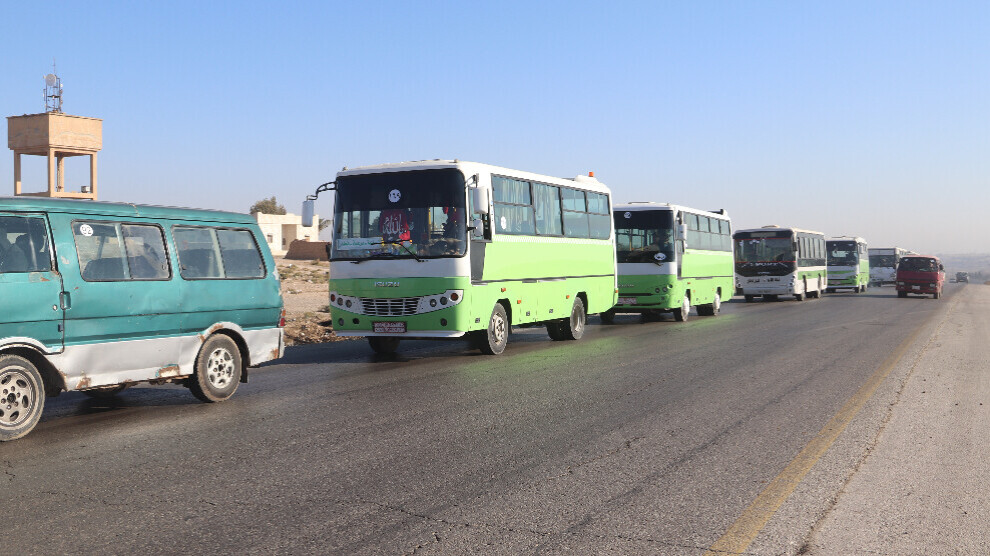
The Hayat Tahrir al-Sham (HTS) gangs entered Aleppo city yesterday afternoon. Tabqa Drivers Union sent 60 buses yesterday for those who wanted to leave the city. Today, the Drivers Union sent 50 buses to Raqqa to go to Aleppo. 19 buses carrying students set off from Aleppo.

Hesen El Xabûr, one of the officials of Raqqa Bus Station, said that they transported the people free of charge. Hesen El Xabûr emphasised that the Autonomous Administration of North and East Syira (AANES) has taken all measures for the safe return of the people.

Hesen El Xabûr stated that they will continue to send vehicles from Aleppo as long as needed and will provide a safe environment for everyone.


Mehmûd El Omer, Co-Chairman of Tabqa Drivers Union, underlined that they will continue to fulfil their humanitarian duties.

There is heavy traffic at the Elbû Asî Gate in Tabqa.

The Democratic Autonomous Administration of North and East Syria announced that 2,892 people have crossed into the autonomous regions so far, including 2,158 students.


Farhad Shami: We will defend our people and our region, let our people be sensitive


Farhad Shami

ANF
HESEKÊ
Saturday, 30 November 2024,

Farhad Shami, head of the Press Center of the Syrian Democratic Forces (SDF) issued a statement about the latest developments in Aleppo and northwestern Syria.

Shami said: "The plan of the attack on northwestern Syria has been devised by the Turkish occupation forces which intends to execute its schemes with the collaboration of the Al-Nusra Front. This attack is managed step by step by Turkey and to fully comprehend this process, it is crucial to see Turkey's role."

Shami added: "The developments in northwestern Syria are sensitive, and we directly care about them and closely monitor them. Whatever happens, our national and moral priority remains the defense of our people and our regions. Therefore, we will intervene as necessary to defend our people."


YBŞ: We must be prepared for all developments and dangers

In view of the HTS attack on the Syrian city of Aleppo, Shengal Resistance Units warned of an Islamist advance in the region coordinated by Turkey and the danger for the Yazidi community.


ANF
SHENGAL
Saturday, 30 November 2024, 13:16

The General Command of the Shengal Resistance Units (YBŞ) made a statement warning of an Islamist advance in the region following the attack by the terrorist group Hayat Tahrir al-Sham (HTS) on the Syrian city of Aleppo. YBŞ said that the people must guard against all dangers posed by Turkish-coordinated attacks to prevent a repeat of the 2014 genocide against the Yazidi community.

The statement released by YBŞ on Saturday said:

“As it is known, there has been a great war and conflict in the region for some time and this situation is gradually expanding. In particular, the recent events in Syria give the message that the war will not end easily.

There is no doubt that this war concerns us and our people closely. What is happening in Aleppo today reminds us of what happened in 2014. Analysing the developments independently of ourselves would mean falling into ignorance. We, the defence forces and the people, must urgently review our situation and be prepared for all developments and dangers. We should be well aware that the main reason why we faced massacres in 2014 was because we believed that others would defend us. However, we now have experience, and this experience was not easy to gain and resulted in a great genocide.

The Turkish state is the enemy of all peoples in the region. It is especially hostile to the Yazidi community. It wants to design the region according to its own interests in order to realise its dreams of Neo-Ottomanism. The Turkish state has mobilised its gangs and wants to deepen the war even more. Of course, the eyes of the Turkish state are also on the regions we live in and on our lands.

On this basis, we invite our people to be sensitive and to approach the process with great seriousness and sensitivity. Our tribes, communities and leaders in particular should be prepared. We also invite different Yazidi forces to recognise these historic moments and to defend our land and our honour shoulder to shoulder.

We also call on our youth to stand up for the duties and responsibilities of the Yazidi faith and to join the ranks of the YBŞ and YJŞ (Shengal Women’s Units) to defend their honour.

There should be no doubt that we are ready to defend every inch of land in Shengal and Iraq and that we have the power of experience.”