Sunday, December 29, 2024

POSTMODERN FASCISM
Musk’s backing of far-right AfD party creates uproar in Germany ahead of key elections


By — Associated Press
 Dec 29, 2024 

BERLIN (AP) — Tech entrepreneur Elon Musk caused uproar after backing Germany’s far-right party in a major newspaper ahead of key parliamentary elections in the Western European country, leading to the resignation of the paper’s opinion editor in protest.

Germany is to vote in an early election on Feb. 23 after Chancellor Olaf Scholz’s three-party governing coalition collapsed last month in a dispute over how to revitalize the country’s stagnant economy.

Musk’s guest opinion piece for Welt am Sonntag —a sister publication of POLITICO owned by the Axel Springer Group — published in German over the weekend, was the second time this month he supported the Alternative for Germany, or AfD.

“The Alternative for Germany (AfD) is the last spark of hope for this country,” Musk wrote in his translated commentary.

WATCH: What to know about Germany’s far-right politics and protests against its rise

He went on to say the far-right party “can lead the country into a future where economic prosperity, cultural integrity and technological innovation are not just wishes, but reality.”

The Tesla Motors CEO also wrote that his investment in Germany gave him the right to comment on the country’s condition.

The AfD is polling strongly, but its candidate for the top job, Alice Weidel, has no realistic chance of becoming chancellor because other parties refuse to work with the far-right party.

An ally of U.S. President-elect Donald Trump, the technology billionaire challenged in his opinion piece the party’s public image.

“The portrayal of the AfD as right-wing extremist is clearly false, considering that Alice Weidel, the party’s leader, has a same-sex partner from Sri Lanka! Does that sound like Hitler to you? Please!”

Musk’s commentary has led to a debate in German media over the boundaries of free speech, with the paper’s own opinion editor announcing her resignation, pointedly on Musk’s social media platform, X.

“I always enjoyed leading the opinion section of WELT and WAMS. Today an article by Elon Musk appeared in Welt am Sonntag. I handed in my resignation yesterday after it went to print,” Eva Marie Kogel wrote.

A critical article by the future editor-in-chief of the Welt group, Jan Philipp Burgard, accompanied Musk’s opinion piece.

“Musk’s diagnosis is correct, but his therapeutic approach, that only the AfD can save Germany, is fatally wrong,” Burgard wrote.

Responding to a request for comment from the German Press Agency, dpa, the current editor-in-chief of the Welt group, Ulf Poschardt, and Burgard — who is due to take over on Jan. 1 — said in a joint statement that the discussion over Musk’s piece was “very insightful. Democracy and journalism thrive on freedom of expression.”

“This will continue to determine the compass of the “world” in the future. We will develop “Die Welt” even more decisively as a forum for such debates,” they wrote to dpa.


German chancellor candidate Merz slams Musk over AfD stance


After Tesla CEO Elon Musk praised the AfD in an article published by a German daily, the leading candidate for chancellor, Friedrich Merz, hit back, decrying Musk's interference as "intrusive and pretentious."


A senior German politician dismissed Elon Musk's public support for the far-right Alternative for Germany (AfD) as unprecedented interference, labeling it "intrusive and pretentious."

Friedrich Merz, the center-right candidate for chancellor in Germany's February 23 legislative election, lashed out at the Tesla CEO on Sunday, a day after Musk used an op-ed to describe the populist party as the "last spark of hope for this country."

In the article published in German, Musk also praised the AfD's approach to regulation, taxes and market deregulation.

The remarks have been fiercely criticized and a senior editor at Welt am Sonntag, the newspaper that published Musk's commentary, resigned in protest.

The AFD is currently polling second behind Merz' conservative alliance — the same group that Angela Merkel led until 2021.


What did Merz say?

"I cannot recall, in the history of Western democracies, that there has been a comparable case of interference in the electoral campaign of a friendly country," Merz, the head of the center-right Christian Democratic Union (CDU) party, told the Funke media group.


Merz said: "Imagine for a brief moment, the — justified — reaction of Americans to a comparable article by a prominent German businessman in the New York Times backing an outsider in the US presidential election campaign."

He added that Tesla's first gigafactory in Europe — built east of Berlin — would not have been approved if the far-right party was in power, "because it was the AfD that put up the most fierce resistance to this plant."

Musk has insisted he has a legitimate interest in German politics because of the investments the electric carmaker has made.
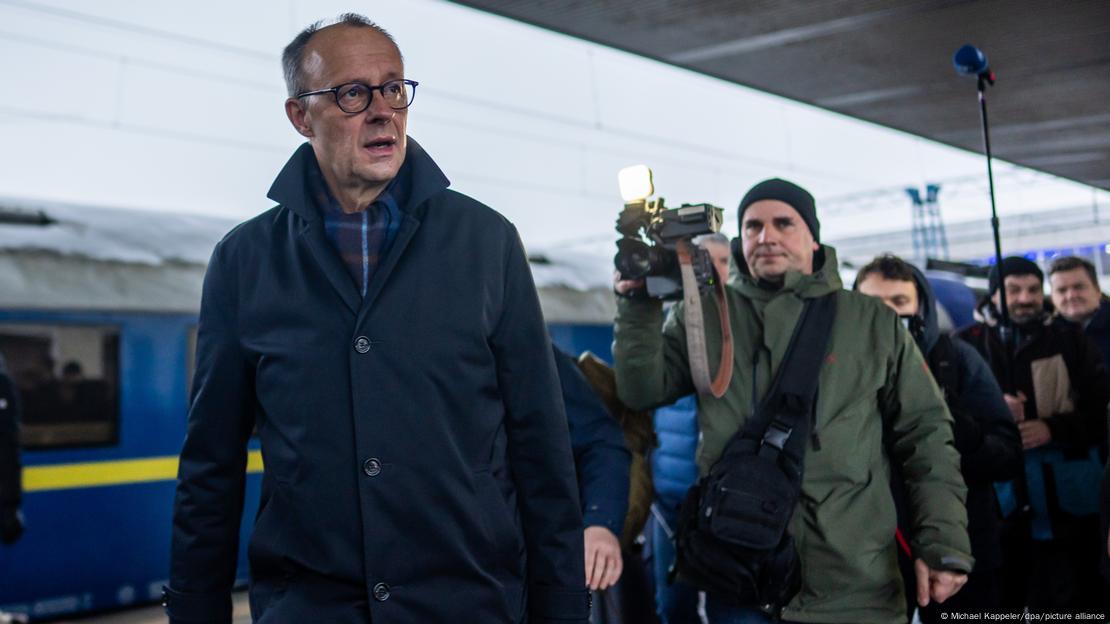
Friedrich Merz is the leading candidate for chancellor after Scholz's coalition collapsed
Michael Kappeler/dpa/picture alliance


German democracy 'cannot be bought'


Saskia Esken, co-leader of Chancellor Olaf Scholz's Social Democrats (SPD), also called out interference in the German election by the world's richest man.

"In Elon Musk's world, democracy and workers' rights are obstacles to more profit," Esken told the Reuters news agency. "We say quite clearly: Our democracy is defensible and it cannot be bought."

Another SPD lawmaker, Matthias Miersch, told the Handelsblatt business daily that it was "shameful and dangerous" that the Springer publishing house — which owns Welt am Sonntag — gave Musk "an official platform to promote the AfD."


German Health Minister Karl Lauterbach on Saturday wrote on X: "The fact that political power is now increasingly easy to buy will cause great damage to democracy. If newspapers join in, they are digging their own graves."

mm/dj (dpa, EPD, Reuters)

Elon Musk backs AfD party in German newspaper opinion piece

EDITOR QUITS

December 28, 2024 


US billionaire Elon Musk backed the Alternative for Germany (AfD) party in a guest opinion piece for Germany’s Welt am Sonntag newspaper published online on Saturday, which prompted the commentary editor to resign in protest.

In the commentary, published in German by the flagship paper of the Axel Springer media group, Musk expanded on his post on social media platform X last week claiming that “only the AfD can save Germany”.


“The portrayal of the AfD as right-wing extremist is clearly false, considering that Alice Weidel, the party’s leader, has a same-sex partner from Sri Lanka! Does that sound like Hitler to you? Please!” Musk said in the piece.

Germany’s domestic intelligence agency has classified the AfD at the national level as a suspected extremism case since 2021.

Shortly after the piece was published online, the editor of the opinion section, Eva Marie Kogel, wrote on X that she had submitted her resignation, with a link to the commentary.


“Democracy and journalism thrive on freedom of expression. This includes dealing with polarising positions and classifying them journalistically,” the newspaper’s editor-in-chief designate Jan Philipp Burgard and Ulf Poschardt, who takes over as publisher on January 1, told Reuters.

They said discussion about Musk’s piece, which had around 340 comments several hours after it was published, was “very revealing.” Underneath Musk’s commentary, the newspaper published a response by Burgard.

“Musk’s diagnosis is correct, but his therapeutic approach, that only the AfD can save Germany, is fatally false,” he wrote, referencing the AfD’s desire to leave the European Union and seek rapprochement with Russia as well as appease China.

The AfD backing from Musk, who also defended his right to weigh in on German politics due to his “significant investments,” comes as Germans are set to vote on February 23 after a coalition government led by Chancellor Olaf Scholz collapsed.

The AfD is running second in opinion polls and might be able to thwart either a centre-right or centre-left majority, but Germany’s mainstream, more centrist parties have pledged to shun any support from the AfD at the national level.

Elon Musk backs far-right AfD in controversial German op-ed

DW
December 28, 2024

German authorities say the AfD is far-right extremist and endangers German democracy. According to the US tech billionaire said such ideas about Germany's AfD are "clearly false."


Tech billionaire Elon Musk on Saturday restated his backing for Germany's far-right Alternative for Germany (AfD), calling the party the "last spark of hope" for the country, in an op-ed published by the Welt am Sonntag newspaper.

His remarks triggered anger among German politicians, with the country seven weeks away from a snap federal election.

Shortly after the piece went online, the editor of the opinion section, Eva Marie Kogel, wrote on X that she had submitted her resignation, with a link to the commentary.


What did Elon Musk say?


Musk used his commentary to expand on his post on X last week claiming that "only [the] AfD can save Germany." In the editorial, he said the far-right party was the "last spark of hope" for the country.

"The portrayal of the AfD as right-wing extremist is clearly false, considering that Alice Weidel, the party's leader, has a same-sex partner from Sri Lanka! Does that sound like Hitler to you? Please!" Musk said in the piece.


In 2021, Germany's domestic intelligence agency classified the AfD at the national level as a suspected extremist organization.

Musk went on to claim that the AfD adopts strong positions on issues relating to economic recovery, energy supply and migration control.

"The AfD, even though it is described as far-right, represents a political realism that resonates with many Germans who feel that their concerns are ignored by the establishment. It addresses the problems of the moment — without the political correctness that often obscures the truth," the tech billionaire continued.

Musk also said the AfD was "committed to a controlled immigration policy that gives priority to integration and the preservation of German culture and security. This is not about xenophobia, but about ensuring that Germany does not lose its identity in the pursuit of globalization."

Welt am Sonntag reporters shoot back at Musk op-ed

The future editor-in-chief of the Welt group, Jan Philipp Burgard, contradicted the billionaire's statements in his own op-ed, posted next to Musk's.

Burgard said: "Musk's diagnosis is correct, but his therapeutic approach, that only the AfD can save Germany, is fatally wrong."

Other Welt journalists also posted their disapproval publicly on X.


Musk's comments seen as timed for snap election


Musk's backing of the AfD has sent shockwaves through Berlin, with some lawmakers this week accusing the SpaceX chief of interfering in German politics.

On Saturday, former health minister and a lawmaker for the center-right CDU party, Jens Spahn, wrote on X:

"Elon Musk says, look beyond the labels of the AfD. Now, let's do it then: The AfD wants to leave NATO, reactivate Nord Stream 2, and is anti-US, pro-Putin and pro-Russia. Is that what the USA wants? A Germany that turns towards Russia and away from the USA? The AfD wants to leave the Eurozone, our by far largest trading partner. We conduct ~40% of our trade within Eurozone. Without the Euro and the EU, the German economy would completely collapse."


Spahn said the AfD had also been against the construction of the Tesla factory in Grünheide.

Break-up of ruling coalition triggers early elections

Germany is set for a snap election on February 23 after the coalition government led by Chancellor Olaf Scholz collapsed last month.

The three parties in the coalition had disagreed for more than a year on major policy issues, including the 2025 budget.

The AfD is now running second in opinion polls with around 19% support, behind the conservative CDU/CSU alliance with more than 30%.

However, Germany's mainstream parties have all ruled out working with AfD at the national level.

mm/dj (AFP, DPA)

Rohingya refugees in India struggle for children's future

Adil Bhat in New Delhi
DW
12/28/2024

Many Rohingya children in India are struggling to access education, as New Delhi considers them "illegal foreigners."


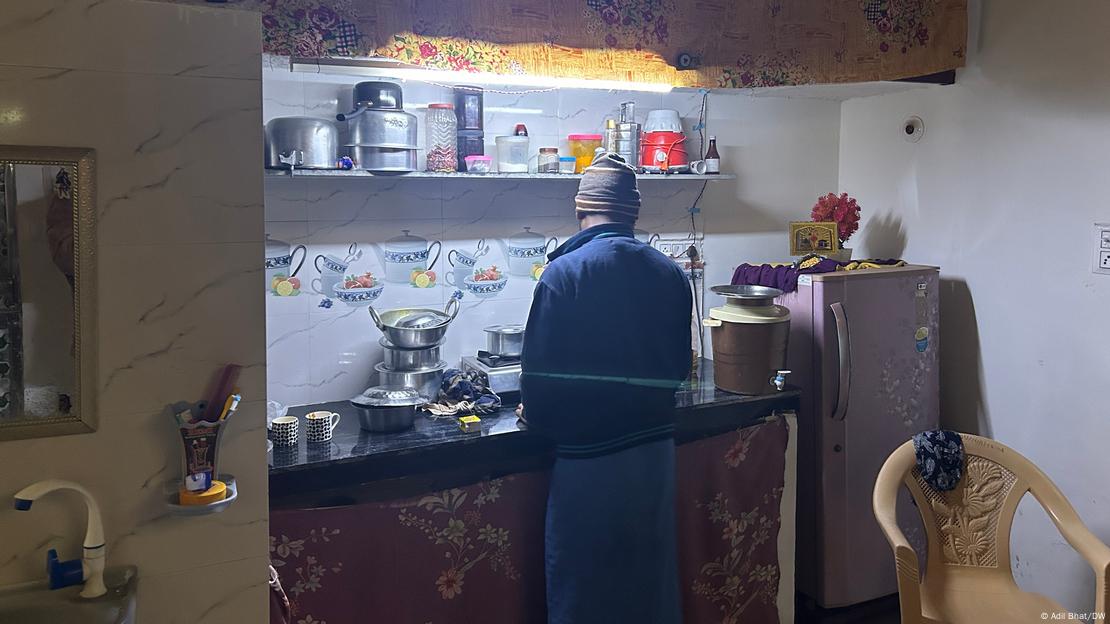
In Delhi's Khajuri Khas locality, Rohingya children who are unable to attend regular schools have joined a religious seminary

Aisha, a 7-year-old Rohingya girl, wakes up every morning chasing her elder sister Asma as the latter gets ready for school in Khajuri Khas, a locality in northeastern Delhi.

Aisha pleads with her elder sister to take her along most days, but her wish is never met. She was denied admission to the same school where her sister studies in seventh grade.

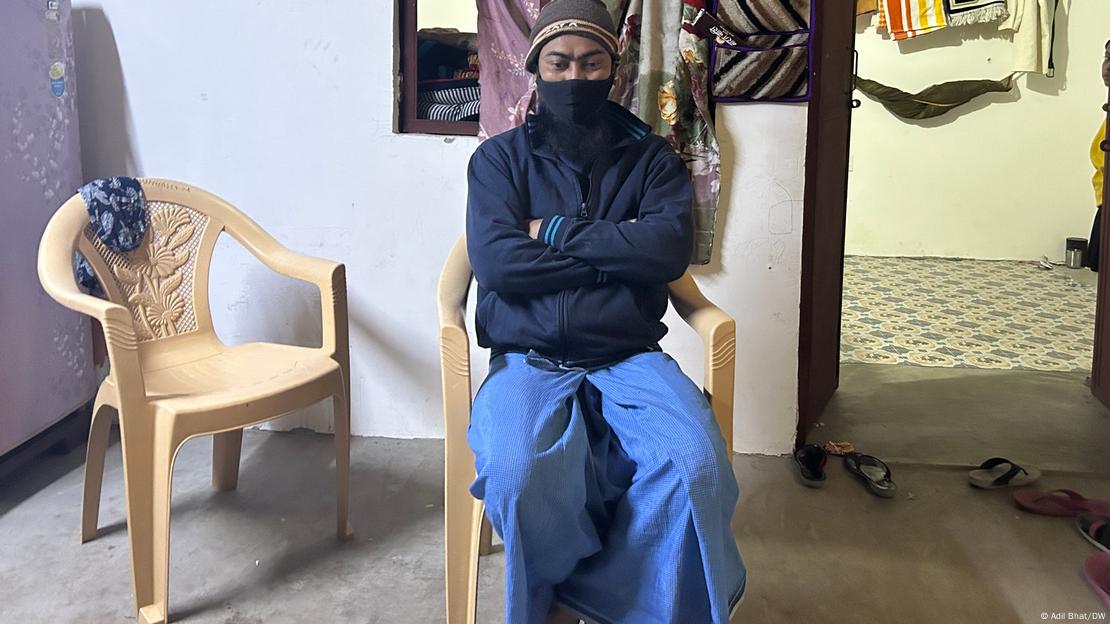
Their father, Hussain Ahmad, a Rohingya refugee who fled Myanmar with his family in 2017, struggles to explain to Aisha why the school authorities have refused her enrollment.

It pains him to see her plead — a constant reminder of the hurdles they face.

"I have been running from one public school to another to get my daughter admitted, but she has been denied everywhere," said Ahmad, a construction worker. "They are depriving her of education. I feel very helpless."

I have been running from one public school to another to get my daughter admitted, but she has been denied everywhere,' said Ahmad

Ahmad said he had submitted all the necessary documents, including United Nations documentation, required for refugee children's enrollment in school. However, the school authorities have stopped considering these papers for admission.

Barriers to education

For the past two years, Ahmad said, "authorities have started demanding Indian documents like Aadhaar [a biometric identity card], which we, as refugees, don't possess. Our UNHCR card has become useless," referring to the document issued by the UN refugee agency.

Ahmad's experience resembles those of other Rohingya families in Khajuri Khas. A few meters from his home, Sarwar Kamal, another Rohingya refugee who works as a mobile repair technician, has been making rounds of government schools in the area to secure admission for his 10-year-old daughter.

"I couldn't get a proper education, and I don't want the same fate for my children," Kamal told DW. "I am worried they are shattering the dreams of our children."

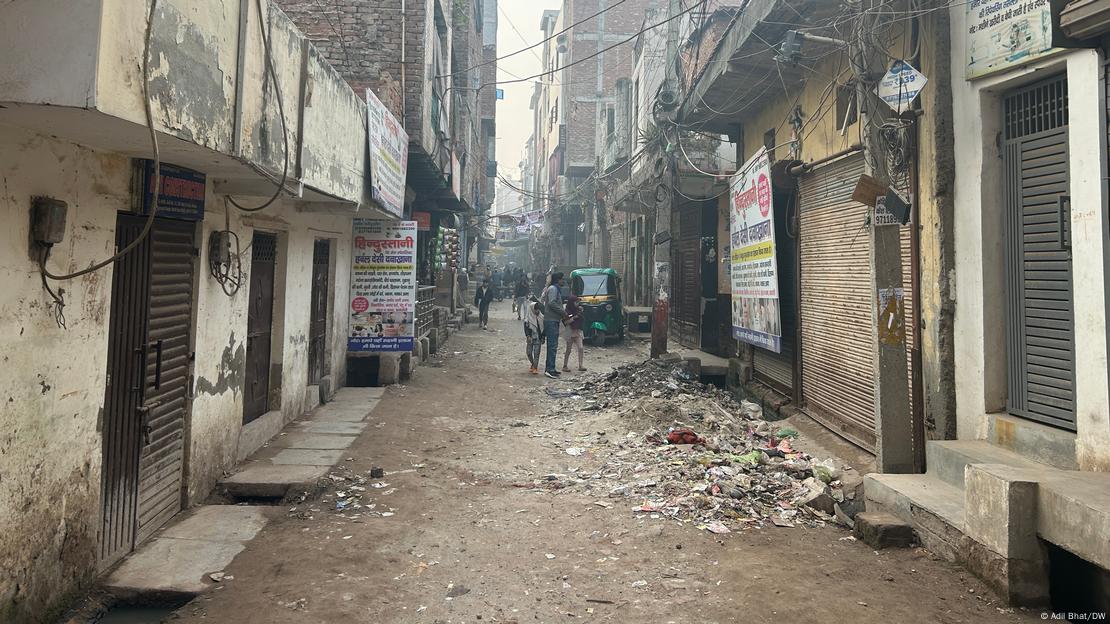
Around 40 Rohingya families have lived in this colony ever since they fled persecution in Myanmar.

Most of these families stay in small, rented rooms in the narrow alleys of the densely populated area of Khajuri Khas. In this locality, 17 children have been denied admission in the last two years, according to a petition filed with India's Supreme Court.

Around 40 Rohingya families have lived in this colony ever since they fled persecution in Myanmar

An estimated 40,000 Rohingya people live in India, with 20,000 of them registered with the UNHCR. Most fled Myanmar in 2017, when the Southeast Asian nation's military unleashed a violent crackdown in what many describe as a genocide against the Rohingya Muslims in western Rakhine state.

India does not have a national policy on refugees and considers the Rohingya to be "illegal foreigners." India is one of the few countries that is not a signatory to the 1951 UN Refugee Convention.


Anti-Rohingya sentiment growing in India

Meanwhile, the anti-Rohingya sentiment is growing in the South Asian nation. While Prime Minister Narendra Modi's Bhartiya Janata Party (BJP) is often associated with the anti-Rohingya narrative, it is by no means alone. The Aam Aadmi Party, which has governed Delhi for over a decade, has also used anti-Rohingya rhetoric to bolster its support ahead of elections.

Atishi Marlena, the chief minister of Delhi, has accused the BJP-led government of settling "a large number of illegal Rohingyas" across the capital.

Sabber Kyaw Min, the founder of the Rohingya Human Rights Initiative, is alarmed by the politicization of the Rohingya issue.

Min said this kind of political narrative targeting Rohingyas is adding to the fears of an already marginalized community.


"This education ban is politically motivated. The leaders of different political parties are portraying us as an enemy for their politics," Min told DW. At least 676 Rohingya people are currently being held in immigration detention centers across India, according to a 2024 report by Azadi Project and Refugees International.\

Half of them are women and children, the report said.

Children find alternative schooling

In Khajuri Khas, children who are unable to attend regular schools have joined an alternative school — a small religious seminary established by Mohmmad Syed, a Rohingya refugee.

The seminary, supported by the local Muslim community, operates out of a small rented room where Syed provides religious education, including lessons on the Quran. The students also learn Urdu, which helps them to communicate with the locals in the area.

"I stepped in when I learned our children are being denied education. These Rohingya students have dreams of having a good life but they are being discriminated for who they are," said Syed.

Vinod Kumar Sharma, the principal of the school that refused admission to 7-year-old Aisha, said his school cannot be blamed, as the authorities have set the rules for admitting refugee children. "I can't give admission to the students. I don't have the authority to do it," Sharma told DW.

"If they want to get admission, their families need to approach and take permission from higher authorities in the education department."


Rohingya take legal battle to top court

Refugees in this Delhi colony are not alone, however. In the neighboring state of Haryana, Rohingya children are being denied admission to schools after seventh grade.

Emanuel Mohd, a community leader in the Nuh camp in the state, has started offering free tuition for 90 students who have been denied admission in schools.

"Parents are anxious about the future of their children. Education is the only means of building a better future," Mohd told DW.

In October, the Delhi High Court refused to hear a plea to enroll Rohingya children in local government schools. The court noted that since the Rohingya have not been legally granted entry into India, the matter falls under the purview of India's Home Ministry.

Ashok Agarwal, the lawyer who filed the petition, was disappointed with the court's decision. He stressed that the Indian constitution guarantees education as a fundamental right to every child in the country, irrespective of their citizenship status.

Ahmad fled Myanmar with his family in 2017

Agarwal is challenging the high court decision in the Supreme Court, and hopes the top court will soon set a date for hearing the case.

Back at Ahmad's home in Khajuri Khas, Asma has taken on the responsibility of teaching her younger sister, Aisha, as she waits for the day when the school gates finally open for her, too.

Edited by: Srinivas Mazumdaru

PHOTOS Adil Bhat/DW

South Africa chairs G20: Ambitious plans, geopolitical woes
DW
29/12/2024

The first-ever African presidency of the G20 group will revolve around climate justice, state debt and minerals. But with international divisions, progress will be tough.


Cyril Ramaphosa takes over from the leader of G20's previous presidency, Luiz Inacio Lula da Silva of Brazil

Image: Eraldo Peres/AP/picture alliance

Finally, it's South Africa's turn. The country took the G20 chair in December, the last remaining member to hold the presidency.

The G20, formed in 1999, is a group of 19 of the world's largest economies, plus the European Union, that meets regularly to coordinate global policies on trade, health, climate and other issues. The informal forum does not have a permanent secretariat.

After granting the African Union membership in 2023, the G20 will now finally arrive on African soil. South Africa will host around 130 meetings and forums, leading up to the summit of the heads of state and governments in November 2025 in Johannesburg.
G20 premiere on African soil

Elizabeth Sidiropoulos, chief executive for the South African Institute of International Affairs, told DW that South African President Cyril Ramaphosa will likely continue working on the goals that previous presidencies have outlined.

"While this is a first African presidency, it really builds on many of the issues that the Indonesians, the Indians and Brazilians identified as priorities. And many of these overlap with what our priorities for Africa are," she said. "Clearly there'll be a distinct African flavor."

The G20 will attract attention all over the continent because South Africa will seek consensus with other African governments, according to Melanie Müller, an expert on the region at the German Institute for International and Security Affairs, or SWP.
Climate, debt, justice — and some other African priorities

South Africa's G20 agenda puts emphasis on a number of issues that also matter to the whole continent.

"The climate change crisis is worsening," Ramaphosa said in early December, when he unveiled his G20 priorities. "Across the world, billions of people are affected by underdevelopment, inequality, poverty, hunger and unemployment. The outlook for global economic growth remains subdued, and many economies carry the burden of unsustainable levels of debt."

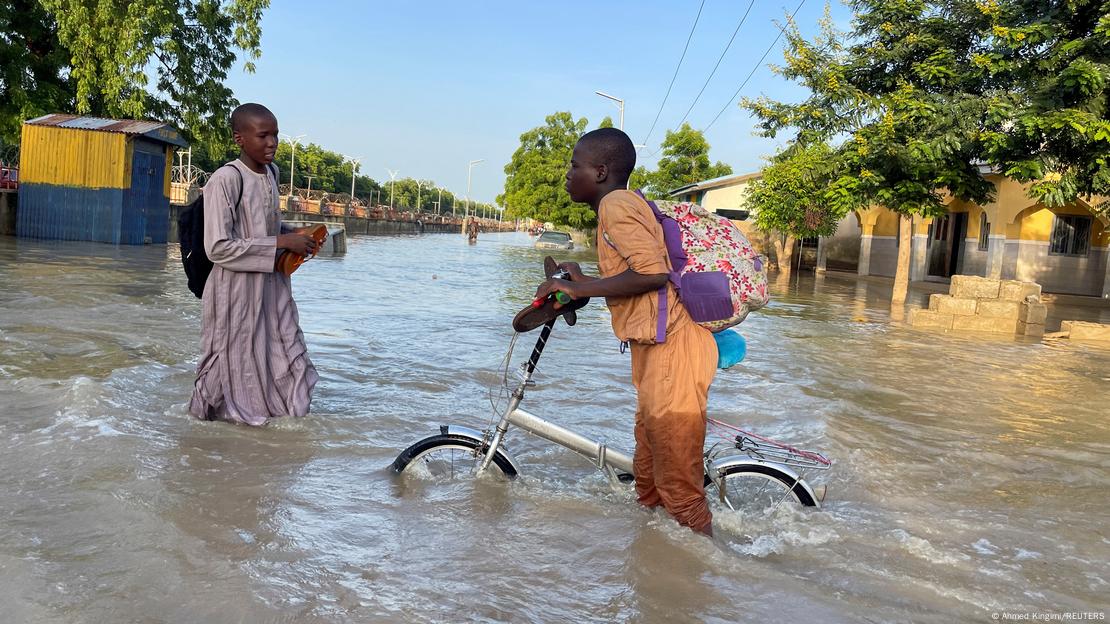
Africa is already experiencing a surge in extreme weather events, like this flood in Nigeria in September
Image: Ahmed Kingimi/REUTERS

The South African G20 presidency aims to move the economy toward technologies which are less harmful to the planet's climate. The country has witnessed a rapid expansion of solar power — even though the biggest share was delivered by private home owners who want to escape the hardships of blackouts caused by outdated and underserviced energy infrastructure.

Critical minerals a motor for development

The economic transformation also brings a surge in demand for specialist mineral resources, many of which can be found in African locations.

The largest deposit of cobalt, for example, lies in the Democratic Republic of the Congo. Most is being refined in China, even as the EU and US seek to increase their share of the resource, which is used in batteries for electric vehicles, electronic devices and clean energy technologies.

"We have a very interesting situation developing in some countries," said SWP's Müller, who also researches supply chains. "That is, they're increasingly able to choose their trading partners and are not necessarily dependent only on Chinese agreements."

The situation is giving these countries more room to negotiate for good conditions with other trading partners, Müller explained, which can be seen as a positive.

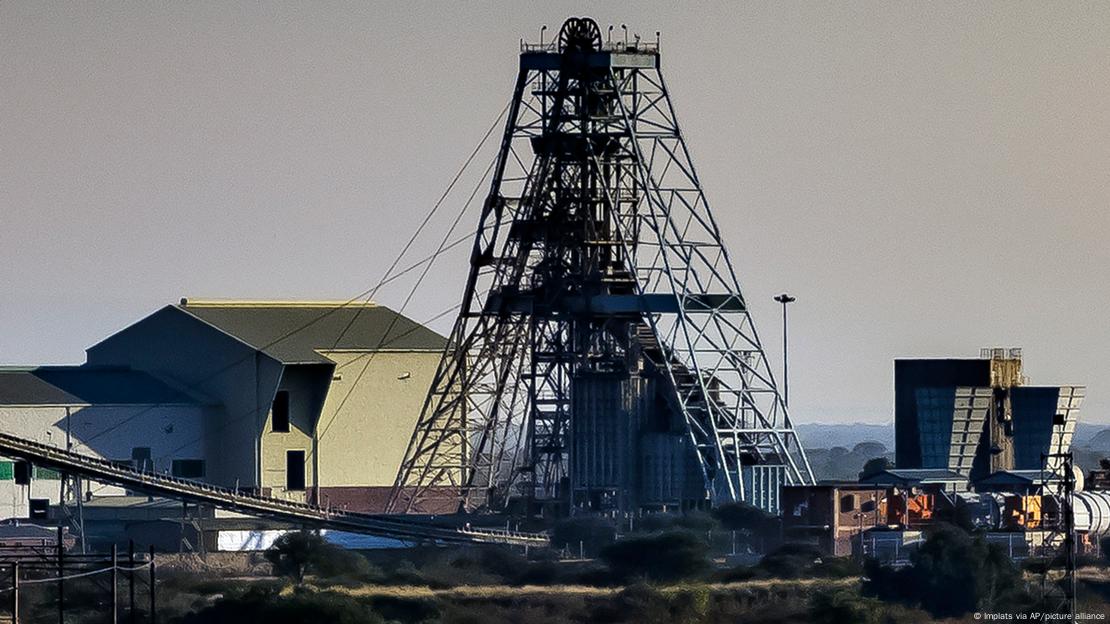
South Africa contributes substantial amounts of platinum to world markets
Image: Implats via AP/picture alliance

South Africa is also an important mining country itself, digging up substantial amounts of platinum, gold and chrome. Ramaphosa told journalists he wants to use his G20 presidency to "champion the use of critical minerals as an engine for growth and development in Africa."

Building bridges

In order to achieve these goals, the G20 presidency will need to forge compromises between the different G20 member states.

South Africa — and Ramaphosa himself — have experience with that, said Sidiropoulos. "We've seen that from nearly 30 years ago, when he [Ramaphosa] was instrumental in guiding our 1996 constitution. It's really about building consensus."

South Africa sees its job as one of creating consensus, she continued. "It's about weaving the narrative around priorities in such a way that individual blocs in the G20 are brought together, rather than lost along the way," she said.

This means preventing different members' views on wars in Ukraine or in the Middle East from derailing progress. There's no doubt these conflicts will be discussed at every meeting and will certainly end up, likely in more broad terms, in the final G20 declaration next November, Sidiropoulos predicted.

"But South Africa will certainly not want a situation in which one of the two conflicts becomes the predominant issue on the agenda and overshadows all other issues, ones that are much more important for developing economies," she said.

Since he became president in 2018, Ramaphosa has gained plenty of foreign policy and diplomacy experience, for example, when South Africa hosted the 2023 BRICS summit.

He maintains good relations with Russia despite that country's war in Ukraine. This approach has caused some irritation among European allies. Nonetheless, Ramaphosa is still seen as a reliable partner. Earlier in December. Ramaphosa met with Germany's own president to discuss the G20 agenda.

Will South Africa's G20 presidency be a success?

"You cannot determine the successes of the presidency separately from factors like geopolitics," said Müller, summarizing the previous term chaired by Brazil. Success will also be influenced by [things like] future relations between the US and China."

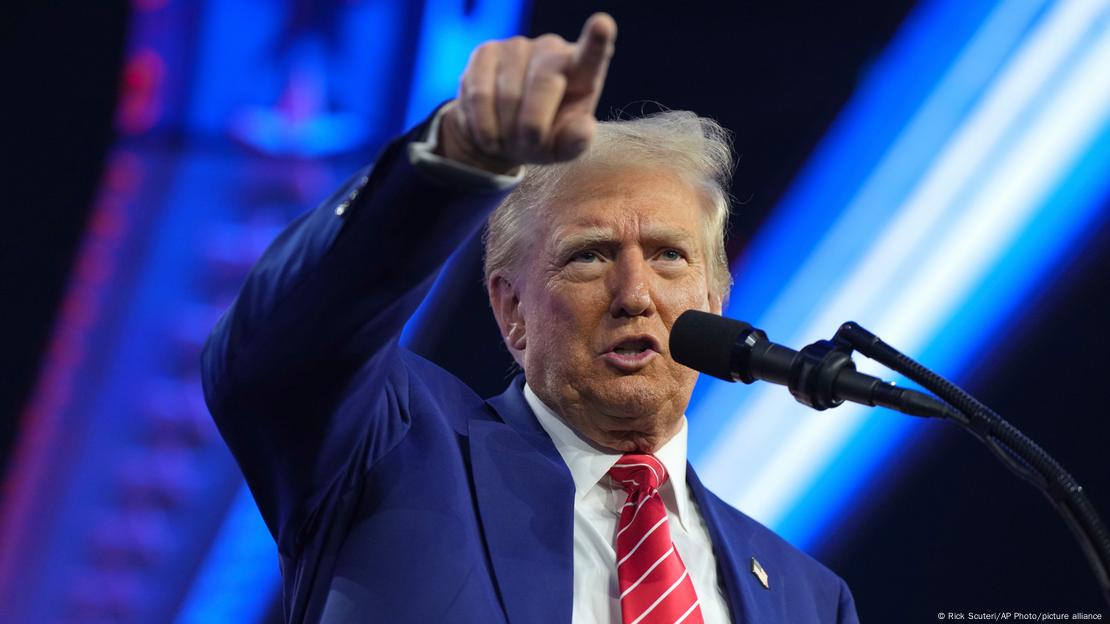
US President-elect Donald Trump is notorious for torpedoing international collaboration when he sees advantages for his country
Image: Rick Scuteri/AP Photo/picture alliance

Political insecurity is likely to be further exacerbated by Donald Trump's return to the White House. In late November, Trump revealed plans to raise tariffs on Chinese imports to 10%. He also threatened to impose 100% tariffs on all BRICS members, including China and South Africa, should they advance the idea of a new shared currency that moves away from dependence on the US dollar.

Dealing with Trump will also be a more personal challenge for Ramaphosa. During his G20 presidency, the US will be more closely involved than most other member states because the Americans will take on the presidency after South Africa.

This article was originally written in German.

Rome urges Iran to free Italian journalist Cecilia Sala

Italian Prime Minister Giorgia Meloni said she hoped to bring jailed journalist Cecilia Sala "home as quickly as possible." Sala had procured a work visa and released multiple podcast episodes from Iran.


Giorgia Meloni is calling for the swift release of journalist Cecilia Sala (pictured) from Iran's notorious Evin PrisonI
mage: Chora Media/via REUTERS

DW
29/12/2024

Italy on Saturday demanded the release of journalist Cecilia Sala, who has been in solitary confinement in Tehran's Evin Prison for over a week.

Italian Prime Minister Giorgia Meloni said she wanted to bring Sala "home as quickly as possible."
What did Meloni and Italian officials say?

Meloni said she was "following the complex affair" closely and that Italy was pursuing "all possible avenues of dialogue" to bring the journalist home.

Also on Saturday, Italian Foreign Minister Antonio Tajani said Rome was working for Sala's release.

"We are trying to resolve a complicated issue and to ensure in the meantime that Cecilia Sala is detained in the best possible conditions," Tajani said.

Asked on when she might be released, Tajani said, "I hope shortly, but it does not depend on us."

He said that Sala was being fed and was being held in a "single cell."

Meanwhile, Sala's podcast publisher also called for her release.

"She was taken to Evin prison, where dissidents are held, and the reason for her arrest has not yet been formalized," the publisher, Chora, said in a statement.

"Journalism is not a crime, even in countries that repress all freedoms, including those of the press," it said. "Bring her home."

Italy's Foreign Ministry said that Sala was only able to make two phone calls from prison, one to her mother and one to her partner.


What else do we know about Sala's arrest?

Sala, 29, works for the daily newspaper Il Foglio and runs the "Stories" podcast. She had released a number of podcast episodes from Tehran before her arrest, one of which was titled "A conversation on patriarchy in Tehran."

She was arrested by police in Tehran on December 19, a day before she was due to leave the country.

In a video taken in Tehran three days before her arrest, Sala is seen discussing women who do not wear the veil in defiance of Iran's strict dress code.

It was unclear whether the video or the podcast episodes were related to her arrest.

Sala has visited Iran several times and had been given a work visa for her current stay.

sdi/dj (dpa, Reuters)
Jailed PKK leader says ‘ready’ to support Turkey peace drive


By AFP
December 29, 2024


Supporters of Abdullah Ocalan rallied in Cologne, Germany, in February 2024 to mark the 25th anniversary of his arrest - Copyright AFP Nicolas LANDA TAMI

Fulya OZERKAN

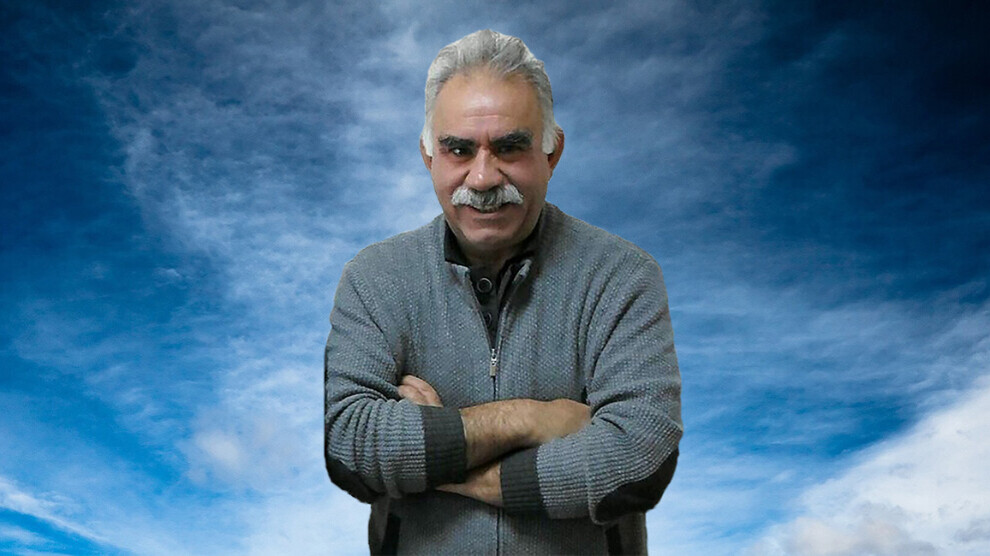
Abdullah Ocalan, the jailed leader of the Kurdistan Workers’ Party (PKK), is “ready to make a call” to back a new initiative by the Turkish government to end decades of conflict, Turkey’s pro-Kurd party said Sunday.

Two lawmakers from the DEM party made a rare visit to Ocalan on Saturday on his prison island, the first by the party in almost a decade, amid signs of easing tensions between the Turkish government and the PKK.

On Friday, President Recep Tayyip Erdogan’s government approved DEM’s request to visit the founder of the PKK, which is designated a terror group by Turkey and its Western allies.

Ocalan has been serving a life sentence on the island of Imrali south of Istanbul since 1999.

The government’s approval of the visit comes two months after the head of Turkey’s nationalist MHP party, Devlet Bahceli, extended Ocalan a shock olive branch, inviting him to parliament to renounce terror and disband his group, a move backed by Erdogan.

“I have the competence and determination to make a positive contribution to the new paradigm started by Mr Bahceli and Mr Erdogan,” Ocalan said, according to a DEM statement Sunday.

Ocalan said the visiting delegation would share his approach with both the state and political circles.

“In light of this, I am ready to take the necessary positive steps and make the call.”


-‘Historical responsibility’-


The PKK has waged an insurgency against the Turkish state since 1984, claiming tens of thousands of lives.

A peace process between the PKK and the government collapsed in 2015, unleashing violence especially in the Kurdish-majority southeast.

The new initiative launched in October by Bahceli, who has been fiercely hostile to the PKK, sparked a public debate, with Erdogan hailing it as a “historic window of opportunity”.

But a deadly terror attack in October on a Turkish defence company in the capital Ankara, for which PKK militants claimed responsibility, put those hopes on hold.

Turkey launched strikes on Kurdish militants in Iraq and Syria after the attack, which killed five people.

“Re-strengthening the Turkish-Kurdish brotherhood is not only a historical responsibility but also… an urgency for all peoples,” Ocalan said, according to the DEM statement.

He said all the efforts would “take the country to the level it deserves” and become a “very valuable guide for a democratic transformation”.

“It’s time for Turkey and the region for peace, democracy and brotherhood”.

The new outreach by both sides comes as Islamist rebels consolidate their control in neighbouring Syria after toppling its strongman president Bashar al-Assad.

Turkey hopes Syria’s new leaders will address the issue of Kurdish forces in the country, which Ankara sees as a terror group affiliated to the PKK.

Foreign Minister Hakan Fidan told his US counterpart Antony Blinken in a phone call on Saturday that Kurdish fighters “cannot be allowed to take shelter in Syria”, according to the ministry spokesman.

According to the DEM statement, Ocalan said developments in Syria had shown that outside interference would only complicate the problem, and a solution could no longer be postponed.

Abdullah Öcalan: Positive contributions are essential for the process to succeed


DEM Party MPs Pervin Buldan and Sırrı Süreyya Önder issued a written statement after their meeting with Abdullah Öcalan in Imrali.


ANF
NEWS DESK
Sunday, 29 December 2024

DEM Party MPs Pervin Buldan and Sırrı Süreyya Önder met with Abdullah Öcalan in Imrali on Saturday. They issued the following statement about the meeting:

"On 28 December 2024, we held a comprehensive meeting with Mr. Abdullah Öcalan in İmralı. His health is good, and his morale is high. His assessments aimed at finding a permanent solution to the Kurdish issue were of profound importance.

During the meeting, which included an assessment of recent developments in the Middle East and Turkey, Mr. Öcalan presented positive solution proposals to counter the dark future scenarios being imposed.

The general framework of his thoughts and approach can be summarized as follows:

- Strengthening the Turkish-Kurdish brotherhood once again is not only a historic responsibility but also a matter of critical urgency and significance for all peoples.

- For the process to succeed, it is essential that all political groups in Turkey take initiative without getting caught up in narrow, short-term interests, act constructively, and contribute positively. One of the key platforms for these contributions will undoubtedly be the Turkish Grand National Assembly (TBMM).

- The events in Gaza and Syria have shown that the resolution of this issue, which external interventions attempt to turn into a chronic problem, can no longer be delayed. The contributions and proposals of the opposition are also crucial for achieving a solution proportional to the seriousness of this issue.

- I possess the necessary competence and determination to provide the required positive contribution to the new paradigm supported by Mr. Bahçeli and Mr. Erdoğan.

- The delegation will share my perspective with both the state and political circles. In this context, I am ready to take the necessary positive steps and issue a call.

- All these efforts will elevate the country to the level it deserves and will also serve as a valuable guide for democratic transformation.

- This is a time for peace, democracy, and brotherhood for Turkey and the region."


DEM Party and DBP: Öcalan’s call can change the fate of Turkey and the region

Commenting on the meeting with Abdullah Öcalan, DEM Party and DBP highlighted the importance of the solution perspective offered by the Kurdish leader, calling for bold steps to be taken together.


ANF
NEWS DESK
Sunday, 29 December 2024, 13:15

Peoples' Equality and Democracy Party (DEM Party) deputies Pervin Buldan and Sırrı Süreyya Önder met with Kurdish people’s leader Abdullah Öcalan in İmralı Island Prison on 28 December.

The Democratic Regions Party (DBP) Central Executive Committee (MYK) made a written statement on the meeting in İmralı and said: “We are going through a historic process in terms of a solution to the Kurdish question. At such a time, the solution perspective offered by Mr Abdullah Öcalan is of historic importance. As he has stated, there is a need for a democratic transformation, and this is inevitable.

The path to democratic transformation lies in a solution to the Kurdish question through democratic and peaceful methods. The solution to this issue is possible with the contribution and participation of not only politics but also all social dynamics. In this context, it is necessary to embrace the will for a solution presented by Mr Abdullah Öcalan and every step that will strengthen this will and bring about a solution. This century has the potential to be the century of freedom and democracy for the peoples of Turkey, Kurdistan and the Middle East. For a democratic and free future, it should be the primary duty of all of us to embrace these opportunities and the will for a solution in the strongest way.”

DEM Party Co-Chairs Tülay Hatimoğulları and Tuncer Bakırhan shared messages on the social media.

Tülay HatimoÄŸulları's message said: ‘Abdullah Öcalan's assessments in İmralı are a historic call that can change the fate of Turkey and the region. Strengthening the Turkish-Kurdish alliance and initiating a democratic peace process has become a responsibility that cannot be postponed. In this critical period, all political circles need to take constructive and courageous steps for a solution. The Grand National Assembly of Turkey (TBMM) is the most important ground for this process. The road to peace, democracy and brotherhood passes through bold steps to be taken together. At this point, no one should doubt that we, as the DEM Party, will fulfil any responsibility that falls on us and that we will improve the positive solution proposals. We are on the threshold of a historic opportunity. We can enlighten the future together.”

Tuncer Bakırhan stated the following: “The solution and peace-oriented evaluations of Mr Abdullah Öcalan in İmralı point to a historic responsibility: to bring Turkish-Kurdish relations to a democratic ground and to establish honourable peace in Turkey. This call is not only a proposal for a solution, but also a historic opportunity for the construction of a common future. It is clear that the Grand National Assembly of Turkey (TBMM), and especially all political circles, have a great responsibility in this process. Developments in Gaza and Syria reveal the need for a solution that cannot be postponed. Let us all respond together to the call for peace, democracy and brotherhood. We are on the eve of a democratic transformation opportunity for Turkey and the region. Now is the time for courage and insight for an honourable peace.”


Syria's Alawite community: Once feared, now living in fear?
DW
December 28, 2024

Syria's ousted dictator Bashar Assad and his family were members of the secretive religious minority, and used the community's fears and desires to stay in power.


A picture of Syria's first dictator, Hafez Assad, a member of the Alawite minority, was painted over after his son, Bashar, was ousted in December 2024
Image: SAMEER AL-DOUMY/AFP/Getty Images

Thousands of locals took to the streets in recent days to protest attacks on a shrine in Syria's second-largest city, Aleppo. The shrine is important to the Alawite religious minority, a group to which Syria's ousted dictator Bashar Assad also belongs.

The protests began after a video showing an attack on the Alawite shrine was circulated online. The video has been disputed — apparently it is not current — but protesters said those who had damaged the shrine must be held to account. Others demanded that Syria's newly appointed authorities act in a non-sectarian way, without prejudice against the country's Alawites.

"No to burning holy places and religious discrimination. No to sectarianism. Yes, to a free Syria," Doha-based media outlet Al Jazeera reported signs at the protests saying.


The conflagration is another aspect of the difficult path ahead for the evolving Syrian transition.

Members of Syria's Alawite minority fear they will be punished or persecuted because of their community's long-standing connections to the Assad family, who ruled Syria brutally for 54 years.

The Alawite minority is often described as having benefited from the Assad family's rule. But they have also paid dearly for that connection.
Who are Syria's Alawites?

Estimates suggest that, before the civil war started in 2011, Alawites made up somewhere between 10% and 13% of Syria's total population.

As a religious sect, the Alawites are often referred to as an offshoot of Shia Islam. But their background is more complex than that.

Alawi Islam emerged in the ninth century in northeastern Syria, a rich mixture of belief systems at the time, according to religious experts. The sect is notoriously secretive, but those who have been able to study it say Alawites have a differing interpretation of several pillars of Islam, which are considered foundational by orthodox Muslims.

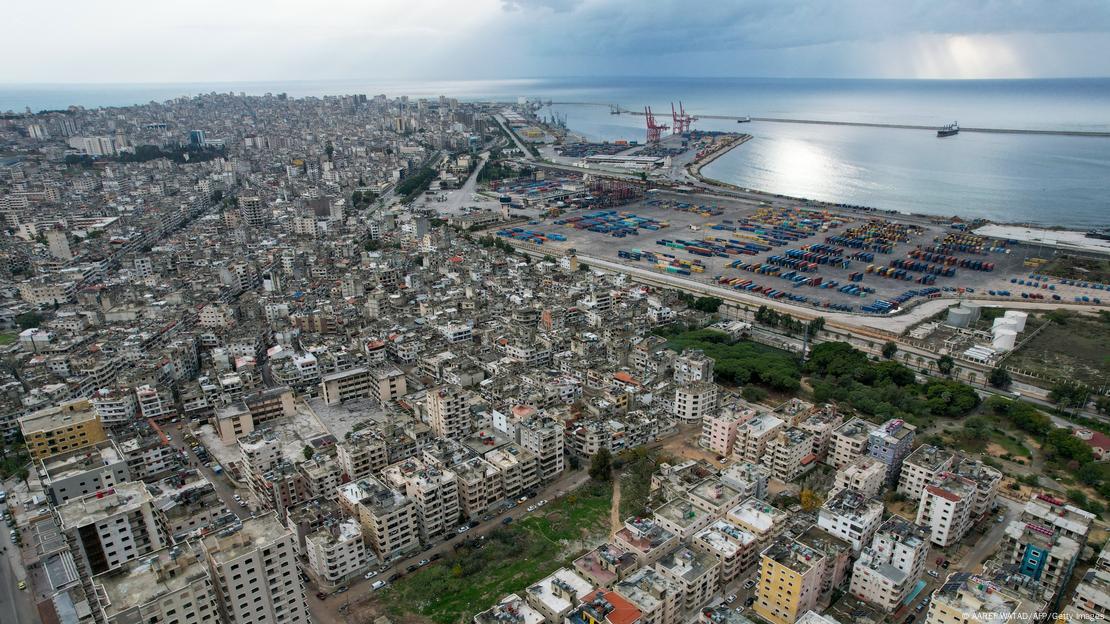
Under French colonial rule, Latakia (pictured) became the capital of the 'state of the Alawites' in 1922 and only fully reintegrated back to Syria in 1944I
mage: AAREF WATAD/AFP/Getty Images

That includes the regular call to public prayer and the physical pilgrimage to Mecca. Alawites prefer to worship in private, at home or outdoors, believe the pilgrimage could be symbolic, don't think females needed to wear headscarves, use wine in their rituals and incorporate more nature worship, including the sun, moon and stars, into their belief system.

The Alawites do also have commonalities with Shiite Muslims. For example, they believe in the divinity of Ali ibn Abu Talib, cousin and son-in-law of the Prophet Muhammad, a caliph in the seventh century and considered the first leader of Shia Islam.

Still, as a result of the mixture of beliefs, they were regularly accused of heresy and discriminated against by everyone from the Christian Crusaders to the Ottomans from Turkey.

Emancipation through colonialism

That changed in the early 20th century during the French colonial period in Syria. As part of their "divide and conquer" policy, the French split local Alawite and Druze minorities from the Muslim majority and, in 1922, established a legally autonomous state for Alawites.

While the country's Sunni majority resisted joining French-controlled armed forces, the Alawites — who, for the first time, were part of a state that did not persecute them for their beliefs — had no such apprehensions.

By 1946, after France pulled out and Syria became an independent nation, "the Alawites had gained a political presence," researchers at US think tank,the Foreign Policy Research Institute, wrote. "By 1955, about 65% of the non-commissioned officers were Alawites."

After Syrian independence, Alawites continued to climb the military's ranks and, in 1963, when five officers launched a coup — one of several during Syria's tumultuous postcolonial period — three of them were Alawites. And one of those was Hafez Assad, who would go on to take power for himself in 1971.

"Hafez would emerge as his sect's sole representative and champion of a new Alawite identity," Alawite author Adnan Younes wrote in a 2021 text for New Lines Magazine. "This contrasted dramatically with the previous Alawite identity: opaque and recalcitrant, which has always been misunderstood," Younes explained. "Alawites now had to […] support the 'founder of modern Syria' [...] and be worthy of his trust."

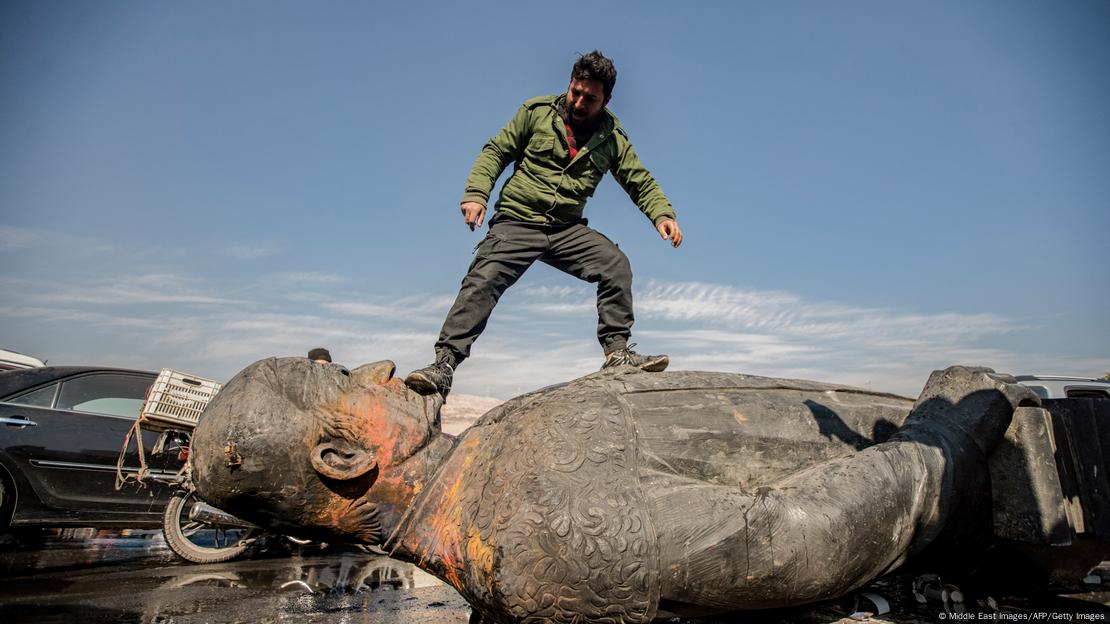
Hafez Assad ruled Syria from 1971 until his death in 2000; statues of him were recently pulled downImage: Middle East Images/AFP/Getty Images

Hafez Assad surrounded himself with loyal Alawites for his own protection. Members of the minority who were not loyal, such as communists, were imprisoned.

Assad also tried to downplay the differences between the Alawite minority and the Muslim majority. "He built mosques in Alawite towns, prayed publicly and fasted, and encouraged his people to do the same," Joshua Landis, a non-resident fellow at the Quincy Institute for Responsible Statecraft, who married into a Syrian Alawite family, has previously pointed out. Assad also tried to stop Alawites from celebrating holidays they previously had, like the Persian new year, Nowruz, and the Christian holiday, Christmas.

Dominating military and politics

Now when the Alawite minority was attacked, the state retaliated. Hundreds of Alawi soldiers and other members of the community were deliberately targeted for sectarian reasons between 1979 and 1981 by members of the Muslim Brotherhood, a Sunni Muslim group with an Islamist ideology, during uprisings against the Assad regime.

After killing around 2,000 members of the Muslim Brotherhood, the Assad government laid siege to the city of Hama in February 1982. An estimated 10,000 to 25,000 civilians were killed as a result.

The Alawites saw the Islamists as a threat and generally preferred a secular government in Syria. Over ensuing decades, Assad and his son used that fear to manipulate the community, saying they were the only ones who would protect them. The community's concerns persist to this day.

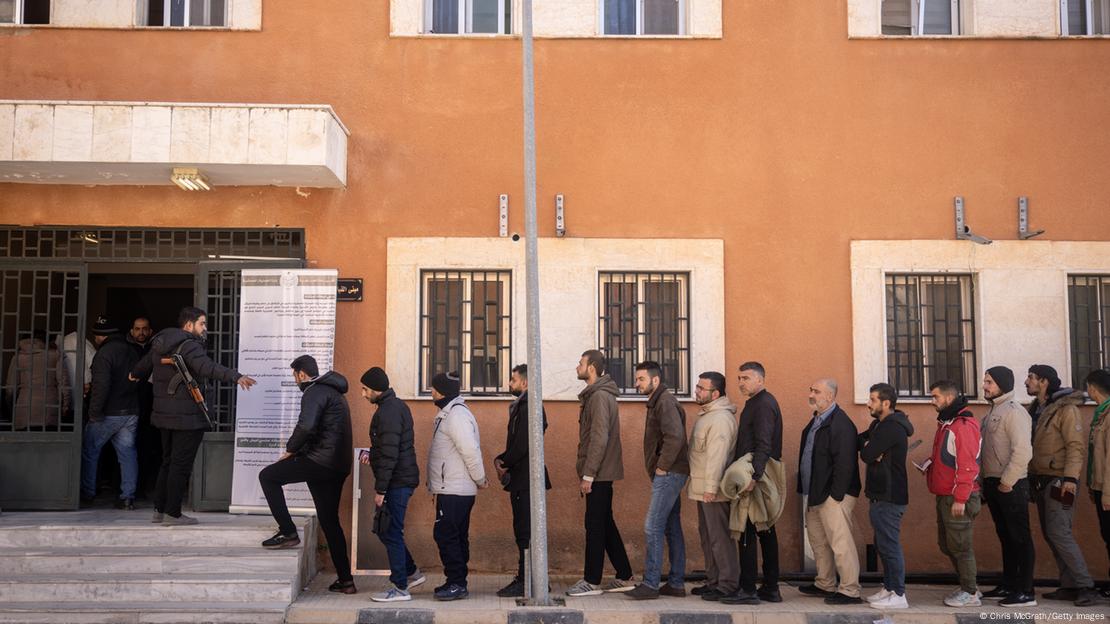
Between 2000 and 2011, about 87% of high-ranking officers in the Syrian Army were Alawi, researchers say. (pictured: a Latakia reconciliation center on December 19, 2024)Image: Chris McGrath/Getty Images


Disillusionment with Assad

During the 13-year-long civil war, the Alawite community in Syria has been heavily affected by its military involvement. According to the EU's Agency for Asylum, in some Alawite-majority towns and villages between 60% and 70% of young men were either killed or wounded during the war. Many young Alawi males have also hidden or fled from conscription.

Recent surveys show how, over the past few years, many Alawis had become increasingly disillusioned with the Assad regime, researchers at the Konrad Adenauer Foundation wrote, after conducting surveysof the Alawite community in Syria in early 2024.

Unless they were members of a small Syrian elite, Alawites dealt with the same economic hardships as other Syrians. However, given the authoritarian nature of the Assad regime, many did not feel they could speak out either, the researchers said.

That is why a binary portrayal of the Alawites as either pro- or anti-Assad "fails to capture the nuanced spectrum of views within the Alawite population, ranging from staunch regime loyalists to discreet dissenters," the researchers concluded.

"Nor does it adequately account for the socioeconomic hardships that have affected them similarly to other Syrian communities," or the "disproportionate losses" the community has suffered, they noted.

Edited by: Martin Kuebler

KCDK-E called on everyone to protest against the attacks against the Alawites in Syria.


ANF
NEWS DESK
Saturday, 28 December 2024,

The European Kurdish Democratic Societies Congress (KCDK-E) issued a written statement to protest the attacks against the Alawites in Syria.

‘Democratic unity is the strongest alternative’

The statement said: "Massacres similar to those of Maras, Roboski, Madımak and hundreds of others carried out by the Turkish state are being planned against the peoples of Syria.

The HTS administration in Syria, ISIS gangs called Syrian National Army (SNA), with the support of the Turkish state, are targeting all opponent groups. Hakan Fidan, the Turkish Foreign Minister, wants to pave the way for further provocations and attacks by targeting various beliefs, women and Kurdish people, in Northern and Eastern Syria.

The women-led democratic nation system, which is the Autonomous Administration of Northern and Eastern Syria, has been gaining the support of the peoples for a long time despite all the pressures and obstacles.2

The statement added: "The AKP-MHP fascist government carried out killings and attacks to prevent the common life model of the peoples, the Middle East and Turkey, and to prevent the spread of these ideas in this region by using the SNA.

The women-led, ecological, democratic nation, which is the common life model of differences, stands as the strongest alternative in Syria."

'A crime against humanity'

The statement continued: "The Turkish state has started to carry out attacks against the Alawite population using its gangs who are committing a crime against humanity. Attacks were registered in many places, especially in Tartus, Latakia, Hama and Homs.

These attacks against the Alawites targeted their culture, history, beliefs and existence. If not prevented, other faiths will be targeted next, together with all social segments, especially women. For this reason, Kobanê is also targeted."

'There is a serious threat of genocide'

The statement said that “international organizations such as the United Nations and the Council of Europe, instead of intervening and using their sanctioning power, are watching what is happening. We believe that there is a serious danger of genocide.

As KCDK-E, we condemn the Maras and Roboski Massacres on their anniversaries, and commemorate the martyrs with respect. We call on all our people, friends and progressive organizations to increase the resistance and struggle against the attacks carried out by the AKP-MHP government and its gangs in Syria, and to actively participate in the protests to be organised."

SPAGYRIC HERBALISM

Tunisia women herb harvesters struggle with drought and heat


Aïn Draham (AFP) – On a hillside in Tunisia's northwestern highlands, women scour a sun-scorched field for the wild herbs they rely on for their livelihoods, but droughts and rising temperatures are making it ever harder to find the precious plants.


RFI
Issued on: 28/12/2024 

Extracting oils from plants at the "Al Baraka" laboratory in Tbainia.
 © FETHI BELAID / AFP

Yet the harvesters say they have little choice but to struggle on, as there are few opportunities in a country hit hard by unemployment, inflation and high living costs.

"There is a huge difference between the situation in the past and what we are living now," said Mabrouka Athimni, who heads a local collective of women herb harvesters named "Al Baraka", or "Blessing".

"We're earning half, sometimes just a third, of what we used to."

Tunisia produces around 10,000 tonnes of aromatic and medicinal herbs each year, according to official figures.


Rosemary accounts for more than 40 percent of essential oil exports, mainly destined for French and American markets.

The aromatic and medicinal plants are harvested in the mountains of Tbainia village near the city of Ain Drahem, in northwest Tunisia © FETHI BELAID / AFP

For the past 20 years, Athimni's collective has supported numerous families in Tbainia, a village near the city of Ain Draham in a region with much higher poverty rates than the national average.

Women, who make up around 70 percent of the agricultural workforce, are the main breadwinners for their households in Tbainia.


'Yield less'


Tunisia is in its sixth year of drought and has seen its water reserves dwindle, as temperatures have soared past 50 degrees Celsius in some areas during the summer.

The Tbainia women said they usually harvested plants like eucalyptus, rosemary and mastic year-round, but shrinking water resources and rare rainfall have siphoned oil output.
Mabrouka Athimni: "The mountain springs are drying up, and without snow or rain to replenish them, the herbs yield less oil" © FETHI BELAID / AFP

"The mountain springs are drying up, and without snow or rain to replenish them, the herbs yield less oil," said Athimni.

Mongia Soudani, a 58-year-old harvester and mother of three, said her work was her household's only income. She joined the collective five years ago.

"We used to gather three or four large sacks of herbs per harvest," she said. "Now, we're lucky to fill just one."

Forests in Tunisia cover 1.25 million hectares, about 10 percent of them in the northwestern region.

Wildfires fuelled by drought and rising temperatures have ravaged these woodlands, further diminishing the natural resources that women like Soudani depend on.

Why extinguishing Africa's dirty cooking fuel crisis is a global priority

In the summer of last year, wildfires destroyed around 1,120 hectares near Tbainia.

"Parts of the mountain were consumed by flames, and other women lost everything," Soudani recalled.

To adapt to some climate-driven challenges, the women received training from international organisations, such as the Food and Agriculture Organisation, to preserve forest resources.

Still, Athimni struggles to secure a viable income.

"I can't fulfil my clients' orders anymore because the harvest has been insufficient," she said.

The collective has lost a number of its customers as a result, she said.
'No longer sustainable'

A recent study by the Tunisian Forum for Economic and Social Rights (FTDES) highlighted how climate-induced damage to forests had severely impacted local communities.

The women rely on the wild herbs for their livelihoods © FETHI BELAID / AFP

"Women in particular suffer the consequences as their activities become more difficult and arduous," the study said.

Tunisia has ratified key international environmental agreements, including the 2015 Paris Climate Accord.

But environmental justice researcher Ines Labiadh, who oversaw the FTDES study, said implementation "remains incomplete".

In the face of these woes, the Tbainia harvesters, like many women working in the sector, will be forced to seek alternative livelihoods, said Labiadh.

"They have no choice but to diversify their activities," she said. "Relying solely on natural resources is no longer sustainable."

Back in the field, Bachra Ben Salah strives to collect whatever herbs she can lay her hands on.

"There's nothing we can do but wait for God's mercy," she said.
Azerbaijan says Russia shot at plane before crash, demands it admit to it

Baku (AFP) – Azerbaijani President Ilham Aliyev accused Russia on Sunday of firing at an Azerbaijan Airlines passenger jet before it crashed and of initially trying to cover up the cause of the fatal disaster, demanding that Moscow admit guilt.

RFI
29/12/2024 -

Azerbaijan's Aliyev said the plane which crashed in Kazakhstan was shot at over Russia © Mikhail METZEL / SPUTNIK/AFP/File

Aliyev made the accusation in an interview to state media at Baku airport four days after the AZAL plane crashed in Kazakhstan, killing 38 people of the 67 people on board.

Azerbaijani officials have suggested the aircraft was hit by a Russian air-defence system as it tried to land in Grozny, capital of the Russian republic of Chechnya.

Aliyev's unusually forthright accusation of his country's traditional ally came a day after he spoke by phone to Russian President Vladimir Putin.

A Kremlin statement on the phone call gave no indication that Putin had claimed responsibility for the crash.

"The facts are that the Azerbaijani civilian plane was damaged from the outside over Russian territory, near the city of Grozny, and almost lost control," Aliyev told state television.

"We also know that electronic warfare systems put our plane out of control... At the same time, as a result of fire from the ground, the tail of the plane was also severely damaged," he said.

Aliyev said that while "of course, our plane was hit by accident", Baku was angry that Moscow had apparently tried to hide the cause of the crash and demanded its ally admit what happened.

He said it was "regrettable and surprising" that Moscow "put forward theories" that, he said, "clearly showed he Russian side wanted to cover up the issue".

"For the first three days, we heard nothing from Russia except some absurd theories," he said, adding that these included the plane hitting a flock of birds.

He called the theory "completely removed" from reality, pointing out that the plane's "fuselage is riddled with holes".

Russia has said Grozny was being attacked by Ukrainian drones the day the AZAL flight tried to land.
Azerbaijani demands

Aliyev urged Moscow to issue a public apology to his country, saying Baku had made official "demands" to Russia two days ago.

"First, the Russian side must apologise to Azerbaijan.

"Second, it must acknowledge its guilt.

"Third, those responsible must be punished, brought to criminal responsibility, and compensation must be paid to the Azerbaijani state, as well as to the injured passengers and crew members.

"These are our conditions," Aliyev said, in unusually strong language towards Moscow.

The Kremlin said on Saturday that during their phone conversation, Putin had apologised to Azerbaijan over the "tragic incident".

Putin said Russian air defence was operating in Grozny on December 25 when the plane tried to land, before diverting and crashing in western Kazakhstan.

The Kremlin statement gave no indication that Putin had said Russia was at fault. Later on Saturday, the Russian leader called for a "transparent" probe into the crash.

Aliyev's office said on Saturday he had "emphasised" during the call that the plane had been subject to outside interference over Russia.

Russian news agencies reported that Putin and Aliyev discussed the crash again on Sunday.

The United States said this week it had "early indications" that Russia was responsible for the crash but did not provide details.

The European Union called on Saturday for a "swift" and "independent" probe into the crash.

© 2024 AFP
Aid convoy reaches besieged south Khartoum for first time during Sudan civil war

Aid trucks carrying food and medical supplies reached the Jebel Awliya area in Sudan this week for the first time since the country's civil war began in 2023, local volunteers said. The area, south of the capital Khartoum, is one of many in Sudan facing mass starvation as warring parties have cut off access.

Issued on: 28/12/2024 -
RFI
By: NEWS WIRES

Displaced people from states of Khartoum and al-Jazira wait to receive aid from a charity organisation in Gedaref, Sudan, on December 30, 2023. © AFP

Civilians in a besieged area south of Sudan's war-torn capital received their first aid convoy this week since the war began 20 months ago, local volunteers said.

A total of 28 trucks arrived in the Jebel Awliya area, just south of Khartoum, the state's emergency response room (ERR), part of a volunteer network coordinating frontline aid across Sudan, said Friday.

The convoy included 22 trucks carrying food from the UN's World Food Programme (WFP), one truck from Doctors Without Borders and Care, and five trucks loaded with medicine from the UN children's agency, UNICEF.

The local group and UNICEF said the supplies would help meet the "urgent health and nutrition needs of an estimated 200,000 children and families".

Jebel Awliya is one of many areas across Sudan facing mass starvation after warring parties cut off access.

Since the war began in April 2023 between the Sudanese army and the paramilitary Rapid Support Forces, nothing has gone in or out without both parties' approval.

ERR volunteers endured months of negotiations, constant suspicion and threats of violence to secure even limited access.

"Access to the area has been essentially cut off due to the conflict dynamics," UNICEF's Sudan representative Sheldon Yett said, adding it took three months of talks to get the convoy through.

"The trucks were detained on more than one occasion, and drivers were understandably reluctant given the risks involved," he told AFP.

The lack of access has also prevented experts from making an official famine declaration in Khartoum.

Famine has already taken hold in five areas of Sudan, a UN-backed report said this week.

The WFP says parts of Khartoum and Al-Jazira state, just to the south, may already be experiencing famine conditions, but it is impossible to confirm without reliable data.

Across the country, more than 24.6 million people -- around half the population -- are facing high levels of acute food insecurity.

Both sides have been accused of using starvation as a weapon of war against civilians.

The war has killed tens of thousands and uprooted more than 12 million people, causing one of the world's largest humanitarian crises.

(AFP)

Sudan government rejects UN-backed famine declaration

The Sudanese government rejected on Sunday a report backed by the United Nations which determined that famine had spread to five areas of the war-torn country.


Issued on: 29/12/2024 -
RFI
A volunteer prepares food at one of the displacement centres in New Halfa, Sudan, 2 November 2024. © El Tayeb Siddig/Reuters


The Integrated Food Security Phase Classification (IPC) review, which UN agencies use, said last week that the war between Sudan's army and the paramilitary Rapid Support Forces had created famine conditions for 638,000 people, with a further 8.1 million on the brink of mass starvation.

The army-aligned government "categorically rejects the IPC's description of the situation in Sudan as a famine", the foreign ministry said in a statement.

The statement called the report "essentially speculative" and accused the IPC of procedural and transparency failings.

They said the team did not have access to updated field data and had not consulted with the government's technical team on the final version before publication.


The IPC did not immediately respond to AFP's request for comment.Sudan withdraws from hunger-monitoring system ahead of report on famine

The Sudanese government, loyal to army chief Abdel Fattah al-Burhan, has been based in the Red Sea city of Port Sudan since the capital Khartoum became a warzone in April 2023.

It has repeatedly been accused of stonewalling international efforts to assess the food security situation in the war-torn country.

The authorities have also been accused of creating bureaucratic hurdles to humanitarian work and blocking visas for foreign teams.

The International Rescue Committee said the army was "leveraging its status as the internationally recognised government (and blocking) the UN and other agencies from reaching RSF-controlled areas".

Both the army and the RSF have been accused of using starvation as a weapon of war.

The war in Sudan has killed tens of thousands of people and uprooted over 12 million people, including millions who face dire food insecurity in army-controlled areas.

Across the country, more than 24.6 million people, around half the population, face high levels of acute food insecurity.

(With newswires)
'THIS HAS BEEN AN ECOCIDE'

'Chaos': Peru Declares Environmental Emergency Over Oil Spill


"So far, we have not had any response from the oil company," said one fisherman whose livelihood has been threatened by the accident.


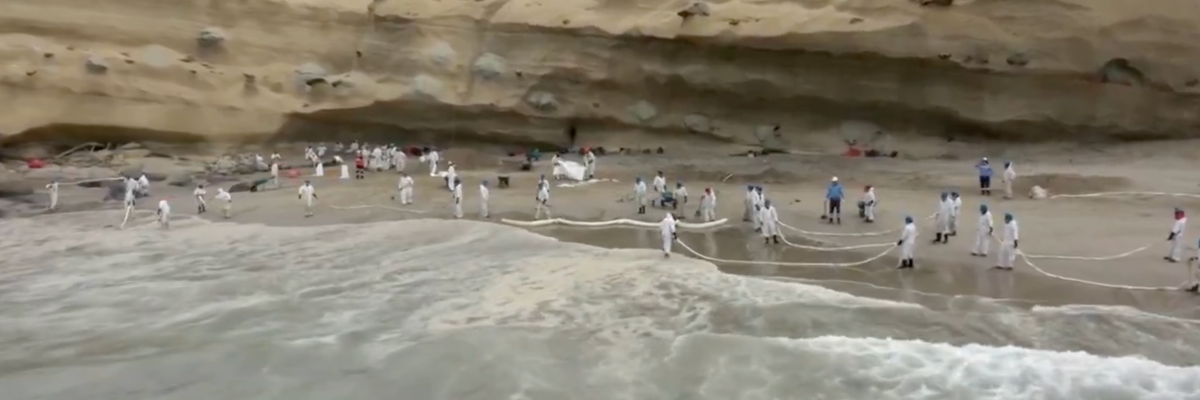
Emergency workers try to contain an oil spill on a beach in Peru on December 27, 2024.
(Image: screenshot/@DDnewslive)

Julia Conley
Dec 27, 2024
COMMON DREAMS


At least seven beaches and the safety of local wildlife have been impacted by an oil spill in northern Peru, said the South American country's Environmental Assessment and Oversight Agency on Thursday as the government declared an environmental emergency.

The environmental watchdog, known as OEFA locally, said in a preliminary report that about 10,000 square meters of surface seawater have been contaminated by the crude oil, which spilled from a vessel at a terminal of the Talara refinery.

Petroperu, the state-owned oil company, was preparing to load the oil onto a tanker when the spill was detected at Las Capullanas beach.

The company has not disclosed exactly how much oil spilled, but OEFA said it has extended over an area of 116-566 acres. Petroperu has also not stated the cause of the accident.


Petroperu told Reuters it has coordinated with the fishermen's union, but fisherman Martin Pasos told the local radio station RPP that he has heard little from the company about when he will be able to resume his work.

"We have not been able to go out for six days now," Pasos said. "It is chaos, what happened in Lobitos. So far, we have not had any response from the oil company."

Petroperu said Wednesday it had deployed clean-up crews as soon as the spill was detected earlier this week and that the cleaning of six beaches in Talara province was almost done.

Authorities were directed under the environmental emergency to carry out recovery and remediation work over the next 90 days.

Infobaereported that Petroperu was "minimizing" the damage as local authorities expressed concern over the safety of "turtles, crabs, octopuses, and fish [that] have been seriously harmed by contact with the spilled oil."

On Sunday, shortly after the spill, the public prosecutor's office launched an investigation into Petroperu's alleged criminal environmental contamination.

Rocío Silva-Santisteban, a poet, activist, and former member of Peru's Congress, noted that "it is not the first time that Petroperu has polluted."

"Since 2014 in Cuninico, Loreto, oil spills have been occurring, affecting the health of animals and people," said Silva-Santisteban. "This has been an ecocide!"