Sunday, December 29, 2024

Triumph not torture

Filipinos, Pakistani construction workers and other Asians, have been treated as exports by their countries.


Muna Khan
 December 29, 2024
DAWN


WHEN I landed in Manila in 2017 for a holiday, I was greeted by signs at the airport welcoming ‘Bagong Bayani’, a term coined by President Corazon Aquino in 1988 to describe Overseas Filipino Workers. ‘Bagong Bayani’ means new (or modern) heroes, and she used it to recognise OFW contributions to the socioeconomic development of the Philippines. When I visited, there were around 2.3 million OFW working in 200 countries, according to official figures. Their remittances account for 10 per cent of their country’s GDP. A majority of OFW are women.

OFWs are so revered that earlier this year, two of the Manila airport terminals built a lounge for just them where they have special facilities. This may seem cosmetic but given how our migrant workers haven’t received a smidgeon of recognition for their contributions, I think it’s nice. The feelings of appreciation for OFWs were visibly palpable, and cut across class, when I visited.


While I don’t think anyone should be described as a hero for keeping a country’s economy afloat — rarely do workers leave because they want to — I appreciate governments that honour a group’s contributions.

Overseas workers make a lot of personal sacrifices and often endure despicable working conditions in order to send money back home. This is especially true for women employed in the domestic sector. We’ve all read horrible stories about the abuse faced by migrant workers across sectors, and they’ve had little help from their embassies. A few years ago, Indonesia, for example, protested at not being informed about the execution of their citizens in Saudi Arabia. Indonesia has placed, and then lifted, restrictions on domestic workers to 21 Middle Eastern countries since 2015. The trouble is that Indonesians defy the ban or demand its lifting because so many need the jobs.

Overseas workers often endure despicable working conditions.

The list of recorded abuses against Filipino workers is shocking. At least 24,000 cases of abuse and violation of OFW were reported in Kuwait in 2022. The gruesome death of domestic worker Jullebee Ranara, whose charred body was found in a desert in January 2023, sent shockwaves across the Philippines and prompted the government to halt first-time workers from going to Kuwait. In 2018, the then government imposed a ban on OFW from going to Kuwait following the discovery of domestic worker Joanna Demafelis’ body in a freezer at an abandoned building. The ban was partially lifted before it was again reinstated in 2020 after two domestic workers were tortured to death. It was lifted when one of the worker’s employers was charged and sentenced to death for the murder.

On the surface it may seem a flip-flopping of policies but it also demonstrates the state taking workers’ rights seriously; they’re standing up for them when they negotiate for them with the countries where the abuse and violations are taking place.

There are several groups campaigning for the rights of OFW; they say government efforts are not enough. Some of these advocacy groups have been ‘red tagged’ by the Philippines government — according to the Guardian — which blacklists or harasses organisations critical of the government. This strategy sounds familiar.

Filipinos, Pakistani construction workers and other Asians, have been treated as exports by their countries. Instead of calling them heroes, which suggests they face risks willingly, let us ensure they never become victims of abuse, exploitation, bad policies or neglect. Let us accept that they do not willingly accept the risks that come with migration. Let us not place the burden of reviving the economy on their shoulders.

The State Bank of Pakistan last month said inflow of overseas workers’ remittances stood at $3.052 billion in October 2024, which was a “substantial” 24pc increase from the same month of the year before. In July this year, they saw a 48pc compared to the month the year before.


Along with the upward trajectory of the economy, I’d love to see Pakistan take a leaf from Asian countries and do more for overseas workers. I recognise countries negotiate for better conditions, for example, but I’m talking about taking stronger positions. A ban on workers leaving for X country impacts that country’s economy. It sends a powerful message to both citizens and the host country about their commitment to taking strong action. But it’s not a long-term solution. Stronger policies to protect migrant workers’ rights is imperative. There are gaps that allow for the exploitation and abuse of workers, from non-payment of salaries, to terrible working conditions to not being able to switch jobs.

Pakistanis are dying to leave this country but those who don’t make it are stuck in limbo and need our help. Don’t degrade them by labelling them as heroes. They are victims of someone’s follies.

The writer is an instructor of journalism.


X: @LedeingLady

Published in Dawn, December 29th, 2024
Protest is patriotic

S. Akbar Zaidi 
December 27, 2024 
DAWN


IT is to be expected that the leader of a country, whether elected, or belonging to the military, or installed in office with the help of non-democratic and authoritarian forces, would say something like ‘civil disobedience is anti-national’ and that this suggests ‘enmity with the country’. One expects this from those who feel threatened by the power of the people, especially when such presumed power is ephemeral.

In fact, protest and criticism of those in power (whether in government or behind the scenes), and even civil disobedience, if it comes to that, are patriotic acts. The right of citizens to protest and to articulate their causes when ignored through other means, whether through parliament or through the justice system, is part of the legitimate and democratic framework of praxis.

Under authoritarian regimes or under direct military rule, which we have experienced for some decades, such protests have far graver consequences than they do under civilian or elected regimes, even when many citizens question the election results. We have enough martyrs in our historical record who gave their lives protesting and fighting for justice and democracy under military regimes; we even celebrate their sacrifices. These are our many heroes. In fact, we revere one on her death anniversary today.


The history of Pakistan’s civilian and political movements contains ample examples of protests for just causes.

The return to democracy in Pakistan, at every instance, has been due to people’s protest and so-called civil disobedience by political parties and citizens. Whether it was the movement against Gen Ayub in 1968, led by Z.A. Bhutto along with students and workers, or the MRD movement led by the PPP in 1983, it was political parties who led these protests. In 2007, lawyers played an instrumental role in overthrowing a military dictator who was forced to resign and flee after 2008. The political party in power today, the PML-N, has also played a very active and effective role in leading protests against one military regime in the past. Things may have changed today for reasons of expediency, but the history of Pakistan’s civilian and political movements contains ample examples of protests for just causes.

Such statements are especially hypocritical when governments and officials celebrate civil disobedience and protest to overthrow regimes not to their liking in other countries. Our own region offers such examples in the very recent past. The overthrow of the Hasina Wajed regime by Bangladesh’s popular revolution a few months ago has given a huge advantage and opening to Pakistan, with relations restored to levels unheard of for decades. The second Fall of Dhaka may not have been publicly celebrated by officials in Pakistan, but it has been to their benefit. Similarly, in Sri Lanka, it was another people’s revolution which dismantled a predatory state as all other options had failed.

Even if protest and civil disobedience are not meant to undertake regime change and topple a government, they are effective tools to underscore grievances and injustice. Almost every day there are protests all over the world, as well as in Pakistan, which go unreported since the media is increasingly controlled. Protests against simple things like the price of food, fuel, or other utilities, or regarding issues particular to a region, are increasingly articulated by people affected by policies where citizens’ rights are ignored or trampled upon. This is not simply in the so-called ‘peripheral’ regions of the country; discontent is expressed and manifests even in its heartland, including in its major cities, and often concerns local and particular issues such as the right to land, labour, water, and decent housing.

On a larger scale, whether they are public gatherings in Balochistan led by Mahrang Baloch, or in the unsettled regions of KP and Gilgit-Baltistan, large and growing groups of citizens have been gathering to protest the severe injustices they face. These gatherings, movements, or protests need not always be ‘anti-national’ but can always take that turn. Often, such protest is to build awareness, make coalitions, and create public and collective action to underscore what cannot be expressed through other means. By being suppressed or ignored by those in power, the discontent doesn’t go away; it festers and re-emerges whenever needed. Protests, subsequently, become movements, which lead to uprisings. It is best to understand, acknowledge, engage, and negotiate at times when unrest is observed and growing, rather than to suppress it when it is too late, and the armed strength of the state is required.

Moreover, globally, the likes of Nelson Mandela and Gandhi are celebrated as heroes for freedom and justice, not simply because of what they wrote or said, but because of their active involvement in public protest and civil disobedience. In fact, Pakistan and India would not have been free or independent had it not been for Mohandas Gandhi’s — literally — ‘civil disobedience’ movement. Palestinian freedom, which has always had an ingrained element of protest since 1948, grew into what have been ‘civil disobedience’ movements, and now not even armed resistance offers any hope to the people of Palestine. Such protest and civil disobedience movements are lauded by those who support them, but are suppressed by those in power. The history of anti-colonialism and freedom movements would be incomplete without such examples, as would those against military and authoritarian regimes.

Clearly, protests and raising issues are ingrained elements of democratic rights and practices. Democracies are strengthened by such civic action, and societies often benefit by such interventions in the existing, oppressive, social, economic, and political order. Not all protests and revolutions succeed, and the reaction to many such movements is often far worse than what people started out with, often ending in further terror and oppression. Yet, genuine democracy allows for criticism, protest, and challenges to the structures of power where negotiation and accommodation provide ways to resolve differences and reach agreement. Those who call civil disobedience anti-national or unpatriotic are those who have the most to fear and are the most insecure of their imagined power.

The writer is a political economist and heads the IBA, Karachi. The views are his own and do not represent those of the institution.

Published in Dawn, December 27th, 2024
OBIT

Manmohan Singh: the visionary who dreamt of improving lives

Leader of opposition says "India has lost a visionary statesman, a leader of unimpeachable integrity, and an economist of unparalleled stature".

AFP 
December 28, 2024 

NEW DELHI: Manmohan Singh, the former Indian prime minister who died on Thursday at the age of 92, was the architect of economic reforms which made his country a global powerhouse.

Singh, who held office from 2004 to 2014, was credited with having overseen an economic boom in Asia’s fourth-largest economy in his first term, although slowing growth in later years marred his second stint.

“As our prime minister, he made extensive efforts to improve people’s lives,” Narendra Modi, his successor, said in his condolence message.

“I have lost a mentor and guide,” Congress leader Rahul Gandhi said in a statement, adding that Manmohan Singh had “led India with immense wisdom and integrity”.

“Millions of us who admired him will remember him with the utmost pride,” said Gandhi, the most prominent challenger to Modi.

Mallikarjun Kharge, leader of the opposition in parliament’s upper house, said “India has lost a visionary statesman, a leader of unimpeachable integrity, and an economist of unparalleled stature.”

President Droupadi Murmu wrote on X that Singh will “always be remembered for his service to the nation, his unblemished political life and his utmost humility”.

`Mr Clean’

Born in 1932 in Gah, a mud-house village in what is now Pakistan, Singh studied economics to find a way to eradicate poverty in India and never held elected office before taking the vast nation’s top job.

He won scholarships to attend both Cambridge, where he obtained a first in economics, and Oxford, where he completed his PhD.

Manmohan worked in a string of senior civil posts, served as a central bank governor and also held various jobs with global agencies, including the United Nations.

He was tapped in 1991 by then Congress prime minister Narasimha Rao to reel India back from the worst financial crisis in its modern history. In his first term, Singh steered the economy through a period of nine per cent growth, lending India the international clout it had long sought.

He also sealed a landmark nuclear deal with the United States that he said would help India meet its growing energy needs.

“His leadership in advancing the US-India civil nuclear cooperation agreement signified a major investment in the potential of the US-India relationship,” Secretary of State Antony Blinken said in a statement.

Known as “Mr Clean”, Singh saw his image tarnished during his decade-long tenure when a series of corruption cases became public.

Several months before the 2014 elections, Singh said he would retire after the polls, with Sonia Gandhi’s son Rahul earmarked to take his place if Congress won.

But Congress crashed to its worst-ever result at that time as the Bharatiya Janata Party, led by Narendra Modi, won in a landslide.

Singh, who used to say historians would be kinder to him than contemporary detractors, became a vocal critic of Modi’s economic policies, and more recently warned about the risks that rising communal tensions posed to India’s democracy.

Published in Dawn, December 28th, 2024
SMOKERS’ CORNER: THE SELF-COUP
December 29, 2024  
DAWN

Illustration by Abro

There’s an interesting term in political science called ‘self-coup.’ A self-coup is when an elected president or prime minister tries to retain or expand their power through unconstitutional/ extra-constitutional means and by instigating their supporters to create chaos in the streets.

They cultivate support in civil society and in state institutions and then use this support to enact a self-coup. Supporters are encouraged to adopt what is called ‘incivism’. Simply put, incivism refers to being hostile towards state institutions and the government.

In an April 2022 essay, the American political scientist David Pion-Berlin wrote that one of the clearest recent examples of a self-coup attempt was the January 6, 2021 attack on the Capitol building in Washington DC by Donald Trump’s supporters. Trump had refused to accept the November 2020 election results, in which he lost the presidency.

Just days before the winning candidate Joe Biden was to be inaugurated as the new US president, Trump encouraged his supporters to reject the election results. After an incendiary speech by him, hundreds of his supporters attacked the Capitol building. There is also a strong likelihood that Trump believed he would be able to draw support from some elements in the military and the judiciary — apart from, of course, civilian far-right groups. According to Pion-Berlin, self-coups can’t succeed if they fail to attract any support from the armed forces.

Heads of state, such as Donald Trump and Yoon Suk Yeol, have instigated ‘self-coups’ in an attempt to hold on to power. But can the May 9, 2023 acts of violence in Pakistan also be classified as an attempt at a ‘self-coup’?

Hundreds of Trump supporters, mainly from radical-right outfits, did pour out and exhibited incivism by attacking the Capitol, an important symbol of American democracy. But the US armed forces refused to offer any support. In fact, the military ordered the deployment of the National Guard.

However, this was a tense stand-off because some analysts worried that the deployed Guards might be tempted to support Trump because various studies had demonstrated that strong right-wing networks existed within the US military. But nothing of the sort happened.

There have been at least 22 successful self-coups in various countries between the 1850s and 2021. In each of these, the sitting head of state/government was successful in drawing support from the armed forces (and, in many cases, from the judiciary as well). But there are an equal number of examples of failed self-coup attempts. The most recent one was the one attempted by the South Korean head of state, Yoon Suk Yeol.

On December 5 this year, the former Pakistani prime minister Imran Khan was indicted by a court for “inciting violence against the military.” He is accused of doing this in 2023, which led to the infamous May 9/10 protests of that year, in which his supporters attacked multiple military buildings.

Soon, he was being accused by his detractors of trying to instigate a mutiny in the military against its chief, Gen Asim Munir. Apparently, ‘the plan’ was to use unprecedented attacks on military properties to rouse the emotions of so-called ‘pro-Khan’ generals who were then expected to topple the ‘anti-Khan’ Gen Munir, dissolve the current government, and reinstate Khan as PM.

If proven, can this be understood as a case of an attempted self-coup? Yes and no. First of all, Khan stopped being prime minister in April 2022, when he was removed through a vote of no-confidence. He wasn’t a sitting head of government. So, at least on this account, one can’t call what he is being accused of as a self-coup. Sitting heads of government/ state planning a self-coup understand the importance of drawing support from the armed forces. Therefore, they will never try to offend or attack them, especially the military.

But right after Khan was ousted in 2022, he began to severely criticise the military for abandoning him and supporting the “corrupt parties” who had managed to orchestrate a successful no-confidence vote against him in the parliament. So, can his alleged attempt to incite mutiny in the military still be referred to as a self-coup? On this account also, no.

Yet, there are some major characteristics of a self-coup in what transpired in May 2023. Even though a leader was not in power, he was allegedly looking towards the military to restore him. This may sound peculiar, given his post-ouster outbursts against the institution; but Khan was quite vocal in stating that most of the military was on his side. So, he may have believed that there were enough supporters of his in the institution.

The previous military chief, Gen Qamar Javed Bajwa, who played a prominent role in the so-called ‘Imran Khan Project’, admitted that there were many within the military who supported Khan. A 2022 report on the Al-Jazeera website quoted Kamran Bokhari, an analyst at the New Lines Institute for Strategy think-tank in Washington, as saying that, when Bajwa retired in late 2022, he left behind a significantly divided military, “many of whom were still rooting for Khan.”

Bajwa’s successor, Gen Munir, spent a whole year after his appointment in November 2022 tactfully sidelining and then ousting Khan’s supporters from the institution. Nevertheless, if Khan were hoping to rouse these uniformed supporters in May 2023, he failed.

Khan also enjoyed support in the judiciary which, on quite a few occasions, did jump in to mitigate the disastrous impact that the May 2023 violence had on Khan’s political fate. However, Khan is of the view that the violence was staged by the military. He calls it “a red flag operation.”


But whereas accusations of him trying to instigate a mutiny in the military are still just allegations, they seem to be gaining more acceptance among various political commentators than his claim that the May 2023 violence was a red flag operation. So, if he did try to trigger a mutiny in a bid to return to power, was it a self-coup?

Self-coups involve a civilian leader drawing support from powerful state institutions to help him execute his extra-constitutional plans. But since Khan was not a sitting head of government, one will have to understand his alleged plan as a partial self-coup attempt.

The military will have to establish that Khan was indeed trying to trigger a mutiny with help from his supporters within the armed forces. If proven, then this can be explained as a ‘conspiracy’ authored by a civilian leader, in concert with some senior military officers, to oust a sitting military chief: a self-coup attempt, but one in which the civilian leader was not in power, yet enjoyed support in vital state institutions, and a civilian support base willing to enact unprecedented acts of incivism.

Published in Dawn, EOS, December 29th, 2024
PAKISTAN

A big transition

Despite ongoing debates about their success rates, deradicalisation initiatives have led to the ideological transformation of several militants.
 December 29, 2024
DAWN

The writer is a security analyst.


IT is hard to imagine how someone changes the course of their life — more so when that person is a top jihadist leader on the world’s most-wanted terrorist lists and admits that taking the militant path had been a mistake. That he follows up this ostensible change of heart by working to reintegrate former militants into society comes across as practically bizarre.

This is not a tale from war-torn Syria, where militant leaders are rethinking their roles, nor is it from East Asia, where many former fighters embraced ideological transformations. This story unfolds in Pakistan and centres on a man who joined the jihad against the Soviets at a young age, eventually becoming the supreme commander of the largest militant group in Kashmir.

According to accounts in jihadi circles, Zakiur Rehman Lakhvi, the supreme commander of the banned Lashkar-e-Taiba (LeT), underwent a period of ‘rethinking’ during his confinement following his arrest in connection with the November 2008 Mumbai attacks. While the US and India remained sceptical about the seriousness of his detention, and their media frequently highlighted reports of him receiving royal treatment during his incarceration, including access to various facilities and regular interactions with family and friends, prolonged separation from the jihadist fields and camps is said to have offered Lakhvi and some colleagues an opportunity to reflect on the evolving global and political landscape and ongoing discussions about jihad and terrorism within militant circles. At the time, groups like the Pakistani Taliban, Al Qaeda, and the militant Islamic State group had emerged as significant sources of inspiration for jihadists, prompting debates about ideology and strategy within these networks.

Though surprising, the transformation of militants in prison is not a unique phenomenon. Similar instances have occurred in Egypt, where Al Jihad leaders renounced violence, and even within Al Qaeda, where one of its ideologues, Dr Fadl, engaged in a significant debate with Ayman al-Zawahiri, criticising the indiscriminate use of violence as a means for change. Likewise, Jemaah Islamiyah militants, led by Nasir Abbas, underwent a similar process while in Jakarta jail.


The transformation of militants in prison is not a unique phenomenon.

Deradicalisation initiatives in prisons have also gained popularity in Europe and Arab countries, particularly in Saudi Arabia. Despite ongoing debates about their success rates, these programmes have led to the ideological transformation of several militants. Pakistan adopted a similar approach, establishing deradicalisation camps in Swat and other parts of KP to address extremism among detained militants.

Zakiur Rehman Lakhvi’s case stands out on several counts. He fought in Afghanistan and Indian-held Kashmir as a ‘legitimate proxy’, influenced by the ideas of holy war and the Salafi interpretation of jihad. Unlike many Pakistani militants who became disillusioned with state-led jihad and joined groups like Al Qaeda, TTP, or later IS, Lakhvi did not turn against the state and maintained the allegiance of his cadre to his organisation. This persisted even during his arrest in connection with the Mumbai attacks, his subsequent release by Pakistani courts, and later, his re-arrest on terror financing charges.

Pakistan has come a long way in loosening its reliance on militant proxies, a policy that inflicted severe human losses, damaged the social fabric of society, and caused significant political, strategic, and diplomatic setbacks to the country. Intense international pressure, including from friendly countries like China, and the Financial Action Task Force, compelled state institutions to reassess this approach.

During this transitional phase, many militants from groups, including LeT, became disillusioned and joined organisations such as IS and Al Qaeda. In response, the state began experimenting with efforts to mainstream militant groups. The banned Jamaatud Dawa, the parent organisation of LeT, attempted to integrate into mainstream politics. However, several factors hindered its success, mainly its militant credentials, lack of political vision, and its Salafi ideology, which is not widely popular in Pakistan, where the Hanafi school dominates, followed by the Shia school of thought. As a result, JuD struggled to create significant political traction eventually becoming little more than a political proxy for state institutions.

Lakhvi was apparently sceptical about the organisation’s political project, initiating a separate course to create job opportunities for his cadre and engaging in discussions on renouncing violence. It is interesting that JuD, led by Hafiz Saeed, chose the other course and continued exploiting the tendencies of violence. This was dichotomous in that one side of the group was apparently trying to become part of mainstream politics, and the other side would not abandon its mantra about fighting in Kashmir. The reason was that the leadership was afraid that it would lose ground if it abandoned the jihad policy and the funds it collected in the name of jihad in Kashmir. Hafiz Saeed, along with his family members, had a strong grip on the organisation and its resources.

Going by jihadi accounts, Lakhvi, one of the group’s founders, has been sidelined, and a campaign against him has been launched. One interesting argument in this campaign is that he has been converted to what is being referred to as Mohammed bin Salman’s version of Islam. Within the Salafi school of thought, a significant discussion is ongoing regarding the direction they should take after the substantial political and ideological shifts in Saudi Arabia.

Mohammed bin Salman does not enjoy a favourable image among Pakistan’s Salafists. However, they cannot openly voice their concerns because of their financial dependence on Saudi Arabia and the educational scholarships offered by Saudi universities, which remain critical lifelines. Additionally, the Pakistani state restricts criticism of the Saudi royal family due to its own financial reliance on Saudi support. This debate is also alive within JuD groups, making it increasingly difficult for their leadership to maintain loyalty to the Saudis while continuing their jihadist politics.

Although Hafiz and Lakhvi’s factions have recently reconciled, allowing Lakhvi to demonstrate some of his influence in Kashmir and Gilgit-Baltistan, internal frictions are far from resolved. These tensions are expected to persist for the foreseeable future.

The writer is a security analyst.

Published in Dawn, December 29th, 2024
2024 sees devastating climate disasters across the globe


From prosperous European cities to overcrowded slums in Africa, no place was spared by disasters. The year was the hottest in history.

AFP Published December 28, 2024

• From prosperous European cities to overcrowded slums in Africa, no place was spared

• The year was the hottest in history, with record-breaking temperatures

• Extreme weather cost thousands of lives and left countless more in desperate poverty

PARIS: From tiny and impoverished Mayotte to oil-rich behemoth Saudi Arabia, prosperous European cities to overcrowded slums in Africa, nowhere was spared the devastating impact of supercharged climate disasters in 2024.

This year is the hottest in history, with record-breaking temperatures in the atmosphere and oceans acting like fuel for extreme weather around the world.

World Weather Attribution experts on how global warming influences extreme events, said nearly every disaster they analysed over the past 12 months was intensified by climate change.

The World Weather Attribution is an academic collaboration studying extreme event attribution and calculations of the impact of climate change on extreme meteorological events such as heat waves, droughts, and storms.

“The impacts of fossil fuel warming have never been clearer or more devastating than in 2024. We are living in a dangerous new era,” said climate scientist Friederike Otto, who leads the WWA network.


World Weather Attribution studies in 2024. — WWA website


Extreme heat

That was tragically evident in June when more than 1,300 people died during the Haj pilgrimage in Saudi Arabia where temperatures hit 51.8 degrees Celsius (125 degrees Fahrenheit).

Extreme heat, sometimes dubbed the ‘silent killer’, also proved deadly in Thailand, India, and United States.

Conditions were so intense in Mexico that howler monkeys dropped dead from the trees, while Pakistan kept millions of children at home as the mercury inched above 50C.

Greece recorded its earliest ever heatwave, forcing the closure of its famed Acropolis and fanning terrible wildfires, at the outset of Europe’s hottest summer yet.

Massive floods

Climate change isn’t just sizzling temperatures — warmer oceans mean higher evaporation, and warmer air absorbs more moisture, a volatile recipe for heavy rainfall.

In April, the United Arab Emirates received two years’ worth of rain in a single day, turning parts of the desert-state into a sea, and hobbling Dubai’s international airport.

Kenya was barely out of a once-in-a-generation drought when the worst floods in decades delivered back-to-back disasters for the East African nation.

Four million people needed aid after historic flooding killed more than 1,500 people across West and Central Africa. Europe, most notably Spain, also suffered tremendous downpours that caused deadly flash flooding.

Afghanistan, Russia, Brazil, China, Nepal, Uganda, India, Somalia, Pakistan, Burundi and the United States were among other countries that witnessed flooding in 2024.

Cyclones

Warmer ocean surfaces feed energy into tropical cyclones as they barrel toward land, whipping up fierce winds and their destructive potential.

Major hurricanes pummelled the United States and Caribbean, most notably Milton, Beryl and Helene, in a 2024 season of above-average storm activity.


The Philippines endured six major storms in November alone, just two months after suffering Typhoon Yagi as it tore through Southeast Asia.

In December, scientists said global warming had helped intensify Cyclone Chino to a Category 4 storm as it collided head-on with Mayotte, devastating France’s poorest overseas territory.

Droughts and wildfires

Some regions may be wetter as climate change shifts rainfall patterns, but others are becoming drier and more vulnerable to drought.

The Americas suffered severe drought in 2024 and wildfires torched millions of hectares in the western United States, Canada, and the Amazon basin — usually one of Earth’s wettest places.

Between January and September, more than 400,000 fires were recorded across South America, shrouding the continent in choking smoke.

The World Food Programme in December said 26 million people across southern Africa were at risk of hunger as a months-long drought parched the impoverished region.

Economic toll

Extreme weather cost thousands of lives in 2024 and left countless more in desperate poverty. The lasting toll of such disasters is impossible to quantify.

In terms of economic losses, Zurich-based reinsurance giant Swiss Re estimated the global damage bill at $310 billion, a statement issued early December.

Flooding in Europe, particularly in the Spanish province of Valencia, where over 200 people died in October, and hurricanes Helene and Milton drove up the cost, the company said.

As of November 1, the United States had suffered 24 weather disasters in 2024 with losses exceeding $1 billion each, government figures showed.

Drought in Brazil cost its farming sector $2.7 billion between June and August, while climatic challenges drove global wine production to its lowest level since 1961, an industry body said.

Published in Dawn, December 28th, 2024
PAKISTAN

Sit-ins across Karachi to continue as talks with city authorities, police fail
December 29, 2024   
DAWN


Activists and leaders of the mainstream religiopolitical party, Majlis Wahdat-i-Muslimeen (MWM), have said they will continue sit-ins across Karachi after talks with police and city officials failed on Sunday.

The sit-ins, which have been ongoing for six days, blocked major roads to protest the Parachinar killings, demanding measures including reopening a road in Parachinar, closed for 90 days, to ensure access to essential food and medicines, according to traffic police and organisers.


Karachi’s ongoing traffic hurdles during closure of major roads due to protests against Parachinar killings. — Screengrab taken from Google Maps traffic updates

The demonstrators are protesting the ongoing violence in Parachinar as well as an incident where two people were killed and later decapitated after being waylaid on their way towards Parachinar in the Bagan area of Kurram.

On Sunday night, Karachi Additional Inspector General of Police Javed Alam Odho and Karachi Commissioner Syed Hassan Naqvi held talks with MWM leader Allama Hasan Zafar Naqvi and others at Numaish Chowrangi.

When contacted, the commissioner told Dawn.com that negotiations are “in process”. MWM spokesperson Syed Ali Ahmer Zaidi also confirmed talks between party leaders and the authorities but did not share the outcome.

However, a short while later, the talks seemed to have failed as the MWM chief declared that the sit-ins would continue in a statement.

“If we give a call for sit-ins across Sindh, the government will not be able to stop it,” Naqvi was quoted as saying. However, the MWM chief maintained that sit-in participants had “opened a path” for traffic to pass through arteries.

“We have spoken to the administration regarding the sit-ins,” he added. “Demonstrators have occupied fixed points at different protests across the city and have left space open for traffic.

“The sit-ins will continue,” Naqvi said.

Today, the continued blockade of main arteries like Sharea Faisal, University Road, and Sharea Pakistan, among others, triggered traffic jams, causing inconveniences to the commuters who used alternative roads, mostly plying vehicles on one track.

MWM spokesperson Zaidi told Dawn.com that his party has “ended the sit-in on one track of the main Sharea Faisal near Star gate for the convenience of both domestic and international passengers of flights and to meet any eventuality.”

He added that the protesters have provided “space” for plying of vehicles on other major roads as well, where shops and other commercial activities were going on.

“Our main demands pertained to the opening of roads in Parachinar to provide food and medicines to the residents, and the operation against the killers who killed passengers travelling in 100 buses as security personnel fled,” Zaidi said.

He added that the demands also included the provision of compensation to the heirs of the victims, settlement of land disputes through Jirgas, reforms in police and FC, and removal of local police and district administration officials who failed to control killings there.


Traffic situation and alternative routes


According to a Karachi Traffic Police statement, protest sit-ins continued in at least 12 places in the provincial capital on Sunday where alternative routes have been provided to the citizens to avoid being stuck in traffic jams.

Late on Sunday night, traffic police issued an alert stating that both roads from Johar Mor to Johar Chowrangi were closed due to a sit-in.

“Traffic coming from Johar Morr towards Johar Chowrangi is being diverted straight towards Napa and traffic coming from Johar Chowrangi is being diverted from Perfume Chowk and returned to Johar Chowrangi,” the advisory read.

In district East, the main M.A. Jinnah Road near Numaish Chowrangi remained closed where alternative diversions have been provided from People’s Chowrangi towards Guru Mandir and Soldier Bazaar, from Society signal to Corridor Three, Bretto Road towards Soldier Bazaar and Guru Mandir.

Another main road, Sharea Faisal near Star Gate, also remained closed towards Malir Road. The traffic police said that alternative routes from Karsaz, Drigh Road, Millennium Mall, and Jauhar Chowrangi towards Pehlwan Goth have been provided to go to the airport.

Residents of Malir, Korangi Industrial Area, Clifton and Defence who intend to go to the airport may use Singer Chowrangi to Shah Faisal Colony, Rita Plot, and Shama Shopping Centre to Shah Faisal Colony Bridge.

Kamran Chworangi in Gulistan-i-Jauhar was closed for traffic where diversions have been provided from Mosmiyat to University Road and inside roads from Munawar Chowrangi.

University Road towards Samama Shopping Centre and Nipa roundabout was closed at the Metro shopping centre where diversions have been provided from roads/service roads inside residential areas.

In district Malir, both tracks of Abul Hasan Ispahani Road towards Superhighway remained closed from Abbas Town where diversions have been provided for traffic from Paradise Bakery to Fariya Chowk and inside streets and Rangers’ Cut to Punjab Ada (bus stand) on Superhighway.

In the Central district, Five Star Chowrangi was completely closed and service roads have been declared as alternative routes for traffic.

Sharea Pakistan towards Sohrab Goth was closed from Ancholi. The traffic police asked the citizens to use Water Pump Chowrangi towards Cardio Hospital and Gulberg Chowrangi as diversions.

Nawab Siddiq Ali Khan Road Chowrangi in Nazimabad-1 towards Nazimabad-2 remained closed for traffic where traffic coming from Lasbela was diverted towards Teen Hatti.

Power House Chowrangi at Nagan towards 4-K Fazal Illahi Road was closed for traffic where the citizens were plying vehicles on the service road near Shell Pump cut while another track of the road was opened for traffic.

All four sides at the main Ayesha Manzil near Imambargah were closed to traffic and the citizens have been asked to utilise Ayesha Manzil Bridge.

In district West, Shamsuddin Azeemi Road towards KDA Flats in Surjani Town remained closed for traffic where diversion has been provided from the Total Petrol pump towards the service road.

In Korangi district, the road at Korangi 2 ½ near Imambargah towards Landhi has been closed for traffic where traffic was plying on a double track.

Separately, DIG Traffic Ahmed Nawaz Cheema told Dawn.com that protest sit-ins over one dozen places in the metropolis continued on Sunday.

He said one track of Sharea Faisal towards the city was opened while the people going towards the airport and Malir were using Gulistan-i-Jauhar and Shah Faisal Colony, respectively.

The city traffic police head apprehended that if the sit-ins continued on Monday, it may trigger bigger traffic chaos as Monday was the first day of the week, where normally traffic flow remains high whereas people who have gone on holidays during the winter were likely to come back to the city, increasing the volume of traffic on roads.

The road closures marked on the map are not necessarily all linked to the protests. They include the latest data gathered by Google Maps on road blocks for all purposes, including construction, security, protests etc.


Suspected Sabotage Ship Dragged Anchor for Up to 50 Nautical Miles

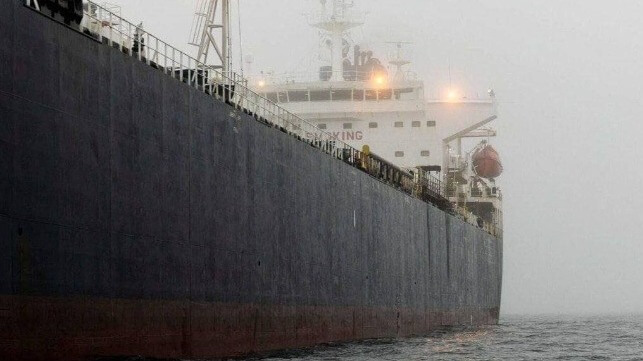
Tanker Eagle S after her detention (Finnish Border Guard)

Published Dec 29, 2024 3:03 PM by The Maritime Executive


The tanker that is suspected of severing multiple subsea cables in the Gulf of Finland dragged its anchor along the bottom for up to 50 nautical miles, according to the results of a sonar survey carried out by Finnish authorities. The chain was still in the water and the anchor was missing when officials boarded the vessel for an inspection. 

"The trail ends where the ship lifted the anchor chain. There are several dozen kilometers [of trail] east of that point, if not almost a hundred kilometers," Finnish National Criminal Police inspector Sami Paila told local outlet Yle. "It is . . . part of the evidence being collected in this case, and a very significant one."

The tanker - a known "dark fleet" LR1 recently renamed Eagle S - is now under investigation for three criminal offenses: aggravated vandalism, as previously announced, along with aggravated regulatory offense and aggravated interference with telecommunications. The vessel has been relocated to a sheltered anchorage near Porvoo for further examination. 

For now, at-sea investigations have been broken off because of high winds and rough surface conditions, but Finnish authorities plan to resume work as soon as weather allows. In the meantime, the police are interrogating the crew. 

Indications of espionage

A maritime commercial services professional told Lloyd's List that the Eagle S had been carrying sophisticated signals intelligence equipment on at least one prior voyage, and that the crew had been threatened into silence about its purpose. The portable gear was brought on board as recently as seven months ago, and was fully removed at the end of the voyage, the source said. The anonymous source also claimed that an unidentified non-crewmember was seen aboard the tanker as well. 

Finnish police dismissed the report as a "rumor" in comments to Yle, and said that no such equipment had been found Eagle S at the time of her arrest. 

Russian intelligence services operate a well-known covert signals intelligence program in the Russian fishing fleet, particularly off Northern Europe and Scandinavia. During the Cold War, these vessels were common enough that the U.S. Navy gave the class a standard designation, the "Auxiliary, General Intelligence (AGI)" trawler. Today, Western defense analysts are concerned that Russia might make use of its extensive "dark fleet" of lightly-regulated tankers to perform a similar function, allowing them to hide nefarious activity in the crowd of everyday merchant traffic. By some estimates, the Russia-linked dark fleet now amounts to more than 15 percent of the world's tanker fleet. 


The Best Ocean Books of 2024

iStock image of a ship and clouds
iStock / LZF

Published Dec 29, 2024 1:52 PM by Dialogue Earth


[By Daniel Cressey, Regina Lam and Neil Simpson]

Wild seas, high seas, mapping the bottom and determining where the top really is – ocean-focused books published this year cover an incredible range, both literally and metaphorically. Here are some of Dialogue Earth's favorite ocean reads from 2024. 

What the Wild Sea Can Be – Helen Scales

A sea change has unfolded beneath the vast surface of the ocean over the last few hundred million years. In her latest book, marine biologist Helen Scales rewinds the clock to sketch out this shift, starting with the trilobites that swam, crawled and drifted in ancient seas. Swimming reptiles – including sea-monster-like ichthyosaurs – claimed marine dominance until the Permian extinction, which also led to the overthrow of the dinosaurs, hit some 250 million years ago. Scales dusts off this tumultuous, pre-human past to offer a sobering lesson about the current state of our ocean, and its potential future.

A mass extinction is currently underway. “Whichever way you slice the data, the rate of extinction is now far higher” than the normal rate shown in the fossil record, she writes. In today’s climate and biodiversity crisis, some species will win, and others will lose. The rapidly spreading, adaptive lionfish remains strong in the changing ocean, boldly cruising in non-native waters. On the other hand, emperor penguins frown at Antarctica’s disappearing sea ice, which is critical to raising their offspring. 

Responding to the unfolding calamity, humans, again, endeavour to “invent their way out of trouble”, Scales notes. They advance innovative plans such as floating cities and mining the deep sea. But Scales prefers to let the ocean do its thing – to regenerate and recover on its own. To allow that, humanity has to restrain itself and occasionally offer it a helping hand. This includes by reintroducing species, curbing industrial fisheries and no longer treating the ocean as a forgiving dumping ground for plastics and sewage, she suggests.

Zestful and imaginative, the book shines a much-needed light on the hope for our ocean, alerting us that the wheel steering its course is in our hands.  

– Regina Lam

The High Seas – Olive Heffernan

Like many who write about the ocean, Olive Heffernan starts by describing a childhood within reach of the sea. But her journey has taken her far offshore: this book explores the “unclaimed ocean” that lies beyond the control of individual nations.

Heffernan, a journalist who founded the Nature Climate Change journal and has contributed to Dialogue Earth among other outlets, first headed to the high seas in 2001. In this deeply readable book, she takes us on a voyage with a motley collection of people, ships and creatures in a place that, as she says, most people will only see from aeroplane windows. Her book details how this zone is not the lawless space of popular imagination, but a realm overseen by a “mish-mash of organisations and bodies”, many of which “wilfully ignore science and disregard expert advice”. This has left much of the high seas under-protected in a time of widespread overfishing, seabed mining attempts and huge ecosystem changes brought on by climate change.

Heffernan’s book arrives at an apposite time – the year before it was published, governments agreed a treaty on conservation and sustainable use of biodiversity beyond national jurisdiction, called the BBNJ or High Seas Treaty. Although it needs to be ratified by many more countries before it comes into force, Heffernan calls the deal “a major win for conservation”. But she notes that while she hoped to produce an uplifting vision of the future to end her book, pessimism set in. In the end, she returns to the shoreline with a plea to not see the high seas as an “other”, but as a place connected to more familiar territories closer to home, and to us.

– Daniel Cressey

Mapping the Deep – Dawn Wright

This inspiring read follows the first Black person to go to the deepest place on Earth, the Challenger Deep trench in the western Pacific Ocean. Its hero is the oceanographer Dawn Wright, chief scientist at geographic information company Esri (formerly the Environmental Systems Research Institute). She made the voyage in 2022 with her compatriot, financier-turned-explorer Victor Vescovo.

The book charts Wright’s personal journey from a childhood spent living next to the beach in Maui, to a career mapping the ocean floor. Like a winding conversation with a group of people who love the subject of deep-sea exploration, it then widens out to touch upon oceanography’s women trailblazers, the current deep-sea mining debate, the history of humans in submersibles, Earth’s deepest shipwrecks and lots more.

In recent years – particularly since the Black Lives Matter movement wrestled its way into mainstream consciousness in 2020 – the climate action movement has been at pains to map out its symbiosis with ongoing struggles for equality around the world. But that is not an easy relationship to distil into a catchy placard or a pithy media soundbite. "Mapping the Deep" takes the time to present Wright’s very specific example and carefully lay it all out for the reader.

It also contains insightful quotes from many others, including the first person to complete both a spacewalk and a trip to Challenger Deep, Kathy Sullivan (the “most vertical person in the world”), and the film director and ocean enthusiast, James Cameron. This cast of extras reflects Wright’s repeated assertion that having a supportive community of family, friends and colleagues enabled her achievements.

Written lucidly and accompanied by an engaging collection of photographs, diagrams, explanatory asides and illuminating personal anecdotes, "Mapping the Deep" is perfect for anybody with a thirst for exploration – especially young adults looking for inspiring role models.  

-Neil Simpson

Sea Level – Wilko Graf von Hardenberg

The ocean is rising, and faster now than ever before. The rate of “global mean sea level” rise is up from 1.4mm per year for most of the 1900s to over 3mm annually since the turn of the millennium, according to the Intergovernmental Panel on Climate Change. By the end of the century, the level could be over half a metre higher than at the end of the 1900s, even if the greenhouse gas emissions that are melting glaciers and sea ice, and expanding the ocean by making it warmer, are largely curtailed. But what do such measurements actually mean, when the difference between high and low tide can reach over 10 meters in some extreme locations?

Historian Wilko Graf von Hardenberg examines how “sea level” is a baseline that’s often taken as a certainty when it is actually “far from a natural index – a product of technically and culturally determined assumptions”. From examining how it was produced, he goes on to chart how sea level was then re-imagined as an exemplar of change brought about by anthropogenic warming.

The “global mean sea level” familiar from climate change warnings turns out to actually be just one possible way of looking at the height of the ocean – just as the Greenwich meridian is only one possible baseline for longitude.

Von Hardenberg notes that between his first thoughts on this book in 2011 and its completion in 2022, global sea levels rose by 5cm. They are not done rising yet, and this book offers a fine explanation of why these apparently small and certain measurements are worth thinking more carefully about.

– Daniel Cressey

Tracks on the Ocean – Sara Caputo

Lines on maps have real power to influence the world, defining claims of ownership and entitlement. In "Tracks on the Ocean," maritime historian Sara Caputo looks at the inky threads made on sea charts to showcase examples of navigational prowess, or sometimes, how they inadvertently record a lack thereof. Caputo reveals that, while there has been a long history of outlining routes, tracing individual journeys via such lines appears to have only started in the 16th century. The revolutionary idea that a journey is noteworthy enough to leave a permanent mark, too, has a “fundamentally watery” origin, she notes.

“It is also inextricable from the development of European sea-bound empires,” she writes, as she retraces the traces of voyages; some famous, some fictional, some largely forgotten. These lines are for gathering knowledge, but also for making claims: “a storytelling tool”, she observes. Caputo’s approach is scholarly and occasionally more academic than a beach read, with philosophy and historiography on full display. But through this, she makes the creation of ocean tracks come to life.

Crucially, Caputo acknowledges that most of the tracks she applies her gaze to represent the workings of powerful, white men acting out colonialism and environmental conquests. This raises the question of who has not left such traces, or not been allowed to leave them.

Caputo’s book notes some of their stories: the lowly sailors on epic voyages, who did the hard work. Women like Mina Benson Hubbard, who journeyed into Labrador by canoe, accompanied by four (unnamed) Indigenous men, and had her exploration characterised in media reports at the time as a sentimental jaunt. And, of course, all those Indigenous people who made vast ocean journeys long before captains of famous European ships, but perhaps preferred to record them in chants rather than on charts. As humanity seeks increasingly to delineate the oceans, both for exploitation and for protection, it is well worth considering the origins of how lines on maps are made, and why.

– Daniel Cressey

Daniel Cressey is ocean editor at Dialogue Earth. Based in London, he worked as a journalist for two decades at publications including Nature and Research Professional News before joining Dialogue Earth in 2024. He has degrees in chemistry, history of science and journalism. His areas of interest at Dialogue Earth include fisheries; marine conservation and protected areas; plastic and other marine pollution; climate change and ocean acidification; and ocean governance and justice.

Regina Lam is an ocean and special projects assistant editor at Dialogue Earth, based in London. She joined in 2021 and has worked at major Hong Kong newspapers and has reported for the BBC World Service. She holds an MSc in global affairs from King’s College London. Regina is interested in global ocean governance, environmental justice and what makes compelling storytelling and robust investigation in environmental journalism. She speaks Cantonese, Mandarin and English.

Neil Simpson has been an assistant editor for Dialogue Earth since joining in 2023. He is based in London. He graduated with an English degree in 2009 and has predominantly worked in teaching or journalistic roles ever since. Neil is particularly interested in environmental activism, which led him to co-found the campaign group Bank Green in 2020. Other areas of interest include regenerative agriculture, rainforests, and the ways in which humanity could rebuild its connection with the rest of the natural world. 

This article appears courtesy of Dialogue Earth and may be found in its original form here

The opinions expressed herein are the author's and not necessarily those of The Maritime Executive.

Shifting Cargoes: The Container Trade Adapts to Geopolitical Challenge

iStock
iStock

Published Dec 29, 2024 4:13 PM by Tom Peters


(Article originally published in Sept/Oct 2024 edition.)


New York Yankees' great, Yogi Berra, once said, "You can learn a lot by watching." And those watching the marine container cargo world have observed a lot in recent months.

Security issues in the Red Sea. North American governments hitting China with new trade tariffs. The Panama Canal is slowly seeing its water levels return to normal after a long drought. The Russia/Ukraine war continues to disrupt supply chains, and then there's the "elephant in the room," automation of North American container ports.

Like it or not, automation is slowly creeping into U.S. ports and, according to the Government Accountability Office, "All of the 10 largest U.S. container ports have adopted automation technology to varying degrees."

De-Risking

While all these events are fodder for further discussion, one topic in particular is of significance because it could impact container cargo movements.

The Asia Pacific Foundation of Canada says that, in recent years, there's been a "tectonic shift" in global manufacturing to "de-risk" from China due to, among other things, escalating U.S.-China tensions. Manufacturers have reduced their presence in China and moved operations to other countries such as Mexico, Thailand, Vietnam and even India.

The Port of Los Angeles (LA) illustrates this shift. At the end of 2022, China accounted for 57 percent of LA's overall trade volume. Today, it's down to about 43 percent, says port spokesman Phillip Sanfield.

The change hasn't impacted overall volumes, however. LA handled a record 939,600 TEUs in July, a 37 percent increase over the previous year. It was the best July in the port's 116-year history. Seven months into 2024, LA is 18 percent ahead of its 2023 pace.

"We've seen an influx of year-end holiday goods coming across our docks a bit earlier than usual to avoid any risk of delay later in the year," says Gene Seroka, the port's Executive Director. Overall, Los Angeles has moved 5,671,091 TEUs the first seven months of 2024.

John Painter, CEO & Founder of Guangzhou Port America, Inc., which partners with the Port of Nansha, China, is paying close attention to the tariff issue. He says a lot of shippers may be sourcing out of Southeast Asia and India to mitigate the risk of sourcing out of China or China plus one.

"But once you look at the volume growth exiting China ports, year-to-date, that does not reflect the case at all," says Painter. "So I asked my folks if we could drill down on these numbers to see if that is true. The rest of the world is saying, 'We don't have a problem with that,' so staying in China may be a different story for North America because of the political tensions."

Painter says volumes are up to North America from Nansha this year by approximately 25 percent, plus three new services are scheduled for March 2025: one MSC All Water via the Panama Canal and two via the new Gemini Alliance.

"Hence, carriers and beneficial cargo owners are recognizing the value," Painter adds.

Nansha, in the West Pearl River Delta, is the fifth busiest port in the world, handling over 25 million TEUs in 2023. It also recorded 400 percent growth last year in the amount of fruit handled through its cold and dry storage facility. In the first quarter of 2024, Nansha had total container throughput of 5.92 million TEUs with year-on-year growth of 10 percent.

The Port of Long Beach, just south of the Port of Los Angeles, is also thriving. It says August was the strongest month in its 113-year history, handling 913,873 TEUs, up 34 percent from the same month last year.

"Cargo diversions and concerns about upcoming tariffs are creating a busy peak season for us," notes port CEO Mario Cordero. Long Beach moved 6,087,875 TEUs during the first eight months of 2024, up 22 percent from the same period last year.

During the next 10 years, the port is planning $2.3 billion in capital improvements aimed at enhancing capacity, competitiveness and sustainability. Included in the plans is a rail project that will enable the port to move more cargo by train. Construction is expected to begin next year.

Florida Ports

Driven by a booming population, Port Tampa Bay, on Florida's Gulf Coast, has seen 27 percent growth in container traffic this fiscal year covering the nine months ending June 30, says Wade Elliott, Senior Vice President, Marketing & Business Development.

Florida has the 15th largest economy in the world which, combined with a robust tourism sector, results in a huge and growing demand for cargo. The Tampa Bay I-4 corridor is also home to the state's largest concentration of distribution centers with more than 550 million square feet of space right in Port Tampa Bay's backyard.

"The recent expansion of container services with Asia and Latin America has been critical in serving Florida's largest and fastest-growing market with most of the world's major carriers now offering service via Port Tampa Bay," Elliott adds.

Port Tampa Bay, along with container terminal operator Ports America, has accommodated this growth thanks to an aggressive terminal expansion program. Recent developments include a new expanded gate complex and the delivery of three additional STS Post-Panamax cranes. Construction is currently underway to add 30 acres of paved storage for a total of 100 acres and a berth extension from 3,200 to 4,500 linear feet.

Port Everglades, on Florida's Atlantic Coast, has launched a five-year project to upgrade its complement of seven Samsung Post-Panamax, low-profile, rail-mounted container gantry cranes at its primary container facility in Southport, according to Jorge Hernandez, Director of Business Development.

Container ships are getting larger and carrying heavy loads, making it necessary to design, retrofit and modify the cranes to meet future demand. Everglades, which handles considerable trade with the Caribbean and South America, is adding King Ocean Services, in partnership with Betty K Agency Limited in Nassau, to offer twice-weekly sailings.

In year-to-date cargo volumes through the end of June, Everglades has shown a five percent decrease in TEUs compared with 2023. However, there are positive signs. "Maersk Line continues to grow its presence at the port while MSC and CMA CGM are also trending positively," Hernandez states. "Trade growth in countries from Asia, including Korea, Singapore and India, is notable, and Germany and Turkey are still showing significant growth."

PortMiami has embarked on a $4.2 billion capital improvement program over the next five years, all centered around net-zero efforts with a focus on container-moving equipment.

"We've embarked on a visionary and transformational program to develop the nation's first end-to-end, net-zero carbon emission supply chain in line with Miami-Dade County's 2030 goal to reduce emissions by 50 percent," explains Hydi Webb, PortMiami CEO & Port Director. "Future projects include hybrid/electric tugboats, new super Post-Panamax electric gantry cranes, cargo yard modifications and railyard capacity upgrades."

Baltimore

The Port of Baltimore continues to recover from the Key Bridge catastrophe in March.

"Truck transactions through our Seagirt container terminal have averaged about 3,300 per day since September 5, approximately 1,000 a day higher than in August and approaching our average of about 3,500 per day before the Key Bridge incident," says Richard Scher, Director of Communications, Maryland Port Administration.

July cargo numbers at the port's public terminals included a jump of 39 percent for imported cars and nearly 12 percent overall for cars year-over-year.

"While our container volumes are still down compared to last year because of the Key Bridge incident, we're nearly back to our normal allotment of ship calls," Scher adds.

Ports America Chesapeake, which operates the Seagirt container terminal, is making significant investments in new equipment and infrastructure. Along with Neo-Panamax ship-to-shore cranes, it's adding more rubber-tired gantry cranes and putting a focus on sustainability and efficiency. An electrification project at the terminal will help reduce its carbon footprint while the Vail Street truck gate that will open later this fall will further improve truck movements.

Tom Peters writes from Halifax, Nova Scotia.

The opinions expressed herein are the author's and not necessarily those of The Maritime Executive.