Trump is proof that the World can’t survive another “New American Century”

Paul Atkin addressed the “Trump Climate Disaster” Rally outside the US Embassy this weekend. You can read a published version of his speech below.
The new US Ambassador that Trump is installing in that Vice Regal fortress behind us (the US embassy in London) – and, I’ve got to say that that’s a very wide moat they’d got there, which makes you wonder what they are anticipating – is a guy called Warren Stephens.
Stephens is an investment banker from Arkansas, whose company holds huge oil concessions in the Gulf of Mexico (which Trump wants to rename the Gulf of America). He is also a climate smartarse – someone who likes to use pseudo-scientific one-liners to deflect from the seriousness of climate change, which are only convincing for those determined to be convinced and unwilling to ask any questions to puncture their own delusions.
He will have two jobs above all.
One will be to push the UK government off its agenda for green transition.
Trump wants “no windmills” in the USA and “no windmills” in the North Sea.
If renewables are abandoned, the limited reserves in the North Sea means that, even if they were maxed out, they would be unable to fill the gap in energy needs; which would have to be made up by very expensive imports of US Liquifid Natural Gas, which we now know has a carbon footprint 33% worse than that of coal.
If the government succumbs to that pressure – which is being pushed “patriotically” by the Conservatives and Reform now as Trump’s Fifth Column, with the media in a screaming descant in support – it would be a spectacular act of self-harm that will impoverish people on a grand scale and make climate damage a lot worse.
His other main priority will be to push the US militarisation drive.
Trump wants NATO allies spending 5% of their GDP on their militaries. That’s more than double the current average.
Neil Kinnock seems to think that 4% is “reasonable”.
This is not because they are under any threat militarily. Direct US allies account for 2/3 to 3/4 of global military spending already (depending on what estimates you use).
This collosal concentration of coercive power polices the transfer of $10 Trillion from the Global South to the Global North every year.
This is why countries want to join NATO. It makes them part of the imperial core. As Anthony Blinken put it, “if you are not at the table with us, you’re on the menu”. The problem now though is that being at the table with the US is a bit like having dinner with “the late, great Hannibal Lecter”, as Trump might put it. You can never be sure when the host is going to turn around and take a bite out of you. But you can be sure that he will do so at some point.
Doubling that level of expenditure cannot be seen as a defensive measure. It only makes sense if they are planning wars of aggression.
That is explicitly proclaimed by the UK Defence Review, which talks of being in a “pre war situation”, and there is overt talk of the British Army having to be ready to fight a major land war in Europe within the next ten years. This is completely mad and suicidal.
The impulse for this is partly that the US is losing ground to China very fast economically, but also because, in the context of the climate crisis, US society as it currently stands – and the wealth of the feral billionaires who are running its government – can only be sustained if they can put the Global South in general, and China in particular, back in its box.
They are fully aware that the climate crisis is real. All the denialist stuff is just prolefeed. An example of this is the US Army Report from 2019 that argued that,
- left unchecked, the climate crisis would lead to a social collapse in the US itself at some point this century
- the US Army had to be ready to intervene to make sure that the new oil and gas reserves revealed by melting polar ice caps would be under the control of the US – annexation of Greenland anyone?
This would be extreme cognitive dissonance if they did not have a perspective where they could maintain a per capita carbon footprint the size of a Diplodocus, so long as most of the world barely has one at all.
So, the United States can no longer pretend to be anyone else’s future, not even its own.
The problem they will have with this is that the costs of carrying through this massive shift of resources into militarisation will lead to massive economic and political crises.
To be specific. For the UK to spend 5% of its GDP on its military would cost an additional £60 -70 billion a year. Mark Rutte of NATO has very kindly suggested that this could come from Health and Pensions. Nice. We can be absolutely clear that it would also have to come from green infrastructure investment.
Flood defences? Why would we need those when we can trust to luck?
Ditto investing in fire prevention, because there’s no problem with wild fires is there?
Insulating homes? That would have to go. People can stay patriotically cold.
Electrified railways and affordable public transport? Who needs that when there’s weapons to buy?
So, if the government capitulates to this pressure we will face
- extinction from climate breakdown in the long term, because they won’t have invetsed enough to stop it or limit the damage
- extinction from nuclear war in the medium term, because they are investing in preparing for that and seem oblivious to the risks
- misery and impoverishment in the immediate term to pay for it.
All to defend a “rules based international order” in which – as we’ve seen this week with the US sanctions on the International Criminal Court as punishment for the Gaza indictments – the US makes the rules, and the rest of us are expected to follow the orders. The US is not interested in global leadership, it is interested in global domination.

Millions across the world will resist this – including in Europe and the US itself. Trump’s polices are likely to blow up in his face. His tariffs, if imposed, will be ruinous.
People do not want to be poor. They do not want to be killed in a war. They want more action to keep us safe from climate breakdown. Let’s mobilise that majority, with the trade union year of action from this September as a lever.
I’ll end with an advert. Just down the road from here, on Clapham Manor Street, is the only trade union-owned pub in the World, called, perhaps inevitably, Bread and Roses. On 23 January at 7pm it is hosting a showing of the latest Reel News film about the inspirational GKN Firenze factory occupation, and another supporting Vauxhall workers resisting Stellantis closing their plant.
Everyone is welcome.

- Join the GKN Florence Solidarity Film Night on 23 January at 7PM, taking place at the Bread and Roses pub on Clapham Manor Street, London SW4 6DZ.
- Join the protest against Trump inauguration next Monday, 20th January, assembling at 5pm in College Green, outside Parliament, London.

‘Trump’s inauguration heralds profound change for America and the world’
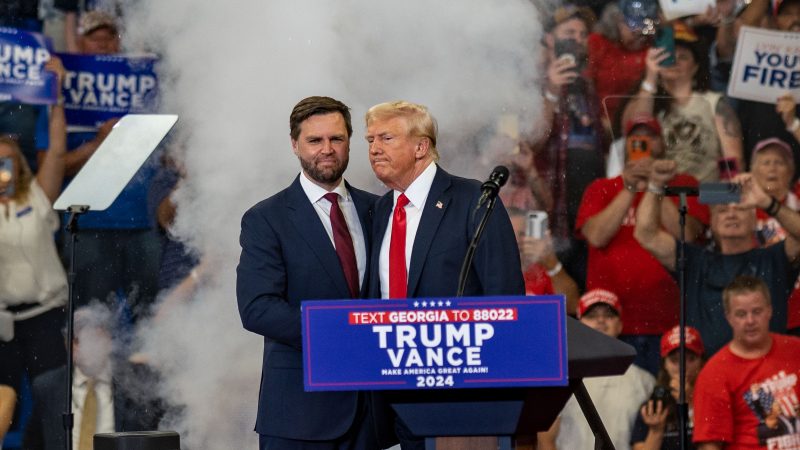
Donald Trump will today be sworn in as America’s 47th President inside the same Capitol Building violently stormed by his supporters just four years ago seeking to overturn his defeat in the 2020 election.
It marks a historic moment for America and for the world, and an extraordinary political and personal comeback for a man whose MAGA-controlled Republican Party not only occupies the White House in November but now has majorities in both the House of Representatives and Senate too.
With an in-built conservative majority in the Supreme Court created in Trump’s first Presidential term, the scene is set for the most sweeping changes to the way the US is governed for decades.
So, how did we get here, what can we expect from Trump 2.0 and what are the implications for the UK, the Labour government and the wider centre-left across the developed world.
The worst election defeat since 1988
The final margin of the popular vote in November’s Presidential election was modest – Trump won 49.8% compared to Kamala Harris’s 48.3% – but the result was a disaster for the Democrats.
Harris failed to win any of seven of the swing states Joe Biden secured in 2020 and secured the worst electoral college result of any Democrat Presidential candidate since Michael Dukakis was trounced by George Bush Senior in 1988.
Black, Latino and working-class Americans all moved towards Trump and, despite the prospect of a first female President and Harris’s focus on abortion rights, the former Californian state prosecutor gained a lower proportion of women voters than Joe Biden did four years earlier.
The Democrat failure is laid bare in a stark analysis undertaken by my colleagues at the centre-left US-think tank Third Way who polled voters in swing states in the days after the election.
It showed that not only did Trump command big leads on the issues people most cared about, particularly on the cost of living and the border crisis, but also better connected with the values and identities of core voter groups.
The party’s post-mortem into its defeat is ongoing. Biden should have gone earlier. Incumbency was too much of a drag. Harris was too timid in detaching herself from her predecessor. Her campaign focused on the wrong issues. Its focus on mainstream media and campaigning was outdated and ineffective.
All these claims have validity, and many more too. But there are deeper questions from this election – and ones relevant to the Labour Party too – in the context of rising public demand for change and increasing support for the populist right. How do mainstream parties of the centre-left, for example, reconnect to the values and interests of core voters, and how do they defend democratic norms and institutions of a system that many voters believe has failed them?
Certainly, the Democrats were seen as the party of the status quo at a time when a large majority of voters believed that the country was going in the wrong direction. Perhaps it’s not so surprising then that one stand-out finding of the Third Way research was that more voters saw Harris as extreme than Trump.
Trump 2.0 will be better prepared than the first
The first Trump Presidency was marked by confusion, missteps and chaos. The second will be better prepared, focused and confident fuelled by democratic validation, political vengeance and a strong belief that this moment represents a once-in-a-generation opportunity to disrupt and challenge fundamental norms, rules and conventions at home and abroad.
It will hit the ground running with a volley of executive orders issued later today by the new Commander-in-Chief on immigration, trade and on minority rights. Trump’s border czar has promised “shock and awe” to kickstart the policy to deport undocumented migrants living in the US.
The US federal government is going to be hacked back and brought under greater control of the White House. Law enforcement agencies will be deployed to pursue political opponents and turn a blind eye to unlawful activities that might be helpful to Trump.
For more from LabourList, follow us on Bluesky, Threads, X, Facebook, Instagram or WhatsApp.
American’s top business executives are falling into line in record numbers too, eager to show their support for Trump’s commitment to tax cuts and deregulation – or fearing retribution for failing to do so. More than $200m has been donated to Trump’s inauguration fund, more than three times the amount Biden raised four years ago.
In this stampede, it is Big Tech that has ensured it is at the front of the pack and – as we have seen in recent weeks as Elon Musk has used his ownership of X to successfully meddle in the internal affairs of the UK and Germany – this alliance of political and information power promises to unleash far-reaching changes to the world we live in and to how our democracies function.
Mark Zuckerberg was on to something when, in his hostage video announcing Meta’s capitulation to Trumpworld, he described the US election as a “cultural tipping point” – and there are many (Musk included) who see its outcome that heralds counter-revolutionary change well beyond the borders of the US.
An America determined to dismantle the status quo
This desire to cause disruption, particularly in those countries and international institutions that are seen to present the same values, attitudes and mindset that Trump fought and won against in the US, is causing havoc internationally
The post-war international rules-based order has always been reliant on American power. But for as long as the US political establishment believed such arrangements served their country’s long-term security and prosperity the system worked, if imperfectly, providing protection and peace to Europe and large parts of the world.
Today, we have a US President that strongly believes that this system has acted only to weaken and undermine American interests, and appears determined to dismantle it. The consequences of doing so are far-reaching and profound.
SIGN UP: Get the best daily roundup and analysis of Labour news and comment in our newsletter
Long-time allies are viewed with suspicion and are threatened with tariffs. Their territorial boundaries are questioned and the defence of Ukraine, defending democracy and freedom in Europe from imperialist aggression, will be compromised.
It’s little wonder then that governments like Keir Starmer’s are expending considerable time and energy working out how best to engage a Trump Presidency.
Rightly, Starmer is working hard to build a close and productive relationship with the new President, whatever the noise and criticism. The UK’s economic and security interests demand that he does so but the pressure from many at home and overseas will, at times, be intense – and there will be areas of policy that the UK will necessarily be at odds with a Trump White House.
Mandelson appointment a clever move
His appointment of Peter Mandelson as the next British ambassador in the US was a clever move, although not without risk.
The former Labour cabinet minister and EU trade commissioner understands power like few others and his article for the Fox News website last week praising Trump and his victory was a clear demonstration of the Government’s approach.
There will certainly be opportunities, not least because policy will be up for grabs.
This Trump administration is packed with ideological tensions. There’s the rift between the immigration hardliners and the tech bros who want high-skilled workers from overseas, between the fiscal conservatives and those who want to rapidly increase military spending, between Robert F Kennedy’s plans to impose EU-style safety regulations on food in the US and those who want to give industry a free hand.
Building relationships at all levels with the administration will bring potential dividends for Britain on trade and security, and the Government is right to position itself to benefit where it can.
But Trump’s victory will have a longer-lasting and deeper impact on the very nature of the way our democratic politics functions. There are fewer potential dividends from this.

‘Trump’s riding a working-class revolt’: Where should the Democrats go next?
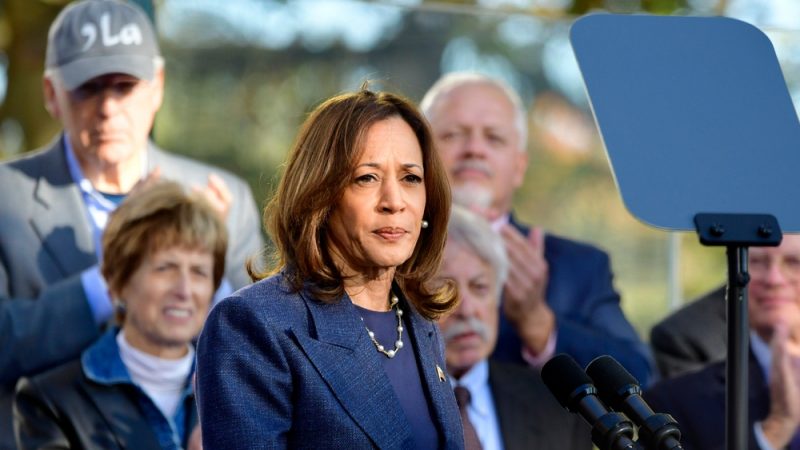
Democrats need to put working-class voters and their interests first and reject “divisive identity politics” if they are to return to power again, according to a leading US think tank.
A recent review of the 2024 presidential election by the Progressive Policy Institute (PPI) found that the Democrats’ coalition is shrinking as non-college-educated voters defect and that the party needs a “dramatic course correction” to head off a political realignment.
“It is the kitchen table struggles of working-class families that now need to become the fixation for Democrats,” the report said.
LabourList sat down with Will Marshall, president and founder of PPI, a US-based think tank once known as Bill Clinton’s “idea mill”. He said the continued erosion of the Democrats’ core voters, particularly among Black and Latino voters, was “disconcerting”.
He said: “What we have is a kind of general picture of a class-based politics, in which the Democrats increasingly represent upscale, affluent, college-educated voters, and the Republicans increasingly represent a kind of multi-ethnic working class. It looks like Trump is riding a working-class revolt against the political establishment.”
‘We need to find a centre ground on cultural issues’
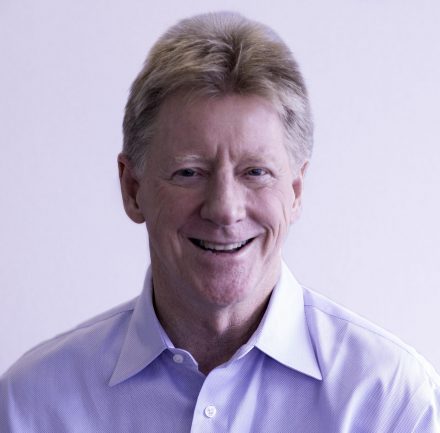
While Marshall said Democrats remained disoriented by the scale of their defeat to Donald Trump, he said there is consensus around some points as to why they lost in November.
“Cultural politics based on gender, immigration and crime were really damaging. They were major Democratic vulnerabilities for Kamala Harris and Joe Biden.
“We need to find a centre ground on many of these fraught cultural issues.”
He said that those on the left have often tried to “foreclose conversations” people want to have on particular cultural issues, such as transgender rights.
While Marshall said polling suggests most working class Americans do not want to discriminate against LGBT people, they oppose children being able to make decisions around transitioning themselves and also want to have conversations about whether trans people can play on single-sex sports teams.
“I do think there is a problem with speech policing coming from the left and it hurt Democrats. I think there’s common ground that we can find on these issues. It takes time for the country to move along and you’ve got to have conversations.”
The trap of deliverism
Marshall also notes that the election in America proved that delivery is not enough to win, with the Democrats having presided over a strong recovery from the pandemic but falling short in November’s election.
“Democrats are feeling hard done by. They presided over a really robust economy, and Biden did the kind of things that one expects the centre-left to do – come in and make big public investments. But he made so many big public investments that I think they lost the narrative in it.
“While they were spending, Americans were feeling the pain of the rising cost of living. The administration’s narrative never landed with working-class voters. It wasn’t alleviating their immediate pain, day in and day out.
“It was a policy issue. Biden came in with no expectation he was going to launch a fairly stupendous public investment agenda. That’s not what he ran on but when he got into office, there seemed to be this opportunity to get big things done and they fell into the trap of deliverism – if we pass a lot of big bills and we show that government could deliver, then some of the anti-government animus in American politics would abate and that working class voters would be impressed that the system was working.
“The problem was it didn’t seem to be working for them. They were facing a cost-of-living crisis day in and day out, and the national benefits of all these big investments hadn’t yet appeared.”
‘Don’t let inflation get out of control’
The toxic ingredient for any government seeking re-election, Marshall said, was and is inflation.
“Inflation is hell on incumbents everywhere, and I’ve seen it before in the United States. Leaders who preside over a big bout of inflation usually do badly.
“Kamala Harris, to her credit, ran a fairly decent campaign in the short amount of time allotted to her, but she could never overcome the drag of the economic pain voters were feeling and the fact that they blame President Biden for that.
“If there is one big economic lesson from the US election, it’s ‘don’t let inflation get out of control’. Inflation undermines the working class like nothing else. It’s the problem that blots out all other problems.”
Spending on the right priorities for working people
PPI’s report found that, while working-class voters in the US want to see governments who are fiscally responsible, they also want to see spending on infrastructure and also investment in alternatives to college education.
Marshall said it is possible to square that circle by focusing on who is being prioritised by government spending.
“President Biden laid great stress on college student loan forgiveness – $400 million he pledged to that end. That is a wonderful thing if you’re a college student, but working-class voters, as we define them – they’re people without college degrees, and there are many kids who don’t particularly want to go to college.
“We should have been investing in alternatives to college. Working families and people without college degrees are in danger of downward mobility and we need to invest in career pathways – alternatives that are as robust and as effective as our post-secondary systems, colleges and universities.
“We didn’t do that – we instead emphasised student loan forgiveness, which was a comfort to those who are already going to get degrees and get bigger lifetime earnings.”
‘Engage in the debate and you win respect’
As politics in the United States, and globally, continues to become increasingly polarised, so too has the media landscape. With left and right wing Americans getting their news from very different sources, how can Democrats break increasingly hardened perceptions of the party among voters it has lost?
“Right-wing media has grown as a kind of insurgency against legacy media, which has usually tilted somewhat to the left. They have developed their own media that defines reality differently and Democrats are going to have to go into these settings and make arguments in these settings.
“If you can go in there and hold your own, people respect that even if they don’t agree with you.”
Marshall pointed to Pete Buttigieg as a good example of this, who debated 25 undecided voters in a “town hall” on YouTube and makes regular appearances on Fox News.
“I love the way he does it. Engage in the debate and you win begrudging respect at first, and over time, you might find that your arguments begin to get some traction.”
He also argued that, although it may not have made much of a difference overall, Harris should have gone on Joe Rogan’s podcast.
“It would have been good to go out there and I think she would have been respected for that and heard more than she was by those voters.”
Labour braces for Trump inauguration as Sadiq Khan warns of ‘resurgent fascism’
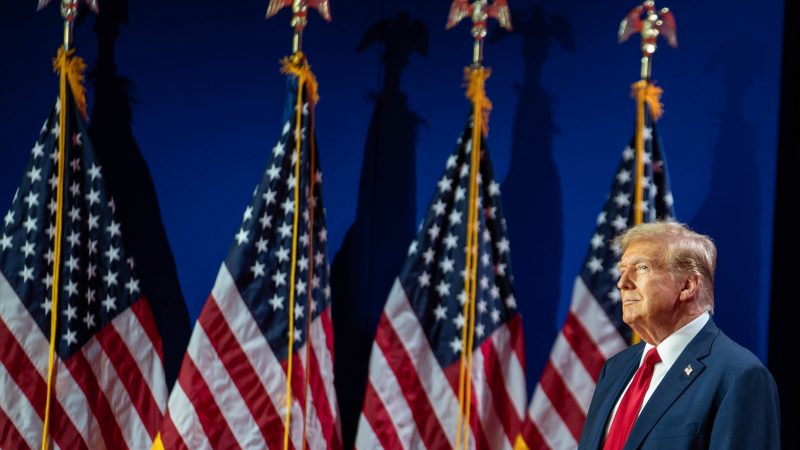
Labour minister Darren Jones has said he “wouldn’t associate” himself with Sadiq Khan’s warning of a “resurgent fascism” as the world braces for Donald Trump’s return to the White House tomorrow.
Speaking to Trevor Phillips on Sky News this morning, Jones said he would dissociate himself from comments made by Sadiq Khan in The Observer – while adding that he has not seen the article.
Khan wrote in the paper: “We should be in no doubt, this is a perilous moment. The spectre of a resurgent fascism haunts the west.”
Jones added that he is confident that New Labour grandee Peter Mandelson will be confirmed as the UK’s next ambassador to Washington, despite reports that Trump is considering rejecting his nomination.
He said: “I doubt very much that’s going to happen. I mean, the report that I’ve seen, I think someone said something at Mar-a-Lago, and it’s probably being propagated by some politicians that would like to cause a bit of a nuisance. I doubt that will be the case.”
Donald Trump and JD Vance will be sworn in as President and Vice President of the United States tomorrow following their election victory in November.
‘Deepening ties with EU best way for UK to deal with Trump tariff fears’
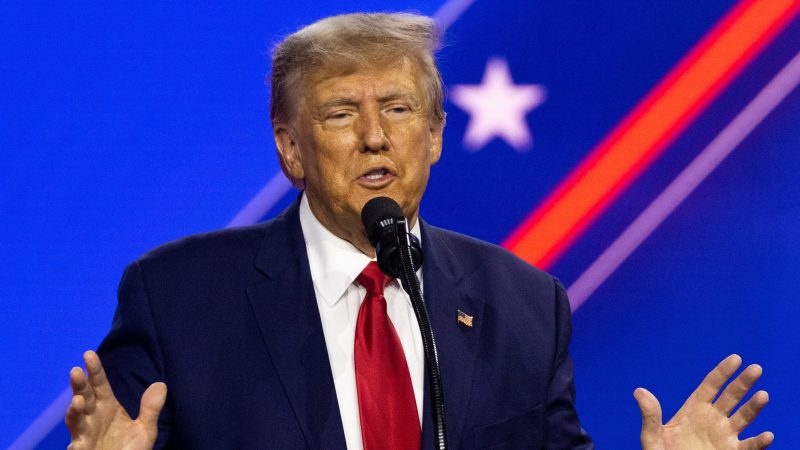
President Trump was re-elected in November with a commitment to increase tariffs on all goods entering the US. That has set off some often-panicked stories in the UK media about the likely economic damage of our single largest trading partner doing this.
Any suggestions of the UK being one of the largest victims of Trump’s trade policy are wrong. For a while we exported £59 billion of goods in the last 12 months for which figures are published, the figure for services was £129 billion. More importantly, Trump’s dislike is particularly for countries having a trade surplus with the US, not the case for the UK.
Of course, there will be pressures on particular exports or relationships the UK has. For at heart, Trump’s ideology is nakedly America first. He does not see trade – or indeed life – as being of mutual benefit, but of winners and losers.
By contrast, if Labour has a trade philosophy, it is derived from internationalism and the idea that trade is welcome when fair, mutually beneficial, and subject to internationally agreed rules. Such principles should not be abandoned as a response to even a US President, not least one who will change his mind, frequently.
Trump doesn’t honour his own words or deals
Trump’s stated plans are for a 10 to 20% tariff on all goods entering the US, and up to 60% on those coming from China. Yet since November he has been threatening Canada and Mexico with higher tariffs unless they fix particular border issues.
This proves his plans aren’t fixed and he won’t respect the deals he did in his first term – which were with Canada, Mexico, and China. Almost certainly, he won’t carry out in full any of what has been said to date, not least because taxing imports will cost US companies and consumers more.
READ MORE: ‘Trump’s victory is a warning to Britain and Europe – fix inequality or populists will win’
Suggestions therefore that the UK must negotiate a traditional free trade agreement with the US to avoid tariffs are not correct. First, because we don’t know what tariffs there may be, and second because any deal wouldn’t offer that protection.
Neither are the broader economic benefits of a UK-US trade deal particularly significant, not least when set against the known issues of changing food standards – the infamous chlorinated chicken – that even the Conservatives wouldn’t try to sell. Only those who always dreamed of Brexit as an opportunity to get closer to the US should see a UK-US trade deal as the answer right now.
Surviving America First
US international economic policy changed when Trump was first elected in 2016. While sometimes cloaked in progressive language denouncing the notional concept of ‘hyper-globalisation’, this has been fundamentally saying they shouldn’t have to follow global trade rules.
For the UK, the rest of Europe, and other US allies that rely upon trade for prosperity, this is a problem. Even more so when our security is so much bound up with NATO and US protection.
While talking about China as the main threat, US economic actions have often been indiscriminate in their targets. Any commitment to rewriting rules for the 21st century is shallow at best.
There isn’t a particularly good handling strategy for this beyond survival. Not least when so many US pronouncements in the next four years will come in the form of late-night social media posts and briefings from those around the President of more or less influence. Talk of digital trade deals or joint activity towards China might be a distraction for a while, but won’t change any big pictures.
Most UK trade will continue regardless, whether that is Rolls-Royce engines, pharmaceuticals, or business services. This is today’s real global economy, where it is companies that trade, facilitated or hindered by government actions.
US companies in the UK prioritise the EU relationship
Trump’s trade proposals will almost certainly in effect be weakened by fears that widespread tariffs will lead to US stock market falls. That many of those around Trump such as Elon Musk are full-blooded believers in global trade may also be a factor. Bad things will happen, what they are is unpredictable.
Those US companies who are based in the UK have a clear message for the government here. They actively want to see the UK-EU relationship strengthened. Trade is global but often arranged regionally, and many in the US see the UK as the entry point to Europe, particularly for services.
Both Rachel Reeves and Jonathan Reynolds have spoken after Trump’s re-election of a UK commitment to trade globally, but with the large nearby market as the priority. That message is right and has been well-understood globally, but if anything needs strengthening.
There continue to be fears that Labour will be too timid in the face of domestic pushback from old Brexiteers strengthened by some anti-EU folk around President Trump. Seeking greater trade with China without damaging US ties will also be a challenge.
Our US and EU relations
This all just shows the need to move on from 2016. Both will remain important international economic and security partners, but right now the overwhelming UK interest is in deepening trade ties with the neighbourhood as against rather uncertain prospects in a market with rather erratic approaches to international partners.