Saturday, January 25, 2025

Simmering anger as Turkey begins burying 76 fire victims


By AFP
January 22, 2025


The fire began before dawn, ripping through the Grand Kartal Hotel near the northwestern town of Bolu - Copyright AFP Demiroren News AAgency
Fulya OZERKAN

Turkey was preparing to bury its dead Wednesday a day after a huge fire killed 76 people at a ski resort hotel, as questions grew over safety measures at the luxury establishment.

As the nation observed a day of mourning, dozens of families were preparing to bury their loved ones who died as the blaze ripped through the 12-storey hotel.

But alongside the grief there was anger, with many newspapers publishing allegations of negligence at the mountaintop hotel in Kartalkaya, which lies about two hours northwest of Ankara.

“It was not the fire but the negligence which was responsible for so many deaths,” said the pro-government Hurriyet newspaper.

The fire, which began in the dead of night, struck at peak season for the Grand Kartal Hotel, which had 238 guests staying at the start of a two-week winter break.

More than 30 people remained in hospital on Wednesday, one of whom was in intensive care, officials said.

On a freezing foggy morning, with flags flying at half-mast, rescuers resumed their search of the charred and blackened structure on Wednesday, where Turkish media said entire families had died.

Among those who were to be buried on Wednesday was a neurologist, his wife and their three children, including twin boys.


– ‘Profoundly disturbing’ –


The blaze broke out around 3:30 am (0030 GMT), sending huge clouds of smoke into the night air and sparking panic among the guests, many of whom tried to climb out of the windows, using bedsheets as ropes.

“I saw one kid hanging from the hotel window calling for help,” said Islam, who works at a nearby hotel and did not give his surname.

“I was profoundly disturbed. I still cannot forget the image,” he told AFP, saying he knew some of the hotel staff who died.

By Tuesday night, investigators had identified 52 of the dead and returned 45 bodies to their families for burial, Interior Minister Ali Yerlikaya said.

President Recep Tayyip Erdogan was expected to attend the funeral of seven family members of a local official from his ruling AKP in the nearby town of Bolu.

Yerlikaya said nine people, including the owner, had been arrested in connection with the blaze, with investigators looking into the cause of the fire, possible negligence and who was responsible.

Speaking to Turkish media on Tuesday, several guests said that no fire alarms nor smoke alarms had sounded, and that there were no fire escapes.

“No fire alarm went off… and there was no fire escape,” Atakan Yelkovan told IHA news agency, saying it had taken “between an hour and an hour-and-a-half” for the firefighters to arrive.


But Tourism Minister Nuri Ersoy said the hotel had two fire escapes and had passed inspections “in 2021 and 2024”.

“No issues related to fire safety had been flagged by the fire department,” he said on Tuesday.
ZIONIST IMPERIALISM

Netanyahu Says Israeli Forces Will Stay in Lebanon Past Ceasefire Deadline

Israel has reportedly violated its ceasefire deal with Hezbollah hundreds of times already, killing numerous people.
January 24, 2025

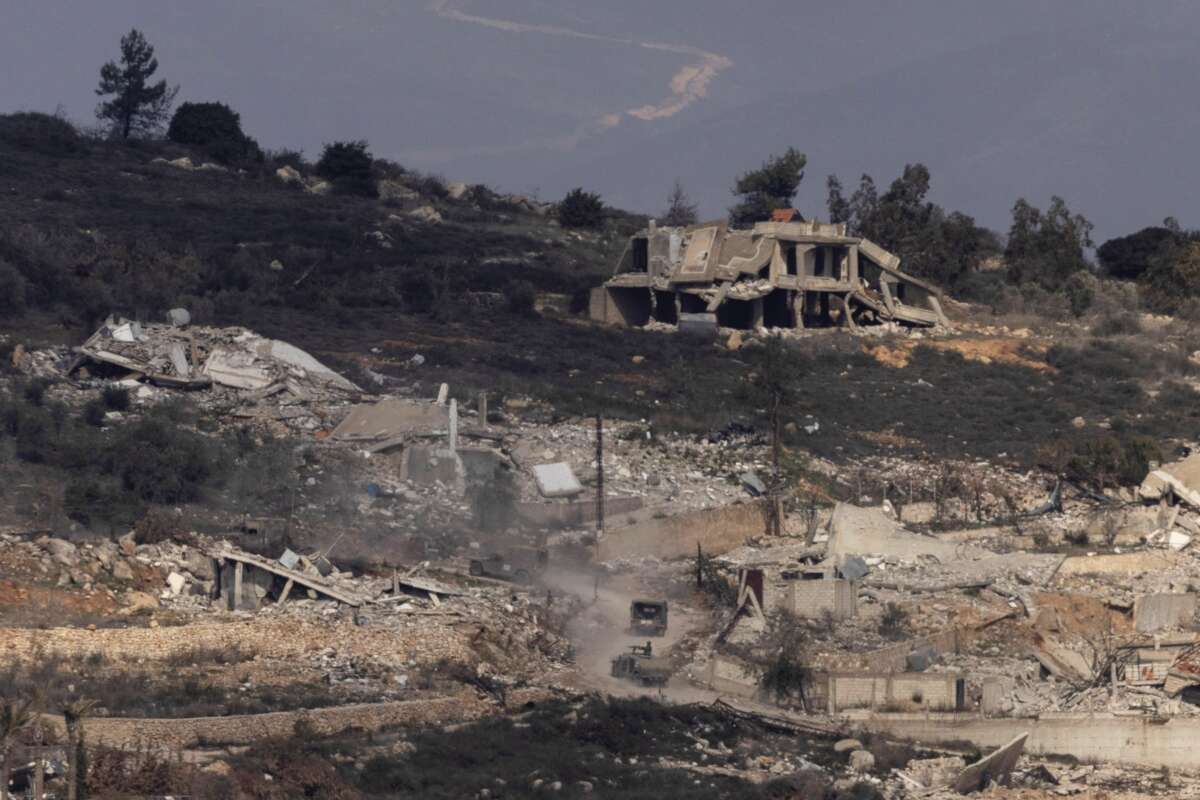
Israeli army vehicles move in a village in southern Lebanon as seen from a position on the Israeli side of the border on January 23, 2025.Amir Levy / Getty Images

The Israeli military is planning to continue occupying southern Lebanon past the deadline set forth in Israel’s ceasefire agreement with Hezbollah, Israel Prime Minister Benjamin Netanyahu has said.

Under the terms of the deal, agreed to in November, Israel and Hezbollah were supposed to withdraw from southern Lebanon by this Sunday, January 26. They were to be replaced by troops from the United Nations Interim Force in Lebanon (UNIFIL), and then the Lebanese army in the region in order to help oversee implementation of the ceasefire. The U.S. is also in charge of helping to ensure implementation.

In a statement on Friday, however, Netanyahu’s office said that Israeli forces are going to remain in southern Lebanon past the deadline, claiming that the Lebanese army has not deployed quickly enough in the region.

Don’t miss a beat

Get the latest news and thought-provoking analysis from Truthout.

Email*


“Since the cease-fire agreement has not yet been fully enforced by Lebanon, the gradual withdrawal process will continue under full cooperation with the United States,” the statement said.

Lebanese officials have said that they can only send their troops into the region when Israeli troops are gone.

Related Story  

Op-Ed |
2024 Will Be Remembered as the Year Israel’s Global Legitimacy Fully Unraveled
After over a year of genocide, more Americans than ever are calling for an end to US military backing of Israel. By Khury Petersen-Smith , Truthout January 2, 2025


The Israeli military has been suggesting for weeks now that it is going to maintain its presence in the area, as part of its long history of violating international agreements and law. In late December, Israeli authorities said they were satisfied with the implementation of the agreement until that point, but still signalled they were planning to stay in Lebanon.

The ceasefire agreement has already been imperiled as Israel has repeatedly violated the ceasefire, continuing to attack Lebanon even after hostilities were supposed to end under the agreement. In the first week alone, Israel reportedly violated the ceasefire at least 100 times, and has now violated the agreement hundreds of times, Lebanese sources say. Israel has killed numerous people amid these seeming violations.

Israeli soldiers have also prevented Lebanese people from returning to their homes in the south, reports say.

The ceasefire deal doesn’t specify consequences for violations of the ceasefire. In recent days, Israeli officials have been in talks with the U.S. to discuss staying in Lebanon past the deadline. Israeli media have reported that Israel has asked for 30 more days to withdraw, claiming that Hezbollah has also violated the ceasefire agreement.

Hezbollah has only carried out one strike since the ceasefire, dropping a bomb on a military base in retaliation to Israeli attacks. Israel retaliated to that strike by killing at least nine people in air raids on Lebanon.

Since October 2023, Israel has killed over 4,000 people in Lebanon, many of them civilians. A BBC investigation published on Friday found that on September 29, 2024, in the single deadliest attack of Israel’s war with Hezbollah, Israel killed at least 62 civilians in a strike on south Lebanon. The attack collapsed an entire apartment building, which Israel claimed it targeted because it was a Hezbollah “command center.”

Israel has invaded Lebanon six times in the past 50 years. The Israeli military’s longest occupation of Lebanon began in the 1980s, when it invaded and occupied southern Lebanon until it was forced to withdraw in 2000, largely due to resistance from Hezbollah, which had risen to prominence during the occupation.

Violating Cease-Fire Deal, Israel Won't Withdraw Troops From Lebanon Before Deadline

"A renewal of hostilities would be a devastating blow for civilians still struggling to rebuild their lives," said one humanitarian worker.


Destruction resulting from Israeli attacks is seen as citizens return to their homes in Al-Khiyam town, Nabatieh Governorate of southern Lebanon on January 23, 2025.
(Photo: Ramiz Dallah/Anadolu via Getty Images)


Julia Conley
Jan 24, 2025
COMMON DREAMS

The Trump administration on Friday called for a "short, temporary cease-fire extension" between Israel and Lebanon after Israeli Prime Minister Benjamin Netanyahu said the country's troops will not complete its withdrawal from southern Lebanon as it agreed to in a 60-day truce that began in late November.


Under the terms of the cease-fire, Israel agreed to withdraw its military from southern Lebanon by January 26, and the Lebanese political and paramilitary group Hezbollah was required to move its forces north of the Litani River and dismantle all military infrastructure in the south.

Netanyahu's office claimed Friday that "the cease-fire agreement has not yet been fully enforced by the Lebanese state" and said its "gradual withdrawal process will continue, in full coordination with the United States."

Israel asserted that the truce allowed for the withdrawal process to "continue beyond 60 days—a claim the Lebanese government and Hezbollah refuted—and claimed the Lebanese army had allowed Hezbollah to regroup since the cease-fire began.

Hezbollah called Israel's plan to maintain a military presence in southern Lebanon past the deadline a "blatant violation of the agreement."

As Hezbollah warned it would consider the cease-fire null and void if Israel does not withdraw by January 26, White House National Security Council spokesperson Brian Hughes said an extension of the deadline is "urgently needed."

Emile Hokayem of the International Institute for Strategic Studies said Israel's "unilteral extension... is clearly a violation of the November cease-fire," while Lebanese American journalist Rania Khalek noted that Israel "has been violating the cease-fire the entire time with zero international condemnation."


The Norwegian Refugee Council (NRC) said that while the cease-fire has significantly reduced casualties in Lebanon following 14 months of fighting between the Israel Defense Forces and Hezbollah, at least 29 civilians have been killed since the truce began.

"While the cease-fire seems intact on paper, civilians in Lebanon continued to be killed and their homes blown up by the Israeli military," said Maureen Philippon, Lebanon country director for the NRC.

Prior to the cease-fire deal in November, the conflict killed at least 3,823 people and injured 15,859, as well as displacing tens of thousands of people in Israel and over 1 million in Lebanon. More than 100,000 people in Lebanon have still been unable to return to their homes.

"We have been displaced from our village for 16 months," a Lebanese citizen named Rakad, who fled the border town of Yarine, told the NRC. "We are all waiting for the 27th to go back, kiss the soil of our land, and breathe the air of our village."

Israel's likely delay in withdrawing troops comes as Lebanese residents have begun returning to their villages in the south, but the Lebanese military on Friday called on civilians not to return to the coastal town of Naquora, which Mayor Abbas Awada told Al Jazeera "has become a disaster zone of a town."

"The bare necessities of life are absent here," said the mayor.

The NRC warned that the "continued presence of Israeli troops in dozens of villages in southern Lebanon severely restricts the freedom of movement and leaves many in a prolonged state of displacement."

Philippon called on regional and international mediators to "ensure this truce evolves into a lasting cease-fire, with a firm commitment to protecting all civilians and civilian infrastructure."

"A renewal of hostilities would be a devastating blow for civilians still struggling to rebuild their lives," said Philippon. "Lebanese villagers are still being warned against returning to their homes and lands, while many others don't even know what happened to the house they left months ago. These people will need all the stability and support they can get to get back on their feet after. Israel must withdraw from these villages so that thousands can go back."

TikTok Shouldn’t Be Banned, But It Still Values Profit Over Privacy

A ban would be a nightmare for civil liberties. But TikTok, like all Big Tech platforms, is no friend to the left.
January 21, 2025


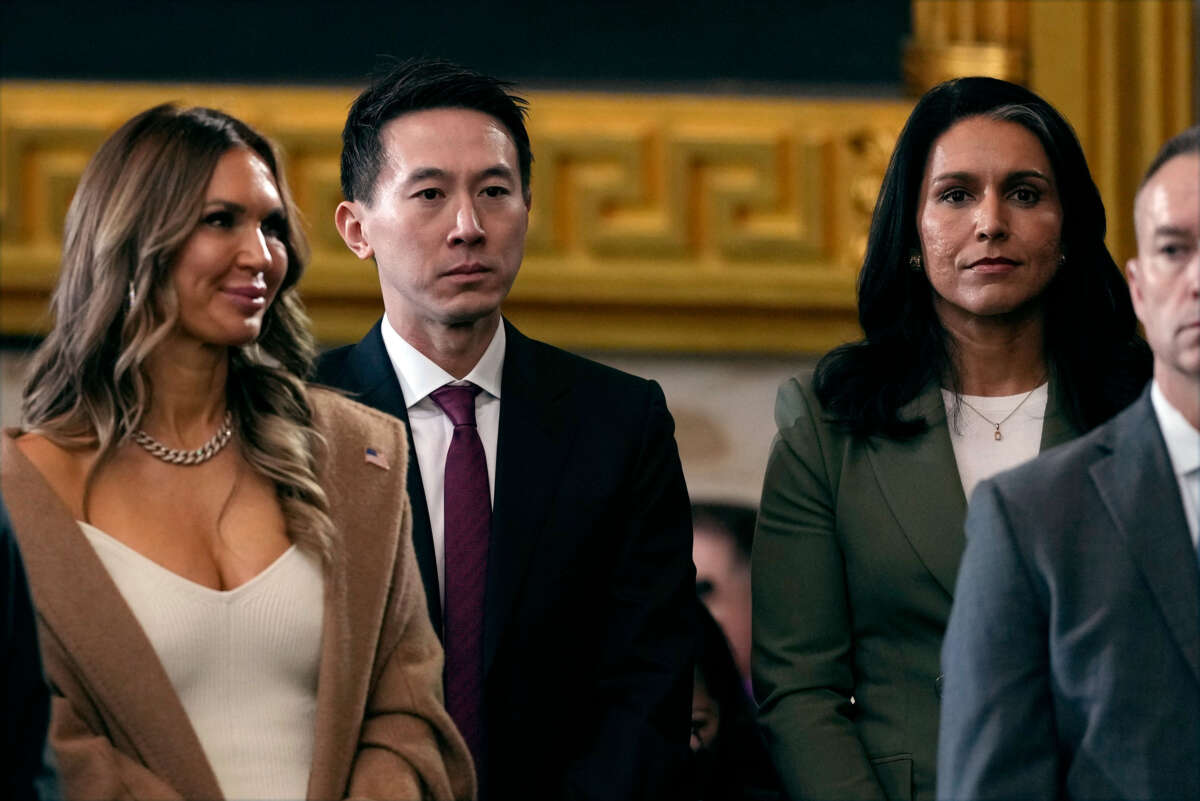
TikTok CEO Shou Zi Chew (left) and Tulsi Gabbard, the nominee to be the next director of national intelligence, attend the inauguration of President Donald Trump at the U.S. Capitol Rotunda on January 20, 2025, in Washington, D.C.
Julia Demaree Nikhinson - Pool / Getty Images

The shutdown only lasted a few hours, but it generated no shortage of content.

“Fascist countries ban apps. Fascist countries ban websites,” one TikTok user said in a video with more than 12 million views. “TikTok was never just an app. It was a battleground and a sanctuary,” another creator wrote in a viral Instagram post.

Similar sentiments proliferated across social media in the days and weeks leading up to TikTok’s brief black-out on Sunday. ByteDance, TikTok’s Chinese parent company, paused the app’s services in the United States after the Supreme Court unanimously upheld a federal law that aims to ban TikTok, classifying it as a dangerous “foreign adversary controlled application.” ByteDance must sell TikTok to a U.S. company, a bipartisan slate of Congressional members decided, or shut down by January 19.

Stay in the loop

Never miss the news and analysis you care about.

Email*


The TikTok ban sparked rightful outrage from civil liberties and free speech advocates, who’ve noted that shutting down entire platforms is a tactic favored by anti-democratic regimes. But the response across social media has often trended toward careless oversimplification — in protesting TikTok’s shutdown, creators have uplifted the platform as a bastion of progressive thought and left activism. What this full-throated embrace misses is that TikTok, like any other platform owned by a multibillion-dollar tech giant, was never intended to serve the public interest. It is at best an imperfect tool. And the debacle over the app’s future underscores how imperative it is that we look beyond these platforms if we are to build lasting social movements.

Within hours of going offline, TikTok returned with a message: “As a result of President Trump’s efforts, TikTok is back in the U.S.!” The about-face arrived before Trump was inaugurated, but after he’d promised to sign an executive action temporarily halting the app’s shutdown — never mind that he was the first elected official to attempt banning it. Trump’s pivot, a clear ploy to curry favor with the country’s youth, shows the TikTok ban for what it is: Sinophobic fearmongering masked as national security. And both Republicans and Democrats are culpable.

Related Story

TikTok Exposed Youth to Genocide in Gaza — Is That Why Electeds Want It Banned?
Vocal proponents of a TikTok ban are among the top recipients of donations from the pro-Israeli lobby group AIPAC. By Derek Seidman , Truthout April 11, 2024


In August 2020, Trump signed an executive action ordering ByteDance to divest its U.S. holdings or face sanctions, stating that TikTok “threatens to allow the Chinese Communist Party access to Americans’ personal and proprietary information.” A federal judge blocked Trump’s order, but Congress was happy to pick up the baton, passing a bill that President Joe Biden later signed into law.

In reality, any national security risk posed by TikTok is largely speculative. In 2022, a Forbes investigation found that, in at least two cases, an internal team at ByteDance had planned to use TikTok data to monitor the location of specific U.S. users, but it’s unknown whether that data was actually collected. A year later, a former ByteDance employee alleged that the Chinese government had used TikTok to spy on protesters in Hong Kong. But the fear that the Chinese government obtains reams of data about U.S. citizens from TikTok remains unproven, and these isolated testimonies are hardly a smoking gun for a mass surveillance campaign.

“The United States’ foreign foes easily can steal, scrape, or buy Americans’ data by countless other means,” the Electronic Frontier Foundation, a nonprofit digital rights group, wrote in a statement on the Supreme Court’s ruling. “The ban or forced sale of one social media app will do virtually nothing to protect Americans’ data privacy.”

Of course, if U.S. citizens are really concerned about surveillance, they need not look abroad for examples of tech companies infringing on digital privacy. Twitter, and its later Elon Musk-owned iteration, X, has long partnered with the artificial intelligence company Dataminr, which supplies social media monitoring data to police agencies. In 2020, for instance, Dataminr helped law enforcement officials digitally surveil protesters at Black Lives Matter demonstrations. Twitter/X have facilitated such spying by selling Dataminr an unfiltered feed of every public piece of information shared by its users.

In addition to police surveillance, the Brennan Center for Justice, a nonprofit democracy think tank, has expressed concerns about the U.S. government’s unregulated and growing use of social media to spy on citizens, spanning many federal agencies, from the Drug Enforcement Administration to the Federal Bureau of Investigation. This can include tools like Dataminr, public social media monitoring or obtaining warrants for backdoor searches of private communications, location data and other sensitive information.

So, does the all-pervasive nature of digital surveillance in the modern age mean that every platform should get a free pass? Far from it. Singling out TikTok in the name of China-bashing is wrong, but what’s clear is that users don’t have an expectation of privacy on any app, regardless of what major company owns it. We deserve better, comprehensive data protections — a cohesive framework aimed at ensuring everyone’s freedom of speech and right to privacy — not piecemeal bans intended to sow fear.

Then there’s the issue of censorship. It’s interesting to see creators’ recent reframing of TikTok as a tool for subverting oppressive state interests, when many of those same creators engage in “algospeak,” or linguistic substitutions that supposedly evade algorithmic censorship. On the platform, “sex” is overwhelmingly written as “seggs,” “kill” is “unalive,” “sexual assault” is “S.A.” and lesbian becomes “le$bean” or “le dollar bean,” among many other neologisms. Creators have said that TikTok suppresses pro-Palestine content, while Republican lawmakers claim the app is influencing young people to “support Hamas.”

Perhaps all of the above can be true at once. TikTok’s algorithm is, after all, a black box — and this is also not unique. TikTok algospeak has spread to Meta-owned Instagram and Facebook, though the extent to which those platforms punish certain words is also unclear. What’s more, the parameters for censored content are subject to frequent change, often at the whims of tech companies’ billionaire executives.

On January 8, Meta CEO Mark Zuckerberg announced that it would replace its third-party fact-checking process on Instagram and Facebook with a crowdsourced “community notes” system. While Zuckerberg claimed the change would foster free speech, critics point out how the billionaire is sucking up to the incoming president, who has long decried Facebook’s moderation policies. Trump ally and megadonor Elon Musk implemented a similar community notes system when he took ownership of Twitter.

Alongside the elimination of fact-checking, Meta has also expanded its guidelines on what users are free to post. Newly permissible speech includes hateful and derogatory remarks about immigrants, LGBTQ people, racial minorities and ethnic groups, internal documents recently obtained by The Intercept reveal. Meta already had a track record of censoring content supporting Palestine and using inconsistent standards for content restriction across groups that call for violence. The new policies mirror the ones Musk put in place after his takeover of Twitter in 2022, which was accompanied by a rise in hate speech and increased engagement on far right accounts.

The chaos of the TikTok ban, the shifting Meta policies and the odiousness of Musk-owned X are all symptoms of the same broader paradox. The platforms we use to receive and disseminate information, express ourselves and foster human connections are beholden to state and corporate interests outside of our control. Safeguarding access to them is crucial for ensuring free speech, and yet that speech is never truly free — always regulated by a black box of algorithms, always harvested and sold by profit-seeking companies. Many of us know this, of course, but the politicization of the TikTok ban has sparked a social media frenzy that risks drowning out more complex truths.

On Monday, Musk, Zuckerberg, and other major tech executives, with a collective net worth of $1.3 trillion, attended Trump’s inauguration. They were seated in front of the incoming president’s own cabinet picks. Also present at the Capitol Rotunda was none other than TikTok CEO Shou Chew.
Instagram, Facebook Under Fire for Censoring Posts From Abortion Pill Providers

“Once again, ‘freedom of speech’ doesn’t actually mean free speech,” said legislative researcher Allison Chapman.
 Truthout
January 24, 2025

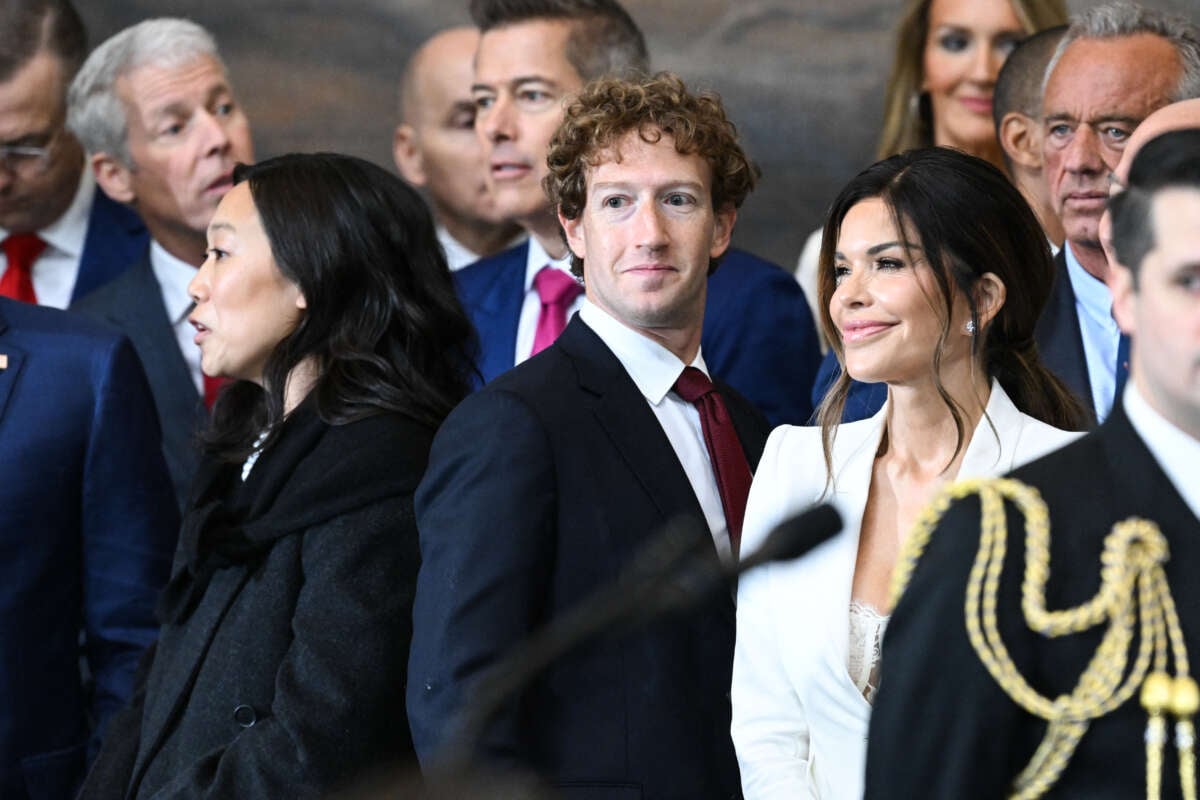
Priscilla Chan, CEO of Meta and Facebook Mark Zuckerberg, and Lauren Sanchez attend the inauguration ceremony before Donald Trump is sworn in as the 47th US President in the US Capitol Rotunda in Washington, DC, on January 20, 2025.SAUL LOEB/POOL/AFP via Getty Images

Did you know that Truthout is a nonprofit and independently funded by readers like you? If you value what we do, please support our work with a donation.

Instagram and Facebook have recently taken steps to blur, block, or remove posts from abortion pill providers, according to The New York Times. Abortion providers say that censorship on the platforms has intensified over the past two weeks, particularly in the days following Donald Trump’s inauguration.

Instagram has also suspended several accounts linked to these providers, making them unsearchable and removing them from recommendations.

Aid Access, one of the biggest abortion pill providers in the U.S., said its posts started getting taken down from Facebook and blurred on Instagram beginning in November. The organization has been unable to access its Facebook account since November, and its Instagram account was suspended last week, though it was recently reinstated.

Just this past week, the accounts of other abortion pill providers, Women Help Women and Just The Pill, were also suspended. According to the providers, Meta — which owns both of the social media platforms — said that the suspensions occurred because the accounts allegedly violated the company’s “Community Standards on guns, drugs and other restricted goods.” Although abortion pills are not currently classified as a federally restricted good, Project 2025, which Trump is using as a blueprint for his administration, aims to change that. Both accounts have since been reinstated.

Rebecca Davis, head of marketing at abortion pill provider Hey Jane, told The New York Times that the company’s Instagram account recently became unsearchable on the platform, noting that a similar issue occurred in 2023 but was later resolved by Meta.

Meta has previously faced criticism for suppressing posts from abortion providers. In June 2024, an Amnesty International report revealed that the company was not upholding international human rights standards, citing its removal of abortion-related content without clear explanations or sufficient transparency about these decisions.

“When tech companies remove abortion-related information, they can intensify barriers to accessing information and lead to discrimination and human rights violations against people who can become pregnant,” Jane Eklund, Tech and Reproductive Rights Fellow with Amnesty International USA, said in June 2024. “Access to accurate and unbiased information about abortion is an essential part of reproductive healthcare, and tech companies must do better to ensure their users can access that information.”

The recent suppression of abortion providers’ posts and accounts follows Meta CEO Mark Zuckerberg’s announcement that Instagram and Facebook would eliminate third-party fact-checking teams, loosen hate speech policies on the platforms, and discontinue their diversity, equity, and inclusion programs. Although Meta has claimed that the recent moderation of abortion providers’ accounts was unrelated to its updated speech policies, the timing of these actions has sparked concerns about whether the platform has been engaging in censorship in order to appease the anti-abortion Trump administration.

“Once again, ‘freedom of speech’ doesn’t actually mean free speech, but rather speech approved by right-wing Christian nationalists,” LGBTQ legislative researcher Allison Chapman told Truthout. “We are days into the Trump presidency and businesses are already preemptively complying in order to win the favor of Trump and his cronies.”

Notably, Zuckerberg donated $1 million to Trump’s inauguration campaign, which he attended alongside other tech billionaires like Jeff Bezos and Elon Musk. All three saw their wealth reach record highs in the days after Trump’s inauguration.
CRIMINAL CAPITALI$M
Meta profits from known pro-Russian disinfo network: researchers

By AFP
January 24, 2025

Image: — © AFP/File JULIEN DE ROSA


Dounia Mahieddine and Claire-Line Nass

Social media giant Meta made hundreds of thousands of dollars last year from content posted by a well-known pro-Russian disinformation network, researchers have claimed.

Tens of thousands of Facebook users in France, Germany, Poland and Italy were targeted with cartoons mocking French politicians, messages hostile to European aid to Ukraine and other so-called sponsored content.

A report by digital manipulation specialists titled “Influence by Design” claimed that the pro-Russian “Doppelganger” operation, widely known about since 2022, was behind the posts.

The report published in mid-January by Check First, Reset Tech and AI Forensics said Meta was paid $338,000 between August 2023 and November 2024 to place at least 8,000 pieces of sponsored content.

Doppelganger started out by imitating Western media outlets to relay anti-Ukraine and anti-Western messages.

The operation has continued to prosper on various social networks, including ads on Facebook.

– Posts blocked –


Two Russian companies were widely accused of being behind the content and they were sanctioned in July 2023 by the European Union and later by the United States and Britain.


Meta said it was ‘the first tech company to uncover the campaign’ by Doppelganger 
– Copyright AFP/File Kirill KUDRYAVTSEV

But one of them, the Social Design Agency (SDA), continued to publish on Facebook, according to the report.

“Despite these sanctions, Meta continued to review, approve and distribute advertisements linked to the SDA,” said Check First chief Guillaume Kuster.

“This raises critical legal concerns regarding compliance with international sanctions frameworks.”

The researchers said the number of posts was likely to be much higher because they focused only on the revelations from a leak of SDA documents first reported in Estonian and German media.

Without naming it directly, Meta acknowledged the existence of Doppelganger in September 2022, referring to a “coordinated influence campaign” linked to Russia on Facebook.

Contacted by AFP about the new claims, Meta referred to its previous reports mentioning digital threats linked to Russia, including one published in mid-2024 acknowledging the presence of ads related to Doppelganger.

Meta also said it was “the first tech company to uncover the campaign”, adding that it had blocked tens of thousands of posts related to the network.

– ‘Sophistication’ –


Joseph Bodnar, a researcher at the Institute for Strategic Dialogue (ISD), said Doppelganger had expanded its operations from traditional posts to ads on Facebook, then traditional posts on all social media.

Doppelganger posts were also seen at the start of this year for the first time on Bluesky, the platform attracting many X users disaffected with Elon Musk’s ownership.

Messages are generally boosted by many bot accounts that have similar characteristics — AI-generated profile photos, identical biographies, dozens of replies to messages produced in a few days.

“The American Democrats lit the fuse in Ukraine, and now it’s the EU countries that have to foot the bill!” posted a user called “Jake Fitzgerald” on Bluesky.

The campaign “adapts to current events… focuses on real problems and tries to extrapolate them to make them worse”, Bodnar said.

On Bluesky, profiles generally respond to influential accounts to gain visibility, said Valentin Chatelet, of the Atlantic Council’s digital analysis laboratory.

He said the operation showed “a certain level of sophistication”.

So far, Doppelganger content across all platforms has not attracted a large audience.

“The odd thing in this case is that… part of their success is the press coverage denouncing them and the platforms and researchers reports revealing what their objective is: blatant Russian propaganda,” said Kuster.

Majority of popular websites in U.S. and Europe are not compliant with privacy regulations


By Dr. Tim Sandle
January 21, 2025
DIGITAL JOURNAL

The Internet Corporation for Assigned Names and Numbers (ICANN), the nonprofit group that minds the internet's infrastructure, is worried about chatter at the United Nations about giving more control of the world wide web to individual governments - Copyright AFP Mark RALSTON

Privacy startup Privado has issued a report titled ‘State of Website Privacy Report’. This has discovered various rates of non-compliance with privacy regulations and identifies controls needed to avoid privacy fines.

The headline finding is that 75 percent of most visited websites in U.S. and Europe are not compliant with privacy regulations

Despite stricter privacy enforcement in Europe, Privado found a surprising 74 percent of top websites in Europe do not honour opt-in consent as required by Europe’s General Data Protection Regulation (GDPR).

Although top websites in the U.S. had a similar non-compliance rate of 76 percent for not honouring opt-out consent as required by the California Privacy Rights Act (CPRA), Privado found the median volume of compliance risks to be three-times higher in the U.S.

The State of Website Privacy Report was based on data from Privado’s consent monitoring solution. Six of the 20 largest GDPR fines since 2018 are due to consent compliance violations on websites, with Amazon receiving the second-largest GDPR fine to date, $888M, for targeting users with ads without proper consent in 2021.

In the US, at least 10 companies since 2022 have been fined for violating consent compliance on websites as regulated by CPRA, the FTC (Federal Trade Commission), or HIPAA (Health Insurance Portability and Accountability Act).

With fines mounting and consumers demanding greater privacy, personal data sharing from websites has become a major legal risk for companies worldwide.

Most websites do not honour consent as required by privacy regulations in the US and Europe

To comply with the CPRA amendment to CCPA (California Consumer Privacy Act), websites in the US must block personal data sharing with advertising third parties if the user opts out of data sharing. To comply with GDPR, websites in Europe must block personal data collection and sharing with third parties unless the user provides opt-in consent. Despite increasing privacy fines in the US and Europe, most websites are not honouring the consent requirements in the US or Europe.

Non-compliant websites in the US average three times more compliance risks than those in Europe

Privacy teams typically lack the visibility and controls to track what third parties are integrated with on their websites and whether they are honoring consent requirements. With teams using so many third parties to optimize marketing and website performance, privacy teams need comprehensive solutions to continuously monitor consent and data flows.

Top websites in the US and Europe typically share data with over 20 3rd parties
Median 3rd Parties Integrated with Top Websites

Consent management platforms alone do not ensure consent compliance

Consent management platforms (CMPs) are effective at managing the complexity of implementing consent banners and data flows across websites, but CMPs can’t sufficiently monitor and validate consent compliance. Privacy teams need continuous website monitoring solutions to mitigate privacy risk at scale. The solutions should provide a real-time view of third parties integrated with their websites, each data element being sent to which third parties, and consent banner functionality.

Privacy code scanning and consent management platforms together can ensure privacy compliance

Privacy code scanning should be used in conjunction with a consent management platform to implement best-in-class digital tracking governance for websites and mobile apps.

Consent management platforms are important for collecting, acting on, and recording consent, but they lack the full visibility and governance to ensure personal data doesn’t improperly leak to advertising third parties.


Dr. Tim Sandle is Digital Journal's Editor-at-Large for science news. Tim specializes in science, technology, environmental, business, and health journalism. He is additionally a practising microbiologist; and an author. He is also interested in history, politics and current affairs.


Business

Balancing personalization and privacy: 
A Canadian perspective


ByJennifer Kervin
January 23, 2025
DIGITAL JOURNAL

Image generated by OpenAI's DALL-E via ChatGPT

Eighty per cent of consumers expect personalization online, but two-thirds report having such poor experiences that they’ve disengaged from brands altogether.

The motivation to get it right is abundantly clear, but the disconnect highlights a growing challenge for businesses: how do you deliver the tailored experiences customers crave without crossing the line into invasive or unethical data practices?

Finding this balance has never been more urgent for organizations all over the world, including Canada. The tightening of privacy laws, coupled with rising consumer expectations, means that companies must approach personalization with care and transparency. The stakes are high — getting it wrong risks not only alienating customers, but also triggering costly compliance penalties — but so are the rewards for those who can get it right.
Privacy regulations reshaping the Canadian landscape

Canada’s approach to privacy is evolving in response to growing concerns over how personal data is collected and used.

An Interac survey from January 2024 found that:77% of Canadians said their personal data is more exposed than ever.
72% are concerned companies are able to see too much of their data.

The Consumer Privacy Protection Act (CPPA) was initially introduced as a much-needed and more stringent replacement for the Personal Information Protection and Electronic Documents Act (PIPEDA), which was signed into law way back in 2000.

Bill C-27, the Digital Charter Implementation Act (introduced in 2022) would’ve enacted the switch, and brought in two other acts as part of the bill: the Personal Information and Data Protection Tribunal Act, and the Artificial Intelligence and Data Act. These changes were intended to align Canada’s privacy standards with those of jurisdictions like the European Union, which has set the benchmark with its General Data Protection Regulation (GDPR).

Prime Minister Justin Trudeau’s resignation and subsequent prorogation of parliament on Jan. 6 effectively killed Bill C-27, in addition to all bills that had not yet received Royal Assent, making the future of any updates or changes to Canadian data privacy up in the air.

Globally, regulations like the proposed EU AI Act and the California Privacy Rights Act (CPRA) add further compliance layers for businesses that operate internationally.
Why personalization still matters

Consumers expect personalization, but their trust hinges on how businesses handle their data.

According to the Canadian Marketing Association, companies that excel at personalization can generate up to 40% more revenue than those that do not. At the same time, three-quarters of Canadians feel more comfortable sharing personal data when businesses are transparent about how it’s used.

Missteps such as irrelevant recommendations or intrusive ads can quickly erode trust. Conversely, brands that prioritize transparency and give customers control over their data — for example, through clear privacy settings or opt-in mechanisms — can foster deeper loyalty and engagement.

Personalization, when done ethically, offers a win-win scenario. Not only does it enhance the customer experience, but it also drives tangible business outcomes.
Why ethical AI is crucial for personalization

AI has become a cornerstone of modern personalization strategies, allowing businesses to deliver tailored experiences at scale. However, its use comes with significant risks, including bias, overreach, and potential misuse of consumer data. Ethical AI practices are essential for addressing these concerns and ensuring that AI is deployed responsibly.

The AI Act, proposed by the European Union, emphasizes the need for transparency, accountability, and fairness in AI systems. These principles are critical for ensuring that AI-driven personalization respects consumer rights. Canadian businesses can look to frameworks like Microsoft’s Responsible AI principles for guidance on implementing ethical AI, but the focus must remain on how these tools align with consumer expectations.

Ultimately, businesses must treat ethical AI as a non-negotiable element of their personalization strategies. This includes regular audits, clear disclosure of how AI systems function, and safeguards to prevent misuse.
Striking the right balance

With stricter regulations on the horizon and growing consumer awareness, organizations must adopt strategies that prioritize trust, transparency, and ethical innovation.

The path forward requires more than compliance with laws, though. Businesses must actively engage with consumers, address their concerns, and make privacy a core part of their value proposition.

In an era where trust is a key differentiator, those who succeed in balancing these priorities will not only comply with regulations, but also build lasting loyalty and competitive advantage.


Written ByJennifer Kervin is a Digital Journal staff writer and editor based in Toronto.


-
SELF VALORIZATION & SOCIAL POLICING

‘Love for humanity’: Low-crime Japan’s unpaid parole officers


By AFP
January 22, 2025


Teruko Nakazawa said she never wanted to be thanked or rewarded after decades of volunteering as an unpaid parole officer
 - Copyright AFP Jim WATSON

Tomohiro OSAKI

Teruko Nakazawa once intervened in a knife fight between an ex-offender and their mother — all in a day’s unpaid work for Japan’s army of volunteer probation officers.

The 83-year-old, who jokes she is a “punk” as she puffs on a cigarette, devoted decades to supervising and helping rehabilitate convicted criminals on parole.


But she did not take a single yen for her hard work under a long-running but little-known state scheme that some say contributes to the nation’s famously low crime rate.

Around 47,000 citizen volunteers known as “hogoshi” far outnumber the 1,000 salaried probation officers in Japan.


“I never wanted to be thanked or rewarded,” said Nakazawa, recalling once going to save a boy “surrounded by 30, 40 bad guys”.

“I did what I did because I wanted to,” she told AFP. “You can’t help but try to put out a fire when you spot one, right?”

But the altruistic programme faces an uncertain future, with around 80 percent of hogoshi aged 60 or over.

The recent murder of a hogoshi by a parolee has also rattled the trust in ex-offenders’ good nature underlying the system.

For one of Nakazawa’s former charges, “she was like a grandma”.

“I wouldn’t dare do anything bad on her watch,” he said, declining to be named because he hides his criminal past.

“I was scared of ever feeling guilty that I had betrayed her.”

The 34-year-old said Nakazawa “helped me a great deal” — especially to apologise to his victims.


– Stabbing –


A 60-year-old hogoshi was fatally stabbed in Otsu, near Kyoto, by a man under his supervision in May.

The incident raised fears that potential hogoshi — who may already be wary of parolees whose crimes include theft, sex offences and sometimes murder — could be scared away.

Hogoshi have historically rejected proposals to be paid a regular wage.

This is because their activity is “a symbol of selflessness” rooted in “love for humanity”, legal experts said in an October report.

Only some of their expenses are covered, and they must pay a yearly registration fee — another factor blamed for the struggle to attract younger volunteers.

Still, Japan “would be a different country without hogoshi”, said Carol Lawson, a comparative criminal justice professor at the University of Tokyo, citing the nation’s “extraordinary lack of post-war crime”.

The system’s high “tolerance of risk” is unusual, she said. Hogoshi often invite parolees to their homes to develop a warm, familiar relationship.

Countries such as the Philippines, Thailand and Kenya have made use of Japan’s expertise to introduce similar systems.

But “it’s hard to even imagine the hogoshi system gaining any traction” in Anglo-American jurisdictions with a more “retributive” mindset, Lawson told AFP.


– ‘OK to exist’ –


Nakazawa said her daughter used to worry about her safety and would have urged her to quit had the Otsu homicide occurred before her retirement in 2018.

But if society shuns ex-offenders, “they will only proliferate and commit even more heinous crimes,” she said.

“We have to root for them so they won’t reoffend.”

Hogoshi often recruit other hogoshi based on criteria such as reputability, stable income and sufficient free time.

Mieko Kami, a 74-year-old Tokyo flower arrangement teacher, had no experience with criminals before joining the scheme.

When first approached, “I thought, ‘there’s no way I can do this'”, Kami told AFP.

But after three years she changed her mind and was soon sipping tea with a yakuza gangster, helping a young man in a squalid apartment and hurrying at night to a blood-soaked suicide attempt.

“Learning about their upbringing sometimes makes me think it’s inevitable they turned out this way,” Kami said.

“I feel they want to be assured it’s OK to exist,” she said, describing herself as “sometimes being their mother”.

“So I praise, acknowledge them… I feel fond of them.”


– ‘Good listener’ –


Currently on parole in Osaka, Ueko, who only gave his nickname, recalls taking illegal drugs “to be set free of my painful life” trying to fit in as a gay person in Japan.

Initially, his hogoshi’s life seemed so impeccable “I doubted he could possibly understand the feelings of us ex-prisoners,” the 47-year-old told AFP at drug rehab centre DARC.

But now “he’s a very good listener for me”.

It is not uncommon for parolees to skip their twice-monthly appointments with hogoshi and fail to bond.

Still, Nakazawa’s once-rowdy charges sometimes visit her cafe for tearful reunions, or phone her asking about her health.

“They even jokingly tell me, ‘don’t mess around’, which is exactly what I used to tell them!” Nakazawa laughed.

“I spent my whole life caring about other people. But now I’m old and getting weak, they’re caring about me.”

“They’re my hogoshi now.”

Read more: https://www.digitaljournal.com/world/love-for-humanity-low-crime-japans-unpaid-parole-officers/article#ixzz8yKzMmUAK
REST IN POWER

Mauricio Funes: journalist turned El Salvador president

Mauricio Funes, El Salvador's ex-president, died Tuesday at the age of 65 in Nicaragua


By AFP
January 22, 2025


pictured in Managua in 2016 during an interview
      - Copyright AFP/File Jim WATSON

El Salvador’s ex-president Mauricio Funes died Tuesday at the age of 65 in Nicaragua, where he fled two years after leaving office and gained asylum following accusations of corruption in his country.

Leading El Salvador from 2009 to 2014, Funes was a bespectacled former TV journalist who modeled himself on moderate leftist leaders, despite heading a party of former Marxist rebels.

The former pupil of Jesuits at the University of Central America made his name as a journalist, including for CNN in Spanish.

He carried out interviews with members of the ex-rebel Farabundo Marti National Liberation Front (FMLN) — the party he went on to lead — as they battled a US-backed military government in a devastating 12-year civil war.

As the first FMLN presidential candidate without a rebel fighter background, he attracted some voters wary of the FMLN’s rebel warfare past.

Accused of embezzling $351 million from state coffers, among other corruption charges during his administration, Funes fled to Nicaragua in 2016 where he was granted asylum and later Nicaraguan nationality.

Funes, who had argued that he was the victim of political persecution, had five criminal proceedings pending before the Salvadoran courts, including embezzlement.

In May 2023, he was sentenced in absentia to 14 years in prison for alleged secret negotiations held during his presidency with criminal gangs terrorizing the Central American nation.

In June last year, he was also sentenced in absentia to eight years in prison for money laundering, after being found guilty of favoring a Guatemalan company so that it would be awarded a bridge construction contract.

– Leftist leader –


Funes began teaching after high school, aged barely 16, before later beginning — but not finishing — a degree in literature and communications.

He launched his journalism career in 1985 at the national television channel, where he became director of information and interviewed the tiny Central American nation’s top politicians for 14 years.

During the 1980-1992 civil war, in which more than 70,000 died, his elder brother Roberto was killed by police.

Funes joined CNN in June 1991 and left in September 2007 to become presidential candidate for the FMLN.

He welcomed comparisons to Brazilian moderate leftist President Luiz Inacio Lula da Silva and US President Barack Obama during his campaign.

He once said he wanted to maintain El Salvador’s close relationship with Washington.

But the United States later blacklisted Funes, making him ineligible for a US visa, after the State Department accused him of schemes that resulted in “pilfering hundreds of millions of dollars from state coffers.”

Funes was born on October 18, 1959, and was formerly married to Brazilian Wanda Pignato.

He had five children including Alejandro, who was killed in Paris in 2007.

Read more: https://www.digitaljournal.com/world/mauricio-funes-journalist-turned-el-salvador-president/article#ixzz8yKyFfgxp
BOURGEOIS FEMICIDE

Maltese businessman accused in journalist’s murder granted bail


By AFP
January 24, 2025


The assassination of Daphne Caruana Galizia sparked outrage around the world - Copyright AFP/File LOIC VENANCE

A Maltese businessman behind bars for five years for alleged involvement in the murder of the investigative journalist Daphne Caruana Galizia was granted bail Friday, even as he continues to await trial.

Yorgen Fenech, 43, denies involvement in the 2017 assassination of the reporter, who was blown up in a car bomb near her home on the Mediterranean island.

Fenech, the suspected mastermind of the murder, was arrested in November 2019 as he was sailing away from Malta on his yacht.

He was indicted two years later for complicity in her murder and criminal conspiracy, with prosecutors asking for life imprisonment.

Previous requests for bail for Fenech have been denied.

But according to Maltese law if a suspect is still being held 30 months after an indictment without trial, bail must be granted.

No trial date has been set.

Bail requirements include surrendering his passport and not going within 50 metres (165 feet) of an airport or the coast, according to the court order.

Caruana Galizia, a prominent blogger described as a “one-woman WikiLeaks” who exposed corruption within Malta’s political and business elite, died shortly after investigating a controversial power station deal in which Fenech was a major shareholder.

Two hitmen were found guilty of setting the car bomb in 2022 and sentenced to 40 years each in prison.

A third accused hitman turned a state witness in exchange for a lighter, 15-year prison sentence.

Caruana Galizia’s son Matthew attacked the government Friday for Fenech’s delayed trial.

“The blame for killers being released on bail without any trial date in sight lies with the prime minister and the minister of justice,” he wrote on Facebook.

“They had five years to fix the system and did nothing… it’s become increasingly clear whose side they’re on. The side of criminals and not regular people.”

The justice ministry said prosecutors had objected to Fenech being granted bail.

“The prosecution is ready for the jury, a jury which must be appointed by the judge as happens in every case,” it said in a statement.

Caruana Galizia’s assassination sparked outrage around the world and put the spotlight on Malta, the European Union’s smallest member state.

Then-prime minister Joseph Muscat resigned in January 2020 following mass protests over his perceived efforts to protect friends and allies from the investigation.

A 2021 public inquiry into Caruana Galizia’s murder found that the state should bear responsibility for her death, by creating a “climate of impunity” for those who wanted to silence her.

Rare wildlife species found in Cambodian national park


By AFP
January 22, 2025


A total of 89 species were detected, including the Indochinese water dragon, in Virachey National Park, a survey found -
 Copyright Fauna and Flora/AFP Handout

A years-long survey of a Cambodian national park has revealed endangered species never before recorded in the country, highlighting the need for greater conservation efforts, environmentalists said Wednesday.

The complex survey work uncovered fauna ranging from pangolins to critically endangered large-antlered muntjacs inside Virachey National Park, a relatively untouched haven for biodiversity.

The more than 405,000-hectare park stretches across Cambodia’s northeastern region, bordering Laos and Vietnam.

More than 150 cameras were deployed during the survey, which also enlisted the help of local communities to document animals and plants in the protected area.

A total of 89 species were detected, including 20 globally threatened species like the red-shanked douc langur, Sunda pangolin, clouded leopard, dhole and sun bear, according to the survey lead conservation organisation Fauna & Flora.

It also found nine species that have never been recorded in Cambodia before, including the critically endangered large-antlered muntjac, Sokolov’s glass lizard and the Vietnamese leaf-toed gecko.

The findings “reaffirm the park’s importance as a biodiversity stronghold and provide compelling evidence to galvanise increased conservation efforts,” Pablo Sinovas, country director of Fauna & Flora’s Cambodia programme, told AFP.

The park, which forms part of one of the largest forest landscapes in mainland Southeast Asia, is “a biodiversity hotspot, a vital carbon sink, and home to a rich diversity of indigenous communities”, he added.

However he warned that the region “faces mounting pressures” from destruction of natural habitats, often for agriculture, infrastructure, or other land uses.

Snaring is another critical issue that has in places led to the “empty forest syndrome” where wildlife, particularly medium- and large-sized mammals, are driven to local extinction, Sinovas added.

Elsewhere in the country, environmentalists have warned that the more than 500 species in the biodiverse Central Cardamoms region face a number of threats, ranging from illegal logging and poaching to sand dredging.

The government has been criticised for allowing companies to clear hundreds of thousands of hectares of forested land in Cambodia — including in protected zones — for projects ranging from rubber and sugar cane plantations to hydropower dams.