It’s possible that I shall make an ass of myself. But in that case one can always get out of it with a little dialectic. I have, of course, so worded my proposition as to be right either way (K.Marx, Letter to F.Engels on the Indian Mutiny)
Wednesday, February 12, 2025
Sexual desire — the force that connects yet also divides
A new article by Prof. Gurit Birnbaum, a researcher of sexuality in close relationships at Reichman University’s Baruch Ivcher School of Psychology, and Prof. Amy Muise of York University in Canada, was recently published in the prestigious journal Nature Reviews. The article provides an up-to-date look at the most fragile component of romantic relationships — sexual desire. In their article, Prof. Birnbaum and Prof. Muise offer an in-depth analysis of the power of desire in forging romantic bonds, while also exploring the reasons that it tends to fade over time — sometimes even leading to the dissolution of long-term relationships.
The authors highlight that sexual desire, which evolved to connect between partners and provide a foundation for the cooperative raising of children, who are dependent on joint parental care for a long period, may, over time, become a breaking point. The diminishing of desire can lead to discrepancies in sexual preferences between partners, questions about the future of the relationship, and, in some cases, the exploring of alternative partners in a world where the possibilities seem endless.
The article provides a comprehensive and up-to-date review of the role of sexual desire in relationships, focusing on its complexity and potential for vulnerability over time. It examines the dual role of desire: first, as a signal of potential compatibility between partners, and second, as a force that can forge, sustain, or ultimately lead to the dissolution of a romantic relationship.
The article presents fascinating findings on the biological and sociocultural forces that shape our love lives. It explores how women’s attraction patterns shift during ovulation, how new fathers experience hormonal changes that affect their sexual desires, and how infidelity can spread within social groups like a contagious epidemic — as well as the “inoculation” strategies that help resist temptation. The authors also debunk common myths, such as the assumption that more sex necessarily leads to happiness in a relationship, and explains the “intimacy-desire paradox” — the phenomenon where, paradoxically, as emotional closeness between partners deepens, passion often begins to fade.
Prof. Gurit Birnbaum, Baruch Ivcher School of Psychology, Reichman University: “Sexual desire is sometimes perceived as spontaneous, but in reality, it is shaped by a wide range of biological, social, and psychological factors. Understanding that desire is not a given, but rather a dynamic process that can be influenced, may help couples maintain the spark over time and sustain the relationship in the face of internal crises and external temptations.”
Men and women alike are drawn to younger partners, whether or not they realize it. The conclusion came from a University of California, Davis, study of 4,500 blind dates of people seeking a long-term partner.
“After a blind date, participants were slightly more attracted to younger partners,and this trend was equally true for men and women,” said Paul Eastwick, UC Davis professor of psychology and lead author on the study, published in the journal Proceedings of the National Academy of Sciences.
“This preference for youth among women will be shocking to many people, because in mixed-gender couples, men tend to be older than women. Plus, women generally say they prefer older partners,” Eastwick said. “But women’s preferences on the dates themselves revealed something else entirely.”
This study sampled a diverse age range, with daters ranging from 22 to 85. It is the first research to examine the link between a partner’s age and romantic desire in a blind date setting among people seeking long-term partners.
6,000 people using a matchmaking service
Researchers looked at data on more than 6,000 participants who were set up on blind dates by the matchmaking company Tawkify. The daters were about half men and half women, and most were set up on mixed-sex dates. More than half reported being white, with the rest making up multiple races and ethnicities.
In answering survey questions, most reported having an upper age limit as to dates they preferred, but the self-reported age limit had no bearing on the daters’ actual choices.
The researchers also looked at whether women of higher income might be inclined to choose a younger partner. Some of the women in the study were fairly wealthy.
However, there was very little evidence that income — either their dates’ or their own —influenced these women’s (slight) preference for youth, researchers said.
The study did not look at whether romantic attraction on a first date led to longer-term relationships.
“These findings suggest that men and women find youth (a little) more appealing in initial attraction setting — whether they know it or not,” Eastwick said.
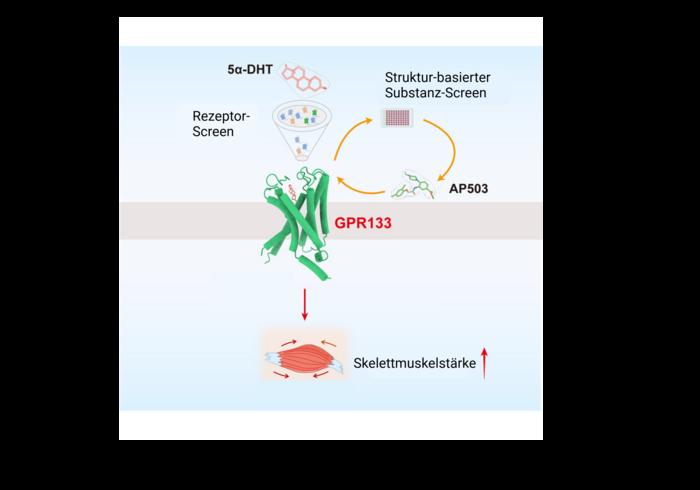
In this international study, the scientists showed that one of the adhesion G protein-coupled receptors – GPR133 – is activated by the androgenic steroid hormone 5α-DHT. Created in BioRender.
Androgens are hormones that control the development of male sexual characteristics. The most powerful of the androgens is called 5α-dihydrotestosterone (5α-DHT). Among other things, it is essential for bone and muscle function and for the development of secondary male sexual characteristics during puberty. As a driver of bone and muscle formation, 5α-DHT increases bone mineral density and promotes skeletal muscle growth to increase muscle strength.
In this international study, the scientists were able to show that one of the adhesion G protein- coupled receptors – GPR133 – is activated by the androgenic steroid hormone 5α-DHT. “This activation can, among other things, increase the contractile force of skeletal muscles, and our study also uses a newly developed, potent activator of this receptor to specifically trigger this effect,” says Professor Ines Liebscher, Professor of Signal Transduction at Leipzig University and co-leader of the study.
Increasing muscle strength with the chance of significantly fewer negative effects of androgens
Activation of GPR133 by the novel agonist AP503 increases muscle strength without triggering a specific negative effect that is otherwise observed when androgens are administered. For example, increased and prolonged exposure to testosterone can promote the development of prostate cancer, as evidenced by tissue changes in the prostate in mice after only two weeks of androgen administration. This side effect has not yet been observed with AP503.
In addition, the current study uses structural biology methods to elucidate the molecular basis of the interaction between the steroid hormone, the substance AP503 and GPR133. This will allow the activator to be specifically optimised and further developed into a new therapeutic agent. This could lead to the development of new muscle-strengthening drugs with a lower side-effect profile.
This publication is the result of a long-standing and successful collaboration between the Rudolf Schönheimer Institute of Biochemistry and the research group of Professor Jin-Peng Sun at Shandong University in China. The researchers are currently working on several follow-up studies to further investigate the use of AP503 in disease processes and the role of GPR133 in the organism. Here the data were analysed in animal models. Further studies are needed to investigate the applicability of the findings to humans.
More information: Research into signalling molecules such as adhesion G protein-coupled receptors has been a focus at Leipzig University for more than a decade. Scientists have made important discoveries about the activation, signalling and physiological functions of these receptors. The German Research Foundation (DFG)-funded Collaborative Research Centre 1423, “Structural Dynamics of GPCR Activation and Signaling”, is currently working intensively in this area.
Certain hormonal contraceptives are associated with a higher stroke and heart attack risk, finds a large study from Denmark in The BMJ today that draws on prescription records to give more precise estimates for different products than previous studies.
The highest risk estimates were for oestrogen containing products, in particular the vaginal ring and skin patch.
The researchers stress that the absolute risk remains low, but given the widespread use of these products and the seriousness of these conditions, they say clinicians should consider these potential risks when prescribing them.
Almost 250 million women worldwide are estimated to use hormonal contraception. Previous studies have suggested a potential increased risk of ischaemic stroke and heart attack with their use, but findings have been inconsistent.
There is also a lack of evidence on the effects of different hormone combinations, how they are taken (eg, pills, implants, injections, vaginal rings or skin patches), and for how long.
To fill this knowledge gap, researchers tracked national prescription records for more than two million Danish women aged 15-49 from 1996 to 2021 to find out if using contemporary hormonal contraceptives increased the risk of first-time ischemic stroke and heart attack compared with no use.
The different types of contraception they included were combined oestrogen-progestin pills, vaginal ring, patch, progestin-only pills, intrauterine devices, subcutaneous implant, and intramuscular injections.
Women were excluded if they had a history of blood clots, cancer, liver disease, kidney disease, polycystic ovary syndrome, endometriosis or infertility treatment, used psychiatric medication, hormone therapy, or had undergone a hysterectomy.
Cases of ischemic stroke and heart attack were recorded and other potentially influential factors such as age, education level, and existing conditions such as high blood pressure and diabetes were taken into account.
The most commonly used hormonal contraceptive - the combined oestrogen-progestin pill - was associated with double the risk of ischaemic stroke and heart attack, which translates to one extra stroke for every 4,760 women using the combined pill for one year, and one extra heart attack for every 10,000 women per year of use.
Progestin-only contraceptives, including pills and implants, carried a slightly elevated risk, though lower than the combined pills. Non-oral combined contraceptives, such as the vaginal ring and patch, had higher associated risks, with the vaginal ring increasing ischaemic stroke risk 2.4-fold and heart attack risk 3.8-fold, while the patch increased ischaemic stroke risk 3.4-fold.
The progestin-only intrauterine system was the only hormonal contraceptive not linked to an increased risk, making this option safer for cardiovascular health. Duration of use did not seem to influence the risk.
This is an observational study so no firm conclusions can be drawn about cause and effect, and the researchers can’t rule out the possibility that other unmeasured factors may have affected their results.
However, this was a nationwide study using high quality registry data that allowed for detailed tracking of hormonal contraceptive use, and results were consistent after further analysis, suggesting that they are robust.
As such, they conclude: “Although absolute risks were low, clinicians should include the potential risk of arterial thrombosis in their assessment of the benefits and risks when prescribing hormonal contraceptive method.”
These diseases are rare, especially in young women, notes Therese Johansson at the Swedish Institute of Technology in a linked editorial. Nonetheless, these side effects are serious and given that approximately 248 million women use hormonal contraceptives daily, the results carry important implications.
She calls for educational campaigns to help women make informed choices, alongside training for healthcare providers to ensure consistent and evidence based counselling.
Policy makers should also prioritise making safer alternatives for women with cardiovascular risk factors both affordable and accessible, particularly in low resource settings, where cardiovascular risks are frequently underdiagnosed and untreated, she adds.
Stroke and myocardial infarction with contemporary hormonal contraception: real-world, nationwide, prospective cohort study
Article Publication Date
12-Feb-2025
COI Statement
All authors have completed the ICMJE uniform disclosure form at www.icmje.org/disclosure-of-interest/ and declare: AM, ALM, and LSM have received support from Sygeforsikringen “Danmark”; no support from any organisation for the submitted work; HY reports having received research grants from the Laerdal Foundation and TrygFonden, not relevant for this study. AM reports having received a research grant from the Danish Cancer Institute, not relevant for this study. EL reports travel support/meeting fees from Radiometer, Gedion Richter, Pfizer, Merck, and Astella Pharma. CT-P has received grants from Novo Nordisk and Bayer outside of the current study. CBG reported receiving personal fees and grants from Boehringer Ingelheim, Bristol Myers Squibb, Daiichi Sankyo, Pfizer, Janssen, Bayer, AbbVie, Abiomed, Alnylam, Cardionomic, CeleCor Therapeutics, HingRui, Medscape, Medtronic, Merck, Novo Nordisk, Novartis, PLX Pharma, REATA, NephroSynergy, and Boston Scientific, not relevant for this study. All other authors declare no financial competing interests.
Discovering a clue to what causes reproductive complications
By studying how female eggs repair — or sometimes fail to repair — DNA damage, Mizzou researchers hope to improve reproductive health
COLUMBIA, Mo. -- Our cells constantly receive DNA damage from factors such as ultraviolet rays, irradiations, toxins and chemicals. For women, that can lead to poor egg quality, which in turn can cause infertility, miscarriage, birth defects or genetic disorders.
Researchers at the University of Missouri are now working to better understand a process that can help repair that damage.
In a recent study, a team led by Ahmed Balboula, an assistant professor in the College of Agriculture, Food and Natural Resources (CAFNR) and researcher at the Roy Blunt NextGen Precision Health building, is studying a process known as autophagy. The unsung hero of cellular biology, autophagy serves as the body’s natural defense mechanism, maintaining cellular health by recycling components, ensuring the body's systems stay balanced and functional.
But in Balboula’s recent study, his research team discovered that in female eggs, autophagy is less efficient when there is moderate or severe DNA damage, which is more common in older women.
“When autophagy activity decreases in DNA-damaged eggs or in maternally aged eggs, which have moderate DNA damage, there is an increased risk for aneuploidy,” Balboula said. “Aneuploidy — an abnormal number of chromosomes in a cell — is the leading genetic cause of miscarriage and congenital birth defects, including Down syndrome.”
Balboula and his team also discovered a possible solution. In the study, they found that by boosting or stimulating the process of autophagy in female eggs, they were able to improve egg quality by reducing DNA damage and the likelihood of abnormal chromosome numbers.
By successfully showing that stimulating autophagy can reduce the levels of DNA damage in female eggs, the findings can open up new directions for improving the quality of female eggs, ultimately improving reproductive health for both humans and animals.
“The deactivation of autophagy that we found is likely just one of many underlying mechanisms contributing to aneuploidy,” Balboula said. “Going forward, I will continue to explore other underlying mechanisms contributing to poor egg quality to ultimately further efforts to improve the quality of female eggs.”
Balboula came to Mizzou from the University of Cambridge in 2019 because of its strong reputation as a leader in reproductive biology research.
“I knew this was the place to enhance my career,” he said. “The collaborators, resources and research infrastructure here at Mizzou, especially within CAFNR, the Division of Animal Sciences and the NextGen Precision Health building, help us take our research to the next level, and we are just getting started.”
“Increased DNA damage in full-grown oocytes is correlated with diminished autophagy activation” was published in Nature Communications. The study was funded by the National Institutes of Health.
UVA Health's Melanie Rutkowski, PhD, and her team are expanding our understanding of the microbiome and how it influences diseases such as breast and ovarian cancer.
University of Virginia Cancer Center researchers have explained the failure of immune checkpoint therapy for ovarian cancer by discovering how gut bacteria interfere with the treatment. Doctors may be able to use the findings to overcome this treatment failure and save the lives of thousands of women every year.
The new discovery, from the lab of UVA’s Melanie Rutkowski, PhD, speaks to the surprising ways that the microbiome – the collection of organisms that live on and inside our bodies – is vital not only to maintain health but for the effectiveness of medical treatments.
As a leading microbiome researcher, Rutkowski is excited about the potential of her field to improve care not just for ovarian cancer but for many other cancers. She has already shown, for example, how an unhealthy gut microbiome helps breast cancer spread. “As soon as we are born, the gut microbiome is critical for educating our immune system so that diseases are controlled and that we are not damaged in the process by an over exuberant immune response,” she said. “We and others are discovering the far-reaching impact that microbiome/immune cell interactions have on almost every aspect of our being, from influencing metabolic health, organ health and even the relationship between the gut and the brain. This is why it is critically important to understand how the relationship between our microbiome and immune system changes during a disease like cancer, as this research could uncover novel therapies capable of helping the immune system kill cancer cells.”
Targeting Ovarian Cancer
Ovarian cancer kills more than 10,000 American women every year, making it the deadliest gynecological malignancy in the United States. Despite improvements in the clinical management of the disease, survival has improved very little during the past several decades. Doctors treating patients with ovarian cancer had been excited about the potential of immune checkpoint therapy – a form of immunotherapy that enhances the immune system’s ability to destroy cancer – only to find that the ovarian tumors were stubbornly resistant. This treatment approach is improving outcomes for patients with melanoma, bladder cancer and other cancers, so what is different about ovarian cancer?
Rutkowski and her team have finally found answers, and they found them in the tiny propellers bacteria use to move. These propellers, called flagella, are hairlike structures made of a material called flagellin. It is flagellin, the researchers found, that is the key to why immune checkpoint therapy does not help ovarian cancer patients as it does for patients with other types of cancer.
In ovarian cancer, Rutkowski and her team determined, bacteria and the flagellin they contain disrupt the success of the immune checkpoint treatment. The flagellin causes chaotic cellular communications that prevent immune cells from finding their way into and around the ovarian tumors. “We found that ovarian tumors enhance the ability of flagellin from the gut to get into the tumor environment, where they normally should not be,” Rutkowski said. “Because of the gut leakage, immune cells that recognize flagellin become reprogrammed to support tumor growth instead of supporting the killing of tumors during immune therapy.”
With the discovery, the tumors’ defenses could become their Achilles’ heel. The researchers found that, in early lab tests, they could block the chaotic signaling caused by the flagellin to restore the effectiveness of immune checkpoint therapy. “In mice whose immune cells that lack the ability to recognize flagellin, immune therapy induced long-term control of ovarian tumor growth in almost 80% of animals,” Rutkowski said. “That we observed this response using multiple aggressive ovarian cancer cell lines suggests that inhibiting this pathway has potential to enhance clinical outcomes for ovarian cancer patients.”
While much more research will need to be done, Rutkowski’s findings suggest we may yet have a way to turn immune checkpoint therapy into a powerful tool against ovarian cancer and, ultimately, save lives.
“The idea that immune cell recognition of bacterial flagellin leads to the failure of immune therapy is somewhat opposite to what is known about how this pathway influences immune cell behavior. We believe that there is a unique reason why flagellin inhibits immune therapy response for ovarian cancer specifically, which is an area we are actively investigating,” said Rutkowski, of UVA’s Department of Microbiology, Immunology and Cancer Biology. “The survival outcomes we are achieving in mice that lack the ability to recognize flagellin are extraordinary, especially if we manage to translate these observations into the clinic. I am very hopeful that this work will help to establish a dialogue about the potential that inhibiting the ability of immune cells to recognize bacterial flagellin may have for ovarian cancer patients.”
Rutkowski’s cutting-edge ovarian cancer research is part of UVA’s sweeping effort, called the TransUniversity Microbiome Initiative, to better understand and harness the microbiome to improve human health.
Findings Published
The researchers have published their findings in Cancer Immunology Research. The research team consisted of Mitchell T. McGinty, Audrey M. Putelo, Sree H. Kolli, Tzu-Yu Feng, Madison R. Dietl, Cara N. Hatzinger, Simona Bajgai, Mika K. Poblete, Francesca N. Azar, Anwaruddin Mohammad, Pankaj Kumar and Rutkowski. The scientists have no financial interest in the work.
The research was supported by the National Cancer Institute, grant R01CA253285, with personnel support from the American Cancer Society, UVA Cancer Center and UVA’s Beirne B. Carter Center for Immunology Research.
CHAMPAIGN, Ill. — According to some popular culture writers and online posts by discouraged singles lamenting their inability to find romantic partners, dating is “broken,” fractured by the social isolation created by technology, pandemic lockdowns and potential partners’ unrealistic expectations.
Yet two studies of college students conducted a decade apart found that their ideas about romantic relationships have remained much the same, although the trajectories of their relationships have changed somewhat, according to study leader Brian Ogolsky, a professor of human development and family studies at the University of Illinois Urbana-Champaign.
“College students in our study did not share this perception of dating as a broken system, despite many massive cultural shifts during this decade,” Ogolsky said. “Their perspectives on relationships today aren’t that different from what they were 10 years ago — or even 10 years before that. Instead, young adults are taking more diverse and multifaceted pathways through romantic partnering and considering a broader range of outcomes.”
Ogolsky surveyed college students ages 18-29 in 2012 and in early 2022, asking them to describe their thoughts and experiences about the typical initiation and progression of romantic relationships.
Published in the journal Personal Relationships, the study was co-written by Jennifer L. Hardesty, a professor in the same department; psychology professor Kiersten Dobson of McMaster University; and U. of I. graduate students Matthew Rivas-Koehl and Ghada Kawas.
More than 250 students were surveyed, about half of whom said they had romantic partners at the time.
Based upon participants’ responses, the researchers identified four stages of romantic relationships. The first stage, which they called “flirtationship,” may occur online or in person and involves the first sparks of attraction, fanning those embers through flirtation and exploring common interests.
If the attraction and level of interest are mutual, the individuals test the waters for “relationship potential” — the second stage in relationship development — by spending increased time together, with a heavy focus on communicative activities that probe whether the relationship should move forward. Study participants repeatedly mentioned friendship as an important basis for romantic partnerships, and they most often mentioned dating in reference to this stage, the data indicated.
“Young adults clearly distinguish dating from being in a relationship,” Ogolsky said. “In our study, we used the term ‘relationship development’ to describe the activities we were investigating, but it became clear that participants did not view early behaviors as part of being in a relationship per se. Instead, they viewed flirting and even dating as part of a broader pattern of interpersonal interaction that may or may not eventually lead to the formation of a relationship.”
If romance does blossom and the union progresses to the third stage — being in a relationship — defining their union becomes important to the partners, such as labeling their status as “official” and identifying themselves as significant others, the researchers said.
Although those in the first study were less likely to mention sexual activity, students in both studies were more likely to talk about it in the context of defining the relationship. And the researchers found that the majority of the students in both studies implied an expectation of exclusivity and monogamy from committed relationships.
Although many studies on young adults’ relationships have focused on hookup culture — casual sex without commitment — only nine of those in the more recent study mentioned it. And the researchers hypothesized that college students may use the term when referring to sexual activity in any context, even that which occurs within a predefined relationship.
Ogolsky said it was during the third stage that the greatest differences emerged between the two groups of students’ beliefs. Those in the 2012 study were more likely to believe that the typical relationship path was for partners to become engaged after becoming official. However, those in the 2022 study rarely mentioned engagement, saying instead that commitment proceeds in more diverse pathways such as moving in together.
“Another difference we found pertained to integrating romantic partners into one’s social circle,” Ogolsky said. “For the students in 2012, this process centered around introducing a new partner to family members. However, those in the more recent study viewed it as integrating the partner into one’s broader social networks of friends as well as family members.”
In the fourth relationship stage — called “commitment or bust” — Ogolsky said that participants described arriving at an eventual crossroads, where the partners either decide to marry or enter into another type of long-term legal commitment or go their separate ways.
Surprisingly, despite the rapid growth in social media, dating apps and other platforms for meeting potential partners that proliferated across the decade between the two surveys, technology did not play as big a role in the minds of the participants as expected, Ogolsky said.
“When we ask people about relationship prototypes, they're not talking about technology,” he said. “They're thinking about relationships in broad strokes. And we found it interesting that the centerpiece of relationships was not dating apps, artificial intelligence or robots or all the other things we may have predicted 25 or 40 years ago.”
The work was supported by a HATCH grant from the U.S. Department of Agriculture’s National Institute of Food and Agriculture.
Despite many societal changes, including technology such as dating apps and young adults waiting longer to get married, two surveys of college students conducted 10 years apart showed that their expectations about romantic relationships have remained remarkably consistent, according to a new study led by Brian Ogolsky, a professor of human development and family studies at the University of Illinois Urbana-Champaign.