Monday, February 17, 2025


Sudanese Foreign Minister: No Obstacles for Russian Base in Port Sudan
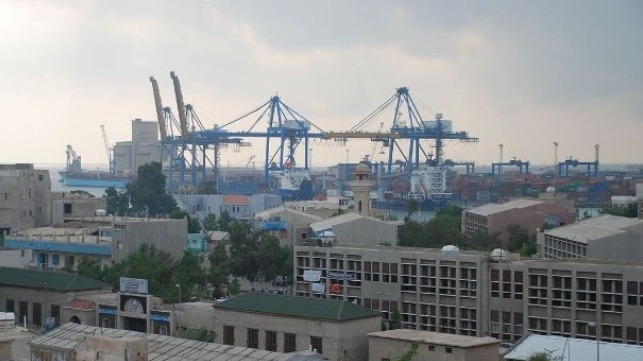
Port Sudan
Port Sudan (file image)

Published Feb 16, 2025 2:57 PM by The Maritime Executive


With Russia’s footprint in the Mediterranean facing uncertainty, the deal for a naval base in Sudan has reached a new milestone. Last week, Sudanese Armed Forces (SAF) foreign minister Ali Youssef Ahmed al-Sharif was in Moscow, where he met his Russian counterpart Sergei Lavrov. Although the negotiations for the base were not part of the meeting, Ali Sharif said there was no disagreement on the deal, assuming that the SAF can win or reach a stalemate in its two-year civil war against the breakaway Rapid Support Forces (RSF).

“There was a deal which was signed and there are no obstacles. We are in complete agreement,” said Sharif.

Russia signed an agreement with the government of Sudan for the naval base under the regime of former dictator Omar al- Bashir, who was ousted in a coup by his former generals back in 2019, leading eventually to the SAF’s rule over most of the country. In 2021, SAF leaders said that the government would review the deal to align with the country’s interests.

The ongoing civil war in Sudan since 2023 has stalled progress on the base deal. A logistical base for Russia is Sudan - the first in Africa - could provide Moscow with desperately-needed access to a regional basing arrangement. Russia’s 50-year foothold in the Mediterranean at the port of Tartus, Syria, is endangered and may already be lost. The setbacks facing the Russian Mediterranean flotilla has likely sent Moscow on an overdrive for an alternative base. It remains to be seen if Eastern Libyan warlord Khalifa Haftar or the government of Algeria might offer a base to the Russian Mediterranean fleet, or if such a basing arrangement could be a suitable replacement for Tartus.

Either way, the willingness of Sudan to offer Russia a base is still good news for Moscow. As a logistics support point for the Russian navy, the Port of Sudan could easily accommodate four warships, including nuclear-powered ones. Some analysts believe that the base would restore Russia’s permanent presence in the Indian Ocean. Russia lost this privilege at the end of the Cold War: the Soviet-era naval base in Berbera, Somalia closed in 1997, and the Nokra base in Eritrea (then part of Ethiopia) closed in 1991.

But given its location, the Port of Sudan base would have serious limitations as an alternative launch pad for reconstituting Russia’s Mediterranean Flotilla.

“The logistical constraints of negotiating Suez Canal, particularly in cases of requiring emergency maintenance, are significant. Operationally, canal transits also clearly signpost ship movements to adversaries,” argue naval experts Edward Black and Sidharth Kaushal.  


Iran's "Drone Carrier" May Join Exercise With Russia and China

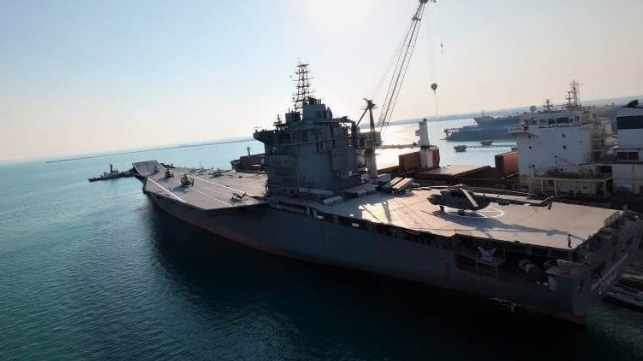
Converted boxship Shahid Bagheri, Iran's "drone carrier" (Sepah News / CC BY 4.0)

Published Feb 16, 2025 1:44 PM by The Maritime Executive


The annual Iranian-Chinese and Russian naval codenamed Exercise Maritime Security Belt normally takes place in mid-March, in a pattern established over a number of years. 

Maritime Security Belt 2025 is likely to feature the outgoing Chinese Navy Group, which is nearing the completion of its six month forward deployment to the PLA Navy’s Project 141 Overseas Support Base at Doraleh, in Djibouti. The departing 46th Naval Escort Group consists of the Type 052D destroyer Jiaozuo (D163), Type-054A frigate Xuchang (F536) and the Type 903A logistics vessel Honghu (K963). 

The Maritime Security Belt 2025 exercise will be the first of a number that they will carry out with cooperating navies on their way back to their homeport of Zhanjiang in Guangdong, headquarters of the PLA Navy’s South Sea Fleet. 

The Chinese Navy’s Project 141 Overseas Support Base at Doraleh, in Djibouti (Google Earth)

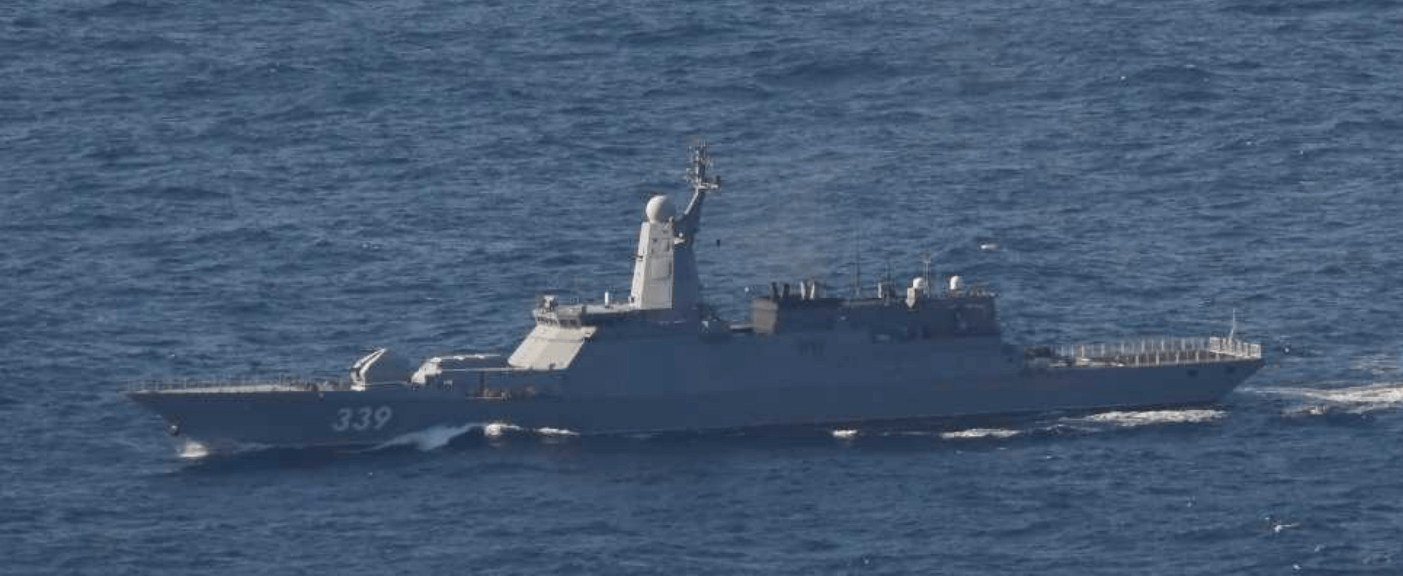
The Russian participants are likely to be Steregushchiy Class Project 20380 missile corvettes Hero of the Russian Federation Aldar Tsydenzhapov (F339) and Rezkiy (F343) and the oiler Pechenga (IMO 7710977). The Press Office of the Pacific Fleet via Izvestia reported their departure from Vladivostok on February 3 for "tasks in the Asia Pacific Region." While transiting the Sea of Japan the flotilla conducted air defence training to counter drones and drills ‘to repel attacks of uncrewed boats’, which could be useful if any of Iran’s Houthi allies operating in the Red Sea and Gulf of Aden mistakes the Russian ships for unfriendly vessels.

The Pechenga is sailing without its AIS automatic identification system switched on, but the flotilla en route is known to have arrived off Bali on February 15 to take part with the Indonesian Navy in Exercise Komodo-2025.

Hero of the Russian Federation Aldar Tsydenzhapov (F339) (Japan Ministry of Defense, 2021)

The Iranian naval representation in the exercise, from the both the IRGC (Nedsa) and regular Navy (Nedaja) will become apparent closer to the time and will be dependent on ship serviceability, always an issue in the aging Iranian fleet. However, the exercise is likely to feature drone and missile firings, which is the Iranian preoccupation at present.

It may also present the Nedsa an opportunity to demonstrate that their new drone carrier Shahid Bagheri (C110-4), last seen in its normal anchorage off Bandar Abbas on a cloudless February 1,  is operationally viable.  Some press reports greeted the Nedsa’s promotional video of a small jet-powered one-way attack drone, akin to a model aircraft, taking off from the Shahid Bagheri as representing a radical shift in the balance of power at sea which would concern Israel. 

Whilst one-way drone launches may be viable, the ship can launch missiles, helicopters and fast attack boats, as any frigate could. But there is no indication yet that a fixed-wing air vehicle could recover to the Shahid Bagheri’s 180-meter flight deck, overcoming the pitch and roll characteristics of the off-center flight deck and air turbulence created by the ship’s towering sterncastle. 

Except in conditions of stable peacetime, the survivability of this 20-year-old converted tanker in wartime, or even in times of increased tension, would probably be measured in hours rather than days. Notwithstanding its sturdy Korean construction, a ship surveyor would probably have consigned the Perarin to the scrap heap rather than allow it to be converted into the Shahid Bagheri, pride of the Nedsa fleet.

Top image: Converted boxship Shahid Bagheri, Iran's "drone carrier" (Sepah News / CC BY 4.0)

The opinions expressed herein are the author's and not necessarily those of The Maritime Executive.

Royal Navy Escorts Russian Evacuation Flotilla Through English Channel

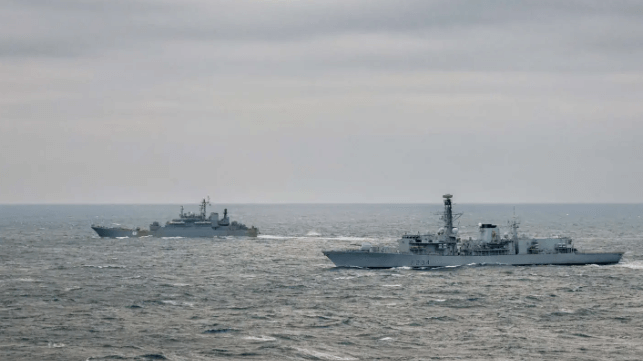
HMS Iron Duke (right) with the Russian amphib Alexander Otrakovsky (Royal Navy)

Published Feb 16, 2025 12:37 PM by Royal Navy News

Royal Navy warships and aircraft shadowed a Russian task group in the English Channel in a concentrated operation last week.

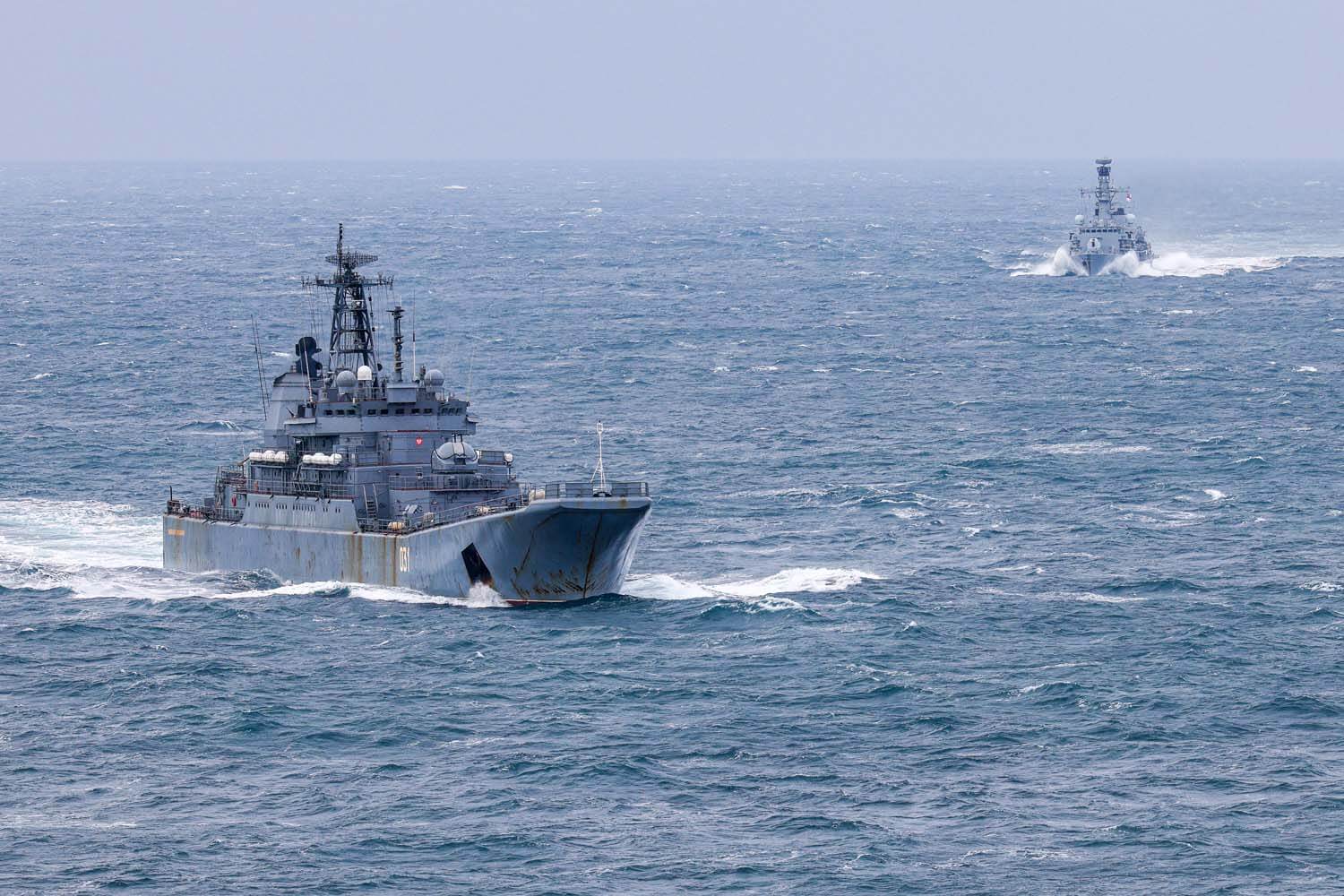
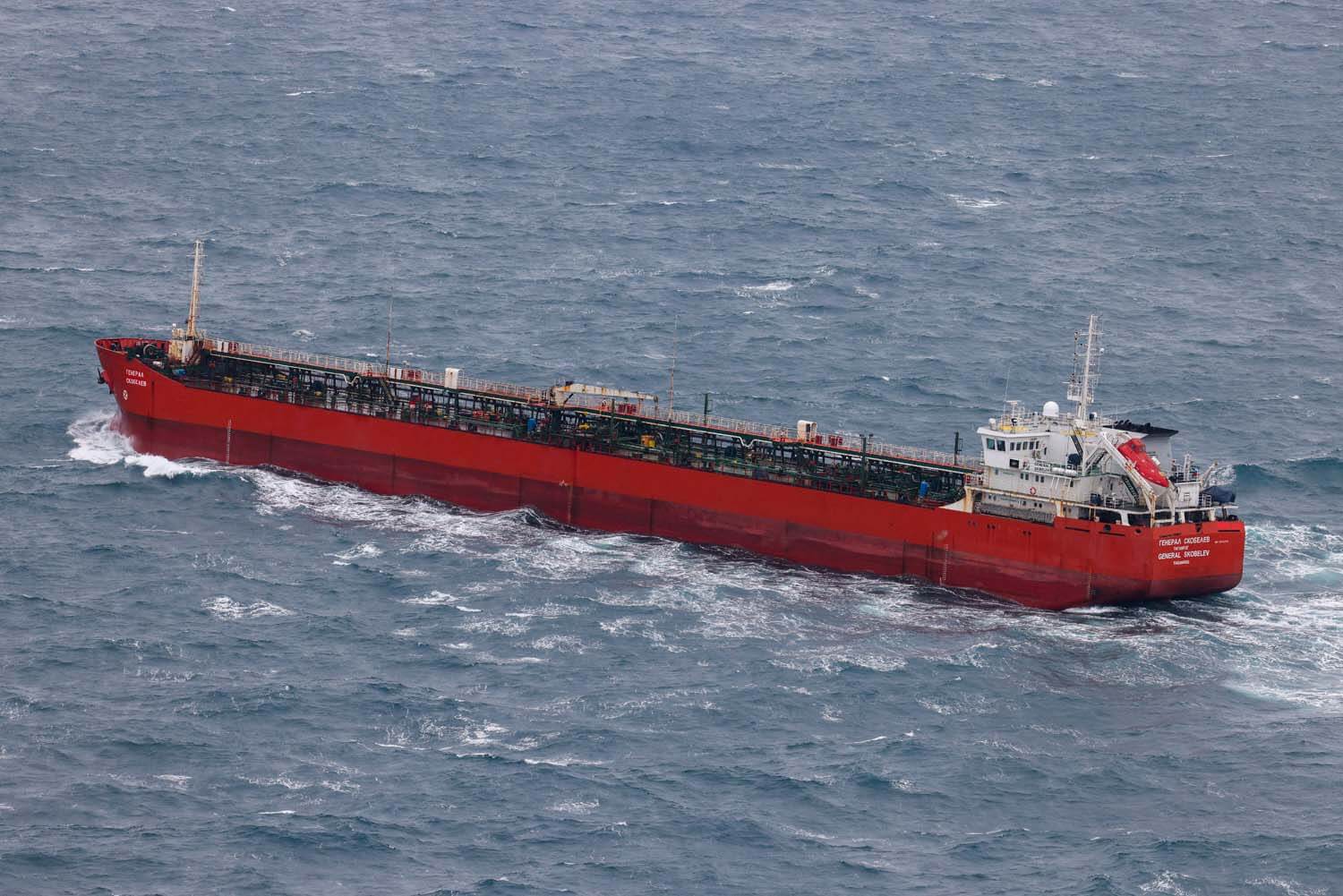
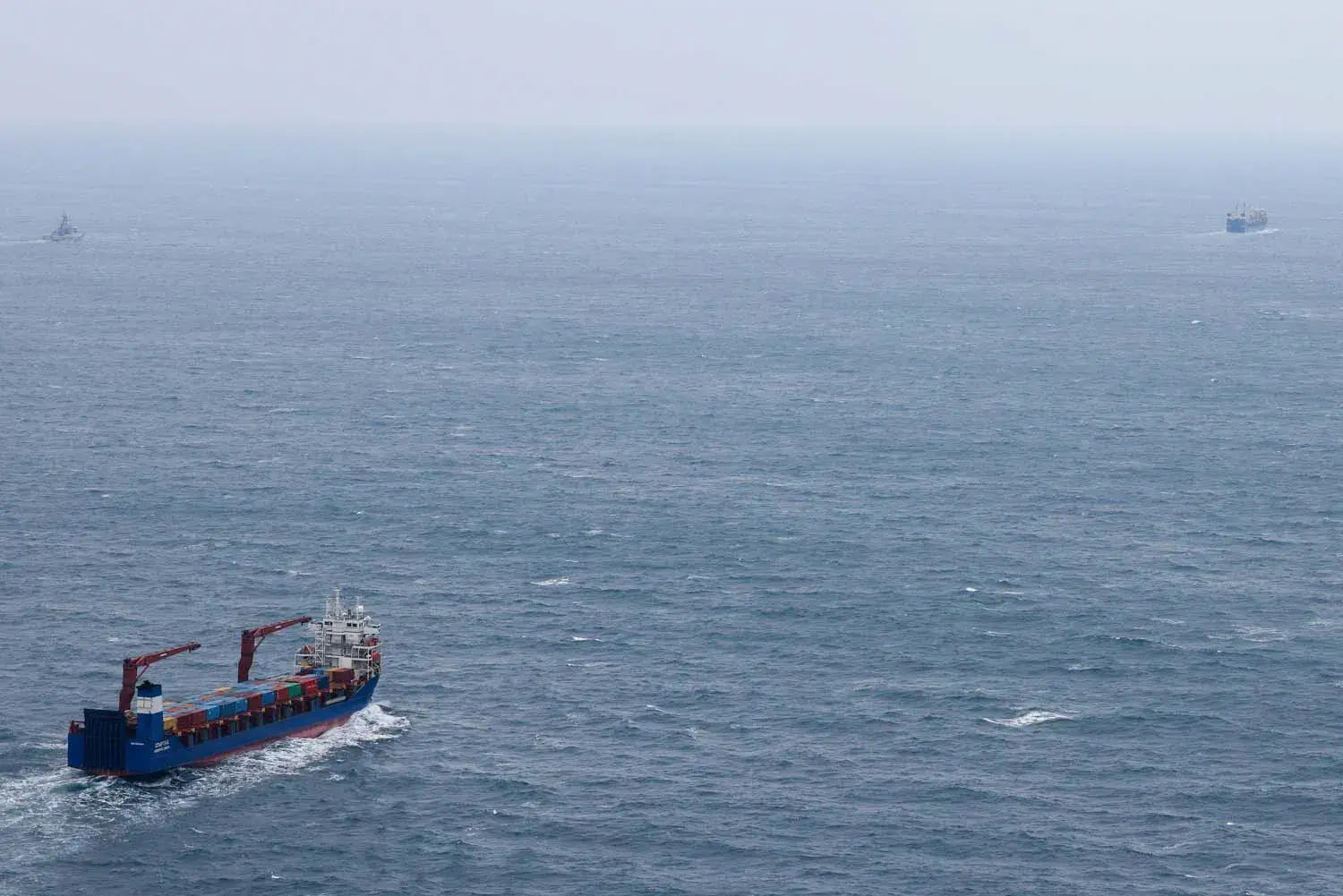
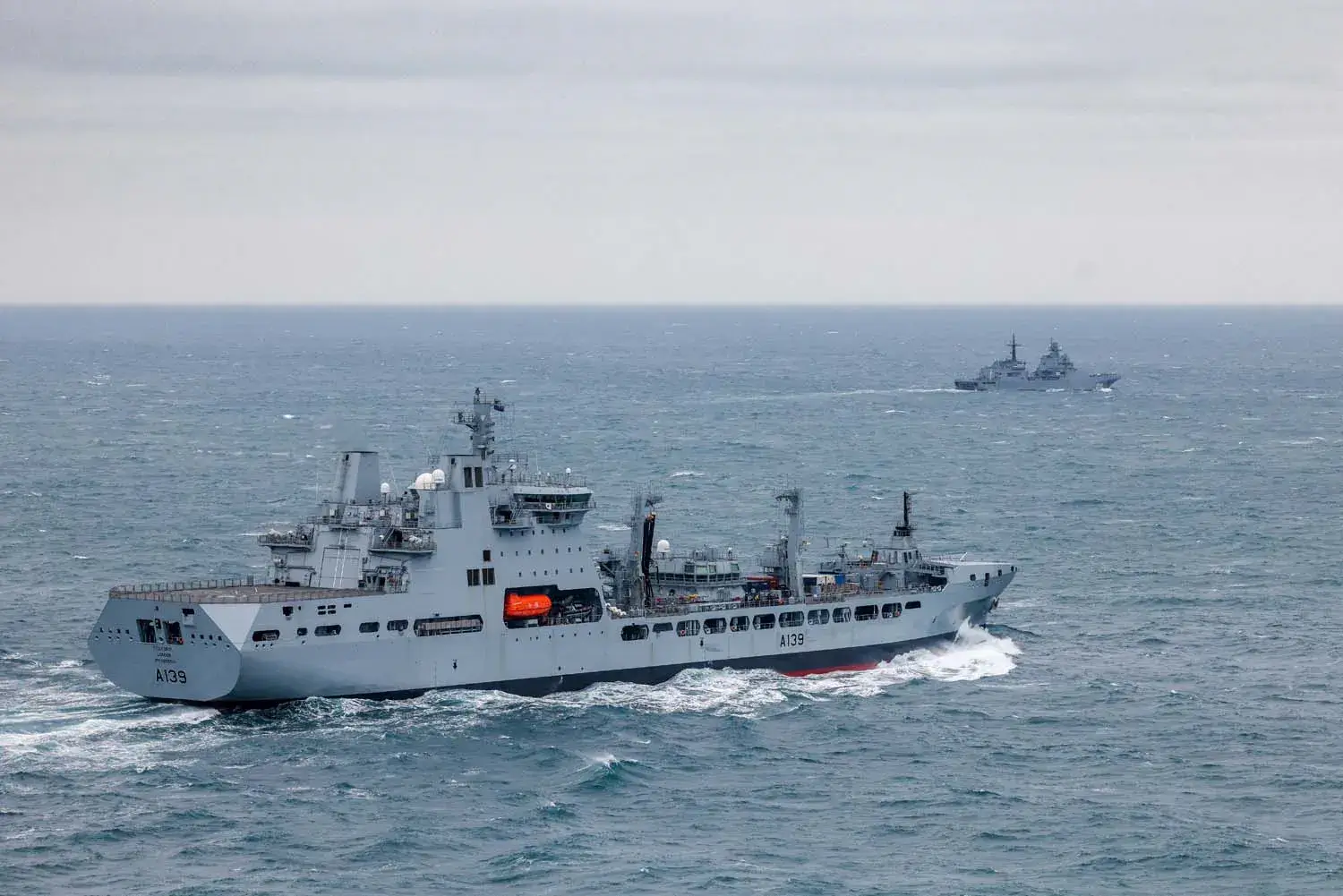
HMS Iron Duke, HMS Tyne, a Wildcat helicopter from 815 Naval Air Squadron and RFA Tideforce reported on every move of landing ships, RFS Aleksandr Otrakovskiy and RFS Ivan Gren, and merchant vessels Sparta, Sparta II and General Skobelev and oiler Yelnya.

The group of six Russian vessels departed the Mediterranean recently, sailing through the busy international shipping lane in the English Channel as they sailed towards a Russian Baltic port.

"Whilst this particular Russian task group was not assessed to pose a specific threat to the UK, this closely coordinated operation demonstrates our steadfast determination to protect our nation’s territorial seas and Critical National Infrastructure; on which our economic prosperity depends," said Commander David Armstrong, CO of Iron Duke. "It is not enough to hope passing non-allied warships will not threaten our maritime security – we will be there to make sure they can’t."


Ropucha-class amphib Alexander Otrakovsky (Royal Navy)

Russian tanker General Skobelev, sanctioned (Royal Navy)


The Tartus evacuation flotilla: Sparta and Sparta II, both sanctioned (Royal Navy)

The fleet oiler RFA Tideforce escorts the Russian Navy frigate Ivan Gren (Royal Navy)

The Royal Navy maintained constant watch on the Russian task group, utilizing a range of sensors and cutting-edge technology to ensure accurate reporting of the transit.

Plymouth-based frigate Iron Duke – the Royal Navy’s Fleet Ready Escort – was activated to meet tanker Tideforce and patrol ship Tyne as the Russians entered the Channel.

While this is routine for the navy, it is still a skilled and complex operation, requiring close coordination and seamless cooperation with European allies, which deployed their own naval and air force assets.

Tideforce was the first UK ship to escort the task group, just west of Brest on the French coast.

The Russian group broke off into two groups in the Channel, with the Wildcat from 815 Naval Air Squadron and RAF P8 Maritime Patrol Aircraft providing critical information on movements from the air.

This latest operation follows the shadowing of a suspected Russian spy ship by HMS Somerset and HMS Tyne last month. The Yantar was tracked through the Channel and Strait of Dover.

This article appears courtesy of the Royal Navy and may be found in its original form here.

The opinions expressed herein are the author's and not necessarily those of The Maritime Executive.


Restricted in the West, Russia Expands Trade Links in Southeast Asia

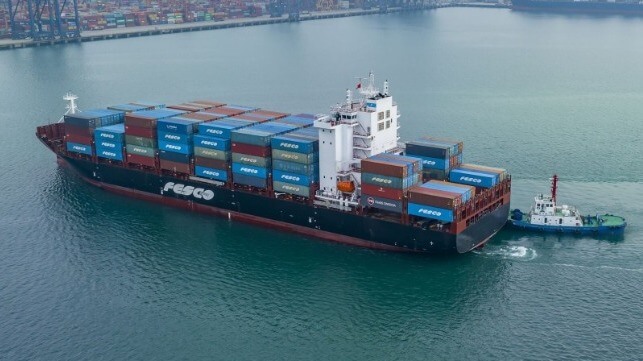
FESCO
Courtesy FESCO

Published Feb 16, 2025 2:26 PM by The Maritime Executive


The Russian container line FESCO is further expanding its Intra-Asia service to include a new port call in Pasir Gudang, Malaysia. This becomes the second port of call for FESCO in Malaysia.

FESCO entered the Malaysian shipping scene almost six months ago, with a service at Port Klang connecting to the Vietnamese port of Ho Chi Minh City. The route is served once a week, with a transit time of three days between the ports.

The addition of Pasir Gudang will expand the geography of the FESCO Intra Asia Service (FIAS) between Malaysia and Vietnam, according to the company. The service is served by a 400 TEU containership from the FESCO fleet. The first departure from Pasir Gudang took place on February 8.

“Pasir Gudang is one of the largest ports in Malaysia, which is literally next door to Singapore. Our team did a great job for FESCO to receive permission for cabotage transportation from the Malaysian authorities. On the very first voyage, we sent cargo not only from Pasir Gudang to Russia via our hub in Ho Chi Minh City, but also carried out domestic transportation between Malaysian ports,” said German Maslov, Vice President of FESCO’s Liner Logistics Division.

Maslov added that FESCO is planning to expand FIAS to Thailand and also studying the possibility of adding a second vessel to the service. FESCO wants to develop FIAS as an Asian feeder line to deliver additional cargo volumes to Russia from markets such as Malaysia, Sri Lanka, Singapore, Indonesia, Bangladesh, India and Thailand.

The ramp-up of FESCO’s service in Southeast Asian countries follows the launch of a subsidiary enterprise, DBF Logistics Vietnam, back in December. Besides FIAS, the new company will ensure smooth operation of the FESCO Vietnam Direct Line, which connects Russia’s Far East Port of Vladivostok and Vietnam’s Haiphong and Ho Chi Minh City.

“The container transportation market is actively developing between Russia and Vietnamese ports. We transported 25,700 TEU last year. Therefore, we essentially grew several times over in three years,” said FESCO’s Group President, Pyotr Ivanov.

Meanwhile, as the West tightens economic sanctions against Russia, there is a noticeable drop in the amount of liquid cargo handled at Russian ports. Last week, the Russian Commercial Seaports Association reported that cargo handling in major ports fell by 1.6 percent year-on-year to 71.6 million tons in January. Liquid cargo transshipment fell 6.1 percent to 37.3 million tons, including 8.5 percent to 21.2 million tons of crude oil and 5.1 percent to 11.6 million tons of oil products. However, handling of liquefied natural gas (LNG) rose 4.4 percent to 3.4 million tons.


After Collision, Carrier USS Harry S. Truman Pulls Into Souda Bay

USN
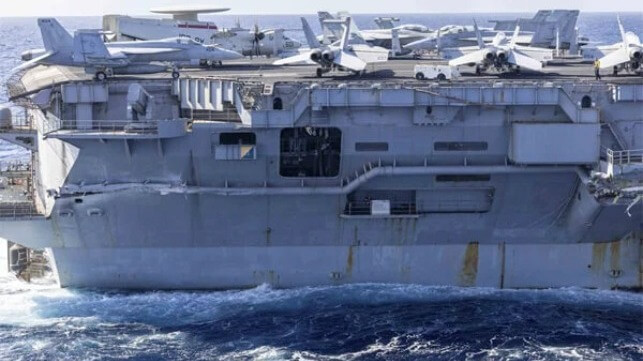
Minor damage on the starboard quarter: hull damage above the waterline, center left, and a damaged sponson, center right (USN)

Published Feb 16, 2025 7:04 PM by The Maritime Executive


The carrier USS Harry S. Truman has arrived in Souda Bay, Crete for emergency repairs after a collision damaged her starboard quarter on Wednesday night. The impact caused minor damage to the hull and several exterior structures, but the impact was comparatively limited. 

“While the ship is fully mission capable and the ship conducted flight operations following the collision, pulling into port for emergent repairs will enable the ship to continue deployment as scheduled,” said Capt. Dave Snowden, Harry S. Truman’s commanding officer.

The hull damage - all above the waterline - includes the exterior bulkheads of two storage rooms and a maintenance space. Externally, the impact damaged a line handling space, a part of the fantail, and the platform above a storage space. Luckily, the aircraft elevator located in the same area sustained no damage, and the command says that it is fully operational. 

Forward-deployed maintenance units in Souda Bay are carrying out an assessment and repair process to fix the damage. 

“The Harry S. Truman Carrier Strike Group (HSTCSG) units remain operational across geographic regions in support of their component commanders,” said Rear Adm. Sean Bailey, commander of HSTCSG. “Our mission has not changed and we remain committed to responding to any challenge in this dynamic and global security environment.”

The Navy has not yet released the details of Truman's collision with the bulker Besiktas M, which occurred off Port Said at about 2345 hours local time on Wednesday night. From images of the damage aboard Besiktas M, the merchant ship's starboard bow appears to have made contact underneath the deck overhang on Truman's starboard quarter, tearing a mooring winch free of the bulker's forecastle. 


MAIB: Open Drain Caused Deadly Capsizing in North Sea

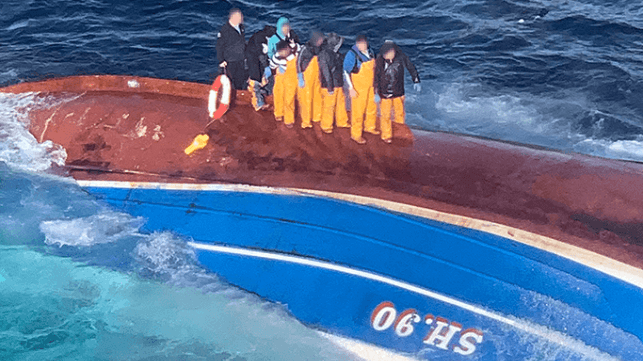
The crew of the Njord, moments before the vessel sank (MAIB)

Published Feb 16, 2025 11:08 PM by The Maritime Executive


MAIB has published its final accident investigation report into the capsizing and foundering of stern trawler Njord, which went down about 50 nautical miles north-east of Peterhead, Scotland in 2022. MAIB found that post-construction modifications had reduced the vessel's initial stability, and that a large haul of fish was enough to capsize the vessel. 

On March 5, 2022, the 27-meter Njord departed Peterhead to fish in the Norwegian sector of the North Sea, with a crew of eight on board. In the early hours of the following morning, Njord arrived at a position about 130 nautical miles north-east of Peterhead and put out its fishing net over a gas pipeline from the Sleipner A gas platform. The vessel towed its net along the pipeline until 1100, when the net was hauled in. The catch was the largest the crew had ever seen, the equivalent of roughly 30 tonnes of fish. 

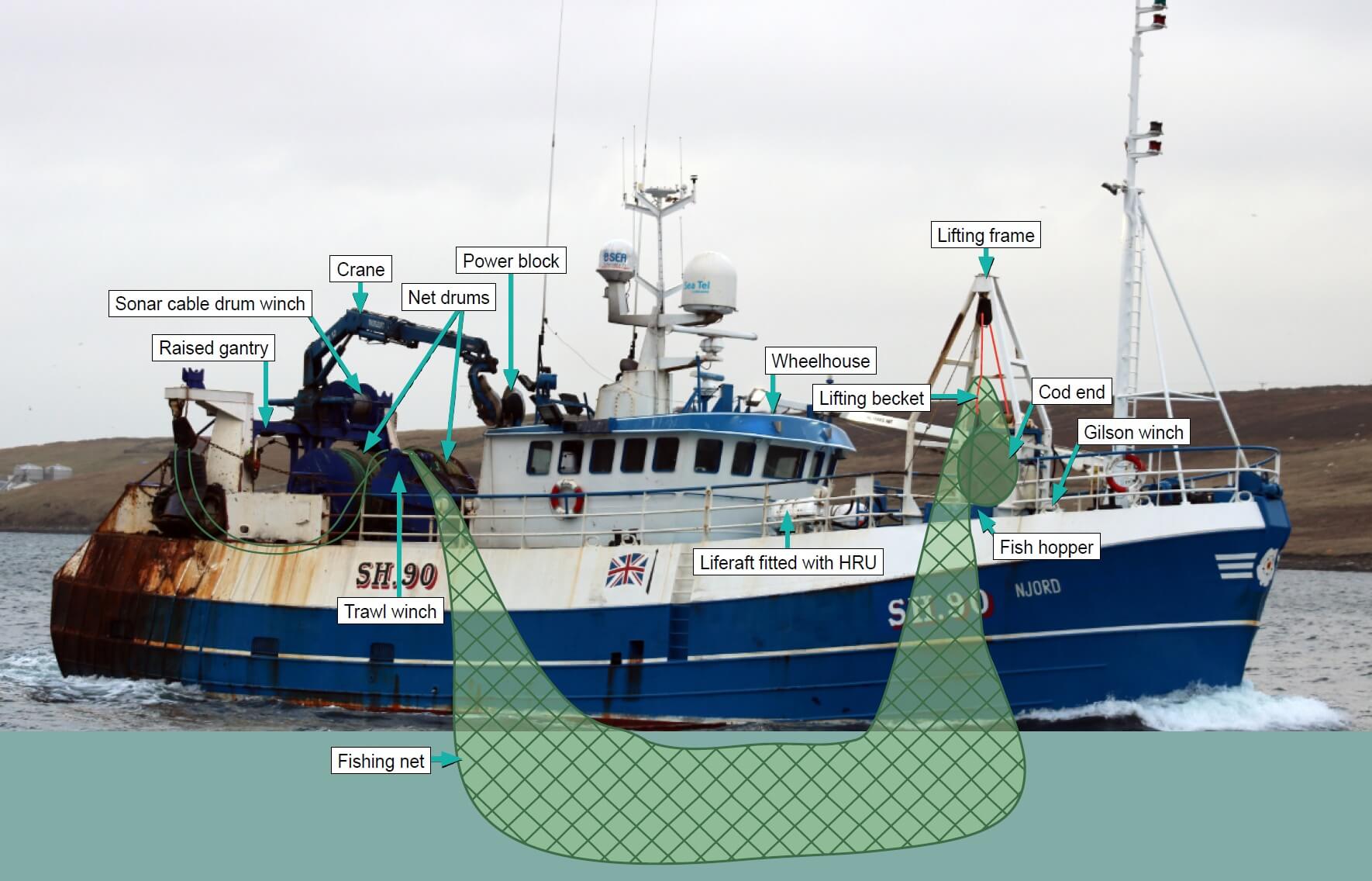
Njord was a 1992-built trawler with a setup not commonly found in high-seas fisheries. Her net reels were at the stern, but recovery of the catch occurred on the starboard bow. The cod end had to be hauled up over the starboard rail using a winch and lifting frame, and then the fish were fed into a hatch in the foredeck for processing. 

Courtesy MAIB

This time around, the catch was 30 times as abundant as usual. The crew towed the cod end around to the starboard side using a power block, then used a loop of line and a winch to haul up about one tonne of fish at a time into the hopper on the foredeck. After about ten lifts and ten tonnes in the hopper, the Njord had a list of about 10-15 degrees. The crew went below to start processing the catch. 

Within an hour, they had only processed and stowed about three tonnes of the fish, and the skipper wanted to move more quickly. He ordered them to haul up more of the catch and fill the hopper again. Two more lifts went well enough, but on the third lift, the vessel took on a heavy list from the weight of the fish hanging from the net reel and the winch on the bow. 

As the list increased, the Njord began to downflood, and the situation changed very rapidly. Despite efforts to cut loose the net, the Njord slowly rolled over to starboard, and the crew escaped by climbing out onto the port side of the hull and walking up onto the upturned keel. For floatation, they had only one life ring for eight people, and no immersion suits. None of the life rafts popped to the surface; it is likely that they were all caught in the vessel's rigging and deck gear. 

The vessel's EPIRB self-activated at about 1340, and the Norwegian Coast Guard launched a response. A SAR helicopter dispatched from the Johan Sverdrup oil platform arrived on scene at about 1416 and stood by as the OSV Olympic Challenger approached to conduct a surface rescue. As the Challenger prepared to launch its fast rescue boat, the Njord suddenly began to sink from beneath the survivors' feet. Within moments, all eight fishermen were in the water: six who were hanging on to one lifering, and two who were attempting to swim to stay afloat. 

The SAR helicopter crew deployed their rescue swimmer to try to save the two men who had nothing to hang onto. The first fisherman to be hoisted up was retrieved alive, though he was briefly unconscious and had ingested water and diesel. The second was pulled up six minutes later. By the time the rescue swimmer got to him, he had sunk below the surface, and he was retrieved in an unresponsive state. Despite medical attention he did not recover. 

The SAR helicopter recovered one more survivor from the life ring group, then headed for shore; the Olympic Challenger's fast rescue boat saved the last five survivors. 

In 2021, before the casualty voyage, the Njord had been modified with the addition of two prawn net reels and an icemaker towards the stern, but no evaluation was made of the effect on stability. MAIB reconstructed the vessel's stability based on the best available figures, and found that the vessel may have failed the test on one of seven standard loading conditions (though the findings were not definitive). 

Additionally, MAIB found that progressive flooding began rapidly through an unapproved and undocumented drain pipe that had been installed through a watertight bulkhead on the starboard side. Assuming that the valve on the drain had been left open, modeling suggested that the passageway probably began flooding through the drain at about 17 degrees of inclination, and a load of about 4 to 7.5 tonnes on the net would have been enough to start the process. 

"It is likely that Njord would not have capsized had the valve on the drain been closed, as it should have been, while the vessel was at sea," MAIB concluded. 

That reduced downflooding angle, combined with the extreme luck of a 30-tonne catch, may have been enough to sink the ship - and the crew may have been willing to overlook the danger signs, especially in flat-calm surface conditions. 

"It is likely that the new experience of such a large catch led the crew to perceive Njord’s heavy listing as normal under the circumstances. A large catch meant significant remuneration for all of the crew as share fishermen, and their delight might have influenced their judgment of and consideration towards safety," wrote MAIB. "Had the net been cut away immediately, and the additional fish not been added to the hopper, the vessel might have been saved."

MAIB noted that the crew were incredibly lucky that the EPIRB had floated free. The captain did not manage to get off a VHF distress call before the capsizing, and if the EPIRB had not activated itself and reached the surface, it is likely that the entire crew would have perished in the cold water. 


Crew Rescued After MSC Containership Grounds in Storm off Newfoundland

containership aground
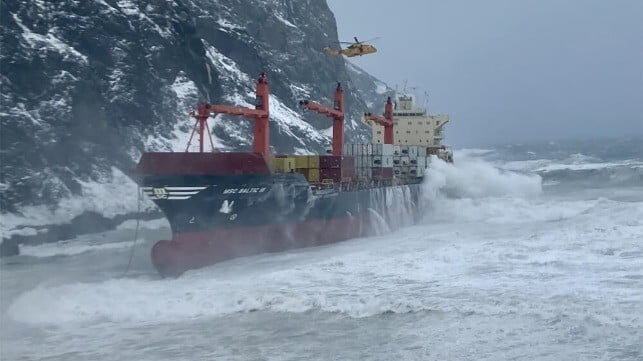
MSC Baltic III blacked out and was driven ashore on Newfoundland, Canada (Canadian Coast Guard)

Published Feb 15, 2025 3:25 PM by The Maritime Executive


Multiple teams from Canada responded Saturday morning after an MSC containership issued a mayday call during a strong winter storm. A helicopter from the Canadian SAR team was able to rescue the 20 crewmembers despite the severe conditions.

The MSC Baltic III (33,767 dwt) reported that it lost power and was unable to anchor due to the strong storm. Winds were up to 75 mph and seas were running at up to 6 meters (20 feet) along the west coast of Newfoundland. The vessel was scheduled to be in Corner Brook, Newfoundland departing for Saint John and then Freeport in the Bahamas.


The containership was about 12 nautical miles outside the entrance to the Bay of Islands when the ship blacked out. It was driven ashore in Wild Cove west of Lark Harbor on the western coast of Newfoundland along the Gulf of St. Lawrence. 

"The vessel’s propulsion fuel is marine diesel, and the vessel is sitting on rocks on the shoreline. So we’re concerned that it may breach the hull, but at this point in time in time there’s no breach and no oil on the water,” Canadian Coast Guard response officer Bruce English told the Canadian Press on Sunday. 

Built in 2003, the vessel is registered in Liberia and has a capacity of 2,478 TEU. It is owned by NordBaltic operating since 2021 for MSC Mediterranean Shipping Company. The ship is 679 feet in length.

The Canadian Coast Guard vessel Henry Larsen was in the area supporting the SAR team and the Cormorant helicopter which was able to rescue the crew. Local emergency and fire teams also responded to the calls for assistance. The Coast Guard reports the Henry Larsen remains in the area. A mobilization of crews and equipment is also underway to reach the stranded vessel.


Are we still primitive? How ancient survival instincts shape modern power struggles


Taylor & Francis Group


The evolutionary roots of human dominance and aggression remain central to social and political behaviour, and without conscious intervention these primal survival drives will continue to fuel inequality and division.

These are the arguments of a medical professor who, as global conflicts rise and democracies face growing challenges, says understanding how dominance and tribal instincts fuel division is more critical than ever.

In A New Approach to Human Social Evolution, Professor Jorge A. Colombo MD, PhD explores neuroscience, anthropology, and behavioural science to provide a new perspective on human social evolution.

He argues that fundamental behavioural drives – such as dominance, survival instincts, and competition – are hardwired into our species and continue to shape global politics, economic inequality, and social structures today. Without a conscious effort to counteract these instincts, we risk perpetuating the cycles of power struggles, inequality, and environmental destruction that define much of human history.

“In an era marked by rising authoritarianism, economic inequality, environmental crises, and nationalism, understanding how ancient survival mechanisms continue to shape human behaviour is crucial,” he explains. “With increasing polarisation in politics, conflicts over resources, and the struggle for social justice, I contend that only through education and universal values can humanity transcend these instincts to foster a more sustainable and equitable society.”

Professor Colombo, who is a former Full Professor at the University of South Florida (USA) and Principal Investigator at the National Research Council (CONICET, Argentina), explains how current human behaviour evolved based on an ancient heritage of animal drives which has been progressively built and placed into practice— grounded on survival, social gain, and profit— and is compressed to our basic neural systems and basic survival behavioural construction.

When humans shifted from prey to universal predator, it affected the organization of the human brain, he argues. However, the human species also had to contend with the notion of mortality, and so in our core neural circuits (mainly in the basal brain) survive our basal drives (reproductive, territorial, survival, feeding), basic responses (fight, flight), and the thresholds for their behavioural expression.

Over time, he explains, thanks to the brain’s plasticity, it has added a neurobiological scaffolding on top of our animal drives, allowing for the emergence of traits such as creativeness, cognitive expansion, artistic expression, progressive toolmaking, and rich verbal communication.

Nevertheless, he argues, these traits did not deactivate or suppress those ancient drives and only succeeded in diverting (camouflaging) their expression or repressing them temporarily.

He argues that humans are bound to their ancestral demands imprinted as a set of basic drives (territorialism, reproduction, survival, secure feeding sources, dominance, and cumulative behaviour), which exist in friction with our cultural drives.

“Ancient animal survival drives persist in humans, masked under various behavioural paradigms. Fight and flight remain basic behavioural principles. Even subdued under religious or mystic beliefs, aggressive and defensive behaviours emerge to defend or fight for even the most sophisticated peaceful beliefs, and events throughout humankind’s history support this evidence,” he explains.

He points to examples of dominance in politics (military oppression, propaganda, or financial repression), religion (punishing gods, esoteric menaces), and education (forms of punishment and thought process conditioning).

However, dominance exerted through political, economic, social class, or military power adds privileged structures to social construction, Colombo argues.

As a dominant species with evolved cultural and technological strategies, it has resulted in the over-exploitation of natural resources, the development of arms of massive destruction, strategies to foster massive consumerism, and political means to manipulate public opinion, which also, in turn, create poverty, deprivation, marginalization, and oppression.

He argues that without education and the promotion of universal values involving individual opportunities to evolve and protect the environment, more communities will become undernourished, impoverished, and without access to primary healthcare or adequate education for the continuous changes in the modern world.

He points to AI as an example of a growing, uneven educational gap that would reinforce socioeconomic disparity and social inequality. He argues that people should proactively create policies to work towards a viable, multicultural, equitable humanity and an ecologically sustainable planet.

“The aggressiveness, cruelties, social inequities, and unrelenting individual and socioeconomic class ambitions are the best evidence that humans must first recognize and assume their fundamental nature to change their ancestral drive,” he suggests. “Profound cultural changes are only possible and enduring if humans come to grips with their actual primary condition.”


Near-complete skull discovery reveals ‘top apex’, leopard-sized “fearsome” carnivore


Egyptian desert finding of this new hyaenodonta also leads to the revelation of another new species from a 120-year-old dig


Peer-Taylor & Francis Group
Artwork of how Bastetodon likely appeared. 

image: 

Artwork of how Bastetodon likely appeared.

view more 

Credit: Credit: Ahmad Morsi


A rare discovery of a nearly complete skull in the Egyptian desert has led scientists to the “dream” revelation of a new 30-million-year-old species of the ancient apex predatory carnivore, Hyaenodonta.

Bearing sharp teeth and powerful jaw muscles, suggesting a strong bite, the newly-identified ‘Bastetodon’ was a leopard-sized “fearsome” mammal. It would have been at the top of all carnivores and the food chain when our own monkey-like ancestors were evolving.

Findings, published in the peer-reviewed Journal of Vertebrate Paleontologydetail how this ferocious creature would have likely preyed on primates, early hippos, early elephants, and hyraxes in the lush forest of Fayum, Egypt, which is now home to a desert.

Describing the discovery, palaeontologist and lead author Shorouq Al-Ashqar, from Mansoura University and the American University in Cairo, says: “For days, the team meticulously excavated layers of rock dating back around 30 million years.

“Just as we were about to conclude our work, a team member spotted something remarkable —a set of large teeth sticking out of the ground. His excited shout brought the team together, marking the beginning of an extraordinary discovery: a nearly complete skull of an ancient apex carnivore, a dream for any vertebrate paleontologist.”

Bastetodon belongs to a species in an extinct group of carnivorous mammals called hyaenodonts. Hyaenodonts evolved long before modern-day carnivores such as cats, dogs, and hyenas. These predators with hyena-like teeth hunted in African ecosystems after the extinction of the dinosaurs.

The team – who go under the title ‘Sallam Lab’ – named the specimen after the cat-headed ancient Egyptian goddess Bastet, who symbolized protection, pleasure, and good health. The name acknowledges the region where the specimen was found, famous for its fossils and Ancient Egyptian artifacts. The name is also a nod to the short, cat-like snout and teeth of this fearsome, leopard-sized carnivore (“-odon” means “tooth”).

Its skull was unearthed on Sallam Lab’s expedition to the Fayum Depression, an area where digs reveal an important time window into about 15 million years of evolutionary history of mammals in Africa. This timespan not only captures the transition from the Eocene’s global warming to the Oligocene’s global cooling, but also reveals how these climate shifts played a crucial role in shaping ecosystems that we still see today.

Beyond just a new ancient creature discovery, the finding of Bastetodon has already allowed the research team to reevaluate a group of lion-sized hyaenodonts that was discovered in the rocks of the Fayum over 120 years ago.
In their paper the team also construct the genus Sekhmetops to describe this century-old material and to honor Sekhmet, the lion-headed goddess of wrath and war in ancient Egyptian mythology (“-ops” means “face”). In 1904, Sekhmetops was placed within a European group of hyaenodonts. The team demonstrated Bastetodon and Sekhmetops both belonged to a group of hyaenodonts that actually originated in Africa. In ancient Egypt, Bastet was often associated with Sekhmet, making the two genera scientifically and symbolically connected.

The study demonstrates the relatives of Bastetodon and Sekhmetops spread from Africa in multiple waves, eventually making it to Asia, Europe, India, and North America. By 18 million years ago, some relatives of these hyaenodonts were among the largest mammalian meat-eaters to ever walk the planet.

However, cataclysmic changes in global climate and tectonic changes in Africa opened the continent to the relatives of modern cats, dogs, and hyenas. As environments and prey changed, the specialized, carnivorous hyaenodonts diminished in diversity, finally going extinct and leaving our primate relatives to face a new set of antagonists.

“The discovery of Bastetodon is a significant achievement in understanding the diversity and evolution of hyaenodonts and their global distribution,” Shorouq adds.

“We are eager to continue our research to unravel the intricate relationships between these ancient predators and their environments over time and across continents.” 

Concluding, co-author Dr. Matt Borths, Curator of Fossils at the Duke Lemur Center Museum of Natural History at Duke University in Durham, North Carolina, says: “The Fayum is one of the most important fossil areas in Africa. Without it, we would know very little about the origins of African ecosystems and the evolution of African mammals like elephants, primates, and hyaenodonts. Paleontologists have been working in the Fayum for over a century, but the Sallam Lab demonstrated there is more to discover in this remarkable region.”

Bastetodon syrtos reconstructi [VIDEO] 


Prof. Sallam, the senior author and a Sallam Lab team member during the discovery expedition.

Credit

Credit: Professor Hesham Sallam


Shorouq Al-Ashqar, the lead author, with the Bastetodon syrtos skull and a Bastet statue.

Credit

Credit: Professor Hesham Sallam

CRIMINAL CRYPTO CAPITALI$M

Crypto kingpin Alexander Vinnik handed over to Russia: US official


By 
AFP
February 13, 2025


Russian Alexander Vinnik (C) is escorted by police officers as he arrives at a courthouse in Thessaloniki, Greece in 2017 - Copyright AFP ANDREW CABALLERO-REYNOLDS

The United States has released Russian cryptocurrency kingpin Alexander Vinnik, as part of an exchange deal that saw Moscow free US teacher Marc Fogel, a senior US official said Thursday.

The official told AFP that Vinnik, who pleded guilty in May 2024 to conspiracy to commit money laundering, “was handed over to Russian officials.”

US President Donald Trump’s government has hailed the prisoner exchange as a positive sign for diplomacy between the two countries and for possible negotiations over an end to the Ukraine war.

Trump’s overtures to Putin in particular have caused alarm in Europe, which has viewed Russia as a major threat since the invasion of Ukraine.

Trump revealed Wednesday he expected to meet Putin in Saudi Arabia for Ukraine peace talks, in a sudden thaw in relations.

Vinnik was extradited to the United States from Greece in August 2022, hours after he had been released from a French jail.

He was the operator of BTC-e, one of the world’s largest cryptocurrency exchanges that processed more than $9 billion in transactions, according to US court documents.

The US Justice Department had previously called the exchange “one of the primary ways by which cyber criminals around the world transferred, laundered, and stored the criminal proceeds of their illegal activities.”