Saturday, March 15, 2025

First Quantum’s Cobre Panama mine ready to suspend arbitration


Reuters | March 14, 2025
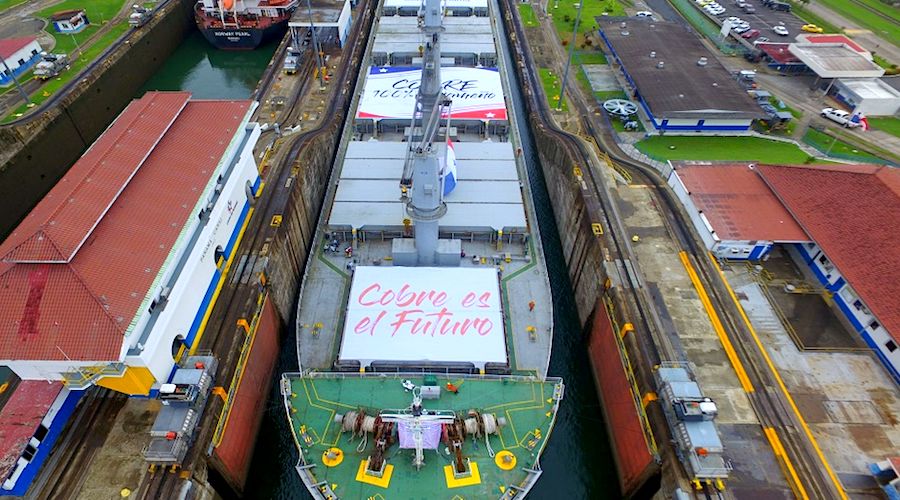
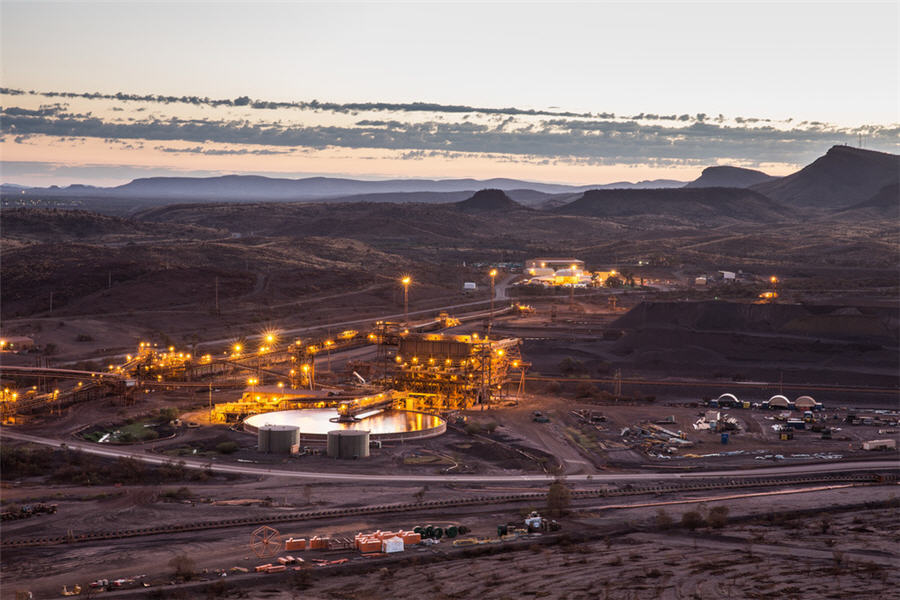
Copper shipments from Cobre Panama mine. (Image courtesy of Cobre Panama.)


First Quantum’s shuttered Cobre Panama mine has instructed its lawyers to start work to suspend arbitration against Panama, the company said in an internal memo on Friday.


On Thursday, Panama’s President said his government will allow the export of 120,000 metric tons of copper concentrate that has been stuck in the shuttered mine since November 2023 and also allow restart of the power plant used to run the mine.

Later, the country’s commerce ministry said any negotiations with the miner could only happen if the arbitration case against Panama was dropped.

“We have instructed our lawyers to meet with the government’s legal team to work on suspending the arbitrations … leading to a solution that benefits workers, communities, suppliers and all Panamanians,” Manuel Aizpurua, manager of Cobre Panama said in a memo viewed by Reuters.


First Quantum confirmed the authenticity of the memo.

Shares of the Canadian miner were up 1% on Friday afternoon at the Toronto Stock Exchange after hitting a two-month high on Thursday, up 15% after news of the authorization of copper export.

Panama’s government, under Mulino’s predecessor, ordered First Quantum to shut down the open-pit Cobre Panama mine in late 2023 following protests over environmental concerns. The move led to questions about maintenance of the massive site and 120,000 metric tons of stockpiled copper concentrate.

Before its shutdown, the mine was one of the world’s top sources of copper, accounting for 1% of global output.

Mulino told a weekly press conference on Thursday morning that he had authorized removing stranded copper products from the mine, arguing it was being wasted and that Panama would need to be reimbursed once the products are processed outside of the country.

The president said he would review the future of the mine more broadly as soon as next week.

“The issue of the mine will be approached with great responsibility and taking into account at all times the national interest,” Mulino said. “We’ll start as of next week.”

(By Divya Rajagopal and Elida Moreno; Editing by Anthony Esposito and David Gregorio)


Panama signals it’s ready to negotiate on shuttered copper mine

Bloomberg News | March 13, 2025 |
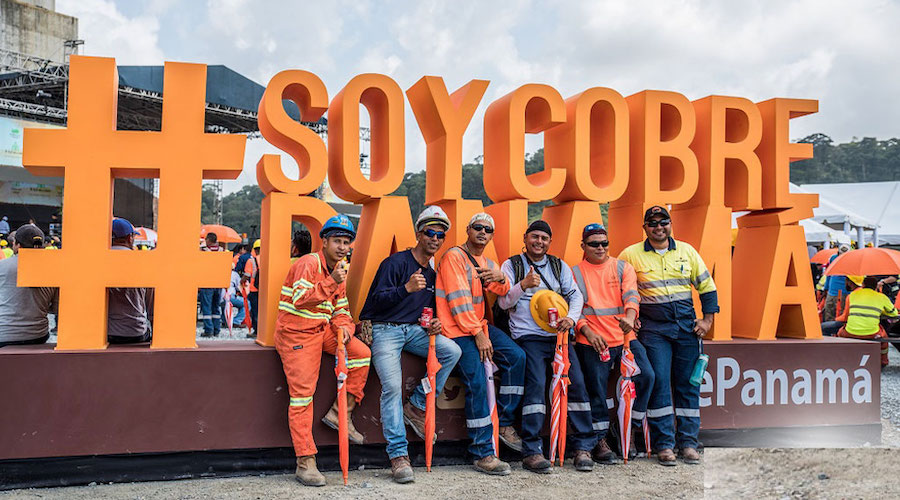

Cobre Panama was the biggest foreign investment in the Central American nation, supporting over 40,000 jobs. (Image courtesy of Minera Panama.)


First Quantum Minerals Ltd. was cleared to begin shipping out stockpiled copper in Panama, the latest sign authorities may be willing to negotiate a restart of the company’s giant shuttered mine.


Panama’s President Jose Raul Mulino said Thursday he has authorized the export of “ground material” from the Cobre Panama mine, referring to copper concentrate that the company has kept stockpiled at the site since it was ordered to close in 2023. He also said his government plans to start addressing the mine’s closure and its path forward next week, “God willing.”

Mulino’s comments come as Vancouver-based First Quantum campaigns to resuscitate its flagship mine, which was ordered to close in December 2023 amid anti-mining protests. The $10 billion operation accounted for about 5% of the country’s economy before its closure and generated about 40% of First Quantum’s revenue.

“What comes next — that’s exactly what we are going to start to deal with,” said Mulino in a press conference. “It’s a broad, thorny topic. The issue of the mine must be handled with great responsibility and taking into consideration national interests and protecting and benefitting Panama.”

Shares of First Quantum jumped as much as 12.6% Thursday in Toronto.


The Panamanian president spent recent weeks meeting with local businesses that relied on Cobre Panama and hearing from workers that were impacted by its closure. Some 54,000 people lost jobs, according to estimates by the National Council of Private Companies.

“It’s dramatic, what is happening,” Mulino said. “We are feeling it, in unemployment, lack of revenue for the state and in many other things like paying providers that haven’t been paid everything they are owed.”

Mulino had waited to turn his attention to the mine while completing controversial social security reforms that have now nearly passed Panama’s congress.

First Quantum on Thursday was also cleared to turn on its 300 megawatt thermal power plant in order to export the copper concentrate.

The 120,000 metric tons of idled material was “being wasted, and Panama has invested a barbarity of money into it,” Mulino said, adding that First Quantum has to reimburse Panama once the material is processed outside the country.

First Quantum, for its part, said the funds generated from the export of its copper concentrate will be used for preservation activities at the mine site.

“We reaffirm our willingness to discussions and finding the best solution together with the aim of contributing to the wellbeing of the country and all Panamanians,” the Canadian firm said in a statement posted to social media.

The prospect of a reopening remains highly uncertain. Mulino has yet to meet First Quantum’s executives, and has said he won’t negotiate with the company until it drops arbitration proceedings against Panama. The mine is also still unpopular among segments of the population due to pollution fears and the belief First Quantum got a sweetheart tax deal.

Mulino’s comments Thursday marked one of the first signs of a path forward for the embattled project.

“That 5% of GDP that we threw out the window in a single day — everyone thinks it’s a statistic,” said Mulino. “But we are feeling it.”

(By Michael McDonald and Jacob Lorinc)


Workers sign petition for collective bargaining at Rio Tinto’s Pilbara mine

Paraburdoo stockyard, Pilbara. Image courtesy of Rio Tinto via Flickr.

Australia’s Western Mine Workers Alliance (WMWA) said on Thursday that more than 400 workers at Rio Tinto’s Paraburdoo iron ore mine in Pilbara region have signed a petition to support collective bargaining.

The petition was launched by the alliance to initiate bargaining for a collective agreement at the mine for the first time in over 20 years.

Paraburdoo mine is part of Rio’s Western Australian operations, which employs around 16,000 employees and shipped 328.6 million tonnes in 2024, the company website showed.

The Australian Workers’ Union and the Mining and Energy Union (MEU) together form the WMWA.

The agreement would likely bring about annual pay increase, a relief in the current high-living-costs environment among other demands, MEU had said last month.

The alliance said in a Facebook post it expects to make a formal application to the Australia’s industrial tribunal, the Fair Work Commission, to release an order for Rio to collectively bargain with its mine workforce.

A Rio Tinto spokesperson said in an emailed response that its current approach helps drive productivity and wages growth.

“This model has delivered for our people, our business and the Australian economy, through the creation of jobs, strong and sustained wage growth, and the payment of royalties.”

(By Sneha Kumar; Editing by Mrigank Dhaniwala)


UK’s HMS Lancaster Uses New Drone System in First Drug Seizure of 2025

drug seizure using drones
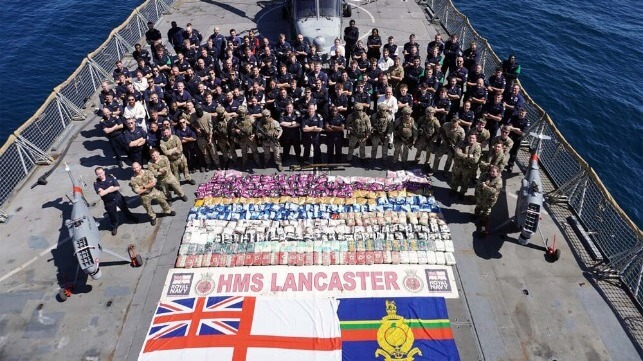
HMS Lancaster displays its seizure and note the mini-helicopter drones (Royal Navy)

Published Mar 14, 2025 6:49 PM by The Maritime Executive


The International Combined Task Force 150 is continuing with efforts to tackle illicit activities in the waters of the Middle East. The task force, which is currently under the command of New Zealand reported the seizure of a total of 318 kilograms of heroin and 83 kilograms conducted by the Royal Navy’s frigate HMS Lancaster.

The Royal Navy highlights that the illicit activity was first detected by its new Peregrine remote-controlled mini-helicopters while the frigate was on its patrol. The operators of one of the drones detected suspicious activity during a night flight when they saw two boats side-by-side in the Arabian Sea.

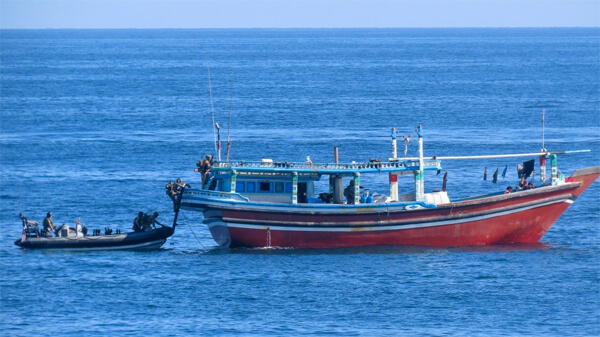
This prompted the launch of the frigate’s Wildcat helicopter for further investigation. The crews observed packages being transferred between a small craft and a dhow. The frigate made its way to the location at full speed while the team waited for daybreak. Teams were sent on the frigate’s fast boats for the interdiction. 


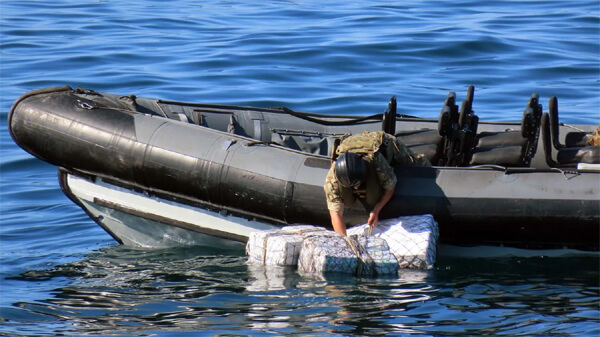
Lancaster's crew retrieving the packages the smugglers tossed overboard


The smugglers however attempted to evade capture by getting rid of their illegal haul reports the Royal Navy. The small boats began dumping packages overboard. The crew of Lancaster however was able to recover the packages, which were subsequently tested and confirmed to be illegal narcotics. The interdiction by the Duke-class frigate was the first for the Royal Navy in 2025.

The Royal Navy highlights that Lancaster’s capabilities in fighting smugglers and drug runners were enhanced through the uncrewed Peregrine air system which was only introduced into operations at the end of 2024. Peregrine is the first remotely piloted helicopter operated by the Royal Navy. At just three meters long, the drone is capable of sorties lasting up to five hours and is suited for long and demanding surveillance missions.


Royal Marines from HMS Lancaster boarding the dhow


“I am really pleased that Lancaster has been able to demonstrate the utility of a tailored air group consisting of the Wildcat helicopter and recently procured uncrewed Peregrine air systems in a combined 24-hour deck cycle to achieve persistent surveillance and beat illicit drug runners in the region,” said Sam Stephens, commanding officer of HMS Lancaster.

The interdiction was the second for CTF 150 since New Zealand assumed command in mid-January. Last month, the U.S. Coast Guard cutter Emlen Tunnell seized nearly 2,357 kilograms of hashish aboard a dhow off the coast of Oman. CTF150 says its mission has been vital in tackling drug trafficking on the so-called “Hash Highway” covering the Red Sea, Gulf of Aden, Indian Ocean, and Gulf of Oman. 

The Royal New Zealand Navy frigate HMNZS TE Kaha is scheduled to join CTF 150 later this month. The last time New Zealand contributed a ship to CTF150 was a decade ago when Te Kaha operated under a French-led operation. At that time, the frigate intercepted, confiscated, and destroyed 257 kilograms of heroin.


Dutch Frigate Test Fires First U.S. Tomahawk Missile

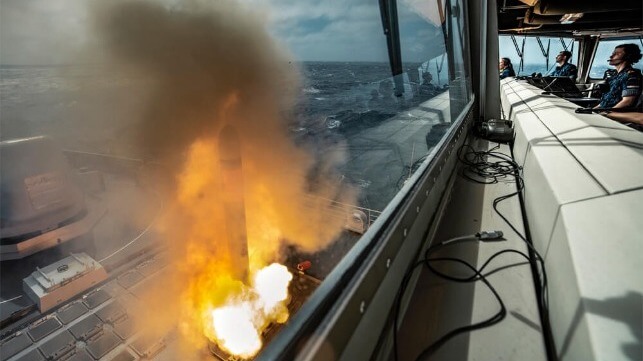
Tomahawk launch
Dutch frigate test firing its first Tomahawk missile (Netherlands Defense Ministry)

Published Mar 14, 2025 1:13 PM by The Maritime Executive


The Royal Dutch Navy and the Netherlands’ Ministry of Defense reported the first test firing of the U.S. Tomahawk missile earlier this week. It is the next step in an effort by the Dutch to enhance the capabilities of its fleet and makes it only the fourth country after the U.K. and Australia to have successfully launched the missile from one of its vessels.

The test firing took place off the U.S. East Coast near Norfolk, Virginia in collaboration with the U.S. Navy and a Defense project team. The Netherlands released an image of the missile as it was launched from the frigate De Ruyter.

Built by Damen and commissioned in 2004, the frigate is one of four deployed by the Dutch. It is 6,000 tons displacement with an operating speed of 30 knots. The Dutch have announced plans to extend the life of the class at least for another decade with the modernization of systems.

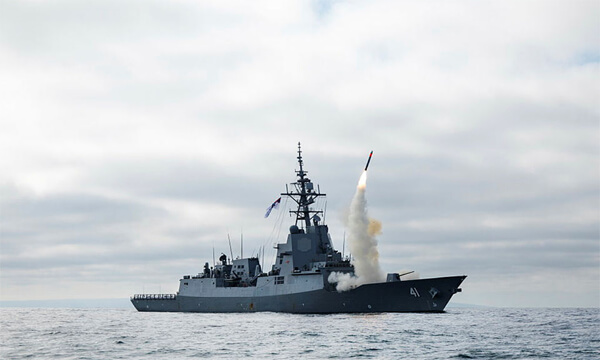
The Dutch announced in 2023 plans to acquire the U.S. missile system for the frigates as well as its submarines. The U.K. has already deployed the system and in December 2024 Australia test fired its first Tomahawk from HMAS Brisbane while off the U.S. West Coast. Australia and Japan have also placed orders for the system for future deployment.


Australia conducted its first test firing of the Tomahawk in December off San Diego (Australian Defence Force)


“With this launch, the navy is gathering necessary information,” said the Netherlands’ Defense Ministry, “This will eventually allow it to fire Tomahawks from the air defense and command frigates.” Media reports have said the Netherlands expects to deploy the system in 2027.

The Ministry highlighted that the weapons would give the Royal Navy extra combat power and greater distance. The missiles have a range of more than 1,000 kilometers (620 miles). 

“Think of command centers, anti-aircraft installations, and enemy units,” said the Ministry. They said the system would give the navy the ability to eliminate (strategic) targets deep inland from the sea.


America Gets Serious About Shipping

The Ships Act is Designed to Restore the U.S. as A Maritime Powerhouse.

U.S. shipbuilding
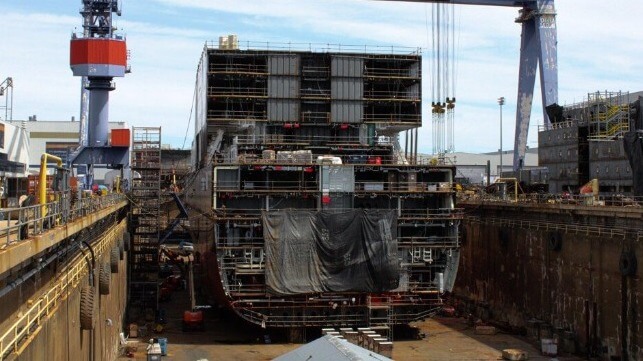
(Philly Shipyard)

Published Mar 14, 2025 3:48 PM by G. Allen Brooks


(Article originally published in Jan/Feb 2025 edition.)


Ships move 80 percent of global trade. Without them, people would be poorer, and few appreciate the critical role they play in our everyday lives.

In December, a bipartisan group of U.S. Congressmen introduced the Shipbuilding and Harbor Infrastructure for Posterity and Security (SHIPS) for America Act. The bill addresses critical shipping issues impacting America’s national security and our economy’s ability to function in today’s politically charged world.

Why the sudden attention to maritime matters?


Safeguarding Trade

Political leaders recognize that geopolitical tensions are elevated and will remain so, given regional struggles. The key role maritime trade plays in global economic activity means it must be protected from armed attacks blocking trade routes and/or endangering the operation of vessels and the safety of crews. Navies are essential for protecting these ships and ensuring their free passage.

Geopolitical tensions could erupt into regional wars. Governments and their allies must protect their coastlines and commercial interests. History is replete with episodes of nations using their navies to wage war and gain commercial power over their enemies.

Local pirates, rather than governments, sometimes waged those campaigns. Pirates sought financial gains from capturing ships and selling their cargo or holding ships and seamen hostage for ransom. Recently, the world watched Somali pirates wreak havoc against commercial ships traveling along the western coast of Africa, forcing navies to protect them.

Who can forget the tales of pirates like the notorious Captain Kidd, Blackbeard and Black Bart? How about the Barbary pirates that birthed the U.S. Navy? Amazingly, the South Pacific had massive pirate operations. In the early 1800s, Chinese pirate Cheung Po Tsai commanded a fleet of several hundred ships and 50,000 seamen.

He followed the example of Ching Shih’s exploits, the most famous female pirate, who took over her husband’s fleet after his demise, expanded it to 1,500 ships and 80,000 men, and plundered shipping along the coast of the South China Sea. She was so successful the Chinese government offered her universal pirate amnesty in exchange for peace.

In today’s world, terrorism can also take the form of piracy, as demonstrated by the Houthis in Yemen and their attacks on shipping in the Red Sea.


Energy Transition

Besides protecting commercial shipping, governments are undertaking an energy transition that requires vast volumes of critical energy minerals for renewable energy technologies.

The International Energy Agency projects a select group of critical minerals must increase their output by a whopping 30-40 percent while ignoring the role of other critical and essential minerals in meeting clean energy demand and supporting economic growth.

The global challenge for shipping is being able to refresh the existing fleet while growing it to handle the increase in critical mineral volumes. Those minerals oftentimes must be moved from where they’re mined to where they’ll be refined. Once converted into materials for use in renewable energy devices, they must be transported to manufacturing locations.

Many minerals will embark on long journeys from mines to final manufacturing sites. This may necessitate new shipping routes, depending on where the new mines are located, which may require different-sized ships.


Supplementing the Jones Act?

The SHIPS Act is designed to reinvigorate the U.S. shipbuilding industry, which is critical for our commercial fleet and potentially for our military.

Since the enactment of the Merchant Marine Act of 1920, also known as the Jones Act, U.S. cabotage (coastwise trade) has been strictly regulated. All goods transported by water between U.S. ports must be moved in U.S.-built ships that fly the U.S. flag, are owned by U.S. citizens and are crewed by U.S. citizens or permanent residents.

The Jones Act has become controversial. Opponents argue it reduces domestic trade via waterways relative to other forms of trade and has an inflationary impact on consumer goods. However, military and commercial officials support the act for its promotion of domestic shipbuilding, ship ownership and the training of U.S. seafarers.

The incoming Trump Administration must balance the inflationary pressures and national security interests of the Jones Act.


Rebuilding the Military Fleet

From a national security perspective, the U.S. Navy’s fleet today is less dominant over China’s.

According to naval experts, China’s navy in 2024 had 79 more ships than the U.S., including the 30 it added in 2023 compared to just two new U.S. ships. However, these experts say the U.S. fleet is technologically superior to China’s because it possesses greater missile capacity, especially in its submarines.

A troubling fact is that one recent study concluded larger fleets won 25 out of 28 historical wars.

In a recent set of wargames, China’s navy lost 52 major ships compared to 7-20 for the U.S.. Given its more extensive fleet, China’s navy still had more major surface vessels than the U.S. and could continue the naval battle. These wargame outcomes are troubling for our military preparedness and have generated plans to expand the U.S. fleet.

The first updated fleet proposal in 2016 targeted increasing it from under 300 to 355 ships. The latest fleet growth plan calls for 381 ships by 2050. However, the fleet will shrink through 2027 due to scheduled decommissionings.

The Ship Battle Force lists 296 U.S. Navy vessels of all types. However, 126 are combat support vessels that deliver supplies, armaments and fuel almost daily. Most are part of the Military Sealift Command, which employs 5,500 civilians to operate them. There are 4,500 billets on these ships, but for every 100 civilian seafarers onboard, there are only 127 available. This means that onboard service is four months long with only one and a half months of shore leave – an inadequate work/ family balance.

The shortage of civilian seafarers has led to the MSC’s removing 17 supply ships from service to free up 600-650 seamen for deployment on other ships.


Rebuilding the Commercial Fleet

The SHIPS Act is designed to rebuild the U.S. commercial shipping and shipbuilding industries and develop more seafarers. The global maritime economy is between $3-6 trillion annually. U.S.-flagged vessels carry less than two percent of this total, measured by cargo weight.

There are fewer than 200 U.S. commercial vessels. Only about 80 are engaged in global trade. The small U.S. commercial fleet compares to 5,500 active Chinese-flagged vessels.

A key goal of the SHIPS Act is to grow the U.S.-flag international fleet by 250 ships within 10 years. An expansion of this magnitude is a challenge since only about 20 domestic shipyards operate today, down from 80 at the end of World War II. During the war, the U.S. was producing ships in six weeks, enabling the U.S. and its allies to defeat their German, Italian and Japanese foes.

Today, it takes years to build new military and civilian ships, increasing our economic vulnerability.

A 25 percent investment tax credit for shipyard improvements will support the shipbuilding effort. Furthermore, the bill would transform the Title XI Federal Ship Financing Program into a revolving fund and create a Shipbuilding Financial Incentives program to support innovation in shipbuilding and repair.

Other legislative goals include streamlining the U.S. Coast Guard’s regulatory process, which often impedes commercial fleet growth and adds to the cost of new ships. As an inducement for building new ships, the bill mandates that government- funded cargo be transported on U.S.-flag vessels. In addition, a portion of goods imported from China must travel on U.S.-flag vessels by 2029.

A guaranteed market is an incentive to convince shipowners to build new ships and shipyard owners to expand their capacity to build them.

Today’s global shipbuilding capacity has declined 30-40 percent from its 2011 peak in new vessel tonnage deliveries. Our research of the mineral needs of the energy transition shows that the massive volume of critical minerals required necessitates 30-50 percent more tonnage delivered in the mid-2030s than global shipyards provided at the 2011 newbuilding peak.

The need to refresh the existing fleet, plus add new capacity for the energy transition, translates into 60-90 percent more global tonnage capacity than currently exists. Japanese, South Korean and Chinese shipyards are already moving to expand their capacity, leaving the U.S. behind. Asian shipyards already dominate the global shipbuilding industry.

Other ideas for promoting the domestic shipbuilding industry include having the federal government buy and lease new shipyard equipment to accelerate construction efficiency improvements. U.S. shipyards have been late in upgrading their technology to help lower new vessel costs.

The U.S. government should explore arrangements with shipyards in Japan and South Korea, our allies, to build ships under a special five-year program granting them Jones Act status while the U.S. constructs new shipyards. This could bring state-of-the-art shipbuilding technology to U.S. yards, making them more competitive globally.


Essential First Step

The SHIPS Act is an essential first step in reviving the domestic shipping industry and reestablishing the U.S. as a maritime powerhouse necessary for our national security. Without such steps, the U.S. will depend more on foreign shipyards, shipowners and seafarers to deliver the goods needed for our economy.

It will also leave the U.S. Navy without the resources – ships, shipbuilding capacity and civilian seafarers to fulfill its mission. -- MarEx 
 

Energy analyst and commentator Allen Brooks is a Senior Fellow at the National Center for Energy Analytics and author of the widely read “Energy Musings” newsletter.

The opinions expressed herein are the author's and not necessarily those of The Maritime Executive.


USCG Academy Sexual Assault Scandal Grows with Seven New Filings

USCG Academy
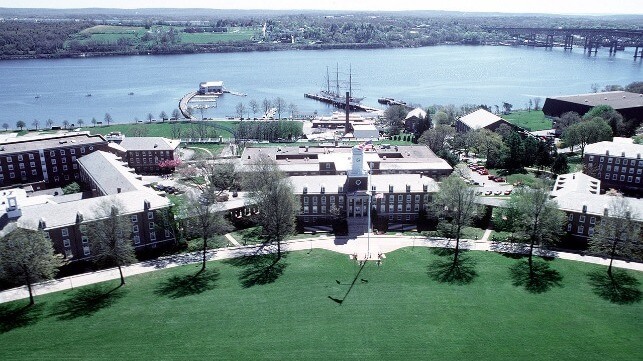
USCG Academy in New London, CT continues to face the repercussions of the long-running sexual assault scandal (USCG file photo)

Published Mar 13, 2025 9:57 PM by The Maritime Executive


The U.S. Coast Guard Academy’s now well-publicized sexual assault scandal and the cover-up known as Operation Fouled Anchor is back in the spotlight with news that seven additional complaints have been filed. The law firm representing all the complainants, Sanford Heisler Sharp McKnight reports it has filed a total of 29 complaints as the victims rush to file before a pending deadline.

In the seven new complaints, the individuals who were either cadets or prospective cadets of the Coast Guard Academy allege they were sexually assaulted either while in the dorm rooms, other USCG locations, or in one case an instructor’s home. As with the earlier complaints, some allege they were assaulted by classmates who entered their dorm rooms without permission while they were sleeping. In some cases, there are allegations that cadets had been drinking despite the Academy's strict policy against underage consumption of alcohol. Some of the cases were older, higher-ranking members of the service who are alleged to have taken advantage of cadets.

The scandal went public in June 2023 with an exposé by CNN. It recounted the years of sexual incidents at the Academy and how senior officers had ignored or purposefully hidden complaints. It also exposed that the Coast Guard had starting in 2014 conducted an internal investigation known as Operation Fowled Anchor but purposefully hid it and failed to reveal it to Congress.

“Additional Coast Guard Academy sexual assault survivors continue to reach out to me,” said Christine Dunn, Partner and Co-Chair of the Sexual Violence at the law firm. Dunn along with Associate Jillian Seymour and Ryan Melogy of the New York law firm Maritime Legal Solutions, are handling the cases. “I’ve heard story after story of the sexual violence they endured at the Academy and how the Academy turned a blind eye,” said Dunn. “The Coast Guard can no longer be allowed to sweep sexual assault under the rug.”

The law firm says it believes the case to be the first known collective action by sexual violence survivors against a U.S. service academy. Each of the divisions of the military as well as the U.S. Merchant Marine Academy have faced charges of sexual assault. In one of the most famous cases, known as the Tailhook Scandal, U.S. Navy and Marine Corps aviation officers were alleged to have sexually assaulted up to 83 women and seven men during a 1991 event in Las Vegas, Nevada. Protections against sexual assault have become a cornerstone issue for Senator Kirsten Gillibrand of New York and others.

One of the challenges the complaints face is a complex legal process in which they must first file administrative claims under the Federal Torts Claims Act. Today, the seven new cases were filed against the U.S. Coast Guard, the Department of Homeland Security which now oversees the Coast Guard, and the Department of Transportation which formerly had oversight of the Coast Guard.

Under the process, the government has six months to review the filings. Only then can the claimants move to file suit. However, there is a two-year statute of limitations for FTCA claims. The lawyers seek to get around this by claiming the extent of the sexual assaults and the cover-up only became public with the CNN investigation in 2023 and subsequent hearings in the U.S. Congress. 

The Congress has been highly critical of the Coast Guard and its leadership for the handling of the scandal and failure to bring it to a close. In addition to faulting the USCG for failing to properly investigate and pursue allegations, Congress has proposed new regulations related to cadet safety. The Coast Guard Reauthorization Act calls for new mandates including requiring the Academy to install electronic locking mechanisms to secure cadet rooms and common spaces. The lawyers have accused the Academy of enabling the behavior by having a rule barring cadets from locking their dorm rooms.
“Decades of documented moral failures by leaders of the U.S. Coast Guard have made it clear to Congress, the public, and survivors that the agency is unwilling to take steps needed to protect Coast Guard Academy cadets from systemic sexual abuse,” said attorney Ryan Melogy. “It has become obvious that only outside pressure can lead to change.”

Dunn and the Sanford Heisler Sharp McKnight law firm reported it was filing the first complaints, from 12 women and one man who had attended the Academy in September 2023. In September and October 2024, Sanford Heisler filed similar FTCA complaints on behalf of additional sexual assault survivors, and with today’s filings, bring the total number of former Academy cadets represented by the firm to 29.

In January 2025, the new Trump administration ousted Admiral Linda Fagan, Commandant of the Coast Guard, in part due to her focus on DEI (diversity, equity, and inclusion). Admiral Kevin E. Lunday assumed the duties of Acting Commandant and will face the challenge of addressing what many see as a long-running, systemic problem that is yet to be fully addressed.


In Uncertain Era for Shippers, Analysts Suggest Avoiding Long Contracts

Containers
iStock

Published Mar 12, 2025 10:11 PM by The Maritime Executive


Shippers are adjusting to an unpredictable mix of geopolitical disruption, economic uncertainty and sweeping tariff changes, and some of the most prominent container freight experts are advising their clients to avoid locking in long-term contracts until the dust settles. 

In a webinar held by the container leasing platform Container XChange, a panel of executives and analysts discussed the changing dynamics of ocean freight. The market is now driven in part by an array of political circumstances - particularly the on-and-off shutdown of the Red Sea, and the White House's changing tariff announcements. 

The U.S. Trade Representative's proposed multimillion-dollar port fees for Chinese-built ships could have particularly significant effects on U.S. trade patterns, and the industry is watching closely. Xeneta's top analyst, Peter Sand, noted that all top six carriers have fleets that are more than 20 percent Chinese-built and orderbooks that are more than 40 percent Chinese. He called the fee proposal "a challenge to globalization and free competition," and recommended an analytical rather than reactive business response. 

"Uncertainty is toxic for trade, and businesses today are overwhelmed by shifting regulations, unpredictable
tariffs, and constantly changing trade dynamics. The best advice? Stay calm, keep your options open, and avoid locking into long-term commitments without a clear upside," recommended Xeneta's Peter Sand. "Businesses should focus on data-driven decision-making, risk management, and adaptable logistics strategies to navigate an
increasingly volatile market."

The White House has already imposed tariffs of 20 percent on Chinese goods. Circuitous routing is one common response, and one container equipment trader suggested that business is already picking up for moving cargo through Southeast Asia, the Mideast or the Subcontinent. 

The Red Sea is another wild card. If it reopens and stays stable, global slot capacity will increase and rates will come down - but only if carriers have certainty that Houthi attacks will not restart. At present, that moment still appears far off. 

ALT. FUELS

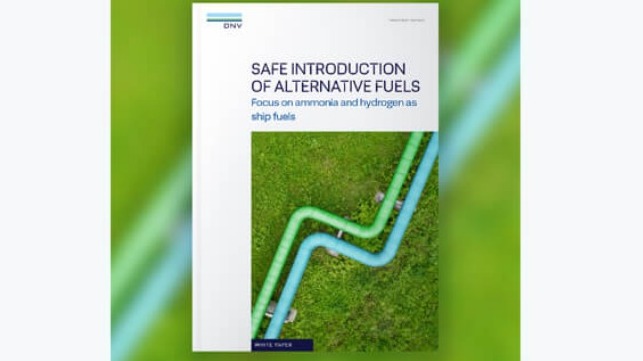
DNV White Paper on Safe and Scalable Adoption of Ammonia and Hydrogen Fuels

DNV ammonia hydrogen white paper

Published Mar 14, 2025 10:26 PM by The Maritime Executive


As the shipping industry continues its transition to carbon-neutral fuels, ammonia and hydrogen are emerging as possible fuel options, however mandatory regulations governing their use are not yet in place. DNV’s latest white paper, Safe introduction of alternative fuels – Focus on ammonia and hydrogen as ship fuels, provides shipowners with insights and tools to navigate the evolving regulatory landscape and safely implement these fuels. 

Both hydrogen and ammonia have properties that introduce new safety risks, triggering the need for increased focus on safety in ship design, construction, and operation. However, the lack of specific mandatory international regulations for ships running on these fuels is a barrier to their widespread adoption. With it’s latest white paper DNV aims to support customers in implementing these fuels by providing increased predictability through classification rules and early dialogue with Flag Administrations. The paper also outlines the relevant safety challenges and considers the industry's efforts to ensure safe adoption and operation of these fuels at sea.

Knut Ørbeck-Nilssen, CEO Maritime at DNV said: "In Maritime’s journey towards decarbonization, there is no one-size-fits-all solution. Hydrogen and ammonia are emerging as possible solutions, and we are already seeing a growing newbuilding orderbook. To scale them up and get the benefits of the zero-carbon fuels, we will need, careful planning, technical expertise, upskilling of seafarers and deeper collaboration across the industry and beyond."

DNV is leading several initiatives to support the development and adoption of ammonia and hydrogen as marine fuels. These include the Nordic Roadmap for Future Fuels project, the Green Shipping Programme, and the MarHySafe joint development project.

Linda Hammer, Principal Engineer at DNV and lead author of the whitepaper, stated: "To safely operate ships using hydrogen or ammonia as fuel, ensuring that the crew understands the specific hazards of these fuels and the safety features built into the design is vital. This will require updates to the safety management system, building in detailed operating procedures, comprehensive training for up-skilling personnel, and potentially making organizational changes. All of which are essential for developing a robust safety culture throughout the organization."

DNV has developed prescriptive classification rules as far as possible, aimed at ensuring increased predictability for owners, designers, and shipyards. The first edition of the classification rules for ammonia-fuelled ships was published in 2021, and the rules for hydrogen-fuelled ships were published in July 2024. 

Read the full whitepaper here
 

The products and services herein described in this press release are not endorsed by The Maritime Executive.


Japanese Partners Advance Designs for Large Ammonia Carrier

large ammonia-fueled ammonia carrier
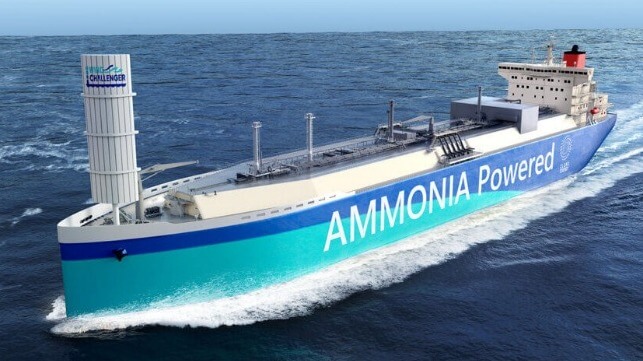
The design would create efficiency by being larger than the current VLGC and VLAC (MOL)

Published Mar 14, 2025 7:18 PM by The Maritime Executive


A partnership of Japanese companies continues to accelerate its efforts to develop ammonia transport as the efforts continue to move forward to complete the development of ammonia as a fuel for industry and the maritime sector. The designs received initial design approval from ClassNK (Nippon Kaiji Kyokai, which reviewed the basic design drawings and risk assessment in awarding Approval in Principle (AiP).

The project is a partnership between Mitsubishi Shipbuilding Co., Mitsui O.S.K. Lines, and Namura Shipbuilding Co. They highlight to respond quickly to future demands, the designs have been completed in more detail than generally required for the AiP process. They are focusing on the market potential as a transitional fuel for power plans and the maritime sector as well as a hydrogen carrier.

Mitsubishi Shipbuilding, Mitsui O.S.K. Lines, and Namura Shipbuilding have been working to develop a basic design for a large ammonia carrier. They report that the vessel is intended to have an engine that utilizes ammonia as the main fuel source, aiming to reduce greenhouse gas emissions from the vessel. In addition, the rendering incorporates the rigid sail system, Wind Challenger, which was developed by Mitsui O.S.K. Lines and Oshima Shipbuilding Co. and first deployed in 2022.

The ship is designed to be even larger than the conventional segment for Very Large Gas Carrier/Very Large Ammonia Carrier (VLGC/VLAC) vessels. According to the project, this will enhance the efficiency of marine transport. 

The revolutionary ship design they report satisfies the port entry restrictions at major power plants in Japan. It ensures compatibility between ammonia loading/unloading terminals, and cargo handling connections at a level almost equivalent to existing VLGCs.

It is anticipated that the first vessels could be built in the second half of this decade.


EverWind Invests in New Low-Emission Tugboats Built by Damen

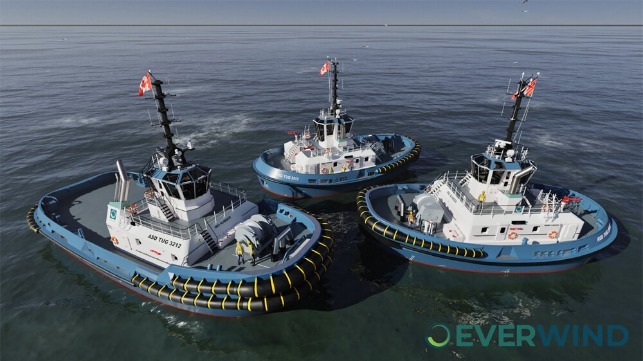
low emission tugs

Published Mar 14, 2025 5:51 PM by The Maritime Executive


EverWind Fuels announced an investment of approximately $50 million to launch a new three-vessel fleet of advanced, lower-emission tugboats in the Strait of Canso. The modernized vessels will help enhance maritime sustainability, improve infrastructure reliability, and support green shipping corridors in Nova Scotia. This project, one of the largest private sector investments in the Strait of Canso in the last 50 years, will have a significant impact on the local economy, creating good long-term jobs and leveraging the experience and expertise of local skilled workers to strengthen Nova Scotia’s position as a leader in sustainable maritime operations.

The investment will be supported by an expansion of EverWind’s Marine Team by approximately 15 new local employees responsible for safety and tugboat operations. These new advanced vessels will be owned locally and will replace EverWind’s contracted fleet of three tugboats which were built between 1992 and 2004, aligning with Canada’s clean energy transition and reinforcing EverWind’s commitment to innovation, efficiency and environmental responsibility.

The state-of-the-art vessels are required to facilitate specialized operations associated with the transportation of green hydrogen and ammonia produced at Point Tupper, establishing a regional export hub to reach lucrative clean fuel markets. The vessels will continue to be used to support existing industries operating in the Strait of Canso, serving as a valuable asset in the local marine sector.

Purpose-built and designed for local use, the new tugboats are expected to arrive in the summer of 2025 and will be in full compliance with International Maritime Organization (IMO) Tier III emissions standards, the most stringent emissions standards for the international marine industry. These standards were designed to improve air quality and protect public health by controlling emissions from ships.

Greenhouse gas emissions from the new vessels will be significantly lower than the current fleet, delivering reduction of approximately 80 per cent in nitrogen oxides (NOx) and 25 per cent in CO2, significantly lowering the environmental impact of marine operations in the Strait of Canso. EverWind is working with its maritime partners on a longterm plan to further transition its tugboats toward zero carbon emissions as EverWind’s renewable power generation and ammonia production projects come online.

The Point Tupper Marine Terminal plays a vital role in supporting safe, efficient maritime operations with its critical infrastructure. EverWind’s new low-emission vessels will strengthen port capabilities while maintaining a strong commitment to environmental stewardship and delivering tangible economic benefits to Strait Area communities.

Quotes

Trent Vichie, Founder and CEO, EverWind

“This investment is a critical step in enabling large-scale green hydrogen and ammonia production with our international partners. By integrating new advanced tugboats into our operations following the strictest IMO emissions standards we’re ensuring safe, efficient, and sustainable maritime logistics that support the international transition to clean energy. EverWind is proud to lead the charge in building the infrastructure needed to position Nova Scotia as a key global hub for green hydrogen and ammonia exports.”

Mike Kelloway, Member of Parliament for Cape Breton–Canso

“This investment by EverWind is a testament to the positive impact that innovative technologies can have on our environment and our communities. By supporting cleaner maritime transportation, we're not only creating jobs for our youth and strengthening our economy but also ensuring a more sustainable future for Cape Breton Island.”

David Hart, Manager, Point Tupper Marine Services

“EverWind’s leadership in green shipping will have a lasting impact on our region. These new vessels will support local industry, create jobs, and move us forward setting new standards for sustainable marine operations in Nova Scotia.”

Lois Landry, Richmond County Warden and Councillor for District 2

“This investment is a significant win for our local communities, creating stable, long-term jobs in the Strait Area and strengthening rural economies. By leveraging the skills and expertise of our local workforce, EverWind is ensuring that the benefits of its green hydrogen and ammonia projects remain right here in our region, supporting families, businesses, and future generations.”

Brenda Chisholm-Beaton, Mayor, Port Hawkesbury

“EverWind’s investment is great news for our community, creating new, good, long-term jobs and strengthening our local economy. The Strait of Canso has long been a hub for industry and innovation, and these new vessels will ensure that tradition continues while paving the way for future clean energy development. This project is a key step in building a stronger, more sustainable future for our region, and I’m excited to see the opportunities it will bring for local workers, businesses, and families in our community.”

Quick Facts

The new fleet of vessels will consist of a Damen ASD 3212 Tug and two Damen RSD 2513 Tugs. Damen was selected to build the new fleet after an extensive selection process. The vessels will measure 32 metres and 25 metres in length, with 80 tonnes and 65 tonnes of bollard pull, providing greater maneuverability and power to the Strait of Canso maritime operations.

The Strait of Canso is a critical hub for global trade, known for its world-class, deep-water, ice-free berths, strategic location, and established industrial base. The region is home to some of Atlantic Canada’s largest industrial users, supporting energy production, manufacturing, and international shipping.

The products and services herein described in this press release are not endorsed by The Maritime Executive.


Hanwha Aerospace Receives DNV AIP Certification on Hydrogen Fuel Cells

Hanwha Aerospace

Published Mar 14, 2025 10:21 PM by The Maritime Executive


  • Global Authority DNV Validates Top-Tier Safety and Performance Standards
  • Second Major Certification Following Korean Register Approval Last Year
  • Company Positioned to Advance Zero-Carbon Maritime Propulsion Technology

Hanwha Aerospace announces that it has received Approval in Principle (AIP) certification from DNV for its 200kW hydrogen fuel cell system designed for maritime applications, marking a significant milestone in the company's official entry into the eco-friendly zero-carbon vessel market. This achievement follows the company's development of the world's first liquid-cooled Energy Storage System (ESS) late last year, securing consecutive world-class zero-carbon power solutions.

The certification ceremony took place on the 12th at Hanwha Aerospace's R&D Center in Pangyo, with Executive Director Dong-jo Oh of Hanwha Aerospace and Vice President Sung-ho Shin of DNV in attendance, the company announced on the 13th.

AIP certification verifies the safety and compliance with international regulations of new technologies applied to ships and materials during the basic design phase. This rigorous evaluation process ensures that innovative marine technologies meet the highest standards of safety and performance before implementation.

"This certification from DNV validates our hydrogen fuel cell technology at the highest global standards for safety and performance," said Dong-jo Oh, Executive Director of Hanwha Aerospace. "We will leverage our eco-friendly marine solution technologies to continuously collaborate with Hanwha Ocean in targeting the global zero-carbon vessel market, helping the maritime industry achieve significant reductions in carbon emissions."

This latest certification builds upon Hanwha Aerospace's previous success in obtaining AIP certification from the Korean Register of Shipping (KR) last year. With validation now from both KR and DNV, Hanwha Aerospace is positioned to begin full-scale marketing and sales of its maritime hydrogen fuel cells in the global market.

With this certification, Hanwha Aerospace is positioned to secure type approval for its Polymer Electrolyte Membrane Fuel Cell (PEMFC) technology, strengthening its competitiveness in the zero-carbon propulsion systems market. The company plans to further develop and commercialize this technology for various marine vessels, from commercial ships to specialized maritime applications.
 

The products and services herein described in this press release are not endorsed by The Maritime Executive.