Saturday, March 15, 2025


Saudi Arabia’s first “AI employee” goes online, saving 10,000 man-hours

Saudi Arabia’s first “AI employee” goes online, saving 10,000 man-hours
Saudi officials first interaction with the "AI employee". / CC: SPAFacebookTwitterLinkedInTelegram

By bnm Gulf bureau March 14, 2025

Saudi Arabia's Minister of Transport and Logistics, Engineer Saleh bin Nasser Al-Jasser, has launched the first "digital employee" at the Saudi Ground Services Company, Al Madina reported on March 13.

The digital employee, designed specifically for the company's operations, received the first professional ID card issued by the company during the launch ceremony.

The event was attended by several key officials including General Authority of Civil Aviation President Abdulaziz bin Abdullah Al-Duailej and Saudi Ground Services CEO Mohammed bin Abdulkarim Mazi.

This initiative comes as part of the company's comprehensive digital transformation strategy and process automation efforts, leveraging modern technology and artificial intelligence capabilities to impact operations across Saudi Arabia's aviation sector positively. The launch also comes as Saudi Arabia continues to invest heavily in AI and hosting companies through its local server systems in Dammam and other cities.  

The digital employee will automate routine tasks, saving more than 10,000 working hours annually. Its responsibilities include attendance management, immediate report generation and data analysis – contributing to required accuracy and ensuring real-time team readiness according to operational requirements.

"This enhancement will significantly improve productivity and services provided to airlines and passengers by allowing human staff to focus on strategic work rather than repetitive manual tasks," Al-Jasser explained during the launch.

The minister praised the implementation of automated services and the latest digital transformation technologies at the kingdom's airports, saying that these innovations aim to accelerate work pace and improve traveller experience while developing performance metrics and saving valuable time.

"These advancements positively reflect the overall service levels and support our national transportation objectives," he added.

For his part, Mohammed bin Abdulkarim Mazi, CEO of Saudi Ground Services, confirmed the company's commitment to expanding the use of modern technology to improve performance and services.

"The digital employee represents a significant step forward in our technological capabilities and service efficiency," he noted.

The initiative aligns with the ministry's supervisory role over all transport and logistics system sectors, which aims to follow up on the implementation of programmes, initiatives and projects that contribute to facilitating mobility options and improving all modes of transportation in the kingdom's cities and governorates.

These efforts support the National Transport and Logistics Strategy's objectives of making Saudi Arabia a global logistics centre by adopting modern technologies that enhance quality of life and increase work efficiency.

The Saudi Ground Services Company, listed on the Saudi Stock Exchange (Tadawul), was established in 2010 and provides ground services to domestic and international airlines across all 29 airports in the kingdom.


Global warming could affect Indian wheat crop as temperatures remain above normal

Global warming could affect Indian wheat crop as temperatures remain above normal
/ Polina Rytova - UnsplashFacebook
By bno - Mumbai bureau March 15, 2025

Higher than normal temperatures in India throughout February have led to concerns that this may impact the nationwide wheat crop. There are predictions of above normal temperatures in March as well. The country has experienced three years of poor wheat crop due to adverse weather. Although the prediction is that of a bumper crop in 2025, the India Meteorological Department’s prediction of above-average temperatures in March across most regions following a warmer than usual February could spoil the party.

Reuters in a recent report said that higher temperatures could negatively impact the yields for the fourth straight year. This could cut overall wheat output and force the government to lower or remove the 40% import tax to facilitate overseas shipments by private traders to tide over shortages, according to the news agency.

The year 2022 was exceptionally bad for the Indian wheat crop, when wheat growing regions of north India also experienced higher than usual temperatures. This in turn led to lower government procurement which saw India resorting to a wheat export ban in 2022 to check rising prices. 

As a result, Indian wheat prices have remained elevated in recent years. Due to below par crop in the last three years, prices have remained high and reached a record in February due to dwindling supplies.

However, Moneycontrol in a report has said that some analysts believe that despite the warmer winter weather in January and February, the winter crop may not be severely affected as snowfall in Jammu and Kashmir has cooled down the temperature on parts of wheat growing areas in north India. The fear that the crop may turn out to be below normal still persists, however, Moneycontrol added.

If the wheat crop disappoints for the fourth straight year, it would pose a substantial headache for the government which is already battling high food inflation. In case of a bad crop, the government will be forced to lower or remove the 40% import tax to facilitate smoother imports of the grain. 

Industry bodies have already started clamouring for a duty cut. Roller Flour Millers’ Federation of India has demanded the duty on wheat imports be reduced from 40% to 5-10%, stating that it will help flour millers in Southern India and increase wheat supplies around the country, according to a report by Indian Express.

India last hiked the duty on wheat imports from 30% to 40% in April 2019, and it has remained at that level since then.

Record rice inventories to bring some relief

Although the wheat crop in India has been disappointing in the last few years, rice production has been robust. India's rice stocks hit a record high at the start of January, reaching eight times the government's target, Reuters said in a separate report.

Indian farmers harvested a record summer-season rice crop of 120mn tonnes this current crop year, accounting for 85% of India’s total rice production. This bumper yield followed extensive monsoon rains in June, July and August of 2024, which encouraged expanded planting.

Rice reserves in government warehouses, including unmilled paddy, stood at 60.9mn tonnes as of January 1, compared to the government's target of 7.6mn tonnes, Reuters reported citing data compiled by the Food Corporation of India.

In knock-on effect, India has been easing restrictions on exports of rice. 

In September 2024, the government scrapped export duties and minimum export prices on non-basmati and basmati rice exports imposed in 2023. As the situation began improving, the government gradually started lifting restrictions on exports, variety by variety. 

The ban was removed on all varieties except broken rice. Last week, it finally decided to scrap the ban on 100% broken rice as well. This has come as great news for African countries where this variety is popular due to its low price.

The nation’s Financial Express reported that the move to lift restrictions on broken rice exports could help reduce high government rice inventories in India and help poorer African countries to procure the grain at lower prices. Indian broken rice is especially popular in West Africa as it is inexpensive. The move will also support Asian animal feed and ethanol producers.

In FY24, India exported broken rice worth $194mn. The value of exports of broken rice was $983mn in FY23 and $1.13bn in FY22, according to the same Financial Express.

In FY24, India's total rice exports were valued at $10.41bn, down 6.5% year-on-year, as shipments were impacted because of the ban.

Exporters say that rice exports throughout FY25 may see an increase of 15% to cross a record level of $12bn because of robust global demand, Financial Express reported.

 Lower risk of diabetes to bone fractures: What are the benefits and drawbacks of being vegetarian?


Copyright Canva

By Lauren Chadwick
Published on 14/03/2025 -

Experts for a French agency spent five years on a literature review and dietary intake recommendations for vegetarians. Here’s what they have to say.

Vegetarian and vegan diets are associated with both health benefits and risks, which is why it’s important for people thinking of eating plant-based foods to pay attention to balancing their meals, a group of experts has said in two new reports.

Experts from France’s Agency for Food, Environmental and Occupational Health & Safety (Anses) said there’s moderate evidence that suggests vegetarian diets are linked to a lower risk of developing type 2 diabetes compared with non-vegetarian diets.

There’s also some weaker evidence that vegetarian diets could lead to a reduced risk of heart disease, ovulation disorders, certain cancers, eye problems, and gastrointestinal issues.

Some more tenuous evidence suggests, however, that plant-based diets could lead to a higher risk of bone fractures or congenital urethral malformations – though some experts posit there is not enough information on the possible link.

The two new reports – which include a wide-ranging scientific literature review and dietary recommendations – are the result of five years of work for Anses experts who said that vegetarian diets are becoming more popular in France.
RelatedScientists discover evidence that being a vegetarian may be written in your genes

“We know that it's a diet that is increasingly popular [so] Anses first carried out a systematic review of published studies to identify the link between vegetarian diets and health and established dietary benchmarks to enable vegetarians to optimise their nutritional intake,” Perrine Nadaud, deputy head of the French agency’s nutritional risk assessment unit, told Euronews Health.
‘Less favourable’ levels of vitamins

The scientific literature review included 131 studies on vegetarian diets’ impact on health, while the dietary recommendations were created with an optimisation tool that considers nutrition, possible food contamination, and eating habits.


For associations based on weaker evidence, Nadaud said the experts were still able to come to a determination, but that “new studies published in the future could make us adjust this conclusion a bit”.

The review also found that vegetarians had “less favourable” levels of iron, iodine, vitamins B12 and D, and calcium-phosphate balance compared to non-vegetarians, with vegans also having a “less favourable nutritional status for vitamin B2”.
RelatedThinking of retiring abroad? You might be lonelier than if you stayed home, new study suggests

Not getting enough of some of these vitamins, for instance, could put someone at a higher risk of bone fractures.

The UK’s National Health Service (NHS) says that with “good planning and an understanding of what makes up a healthy, balanced vegan diet, you can get all the nutrients your body needs”.

But they warn that without proper planning, vegans could miss out on “essential nutrients”.

Vegetarianism in France

An IFOP survey in 2021 found that the vegetarian population in France remained “marginal” at around 2.2 per cent, but at least 8 per cent of people were attempting to limit how much meat they consumed. It noted that meat is part of the country’s culinary culture.

Some of the main reasons those surveyed had for limiting their meat consumption include concern for animals and the impact of eating meat on the environment.

A study published in the journal Nature in 2023 found that eating less meat reduced a person’s environmental impact on greenhouse gas emissions, land use, water use, and biodiversity.

What should vegetarians or vegans be sure to eat?

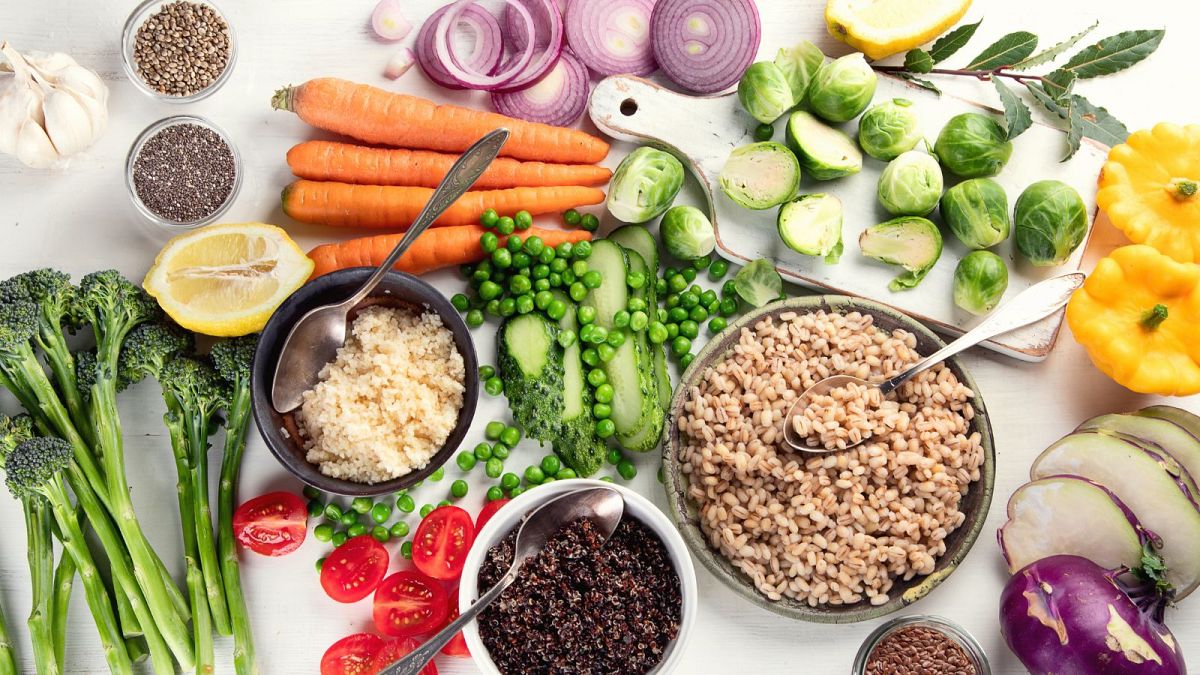
As part of its dietary recommendations, the French agency says that vegetarians and vegans should consume fruits, vegetables, legumes such as lentils, starchy carbohydrates or bread, nuts and seeds, brewer’s yeast, dairy products, or a fortified vegan equivalent every day.

They noted that vegetarians can have a hard time meeting nutritional needs for certain Omega-3 fatty acids and vitamin D, and for vegans, it can be difficult to meet these needs for vitamin B12 and zinc in men.

“This is why we are developing these dietary guidelines: to help vegetarians improve their diets,” said Nadaud.


Why is plant-based diet still frowned upon in Europe?


Researchers from the University of Vaasa, Finland, show that consumers who prefer plant-based alternatives are perceived as socially different


University of Vaasa

Roosa-Maaria Malila 

image: 

PhD researcher Roosa-Maaria Malila, University of Vaasa. Photo: University of Vaasa.

view more 

Credit: Photo: University of Vaasa


There are strong images – both admiration and irritation – associated with the popularisation of vegetarianism and the use of meat substitutes. How can vegetarian food become more socially acceptable and find its way onto the tables of more and more of us?

University of Vaasa marketing researchers Roosa-Maaria Malila, PhD researcher, Kyösti Pennanen, Research Director, and Harri Luomala, Professor of Consumer Behaviour at the University of Vaasa, have studied attitudes towards vegetarianism and why meat substitutes still do not make it off the shelf and into the shopping basket.

– The consumption of meat and meat substitutes is a highly charged social phenomenon. According to our research, consumers who prefer plant-based alternatives are perceived as socially different – and not in a good way, Malila concludes.

Fear and loathing

According to the research by Malila and partners, people who prefer vegetarian food are associated with a range of positive images. They are admired and appreciated. They are seen as environmentally friendly, health-conscious and moral people.

But the preference for vegetarian options also causes resentment among people. In fact, the research revealed that in addition to positive images, the promotion of vegetarianism also arouses fear, envy, contempt and anger. 

– In our research, we found that people even wanted to act aggressively towards vegetarians or exclude them from social circles, Malila says.

In the research, participants were asked to form a perception of a fictional consumer based on their shopping list. The participants were from Finland, the United Kingdom, Germany and Sweden. Participants were presented with three different shopping lists, which varied based on the inclusion or exclusion of animal and plant-based protein products from similar product categories. All lists included the same five staple foods: pasta, bread, apple juice, carrots and bananas, to blur the primary purpose of the research.

One shopping basket was a meat eater's shopping basket, which included items such as minced meat, cold cuts and sausages. The second basket was a so-called “flexible” basket, which contained chicken rolls and vegetable sausages in addition to the basic products. The third basket was rich in meat substitutes, such as vegetable-based dumplings, vegetarian sausages and so on.

– The mixed feelings towards vegetarians reflect the prevailing climate in which the need to reduce meat consumption for environmental reasons will certainly no longer come as a surprise to anyone. Understandably, changing one's own consumption habits is not so simple. This can be reflected in frustration and channeled through those who are already driving change. Of course, the fear of giving up the benefits gained also causes similar feelings, even though a vegetarian diet need not really be a compromise, but the image around it may be perceived as such.

Social challenges

The introduction of the new Nordic Nutrition Recommendations caused a real cut-up frenzy in Finland in 2024. The recommendations suggest cutting down on red meat, meat products and salt.

The new dietary recommendations call for vegetarian food. The recommendations aim to put vegetables, berries and fruit, whole grains, pulses and sustainably caught or farmed fish on people's plates. The new recommendations divided opinion in public debates. This phenomenon is in line with research by Malila and partners.

According to Malila, change starts first and foremost with each individual, but the prevailing structures of our society also play a major role.

– Food is quite a strong part of our social identity. If and when vegetarian food evokes negative feelings, not many people want to risk being associated with it. Belonging to a group is an evolutionary motive. We need acceptance from our fellow human beings.

The focus turns to how those products are marketed to us.

– Reducing meat consumption is essential if we are to ensure a viable future for humans and animals on our planet. The critical question is how to mainstream vegetarianism?

Research shows that marketing could be more creative to appeal to people who have not yet made a change in their diet. Different consumers need to be addressed in different ways. Malila suggests that marketing messages could emphasise how vegetarianism is a better option for the individual rather than highlighting the environmental benefits.

– Encouraging people to make more sustainable food choices is not just about pricing or whether a product tastes like a Michelin-starred masterpiece. It is clear from these findings that sustainable food needs an image makeover if it is to be perceived as socially acceptable. New marketing strategies need to address prevailing prejudices, and thus make skilful use of stereotypes, emotions and behavioural tendencies to overcome them.

Social acceptance requires systemic change

There are many arguments for not switching to a plant-based diet. One of the most frequently raised arguments is cost.

– We have plenty of domestic research to show that the cost of vegetarianism is not the main barrier to adoption, although it is one of them. Social reasons are significantly more of a barrier, Malila explains.

Malila's message is clear: vegetarianism should become the new norm, and for this to happen, major systemic changes in society are needed.

– Such a change must be committed to in the long term. Vegetarianism itself needs a systemic change in image, involving the EU, the state, businesses, consumers and organisations.

Further information

Malila, R.-M., Pennanen, K., & Luomala, H. T. (2025). Meat alternative consumers still frowned upon in Europe: Analysis of stereotypical, emotional and behavioral responses of observing others. Food Quality and Preference, 125, 105380. https://doi.org/10.1016/j.foodqual.2024.105380 

Cuba suffers another massive power cut leaving millions in the dark


Copyright Ramon Espinosa/Copyright 2025 The AP. All rights reserved

By Daniel Bellamy with AP
Published on 15/03/2025 - 

Cuba suffered a massive power cut on Friday night which hit the capital Havana and the country's provinces and left millions in the dark.

Cuba’s Ministry of Energy and Mines said at around 8:15 p.m. local time an outage at the Diezmero substation on the outskirts of Havana had caused “a significant loss of generation in western Cuba and, with it, the failure of the National Electric System.”

The ministry said on its account on the social platform X that it is “working on the recovery process.”

The streets of Havana were dark and empty, with light coming only from the windows of hotels that had generators. Internet service was affected.

People in provinces as far away as Guantánamo, Artemisa, Santiago de Cuba, and Santa Clara reported experiencing blackouts with just flickers of light.

Earlier, the Electric Union, the state agency that regulates the sector, said in its daily report that peak-hour demand would be around 3,250 megawatts and the deficit would reach around 1,380 megawatts, meaning 42% of the national energy system would be shut down. This figure is not the highest in recent memory.

A resident walks on a street during a general blackout in Havana, Cuba, Friday, March 14, 2025. (AP Photo/Ramon Espinosa)Ramon Espinosa/Copyright 2025 The AP. All rights reserved

Cuba suffered three widespread cuts in its energy system at the end of last year, leaving the island in the dark amid a serious economic crisis.

Cuba’s power grid has been plagued by frequent outages, with more than half of the country experiencing power cuts during peak hours. The outages are primarily caused by fuel shortages and aging infrastructure. In many parts of the island, electricity is crucial for cooking and water pumping.


Authorities on the island have begun a programme to install photovoltaic parks and promised that dozens of them will be ready this year.

Blackouts previously prompted anti-government demonstrations in 2021, 2022, and 2024.