Sunday, March 30, 2025

Podcasting was once a rebel medium for diverse voices. Now it’s slowly being consumed by big media


Shutterstock

March 30, 2025

Podcasting was once the underdog of the media world: a platform where anyone with a microphone and an idea could share their voice.

With low barriers to entry and freedom from institutional gatekeeping, it promised to amplify marginalised voices and allow underrepresented groups to tell their own stories, on their own terms.

Today, however, this promise seems increasingly strained as corporate interests tighten their grip on the industry. As money flows in, the podcasting space is beginning to resemble the rest of the digital media world – driven by advertising revenues and political polarisation.

The promise of podcasting

Six years ago, audio scholars Martin Spinelli and Lance Dann described podcasting as a “revolutionary” medium for its ability to inspire empathy through innovative forms of audio.

Podcasting was heralded as a format that broke through the barriers of traditional media by offering new ways to engage with underrepresented voices and ideas. Media and cultural studies pointed to the direct-to-ear delivery – free from the biases of visual culture – as a uniquely intimate way to consume content.

Globally, the industry boomed as a result of pandemic lockdowns, with the number of podcasts on Spotify skyrocketing from 450,000 in 2019, to 1.5 million in 2020.

Listenership has also surged in Australia. According to a 2024 report by Edison Research, we’ve seen a 20% increase in listenership from 2022 to 2024 – with 48% of the those aged 12 and above having listened to a podcast within the past month.
From open space to rat race

In his 2024 book Podcasting in a Platform Age, podcast researcher John Sullivan warns the podcasting space is being increasingly dominated by a handful of powerful media companies that dictate what and who gets visibility.

Larger podcasts with higher production budgets, celebrity hosts and backing from major networks are attracting larger audiences, with independent creators struggling to get a foot in the door.

At the time of writing, of the top 50 most popular podcasts in Australia, more than half (52%) come from overseas, and primarily the United States.

Of the 24 Australian-made podcasts on the list, 80% are backed by a media organisation, with most (64%) connected to major networks such as LiSTNR, which is owned by Southern Cross Austereo. Only 12% of the Australian podcasts on the list come from truly independent creators without any corporate funding or major production support.

Why does it matter that large-network ownership is on the rise? To understand this, it helps to first understand how ads keep podcast networks in business – and how this can impact content decisions.

Deepening ideological divides


Advertisers follow the crowds. In a podcasting context, this means they’re more likely to funnel their dollars into large networks, further bolstering their resources.

At the same time, networks want to drive as many ears to their ad sponsors as possible. To do this, they focus on producing content they know will get the most engagement.

The result is a vicious cycle in which attention and advertising power feed each other, making it even harder for independent voices to break through. Over time, this feedback loop can lead to less content diversity and more polarisation.

According to Spotify’s 2024 Wrapped, American podcaster Joe Rogan took out the top podcast spot for the fifth year in a row globally.    Shutterstock

It’s here that we’re seeing an increase of politicians using podcasts to push their views and cultivate ideological loyalty.

In the lead-up to the 2024 US election, Kamala Harris appeared on Call Her Daddy (the second most popular Spotify podcast in 2024), while Donald Trump was on The Joe Rogan Experience (the most popular). Both interviews were later fact-checked and found to contain false or misleading claims.

Trump’s interview in particular was flagged by CNN for having 32 false claims. Nonetheless, analysts and researchers pointed to it as a driver behind his success with young male voters.

The political podcasting trend is also playing out in Australia ahead of the next federal election.

Late last year, Opposition Leader Peter Dutton appeared on the podcast Diving Deep With Sam Fricker. This was followed by an appearance on Straight Talk, hosted by businessman Mark Bouris, in January.

More recently, Prime Minister Anthony Albanese and Greens leader Adam Bandt separately appeared on It’s A Lot with Abbie Chatfield.

According to 2022 Pew Research Centre data, 55% of Americans said their major reason for listening to podcasts was “to learn”, while 29% said they wanted to stay up-to-date with current affairs. But information-hungry listeners may be getting shortchanged, as podcasts are less likely to be fact-checked against the same editorial standards that govern traditional media.

As platform researcher Michael Bossetta notes, although large platforms such as Spotify have the potential to create a more informed world, they are more likely to push content that keeps users hooked (that is, content they already enjoy and/or agree with).

Recommender algorithms also have a role to play. One 2020 study found that while Spotify’s personalised suggestions increased user engagement by 28.90%, they also reduced the individual-level diversity of podcast streams by 11.51%.

But platforms do have the power to do better. They could, for instance, use their algorithms to prioritise content diversity. This would help ease the “engagement-diversity trade-off”, in which personalisation increases engagement, but limits the diversity of content consumed by an individual.

That said, it’s unlikely platforms will voluntarily change the way they operate. If meaningful reforms are to happen, they will more likely have to come from government regulations or through independent governing bodies.

In the meantime, listeners aren’t powerless. While we can’t stop algorithms from pushing certain content to the top of our feeds, we can disrupt them by actively seeking out independent voices and diverse stories.

Corey Martin, Lecturer/Podcast Producer, Swinburne University of Technology

This article is republished from The Conversation under a Creative Commons license. Read the original article.
'The President is a dangerous threat': Lutheran bishops take a stand


U.S. Secretary of Housing and Urban Development Scott Turner leads a prayer as U.S. President Donald Trump hosts his first cabinet meeting with Elon Musk in attendance, in Washington, D.C., U.S., February 26, 2025. REUTERS/Brian Snyder

Wisconsin Examiner
March 27, 2025

Who gets to decide what is Christian? What does religious liberty look like today? With so much unsettling and destabilizing news coming from the new administration in Washington, DC, it’s hard to keep up with and keep track of everything. We believe, however, that a recent decision by the President is a dangerous threat to religious liberty, promotes Christian Nationalism, and all people who care about our democracy need to take note.

We, the Lutheran (ELCA) bishops in Wisconsin and Upper Michigan, are concerned about an executive order signed by President Trump on Feb. 6 that established a new “Task Force to Eradicate Anti-Christian Bias.” This task force has the duty to “identify any unlawful anti-Christian policies, practices, or conduct by an agency.” While some might think that all Christians would support an effort to root out “anti-Christian bias,” that’s not the case. We believe this executive order is a threat to the religious pluralism enshrined in the Constitution and does not actually protect Christians. Instead, this order aligns the federal government with Christian Nationalism, a dangerous conflation of fundamentalist Christianity, conservative politics, and fierce patriotism that distorts what it means to be an American citizen and an engaged Christian in society.

With this executive order, the federal government has given itself the authority to define what might be considered “anti-Christian,” and therefore also the authority to define what is Christian — a power which belongs to the Church alone, not the federal government. This executive order violates religious freedom, corrupts the separation of church and state, and creates a more hostile environment for Christians and all citizens who believe differently than the current administration and its religious advisors.

We feel so strongly that this task force is a threat to our values and our freedom that we wrote a public statement and invited religious leaders and others to sign on (https://www.wichurches.org/articles/religious-liberty). We now have over 250 signers, and we invite all who care about religious freedom and the preservation of our democracy to join us.

Christian Nationalism is a dangerous ideology that distorts the Gospel and turns Jesus and Christianity into a weapon for power and division instead of a movement towards love and justice. It demands that a particular brand of Christianity be privileged by the state and impose that singular belief system in order to be a “good American.” (For more information on Christian Nationalism, check out www.christiansagainstchristiannationalism.org.)

In order to protect religious freedom, the federal government must not align with one religious ideology but rather honor the constitutional mandate to defend space for religious pluralism and ensure that each member of society is free to practice their religion, or no religion, while keeping the peace and working together for the common good. Please join us as we call upon the President of the United States and all elected officials to protect religious freedom in our country and uphold the constitution of the United States of America.

Faithfully,

Bishop Paul Erickson, Greater Milwaukee Synod ELCA

Bishop Anne Edison-Albright, East Central Synod of Wisconsin ELCA

Bishop Felix Malpica, La Crosse Area Synod ELCA

Bishop Martin Halom, Northwest Synod of Wisconsin ELCA


Bishop Katherine Finegan, Northern Great Lakes Synod ELCA

Bishop Joy Mortensen-Wiebe, South-Central Synod of Wisconsin ELCA

Wisconsin Examiner is part of States Newsroom, a nonprofit news network supported by grants and a coalition of donors as a 501c(3) public charity. Wisconsin Examiner maintains editorial independence. Contact Editor Ruth Conniff for questions: info@wisconsinexaminer.com.
Trump wants to 'eliminate' FEMA. 
Could the states fill the gap


Photo by Brian 
McGowan on Unsplash
March 30, 2025

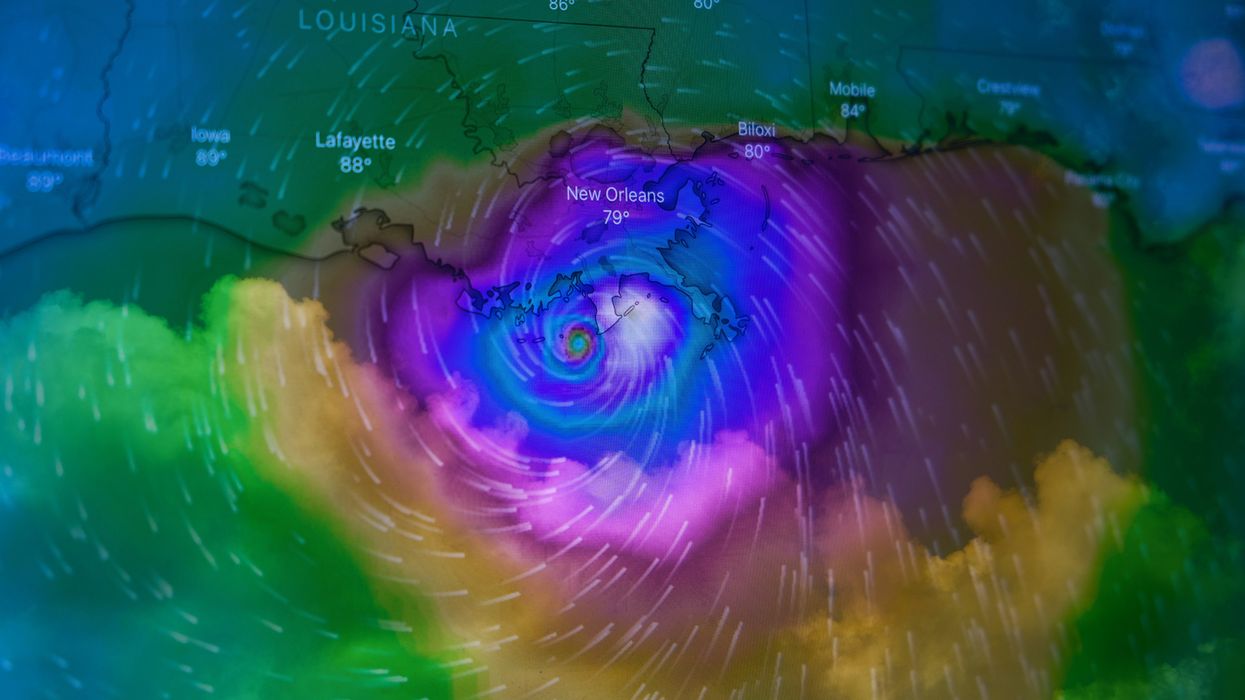
President Donald Trump appears to be serious about getting the federal government out of disaster response. Earlier this week, his secretary of homeland security, Kristi Noem, said in a Cabinet meeting that she would move to “eliminate” the Federal Emergency Management Agency, the beleaguered agency that handles relief and recovery after extreme weather events, and has reportedly conferred with FEMA’s Trump-appointed interim leader about winding down the agency.

Noem’s announcement was just the latest in a series of Trump administration moves to radically decrease or eliminate the federal government’s role in responding to climate-driven disasters. Just after taking office, the president mused about eliminating FEMA and then convened a council to consider the agency’s future. In recent weeks, he has laid off hundreds of staff who work on resilience and preparedness. And last week, Trump signed an executive order that called for state and local governments to “play a more active and significant role in national resilience and preparedness” and directed agencies to “streamline” their disaster resilience efforts.


Trump’s unprecedented efforts to weaken FEMA come at a time when many disasters are intensifying due to climate change. A study of more than 750 recent heat waves, wildfires, and flood events found that around 75 percent of these events had been made significantly worse by human-caused warming. Though experts say there is merit in the idea of beefing up state and local emergency preparedness, they also caution that the Trump administration’s slash-and-burn approach to remaking the federal government could backfire when it comes to FEMA. While they acknowledge that disaster response needs reform, they also argue that a total withdrawal by the federal government would leave many communities in the lurch, especially those that can’t fund disaster recovery on their own.

For much of American history, a state that suffered a disaster had to plead with Congress for a one-off infusion of money, then figure out how to spend that money on its own. In 1980, the Carter administration created FEMA to speed up the government’s response to worsening disasters. The agency got its own multibillion-dollar pot of money to reimburse states for disaster response, including for disasters that are too small to get a special transfer from Congress. Over the past 45 years, it has distributed billions of dollars in grants to help local areas prepare for future disasters, reduce flood risk, and — more recently — address climate change. The agency also coordinates multistate responses to large disasters, summoning search-and-rescue and cleanup teams from across the country after big hurricanes.

In the decades since FEMA’s botched response to 2005’s Hurricane Katrina, the agency has been a frequent target of criticism by politicians and the public. Local officials often complain that federal involvement tends to slow down disaster response, and emergency management experts warn that it disincentivizes state and local authorities from taking action to reduce climate risks. FEMA’s programs to increase disaster resilience come with reams of paperwork, and the agency often pays to rebuild the same areas over and over again without reducing actual risk.

Trump’s recent executive order pushing for a bigger state and local role in disaster response echoes some past criticism of the agency, calling for reforms “to reduce complexity and better protect and serve Americans.”

“A lot of this stuff in the order, I look at it, and it just sounds like Emergency Management 101,” said W. Craig Fugate, who served as FEMA administrator under then-president Barack Obama. He said emergency managers have long maintained that state and local governments should not rely on federal aid and to make them whole after disasters, and need to find their own ways to reduce risk over the long run.

However, other experts fear that what Trump is proposing could leave cities and states unable to pay for much-needed resilience projects—and that a rapid shuttering of FEMA would leave most states and local governments unprepared to fill the gap.

“The Trump administration aims to shift most of the responsibility for disaster preparedness to state and local governments, asking them to make more expensive infrastructure investments without outlining what support the federal government will provide,” said Shana Udvardy, senior climate resilience policy analyst at the Union of Concerned Scientists, an environmental advocacy organization.

Trump’s public statements and executive orders on the issue have been vague — so vague, in fact, that Udvardy called them “baffling.” If Noem and Trump tried to wind down the agency altogether, the move would likely face similar legal challenges as his attempts to destroy the Department of Education — neither agency can lawfully be closed without congressional approval. But in theory, if the administration prevailed in closing FEMA, or moved some of its operations to the Department of Homeland Security, there are a few ways the change could play out.

One scenario would be a return to the situation that existed before FEMA, when states had to seek direct help from Congress or another federal agency every time they suffered a disaster. Congress works differently now than it did in the decades before FEMA existed — it often takes months or years for lawmakers to send out long-term recovery money after a disaster such as the 2023 Maui wildfires, which can make it hard for local governments to find money to develop replacement housing and restore public infrastructure. Congress is also far more polarized than it used to be, even on the issue of disaster aid — Republican leaders have suggested they might impose political “conditions” on wildfire assistance to California, goading the state to change its policies on immigration or water management.


Without a centralized disaster fund like the one FEMA has, the party in control of Congress would control who gets relief money, which could delay or derail rebuilding efforts in states run by the out-party.

Another possibility, whether or not FEMA is abolished, would be for Congress to provide a flat amount of preparedness money to each state and let states decide how to spend it, which is how some other big federal programs work. But this scenario could also be subject to political maneuvering: When the Department of Housing and Urban Development distributed its own disaster recovery block grant to Texas after Hurricane Harvey, the state government allegedly favored white and rural areas over Black and Latino residents in Houston, according to a federal probe.

If FEMA shrank or disappeared, it’s unclear who would coordinate lifesaving aid between states during large disasters. But if states continued to receive robust disaster funds from Congress, and if they distributed this money equitably, it could potentially speed up a spending process that is often described as being slow and bureaucratic.

For instance, in Harris County, Texas, which encompasses the massive Houston metro area, floodplain officials said that removing federal oversight could accelerate the process of acquiring and demolishing so-called “repetitive-loss” homes — those that flood multiple times. Officials would no longer be subject to federal paperwork requirements before they bought out homes.


“Currently, every level of government is involved when utilizing federal grant programs for flood mitigation,” said James Wade, who leads the county’s home buyout program. “Removing one level of government may help expedite the process.” Wade’s program could certainly use some paperwork relief. Thanks in large part to federal grant requirements, it can take as long as five years for the county to purchase and destroy a flooded home, during which time flood victims have no choice but to wait or flip their homes to private buyers.

But if Trump’s reforms led to a reduction in overall federal disaster funding — as seems likely, given his focus on cutting spending — the county might not be able to keep up its current pace of adaptation projects. The county flood control district has applied for no fewer than 14 FEMA grants, for stormwater upgrades as well as buyouts, and a shift away from national funding could make it harder to fund these essential projects.

The district “relies heavily on federal programs to leverage the local funds for flood mitigation,” said Wade. Under Trump’s new approach, “The question is who decides how to allocate the funds to the states and how much each is allocated.”

A reduction in federal grant money for resilience projects could force local governments to make harder choices. This wouldn’t always be a bad thing. Fugate pointed to the state of Florida, which rolled out strong building codes after Hurricane Andrew in 1992, forcing developers to build houses that could withstand strong winds. The move led to up-front costs for builders, but reduced damage in the long run.


The problem with this tough-love approach is that many states and local governments aren’t ready to handle disaster resilience on their own — they don’t have the expertise to design new building codes or plan for climate change, and they don’t have the money to build infrastructure that can protect against existing flood and fire risk. Past administrations have rolled out a number of reforms to help these communities design and fund such infrastructure projects: In 2020, FEMA began providing “direct technical assistance” to help rural communities and low-income areas figure out their vulnerabilities and design projects. It also changed its scoring for grant applications to privilege rural and disadvantaged communities more. (The direct technical assistance page is now unavailable on FEMA’s website.)

Udvardy, of the Union of Concerned Scientists, said that taking FEMA out of the resilience equation would leave smaller and poorer communities in the lurch, without either the money or expertise they needed to reduce their risk. This would cost the government and disaster victims more in the long run.

“Based on the indiscriminate way this administration has laid off staff with deep expertise and upended critical science … I am very concerned that the implications of this order will mean less support for communities to help them prepare for and recover from the disasters to come,” said Udvardy.

The worst-affected places would be rural areas in poor states like West Virginia, where the federal government is the only entity with the resources to finance even basic adaptation projects like flood retention ponds or home elevations. Many of these areas supported Trump last year by wide margins.


The rural city of Grants Pass, Oregon, is already experiencing the potential consequences of such a federal shift. The city has been working to secure $50 million from a FEMA grant program designed to enhance climate resilience. The city’s water treatment plant is almost 100 old, and it sits right next to the flood-prone Rogue River. In the event of a big storm or earthquake, the plant could flood or collapse, leaving locals without clean drinking water.

Grants Pass has already raised utility rates on its 33,000 customers to fund the construction of a new plant, but it was still falling short of the money it needed for such a large project. In 2023, FEMA advanced the city’s grant application to build a new treatment plant away from the floodplain, which the local public works director called “incredible good fortune.”

But late in February, the state of Oregon informed Grants Pass that FEMA had canceled all coordination meetings around the grant program, and now city officials have no idea if they’ll receive the money they’ve spent years counting on.

“This grant is a critical piece of our funding strategy,” said Jason Canady, the city’s public works director. “We are concerned, but at this point we are not sure what actions can be taken to ensure an award will be forthcoming.”

Fugate, the former FEMA administrator, said that cuts to federal resilience funding would split the nation into haves and have-nots. States and cities that have the staffing and money to pursue adaptation efforts would do so, and might even be able to complete some projects faster than they can right now. But rural areas would no longer have access to federal money that enables them to even consider reducing climate risk. People living in those places will have less protection from future disasters, exposing them to the risk of death or injury, and will have a harder time recovering after disasters, which could push them into poverty.

“They’ll have more flexibility — with less money,” said Fugate.

Grist is a nonprofit, independent media organization dedicated to telling stories of climate solutions and a just future. Learn more at Grist.org

Trump says he’s 'not joking' about seeking a third term: 'There are methods which you could do it'


FILE PHOTO: U.S. President Donald Trump gestures beside U.S. first lady Melania Trump as they leave the U.S. Capitol building on the inauguration day of Donald Trump's second presidential term in Washington, U.S. January 20, 2025. REUTERS/Carlos Barria/File Photo
March 30, 2025
ALTERNET


President Donald Trump on Saturday once again floated running for a third term as president, telling NBC News he’s “not joking” when he suggests he might run again despite the Constitution’s 22nd Amendment that says “no person shall be elected to the office of the president more than twice.”

“A lot of people want me to do it,” Trump told NBC News’ Kristen Welker on Sunday. “But, I mean, I basically tell them we have a long way to go, you know, it’s very early in the administration.”

Trump added he’s “focused on the current” administration.

According to a transcript of the conversation, Welker gave Trump a scenario where Vice President JD Vance “would run for office” and “if he won, at the top of the ticket, would then pass the baton to [Trump]."

“Well, that’s one,” Trump replied. “But there are others too. There are others.”

Welker asked Trump if he could “tell [her] another” scenario where Trump could run for and win a third term.
“No,” Trump replied.

“Okay. So, but but sir, I’m hearing — you don’t sound like you’re joking. I’ve heard you joke about this a number of times,” Welker said.

READ MORE: 'Not going in the right location': Trump 'very angry' as Putin vows to 'finish off' Ukrainian troops

“No, no. I’m not joking,” Trump replied.

“Amending the Constitution to abolish the two-term limit would be exceedingly difficult, requiring either a two-thirds vote of Congress or two-thirds of the states agreeing to call a constitutional convention to propose change,” NBC News reports. “Either route would then require ratification from three-quarters of the states.”

Still, according to Trump “a lot of people would like [him] to” seek a third term.

Read the full report at NBC News.
More arrests as Turkey escalates crackdown over protests


By AFP
March 28, 2025


Young protesters remain defiant but speak of growing fear as police crack down on the demonstrations - Copyright AFP Mandel NGAN

Hazel WARD

Turkey intensified its crackdown on anti-government protests on Friday, arresting the lawyer of the jailed Istanbul mayor and targeting more journalists, as the country faces its biggest wave of unrest in more than a decade.

Nine days after the arrest and subsequent jailing of Istanbul’s popular opposition mayor, Ekrem Imamoglu, demonstrators were again out on the streets on Thursday night, despite a growing sense of fear.

Overnight, police raided more homes, and Imamoglu — seen as President Recep Tayyip Erdogan’s biggest political rival — said his lawyer Mehmet Pehlivan had been “detained on fictitious grounds”, in a post on X published via his legal team.

“As if the coup against democracy was not enough, they cannot tolerate the victims defending themselves. The evil that a handful of incompetent people are inflicting on our country is growing,” the mayor wrote.

“Release my lawyer immediately!”

It was not clear on what grounds Pehlivan had been detained but opposition broadcaster Halk TV said it was linked to allegations of “laundering assets originating from a crime”.

He was later freed on condition that he does not leave the country.

The Istanbul Bar Association meanwhile said 20 minors had been arrested between March 22 to 25 on charges of violating a ban on protests.

Seven were still in custody, it said.

Turkey’s repressive response to its worst bout of street unrest since 2013 has been sharply condemned by rights groups and drawn criticism from abroad.

US Secretary of State Marco Rubio raised concerns over Ankara’s handling of the protests and French President Emmanuel Macron denounced its “systematic attacks” on opposition figures and freedom of assembly.


– Media arrests –


Police detained two Turkish women journalists in dawn raids on their homes, the Turkish Journalists’ Union (TGS) said on X.

“Another dawn raid. Two of our colleagues who were following the #Sarachane protests were detained,” it said, referring to the name of the district where Istanbul City Hall is located.

“Let journalists do their job! Stop these unlawful detentions!” the union said.

Swedish journalist Joakim Medin was also held as he arrived in the country to cover the demonstrations, Sweden’s Foreign Minister Maria Malmer Stenergard and his newspaper Dagens ETC said Friday.

This came just hours after the authorities released the last of 11 journalists arrested in dawn raids on Monday for covering the protests, among them AFP photographer Yasin Akgul.

“The decision to throw me in jail came even though my identity as a journalist was known, and evidence provided to prove it,” Akgul told AFP after he was freed on Thursday.

“I hope no other journalists will face a situation like this. But unfortunately, I fear that arbitrary acts to silence journalists and stop them from doing their job will continue in Turkey.”

Turkish authorities held BBC journalist Mark Lowen for 17 hours on Wednesday before deporting him on grounds he posed “a threat to public order”, the broadcaster said.

In a statement late Thursday, Turkey’s communications directorate said Lowen had been deported “due to a lack of accreditation”.

In its first statement on the protests, Britain said it expected Ankara to ensure “the rule of law, including timely and transparent judicial processes”, a foreign ministry spokesperson said.

Turkey’s broadcasting watchdog RTUK also slapped a 10-day broadcast ban on the opposition TV channel Sozcu Thursday, pointing to alleged violations linked to incitement to “hatred and hostility”.


– ‘I’m scared’ –


During Thursday night’s protest, student demonstrators could be seen being rounded up by the police and taken away, an AFP correspondent said.

“We’re here for our rights but I’m scared,” a 21-year-old protester called Raftel told AFP, his words echoing the unease felt by many as thousands of young demonstrators flooded Istanbul’s streets.

“There are some very serious illegal things going on here, young people have been beaten for days,” said Baturalp Akalin, 25, a rare protester with his face uncovered.

“We young people are on the streets of Istanbul to defend our country’s democratic rights.”

More than 1,879 people have been detained since March 19, Interior Minister Ali Yerlikaya said on Thursday.
Tunisian startup turns olive waste into clean energy


By AFP
March 28, 2025


A man arranges rolls of olive pomace at the grounds of start-up Bioheat in the town of Sanhaja near Tunis - Copyright AFP FETHI BELAID

Aymen Jamli

In a northern Tunisian olive grove, Yassine Khelifi’s small workshop hums as a large machine turns olive waste into a valuable energy source in a country heavily reliant on imported fuel.

Holding a handful of compacted olive residue — a thick paste left over from oil extraction — Khelifi said: “This is what we need today. How can we turn something worthless into wealth?”

For generations, rural households in Tunisia have burned olive waste for cooking and heating, or used it as animal feed.

The International Olive Council estimated Tunisia will be the world’s third-largest olive oil producer in 2024-2025, with an expected yield of 340,000 tonnes.

The waste generated by the oil extraction is staggering.

Khelifi, an engineer who grew up in a family of farmers, founded Bioheat in 2022 to tackle the issue. He recalled watching workers in olive mills use the olive residue as fuel.

“I always wondered how this material could burn for so long without going out,” he said. “That’s when I asked myself: ‘Why not turn it into energy?'”

Beyond profit, Khelifi hopes his startup helps “reducing the use of firewood as the country faces deforestation and climate change”.

At his workshop, employees transport truckloads of olive waste, stacking it high before feeding it into the processing machines.

The material is then compacted into cylindrical briquettes and left to dry for a month under the sun and in greenhouses before its packaging and sale.


– The soul of olives –


Khelifi began developing his idea in 2018 after he travelled across Europe searching for a machine to turn the olive paste into long-burning fuel.

Unable to find the right technology, he returned to Tunisia and spent four years experimenting with various motors and mechanical parts.

By 2021, he had developed a machine that produced briquettes with just eight-percent moisture.

He said this amount significantly reduces carbon emissions compared to firewood, which requires months of drying and often retains more than double the amount of moisture.

Bioheat found a market among Tunisian restaurants, guesthouses, and schools in underdeveloped regions, where winter temperatures at times drop below freezing.

But the majority of its production — about 60 percent — is set for exports to France and Canada, Khelifi said.

The company now employs 10 people and is targeting production of 600 tonnes of briquettes in 2025, he added.

Selim Sahli, 40, who runs a guesthouse, said he replaced traditional firewood with Khelifi’s briquettes for heating and cooking.

“It’s an eco-friendly and cost-effective alternative,” he said. “It’s clean, easy to use, and has reduced my heating costs by a third.”

Mohamed Harrar, the owner of a pizza shop on the outskirts of Tunis, praised the briquettes for reducing smoke emissions, which he said previously irritated his neighbours.

“Besides, this waste carries the soul of Tunisian olives and gives the pizza a special flavour,” he added.


– ‘Protect the environment’ –


Given Tunisia’s significant olive oil production, waste byproducts pose both a challenge and an opportunity.

Noureddine Nasr, an agricultural and rural development expert, said around 600,000 tonnes of olive waste is produced annually.

“Harnessing this waste can protect the environment, create jobs, and generate wealth,” he said.

Nasr believes repurposing olive waste could also help alleviate Tunisia’s heavy dependence on imported fuel.

The country imports more than 60 percent of its energy needs, a reliance that widens its trade deficit and strains government subsidies, according to a 2023 World Bank report.

Fuel and gas shortages are common during winter, particularly in Tunisia’s northwestern provinces, where households struggle to keep warm.

Redirecting agricultural waste into alternative energy sources could ease this burden.

Yet for entrepreneurs like Khelifi, launching a startup in Tunisia is fraught with challenges.

“The biggest hurdle was funding,” he said, lamenting high-interest bank loans. “It felt like walking on a road full of potholes.”

But now his goal is “to leave my mark as a key player in Tunisia’s transition to clean energy”, he added. “And hopefully, the world’s, too.”
DEVILS HORNS

Partial solar eclipse crossed swathe of Northern Hemisphere


ByAFP

March 28, 2025


A partial solar eclipse in 2022 seen from Kuwait City
 - Copyright AFP/File YASSER AL-ZAYYAT

Bénédicte Rey


Skygazers across a broad swathe of the Northern Hemisphere will have a chance to see the Moon take a bite out of the Sun on Saturday when a partial solar eclipse sweeps from eastern Canada to Siberia.

The partial eclipse, which is the first of the year and the 17th this century, will last around four hours from 0850 GMT to 1243 GMT.

Curious observers making sure to protect their eyes might be able to see the celestial show in most of Europe, as well as in some areas of northeastern North America and northwest Africa.

Eclipses occur when the Sun, Moon and Earth all line up. When they perfectly align for a total solar eclipse, the Moon fully blots out the Sun’s disc, creating an eerie twilight here on Earth.

But that will not happen during Saturday’s partial eclipse, which will instead turn the Sun into a crescent.

“The alignment is not perfect enough for the cone of shadow to touch the Earth’s surface,” Paris Observatory astronomer Florent Deleflie told AFP.

Because that shadow will “remain in space, there will not be a total eclipse anywhere” on Earth, he said.

At most, the Moon will cover around 90 percent of the Sun’s disc. The best view will be from northeastern Canada and Greenland at the peak time of 1047 GMT.


– Beware eye damage –


It will be less spectacular in other areas. In France, for example, between 10 to 30 percent of the Sun’s disc will be obscured, depending on the region.

Ireland will see around 40 percent, according to Sophie Murray of the Dublin Institute of Advanced Studies. However rain is forecast.

These smaller percentages of eclipse will not be visible to the naked eye.

However, if the sky is clear, skygazers will be able to watch the eclipse through special viewers — as long as they take precautions.

Looking straight at the Sun — during an eclipse or otherwise — can lead to irreversible vision loss.

Skygazers are advised to buy eclipse-viewing glasses and ensure they are in good condition.

Even a slight defect or “microscopic hole” can cause eye damage, Deleflie warned.

Or, people could watch the eclipse at a local astronomy observation centre where “you can safely verify the precision of celestial mechanics and marvel at interesting details on the Sun’s surface, such as sunspots”, Deleflie said.

Murray offered another option.

“You can make a simple pinhole projector by poking a small hole in a piece of paper or cardboard and letting sunlight pass through it onto the ground or another surface, where you’ll see a small, inverted image of the eclipsed Sun,” she said.

The partial eclipse will not turn up on a smartphone camera without a suitable filter, Deleflie added.

The latest celestial show comes two weeks after skygazers across much of the world marvelled at a rare total lunar eclipse, dubbed a “Blood Moon”.

These events often happen after each other because the Moon has “completed a half-circle around the Earth in the meantime, reversing the configuration”, Deleflie explained.

A greater spectacle is expected on August 12, 2026, when a total solar eclipse will be visible in Iceland, northern Spain and parts of Portugal.

More than 90 percent of the Sun will also be obscured in areas of Europe including Britain, France and Italy.

It will be the first total solar eclipse since one swept across North America in April 2024.


Crypto’s Trumpian embrace is leaving bitcoin’s big rival behind


By Olga Kharif and Muyao Shen
March 30, 2025 

\\Vitali Buterin in 2017. (David Paul Morris/Photographer: David Paul Morris/)

Vitalik Buterin was long viewed as the wunderkind of the cryptocurrency world.

The gawky, playful founder of Ethereum — known for his rainbow-colored, animal-themed shirts — created the biggest competitor to Bitcoin and offered a techno-utopian vision that was supposed to change the financial system and our everyday digital lives.

But after capturing the imaginations of both corporate America and Wall Street, Buterin’s project is now struggling to deliver on its early promise as it enters its second decade, having fallen out of step in an industry transformed by the embrace of Donald Trump. Developers have been fleeing, early followers are angry and the token on the network — Ether — has lagged both Bitcoin and its smaller competitors.

The pressure on Buterin, who is now 31, has spilled into the open as complaints about his leadership have become louder.

“If you ‘keep the pressure on,’ then you are creating an environment that is actively toxic to top talent,” he wrote to one critic of the Ethereum Foundation, which was created to help oversee the development of the software that underpins the digital token. “YOU ARE MAKING MY JOB HARDER.”


The anger is a departure from Buterin’s reputation as one of the more even-keeled actors in the chaotic crypto industry. His moments of agitation underscore just how many challenges Ethereum is confronting as the practical utility of cryptocurrencies and their blockchain ledgers has been overwhelmed by memes and rampant speculation, now with the imprimatur of the president.

Ethereum is still the second biggest cryptocurrency, with all outstanding Ether worth some $225 billion. But Ether has fallen about 44 pre cent in 2025, poised for its worst quarterly drop since the bear market in 2022. Over the past year, while Bitcoin is up 30 per cent, Ethereum is down 45 per cent and it is losing its lead over competitors.

The active developers working on Ethereum-related software fell about 17 per cent last year, according to a December report from Electric Capital. By contrast, Solana, the digital token that has been the most direct rival to Ethereum — and the host to many popular memecoins, including Trump’s — was one of the top ecosystems for new developers in 2024, with 83 per cent year-over-year growth.

Standard Chartered analysts put out a report this month slashing its year end forecast for Ether by 60 per cent, noting that “its dominance has been waning for some time” due to “something of an identity crisis.”

At the end of a conference in San Francisco this month, Buterin recognized the unrealized promises but pushed back against the people expecting swift change.

“The only thing that can move Ethereum forward at this point is things that give long term value in a way where you can clearly see that the value is coming from a thing that is actually sustainable — like actual use for people,” he said.
Global Computer

Buterin, who grew up in Russia and then Canada, wrote the Ethereum white paper in 2014, not long after dropping out of college, with the goal of improving on the shortcomings he saw in Bitcoin. His hope was to create what he referred to as a shared global computer outside the control of any company or government.

The ledger, or blockchain, underpinning Ethereum, was designed so that it could handle digital contracts and serve as the infrastructure for a host of decentralized digital applications. Investors bought into that vision and Ether skyrocketed during the crypto booms of 2017 and 2021, as developers built thousands of applications on top of the blockchain, ranging from silly cat games to more wonky prediction markets and lending programs.

Ethereum gained such a following in part because of Buterin’s idealistic, often gnomic pronouncements, and his methodical oversight of the software and network. While it was a hotbed for rampant speculation, Buterin himself showed little interest in material wealth and lived out of a backpack despite owning a stash of Ether tokens that has grown to be worth hundreds of millions of dollars.

His monkish identity has been less of a good fit in the new environment ushered in by the president. After Trump embraced crypto and pushed the government to begin holding tokens, the leaders of many projects rushed to donate and otherwise show support for Trump, with many attending the inauguration and posing for photos with the president.


Buterin, in contrast has kept a studied distance. Just after the inauguration he said on social media that he had no interest in making some sort of “vibez pivot” to what he referred to as the “bronze aged mindset” — the hypermasculine philosophy that has become popular with both crypto enthusiasts and the Trump crowd.

The clash became most apparent after Trump and his business associates issued the $Trump memecoin, which began spinning off millions in fees. Buterin quickly took to X to slam “politician coins” as “a perfect bribery vehicle” and “risky to democracy.”

“Now, the most powerful people in the world are cheering on the idea of anyone creating tokens for anything, at any scale,” he wrote.

Buterin declined a request for further comment from Bloomberg News.

Left Out

Buterin and Ethereum have, not surprisingly, been far from the action as Trump has moved forward with his efforts to create a more friendly environment for cryptocurrencies in Washington.

Buterin and his community were conspicuously absent when Trump brought together several industry leaders at the White House for a summit in early March. The son of Steve Witkoff — one of Trump’s closest business and political associates — tried to reassure the Ethereum community that he would represent their interests at the event.

Ethereum’s lack of a strong voice in Washington is a result of Buterin’s longer term push to make the network and the community as decentralized as possible — to stay in tune with the original ideas that gave rise to Bitcoin and Ethereum. But what used to be viewed as a strength has become a liability.

Vivek Raman, a cryptocurrency researcher and executive, said the new environment “created a difficult playing field for Ethereum, which has been very neutral.”

“I think part of the criticism is people expected Ethereum — which is like the internet, a decentralized network — to step up, and be involved in politics and be involved with institutions. And that is literally not really possible,” Raman said.

Raman recently founded an organization with funding from Buterin, called Etherealize, that is designed to give Ethereum a voice on Wall Street and in Washington.
Blockchain Blues

The problems for Ethereum, though, are not just a matter of politics and lobbying. Not long ago, Wall Street was abuzz with talk about the lending and trading programs being built on Ethereum that were supposed to create a more seamless, efficient financial system — the so-called DeFi movement.

While critics have questioned the real-life utility of these applications, some have gained traction. The most notable success has been stablecoins, the asset-backed tokens like Tether and USDC that move across national borders on blockchains while avoiding the volatility of cryptocurrencies. Most popular stablecoins operate on Ethereum in some form.

Even stablecoins, though, have failed to gain much use outside of speculative trading, and the occasional money laundering operation. Michael Novogratz, the founder of Galaxy Digital, and one of Ethereum’s biggest boosters on Wall Street, acknowledged in a recent podcast that the progress on DeFi projects has been much slower than expected.

“Building these decentralized systems on top of these blockchains has proven harder than we thought,” Novogratz said. “Lots of people have tried and failed.”

The same problems have plagued the push to build what is referred to as Web3 — a new, more decentralized and privacy-focused version of the internet. These applications have been slow to take off, and to the degree that blockchain projects have caught on, it has often been for speculative tokens tied to internet memes. In this realm, the most popular new projects — such as Trump’s meme coin — have chosen Solana, which offers faster transaction times and cheaper fees.

Solana had almost twice as many active addresses as the Ethereum ecosystem in February, and more than five times as many transactions, according to data compiled by the cryptocurrency company Grayscale.
Ethereum Foundation

Many users have placed blame for Ethereum’s falling market share on the foundation that Buterin helped create to oversee technical development. Critics have said that the foundation has been slow to move forward with updates to the network that could have made it more competitive.

“A lot of people interpret its actions as complacent,” said Armani Ferrante, the founder of the crypto exchange Backpack, who was an Ethereum developer before moving his work to Solana.

There has been particular concern that the foundation has pushed forward without enough regard for the price of Ether. To make payments cheaper, Buterin and the foundation made changes that move transactions onto so-called Layer 2 blockchains that operate on top of Ethereum. This shift has taken activity and fees away from the underlying Ethereum network. Standard Chartered cited these issues to explain its falling expectations for Ether’s price.

“There’s a practical reality: people want to go where they feel there’s growth,” said Jill Gunter, chief strategy officer for Ethereum developer Espresso Systems. “That’s been a challenge for Ethereum when the whole community for a very long time dismissed any kind of a focus on price.”

The foundation did not respond to a request for comment. But to address the critics, Buterin and the foundation hired two new co-executive directors earlier this month. In the midst of the fighting, Buterin said that the foundation needs to find a new path forward. He made it clear, though, that he only wants the change to go so far.

“I see people saying things like, ‘Oh, Ethereum, by caring about idealistic things and improving the world is out of touch with reality,‘” he told an interviewer in December. “If the goal of blockchains now is just being a casino, then that’s not even a thing that I feel excited about being a part of.”

©2025 Bloomberg L.P.
GOLD PREDICTED TO REACH $3300 Oz
Construction begins on new gold mine in northern Manitoba

By The Canadian Press
March 26, 2025 

Manitoba Premier Wab Kinew speaks with media before at a First Ministers Meeting at the National War Museum Friday, March 21, 2025 in Ottawa. THE CANADIAN PRESS/Adrian Wyld

LYNN LAKE, Man. — Ground has broken on a gold mining project in northern Manitoba.

Premier Wab Kinew was among the officials at a ceremony marking the start of construction on the mine near Lynn Lake, a town more than 1,000 kilometres north of Winnipeg.

Kinew says it’s the first new mine to open in Manitoba in 15 years.

Officials say the mine will be run by Toronto-based Alamos Gold and will have a lifespan of 27 years.

The project will involve two mine sites, which the Manitoba government says will create over 600 jobs while it’s being built and sustain about 450 jobs during its operation.


The province says Alamos signed an agreement with the Marcel Colomb First Nation in 2023 to share revenue, as well as provide jobs and training under a policy to prioritize hiring local.

Marcel Colomb First Nation Chief Delhia Hart called the groundbreaking event “historic.”

“After years of living in the outskirts of a mining town in our own traditional lands, it’s the first time our nation has been involved in a mining project since industry came into our traditional lands,” Hart said in a statement.

“The new mining partners will help with the economic growth and prosperity for our nation well into the future for our grandchildren and future generations to come.”

This report by The Canadian Press was first published March 25, 2025.

SPACE COSMOS

A private European aerospace startup completes the first test flight of its orbital launch vehicle


By The Associated Press
March 30, 2025 

This photo provided by Isar Aerospace shows a successfully completed test flight of its orbital launch vehicle called Spectrum from Norway on Sunday, March 30, 2025. (Isar Aerospace via AP)

OSLO, Norway (AP) — A rocket by a private European aerospace company launched from Norway on Sunday and crashed into the sea 30 seconds later.

Despite the short test flight, Isar Aerospace said that it successfully completed the first test flight of its orbital launch vehicle by launching its Spectrum rocket from the island of Andøya in northern Norway.

The 28-meter-long (92-foot-long) Spectrum is a two-stage launch vehicle specifically designed to put small and medium satellites into orbit. The rocket lifted off from the pad at 12:30 p.m. (1030 GMT) Sunday and flew for about a half-minute before the flight was terminated, Isar said.

“This allowed the company to gather a substantial amount of flight data and experience to apply on future missions,” Isar said in a statement. “After the flight was terminated at T+30 seconds, the launch vehicle fell into the sea in a controlled manner.”

Video from the launch shows the rocket taking off from the pad, flying into the air and then coming back down to crash into the sea in a fiery explosion.

The launch was subject to various factors, including weather and safety, and Sunday’s liftoff followed a week of poor conditions, including a scrubbed launch on March 24 because of unfavorable winds, and on Saturday for weather restrictions.

“Our first test flight met all our expectations, achieving a great success,” Daniel Metzler, Isar’s chief executive and co-founder, said in the statement. “We had a clean liftoff, 30 seconds of flight and even got to validate our Flight Termination System.”

The company had largely ruled out the possibility of the rocket reaching orbit on its first complete flight, saying that it would consider a 30-second flight a success. Isar Aerospace aims to collect as much data and experience as possible on the first integrated test of all the systems on its in-house-developed launch vehicle.

Isar Aerospace is separate from the European Space Agency, or ESA, which is funded by its 23 member states.

“Success to get off the pad, and lots of data already obtained. I am sure @isaraerospace will learn a lot,” ESA Director General Josef Aschbacher posted on X. ”Rocket launch is hard. Never give up, move forward with even more energy!”

ESA has been launching rockets and satellites into orbit for years, but mainly from French Guiana — an overseas department of France in South America — and from Cape Canaveral in Florida.

The Associated Press

Howard University physicist revisits the computational limits of life and Schrödinger’s essential question in the era of quantum computing


The discovery of life processing with UV-excited qubits supports a conjecture relative to the computing capacity of the universe


Howard University

Living systems maintain information-processing architectures using photoexcited quantum degrees of freedom. 

image: 

The computational capacities of aneural organisms and neurons have been drastically underestimated by considering only classical information channels such as ionic flows and action potentials, which achieve maximum computing speeds of ∼103 ops/s. However, it has been recently confirmed by fluorescence quantum yield experiments that large networks of quantum emitters in cytoskeletal polymers support superradiant states at room temperature, with maximum speeds of ∼1012 to 1013 ops/s, more than a billion times faster and within two orders of magnitude of the Margolus-Levitin limit for ultraviolet-photoexcited states. These protein networks of quantum emitters are found in both aneural eukaryotic organisms as well as in stable, organized bundles in neuronal axons. In this single-author research article in Science Advances, quantitative comparisons are made between the computations that can have been performed by all superradiant life in the history of our planet, and the computations that can have been performed by the entire matter-dominated universe with which such life is causally connected. Estimates made for human-made classical computers and future quantum computers with effective error correction motivate a reevaluation of the role of life, computing with quantum degrees of freedom, and artificial intelligences in the cosmos.

view more 

Credit: Credit: Quantum Biology Laboratory, Philip Kurian.


WASHINGTON, DC – (March 28, 2025) More than 80 years ago, Erwin Schrödinger, a theoretical physicist steeped in the philosophy of Schopenhauer and the Upanishads, delivered a series of public lectures at Trinity College, Dublin, which eventually came to be published in 1944 under the title What is Life?

Now, in the 2025 International Year of Quantum Science and Technology, Philip Kurian, a theoretical physicist and founding director of the Quantum Biology Laboratory (QBL) at Howard University in Washington, D.C., has used the laws of quantum mechanics, which Schrödinger postulated, and the QBL’s discovery of cytoskeletal filaments exhibiting quantum optical features, to set a drastically revised upper bound on the computational capacity of carbon-based life in the entire history of Earth. Published in Science Advances, Kurian’s latest work conjectures a relationship between this information-processing limit and that of all matter in the observable universe.

“This work connects the dots among the great pillars of twentieth century physics—thermodynamics, relativity, and quantum mechanics—for a major paradigm shift across the biological sciences, investigating the feasibility and implications of quantum information processing in wetware at ambient temperatures,” said Kurian. “Physicists and cosmologists should wrestle with these findings, especially as they consider the origins of life on Earth and elsewhere in the habitable universe, evolving in concert with the electromagnetic field.”

QUANTUM MECHANICS AND SUPERRADIANCE

The effects of quantum mechanics—the laws of physics that many scientists think apply at only small scales—are sensitive to disturbances. This is why quantum computers must be held at temperatures colder than outer space, and only small objects, such as atoms and molecules, typically display quantum properties. By quantum standards, biological systems are quite hostile environments: they’re warm and chaotic, and even their fundamental components—such as cells—are considered large.

But Kurian’s group last year discovered a distinctly quantum effect in protein polymers in aqueous solution, which survives these challenging conditions at the micron scale, and may also present a way for the brain to protect itself from degenerative diseases like Alzheimer’s and related dementias. Their results have suggested new applications and platforms for quantum computing researchers, and they represent a new way of thinking about the relationship between life and quantum mechanics.

In his single-author Science Advances paper, Kurian considered a mere trifecta of overarching assumptions: standard quantum mechanics, the relativistic speed limit set by light, and a matter-dominated universe at critical mass-energy density. “Combined with these rather innocuous premises, the remarkable experimental confirmation of single-photon superradiance in a ubiquitous biological architecture at thermal equilibrium opens up many new lines of inquiry across quantum optics, quantum information theory, condensed matter physics, cosmology, and biophysics,” said Professor Marco Pettini of Aix-Marseille University and the CNRS Center for Theoretical Physics (France), who was not associated with the work.

QUANTUM INFORMATION PROCESSING, BEYOND BIOCHEMICAL SIGNALING

The key molecule enabling these remarkable properties is tryptophan, an amino acid found in many proteins that absorbs ultraviolet light and re-emits it at a longer wavelength. Large networks of tryptophan form in microtubules, amyloid fibrils, transmembrane receptors, viral capsids, cilia, centrioles, neurons, and other cellular complexes. The QBL’s confirmation of quantum superradiance in cytoskeletal filaments has the profound consequence that all eukaryotic organisms can use these quantum signals to process information.

To break down food, cells undergoing aerobic respiration use oxygen and generate free radicals, which can emit damaging, high-energy UV light particles. Tryptophan can absorb this ultraviolet light and re-emit it at a lower energy. And, as the QBL study found, very large tryptophan networks can do this even more efficiently and robustly because of their powerful quantum effects.

The standard model for biochemical signaling involves ions moving across cells or membranes, generating spikes in an electrochemical process that takes a few milliseconds for each signal. But neuroscience and other biological researchers have only recently become aware that this isn’t the whole story. Superradiance in these cytoskeletal filaments happens in about a picosecond—a millionth of a microsecond. Their tryptophan networks could be functioning as quantum fiber optics that allow eukaryotic cells to process information billions of times faster than chemical processes alone would allow.

“The implications of Kurian’s insights are staggering,” said Professor Majed Chergui of the École Polytechnique Fédérale de Lausanne (Switzerland) and Elettra-Sincrotrone Trieste (Italy), who supported the 2024 experimental study. “Quantum biology—in particular our observations of superradiant signatures from standard protein spectroscopy methods, guided by his theory—has the potential to open new vistas for understanding the evolution of living systems, in light of photophysics.”

ANEURAL LIFE AND PLANETARY COMPUTING CAPACITY

By thinking of biological information processing primarily at the level of the neuron, many scientists overlook the fact that aneural organisms—including bacteria, fungi, and plants, which form the bulk of Earth’s biomass—perform sophisticated computations. And as these organisms have been on our planet for much longer than animals, they constitute the vast majority of Earth’s carbon-based computation.

“There are signatures in the interstellar media and on interplanetary asteroids of similar quantum emitters, which may be precursors to eukaryotic life’s computational advantage,” said Dante Lauretta, professor of planetary science and cosmochemistry at the University of Arizona and director of the Arizona Astrobiology Center, who was not associated with the work. “Kurian’s predictions provide quantitative bounds, beyond the colloquial Drake equation, on how superradiant living systems enhance planetary computing capacity. The remarkable properties of this signaling and information-processing modality could be a game-changer in the study of habitable exoplanets.”

PERFORMANCE COMPARISONS WITH QUANTUM COMPUTERS

This latest analysis has likewise drawn the attention of researchers in quantum computing, because the survival of fragile quantum effects in a “noisy” environment is of great interest to those who want to make quantum information technology more resilient. Kurian has had conversations with several quantum computing researchers who were surprised to find such connections in the biological sciences.

"These new performance comparisons will be of interest to the large community of researchers in open quantum systems and quantum technology," said Professor Nicolò Defenu of the Federal Institute of Technology (ETH) Zurich in Switzerland, a quantum researcher who was not associated with the work. "It's really intriguing to see a vital and growing connection between quantum technology and living systems."

In the Science Advances article, Kurian explains and revisits foundational quantum properties and thermodynamic considerations, from a long line of physicists who made clear the essential link between physics and information. With his group's discovery of UV-excited qubits in biological fibers, almost all life on Earth has the physical capacity to compute with controllable quantum degrees of freedom, allowing storage and manipulation of quantum information with error correction cycles far outpacing the latest lattice-based surface codes. "And all this in a warm soup! The quantum computing world should take serious notice," Kurian said.

The work also piqued the attention of quantum physicist Seth Lloyd, a professor of mechanical engineering at MIT and a pioneer in the study of quantum computing and the computational capacity of the universe. “I applaud Dr. Kurian’s bold and imaginative efforts to apply the fundamental physics of computation to the total amount of information processing performed by living systems over the course of life on Earth. It’s good to be reminded that the computation performed by living systems is vastly more powerful than that performed by artificial ones,” Lloyd said.

“In the era of artificial intelligences and quantum computers, it is important to remember that physical laws restrict all their behaviors,” Kurian said. “And yet, though these stringent physical limits also apply to life’s ability to track, observe, know, and simulate parts of the universe, we can still explore and make sense of the brilliant order within it, as the cosmic story unfolds. It’s awe-inspiring that we get to play such a role.”

# # #

About the institution: Howard University

Howard University, established in 1867, is a leading private research university based in Washington, D.C. Howard’s 14 schools and colleges offer 140 undergraduate, graduate, and professional degree programs and lead the nation in awarding doctoral degrees to African American students. Howard is the top-ranked historically Black college or university (HBCU) according to Forbes and is the only HBCU ranked among U.S. News & World Report’s Top 100 National Universities. Renowned for its esteemed faculty, high achieving students, and commitment to excellence, leadership, truth, and service, Howard produces distinguished alumni across all sectors, including the first Black U.S. Supreme Court justice and the first woman U.S. vice president; Schwarzman, Marshall, Rhodes, and Truman Scholars; prestigious fellows; and over 165 Fulbright recipients. For more information, please visit https://www.howard.edu.

About the scientists: Quantum Biology Laboratory

With a transformative vision that extends from the subatomic to the clinical scale, the Quantum Biology Laboratory studies how collective behaviors in living matter can be manifested and controlled for the development of advanced tools, diagnostics, and therapies to address complex and degenerative disorders. Investigators in the Quantum Biology Laboratory use techniques from quantum optics, quantum information, protein spectroscopy, structural/molecular biology, and high-performance computing to solve an array of problems relevant to quantum effects in living processes. For more information, please visit https://www.quantumbiolab.com/.

About the author and principal investigator: Philip Kurian, Ph.D.

Dr. Philip Kurian is a theoretical physicist, (re)search(ing) scientist, and essayist, serving as principal investigator and founding director of the Quantum Biology Laboratory (https://quantumbiolab.com/) at Howard University. Beginning his career as a math teacher in North Philadelphia, he completed his doctorate in physics after a stint at NASA Goddard Space Flight Center. Dr. Kurian is now the recipient of fellowships, grants, and awards from the Alfred P. Sloan Foundation, U.S.-Italy Fulbright Commission, Guy Foundation Family Trust (UK), National Science Foundation, and the National Institutes of Health. The Quantum Biology Laboratory studies how collective and cooperative quantum behaviors can explain biological phenomena at the mesoscopic, organismal, and clinical scales, including in neurodegeneration, cancer, and human consciousness. His group’s pioneering work on single-photon superradiance in eukaryotic protein filaments and neuron fibers has been featured by ScienceThe Quantum Insider, Oak Ridge Leadership Computing Facility, SPIE Photonics FocusOpticaLaser Focus WorldBioPhotonicsHoward MagazineTEDx, and by prominent science channels including Science News with Sabine and PBS Space Time. Dr. Kurian is a Fellow of the UCSB Kavli Institute for Theoretical Physics, and a Simons Scholar and Senior Fellow at the UCLA Institute for Pure and Applied Mathematics. He was appointed to the chairing committee for the National Academies of Sciences, Engineering, and Medicine workshop on quantum-enabled sensing and imaging for biology. Dr. Kurian also serves as a scientific advisor to the “Science for Seminaries” program of the AAAS Dialogue on Science, Ethics, and Religion, which seeks to integrate frontier science questions into conversations among future theologians and clergy. His essays on science, human knowledge systems, and empire have appeared in various media outlets, including the Los Angeles Review of BooksGranta, and PloughFor more information, please visit https://profiles.howard.edu/philip-kurian