Sunday, May 18, 2025

Trump’s Trade Deals Endanger Farmers and Our Food System
 May 15, 2025

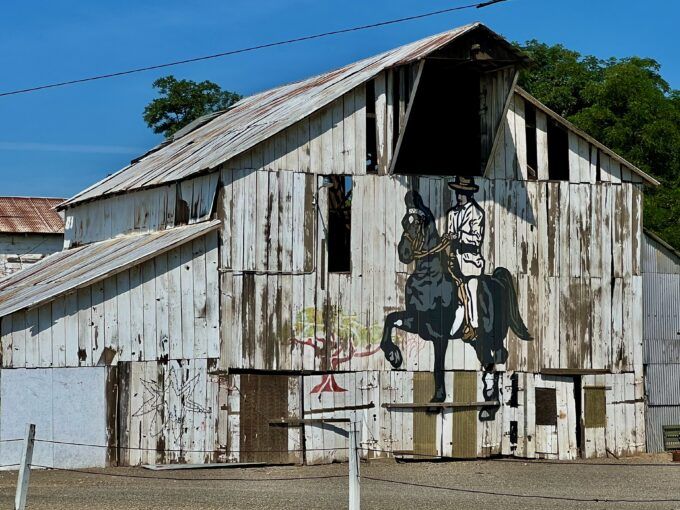
Farm in California’s Sacramento River Valley. Photo: Jeffrey St. Clair

Former presidential advisor-cum-rightwing podcaster, Steve Bannon, often mentions that discerning the truth of Trump’s policy goals entails focusing on the signal and not the noise.

But doing so has been next to impossible when trying to figure out the rationale behind the administration’s moves in agriculture, which since January, have generated widespread confusion and uncertainty.

Specifically, while Trump publicly proclaims that he stands with farmers, his tariff war with China stands to rob producers of their markets.  Since Trump’s last term, China has already been looking to countries like Brazil for soybeans as the US has proven an unreliable partner.  Adding insult to injury, unexpectedly cancelling government contracts with thousands around the country early in his term placed undue stress on farmers who already have to contend with what extreme weather events throw their way.

Now, with the details of the UK-US trade deal becoming known, the signal – that is, the truth – of the Trump administration’s vision for agriculture is coming into view. To the point, not unlike how US agriculture has been directed for the past few decades, it is becoming clear that this administration will prioritize exports. The problem with this vision is that, even if it generates short-term profits, it endangers our long-term national food security by dangerously further internationalizing our agricultural system.

Consider the praise that US Agriculture Secretary Rollins heaped on the UK-US deal that was made on May 8th, singling out its supposed gains for farmers.

Following the announcement, the Secretary announced a tour that she will take through the United Kingdom to tout the agreement.  While details are still being hashed out, we are told of a promised $5 billion in market access for beef and ethanol.

Contrast that clear messaging – the signal – with how government contracts with farmers were frozen and made subject to administrative review, and the funding for local food programs was slashed.

The contracts were connected with the Biden administration’s Inflation Reduction Act (IRA), which included resources for initiatives like those dealing with soil and water conservation, and supporting local food processing.  Additionally, programs that connected local producers with schools and food banks, for example, the Local Food for Schools Cooperative Agreement Program and the Local Food Purchase Assistance Cooperative Agreement Program, had their funding cut in the amount of about $1 billion.

Since February, some of the contracts have been unfrozen if they aligned with the administration’s political objectives (i.e. not promoting Diversity, Equity, and Inclusion, DEI).  Despite court orders ruling that all contracts must be honored, if and when the funds will be distributed, remains to be seen.

Overall, the noise surrounding the unfolding contract drama signals to farmers who want to diversify their operations and serve local markets that they should second guess looking to the government for help.

At the same time, Trump has not abandoned all producers.

In fact, amid the commotion about freezing some contracts, Secretary Rollins ok’d billions in direct payments, or bailouts, for growers of commodity crops such as corn.  Thanks to such payments and not any improvements to markets, it is expected that farmers will see their incomes increase when comparing this year with the last.

Taken together, the bailouts along with the freshly inked UK-US trade deal and easing of tariffs on China illustrates how the Trump administration prioritizes export agriculture as the driving force of our country’s farm system.

Such dynamics smack of contradiction, as Trump appears eager to send our food abroad while he’s willing to do whatever to bring manufacturing back to America’s shores in the name of strengthening the national economy.

Still, the deeper problem is with how export promotion makes our food system insecure, subjecting farmers to international political upheavals and economic disruption.

Remember the 1970s, when a grain production crisis prompted sudden demand in the Soviet Union.  Then Secretary of Agriculture, Earl Butz, told farmers to “plant fence row to fence row” and “get big or get out” to profit from the new found export opportunity.

The promise of international markets came – and went.  President Carter’s embargo of grain exports to the Soviet Union in 1980 for that country’s invasion of Afghanistan came as a body blow to the farmers who made commodity exports central to their financial plans.  Farmers then struggled to pay off the debt for the land and machinery that they acquired just a few years before, which with rising gas prices, contributed to the 1980s farm crisis.  Parallels abound now, including the initial effects of Russia’s invasion of Ukraine increasing fertilizer and gasoline costs, and most recently, the ongoing dynamics of Trump’s trade war with China.

Concerning the UK-US deal, UK imports of ethanol may seem a boon for corn growers.  But without future terms of the deal becoming clear, it is unclear if this is simply a continuation of what the British already import. Similarly, the significance of the slated $250 million in purchases of beef products is of questionable importance, as last year the US exported $1.6 billion to China.  Regardless of the recent 90 day truce in the China-US trade dispute, the remaining 30% tariff would still hurt American farmers.  The Trump administration’s export push will find farmers without markets and in need of more bailouts.

Besides subjecting US farmers’ livelihoods to international uncertainty, the other concern is the lack of concern for the next generation of food producers.  Year after year, the country’s farmers are getting older, with no one stepping up to replace them.  According to the 2022 Agricultural Census, the average farmer is over 58 years old, up over half a year from when the last census was conducted in 2017.  During that same time, we lost nearly 150,000 operations.  Since 2012, over 200,000 farmers have left the industry, representing a 10% decline. Meanwhile, according to the USDA, upwards of 70% of farmland is expected to change hands over the next twenty years.

Export promotion serves a temporary fix, but places farmers at the whims of international politics.  Moreover, it threatens our country’s already economically-pressed farmers, making our country even more dependent on a dwindling number of people for our food, as well as imports. In fact, since 2004, while exports have nearly doubled from $50 billion to $200, our food imports have increased slightly more so.

Trump’s efforts to undo the previous administration’s policies set up our food system for disruption and crisis, subjecting farmers to the uncertainties of international markets and developments elsewhere.  If there is a signal with the noise that Trump is making with our food system, then this is it – farmers better get ready for a volatile next few years and more bailouts, as operations will continue to go under.  Overall, Trump’s nationalist rhetoric amounts to little, as our food system becomes more global, increasingly made vulnerable to dynamics outside our control.

Anthony Pahnke is a Professor of International Relations at San Francisco State University. His research covers development policy and social movements in Latin America. He can be contacted at anthonypahnke@sfsu.edu

NIOSH Cuts Leave Workers Gasping for Air

May 16, 2025
Facebook

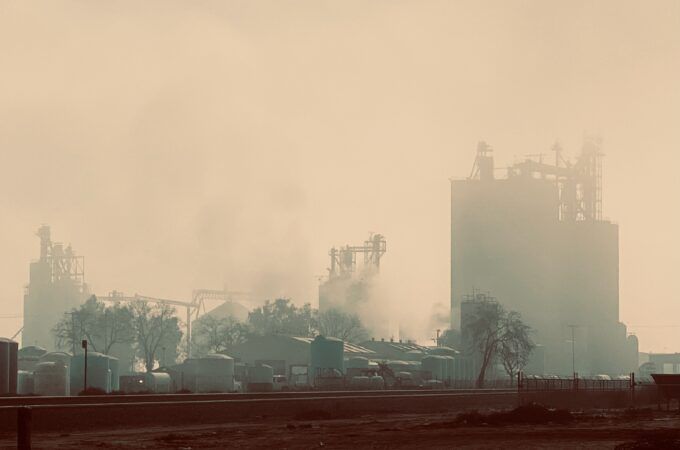
Chemical fertilizer plant near Bakersfield, California. Photo: Jeffrey St. Clair.

The Trump regime has gutted the National Institute for Occupational Safety and Health (NIOSH), the agency responsible for vital workplace safety research. Health and Human Services Secretary Robert F. Kennedy Jr. and the so-called Department of Government Efficiency (DOGE) have now thoroughly hollowed out this critical arm of the Centers for Disease Control and Prevention (CDC). The cuts jeopardize the mission of the Occupational Health and Safety Administration (OSHA), which relies on NIOSH findings to determine everything from standards for personal protective equipment (PPE) to exposure limits for hazardous substances like silica dust or lead.

One of NIOSH’s core responsibilities is to test and certify personal protective equipment (PPE) — especially respirators like N95s — through its National Personal Protective Technology Laboratory. NIOSH certification ensures that PPE protects wearers from airborne hazards under real-world conditions. Though PPE is the last resort in the hierarchy of controls, it is often the only thing standing between workers and serious harm when other protections fall short.

NIOSH also conducts and disseminates research on how and when different respirators should be used, contributing to evidence-based standards for industries ranging from healthcare and manufacturing to mining and firefighting. Its research supports OSHA in setting legal standards and shapes unions’ collective bargaining around workplace safety.

The COVID-19 pandemic further solidified NIOSH certification as an indispensable benchmark for quality and legitimacy in a marketplace flooded with unreliable products. The cuts have halted new NIOSH certifications for N95 respirators, effectively freezing the pipeline for new or improved respiratory protection when supply should be increasing. Why? For one, COVID-19 transmission continues to pose serious risks, and millions of Americans are living with Long COVID, a disabling condition that can be exacerbated by repeat infections.

The recent resurgence of measles in the US has also made airborne disease hazards a more salient consideration across the country, particularly for immunocompromised individuals whose neighbors refuse safe and effective vaccines. Meanwhile, agricultural workers are confronting the mounting threat of H5N1 influenza, which continues to surge among dairy cows and other animals amid inadequate surveillance and mitigation. And it’s not just infectious disease; with climate change worsening wildfire smoke, more people are encountering hazardous air on the job. Respirators are no longer niche safety equipment; they are becoming a core tool for public health.

This first appeared on CERP.

Hayley Brown is a Research Associate at the Center for Economic and Policy Research.

Human Nature: It’s Just Common Sense


 May 16, 2025
Facebook

Photo by Andrew Valdivia

Wait times at Social Security are longer than ever. It seems Diversity, Equity, and Inclusion (DEI) initiatives are to blame. When asked about the delays, a spokesperson for Lee Dudek, Trump’s then-acting Social Security Commissioner, said that it’s because former President Joe Biden “[advanced] radical DEI and gender ideology over improving service for all Americans.”

Record low staffing at the agency under Biden seems to have played no role. One may also dismiss Trump’s severe service cuts and buyouts. Yet, DEI and other racialized programs are useful because they provide explanations for social maladies.

Trump blamed DEI for a collision between an airplane and army helicopter that killed 67 people last January. When he was asked how he knew DEI was to blame for the crash, Trump responded that it was all crystal clear because, as he put it, “I have common sense.” Everyone should know that hiring people for their melanin but not for their qualifications is at epidemic levels.

That’s why things are so broken.

Common sense says that people are bad. They will get up to all sorts of shenanigans to climb up a rung or two on the social ladder. They will use whatever program, law, loophole, connection, or story to get there. And if they don’t have to work for a thing, then they’ll get it by making others lift the heavy end.

That’s DEI in a nutshell. That’s also welfare, food stamps, and public housing. People are bad and they cheat. They live at the expense of those who work hard and play by the rules.

It’s just common sense.

There is no shortage of people on TV, social media, barstools, or in the US Congress who will tell you that, too. Trump is not only their mouthpiece, but he—and many others—have skillfully manipulated Americans’ economic precarity by serving up people with pretend motivations to blame for real grievances.

They say that “those people” don’t want to work. “They” don’t value the same things as contributors to society. Those who make these assertions engage in a self-flattery that is hard to miss; it’s the rest of the world, especially those who don’t burn so easily at the beach, on whom we should keep a close eye.

The School of Hard Knocks (SHK) taught them about human nature, and they will tell you all about it. An SHK education means that a person doesn’t have to waste time listening to those who know something about their own experiences or that despite different zip codes, people might have something in common.

Here’s a typical example.

I am on a Facebook group about Chicago architecture. A contributor posted a picture of Cabrini-Green, a housing project located in what is now a wealthy area of Chicago. It was named for Mother Frances Xavier Cabrini, an Italian immigrant nun who was famous for her work with the poor. The housing complex had a reputation for being a scary, deadly place. It was in the news all the time and for sure had awful problems. Lots of them.

Although some of the original row houses remain, much of the project was torn down many years ago and the property sold to developers. Expensive homes have gone up there and people now go jogging with their dogs.

This is a brief exchange from the comments section of that post and photograph. Curiously, some who never went near the neighborhood know a lot more than people who grew up in the neighborhood.

Victoria (a former resident of Cabrini-Green): I enjoyed living there. Had lots of fun, beautiful memories, good friends.

Robert (responding to Victoria): Really? How many murders did you see and drug deals?

Addis (a former resident of Cabrini-Green, responding to Robert): The media [had] pre-consumed notions perpetuated on us to be portrayed as a bunch of savages … Many families [and] good people [lived there] … a few rotten apples in the bunch.

Bruce (responding to Addis): Dogs were afraid to go in there.

There is more, but you get the idea.

Almost the entire exchange was composed of people who had lived at Cabrini-Green attempting to convince their incredulous interlocutors that the place was not filled with beasts of prey. They explained that they were human beings who lived three-dimensional and even sometimes happy lives in challenging circumstances.

However, some of the Phi Beta Kappa graduates of SHK weren’t having it. Common sense dictated that what the former residents said was false, even the opposite of reality. The more charitable were amazed by the reports that people had fond memories of any kind. A woman named Martha said Victoria’s recollection was “A surprising comment.”

But her surprise should not come as a surprise if we consider the incessant flow of common sense about race and social help programs that are evacuated into TVs, iPhones, and computers every day. People then draw seemingly logical conclusions from these piles of words about human nature as essentially bad, corrupt, and even worse if the humans whose nature is examined ever received public aid.

However, this commonsense narrative does not frequently describe people’s lives. That should matter. As the last of Cabrini-Green’s buildings were demolished, The Chicago Reader interviewed some of its longtime residents, a few of whom lived in the area for decades.

A woman named Margaret Wilson said, “When we came here from the south side in the early 60s, I found it to be a quite interesting and family-oriented community.”

Jazz pianist and three-time Grammy Award winner Ramsey Lewis recollected that when he was “growing up in Cabrini [he] never realized [he] was from … a poor family as far as money was concerned. [W]e were God-fearing, law-abiding people, and that’s how we lived.”

Curtis Mayfield, another Grammy Award-winning musician, reflected on his life experiences, including his years at Cabrini-Green, in an interview shortly before his death. His memories of community bonds and mutual aid were palpable. Mayfield concluded that

“[A]lthough sometimes all the bad things seem to be in a majority, it’s still really a small minority. The majority still has high hopes … and wants to do the right things and be about success stories. The poverty may hold them back, but the dreams are still there.”

Mayfield and so many others long knew what lots of social scientists now say: people are basically good, not bad.

Historian Rutger Bregman, in his book Humankind: A Hopeful History, makes this observation about rich and powerful people who claim to have a monopoly on the allegedly commonsense notion that people are bad: “For the powerful, a hopeful view of human nature is downright threatening. It implies we’re not selfish beasts that need to be reined in, restrained and regulated. It implies that we need a different kind of leadership.”

Bregman cites writer Rebecca Solnit, who claims that those at the top of the pecking order “see all of humanity in their own image.” In other words, many of the most powerful figures in our country reduce ordinary people to the terms of their own corrupt, self-serving, and violent behavior. All-people-are-bad stories justify their control.

Who is making millions on reducing regulations and firing watchdogs?

Who benefits from a form of legalized bribery called lobbying?

Who facilitates violations of international humanitarian law and approves the sale of high-tech weapons that continue to cause the hideous deaths of innocent people in Gaza?

I can tell you who does not engage in that sort of behavior: Anyone who lives in public housing, receives food assistance, lives on Social Security, or had benefited from a Head Start program when they were children.

Decent people are everywhere and knowing that is how we can build a better society.

That’s just common sense.

Michael Slager is an English teacher at Loyola University Chicago.