Monday, May 19, 2025


Iran Strengthens Strait of Hormuz Defenses as Nuclear Talks Move Ahead
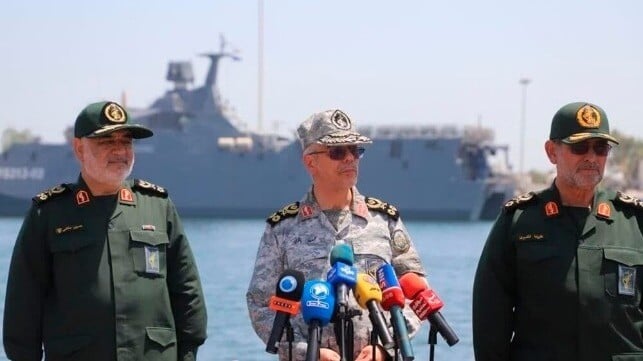
Maj Gen Mohammed Bagheri speaking in Bandar Abbas, May 12 (Iran Ministry of Defense)
Maj Gen Mohammed Bagheri (center) speaking in Bandar Abbas, May 12 (Iran Ministry of Defense)

Published May 18, 2025 4:06 PM by The Maritime Executive


Reports from the continuing Omani-mediated talks between the United States and Iran suggest that after four rounds, negotiations are reaching a critical point, with progress now being dependent on either side giving way on redline positions.

The United States is said to be demanding that Iran must give up all uranium enrichment (whether for civil or military needs), and disperse current stocks of processed uranium. U.S. negotiators are also seeking an end to Iranian long-range ballistic missile development and a scaling back of its decades-old regional expansionism program.

Iran, for its part, seems willing to accept oversight of its nuclear program and to keep uranium enrichment to the 3.67% level needed for civil purposes. The International Atomic Energy Agency believes that Iran already has a 275-kilogram stockpile of 60% enriched uranium. Iran also recognizes that following the reverses suffered by its Axis of Resistance allies in Lebanon, Syria and Iraq, its regional expansionism program needs to be scaled back for now - but probably hopes it can continue its efforts in a more covert manner. More than anything else, Iran seeks sanctions relief, without which its economy cannot recover - threatening internal unrest. Nothing motivates the clerical leadership in Iran more than threats to its grip on power.

The scene is set for a major negotiating stand-off. Within the Iranian political leadership, this impasse is being approached differently by the hardliners surrounding the Supreme Leader and by mainstream political opinion. The hardcore faction, heavily invested in the infallibility of the Supreme Leader Ali Khamenei, is trumpeting robustness and the strength of Iran’s position - despite recent setbacks.

Mainstream politicians are taking a less aggressive line, with commanders of the regular armed forces stressing the effectiveness of Iran’s defenses. In a speech made at the Bandar Abbas Naval Base on May 12, Major General Mohammad Bagheri, the Armed Forces Chief of Staff, outlined this essentially reactive posture, saying that all operational plans in southern Iran had been reviewed to ensure “full readiness to confront any potential attack.”

General Bagheri warned that US bases in the region used to mount any US strikes on Iran would be targeted. This would include Al Udeid (Qatar), Al Dhafra (UAE), Naval Base Bahrain, Dimona (Israel), Muwaffaq Salti (Jordan), Camp Arifjan (Kuwait), Ain al-Assad (Iraq), and also the Naval Support Facility on Diego Garcia.

This threat was also extended generally to the countries in the region that host the US bases, and to Israel should it join in such attacks. If Operation True Promise-3 were to be launched against Israel, Bagheri said it could involve a barrage “from a thousand to thousands” of missiles, which could cripple Israel’s “military, economic, and technical infrastructure all at once.” Even a limited attack mounted against a GCC country would have a devastating impact on economic confidence. Iran has at least 24 identified missile and drone sites in the western half of the country, spread from north to south. All feature underground storage bunkers, from which both drone and missile mobile launchers can be driven out, ready to go into action within minutes.

Bagheri has also sought to bolster the credibility of Iran’s missile and drone fleet. IRGC missile sites are being retro-fitted with upgraded Qassem Basir missiles, which have a maneuverable warhead with passive terminal guidance. It is likely this warhead was fitted to the Houthi Palestine-2 missile, which penetrated Israel’s Arrow-2/3 air defense system on May 4, impacting on waste ground within Ben Gurion International Airport. On this occasion the Qassem Basir likewise defeated the US THAAD system, and did so again several days later. The IRGC missile fleet is also being bolstered with Emad and Khorramshahr-4 liquid fuel missiles, both also with separable warheads and longer ranges.

Such threats have been heard before. However, there was a new emphasis: the general’s revival of the threat to international shipping in the Gulf and Straits of Hormuz, specifically to foreign warships and oil tankers. The general thought such attacks, which by implication would close the Straits of Hormuz, could lead to oil prices rising to “$150 to $200” per barrel. Ignoring the fact that the United States as the world’s largest oil producer is now self-sufficient, he thought this would “be a major shock to the global economy.” He also ignored the likelihood that the biggest victim from any closure of the Straits of Hormuz could be Iran itself, rendered unable to export any of its own oil.

Evidence on the ground suggests that Iran’s armed forces are indeed focusing on defensive measures. Missile defenses on the Iranian-controlled islands in the Gulf have been strengthened, with extra missile boats deployed to reinforce coastal defenses. On May 18, most of the regular Navy’s replenishment ships, on which long-range deployments depend, were in port in Bandar Abbas, and the Navy’s Red Sea presence has been curtailed. Also present alongside in the Naval Harbor were all three Alvand Class frigates, IRINS Alvand (F71), IRINS Alborz (F72) and IRINS Sabalan (F73); the intelligence collector IRINS Zaghros (H313); and one of the two operational Moudge Class frigates. Taken together, this deployment pattern suggests a focus on home waters, covering the Straits of Hormuz and approaches.

The Iranian Air Force also seems similarly preoccupied with defense, with its commander Brigadier Amir Hamid Vahedi reporting that “all Air Force bases are 100 percent fully prepared, both in terms of manpower and equipment, to defend the skies of the country.”

The day after his address in Bandar Abbas Naval Harbour, General Bagheri visited the nearby Defense Industries Organization fabrication shed adjacent to the ISOICO Bostanu shipyard, where he inspected two half-completed submarines, construction of which appears to have stalled.  The submarines look to be about 30 meters in length, and are probably of Iran’s light coastal Ghadir Class, of which Iran has about 15 currently in service.

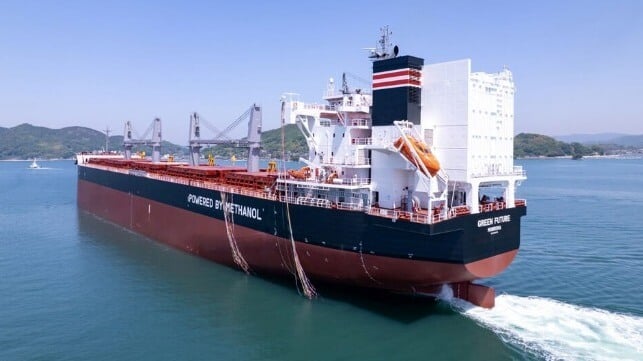
 

NYK Takes Delivery of First Methanol Dual-Fuel Bulker

methanol-fueled bulker
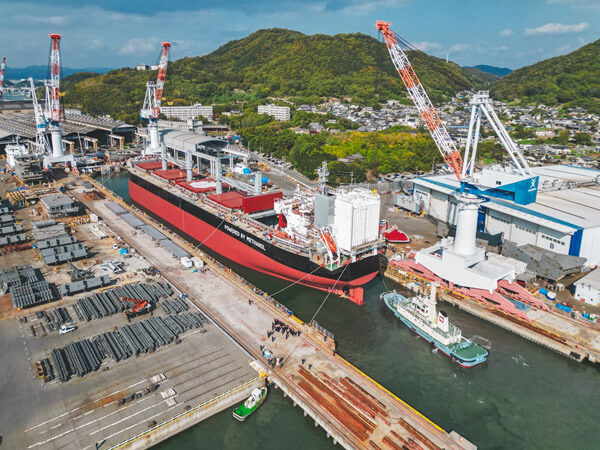
NYK's Green Future is the first of a new segment of methanol-fueled bulkers (Phots courtesy of Tsuneishi)

Published May 18, 2025 11:29 AM by The Maritime Executive


The first vessel of the new segment of methanol-fueled bulkers was officially delivered in Japan on May 13. Owned by Kambara Kisen and operating under charter to NYK Bulk & Projects Carriers, the vessel was given the fitting name of Green Future.

The vessel was built by Japan’s Tsuneishi and is based on the yard’s successful Aeroline Ultramax dry bulk carrier design. The yard highlights that it adapted the design to add the large methanol fuel tank while maintaining the cargo capacity of the class. Methanol has a lower power density, requiring larger fuel tanks, and as a dual-fuel vessel, it will also have traditional fuel tanks.


Tsuneishi adapted its successful Ultramax design for the new fuel capability 


The vessel is approximately 65,700 dwt. It maintains the standard Ultramax dimensions with a length overall of 656 feet (199 meters) and a Panamax beam. By maintaining the industry standard, Tsuneishi highlights that the ship maintains maximum versatility for its operations.

By using methanol, the vessel will be able to reduce emissions of nitrogen oxides (NOx) by up to 80 percent, sulfur oxides (SOx) by up to 99 percent, and carbon dioxide (CO2) by up to 10 percent compared to using conventional heavy fuel oil. It is also prepared to use green methanol (either bio-methanol or e-methanol) when it becomes available on a commercial scale.


The new builker was built in Japan and floated out in November 2024


The vessel was launched on November 22, 2024, at the shipyard in Fukuyama. It is registered in Liberia.

It is the first adaptation of the technology to this segment of the shipping market as methanol capabilities so far are mostly limited to containerships and product tankers. DNV, however, calculates on its Alternative Fuels Insight Platform that a total of 53 methanol-dual fuel bulkers are currently on order out of a total of 369 methanol-fueled vessels on order due for delivery by 2030.


Guyana Passes Bill to Hold Offshore Operators Responsible for Oil Spills

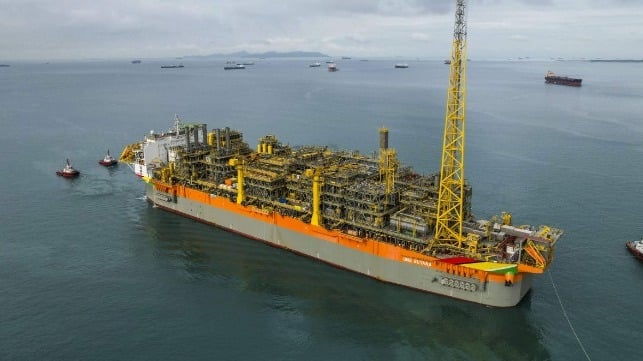
ExxonMobil's FPSO One Guyana, built by SBM Offshore (file image courtesy ExxonMobil)

Published May 18, 2025 5:46 PM by The Maritime Executive


Guyana’s National Assembly on Friday passed a major piece of environmental legislation, making companies and offshore operators responsible for damages arising from oil spills. With offshore oil production expanding in Guyanese waters, the bill hopes to create national environmental safeguards to defend against the effects of oil pollution. President Irfaan Ali is expected to sign the bill into law soon.

“Guyana, as a major oil-producing nation, must establish a clear authority for oversight, aligning with best practices and ensuring all operators bear full responsibility for environmental protection,” said Mark Phillips, Guyana’s Prime Minister.

Some of the notable provisions of the bill include mandatory financial assurance by companies engaged in oil exploration and production. This financial guarantee will cover potential oil spills, ensuring that funds are promptly available for clean-up efforts. There will be penalties for non-compliance, including suspension of licenses.

The legislation designates the Civil Defense Commission (CDC) as the national authority responsible for coordinating response efforts and mitigating the impact of any spill. CDC will also oversee routine inspections and audits to identify and fix potential risks.

According to the finance ministry, Guyana’s oil sector expanded 58 percent in 2024. This growth saw Guyana become the fifth largest crude exporter in Latin America after Brazil, Mexico, Venezuela and Colombia.

Oil production in Guyana’s first offshore block is controlled by an Exxon Mobil-led consortium. The group produced an average of 616,000 barrels per day (bpd) last year from three operational FPSOs in the massive Stabroek block.

This output is set to rise to around 940,000 bpd later this year with a fourth FPSO, which was built by SBM Offshore and arrived in Guyanese waters last month. The FPSO, One Guyana, has a capacity of 250,000 bpd.

The backers of the oil spill legislation in parliament argued that the meteoric rise of Guyana’s oil sector ought to be balanced with the tightening of environmental protection laws.


UK Puts Handover of the Strategic Chagos Islands on Hold

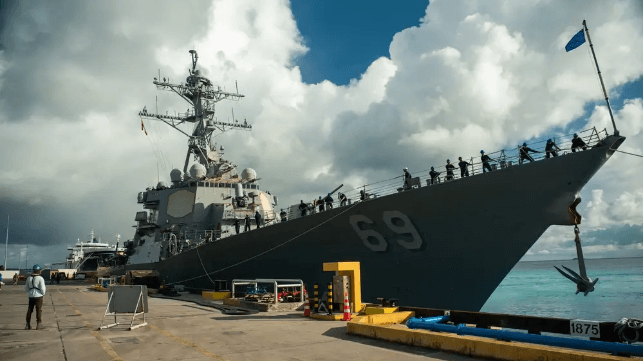
Destroyer USS Milius at the strategic naval base at Diego Garcia, British Indian Ocean Territories (U.S. Navy)
Destroyer USS Milius at the strategic American naval base at Diego Garcia, British Indian Ocean Territories (U.S. Navy)

Published May 18, 2025 4:23 PM by The Maritime Executive


Plans for the United Kingdom to surrender sovereignty of the Chagos Islands, known as the British Indian Ocean Territory in return for a leaseback arrangement allowing for the continued operation of the United States’ Naval Support Facility on Diego Garcia, appear to have been put on hold.

The Times of London has reported that Prime Minister Kier Starmer is now concerned about political backlash from his own MPs over the annual cost of the deal at a time when welfare payments are being cut. There is also growing condemnation of the deal for transferring the citizenship of the Chagos Islanders from the United Kingdom to Mauritius without any form of consultation - when Britain went to war with Argentina to defend the rights of Falkland Islanders to choose if they wished to remain British or not.

A major weakness of the proposed deal is that once sovereignty is transferred, there will be no going back, and Mauritius could then choose to strengthen its alliance with China and allow Chinese encroachment over other islands in the Chagos Archipelago. China has track record (well-established in the South China Sea) of building up deserted islands for “civilian” purposes – then turning them into military installations.

Mauritius and China have a Free Trade Agreement, and the Chinese community in Mauritius has two members in Parliament. Prime Minister Navin Ramgoolam has a much closer relationship with China than his predecessor, who started the negotiations with the United Kingdom. At a meeting on May 14, the new Chinese Ambassador Dr Huang Shifang pledged to strengthen Mauritius-Chinese relations, particularly in light of the “strategic advantages” which Mauritius enjoys. He added that there would be “broad prospects for future collaboration.” The new Mauritian government has hinted that it wishes to revive the Jin Fei and Yihai industrial zones, a joint project which collapsed when China did not deliver the new investment promised in the deal.

Meanwhile, the Diego Garcia airfield remains busy. On May 18, four B-52s were visible on the South Apron, together with four F-15 fighters to provide local defense in the light of Iranian threats. The F-15 fighter presence was confirmed by Cdr. Matthew Comer, Chief of Media and Current Operations, U.S. Indo-Pacific Command. The emerging local defense requirement reinforces the need for forward radar sites on the Chagos Islands to the north.


UAE Extends its Dominance in Egypt's Port Sector

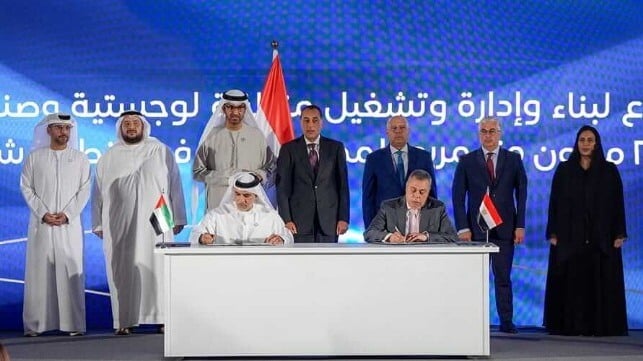
 AD Ports Regional CEO Ahmed Al Mutawa (center left) and SCZONE's Adm. Mohamed Ahmed Mahmoud (center right) sign a new lease for East Port Said (AD Ports)
AD Ports Regional CEO Ahmed Al Mutawa (center left) and SCZONE's Adm. Mohamed Ahmed Mahmoud (center right) sign a new lease for East Port Said (AD Ports)

Published May 18, 2025 6:42 PM by The Maritime Executive


Egypt has concluded a series of deals with AD Ports and DP World which, taken together, have put the operations and revenue generation from Egypt’s principal ports and maritime logistic services into Emirati hands for the foreseeable future - in return for capital investments and payments up front.

In the latest deal, the Abu Dhabi Ports Group has signed a 50-year agreement covering the East Port Said industrial and logistics zone at the northern end of the Suez Canal, which allows AD Ports to build and operate a new shipping and cruise liner terminal. AD Ports has previously signed a 30-year agreement covering a multi-purpose port in Safaga, midway down Egypt’s Red Sea coast, and a 15-year agreement for two cement terminals in West Port Said and El Arish. AD Ports is also planning for two cruise terminals at Hurghada and Sharm El Sheikh on the Red Sea, and is building an integrated logistics park at the Port of Alexandria.

In 2022, DP World signed a similar agreement covering the port of Sokhna at the northern end of the Red Sea, 25 miles southwest of the canal entrance at Port Suez. With an initial $80 million investment to build a logistics park, DP World is committed to building a second basin and jetty, with liquid bulk facilities, specialist warehousing, a sugar refinery and a livestock handling facility, all linked to a planned industrial zone adjacent. The first phase is already operational. DP World also signed a memorandum of understanding in late 2024 to build a free trade zone in Egypt’s New Administrative Capital.

AD Ports is Abu Dhabi-sovereign owned, and DP World is Dubai-owned, meaning that UAE state entities will have a controlling grip on logistics in Egypt for some time to come. This fits in with the UAE’s strategic aim of dominating trade routes from the Gulf through the Bab el Mandeb to the Mediterranean, a trade route on which the UAE depends for survival. All along this trade route, the UAE has invested in military control, building airfields on Socotra, Perim and Asmara, and forming military alliances with governments and militias controlling the coastline. This strategy also serves a commercial purpose: as of last count, DP World handles about 10 percent of global container capacity, with operations in 34 nations around the world.

Egypt has faced some criticism for indebtedness, for investing in ‘vanity’ infrastructure projects such as the New Administrative Capital, and for favoring military-owned companies in major projects. But for Egypt, concluding agreements such as those with the UAE entities brings capital investment into the country without affecting the formal external debt balance, and in time it will recover control of much-improved port infrastructure. For now, Egypt owes the International Money Fund $11 billion (the second biggest debtor behind Argentina), and its debt-to-GDP ratio at the end of 2024 was 91%. But this was down from 96% in 2023, and was a better ratio than that of the US (98%) or UK (98%).

In the immediate short term, Egypt’s principal fiscal problem is the loss of revenue from the Suez Canal, impacted by Houthi attacks on shipping in the Red Sea. Canal revenues have fallen from $9.4 billion in 2022-23 and $7.2 billion in 2023-24 to an estimated $1.8 billion in 2024-25. The US-Houthi ceasefire is unlikely to restore canal traffic to previous levels for some time. Egypt has invested $8 billion in improving the canal since 2014, and had hoped for a major boost in revenues as a return on its investment.


Estonia Grants its First Permit for an Offshore Wind Farm

Pixabay wind farm
Pixabay / public domain

Published May 18, 2025 9:50 PM by The Maritime Executive


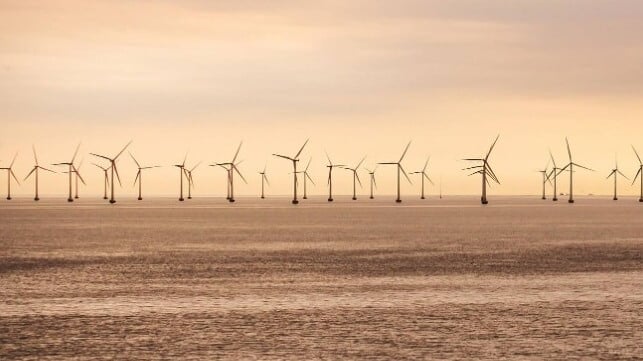
Estonia has approved a draft bill granting the first building permit for the construction of an offshore wind farm. The permit was granted to Saare Wind Energy, which is developing a project west of the coast of the island of Saaremaa, in the Estonian part of the Baltic Sea.

The planned offshore wind farm will have up to 100 wind turbines and the capacity to generate 1.4 GW of electricity. The farm is scheduled to be operational in the early 2030s. In addition, the project involves the construction of a transmission system with a connection to the Estonian onshore grid.

As the first offshore wind farm to get a building permit in Estonia, the Saaremaa project represents an important step towards clean energy production in the country, according to Jaanus Uiga, Undersecretary for Energy and Mineral Resources at the Ministry of Climate.

The building permit is valid for 50 years and allows the developer to proceed to the next levels of approval. These include applying for a building permit from the Consumer Protection and Technical Regulatory Authority (CPTRA) and an environmental permit for special water use from the Environmental Board.

However, the Ministry added that issuing a building permit does not mean the project will receive state support. Further, the Ministry has initiated building permit procedures for 11 more offshore wind farms, which have been submitted by OÜ Utilitas Wind, Five Wind Energy OÜ, Tuuletraal OÜ, UAB "Ignitis renewables projektai 6," Liivi Offshore OÜ, the Environmental Investment Center Foundation (ELWIND), and Tuul Energy OÜ.

Estonia also wants to expedite auctions and licensing of newly designated offshore wind areas, such as the Saare 7 site, 7 miles west of the island of Saaremaa. Early this month, CPTRA, the agency responsible for processing offshore wind farm licenses, announced that the auction for this area will take place in mid-June.

Estonia is part of a cross-border cooperation with seven other Baltic Sea States, aimed at accelerating deployment of offshore wind energy by improving grid infrastructure in the region. Last week, the Baltic Offshore Grid Initiative (BOGI) published a joint roadmap for cooperation in the field of offshore wind energy and related regional grid interconnections. BOGI is a collaboration between transmission system operators (TSOs) from Denmark, Estonia, Finland, Germany, Latvia, Lithuania, Poland and Sweden.

The potential for offshore energy generation in the Baltic Sea is approximately 93 GW, but less than 5 GW of the capacity is installed today. In April 2024, the Baltic Sea States signed the Vilnius Declaration, pledging to explore regional cooperation to tap the massive offshore energy potential in the region. The TSOs were given a clear mandate to develop a Baltic Sea Grid Map supported by cross-border electricity interconnections


Change of Direction

Offshore wind is taking a back seat to oil and gas.

Rig off Norway
iStock / Arild Lilleboe

Published May 18, 2025 10:33 PM by Paul Benecki


(Article originally published in Mar/Apr 2025 edition.)


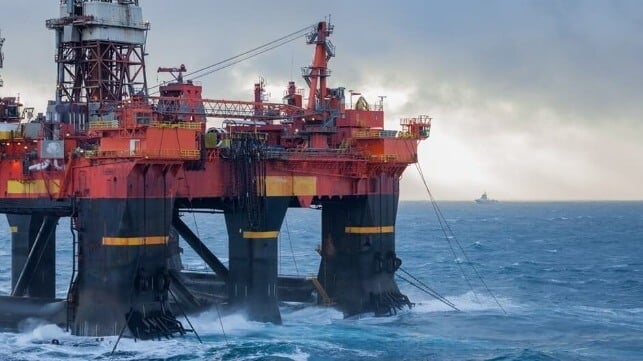
The offshore oil and gas industry has bounced back from the doldrums of recent years with a leaner look and fewer players. Worldwide rig utilization is the highest since 2014, thanks to a wave of scrapping and a revival of activity. But the other offshore – wind – is taking a backseat as investors look for more profitable options.

Five years ago, European oil majors announced a significant pivot to renewables. Shell, BP and Equinor all pledged to shift billions in resources to offshore wind and solar and put serious money down on big-ticket projects. Many of the most important offshore wind leases in the U.S. – including Empire Wind, Atlantic Shores, SouthCoast Wind and Attentive Energy – went to these oil and gas giants.

Unlike its European peers, ExxonMobil stayed out of offshore wind and kept its capital allocation focused on projects with the highest returns, like its flagship Stabroek Block lease off Guyana. This strategy worked, and Exxon posted $56 billion in profits in 2022, the highest earnings ever recorded by any European or American oil company. Tens of billions of dollars in dividends and stock buybacks followed.

Unsurprisingly, investors voted with their dollars. Driven in no small part by offshore E&P success, Exxon's stock has risen more than 210 percent in five years, outperforming BP (50 percent), Shell (130 percent) and Equinor (140 percent). In response to investor pressure to be more like Exxon, European oil majors have begun letting go of renewables and the CEOs who signed off on them.

FROM WIND BACK TO OIL

This February, BP announced that it would cut $5 billion from its planned renewable-power investments and boost spending on O&G by $2 billion a year, effectively ending its ambition to go net-zero by 2050. It's announced plans to sell its entire U.S. offshore wind portfolio, and the rest of its $10 billion wind pipeline has been spun off into a separate JV with Japan's JERA – with a new emphasis on "capital-light" activity.

BP CEO Murray Auchincloss, who took over from green-energy stalwart Bernard Looney in 2023, says that shareholders are happy with the new approach. "We were just pursuing a few too many things over the past five years, and it was really, really time to focus those [businesses] down to the very highest quality that compete on returns," he said in an interview at CERAWeek in March.

Likewise, Shell's new leaders plan to cut offshore wind spending and reorient the remaining low-emissions portfolio towards battery storage, gas-fired powerplants and LNG. This January, Shell took a $1 billion charge to write off its 2.8 GW Atlantic Shores wind farm, ending its involvement in U.S. offshore wind.

Norway's Equinor, an offshore pioneer and an early leader in the oil-to-wind shift, has dropped a plan to put 50 percent of its fixed asset spending into green energy. It plans to boost O&G production by 10 percent through 2027, led by its investments in the Norwegian offshore continental shelf.

As oil majors pull or pause their investments, U.S. offshore wind stakeholders face a risky regulatory environment. President Donald Trump has promised to "end" offshore wind. All future lease sales and permitting processes have been paused. The Administration has revoked a permit for a previously-approved project, Atlantic Shores, and most of the big players see the writing on the wall.

At least, for now.

"We have a concession for 50 years," said Patrick Pouyanné, Chairman & CEO of French oil major TotalEnergies, in a conversation with Bloomberg. "I understand that during these next four years there is no way to obtain any federal license, so I don't want to spend my time. So we say no, we put a pause, we have reduced our teams to a minimum. And then in four years, we'll see if federal policies are changed."

For all the gloom, there are some bright spots for shipowners. In Europe, progress has slowed, but the demand for installation vessels remains greater than the supply. The global leader in turbine transport and installation, Denmark's Cadeler, reported in March a record $2.5 billion contract backlog for future wind farm work. It's confident enough in the industry's outlook to invest in new hulls and will have seven new high-spec WTIVs (wind turbine installation vessels) in its fleet by 2027 – and is said to be contemplating M&A options, too.

E&P BOOM

Commercial and political realities have cut deep into offshore wind, but the decline is offset by more activity in offshore oil and gas. That's fine for vessel owners who happen to have dual-purpose service vessels (as many do). Much of the capital pouring out of offshore renewables is flowing right into offshore E&P.

BP, a leader in the U.S. Gulf, has spent $7 billion in the region since 2022 and has been increasing its commitments even as it steps back from U.S. wind. In 2022, it greenlighted its sixth offshore production hub in the Gulf, Kaskida, and is nearing a decision on its seventh, Tiber. Both are fully owned by BP, and they're the top projects on the company's oil-focused priority list. "We have a fabulous position in the Gulf of America with the Paleogene, 10 billion barrels in place," said Auchincloss.

It also helps that the Trump Administration is all-in on oil and gas. At CERAWeek, U.S. Energy Secretary Chris Wright said that the Administration is "unabashedly pursuing a policy of more American energy production and infrastructure, not less," news that was welcomed with a round of applause. Wright highlighted the Administration's swift approval of a new offshore gas terminal, Delfin LNG, which will use a legacy offshore pipeline to supply floating liquefied natural gas (FLNG) plants off Louisiana.

An offshore boom would mean a welcome return to full utilization of U.S. offshore service vessels, says Aaron Smith, President & CEO of the Offshore Marine Services Association (OMSA). With enough demand, the industry could kick off a new offshore vessel construction cycle, and the supportive tone from the White House is encouraging for future investment in tonnage.

Alongside its backing for the energy industry, the Trump Administration has a positive attitude towards American maritime, and the policy environment appears to be shifting in favor of a U.S.-supplied offshore sector. Driven by the strategic need to grow the U.S. shipbuilding base, the White House is listening closely to the needs of the industry. It's even set up a dedicated shipbuilding office in the Eisenhower Executive Office Building, right across the street from the West Wing.

"This Administration gets that if you want to bolster U.S. shipbuilding, you need a U.S. vessel owner to put in an order," Smith adds. "And U.S. mariners need vessel owners to sign a paycheck. With some of the developments we're looking at, I think you could eventually see the whole offshore project lifecycle dominated by U.S. vessels, from geophysical surveys through offshore supply through decommissioning. Not foreign-controlled, but created by American workers with American resources."

CHARTING ITS OWN COURSE

Inside China's energy market, Beijing is charting its own course in offshore wind, oil and gas with an all-of-the-above approach.

Like the U.S., China is all-in on offshore oil and set a new, 1,000-well record for offshore drilling last year. Its state-owned offshore E&P champion, CNOOC, announced surging profits of $19 billion for 2024, driven by record production.

And while its focus is China, the key to CNOOC's profit margin is Exxon: CNOOC got in early with a 25 percent interest in Exxon's Stabroek Block lease off Guyana, giving it a quarter of the massive upside from this frontier basin.

Though its ring-fenced offshore wind sector is often overlooked, China's grid accounts for more than half of all installed offshore turbine capacity worldwide. With 41 GW plugged in and counting, it has long since blown past America's 30 GW ambition.

China's provincial policymakers see value in a local energy supply chain, and domestic manufacturers have responded with a turbine arms race. Names like Goldwind, Dongfang, Shanghai Electric, CRRC and CSSC Haizhuang are all pursuing 20 MW-plus turbine designs, far outpacing anything in the West for sheer scale. In October, Dongfang unveiled China's latest world record, a 26 MW turbine nacelle the size of a building. When assembled, the turbine's swept area would be broad enough to comfortably park a Panamax inside.

China is also set to dominate floating wind technology, which it needs in order to capitalize on frontier areas in deeper water. In January, CRRC installed and turned on the world's largest floating wind turbine, a 20 MW giant with an 850-foot blade diameter. The previous recordholder for a floating turbine was also Chinese, and CRRC beat it by 20 percent.

These floating turbines are a priority because they're the only option for long-term domestic growth: With a foot on the gas and 250 GW worth of projects in planning, China will simply run out of shallow water for bottom-fixed turbines by the 2030s, according to Cosimo Ries of policy think tank Trivium China.

The opinions expressed herein are the author's and not necessarily those of The Maritime Executive.


Russia Intercepts and Detains Greek Tanker off Estonia

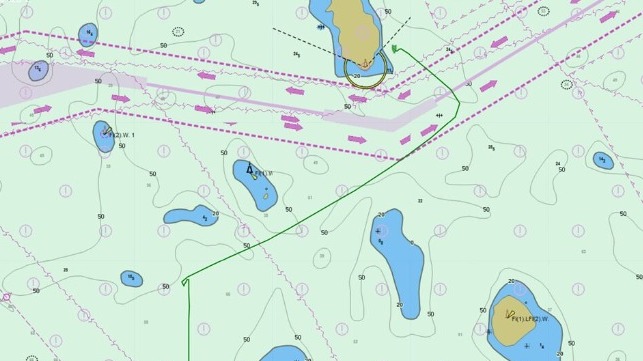
Green Admire's course and her diversion to Gogland (Pole Star)
Green Admire's course, showing her diversion to the northeast to Gogland (Pole Star)

Published May 18, 2025 8:01 PM by The Maritime Executive


Following the Estonian Navy's attempt to intercept a Russia-bound tanker in the Baltic last week, the Russian Navy has intercepted and diverted a Greek tanker full of Estonian fuel oil in the Gulf of Finland, according to Estonia's transport administration. 

The agency said that Russian forces had intercepted the Liberian-flagged, Greek-owned tanker Green Admire in the early hours of Sunday morning, shortly after the vessel departed the Port of Sillamäe. The seaport is right next to the Russian border, and the tanker's route took it into Russian territorial seas, where Russian forces detained it. The vessel was diverted to Gogland, a Russian-controlled island northwest of Sillamäe. 

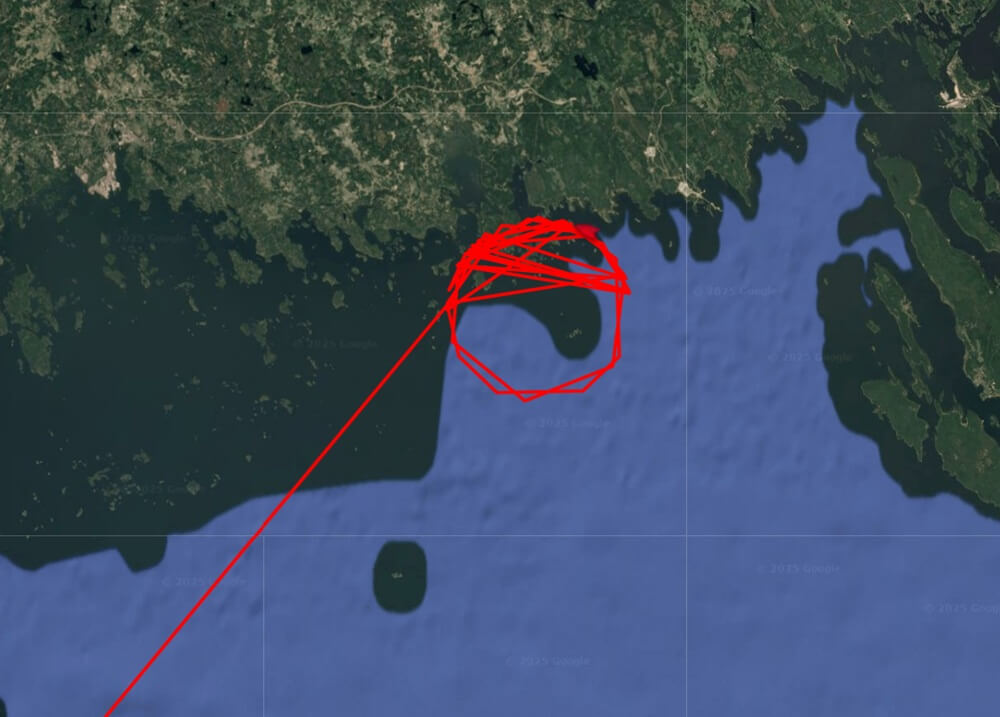
After the detention, the Green Admire's AIS signal showed obvious signs of spoofing, as is common in this region: it appeared to relocate to the northern coast of the gulf, then maintained a circular course at twice its maximum sea speed, occasionally passing over land.

Green Admire's AIS track after her diversion to Gogland (Courtesy Pole Star)

It is the first time that such an incident has happened, the ministry told local outlet ERR. The route that Green Admire used is an internationally-approved safety corridor for deep-draft shipping, and was agreed to by Russia, Estonia and Finland; going forward, Estonia's merchant ship traffic will be advised to follow a different and somewhat more challenging route to stay out of Russian waters. 

"Today's incident shows that Russia continues to act unpredictably, which is why ships will be directed along an alternative route in the future," said Minister of Foreign Affairs Margus Tsahkna in a statement. 

The detention may have been a response to an Estonian Navy intercept attempt last week. Estonia asserts that it has a right to inspect vessels transiting the Baltic for safety reasons, a response to the frequent deficiencies, questionable insurance arrangements and occasional false flagging associated with Russia's "shadow fleet" of aging tankers. On May 13, the Estonian Navy interdicted the sanctioned tanker Jaguar en route to Primorsk, Russia, and ordered it to change course; however, it continued on its voyage, and the Russian military scrambled a fighter jet to the scene in response. Estonia filed a diplomatic complaint with Russia, accusing the jet of briefly violating Estonian airspace in a manner that was “not acceptable in any way.”

On Sunday, Tsahkna told TV news show "Aktuaalne Kaamera" that there was a clear link between the Estonian Navy interdiction of the Jaguar and the Russian intercept of the Green Admire. 

"This is definitely connected to the fact that we have started to harass Russia's shadow fleet. I am not just talking about Estonia, but about Finland and other Baltic Sea countries more broadly," he said. 


Women in Maritime Day: Survey Highlights Progress, But Barriers Remain

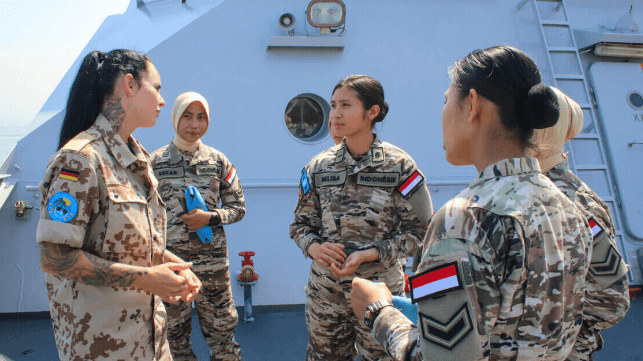
Female members of the UNIFIL naval peacekeeping force off Lebanon, 2025 (UNIFIL)
Female members of the UNIFIL naval peacekeeping force off Lebanon, 2025 (UNIFIL / UN Peacekeeping)

Published May 18, 2025 9:04 PM by The Maritime Executive


For this year's International Women in Maritime Day, the IMO released the results of a new global survey conducted together with WISTA International. The survey found that women account for an estimated 19 percent of all employees in the maritime sector worldwide, with high variability among subsectors. Women dominate the field in public relations, marketing, advertising, crewing and recruitment roles, but still account for just one percent of the world's active seafaring workforce - reflecting both the opportunities and the longstanding challenges for women in maritime. 

"Women remain a small fraction of the seagoing workforce, highlighting the urgent need for continued commitment and
action. We must redouble our efforts to foster a truly diverse and inclusive maritime industry — one where talent is recognized and nurtured, regardless of gender, to usher us into a new digital and decarbonized maritime era," said IMO Secretary-General Antonio Dominguez in a statement. "At IMO, we will continue to push forward, through our flagship Women in Maritime program, now in its fourth decade, and by mainstreaming gender in all projects and capacity development activities."

The survey found that in the private sector, women account for 16 percent of the total shoreside and seafaring workforce. This is a remarkable drop from the level reported in the inaugural survey in 2021 - 29 percent - and likely reflects a change in the composition of the companies that responded. The survey was conducted online and was voluntary, and most of the organizations and firms that participated this year were new additions, making comparison between the two surveys difficult. 

Nonetheless, the overall trend remains consistent: women can be found in shoreside roles - from entry-level to board level - but they face continued barriers to employment at sea. Out of the 179 vessel operators that participated in the survey, only 85 said that they actively employ women on their ships. One company was up-front about its approach: "We do not hire women in offshore support vessels," the firm wrote in a free-response section. 

A recent survey of maritime professionals by the Global Maritime Forum found that 29 percent of women identified gender discrimination as a major barrier in their careers. However, the WISTA/IMO survey found that only 13 percent of respondents attempt to address discrimination through the use of bias training, and the majority of respondents do not have a gender equality policy. 

"The data indicates the continuing presence of barriers such as gender stereotyping, workplace safety concerns, a lack of family friendly policies and the ongoing gender pay gap. We all have a duty to make the industry more accessible and inclusive, not just for future generations but for today's workforce," said WISTA International President Elpi Petraki in a statement. "It is my hope that the 2024 Women in Maritime Survey results guide the actions we must take to bring about cultural change, as we still have a long way to go in our mission to improve gender diversity and break the gender bias."

Petraki and Dominguez discussed the results in a symposium held Saturday at IMO headquarters, along with panel discussions on specific issues and individual perspectives (below). 


India Plans to Issue Krill Fishing Permits for Antarctic Waters

CCAMLR
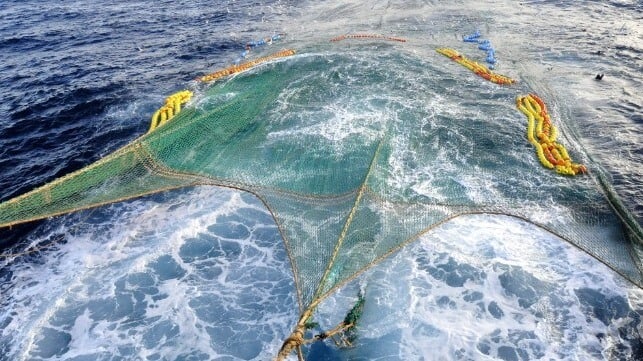
Krill trawling net (file image courtesy of CCAMLR)

Published May 18, 2025 9:42 PM by The Maritime Executive


India has launched a set of reforms aimed at strengthening its fisheries sector. Last week, Prime Minister Narendra Modi chaired a meeting with key stakeholders in the industry as India prepares to focus more on deep-sea fishing and increase seafood exports.

“We attach great importance to this area and have worked extensively to improve infrastructure relating to the sector and also ensure greater access to credit as well as markets for our fishermen,” said Modi.

Government data shows that India’s fish production has surged by 82 percent in the last decade, reaching 17.4 million tons in 2022-23 from 9.5 million tons in 2013-2014. This saw India become the third biggest fish producer in the world, with aquaculture representing the largest share of the growth.

However, with the focus now on boosting deep-sea fishing, India is planning to venture into commercial krill fishing in the Antarctic Ocean. Two Mumbai-based fishing firms have reportedly announced plans to launch krill harvesting. Krill is a tiny crustacean that makes up the base of the food chain in the Southern Ocean.

According to a report by the Times of India (TOI), the firms may attempt krill fishing this summer in the Antarctic (between December and February). “Till now, we did not venture into fishing there because it requires a huge investment. We have asked the companies to talk to those in other countries involved in fishing in the Southern Ocean. We will give them permits and also the Indian flag for their vessels,” M Ravichandran, secretary, Ministry of Earth Sciences (MoES) told TOI.

As a member of the Commission for the Conservation of Antarctic Marine Living Resources (CCAMLR), the international body in charge of conserving marine life in Antarctic waters, India has fishing rights in Southern Ocean. But until now, India has not been utilizing its fishing quotas in the region. India currently imports krill oil from Norway for use as a feed in aquaculture farms. In fact, the rising demand for krill as an aquaculture feed has led to a significant growth in commercial krill fishing in the last few years. Commercial fishing for krill reached a record 498,000 tons in 2023, with Norway and China leading in the harvest.

CCAMLR has set a krill fishing limit at 620,000 metric tons per year. However, some scientists and conservationists are worried that catches are steadily rising towards the limit, especially as more countries become interested in krill fishing. Some of CCAMLR’s members (including China and Russia) are opposed to the creation of new Marine Protected Areas (MPAs) in Antarctica, which could be a win for biodiversity in the region.


Two Killed as Mexican Sail Training Ship Hits Brooklyn Bridge

training ship
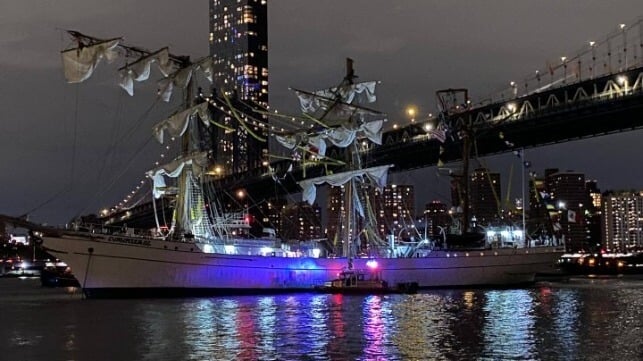
Damaged training ship with its broken masts (NYC Fire Department)

Published May 18, 2025 9:33 AM by The Maritime Executive


During a maneuver in New York harbor, the Mexican sail training vessel Cuauhtémoc struck the historic Brooklyn Bridge while onlookers watched in horror. The Mexican Navy is reporting that 19 cadets were injured and two others died from their injuries.

Mexican media outlets have identified the deceased as Adal Jair Marcos, a resident of Oaxaca, and América Yamileth Sánchez, originally from Veracruz.

Reports are saying there were a total of 229 sailors aboard the vessel, with the Navy reporting that 11 are in more serious condition and nine are in stable condition. She was in New York City on a goodwill stop during a training cruise bound for Iceland. The training cruise is being terminated, and the Mexican embassy is making arrangements to reunite the cadets with their families.

The vessel was departing its dock and making a ceremonial outbound transit on the East River, with the cadets high up in the rigging. It pulled away from its berth, moving astern with a tug assist in preparation to head southwest, downriver and into New York Harbor. As it prepared to turn onto a southwesterly course and head downriver, the training ship kept moving astern under power - heading upriver, opposite its intended direction of travel. The twin-screw assist tug was not connected with a towing hawser, and was not able to intervene before the allision.

The East River has strong currents, and the tide was coming in - towards the bridge - at the time of the casualty. The wind was also northeasterly, towards the bridge, according to initial accounts. By the time Cuauhtémoc made contact with the underside of the bridge deck, she was making about six knots astern. 


All three of the ship's masts hit the underside of the bridge, and spectators who had gathered to watch the transit reported hearing the sounds of breaking wood.  

Bystander photos showed multiple cadets dangling from the masts in their protective harnesses after impact, necessitating a complex rescue response. The Mexican Navy reports that no one fell into the river.


The vessel’s masts are 158 feet in height, but the bridge has a clearance of 135 feet. NYC Mayor Eric Adams reported that the bridge did not sustain damag, and it has already reopened to traffic. 

The Cuauhtémoc is now moored at Pier 36 on the East River, and damage assessments and salvage plans are under way. Coast Guard Sector New York has established a 50-yard safety zone around the vessel, and has asked passing traffic to transit at slow speed. The New York City Police Department's marine units are patrolling the safety zone. 

The 300-foot Cuauhtémoc was commissioned in 1982 as a modern replica of the famous sail training ships built in the 1930s. She is one of four sister ships, along with Colombia's Gloria, Ecuador's Guayas and Venezuela's Simón Bolívar.  

While detailed specifics of Cuauhtémoc's propulsion system are not readily available, her sister ships are fitted with a controllable pitch propeller (CPP) system and a single auxiliary engine. A CPP system uses mechanical or hydraulic means to rotate the angle (pitch) of the propeller blades to move ahead (positive pitch) or astern (negative pitch). By changing the blade pitch, either direction of thrust - or no thrust at all - can be produced while the engine remains in the same direction of rotation.

While the cause of the Cuauhtémoc's allision with the bridge is not yet known, at least four previous vessel casualties were caused by a CPP system breakdown that resulted in sudden, uncontrolled full-astern thrust - most recently the 2008 sinking of the Alaska Ranger.

The National Transportation Safety Board has deployed a rapid-response team of investigators, who will be examining all potential human and mechanical factors closely, including Cuauhtémoc's propulsion system.