Monday, May 19, 2025

CHINA

Pet market recovery signals economic rebound

Industry expands steadily in 2024 on shifting consumer behavior, an increasingly younger pet-owning demographic

By WANG ZHUOQIONG | China Daily | Updated: 2025-04-17

A man carries a pet cat by Huangpu River in Shanghai on April 5.
[TANG YANJUN/CHINA NEWS SERVICE]

China's pet industry recovered strongly in 2024, with the urban consumption market for pet dogs and cats surpassing 300.2 billion yuan ($41.1 billion), up 7.5 percent year-on-year, according to the 2025 China Pet Industry White Paper recently released by PetData, an industry platform.

The report highlighted the industry's steady expansion, fueled by shifting consumer behavior and an increasingly younger pet-owning demographic.

The pet market recovery signals not only an economic rebound, but also a deeper emotional and financial commitment from pet owners, said the report.

"The growth in the urban pet market underscores a transformative shift in consumer behavior," said Liu Xiaoxia, founder of PetData. "Pet owners are increasingly prioritizing the health and happiness of their animals, which bodes well for the entire industry."

Pet owners are getting younger. One of the most significant changes in 2024 was the shifting demographic of pet owners. Those born in the 1990s still account for the largest share at 41.2 percent, but this figure dropped by 5.4 percentage points from the previous year. Meanwhile, pet owners born in the 2000s surged to 25.6 percent, up by 15.5 percentage points.

"This rise of the post-2000s generation as pet owners is a wake-up call for businesses," Liu said. "They are a generation that demand high-quality products, transparency in sourcing, and a seamless shopping experience. Brands that fail to adapt will find it difficult to remain competitive."

Unlike older consumers, this younger group places greater emphasis on product quality, nutritional value and ingredient traceability. Rather than simply looking for well-known brands, they scrutinize pet food formulations and prioritize value over brand recognition.

"Today's consumers are not just buying pet food — they are investing in their pets' health and well-being," Liu said.

This shift in mindset has led to changes in purchasing behavior. Rather than stockpiling pet food in bulk, 81.4 percent of dog owners and 81.1 percent of cat owners now purchase their pets' main food supply every one to three months, reflecting a preference for fresher, higher-quality options.

Domestic brands


Another clear trend emerging from the report is the increasing popularity of domestic pet brands. In the past, imported brands dominated China's pet market, but this dynamic is changing. Among dog owners, 32.9 percent now exclusively buy Chinese brands, while international brands are losing their appeal. A similar trend is evident among cat owners, with 34.8 percent opting for domestic products.

"Chinese pet food brands have significantly improved their quality and transparency," said Randy Wang, CEO of Pet Fair Beijing International Exhibition Ltd. "Consumers are no longer just chasing after international labels; they want products that cater to their pet's specific needs and offer real nutritional value."

This shift is particularly noticeable in North China, which accounts for about 70 percent of the country's pet food and cat litter production — making it a key hub for domestic pet product manufacturing.

The report also highlighted a divergence in growth between the dog and cat markets. While the total pet population in urban China increased by 2.1 percent year-on-year to 124.11 million in 2024, the cat market saw significantly stronger growth than the dog sector. The number of pet cats rose by 2.5 percent to 71.53 million, while the pet dog population increased by just 1.6 percent to 52.58 million.

This difference is reflected in spending trends as well. The dog owning market reached 155.7 billion yuan, growing at a moderate 4.6 percent, whereas the cat owning market surged by 10.7 percent to 144.5 billion yuan.

Annual spending per pet has also increased. On average, dog owners spent 2,961 yuan per year, up 3 percent from 2023, while cat owners spent 2,020 yuan, marking a 4.9 percent rise. The growing willingness of pet owners to invest in premium products — despite broader economic pressures — suggests that the pet economy remains resilient.
Malaysia sees spike in exotic animal smuggling

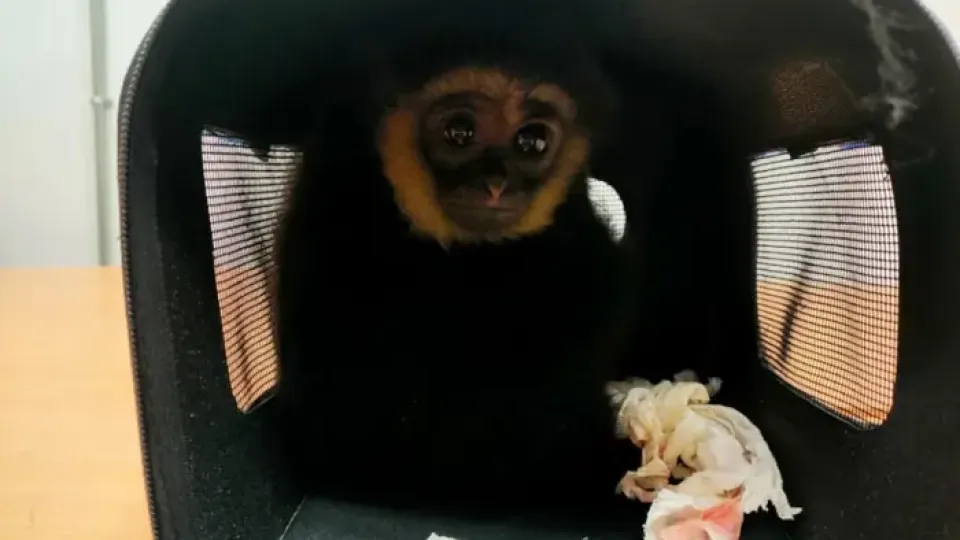
Intelligence findings indicate that most exotic wildlife species are smuggled in from neighbouring countries and temporarily transited through Malaysia before being sent to destination countries, Natural Resources and Environ­mental Sustainability Minister Nik Nazmi Nik Ahmad said.


Teh Athira Yusof

The Star


Malaysia has ­inadvertently been used as a place of transit. 
PHOTO: COLLECTED/THE STAR
May 19, 2025

PETALING JAYA – Economic hardship and growing online sale of wildlife through social media platforms are among key factors that have led to the increase in the smuggling of exotic animals.

As a result, Malaysia has ­inadvertently been used as a place of transit.

Referring to several latest cases, Natural Resources and Environ­mental Sustainability Minister Nik Nazmi Nik Ahmad said the smuggling of exotic wildlife to India is driven by several factors such as a demand in certain regions in the country where wildlife is often kept as pets.

“Malaysia is one of the countries with a supply of local and exotic wildlife that attracts smugglers (main players) in India.

“Intelligence findings indicate that most exotic wildlife species are smuggled in from neighbouring countries and temporarily transited through Malaysia before being sent to destination countries such as India, Vietnam and others,” he told The Star.


GRAPHICS: THE STAR

Nik Nazmi said another major reason was economic hardship which has led some individuals to act as smuggling mules.

“They are enticed by rewards such as cash or travel incentives to carry wildlife in or out of the country via checked luggage.

“The smuggling activities are also rampant due to the growing online sale of wildlife through social media platforms,” he said.

The minister said among the wildlife that are commonly smuggled into India were the red-eared slider turtle or its scientific name Trachemys scripta elegans, followed by green iguana (American iguana), African spurred tortoise (Centrochelys sulcata) and green tree python (Morelia viridis).

He said primates such as the Siamang, white-handed gibbon and agile gibbon and birds such as the Bali myna are also popular among smugglers.

To address the rising number of smuggling cases to India, Nik Nazmi said the Wildlife and National Parks Department (Perhilitan) is working in collaboration with the police’s Wildlife Crime Bureau (WCB) and Interpol.

“The police are currently conducting further investigations and uncovering wildlife smuggling activities abroad, based on recent arrest cases involving ­foreign nationals, particularly from India.

“The WCB and Interpol have also launched further investigations with assistance from the Indian authorities to uncover the smuggling crime network,” he added.

To curb smuggling activities as a whole, Nik Nazmi said Perhilitan is working with Malaysia Airports Holdings Berhad (MAHB) and the Customs Department to combat smuggling activities at Kuala Lumpur International Airport (KLIA).

Other measures undertaken are the implementation of the Integrated Khazanah Operations involving multiple enforcement agencies such as the Customs Department and the aviation security division (AVSEC) of MAHB.

“There are wildlife inspection and enforcement operations conducted on passenger baggage and items entering or exiting through international departure or arrival gates at both Terminal 1 and Terminal 2 of KLIA.

“This is done in compliance with the provisions of the Wildlife Conservation Act 2010 (Act 716) and the International Trade in Endangered Species Act 2008 (Act 686), alongside AVSEC,” he said.

Nik Nazmi added that joint operations by Perhilitan’s K9 detection unit, particularly at Terminal 1 and Terminal 2 of KLIA and the KLIA Cargo area, are also conducted.

“Currently, the department has four detection dogs; two Belgian Malinois, one Labrador and one Dutch Shepherd.

“Last year, MAHB also supported the K9 unit by contributing two additional dogs.

“The K9 unit conducts operations nationwide at other international airports across Peninsular Malaysia,” he said.

Nik Nazmi also highlighted cooperation with other enforcement agencies at KLIA through joint and special operations such as Ops Paison, Ops Sambar, Ops Task Force Wildlife Smuggling, Ops AVSEC and Ops WCB Perhilitan.

He also shared collaboration with international agencies such as Interpol Environmental Security Programme and the World Customs Organisation in annual operations such as Operation Thunder (2020, 2021) and Operation Golden Strike (2022, 2023) to prevent more smuggling cases.
Rise in single mothers reflects changing face of Chinese families

More Chinese women choosing self-determination, independence over traditional expectations.

Yu Ran
China Daily


Guo Jia. PHOTO PROVIDED TO CHINA DAILY


May 19, 2025

BEIJING – Once defined by tradition, the concept of a modern family in China is evolving as more women choose to navigate life as single mothers, with independence as their compass.

Along the way they are redefining motherhood, balancing responsibility with freedom, and proving that fulfillment comes in many forms.

Four years ago, there were approximately 30 million single mothers in China, according to statistics from the Ministry of Civil Affairs. In families in which the parents divorced, only one in six fathers chooses to raise their children, meaning that 83 percent of these families are headed by single mothers, the data showed.

“The rising divorce rate is largely driven by women’s increasing self-awareness and emotional disconnection in the digital age, yet society’s support for single mothers remains insufficient,” said Li Jiao, a counseling psychologist.

Almost two in three, or 64.6 percent, of single mothers are hesitant to disclose their single-parent status, according to the 2018 Living Conditions and Needs of Single Mothers in Ten Cities report. This is primarily due to concerns about being judged or criticized by those around them, the respondents said.

When it came to openly acknowledging that their children were from a single-parent family, 50.5 percent of single mothers worried that their child might be perceived as flawed, while 37.7 percent were concerned their child would be excluded by their classmates.

“Single mothers face several key psychological challenges after divorce: internalized self-doubt due to societal bias, emotional withdrawal from the loss of a partner, and deep guilt over their children’s well-being,” said Li.

She believes to better support single mothers post-divorce, society needs to redefine family norms, establish relevant community services, implement government-led psychological counseling hotlines, and introduce preventive interventions.

Seizing back control

Single mother Guo Jia, 40, is one of the legions of independent women challenging traditional stereotypes and forging their own paths.

She is not only the founder of Shomiux, a cultural communications company, but also the leader of Mei Club, a female club in Beijing.

Her transition from married life to an independent entrepreneur and single mother reflects women’s changing perceptions about family, success, and self-worth in modern China.

Guo’s decision to divorce in 2019 was not made lightly. She recalls weighing the “cost-effectiveness” of her marriage, realizing that while she had grown and evolved, her partner had remained stagnant. With differing values, she found herself unable to accept the status quo.

“I believe in aligning actions with beliefs. If our mindsets don’t match, forcing it only leads to more pain,” said Guo.

Post-divorce, Guo had to reconstruct her life financially and emotionally, and also as a mother to her now 8-year-old son.

She took her passion for women’s empowerment and transformed it into a business. What started in 2017 as a personal quest, had by 2024 become a full-fledged operation with 80 employees.

Becoming a business leader was fueled by a strong sense of purpose, she said. “Freedom is not just a legal status; it’s also a social and emotional state. The label of ‘single mother’ carries weight, but I see it as a badge of courage. It means I had the strength to walk away from a situation that no longer served me.”

She acknowledges the challenges single mothers face. “People often assume we are struggling or pitiful, but I refuse to accept that narrative. I control my own life,” said Guo.

Therapy and a strong support network have helped her, ensuring she remains mentally strong for herself and her child.

Guo’s women’s club, meanwhile, caters to women aged 30 to 45, whether single, married, or divorced. The goal is mutual support and growth.

“One member came to us devastated after her husband cheated and financially exploited her. Over time, she transformed into a confident, independent woman. Watching her journey also made me stronger,” said Guo.

The club provides networking, career development, and emotional support through events and mentorship. “It’s not about rejecting men or marriage; it’s about being independent enough to choose what’s best for yourself,” said Guo.

For her son, Guo aims to lead by example. She balances work and parenting, ensuring he spends time with both his parents while maintaining her own space.

Her ultimate message to other single mothers is one of self-love and resilience. She believes single mothers are not defined by their marital status but by their strength, ambition, and the lives they choose to build.

“Being a single mother is not a setback — it’s a choice, a testament to strength, and a different way of living. We don’t need to prove anything to the world; we just need to live fully, love ourselves, and show the next generation that independence and happiness can go hand in hand,” said Guo.


Cheng Kaixi. PHOTO PROVIDED TO CHINA DAILY

Healthier apart


Cheng Kaixi, 37, a global marketing and communication professional for an advertising technology company based in Guangzhou, Guangdong province, balances a high-pressure career with being a parent.

“The decision to end my eight-year marriage wasn’t easy, but one moment stands out. I was picking up my husband’s discarded laundry when I asked myself, ‘Why do I still need this marriage? What is it truly bringing me?'” said Cheng.

She said, the traditional marriage model carried emotional and logistical burdens that extended beyond love, including care-giving, managing the household, and fulfilling societal expectations. Her ideal husband is a good partner, devoted father, and reliable provider.

“As I realized how absent he was in parenting, and our growing emotional distance, I understood that I didn’t need the marriage to survive,” said Cheng.

The hardest part was explaining the situation to her 11-year-old daughter and 6-year-old son.

“It was a delicate conversation. I wanted them to know that this wasn’t about failure, but about creating a healthier life for all of us,” said Cheng.

Surprisingly, leaving the marriage didn’t require as much “rebuilding” as expected, as she had already shouldered most responsibilities on her own, she said. Yet, the financial strain grew as she became the sole provider for her daughter and aging parents. The boy is in the care of the father.

“Expenses like tuition fees, property costs, and daily needs increased. But rather than being burdened, I embraced the challenge. It taught me how strong and resilient I truly am,” said Cheng.

She also believes in the importance of maintaining a sense of self. She is no longer just a mother consumed with the responsibilities of keeping the family together, but a woman who has embraced both independence and fulfillment, finding a balance between her personal and family life.

“Personal time is essential. I take at least half a day each weekend for myself — whether it’s reading in a cafe, taking tennis lessons, or enjoying drinks with friends. These moments recharge me and help me remain a fulfilled person, not just a mother,” said Cheng.

Despite her personal growth, she acknowledges the social stigma attached to single motherhood. Even her own mother hesitated about telling some relatives, as she was embarrassed and unsure how to explain the situation.

Her friends admire Cheng for her strength and they call her the most energetic single mother they know.

Although she faces challenges, Cheng remains hopeful about starting a new relationship, and is open to remarrying.

“I have learned to communicate better and understand myself more deeply. I hope for a relationship that’s mature, equal, and nurturing,” said Cheng.

She believes that single mothers are not fragments of a broken family, but a new definition of completeness, where love, strength, and an unyielding belief in the future are the foundations.

“Society needs to see us in our full complexity — we are professionals, caregivers, friends and individuals with dreams and ambitions. What we need is understanding and support — better child care policies, a fairer workplace, and more inclusive societal attitudes,” she said.


Chen Jing. PHOTO PROVIDED TO CHINA DAILY

Finding inner courage

Not all women find themselves on the path to single motherhood by choice. For some, divorce brings years of legal battles, emotional struggles, and the challenge of rebuilding both themselves and their family.

For Chen Jing, 43, her journey began over a decade ago. At the age of 33, she found herself in a marriage that no longer aligned with her personal values or aspirations. She had a growing realization that her relationship with her husband had stagnated, and they were no longer on the same path.

Chen yearned for growth — professionally, personally, and through new experiences. Their differing views on family priorities, parenting, and future goals, ultimately created an irreparable rift in their relationship.

The divorce, though painful, was the first step toward reclaiming her life. Like many single mothers, she worried about her child’s well-being and the judgment she might face from society.

“At first, I feared that people would label me as a failure, seeing only the end of my marriage, not realizing the courage it took for me to make a choice for myself and my child. But eventually, I let go of that fear, because I realized that to live authentically and pursue what was right for us, I needed to be free from those expectations,” she said.

Chen knew that rebuilding her life was essential, not just for her, but for her child. Financial independence became a priority, and she excelled in her human resources career at a Fortune 500 company.

Through therapy, introspection, and working on herself, she also regained her confidence and realized her true worth.

“I used to believe that I was broken, but through this journey, I learned I was a fighter,” said Chen.

In 2021, Chen remarried and gave birth to a second son. Her goal to take her children abroad became a reality, and the family moved to various countries, including North America, Europe, and Africa. These international experiences shaped her perspective on parenting and education, and she now emphasizes the values of independence, resilience, and cultural appreciation in raising her children.

Earlier this year, Chen became a certified relationship coach after taking a course on relationship culture.

She now works to empower women, especially single mothers, to understand their worth, set healthy boundaries, and design lives that reflect their true desires. “The more I worked on myself, the more I realized that my purpose was to help others discover their own strength,” said Chen.

Marriage registrations fall

The changes to family structures, particularly an apparent reluctance to marry, are reflected in civil affairs data compiled in recent years.

In 2024, there were 6.11 million marriage registrations and 2.62 million divorce registrations nationwide, according to Ministry of Civil Affairs statistics.

This compares with 7.68 million marriages and 2.59 million divorces in 2023. The year-on-year changes represent a 20.5 percent drop in marriages and a 1.08 percent increase in divorces.

In the first quarter of this year, there were 1.81 million marriage registrations and 630,000 divorce registrations, with the number of marriage registrations further declining compared to the first quarter of 2024, according to the latest data from the Ministry of Civil Affairs.

Gu Xiaodan, a lawyer at Shanghai Golden Trust Law Firm, has extensive experience in family law and has witnessed firsthand the hurdles faced by single mothers. With the increasing divorce rate, single motherhood is no longer seen as unusual, she said.

“One of the biggest challenges single mothers face is the inadequate enforcement of child support rulings,” Gu said.

“Marriage laws today focus more on protecting original assets and the rights of minors, rather than solely emphasizing traditional family structures,” said Gu, who has observed a shift in how courts handle divorce cases, reflecting broader societal changes in attitudes toward single mothers.

While acknowledging progress has been made, Gu stressed there is still room for improvement.

“The law provides a framework for justice, but true support comes from the community. More initiatives — such as accessible legal aid, counseling services, and workplace policies that accommodate single parents — are needed to truly empower single mothers,” she said.

Ultimately, Gu believes that single mothers should not just be seen as individuals in need of legal protection but as strong, independent women who deserve recognition and support. “Divorce is not the end of stability — it can be the beginning of a new, self-determined chapter,” she said.
African-American leader Malcolm X's centennial celebrated

Washington, May 19 (Prensa Latina) A day of reflection and inspiration will take place in the United States and other parts of the world, which will celebrate today the centenary of the birth of African-American civil rights leader Malcolm X.

May 19, 2025 | 00:25

"May 19, 2025 marks the centenary of the birth of el-Hajj Malik el-Shabazz. One hundred years of a life and legacy that have captivated, moved, motivated and inspired millions of people around the world," said the official website of the center that bears his name in New York.

"Join us at Malcolm 100 – a series of celebratory, reflective and community formation events, held around the world, to commemorate Malcolm's legacy and the impact he continues to have on our world, both then and now," he added.

Born Malcolm Little on May 19, 1925, Malcolm X was a leader of the Nation of Islam, a religious and political organization that promoted the empowerment and self-defense of the black population, historical accounts highlight.

For scholars, his forceful speeches and writings challenged the status quo and demanded an end to racial oppression, while his message of self-determination and pride resonated with millions of people around the world.

In a February 2023 interview with Democracy Now, activist Angela Davis said that Malcolm X remains vital to understanding racism, power, and justice in the United States.

His words then on the occasion of the 58th anniversary of the assassination of the black leader (February 21, 1965) highlighted that much more needs to be learned from his legacy.

Davis, a professor in the Department of History of Consciousness at the University of California at Santa Cruz, valued the depth of thought of whom she described as a revolutionary militant.

For her part, for Dr. Rosemari Meley, although some corporate media in the United States have refused to admit it, El-Hajj Malik El-Shabazz "was one of the greatest and most influential figures in the history of this country."

RO/DFM


Trump Tariffs, Chinese Dark Factories & Make in India


Bappa Sinha 


For India to truly achieve self-reliance and compete in the new labour economy, it must go beyond simply attracting assembly operations.


Representational Image. Image Courtesy:  Wikimedia Commons

The Donald Trump Administration has launched an all-out trade war to isolate China and bring manufacturing, hollowed out through decades of outsourcing, and its associated jobs back to the US. While the Trump tariffs and tantrums hog the headlines, China has quietly gone about implementing its long-term vision to transform its manufacturing sector and economy. Few narratives encapsulate global economic shifts like the story of China’s rapid automation revolution.

Through harnessing investments in robotics, artificial intelligence (AI), and digital infrastructure, China is re-engineering its manufacturing base -- moving from traditional, labour-intensive processes to fully automated, high-tech “dark factories.” Meanwhile, India’s ambitions for self-reliance, exemplified by initiatives such as “Atma Nirbhar Bharat” and “Make in India,” risk falling short unless they come out of their neoliberal trance and embrace a long-term commitment towards bolstering the development of indigenous science and technology.

For decades, China earned its place as the globe’s low-cost factory floor. However, over the past 10 years, China has strategically pivoted toward high-precision manufacturing. Under the “Made in China 2025” roadmap, launched in 2015, the government earmarked 10 advanced sectors—robotics and AI among them—for massive R&D funding and easy access to state-bank credit. By 2023 alone, over $1.4 billion flowed into domestic robotics research, while industrial lending surged to support facility upgrades and equipment purchases. As a result, China has become the world’s largest consumer of factory robots and now boasts a robot density of 392 per 10,000 workers—nearly three times the global average.

Factories across China are automating at a breakneck pace, integrating AI, robotics, and advanced sensors to improve quality and lower manufacturing costs. This allows Chinese factories to maintain competitive export prices, even in the face of tariffs from the US, the European Union, and developing countries. A shrinking working-age population and more young people pursuing higher education instead of factory jobs have made automation not just a competitive edge but a demographic necessity.

China has built over 30,000 basic-level smart factories as part of a nationwide push to accelerate industrial digitalisation and intelligent upgrading. The initiative has also seen the creation of 1,200 advanced-level and 230 excellence-level smart factories. This achievement highlights the significant progress that has been made in reshaping the country's manufacturing landscape.

The "Industrial Internet" forms the digital backbone of this transformation, connecting industrial systems with advanced computing and data analytics to enable smart factories and optimise production. Building on this, the "5G + Industrial Internet" initiative aims to integrate 5G technology into large-scale manufacturing, with pilot projects in major industrial cities.

Further cementing the role of cutting-edge technology, the "AI Plus" initiative, unveiled in 2024, focuses on embedding AI across industrial processes to enhance decision-making, quality control, and operational efficiency. These initiatives have resulted in hundreds of national and provincial-level smart factories and digital workshops showcasing AI integration.

Perhaps the most striking manifestation of China's automation drive is the rise of "dark factories" or "lights-out factories". These facilities operate entirely without human intervention, powered by AI, robotics, and advanced sensors. Because they eliminate the need for human comfort and safety infrastructure like lighting, heating, and break rooms, they can operate 24/7, dramatically increasing production capacity and throughput. These also boast improved quality control, with AI-powered systems achieving precision that surpasses human capabilities. Xiaomi's smart factory in Changping, for instance, reportedly produces a smartphone every three seconds without human workers. Similarly, sections of Zeekr's electric car factory in Ningbo are "dark factories," where hundreds of robots perform complex welding tasks autonomously. Even smaller workshops are adopting robotic arms with AI to automate tasks previously done manually.

This automation is about fundamentally changing the economics and capabilities of manufacturing. Building an equivalent robot arm in the US costs more than twice what it does in China, thanks to locally optimised supply chains and component industries. The country dominates critical components, such as gears, permanent magnets (90% of global capacity) and battery cells (80% of global output). The country's control over the mining and processing of essential minerals, including rare earth metals, is also significant. This control over the supply chain makes it incredibly difficult for other countries to compete in manufacturing at scale.

Beyond traditional industrial robots, China is investing heavily in general-purpose and humanoid robots. Startups like Unitree and UBTech have already brought affordable models to market, aiming for mass production by 2025, while state-backed funds pour into research on AI-driven dexterity and autonomy. This contrasts sharply with Western companies, many of whom are seen as hesitant to invest heavily in riskier next-gen robotics. US technology ecosystem, with its digital monopolies operating in the virtual world and making super-normal profits, has little incentive to invest in this cut-throat manufacturing competition despite the Trump tariffs.

China's automation push is a proactive strategy to solidify its manufacturing dominance. By lowering costs, improving quality, and increasing capacity through automation, China is better positioned to absorb tariff costs and outcompete rivals on a global scale. The ability to iterate product development rapidly, enabled by nearby manufacturing capacity and affordable costs, is a key luxury China enjoys. This production flywheel, where robotics systems manufacture more robotics systems, continuously drives down costs and improves quality, making it extraordinarily difficult for competitors to catch up.

Contrast this with India's approach to self-reliance. While the Narendra Modi government has made loud proclamations about “Atma Nirbhar Bharat” and Make In India, including announcing $10 billion incentive schemes to set up advanced semiconductor manufacturing plants in India, not much progress has been made in this regard. For the Modi government, all that matters is that production takes place in India by offering access to cheap labour. Self-reliance means not only that the final production takes place locally, but both the knowledge and the equipment required for production are also indigenised. The Modi government does not recognise that people and knowledge are key in technology development today.

In spite of optimism in the Indian ruling classes that India would become the primary beneficiary of Western efforts to decouple or at least “derisk” their reliance on China for manufacturing, these hopes have been belied as even the government’s Economic Survey for 2024 was forced to admit. It said, “To boost Indian manufacturing and plug India into the global supply chain, it is inevitable that India plugs itself into China’s supply chain. Whether we do so by relying solely on imports or partially through Chinese investments is a choice that India has to make.”

India can draw crucial lessons from China's strategic leap. China's success stems from a sustained, multi-year national strategy backed by massive government investment and clear objectives for technological self-sufficiency. It didn't just rely on attracting foreign companies for cheap labour; it focused on building its own industrial base, developing indigenous knowledge, equipment, and core components.

For India to truly achieve self-reliance and compete in the new labour economy, it must go beyond simply attracting assembly operations. It needs to significantly increase investment in public education and research to build the necessary skilled workforce and indigenous technological know-how. Establishing robust technology transfer regimes and focusing on developing domestic capabilities in critical areas like robotics components, AI, and advanced materials is essential.

China's journey demonstrates that a deep, integrated approach to building technological and manufacturing capacity from the ground up, driven by a clear national strategy and significant investment, is the path to our manufacturing revival.

The writer is a veteran technologist interested in the impact of technology on society and politics. The views expressed are personal.

 José Mujica, Guerrilla Fighter Who Became Uruguay's President


Pablo Meriguet 


A deeper look at the life of one of the most emblematic Latin American presidents of recent years, who went from armed struggle to a prison that lasted more than a decade, to the country’s presidency.

Former Uruguayan President José Pepe Mujica. Photo: Presidencia de Colombia

Early life


José “Pepe” Alberto Mujica Cordano was born in Montevideo on May 20, 1935. His Uruguayan ancestry preceded the historical European migration to the Rio de la Plata at the beginning of the 20th century. His paternal family descended from Basques who arrived in Uruguay in the 19th century, while his mother was a descendant of Italians from the north.

Mujica studied in public schools, but did not manage to finish high school or go to university. Soon, his life was seduced by political militancy. At an early age, he joined the National Party, a center-right Uruguayan party, where he became Secretary of Youth, demonstrating political aptitude. However, the more reactionary positions within the party, in addition to the enormous effect produced by the Cuban Revolution of 1959, caused Mujica to break away from the National Party in 1962 and found the Popular Union, a socialist party.

The armed struggle


A few years later, the influence of the armed struggle waged by the left across the continent pushed Mujica to join the National Liberation Movement – Tupamaros. The group was an urban guerrilla movement that sought to unleash a national revolution, and he took an active part in its operations. Once the police registered him as a guerrilla, he went underground and abandoned his work in the countryside.

The Pacheco Areco government stepped up repression against leftist groups, and this intensified the work of the Tupamaros. In a skirmish with the forces of law and order, Mujica was shot six times. After several guerrilla operations, Pepe Mujica was arrested on four occasions, two of which resulted in escapes that became famous not only in Uruguay but throughout the continent for their preparation, ingenuity, and organization.

A solitary confinement of 13 years


Despite this, he was imprisoned again and spent 13 more years in prison (between 1972 and 1985), where he had to endure the conditions that prisons had in store for Latin American revolutionaries, such as torture and other abuses. The National Government declared him as a “hostage” and threatened the guerrilla movements that if they resumed their actions, their leaders would be executed.

Years later, looking back on that period, in which he spent most of his time in isolation, he said: “Those years of solitude were probably the ones that taught me the most…I had to rethink everything and learn to look inward at times, to avoid going crazy… When I was a prisoner, I spent almost 7 years without books, in a room smaller than this one. They moved me from barracks to barracks. Then I ended up contracting the vice of misanthropy, of talking to myself. That was like self-defense, in the conditions I was in, so that I wouldn’t lose my mind. But it became ingrained in me. It became a habit.”

Liberation and the Broad Front


The return to democracy implied the liberation of several political prisoners, among them Mujica, who returned to freedom in 1985. After attempting a revolutionary struggle, José Mujica opted to take a path framed within formal democracy, and under a new political movement called the Movement of Popular Participation (MPP), he joined the Broad Front, a broad alliance of left, center-left, and even center-right parties that contested several elections. Mujica himself was elected deputy in 1994 and was appointed in 1999 as President of the Senate, demonstrating a special connection with the Uruguayan population, who saw him as a coherent politician far removed from any kind of corruption.

In 2005, the Broad Front won the presidency of the republic under Tabaré Vázquez, who decided that Mujica, who by then was one of the most important leaders of the Broad Front, would be Secretary of Agriculture, Livestock, and Fisheries. It was during this period that his ability to communicate in a clear, simple, and at the same time, a profound way, gained importance in Uruguayan politics. Mujica became an enormously charismatic character.

The humble president of Uruguay


These and other political qualities, such as showing himself as a unifying and mediating subject in the Broad Front and between governments such as the Uruguayan and the Argentine, paved his way as a presidential candidate. After the first electoral round, Mujica defeated Luis Alberto Lacalle on November 22, 2009, with about 52% of the valid votes. He was sworn in on March 1, 2010, as President of the Oriental Republic of Uruguay in a public square, together with his supporters, according to his wishes.

Soon, images of the life of Mujica and his wife, the important Uruguayan politician Lucia Topolansky, spread around the world. They rejected the luxuries offered by the presidential office. They continued to live in a humble house in the countryside with their animals, while driving an aging Volkswagen to get to their place of work, the office of the President of the Republic. Many journalists and filmmakers became interested in his story and his humility, so they started to conduct interviews and documentaries about the so-called “poorest president in the world”.


Pepe Mujica at his home in Uruguay.

However, Mujica always refused to be called poor, because he considered that poverty consisted of something different: “What is it that attracts the world’s attention? That I live with little, in a simple house, that I drive around in a little old car, are those the novelties? So, this world is crazy because it is surprised by the normal. The poor are those who want more, those who can’t afford anything. Those are poor because they get into an endless race. And as I was president, they came here and saw this little house, and they admired me. But they don’t emulate my life!”

His government was characterized by an increase in public spending and a decrease in poverty, which went from 13% to 7%, while increasing the minimum wage by 250%. In terms of social work, his government was characterized by offering housing to families who did not have a home. To obtain funds, Mujica himself donated 87% of his salary to a fund that was also fed by the solidarity contributions of several companies, as well as thanks to the sale of State properties.

Regarding the expansion of rights, he supported the expansion of reproductive rights, marriage as a civil union between people regardless of their sex. His proposal to legalize the consumption of marijuana for recreational purposes was controversial. Mujica argued that this measure sought to eliminate the power of drug trafficking: “What scares me is drug trafficking, not drugs. And by repressive means, it is a lost war: it is being lost everywhere.”

He was also one of the main promoters of the Uruguayan state’s recognition of the persecution, torture, and murder of dozens of left-wing party militants during the 20th century, especially during the military dictatorship (1973-1985). Thus, he promoted and strengthened the policy of recovery of historical memory, which today has become an important public policy of the State.

Final years

Once his term as president ended, Mujica was elected senator during the 2015-2020 and 2020-2025 terms, although in 2020 he resigned from office due to the COVID-19 pandemic. Despite speculation of a possible return to Executive politics as Secretary of Agriculture and Livestock, he rejected such a possibility.

In 2024, he announced that he was suffering from esophageal cancer, and in 2025, he reported that the malignant cells had spread to other parts of the body, so he was simply “waiting for the inevitable”. Despite this, he played an important role in the last presidential election, in which the Broad Front reconquered the government with Yamandú Orsi after the right-wing government of Lacalle Pou. Mujica, thanks to his great popularity, participated in several rallies in which he called for support for Orsi and for the Broad Front to return to the executive.

On May 13, Mujica died from cancer, leaving his supporters without one of the most important references that the Broad Front had during its history. Indeed, Mujica became the most emblematic national and international image of the unity of the Uruguayan anti-neoliberal political parties. His short and incisive phrases are still remembered as examples of Socratic wisdom that seem to come out of ancient history books, but that express the enormous impact of his political coherence and sensitivity.

In a political rally, in front of Broad Front militants, he said: “I am an old man who is very close to undertaking the retreat from which there is no return. But I am happy because you are there, because when my arms leave, there will be thousands of arms replacing me.”

Thus, Mujica will remain a symbol and a legend in Uruguayan history; a sort of example that, as he stated, few were willing to follow. In this sense, Mujica expressed in his words an ironic satisfaction before life and an incredulity before a world that seems to become more complex, even though, as the ex-guerrilla himself stated, perhaps what we need is to stop and look at ourselves deeply: “You are going to grow old and you are going to have wrinkles, and one day you are going to look in the mirror and you will have to ask yourself, on that day, if you betrayed the child you had inside you.”

Courtesy: Peoples Dispatch

Argentinian Retirees Continue Their Fight for Dignity


Pablo Meriguet 


Every Wednesday, dozens of retirees go out to protest the economic policies of Javier Milei’s government, which has opted for repression against the elderly.


Father Paco during the retirees protest in Buenos Aires on May 14. Photo: UTEP

For several months now, Argentine retirees have continued a young anti-neoliberal political tradition in Argentina: they have been demonstrating in front of the National Congress every Wednesday against the economic policies of Milei’s project, which have greatly impacted their lives.

The recent tradition dates to the 1990s, during which several retirees came out on Wednesdays to demand pension increases during the neoliberal government of Carlos Menem, who froze pensions. Now, this time around in their protests against Milei, new sectors have joined the demonstrations: soccer fans, children of retirees, students, etc.

Repression against retirees

It seems that the government in turn, is inaugurating its own sad political tradition: repressing the elderly who demand a more dignified life. Last May 14, the forces of law and order organized an operation with dozens of vehicles and once again violently repressed the retirees who were marching around the Congress, just like the Mothers of the Plaza de Mayo. Social media shows how the police repressed the elderly, which has caused much indignation among the Argentine population. It has been reported that at least four protesters were arrested after clashes with the police.

One of the protesters rebuked a policeman: “You think you are big and you are going to beat me. You are beating us.” Another protester said: “[The police] take us to the sidewalk, and there they throw pepper spray at us. Every Wednesday, they do the same thing. The police and Bullrich [the Secretary of Security] should be in jail.”


“Damned is the soldier who turns his arm on the people” reads a placard at the retirees protest on Wednesday, May 14 in Buenos Aires. Photo: UTEP

One of the injured was Nico Caropresi, president of the Movement of Excluded Workers, who, according to Juan Grabois, was assaulted while trying to help a pensioner who was being attacked: “Nico literally put his body to defend the retirees, and specifically Father Paco, from the police beating. He endured the pepper spray and the [police] blows. This is what a popular leader does. Nico is not the only one, but he is one of the best.”

Grabois added that former president Cristina Kirchner was at the Homeland Institute at the time and she came down and greeted the popular leader. “If it were not part of the national tragedy, it would be cinema. The problem is that it is not fiction. It is reality. And these people are taking us to places that are very difficult to return to. It is up to us, each one of us, from our trenches, to leave everything to defend what is left of social justice until the executioners of the people are gone,” Grabois declared.

Neoliberalism impoverishes retirees

Following economic adjustment policies, including Milei’s obsession with reducing inflation (in accordance with the requirements of the International Monetary Fund), the elderly have seen their purchasing power plummet.

This also related to the increase in water, gas, and electricity prices following the elimination of subsidies by Argentina’s extreme right-wing government. Milei’s administration also removed a variety of medicines from the list of free drugs, forcing retirees to now have to pay for them, which has left many unable to buy their prescriptions.

Two-thirds of retirees receive the minimum income, which corresponds to USD 300 per month. Thus, the National Institute of Statistics and Census (INDEC) stated that the number of poor elderly people doubled during the first semester of Milei’s government.

A few weeks ago, Milei announced that he would not extend the pension moratorium for retirees, which, for now, allows those over 65 years of age who did not contribute the necessary years to Social Security to have access to a minimum retirement. After Milei’s refusal to have the state cover this item, it is expected that many more elderly people will fall into a very precarious economic situation. Estimates say nine out of ten retired women will no longer receive this support from the state. Women who, for many years, were unable to contribute regularly due to unemployment and unrecognized care tasks they did at home.

For now, it does not seem like Milei will give up his political program, even if it means suffering and uncertainty for thousands of elderly people. At the same time, the retirees have shown an enormous capacity for resistance, so it is unlikely that they will give up their struggle anytime soon.

Courtesy: Peoples Dispatch