Monday, May 19, 2025

Leaked Trump Budget Proposal Would Cut $56M Naloxone Grant Program for First Responders


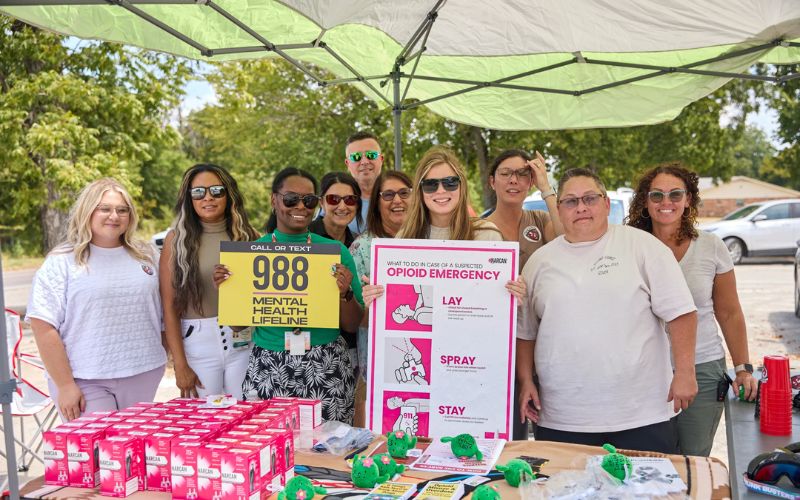
The Choctaw Nation Behavioral Health team displays naloxone kits and educational materials at a distribution drive. (photo/ Deidre Elrod for Native News Online)By Elyse Wild May 06, 2025

More than two dozen opioid prevention programs face elimination from the federal budget, including a $56 million grant for naloxone distribution and first responder training on how to use the life-saving drug.

A leaked preliminary 2026 budget proposal for the Department of Health and Human Services targets the First Responders Comprehensive Addiction and Recovery Act grants (FR-CAR), which have provided naloxone kits and training materials since 2017. The FR-CAR program operates under the Substance Abuse and Mental Health Services Administration (SAMHSA).


The program, described in a budget request last year as “an important part of the US government’s response to the opioid crisis,” received the full $56 million budget request for the current fiscal year.

The most recently available data shows that in 2023, the program funded 111 grants and distributed 101,210 opioid overdose-reversal medication kits. The funding also paid for training more than 76,641 first responders and community members on how to administer Naloxone.

While SAHMSA does not publish a comprehensive list of the grant recipients, federally recognized tribes and urban Indian organizations (UIOs) are among them.

Native Americans have some of the highest rates of drug-overdose deaths of any ethnic group. Native communities have continued to see increases in overdose deaths, even as national overdose rates declined from 2022-2023.

Tribal nations face compounding challenges when it comes to overdoses — the extreme rural geography of many reservations limits access to health care by distance, poverty, and lack of infrastructure. These barriers, combined with generational trauma, broken treaty promises, and chronic underfunding, have created severe conditions for the opioid crisis.

The Choctaw Nation has been a recipient of the four-year grant since 2017. The second round of funding concludes this September. Samantha McGee, grant project director at the Choctaw Nation Health Service Authority, has overseen the grant since 2018.

McGee said she is worried that slashing the program could be detrimental to people living on the reservation who are far from emergency health services. Choctaw Nation encompasses 10 and one-half counties, most of which are extremely rural. McGee emphasized that many communities on the reservation are so small they don’t have law enforcement agencies and may share a volunteer fire department with neighboring communities.

Providing first responders with naloxone can be the difference between life and death when it comes to an overdose.

“I was pretty sad to hear about it,” McGee said. “As far as even them getting to a hospital or an ambulance getting out to them, some of these places, you’re looking at like an hour.”

Since 2017, with support from the grant, Choctaw Nation has trained nearly 3,500 first responders and distributed 6,000 naloxone kits. The tribe has recorded 100 reversed overdoses as a direct result of the naloxone provided by the grant; but, she says, it is likely more, as not every reversed overdose is recorded.

“A lot of these agencies, especially the volunteer fire departments, may not have room in their budget to add the naloxone, ” she said. “It’s not provided to them. [Cutting the funding] would be pretty detrimental.”

McGee said she is looking into whether the tribe can tap into their share of the Tribal Opioid Settlement to cover the cost of providing naloxone to first responders. She said when it comes to the funding cuts, she urges lawmakers to consider how the overdose crisis disproportionally affects Native Americans.

“I just hope that they at least take into account tribal communities, if nothing else, just because they are disproportionately affected compared to non-Native communities,” she said. “That should be sufficient enough to want to continue funding at least to tribal communities. Hopefully, they all take that into account when they are making these final decisions.”

About The Author

Elyse Wild
Senior Health Editor
Elyse Wild is Senior Health Editor for Native News Online, where she leads coverage of health equity issues including mental health, environmental health, maternal mortality, and the overdose crisis in Indian Country. Her award-winning journalism has appeared in The Guardian, McClatchy newspapers, and NPR affiliates. In 2024, she received the inaugural Excellence in Recovery Journalism Award for her solutions-focused reporting on addiction and recovery in Native communities. She is currently working on a Pulitzer Center-funded series exploring cultural approaches to addiction treatment.
INDIA

'Action Violates Legal Process, BJP Fearful of Critical Opinion': Opposition on Ashoka Prof's Arrest


Opposition parties questioned how 'hate mongers' like Madhya Pradesh minister Vijay Shah can roam free while those calling for peace are arrested.


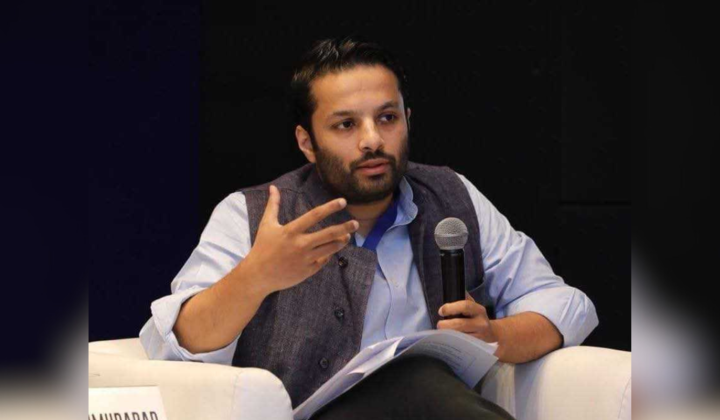
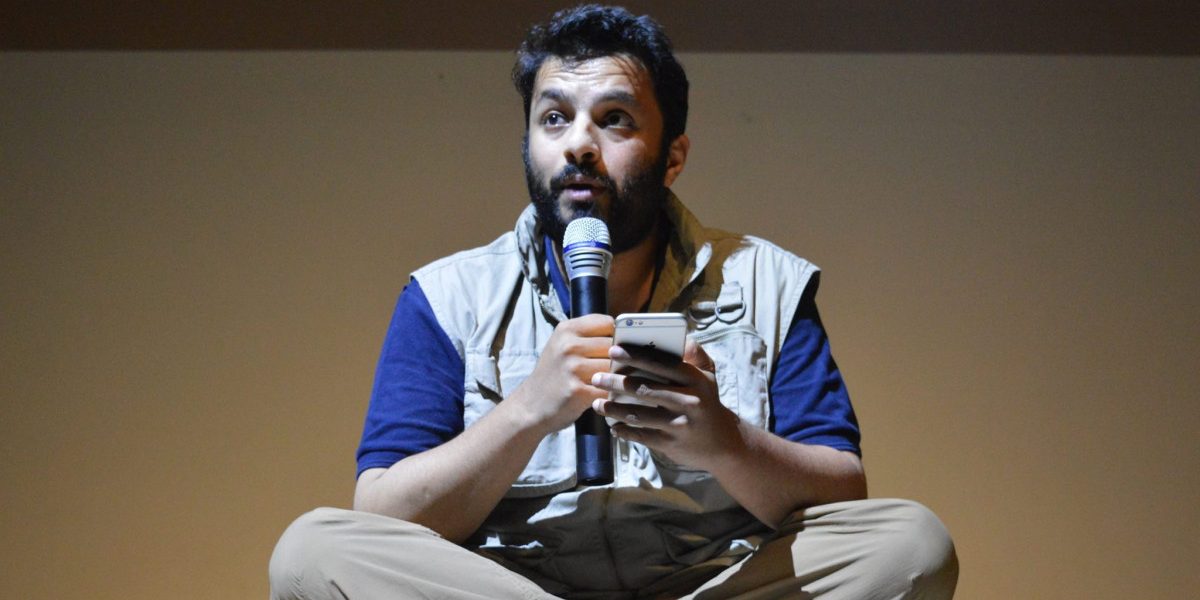
Ali Khan Mahmudabad. Photo: Facebook


The Wire Staff
19/May/2025


New Delhi: The action against Ashoka University professor Ali Khan Mahmudabad who was arrested on Sunday (May 18) under charges that point to sedition and for hurting religious sentiments for his comments on India’s Operation Sindoor against Pakistan has been criticised by opposition parties who said that the move shows how “fearful” the Bharatiya Janata Party (BJP) is of critique.

The opposition also said that in prime minister Narendra Modi’s India, “hate mongers” like Madhya Pradesh minister Vijay Shah can roam free while those calling for peace are arrested.

“The arrest of Ashoka University professor, Ali Khan Mahmudabad shows how fearful the BJP is of any opinion, disliked by them,” said Congress president Malliakrjun Kharge in a statement on Monday (May 19).
‘Does not mean that we cannot question the Government’

Kharge pointed to the vicious trolling of Pahalgam terror attack victim Lieutenant Vinay Narwal’s wife Himanshi who had called for peace and condemned the hate campaign against Muslims and Kashmiris, the social media trolling of Foreign Secretary Vikram Misri and Madhya Pradesh BJP leader and cabinet minister Kunwar Vijay Shah who called Colonel Sofiya Qureshi (who had conducted press briefings during Operation Sindoor) “sister of terrorists” and said that Mahmudabad’s arrest “follows a chain reaction”.

“Instead of sacking their own Madhya Pradesh’s Deputy CM & Minister, who made disgusting statements against our valiant Armed Forces, BJP-RSS is hellbent in casting a narrative that anybody who represents pluralism, questions the government or simply performs his professional duty in the service of the nation, is a threat to its existence,” said Kharge.

“Supporting the Armed Forces and the government, when National Interest reigns supreme, does not mean that we cannot question the Government.”

On Sunday, two FIRs were lodged against Mahmudabad, one on the complaint of a BJP office-bearer and the other on the complaint of the Haryana State Commission for Women, days after its chairperson had summoned the professor over his social media posts against warmongering following India’s Operation Sindoor against Pakistan. The police confirmed his arrest in a statement posted on X.

Rashtriya Janata Dal (RJD) MP Manoj Kumar Jha said on Sunday that “critiquing the government does not amount to critiquing the nation.”

“Let us repeat hundred times and if required keep doing it continuously that critiquing the government does not amount to critiquing the nation – and this is a crucial distinction in any healthy democracy or society. A government (however powerful it might appear!) is temporary and made up of elected or appointed officials whose duty is to serve the people,” he said.

“Critiquing government policies, decisions, or leaders is often an act of patriotism, motivated by the desire to improve the nation and uphold its values. Loving your country sometimes means holding its leaders to a higher standard – because the nation deserves better. Therefore, to ask questions to those in power is not to abandon the land we love, but to guard it more fiercely – for a nation’s soul lives not in silence, but in the courage to speak.”
‘While hate mongers like Vijay Shah roam free, those calling for justice and peace are targeted’

Mahmudabad’s arrest comes as multi-party delegations will be sent by the union government to different countries to “project India’s national consensus and resolute approach to combating terrorism in all forms and manifestations”.

All India Majlis-e-Ittehadul Muslimeen (AIMIM) MP Asaduddin Owaisi who will be a part of these delegations called Mahmudabad’s arrest “utterly condemnable” and said that it “violates legal process”.

“It targets an individual for his opinions; his post wasn’t anti-national or misogynistic. A mere complaint by a BJP worker made Haryana police take action,” he said.

In a statement the Communist Party of India (Marxist) (CPI(M))on Sunday also condemned Mahmudabad’s arrest and pointed to Shah roaming free even as the Ashoka University professor is arrested.

“While hate mongers like Vijay Shah roam free, those calling for justice and peace are targeted in Modi’s India,” the party said.

Trinamool Congress (TMC) MP Mahua Moitra said that if an eminent scholar like Mahmudabad can be arrested “on Mickey Mouse charges & jailed then it is only because of his name.”

Moitra also reshared Mahumadabad’s post and said that nothing in it “is remotely offensive, let alone seditious.”


Ashoka Prof Arrested For ‘Endangering Sovereignty’ Over Post Criticising Jingoism, Sent to Custody Till May 20


Omar Rashid
18/May/2025

On May 19, the Supreme Court agreed to urgently list Mahmudabad's plea challenging his arrest. The matter will be heard today or on May 20.


Ali Khan Mahmudabad. Photo: Official Facebook account.

New Delhi: Haryana police on Sunday (May 18) arrested Ashoka University professor Ali Khan Mahmudabad under charges that point to sedition and for hurting religious sentiments complaint for his comments on India’s Operation Sindoor against Pakistan.

Two FIRs were lodged against Mahmudabad, one on the complaint of a Bharatiya Janata Party office-bearer and the other on the complaint of the Haryana State Commission for Women days after its chairperson had summoned the professor over his social media posts against warmongering following India’s Operation Sindoor against Pakistan. The police confirmed his arrest in a statement posted on X.

The associate professor who teaches political science was picked up from his residence in Delhi early on Sunday morning, his family said.

Around 10-15 personnel from the Haryana police barged into the apartment around 6:30 am on Sunday and after producing him at the local police station took him to Sonipat, said his family.

Police said that the FIR lodged by the BJP leader was based on what professor Mahmudabad allegedly told him in person. The FIR says that his feelings were hurt by Mahmudabad.

The second FIR was based on a complaint by HSCW Renu Bhatia who accused Mahmudabad of contempt for not appearing before her after she on May 12 summoned him for his Facebook posts.

Mahmudabad’s lawyers had appeared before the Commission on his behalf on May 14.

On May 19, the Supreme Court agreed to urgently list Mahmudabad’s plea challenging his arrest. The matter will be heard today or on May 20.
‘Endangering India’s sovereignty’

Mahmudabad was booked under the serious charge of ‘acts that endanger India’s sovereignty, unity, and integrity’ under Bharatiya Nyay Sanhita’s Section 152. He was also charged with imputations and assertions prejudicial to national integration; deliberate and malicious acts intended to outrage religious feelings of any class of citizens; and promote or attempt to promote disharmony or feelings of enmity, hatred, or ill-will between different groups based on religion, race, place of birth, residence, language, caste, or community.

The FIR was lodged on the complaint of a BJP leader, Yogesh Jatheri, a village sarpanch from Sonipat and the general secretary of the BJP’s young wing in Haryana.

The second FIR was lodged under sections 353, 79, 152 and 169 (1) of the BNS on the complaint of Haryana State Commission for women chairperson Renu Bhatia, said DCP Sonipat (crime) Narendra Singh.

The police will approach the court for a remand of five days, he added.

Late on Sunday, Mahmudabad’s family said he has been sent to police remand till Tuesday, May 20 to help police “recover laptop bank statement from his Delhi or UP house.”

The criminal action against Mahmudabad came days after the Haryana State Commission for Women chairperson Renu Bhatia served him a notice accusing him of disparaging women in uniform, especially Colonel Sofiya Qureshi and wing commander Vyomika Singh, and undermining their role as professional officers in the Indian armed forces.

Bhatia took note of two recent Facebook posts by Mahmubabad following Operation Sindoor, and accused him of misrepresenting facts with repeated references to “genocide,” “dehumanisation” and “hypocrisy,” “thereby attributing malicious communal intent to the government and Indian armed forces, as well as inciting communal distress and attempting to disturb internal peace.”

In two separate Facebook posts, Mahmudabad had called out the “blind bloodlust for war,” raised concerns over the human cost of armed conflict and stressed that the “optics of two women soldiers presenting their findings” after India’s military action was important but “optics must translate to reality on the ground otherwise it’s just hypocrisy.”

Also read: ‘Inverted the Meaning, Invented an Issue’: Ashoka Professor on Women’s Panel’s Reaction to Army Post
‘Vilification of national military’

After the HSCW on May 12 summoned him for his posts, Mahmudabad said that his remarks had been “completely misunderstood.” In a statement, he said that he had exercised his fundamental right to freedom of thought and speech in order to “promote peace and harmony and to applaud the Indian armed forces for their resolute action, while criticising those who preach hatred and seek to destabilise India.”

In his complaint against Mahmudabad, BJP leader Jatheri mentioned Mahmudabad’s Facebook posts on Colonel Qureshi and Wing Commander Singh. He accused Mahmubabad of working to incite people against the country at a sensitive time. “Instead of uniting people to fight against external forces at such a sensitive time, this professor kept inciting sentiments and working to benefit external or foreign forces in the name of religion,” said the FIR.

Jatheri made specific references to Mahmudabad’s post about Colonel Qureshi briefing the media after Operation Sindoor and his comments on how Muslims were being persecuted on the ground.

The HSCW had issued him a suo motu notice saying that his conduct, remarks, representations and statements had raised serious concerns pertaining to the safety, security and dignity of women.

The notice also said that Mahmudabad’s posts raised concerns about attempts at “vilification of national military actions taken and the role of women officers in response to cross-border terrorism,” potential incitement to public unrest, especially targeting communal harmony and undermining national integrity, and violation of dignity and outraging woman’s modesty.
‘Optics’

Responding to the notice, Mahmudabad on May 14 said that the Commission failed to highlight how his posts were contrary to the rights of or laws for women. “I am surprised that the Women’s Commission, while overreaching its jurisdiction, has misread and misunderstood my posts to such an extent that they have inverted their meaning. This is a new form of censorship and harassment, which invents issues where there are none,” he said.

In a recent post on Facebook, Mahmudabad had said that he was happy to see many right-wing commentators applauding Colonel Sofiya Qureshi but “perhaps they could also equally loudly demand that the victims of mob lynchings, arbitrary bulldozing and others who are victims of the BJP’s hate mongering be protected as Indian citizens.” He said that the “optics of two women soldiers presenting their findings” was important but “optics must translate to reality on the ground otherwise it’s just hypocrisy.”

Mahmudabad said that the press conference by Colonel Qureshi and Wing Commander Singh, updating the country on Operation Sindoor against Pakistan, was “just a fleeting glimpse – an illusion and allusion perhaps – to an India that defied the logic on which Pakistan was built.”

“As I said, the grassroots reality that common Muslims face is different from what the government tried to show but at the same time the press conference shows that an India, united in its diversity, is not completely dead as an idea,” said the professor.

Mahmudabad pointed out that contrary to the allegations, his post had in fact appreciated that the armed forces chose Qureshi and Singh for the press conference to highlight the fact that “the dream of the founders of our Republic, of an India which is united in its diversity, is still very much alive.” There was nothing remotely misogynistic about his comments that could be construed as anti-women, he added.

“I even applauded members of the right wing who supported Colonel Qureshi and invited them to have the same attitude for common Indian Muslims who face demonisation and persecution on a daily basis. If anything, my entire comments were about safeguarding the lives of both citizens and soldiers,” he said.

The Faculty Association of Ashoka University strongly condemns the arrest of Professor Ali Khan Mahmudabad, Associate Professor and Head of the Department of Political Science, on 18 May 2025, on groundless and untenable charges. We condemn the calculated harassment to which Professor Mahmudabad has been subjected: after being arrested early in the morning from his home in New Delhi, he was taken to Sonipat, not allowed access to necessary medication, and driven around for hours without any communication about his whereabouts.

Ashoka faculty association extends support to Mahmudabad

In a statement released on Sunday, the faculty association of Ashoka University demanded “his immediate and unconditional release”. The association said that Mahmudabad is a “a deeply responsible citizen, who brings all his energy and learning to promoting communal harmony and the greater good.”

“The Faculty Association stands in full support of our colleague: an invaluable member of the university community, a beloved and respected teacher and friend to his students, and a deeply responsible citizen, who brings all his energy and learning to promoting communal harmony and the greater good.

Professor Mahmudabad is well-versed in diverse literary and linguistic traditions and is a widely acclaimed expert and scholar of history and political science in South Asia and beyond. In all of his writing, both for academic and wider public fora, he has emphasized the importance of justice, pluralism, and solidarity, and has always advocated a profound respect for Constitutional values and morality.

Professor Mahmudabad’s students and colleagues have learnt from him what it truly means to be a good citizen-scholar: rational, critical, yet deeply respectful and generous in their engagement with the world around them. All members of the Ashoka community can attest to his personal kindness, his concern for others, and his tireless commitment to sharing his knowledge and resources.

We demand the immediate and unconditional release of Professor Mahmudabad and the dropping of all charges against him.”

This report was been updated with news on his remand, a second FIR and the Supreme Court’s decision to urgently list his plea.

In South Korea, AI-generated images depicting prostitution circulate online

This prompts criticism toward Meta for failing to take appropriate action despite the accounts’ potential legal violations.


Lee Jung-joo

The Korea Herald


Four-panel cartoons, generated through ChatGPT, depict the working environments of sex workers in South Korea. SCREENSHOT FROM INSTAGRAM/THE KOREA HERALD


May 13, 2025

SEOUL – Amid a surge in generative AI use, South Korea has seen a rise in Instagram accounts — allegedly run by sex workers — using ChatGPT-generated images to share stories related to illegal prostitution, prompting criticism toward Meta for failing to take appropriate action despite the accounts’ potential legal violations.

On Instagram, numerous accounts can be found sharing AI-generated images and comics depicting the working environments of sex workers in Korea, where prostitution is prohibited by law.

With account bios reading, “Based on real stories from the girls” and “Touching real-life experiences illustrated with AI,” the accounts show illustrations in a comic-like style.

One illustration found on such an account depicts a woman getting her hair and makeup done at a salon as she waits for a “call,” or a vehicle that picks up “hosts” before driving them to their clients.

Another account, which mainly posts four-panel cartoons of sex workers’ personal lives as well as some happenings at work, depicts women receiving high-priced gifts such as designer bags from their clients as well as their experiences interacting with clients deemed rude or disrespectful. On this account, a cartoon posted as an Instagram Reel titled “How to deal with old customers” had garnered 5.8 million views as of Monday.

Though most of the Instagram accounts were created no earlier than April, many of them have already gained traction, ranging from 5,000 to 9,000 followers.


This photo shows account bios of the Instagram accounts reportedly run by sex workers in Korea as well as the follower counts, which range between 5,000 to 9,000 followers. SCREENSHOT FROM INSTAGRAM/THE KOREA HERALD

A number of Koreans have voiced discomfort regarding the emergence of such Instagram accounts.

“I see accounts like this way too many times on Instagram. Every time I do, I make sure to report the account, but Instagram doesn’t seem to be doing much about it,” 30-year-old Kim Jin-kyeong told The Korea Herald.

Under South Korean law, promoting prostitution or a business place that provides prostitution as its service is explicitly prohibited, according to the Act on the Punishment of Arrangement of Commercial Sex Acts.

Meta’s community guidelines also prohibit content that facilitates, encourages or coordinates commercial sexual services, even if the content is presented in a narrative or artistic manner.

Lawyer Min Go-eun told The Korea Herald that such accounts could face legal action, though they also “hold some loopholes.”

“As it posts suggestive content that holds potential in romanticizing sex work and also provides means of contact to the individuals behind such accounts, one can say that it holds potential in violating South Korean law,” said Min. “However, there are some loopholes, in which the account owners can claim that they didn’t promote sex work, as (the accounts) don’t explicitly promote sexual services to their followers.”

An official from Meta also told The Korea Herald that such accounts still require additional review to determine whether they clearly violate the platform’s policies.

“Instagram accounts and posts are reviewed for violations in accordance with our community guidelines and appropriate actions are taken after that,” said the official. “If an account promotes illegal prostitution, Meta will definitely make sure such accounts are removed. However, in cases where the content holds potential of being determined a mere form of expression rather than promotion, it’s hard for Meta to take a stance against that, as a form of speech cannot be said to be a violation of our policies.”
AI adoption for work safety faces challenges in Indonesia

The country is lagging behind on the implementation of basic principles of work safety and health, potentially hindering the adoption of AI and other automated technologies that can improve the overall condition of occupational safety and health.


Maretha Uli
The Jakarta Post


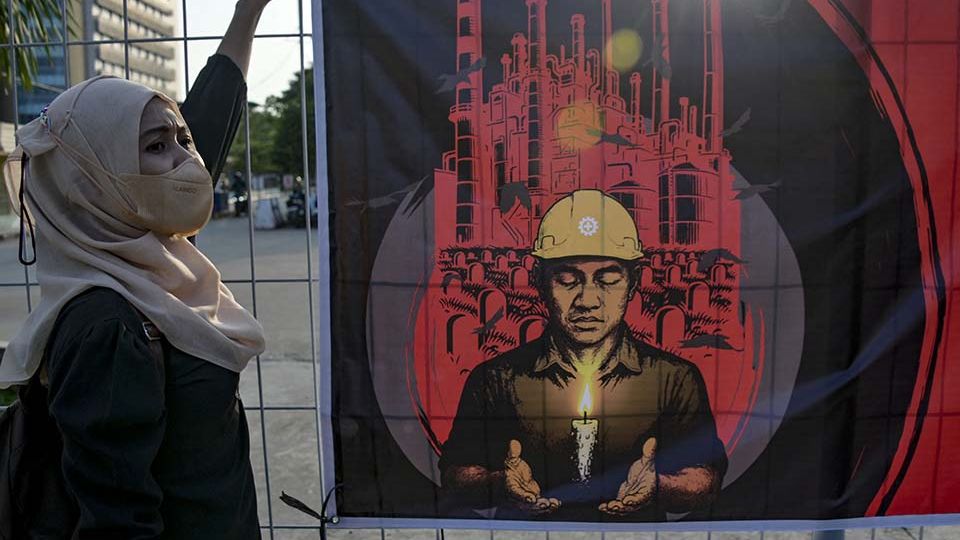
A worker takes part in an International Workers’ Memorial Day vigil to honour colleagues who have died from workplace accidents and occupational diseases, after finishing their shifts in an industrial area in Jakarta on April 28, 2025. PHOTO: AFP


May 5, 2025


JAKARTA – While artificial intelligence may help in improving occupational safety and health (OSH), the tech’s adoption in Indonesia may be hindered as the country is lagging on infrastructure and training, as well as the implementation of basic work safety standards.

The International Labor Organization (ILO) recently published a report that highlighted the potential of automation in enhancing workplace safety based on observation of the technology’s implementation in several countries.

According to the report, automation may partially replace nearly 75 million jobs globally, while augmenting 427 million jobs.

Among sectors reaping benefits from the technology was agriculture, where drones and cameras were used to apply pesticide and detect pests and other potential contaminations by hazardous materials. In health care, some countries already employed robots to assist in caring for patients, a practice that started during the COVID-19 pandemic.

The United Nations body also highlighted the benefit of smart helmets worn by miners to detect hazardous gases and automatically supply oxygen for its wearers.

Read also: Prabowo pledges stronger worker protections, labor reform at May Day rally

During the report launching event in Jakarta on April 24, ILO Indonesia program officer Abdul Hakim highlighted automation’s potential to improve OSH through smart monitoring in plantations that can help reduce exposure to hazardous conditions and prevent injuries in dangerous jobs.

Aside from adopting the new technology, he also urged the government to sign and ratify the 1981 Occupational Safety and Health Convention that contains several proposals to improve the safety and health of the working environment.

“It will allow the government to develop policies, update regulatory frameworks related to OSH and strengthen risk assessments,” Abdul said.

Skill gaps

The Indonesian Employers Association (Apindo) welcomed the application of AI to boost productivity through simplifying training for the workforce in a more cost-effective way, deeming a win-win for both workers and business owners.

But the association’s OSH committee head Rima Melati expressed concerns that the technology’s adoption may lead to job losses.

“We cannot ignore that Indonesian human capital is still low [quality]. The government must focus on improving workers’ skills,” she said.

Skill gaps may hinder the implementation of AI in improving OSH among Indonesian workers, with workers not getting the necessary training and being provided infrastructure, according to Sulistri of the Federation of Food, Beverage, Tourism, Restaurant, Hotel and Tobacco Workers Unions.

Read also: Manpower Ministry blames trade policy for mass layoffs this year

She also noted that work safety standards had not been implemented well in high-risk informal sectors such as plantations, small-scale mining and daycare services, prompting calls for the government to pay more attention to contract and daily workers who are often excluded from various protections.

“Workers in oil palm plantations, for example, must buy their own personal protective equipment and tools, which are expensive. Daycare workers also face complicated procedures for managing OSH,” she said.

Sulastri called on all related parties to push for the implementation of policies to keep pace with technological advancements to “avoid being left behind”, highlighting the importance of “adapting to survive”.

Works ahead

The Manpower Ministry’s labor inspection and OSH development director general Fachrurozi acknowledged that the implementation of work safety standards remained uneven in the country, particularly with challenges in the informal sectors.

“At the micro level, workers lack the ability to comply with regulations, so we use the promotive and preventive approach, such as educating [on] the importance of OSH,” he said at the April 24 event.

He added that the ministry is working to respond to the technological advancements, with Manpower Minister Yassierli ordering to gather best practices on OSH applications in both formal and informal industries.

“So we can try to digitalize and standardize its implementation,” Fachrurozi said.

The Manpower Ministry has also established vocational training centers across the country, an effort to equip workers with the skills needed to reenter the labor market when they have lost their jobs.

Last year, the ministry issued its OSH program for 2024 to 2029 to reduce the number of work-related accidents and push for innovative technology related to work safety and health.

The program also acknowledged persistent challenges in implementing OSH challenges, including outdated legal frameworks, weak oversight, limited human resources and infrastructure, as well as an inadequate reporting system.

Calls have grown for the government and House of Representatives to revise the 1970 Occupational Safety Law.

The legislature is also expected to begin deliberation for an amendment to the 2003 Manpower Law soon, with the bill included in the 2025 National Legislative Program (Prolegnas) priority list.


Japan’s health ministry to start testing AI in safety checks on meat

The research aims to confirm whether the checked meat has abnormalities through AI analysis of photographs.


The Japan News


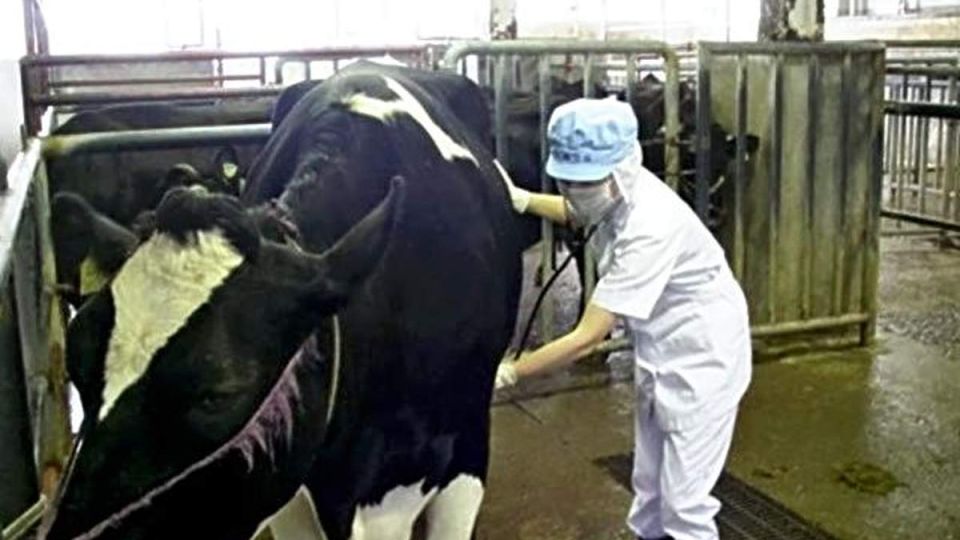
A veterinarian checks a cow as part of the meat checking process before shipment. PHOTO: NAGASAKI PREFECTURAL GOVERNMENT/THE YOMIURI SHIMBUN

April 29, 2025

TOKYO – The Health, Labor and Welfare Ministry plans to start research this fiscal year on artificial intelligence programs for checking whether meat is safe for consumption before being shipped out.

The checks will be conducted by prefectural governments. The research aims to confirm whether the checked meat has abnormalities through AI analysis of photographs.

The goal is to reduce the workload in meat inspection facilities, as there is a shortage of licensed veterinarians serving as local government officials, who are needed to conduct the checks.

If the effectiveness of the method is confirmed, the ministry plans to introduce it nationwide.

Meat is shipped out after local governments or private meat-processing facilities check whether it is safe to consume.

Laws require that local government officials with veterinarian licenses conduct the checks in most cases. The veterinarians examine livestock, dressed carcasses and organs both visually and through touch.

If the animals or meat are found to have signs of diseases or other abnormalities, they are removed from shipment lines.

However, there is a nationwide shortage of officials with veterinarian licenses. Many who have obtained a veterinarian license aim to work in animal hospitals where pets are treated.

When The Yomiuri Shimbun conducted a survey on veterinarian employment in local governments in fiscal 2023, about 90% of prefectural governments were unable to employ the expected numbers.

Japan’s export of meat, mainly of the wagyu variety of cattle, has been increasing thanks to government support.

In fiscal 2023, a total of about 2,200 local government officials with veterinarian licenses conducted checks on at least 1 million cows and about 16 million pigs, and roughly 1,100 licensed officials checked about 830 million poultry.

Many local governments have narrowly been able to conduct checks by reemploying veterinarians who had retired.

If the shortage of veterinarians worsens, local governments may be unable to assign veterinarians to other duties, such as public health sanitation work.

The ministry has therefore decided to utilize AI for the checks.

In the research, AI-assisted image analysis systems will help veterinarians visually check meat.

The research will take place in Hokkaido, Ibaraki Prefecture and Miyazaki Prefecture across three years through fiscal 2027.

Prof. Yasukazu Muramatsu of Rakuno Gakuen University, an expert of veterinary public health who heads the research team, said: “Depending on the outcome of the research, it can be expected that the workplace burden on veterinarians will be drastically reduced. Because the checks affect food safety, we aim to raise the accuracy of AI to match the level of checks by veterinarians.”
Working over 52 hours a week linked to structural brain changes, MRI study shows

It can potentially affect how people think, manage emotions, and handle stress.

Moon Joon-hyun
The Korea Herald


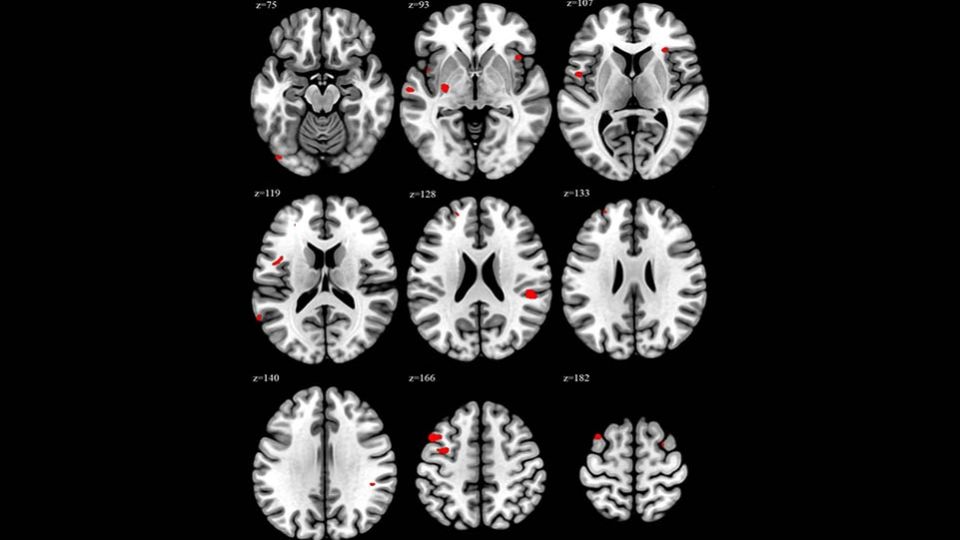
Red-marked regions in these MRI slices show brain areas where volume was significantly greater in individuals working 52 or more hours per week, according to voxel-based morphometry, a technique used to detect structural brain changes. 
PHOTO: OCCUPATIONAL AND ENVIRONMENTAL MEDICINE
 (doi: 10.1136/oemed-2025-110057)/THE KOREA HERALD


May 16, 2025

SEOUL – A new brain imaging study from South Korea suggests that working over 52 hours a week may cause structural changes in the brain, potentially affecting how people think, manage emotions, and handle stress.

In a pilot study published Tuesday in the international medical journal Occupational and Environmental Medicine, scientists from Yonsei University and Chung-Ang University scanned the brains of 110 health care workers and found significant differences between those regularly working at or above Korea’s legal weekly limit of 52 hours and those working fewer hours.

South Korea’s labor law limits working hours in most jobs to 52 per week, combining a 40-hour standard week with up to 12 hours of overtime.

The overworked group of 32 individuals showed a 19 percent increase in volume in the left caudal middle frontal gyrus compared with the non-overworked group. This brain region is associated with attention, working memory, and complex decision-making. In total, 17 areas showed greater volume in those working longer hours, including regions “associated with executive function and emotional regulation.”

“This study provides preliminary evidence that overwork is associated with structural brain changes, particularly in regions linked to cognition and emotion,” the researchers wrote. “These findings provide novel neurobiological evidence linking prolonged working hours to structural brain changes.”

However, the researchers caution against drawing firm conclusions. The reseach was a cross-sectional study, meaning it looked at conditions at a specific point of time, rather tan changes over time. For this reason, they notes that it was unclear whether these brain changes are the result of long work hours or a pre-existing trait among people inclined to work more.

“The observed associations may be influenced by unmeasured confounders or pre-existing differences rather than a direct effect of prolonged working hours,” they added in the paper.

The findings come amid South Korea approaches a snap presidential election on June 3, where working-hour reform is emerging as a major campaign issue. Frontrunner Lee Jae-myung of the Democratic Party has pledged to reduce actual labor time by transitioning toward a 4.5-day workweek.

His opponent, Kim Moon-soo of the People Power Party, supports flexible hours that keep the 40-hour baseline but allow extended work early in the week for earlier finishes on Fridays. Under his plan, employees would work one extra hour from Monday to Thursday, allowing them to leave work four hours earlier on Friday.

Kim has also floated loosening enforcement of the current 52-hour cap to accommodate business needs.

South Koreans are known for working noticeably more than their peers in other developed nations. OECD’s 2022 data shows Korea’s average is 122 hours higher than the OECD average of 1,752 hours, equivalent to nearly 15 extra full workdays each year.


1933


Indonesia food and drug agency laments limited role in free meals program amid rampant food poisonings

BPOM Chair Taruna Ikrar reported that, since the launch of the free meal program in January, the agency has recorded 17 food poisoning incidents across 10 provinces.


Students eat their lunch on the first day of a free-meal programme at Kedung Badag 1 State Elementary School in Bogor, West Java, on January 6, 2025. 
PHOTO: AFP

The Jakarta Post
May 19, 2025


JAKARTA – The Food and Drug Monitoring Agency (BPOM) has expressed concern over its minimal role in overseeing the government’s free meal initiative, which, despite running for only four months, has been plagued by more than a dozen food poisoning cases.

During a hearing with the House of Representatives on Thursday, BPOM Chair Taruna Ikrar revealed that, despite signing an agreement with the National Nutrition Agency (BGN) to oversee 13 key aspects of the free meal program, the agency has not been involved in all of them.

“For example, we were never asked to check whether the free meal kitchens were built to standard and operating in accordance with food safety protocols, even though we have the resources, personnel and expertise to monitor food production,” he said, as quoted by Kompas.com.

He added that so far, the BGN has only requested the BPOM’s assistance in formulating training modules for free meal kitchen staff and in responding to food poisoning incidents.

Taruna expressed hope that moving forward, the BGN would expand the BPOM’s role in the free meal program, particularly in critical areas such as overseeing food safety protocols in kitchens and inspecting raw ingredients.

“We can’t simply deploy our team to inspect free meal kitchens when the BGN has not requested us to do so,” he said.

Taruna reported that, since the launch of the free meal program in January, the BPOM has recorded 17 food poisoning incidents across 10 provinces. While he did not specify the number of students affected, various news reports indicate that at least 1,500 students have been impacted by these incidents.

Taruna explained that most food poisoning incidents were caused by bacterial contamination at various stages of meal preparation.

“We identified contamination in raw ingredients as well as bacterial growth due to improper storage temperatures and improper cooking practices,” he said as quoted by Antara.

“Some food poisoning incidents were caused by meals that were cooked too early and not distributed on time, while others resulted from a lack of hygiene and sanitation in the kitchen,” he added.

He stated that the BGN needs to improve several aspects of the free meal preparation process, including enhancing the implementation of good manufacturing practices in the kitchens and tightening safety checks for raw ingredients.

The BGN also needs to ensure the comprehensive collection of epidemiological data in the event of food poisoning incidents, which would help identify trends, trace the source of contamination and prevent future outbreaks.

The BGN has come under widespread scrutiny following recurring food poisoning incidents linked to the free meal program, with at least two regions declaring health emergencies after hundreds of students fell ill from consuming government-provided meals.

Head of the National Nutrition Agency (BGN), Dadan Hindayana, has pledged to strengthen food safety measures across more than 1,000 kitchens involved in the government’s free nutritious meals program.

“We will tighten organoleptic testing of the meals and conduct a food safety refresher course every three months for all kitchen staff,” he said earlier this month.

An organoleptic test, also known as a sensory test, assesses the sensory qualities of a product, like food, using human senses. It evaluates attributes such as taste, color, aroma and texture.

“We are also collaborating with the Food and Drug Monitoring Agency [BPOM], regional health agencies and experts from the food and beverage industry to strengthen food safety standards,” he added.

As of May, the government has deployed over 52,000 workers to operate 1,335 kitchens preparing meals for more than 3.8 million students nationwide.
Microplastics found in marine animals in Singapore’s coral reefs, mangroves: Study

Microplastics were found in the digestive and respiratory organs of the animals.


Calista Wong
The Straits Times


The animals were dissected and microplastic samples from their organs were collected. PHOTO: CMBS PHOTOGRAPHY TEAM, LEE KONG CHIAN NATURAL HISTORY MUSEUM, NUS/THE STRAITS TIMES


May 19, 2025

SINGAPORE – Microplastics have been found in marine animals across Singapore’s coastal areas in a new study, with researchers discovering these plastic bits not just in the animals’ digestive tracts, but also in their respiratory organs and bodily fluid.

Microplastics enter the animals not just through the food they consume, but also when they breathe or move through water, said the researchers from the NUS Tropical Marine Science Institute (TMSI).

The study also showed that microplastics are widespread across Singapore’s coastal habitats – including mangroves, coral reefs and seagrass beds – and they could potentially be transferred from one organism to the next.

Previous studies had focused mostly on the presence of microplastics – referring to tiny plastic particles smaller than 5mm – in Singapore’s environment, said the study’s co-principal investigator Neo Mei Lin, a senior research fellow at TMSI.

For example, a recent study had found that 97 per cent of macro- and microplastics on Singapore’s shores came from marine-based sources.

The TMSI researchers wanted to find out more about the presence, distribution, abundance and composition of microplastics in local marine organisms. Their study is part of a larger project that examines the impacts and hazards of marine plastics in the coastal environments.

As an emerging field of study, not a lot is known about microplastics and their impacts yet, according to the US National Oceanic and Atmospheric Administration (NOAA).

However, laboratory studies have shown that microplastics and chemicals in plastics may impact animals by delaying their developmental stages, cause problems with reproduction, and may even make it difficult for them to fight off disease, NOAA noted on its website.

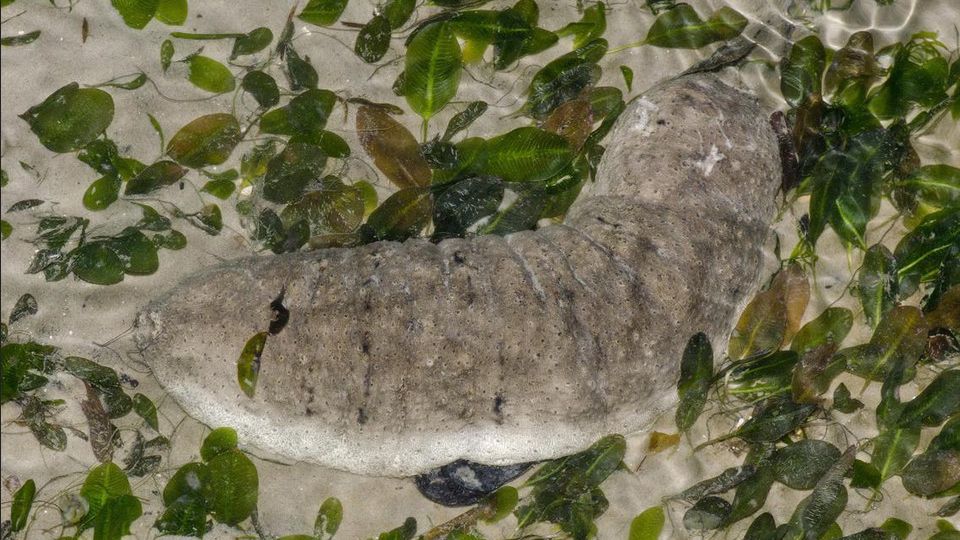
Four marine species were selected for the TMSI study: the orange fiddler crab (Gelasimus vocans), porcelain fiddler crab (Austruca annulipes), garlic bread sea cucumber (Holothuria scabra) and synaptid sea cucumber (Synaptula recta).

These species “typically consume and process large amounts of sediments”, making them good indicators for researchers to gauge the extent of microplastic pollution in marine sediments, said Dr Neo.

“Their abundant presence indirectly suggests their importance in the ecosystem, and being common across multiple study sites allows us to compare and infer the impact of microplastics,” she said.

They are also commonly found in the South-east Asian region, according to study co-author Dr Jenny Fong, who was involved in the study when she was a research fellow at TMSI.

A total of 153 live samples across the four species were collected between November 2021 and May 2022 from mangroves, seagrass beds and coral reefs at seven sites across Singapore.

The sites are Pasir Ris Park, St John’s Island, Kusu Island, Small Sister’s Island, Pulau Semakau, Changi Beach and Pulau Hantu Besar.

The researchers said they prioritised safety, accessibility and abundance of the target species in choosing these sites, citing the presence of saltwater crocodiles and snakes in other locations as a deterrent.

The animals were dissected and microplastic samples from their organs were collected.

The gills, hepatopancreas – a digestive gland which performs functions similar to those of the liver and pancreas in humans – and guts of the fiddler crabs were examined.

In the case of the garlic bread sea cucumber, researchers studied its respiratory trees – a branching network of tubes for breathing – guts and coelomic fluid, which is a bodily fluid crucial in transporting nutrients and gases.

Only the guts of the synaptid sea cucumbers were assessed since they lack respiratory trees.


In fiddler crabs, microplastics likely accumulate through respiration and direct contact with contaminated seawater. 
PHOTO: CMBS PHOTOGRAPHY TEAM, LEE KONG CHIAN NATURAL HISTORY MUSEUM, NUS/THE STRAITS TIMES

A total of 1,266 microplastic samples were found in these organs, which the team carefully analysed and categorised into four shape types – fibres, fragments, films and spheres, listed in order of prevalence. Most particles were less than 1mm in size.

Polymers commonly used in everyday life, such as in plastic bottles, packaging, synthetic textiles and automotive parts, were identified.

“The shapes of microplastics provide hints on the potential sources of plastics… and it tells us what kind of microplastics affect (the animals) the most,” said Dr Neo, who added that fibres were the most common shape found.

Knowing the most common plastic type helps researchers identify which ones marine animals are likely to ingest, said fellow researcher Ashwini Suresh Kumar, a TMSI research fellow.

“This information could be valuable for policymakers, particularly when considering regulations around additives commonly used during the manufacturing of these polymers, with the aim of reducing bio-accumulation and environmental impact,” she said.

Researchers suggest that in fiddler crabs and garlic bread sea cucumbers, microplastics likely accumulated through respiration and direct contact with contaminated seawater.

The smallest particle, approximately 60 micrometres in size, was found in the respiratory trees of a garlic bread sea cucumber, said Dr Neo.

The hepatopancreas of both fiddler crab species generally had the highest number of microplastics, likely from ingestion as the primary pathway of entry, according to the findings.

With an additional pincer-like claw compared with males, female fiddler crabs exhibit faster and more frequent feeding behaviours – patterns that researchers associate with higher microplastic contamination in their organs.

Synaptid sea cucumbers, which are often seen feeding on the excretion of marine sponges, may ingest microplastics accumulated on these surfaces after the sponges feed by filtering seawater. This suggests that microplastics may be transferred up the marine food chain.

Asked what the findings could mean for the safety of locally grown seafood, Dr Neo said more studies need to be done.

She noted that the guts of contaminated animals are “typically removed and cleaned before (the animal) goes for sale”, adding that “the sweeping statements of humans eating microplastics need to be carefully discerned”.

“While we do not have any plans to examine the long-term impacts through surveys and sampling, our current work has led us to new research questions such as developing new approaches to studying microplastic distribution in organisms,” she said.

In June 2022, Singapore launched a national action strategy aimed at reducing land- and sea-based sources of plastic waste that end up as marine litter.
Experts witness climate toll on Himalayas from mountain flight

Nepali and international experts observed a rapid retreat of snow cover on some of the world’s highest peaks.


The Kathmandu Post


After observing the mountains, Minister for Forests and Environment Shahi said the direct impact of climate change was visible on the Himalayas.

 PHOTOS PROVIDED BY THE KATHMANDU POST

May 19, 2025

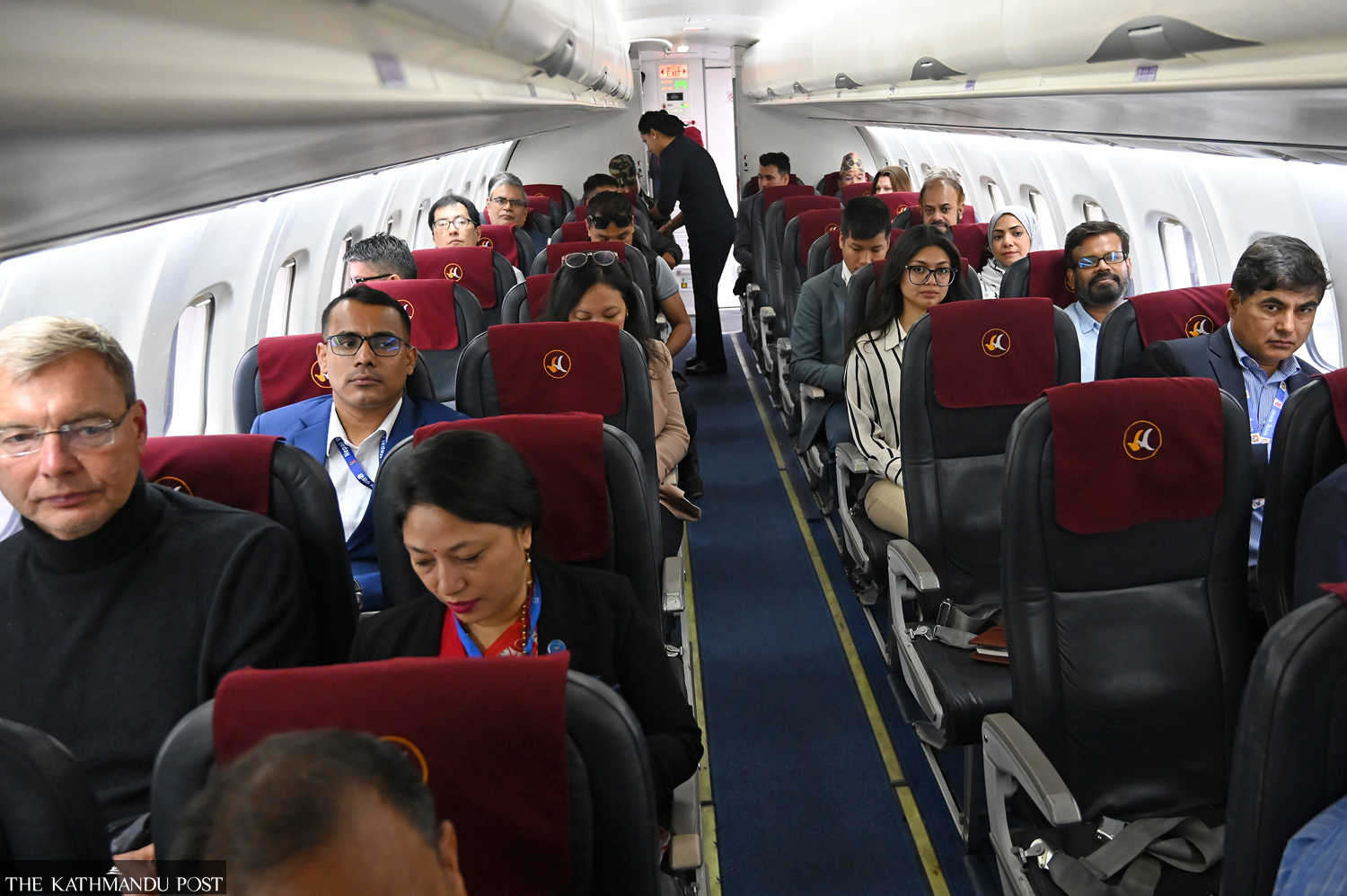
KATHMANDU – Nepali and international experts observed a rapid retreat of snow cover on some of the world’s highest peaks during an aerial survey over Mount Everest and other Himalayan mountains on Sunday, in a flight aimed at highlighting the visible impacts of climate change.

The mountain flight, conducted on the final day of the Sagarmatha Sambaad 2025, was led by Minister for Forests and Environment Ain Bahadur Shahi Thakuri. The group included 24 foreign delegates and Nepali climate experts.

After observing the mountains, Minister for Forests and Environment Shahi said the direct impact of climate change was visible on the Himalayas.

“In the past, wherever you looked, you would see snow-covered mountains. But now, black rocky hills have started to appear. The mountains that once looked completely white now appear as black peaks,” he said. “This mountain flight has shown the direct impact of climate change on the Himalayas. Foreign experts and guests, too, observed it first hand.”

The team flew past several major Himalayan peaks, including Everest, Lhotse, Cho Oyu, Shishapangma, Ama Dablam, Gaurishankar, Makalu and Langtang. Experts on board noted that glaciers appeared diminished and snowlines had retreated.

Here are some photographs the Post’s photojournalist Angad Dhakal captured from the mountain flight.


WWF-Pakistan opposes move to export snow leopards to Russia


Jamal Shahid
May 18, 2025 
DAWN

Snow leopards are listed as threatened species on the IUCN Red List (2017). — File photo

ISLAMABAD: WWF-Pakistan on Saturday demanded that the proposed export of snow leopards from Pakistan to Russia be immediately cancelled and reaffirmed Pakistan’s commitment to the conservation of its iconic wildlife species.

The organisation called for strengthening the Naltar Rescue and Rehabilitation Centre to function as a dedicated facility for wildlife rescue, rehabilitation, and veterinary care.

“A move to transfer the snow leopards from Gilgit-Baltistan to Moscow not only contradicts national and international conservation commitments but also risks setting a highly detrimental precedent for future transfer of threatened and iconic wildlife species from Pakistan,” WWF-Pakistan said in a letter to the Ministry of Climate Change and Environmental Coordination on the proposed transfer of two snow leopards, currently housed at the Naltar Rescue and Rehabilitation Centre, to the Moscow Zoo, Russia.

According to WWF-Pakistan, the snow leopard is listed as a threatened (vulnerable) species on the IUCN Red List (2017), and it receives the highest level of legal protection under Pakistan’s national and provincial wildlife legislation.

Body says no ‘compelling conservation rationale’ for transferring these animals

Additionally, the species is included in Appendix I of the Convention on International Trade in Endangered Species of Wild Fauna and Flora (CITES), which strictly prohibits international trade except under exceptional, non-commercial circumstances.

It further said there was no compelling conservation rationale for transferring these snow leopards to Russia, a country that already hosts a significantly larger wild population of the species.

WWF-Pakistan recommended that instead of exporting the country’s unique natural heritage, Pakistan should demonstrate global leadership by reinforcing its commitment to conservation and the protection of its remaining wild snow leopard populations.


It also highlighted the risk that once the snow leopards were transferred, it would be difficult to monitor or ensure the well-being of these animals under Russian jurisdiction.

Remarking on the proposed move, Hammad Naqi Khan, WWF-Pakistan director general, said that approval of this export would undermine decades of conservation progress and significantly damage Pakistan’s standing in the global conservation community.

This moment called for reaffirming stewardship of national biodiversity and strengthening the institutions responsible for its protection, rather than yielding to external pressures that compromised long-term conservation goals.

“We need to uphold Pakistan’s obligations under international agreements such as CITES and the Convention on Migratory Species (CMS) by prioritising the protection of vulnerable and critically endangered species within national borders,” Mr Khan added.

WWF-Pakistan said it strongly recommended steps to strengthen the Naltar Rescue and Rehabilitation Centre to function as a dedicated facility for wildlife rescue, rehabilitation, and veterinary care, equipped to manage future confiscations and care cases.

It also asked for enhancing the capacity of the Gilgit-Baltistan Parks and Wildlife Department through targeted technical training, adequate financial support, and provision of essential operational equipment.

Published in Dawn, May 18th, 2025