Thursday, June 12, 2025


6-year sentences for prayer amid Russia’s mounting persecution of Jehovah’s Witnesses in occupied Crimea

12.06.2025   
Halya Coynash

It is becoming difficult to keep up with the new armed searches and insane criminal charges, with it a question of time before Russia extends such religious persecution to other Ukrainian territory under its occupation

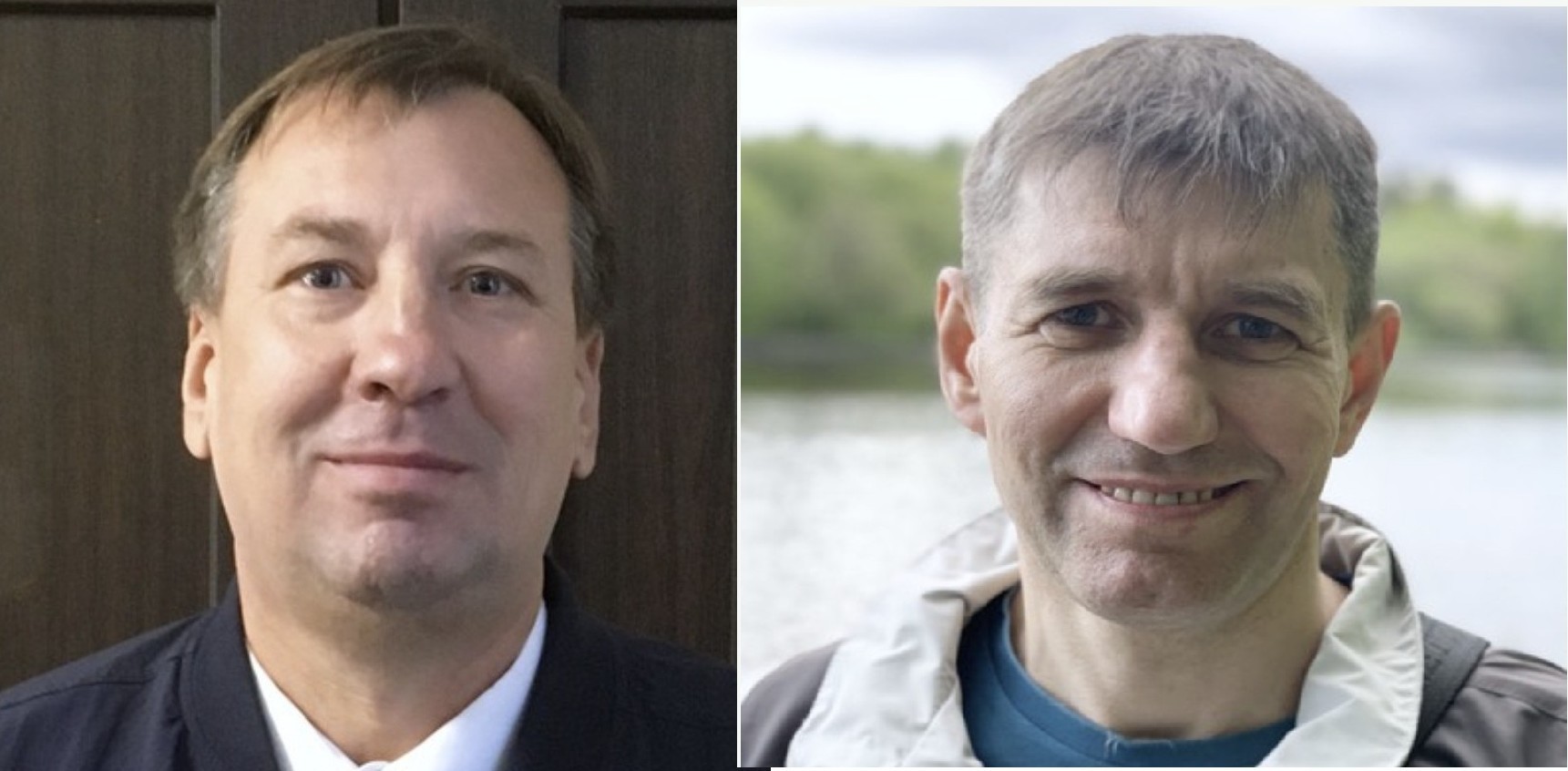
From left Victor Kudinov, Serhiy Zhyhalov Photos posted on JW. site

From left Victor Kudinov, Serhiy Zhyhalov Photos posted on JW. site

An occupation Crimean ‘court’ has upheld six-year terms of imprisonment passed against Victor Kudinov and Serhiy Zhyhalov for practising their faith as Jehovah’s Witnesses.  The fact that such an outcome was anticipated only accentuates the need for maximum attention to Russia’s mounting persecution of believers in occupied Crimea, especially given the certainty that the same repression will be extended to all Ukrainian territory while under Russian occupation.

Viktor Kurdinov (b. 1969) and Serhiy Zhyhalov (b. 1971) had both appealed against the 6-year sentences handed down on 14 January 2025 by ‘judge’ Serhiy Korotun from the occupation ‘Gagarin district court’,  The two men have been in custody ever since that ruling and were forced to take part in the appeal hearing on 11 June by video link from SIZO [remand prison]. 

Crimean Process reports that ‘judge’ Yelena Yelanskaya from the occupation ‘Sevastopol municipal court’ did not, at least, try to prevent people from attending the hearing on 11 June.  Several dozen visitors were admitted, with it very likely that most of these were fellow believers who had, as during the sentencing on 14 January, ignored the danger and come to show their solidarity.

The defence pointed to the lack of any proof that Kudinov and Zhyhalov had had anything to do with the formal activities of the ‘organization’, and to the results of an independent psycholinguistic analysis of the recordings of services which found no whiff of so-called ‘extremism’. 

As reported, Kudinov and Zhyhalov were charged with ‘organizing the activities of an extremist organization’ under Article 282.2 § 1 of Russia’s criminal code.   Both prosecutor and ‘judge’ Serhiy Korotun proved willing to accept that peaceful meetings where believers studied Biblical passages; prayed and sang together were ‘the activities of an extremist organization’.  The prosecutor had claimed that the ‘proof’ of Kudinov and Zhyhalov’s role as ‘organizers’ lay in the fact that the two men had given other participants tasks, invited them to answer and had also thanked them for their responses. This was clearly accepted by Yelenskaya since she left the earlier verdict and sentences unchanged.

While there can be no excuse for complicity in such judicial travesties, the root of all such charges lies in a Russian supreme court ruling from 20 April 2017.  This gave the green light to Russian ‘trials’ and imprisonment of Jehovah’s Witnesses by labelling them ‘an extremist organization’.  While ‘investigators’ in occupied Crimea base such persecution on the same type of fake ‘expert assessments’; illicitly taped meetings and ‘secret witnesses’ as in other cases of persecution, all of this is aimed solely at ‘proving’ what the men and women never deny – their religious faith as Jehovah’s Witnesses. In the case of Kudinov and Zhyhalov, it would seem that the prosecution, initiated by ‘senior investigator M.Ye. Ukrainsky, was based on the ‘testimony’ of a ‘secret witness’ who has been identified as Nadezhda Dykman. There was another alleged ‘witness’ for the prosecution, an individual called S.B. Korkushko.  During one of the hearings, Zhyhalov noted that he had never met this Korkushko, but was aware that he had, over the past five years, ‘testified’ in many prosecutions of Crimean Jehovah’s Witnesses.  The same situation is observed with respect to Russia’s persecution of Crimean Tatar civic journalists and activists, and other Crimean Muslims, with the ‘evidence’ for massive sentences of up to 20 years based on ‘secret witnesses’ known to be used in multiple trials.

Russia’s harassment of Jehovah’s Witnesses, like that of essentially all believers, except those linked with the Russian Orthodox Church, began soon after its invasion and annexation of Crimea.  Arrests of Jehovah’s Witnesses began less than a year after the April 2017 Supreme Court ban, and it is increasingly difficult to keep up with the number of victims of repression.

Vitaliy Buryk (Kerch)

Vitaliy Buryk Photo from the JW site

Armed enforcement officers turned up at the homes of at least ten Jehovah’s Witnesses in occupied Kerch on 9 October 2024 and carried out searches.  Criminal charges were laid against one believer, Vitaliy Buryk (b. 7.10.1971).  He is accused of ‘organizing the activities of an extremist organization’, under Article 282.2 § 1 of Russia’s criminal code   He was initially held in custody for two days, and is now under house arrest.

Tamara Bratseva

Tamara Bratseva Photo from the JW site

Five armed searches were carried out on 5 August 2024, with the FSB reported to have used particularly brutality in many cases.  In Rozdolne, armed officers also turned up at one person’s work, forcing him, facedown, to the floor and binding his hands with a cable tie so tightly that he was later forced to turn to an injury unit.  The latter confirmed his injury, but the medical record was then taken from him at the police station.

Criminal charges, also under Article 282.2 § 1, were laid on that occasion were laid against Tamara Bratseva (b. 28.09.1955), from Rozdolne.  She is currently under a signed undertaking, but could also face a long sentence

Oleksandr Voronchykhin (b. 1963)Yekaterina Demidova (b. 1956); Oleksandr Kotylets (b. 1977) and Dmytro Zakharevych (b. 1995)

 All three men are charged with the more serious ‘organizing the activities of a so-called extremist organization’ (under Article 282.2 § 1) while Demidova is accused of ‘participation’.

Earlier cases

The first arrest was of Serhiy Filatov (b. 1972) after armed raids in Dzhankoi during the night from 15-16 November 2018.  He too was accused of ‘organizing the activities of an extremist organization’ under Article 282.2 § 1 with the ‘prosecutor claiming that the Jehovah’s Witness had “undermined the foundations of the constitutional order and the security of the state”, by, purportedly, being the leader of a religious organization.  On 5 March 2020, he was sentenced by ‘judge’ Maria Yermakova from the occupation ‘Dzhankoi district court’ to six years’ imprisonment in a medium security prison colony, with this upheld by Edward Belousov from the ‘Crimean high court’ on 26 May 2020.   

Artem Gerasimov (b. 1985) from Yalta was arrested during a second wave of armed raids on 20 March 2019.  He too is serving a six-year sentence, imposed at appeal level after the first instance ‘court’, also on 5 March 2020, imposed ‘only’ a massive fine. It is possible that Moscow was still watching international reaction to such shocking religious persecution on occupied Ukrainian territory and preferred not to have two long sentences passed on one day.

Viktor Stashevsky (b. 1966) was sentenced by ‘judge’ Pavel Krylo from the occupation ‘Gagarin district court’ on 23 March 2021 to six and a half years’ imprisonment on the same ‘organizing extremist activities’ (Article 282.2 § 1 ) charge, and taken into custody in the courtroom. The sentence was upheld on 10 August 2021 by ‘judge’ Vladimir Avkhimov from the ‘Sevastopol municipal court’. 

In a very worrying move, Stashevsky recently became the first Jehovah’s Witness from Russia or occupied Ukraine to have his sentence escalated, with a ‘court’ in Russia sending him to a prison, the worst of Russia’s penal institutions for part of the sentence.

Igor Schmidt (b. 1972) was sentenced by ‘judge’ Liudmyla Tumaikina from the same ‘Gagarin district court’ to six years, with this upheld on 17 January 2022. 

Artem Shabliy (b. 1990) was initially arrested on 26 May 2020 after armed men burst into his home and caused injuries to one of his two small children by quite unnecessarily breaking a window during the raid.  He was, at least, charged with ‘participation in an extremist organization’ (under Article 282.2 § 2)  and was, on 16 February 2022, given a two-year suspended sentence by ‘judge’ Iryna Altanets from the ‘Kerch municipal court’.

Volodymr Maladyka (b. 1963), Volodymyr Sakada  (b. 1970) and Yevhen Zhukov (b. 1969) were sentenced on 6 October 2022 by ‘judge’ Olga Berdnikova from the ‘Nakhimovsky district court’ in Sevastopol to six years’ imprisonment with this upheld by Gennadiy Vladimirovich Nikitin and two other ‘judges’ from the occupation ‘Sevastopol municipal court’ on 11 October 2023.

Oleksandr Dubovenko (b. 1973) and Oleksandr Lytvyniak (b. 1960) were sentenced on 1 December 2022 to six years’ imprisonment, with this demanded by demanded by prosecutor Minigul Saldykova and passed by ‘judge’ Tatiana Fedeneva from the ‘Armiansk municipal court’.  The main ‘evidence’ against them was a Zoom conversation about the Bible, with this claimed to constitute ‘‘organizing the activities of an extremist organization’ (Article 282.2 § 1).  Both men had been held under house arrest for over a year, and were taken into custody after the 6-year sentence,

There have been a few surprises, such as with respect to long sentences passed against Taras and Daria Kuzio, Serhiy Liulin and Petro Zhiltsov by ‘judge’ Vladimir Romanenko from the ‘Yalta municipal court’ on 27 February 2023.  The sentences were overturned on 21 March 2024 by the ‘Crimean high court’, although this does not necessarily mean an end to persecution as the ‘case’ was sent back for retrial.  The ‘court’ did, however, order the release from imprisonment of Taras Kuzio (b. 1978); Petro Zhiltsov (b. 1987) and Serhiy Liulin (b. 1984) with Daria Kuzio (b. 1982) having received a suspended sentence.  Worth pointing out here, since Taras and Daria Kuzio have two small children, that a suspended sentence can become ‘real’ should a person be deemed to have ‘re-offended’.  If believers are imprisoned for studying the Bible and religious worship, the occupation regime can decide at any moment that their continued faith constitutes ‘reoffending’.

Yury Herashchenko and Serhiy Parfenovych were also accused of ‘organizing the activities of an extremist organization’ but received suspended 6-year sentences from the occupation ‘Krasnohardiiske municipal court’ on 1 July 2024.  These, however, were changed into real sentences on 5 October 2024.

Maksym Zinchenko was found ‘guilty’ of participation in what Russia has called an ‘extremist organization’ for practising his faith.  The sentence passed by ‘judge’ Valery Kuznetsov from the occupation ‘Nakhimovsky district court’ in Sevastopol was significantly lower than that demanded by the prosecutor and it is not clear whether it was challenged. On 17 April 2024, Kuznetsov sentenced Zinchenko to two years’ imprisonment, however he then applied a norm on making a sentence more lenient, and instead of imprisonment, ordered two years of compulsory labour, as well as restrictions on certain activities. 

Tadevos Manukian (b. 1981)  was initially charged (with ‘organizing a so-called extremist organization’ under Article 282.2 § 1 together with Taras Kuzio and the others.  His prosecution was, however, made into a separate ‘case’.

Dmytro Naukhatsky (b. 1969) has been under house arrest since December 2022, when he was arrested after the FSB carried out mass armed raids of at least 16 homes of believers in Simferopol.  He was initially charged with ‘organizing the activities of a so-called extremist organization’ (under Article 282.2 § 1), however on 24 March 2023, the same ‘investigator’, V.A. Novikov added a charge of ‘financing the activities of an extremist organization’ (Article 282.3 § 1).  


Religion

Islam is the fastest growing religion in the world, Pew study says

June 10, 20251
By Fiona André
NPR/RNS

A Muslim pilgrim reads a copy of the Quran at the Grand Mosque during the annual Hajj pilgrimage in Mecca, Saudi Arabia.Amr Nabil/AP

Muslims are the fastest-growing faith group, followed by the religiously unaffiliated, according to a new Pew Research Center study measuring the evolution of the global religious population between 2010 and 2020.

Christianity grew by 122 million members in that decade, but declined as an overall slice of the world's population. Still, Christianity remains the world's largest religion, with 2.3 billion believers — nearly 29% of the world's population.

Pew's Global Religious Landscape study, released on Monday (June 9), is the second edition of a demographic report of religious groups, started in 2010.

"We look at the demographic characteristics of these groups, their age structure, how many children they're having, how much education they have, because these demographic characteristics affect the future size of the religious groups," Conrad Hackett, a senior demographer at Pew Research Center, told RNS.

The report reveals how religious disaffiliation and population growth influenced the global religious landscape.

The world's Muslim population increased by 347 million people over 10 years — more than all the other religions combined — primarily due to natural demographic growth.

"Muslims are having children at a greater number than Muslims are dying," Hackett said. "Very little of the change in Muslim population size is a result of people becoming Muslim as adults or leaving Islam as adults."

Researchers relied on 2,700 data sources, including national censuses, demographic surveys, population surveys and population registers, to document the religious affiliations of 100,000 people across 201 countries. While questions varied from one survey to another, most participants were asked about the religion with which they identified.

The study also analyzed religious data in conjunction with data on fertility and mortality rates and age distribution to measure demographic changes between 2010 and 2020. It also noted delays in the collection of data caused by the COVID-19 pandemic.

Muslims are largely concentrated in regions with high population growth, like the Middle East-North Africa region, where they represent 94.2% of the population, and sub-Saharan Africa, where they represent 33%. The Muslim population grew the most in the Asia Pacific region, which is home to the largest Muslim population, increasing by 16.2% between 2010 and 2020.

Meanwhile, Christianity declined by 1.8%, mainly due to larger population growth among non-Christians. It steadily declined in Europe, North America, the Americas, Australia and New Zealand.

Christianity remains the majority faith around the globe, with the exception of the Asia-Pacific and Middle East-North Africa regions. It's now the most geographically dispersed religious group, the study shows.

Religiously unaffiliated people are now the third largest group behind Christians and Muslims, with 24.2% identifying as such.

"This pattern is common in European and North American countries, as well as in Australia and New Zealand, where many people who were raised Christian no longer claim any religious affiliation," reads the report.

Those leaving religion greatly impacted the proportion of the world's Christian population. "Christians are seeing a lot of people who are raised in the faith changing as adults to people who don't identify with any religion," Hackett said.

The study marks the first time Pew has tracked religious switching patterns, aggregating data from 117 countries of people ages 18 to 54 regarding the faith they were born into and the religion they identify with as adults.

In North America, the religiously unaffiliated population increased by 13 percentage points between 2010 and 2020, reaching 30.2%. Nones grew by 4.1 percentage points in Latin America-Caribbean over the same period, and by 6.6 percentage points in Europe, reaching 25.3%.

Asia Pacific is home to the largest religiously unaffiliated population, with 78% of the nones population living in the region. The majority of the world's nones population, 67%, lives in China. However, Hackett noted the difficulty of capturing the complexity of religiosity in China, on which Pew has conducted research.

Buddhists are another group impacted by religious disaffiliation in the East-Asian region, with more people leaving the faith than joining between 2010 and 2020. It is the only religious group that has fewer members in 2020 than in 2010, having declined by 19 million people, according to the data.

However, the study notes that the Buddhist population estimates don't fully capture the influence of the faith, as many Buddhist respondents may not identify as Buddhist even though they engage in Buddhist practices.

Hindus, representing 14.9% of the world's population, are the fourth largest group in the world. The majority of Hindus live in India (95%). And between 2010 and 2020, the number of Hindus increased by 62% in the Middle East-North Africa region, mostly due to migration. In North America, the Hindu population increased by 55%.

The world's Jewish population, the smallest religious group analyzed in the report, grew by 6% between 2010 and 2020, from about 14 million to 15 million people. Jews represent 0.2% of the global population, which remained stagnant over 10 years, and 45.9% of Jews live in Israel — the highest percentage in any country.

This story was produced through a collaboration between NPR and Religion News Service.


The Future Of Ocean Finance: Scaling Blue Bonds – Analysis

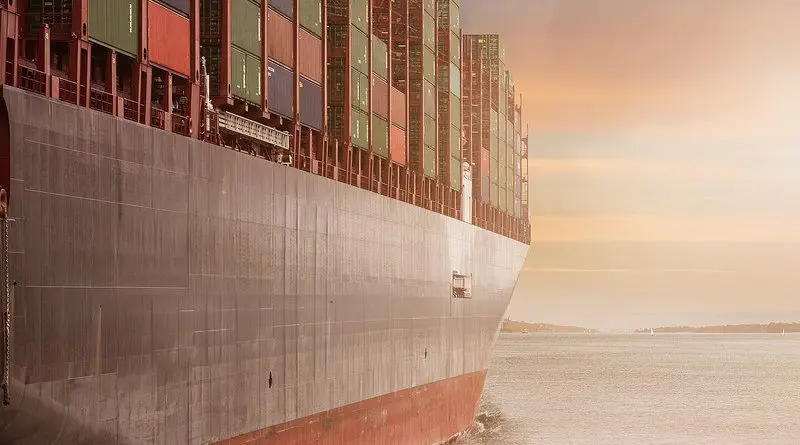
Shipping Trade Container Container Ship Port Logistics


By 

By Abhishree Pandey


The global bond market, the largest asset class in the international financial market, was valued at US$ 141.34 trillion in 2024. By 2030, the figures are expected to reach US$ 166.81 trillion. On the other hand, the blue economy is valued at US$3 trillion annually. Beyond their economic value, blue ecosystems play a vital role in climate action, capturing up to 30 percent of human-generated carbon dioxide. It is no surprise that blue bonds have emerged as a promising financial instrument in the fight against climate change.

Despite this potential, SDG 14 (life below water) currently receives the second lowest amount of invested capital compared to any other SDGs. With increasing awareness about the critical nature of healthy oceans and sea ecosystems to our well-being, blue bonds are well-poised to see rapid growth. In comparison to green bonds 10 years ago, blue bonds are at an inflexion point in 2025. Between 2018 and 2022, 26 blue bonds—with a combined value of US$5 billion—were issued globally. The market grew 10 percent year-on-year in 2024. By 2030, it is estimated that the blue bond market will hit US$70 billion. However, blue bonds remain a nascent asset type within the broader sustainable debt market. 

As the blue bond matrix gradually expands, questions about its effectiveness and long-term viability are also bound to emerge. The following case studies aim to offer optimism and caution about the role of blue bonds as a mainstream climate finance vehicle. Unless coupled with stronger frameworks and verification standards, blue bonds risk becoming more symbolic than substantive. 

Case Studies: Seychelles and Ecuador 

The Seychelles blue bond, the world’s first sovereign blue bond, was issued in 2018. Since then, it has played a central role in shaping the global landscape of blue bonds. It was facilitated by the World Bank and the Global Environment Facility (GEF), and raised US$15 million from international investors. The proceeds support marine protected areas (MPAs), fisheries management, and small-scale fishers. One of the most significant outcomes of the project was the Seychelles government exceeding their goal to protect 30 percent of the Exclusive Economic Zone (EEZ) and Territorial Sea. However, the deal’s heavy reliance on multilateral guarantees and concessional capital highlighted its limited scalability. Without a substantial de-risking mechanism, it is difficult for developing countries to replicate such an effort. It is also tough for the government to redirect its financial resources toward adaptation. If the government decides to support a different area of the blue economy, it must renegotiate terms with investors. Thus, while Seychelles stands as a pioneering example, it also highlights the role of institutional capacity and external support in determining project viability. 

In 2023, Ecuador initiated one of the largest blue bond-related debt-for-nature swaps in history by converting US$1.63 billion in sovereign debt into a US$656 million blue bond issuance. The transaction was structured by Credit Suisse and is expected to lead to a 1.6 percent reduction of Ecuador’s non-financial public sector debt stock. Furthermore, the fund is expected to generate US$323 million for marine protection in and around the Galápagos Islands, which is one of the world’s most biodiverse marine regions, over the next 18.5 years. The Galápagos bonds are insured fully by the U.S.-backed International Development Finance Corporation, and partly by private reinsurers and the Inter-American Development Bank. This means that the burden of risk has been transferred to state-backed agencies. Therefore, deals remain limited to countries possessing suitable debt volumes, technical expertise, and risk profiles. There are also concerns about whether local groups have been sufficiently consulted and involved in the bond’s design and operation.


Policy Recommendations for Mainstreaming Blue Bonds 

The following policy shifts and revisions are essential to ensure blue bonds become a mainstream financing tool. 

Market Development and Integration

There is a critical need to develop integrated blue bond taxonomies and verification standards. Similar to the International Capital Market Association (ICMA) principles that helped mature the green bond market, blue bonds require dedicated frameworks to guard against ‘greenwashing’. Transparency and accountability frameworks must be equally strengthened, which includes greater clarity on operational elements such as use of proceeds, selection criteria, and frameworks for managing proceeds.

Clear guidance on these aspects is essential to ensure investor confidence and that blue bonds deliver on their social and ecological promises. The Ecuador case underscores the risks of neglecting inclusive policy design, while the Seychelles experience reveals how rigid bond conditions can hinder fund reallocation. To ensure blue bonds remain responsive to evolving climate, social, and economic needs, more flexible financial structures are essential.

Expanding the Role of the Private Sector

Thus far, most blue bond issuance has been sovereign or multilateral-led. Expanding the role of the private sector is key to scaling the market and making it more mainstream. Recent issuances such as BDO Unibank Inc.’s US$100 million blue bond in the Philippines and Korea’s Export-Import Bank’s US$1 billion maritime-focused blue bond show that private actors can successfully raise capital for the blue economy sectors. However, governments and international financial institutions must extend technical assistance and risk mitigation strategies/measures to encourage more stakeholder participation. 

Improving the Risk-Return Profile

Climate-themed blue investments face liquidity concerns and are often perceived as high-risk and low-return investments. A key approach to address this issue and attract institutional investors is to offer attractive returns. In addition, blue bonds can be structured with longer maturities that align with the time horizons of ocean-related projects. A range of de-risking tools, such as guarantees, first-loss provisions, and insurance, can be used to improve risk profiles. To scale blue bond issuance, such financial mechanisms must be made readily available and easily accessible. 

Blue bonds have the potential to channel substantial finance into ocean ecosystems to make them more resilient. Their popularity is expected to increase in the next few years, especially among shipping groups, chemical sectors, sustainable tourism, and sea transport sectors, where investors can combine impact and return. The path forward will require a collective effort to scale institutional capacity, build investor confidence, and centre local community engagement in bond design and implementation. 


  • About the author: Abhishree Pandey is a Research Assistant at the Observer Research Foundation.


Observer Research Foundation

ORF was established on 5 September 1990 as a private, not for profit, ’think tank’ to influence public policy formulation. The Foundation brought together, for the first time, leading Indian economists and policymakers to present An Agenda for Economic Reforms in India. The idea was to help develop a consensus in favour of economic reforms.