Tuesday, June 17, 2025


Labubu’s Rise Mirrors Declining Faith In US Leadership – OpEd

Labubu (image generated by Grok)

By 

For decades, the United States has held a dominant geopolitical position, its soft power radiating through Hollywood blockbusters, Silicon Valley innovations, and democratic ideals. Yet, in recent days, a subtle but significant rebalancing has been underway. While the U.S. image faces a discernible decline, particularly among its traditional European allies, China’s popularity appears to be quietly, yet steadily, on the rise, often through avenues less conventionally associated with grand power plays.


Consider Labubu, the mischievous, sharp-toothed monster elf that has captured hearts across Asia and beyond. Designed by Hong Kong’s Kasing Lung and marketed by the Chinese powerhouse Pop Mart, Labubu isn’t a state-sponsored cultural export; it’s a phenomenon born of contemporary consumer culture and shrewd merchandising. Its surge in popularity, amplified by endorsements from K-pop stars like Blackpink’s Lisa, speaks to a burgeoning Chinese soft power that operates outside the traditional state-driven narratives. This isn’t about patriotic anthems or government-funded art exhibitions. It’s about appealing aesthetics, engaging narratives, and a burgeoning creative industry that is increasingly capable of producing globally resonant cultural products.

Labubu’s success, in essence, is a microcosm of a broader trend. Although the West often focuses on China’s economic might and geopolitical ambitions, a more nuanced understanding reveals a growing cultural footprint. Chinese social media platforms like TikTok have become global phenomena, reshaping entertainment and communication. Chinese animated series and films are gaining traction, and Chinese fashion and design are increasingly influencing global trends. Platforms like Xiaohongshu are attracting Western users, showcasing Chinese consumer culture. This rise isn’t always overt or confrontational. It’s often subtle, appealing to a younger, more globally interconnected generation that values authenticity and innovation, regardless of origin.

Beyond its immediate commercial appeal, Labubu’s triumph embodies a deeper shift.  Labubu’s global popularity, much like the acclaimed game “Black Myth: Wukong” or the animated film “Ne Zha,” is fundamentally a testament to Chinese enterprises’ long-term commitment to innovation and quality. Its success signals China’s profound transformation from merely the “world’s factory” to an emerging “global creative center,” where high-tech, high-value-added cultural products are increasingly driving its influence and export growth.

Beijing has actively supported this cultural push, seeing it as crucial for enhancing its international image. Initiatives range from promoting the Chinese language and culture to investing heavily in its cultural industry, encouraging the global export of films, dramas, and video games. Although criticisms persist regarding censorship and human rights, China’s soft power strategy is proving effective in projecting a modern, appealing image. The strategic alignment of market success with cultural messaging allows for a subtle yet pervasive spread of influence.

Contrast this with the declining image of the United States, particularly within the European Union, a region historically bound by shared democratic values and strong alliances with Washington. Recent polls paint a stark picture. A June 2025 Pew Research Center survey of 24 nations, including many in Europe, revealed a decline in the U.S. image in 15 of these nations. A significant factor cited is the return of Donald Trump to the presidency, with more than half of the respondents in 19 countries expressing a lack of confidence in his leadership. The perception of Trump as “arrogant” by 80 percent and “dangerous” by 65 percent of respondents underscores the deep reservations held by many.


This sentiment is echoed across other recent surveys. The 2025 Democracy Perception Index, surveying over 110,000 respondents across 100 countries, reported that America’s reputation has suffered a “particularly massive hit in EU countries.” This decline is directly linked, in part, to Trump’s negative comments about the EU, which have clearly left a lasting impression, labeling the bloc “horrible” and “pathetic.” The European Council on Foreign Relations (ECFR) in February 2025 corroborated this trend, finding a “newly pessimistic and transactional view of the transatlantic partnership.” Europeans are increasingly viewing the United States as a “necessary partner” rather than a true “ally,” a significant shift from the traditional understanding of the transatlantic bond.

Further highlighting this decline, a March 2025 YouGov EuroTrack survey demonstrated a slump in favorable attitudes towards the United States in several Western European countries since Trump’s re-election. Drops in favorability ranged from six to 28 percent in various countries like Sweden, Germany, and France. A survey conducted by Le Grand Continent and Cluster 17 in March 2025 across the EU’s eight largest countries and Denmark delivered perhaps the most striking finding: more than half of Europeans (51 percent) consider Trump an “enemy of Europe,” and a resounding 63 percent believe his election makes the world less safe.

Other factors also contribute to this decline in U.S. popularity. Long-term trends such as the U.S. withdrawal from the Paris Climate Accord under the Trump administration, and even the perceived lack of consistent accountability for climate action, have alienated a climate-conscious European populace. Moreover, deeply divisive domestic issues have profoundly corroded America’s international standing. These include the recent widespread protests that erupted in Los Angeles directly in response to intensified federal immigration raids as well as the ongoing controversy surrounding immigration policies that have resulted in tragic family separations at the border. These events, extensively documented and debated by international media and civil society, have acutely challenged the perception of the United States as a beacon of human rights and justice, fostering deep disillusionment and prompting a profound questioning of its moral authority on the world stage.

These figures are not merely statistical anomalies. They represent a fundamental erosion of trust and confidence. The perceived unpredictability of U.S. foreign policy, the “America First” rhetoric, and disengagement from multilateral institutions have created a vacuum that other powers, including China, are implicitly or explicitly filling. Although China’s rise is not without its own controversies and criticisms, its cultural products and economic partnerships are often perceived as less overtly political and more geared towards mutual benefit.

The lessons from Labubu and the alarming European polls are clear. Soft power is not solely built on military might or economic leverage. It is also forged in the crucible of cultural appeal, perceived reliability, and shared values. As the United States grapples with internal divisions and a shifting global perception, China is quietly cultivating a different kind of influence, one that resonates with consumer trends and cultural sensibilities. The world is becoming increasingly multipolar, and the contest for hearts and minds will be won not just through grand strategic maneuvers, but also through the subtle power of a mischievous monster elf and the perception of a reliable partner.


Jianlu Bi

Jianlu Bi is a Beijing-based award-winning journalist and current affairs commentator.His research interests include international politics and communications. He holds a doctoral degree in communication studies and a master's degree in international studies. He also writes for the SCMP, Foreign Policy In Focus, TRT World, IOL, the Citizen and others.


Juvenile Great Hammerhead Sharks Rely On South Florida’s Biscayne Bay

Catherine Macdonald, Ph.D., a co-author of the study and director of the Shark Research and Conservation Program at the University of Miami Rosenstiel School, reviews a mark-recapture tag as part of the data collected during the study. CREDIT: University of Miami Shark Research and Conservation Program

By 

A new study from the University of Miami Rosenstiel School of Marine, Atmospheric, and Earth Science finds that juvenile great hammerhead sharks (Sphyrna mokarran), a critically endangered species, rely heavily on the resources of Florida’s Biscayne Bay as a nursery habitat during their earliest and most vulnerable years.


Nestled within the heart of the Miami metropolitan area, Biscayne Bay is a shallow, subtropical estuary known for its clear waters and ecological richness. However, in recent decades, the bay has suffered from declining water quality, reduced freshwater inflow, and physical degradation—largely driven by urban development and rapid population growth—posing growing risks to the species that depend on it.

“We analyzed the feeding and habitat use patterns of 62 great hammerheads sampled between 2018 and 2025,” said John Hlavin, the lead author of the study and a doctoral student in the Department of Environmental Science and Policy at the Rosenstiel School. “Our team employed a research technique called multi-tissue stable isotope analysis to track both short and long-term resource use, allowing us to gain new insights into the species’ dietary habits across different life stages.”

The findings indicate that young sharks rely on Biscayne Bay’s shallow inshore habitats and prey species year-round for the first two years of their life. After age two, subadult hammerheads shift to foraging on coastal reefs, but return to Biscayne Bay seasonally, from late spring through early summer. Many adult hammerheads continue to feed on bay resources, indicating that nearshore habitats remain important throughout the great hammerhead’s life cycle.

“Juvenile great hammerheads show a constrained diet and habitat use, potentially feeding heavily on small inshore stingrays early in life,” said Catherine Macdonald, a research associate professor in the Department of Environmental Science and Policy, and the director of the Shark Research and Conservation Program at the Rosenstiel School. “This reliance on a narrow range of prey and habitats makes juvenile great hammerheads particularly vulnerable to human activity and environmental change.”

Miami is a popular recreational fishing destination; however, great hammerheads are exceptionally sensitive to capture stress. The study’s findings point to a need for responsible fishing practices, especially from March through July, when both juveniles and subadults inhabit the bay.


“Reducing interactions with these sharks—particularly avoiding catch-and-release fishing in key nursery areas—can dramatically improve survival for this endangered species,” said Hlavin. “If a shark is accidentally caught, the best action is a quick, in-water release, without photographs that delay the release process.”

Methodology

Researchers used stable isotope ratios of carbon and nitrogen in muscle and blood plasma samples to evaluate great hammerhead diet and habitat use across age classes and seasons. This non-lethal method provides insights into both recent and long-term feeding behaviors, revealing how their reliance on Biscayne Bay changes as these sharks mature.

A call for increased conservation measures

This study offers critical data to inform conservation strategies and marine policy in Florida and beyond. Protecting essential nursery habitats like Biscayne Bay are vital to giving great hammerheads a fighting chance in the face of environmental degradation, habitat loss and overfishing.

This research was supported by the National Geographic Society, Nature Trust of the Americas, Florida Sea Grant-Guy Harvey Fellowship, and the Annual Mary Roche Fellowship at the University of Miami Rosenstiel School.

The study titled, “Nursery resource use dynamics in great hammerheads (Sphyrna mokarran) across ontogeny,” was published in the journal Ecology and Evolution on June 15, 2025. The authors are John F. Hlavin*1,2, Catherine C. Macdonald1,2

Notes:

1.Shark Research and Conservation Program, University of Miami Rosenstiel School for Marine, Atmospheric, and Earth Science, Miami, Florida. 

2. Field School Scientific Training, Coconut Grove, Florida.


Krill Fishing In The Antarctic: Overlaps With Consequences

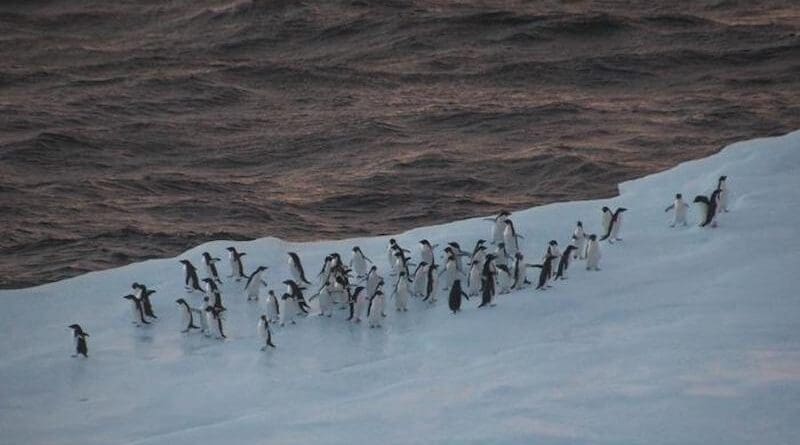
In search of krill, fishing vessels in the Southern Ocean encounter penguins during their main breeding season in the immediate vicinity of their breeding colonies. CREDIT: Alfred-Wegener-Institut / Dominik Bahlburg

By 

Antarctic krill is a key species in the Antarctic marine ecosystem: it is an important food source for many species, such as whales, seals and penguins. However, the small crustaceans are increasingly becoming the focus of fishing, which can incur significant consequences for the entire Southern Ocean ecosystem. Therefore, concepts that minimize the negative effects of fishing on the krill themselves and on the animals that feed on krill are required urgently.


A research team from the Alfred Wegener Institute and the Norwegian Institute of Marine Research in Bergen has now been able to use acoustic recordings, that fishing vessels routinely record, to identify areas and periods in which there is an increased overlap between fishing and krill predators. The results can contribute to developing effective management strategies to protect the Antarctic ecosystem. The study will be published in the Proceedings of the National Academy of Sciences journal.

“In conducting our study, together with our colleagues from Norway, we analyzed more than 30,000 hours of echo sounder recordings collected by three krill fishing vessels in the Southern Ocean over a period of six years,” as Dominik Bahlburg from the Alfred Wegener Institute, Helmholtz Centre for Polar and Marine Research (AWI), stated. Using a segmentation model and artificial intelligence, the researchers were able to filter out signals that whales, penguins and seals emit when they dive under fishing vessels. “During such encounters, ships and krill predators pursue the same krill swarms. This allowed us to systematically analyse the spatial and temporal dynamics of this competition in order to identify locations and time periods where the interaction between the two groups is particularly intensive.”

This showed up distinct seasonal patterns that were specific to the various krill predators. For example, the fishery encountered penguins and fur seals in summer and winter, particularly in the South Orkney Islands and South Georgia, while only rarely encountering whales. “The South Orkney Islands seem to be a real hotspot for encounters with penguins,” says Dominik Bahlburg. “Compared to the Antarctic Peninsula, they have received far less attention in the debate on the impact of krill fishing and many of the colonies affected there are currently not regularly monitored.” This, however, would be ecologically significant, as fishing vessels encounter penguins here in summer during their main breeding season, in the immediate vicinity of their breeding colonies. This furthermore suggests that restriction zones on the Antarctic Peninsula, that have been established voluntarily by the fishery, do not really minimize the encounters of penguins and vessels and thus the direct competition for krill during the breeding season, but rather shifted them to the South Orkney Islands.

Another aspect took the authors by surprise: “We were able to show that fisheries and penguins as well as fur seals encounter each other just as frequently in the winter as in the summer season.” As the animals are not tied to their colonies at this time and are often widely dispersed, the fact that krill fishing has increasingly focussed on the wintertime was previously seen as a positive development. “However, the fact that the animals are now also encountering ships so frequently at this time may require a reassessment of this development.” Compared to the South Orkney Islands, seals and penguins were rarely encountered in the echo sounder data from the Antarctic Peninsula. Especially in the autumn, fishing here competes intensively with whales for krill. At this time, whales build up their fat reserves for their subsequent migrations to their breeding grounds towards the equator.

Reliable data for better protection of the Antarctic Ocean ecosystem 

“Remarkably, these patterns were quite stable for seals, penguins and whales over a six-year period,” as Sebastian Menze from the Norwegian Institute of Marine Research related. “Consequently, our results show that acoustic data from fishing vessels and machine learning can act as a reliable foundation for rapid and convenient assessments of fisheries’ interaction with the ecosystem.” They offer tremendous temporal and spatial coverage, as the vessels are travelling in different locations in the Southern Ocean almost all year round. What’s more, recording the data is particularly cost-effective, as it can be collected as a kind of “by-product” of fishing. The data used in this study by the largest krill fishing company (Aker Biomarine) is even accessible via a public data platform (HUBOcean).


To date, echo sounder data from krill fishery has only been used sporadically for scientific purposes, for example to estimate the biomass of krill. “Thanks to our approach, we are expanding the potential uses for ecological questions and demonstrating new, cost-effective ways in which fishing vessels can actively contribute to krill fishery management,” emphasises Bettina Meyer, scientist at the AWI and German scientific representative in the Commission for the Conservation of Antarctic Marine Living Resources (CCAMLR). “Acoustic data make it possible to quickly draw an initial picture of how changes in fishery management or fleet behaviour impact on the Antarctic ecosystem. This is particularly significant for periods of time or areas that are not well covered by existing research programmes.”

The study was funded by the German Federal Ministry of Food and Agriculture in order to effectively contribute the findings to CCAMLR’s efforts to improve the management of krill fisheries. In future, such analyses can also help to evaluate the effectiveness of existing and future management measures and optimise them where necessary.


Climate Change And Interactions Between Species Are Changing Distribution Of Brown Bears In Europe

Brown bear (Ursus arctos) feeding on fruit in a mixed forest CREDIT: Vincenzo Penteriani

By 

An international team led by the University of Seville, La Sapienza University of Rome and the Institute of Nature Conservation in Poland has studied how interactions between species affect the distribution of brown bears in Europe and Turkey.


It has been found that the distribution of bears on a continental scale is largely explained by interaction with other species: specifically, bears occupy areas where the species that form part of their diet are distributed. The research, published in the journal Global Change Biology, shows the importance of interactions between species on a continental scale, using the brown bear as a case study. 

Understanding how global changes – such as climate change or land use transformation – affect species is critical to conserving biodiversity and maintaining the benefits that nature provides, such as clean water, soil fertility and pollination.

For example, as a result of climate change, the distribution of some species is shifting to higher altitudes or towards the poles, where climatic conditions remain within the species’ tolerances. Until now, most studies have focused only on the importance of direct changes, such as changes in temperature, rainfall or agricultural use, on species distributions. However, this work has turned the spotlight on indirect effects through interactions between species.

“The bears showed a very varied diet: we detected 276 species in their diet. Bears living in warmer places, such as sub-populations in the Cantabrian Mountains, Greece or Turkey, have a more vegetarian diet, while in colder areas such as Scandinavia and Finland, bears are more carnivorous. This means that the role of bears in the ecosystem/food chain is different, varying between herbivore and apex predator,” explains US researcher Pablo M. Lucas.

“Thanks to our large international team, we had more than three million bear locations, corresponding to some 3,000 bears and, very importantly, data from the 14 European and Turkish sub-populations, which inhabit very different environments. This allowed us to study the effects of local interactions over a continental area. We observed that bears occupy those places where the most energy from the species in their diet is available. For example, in the Cantabrian Mountains, the presence of oak and beech trees, which are the main food source for this sub-population, makes the presence of bears more likely; in other sub-populations where bears are more carnivorous, the presence of bears is better explained by the distribution of wild ungulates such as wild boar and deer.”


This information is particularly important for predicting where species will live in the future and what roles they play in ecosystems, in a context of climate change and land use transformation, and for understanding that in order to protect species, we must conserve the ecosystems where they live. ‘Changes in the distribution of the species they feed on may affect the bear’s position in the food chain and the viability of the species at the local level,’ the researcher points out.

Other species with characteristics different from those of brown bears – such as a more specialised diet, less ability to move, or the ability to live only in very specific environmental conditions – may react differently to climate change, land use transformation, and changes in the species with which they interact. Improving this knowledge is essential for designing more effective strategies for conserving biodiversity and the services that nature provides us.

This work was carried out by a team of 87 researchers from 75 institutions in 26 countries, led by a researcher from the University of Seville (US). In addition to the US, other Spanish institutions are involved, such as the National Museum of Natural Sciences (MNCN-CSIC), the Doñana Biological Station (EBD-CSIC) and the University of Huelva. 


Jamaat-E-Islami’s Ideological Deep State: A Theocratic Undercurrent In South Asia’s Secular Crises – Analysis

Protestors with the Bangladesh flag. Photo Credit: Tasnim News Agency

By 

By Soumya Awasthi and Mehraj Bhat


In a politically charged move, Bangladesh may soon witness the re-entry of Jamaat-e-Islami (JeI) into electoral politics, according to a recent media report. Despite being banned from contesting polls since 2013 due to its theocratic foundations and the role of its leaders in the 1971 genocide, JeI now seeks re-legitimisation by floating new proxies.

This development comes amid growing political instability and rising pressure on former Prime Minister (PM) Sheikh Hasina’s government, creating a fertile ground for reactivating ideological forces that were once considered defanged. However, to view this merely as a case of electoral opportunism would mean turning a blind eye to a far more insidious reality: JeI is not just a political party—it is a civilisational project, an ambitious ideological paradigm intent on transfiguring socio-political infrastructure into a theocentric order.

Despite decades of state repression, juridical proscription, and robust political opposition, JeI exhibits an extraordinary capacity for strategic reinvention and doctrinal persistence across Pakistan, Bangladesh, and Jammu & Kashmir. Its ideological tenacity, institutional elasticity, and subterranean influence form a complex web of geopolitical implications that regional powers—particularly India—cannot afford to underestimate. This article explores JeI’s theocratic infrastructure, subterranean operations, and civilisational agenda, arguing that it represents not a peripheral radical outfit but a structured ideological insurgency.

The Theocratic Blueprint: Maududi’s Doctrine and JeI’s Civilisational Mission

Established in 1941 by Maulana Abul A’la Maududi, Jamaat-e-Islami has rarely been content with mere electoral participation. Its ambitions have always been more expansive: to reorder society along divine lines, subordinating law, education, the economy, and governance to a theocentric order. JeI’s approach is distinct from conventional jihadist outfits, which primarily rely on militancy. Instead, it follows a meticulous and long-term strategy of ideological subversion—what Maududi observed as a ‘cultural revolution from below’. By embedding its doctrine into societal institutions—such as schools, mosques, welfare trusts, and student organisations—JeI has created an enduring epistemic infrastructure.

Its rejection of secular modernity is foundational. Democracy, in JeI’s cosmology, is heretical unless it aligns with divine jurisprudence. Yet paradoxically, JeI often enters democratic spaces not to participate in them sincerely but to hollow them out from within. It leverages democratic legitimacy to launch a critique of democracy itself, advancing a vision that ultimately seeks to dissolve the constitutional order in favour of a divine polity.


Pakistan: Parasitic Partnership with the Military Establishment

Nowhere is the symbiosis between JeI and the state apparatus more entrenched than in Pakistan. While it has never commanded significant electoral clout, JeI has long been an ideological arm of Pakistan’s military elite. During General Zia-ul-Haq’s Islamisation drive, JeI embedded itself in the state’s intellectual and educational bloodstream—producing curricula, occupying key bureaucratic posts, and controlling a vast network of madrasas.

Its student wing—Islami Jamiat-e-Talaba (IJT)—remains a formidable force in universities, functioning both as an enforcer of moral orthodoxy and a recruiter of ideological cadres. This deep ideological encapsulation has allowed JeI to shape public discourse, sustain Islamist narratives, and perpetuate a shadow state that survives regardless of electoral fortunes. As Islamabad oscillates between military and civilian rule, JeI’s ideological machinery remains impervious, lubricated by state patronage and religious populism.

Bangladesh: Rebranding After Repression

JeI’s history in Bangladesh is indelibly marked by its role in the 1971 genocide, during which its paramilitary wing—Al-Badr—collaborated with the Pakistan Army. Although JeI was banned after independence, it was rehabilitated later through political compromises and shifting geopolitical priorities. The war crimes tribunalinitiated by the Awami League after 2008 aimed to amputate JeI’s political legacy, culminating in the execution of several top leaders.

Nonetheless, the core ideology endured. Chhatra Shibir, its student front, remains active in educational institutions, while JeI-controlled businesses and charities offer social services in rural and underserved areas. The recent move to field candidates under new banners is not a deviation but a continuation of JeI’s strategy of ideological camouflage. Despite constitutional embargoes, JeI has never truly exited the political field; it has merely changed its apparel. As Hasina’s regime grapples with economic discontentment and political backlash, JeI’s re-entry signifies more than opportunism—a potential re-ignition of theological politics in the region.

Jammu & Kashmir: Theology as Resistance

In India’s Jammu & Kashmir, JeI has played an integral role in transforming a political conflict into an Islamic civilisational struggle. It capitalised on post-1987 electoral disillusionment to propagate an Islamist narrative that delegitimised secular resistance and promoted a religiously encoded insurgency. JeI’s strategy involved setting up a parallel civil infrastructure—mosques, schools, welfare trusts—that challenged state authority and redefined societal norms.

Despite being banned multiple times—most recently in 2019—JeI’s intellectual grammar remains intertwined with the region’s socio-political psyche. Its methodical proliferation of mosque networks, madrasa systems, and welfare apparatuses created a parallel civil society, functioning as a state-in-waiting and a normative re-educator. It is not simply an organisation to be banned; it is an ideological matrix that recalibrates the Kashmiri identity around theological nationalism. The persistence of this epistemic framework poses long-term security and integration challenges for India, especially as new political voids emerge.

Geopolitical Ramifications: India’s Strategic Dilemma

The reactivation of JeI in Bangladesh, its ideological penetration in Pakistan, and its subterranean resilience in Kashmir constitute a tripartite challenge to India’s regional security architecture. Unlike transnational jihadist networks, JeI operates through localised institutions with global ideological ties. Its soft power—via educational outreach, social welfare, and religious discourse—allows it to remain undetected by conventional counter-terrorism frameworks.

Furthermore, JeI serves as a conduit for larger pan-Islamist currents that find resonance in other ideological outfits across South and Central Asia. Its resurgence in Bangladesh—particularly during a politically vulnerable moment—may destabilise the region and recalibrate the strategic calculus of both Delhi and Dhaka. India’s counter-insurgency efforts in Kashmir will also remain incomplete without addressing the ideological ecosystem that JeI has cultivated over the decades.

Conclusion: An Embedded Worldview, Not Just a Banned Outfit

To view Jamaat-e-Islami as a radical party is to fundamentally misunderstand its essence. It is a paradigmatic insurgency nested within civil society, functioning like an ideological deep state that erodes the foundations of secular constitutionalism. Its operatives are not merely political activists but cultural engineers working to transform state institutions from within. The challenge it poses cannot be countered by electoral disqualification or organisational bans alone.

Policymakers must confront the full spectrum of JeI’s operational vectors—its student fronts, welfare agencies, publishing houses, and educational networks. The ideological war must be waged in classrooms, community halls, religious forums, and policy debates. Any attempt to co-opt, moderate, or ignore JeI will only play into its strategies of mimetic legitimacy and long-term infiltration. JeI thrives not in open confrontation but in subtle subversion.

Its endurance across disparate political systems—military authoritarianism in Pakistan, democratic authoritarianism in Bangladesh, and constitutional democracy in India—underscores a disturbing reality: this is not a political party; it is the resilience of a worldview. Dislodging it will require more than strategy—it will require ideological courage.


About the authors:

  • Soumya Awasthi is a Fellow with the Centre for Security, Strategy, and Technology at Observer Research Foundation.
  • Mehraj Bhat is a Srinagar-based expert on Islamic studies. He is studying the role of Jamaat-e-Islami in South Asian Politics.

Source: This article was published by Observer Research Foundation


Observer Research Foundation

ORF was established on 5 September 1990 as a private, not for profit, ’think tank’ to influence public policy formulation. The Foundation brought together, for the first time, leading Indian economists and policymakers to present An Agenda for Economic Reforms in India. The idea was to help develop a consensus in favour of economic reforms.