Tuesday, June 17, 2025


Hungarian government takes anti-Ukraine fearmongering to new heights

Hungarian government takes anti-Ukraine fearmongering to new heights
Viktor Orban released an AI-generated video on Facebook. / bne IntelliNews


By bne IntelliNews June 16, 2025


Latin America splits over Iran-Israel conflict

Latin America splits over Iran-Israel conflict
Left-leaning governments in Brazil, Venezuela, and several Central American nations have aligned with Iran, whilst Argentina under Milei has strengthened ties with Israel. / bne IntelliNews
By bnl editorial staff June 16, 2025

The escalating Iran-Israel conflict has exposed deep fractures across Latin America, with governments from Buenos Aires to Caracas staking out opposing rhetorical positions but remaining largely powerless to influence the crisis unfolding on the other side of the globe.

The split, already shaped by the conflict in Gaza, became starkly apparent following Israel's strikes on Iranian nuclear facilities that began on June 13, part of an ongoing conflict in which Tehran claims 224 people have been killed including civilians, senior military commanders and nuclear scientists. Despite the gravity of the situation, Latin American responses have been limited to diplomatic statements.

Brazil's foreign ministry expressed "firm condemnation" of what it called Israel's "clear violation" of Iranian sovereignty and international law. The ministry warned that the attacks threaten to "plunge the entire region into a large-scale conflict, with a high risk for peace, security, and the world economy".

Venezuela went further, with President Nicolás Maduro, a long-time ally of the Iranian Islamic republic, comparing Israeli Prime Minister Benjamin Netanyahu to "the Hitler of the present time". At an emergency session of the International Atomic Energy Agency in Vienna on June 16, Venezuelan Ambassador Claudia Salerno accused Israel of "genocidal" disregard for international law.

Peru struck a more mediating tone, with its foreign ministry calling for an immediate ceasefire and warning of "incalculable and disastrous consequences" if the conflict escalates. The Peruvian government urged both parties to pursue negotiations "using the means and mechanisms existing in international law".

However, Argentina and Paraguay took notably different stances, with both governments focusing criticism on Iran rather than Israel. Paraguay expressed "firm support for Israel and its right to defend its existence", with Foreign Minister Rubén Ramírez receiving a briefing call from his Israeli counterpart about what Israel described as a "preemptive" operation against "Iranian tactical infrastructure".

Argentina has similarly aligned with Israel, with President Javier Milei's administration vocally lashing out at Iran. Buenos Aires condemned Tehran's retaliatory strikes and denounced the appointment of Ahmad Vahidi as head of Iran's Revolutionary Guard, noting he faces an international arrest warrant over the 1994 bombing of a Jewish community centre in Buenos Aires that killed 85 people.

The divergent positions lay bare deeper regional rifts. Left-leaning governments in Brazil, Venezuela, and several Central American nations have aligned with Iran, whilst Argentina under Milei has strengthened ties with Israel. During a recent visit to Israel, the libertarian president reaffirmed his controversial pledge to move Argentina's embassy from Tel Aviv to Jerusalem in 2026.

Cuba, Mexico, Chile, and Nicaragua have also condemned Israeli actions, with Nicaragua's government calling the strikes "reckless aggression" that violates "all laws and norms of coexistence". The Alba Union, a Bolivarian alliance of leftist Latin American nations, issued a joint statement condemning what it termed Israel's "military aggression".

Iranian diplomatic offensive

Tensions between Israel and Iran have ramped up following a recent Latin American tour by Iran's parliamentary speaker Mohammad Bagher Ghalibaf, who visited Venezuela, Brazil, and Cuba in what observers describe as a charm offensive to build support for Tehran's position.

During his visit to Caracas, Ghalibaf met with Maduro and delivered 2.3mn vaccines as part of bilateral cooperation. In Brazil, he participated in a BRICS parliamentary forum where Iran pushed for strengthening alternative payment mechanisms to circumvent Western sanctions. Brazil holds the BRICS rotating presidency in 2025 and is gearing up to host the bloc’s summit in Rio de Janeiro on July 6-7.

“We hope and expect that just like the Shanghai Cooperation Organization, BRICS will also adopt a position [against the Israeli aggression], recognising the reality in our region, where a criminal regime has illegally launched an armed attack on another country," said Esmail Baghaei, spokesperson for the Iranian Foreign Ministry, at a weekly briefing.

The Iranian delegation's activities have raised concerns among regional security analysts, particularly regarding potential cooperation on military technology and nuclear energy programmes. Venezuela and Iran have previously collaborated on drone manufacturing, whilst both Cuba and Venezuela have been accused of providing assistance to Iran-linked militant groups.

Nuclear concerns

The nuclear dimension of the conflict has particular resonance in Latin America, where several nations have their own nuclear programmes. Brazil's statement specifically condemned attacks on Iran's nuclear facilities, noting that Iran is a signatory to the Nuclear Non-Proliferation Treaty and Israel is not.

Venezuela's representative to the IAEA criticised what she called "double standards" in nuclear oversight, questioning why some countries are required to cooperate in defending nuclear peace, while allowing others to act outside the law.

The regional divide reflects broader global tensions, with Latin American leftist governments increasingly aligning with Iran, Russia, and China in opposition to what they perceive as Western hegemony. Conservative governments, by contrast, have maintained closer ties with Israel and the United States.

As the conflict risks spiralling out of control, Latin America finds itself increasingly sidelined as a mere spectator to a confrontation shaped by global superpowers. The United States remains Israel's principal ally, providing military aid and diplomatic cover. In contrast, China, which has become Latin America's leading trading partner, has deepened economic ties with Iran despite officially calling for restraint.

The BRICS bloc, which includes Brazil as a founding member, has emerged as a key forum for Iran to circumvent Western sanctions and build alternative financial mechanisms. Tehran's recent inclusion in BRICS is consistent with its strategy of leveraging emerging economies to challenge Western-dominated institutions.

But this multilateral posturing masks a harder reality: Latin American nations lack the economic clout or strategic importance to meaningfully influence the conflict's trajectory. Their diplomatic positions, whilst reflecting domestic political calculations, ideological alignments and historical grievances, carry little weight in Washington, Beijing, or Moscow's strategic calculations.

The region's fragmentation over the crisis is yet another demonstration of its diminished role in global affairs, with even major economies like Brazil, which already failed to mediate peace between Russia and Ukraine, unable to broker dialogue between the warring parties. As great power competition intensifies for control over what was once known as America's backyard, Latin America appears destined to remain on the periphery of conflicts that nonetheless threaten to reshape the international order in which it must operate.


China’s delicate dance in the Iran-Israel war

China’s delicate dance in the Iran-Israel war
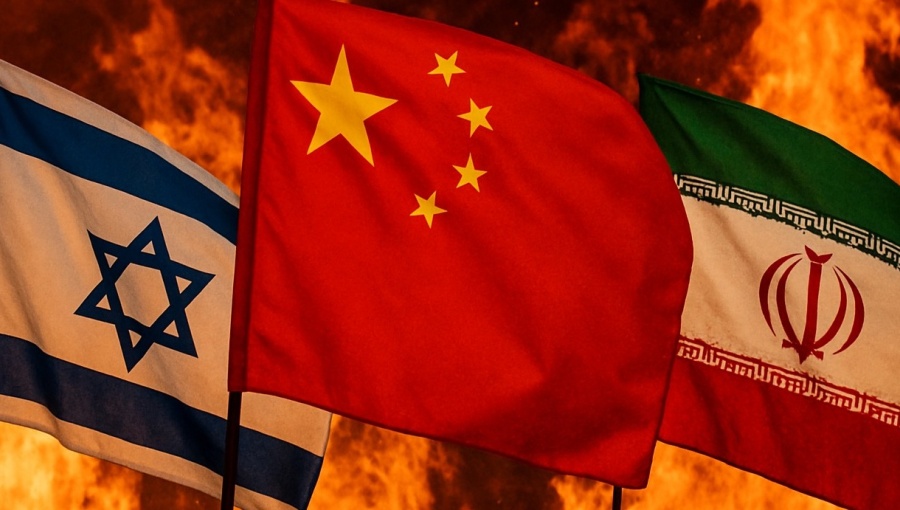
China’s delicate dance in the Iran-Israel war. / bno IntelliNews
By bno - Taipei Office June 17, 2025

As tensions between Iran and Israel threaten to escalate into a broader regional conflict, the global power with the most at stake, China, occupies a uniquely complex position – one that straddles historical loyalties, economic necessity and strategic calculation.

Beijing has long pursued a foreign policy of non-intervention in the domestic affairs of others, and multipolar diplomacy, particularly in the Middle East. But the deepening crisis between Iran and Israel has tested these principles. With major energy and infrastructure ties to Tehran, and simultaneously a growing technology and investment relationship with Israel, China finds itself in a precarious diplomatic position.

Beijing is quite literally caught between two partners now locked in open hostility.

However, recent developments suggest that Beijing may be manoeuvring quietly behind the scenes. In particular, the appearance of two flights reportedly operating between China and the eastern end of the Middle East in recent days – flagged by military tracking accounts online – has raised fresh questions about whether China is simply observing events or playing a more active role in shaping them. 

China’s ties to Iran

China and Iran have steadily expanded economic cooperation over the past two decades, with energy at the heart of the relationship. Beijing is the largest and only significant buyer of Iranian oil, often circumventing international sanctions by conducting transactions through intermediaries or ship-to-ship transfers on the open seas. Since the collapse of the Iran nuclear deal in 2018, and Washington’s imposition of maximum pressure sanctions, Chinese imports of Iranian crude have remained a lifeline for Tehran’s economy. In turn this has reinforced Iran’s role as a Chinese proxy of sorts in the region.

In 2021, China and Iran signed a sweeping 25-year cooperation agreement, pledging $400bn in investment across oil, gas, infrastructure and even the banking sectors. At the time this was hailed by Iranian leaders as evidence of the Islamic Republic’s ability to withstand Western isolation. Beijing painted it differently – as part of its wider Belt and Road ambitions.

As such, the current war between Israel and Iran threatens to disrupt these arrangements. Should the conflict damage Iran’s export capabilities either through sanctions, cyberattacks or physical strikes on its energy infrastructure, as is appearing more and more likely, China’s access to cheap oil may be jeopardised. Moreover, if Iran is pushed further into international isolation, China may find its long-term projects in the country, including railway and port developments, put at risk.

The possibility too of regime change would cause some consternation in Beijing. In dealing with a government willing to ignore Chinese aggression against its own Muslim minority in East Turkestan / Xinjiang, Beijing knows that Tehran has long-since accepted its role as subservient to China as both a financial and influential lifeline to the non-sanctioned world. Nonetheless, Beijing has so far avoided taking sides in the war.

Official statements from the Chinese Foreign Ministry have called for “calm and restraint” on all sides, and for respect for international law. At the same time, China has expressed strong support for the Palestinian cause; an irony not lost on the Uyghurs, Tibetans and other minorities routinely prevented from their own claims to a historical homeland.

China and Israel: a quiet but crucial partnership

Less visible, but no less significant, is the relationship between China and Israel. Over the past decade, the two countries have deepened cooperation in high-tech sectors, including artificial intelligence, water technology and agriculture. Chinese firms have invested in a number of Israeli start-ups and infrastructure projects, including the management of Haifa Port, an important shipping hub.

This burgeoning economic partnership has not gone unnoticed in Washington, where US officials have raised concerns about technology transfers to China and national security. In response to American pressure, Israel has recently become more cautious about Chinese investment in sensitive industries, but the two countries remain commercially entwined.

China’s balancing act is itself made more difficult by Israel’s historically close alignment to the US, Beijing’s primary geopolitical rival at a time tariffs remain a thorny issue and the question of Chinese claims over Taiwan in the Western Pacific remain unresolved.

At a time when Washington is reinforcing its own support for Israel, China’s refusal to criticise Tehran more harshly could be perceived as tacit endorsement of Iran’s position by a White House keen to play up any supposed faux-pas on the part of its economic and geopolitical rivals. This, in turn, risks fraying ties with Tel Aviv with Israel now walking a tightrope of sorts between Washington and Beijing.

Unusual flight patterns

Added to this, in recent days, online aircraft tracking communities have identified two unusual flights reportedly linking China and Iran – or at least Turkmenistan – with speculation swirling about their nature and purpose. While there has been no official confirmation of their contents or authorisation, some analysts have suggested they could be military-related, or involve technology transfers relevant to the conflict. Other sources have claimed the flights in question landed short of the Iranian border in Ashgabat – Turkmenistan.

The flights are particularly intriguing given the triangulated alliance that appears to be developing between Russia, Iran and China. All three share adversarial relations with the West, and each has a vested interest in undermining US influence across various theatres – from Ukraine to the South China Sea.

While the flights do not in themselves prove Chinese involvement in the Iran-Israel conflict, they may indicate logistical support or intelligence-sharing taking place between Beijing and Moscow, with potential ramifications for Tehran. That at least one of the flights supposedly involved a Luxembourg registered cargo aircraft and not a Chinese plane adds to the mystery.

It is worth noting too that during the recent Syrian civil war, similar unmarked flights often preceded shifts in battlefield dynamics or weapons transfers.

To this end, should it subsequently emerge that China is indeed providing indirect support to Iran via Russia’s ally Turkmenistan or Russia itself – or in some way facilitating Iranian logistics – it would mark a significant shift from Beijing’s traditionally cautious approach to Middle East conflicts. Any future claims by Beijing that it prefers to stay out of the domestic affairs of others would also be left in tatters.

More importantly, such a move would also risk drawing China into a wider geopolitical confrontation with the United States and its allies.

Implications for China

As we stand, less than a week after the first attack was launched, the Iran-Israel war presents China with both a challenge and an opportunity. On one hand, it risks undermining China’s relationships with both sides of the conflict. On the other, it allows Beijing to continue presenting itself as a stable, non-interventionist power in contrast to the perceived heavy-handedness of the West – but only if it remains at a distance. A start would be clarifying the real purpose and intent behind the recent mystery flights towards Turkmenistan and possibly on into Iran.

If the war intensifies, however, China may find its strategy of quiet engagement and economic statecraft increasingly difficult to maintain. A drawn-out conflict could force Beijing to clarify its position one way or the other, especially if oil supplies are threatened or if US allies in the Indo-Pacific begin pressing for a coordinated diplomatic response.

Ultimately, however, while Beijing may not be fuelling the conflict directly, it is certainly shaping the geopolitical context in which it unfolds. Whether through trade, energy, or deliberate but subtle strategic alignments, China remains a quiet but critical actor in a war whose consequences extend far beyond the borders of the Middle East.


Reviving Catholic Liberalism – OpEd

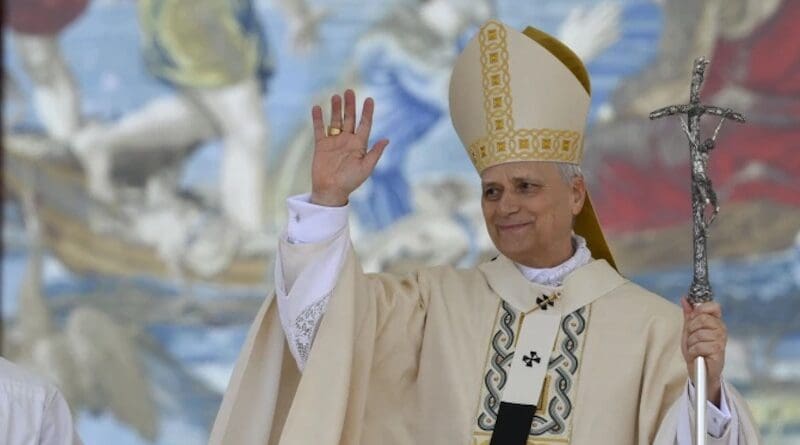
Pope Leo XIV waves during the inaugural Mass of his pontificate, held in St. Peter's Square on May 18, 2025. He stands in front of a Flemish tapestry depicting the dialogue between Jesus and Peter after the miraculous catch of fish. | Credit: Vatican Media


By 

By Brae F. Sadler


On May 18, in St. Peter’s Square, the new Pope Leo XIV called for the Catholic Church to become a model of “unity, community, and fraternity within the world.” A central task of his pontificate will be addressing the social and economic crises of our time. But behind the rhetoric lies a defining question: Will he continue the Church’s recent drift toward globalist policies or will he return to the Church’s heritage of economic liberty, subsidiarity, and natural law?

Today, Catholic Social Teaching is a house divided. One tradition—the liberal-subsidiarity tradition, led by Pope Leo XIII—draws on natural law, individual liberty, and a healthy skepticism of state power. The other—the globalist-solidarity tradition, with the support of Pope St. John Paul II and the late Pope Francis—emphasizes international coordination, regulatory governance, and a deep suspicion of free markets.

In recent decades, the latter has come to dominate Church discourse. Yet this dominance comes at a cost. The globalist-solidarity approach uses central planning to achieve outcomes that only decentralized markets can deliver. In doing so, it supports policies that are economically unsound and self-defeating. If Pope Leo XIV truly wants to confront social and economic problems, he must revive the liberal-subsidiarity tradition.

Leo XIII’s Liberal Legacy

The liberal-subsidiarity tradition is rooted in the Church’s intellectual heritage. While the Catholic Church has long engaged with social issues, Catholic Social Teaching was formally defined in 1891 with Leo XIII’s encyclical Rerum Novarum—widely considered the founding document of modern Catholic Social Teaching and an important point of reference for the Catholic liberal tradition.

In Rerum Novarum, Leo XIII defends private property as a natural right “proven to belong to individual persons.” He emphasizes that property is not only just but necessary for human flourishing, the protection of the family, and the functioning of trade. Far from treating economic liberty as a threat to justice, Leo sees it as a precondition for social order.

The encyclical also limits the role of the state. It upholds subsidiarity—the principle that matters ought to be handled by the smallest, lowest, and least centralized competent authority. Leo teaches that the family “must necessarily have rights and duties peculiar to itself, which are quite independent of the State.” Individuals and families come before the state; they are not its creatures, but its foundation.

Further, Leo affirms spontaneous order. While he acknowledges that labor disputes will inevitably arise, he doesn’t call for heavy-handed state intervention. Instead, he entrusts intermediary bodies—such as the Church, unions, and voluntary associations—with the task of resolving disputes. The state is the last resort for justice.

Murray Rothbard called Rerum Novarum “fundamentally libertarian and pro-capitalist” because it defends the institutions—private property and the rule of law—on which a free economy depends. Leo XIII was not an economist, but he was deeply influenced by thinkers such as Luigi Taparelli and Wilhelm Emmanuel von Ketteler, who were well-versed in politics and liberal thought. Through them, Leo engaged with the classical liberal tradition.

From Liberty to Central Planning

Over the last 130 years, the Church has gradually drifted from the economic insights of Rerum Novarum. Today, much of Catholic Social Teaching favors interventionism, regulatory oversight, and central planning—often while a priori dismissing the arguments of classical liberalism. At the same time, Church leaders rightly reject the horrors of socialism. But the globalist-solidarity tradition has become economically incoherent, pursuing moral goals through means that are incompatible with sound economics and ultimately self-defeating.

Unlike Leo XIII, recent popes have largely disengaged from the logic of markets. Rothbard traces this change to Pope Pius XI in 1931. In Laudato Si’, for example, Pope Francis asserts that “the environment is one of those goods that cannot be adequately safeguarded or promoted by market forces.” He refers dismissively to the idea that order can emerge from voluntary action, calling it “magical thinking.” Rather than engaging with the science of human action, Francis portrays the market as a moral failure—a view more rooted in abstraction than analysis.

This disengagement has consequences. In Laborem Exercens, Pope St. John Paul II recommends the “socialization” of industries that fail to meet social needs. Implicit in this claim is a planning assumption: that a central authority can know what a just distribution of resources looks like and how to implement it. But this ignores the Austrian insight that no planner possesses the dispersed knowledge needed to coordinate millions of individual preferences. Central planning, however supposedly moral its intent, is destined to fail economically—and eventually, politically.

Pope Francis extends John Paul’s logic to the global level. In chapter 5 of Laudato Si’, he calls for supranational regulators empowered to eliminate fossil fuels and redistribute wealth worldwide to address climate change. These proposals assume not only economic feasibility but moral authority at a planetary scale, raising serious concerns about subsidiarity, accountability, and freedom.

To be clear, neither John Paul II nor Francis explicitly endorsed socialism. But by concentrating power in centralized agencies, both risk enabling the system they condemn. Their encyclicals outline a grim economic vision—one that, despite its moral intentions, prioritizes redistribution over growth and regulation over innovation. This perspective stems from a sincere desire to uphold justice and care for the vulnerable, yet it risks embracing policies that inadvertently constrain prosperity and cooperation. Free exchange, grounded in mutual benefit, remains a powerful engine of human dignity and solidarity.

Restoring the Liberal-Catholic Tradition

As it stands, Catholic Social Teaching—under the dominance of the globalist-solidarity tradition—cannot provide the model of “unity, community, and fraternity” that Pope Leo XIV envisions. Instead, its embrace of centralization risks further dividing the world and weakening the Church’s social witness.

Yet there is reason for hope. By choosing the name Leo, the new pope has signaled a desire to follow in the footsteps of Leo XIII, the architect of Rerum Novarum. To honor that legacy and address the socio-economic crises of our time, Pope Leo XIV should return to its principles: subsidiarity, private property, voluntary association, and liberty. Only then can the Church once again become what the world so desperately needs—a moral voice grounded in the truth of human action and a champion of both human freedom and human dignity.

  • About the author: Brae Sadler is a student of economics at Grove City College originally from South Florida. He became interested in Austrian economics during his freshman year of high school listening to Dave Smith’s Part of the Problem. Over the next three years reading figures like Ludwig von Mises and Murray Rothbard shaped his intellectual growth. Additionally, economics cultivated Brae’s passion for philosophy and theology. While studying economics Brae writes, he has published articles in Grove City’s newspapers: the Collegian, Cogitare Magazine, and his own Donkeynomics (donkeynomics.substack.com) Substack.
  • Source: This article was published by the Mises Institute


MISES

The Mises Institute, founded in 1982, teaches the scholarship of Austrian economics, freedom, and peace. The liberal intellectual tradition of Ludwig von Mises (1881-1973) and Murray N. Rothbard (1926-1995) guides us. Accordingly, the Mises Institute seeks a profound and radical shift in the intellectual climate: away from statism and toward a private property order. The Mises Institute encourages critical historical research, and stands against political correctness.


Labubu’s Rise Mirrors Declining Faith In US Leadership – OpEd

Labubu (image generated by Grok)

By 

For decades, the United States has held a dominant geopolitical position, its soft power radiating through Hollywood blockbusters, Silicon Valley innovations, and democratic ideals. Yet, in recent days, a subtle but significant rebalancing has been underway. While the U.S. image faces a discernible decline, particularly among its traditional European allies, China’s popularity appears to be quietly, yet steadily, on the rise, often through avenues less conventionally associated with grand power plays.


Consider Labubu, the mischievous, sharp-toothed monster elf that has captured hearts across Asia and beyond. Designed by Hong Kong’s Kasing Lung and marketed by the Chinese powerhouse Pop Mart, Labubu isn’t a state-sponsored cultural export; it’s a phenomenon born of contemporary consumer culture and shrewd merchandising. Its surge in popularity, amplified by endorsements from K-pop stars like Blackpink’s Lisa, speaks to a burgeoning Chinese soft power that operates outside the traditional state-driven narratives. This isn’t about patriotic anthems or government-funded art exhibitions. It’s about appealing aesthetics, engaging narratives, and a burgeoning creative industry that is increasingly capable of producing globally resonant cultural products.

Labubu’s success, in essence, is a microcosm of a broader trend. Although the West often focuses on China’s economic might and geopolitical ambitions, a more nuanced understanding reveals a growing cultural footprint. Chinese social media platforms like TikTok have become global phenomena, reshaping entertainment and communication. Chinese animated series and films are gaining traction, and Chinese fashion and design are increasingly influencing global trends. Platforms like Xiaohongshu are attracting Western users, showcasing Chinese consumer culture. This rise isn’t always overt or confrontational. It’s often subtle, appealing to a younger, more globally interconnected generation that values authenticity and innovation, regardless of origin.

Beyond its immediate commercial appeal, Labubu’s triumph embodies a deeper shift.  Labubu’s global popularity, much like the acclaimed game “Black Myth: Wukong” or the animated film “Ne Zha,” is fundamentally a testament to Chinese enterprises’ long-term commitment to innovation and quality. Its success signals China’s profound transformation from merely the “world’s factory” to an emerging “global creative center,” where high-tech, high-value-added cultural products are increasingly driving its influence and export growth.

Beijing has actively supported this cultural push, seeing it as crucial for enhancing its international image. Initiatives range from promoting the Chinese language and culture to investing heavily in its cultural industry, encouraging the global export of films, dramas, and video games. Although criticisms persist regarding censorship and human rights, China’s soft power strategy is proving effective in projecting a modern, appealing image. The strategic alignment of market success with cultural messaging allows for a subtle yet pervasive spread of influence.

Contrast this with the declining image of the United States, particularly within the European Union, a region historically bound by shared democratic values and strong alliances with Washington. Recent polls paint a stark picture. A June 2025 Pew Research Center survey of 24 nations, including many in Europe, revealed a decline in the U.S. image in 15 of these nations. A significant factor cited is the return of Donald Trump to the presidency, with more than half of the respondents in 19 countries expressing a lack of confidence in his leadership. The perception of Trump as “arrogant” by 80 percent and “dangerous” by 65 percent of respondents underscores the deep reservations held by many.


This sentiment is echoed across other recent surveys. The 2025 Democracy Perception Index, surveying over 110,000 respondents across 100 countries, reported that America’s reputation has suffered a “particularly massive hit in EU countries.” This decline is directly linked, in part, to Trump’s negative comments about the EU, which have clearly left a lasting impression, labeling the bloc “horrible” and “pathetic.” The European Council on Foreign Relations (ECFR) in February 2025 corroborated this trend, finding a “newly pessimistic and transactional view of the transatlantic partnership.” Europeans are increasingly viewing the United States as a “necessary partner” rather than a true “ally,” a significant shift from the traditional understanding of the transatlantic bond.

Further highlighting this decline, a March 2025 YouGov EuroTrack survey demonstrated a slump in favorable attitudes towards the United States in several Western European countries since Trump’s re-election. Drops in favorability ranged from six to 28 percent in various countries like Sweden, Germany, and France. A survey conducted by Le Grand Continent and Cluster 17 in March 2025 across the EU’s eight largest countries and Denmark delivered perhaps the most striking finding: more than half of Europeans (51 percent) consider Trump an “enemy of Europe,” and a resounding 63 percent believe his election makes the world less safe.

Other factors also contribute to this decline in U.S. popularity. Long-term trends such as the U.S. withdrawal from the Paris Climate Accord under the Trump administration, and even the perceived lack of consistent accountability for climate action, have alienated a climate-conscious European populace. Moreover, deeply divisive domestic issues have profoundly corroded America’s international standing. These include the recent widespread protests that erupted in Los Angeles directly in response to intensified federal immigration raids as well as the ongoing controversy surrounding immigration policies that have resulted in tragic family separations at the border. These events, extensively documented and debated by international media and civil society, have acutely challenged the perception of the United States as a beacon of human rights and justice, fostering deep disillusionment and prompting a profound questioning of its moral authority on the world stage.

These figures are not merely statistical anomalies. They represent a fundamental erosion of trust and confidence. The perceived unpredictability of U.S. foreign policy, the “America First” rhetoric, and disengagement from multilateral institutions have created a vacuum that other powers, including China, are implicitly or explicitly filling. Although China’s rise is not without its own controversies and criticisms, its cultural products and economic partnerships are often perceived as less overtly political and more geared towards mutual benefit.

The lessons from Labubu and the alarming European polls are clear. Soft power is not solely built on military might or economic leverage. It is also forged in the crucible of cultural appeal, perceived reliability, and shared values. As the United States grapples with internal divisions and a shifting global perception, China is quietly cultivating a different kind of influence, one that resonates with consumer trends and cultural sensibilities. The world is becoming increasingly multipolar, and the contest for hearts and minds will be won not just through grand strategic maneuvers, but also through the subtle power of a mischievous monster elf and the perception of a reliable partner.


Jianlu Bi

Jianlu Bi is a Beijing-based award-winning journalist and current affairs commentator.His research interests include international politics and communications. He holds a doctoral degree in communication studies and a master's degree in international studies. He also writes for the SCMP, Foreign Policy In Focus, TRT World, IOL, the Citizen and others.