Saturday, June 28, 2025

Kennedy Undermines Lifesaving Vaccine Effort at Global Summit

Wednesday June, 25 2025

WASHINGTON - At today’s high-level pledging summit in Brussels, global leaders came together to support global vaccination, including Gavi’s effort to raise $9 billion to fund its 2026–2030 strategy. Over the next five years, Gavi aims to deliver 500 million childhood vaccinations, respond to deadly outbreaks, and save more than 8 million lives.

But instead of showing up in solidarity to protect millions of people, U.S. Health Secretary Robert F. Kennedy Jr., in a pre-recorded statement, announced that the United States would withhold further funding while attacking Gavi and spreading false claims about vaccine safety.

Public Citizen Global Vaccines Access Campaign Director Liza Barrie issued the following statement:

“Robert F. Kennedy Jr.’s reported decision to cut off support for Gavi is reckless and deadly. The Trump administration is turning its back on a program that has helped vaccinate more than a billion children and save over 17 million lives—while Kennedy spreads lies about science, safety and one of the world’s most effective public health efforts.The facts are clear. Gavi exists to get vaccines to children who need them most. It works with governments in lower-income countries, health workers and communities to stop deadly diseases. Because of Gavi, millions of children who would have died are alive today.

Kennedy claims that Gavi ignored science are entirely false. Gavi’s recommendations—are grounded in global evidence and reviewed by independent experts. His suggestion otherwise fuels the same disinformation that has already led to deadly measles outbreaks and the resurgence of vaccine-preventable diseases, including polio.

Gavi has publicly refuted Kennedy’s claims, reaffirming its commitment to vaccine safety and evidence-based decisions.

“This isn’t about protecting children. It’s about abandoning them. Choosing to walk away from a program that saves lives—knowing full well what the consequences will be—isn’t just reckless. It’s cruel.

“Public Citizen urges Congress to act—starting with protecting the Gavi funding already allocated in the FY25 budget, which the Trump administration is now trying to claw back through its rescissions proposal. Lawmakers must also protect Gavi funding in the FY26 budget. The United States must not walk away from global vaccine access. Not now, not ever. Turning away would be a choice to let disease spread and let children die.”


Public Citizen is a nonprofit consumer advocacy organization that champions the public interest in the halls of power. We defend democracy, resist corporate power and work to ensure that government works for the people - not for big corporations. Founded in 1971, we now have 500,000 members and supporters throughout the country.

'More cavities': RFK Jr. expects kid tooth decay from his anti-fluoride crusade

David Edwards
June 26, 2025 
RAW STORY


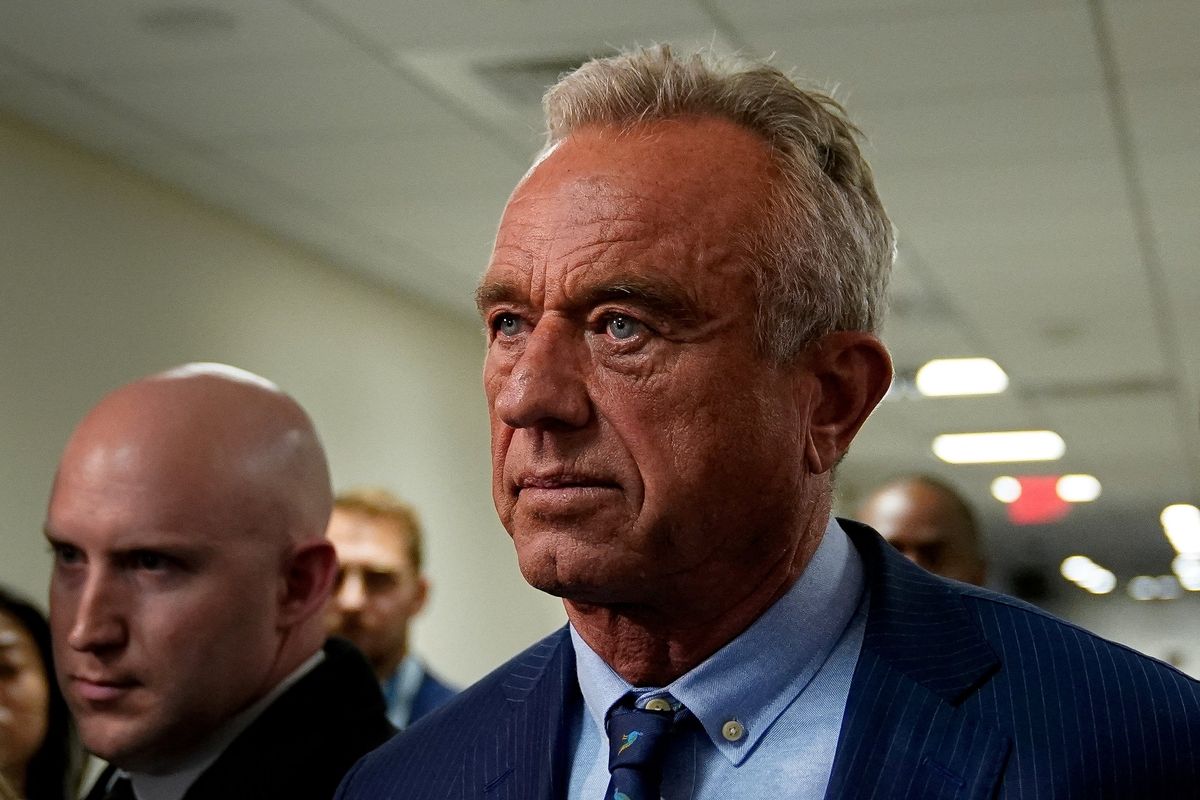
FILE PHOTO: Robert F. Kennedy Jr., U.S. President-elect Donald Trump’s nominee to run the Department of Health and Human Services, walks through Capitol Hill between meetings with senators in Washington, U.S., December 16, 2024. REUTERS/Elizabeth Frantz/File Photo

Health and Human Services Secretary Robert F. Kennedy Jr. admitted that children would likely see an uptick in cavities over his crusade to have fluoride removed from drinking water.

The admission came during a Thursday interview on Fox News with Kennedy and Oklahoma Gov. Kevin Stitt (R).

"My department of health, I'm removing the recommendation for fluoride in the water across all the municipalities," Stitt said. "So we're just kind of following [Kennedy's] lead, and we're thinking about how do we make Oklahomans healthy again."

Fox News host Harris Faulkner noted that "children in lower incomes in particular don't get those regular dental preventative type situations."

"You know, it is an issue. It's a balance," Kennedy replied. You're going to see probably slightly more cavities, although in Europe, with a ban on fluoride, they did not see an uptick in cavities."

The HHS secretary argued that fluoride was an industrial waste product that caused other negative impacts on the body.

"So even small increments of fluoride cause loss of IQ, and particularly in babies, in neonates, and in pre-birth, the mother's exposed," he insisted. "And those children are getting no benefit because they don't have teeth."

Watch the video below from Fox News or click the link here.


JOHN BIRCH SOCIETY 1959


‘Shocking’ COP30 lodging costs heap pressure on Brazil


By AFP
June 27, 2025


Steep lodging costs in the Brazil's Belem city have panicked many would-be attendees ahead of the COP30 gathering in November - Copyright AFP Carlos Fabal


Louis GENOT, avec Julien MIVIELLE à Bonn

“Belem is ready,” Brazilian officials have insisted ahead of the COP30 gathering in November — but eye-watering lodging costs in the northern city have panicked many would-be attendees.

President President Luiz Inacio Lula da Silva has personally championed the symbolic choice of holding the major UN climate conference in the Amazon.

And with months to go before the November 10-21 meeting, work is in full swing, AFP journalists witnessed recently.

But members of national delegations, civil society, and the media have been faced with a major dilemma: how to find a room at a decent price?

“I’ve never seen anything quite like the situation unfolding in Belem. The soaring accommodation prices, which mean it will now cost thousands of dollars a night for even basic rooms,” Mariana Paoli, with the NGO Christian Aid, told AFP.

The steep rates are “not just shocking, it is exclusionary,” said Paoli, a Brazilian who has attended several UN climate summits before.

“Delegates from across the Global South, particularly grassroots activists, Indigenous leaders, and civil society groups, already face immense barriers to participation… Now, they’re being priced out entirely.”

In recent months, AFP has seen hotels offering rooms at $1,200 a night. On short-term rental platform Airbnb, some rates were even higher.

With a total of 50,000 people expected to attend, Claudio Angelo of the Brazilian Climate Observatory collective warned that delegations are mulling cutting back on the number of attendees.

“Everybody’s concerned because at this point, five months to the date, everybody should have hotels and no one has,” he told AFP in Bonn, Germany, where technical negotiations have been held over the past two weeks.


– CEO rules out relocation –


Brazil is no stranger to hosting major events, particularly in Rio de Janeiro.

After the 2016 Olympic Games and last year’s G20 summit, Rio will host a summit of the BRICS group of emerging economies next month.

Some have speculated about a possible last-minute move to a large city, maybe Rio.

COP30 chief Ana Toni, while sharing concerns over the lodging, ruled out any last-minute relocation to a larger city.

“Let’s be very very clear, it’s all happening in Belem,” she told AFP in Bonn.

Toni, who also serves as Brazil’s national secretary for climate change, said that the government was aware and working on solutions.

In response to the emergency, Brazilian authorities are trying to put pressure on the hotel sector.

The National Consumer Rights Bureau (Senacon) has summoned the main hotels in Belem for an inquiry into “possible abusive pricing practices,” leading to accusations from the sector of “threats.”

A negotiator from the Alliance of Small Island States (AOSIS) said she had received assurances from the COP30 presidency that they would receive assistance with their accommodation.

“But we have not received any communication or proposal on how this might work,” she said with concern.

Several months behind schedule, an official platform offering a total of “29,000 rooms and 55,000 beds” is supposed to go online at the end of June.

Nearly half will be short-term rentals (25,000 beds), and participants will even be able to stay “on two cruise ships, with a total of 3,882 cabins and 6,000 beds.”


– ‘Under the stars’ –


Organizers have already sought to ease pressure on Belem by organizing this year’s heads of state summit before the actual COP, on November 6 and 7.

But Lula, who is seeking to position himself as a climate champion, did not hesitate to respond sarcastically to critics.

“If there are no five-star hotels, sleep in a four-star hotel. If there are no four-star hotels, sleep in a three-star hotel. And if not, sleep under the stars,” Lula said sarcastically in February during a visit to Belem.

As at last year’s UN biodiversity summit in Cali, Colombia, delegates will at least be able to enjoy an unusual option: more than 1,600 beds are available in “motels,” establishments usually reserved for romantic trysts and rooms rented by the hour.

“We are adapting our establishments to accommodate visitors for overnight stays,” said Ricardo Teixeira of the Brazilian Association of Motels for the State of Para.

Adapted, but not altered: some rooms will retain pole dancing bars, indoor pools or jacuzzis.
Heatwave across the Med sparks health and fire warnings


By AFP
June 27, 2025


Weather agencies say the risk of forest fires is increased - Copyright AFP May JAMES

Southern European countries braced Friday for a punishing weekend heatwave, with temperatures predicted to hit up to 40 degrees Celsius (104 Fahrenheit) and beyond, prompting health warnings for residents and tourists plus fears of wildfires.

The searing heat spreading across the Mediterranean from the Iberian peninsula to the Balkans and Greece comes as climate scientists warn that galloping human-induced climate change is causing more extreme weather, including longer and more intense heatwaves.

Tens of millions of people have already been sweltering in what the National Weather Service called an “extremely dangerous” heatwave across the eastern United States, including in New York and Washington, straining the power grid as people cranked up air conditioning.

Across the Atlantic in Spain, emergency medical staff readied to deal with an expected surge in heatstroke cases, particularly among vulnerable groups such as children, the elderly and people with chronic illnesses.

In neighbouring Portugal, the national meteorological agency IPMA said the heatwave would hit from Saturday, with temperatures passing 40C in the south of the country as well as in the central Tagus and the Douro valleys in the north.

Sunday will be even hotter, the agency added, and two-thirds of the country has already been put on orange alert. Temperatures are expected to hit 42C in the capital, Lisbon.

The risk of fire is at its highest inland in the northern half of Portugal, as well as on the Algarve coast popular with holidaymakers in the south.

France has been gripped by its 50th national heatwave since 1947 for more than a week now, and four regions in southern France were placed under an orange alert on Friday — the second-highest warning — as temperatures were expected to reach 35C to 38C locally, and up to 39C inland.

The Meteo France weather agency said surface sea temperatures from the Mediterranean were an “aggravating factor” that could make nights “more stifling”.

Nine additional French regions are expected to be placed on orange alert from 12:00 pm (1000 GMT) on Saturday.


– Warnings –


In Italy, the health ministry issued its top red alert for 21 cities this weekend including the capital Rome, the economic powerhouse Milan and Venice, where the rich and famous were celebrating the wedding of Amazon tycoon Jeff Bezos.

People were advised not to go outdoors between 11:00 am and 6:00 pm, and to seek shelter in air-conditioned public places.

In Venice, the temperature was set to hit 32C on Saturday, when Bezos and Lauren Sanchez are expected to be throwing a dance party starring Lady Gaga — but it will feel like around 36C due to humidity.

In Florence, which was already on red alert on Friday, the temperature is forecast to reach 37C on Saturday, while it will go up to 36C on Sunday in Rome, Milan and Naples.

Across the Adriatic, the authorities in Croatia, Bosnia and Serbia also issued health warnings, while in Albania, firefighters battled Thursday to bring at least eight blazes under control after flames destroyed dozens of homes in the south of the country last weekend.

Further south, weather agencies in Greece forecast a heatwave in the coming days with temperatures of more than 40C, including in the capital Athens.

The country has become particularly vulnerable to summer fires in recent years fuelled by strong winds, drought and high temperatures linked to climate change.

Firefighters said Friday that a forest blaze that had forced evacuations around Athens was under control but warned that scorching temperatures were keeping fire risk at a highly elevated level around the capital and on northern Aegean islands.

Fields, olive groves and some houses were ravaged by the blaze around Athens, which came after another on Greece’s fifth-largest island Chios that destroyed more than 4,000 hectares (10,000 acres) of land in four days.

burs-phz/js
MSF slams US-backed Gaza aid scheme as ‘slaughter masquerading’ as aid


By AFP
June 27, 2025


GHF's 4 food distribution sites in Gaza are under the full control of Israeli forces, surrounded by barbed wire, MSF says - Copyright AFP May JAMES

Medical charity Doctors Without Borders (MSF) called on Friday for a controversial Israel- and US-backed relief effort in Gaza to be halted, branding it “slaughter masquerading as humanitarian aid”.

The Gaza Humanitarian Foundation, which began operating last month, “is degrading Palestinians by design, forcing them to choose between starvation or risking their lives for minimal supplies”, MSF said in a statement.

It said more than 500 people have been killed in the Gaza Strip while seeking food in recent weeks.

Starting in March, Israel blocked deliveries of food and other crucial supplies into Gaza for more than two months, leading to warnings of that the entire population of the occupied Palestinian territory is at risk of famine.

The United Nations sas Israel’s occupation of the West Bank and Gaza is illegal under international law.

The densely populated Gaza Strip has been largely flattened by Israeli bombing since the October 7, 2023, attack on Israel by Hamas.

Israel began allowing food supplies to trickle in at the end of May, using GHF — backed by armed US contractors, with Israeli troops on the perimeter — to run operations.

The latter have been marred by chaotic scenes and near-daily reports of Israeli forces firing on people desperate to get food.

There are also concerns about the neutrality of GHF, officially a private group with opaque funding.

The UN and major aid groups have refused to work with it, citing concerns it serves Israeli military goals and that it violates basic humanitarian principles.

The Gaza health ministry says that since late May, nearly 550 people have been killed near aid centres while seeking scarce food supplies.

“With over 500 people killed and nearly 4,000 wounded while seeking food, this scheme is slaughter masquerading as humanitarian aid and must be immediately dismantled,” MSF said.


– Surge in gunshot wounds –


GHF has denied that fatal shootings have occurred in the immediate vicinity of its aid points.

On Tuesday, the United Nations condemned what it said was Israel’s “weaponisation of food” in Gaza and called it a war crime.

MSF said the way GHF distributes food aid supplies “forces thousands of Palestinians, who have been starved by an over 100 day-long Israeli siege, to walk long distances to reach the four distribution sites and fight for scraps of food supplies”.

“These sites hinder women, children, the elderly and people with disabilities from accessing aid, and people are killed and wounded in the chaotic process,” it said.

Aitor Zabalgogeazkoa, MSF’s emergency coordinator in Gaza, said the four sites were all under the full control of Israeli forces, surrounded by watch points and barbed wire.

“If people arrive early and approach the checkpoints, they get shot. If they arrive on time but there is an overflow and they jump over the mounds and the wires, they get shot,” he said in the statement.

“If they arrive late, they shouldn’t be there because it is an ‘evacuated zone’ — they get shot.”

MSF said that its teams in Gaza were seeing patients every day who had been killed or wounded trying to get food at one of the sites.

It pointed to “a stark increase in the number of patients with gunshot wounds”.

MSF urged “the Israeli authorities and their allies to lift the siege on food, fuel, medical and humanitarian supplies and to revert to the pre-existing principled humanitarian system coordinated by the UN”.
Trump withdraws protected status from Haitian migrants


By AFP
June 27, 2025


A child stands in a temporary shelter near the National Palace in Port-au-Prince, Haiti, on June 6, 2025 - Copyright AFP/File Clarens SIFFROY

The Trump administration said Friday it is terminating temporary legal protections that allowed more than 520,000 Haitians to live in the United States.

The United States grants Temporary Protected Status (TPS) to foreign citizens who cannot safely return home because of war, natural disasters or other “extraordinary” conditions.

The Department of Homeland Security said it was ending TPS for Haitians on September 2 and encouraged those who were living in the United States under the program to return home.

Former president Joe Biden extended TPS for Haitians before leaving office, allowing them to reside in the United States until February 2026.

But the Trump administration announced in February that it was canceling the extension. It said on Friday it was terminating TPS for Haitians altogether on September 2.

“The environmental situation in Haiti has improved enough that it is safe for Haitian citizens to return home,” DHS said.

Permitting Haitian nationals to remain temporarily in the United States is contrary to US national interest, it added.

Struck by a devastating earthquake in 2010, Haiti has suffered from political instability for decades and more recently from increasing violence by armed groups.

The US State Department currently advises Americans not to travel to Haiti “due to kidnapping, crime, civil unrest and limited heath care.”

President Donald Trump has pledged to carry out the largest deportation campaign in US history and curb immigration, mainly from Latin American nations.

Trump ordered a review of the TPS program on his return to the White House and his administration has revoked TPS protections for Afghans and Venezuelans in addition to Haitians.

During his campaign Trump made baseless claims that an Ohio city had seen a recent influx of Haitian migrants who were stealing and eating residents’ cats and dogs.

A UN human rights expert called on the United States and other nations in March not to expel Haitians back to their violence-plagued country.

William O’Neill, a UN-designated expert on human rights in Haiti, said deporting people back there would be unsafe.

“Violent criminal groups continue to extend and consolidate their hold beyond the capital,” O’Neill said.

“They kill, rape, terrorize, set fire to homes, orphanages, schools, hospitals, places of worship, recruit children and infiltrate all spheres of society.


Drilling for water in Venezuela’s parched oil town


By AFP
June 28, 2025


To avoid forking out huge sums of money on water, many families and businesses have taken to digging a well, sometimes without proper authorizations - Copyright AFP Alejandro Paredes

Gustavo OCANDO

In Venezuela’s oil capital of Maracaibo, a drilling frenzy has led to dozens of new wells — but the valuable liquid being pumped out is just water, not petroleum.

In a symbol of the woes of Venezuela’s crumbling economy, the once flourishing oil town of 2 million people is parched.

Experts blame the nationwide shortage of drinking water on corruption and years of underinvestment and mismanagement by national and local governments, resulting in frequent water cuts.

The corroding infrastructure has led to schools, homes, businesses, churches and health centers all digging their own wells — at a huge expense.

A private well costs between $1,000 and $6,000, a fortune in the sanctions-hit Caribbean country where the minimum monthly wage is around $200.

As a result, homes that come with a ready-made well and generator — Venezuelans also live with recurring power cuts — sell for a premium.

While water rationing has been in place in Venezuelan cities for years, the situation in Maracaibo has become critical, as pumping stations break down, old pipes leak and reservoirs run dry.


– ‘It’s a blessing’ –


No water came out of the taps in certain parts of the city for over a month at the start of 2025.

Manuel Palmar and six other families in the lower-middle-class neighborhood of Ziruma saw the writing on the wall four years ago.

They each paid $2,500 to build a 12-meter-deep (40-foot) well, which can store up to about 80,000 liters (21,000 gallons) of spring water each week.

Now when Palmar turns on the tap, water gushes out for free.

The water is not fit for drinking due to its high salinity — saltwater from the Caribbean Sea seeps into Lake Maracaibo, a coastal lake used as a freshwater source — but “it’s perfect for washing clothes and flushing toilets,” he explained.

“It’s a blessing!” the 34-year-old accountant said.

There’s a solution of sorts for every budget.

Some residents fill 200-liter drums at official filling stations or communal taps for $2-$3.

Others order a water truck to fill their building’s tank for between $40 and $60.

Some even recycle the water produced by the tropical city’s ubiquitous air conditioners or collect rainwater.

But those are all quick fixes.


– Brackish drinking water –


Over the past six years, more and more residents have begun digging wells to guarantee their long-term supply for the future.

Gabriel Delgado has built about 20 wells in Maracaibo, including at a heart disease clinic and four private schools.

He also built one at his mother-in-law’s home: a gray cement cylinder, one and a half meters in diameter, buried under metal sheeting and rocks.

Cobwebs dangle just above the water level, but as soon as he activates the pump, water pours forth.

It’s crystal clear, unlike the yellowish liquid that flows from the city’s taps during the rainy season, and Delgado eagerly sips it.

Venezuelans must receive authorization from health and environmental authorities before drilling a well, and they are required to provide water samples for testing to ensure it is fit for consumption once it’s built.

But not everyone bothers.

Javier Otero, head of Maracaibo’s municipal water department, told AFP that he had come across shallow artisanal wells built near sewers or polluted ravines.

“Some people drink water that is not potable, that is brackish,” he told AFP.

The municipality has built seven wells to supply Maracaibo’s poorer neighborhoods.
Green bonds offer hope, and risk, in Africa’s climate fight


By AFP
June 27, 2025


Africa only accounts for a small percentage of the global green bond market - Copyright AFP Richard A. Brooks


Leslie FAUVEL

It only took two days for Nigeria to raise $59 million through green bonds — part of a funding drive for climate and environmental projects in a nation still hooked on oil.

Africa remains a small player in the green bond market, and the debt instrument is underused — but it is becoming a fast-growing source of funding for the world’s poorest continent, which is at the forefront of climate change.

Green bonds are similar to sovereign bonds: Investors are paid interest on what is essentially a loan to the government, but in this case the money funds environmentally friendly projects.

But the continent’s investment risk profile means that countries pay a high interest rate to borrow money.

Nigeria is paying 19-percent interest on the green bonds it issued earlier in June. By comparison, France is paying three-percent interest on its latest green bonds.

Nigeria’s recent fundraising round is slated to put money into a slew of renewable energy, eco-friendly housing, conservation and infrastructure projects.

“Nigeria is a continental leader in the African green bond market,” Lagos-based law firm Udo Udoma & Belo-Osagie told AFP in a note.

“However, to unlock the full potential of green bonds, especially in Africa, we need stronger regulatory frameworks, better project pipelines, capacity-building for issuers and enhanced investor confidence.”

– Green bonds on the rise –

The continent accounted for only about $5 billion of the 2.2 trillion global green bond market in 2023, according to data from the Africa Policy Research Institute.

But that came on the back of a 125 percent increase in issuances that year and “significant growth” in the market, it said.

Nigeria was the first African state to issue sovereign green bonds, selling $30 million in 2017 and then another $41 million in 2019.

The west African nation was following an example set by Johannesburg in 2014, when the South African municipality paved the way on the continent by issuing nearly $140 million in green bonds to investors.

Since then, Kenyan developer Acorn Holdings issued east Africa’s first green bonds in 2019, raising more than $40 million to finance what it called environmentally friendly student housing.

Tanzania’s CRDB Bank launched its first green bonds in 2023, raising $300 million for financing renewable energy as well as infrastructure and water supply projects.

The biggest coup came last year in Ivory Coast, where $1.5 billion was raised.

Yet the continent remains underfinanced, with Nairobi-based nonprofit FSD Africa blaming “unstable macroeconomic conditions,” a risky political and business environment and “a shortage of bankable green projects”.

Currency depreciation and high inflation also create risks for investors. In response, governments have to offer “a risk premium to attract investors.”

China and the United States, the world’s two biggest polluters, dominate the green bond market as they seek ways to fund their energy transitions.

Their leadership is not surprising “given that they are carbon-intensive economies who have contributed more in the global climate crisis,” said Alex Oche, an environmental law expert at Nigeria’s Institute for Oil, Gas, Environment, Energy and Sustainable Development.

– Failed projects, ‘greenwashing’ –

Africa is responsible for just roughly four percent of global emissions that contribute to climate change.

Yet its poorer countries remain some of the least prepared to deal with the fallout of successive crises, from erratic rainfall to shifting fishing stocks, linked to rising global temperatures.

“The future of green bonds in Africa and globally is promising, but it will depend heavily on credibility, innovation and inclusive growth,” said law firm Udo Udoma & Belo-Osagie.

Beyond an influx of cash, a better regulatory framework is also needed, experts said.

Razaq Fatai, a researcher for Nigerian consulting firm Vestance, studied previous projects financed by green bonds and warned that several appeared to resemble “greenwashing” — including a reforestation project in Oyo state where “the community was not involved” in the planning.

“After a couple of years, most of the trees were dying,” he said.

“If you continue to do that, continue to spend money like that, you just end up just wasting public resources, and then you have to pay interest on those debts that we encourage.”
Op-Ed: Canada vs U.S. — U.S. stops trade negotiations over petty 3% digital services tax


By Paul Wallis
June 28, 2025
DIGITAL JOURNAL


Photo by Jason Hafso on Unsplash

It’s anyone’s guess how a 3% tax on digital services turns out to be a deal breaker for all trade negotiations between the U.S. and Canada.

Trump has issued yet another tirade about “attacking our Country”. This is stock phraseology, and it’s getting ancient. It’s his usual one-way rhetoric with appalling capitalizations of words that don’t need capitalizing.

3% of anything is an attack on America? How? Canada is being nice about it, as usual. It should be 15%, the benchmark for this type of tax.

Just a few points:

This tax is peanuts. He’s blocking trade talks worth much more for a few bucks?

This tax is incurred in Canada only.

He can’t stop Canada from imposing a tax anyway.

Canadian tax has absolutely nothing to do with the U.S.

The tech media sector is famous for ducking tax and often paying no tax at all worldwide for decades.

It’s terrible trade policy.

It’s lousy foreign relations.

Trump’s “King of the World” approach never works anyway.

He insists on issuing edicts to other countries, and those countries don’t like it.

Whatever he demands doesn’t happen. It just uses up a lot of media space.

Far more questionable is one glaring fact. Big Tech has received a lot of quite unnecessary favors from Trump. One of those favors is in the “Big Beautiful Bill” aka ready-made budgetary catastrophe. Federal revenue will be totally trashed by this idiotic bill, and all U.S. government spending will be severely compromised.

For example – The bill prohibits U.S. states from regulating AI for 10 years. This is effectively giving Big Tech a blank check for a decade with no compliance issues.

Simultaneously, he’s complaining about other countries raising their own revenue while destroying his own revenue base.

Trump is also accusing Canada of “copying the EU,” which has been far less patient with Trump edicts since 2016. Trump’s entire first term had no real effect on the EU, for all the bluster.

That’s likely to be the pattern for the future. Other countries will adopt the same perspective. Trump’s constant attacks against Canada and other countries will backfire badly. From “annexation” to “51st state,” he’s guaranteed failure in any negotiation with Canada.

The rest of the world has more than a few problems with American overreach, too. China, Australia, Japan, India, the EU, and others don’t have to listen to this drivel.

The U.S. could progressively get bypassed as new trade agreements and much cheaper alternatives emerge. That could have very negative long-term consequences.

The good news is that Canada can ignore this babble for a while.

__________________________________________________

Disclaimer
The opinions expressed in this Op-Ed are those of the author. They do not purport to reflect the opinions or views of the Digital Journal or its members.

Trump Shoves Canada Out in the Cold in New Trade Freeze


\
Trump says he’s ending trade talks with Canada over its 'egregious Tax' on technology firms

Farrah Tomazin
Fri, June 27, 2025 

Donald Trump has reignited a fresh trade war with Canada after it imposed a digital service tax on American tech firms.

Less than two weeks after his G7 love-in with Prime Minister Mark Carney and other world leaders, Trump announced on Friday that he was immediately “terminating ALL discussions on Trade with Canada” and accused the country of a “blatant attack” on the U.S.

He added that he would announce new tariffs against Canada within the next week.


Canada's Prime Minister Mark Carney and U.S. President Donald Trump leave after a family photo session during the G7 Summit. / Suzanne Plunkett / REUTERS

“We have just been informed that Canada, a very difficult Country to TRADE with … has just announced that they are putting a Digital Services Tax on our American Technology Companies, which is a direct and blatant attack on our Country,” Trump said in a Truth Social post.


“They are obviously copying the European Union, which has done the same thing. Based on this egregious Tax, we are hereby terminating ALL discussions on Trade with Canada, effective immediately.

“We will let Canada know the Tariff that they will be paying to do business with the United States of America within the next seven-day period. Thank you for your attention to this matter!”

The president’s declaration threatens America’s trade relationship with its northern ally and a key global trading partner.

But questions remain as to whether Trump will go through with the plan, given his tendency to backtrack on threats, which has earned him the nickname “TACO”: Trump Always Chickens Out.

In March, for example, after talking tough on trade, Trump granted a one-month exemption on new tariffs impacting goods from Mexico and Canada for U.S. automakers.

He also postponed 25% tariffs on many imports from Mexico and some imports from Canada for one month, and lowered the tariff rate on potash provided the goods were compliant with the United States-Mexico-Canada Agreement.

In May, Canadian Prime Minister Mark Carney met with Donald Trump at the White House to tell the president Canada

The Daily Beast has reached out to Carney’s office for a response to the latest salvo.

It comes after the Canadian Prime Minister privately courted Trump in the weeks leading up to the G7 summit, calling and texting Trump and his allies to ease past tensions between the two countries.

Those tensions ignited earlier this year, when Trump repeatedly called for Canada to become America’s 51st state.


“It’s not for sale,” a defiant Carney told Trump during an Oval Office meeting in May. “Won’t be for sale, ever.”

Canada’s Digital Services Tax imposes a 3% tax on large foreign and domestic digital companies that make over $20 million (Canadian dollars) in revenue.

While the president said he had just been informed of the tax, it received royal assent in Canada on June 20, to take effect on June 28.

Trump’s decision to suspend the trade talks has been criticized by some.

“This is pure stupidity,” said Nevada Democrat Congressman Steven Horsford.

Trump Cuts Off Trade Talks With Canada Over Digital Services Tax

Sean Burch
Fri, June 27, 2025 


President Donald Trump on Friday said he was “terminating ALL discussions on Trade” with Canada over the country’s new digital services tax that aims to collect billions of dollars from American tech giants like Meta and Amazon, starting on Monday.

“We have just been informed that Canada, a very difficult Country to TRADE with, including the fact that they have charged our Farmers as much as 400% Tariffs, for years, on Dairy Products, has just announced that they are putting a Digital Services Tax on our American Technology Companies, which is a direct and blatant attack on our Country,” Trump posted on Truth Social.

The president then said he was canceling all trade discussions with America’s northern neighbor due to the “egregious Tax.”

He added “We will let Canada know the Tariff that they will be paying to do business with the United States of America within the next seven day period,” before adding his trademark sign-off, “Thank you for your attention to this matter!”

Canada’s DST is a 3% tax on large tech companies with more than about $800 million in annual revenue. It targets companies involved in social media services and online advertising, which puts tech giants like Meta, the parent company of Facebook and Instagram, Amazon, and Google-parent Alphabet on the hook for payments.

The first tax payment is due on Monday, and is retroactive to sales made since the start of 2022. The Wall Street Journal estimated that initial payment would be around $3 billion for the collective U.S. firms being taxed.

Upon the president’s post on Friday, Canadian Prime Minister Mark Carney’s office shared a brief response.

“The Canadian government will continue to engage in these complex negotiations with the United States in the best interests of Canadian workers and businesses,” his office said.

The post Trump Cuts Off Trade Talks With Canada Over Digital Services Tax appeared first on TheWrap.


Trump says he is ending Canada trade talks amid tech tax dispute

Dominic Rushe in New York
THE GUARDIAN
Fri, June 27, 2025 


Trump at the White House on Thursday.Photograph: Yuri Gripas/EPA


Donald Trump has announced he is ending trade talks with Canada, one of its largest trading partners, accusing it of imposing unfair taxes on US technology companies in a “direct and blatant attack on our country”.

The news came hours after the US had announced a breakthrough in talks with China over rare-earth shipments into America, and announcements from top officials that the US would continue trade negotiations beyond a 9 July deadline set by Trump.

Signs of a cooling in the trade war sent US stock markets to new highs.

The US has been negotiating a trade deal with Canada, one of its top two global trading partners, for months. Mark Carney, Canada’s prime minister, met Trump at the G7 summit of world leaders in Alberta earlier this month.

Carney announced that Trump had agreed to “pursue negotiations toward a deal within the coming 30 days”.

But talks appear to have foundered over Canada’s decision to impose a digital services tax on US technology companies. First payments on the tax are due on Monday and will cost US tech companies, including Alphabet, Amazon and Meta, an estimated $3bn.

Trump wrote on Truth Social: “We have just been informed that Canada, a very difficult Country to TRADE with, including the fact that they have charged our Farmers as much as 400% Tariffs, for years, on Dairy Products, has just announced that they are putting a Digital Services Tax on our American Technology Companies, which is a direct and blatant attack on our Country.

“They are obviously copying the European Union, which has done the same thing, and is currently under discussion with us, also. Based on this egregious Tax, we are hereby terminating ALL discussions on Trade with Canada, effective immediately. We will let Canada know the Tariff that they will be paying to do business with the United States of America within the next seven day period.

“Thank you for your attention to this matter!’


Trump is ending trade talks with Canada


Elisabeth Buchwald, CNN
Fri, June 27, 2025 


Cargo containers are stacked at the Centerm container terminal, in Vancouver, Canada, on June 5. Trump said in a Truth Social post Friday he was terminating trade talks with America's northern neighbor. - Liang Sen/Xinhua/Getty Images
Yahoo is using AI to generate takeaways from this article. This means the info may not always match what's in the article. Reporting mistakes helps us improve the experience.Generate Key Takeaways


President Donald Trump said Friday he has put an end to trade talks with Canada and will soon announce a new tariff rate for that country, he said in a Truth Social post on Friday.

The decision to end negotiations, which have been ongoing for several months, came after Canada announced a digital service tax, Trump said, calling it “a direct and blatant attack on our Country.”

“Based on this egregious Tax, we are hereby terminating ALL discussions on Trade with Canada, effective immediately. We will let Canada know the Tariff that they will be paying to do business with the United States of America within the next seven day period,” he said.

Trump has taken particular issue with DSTs throughout trade negotiations with other countries, commonly referring to them as “non-tariff trade barriers.” Canada has a new DST that is set to take effect on Monday that will be retroactive to 2022.

Digital services taxes are a way for countries to tax online services, in contrast to taxes on physical products. Countries with these taxes can collect revenue from large companies that operate online — even if the business is unprofitable. American firms, especially Big Tech companies such as Meta, Apple, Google, Amazon and Microsoft, are disproportionately affected by DSTs, according to a report published last year by the nonpartisan Congressional Research Service.

Prime Minister Mark Carney said on Friday he wants to continue negotiating with the US.

“We’ll continue to conduct these complex negotiations in the best interest of Canadians. It’s a negotiation,” Carney said to reporters.

“We knew (the tax) was coming. We hoped they wouldn’t do it,” Treasury Secretary Scott Bessent said Friday on CNBC.

“We think it’s patently unfair to do it retroactive. This is something from the Trudeau years, so we were hoping, as a sign of goodwill, that the new Carney administration would at least put a break on that during the trade talks. They seem not to have,” Bessent added. If the Canadian government moves forward with the tax, Bessent said Trump is prepared to impose higher tariffs across all Canadian goods, without specifying a rate.

Canada is the top buyer of American goods, importing $349 billion worth last year, according to Department of Commerce data. Meanwhile, Canada shipped $413 billion worth of goods to the US last year, the third-highest source of foreign goods.

Levying higher tariffs on Canada would likely cause the country to retaliate by imposing higher tariffs on American goods. That would take a toll on both countries’ economies.

Prime Minister Mark Carney’s office told CNN the Canadian government is considering its response.

In a social media post, Pierre Poilievre, the leader of Canada’s Conservative Party, wrote that he hopes both countries can return to the negotiating table.

“Disappointed that trade talks have halted. Hopefully they resume quickly,” he wrote.

Several Canadian businesses and groups CNN has spoken to have been pushing the government not to move forward with the tax, fearing they could cause trade tensions to escalate between the US.

“For many years, the Business Council of Canada has warned that the implementation of a unilateral digital services tax could risk undermining Canada’s economic relationship with its most important trading partner, the United States,” Goldy Hyder, president and CEO of the Business Council of Canada, said in a statement to CNN on Friday. “That unfortunate development has now come to pass.”

“In an effort to get trade negotiations back on track, Canada should put forward an immediate proposal to eliminate the DST in exchange for an elimination of tariffs from the United States.”

The Canadian Chamber of Commerce echoed those sentiments.

“Our position on the Digital Services Tax has been consistent, but primarily for the reason that it’s self-defeating in nature. That said, it’s a pivotal time for Canada-U.S. relations,” Candace Laing, president and CEO of the Canadian Chamber of Commerce, said in a statement to CNN.

“The tone and tenor of talks has improved in recent months, and we hope to see progress continue. We respect that Team Canada is conducting these negotiations at the table, and we need to give them the space to navigate.”

At the start of his second term, Trump threatened to impose a 25% tariff across all Canadian exports, with rates going even higher for specific products.

However, as it stands, most Canadian goods have been exempt from those 25% tariffs, as long as they comply with the United States-Mexico-Canada Agreement he negotiated in his first term.

The biggest exceptions, with some fine print, are the 25% tariffs on all foreign cars, car parts, steel and aluminum. Trump later doubled the tariff on all steel and aluminum imports to 50%. Goods coming from Canada that were not USMCA-compliant have faced a combined 50% tariff rate.

In response to those auto tariffs, Canada levied a 25% tariff on US-made vehicles that aren’t compliant with USMCA. Canada also retaliated against Trump’s initial 25% steel and aluminum tariffs by rolling out a 25% tariff on roughly $43 billion worth of US goods, including whiskey, sporting gear and household appliances.

Dozens of other countries could soon face higher tariffs as a July 9 deadline looms for “reciprocal” tariffs announced in April to resume unless the impacted countries ink trade deals with the United States. It’s unclear if Trump will end up extending that deadline further and where tariff rates could end up. Several European Union countries also have DSTs, however, Bessent said on Friday, “We’re in active discussions with them to take those down.”

Stocks closed higher Friday despite Trump’s latest tariff threat. The S&P 500 and the tech-heavy Nasdaq, which had dipped into the red after his post, both gained 0.52% to close at record highs. The Dow gained 432 points, or 1%.

This story has been updated with additional context and developments.

CNN’s Paula Newton, Max Saltman, Matt Egan and John Towfighi contributed reporting.


Trump Says He’s Ending Canada Trade Talks Over Its 3% Digital Services and Streaming Tax: ‘Blatant Attack on Our Country’


Todd Spangler
Fri, June 27, 2025 


President Trump announced Friday that the U.S. is cutting off trade talks with Canada, citing the country’s digital services tax, which is set to go into effect next week.

Canada’s 3% digital services tax has been in place since last year but the first payments are due from domestic and foreign companies beginning on Monday, June 30. The tax will require affected companies, predominantly big U.S. technology firms, to pay up to $3 billion to the Canadian government, including retroactive charges dating back to 2022, according to the Washington, D.C.-based Computer & Communications Industry Association trade group.

“We have just been informed that Canada, a very difficult Country to TRADE with… has just announced that they are putting a Digital Services Tax on our American Technology Companies, which is a direct and blatant attack on our Country,” Trump wrote Friday in a post on Truth Social. “They are obviously copying the European Union, which has done the same thing, and is currently under discussion with us, also.”

Trump continued, “Based on this egregious Tax, we are hereby terminating ALL discussions on Trade with Canada, effective immediately. We will let Canada know the Tariff that they will be paying to do business with the United States of America within the next seven day period. Thank you for your attention to this matter!”

Trump earlier this year imposed a 25% tariff on Canadian goods, and higher levies on certain specific categories of products — and his comment Friday suggested that he is looking at imposing an even higher tariff rate on the country. In 2024, U.S. goods exports to Canada were $349.4 billion, down 1.4% from the year prior, according to the office of the U.S. trade representative.


Argentina

Lawfare and proscription

Cristina Kirchner; Socialist,  Political Prisoner 

JUNE 25, 2025

From Argentina to the UK, the rule of law and democracy are being seriously compromised, as the conviction and sentencing of Cristina Kirchner shows. Martina Rodriguez reports.

On Wednesday 18th June, former twice President and Vice President of Argentina, Cristina Fernandez de Kirchner (CFK), was sentenced to six years of house arrest. Yet she was found innocent of corruption charges and the mainstream anglophone media is not talking about it. I found only a handful of articles in English on Cristina’s imprisonment but none mentioned the irregularities of the case, the unjust sentencing, or what she was actually convicted of. This is a case of proscription, so that Cristina, Peronism, and any political alternative to the neoliberal agenda are removed from the opposition. 

As I began writing this, the marches in support of Cristina Kirchner’s release were among the largest and most politically diverse crowds I have seen in years. Spread across the entire country, though mostly concentrated in Buenos Aires, it was estimated that one million people have taken to the streets. The ‘International Network Argentina is Not for Sale’, made up of grassroots groups and assemblies of Argentines in the diaspora from cities all around the world—including Barcelona, Berlin, London, Madrid, Málaga, Paris, Lisbon, Toulouse, Rio de Janeiro, Rome, Brussels, and more— also mobilised against the authoritarian regimes that attack those who dare dream of a world with social justice.

Given the state of the world is heartrending, it may seem inconsequential for people in the UK to follow the specific court case of a politician in Argentina, who is no longer in power. The ongoing genocide of the Palestinian people, the vile anti-migrant rhetoric and public policies from the US to the UK, the resurgence of fascist and far-right movements in Europe are just some of the most urgent crises we face. Across the globe, democracy and the rule of law face countless threats, but above all, it is the people’s freedom to live with dignity that is under attack.

What is happening in Argentina is neither disconnected nor isolated from the broader issues mentioned above, particularly, how lawfare and proscription, shaped by para-state global powers, became a worldwide recipe to squash political dissent, and free speech. We have seen it, time and time again. Recently, Brazil saw the unfair imprisonment of Lula and later corruption convictions annulled. Or, in the UK, the Labour Government’s intentions to proscribe activist group Palestine Action by attempting to make it illegal to support them, is another example. 

I wanted to break down Cristina’s case because, even though it is complex, it’s essential to contextualise it so that we can unveil the strings that have been pulling this off. 

The court case

In 2022 I was already ranting on former-Twitter at articles at the time titled “Cristina Kirchner sentenced for giving public contracts to her friends”. The world failed to see this case for what it actually is: the corruption of the economic, judicial and media powers of my country, and many others. I was also warning this could be the endgame: banning CFK from getting into power again. 

Cristina was accused of running a corruption scheme with businessman Lázaro Báez, supposedly funnelling public money through overpriced roadworks in the province of Santa Cruz between 2003 and 2015. The prosecutors claim CFK and her late husband, former President Néstor Kirchner, favoured Báez and helped him win contracts illegally — enriching him and allegedly themselves. But this case is seriously riddled with legal inconsistencies and political, judicial and media corruption. Despite its legal framing, this case is fundamentally political.

For friends, comrades, and people with a degree of intellectual honesty, it should be really important to know that even though in 2022 Cristina was charged with “fraudulent administration”, it is the Cabinet Office Minister who manages the budget, not the President— and no Cabinet Office Minister has been prosecuted. Legally, fraudulent administration does not apply here, as the chain of responsibility stops before it reaches CFK. But more importantly, in 2023, she was acquitted of said corruption charges, only to face a new conviction in 2025. Why now? Because she announced her candidacy in local elections. And the ultimate goal was for the conviction to serve as a lifetime ban on serving any roles in public office.

Prior to this sentence, the defence and the evidence had already shown that:

  • Everything followed legal and constitutional procedures. The budgets were approved by Congress. Funds were allocated legally and transparently.
  • There was no interference from the presidency. Witnesses — even those with no political loyalty to CFK — testified that there were no irregular orders from the top.
  • There was no proof of overpricing or incomplete work. The work was done. No money was paid for unfinished projects. And the one expert assessment allowed by the court found no fraud.
  • Any personal or commercial links were legal. Business relationships (for example, property rentals) were previously investigated and cleared by courts.
  • The accusation was based on narrative, not evidence. The prosecution relied on cherry-picked texts and speculation, while ignoring key witnesses and procedures.

Here is where it gets wildly dangerous. In the first instance of 2022, a series of leaked WhatsApp messages revealed that the very judges and prosecutors involved in CFK’s conviction had just returned from a cosy retreat in Lago Escondido — the private estate of Joe Lewis, a British billionaire which is literally fenced off access to a national lake. Among the attendees were: 

  • Judge Julián Ercolini, who helped sentence CFK and also let off our very own Rupert Murdoch media mogul Héctor Magnetto (more on him shortly).
  • Prosecutor Juan Mahiques, former President Mauricio Macri’s ally, who dismissed a land-grab case against…  Joe Lewis.
  • Judge Pablo Cayssials, involved in blocking the Media Law aimed at breaking up media monopolies.
  • Officials from the Buenos Aires government, tied to Macri’s circle — including Marcelo D’Alessandro, who oversaw security on the day of the assassination attempt on CFK.
  • A former intelligence agent.

And how did they get there? On a private jet, paid for by Grupo Clarín, Argentina’s largest and most powerful media group directed by… Hector Magneto. Waiting at the airport? Magnetto’s people — Pablo Casey and Jorge Rendo — there to welcome the lads and roll out the red carpet. They all organised this junket in a WhatsApp group — which also included messages threatening public officials who found out about the trip, planning media smears, and generally bragging about how untouchable they are. 

During the second instance in court we find:

  • Judge Leopoldo Bruglia, appointed arbitrarily, without open competition, by Macri, and kept in place by the Supreme Court.

At the Court of Cassation:

  • Judge Mariano Borinsky, who met with Macri sixteen times at the presidential residence in Olivos.
  • Judge Gustavo Hornos, who met with Macri six times, between the Olivos residence and the Casa Rosada.
  • Prosecutor Mario Villar, appointed by Macri.

At the Oral Trial:

  • Judge Rodrigo Giménez Uriburu, who played football at Macri’s private residence with Prosecutor Luciani.
  • Prosecutor Diego Luciani, who played football at Macri’s residence with Judge Giménez Uriburu.

At the Supreme Court:

  • Horacio Rosatti, who agreed to violate the Constitution by accepting an appointment by presidential decree from Macri.
  • Carlos Rosenkrantz, who also accepted an unconstitutional appointment by Macri, and continues to rule on cases involving his former clients.

Ricardo Lorenzetti, the puppet master of lawfare.

After reading this, how can any single person believe Cristina Kirchner was subjected to a fair and objective trial? To cite journalist Ari Lijalad: “it is truly impossible to believe that this case could be considered part of a rule-of-law framework.”

What is the case really about?

So what is this case about then? It is about persecuting Cristina herself. It is about persecuting Peronism—once again. They have tried to eradicate it many times in the past: with coups and dictatorships, by imprisoning Perón, bombing Buenos Aires in 1955, torturing, raping, disappearing, murdering, stealing babies in the last civic-military dictatorship. 

It is about who actually owns the country. It is about discipline—over our bodies, our ideas, our land, our nature. It is about more and more control, and more and more extraction: of wealth, of labour, of natural resources—for more and more concentration of money in fewer and fewer hands. It is about taking billions in debt, while simultaneously making more cuts. It is about giving our country away to the US and multinational corporations, so that they can freely extract resources while precarity and job insecurity increase. 

It is also about political dissent—it is about any and all opposition to neoliberalism, capitalism, colonialism, imperialism, patriarchy and white supremacy. For the first time since I can remember, Trotskyists, anarchists, socialists, communists and citizens in general have united against the arbitrariness of this sentence—against this subjugation of democracy and political freedoms. All parties and organisations on the left offered Cristina their support by going to her house, and immediately calling for strikes and roadblocks. Regardless of internal or external divisions of all parties on the left, it was a clear and loud message: we cannot allow lawfare to reshape the global political and social landscape in an increasingly restrictive and regressive direction. 

This sentence is categorically not about fighting corruption—not in the slightest. If it were, they would have tried to investigate Mauricio Macri’s 215 open cases, or his involvement in the Panama Papers. They would have pursued the appalling scandal involving President Javier Milei’s promotion of the meme coin Libra, which scammed hundreds of people out of 100 million dollars—a scandal that everyone seems to have forgotten.

Under Milei’s presidency, there is a constant attack on pensioners who demonstrate every Wednesday outside Congress and are beaten. The repression nearly killed a journalist just a few months ago. It also went unnoticed, but Milei granted the Argentine Federal Police sweeping powers to detain and search individuals without a court order based on social media activity, appearance, or presence at public demonstrations. What kind of freedom can we talk about, when any form of political dissent is met with violence coordinated from the state, the judicial system, the mainstream media and the financial sectors? 

CFK has asked us all as Argentinean citizens to meet the challenge, to be united and to have serious political discussions, despite our disagreements, about how to pose a threat and meaningful alternative to those powers.

Martina Rodriguez is an Argentinian living in London. She is currently doing an MA in Gender, Media and Culture at Goldsmiths, and works as a Community Organiser at IRMO. She co-founded Ni Una Menos UK, and is part of the Argentina Solidarity Campaign and Feminist Assembly of Latin Americans.

Image: Cristina Fernandez de Kirchner https://picryl.com/media/cristina-fernandez-de-kirchner-2020-9373ee Source: gob.ar Licene: Public Domain Mark 1.0 Universal PDM 1.0 Deed

Argentina: ITUC condemns political sentence against Cristina Kirchner

“This is political repression, which marks another step in the billionaire backed coup against democracy. The use of the courts to remove political opponents is a dangerous tactic that threatens workers’ rights and democratic institutions.”
Luc Triangle, ITUC General Secretary

The International Trade Union Confederation (ITUC) has denounced the ratification of a prison sentence against former Argentine President Cristina Fernández de Kirchner, describing it as a political act that undermines democracy and the rule of law.

Her sentencing comes amid a broader anti-democratic context in Argentina, where President Javier Milei’s government has increasingly concentrated power and attacked dissent.

Argentina’s score in the 2025 ITUC Global Rights Index declined to 4, indicating systematic violations of workers’ rights, including limitations on the right to strike, collective bargaining and access to justice.

ITUC General Secretary Luc Triangle said: “This is political repression, which marks another step in the billionaire backed coup against democracy. The use of the courts to remove political opponents is a dangerous tactic that threatens workers’ rights and democratic institutions.”

The ITUC expressed concern at the growing trend of criminalising trade unions, progressive leaders and social movements through politicised judicial action. It reaffirmed its support for its affiliates in Argentina and for all those resisting this erosion of democratic space.



Brexit has blown £40 billion tax hole in public finances, confirming OBR predictions

23 June, 2025 
Left Foot Forward

Nine years on, it seems as though those who had rubbished ‘experts’ for warning about the dire impact of Brexit on the economy, could do with some quiet reflection.


On the ninth anniversary of the vote to leave the European Union, the Office for Budget Responsibility’s projections in terms of the negative impact it would have on state of the public’s finances have materialised, despite pro-Brexit economists questioning its findings at the time.

Today marks nine years since the EU referendum took place, amid a divisive campaign that saw the Vote Leave campaign accused of peddling untruths and sensationalist claims. While economic experts warned at the time of the adverse impact Brexit would have on the UK economy, Brexiteers poured scorn on the findings.

Now a forecasting audit finds that the OBR’s projections were correct.

The Times reports: “On the ninth anniversary of the leave vote, the OBR’s estimate of a 4 per cent loss in the UK’s long-run productivity has been borne out by declining investment and trade volumes, according to John Springford, an associate fellow at the Centre for European Reform.

“The 4 per cent productivity loss translates to an approximate £40 billion tax loss for the exchequer between 2019 and 2024, a period in which the government raised taxes by £100 billion. “A large chunk of [the tax rises] would not have been necessary if the UK had voted to remain in the EU or chosen a softer form of Brexit,” Springford said.”

At a time of economic uncertainty and trade wars triggered by Trump’s tariffs, the UK has sought closer alignment with the EU under the current Labour government to boost trade and investment.

The OBR has also warned that the full impact of leaving the EU would be felt over the course of 15 years and estimated a drop of 15 per cent in trade volumes, compared with if the UK had stayed in the bloc.

Nine years on, it seems as though those who had rubbished ‘experts’ for warning about the dire impact of Brexit on the economy, could do with some quiet reflection.

Basit Mahmood is editor of Left Foot Forward