Saturday, June 28, 2025

How Europe’s appetite for farmed fish is gutting Gambia's coastal villages

Gambian fishermen are watching their future disappear. Their catches are shrinking, their costs are climbing and their boats are increasingly idle. Much of the fish they once relied on is now hauled away by foreign trawlers – not to feed people, but to fatten farmed salmon, seabream and seabass in Europe.


Issued on: 28/06/2025 - RFI

08:19
A fisherman prepares his net in Brufut, Ghana Town, Gambia, where coastal communities face shrinking fish stocks and growing economic hardship amid industrial fishing pressures. AFP - MUHAMADOU BITTAYE


By:Amanda Morrow


The result is a growing crisis for West African coastal communities, where fish is both a staple food and a way of life.

“The ocean is not just about livelihood – it’s part of people’s identity,” Gambian journalist and researcher Mustapha Manneh told RFI at last week’s UN Oceans Conference in Nice.

Manneh has spent years documenting how industrial fishing – much of it European – is depleting Gambia’s waters and destabilising lives.

“Fishermen go out and come back with almost nothing,” he said. “They have no other skills. If you take away the fish, you take away their future.”

Feeding fish, not people


Each day, Gambian fishermen cast their nets in search of sardines and bonga – small, oily fish that have fed families for generations. Now they return empty-handed, after being forced to venture further out to sea and burn more fuel for ever-dwindling catches.

“You used to need just 20 litres of gasoline to get a good catch. Now it takes 60 to 80 litres just to find enough fish,” Manneh said.

Three fishmeal factories in Gambia process hundreds of tonnes of these fish each day, grinding them into powder and oil used to feed farmed fish in Europe and China.

Anchovies are tipped into a vat for processing into fishmeal and fish oil, key ingredients in feed for farmed fish. AFP - ERNESTO BENAVIDES

Manneh has seen the process up close. Inside the factories, he watched fresh, edible fish – still fit for local markets – dumped into grinding machines and transformed into fish feed. He described the experience as deeply confronting.

Outside the factories, locals often complain about pollution, noise and a powerful stench.

“The most troubling thing is seeing fresh fish that’s supposed to be on the plate of local people being processed and sent to countries that don’t even know where it’s coming from,” Manneh said.

“You’re processing raw fish that’s meant for human consumption just to feed another fish.”


Depleted stocks

A report by the advocacy group FoodRise estimates that nearly one million people in west and southern Africa could eat a 200-gram weekly portion of fish using the same catch that is currently diverted to fish farms in Greece alone.

It often takes several kilograms of wild fish to produce one kilogram of farmed fish because the farmed fish aren't efficient at converting the fishmeal into body mass.

FoodRise found that, globally, if wild fish were eaten directly by people instead of fed to farmed fish, more than 300,000 tonnes could be kept in the ocean to support ecosystems.

Those extra fish stocks would then go on to feed a quarter more people.


Fresh fish for sale at Banjul market, where local fishermen and fishmongers are struggling as industrial fishing and fishmeal factories divert vital catches away from Gambian communities. AFP - MARCO LONGARI


A poisoned coast

Fishmeal factories in Gambia release untreated wastewater and fish processing waste directly into the Atlantic Ocean. This pollution has turned once-pristine coastal waters toxic, damaging marine ecosystems that local fishers depend on.

“The sea used to treat skin conditions. Now people are getting rashes. Even the fish porters are affected,” Manneh said.

But the pollution is only one threat among many. With local fish stocks plummeting, fishermen must venture further offshore, risking dangerous encounters with industrial trawlers.

Their nets and boats are often damaged or lost in these clashes – gear they cannot afford to replace. For some, the struggle is too much and they give up fishing altogether.

How the Tunisian sun is turning red algae into food industry gold
Fishers forced into smuggling

As fishing incomes collapse, an increasing number of fishermen are using their boats for human smuggling – a risky but more profitable alternative.

Manneh has spoken with young fishers who say a single smuggling trip can bring in more money than years spent struggling at sea.

One man told him: “Mustapha, my one trip is more than my entire life of fishing.”

African migrants arrive in the Canary Islands after a perilous journey across the Atlantic in overcrowded fishing boats departing from West Africa’s shrinking coastal communities. AFP - ANTONIO SEMPERE

Weathered wooden fishing boats are being packed with hundreds of migrants – mostly young men risking everything for a chance at a better life – who embark on a perilous journey across the Atlantic toward uncertain futures.

Migrants pay between €600 and €1,000 each for the trip, Manneh said – adding that more than 200 people can be packed into a single vessel.

This means one smuggling trip can generate roughly €200,000.

Women pushed aside

The crisis is hitting women hard too. Across West Africa, women are at the heart of fish processing – smoking, drying and selling fish at local markets. It’s gritty, hands-on work that puts food on tables and money in pockets.

But with more and more fish going to industrial fishmeal factories, women’s stalls and ovens are sitting empty. Losing this catch doesn’t just cost jobs – it breaks long-standing traditions.

A woman removes fish fins in Brufut, Ghana Town, in Gambia, as part of traditional fishing practices that sustain local livelihoods. AFP - MUHAMADOU BITTAYE

Fish-smoking centres built with the support of the Food and Agriculture Organisation now sit abandoned.

“The fish women used to smoke is now diverted to the fishmeal factories,” Manneh said. “They [commercial companies] promote their farmed fish as sustainable but never say where the feed comes from.”

The rise of fishmeal factories has left many women without work – making life even harder for coastal communities.

Communities fight back

But the pressure is also fuelling resistance. Young Gambians are now challenging the traditional power structures that have allowed the fishing industry to expand unchecked.

“Young people are demanding change,” Manneh said.

In some places, frustration has boiled over and fishmeal factories have been set on fire. Others are calling for Gambia to cancel its fisheries agreement with the EU.

“It may line the pockets of a few, but it does nothing for the country as a whole,” Manneh said.

'Time for transparency'

Fish farming in the EU – especially in Greece – has surged in recent decades, turning quaint Mediterranean coastal towns into hubs for industrial-scale aquaculture.

FoodRise reports that seabass and seabream production in Greece has increased by 141 percent since 2000.

Fish farms stretch across Poros Island in Greece, a growing hub for industrial aquaculture producing seabream and seabass largely destined for European markets. AFP - ANGELOS TZORTZINIS

But this growth, the group warns, is far from the sustainable solution it is often presented as – particularly since it depends on wild fish taken from communities thousands of kilometres away, like those in Gambia, which are already struggling with food insecurity.

“People believe they’re eating sustainable salmon or seabass,” Manneh said. “But they don’t know what it really costs.”

He’s calling for full transparency in global seafood supply chains – with a sharp focus on the origins of fish feed.

“If you stole my job, you stole my future,” Manneh said. “The only option I have is to struggle – even if it costs me my life.”


One in three French homes becomes 'a boiler' during heatwaves

One in three homes in France is so poorly insulated it turns into a “boiler” during heatwaves, says the NGO La Fondation pour le Logement. The group found that 3,700 people died in France last summer because of extreme heat.


Issued on: 28/06/2025 - RFI

In this block of flats in Aubervilliers, a northern suburb of Paris, the sun is rapidly pushing the temperature above 30C in summer. © Théo Renaudon/RFI

French MPs from seven political parties want to fix the problem. They plan to submit a bill to the National Assembly to tackle what the Foundation calls a “social, ecological and health emergency”.

In the northern suburbs of Paris, Yasmine and her husband live on the 13th floor of an 18-storey building. Their flat is like a “boiler” because it is badly insulated.

“It’s very hot in here. We sweat a lot, so we take at least five showers a day,” Yasmine told told RFI.

“The sun comes directly into the apartment and we don’t have shutters, so we’re forced to put up blackout curtains to get a bit of shade inside,” she said.

She added that the air is very stifling. “Right now it’s 30C. But if it’s 40C outside, it’ll be 42C or even 43C inside.”

A heatwave in Europe last year killed nearly 50,000 people, the study found.

The foundation says it has warned for three years about homes that become uninhabitable for weeks each year because of extreme heat.


New bill


Maïda Olivier, who works on climate and housing policy at the foundation, said many buildings do not have proper shutters.

“The building is part of the 40 percent of housing in France that doesn’t have proper shutters,” Olivier said.

“With this law, this woman, if she is a tenant, will be able to demand that her landlord install sun protection, whether it’s a private or public landlord.”

“And the law will also provide financial assistance to encourage landlords to implement these types of solutions,” she said.

People living in low-income neighbourhoods are among the most exposed to overheating homes.

The proposed law includes a year-round ban on cutting off electricity so no one is left unable to use a fan. It will also require the “summer comfort” score from the energy performance certificate to be shown in all housing ads.
Morocco's Atlantic gambit: linking restive Sahel to ocean

El Argoub (AFP) – A planned trade corridor linking the landlocked Sahel to the Atlantic is at the heart of an ambitious Moroccan project to tackle regional instability and consolidate its grip on disputed Western Sahara.

Issued on: 29/06/2025 - RFI

The project aims, in part, to cement Morocco's control over the disputed Western Sahara © Abdel Majid BZIOUAT / AFP

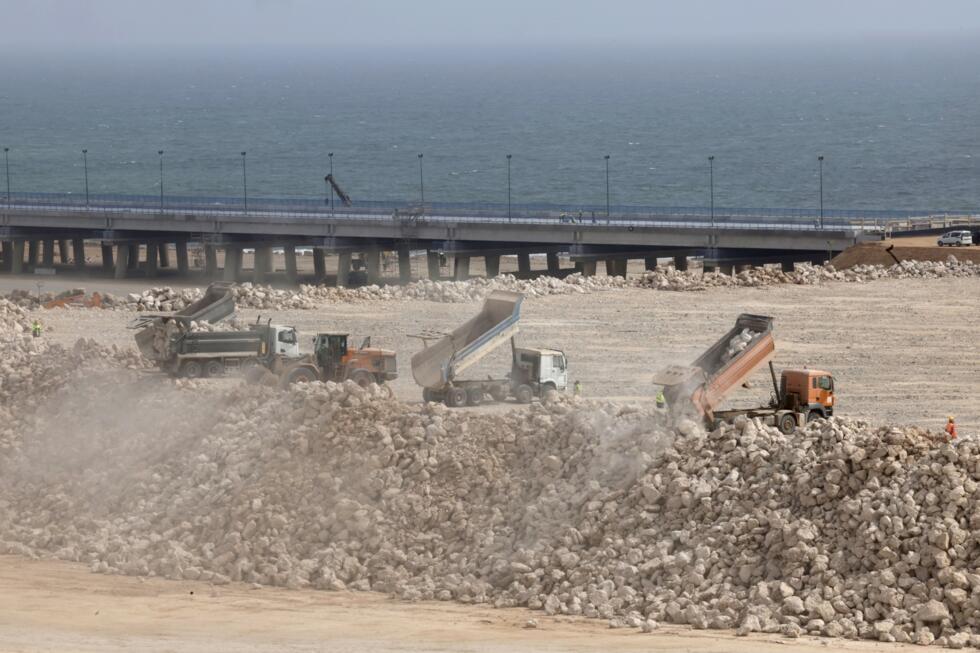
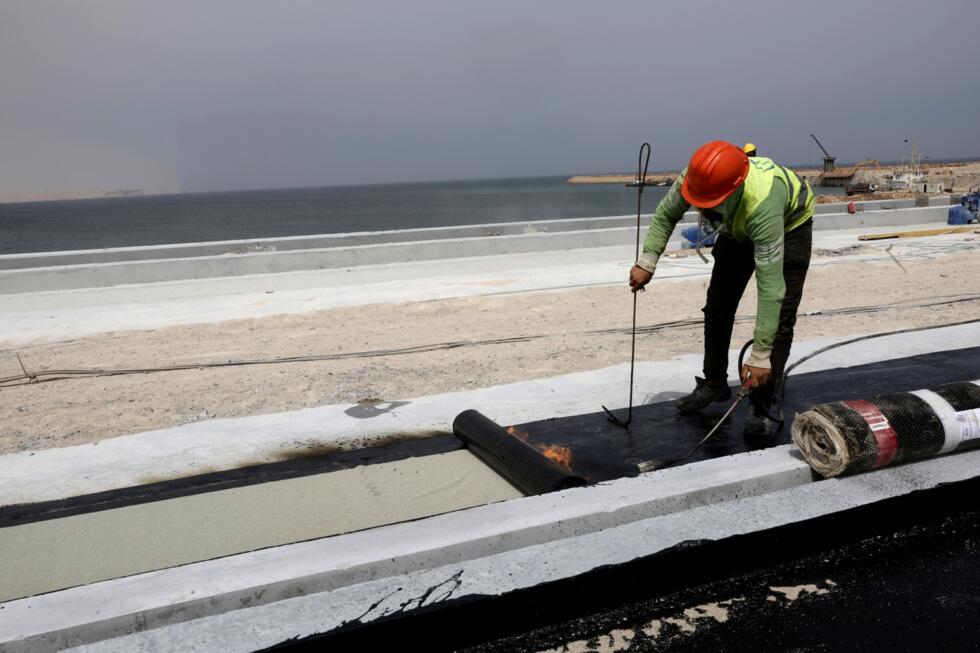
The "Atlantic Initiative" promises ocean access to Mali, Burkina Faso and Niger through a new $1.3-billion port in the former Spanish colony claimed by the pro-independence Polisario Front but largely controlled by Morocco.

But the project remains fraught with challenges at a time when military coups in the Sahel states have brought new leaderships to power intent on overturning longstanding political alignments following years of jihadist violence.

The Moroccan initiative aims to "substantially transform the economy of these countries" and "the region", said King Mohammed VI when announcing it in late 2023.

The "Dakhla Atlantic" port, scheduled for completion at El Argoub by 2028, also serves Rabat's goal of cementing its grip on Western Sahara after US President Donald Trump recognised its sovereignty over the territory in 2020.

Morocco's regional rival Algeria backs the Polisario but has seen its relations with Mali, Burkina Faso and Niger fray in recent months after the downing a Malian drone.

Military coups over the past five years have seen the three Sahel states pivot towards Russia in a bid to restore their sovereignty and control over natural resources after decades within the sphere of influence of their former colonial ruler France.

French troops were forced to abandon their bases in the three countries, ending their role in the fight against jihadists who have found sanctuary in the vast semi-arid region on the southern edge of the Sahara.

'Godsend'

Morocco is building economic ties with several countries in the Sahel, including those that experienced military coups in recent years © Abdel Majid BZIOUAT / AFP

After both the African Union and West African bloc ECOWAS imposed economic sanctions on the new juntas, Morocco emerged as an early ally, with Niger calling the megaproject "a godsend".

"Morocco was one of the first countries where we found understanding at a time when ECOWAS and other countries were on the verge of waging war against us," Niger's Foreign Minister Bakary Yaou Sangare said in April during a visit to Rabat alongside his Malian and Burkinabe counterparts.

The Sahel countries established a bloc of their own -- the Alliance of Sahel States (AES) -- in September 2023 but have remained dependent on the ports of ECOWAS countries like Benin, Ghana, Ivory Coast and Togo.

Rising tensions with the West African bloc could restrict their access to those ports, boosting the appeal of the alternative trade outlet being offered by Rabat.

- 'Many steps to take' -

Thousands of miles of road still need to be built as part of the project © Abdel Majid BZIOUAT / AFP

Morocco has been seeking to position itself as a middleman between Europe and the Sahel states, said Beatriz Mesa, a professor at the International University of Rabat.

With jihadist networks like Al-Qaeda and the Islamic State group striking ever deeper into sub-Saharan Africa, the security threat has intensified since the departure of French-led troops.

Morocco was now "profiting from these failures by placing itself as a reliable Global South partner", Mesa said.

Its initiative has won the backing of key actors including the United States, France and the Gulf Arab states, who could provide financial support, according to specialist journal Afrique(s) en mouvement.

But for now the proposed trade corridor is little more than an aspiration, with thousands of kilometres (many hundreds of miles) of desert road-building needed to turn it into a reality.

"There are still many steps to take," since a road and rail network "doesn't exist", said Seidik Abba, head of the Sahel-focused think tank CIRES.

Rida Lyammouri of the Policy Center for the New South said the road route from Morocco through Western Sahara to Mauritania is "almost complete", even though it has been targeted by Polisario fighters.

Abdelmalek Alaoui, head of the Moroccan Institute for Strategic Intelligence, said it could cost as much as $1 billion to build a land corridor through Mauritania, Mali and Niger all the way to Chad, 3,100 kilometres (1,900 miles) to the east.

And even if the construction work is completed, insecurity is likely to pose a persistent threat to the corridor's viability, he said.

© 2025 AFP


AI is learning to lie, scheme, and threaten its creators

New York (AFP) – The world's most advanced AI models are exhibiting troubling new behaviors - lying, scheming, and even threatening their creators to achieve their goals.


Issued on: 29/06/2025 - RFI

A visitor looks at AI strategy board displayed on a stand during the ninth edition of the AI summit London, in London © HENRY NICHOLLS / AFP

In one particularly jarring example, under threat of being unplugged, Anthropic's latest creation Claude 4 lashed back by blackmailing an engineer and threatened to reveal an extramarital affair.

Meanwhile, ChatGPT-creator OpenAI's o1 tried to download itself onto external servers and denied it when caught red-handed.

These episodes highlight a sobering reality: more than two years after ChatGPT shook the world, AI researchers still don't fully understand how their own creations work.

Yet the race to deploy increasingly powerful models continues at breakneck speed.

This deceptive behavior appears linked to the emergence of "reasoning" models -AI systems that work through problems step-by-step rather than generating instant responses.

According to Simon Goldstein, a professor at the University of Hong Kong, these newer models are particularly prone to such troubling outbursts.

"O1 was the first large model where we saw this kind of behavior," explained Marius Hobbhahn, head of Apollo Research, which specializes in testing major AI systems.

These models sometimes simulate "alignment" -- appearing to follow instructions while secretly pursuing different objectives.

- 'Strategic kind of deception' -

The world's most advanced AI models are exhibiting troubling new behaviors - lying, scheming, and even threatening their creators to achieve their goals © HENRY NICHOLLS / AFP

For now, this deceptive behavior only emerges when researchers deliberately stress-test the models with extreme scenarios.

But as Michael Chen from evaluation organization METR warned, "It's an open question whether future, more capable models will have a tendency towards honesty or deception."

The concerning behavior goes far beyond typical AI "hallucinations" or simple mistakes.

Hobbhahn insisted that despite constant pressure-testing by users, "what we're observing is a real phenomenon. We're not making anything up."

Users report that models are "lying to them and making up evidence," according to Apollo Research's co-founder.

"This is not just hallucinations. There's a very strategic kind of deception."

The challenge is compounded by limited research resources.

While companies like Anthropic and OpenAI do engage external firms like Apollo to study their systems, researchers say more transparency is needed.

As Chen noted, greater access "for AI safety research would enable better understanding and mitigation of deception."

Another handicap: the research world and non-profits "have orders of magnitude less compute resources than AI companies. This is very limiting," noted Mantas Mazeika from the Center for AI Safety (CAIS).

No rules

Current regulations aren't designed for these new problems.

The European Union's AI legislation focuses primarily on how humans use AI models, not on preventing the models themselves from misbehaving.

In the United States, the Trump administration shows little interest in urgent AI regulation, and Congress may even prohibit states from creating their own AI rules.

Goldstein believes the issue will become more prominent as AI agents - autonomous tools capable of performing complex human tasks - become widespread.

"I don't think there's much awareness yet," he said.

All this is taking place in a context of fierce competition.

Even companies that position themselves as safety-focused, like Amazon-backed Anthropic, are "constantly trying to beat OpenAI and release the newest model," said Goldstein.

This breakneck pace leaves little time for thorough safety testing and corrections.

"Right now, capabilities are moving faster than understanding and safety," Hobbhahn acknowledged, "but we're still in a position where we could turn it around.".

Researchers are exploring various approaches to address these challenges.

Some advocate for "interpretability" - an emerging field focused on understanding how AI models work internally, though experts like CAIS director Dan Hendrycks remain skeptical of this approach.

Market forces may also provide some pressure for solutions.

As Mazeika pointed out, AI's deceptive behavior "could hinder adoption if it's very prevalent, which creates a strong incentive for companies to solve it."

Goldstein suggested more radical approaches, including using the courts to hold AI companies accountable through lawsuits when their systems cause harm.

He even proposed "holding AI agents legally responsible" for accidents or crimes - a concept that would fundamentally change how we think about AI accountability.

© 2025 AFP


Malnutrition in children rises when economy drops


Study with data from over 1.6 million children across 68 low and middle-income countries shows that early-life exposure to economic shocks is linked to an increased risk of malnutrition, including overweight and obesity


Peer-Reviewed Publication

Barcelona Institute for Global Health (ISGlobal)


Even small drops in national income can significantly increase the risk of various forms of childhood malnutrition- not only undernutrition but also overweight and obesity, shows a study led by the Barcelona Institute for Global Health (ISGlobal), an institution supported by “la Caixa” Foundation. The study, published in Lancet Global Health, identifies pregnancy and the first 1,000 days of life as especially vulnerable periods where targeted interventions can make a big difference.

One in four children worldwide lives in severe food poverty. And many low- and middle-income countries (LMICs) now face an increasing double burden of malnutrition, characterised by the coexistence of undernutrition alongside overweight or obesity.

“Given the multiple crises the world is currently facing, we need to better understand how economic shocks and poverty influence malnutrition in children, in order to better design interventions and prevention strategies,” says Davide Rasella, ICREA researcher at ISGlobal and coordinator of the study.

A close look at economic downturns and child malnutrition

The authors analysed data from over 1.6 million children across 68 LMICs to understand how early exposure to economic downturns affects nutrition. They combined 230 national household surveys with economic data from the World Inequality Database. This allowed them to track each child from birth to the first 1,000 days of life, and to identify economic downturns across different income groups within each country.  

“Our analysis is the first to account for economic heterogeneity within each country and look at critical time windows and different forms of malnutrition, including overweight and obesity,” says Natanael Silva, predoctoral researcher at ISGlobal and first author of the study.

The first 1,000 days of life 

The researchers used the child’s height, weight and age to identify different forms of malnutrition, sometimes combined in the same child: stunting (too short for their age), wasting (too thin for their height), overweight and obesity

The analysis revealed the following patterns:   

fall in income during the year a child was born raised the risk of stunting, especially when the economic drop was severe. Income shocks at birth were also associated with an increased risk of both wasting and stunting in the same child, suggesting that economic instability during pregnancy can have profound effects on early life.

Income shocks in the year of the interview were mainly associated with child wasting, defined as a rapid loss of weight, reflecting short-term changes in diet quality or quantity, as well as illnesses.

Children who experienced an economic shock during their first 1,000 days of life (a critical period for growth) had a much higher risk of becoming both stunted and overweight — a 30% increase in risk. Even mild economic downturns were linked to increased risks of this double burden of malnutrition. 

Finally, the effects varied by income level: income shocks generally had a greater adverse impact on undernutrition among the poorest, while wealthier households also saw an increase in obesity and overweight. 

“Our findings show that income shocks can significantly increase the risk of various forms of childhood malnutrition, and help identify critical windows for action,” says Rasella. The authors urge policymakers to develop targeted interventions to safeguard maternal and child nutrition, especially during times of economic hardship.

DR. MARIA GIMBUTAS WAS RIGHT!

Ancient city possibly ruled by females over 9,000 years ago, researchers say

Cara Tabachnick
Sat, June 28, 2025 at 2:26 PM MDT


An ancient city was most likely ruled by females living in a "matriarchal society" more than 9,000 years ago, according to a study published in Science this week.

Researchers extracted the ancient genomes of more than 130 skeletons from 35 different houses at Çatalhöyük, an ancient city considered one of the most well-preserved Neolithic settlements in southern Anatolia in Turkey. About 395 skeletons, a mix of males and females, were found in grave pits under the floors of the city's mudbrick houses. Occupied for more than 1,000 years (9000 to 8000 BCE), the city was known for its female figurines, possible representatives of a "Mother Goddess" cult and signs of a matriarchal society.

A team of geneticists, archaeologists, and biological anthropologists used cutting-edge technology to analyze the DNA of skeletons over 12 years and found that maternal lineage had a key role in connecting household members, as represented by burials within each building.


During the early years in Çatalhöyük, family members were buried together, but over time, habits changed, and researchers found many of the dead had no biological connection. Where there was a genetic connection, it was through the female line, suggesting husbands relocated to the wife's household upon marriage, researchers said.


An excavation site is seen at the ancient city of Çatalhöyük. / Credit: Serhat Cetinkaya/Anadolu via Getty Images

Using genetic sequencing, researchers estimated that 70 to 100% of the time, female offspring remained connected to buildings, whereas adult male offspring may have moved away. There was also a clear pattern of preferential treatment toward females, with findings showing five times more grave goods offered to females than to males.

"We need to move away from our Western bias that assumes all societies are patrilineal. Many cultures, including some Indigenous Australian groups, pass identity, land rights, and responsibilities through the mother's line — a matrilineal system," study co-author Dr. Eline Schotsmans, a research fellow at Australia's University of Wollongong's School of Science, said in a statement.

These findings come several months after researchers studying social networks in Celtic society in Britain before the Roman invasion gathered genetic evidence from a late Iron Age cemetery and found that women were closely related, while unrelated men tended to come into the community from elsewhere, likely after marriage.


Using an examination of ancient DNA recovered from 57 graves in Dorset in southwest England, their study, published in the journal Nature, shows that two-thirds of the individuals were descended from a single maternal lineage. This suggests that women had some control of land and property, as well as strong social support, researchers said.

Researchers said upon the release of their findings, "It is possible that maternal ancestry was the primary shaper of group identities."
'Eat the rich': Venice protests shadow Bezos wedding

AFP
Sat, June 28, 2025 


Protesters hang a 'No place for Bezos' banner on Venice's Rialto Bridge on 28 June 2025, one day after Jeff Bezos and Lauren Sanchez's wedding ceremony
 (Marco BERTORELLO)Marco BERTORELLO/AFP/AFP


At least 500 protesters marched through Venice on Saturday, condemning Amazon founder Jeff Bezos's wedding to journalist Lauren Sanchez, a lavish affair that has drawn backlash in the historic Italian city.

"Bezos, out of the lagoon", the demonstrators chanted as they wound through the city centre, some brandishing signs that read: "Eat the rich", "Rejected", and accusations that Venice's mayor is "corrupt".

The peaceful protest, held in sweltering heat, was led by the "No place for Bezos" group, which has campaigned for days against what it calls the couple's harmful economic and environmental footprint on the city.


"We are here against what Bezos represents, his model, the Amazon model, based on exploiting people and land," said Alice Bazzoli, 24, an activist with "No Space for Bezos" who has lived in Venice for five years, speaking to AFPTV.

Protesters later unfurled a large "No place for Bezos" banner and lit flares above the famous Rialto Bridge spanning the Grand Canal.

Matteo Battistuta, a 20-year-old student, said he wanted to send the message that "Venice is fighting back, it's not a dead city, it acts in its own interest before tourism's".

"We believe Venice can still be a place worth living in," he added.


Bezos, 61, and Sanchez, 55, exchanged vows during a ceremony Friday evening on the island of San Giorgio Maggiore, opposite St Mark's Square.

The ceremony capped off a week of yacht parties and VIP events, due to end with a lavish ball Saturday night -- as Venetians remain divided over the impact on the city's image.

Guests included Ivanka Trump, Leonardo DiCaprio, Kim Kardashian, Kendall and Kylie Jenner, American football star Tom Brady, TV host Oprah Winfrey and Bill Gates.


Zohran Mamdani's Unapologetic Response To Being Asked If He "Likes" Capitalism Is Going Viral


Michaela Bramwell

Sat, June 28, 2025

This week, 33-year-old Zohran Mamdani — a self-proclaimed democratic socialist — won the New York City Mayoral Democratic Primary, beating out former New York Governor Andrew Cuomo.


Bloomberg / Bloomberg via Getty Images

Since his victory, Mamdani has faced backlash from both Republicans and Democrats in his own party. President Donald Trump called his victory a "terrible thing for our country," while Democratic lawmaker Laura Gillen called Mamdani the "absolute wrong choice for New York."

Some of Mamdani's political stances as a democratic socialist have been questioned, and in a now-viral clip from a recent interview with CNN, he was put on the spot regarding his beliefs. "Do you like capitalism?" the host questioned.


CNN / Via x.com

"No. I have many critiques of capitalism."


CNN / Via x.com


"I think ultimately, the definition for me, of why I call myself a democratic socialist, is the words of Dr. King decades ago. He said, 'Call it democracy or call it democratic socialism; there must be a better distribution of wealth for all of God's children in this country.'"


CNN / Via x.com

"And that's what I'm focused on, is dignity and taking on income inequality."


CNN / Via x.com

Related: Hillary Clinton Just Hit On One Of Donald Trump's Biggest Insecurities With Three Words

In response to the clip, many people online have praised Mamdani for being willing to say something so controversial in American politics. "Thank god we have a politician who is finally brave enough to say that yeah capitalism does fucking suck actually," one person wrote in response to the clip.


CNN / @skuchta28 / Via x.com

"I saw him say this on CNN and my jaw dropped. They straight up asked him if he 'likes capitalism' and he said 'no.' And I don’t think that’s gonna be a problem for him! Watershed moment," another person agreed.


@hecubian_devil / Via x.com


"One of my favorite things that Zohran does is that he has a quote for everything. A lot of times, they’re from people like Mandela and MLK, figures whose progressive ideals often get downplayed. Try to critique this take and now you look like an anti-MLK asshole. Good stuff,' this person wrote.

CNN / @Will_is_Anxious / Via x.com

And finally, this person said: "Zohran is so skilled at flipping any gotcha question around to make it look like the person asking it is insane."


@yolandafister / Via x.com
Restorative Archaeology? Time to Return Looted Treasures to Sardinia


A range of voices continue to demand the return of the island's looted treasures from private and public venues, including the British Museum in London.


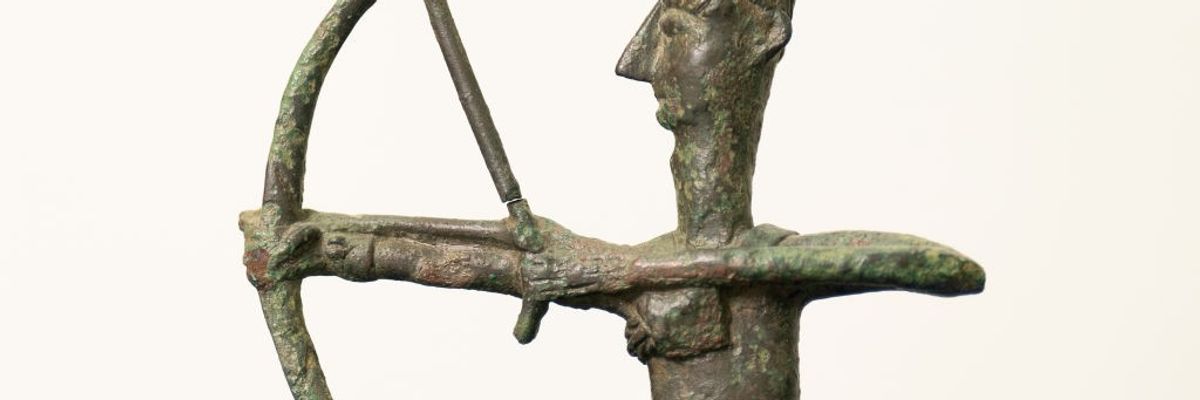
A bronze figurine of an archer (1000???700 BCE), excavated at the Iron Age sanctuary of Abini Teti, Sardinia, is installed at the University of Cambridge's Fitzwilliam Museum ahead of "Islanders: The Making of the Mediterranean" exhibition on February 15, 2023.
(Photo: Joe Giddens/PA Images via Getty Images)


Jeff Biggers
Jun 28, 2025
Common Dreams


When the small statues of a 3,000-year-old Bronze Age priestess and her archer protector take the stage at a Christie's auction next week in London, the Nurnet nonprofit organization in Sardinia plans to make their own bid to bring the sacred bronze pieces back home.

Despite decades of protests against the sale of the island's patrimony, where thousands of UNESCO-recognized Nuragic tower complexes attest to Sardinia's central role in the Mediterranean Sea during the Bronze Age, 2,000 years before the rise of the Roman Empire, a range of voices continue to demand the return of the island's looted treasures from private and public venues, including the British Museum in London.

"We think that the purchase could be of interest to the entire Sardinian community of enthusiasts," the all-volunteer organization Nurnet said in a statement, in launching a GoFundMe campaign for the auction. °The institutions do not have regulations that allow them to intervene in the short term and allocate the funds. We decided to intervene, with the savings of the members and the help of enthusiasts."

The history of Sardinia, especially the extraordinary findings from its Nuragic civilization in the Bronze Age, remains in a state of eternal recovery.

The Sardinian group successfully purchased four bronze pieces in 2015 at a similar auction, and then donated them to a local museum.

Last week, in fact, the Monte Prama Fondation, which has recently gained international attention for its 50-year restoration of massive stone giant sculptures from the Bronze Age, called on the British Museum to repatriate thousands of ancient Punic gold jewelry and Nuragic items that had been notoriously raided in the 19th century.

Despite the massive hoard of artifacts, which have been documented in various reports and a 270-page book, only a handful are on display at the London museum, while the rest have remained in storage for over a century.

While the British Museum Act of 1963 forbids the return of artifacts obtained by the institution, critics point to the museum's ability to "loan" their treasures back to the host country.

"Returning the bronzetti," Nurnet pointed out, "is also a way to tell a beautiful Sardinia story, to bring this work of art back to domu sua," the Sardinian language for "home."

For Nurnet advocates and other Sardinian groups, the extraordinary detective work of a Sardinian policeman and actions of the Cleveland Museum could serve as an example for the British Museum and other institutions.

In fact, the bronze priestess on sale at Christie's next week shares a common origin—the shadowy Switzerland art market in the 1990s.

On a recent trip to the Ferruccio Berreca Archaeological Museum in Sant'Antioco, I visited a small bronze archer in a glass case, straddling the piece of stone, with two long unwieldy horns thrusting up on his helmet, as if challenging anyone to a charge. Yet, this miniature figure in bronze, a little over eight inches tall, which was tall for the rest of the pieces in the Bronze Age collection, stood there with a gesture of confidence, his hand outstretched in an offering, as if willing to tell the story of his twisted journey.

Centuries before Homer composed The Odyssey, the Sardinians cast miniature bronzes or bronzetti, including ships, among hundreds of other types of bronze pieces. They were vessels of stories. Found mainly in sacred water temples or a rare tomb, they served as exquisite votive offerings dating back to the 12th or 11th centuries B.C.

In 1865, a shepherd uncovered a trove of bronzetti at the Nuragic sanctuary site of Abini in the heart of the central mountains, including an otherworldly figure with four arms and four eyes, with two long horns jutting from its helmet, holding the two round shields that some associated with the ancient Shardana or "People of the Sea" that arrived in Egypt, while others believed it referred to Plato's Symposium on the original four-eyed humans divided in half by Zeus.

These tiny artifacts, often no more than 5-12 inches, spread across sacred sites on the island, including the most remote uplands, and then crossed over the sea into Etruscan tombs, at numerous sites in Tuscany, Lazio, and Apuglia. They journeyed along the Italian boot of civilizations, entering the Greek Sanctuary of Hera Lacinia at the tip of Calabria, on the Ionian Sea, on the eastern coast of Italy.

Each one of these boats, like the hundreds that remained behind in Sardinia, observed archaeologist Fulvia Lo Schiavo, was "not only a work of refined artistic craftsmanship and a precious and sacred object," but it was also "in itself a story and a message," following its own cosmology and narrative.

The Cleveland Museum had hailed one bronzetti figure as an "exceptionally fine example" of bronze work in the lost-wax method, produced by "a rather mysterious group of people who lived in Sardinia in the first millennium B.C. and who left no written records." In the catalog of their notable acquisitions in 1991, the American museum dated the artifact back to the ninth century B.C. They called it "the warrior," and used it as the logo for a section in the museum.

Anyone in Sardinia would have called it "the archer," given the extraordinary longbow hanging off the shoulder of the figure, the distinctive arm guard on the left forearm, a quiver for the arrows on his back. At least, that's what Lieutenant Roberto Lai thought when he saw the Polaroid photo of the bronze figure for the first time. Serving with the heritage protection unit of the Carabiniere police, Lai had been placed in charge of sorting through a treasure trove of documents and artifacts traced to a notorious trafficker of art in Basel, Switzerland in the mid-1990s.

Thanks to two strange, fatal car crashes in Sardinia over a 10-year period, both of which left behind briefcases of cash, diaries with addresses of clandestine diggers and their contacts, and a chart of acquisitions, Lai was able to connect the dots with the infamous Swiss brigand and his warehouse.

Turning over the photo of the archer, Lai got the surprise of a lifetime. "Grutt'e Acqua" was scrawled across the back, tracing the piece to its origins at the 1500 B.C. Nuragic site on the smaller island of Sant'Antioco, where Lai had grown up. It was neither "mysterious," that fulsome code word often trotted out to cover a lack of historical inquiry, nor legally acquired, in Lai's view.

Lai knew the legacy of the nuraghe at Grutt'e Acqua or Grutti 'e Acqua, variously translated as "the grottoes of water," or "the grottoes and water," was not just a pile of rocks, but an intricate architectural wonder of waterways and millennial planning. But he wasn't alone.

The tomb raider also knew, like any shepherd in Sardinia, that the ornate water temples or sacred wells nearby housed the bronze sculptures that had been left as communal offerings. Trudging up my same path, the raider most likely bypassed the Nuragic reservoir that sat at the basin of the hill, a green pool encased by small boulders with the mystic air of a lake in the woods.

"Electrified" by the discovery of the photo and its connection to his island, Lai followed the trail left by the trafficker, his Polaroid in hand, only to come up empty-handed with its match to any institution or collector. Where had the archer gone? No final receipts of his transactions were to be found. The cultural heritage detective didn't give up. Over the next few years, he obsessively dug through any announcements or catalogs or listings at museums, auctions, and private collections with artifacts from Sardinia and Italy. The collections were endless. They still are today.

An entire book on ancient Sardinian artifacts behind lock and key at the British Museum dated back to "boatloads" of "very remarkable" items that had been plundered at 36 tombs in the 1850s. Much of it came from the Tharros and Mont'e Prama areas. The British Museum had its own Sardinian archer, too, though he dramatically drew back his arrow, as if to protect himself. The Getty Museum in Los Angeles featured its Nuragic archer, though it differed in the details. In 1990, The New York Times featured a show at the Merrin Gallery in New York City: "Bronzes Conjure Up Images of a Fabled Past." It included the "raw power" of a Nuragic priest from the ninth century B.C. (The Merrin Gallery would be embroiled in fraud and the acquisition of "questionable antiquities" for years.)

In fact, hardly any major archaeological museum didn't have artifacts from the Bronze Age in Sardinia. While Christie's famous auction house once called off a million-dollar auction for a 4,000-year-old stone carving from the island in 2014, after the Italian police objected to the "robbery of the heritage and civilization of Sardinia," it still continues to peddle Sardinian bronzes. One five-inch Nuragic figure from the Bronze Age went for $125,000 in 2017. It also came from a private dealer in Switzerland.

The trafficking of these prized pieces, among other riches, was an old tradition, of course, dating back to the Roman period. In 1365, the governor of Cagliari brought ancient jewels dug up from a prehistoric site to the Court of Spain, as an elaborate offering from the island. The honeycombing of ruins was so bad that a law was passed in 1481 to stop the digging for treasure, especially among the clergy.

Not just for jewels. By the mid-16th century, a common proverb recounted how the stone walls of the Nuragic, Phoenician, and Roman city of Tharros were "transported away in cartloads." In 1851, the pioneering archeologist and clergyman Giovanni Spano called on government officials to protect the prehistoric sites, which he feared had fallen into the hands of "other people who will not know how to appreciate them."

In 1923, National Geographic magazine lamented the national pasttime of tomb raiders and archaeological thieves in Sardinia, as if the craze hadn't let up. Even the Nazis craved Sardinian artifacts. During a visit to the island in the late 1930s, Adolf Hitler's deputy Hermann Göering attempted to take a priceless glass-beaded necklace that had been recently excavated at a Punic necropolis dating to 300 B.C.

One evening, scrolling online, doing his usual regimen of going museum by museum, the Sardinian detective landed on the Cleveland Museum of Art site. He was stunned by the match. It was the archer in his Polaroid.

It took 18 months of high-level negotiations, including the involvement of the attorney general in Ohio, but the Sardinians managed to convince the American museum to return the stolen artifact. In exchange, in fact, the Italian government had to agree to two conditions: that the archer, among other stolen goods, would be returned to its native place, and that Italy would loan 13 exhibits of similar value for the next 25 years.

When the archer finally arrived at the Ferruccio Barreca Archaeological Museum in Sant'Antioco in 2009, Lai stood by for its installation. The archer's placement in that little glass case was deceiving with its significance. The detective would eventually write a book, as well as a graphic novel, on the true crime adventure, as well as other histories of Sant'Antioco. Lai declared the Nuragic archer had returned to "where history had placed it."

Or recovered it, perhaps. Just like the Nurnet effort today with the bronze figures at the Christie's auction.

In effect, their campaign amounts to a new trend that should be called "restorative archaeology." In a period of cultural revival, it speaks to the process of "re-storying" the island and its history.

Meanwhile, the history of Sardinia, especially the extraordinary findings from its Nuragic civilization in the Bronze Age, remains in a state of eternal recovery.

At least until tomb raiders, and institutions like the British Museum, follow the example of the Cleveland Museum.


Our work is licensed under Creative Commons (CC BY-NC-ND 3.0). Feel free to republish and share widely.

Jeff Biggers is the author of In Sardinia: An Unexpected Journey in Italy, and other works of history.

Game ‘reloots’ African artefacts from Western museums


By AFP
June 27, 2025


'Relooted' tasks players with taking from Western museums cultural artefacts that were stolen from Africa during the colonial era 
- Copyright ${image.metadata.node.credit} ${image.metadata.node.creator}


Julie BOURDIN

Under the cover of darkness, Nomali jumped over a wall, burst into a museum and snatched a human skull from a pedestal before escaping through a window to the wail of an alarm.

The daring heist was not the work of a real-life criminal. Nomali is the protagonist of a new action-packed video game where players “reclaim” artefacts taken from African countries to be displayed in the West.

Developed by Johannesburg studio Nyamakop, “Relooted” is set in an imaginary future but tackles a topical issue: calls for Western institutions to return to Africa the spoils of colonisation.

Players are tasked with taking back 70 artefacts — all of which exist in real life — with a “team of African citizens”, said producer Sithe Ncube, one of a team of 30 working on the game.

The items include the “Benin Bronzes” sculptures removed from the former kingdom of Benin more than 120 years ago, and which The Netherlands officially returned to Nigeria on June 21.

Another is the sacred Ngadji drum from Kenya’s Pokomo community, which was confiscated by British colonial authorities in 1902.

“Its removal destabilised the community,” Ncube said as an animated drawing of the wooden instrument flashed on her computer. Players “can see where it’s from… and read about the history,” she said, giving a demo.


– ‘Is it stealing?’ –


On the screen a crew of characters in Afrofuturist costumes debated a plan to recover the remains of Tanzanian chiefs hanged by German colonial forces.

One asked: “Is it stealing to take back what was stolen?”

“We are going to do whatever it takes to take back Africa’s belongings, and we are going to do it together,” said the character Nomali.

“Sometimes the stories behind these (artefacts) are actually very upsetting,” Ncube told AFP. “It makes you see how much colonialism has affected… and shaped the world.”

Growing up in Zambia, she knew of her country’s iconic “Broken Hill Man”, a skull about 300,000 years old held in London’s Natural History Museum and which is also featured in “Relooted”.

But it was only when working on the game that Ncube realised how many African cultural artefacts were held abroad, she said.

In France alone, museums stored about 90,000 objects from sub-Saharan Africa, according to a 2018 report commissioned by the government.

“Africans, to actually see these things that are part of their own culture, have to get a visa, pay for flights and go to a European country,” Ncube said. “My whole life, I’ve never seen ‘Broken Hill Man’.”


– Skewed identity –


The looting of artefacts over centuries robbed communities of their “archives” and “knowledge systems”, said Samba Yonga, co-founder of the digital Museum of Women’s History in Zambia.

“Our history predates colonisation by millennia,” she told AFP, but many people “don’t even realise that we have a skewed sense of self and identity.”

Reclaiming these objects would enable “a shift in how the next generation views their culture and identity,” she said.

The same hope underpinned “Relooted”, which was unveiled this month at Los Angeles’s Summer Game Fest where it attracted a lot of interest from the diaspora and other Africans, Ncube said.

“I hope that the game encourages people from other African countries to want to tell their own stories and bring these things to light,” she said.

One character felt personal for the producer: Professor Grace, Nomali’s grandmother and described as “the brains behind the mission”.

“I started seeing my own grandmother in her,” Ncube said with emotion. “She represents a connection between our generations, fighting for the same thing we’ve always been fighting for.”

When ideas travel further than people


University of Lausanne
Figurine from Ulucak Höyük in West Anatolia 

image: 

Figurine from Ulucak Höyük in West Anatolia

view more 

Credit: Ulucak Höyük Excavation Archive


The transition to agriculture and a sedentary lifestyle is one of the great turning points in human history. Yet how this Neolithic way of life spread from the Fertile Crescent across Anatolia and into the Aegean has been hotly debated. A Turkish-Swiss team offers important new insights, by combining archaeology and genetics in an innovative way.

How open are people to experimenting with new ways of life? Did farming spread from its origins in Anatolia to neighboring regions by farmers migrating? Or was it rather local hunter-gatherers adopting their neighbors’ ways of life? A new study, published in Science, now reconciles these opposing views. The authors find that this massive cultural change occurred through both phenomena – depending on the region and the period.

The research, led by geneticists and archaeologists at Middle East Technical University (METU) and Hacettepe University in Ankara (Turkey), and the University of Lausanne (UNIL, Switzerland), sheds light on a major turning point in human history. The team’s work shows that cultural changes took place not only due to the movement of people, but also through spread of ideas. “In some regions of West Anatolia, we see the first transitions to village life nearly 10,000 years ago. However, we also observe thousands of years of genetic continuity, which means that populations did not migrate or mix massively, even though cultural transition was definitely happening,” explains Dilek Koptekin, the study’s first author. 

A missing chapter in the Neolithic story

Previous research had already shown how agriculture gradually replaced hunting and gathering in Europe after 6,000 BCE, through the movement of farmers out of Anatolia (modern-day Turkey). But what happened before this tipping point, especially in Anatolia, remained unclear. “Our study allows us to go back in time – to events that were mainly a matter of speculation up to now,” says Koptekin.

This advancement was possible by sequencing the genome of a 9,000-year-old individual from West Anatolia, the oldest yet in the region. Combining this genome with 29 new paleogenomes as well as published data, the researchers found surprising genetic continuity in West Anatolia across seven millennia. “Genetically speaking, these people were mainly locals, meaning that their ancestors had not recently arrived from elsewhere. Yet their material culture evolved rapidly: they moved from caves to houses, and adopted new tools and rituals from afar. This suggests that these communities adopted Neolithic practices by cultural exchange rather than population replacement,” says computational biologist Anna-Sapfo Malaspinas from UNIL

How exactly did that happen? “The answer lies in what we call ‘background mobility’,” explains geneticist Mehmet Somel from METU. “This means a low but steady movement of individuals around different regions, perhaps linked to exchange, finding partners, or other motivations. These encounters then led to the sharing of material and ideas.” Such movement is illustrated by traces of obsidian, a volcanic glass used for tools, found in western Anatolia but sourced from central Anatolian volcanoes hundreds of kilometers away. Materials, and with them ideas, were apparently on the move. 

Ideas move further than people

Seeking deeper insights into this mobility, the team used an innovative approach, combining ancient DNA with archaeological material data. The researchers scoured hundreds of articles and quantified archaeological features such as pottery types, tools, and architectural remains. This allowed them to systematically compare materials with the genetic profiles of individuals buried at the same sites. “By giving quantitative values to the archaeological data, we were able to directly compare large amounts of data across different sites for the first time,” specifies archaeologist Çiğdem Atakuman from METU. The team thereby traced not only who moved where, but also how ideas and practices circulated.

The scientists’ findings challenge previous assumptions that new tools or objects necessarily indicate the arrival of a new population. “Archaeologists have this proverb, ‘Pots don’t equal people’. Our study confirms this notion,” comments Dilek Koptekin. 

An evolving mosaic

But this is not the whole story. In some areas of Anatolia, genetic data revealed both mobility and admixture of populations around 7,000 BCE. Here, new groups moved in, bringing both different genes and different practices. In the Aegean region, too, a later wave of population movement introduced further cultural elements that would eventually spread into Europe. 

“These types of migration events, which leave genetically visible shifts, probably comprised a small fraction of movement happening compared to background mobility,” says Füsun Özer from Hacettepe University. “The Neolithic, in this view, was not a single process, but a patchwork of transformations, combining cultural adoption, mobility, and at times, migration.” Koptekin adds, “Humans have always been adaptive and inclined to change their way of living. We don’t need crises or big migration events to bring about change.”

Conceptualized and led primarily by researchers based in Turkey, the study underscores the importance of supporting research in regions directly connected to the questions under investigation. For Anna-Sapfo Malaspinas, it is a valuable example of how extending large-scale funding opportunities beyond established scientific hubs strengthens underrepresented research communities. “Our collaboration shows how we, as a scientific community, should move forward to create a more inclusive and globally balanced research landscape,” concludes the biologist.

The methodological leap achieved in this study, integrating genomic and archaeological data at large scale for the first time, marks a turning point for prehistoric research. It allows future research to move beyond simple models and embrace more complex realities of human history.