Saturday, July 19, 2025

What Has Become of Britain?

 July 18, 2025
Facebook

Image by King’s Church International.

Britain is in pieces—politically, economically, socially, and in terms of national identity.

The country’s existential mess has deep roots, dating back to the Thatcher years (UK Prime Minister from 1979 to 1990). Under her catastrophic reign, market fundamentalism and privatisation took hold, society was dismantled, and the foundations of the welfare state were eroded.

This destructive ideological approach persisted through 14 years (2010–2024) of Conservative rule—a dark period marked by austerity, neglect, social fragmentation, the calculated dismantling of public services, and the hollowing out of civil society.

If the damage is to be undone and a new nation built, it will take creative reimagining, a long-term principled approach, and political humility—all of which are currently absent in the Labour government, led by Prime Minister Keir Starmer.

Signs of Decline

The system of governance itself requires major reform: it is increasingly centralised, unrepresentative, and undemocratic. First-past-the-post elections routinely deliver disproportionate outcomes—smaller parties are sidelined, and when a party holds a large parliamentary majority, as Labour does now (with a 156-seat lead over all opposition parties combined), it becomes virtually unaccountable.

It is a system run by rigid technocrats, seemingly incapable of imagining the scope of systemic change needed. The evidence of decline is everywhere:

Income and wealth inequality is the highest in Europe; the richest 10% of households own more than 45% of the nation’s wealth, while real wages have stagnated for 16 years; over 4.2 million children—around 30% of the total—now live below the poverty line; homelessness is at its highest level among developed nations; the National Health Service is in crisis; prisons are dangerously overcrowded—the UK imprisons more people per capita than any other European country—and they are severely under-resourced; local government, underfunded for over a decade, faces colossal pressure: youth services, social care, libraries, and basic infrastructure have all been gutted.

Add to this Brexit, environmental degradation, species loss, crumbling infrastructure, and failing transport networks, and the picture of a country with its very heart ripped out begins to emerge.

Politicians and institutions—including the media—are widely mistrusted. Public despair, division, and anger run deep, particularly among young people, many of whom feel hopeless.

The Human Cost

The cumulative impact of 14 years of callous governments, combined with the divisive fallout of Brexit, has deeply scarred the country’s emotional and psychological life.

The result is a form of collective trauma that has fractured national identity and shattered any remaining sense of dignity, fuelling widespread resentment—particularly among neglected working-class communities.

Mental illness is soaring, with one in five people reporting struggles of one kind or another—young people and women are particularly impacted. Obesity rates are among the highest in Western Europe, with 64.5% of adults classified as overweight or obese, contributing to a growing health crisis.

A hedonistic, often macho, culture has taken firmer hold, fuelled by online misogynists like the Tate brothers. Nearly two-thirds of teachers report that social media has worsened student behaviour, with boys increasingly adopting toxic attitudes—including refusing to engage with female teachers.

One of the most alarming trends is the rise in violence against women, both online and in person. Antisocial behaviour has surged (up 14% between 2021 and 2023), including a sharp rise in assaults on teachers—reflecting a broader rejection of authority and a deepening culture of selfish individualism.

Fractured communities—often along racial lines—have created fertile ground for the far right, now resurgent. Intolerance and racism are growing, as seen in the race riots of 2024, triggered by extremist rhetoric, social media disinformation, and shameless political opportunism.

Right-wing politicians and their angry, muddled supporters hark back to a mythical past, blaming every problem on immigration and lamenting the loss of ill-defined “British values.” But when asked to explain what these are, few can offer more than empty slogans.

The values most often cited—freedom, fairness, tolerance, and the rule of law—are shared, more or less, across liberal democracies everywhere. In Britain today, these ideals are being steadily eroded and, in many cases, are little more than righteous rhetoric.

The gap between what Britain imagines itself to be and what it is becoming lies at the heart of its identity crisis and lack of direction.

There is little or no social justice; racism and intolerance of immigrants and refugees are on the rise, inflamed by opportunistic politicians and a right-wing media. Freedoms once taken for granted—expression, protest, and the press—are being systematically undermined by repressive laws, increased surveillance, and hostility toward dissent.

The recent proscription of Palestine Action as a terrorist group is just the latest act of control and hypocrisy in a long and growing list of repressive measures aimed at criminalising peaceful protest and silencing dissent. That same hypocrisy was laid bare in the political outrage and media hysteria over Bob Vylan’s “Death to the IDF” chant at Glastonbury.

While they condemn a punk artist’s words, these same voices remain silent in the face of Israel’s ongoing genocide in Gaza—including the targeting of civilians at so-called humanitarian food distribution points, which are nothing less than IDF killing zones.

Symbolic protest is punished; mass killing is ignored—or enabled.

Such double standards reveal the moral void at the heart of Britain’s political establishment and media landscape—contradictions and cowardice that warp the national conversation, encourage lawlessness, and distort public opinion.

What Must Change

Britain’s woes are not simply the result of mismanagement, nor can they be resolved by running existing systems more efficiently—as Prime Minister Keir Starmer and Co. seem to believe. The crisis is fundamental, rooted in systemic inadequacies and long-term structural decline: economic, political, social and moral. While minor improvements may be possible (such as reducing NHS waiting times), no amount of tinkering will deliver the transformation needed.

A fundamental reset is required—a radical shift in thinking rooted in social justice, democratic accountability, and respect for international law; anchored in a shared commitment to the common good, to peace, and to environmental repair.

First-past-the-post must go, replaced by proportional representation; the voting age lowered to 16, and voting made compulsory; the House of Lords abolished or replaced with a democratic second chamber; and power meaningfully devolved to the regions and local communities.

A network of citizens’ assemblies should be created to revitalise democratic engagement—scrutinising legislation, contributing to parliamentary debate, and, in time, evolving into a second (or third) chamber. A written constitution is essential—one that defines rights, outlines responsibilities, and limits state power. The media must be reformed, and the dominance of billionaire-owned outlets directly challenged—and, where necessary, dismantled.

A clear, confident case for rejoining the European Union—or at least the customs union—must be made. Brexit has been traumatic—not only economically, but socially and diplomatically. It has inflamed nationalist delusions and shattered Britain’s standing not just in Europe, but across the world.

Choices

There is a weariness and tension across the country—a loss of identity post-Brexit, a collapse of self-belief, mingled with a quiet desperation for change.

Within this febrile space, the nation faces a defining choice: the possibility of hopeful, progressive renewal—or a fearful, reactionary response that opens the door to extremism.

Rising support for progressive parties such as the Greens and Lib Dems, along with talk of a new socialist party led by Jeremy Corbyn and MP Zarah Sultana, are signs of public appetite for real alternatives—rooted in social justice, climate action, and ethical foreign policy, including principled solidarity with the Palestinian people.

At the same time, however, poisonous far-right voices—most notably Reform UK—continue to exploit the chaos, peddling fear, resentment, and division.

To avoid deeper social fragmentation and rekindle a sense of hope, moral principles—courageously held—must return to the heart of government, not as empty slogans but as actions rooted in social justice and inclusion.

It requires sustained environmental action to meet Net Zero targets and generate green jobs; adherence to international law and accountability when it is violated—no matter by whom; and an end to the hypocrisy that defines UK foreign policy—including the withdrawal of support from regimes that commit state violence with impunity, most notably Israel.

There is, without question, an appetite for transformation. It was hoped Labour would deliver it after winning power—but so far, the party has proven wholly inadequate to the scale and seriousness of the challenge: weak in the face of international horrors, and now complicit in the genocide against Palestinians being methodically executed by Israel.

Whilst the specifics may be unique to Britain, the crisis is not. Across the West, inequality, ecological collapse, economic divisions, and democratic erosion are accelerating. And yet conservative/reactionary forces remain deeply entrenched—complacent, insulated, and fiercely protective of the status quo. They cling to failed systems and discredited ideologies, wilfully refusing to act.

The just future so many long for will not be willingly handed over by entrenched power. If renewal and change are to come—if true democracy is to flourish, with social justice and freedom at its heart, in Britain or the world—they must be fought for and demanded loudly and persistently.

Graham Peebles is a British freelance writer and charity worker. He set up The Create Trust in 2005 and has run education projects in Sri Lanka, Ethiopia and India.  E: grahampeebles@icloud.com  W: www.grahampeebles.org


Britain: A new left party emerges?


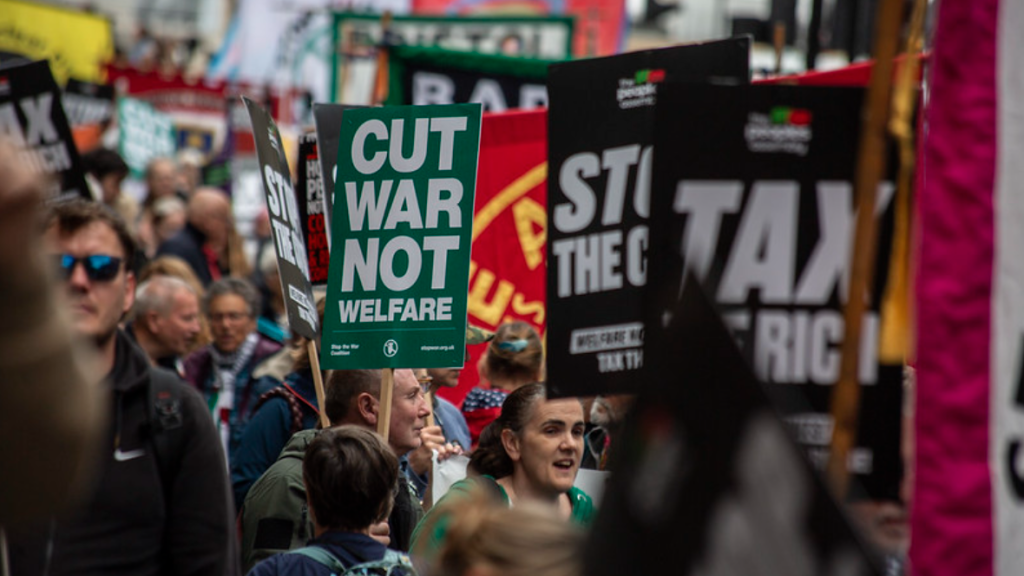
protest in Britain

First published at Anti*Capitalist Resistance.

The ingrained neoliberalism and racism of the Labour government can only pave the way for a Reform-Tory coalition government in 2029. This would be a disaster. The expectations of this Labour government upon coming into power were incredibly low, and they have failed to meet even those.

The Labour government has gone after pensioners, poorer families, disabled people and farmers. It has attacked the basic principles of the welfare state around universal provision and accommodated big business and the City of London instead of working people and their support base.

There is a space for a political alternative, one that can tackle neoliberalism, tax the rich and big business and rebuild the welfare state as well as contributing to making Israel a pariah state for its genocidal actions.

Since early July, there has been excitement but also confusion as various moves towards launching a new left party were raised, rowed back, and then raised again.

All eyes were on ex-Labour leader Jeremy Corbyn, exiled from Labour and sitting as an independent MP. There are also a group of Labour MPs (for instance Zarah Sultana and John McDonnell) who have had the whip withdrawn for voting against the government on progressive issues like opposing the limits on child benefits.

Add to this key figures like ex-North East Mayor Jamie Driscoll and Andrew Feinstein, who stood against Labour leader Keir Starmer in their constituency and won 18.9% of the vote. Additionally, five MPs were elected in 2024 on a platform of solidarity with Gaza.

Another factor is the Transform Party, established by left-wing activists in 2023, which has been in a holding pattern waiting for a new, broader initiative to be announced. The SWP also launched a new initiative called We Demand Change, which may or may not be standing candidates in next year’s local elections.There is also a secretive group called Collective, comprising senior people from Corbyn’s time in Labour who operate behind the scenes.

Many people looked to Corbyn to make an announcement, but he was reluctant, no doubt unwilling to lead a new party. Although he did start to talk about a ‘political alternative’ to Labour in recent weeks.

On Thursday, 3 July, Zarah Sultana announced she was quitting Labour and co-founding a new party with Corbyn, though Corbyn did not initially respond. This led to rumours in the press that there was chaotic jostling for position behind the scenes and competing groupings and personalities were clashing over whether to launch a new party now or wait, or if such a party was launched whether to have it start as a loose collection of local initiatives or a properly constituted party from the start.

Then there were embarrassing leaks to the mainstream papers about the arguments going on behind the scenes, which only added to the confusion.

Despite all this, two polls have indicated that a new left party could garner between 10% and 18% of the vote in an election. Support is particularly strong amongst younger voters There is an appetite for something credible.

Democracy

Anti*Capitalist Resistance (ACR) is in favour of a new left party, but the approach that seems to being taken is undemocratic and doesn’t bode well for how such an initiative might work.

It is clear that politics is febrile and anything can happen in the next few years. There is genuine excitement about a left-wing Labour alternative. However, we must get it right, as there is a long list of failed projects stretching back over the last 35 years, including the Socialist Labour Party, Socialist Alliance, Respect, and Left Unity. Across Europe, there have also been new left parties that achieved in some cases considerable political success but then fell into political crisis, usually from promising radical change but then failing to deliver or even actively imposing the austerity politics they fought against, like Syriza in Greece.

Mass assemblies locally to help bring people together might be a good start for forming the basis of new branches, and there has been talk of a process to build the new party. However, so far, this is all being decided behind closed doors by unknown people. Not an auspicious start.

The climate crisis

Any new party must make the climate crisis its central task, which means mass mobilisations and a clear anticapitalist perspective around tackling climate change and environmental collapse. Initially, this might be pitched as a Green New Deal-style politics, but what matters between now and the general election is the degree to which any new party can help foster and promote social movements and union initiatives that build confidence in fighting fossil capitalism.

Any new party will also have to be clear how it differs from the Greens, particularly in the context of the Zack Polanski ‘left populism’ campaign. A possible Red-Green Alliance in the next government election is not inconceivable, given the current flux in politics around Westminster. However, this also depends on whether a new left party is based solely in England or attempts to work with the Scottish and Welsh left as well., given different left developments in those countries.

Anticapitalism and revolution

One thing is clear, though — there isn’t a lot of room in late capitalism for reformist parties, and European politics is littered with defeated left reformist projects. It is an illusion to imagine that, because social democracy vacated the ‘reformist’ strategy, there is now just space for new reformist parties. Social Democracy abandoned those positions because the basis of capitalism itself shifted, the terrain on which ‘left policies’ could be enacted shrank as neoliberalism emerged.

A party led by Sultana and possibly Corbyn will undoubtedly have similar policies to those outlined in the 2017 Labour manifesto. Such a party falls far short of what is needed as late capitalism hurtles towards climate collapse. The capitalist state is not neutral in the class war, and even winning a parliamentary election in 2029 won’t be enough to overthrow fossil capitalism.

This is why maintaining a revolutionary ecosocialist organisation is so important, regardless of what happens with this new party. That doesn’t mean sectarian abstention or denouncing it for not having ‘the right politics’, but it does mean engaging in and consistently working to establish the new party on the best possible basis, and continuing to build a revolutionary ecosocialist force that can contribute to overthrowing capitalism.

ACR’s position

We agreed on the following at our recent conference in early July, which we believe forms the basis of a new left party in terms of how it operates and organises.

  1. A top down party directed by personalities or a cartel of existing left currents is not a recipe for success. Any new party must be formed of members based in their communities, those members must be the people who decide policy and elect the leadership — this accountability should not be postponed while a personality group or currents embed themselves in the leadership.
  2. Any fake democratic structure where leaders use internet /referendum systems should be avoided. This is what Iglesias did in Podemos to sideline critical currents like the Anticapitalistas. Those leaders with the greatest media profile should not be allowed to manipulate the members.
  3. Caucus rights for LGBTQ+ and Black, Women and disabled members should be recognized. A false counter-position of identity versus class politics needs to be avoided. A party which is not inclusive will fail.
  4. What will make a new left party useful is whether it can help to build social movements and resistance from below. If it only focuses on elections then it will end up a narrow electoralist party unable to build active roots in working class communities, workplaces and in social struggles. Crucially without an activist orientation it will be unable to help build the kind of radical movements we need around the climate between now and the next general election.
  5. We will argue for a broad acceptance of eco socialism — integrating the class struggle with the ecological one. There can be no socialism on a dead planet. The rise of the Green party in Britain reflects the radicalization around ecological issues. Not only would a new party need to be participating alongside the Just Stop Oil or Extinction Rebellion activists but it should be looking for joint action with the Labour left and Green party activists locally and nationally.
  6. A flexible approach to international issues like Ukraine or Palestine will be necessary If we want it to be broad based. Solidarity with the Palestinian people against the Israeli state and their right to resistance, an end to occupation, abolition of all Zionist discriminatory legislation and structures, and the right to return would need to be the minimum basis. But a new party could remain open about a two state or one state approach. On Ukraine agreement on Russia withdrawal, a ceasefire and self-determination but leaving the arms issue for further debate would be acceptable.
  7. Any new party should allow tendencies to exist and have the right to express their opinions openly, including in any press. Once the basic principles were agreed, debate going beyond that — the sort of discussions a revolutionary Marxist party might have needs to be set aside. Otherwise you have a continual debate like we had in Left Unity around programme and workers militias. This is one of the most difficult things to manage. If you have an open democratic party it is difficult to stop revolutionary currents joining but how do you stop their ‘raids’ and endless propagandising? You have to make sure there is enough of a genuine mass base and healthy local groups that have a majority who are not already members of organized groups.
  8. Setting up a new broad party is not a guarantee of future success — the experience of Podemos, Respect or Syriza shows this. The danger of leaders and cadre being captured by the mass media and the institutions is very, very real. As we have seen if these parties achieve some success there are lots of jobs and even careers available for activists to take up. Constitutional mechanisms need to be in place to help prevent this by agreeing what to do about councilors or MP salaries, how the organization is staffed and of course the overall accountability of the leadership. The danger of being integrated into the establishment and then politically neutered is very real.
  9. While the strategy of a new broad party means confronting Labour in elections this does not mean taking a sectarian line against any remaining Labour left MPs. Any new mass party will need to win the socialists currently in the Labour Party if it is really going to become a contender for power. So a new party needs to work creatively with any Labour lefts in united actions. It should not stand against active left people like McDonnell or Abbott. We cannot exclude entirely future splits or radicalization inside Labour even if a repeat of Corbynism where the left won the leadership looks very unlikely.
  10. For a new left party to have mass impact it has to win support inside the trade unions. Antagonism between the unions and Starmer’s Labour is more likely than a re-emergence of Corbynism. So building class struggle currents inside unions should be a priority for any new party.
  11. One of the difficulties for a new party will be the fact that most of its instigators will not be from a younger demographic. The leadership of the radical left in Britain today is much older than what we had in the 1970s. So having a focus on winning younger people is a big task. Measures should be taken to bring them into the leadership. Propaganda and agitational material needs to be accessible for young people too
  12. Support for the right to self determination for Scotland and Wales, as well as a united Ireland, should be integrated into any new formation
  13. A new party should be intervening culturally too — this may be one way of reaching a younger demographic but a new party needs to reject a narrow, over politicized look, it should relate to all of life — culture and sport. It should be joyful and fun to be a member. Party life and culture should prefigure to some extent the sort of socialist society we wish to build.

Simon Hannah is a socialist, a union activist, and the author of A Party with Socialists in it: a history of the Labour LeftCan’t Pay, Won’t Pay: the fight to stop the poll tax, and System Crash: an activist guide to making revolution.

Panamanian Trade Unionists Reject US Claim on Canal, Government Wavers


 July 18, 2025

Photograph Source: Stan Shebs – CC BY-SA 3.0

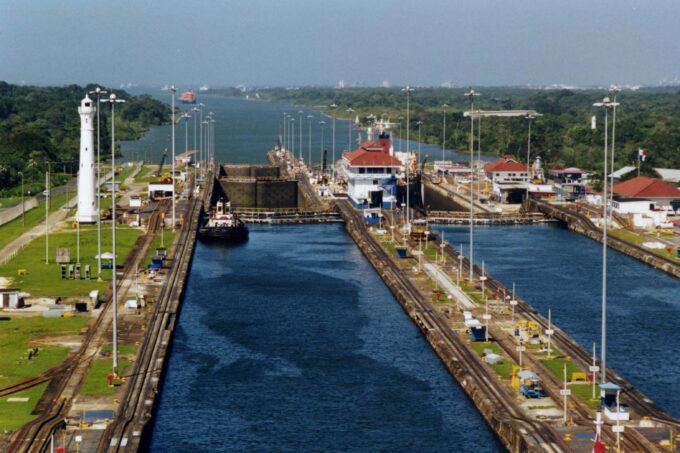
President Trump mentioned Panama in his inaugural address on January 20. He indicated the Canal “has foolishly been given to the country of Panama.” And “China is operating the Panama Canal. And we didn’t give it to China.” He added that, “the spirit of our treaty has been totally violated. American ships are being severely overcharged and not treated fairly in any way, shape, or form.”

The treaty in question is one of the two Torrijos-Carter Treaties of 1977 that guided the transfer of the Panama Canal to Panamanian ownership in 1999.

Addressing the Congress on March 5, Trump announced, “My administration will be reclaiming the Panama Canal, and we’ve already started doing it … “Just today, a large American company announced they are buying both ports around the Panama Canal.”

That company is the privately-owned, Hong Kong-based CK Hutchinson company, which operates ports in 23 countries, among them ports in Balboa and Cristobal, entry-way cities to the Canal. At the Trump administration’s urging, the U.S.-based BlackRock investment firm would purchase Hutchinson – that is, until China’s government expressed displeasure at the $19 billion deal and the plans died.

U.S. Defense Secretary Pete Hegseth and the Panamanian Minister of Public Security Frank Abrego met in Panama City on April 8. They signed a Memorandum of Understanding that established terms of U.S. military involvement in Panama and of U.S.-friendly operations of the Canal. Two themes emerged:

 Cooperation between the armed forces of the two countries in “professional education and development of capacities” with training and bilateral exercises taking place in Panama.

 Arrangements for security and defense of the Canal and for compensating the U.S. Navy for tolls and other charges its warships incur passing through the Canal – and compliance of those arrangements with the Treaty of Neutrality of 1977, one of the two Torrijos-Carter treaties.

Secretary Hegseth and Panamanian President José Raúl Mulino issued a Joint Declaration. There, the two officials accept the Memorandum of Understanding and Secretary Hegseth congratulates Panama as “the first country in our hemisphere to abandon [China’s] Belt and Road initiative” and for its success in stemming the flow of migrants across the Darien Gap.

The Panamanian version of the Declaration includes Hegseth’s “recognition [of] Panama’s leadership and inalienable sovereignty over the Panama Canal and its adjacent areas.” The U.S. version of the agreement leaves out those words.

The Memorandum of Understanding authorizes the U.S. government to deploy troops to three Panamanian bases built by the U.S. government when it occupied the now defunct Canal Zone. U.S. troops may soon be using a fourth base being constructed by Panama near the Darien Gap, one well-suited  for discouraging migrants heading north.

U.S. troops already deploy to Panama. According to a U.S. Southern Command announcement, Airmen and Marines from Joint Task Force-Bravo were in Panama from March 24 to April 4, 2025 engaging with counterparts there “to strengthen relationships in security, humanitarian and logistical fields.” U.S. Marines arrived in Panama on June 5 to conduct “forest operations” with Panamanian troops. Joint air and naval exercises took place on July 13-18.

Panama’s continued control of the Canal and her national independence are under siege. In the background are serious U.S. interventions. In 1903 The U.S. government under President Theodore Roosevelt engineered the secession of Colombia’s most northern province and thereby arranged for the newly independent state to authorize the U.S. to build the Canal.

On December 20, 1989, the U.S. military invaded Panama in order to capture President Manuel Noriega, the onetime CIA asset accused of drug-dealing and money laundering.  According to NACLA, “The U.S. invading forces destroyed 20,000 homes and killed hundreds of innocent Panamanians, dumping bodies into mass graves.”

Panama’s government shows signs of a dependency relationship with the United States that may portend significant U.S. authority over the Canal. An aroused anti-government people’s movement rejects that possibility.

José Raúl Mulino, veteran rightwing politician and former minister of public security, became president in 2024 with 34% of the vote. Analyst Abdiel Rodríguez Reyes indicates Mulino “has no charisma … and no [political] base … [H]e is fundamentally supported by an important group of Panamanian businessmen and by US interests.” Mulino has dutifully spoken out against Trump’s declarations on the Canal.

Distractions prevail that are likely to weaken any resolve Mulino might muster to block U.S. ambitions. His government undoubtedly attends to what is described as “the most modern and successful international banking center in Latin America.”  It co-exists with Panama’s well-known problems of money laundering and terrorist financing, although these have eased recently. Panama’s great wealth inequalities and social class divisions serve powerbrokers wanting to block a united front capable of taking on U.S. power.

Commentator Francisco Javier Bonilla reports that Trump’s declarations [on the Canal] have split the country. There has historically been a section of the country, populated mainly by the upper and upper-middle classes, that has been an ally of the most recalcitrant U.S. chauvinism”. Bonilla describes labor unions as “the only active anti-imperialist organizations in the country.”

Actions taken by Mulino’s government have provoked a popular uprising consisting of strikes, street protests, and mobilization of a vigorous, multi-sector labor movement. Responding, the government has resorted to police actions, arrests, and a state of exception applied to Bocas del Toro. That’s a poverty-stricken province in northwest Panama, given over to Banana monoculture and intense worker confrontations with Chiquita company. Chiquita recently dismissed 5000 workers.

These labor-led protests target three measures advanced by the Mulino government.  One is a package of pension reforms with elements of privatization. Another is Mulino’s plan to revive the Cobre Panamá open-pit mine in Donoso district, the largest copper mine in Central America. Massive street marches in 2023 and an adverse Supreme Court ruling forced the mine’s closing.

Street actions greeted the April agreement on the Canal between the Mulino government and the Trump administration. Protesters were reacting also to the prospect of an increased U.S. military presence throughout Panama and, specifically, to the prospect of U.S. troops returning to their old bases.

Writing for Deutscher Welle on June 4, reporter Sandra Weiss paints a picture of “the biggest protests in Panama in 30 years”:

“Battles with people wounded, entire provinces blockaded and economic losses in the millions: Panama seems these days like a country at war. On the one hand, there is the government, discredited but supported by the security forces; on the other hand, trade unionists, environmentalists, students, women, teachers and indigenous people are in the streets, fed up with a political-business class seen as corrupt and inept.”

Analyst José Eugenio Stoute, quoted by Weiss, claims that, “The government has lost control of two provinces, Bocas del Toro, controlled by the strikers, and Darien, controlled by the indigenous. And in the capital, there are marches every 24 hours”.

Introducing a petition, the International Trade Union Confederation declares that the Panamanian construction workers’ union SUNTRACS “is facing an unprecedented attack on the right to organize, represent its members, and engage in collective action … SUNTRACS has been on strike alongside teachers and banana workers, defending pensions, the environment, and conditions for workers. … The union’s general secretary … Saúl Méndez, was forced to seek political asylum at the Bolivian Embassy in Panama.”

Saúl Méndez told a reporter that, “What we have here is a setback to national sovereignty … What the Panamanian government has done is an act of treason. They are traitors and must be tried.” He was responding to the “Memorandum of Understanding” that U.S. Defense Secretary Pete Hegseth had signed in April.

W.T. Whitney Jr. is a retired pediatrician and political journalist living in Maine.