Friday, September 19, 2025

CRIMINAL CAPITALI$M
US regulator sues Ticketmaster over ‘illegal’ ticket schemes


By AFP
September 18, 2025


The US Federal Trade Commission (FTC) sued Ticketmaster and its parent company Live Nation over allegations it conspired to inflate ticket prices and deceive consumers with hidden fees - Copyright AFP Patrick T. Fallon

A top US regulator on Thursday sued Ticketmaster and its parent company Live Nation, alleging the ticketing giant conspired with brokers to inflate concert ticket prices and deceive consumers with hidden fees.

The Federal Trade Commission, along with seven states, filed the lawsuit in a California federal court, accusing the companies of allowing ticket brokers to harvest millions of tickets in violation of purchase limits, and then resell them at marked-up prices.

Ticketmaster has been the object of anger and frustration from both artists and spectators for decades, with concertgoers complaining about overpriced tickets, opaque pricing schemes, and glitches that saw sales for Taylor Swift’s historic Eras Tour, among others, marred by breakdowns.

Most recently, the reunion tour of UK rockers Oasis sparked furor in Britain when dynamic pricing caused ticket prices to jump to hundreds of pounds above face-value costs.

American live entertainment “should be accessible to all of us. It should not cost an arm and a leg to take the family to a baseball game,” said FTC Chairman Andrew Ferguson, citing President Donald Trump’s executive order to protect consumers from ticket pricing abuses.

The complaint alleges Ticketmaster, which controls about 80 percent of major concert venue ticketing in the United States, turned “a blind eye” to brokers who routinely exceeded ticket limits using thousands of fake accounts.

From 2019 to 2024, consumers spent more than $82.6 billion purchasing tickets from Ticketmaster, the FTC said.

According to the complaint, the regulator said internal documents show Ticketmaster even provided technological support to brokers through a software platform called TradeDesk, enabling them to manage tickets purchased across multiple accounts for easier resale.

The lawsuit also targets Ticketmaster’s pricing practices, alleging the company advertised ticket prices substantially lower than what consumers ultimately paid after mandatory fees and markups.

These hidden fees, which reached as high as 44 percent of ticket cost, totaled $16.4 billion from 2019-2024, the FTC said.
Ex-US climate envoy: Trump threatening ‘consensus science’ worldwide


By AFP
September 17, 2025


Climate scientists say that global warming drives extreme weather like storms, floods and heatwaves, making these disasters more frequent and intense. - © AFP LUIS TATO
Issam AHMED

President Donald Trump is leading the world “in the wrong direction” on climate and weaponizing clean energy as a culture-war issue, according to John Podesta, a longtime advisor to Democratic presidents.

Until January, Podesta was President Joe Biden’s senior point person on international climate policy. He took the stand Tuesday in Missoula, Montana, as an expert witness in Lighthiser v. Trump, a youth-led case challenging the administration’s fossil-fuel agenda.

Trump’s second term has seen sweeping rollbacks of domestic policy aimed at fighting climate change, and an effort to push fossil fuels abroad — from embedding liquefied natural gas (LNG) purchases in trade deals to reportedly pressuring bodies such as the International Energy Agency.

With COP30 talks in Brazil fast approaching, Podesta spoke to AFP in Missoula about America’s retreat from climate leadership — and what it means for the planet and US influence.


John Podesta, senior advisor to former president Joe Biden, says Trump is trying to erode global consensus on climate change
– Copyright AFP/File SAUL LOEB

Q: How do you view the Trump administration’s international posture on climate?

Podesta: In the first term, they decided to abandon leadership. Now they’re trying to lead the world in the wrong direction. In international forums they’re trying to prevent climate action; in bilateral relationships they’re promoting fossil fuels, and in multilateral fora they’re showing disdain for any common action.

Q: There’s talk they could even try to weaken UN consensus on climate change. How much damage can they do?

Podesta: They’ll do all they can to tilt the field towards favoring fossil fuels. Their reasoning for going after science in the US will find its way into undermining the consensus science abroad. Whether they can actually change the dynamic at the IPCC (the UN climate science panel), particularly given they’re withdrawing resources from the IPCC and forbidding US federal scientists from participating in studies — I don’t think they’ll have much effect on the overall production of peer-reviewed science, but they’ll cause a little havoc along the way.

Q: How does this posture affect US standing in the world, especially against China’s push to dominate clean energy?

Podesta: It certainly reduces the sense of solidarity we have with countries that are not China. If we’re in a great competition with China for global leadership, we’re aligning with Russia and Saudi Arabia instead of with our natural allies in Europe, Latin America, and Asia. From a security posture, it’s a terrible mistake.

Q: What will all this mean for COP30 talks in Brazil?

Podesta: We’ll see this play out in Belem and beyond. There’s still strong global consensus to move forward, but with the US not just absent from leadership but playing a revisionist role, it empowers countries like Saudi Arabia and Russia that are trying to water down ambition — and now they have a strong ally in doing that.

Q: What do you think motivates Trump’s approach?

Podesta: It’s a mix of trying to turn clean energy into a culture-war issue while ignoring the real economics of the transition, and his fealty to fossil fuel interests that have funded his rise. But a lot of it is the politics of culture war — as long as he thinks it works for him, he’ll keep pursuing it.

Q: What differentiates the Lighthiser case from Juliana, a previous federal youth-led climate case, which you helped oppose when you were part of the Biden administration?

Podesta: I do think it’s different from Juliana because they’re seeking some specific remedies against direct harm that’s the result of actions taken by this administration. It’s showing in dramatic terms what taking these actions today builds in harms tomorrow, and that can only come through the voices of these young people, and I thought they were moving in the testimony they gave… It’s their future that’s at stake in this.
Australian state bans testing of illicit drugs

MORALISTIC ANTI SCIENCE IDEOLOGY THREATENS CITIZENS

The state’s health minister  said the government had a “zero-tolerance approach to illicit drugs”.  “There is no safe way to take drugs,” he said.

By AFP
September 18, 2025


Queensland ranks third-highest in Australia for drug use - Copyright AFP/File Sai Aung MAIN

The Australian state of Queensland has banned the testing of drugs for recreational use, sparking warnings from health providers on Friday that the move could put lives at risk.

Queensland ranks third-highest in Australia for drug use, the latest government data show, with around one in five people in the state reporting they had used in the past twelve months.

Late on Thursday, the government of the northeastern state said it would ban funding for testing which checks the chemical purity of drugs for users to see if they have been laced with other harmful substances.

The state’s health minister Tim Nicholls said the government had a “zero-tolerance approach to illicit drugs”.

“There is no safe way to take drugs,” he said. “Drug checking services send the wrong message to Queenslanders.”

Cameron Francis, chief executive of non-profit The Loop Australia, a testing service that operated in Queensland, told AFP he was “disappointed and saddened” by the decision.

“Without a service like pill testing, we have no idea what is circulating until it is too late,” he told AFP.

The Loop had run a government-funded year-long trial in the state and tested 1,200 drugs, he said.

Of those samples, one in seven drugs were disposed of after being tested, while one in three people were referred to other health services, Francis explained.

One in five people who participated said they would reduce their drug use in the future.

Australia’s drug market is becoming more dangerous with an increase of synthetic opioid drugs such as fentanyl, he warned.

Some 3.9 million people — around 18 percent of Australians aged 14 and over — used an illicit drug in the past year, official figures show.

Australian Medical Association state president Nick Yim said the move could spark a surge in hospitalisations in emergency departments, particularly during the upcoming summer festival season.

Official data show there were 1,635 drug-induced deaths across Australia in 2023 — the majority of which were considered accidental.

Queensland is the first Australian state to ban drug testing.

Some services or government-backed trials remain in place in the Australian Capital Territory as well as Victoria and New South Wales, home to the country’s largest cities of Melbourne and Sydney.

Testing kits can still be purchased online.
How did an Indian zoo get the world’s most endangered great ape?

“Trying to breed orangutans outside Indonesia with some kind of long-term hope that they are going to contribute to the population is just pure nonsense.”

By AFP
September 18, 2025


Vantara says it has 150,00 animals at its sprawling facility in India 
- Copyright AFP Idrees MOHAMMED

Sara HUSSEIN

Tapanuli orangutans are the world’s most endangered great ape. Fewer than 800 remain, all previously thought to be in their native Indonesia. But now an Indian zoo says it has one.

An Indian court cleared the 3,500-acre wildlife facility known as Vantara on Monday of allegations including unlawful acquisition of animals and financial wrongdoing.

But the decision is unlikely to quiet questions about how Vantara, which describes itself as a wildlife rehabilitation and conservation centre, has stocked its enclosures.

Vantara, run by Anant Ambani, the son of Asia’s richest man, says it houses 150,000 animals of 2,000 species, far exceeding populations at well-known zoos in New York, London or Berlin.

AFP spoke to seven experts on conservation and the wildlife trade to understand concerns about Vantara.

Several declined to speak on the record, citing Vantara’s previous legal actions against critics.

They called Vantara’s collection unprecedented.

“We’ve never seen anything on this scale,” said one longtime conservation expert from a wildlife protection group.

“It’s hoovering up animals from all over the world.”

Some of those acquisitions are more noteworthy than others, such as the single tapanuli that arrived in Vantara between 2023 and 2024, according to the facility’s submissions to India’s Central Zoo Authority.

Only officially described in 2017, tapanulis are incredibly rare, said Serge Wich, an orangutan specialist at Liverpool John Moores University.

They are confined to a small range in Indonesia and are in “dire straits” because of threats including mining and deforestation, he told AFP.


– ‘Surprised and shocked’ –


Trade in the world’s most endangered species is prohibited by the Convention on International Trade in Endangered Species of Wild Fauna and Flora (CITES).

But there are exceptions, including for “captive-bred” animals — individuals born in captivity to captive parents.

There is only one CITES record of a tapanuli orangutan ever being transferred internationally.

It left Indonesia in 2023, bound for the United Arab Emirates, where Vantara says its tapanuli came from.

The transfer record describes the animal as “captive-bred”.

However, multiple experts said that description was implausible.

“There are no captive breeding programmes for orangutans in Indonesia,” said Panut Hadisiswoyo, founder and chairman of the Orangutan Information Centre in Indonesia.

Only a handful are known to be in captivity at all, at rehabilitation facilities in Indonesia, he said.

A conservationist for more than two decades, Panut said he was “surprised and shocked” to learn from AFP about Vantara’s tapanuli orangutan.

“We do everything to protect them,” he said. “So it’s really, really distressing information.”

There is no information on where in Indonesia the animal originated. The country’s CITES authorities did not respond to a request for comment.

Experts said it was possible the orangutan is not a tapanuli at all. They look similar enough to Bornean and Sumatran orangutans that DNA testing would be needed for confirmation.

It could also be a mix of tapanuli and another species, perhaps discovered by a zoo in its collection — although experts questioned why a facility would hand off such a rare animal.

But if the animal is a tapanuli, “it’s almost inevitable that it would have to be illegal”, said orangutan conservation expert Erik Meijaard.

“It would be super sad.”


– ‘Pure nonsense’ –


Vantara did not respond to AFP’s request for comment on the orangutan and how it acquires animals.

The tapanuli is not the first highly endangered animal to arrive at Vantara.

Spix’s macaws, a vibrant blue species native to Brazil, were extinct in the wild until recently.

Brazil has sought to prevent all trade and transfer of the birds.

It allowed a breeding facility in Germany to acquire some on condition they would not be sold or moved without Brazilian permission, according to documents submitted to CITES.

Yet in 2023, 26 Spix’s macaws from the German facility arrived in Vantara.

Vantara says it is working “to ensure that the calls of these rare birds are never lost from their native habitats”.

The case has rankled Brazil, which raised it repeatedly at CITES meetings.

Asked about Vantara’s tapanuli, the CITES secretariat told AFP “this matter is under review”, adding it was “not in a position to provide information”.

In public documents, CITES has acknowledged receiving “multiple reports” about imports of endangered animals into India.

India has said it will invite CITES officials for a visit but has yet to provide “detailed information on the matter”, the secretariat noted.

If Vantara does own a single tapanuli orangutan, its conservation value would be limited, said Panut, who urged the animal’s return to Indonesia.

For Meijaard, conservation in their natural habitat in Indonesia provides “the only chance for this species’ survival”.

“Trying to breed orangutans outside Indonesia with some kind of long-term hope that they are going to contribute to the population is just pure nonsense.”

MONOPOLY CAPITALI$M

Deliveroo CEO to step down following DoorDash takeover


By AFP
September 18, 2025


Deliveroo has tens of thousands of self-employed riders -- a status that continues to cause controversy - Copyright AFP Lionel BONAVENTURE

Will Shu, founder of food delivery app Deliveroo, will step down as its chief executive once US rival DoorDash completes a takeover of the British group, a statement said Thursday.

DoorDash in May agreed to buy Deliveroo for £2.9 billion ($4 billion) in a deal expected to be completed at the start of October.

“Taking Deliveroo from being an idea to what it is today has been amazing,” Shu said in the statement.

“Today the company’s growth and profitability are accelerating and we are delivering on our mission to transform the way people shop and eat, but after 13 years I want to contemplate my next challenge,” the American added.

The DoorDash deal will create a delivery service present in more than 40 countries, serving around 50 million monthly-active users.

Deliveroo founder Will Shu said he wanted to ‘contemplate my next challenge’ as he steps down as CEO after 13 years – Copyright AFP JOSH EDELSON

Deliveroo posted its first annual profit in March following sizeable full-year losses owing to high investment costs since Shu founded the company.

The company’s initial public offering in 2021 had been London’s biggest stock market launch for a decade, valuing the group at £7.6 billion.

The offer from DoorDash is worth £1.80, less than half Deliveroo’s IPO price of £3.90.

Shu got the idea to start his own business after struggling to find restaurants that would deliver food to the London office where he often stayed late to work as a financial analyst.

Years after personally making Deliveroo’s first delivery in London, the company experienced a surge in demand during the Covid-19 pandemic from lockdown-hit customers.

However, increased competition saw it scale back global operations, most recently with an exit from Hong Kong.

San Francisco-based DoorDash, the largest food delivery app in the United States, entered the European market in 2021 with the purchase of Finland-based Wolt for $8.1 billion.

As big players in the gig economy, food delivery apps have faced controversy over the status of their self-employed riders.

In late 2023, the UK Supreme Court ruled that Deliveroo riders were not entitled to trade union rights such as collective bargaining.
Canada, Mexico leaders meet amid US tariff war


By AFP
September 18, 2025


Canadian Prime Minister Mark Carney (L) and Mexican President Claudia Sheinbaum at a Group of Seven (G7) summit in June - Copyright AFP ANDREW CABALLERO-REYNOLDS
Jean ARCE

Mexico’s president will host the leader of Canada for trade talks Thursday as they seek to navigate the tariff war launched by Donald Trump despite the existence of a three-way free-trade agreement.

Claudia Sheinbaum and Prime Minister Mark Carney of Canada are to meet in Mexico City as Trump pushes to renegotiate the USMCA North American trade pact in place since 2020. It replaced the NAFTA accord signed in the 1990s.

The US president considers the new three- way deal unfavorable to his country, and has lashed out at his neighbors to the north and south over illegal migration and drug trafficking.

Trump has so far spared Mexico much of the threatened punishment, but hit some Canadian goods with 35-percent duties.

Sheinbaum told reporters Thursday that Carney’s visit would seek to “strengthen the Mexico-Canada relationship which, in addition to the treaty we already have, is to strengthen trade and economic investments in certain sectors.”

The pair will discuss boosting trade via Canadian and Mexican ports instead of roads or trains crossing through the United States.

The leaders will also consider a program of special visas for Mexican workers, as well as cooperation in education, renewable energy, and innovation, Sheinbaum said.

Before the trip, Carney said the two countries maintain “a strong relationship, built on more than three decades of free trade.”

He added that “in the face of a shifting global landscape, we are focused on elevating our partnerships in trade, commerce, security, and energy.

“Together, we will build stronger supply chains, create new opportunities for workers, and deliver greater prosperity and certainty for both Canadians and Mexicans.”

A review of the USMCA is scheduled for next year.

US tariffs are badly hurting Canada’s crucial auto, steel and aluminum sectors, leading to job losses.

Canada retaliated with tariffs on billions of dollars of US imports but, in a gesture aimed at facilitating a deal, Carney has since exempted US goods that fall under USMCA.

Sheinbaum has so far managed to stave off a blanket 30-percent US import tariff, although Mexico’s automotive, steel and aluminum sectors — like those of other countries — have been hit with higher levies.

The United States has long been the main destination for exports from both Mexico and Canada.

Bilateral trade between Mexico and Canada last year totaled under $32 billion — more than 20 times less than the trade each has with the United States.

Canada central bank cuts key lending rate citing Trump tariffs


ByAFP
September 17, 2025
Ben Simon


Canada’s central bank cut its key lending rate on Wednesday, offering a boost to borrowers in an economy squeezed by US President Donald Trump’s trade war.

The Bank of Canada reduced the rate to 2.5 percent, after holding it at 2.75 percent since March as it weighed the impact of Trump’s fluctuating tariffs on Canadian businesses heavily dependent on exports to the United States.

But the bank said there was now clear evidence Trump’s protectionism was inflicting damage on key, targeted sectors — notably autos, steel and aluminum, which have all suffered job losses.

“Tariffs are weakening the Canadian economy. You can see that very clearly in the directly affected sectors,” central bank Governor Tiff Macklem told reporters after the announcement.

The bank noted Canada’s GDP declined roughly 1.5 percent in the second quarter of 2025.

In the first quarter, exporters benefitted from a rush of orders from the United States as businesses tried to stock up before Trump’s tariffs fully took hold, the bank said.

But Canadian exports fell by 27 percent in the second quarter as rush orders eased.

There “is less US demand for our exports because there’s tariffs,” Macklem said.


– New trade deal? –


Trump has so far maintained tariff exemptions on goods compliant with an existing North American free trade agreement, partly muting the damage to Canada’s economy.

Macklem stressed the tariff rate for most Canadian exports to the United States remains low, as the vast majority of products fall under the trade pact, known as the United States-Mexico-Canada Agreement (USMCA).

But that deal, agreed during Trump’s first term, is up for review in 2026.

The prospect that Trump may seek major revisions has created further risk for Canada.

“With some stability in US tariffs in recent weeks, near-term uncertainty may have come down a little, but the focus is shifting to the upcoming (USMCA) review,” Macklem said.

Canada was the first G7 country to begin cutting rates last year, following several hikes to tame pandemic-fueled inflation.

While Wednesday’s cut was largely expected by analysts, the bank warned it would proceed cautiously, given the risk that US protectionism could drive up inflation.

Macklem told reporters that businesses are facing new costs as they try to adjust “to a different relationship with (Canada’s) biggest trading partner.”

People are looking for new suppliers and new customers, he said, adding that the eventual consequences of those shifts remain uncertain, including on inflation.

Given the broad uncertainty about the path ahead, Macklem said the central bank would be more cautious than normal about issuing any future guidance, as it closely watches export figures over the coming weeks.

Desjardins economist Royce Mendes predicted an additional cut at the bank’s next meeting in October, but said it was clear the bank was worried about further tariff damage.

“The Bank of Canada still seems wary of assuming that all of the impacts of US trade policy are in the rearview mirror,” he said.


With eye on US threat, Venezuela holds Caribbean military exercises


By AFP
September 17, 2025


This screen grab from a video posted by US President Donald Trump shows what he said was a US military strike on drug traffickers in the Caribbean Sea - Copyright US President Donald Trump's TRUTH Social account/AFP HANDOUT

Venezuela said Wednesday it had begun three days of military exercises on its Caribbean island of La Orchila as tensions soar amid US military activity in the region.

Forces deployed for what Washington called an anti-drug operation have blown up at least two Venezuelan boats and a combined 14 people allegedly transporting drugs across the Caribbean this month — a move slammed as “extrajudicial execution” by UN experts.

The strikes and a deployment of US warships in the region have raised fears of an invasion in Venezuela, whose President Nicolas Maduro Washington accuses of being a cartel leader. The exercise ordered by Maduro as commander-in-chief was baptized “Sovereign Caribbean,” Defense Minister Vladimir Padrino Lopez said Wednesday.

“There will be air defense deployments with armed drones, surveillance drones, submarine drones… We are going to implement electronic warfare actions,” he added, citing the “threatening, vulgar voice” of the United States.

Public television showed images of amphibious vessels and warships deployed off La Orchila, where Venezuela has a military base.

The armed forces said the exercises will involve 12 ships, 22 aircraft and 20 small boats from the “Special Naval Militia.”

La Orchila island is close to the area where the United States intercepted and held a Venezuelan fishing vessel for eight hours over the weekend.

Maduro, whose last two elections the US and many other countries did not recognize, has vowed Caracas would defend itself against what he labeled US “aggression” against his country.

Washington is offering a $50 million bounty for the arrest of Maduro, who faces drug trafficking charges.


– ‘Who saw the drugs?’ –


Venezuela has urged an investigation of a US strike on an alleged drug boat early this month that killed 11 people.

It was one of three Venezuelan vessels US President Donald Trump said his country had “knocked off” without providing details.

“One doesn’t know, because they say it carried drugs, but who saw the drugs?” Interior Minister Diosdado Cabello said earlier Wednesday as he claimed Venezuela is cracking down on narcotics.

Cabello told reporters that officials have seized over 60 tonnes (about 66 US tons) of drugs so far this year.

“It is the largest amount that has been seized since 2010,” said Cabello, who like Maduro and other senior officials is under US sanctions.

Trump has justified taking military action by saying “violent drug trafficking cartels POSE A THREAT to US National Security, Foreign Policy, and vital US Interests.”

The US government has released videos of two of the boat strikes and claims it has irrefutable evidence the people killed were US-bound traffickers.

It has not provided details to back up those claims. Drug trafficking is not a capital offense under US law.

Caracas has consistently denied being a trafficking hub.

JD Vance Jokes About US Vessel Strikes: “I Wouldn’t Go Fishing Right Now”


Critics noted his remark seems to further the notion that the US is targeting civilians.
September 18, 2025


Vice President JD Vance salutes as he steps off Air Force Two at Joint Base Andrews in Maryland upon his return from Howell, Michigan, on September 17, 2025.JESSICA KOSCIELNIAK / POOL / AFP via Getty Images

Vice President JD Vance is being criticized for making light of the U.S. strikes that killed at least 14 people on boats in the Caribbean as backlash grows over the bombings, which experts said targeted civilians.

At a rally on Wednesday, Vance bragged about the supposed success of the strikes, which Venezuelan officials have said are designed to stoke war with the country.

“I was talking to Secretary [of Defense Pete] Hegseth, and you know what he said? ‘You know what Mr. Vice President, we don’t see any of these drug boats coming into our country, they’ve completely stopped,’” Vance said.

“And I said, ‘I know why. I would stop too — hell, I wouldn’t go fishing right now in that area of the world,’” he went on, laughing.

Vance’s joke was criticized for its callous nature, with critics saying that the joke appears to admit that the U.S. would target civilians.

“Get it? The joke is that we might kill some totally innocent people! Haha that’s funny, right?” said Aaron Reichlin-Melnick, senior fellow for the American Immigration Council.

A group of UN experts condemned the strikes as “extrajudicial execution” in a statement on Tuesday, saying that the military action “violates the right to life.”

“International law does not allow governments to simply murder alleged drug traffickers,” the group said. “Under international law, all countries must respect the right to life, including when acting on the high seas or in foreign territory. The use of potentially lethal force is only permitted in personal self-defence or defence of others against an imminent threat to life.”

Vance has said he is totally uninterested in following international law when conducting such bombings. Last week, in response to criticism that the U.S.’s initial strike on a vessel in the Caribbean was a war crime, the vice president said: “I don’t give a shit what you call it.”

President Donald Trump said on Monday that the military killed three people in a strike on another boat that he claimed to be from Venezuela. This follows another strike on a boat in the Caribbean that killed 11 earlier this month, which has already been widely condemned as a war crime. Venezuela said that the U.S. also seized and detained a fishing boat in Venezuelan waters on Friday.

Trump has claimed that both strikes were carried out in self-defense, claiming that he is protecting Americans from the drug trade — a novel legal argument from his administration that experts say has no precedent or legal backing.

Rather, senators have said that the Pentagon has zero evidence backing the idea that the strikes are done in self-defense, and has not provided any even when pressed by Congress. In a letter last week, 20 Democrats sent a letter noting that the administration has not offered “any legitimate legal justification for the strike, or any evidence to support its claims regarding the basis for this strike or the future strikes it has openly threatened to launch.”

Meanwhile, The Intercept’s Nick Turse has reported that lawmakers, experts, and even a Pentagon official have said that the initial strike was carried out in violation of international law. Further, The Intercept reported that the administration is “thwarting congressional oversight” of the military actions and last week barred senior House leadership staffers from attending a briefing on the attack.


We Can’t Let White Nationalism Dictate What Is Taught and Learned in Classrooms


Curricula that challenge oppression are being shut down. How do we resist?
September 18, 2025

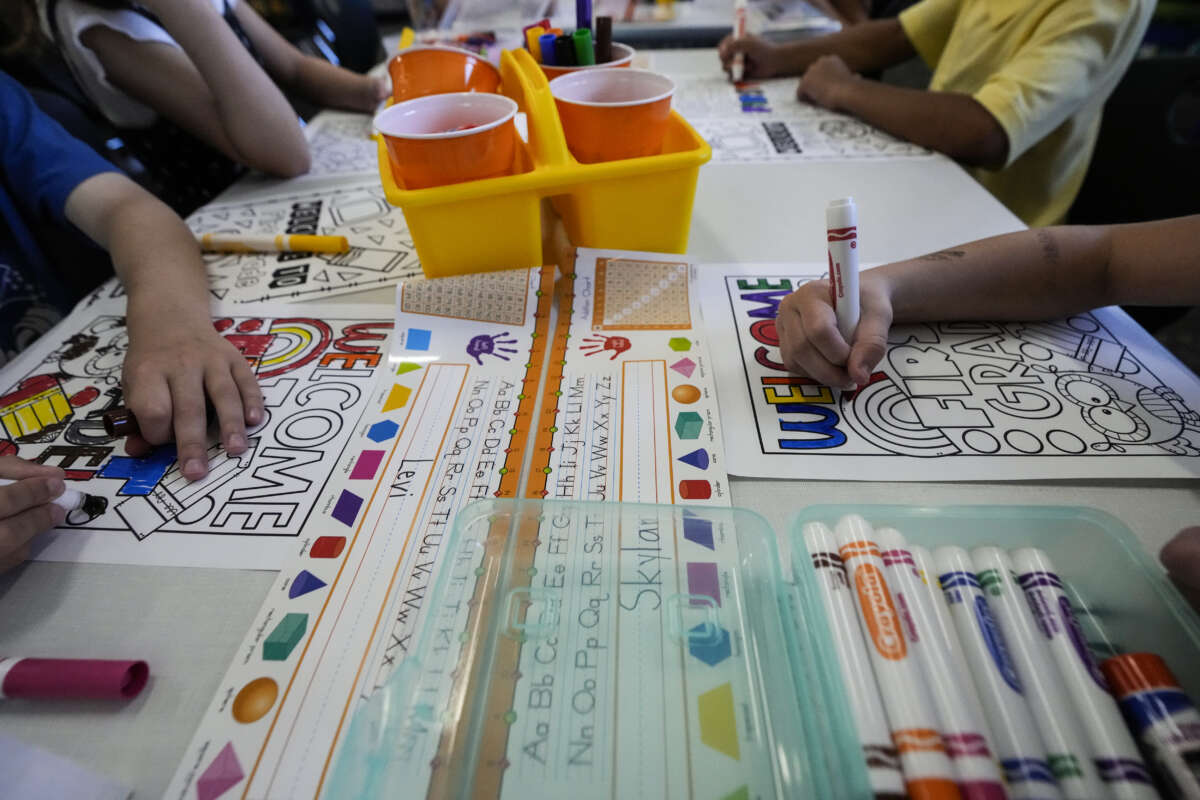
First graders color a worksheet on the first day of school at Conroe ISD's Eissler Elementary School in Conroe, Texas, on Wednesday, August 13, 2025.Brett Coomer / Houston Chronicle via Getty Images.

Education in the U.S. is in danger of becoming a site where white nationalism exclusively dictates what is taught and learned.

In the past, Donald Trump has decried discussions in U.S. schools about systemic racism as a “twisted web of lies” and even “a form of child abuse.” Now, in the wake of Charlie Kirk’s assassination, the far right is weaponizing the killing to push for alarming new infringements on free speech — including against professors and K-12 teachers.

The white ideological form of indoctrination promoted by Trump and the far right reinforces the lie that the U.S. is a country of “racial innocence.” In a 2024 interview with Truthout, Cornel West argued that “what distinguishes the American empire is its obsession with innocence, and its obsession with dreams. The innocence hides the violence, and the dreams generate the sentimentalism.”

Education that is obsessed with “innocence” denies reality. To deny reality is, in this case, to have one’s judgment clouded by sentimentalism that is tied to American nostalgia, which is indicative of the MAGA ethos. It is important, therefore, that the lie of white innocence be laid bare through a daring form of critical education that reveals how white complicity functions to conceal itself. If critical thought is necessary for a democracy and vital for challenging MAGA’s book banning, anti-BIPOC and anti-LGBTQIA ideology, along with its epistemic violence, it is necessary to unveil the threats to education in this contemporary moment.

In this exclusive interview, Barbara Applebaum provides deep insights into the far right’s current odious distortion of U.S. education and suggests critical ways of articulating and demonstrating opposition. Applebaum is professor in Cultural Foundations of Education at Syracuse University. Her training is in philosophy of education, but her work and teaching are interdisciplinary in nature. She is the author of Being White/Being Good: White Complicity, Responsibility and Social Justice Education and, more recently, White Educators Negotiating Complicity: Roadblocks Paved with Good Intentions. The interview that follows has been lightly edited for clarity and length.


George Yancy: Speak to the importance of the critical in critical education at this moment. And how do we encourage criticality among educators given the political stakes?

Barbara Applebaum: As I am reflecting on your profoundly relevant questions, I am simultaneously preparing my fall courses and trying to negotiate the challenges of teaching with commitments to social justice at a political juncture where, on the one hand, such commitments are accused of being “divisive” and “harmful to students” and, on the other hand, anti-BIPOC and anti-LGBTQIA rhetoric is gaining confidence. Educators who encourage students to question hierarchies of hegemonic power and teach about the effects of the norms of whiteness on all students and on our society are charged not only with “indoctrinating an ideology of wokeness” but also with promoting hate toward white people. Ominously, book bans, anti-“critical race theory” (CRT) laws, and “Don’t Say Gay” laws are being justified by professed “good intentions” that are selectively concerned with students in ways that the difference between forms of genuine harm and the discomfort often necessary for learning become indistinguishable.

Education as the battleground for cultural wars is hardly new. James Baldwin reminds teachers who want to teach with commitments to social justice that “you will meet the most fantastic, the most brutal, and the most determined resistance.” Yet there seems to be something unprecedented in the way education today is under attack. Book bans, as well as anti-CRT and “Don’t Say Gay” laws, work against empowering students with the critical tools required to recognize and challenge power structures that affect their lives and the lives of those around them. These laws not only attempt to silence marginalized perspectives and concerns but also obstruct the ability to communicate and have rich dialogue in the classroom. Education that does not encourage an openness to perspectives that are silenced by systemically dominant narratives is not politically neutral. And now the criticality required to understand this is being muzzled through fears of severe penalties, threats of loss of employment, and other forms of harsh punishment, as you have yourself experienced in the past. Yet opposition to the type of criticality that critical education encourages is harmful to all students because if one refuses to name something, one does not have to do anything about it since it becomes easy to pretend the unnamed reality does not exist.


Critical education is a remedy for the type of divisiveness that harms, not its cause.

Criticality is vital for democracy. Critical education is a remedy for the type of divisiveness that harms, not its cause. But it is important to underscore what I mean by criticality because the concept of “critical” can be co-opted, as when some students declare they are being “critical” of critical education. The language of criticality can serve to support the very techniques of governance that critical education attempts to bring out for analysis.

What makes today’s attack on critical education so unprecedented and challenging is that on the one hand, hermeneutical resources necessary to explain and communicate marginalized experience are being censored. On the other hand, those very same hermeneutical resources are being misused, distorted, and detached from their original meaning to re-veil exactly what those resources aim to unveil. This is why the recent scholarship around epistemic injustice by José Medina, Kristie Dotson, and Gaile Pohlhaus Jr., among others, is so vital for the criticality we need to encourage in our students. Those who have been pushed to the margins of social reality develop hermeneutical resources to understand their experiences and to engage others in conversations about their experiences. What we are experiencing today is that those in power censor progressive ideas but then deploy these concepts in misappropriated ways to shield dominant group “innocence” from challenge. Such defensiveness makes constructive communication across different positionalities impossible in the classroom. And this entire process masquerades under the label of being “critical” of critical theory. Ironically, students can only recognize this, even consider this, and dialogue about this if they have the critical tools that critical education fosters.

Critical whiteness studies, a field of critical education that I teach, offers students the tools to make visible the hegemonic normativity of whiteness that operates both through individuals and institutions without question but also aims to contest the discursive and rhetorical ways systems of hegemony are maintained. When white students protect their sense of innocence by resisting the discomfort that results from questioning white-centered reality that they are comfortable with, whiteness is re-centered, fortified, and upheld; anti-BIPOC [sentiment] along with other forms of social injustice are emboldened. Nothing in what I teach tells students to hate white people. I offer them critical tools that can encourage them to consider: What don’t we know? What don’t we want to know? What do we need not to know? At the end of the course, I will ask my students to be their own judge whether I have indoctrinated them to hate white people, or whether I have instead provided them with some of the necessary concepts that facilitate constructive conversations across different positionalities.

I teach undergraduate and graduate philosophy courses on whiteness. Part of the problem is that many of my white students come to class unaware of how their whiteness is complicit with systemic racism. In your book, Being White, Being Good, you argue, “White complicity pedagogy encourages white students to learn to be constantly vigilant as there is no innocence to hide behind.” Given the attack on diversity, equity, and inclusion (DEI), explain how educators, through the lens of white complicity pedagogy, can effectively circumvent the lie of white innocence. As you know, DEI has been important in terms of refusing to lie about the reality of anti-BIPOC racism.

White innocence, in particular, and dominant group innocence, in general, is one of the most tenacious obstacles that gets in the way of critical reflection on whiteness or other forms of dominant norms, not to mention that it impedes cross-racial dialogue. Even the most ardently self-proclaimed white paragons of white anti-racism must be vigilant about the ways white innocence can become a smoke screen that chokes off deeply critical self-reflection about how one is complicit in the perpetuation of unjust systems of racism. White confessions of complicity in public self-disclosures can indeed function as a relief from the discomfort of learning about one’s complicity. Even when whiteness is disavowed, one must be vigilant that whiteness is not reiterated. That is why white complicity pedagogy begins with helping white students recognize the ways they are complicit and challenges white innocence.


Those in power censor progressive ideas but then deploy these concepts in misappropriated ways to shield dominant group “innocence” from challenge.

For some people, these are very provocative claims. Yet the astonishment of this provocation itself belies presumptions of innocence. When I present a paper demonstrating how white innocence inhibits the ability to consider one’s complicity, I am often sharply accused of discounting any view expressed that goes counter to that claim. The ostensible advocacy for “viewpoint diversity” seems disingenuous at a time when diversity, equity, and inclusion programs across the nation are being shut down and teaching about race and gender are severely restricted.

I find your writings on white innocence as a form of suture helpful to my students’ understanding of the harms of white innocence. Being sutured by presumptions of innocence protects invulnerability and closes one off from alterity. You call for white people to un-suture so we/they can be open and not afraid to be vulnerably moved by BIPOC epistemologies and to encourage white people to tarry with critiques of whiteness instead of running away from them.

White complicity pedagogy aims to help white students towards un-suturing by demonstrating to students how presumptions of white innocence influence the ways white people understand whether systemic racial injustice exists, who is harmed and victimized by it, and what we can do about it. Complicity is the starting point (although not sufficient) for racial ethics.

In the classroom, I have observed the subtle and not so subtle attempts to defend white innocence impeding the ability of white students to engage with what BIPOC students are saying and it contributes to the racial battle fatigue that BIPOC students so often experience in higher education. Working with white students to critically examine when their good intentions and their benevolence harm others using videos, stories, research and, most significantly, reading about the consequences of whiteness on BIPOC students is a challenge. It is not that white students should not have good intentions but rather that good intentions are not enough and that there is a need to develop a critical vigilance for when good intentions are harmful to others. I specifically make my own whiteness vulnerable and reference examples from my own teaching practice. I mention a story about two white nurses in my course who constantly pronounced their benevolence. They took this course to learn about their “diverse” clients to help them better, they insisted, not to learn about their whiteness. To which one of my BIPOC students replied, “Who wants your help? BIPOC people are looking for justice. Help is not the same thing as justice.” The nurses’ beliefs in their good intentions blocked their ability to consider that white generosity often comes not only with mistaken understandings but also with expectations of gratitude. I may not have broken through the nurses’ white innocence, but I observed that this story has had an effect on other white students when I recount it.

I find it helpful to complement readings in critical whiteness studies with readings that discuss the connection between discourse and truth. In addition, as already mentioned, there is so much to learn from delving into the scholarship and research on epistemic injustice.

Put briefly, I name the many ways that innocence is bolstered by white denials (in other words, revealing how complicity works in quotidian moments) such as claims of ignoring race, white silence and other white distancing strategies, blaming the victim and ignoring historical and institutional contexts, and more. I emphasize that these are patterns of practices that are reiterated and, consequently, harm BIPOC students through accumulation. (Your analysis of the elevator effect is so immensely helpful in demonstrating this.) Finally, I emphasize that being complicit does not do away with activism but rather makes us accountable to work together with others through a vision of responsibility that is vulnerable, exhibits a willingness to accept uncertainty that emerges from humility, and to not be afraid of vigilant critique.

Henry A. Giroux links the global spread of fascism with the fact that civic culture is crumbling under “the weight of manufactured ignorance.” You’ve written a great deal about ignorance, especially the concept of willful ignorance. This concept is not just a complex epistemological one but involves a process that could entail all sorts of profound dangers. I’m thinking here, for example, of those who are willfully ignoring the environment, health care, toxic xenophobia, the rise of fascism. Talk about the pervasiveness of the logics of willful ignorance in the U.S. and how this country is crumbling partly because of it — specifically at this moment.

Manufactured ignorance reminds me of Zeus Leonardo’s argument that white people know about the daily and structural features of systemic racism but have willfully distorted interpretations of such features that are taken for truth. Moreover, manufactured ignorance is systemic and intentional in the sense that it is an ignorance born not only from not knowing but also not wanting to know, not needing to know, and needing not to know. The erudite philosopher Charles Mills famously describes white ignorance as an agreement to misinterpret the social world that is relentlessly cultivated by norms, habits, discourse, social imaginaries, and institutions that perpetuate systems of oppression and privilege. Such ignorance is not just a lack of knowledge but supported by dominant systems, and it is active because it allows dominant ideas to be projected onto marginalized experience in ways that distort, erase, and silence the meaning of such experiences. It is not just being unaware but actively choosing not to know. This is especially prevalent in the direction our society is going today.

Willful, active ignorance is the glue that holds presumptions of innocence and denials of complicity together because ignorance serves to protect white people’s self-image as “good” and to ignore uncomfortable truths about ourselves/themselves that would challenge that self-image. Two outstanding scholars helped me to more clearly articulate the “willful” in this type of ignorance and thus its harms and responsibilities.

Gaile Pohlhaus Jr. charts out relationship between situatedness and interdependence as two factors in the creation and dissemination of knowledge in society. I won’t detail that here. But a helpful concept emerges from this analysis. Willful hermeneutical ignorance points to the ways in which communities of marginally situated knowers develop conceptual resources to explain their experiences. However, dominantly situated knowers not only actively refuse to acknowledge and use these resources but also often impose dominant conceptual resources to explain the experiences that marginalized knowers express. This constrains what dominantly situated knowers are likely to know and what dominantly situated knowers are willing to know. Willful hermeneutical ignorance makes forming cooperative interdependent relationships with differently situated knowers difficult. Using inapt concepts to interpret experience and refusing to recognize its faultiness impairs communication across positionalities.


Willful ignorance is not new, but it is especially dangerous today given who has the power to censor how people can speak up against social injustice.

Motivated ignorance is the term Karyn Freedman uses to describe the kind of incentivized ignorance that arises in circumstances of unequal power relations and that protects individuals from reflecting on the benefits they accrue in virtue of being a member of a dominant social group at the expense of harms to others.

Willful ignorance is not new, but it is especially dangerous today given who has the power to censor how people can speak up against social injustice. Facts and truths can be willfully ignored and there is a political effort that makes such ignore-ance harder and harder to discredit. But the consequences are far-reaching and dire. Not only does willful ignorance deteriorate the ability to recognize and name injustice (which impedes efforts to address and change injustice through collective action), but also moral character is eroded in ways that risk leaving us with the corpse of democracy.

This brings us back to the importance of the critical in critical pedagogy. To resist and fight against ignorance as such is one thing, but willful ignorance fights back against knowledge. In short, MAGA as a movement embodies a site of willful ignorance, where Trumpian true believers subsume their freedom under a banner of white “purity.” How do we fight against willful ignorance, which empowers Trump?

I am struggling with that question today; many of us are. In order to keep this short, I will mention these four points that seem important to me. First, be willing to address how whiteness infects intersectionality. Specifically, I am trying to apply the ideas I mentioned above to help my white Jewish students understand how to be genuinely engaged and not defensive when we have discussions about Palestine. Second, white complicity pedagogy can recenter whiteness and be complicit when educators decenter the needs and interests of BIPOC students as they are dealing with whiteness. Be vigilant about the risks of recentering whiteness even when we have good intentions. Third, find spaces where you are critically challenged, echoed, and supported. Read Truthout. I found chapters 4 and 5 of Jesse Hagopian’s Teach Truth: The Struggle for Antiracist Education inspiring. Finally, don’t give up. You are not alone; there is an emotionally healing and powerful resistance alive and well. Curricula whose primary objective is to teach the critical skills necessary to understand, analyze, and challenge oppressive systems are being shut down through fear. Collectively, we need to break through the wall of fear gripping education and that is shaping what kind of country this is going to be. Keep fighting.

This article is licensed under Creative Commons (CC BY-NC-ND 4.0), and you are free to share and republish under the terms of the license.


George Yancy is the Samuel Candler Dobbs professor of philosophy at Emory University and a Montgomery fellow at Dartmouth College. He is also the University of Pennsylvania’s inaugural fellow in the Provost’s Distinguished Faculty Fellowship Program (2019-2020 academic year). He is the author, editor and co-editor of over 25 books, including Black Bodies, White Gazes; Look, A White; Backlash: What Happens When We Talk Honestly about Racism in America; and Across Black Spaces: Essays and Interviews from an American Philosopher published by Rowman & Littlefield in 2020. His most recent books include a collection of critical interviews entitled, Until Our Lungs Give Out: Conversations on Race, Justice, and the Future (Rowman & Littlefield, 2023), and a coedited book (with philosopher Bill Bywater) entitled, In Sheep’s Clothing: The Idolatry of White Christian Nationalism (Roman & Littlefield, 2024).
Tennessee Republican muses about underwater 'entities' that came to Earth a millennium ago

HE READ THE LOVECRAFT MEMO

Sarah K. BurrisMatt Laslo
September 18, 2025 
RAW STORY


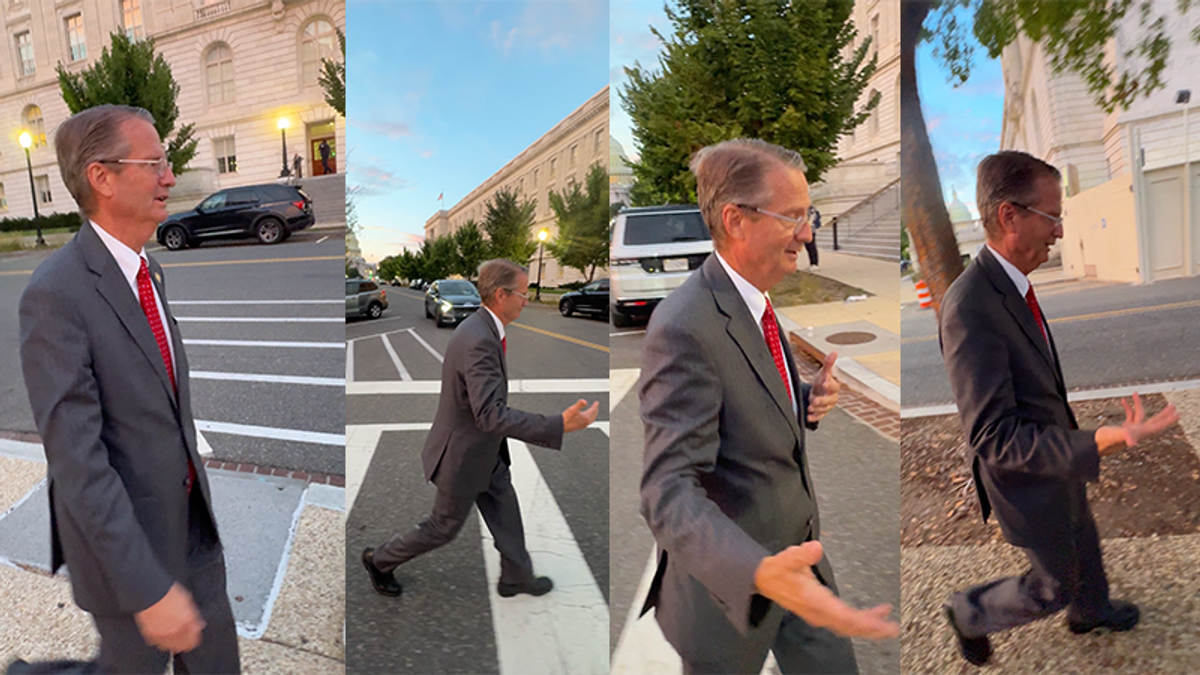
Rep. Tim Burchett (R-TN) on UAPs (Photos: Screen captures)

Rep. Tim Burchett (R-TN) told Raw Story that aliens may have come to the Earth 1,000 years ago or more and could have been living in the deep ocean.

Walking on Capitol Hill Wednesday night, Burchett mused, "What if these are entities that are on this Earth that have been on this Earth — who knows how long, and that we, we, think that they're coming in from way out. Maybe they did a millennium ago, but they're here in these deep-water areas and that's why — I mean, like we say, we know more about space than we do what's going on there."

The oceans have gone largely unexplored and unmapped. Google began a project 12 years ago to map the oceans as part of a partnership with The Catlin Seaview Survey. The images can be seen on Google Maps and Google Earth.

"We have a higher propensity of silence around these five or six, I believe, deep-water areas," Burchett continued. "And so, for me it, just, um, creates a question. And then when we have Naval personnel telling me that we have these sightings and that there's these underwater craft they're chasing that are doing hundreds of miles of hour and the best we've got is something that goes a little under 40 miles an hour. So, I got a lot of questions about that stuff."

Last week, Rep. Eric Burlison (R-MO) showed a video seen on social media in a House Oversight and Reform Subcommittee hearing that showed a U.S. MQ-9 Reaper drone attempting to intercept an unidentified object off the coast of Yemen in 2024. It failed to do so, VICE reported.

Four witnesses spoke in the Sept. 9 hearing about their experiences with unidentified anomalous phenomena (UAP).

USA Today noted that congressional leaders allege that the federal government knows more than is being said and is intentionally keeping Congress in the dark on the matter.


There’s Some Joker on the Phone Who Says He’s Robert Redford

Will there ever be another figure like him in Hollywood?


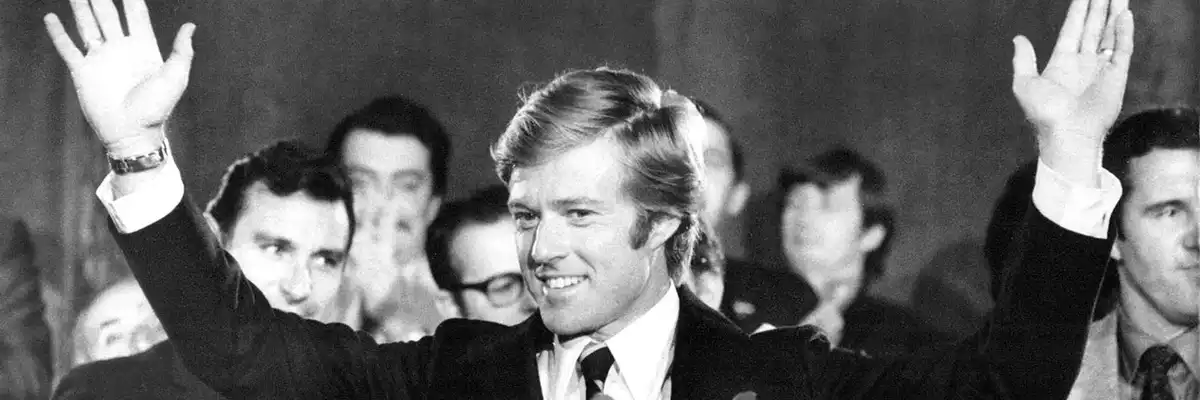
Robert Redford starred in the 1972 film “The Candidate.”
(Photo: Warner Bros. Pictures/Photofest)

Miles Mogulescu
Sep 18, 2025
Common Dreams

One morning my wife answered the phone and someone said, “Is Miles there? It’s Robert Redford.” My wife yelled audibly, “There’s some joker on the phone who says he’s Robert Redford.” I grabbed the phone, and it was indeed him. I had submitted a screenplay written by Larry McMurtry (“Terms of Endearment, “Lonesome Dove,” etc.) for Redford to potentially direct, and he wanted to meet in person.

We did have several meetings in his modest offices that lasted close to an hour each and were much more thoughtful and substantive than most meetings I’ve had with actors and directors. He treated me as an equal, even though he was the biggest movie star in the world and I was just a relative newcomer, having made an Oscar-nominated documentary, managed The Film Fund which made grants to indie filmmakers, and co-founded The Independent Feature Project which later morphed into Film Independent which gives the annual Independent Spirit Awards. We had in-depth discussions of McMurtry’s characters, the meaning of the location (Montana), and the screenplay’s sub-themes about the dangers of strip mining. For a variety of reasons (probably mistaken in retrospect) I went instead with Francis Coppola to produce who shortly after went bankrupt and tied up the rights to McMurty’s screenplay for 7 years, until it was finally made through HBO.

I’m mourning Redford’s passing this week, not just because I knew him, however slightly, but because of his singularity in Hollywood as an actor, director, producer, social justice/environmental activist, and founder of the Sundance Film Festival.


Leaked Chats Show Alleged Kirk Killer ‘Doesn’t Fit Into Any Tidy Narrative’


Although often dismissed as an acting lightweight because of his extraordinary good looks, Redford actually brought psychological depth and insight to the characters whom he played. Despite all of his dozens of great performances, he never won an acting Oscar, although he received a directing Oscar for “Ordinary People.” (He was also awarded an honorary Oscar for “inspiration to independent and innovative filmmakers everywhere” in founding The Sundance Film Festival.)

Redford’s passing symbolizes what I believe to be the impending death of the theatrical film as we’ve known it for over a century to financialization, monopolization, and AI. The movie moguls of old may have wanted to make a profit but they also loved movies. Does David Ellison have that same passion? (I plan to be writing more about this.)

As Hollywood declines, I don’t think there will ever be another figure like Robert Redford.

“What do we do now?” Bob’s politician character fatefully asks in the final line of his film “The Candidate.”

I wish Bob were still around to help us answer that question.