Monday, September 22, 2025

GUNBOAT DIPLOMACY HUBRIS

White House Releases Video of Third Caribbean Boat Strike
Alt
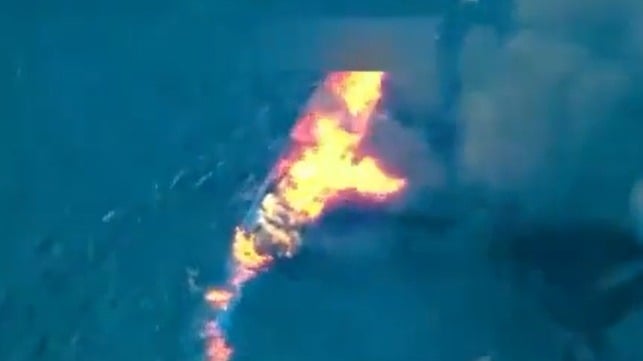
Venezuelan boat burns after a strike in international waters, Sept. 2025 (White House)

Published Sep 21, 2025 7:35 PM by The Maritime Executive


On Friday, the Trump administration announced a third strike on a suspected smuggling boat in the Caribbean, resulting in the deaths of three individuals on board. The attack brings the fatality count for the new interdiction campaign to 17 in total. 

According to a statement on the president's social media platform, Truth Social, the strike occurred in international waters in U.S. Southern Command, and no U.S. forces were harmed. The previous two attacks were reportedly carried out by drone operators working for U.S. Special Operations Command (SOCOM), without prior boarding or attempts at arrest - a departure from the previous Coast Guard-led law enforcement effort in the Caribbean. 

The strike appears to have been far from Venezuelan shores. Officials in the Dominican Republic reported Sunday that the National Drug Control Directorate (DNCD) and the Dominican Republic Navy (ARD) followed up after the U.S. air strike on the speedboat, working in conjunction with U.S. forces. The Dominican authorities reportedly seized 377 packages of cocaine at a position about 80 nautical miles south of Beata Island, closer to Dominican shores than to Venezuela. 

Lawyers within the Pentagon are reportedly concerned about what the strikes could bring for the military personnel involved, who could bear personal liability in the event that a court determined that these interdictions are unjustified. The current Authorization for Use of Military Force (AUMF), the congressional act that authorizes the White House to take lethal action abroad, dates back to 2001. It is limited to Al-Qaeda and other jihadist groups with ties to the 9/11 attacks. Some military lawyers and retired JAG officers believe that the authorization does not extend to cocaine traffickers, even if the White House has declared a Venezuelan gang to be a terrorist organization, and there is active debate over whether the president's Article II powers (as Commander in Chief of the Armed Forces) extend to lethal force against noncombatants. 

The individuals on the boats were likely fishermen with a side business in cocaine logistics, local residents on the Paria Peninsula of Venezuela told AP. With Venezuela's economy in tatters and the region's fisheries depleted, locals have few ways to make a living, and occasional trips for cocaine smugglers and human traffickers offer those with workboats a way to live well. The smuggling boats are reportedly easy to distinguish because of their large, powerful and plural outboards, which deliver far more horsepower than the equipment used by "legitimate" fishermen. 

The strikes have caused concern among the peninsula's entire fishing community, not just those engaged in illicit trade. President Donald Trump has warned that Venezuelan fishermen might not want to go out right now, and many of them agree; anecdotally, fishing activity off the coast has fallen. Venezuela's National Aquatic Institute has announced a ban on fishing more than 30 miles off of the northern Paria Peninsula, and the Venezuelan military has pledged to protect fishing interests in the area. 

"I'm afraid to go fishing because of the situation they're doing to us, because it's not anyone's fault what's happening. In reality, one goes out to work fearfully to earn their daily bread," fisherman José Machado told Telemundo. 


Bangladesh: A Polarized And Divided Nation? – Book Review

"Bangladesh: A Polarized and Divided Nation?" 
by Dr. Habib Siddiqui


By 

As the title suggests, this book is about Bangladesh—its historical journey, present challenges, and future prospects. Dr. Habib Siddiqui offers a compelling and deeply researched analysis of the forces that have shaped the nation, arguing that Bangladesh’s troubles stem not merely from economic underdevelopment or external pressures, but from internal political, institutional, and cultural fractures that have never fully healed.


The central theme of the book revolves around the derailment of Bangladesh’s founding vision of a “Sonar Bangla”—a golden Bengal—and the urgent need for course correction. Siddiqui contends that the country’s polarization is deeply rooted in its birth, the narratives constructed around its founding, and the evolution (or stagnation) of its political institutions. He believes that only through honest reckoning with history, institutional reform, inclusive governance, and a culture of compromise can Bangladesh move toward a more unified and stable democracy.

Dr. Siddiqui is a peace activist and prolific author, having written nearly two dozen books on the suffering of minorities—from Myanmar to Palestine to Bosnia. He was among the top students at Rajshahi Cadet College, excelling across a remarkable range of disciplines—science, social sciences, history, politics, geography, and literature—demonstrating the breadth of a true polymath. Intellectually honest and morally upright, he consistently set a high standard for both scholarship and character. I can attest to this with certainty, as I was his batchmate at the same cadet college.

Afterward, Siddiqui pursued undergraduate studies at BUET, followed by graduate work in Chemical and Nuclear Engineering at some of the most prestigious universities in Canada and the USA.

I first read this book three years ago, before the fall of the Hasina regime, and found it to be one of the most insightful works on the socio-political landscape of Bangladesh. It is extensively researched, drawing from both personal experience and historical sources. There is hardly any topic of socio-economic importance that has been left untouched. Fast forward to today—just over a year after the student uprising—the stark predictions Siddiqui made have proven remarkably accurate.

The book highlights how rivalry between major political parties has deepened divisions, making bipartisan cooperation nearly impossible. It details how state machinery was weaponized to silence opposition voices, including journalists, activists, and political opponents. Institutions meant to uphold democracy—such as the judiciary and election commission—were compromised or politicized. The growing intolerance for dissent led to a shrinking space for civil society and independent media.


Siddiqui warned that unless Bangladesh addressed these systemic issues, it risked sliding further into authoritarianism, undermining the democratic aspirations of its people. This totalitarianism, without an escape valve, eventually triggered a major upheaval—the student-led movement for change that culminated in July 2024. Siddiqui draws on Hegelian dialectics to frame this moment: if authoritarianism was the “thesis” and the uprising the “antithesis,” then the country now stands at the threshold of “synthesis.” Whether this synthesis will integrate useful elements of both systems or erase the old order entirely remains to be seen. Ultimately, the future will be decided by the people of Bangladesh—through the power of the ballot.

Importantly, Siddiqui argues that polarization is not just a political issue—it’s a societal crisis. The inability to compromise or tolerate dissent threatens the very foundation of democracy. He calls for inclusive governance, electoral reforms, revitalization of civil society, and a return to democratic norms rooted in the spirit of 1971.

Siddiqui’s personal background adds depth to his analysis. His father, a wealthy businessman from Chittagong and close associate of Sheikh Mujibur Rahman, was a top financier of the Awami League. Siddiqui himself was an active member of Chhatra League, the student wing of the Awami League. Despite these affiliations, he has remained nonpartisan since the mid-1970s, and this neutrality is evident throughout his discourse.

One of the most striking quotes from the book is: “The first casualty of war is: Truth.” Siddiqui uses this to challenge the widely accepted figure of three million deaths during the 1971 war—a number that originated from the Soviet propaganda outlet Pravda and was later amplified by British and global media. Independent experts estimate the actual figure to be between 150,000 and 300,000. Siddiqui emphasizes that even one death is too many, but insists that historical accuracy is essential for national healing.

The book also bravely addresses the atrocities committed against the Biharis—Urdu-speaking minorities—during and after the war. As a Bihari myself, I find this part of the book both painful and necessary. It brings back memories of events within my extended family and my own close encounter with destiny. Siddiqui’s willingness to confront uncomfortable truths is one of the book’s greatest strengths.

In conclusion, Bangladesh: A Polarized and Divided Nation? is a must-read for anyone seeking to understand the country’s complex history and political evolution over the past fifty years. It is a comprehensive, unbiased, and deeply thoughtful work that brings together scattered narratives into a coherent whole. Whether you are a student, academic, policymaker, or simply a concerned citizen, this book offers invaluable insights. I recommend it wholeheartedly.


Mohammad Masud Alam

Mohammad Masud Alam is a retired banker having worked in Societe Generale Bank, Bank of Montreal, National Bank of Oman and United Bank Limited.


When every second counts: How AI can speed up disaster response decisions


Cranfield University


In an unfolding disaster situation, quick decisions need to be made on how to respond and where to direct resources, to preserve life and aid recovery efforts. With the rapid development of AI, unmanned aerial vehicles (UAVs) and satellite imagery, initial efforts have already been made to apply AI to disaster situations, giving quick insights to response teams and autonomously making decisions on relief operations. But whilst AI may speed up processes, there is a risk that errors or bias could have severe consequences.

Implementing ethical AI use in disaster situations

Now, a research team led by Cranfield University is addressing the challenge of balancing the advantages of automation with the need to ensure safety, fairness and its ethical use by developing a structured AI decision-making framework. The proposed framework in the study has demonstrated more consistent and accurate decisions than human operators and conventional AI with 39% higher accuracy than humans across various scenarios.

“Bringing AI into disaster response is not just about creating smarter algorithms,” said Argyrios Zolotas, Professor of Autonomous Systems & Control at Cranfield University. “It’s about helping to facilitate faster, safer, and more resilient decision-making when lives and critical infrastructure are at risk. It’s vital that we go forward in a responsible way to ensure that AI use is ethical, transparent and provides reliable outcomes. Our work in this study gives a valuable view of one way this can be achieved.”

Key research outcomes and future impact

The researchers focused on three outputs:

  • Designing a novel framework for autonomous decision-making in safety-critical scenarios, giving a foundation for responsible AI applications in disaster management.
  • Developing an AI agent that uses this framework to enhance its choices during a crisis.
  • Validating the AI's effectiveness through a human evaluation study, showing its potential to support human operators.

The structured AI framework, proposed in this study, demonstrated a 60% greater stability in consistently accurate decisions across multiple scenarios, providing more predictable outcomes than systems that rely on human judgement. The proposed framework could pave the way for more responsible and effective AI in real-world emergencies.

The paper Structured Decision Making in Disaster Management is published in Nature Scientific reports.

The research was undertaken as part of an MSc Applied AI project by Julian Gerald Dcruz, supervised by Dr Miguel Arana-Catania and Professor Argyrios Zolotas of Cranfield University’s Centre for Assured and Connected Autonomy, in collaboration with Niall Greenwood of Golden Gate University.

ENDS

Why The Bursting Of The AI Bubble Would Be Good For The Economy – OpEd

robot cyborg artificial intelligence

By 

It has become common in recent months for people in the business press to note both that AI stocks seem to be in a bubble and that this bubble is driving the economy. In many ways this situation looks similar to the late 1990s tech bubble. 


At that time, price-to-earnings ratios in the stock market were roughly the same as they are today. The soaring market then was also driving the economy, as people were consuming based on their new bubble-generated wealth. Also, the insane valuations of many new Internet companies was leading to an investment boom in the tech sector. 

When the bubble finally burst, we got the 2001 recession. While this downturn was mild from a GDP perspective, the story was much worse if we focus on the labor market. We did not get back the jobs lost in the recession for four full years. At the time, it was the longest period without job growth since the Great Depression. 

Anyhow, the immediate impact of the collapse of the AI bubble will undoubtedly be negative, but there are reasons to still think it would be good for the economy and for most workers. This is best demonstrated by a recent analysis from Moody’s which shows that all the real spending growth over the last year has come from the top quintile of the income distribution. Everyone else has been just treading water.

This fits with other data that show weakening nominal wage growth, with the wage increases for workers in the lowest paying jobs not even keeping pace with inflation. It’s not surprising that consumption for these workers would be stagnating or falling.

To see how this relates to the AI bubble, we can think of the economy as being like a huge bathtub with an open drain. We have two faucets that put water into the tub. The goal is to keep the tub filled but not overfilled. This would correspond to the labor market being at full employment and the economy operating at its capacity.


If the water flows into the tub too slowly, we have unemployment and excess capacity. We are wasting economic potential and workers are being denied the opportunity to work. If the water flows into the tub too quickly, the bathtub overflows and we get water all over the floor. This would be the inflation story.

The two faucets are labeled “rich people” and “ordinary workers.” At the moment, the rich people faucet is wide open, and the water is gushing out. This is the money generated by the AI bubble. There is just a trickle coming out of the ordinary workers faucet. 

When the AI bubble bursts, the water coming out of the rich people faucet will also slow to a trickle. This means water will be draining out faster than it is flowing in, and the water level in the tub will drop. This would mean a recession, and an increase in unemployment.

That is bad news for everyone, but the lower water level in the tub means that we have the option to turn the flow from the ordinary workers faucet higher, without causing the tub to overflow. And we do know how to turn the flow higher.

The easiest route is for increasing the flow is to simply have the Federal Reserve Board lower interest rates. That will somewhat boost demand by allowing more people to buy homes and to a lesser extent cars and other big-ticket items. People will also refinance mortgages at lower rates, freeing up money to spend on other things. Lower rates will also provide a modest boost to investment.

The other route for increasing the flow from the ordinary workers faucet is to have the government increase spending. It can boost spending in areas like healthcare, education, and childcare. This would both provide real benefits to people and also stimulate the economy. It can also reestablish and enhance the subsidies for a green transition that Trump killed earlier this year. This will both create jobs and have near-term and long-term environmental benefits.

There is of course no guarantee that Congress will boost spending enough to again fill the bathtub, possibly leaving us with high unemployment for a long period of time. That was the story after both the collapse of the tech bubble in 2000-01 and the collapse of the housing bubble 2007-09. 

But this is a political obstacle, not an economic one. The collapse of the AI bubble will create the room the economy needs for policies that would make the lives of tens of millions of people far better. This is why we should all be fans of the collapse and not worry that we are cheering against the home team. For the vast majority in this country, the stock market is not the home team.  


Dean Baker

Dean Baker is the co-director of the Center for Economic and Policy Research (CEPR). He is the author of Plunder and Blunder: The Rise and Fall of the Bubble Economy.

Dead Sea Saltwater Seepage ‘Spurs Sinkholes, Crop Loss’

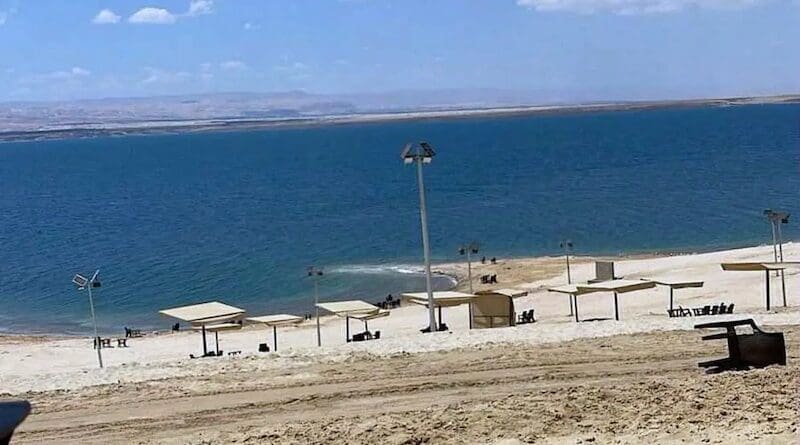
The Dead Sea. A study confirms that its saltwater is penetrating deep into the ground, threatening farms, driving sinkholes and infiltrating freshwater aquifers in the Jordan Rift Valley. Copyright: Courtesy of Dhabia Al-Ghazzawi.

By 

The Dead Sea — one of the world’s saltiest lakes — has long been facing a crisis of declining water levels. But now there is a silent threat lurking beneath the surface


A study has confirmed that saltwater is penetrating deep into the ground, threatening farms, driving sinkholes and infiltrating freshwater aquifers in the Jordan Rift Valley, a fertile agricultural area that stretches along the Jordanian border.

Scientists found that saline water is seeping through ravines and geological faults in the valley, reaching a depth of about 100 metres and extending up to 1.75 kilometres into the shallow aquifer, an underground layer of rock that stores water near the earth’s surface.

Jafar Abu Rajab, a lecturer in the department of earth and environmental science at

Jordan’s Hashemite University, says this could have profound implications.

“The Dead Sea is a unique natural laboratory and any small change in the balance between its salt water and the fresh groundwater around it can have dramatic consequences on land,” he tells SciDev.Net.


Sinkholes

The most severe salinity intrusion occurred in the Wadi Bin Hammad valley, northwest of the city of Karak in Jordan, where the water seepage extends parallel to an active strip of sinkholes, which have swallowed up agricultural areas and cut off roads.

The researchers say it reveals a direct link between the seepage and the sudden appearance of sinkholes on the surface.

The study, published in the journal Scientific Reports, is the first to document these leakage paths. It includes new maps prepared using advanced electromagnetic imaging technology, which researchers say captures the movement of hidden saltwater underground, as well as being faster and less costly than other methods.

“The sinkholes – which appeared as a result of this imbalance – swallowed fields and roads, and new streams carved their way through the mud, forcing farmers to abandon their land despite repeated attempts to fill in the sinkholes and repair the land without success,” says Abu Rajab.

“The situation regarding groundwater remains unclear, due to the lack of accurate official data on specific wells or their salinity levels. However, farmers rely on surface wells for irrigation, and there are increasing signs of salinisation in the absence of regular monitoring.”

Crop losses

According to Abu Rajab, there are currently no official Jordanian sources accurately showing the extent of agricultural losses or changes in groundwater quality.

However, Jordanian farmers say they are already feeling the impacts of saltwater seepage on their crops.

Dhabia Al-Ghazzawi, a member of Jordan’s women farmers’ union, tells SciDev.Net: “The salinity of the Dead Sea has increased the salinity of the soil and affected the water in the wells, killing our trees and reducing our harvest, making our farming no longer viable.

“The trees on my farm are not growing, their leaves are yellow, and their yield is so low that even the taste of the fruit has changed.”

She adds that while some farmers are trying to cope with the crisis with limited means, many have no choice but to leave their land.

“Those who have the financial means try to mitigate the situation with additional irrigation or soil testing, but most farmers have been forced to leave their land due to agricultural and financial losses,” she says.

The impact of the phenomenon is not limited to farms. Abu Rajab points out that the damage has spread northwards to hotels and resorts on the Dead Sea coast, where sinkholes and landslides have damaged roads and infrastructure, requiring costly repairs to ensure the continuation of tourist activity.

Al-Ghazzawi says this has also affected young people, impacting on job opportunities and wages and worsening living costs for families in the region.

Reducing risks

The research team carried out 195 field measurements over an area of 12 square kilometres in Ghor Al-Haditha, on the eastern shore of the Dead Sea in Jordan, producing accurate maps of the salt intrusion paths.

Abu Rajab says the maps provide an early warning tool that helps communities avoid digging wells in dangerous areas and directs water projects to a safer location.

“They also enable decision-makers to protect drinking water sources and guide water policies, rather than waiting for disaster to strike,” he adds.

Karem Abdelmohsen, a research associate at the School of Sustainability at Arizona State University, in the US, who was not involved in the study, says it showed that shallow groundwater is most affected, while deep groundwater remains less threatened.

He says it also linked intrusion pathways to geological structures such as faults, revealing their role in accelerating the movement of saline water.

However, he points out that “relying solely on physical measurements for mapping requires supporting the results with chemical analyses of well water or additional geophysical methods to increase accuracy, especially at greater depths”.

Osama Sallam, water projects manager at the Environment Agency-Abu Dhabi, who also had no role in the study, says the findings make a valuable contribution to sustainable agriculture, providing accurate data on the overlap of saltwater and freshwater and making recommendations to drill monitoring wells to reduce risks.

Abdulmohsen and Sallam agree that what has been documented in the southern Dead Sea could have wider implications for the Arab region.

Areas such as the Nile Delta in Egypt or the Persian Gulf coast face similar challenges, where excessive pumping and rising sea levels due to climate change are accelerating the encroachment of salinity into groundwater.

Abdulmohsen adds: “Using the same study methodology in other areas will help identify the points most vulnerable to climate change and sea level rise and develop effective resource management policies.”

This article includes contributions from Najat Shannaa, SciDev.Net correspondent in Jordan, through the inclusion of comments from farmer Dhabia Al-Ghazzawi.

This piece was produced by SciDev.Net’s Middle East and North Africa desk.


Mohammed El-Said

Mohammed El-Said writes for SciDev.Net.