Monday, September 29, 2025


Supertanker Rates Hit Three-Year High on Rising Crude Flows

  • In recent weeks, VLCC rates on the benchmark Middle East-to-China route hit the threshold of $100,000 per day.

  • Tanker owners and shipbrokers expect the strength in the supertanker market to spill over to smaller-sized vessels such as Aframaxes and Suezmaxes.

  • As OPEC+ continues to raise production, shipments out of the world’s key exporting region, the Middle East, are on the rise.

Rising crude supply from OPEC+ and South America and a marked increase in longer-haul routes have hiked freight rates for supertankers, the so-called very large crude carriers (VLCCs) capable of transporting up to 2 million barrels of oil, to levels last seen nearly three years ago.

Tanker owners and shipbrokers expect the strength in the supertanker market to spill over to smaller-sized vessels such as Aframaxes and Suezmaxes and continue into the fourth quarter of the year.

In recent weeks, VLCC rates on the benchmark Middle East-to-China route hit the threshold of $100,000 per day. That was the highest in almost three years and well above the previous 2025 high during the Israel-Iran conflict in June, when fears of disruption to supply or trade flows sent charter rates soaring.

The last time VLCC rates were at the current high levels was in 2022, on the back of the Russian invasion of Ukraine and the massive crude oil releases from the U.S. Strategic Petroleum Reserves, U.S.-based brokers Poten & Partners said.

This time, the spike in freight rates is not the result of another geopolitical upheaval. It reflects fundamentals that are currently favorable for tanker owners and operators—rising supply from the Middle East and the Americas and stronger flows to Asia.

As OPEC+ continues to raise production, shipments out of the world’s key exporting region, the Middle East, are on the rise. Additionally, Saudi Arabia has slashed the prices of its crude loading for Asia next month, further incentivizing crude flows to the top oil-importing region.

Moreover, Middle Eastern producers are set to ship more crude after the end of the scorching summer, during which many countries in the region use direct crude burn for electricity.

The global tanker fleet is now split between tankers and tanker owners complying with the sanctions on Iran and Russia and the price caps on Russian crude, and those that do not and enter the shadow fleet. This further squeezes supply for tankers to move crude around the world.

As a result of all these factors, the spot rate for a VLCC on the Middle East to China route has jumped to at least $6.6 million, the highest level since November 2022, with daily rates on several chartered tankers hitting $100,000.

Oil supply increases from the Americas and strong demand for long-distance shipments everywhere are supporting tanker rates, Lars Barstad, CEO at Norway’s tanker giant Frontline, told Bloomberg earlier this month.

“We've had a seasonally strong summer market, which again kind of confirms this positive demand growth as we see it,” Barstad said on the Q2 earnings call at the end of August.

“OPEC cut reversals are expected to yield increased exports from the Middle East as we approach winter,” the executive added.

Additional sanctions on the three major sanctioned producers – Russia, Iran, and Venezuela – could further benefit compliant tanker owners and operators, analysts say.

“As an ever larger portion of the tanker fleet is being sanctioned, mainstream tanker owners should benefit from increased ton-mile demand, not only for Aframaxes and Suezmaxes, but other segments too,” Poten & Partners said in a note carried by Seatrade Maritime News.

Yet, the soaring freight rates could become victims of their own success as high shipping costs have already started to narrow the U.S.-Asia arbitrage, potentially removing a major long-haul tanker route, at least for a few weeks.

The arbitrage window for U.S. crude sold in Asia is shrinking amid higher tanker rates and rising WTI premiums. The additional cost for carrying crude from the U.S. Gulf Coast to Asia has now reached $1.75 per barrel, a trade source told Reuters this week.

“That alone would close the arb,” the source said.

While the downside to VLCC rates appears firmly capped, “the sky is not without clouds,” brokers Fearnleys said in a weekly report this week.

“The surge in shipping costs and WTI premiums has all but shut the US-Asia oil arbitrage putting a damper on the Atlantic market.”

By Tsvetana Paraskova for Oilprice.com


Seaspan Invests $140 Million in Outfitting Pier to Speed Up Construction

Seaspan new pier
Courtesy Seaspan

Published Sep 28, 2025 3:39 PM by The Maritime Executive


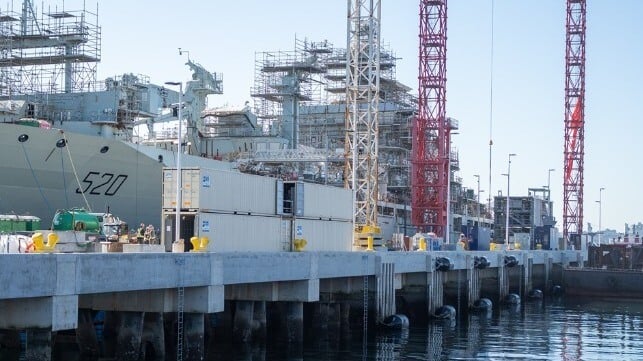
Seaspan is seeking to secure its competitive advantage in Canada’s shipbuilding following the completion of an outfitting pier at its Vancouver shipyards. The pier provides the company with extra capacity, giving it the required muscle to battle for large navy and coast guard vessels contracts that Canada is implementing through its National Shipbuilding Strategy (NSS).

Constructed in partnership with design and engineering firm Stantec, the new pier measures 890 feet by 60 feet. The steel and concrete facility is designed with heavy load capacity and environmental safeguards, and it replaces a timber pier that has been in existence for six decades.

Of critical importance is the fact that the facility is engineered to support the demands of heavy outfitting operations and is resilient to future sea level rise considerations, extreme storm surge events, and seismic hazards in one of Canada’s highest seismic zones.

Utilization of the new pier has already begun, with Royal Canadian Navy (RCN) joint support ship (JSS) HMCS Protecteur currently being outfitted at the facility. Protecteur is the largest of two JSS vessels that are being built under the NSS and will replace the auxiliary oiler replenishment vessels that have reached the end of their operational lives.

Delivery of the ship has been delayed by six months from the end of this year to 2026 due to what has been described as “requiring more production effort”. With a length of 173.7 meters, Protecteur is the longest naval vessel to ever be built in Canada. Construction of the second ship, Preserver, remains on schedule with delivery planned for 2027.

Seaspan highlights that to support key ship outfitting and maintenance operations, the new pier is designed to accommodate integrated tower cranes, civil utilities/drainage, vehicle traffic, service towers, and specialized shipyard equipment with high live and dynamic loads.

The facility is also designed to address potential future needs with crane pockets that can be configured in different ways to support outfitting and production, as well as different shore power capabilities to support different ship requirements.

The pier is part of the over $140 million that Seaspan has invested in recent years in shipyard modernization, development of a skilled workforce and state-of-the-art, purpose-built infrastructure to deliver large, complex vessels. Implementation of the project commenced in 2020 with the environmental review permitting process, with construction starting in 2023.

“The new outfitting pier reflects our continued investment in the future and longevity of shipbuilding in British Columbia,” said Julianne Nezgoda, Director – Facilities, Seaspan Shipyards. “With the new pier already in use, Seaspan continues to show it has the facilities and infrastructure to design, build and deliver ships effectively and efficiently on Canada’s West Coast, ensuring the RCN and Coast Guard have the ships they need to protect Canada’s security and sovereignty.”

Seaspan is among yards selected as non-combat shipbuilders under the NSS and continues to bid for major contracts. So far under the NSS, the company has built and launched five ships. More than 20 large vessels, including the Coast Guard’s new heavy polar icebreaker, are currently under construction by the company.


NATO Moves Frigate to Copenhagen to Counter Mysterious Drone Threat

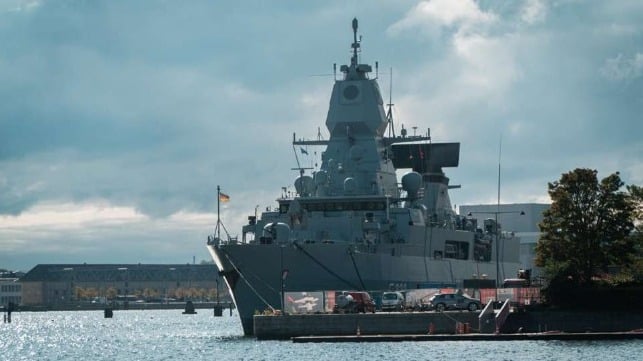
Frigate Hamburg in Copenhagen's harbor (NATO Maritime Command)

Published Sep 28, 2025 8:30 PM by The Maritime Executive


The German Navy has deployed a frigate to Copenhagen to contribute to regional air defense during a European Union summit on funding for Ukraine. Denmark's armed forces have reported concerning levels of drone activity over military bases and critical infrastructure since September 22, when a small swarm of drones buzzed Copenhagen's main airport and grounded dozens of flights.

The German frigate Hamburg was on patrol in the central Baltic as part of the NATO maritime security operation Baltic Sentry, itself a response to suspicious "gray zone" activity at sea. Last week, the warship diverted from its operating area and headed for Denmark, and she is now berthed at a pier in the Langelinie district of Copenhagen's central harbor, next to the historic Kastellet fortress. 

Hamburg is a Sachsen-class air defense frigate, and is equipped to carry SM-2 and Sea Sparrow surface-to-air missiles, plus the short-range Rolling Airframe Missile (RAM) for threats within five miles. The SM-2 loadout gives Hamburg the ability to project an air defense umbrella as far as 90 nautical miles in any direction, limited by the number of missiles in her VLS cells. The main airport is only six nautical miles away to the south, well within range for her complement of Sea Sparrow missiles. 

In addition to the redeployment of the Hamburg, the German military is providing Denmark with certain shoreside counter-drone systems (as-yet-unspecified) during the EU meeting. 

To ease identification of hostile targets and clear the airspace, the Danish government has ordered a weeklong ban on all civilian drone operations anywhere in Danish airspace from September 29 through October 3. Violators face up to two years in prison or a fine for breaches of the decree. "We cannot accept that foreign drones create uncertainty and disturbances in society, as we have experienced recently. At the same time, Denmark will host EU leaders in the coming week, where we will have extra focus on security," said transport minister Thomas Danielsen in a statement Sunday. 

Denmark's military confirmed even more new drone sightings over military bases on Sunday, the day that the decree entered effect. Danish authorities believe the drone raids are directed by a sophisticated and well-resourced operator, and while they have so far declined to name suspects, they have also declined to rule out Russia. 

The Russian military is one of the world's most sophisticated operators of drone technology, having honed its capabilities on the battlefront in Ukraine, and has repeatedly violated the eastern outskirts of NATO airspace with apparent probing operations in recent weeks. The EU meeting in Copenhagen this week will have direct bearing on Moscow's interests: it will include a discussion of how to respond to Russian airspace violations, as well as a conversation about how to finance Ukraine's ongoing defense against Russian air and ground operations. 

There are circumstantial hints of a Russian connection in the Copenhagen raid: the three vessels suspected of serving as drone launchpads during the attack all have ties to Russia, some more than others. According to investigative journalism outfit Danwatch, one of the vessels - the Norwegian-owned Oslo Carrier 3 - has links to Russian paramilitary outfit RSB Group. The operator maintains a division in the Russian Baltic exclave of Kaliningrad, and the director of that division appears to have a close working relationship with RSB's owner, according to Danwatch. RSB is believed to be closely aligned with the Kremlin's military establishment, like other Russian paramilitary groups. 

Ukrainian President Volodymyr Zelensky warned Sunday that the Russia-serving "shadow fleet" of under-regulated tankers could serve as a launch pad for malign covert operations in Europe. "This [drone raid in Copenhagen] is further evidence that the Baltic Sea and other seas should be closed to Russian tankers, at least for the shadow fleet," Zelensky said. 


Quality Over Quantity

New leadership at the Panama Ship Registry, the world’s largest by number of vessels, has dramatically improved compliance, purged sanctioned vessels and improved its image.

Panama

Published Sep 28, 2025 9:02 PM by The Maritime Executive


(Article originally published in July/Aug 2025 edition.)


It's the story of the year among flag states. Once seen as a sanctionable fleet, the Panama Ship Registry is now among the world's best in terms of compliance rates and has deleted hundreds of ships in the process.

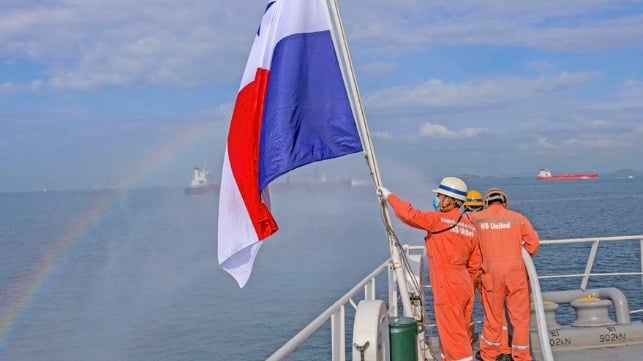
"We made a 180-degree turn," says Ramón Franco, a year after being appointed General Director by Panama's President, José Mulino. "We were perceived as a registry with a sanctionable fleet, so we chose to delete tonnage and lose ships and thereby demonstrate to the world that we are a responsible and transparent registry."

The transformation, still ongoing, has been a huge success. After all, it's a 100+-year-old registry, founded in 1917, and basically wrote the rules of the game. It's most important asset – like every organization and especially government agencies – is its reputation. "We've improved our image," Franco adds, "and we continue to invest in our quality improvement programs."

It's still the biggest flag state with approximately 15 percent of the global fleet, but the vision has changed. "We're reinventing ourselves," says Franco. "We don't want to be seen as the biggest registry only, but as the best registry in terms of excellence. We're emphasizing quality over quantity."

There's one remaining hurdle – the Paris MOU's White List. Panama currently sits on the Grey List – in the middle in terms of ratings, which are issued on a rolling three-year basis – and is determined to make the leap. It's already on Tokyo's White List, and Franco is confident: "It's a technical issue, and our numbers have improved."

ORGANIZATION

The Panama Ship Registry is actually part of the Panama Maritime Authority (PMA), the agency responsible for the regulation and promotion of the maritime industry in Panama. It's one of four so-called Directorates – Ports, Seafarers, Public Registry and Merchant Marine. The registry falls under the Merchant Marine rubric, and Franco's actual title is a long one – General Director of Merchant Marine, Panama Maritime Authority.

"It basically means the Director General of the Merchant Marine is the head of the Panama Ship Registry," he explains.

The Ports Directorate is responsible for – you guessed it – the nation's bustling ports. It's also involved with things like tariffs and port fees and, of course, the all-important issue of navigation and safety in national ports.

The Seafarers Directorate is responsible for – you guessed it again! – the training and certification of Panama's 600,000+ seafarers, a huge number for a small country. And the Public Registry handles ship mortgages, titles of ownership and liens/encumbrances.

The PMA is not to be confused with the Panama Canal Authority, which regulates traffic and rates through the 48-mile-long "path between the seas." They are separate government entities, both committed to promoting Panama's position as a global maritime and logistics hub.

HISTORY & MISSION

Founded three years after the opening of the Panama Canal in 1914, the Panama Ship Registry was originally intended for Panamanian-owned and operated ships only.

In the years that followed, it went through many different iterations and name changes, eventually becoming an open registry with ships from all over the world. It offered numerous advantages – competitive fees, a global network of offices, the backing of the Panamanian government as well as commercial and technical benefits.

Its mission: "Provide nationality and jurisdiction to ships through legal certainty and high quality standards."

By 1993 it had become the world's largest ship registry. It's also become an important source of revenue for the Panamanian government – as is the Panama Canal Authority – although revenues from the canal far exceeded those from the registry.

Today there are more than 8,500 vessels in the registry, ranging from large ore, bulk and tank carriers to container ships, cruise ships, car carriers, fishing vessels and offshore workboats – all attracted by the numerous benefits offered by the Panamanian flag.

Maintaining high standards when you're the world's biggest registry is not an easy thing, and that was the challenge facing Franco when he took over last year. Standards had begun to slip, enforcement was lax – there was too much emphasis on growth and too little on quality control. A cultural change was needed.

He was the perfect person for the job. Experienced but still young, full of energy and enthusiasm, descended from a long line of lawyers and eager to serve his country. He was also President of the Panamanian Maritime Law Association and a distinguished private sector lawyer, so he brought a lot of credibility to the table.

He also brought his own plan of action, consisting of the three new pillars of organizational transformation, improving the customer experience and – most important – ensuring a safe and reliable, sanction-free fleet. He's accomplishing all three.

He says the transition from the private to the public sector was challenging – "It's like playing soccer and now you're playing basketball." But he navigated it successfully, learning a lot along the way, and currently supervises a staff of roughly 200, divided into four areas – commercial, support (quality management), compliance and technical. He's proud of his team. They stand by him and he stands by them: "There's nothing I'd ask them to do that I wouldn't do myself."

And that's the mark of a true leader.

"NUMBERS CHANGE, QUALITY REMAINS"

So the road ahead is clear. While much has been accomplished, there's always more to be done. And Franco is an early bird. He's at his desk before 8:00 am each day, having risen three hours earlier. He doesn't get home to his wife and young children till 8:00 pm at night. He loves coming into the office, being with his team and facing new challenges.

Asked what his biggest challenge is right now, Franco says there are really two challenges. One is the compliance challenge, which has been effectively remedied and is improving every day, and the other is the technical challenge of returning to the Paris MOU's White List. He'll get there, no doubt, and he'll do it while growing the registry at the same time.

"The numbers always change, but the quality remains," he observes. And that's a maxim to live by.

TONY MUNOZ is Founder, Publisher & Editor-in-Chief of The Maritime Executive.

The opinions expressed herein are the author's and not necessarily those of The Maritime Executive.

 

After WTO Ban on Subsidies, What Next for Global Fisheries?

Trawlers
Two subsidized fishing vessels in the South China Sea (USN file image)

Published Sep 28, 2025 10:35 PM by Dialogue Earth


[By Megan Jungwiwattanaporn, Tristan Irschlinger, Daniel Skerritt, Andrea Michelson, Zhang Yimo]

Countries across the world spend many billions of dollars every year subsidizing fishing that is environmentally damaging and unsustainable.

After years of tortuous negotiation under the auspices of the World Trade Organization (WTO), a global deal to reign in these subsidies emerged. The first part of this Agreement on Fisheries Subsidies finally entered into force this month, while a second part remains at the debate stage, held up by disagreements.

With consensus still lacking on crucial details, can these rules actually end subsidies that are contributing to overfishing across the world, and harming food supplies to some of the world’s most vulnerable people?

Dialogue Earth asked five experts for their views.

‘Fish populations finally have a chance to recover’

Megan Jungwiwattanaporn works on reducing harmful fisheries subsidies at The Pew Charitable Trusts

In the mid-1970s, 10% of fish stocks were fished at unsustainable levels. By 2021, that number had almost quadrupled to 37.7%. Subsidy-driven overfishing is depleting fish populations and hurting coastal communities who depend on a healthy ocean for their livelihoods and survival.

With the agreement now legally binding for the two-thirds of WTO member countries who have ratified it, fish populations finally have a chance to begin to recover.

And, as the WTO’s first sustainability-focused agreement, it paves the way for future multilateral treaties that protect the environment, and for broader fisheries reform at regional and country levels.

The agreement is also a step toward meeting one of the targets of the UN’s Sustainable Development Goals, which 193 countries adopted in 2015. As part of Goal 14, nations committed to reaching an agreement to end harmful fisheries subsidies.

But the work is not finished. Countries must implement the agreement by limiting some of the subsidies they give out that drive harmful practices. And WTO members must still finalize negotiations on additional rules that would end subsidies not included in the agreement: those that contribute to fishing in other countries’ waters and to overfishing and overcapacity, or a fleet’s ability to harvest more fish than is sustainable. Doing this will give fish populations an even better chance to recover.

‘‘Fish 2’ rules could bring even more progress’

Tristan Irschlinger is a senior policy adviser focusing on fisheries subsidies at the International Institute for Sustainable Development

The entry into force of the WTO agreement is a key milestone, and the next challenge will be to put these rules into practice effectively. But the story does not end there. WTO members are also negotiating a further set of rules, known as Fish 2, to make the agreement more comprehensive.

The current agreement, often referred to as Fish 1, targets specific situations where the harmful impacts of subsidies can be the most acute: illegal, unreported and unregulated fishing; overfished stocks; and unregulated high seas fisheries. Fish 2 aims to go further and prevent subsidies from contributing to overcapacity and overfishing in the first place. In other words, these further rules seek to better address the deep-seated and pervasive role of subsidies as a driver of unsustainable fishing.

As such, the impact of Fish 2 could be broader than Fish 1.

Talks on these additional rules advanced significantly and came close to conclusion in 2024, but progress has since slowed. It now appears unlikely that a final deal will be reached by the WTO’s 14th Ministerial Conference (MC14; March 2026). Still, the conference could play a critical role in injecting fresh momentum and steering negotiations toward a successful outcome. That should be the focus for WTO members at MC14.

‘Implementation is now key’

Daniel Skerritt is a senior analyst at the conservation NGO Oceana

With the agreement in force, attention turns from negotiation to implementation – at least for now. Starting 15 September, all ratifying members must comply with the Fish 1 rules: ending subsidies for illegal, unreported and unregulated fishing, fishing of overfished stocks, and unregulated high seas fishing. Equally important, members must now provide more complete and timely information on the scale, distribution and nature of their subsidy programs. This transparency is key to judging the successes – or failures – of Fish 1.

The agreement also empowers members to demand clarity from one another. For example, a country can request details about subsidies that support foreign vessels operating in its waters or ask for the scientific justification behind continued subsidization.

To support developing and least-developed countries, the newly launched Fish Fund will help build capacity for monitoring, reporting and compliance. This fund is important because it requires those providing the most subsidies to shoulder the greatest costs, ensuring the new commitments do not fall disproportionately on those least able to pay.

The clock has also started on the treaty’s four-year sunset clause. During this window, WTO members must agree to the more ambitious Fish 2 package, which is aimed at curbing capacity-enhancing subsidies that drive overfishing worldwide. Unfortunately, geopolitical headwinds have stalled talks and the vacant post of negotiation chair makes rapid progress unlikely. [The most recent chairperson, Iceland’s Einar Gunnarsson, stood down in July.]

Strong leadership from major economies, top subsidizers and coalitions such as the small island developing states and African, Caribbean and Pacific groups will be essential to keep momentum alive and deliver further meaningful reform.

‘This is a unique opportunity for Latin America, and for the ocean’

Andrea Michelson is regional coordinator of the Forum for the Conservation of the Patagonian Sea and Areas of Influence

The entry into force of the agreement marks a milestone on the road to better ocean governance and offers Latin America a unique opportunity to move towards better and necessary responsible management of marine resources.

Harmful subsidies not only endanger biodiversity and ecosystems, many of which are fragile, but also compromise the livelihoods, food security and economic resilience of the world’s most vulnerable coastal communities.

For countries in Latin America with vast coastlines and economies strongly linked to the sea, this is hugely important. On the one hand, it reinforces the role of regulations, transparency, regional commitment and an ecosystem approach. On the other hand, it opens up the possibility of redirecting and channelling financial resources towards responsible fishing and good practices.

Governments in the region must implement the agreement with commitment and dedication to the care of natural environments, coordinating efforts with all actors in the fishing sector, civil society and science. Only through multi-stakeholder engagement will this new regulatory framework translate into healthier, more resilient, equitable and productive oceans for present and future generations.

‘Significant implications for the world’s largest fisheries nation’

Zhang Yimo is the priority project coordinator of WWF China’s sustainable blue economy program

The entry into force of the agreement will have significant implications for China’s fisheries, particularly in enhancing the transparency of the nation’s subsidy policies.

The government has gained considerable experience in reforming fisheries subsidies in recent years. In 2021, it announced the abolition of fuel subsidies for fishing vessels. Instead, a new system was introduced in which only vessels that comply with certain conservation regulations can receive subsidies.

These “fisheries stewardship” subsidies in China still risk contributing to overcapacity and overfishing, according to a WWF report released last year. Under the existing framework, fishing vessel workers are not direct recipients of subsidies, and small-scale fishers receive significantly less support than those in the commercial sector. We recommend including vessel workers as subsidy recipients and ensuring income security for small-scale fishers, along with providing work-transition support for those who need to retire from fishing.

This is a significant year for China’s fisheries sector, as the country joined the Port State Measures Agreement and the WTO agreement, which it accepted in 2023, has come into force. These developments will strengthen China’s role in the global fight against illegal, unreported and unregulated fishing.

The WTO agreement coming into force encourages the global community to clarify many outstanding issues of harmful subsidies in fisheries – including who should receive subsidies and how to define overfishing.

This article appears courtesy of Dialogue Earth and may be found in its original form here

The opinions expressed herein are the author's and not necessarily those of The Maritime Executive.


Fraudulent Flags in Illegal Fishing: State Risks and Obligations

A fishing vessel transfers cargo to a reefer ship on the high seas (USCG file image)

Published Sep 28, 2025 7:20 PM by Dr. Ian Ralby


Open-source vessel tracking would indicate that there are at least six Bermuda-flagged fishing vessels operating in jurisdictions outside of Bermuda – one in Canada, one in Brazil, one in Iran, and three in China. Not one of those vessels is actually registered in Bermuda. In fact, a similar phenomenon is plaguing almost every CARICOM Member and Associate Member State. Foreign fishing vessels, often in areas far from the Caribbean, are using the flag states of the Caribbean region, but none of those vessels are actually registered in the Caribbean. This fraudulent use of the region’s flags is not just about optics – it degrades the reputation of those states, undermines the rule of law, and raises questions of state responsibility. It also means that perpetrators of illegal fishing in other parts of the world may be trading on the reputation of the Caribbean states in order to carry out their activities with impunity.

The preponderance of these illegitimately flagged vessels is in East Asia, with the overwhelming majority in China, and secondarily, Vietnam. In recent months, maritime news has been filled with stories of the “Dark Fleet” or “Shadow Fleet,” and now the unregistered “Renegade Fleet.” There are countless stories about sanctioned vessels and their flag-hopping to avoid accountability. However, this is a different phenomenon altogether. Fishing vessels are usually administered by the ministry that governs fishing, but if the state allows for foreign fishing vessels to be flagged into their jurisdiction, the ships are legally required to appear in the state’s flag registry, as well. With different state departments overseeing the grant and registration of fishing licenses and the registration of ships, often with little coordination, it seems that bad actors are taking advantage of a blind spot between two governmental entities that are involved in fishing and ship registration.

Article 91 of the United Nations Convention on the Law of the Sea (UNCLOS) provides that every state in the world – whether coastal or landlocked – the right to determine which vessels are allowed to fly its flag. With that, however, comes a variety of responsibilities to enforce the laws of the flag state onboard that vessel, regardless of where it sails. Outside of port and coastal state jurisdiction, the flag state has exclusive jurisdiction over that vessel, and thus considerable responsibility to ensure that its flagged vessel complies with the provisions of law in its operation and shows due regard to other states at sea. It is for reason of efficiency in enforcement and control by the flag state that Article 91 further clarifies that there must be a “genuine link” between the flag state and the vessel. What we see, in reality, is that there are dozens of vessels appearing to be flying the flag of a state to which they have no link at all and whose laws and responsibilities they have no plan to commit to or comply with. This raises a series of problems.

For the states whose flags are being exploited in this fashion, there is a need to be proactive in clarifying to the world that they are not taking responsibility for these vessels, as they are not legitimately registered. There is considerable reputational risk to the Caribbean flag states – and any other states around the world experiencing a similar phenomenon. The optics of association with bad actors, high-risk fishing operators and sanctioned entities may make it look like they are condoning such illicit behavior. States need to make it clear that these vessels – even if they are using mobile maritime service indicator (MMSI) numbers stolen from scrapped vessels that were once legitimately flagged – are not registered and are thus without nationality. Doing so proactively and regularly, rather than after an illegal incident has been announced, makes it easier for flag states to distance themselves from fraudulently flagged vessels undertaking illegal activities early on. The sanction of five tankers fraudulently flagged to Guyana in 2024 by the United States - leading to Guyana’s subsequent denial in defense of its shipping registry - demonstrates the impact of fraudulent flags on innocent flag states if not preemptively rejected. Recently, Saint Maarten has warned against fraudulent flag representations in order to preserve the integrity of its registry. Following this example, more states need to preemptively distance themselves from the vessels fraudulently flying their flag.

If the apparent flag of the vessel is not actually the flag state, there is a chance the vessels could conduct illegal operations with impunity. Vessels without nationality have a loose treatment under international law, requiring states to exercise the right of visit for verification purposes only, with no clear enforcement obligation. The silence on enforcement against such vessels trickle down to coastal states’ policies and laws. Thus, many coastal states around the world, lack legal processes for dealing with vessels without nationality and, at a minimum, are hesitant to take on such cases. This can not only undermine the rule of law, but increase the concerns around open registries - even though this is not an issue of open or closed registries, but the fraudulent appearance of being affiliated with a registry.

Since this issue among fishing vessels is occurring against the backdrop of similarly challenging flagging issues with the shipping industry, several new concerns may also arise. First, the response to this sort of behavior by coastal states may be an attempt to conduct more inspections to confirm registration, and, in so doing, hamper the freedom of navigation in violation of Article 58 of the UNCLOS. This is visible in the Baltic where safety inspections are being used as an antidote to the dark fleet and its propensity for cable-cutting. Fishing vessels transiting to other countries may therefore be stopped more regularly by coastal state navies and coast guards.

Second, the issue of fraudulent flagging may soon present a camouflaged combination of illicit activities - bad actors broadcasting identities as fishing vessels, using registries with which they have no affiliation, while actually operating as cargo vessels, carrying sanctioned or illicit cargo. The layers of confusion around the entities responsible for fishing as distinct from vessel registration and cargo transport may further complicate the situation, giving room for bad actors to avoid detection and interdiction. This further muddies the picture for legitimate maritime activities at a time when they are already under question thanks to the dark, shadow and renegade fleets, as well as the activities of fishing fleets associated with illegal, unreported and unregulated fishing.

Finally, it may lead to registries starting to impose more stringent restrictions on vessels, thereby increasing the regulatory burden on fishing vessels to be cross-listed within both the fishing vessel registries and shipping vessel registries of the flag state. From a procedural standpoint, this may signify a regression to more bureaucratic and rigid registration and verification processes, thereby causing administrative delays. Procedural bottlenecks are also likely to have significant economic effects in the long run, especially in regions like the Caribbean, where fishing produces a major part of the economic returns of states in the region. Overall, a ripple effect of distrust and stringency may impact the region’s economy and sustainability.

Ultimately, the maintenance of the rule of law at sea – and thus our global maritime system – requires the collaborative participation of all legitimate actors. The flag state regime on which we rely is under threat, and steps are needed to safeguard its effectiveness. To that end, regional bodies, such as the Caribbean Community’s Implementation Agency for Crime and Security (CARICOM IMPACS), may wish to publish regional guidance on this matter, combined with offering a regional statement on behalf of member states to help distance them from the vessels that are fraudulently flying their flag. At the same time, templates of statements should be offered to enable member States make similar public statements that expressly disavow the erring vessels and distance themselves from responsibility for such vessels. In the absence of a clear mechanism for addressing this issue, clear, transparent and unequivocal communication is the only way to try to guard against the harm that can come from high-risk fishing operators fraudulently availing themselves of the flags of Caribbean States.

Dr. Ian Ralby is President of Auxilium Worldwide, a charitable nonprofit that contributes to global harmony with, among other things, dedicated expertise on ocean governance.  Dr. Ralby is a recognized expert in maritime law and security with experience in over 100 countries around the world.  He is a fellow at the Center for Maritime Strategy and has previously served in various maritime security-related capacities at different government agencies and international organizations. 

The opinions expressed herein are the author's and not necessarily those of The Maritime Executive.
WAR IS ECOCIDE

The Tide is Turning - Russia Rattled as Refineries Razed

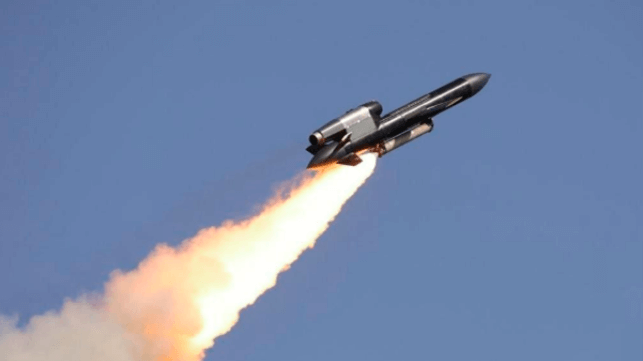
Ukrainian Flamingo cruise missile takes off (FirePoint)
A one-ton warhead on its way: A Flamingo using jet-assisted take-off (Credit: FirePoint)

Published Sep 28, 2025 3:02 PM by The Maritime Executive


President Trump, at the UN General Assembly on September 23, told his audience that Ukraine can "win all of Ukraine back in its original form," and get back "the original borders from where this war started." This turning of the tide may seem far away and of no particular relevance to the maritime community, but it is about to become so.

Such a forecast is a radically different outcome which until recently leading figures of the US administration had assumed - that Ukraine needed to sue for peace immediately, give up even Ukrainian land as yet unconquered by the Russians, all to forestall an inevitable defeat. Accompanying this narrative were suggestions that Ukraine was losing strategic positions to an unstoppable Russian war machine, underwritten by news organizations insufficiently skeptical of the Russian narrative.

Reality on the battlefield is that Ukraine has only lost marginal ground. No significant town has fallen to Russia in 2025. The key front line fortress of Pokrovsk remains in Ukrainian hands, despite having been Russia’s principal objective all year. Russia is sustaining huge manpower losses for the gains it has made, and sooner or later the anger of Russian mothers will coalesce. Russia’s air, missile and drone campaign has intensified, at huge cost, but seems not to have dented Ukraine’s will to resist, nor inflicted damage which cannot be repaired. At sea, Ukraine has confined most of the Russian Black Sea fleet to port, and can now trade more or less freely through the ports of Pivdennyi, Odesa, Mykolaiv and Chornomorsk. These essentially are components of stalemate.

However, two factors are changing the character of the conflict. In recent months, the use of small armed drones by both sides has created a dead zone either side of the front line which neither side can penetrate successfully. Both sides are exhausted, short of manpower, and unable to generate new strike forces. In the foreseeable future, the likelihood of a decisive breakthrough in the ground war has diminished sharply.

But the dynamic new element is the much improved prosecution by Ukraine of long-range air attacks by drones and cruise missiles, all the more effective because this new campaign is being skillfully targeted and coordinated.

The complex extended attack on Novorossiysk on September 23 showed the plan in action. Sea drones, possibly including the Toloka underwater drone with a one ton warhead, penetrated defenses of the harbor, currently the main base of the Black Sea Fleet. The headquarters of the Caspian Pipeline Consortium, whose pipeline from Kazakhstan terminates in the port, was attacked by aerial drones. The Russian authorities said they had shot down 25 drones, giving an indication of the scale of attacks.

The port at Gelendzhik, 18 miles away, was also closed down. Tuapse harbor 75 miles away was attacked. Evacuation orders were issued in Sochi, 125 miles to the South East. Psychologically, the population of the Krasnodar Krai can now be in no doubt that President Putin’s pretense that the Ukrainian "special operational" is going splendidly is a sham, and no doubt civil unrest and Circassian separatism has been stirred. 

This type of attack is about to be intensified. Ukraine is scaling up production of its home-designed FirePoint Flamingo cruise missile, from one to seven per day by October, at a unit cost of $1 million. A factory in Denmark should be producing solid fuel for the missiles by December. The missile has a one ton warhead and a range of 1,750 miles, sufficient to target Moscow and St Petersburg from unexpected vectors. Russia’s oil infrastructure in the West and the Caspian area is at serious and sustained risk, as is Russia’s main drone production facility at Alabuga.

The existing Ukrainian drone and missile attacks of the oil infrastructure is already creating shortages - for which the Russian population, fed a deceitful diet of successes in the war, is unprepared. On top of the war deaths, who can be sure that political unrest will not break out as shortages begin to be felt everywhere?

A measure of President Putin’s concern is the outbreak of unattributable drone and fighter intrusions over Poland, Estonia, Sweden and Denmark - receiving special attention probably because of its contribution to the Flamingo program. Putin may calculate these micro-aggressions will provoke discord within NATO, maybe even achieving the ultimate objective of splitting the Unites States away from NATO. But it hasn’t worked yet, and the clear risk for Russia is that a carefully modulated response will strengthen NATO rather than weaken it. One of the most obvious consequences could be the creation of a NATO no-fly zone stretching into Ukraine, enforced at long range without NATO needing to enter Ukrainian airspace.

The political consequences of an intensified Ukrainian attack of Russia’s economic infrastructure are difficult to quantify. But an almost certain consequence will be major disruption to Russia’s oil and gas export system. Attacks on oil export ports and pipeline infrastructure, combined with an intensified assault on Russia’s tanker dark fleet, means that the global shipping market will need to readjust, switching oil carrying capacity to new tanker routes as importing nations lose access to traditional providers and have to seek supply from elsewhere.

The opinions expressed herein are the author's and not necessarily those of The Maritime Executive.


Ireland Creates New Body to Expedite Offshore Wind Development

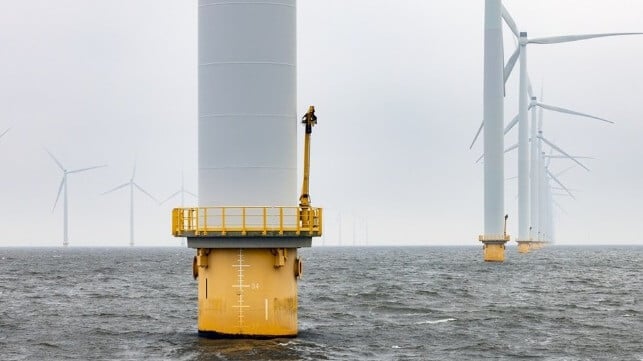
File image courtesy Kruwt / iStock

Published Sep 28, 2025 9:37 PM by The Maritime Executive


Ireland has announced institutional reforms to accelerate development of its offshore wind sector. As part of the effort, Taoiseach Micheál Martin and Minister for Climate and Energy Darragh O’Brien recently revealed the creation of an Offshore Wind Energy Clearing House.

While there exists an Offshore Wind Delivery Taskforce to resolve the sector challenges, the Clearing House will provide additional high-level intervention from the central government. For this reason, the Clearing House will be chaired by the Secretary General of the Department of the Taoiseach. The Clearing House will hold its first meeting in the coming weeks.

“At a time of rising costs and global uncertainty, creation of the Clearing House sends out an important political signal that Ireland is not stepping back from its renewables ambition,” said Minister O’Brien. “In a sector defined by very mobile international finance, investment will flow to de-risked markets. The Cleating House further strengthens our economic competitiveness and reaffirms Ireland as a stable and attractive location for continued investment in offshore renewable energy.”

O’Brien also confirmed that in the coming weeks he will open Ireland’s second offshore wind auction, which will bring the 900 MW Tonn Nua site to market. It is the first site in the Irish south coast and represents a notable milestone in achieving Ireland’s 5GW target of offshore wind power deployment by 2030.

To give developers certainty on development of the sector, Ireland early this month published a draft version of the proposed National Designated Maritime Area Plan (DMAP). With the final draft expected in 2027, the strategic plan will designate renewable energy sites around Ireland’s coast that are suitable for offshore wind development. This includes sites for fixed and floating wind farms.


Houthis Release Pakistani Crew After LPG Carrier Attack

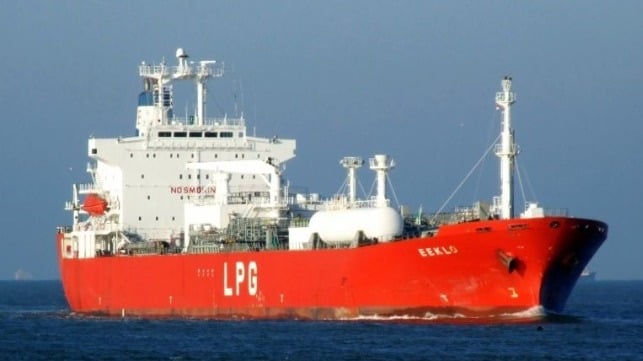
Clipper under a previous name and livery, 2008 (Alf / VesselFinder)

Published Sep 28, 2025 10:26 PM by The Maritime Executive


An LPG carrier was hit during an Israeli strike on Houthi-controlled ports in Yemen earlier this month, Pakistani interior minister Mohsin Naqvi confirmed this weekend. 

On Saturday, Naqvi said that an Israeli drone struck the vessel on September 17, while it was at berth at Ras Isa. One of the ship's LPG tanks exploded in the attack. 

Following the blast, Houthi boat crews responded to the scene and boarded the ship - then took the crew hostage, he said. 

Pakistani station Ary News relayed another version of the story: the crew had abandoned ship but were forced by Houthi militants to reboard the vessel while it was still burning. The equipment aboard were unsuitable for firefighting, crewmembers told the outlet, and they said that they were running short of food and water.

The crew consisted of 24 Pakistanis, including the captain, along with two Sri Lankans and one Nepali national.  

After intervention from the Pakistani ambassador to Oman, the government of Saudi Arabia, and members of Pakistan's security agencies, the crew was released, and all of the seafarers are now out of Houthi territory. Officials "worked day and night under extraordinary conditions to secure the safe release of our citizens when hope was fading," Naqvi said. 

The vessel was not named, but the Pakistani press identified the ship as the Clipper (above), a 1995-built LPG carrier formerly named Eagle Pride. According to her Equasis record, Clipper fraudulently claims to fly the flag of Guyana, making it a stateless vessel. The ship was reported sold to an undisclosed interest in 2023, and the current owner and operator are unknown; OFAC listings show that it is subject to U.S. counterterrorism sanctions.

AIS data provided by Pole Star Global confirms that Clipper's most recent voyage departed Djibouti on September 4, arriving Ras Isa on the 6th. As of Sunday the vessel was under way once more, bound for Djibouti. 

The date of the claimed drone attack was the day after a large-scale Israeli raid on Hodeidah, the main Houthi-controlled seaport. That raid appears to have partially sunk one vessel and may have disabled another; it also destroyed most of the remaining wharfage in the port.

Reports from the Houthi-controlled channel Al Masirah TV said that 12 Israeli strikes targeted the docks in the port. Three berths were damaged; Israeli media reported that the attack was designed to keep the facilities out of service for several weeks. Berths 4, 6 and 8 were the only remaining quays in active use early in September, and had been repaired to serviceability after earlier strikes; these piers were hit hard again in the September 16 attack.  

Top image: Clipper under a previous name and livery, 2008 (Alf / VesselFinder)