Tuesday, December 30, 2025

Another Hollywood star sounds off on Trump's MAGA-fied nation as he bids adieu to America


Robert Davis
December 30, 2025 

RAW STORY


Actor George Clooney and Amal Clooney host their annual fundraiser 'The Albie Awards' in London, Britain, October 3, 2025. REUTERS/Maja Smiejkowska/File Photo

Hollywood star George Clooney sounded off on Trump's MAGA-fied America in a new cover story for Variety Magazine published on Tuesday as he announced that he's leaving the country to live in Europe.

The interview was published after Clooney and his family were granted French citizenship, according to reports.

Clooney spoke to Variety about the state of the media following Paramount-Skydance-owned CBS News' hiring of Bari Weiss as its editor-in-chief. Weiss, a controversial former opinion writer at The New York Times, has been at the center of multiple controversies since taking over, including the decision to spike a story about the Trump administration's efforts to send deportees to the infamous CECOT prison in El Salvador

“Bari Weiss is dismantling CBS News as we speak,” Clooney told the outlet. “Am I worried about film studios? Sure. It’s my business, but my primary loyalty is to my country. I’m much more worried about how we inform ourselves and how we’re going to discern reality without a functioning press.”

Clooney also chimed in on recent Supreme Court rulings and the state of the Trump administration. He expressed optimism about America recovering from the Trump administration.

“Just straight up, it’s the economy, stupid,” Clooney said. “It’s more expensive now than it was when Joe Biden left office. And powerful people tend to overplay their hands. I think that cruelty, like separating children from their parents, although popular with small groups of people, doesn’t play well with most Americans.”

Read the entire Variety interview by clicking here.


George Clooney slams networks that rolled over for Trump in profane rant
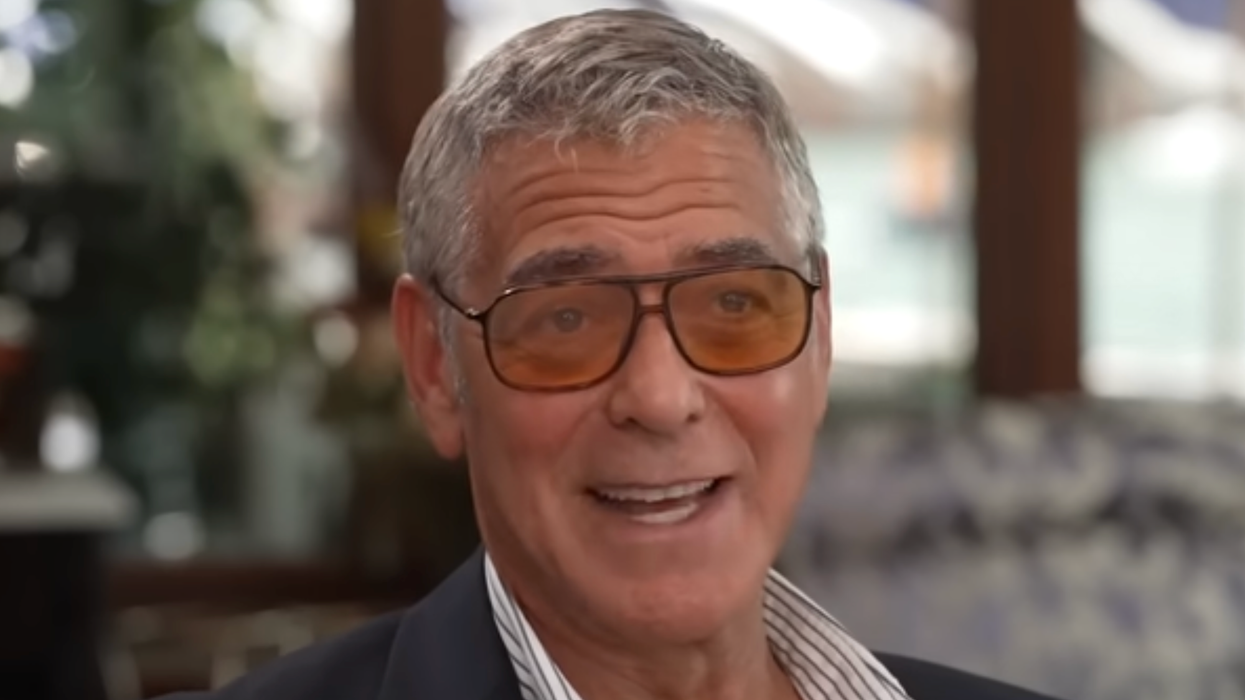
George Clooney on November 2, 2025 (Image: Screengrab via CBS This Morning / YouTube)
December 30, 2025 
ALTERNET

Actor, director and producer George Clooney recently threw several jabs at media companies that settled with President Donald Trump rather than fight his lawsuits in court.

During a Tuesday interview with Variety while promoting his new film "Jay Kelly," Clooney not only spoke about the president — who he said he used to "know very well" — but about networks that he feels enabled Trump during the early part of his second term. He specifically harped on CBS, having just played legendary CBS anchor Edward R. Murrow in a stage production of the film Good Night and Good Luck (which he co-wrote, starred in and directed).

At the time of the play, CBS' parent company, Paramount, settled with Trump for $16 million after the president sued them over 60 Minutes' interview with 2024 Democratic nominee Kamala Harris. After Paramount settled, the Trump administration approved the company's proposed merger with media giant Skydance.

CBS' new owners then installed conservative columnist Bari Weiss as the new editor-in-chief of the vaunted network's news division. Weiss recently made headlines for killing a 60 Minutes segment about the Trump administration's deportations to an El Salvadoran mega-prison without due process, though a Canadian broadcaster ran the segment, which then spread virally through social media.

"Bari Weiss is dismantling CBS News as we speak," Clooney told Variety. "I’m worried about how we inform ourselves and how we’re going to discern reality without a functioning press."

Clooney also tore into ABC News, which settled with then-President-elect Trump in December of last year after he sued the network over anchor George Stephanopoulos' assertion that Trump had been found guilty of sexually assaulting writer E. Jean Carroll. U.S. District Judge Lewis Kaplan, who oversaw the case, found Trump liable for sexual abuse and not assault, but clarified that the two were effectively the same thing as the public understood them. Clooney lamented that both major networks chose to concede rather than stand up for themselves.

"If CBS and ABC had challenged those lawsuits and said, 'Go f—— yourself,' we wouldn’t be where we are in the country," Clooney said. "That’s simply the truth."

Click here to read Clooney's full interview.


France grants citizenship to George and Amal Clooney and their twins Ella and Alexander

Via AP news wire
Tuesday 30 December 2025 



Call them Monsieur and Madame Clooney.

France’s government says that George Clooney, his wife Amal and their twins Ella and Alexander have been awarded French citizenship.

The naturalizations of the Kentucky-born star of the “Oceans” series of heist movies and his family were announced last weekend in the Journal Officiel, where French government decrees are published.


The government notice indicated that human rights lawyer Amal Clooney was naturalized under her maiden name, Amal Alamuddin. It also noted that George Clooney's middle name is Timothy.


The couple purchased an estate in France in 2021. In an interview with Esquire in October, Clooney described their “farm in France” as their primary residence — a decision the 64-year-old actor and his 47-year-old wife made with their children in mind.

“I was worried about raising our kids in L.A., in the culture of Hollywood,” he told the magazine. “I don’t want them to be walking around worried about paparazzi. I don’t want them being compared to somebody else’s famous kids.”

Growing up away from the spotlight in France, “they’re not on their iPads, you know?” he said. "They have dinner with grown-ups and have to take their dishes in. They have a much better life."


Representatives for George Clooney did not respond to The Associated Press’ request for comment Monday.

It wasn’t immediately clear whether Clooney retained his American citizenship. Amal Clooney was born in Lebanon and raised in the U.K. The 8-year-old twins were born in London.
Trump suffers setback in bid to strip protected status from hundreds

Robert Davis
December 30, 2025
RAW STORY

President Donald Trump was handed another court loss on Tuesday after a federal judge temporarily halted his bid to strip 300 South Sudanese nationals of protected status, according to a new report.

The Associated Press reported on Tuesday that U.S. District Judge Angel Kelley in Massachusetts issued an order prohibiting the administration from deporting the nationals, which she argued would cause them "irreparable harm."

“These significant and far-reaching consequences not only deserve, but require, a full and careful consideration of the merits by the Court,” Kelley wrote.

Department of Homeland Security officials blasted the judge's order.

“Yet another lawless and activist order from the federal judiciary who continues to usurp the President’s constitutional authority," DHS Assistant Secretary Tricia McLaughlin posted on X. "Under the previous administration Temporary Protected Status was abused to allow violent terrorists, criminals, and national security threats into our nation."

Read the entire report by clicking here.

Trump strips legal status from more than 1.5 million immigrants in historic crackdown

Ariana Figueroa,
States Newsroom
December 30, 2025


A 7-year-old American girl, whose mother is a Mexican immigrant, attends a Christmas Eve service at Lutheran Church of the Good Shepherd, whose constituents are majority migrants, in the Brooklyn borough of New York City, U.S., December 24, 2025. REUTERS/Adam Gray

Since Inauguration Day, more than 1.5 million immigrants have either lost or will lose their temporary legal status, including their work authorizations and deportation protections, due to President Donald Trump’s aggressive revocation of legal immigration.

It’s the most rapid loss in legal status for immigrants in recent United States history, experts in immigration policy told States Newsroom. The Trump administration curtailed legal immigration by terminating Temporary Protected Status for more than 1 million immigrants and ending Humanitarian Parole protections for half a million more individuals.

“I don’t think we’ve ever, as a country, seen such a huge number of people losing their immigration status all at once,” said Julia Gelatt, the associate director of the U.S. Immigration Policy Program at the Migration Policy Institute.


The move to strip so many immigrants of their work authorization is likely to not only affect communities, but also batter the economy, both immigration and economic experts told States Newsroom.

“Seeing well over 1 million people lose their work authorization in a single year is a really huge event that has ripple effects for employers and communities and families and our economy as well,” Gelatt said.

Dozens of lawsuits have been filed by immigrant rights groups and TPS recipients themselves challenging the terminations as unlawful.

“This is the continuation of the Trump administration attack against the immigrant community, and specifically about the TPS program, a program that, for many of us has been a good program, a life-saving program,” said Jose Palma, a TPS recipient from El Salvador and coordinator of the National TPS Alliance, which is part of several TPS lawsuits.

Who is granted Temporary Protected Status?

A TPS designation is given because a national’s home country is deemed too dangerous to return to due to violence, war, natural disasters or some other unstable condition.

When Congress created the program in 1990, it was initially meant to be temporary, which is why authorizations can be as short as six months and as long as 18 months.

Immigrants who are granted TPS must go through background checks and be vetted each time their status is renewed, but the program does not provide a path to citizenship.

Under the Biden administration, the number of TPS recipients grew, as did the category of humanitarian parole.

That policy decision was heavily criticized by Republicans, and Homeland Security Secretary Kristi Noem vowed to reevaluate TPS country designations for terminations during her Senate confirmation hearing this year.

“This program has been abused and manipulated by the Biden administration, and that will no longer be allowed,” Noem said during her hearing.

Before the Trump administration came into office in late January, there were more than 1.3 million immigrants in the TPS program, hailing from 17 countries. Under the first Trump administration, there were roughly 400,000 TPS recipients.

“Almost a million new people got onto TPS protections under President Biden, so we saw a really rapid expansion, and now we’re seeing a very rapid contraction, which is all to say that in the first Trump administration, there weren’t so many people who had TPS,” Gelatt said.

Noem has terminated TPS for immigrants from 11 countries, and the more than 1 million immigrants affected will lose their protections by February.

Noem extended six months’ protection for South Sudan earlier this year, but decided in November to terminate protections by January. She most recently terminated a TPS designation for Ethiopia on Dec. 12.

The other countries with TPS termination are Afghanistan, Burma, Cameroon, Haiti, Honduras, Nepal, Nicaragua, Syria and Venezuela.

“We’ve never seen this many people lose their legal status in the history of the United States,” David Bier, the director of immigration studies at the Cato Institute, a libertarian think tank, said. “This is totally unprecedented.”

People losing their status are also concentrated in certain areas. Florida has more than 400,000 TPS recipients, and Texas has nearly 150,000. Bier said he expects certain industries with high TPS workers to feel the impact, such as construction and health care

Haiti, Venezuela

Immigrants from two countries — Haiti and Venezuela – make up a majority of recipients set to lose their TPS protections, at nearly 935,000 people.

Venezuelans, who make up 605,000 of those 935,000 TPS recipients, were first granted protections during Trump’s first term.

On his final day in office in 2021, his administration issued 18-month deportation protections for Venezuelans — known as Deferred Enforcement Departure, or DED — citing the country’s unstable government under President Nicolás Maduro.

“Through force and fraud, the Maduro regime is responsible for the worst humanitarian crisis in the Western Hemisphere in recent memory,” according to the Jan. 19, 2021 memo. “A catastrophic economic crisis and shortages of basic goods and medicine have forced about five million Venezuelans to flee the country, often under dangerous conditions.”

After the Trump administration’s 18-month DED designation, the Biden administration issued the TPS designation for Venezuelans who came to the U.S. in 2021 and again in 2023. The move created two separate TPS groups for Venezuelans.

“The bottom line is that removing the 935,000 Venezuelans and Haitians would cause the entire economy to contract by more than $14 billion,” said Michael Clemens, a professor in the Department of Economics at George Mason University.

He added that not all the TPS recipients are in the labor market. Some are children or elderly dependents who cannot work. Clemens said the TPS workforce population of Haitians and Venezuelans is about 400,000.


Humanitarian Parole program

Separately, under the Biden administration, nearly 750,000 immigrants had some form of humanitarian parole, granting them work and temporary legal status due to either Russia’s war in Ukraine or efforts by the administration to manage mass migration from Central American countries.

DHS has moved to end humanitarian parole for 532,000 immigrants hailing from Cuba, Haiti, Nicaragua and Venezuela, opening them up for deportation proceedings.

“The onslaught of attacks that we’ve been seeing on temporary forms of immigration status, specifically with a humanitarian focus, is truly saddening and concerning,” said Alice Barrett, a supervising immigration attorney at the immigrant rights group CASA.

Not every recipient has been affected. The agency has kept humanitarian parole for 140,000 Ukrainians who came to the United States after Russia’s invasion in 2022, and 76,000 Afghans who were brought in after the chaotic U.S. withdrawal from their country.

But since the National Guard shooting last month in Washington, D.C., allegedly by an Afghan national granted asylum, the program is under increased scrutiny and all immigration-related paperwork from Afghans has been halted.


Court decisions influential

This is not the first time the Trump administration has tried to end TPS.


During the president’s first term, he tried to end TPS for Haiti, Nicaragua, El Salvador and Sudan, but the courts blocked those attempts in 2018.

This time is different, said Palma of the National TPS alliance.

“The only thing different right now is that the Supreme Court is allowing the Trump administration to continue with termination of TPS, even though lower courts are saying, ‘No, we should stop the cancellation of TPS for now, until it’s clear whether the decision was illegal or not,’” he said.


So far, in emergency appeals, the high court has allowed the Trump administration to move forward in stripping legal status for the two groups of Venezuelan TPS recipients and individuals in the humanitarian parole program.

Barrett at CASA, which is leading the legal challenge of TPS termination for Cameroon and Afghanistan, said when it comes to TPS termination, “what we are seeing in the second Trump administration is a supercharged version of what we saw in the first Trump administration.”

“We are essentially seeing during this administration more actual terminations happening early on even while litigation is pending, which has certainly been disappointing for members of the community, because they’re still left in this limbo,” she said.

Barrett added that even when TPS recipients try to apply for longer-term legal status they face multiple hurdles.

“For example, we are seeing them questioned or denied relief at asylum interviews because they did not apply for asylum within one year of entering the United States, even though the Code of Federal Regulations clearly creates an exception to this one-year filing deadline for people who have been in other valid status before applying for asylum,” Barrett said.

“These members of our community who have been in lawful status therefore now risk being placed in removal proceedings and even (Immigration and Customs Enforcement) detention, where conditions are increasingly inhumane and dangerous,” she continued.

TPS recipients are still continuing to fight in the courts and share their stories, Barrett said.

“These cases are still in progress, and we remain hopeful that despite preliminary rulings leaving so many hardworking individuals and their families in a state of uncertainty, upon thorough review and litigation of these cases the courts will recognize the improper nature of recent TPS terminations and restore status for those seeking safety here in the United States,” she said.

This story is published in partnership with Creative Commons.

Nevada Current is part of States Newsroom, a nonprofit news network supported by grants and a coalition of donors as a 501c(3) public charity. Nevada Current maintains editorial independence. Contact Editor Hugh Jackson for questions: info@nevadacurrent.com.
Pam Bondi scrubs post accidentally revealing drug deaths went way down under Biden


Matthew Chapman
December 30, 2025 
RAW STORY


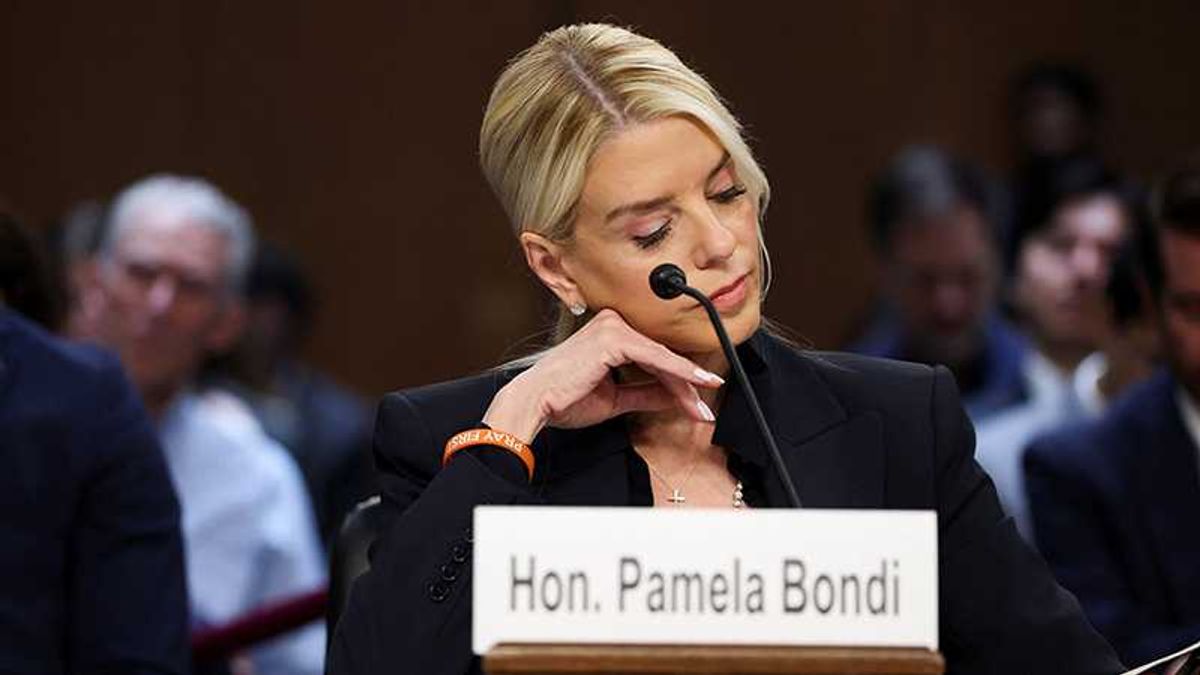
U.S. Attorney General Pam Bondi testifies before a Senate Judiciary Committee oversight hearing on Capitol Hill in Washington, D.C., U.S., October 7, 2025. REUTERS/Jonathan Ernst

Attorney General Pam Bondi has quietly removed a post she made to X on Tuesday that purported to tout the success of the Trump administration's anti-drug efforts — but instead accidentally revealed how much progress on combating overdoses was made by the preceding Biden administration.

The original post showed a graph tracking overdose deaths across various regions of the United States, crediting the across-the-board decline to President Donald Trump's tough policies cracking down on trafficking.

"Since day one, the Trump Administration and this Department of Justice have been fighting to end the drug epidemic in our country," wrote Bondi. "President Trump closed the border. DOJ agents have seized hundreds of millions of potentially lethal fentanyl doses. We are aggressively prosecuting drug traffickers and cartel leaders. These are the results."

Commenters, however, were quick to point out that the chart only showed data up to October 2024, before the presidential election had even taken place.

As of the evening, liberal network Meidas Touch confirmed that the original post to Bondi's account has been wiped from X.

Ironically, a number of previous reports have indicated that contrary to Bondi's claims, drug prosecutions have actually plummeted under the Trump administration, as federal agents have been pulled off those cases to handle low-level immigration enforcement to prepare for mass deportation
Trump hit with ominous health prophecy from shamans: 'United States should prepare'

PRES. J.D. VANCE


Matthew Chapman
December 30, 2025
RAW STORY

As the New Year approaches, a group of Peruvian shamans has gathered in the capital city of Lima for an annual prediction event — and according to The Daily Beast, they are urging the United States to brace itself for President Donald Trump's health to decline in 2026.

“The United States should prepare itself because Donald Trump will fall seriously ill,” said Juan de Dios Garcia, as "shamans gathered on a beach in colorful traditional Andean ponchos, carrying posters of world leaders, including one of Trump," per the report.

The shaman prophecies are not anything scientific and don't carry real predictive power, although at least some of what they have guessed in previous years has come true, the report noted.

"While a 2024 prophecy that 'a nuclear war' would occur between Israel and Gaza did not come true — instead, a ceasefire was put in place — the shamans correctly predicted in 2023 that former Peruvian President Alberto Fujimori would perish within 12 months. Fujimori, who had been imprisoned for human rights abuses, died at the age of 86 in September of the following year."

The shamans' prediction this time may be based on awareness of recent news about the 79-year-old U.S. president's recent health scares and rumors.

A number of experts have expressed fear that Trump has been in mental decline for years, and there are signs of physical ailments as well, including bruising on the hands and swollen ankles. He has been diagnosed with chronic venous insufficiency, a condition that causes blood to pool in the legs due to poor circulation.

White House Press Secretary Karoline Leavitt has denied any issues and insists the president is in "excellent" health. However, Trump himself seems to recognize he can't carry on forever, with some experts speculating that the jockeying of members of his administration to be his heir apparent, combined with Trump's intensifying focus on naming buildings and institutions after himself, are signals that Trump has grown more aware of his own mortality

Shamans predict Trump will 'fall seriously ill' in 2026


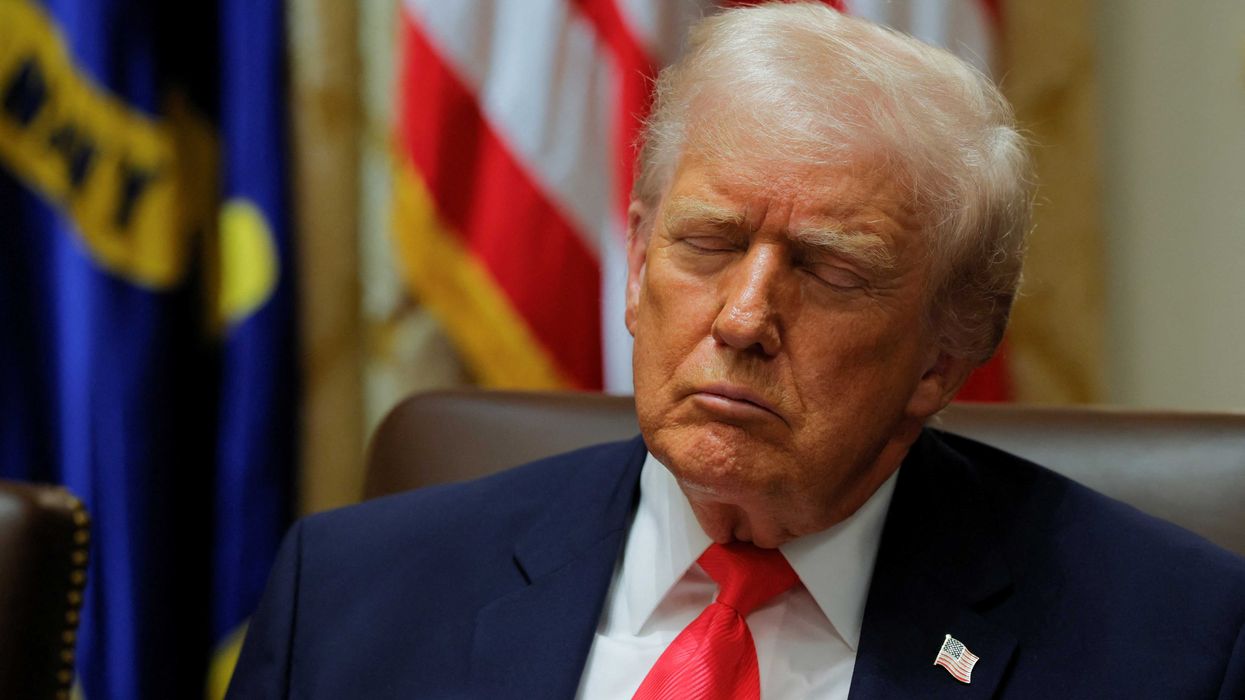
U.S. President Donald Trump attends a cabinet meeting at the White House in Washington, D.C., U.S., December 2, 2025. REUTERS/Brian Snyder

December 30, 2025
 ALTERNET


A group of South American shamans known for making bold end-of-year predictions are now issuing an ominous warning about President Donald Trump's heath.

The Daily Beast reported Tuesday that during the annual ritual in which Peruvian shamans issue forecasts about world leaders, the shamans singled out the 79 year-old Trump and warned Americans that a significant health event could impact the president in the next 12 months. Shamans made their prediction about Trump while holding his portrait and wearing traditional Andean robes. They also bore portraits of Venezuelan leader Nicolas Maduro, Russian President Vladimir Putin and Chinese President Xi Jinping.

"The United States should prepare itself because Donald Trump will fall seriously ill," said shaman Juan de Dios Garcia in the Peruvian capital city of Lima.

The shamans are not always correct in their predictions, as they incorrectly predicted in 2024 that a nuclear war would break out in the Middle East as a result of the Israeli offensive in the Gaza Strip. However, they did correctly forecast the death of former Peruvian President Alberto Fujimori in 2023, with Fujimori dying from tongue cancer complications in September of 2024.

Trump has prompted concerns about his health for much of 2025, after he was seen with a large bruise on his hand while meeting with French President Emmanuel Macron in February. Trump was later diagnosed with chronic venous insufficiency (CVI) after reporters noticed his ankles were frequently swollen (one symptom of CVI is blood pooling in the lower extremities).

Last week,, former Republican National Committee spokesperson Tim Miller said on The Bulwark's podcast that he believed Trump would experience "a health event" in the coming year. Bulwark columnist Mona Charen agreed, adding that the president was "declining noticeably."

In the first year of his second term, Trump was also seen in public falling asleep on multiple occasions, including during a Cabinet meeting in December while Secretary of State and National Security Advisor Marco Rubio was speaking. The president also exhibited bizarre behavior this year, including when he once randomly walked onto the roof of the White House, and when he wandered off at an event while on an official visit to Japan.

Click here to read the Beast's full report.
Trump bemoans dead bald eagle in US — using photo of dead falcon in Israel


Robert Davis
December 30, 2025 
RAW STORY


President Donald Trump appeared to get his birds mixed up on Tuesday when he made a snide social media post about wind energy.


On Truth Social, Trump posted a picture of a dead bird in a field of wind turbines. "Windmills are killing all of our beautiful Bald Eagles!" the caption reads. It was amplified by the White House and viewed millions of times on X.

However, the bird in the picture isn't a bald eagle, as the president claims. It's an Israeli falcon.

"Unfortunately for Trump’s effort to sow outrage among American patriots at what he proclaimed to be an image of the national bird laid low, closer inspection reveals the photograph does not show a bald eagle and was not taken in the United States," The Guardian reported after Trump posted the image. "The image actually shows a falcon that was killed at a wind farm in Israel eight years ago."

The Guardian also noted there were clues as to what kind of bird was in the picture that Trump seemingly overlooked "in a rush."

"The first is that the bird is missing the distinctive markings of a bald eagle. The second is that the turbine blamed for its death appears to have Hebrew writing on it," according to the report.

Trump has consistently bashed wind energy, and his second administration has rolled back several Biden-era clean energy programs. In December, Trump halted permits on thousands of new wind energy projects, citing reasons stretching from national security risks to the number of birds that die in wind farms each year.


Judge Delays Dominion’s Offshore Wind Suit Awaiting U.S. Data

wind turbine installation
Dominion Energy is suing to restart offshore work on its wind farm (Dominion Energy)

Published Dec 30, 2025 6:02 PM by The Maritime Executive


The first showdown over the U.S. Department of the Interior’s efforts to stop the construction of five offshore wind farms is being delayed as a U.S. District Court in Virginia waits for data from the government. Dominion Energy’s efforts to gain a temporary restraining order to permit it to restart work were delayed, with the next hearing set for January 16.

Dominion Energy and its Coastal Virginia Offshore Wind project is one of five that were ordered to stop offshore work by the Department of the Interior, which made vague claims about national security concerns due to radar clutter caused by the turbine blades and towers. The government cited new confidential data from studies by the Pentagon as the justification for the orders.

The five projects are all under construction, and in the case of Coastal Virginia and Vineyard Wind 1 in Massachusetts nearing completion. Dominion asserted in its court filing that the stop-work order is costing the company $5 million a day and said it could jeopardize completion of the wind farm on time in 2026 and the stability of the power grid, which needs more electricity. Coastal Virginia was expected to generate its first power in early 2026.

Offshore work on the five projects was stopped, but the Bureau of Ocean Energy Management did permit them to take steps to protect safety. The Vineyard Gazette newspaper reported yesterday, December 29, that the Massachusetts project was also permitted to continue power generation from the partially installed project. It began sending its first power in January, and as of the summer, reports said it had more than 20 of its 62 turbines commissioned. The State of Massachusetts, in a recent filing, said the project was capable of producing 572 MW of its planned 800 MW capacity. Vineyard Wind 1, which the newspaper says was expected to finish construction by the end of the year, is the second commercial-scale project generating power, following South Fork Wind in New York, which completed its commissioning in 2024.

Dominion Energy was the first of the developers to file suit, calling the actions to stop the work unconstitutional and a violation of BOEM rules. Judge Jamar Walker did not rule on the merits of the motion for a temporary restraining order, but converted the case to a motion for a preliminary injunction. If granted, the injunction would permit offshore work to resume while the legal case proceeded.

The government responded to the suit, telling the District Court that it estimated it could provide the classified information on which the stop-work order relies during the week of January 5. The court said that the information it “critical to evaluating” the request. It further directed the government to inform it by December 31 if it would supply the confidential information to Dominion Energy’s representatives.

The government is directed to supply the information to the court by January 9, along with a response from Dominion. A hearing in Norfolk on January 16 will consider the converted motion for the preliminary injunction.


Why the Zaporizhzhia nuclear plant is a sticking point in Ukraine peace talks


Control over the Zaporizhzhia nuclear power plant in east Ukraine has remained one of the main sticking points in peace negotiations since Russia took control of it in March 2022. Zaporizhzhia's proximity to the front lines has sparked international fears for the safety and stability of the nuclear plant, which is Europe's largest.


Issued on: 29/12/2025 
By: FRANCE 24


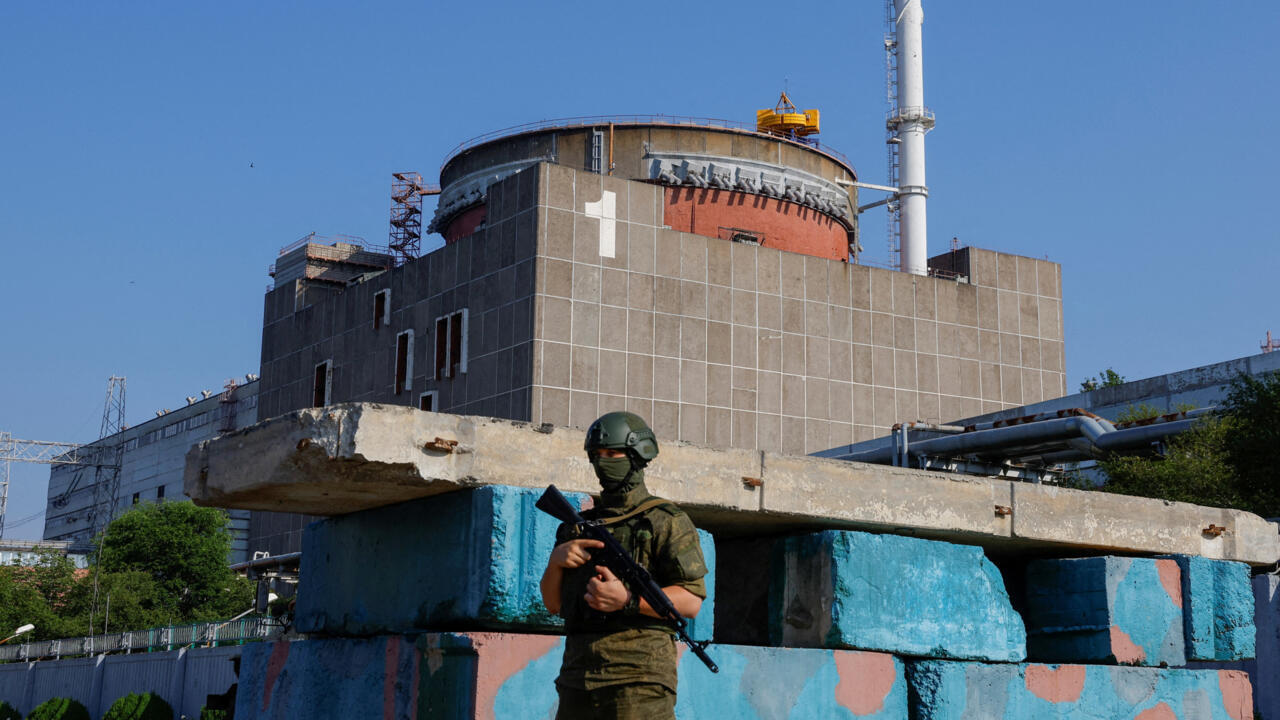
A Russian service member stands guard at a checkpoint near the Zaporizhzhia Nuclear Power Plant on June 15, 2023 © Alexander Ermochenko, Reuters file photo

The Zaporizhzhia nuclear power plant is one of the main sticking points in the US peace plan to end the war between Russia and Ukraine. The issue is one of 20 points laid out by Ukrainian President Volodymyr Zelensky in a framework peace plan that he discussed with his US counterpart Donald Trump in Florida on Sunday.

Here are some of the outstanding issues regarding the facility.
What plans are being discussed ?

Russia took control of the plant, which lies close to the front ​lines, in March 2022 and announced plans to connect it to its power grid.

Almost all countries agree that it belongs to Ukraine, but Russia says it is owned by Russia ‍and a unit of Russia's state-owned Rosatom nuclear corporation runs the plant.

Zelensky stated in December that the US had proposed joint trilateral operation of the nuclear power plant with an American chief manager.

Zelensky said the Ukrainian proposal envisages Ukrainian-American use of the plant, with the US itself determining how ​to use 50% of the energy produced.

Russia has considered joint Russian-US use of the plant, according to the Kommersant newspaper.

After his talks with Zelensky on ​Sunday, Trump said negotiators had made progress on deciding the fate of the plant, which can "start up almost immediately". The US president said "it's a big step" that Russia had not bombed the facility.
What is the current status ?

The plant is located in Enerhodar on the banks of the Dnipro River and the Kakhovka Reservoir, 550 km (342 miles) southeast of the capital Kyiv.

The Zaporizhzhia nuclear power plant has six Soviet-designed reactors with a total capacity of 5.7 gigawatts, according to an International Atomic Energy Agency (IAEA) database.

It is not currently producing electricity but relies on external power to keep the nuclear material cool and avoid a meltdown.

Ukraine: What is blocking the peace deal negotiations?

The plant's equipment is powered by electricity supplied from Ukraine. Over the past four years these supplies have been interrupted at least 11 times due to breaks in power lines, forcing the plant to switch to emergency diesel generators.

Both Russia and Ukraine accuse each other of striking the nuclear plant and of severing power lines ‍leading to it.

IAEA Director General Rafael Grossi says fighting a war around a nuclear plant has put nuclear safety and security in constant jeopardy.

The Russian head of the station said on Monday the facility could restart power generation by mid-2027 if the war concluded soon.

Why does Russia want the Zaporizhzhia plant ?

Russia has been preparing to restart the station but says that doing so will depend on the situation in the area. Rosatom chief Alexei Likhachev has not ruled out the supply of electricity produced there to parts of Ukraine.

Oleksandr Kharchenko, director of the Energy Research Centre in Kyiv, said Moscow intended to use the plant to cover a significant energy deficit in ‌Russia's south.

In December, Russia's Federal Service for Environmental, Technological and Nuclear Supervision issued a license for the operation of reactor No. 1, a key step towards restarting the reactor.

Ukraine's energy ministry called the move illegal and irresponsible, risking a nuclear accident.

Why does Ukraine need the plant ?

Russia has been pummelling Ukraine's energy infrastructure throughout the war. In ‍recent months, Russia has sharply increased the scale and intensity of its attacks, plunging entire regions into darkness.

Analysts say Ukraine's generation capacity deficit is about 4 gigawatts, or the equivalent of four Zaporizhzhia reactors.

Kharchenko says it would take Ukraine five to seven years to build the generating capacity to compensate for the loss of the Zaporizhzhia plant.

Kharchenko said that if Kyiv regained control of the plant, it would take at least two to three years to understand what condition it was in and another three years to restore the equipment and return it to full operation.

Both Ukrainian state nuclear operator Energoatom and Kharchenko said Ukraine did not know the real condition of the nuclear power plant today.


What about cooling the fuel ?

In the long term, there is the unresolved problem of the lack of water resources to cool the reactors after the vast Kakhovka hydro-electric dam was blown up in 2023, destroying the reservoir that supplied water ‍to the plant.

Besides reactors, there are spent fuel pools at each reactor site used to cool down used nuclear fuel. Without water supply to the pools, the water evaporates and temperatures increase, risking fire.

An emission of hydrogen from a spent fuel ‌pool caused an explosion in Japan's Fukushima ​nuclear disaster in 2011.

Energoatom said the level of the Zaporizhzhia power plant cooling pond had dropped by more than 15%, or 3 metres, since the destruction of the dam, and continued to fall.

Ukrainian officials previously said the available water reserves may be sufficient to operate one or, at most, two nuclear reactors.

(FRANCE 24 with Reuters)


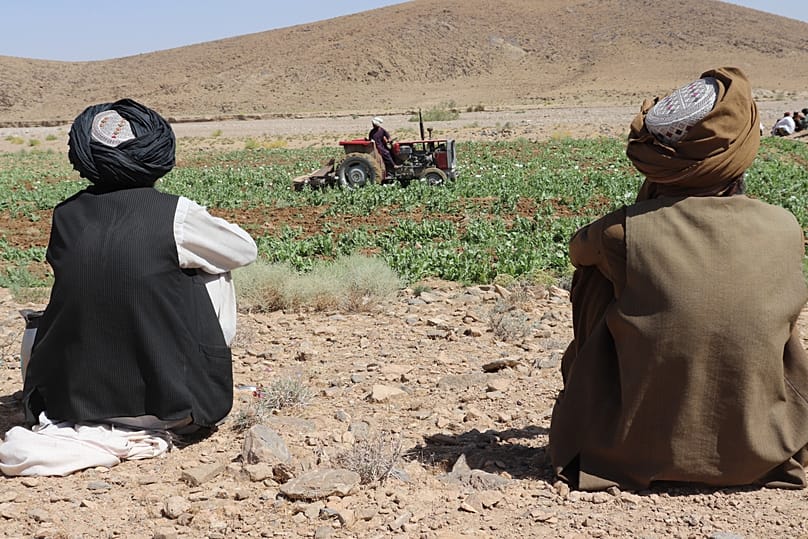
Afghan farmers suffer heavy losses after Taliban ban opium poppy cultivation, report says

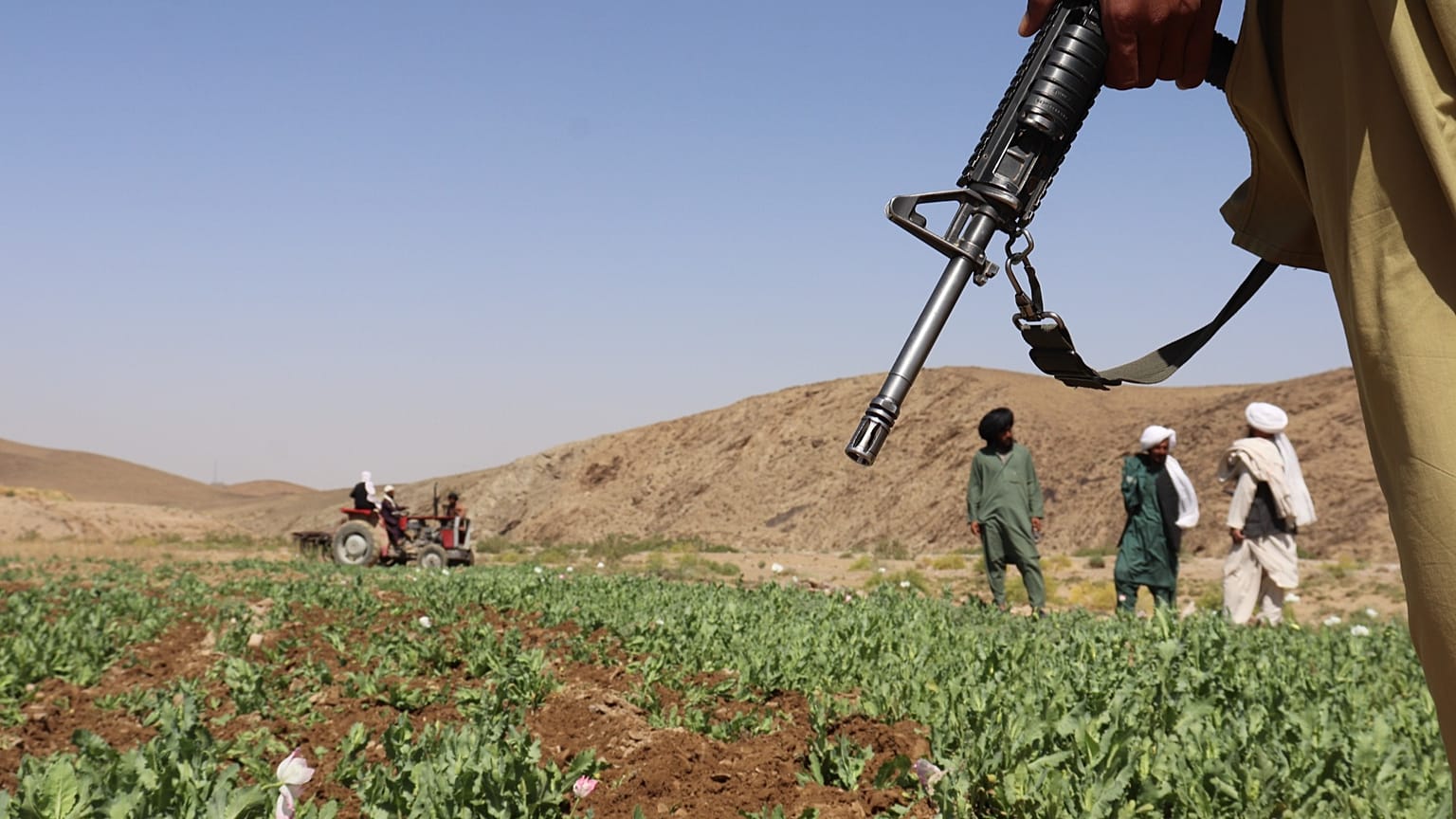
Taliban operatives destroying poppy field in Helmand in 2022
Copyright AP Photo


By Euronews
Published

UNODC survey found 85% of families in northern provinces unable to replace poppy income. Production fell 32% to 296 tonnes as synthetic drugs surged.

Afghanistan's opium poppy cultivation fell to 10,200 hectares this year, one of the lowest levels recorded in the country's history, the UN Office on Drugs and Crime said, but the Taliban ban has pushed farmers in northern provinces into severe economic hardship.

The nationwide ban has reduced cultivation from 232,000 hectares in 2022, before the Taliban returned to power, but caused a shift in cultivation patterns from traditional southern areas to northern provinces farther from direct Taliban control, UNODC said.

In Badakhshan province on the Tajikistan border, poppy production has increased since the Taliban returned to power in 2021.

In Badakhshan and neighbouring provinces of Kunduz and Balkh, "on average, 85% of households reported either no replacement or only partial replacement of (their poppy) income" after abandoning production, according to a UNODC survey released Monday.

Many farmers turned to growing wheat and other grains, but in 2023 "the average per-hectare income from wheat was just $770 (€654.6), whereas opium poppy yielded around $10,000 (€8,500) per hectare," the agency said.

"This income loss goes far beyond households, weakening rural purchasing power, reducing local economic activity, and increasing communities' overall vulnerability to poverty and food insecurity," said Oliver Stolpe, UNODC regional representative for Afghanistan, Central Asia, Iran and Pakistan.

The agency called for efforts to encourage farmers to cultivate high-value crops such as saffron, nuts including almonds, pistachios and walnuts, medicinal plants and fruits including apricots and grapes, which are better adapted to Afghanistan's arid climate and mountainous terrain.

Opium production fell 32% to an estimated 296 tonnes this year, down from 436 tonnes in 2024, according to a UNODC report released in November. Farmers' income from opium sales fell 48% from $260 million (€221m) in 2024 to $134 million (€114m) in 2025.

Surveys in Badakhshan, Balkh and Kunduz showed 85% of households have been unable to compensate for lost income, leaving communities in urgent need of economic support, UNODC said.

Despite this, compliance with the ban remains high in surveyed areas, with 95% of farmers in Badakhshan and Balkh reporting they stopped growing poppy due to legal restrictions.

The price of dry opium fell 27% to $570 (€484) per kilogramme in 2025 compared with $780 (€663) in 2024, but remains five times higher than the pre-ban average.

Opium down but synthetic drugs surge

The Taliban banned opium poppy cultivation, as well as production, sale and trafficking of all narcotics, in April 2022, the year after they returned to power in Kabul. Taliban authorities reported eradicating more than 4,000 hectares of opium poppy this year.

Prior to the Taliban's return to power in 2021, revenues from poppies were for years considered one of Afghanistan's main sources of economic output. Afghanistan's opium output peaked in 2017 at nearly 9,900 tonnes worth $1.4 billion (€1.19bn), accounting for about 7% of the country's GDP.

"Afghanistan's path to overcoming illicit crop cultivation requires coordinated, long-term investments, including through international partnerships," Stolpe said.

"It is about placing equal emphasis on empowering Afghan farmers through alternative income-generating activities, eradicating illicit crops and countering drug trafficking, while reducing demand through enhanced prevention and treatment."

Poppy fields destroyed in Afghanistan
Poppy fields destroyed in Afghanistan AP Photo

Worsening weather conditions including droughts and low rainfall have left more than 40% of agricultural land barren, UNODC said.

The return of approximately 4 million Afghans from neighbouring countries, representing around 10% of the country's population, has intensified competition for scarce jobs and resources. These factors, combined with reductions in humanitarian aid, could make opium poppy cultivation more attractive.

Production and trafficking of synthetic drugs, especially methamphetamine, continues to increase since the ban. Seizures in and around Afghanistan were about 50% more frequent by the end of 2024 compared with the third quarter of 2023

"As agricultural-based opiate production declines, synthetic drugs appear to have become the new business model for organised crime groups due to the relative ease of production, the greater difficulty in detection and relative resilience to climate changes," UNODC said.

Counter-narcotics strategies must broaden beyond opium to integrate synthetic drugs in monitoring, interdiction and analysis, as well as demand-reduction responses, the agency said.

"Afghanistan's drug problem is not confined to its borders. The dynamics of supply, demand and trafficking involve both Afghan and international actors," said Georgette Gagnon, deputy special representative of the secretary-general for Afghanistan and officer in charge of the UN political mission in the country.

"Addressing this challenge requires collaboration among key stakeholders," Gagnon concluded.

Situation in Gaza is 'catastrophic’, foreign


ministers from 10 countries warn

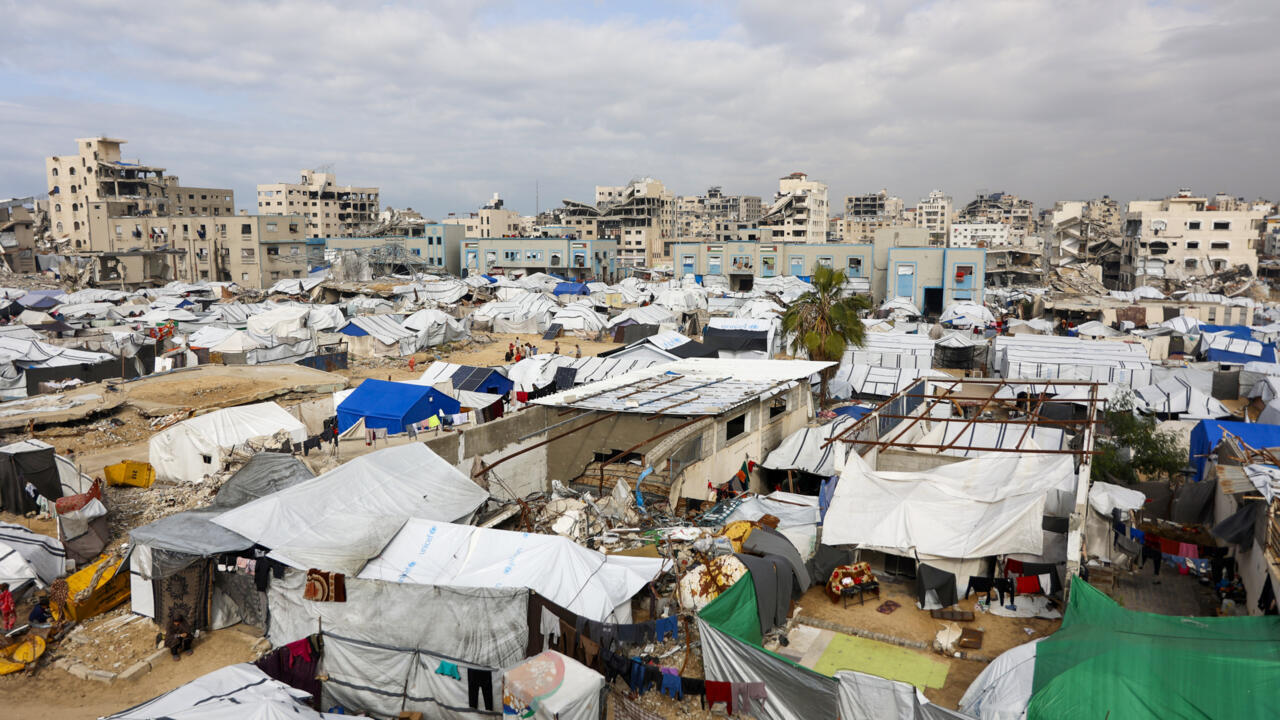
A group of 10 countries, including France, warned on Tuesday that the situation in Gaza was "catastrophic" due to the "renewed deterioration of the humanitarian situation" in the Palestinian enclave. They called on Israel to allow greater access for NGOs and to lift restrictions on importing essential medical and shelter equipment.


Issued on: 30/12/2025 
By: FRANCE 24


A fragile ceasefire in Gaza holds but living conditions continue to be dire. © Omar Al-Qattaa, AFP

The foreign ministers of 10 nations on Tuesday expressed "serious concerns" about a "renewed deterioration of the humanitarian situation" in Gaza, saying the situation was "catastrophic".

The warning came a day after US President Donald Trump warned Palestinian militant group Hamas there would be "hell to pay" if it fails to disarm in Gaza, as he presented a united front with Israeli Prime Minister Benjamin Netanyahu.

"As winter draws in, civilians in Gaza are facing appalling conditions with heavy rainfall and temperatures dropping," the ministers of Britain, Canada, Denmark, Finland, France, Iceland, Japan, Norway, Sweden and Switzerland said in a joint statement released by the UK's Foreign Office.

"1.3 million people still require urgent shelter support. More than half of health facilities are only partially functional and face shortages of essential medical equipment and supplies. The total collapse of sanitation infrastructure has left 740,000 people vulnerable to toxic flooding," the statement added.

Trump's comments on Monday also downplayed reports of tensions with Netanyahu over the second stage of the fragile Gaza ceasefire.

The president, speaking at a news conference with Netanyahu in Florida, said Israel had "lived up" to its commitments and that the onus was on Hamas.

The foreign ministers in their statement said they welcomed the progress that had been made to end the bloodshed in Gaza and secure the release of Israeli hostages.

"However we will not lose focus on the plight of civilians in Gaza," they said, calling on the government of Israel to take a string of "urgent and essential" steps.

These included ensuring that international NGOs could operate in Gaza in a "sustained and predictable" way.

"As 31 December approaches, many established international NGO partners are at risk of being deregistered because of the government of Israel's restrictive new requirements," the statement said.

It also called for the UN and its partners to be able to continue their work in Gaza and for the lifting of "unreasonable restrictions on imports considered to have a dual use".

This included medical and shelter equipment.

READ MOREGaza truce: Where does it stand and what's supposed to happen under phase two?
'Vital supplies'

The ministers also called for the opening of crossings to boost the flow of humanitarian aid into Gaza.

While welcoming the partial opening of the Allenby crossing, they said other corridors for moving goods remained closed or severely restricted for humanitarian aid, including Rafah.

"Bureaucratic customs processes and extensive screenings are causing delays, while commercial cargo is being allowed in more freely," the statement said.

"The target of 4,200 trucks per week, including an allocation of 250 UN trucks per day, should be a floor not a ceiling. These targets should be lifted so we can be sure the vital supplies are getting in at the vast scale needed," it added.

The Gaza ceasefire in October is considered one of the major achievements of Trump's first year back in power, and Washington and regional mediators have hoped to keep their foot on the gas.

The Axios news site said Trump seeks to make announcements as soon as January on an interim government and an international force.

But Trump on Monday gave few details beyond saying that he hoped "reconstruction" could begin soon in the Palestinian territory, devastated by Israeli attacks in response to Hamas's October 7, 2023 attacks.

The disarmament of Hamas however continued to be a sticking point, with its armed wing again saying that it would not surrender its arms.

(FRANCE 24 with AFP)


Israel says it will halt operations of some aid organisations in Gaza starting in 2026

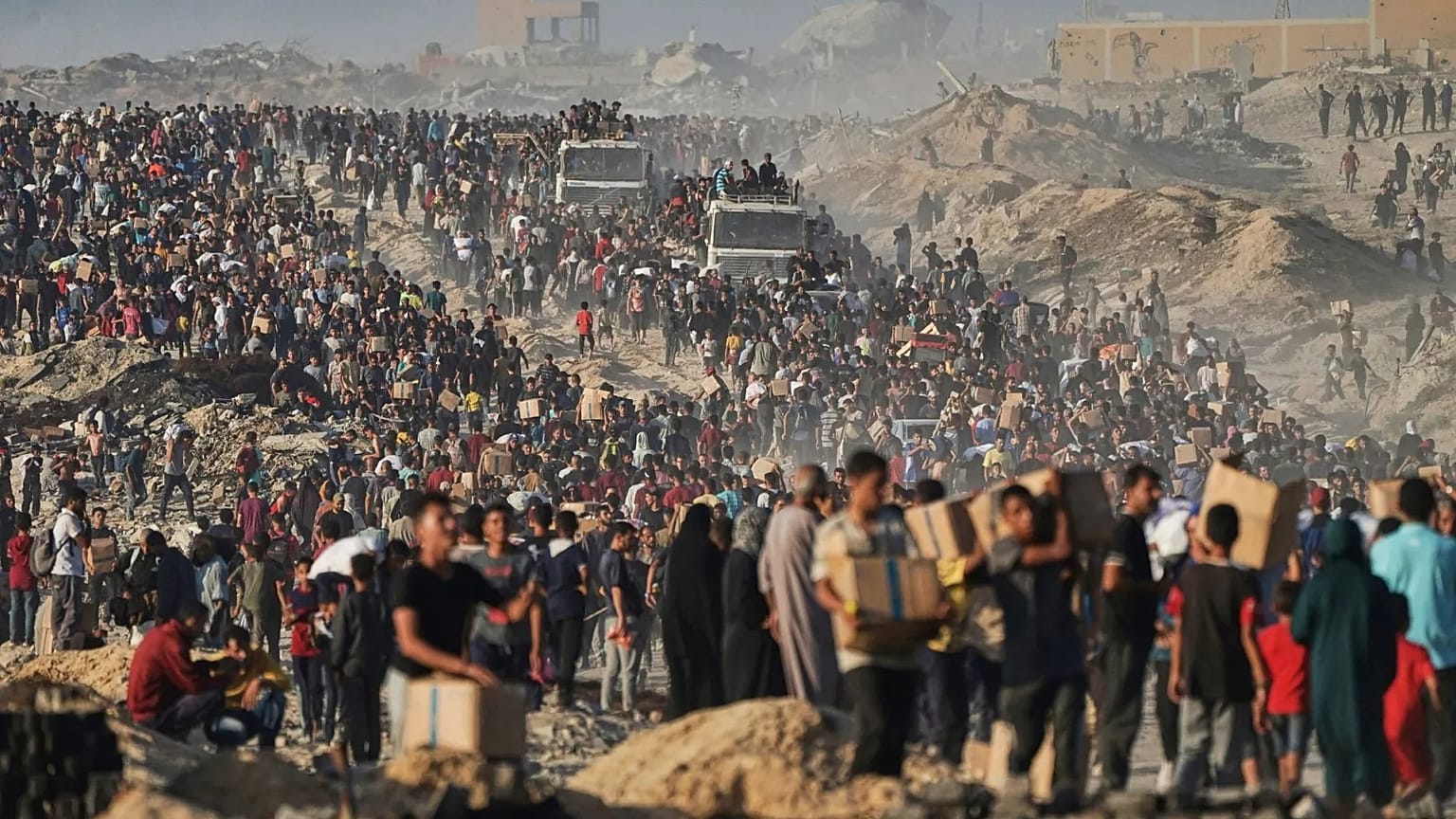
People carry humanitarian aid that was unloaded from a World Food Programme convoy in the northern Gaza Strip, 16 June, 2025
Copyright AP Photo


By Gavin Blackburn
Published on 


Earlier this year, Israel changed its registration process for aid groups, which included a requirement to submit a list of staff, including Palestinians in Gaza.

Israel said on Tuesday that it will suspend the work of more than two dozen humanitarian organisations for failing to meet its new rules to vet international agencies working in Gaza.

The Ministry of Diaspora Affairs said that the organisations facing bans on 1 January didn't meet new requirements for sharing staff, funding and operations information.

The ministry said that around 25 organisations, or 15%, of non-governmental organisations working in Gaza didn't have their permits renewed.

It accused Doctors Without Borders (MSF), one of the largest health organisations operating in Gaza, of failing to clarify the roles of some staff that Israel accused of cooperation with Hamas and other militant groups.

Other major organisations whose permits weren't renewed include the Norwegian Refugee Council, CARE International, the International Rescue Committee, and divisions of major charities such as Oxfam and Caritas, according to a list from the ministry

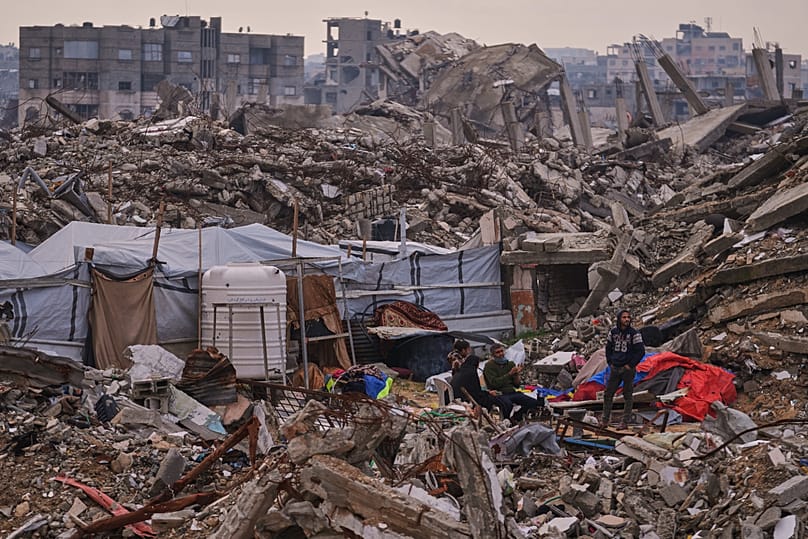
Palestinians stand next to a tent set up on the rubble of buildings destroyed during Israeli air and ground operations in Gaza City, 30 December, 2025 AP Photo

The organisations help with a variety of social services, including food distribution, health care, disability services, education and mental health.

Israel and international groups have been at odds over the amount of aid going into Gaza. Israel says it's upholding the aid commitments laid out in the latest ceasefire that took effect on 10 October, but humanitarian agencies dispute Israel’s numbers and say more aid is desperately needed in the devastated Palestinian territory of more than 2 million people.

New regulations

Earlier this year, Israel changed its registration process for aid groups, which included a requirement to submit a list of staff, including Palestinians in Gaza

Some aid groups say they didn't submit the list of Palestinian staff for fear they'd be targeted by Israel and because of data protection laws in Europe.

"It comes from a legal and safety perspective. In Gaza, we saw hundreds of aid workers get killed," said Shaina Low, communications adviser for the Norwegian Refugee Council.

The decision not to renew aid groups’ licenses means offices in Israel and East Jerusalem will close and organisations won’t be able to send international staff or aid into Gaza.

"Despite the ceasefire, the needs in Gaza are enormous and yet we and dozens of other organisations are and will continue to be blocked from bringing in essential life-saving assistance," Low said. "Not being able to send staff into Gaza means all of the workload falls on our exhausted local staff."

Israel says exploitation unwelcome

The decision means the aid groups will have their license revoked on 1 January and if they are located in Israel, they will need to leave by 1 March, according to the ministry.

"The message is clear: humanitarian assistance is welcome — the exploitation of humanitarian frameworks for terrorism is not," said Amichai Chikli, the minister of diaspora affairs and combating antisemitism.

The Israeli defence body that oversees humanitarian aid to Gaza, COGAT, said that the organisations on the list contribute less than 1% of the total aid going into the Gaza Strip and that help will continue to enter from more than 20 organisations that did receive permits to continue operating in Gaza.

"The registration process is intended to prevent the exploitation of aid by Hamas, which in the past operated under the cover of certain international aid organizations, knowingly or unknowingly," COGAT said in a statement.

This isn't the first time Israel has tried to crack down on international humanitarian groups. Throughout the war, Israel has accused the UN Relief and Works Agency (UNRWA) of being infiltrated by Hamas, using its facilities and taking aid. The United Nations has denied it.

Israel also has said that hundreds of Palestinian militants work for UNRWA, the top UN agency working with Palestinians.

UNRWA has denied knowingly aiding armed groups and says it acts quickly to purge any suspected militants.

After months of criticism from Israeli Prime Minister Benjamin Netanyahu and his far-right allies, Israel banned UNRWA from operating on its territory in January.

The US, formerly the largest donor to UNRWA, halted funding to the agency in early 2024.

NGOs say Israel vague over data use

Israel failed to confirm that the data collected from the new regulations wouldn't be used for military or intelligence purposes, raising serious security concerns, said Athena Rayburn, the executive director of AIDA, an umbrella organization representing over 100 organisations that operate in the Palestinian territories.

She noted that more than 500 aid workers have been killed in Gaza during the war.

"Agreeing for a party to the conflict to vet our staff, especially under the conditions of occupation, is a violation of humanitarian principles, specifically neutrality and independence," she said.

Rayburn said organisations expressed their concerns and offered alternatives to submitting staff lists, such as third-party vetting, but that Israel refused to engage in dialogue.