Friday, January 23, 2026

CALL IT BY ITS NAME; FASCISM

Sanders Says Trump Attacks on Europe, Unleashing of ICE All Part of Broader Authoritarian Agenda

“Let’s be clear,” said Sen. Bernie Sanders. “Trump would prefer the world to be ruled by his fellow multi-billionaire oligarchs.”



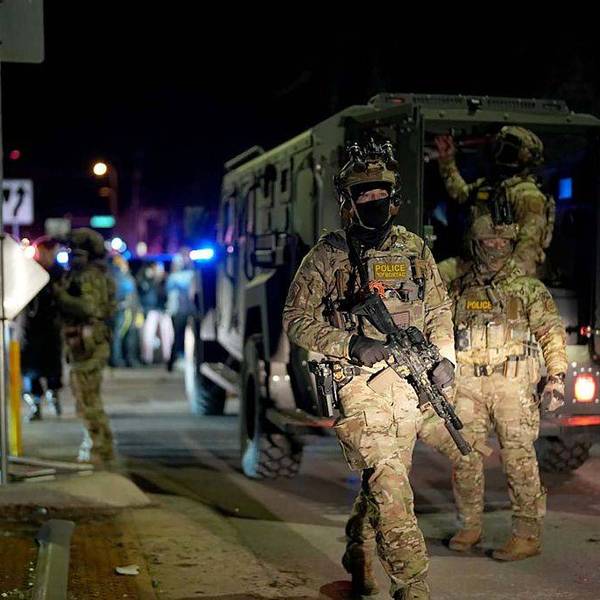
Federal agents and other law enforcement try and make way for authorized vehicles to enter while investigating a shooting involving a federal agent on Wednesday morning in Willowbrook, California on January 21, 2026.
(Photo by Genaro Molina/Los Angeles Times via Getty Images)

Jake Johnson
Jan 22, 2026
COMMON DREAMS

US Sen. Bernie Sanders said Wednesday that seemingly distinct actions by President Donald Trump—such as his attacks on European allies and his unleashing of federal immigration agents on American cities—are part of a broader agenda that aims to “undermine democracy and move this country and the world toward authoritarianism.”

“Trump’s hostility toward Europe has little to do with his absurd and irrational arguments over Greenland,” Sanders (I-Vt.) said in a statement following the US president’s speech in DavosSwitzerland. “Trump does not like free elections, a free media, or the right of people to dissent. That is why he hates Europe, with its strong democratic governance, social safety net, and commitment to peacefully resolving disputes.”


Report Details Trump’s Rapid Escalation Toward Authoritarianism in First Year of Second Term


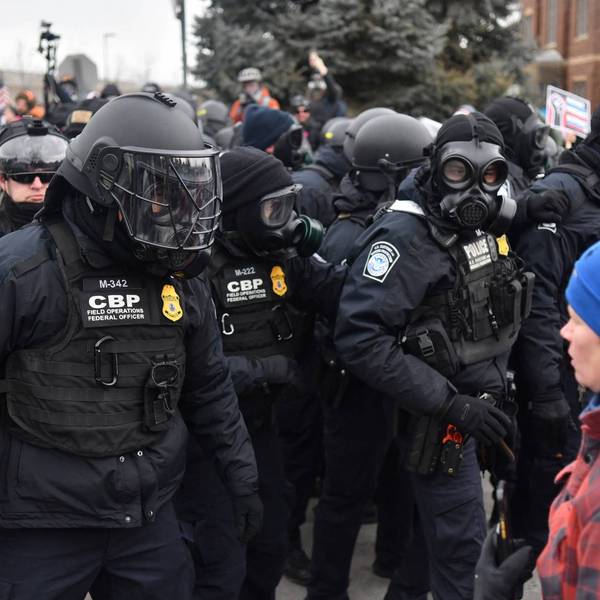
‘No,’ Says Bernie Sanders, ‘The American People Do Not Want Trump’s Domestic Army’

“That is why he is sending ICE to invade American cities,” Sanders continued, referring to Immigration and Customs Enforcement. “Let’s be clear. Trump would prefer the world to be ruled by his fellow multi-billionaire oligarchs, like his good friends in Saudi Arabia and Russia. These dictators crush political dissent, jail their opponents, and engage in massive kleptocracy.”

Noting that the US will mark the 250th anniversary of the signing of the Declaration of Independence, the progressive senator said that “in this dangerous moment in American history, it is imperative that all of us, regardless of our political views, come together to confront the grave threat of authoritarianism.”


Sanders’ remarks came as the catalog of ICE horrors continued to grow, with news that federal agents have snatched at least four children from Minnesota public schools in recent weeks and revelations that ICE is running roughshod over the Fourth Amendment by asserting the right to forcibly enter people’s homes without a warrant.

“This is what a criminal conspiracy looks like,” said policy analyst Andy Craig, “because that’s what it is.”

Marking the end of the first year of Trump’s second term in the White HouseAmnesty International USA warned earlier this week that the Republican president has plunged the United States into a full-blown “human rights emergency.”

“By shredding norms and concentrating power, the administration is trying to make it impossible for anyone to hold them accountable,” said Paul O’Brien, the organization’s executive director. “There is no doubt that these authoritarian practices by the Trump administration are eroding human rights and increasing the risk for journalists and people who speak out or dissent, including protestors, lawyers, students, and human rights defenders.”

Trump unleashed a 'Nazi problem' — and it won't stop anytime soon: Journalist

Robert Davis
January 22, 2026
RAW ST0RY


President Donald Trump appears to have unleashed a "Nazi problem" in the U.S. that won't disappear anytime soon, according to one journalist.

Mehdi Hasan, founder of Zeteo News, penned a new op-ed for The Guardian in which he argued that the Trump administration has overtly adopted Nazi propaganda techniques. He cited the use of certain phrases that seem to harken back to Nazi slogans and imagery shared on government social media accounts.

Hasan also noted that multiple people in the Trump administration, from Ed Martin at the Department of Justice to Paul Ingrassia at the Government Services Administration, have ties to Nazi groups.

"To be clear: this isn’t about calling everyone the left disagrees with a Nazi, as Trump administration spokespersons like to claim; it’s about recognizing when actual Nazis are not just right in front of us but in power," Hasan wrote. "So here’s a simple rule for Trump and his friends: if you don’t want to be called Nazis, stop hiring Nazis, quoting Nazis and posting Nazi imagery."

Hasan added that Nazi groups have seen the signals flying around the Trump campaign as well. He quoted the founder of a known white supremacist group who proclaimed, “Our side won the election," after Trump retook the White House in 2024.

"But don’t expect any of that to stop any time soon," Hasan continued. "In his first term, the president praised neo-Nazis as 'very fine people' and then his acolytes spent years desperately denying he had ever done so. Today, there is very little denial, shame, or contrition. The United States government under Trump has made a deliberate, calculated, and shameful decision to embolden and enable Nazi-glorifying elements within his party; to elevate and amplify Nazi messaging."

Read the entire op-ed by clicking here.


The Rich in the US Are Getting Even Richer—and That’s Bad News for Our Democracy

These ultra-wealthy individuals have outsized influence on our democratic system—and have actively worked to undermine it.


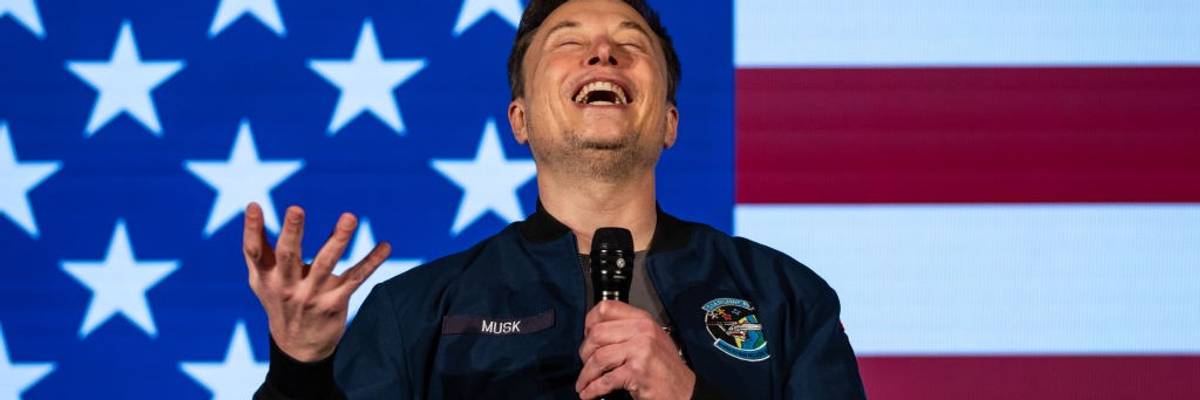
SpaceX and Tesla founder Elon Musk speaks during an America PAC town hall on October 26, 2024 in Lancaster, Pennsylvania.
(Photo by Samuel Corum/Getty Images)
Inequality.org


The top 15 wealthiest people in America are part of a very, very exclusive club: those with over $100,000,000,000 in net worth. After double checking those zeroes, we can confidently say that yes, there are 15 centi-billionaires living among us.

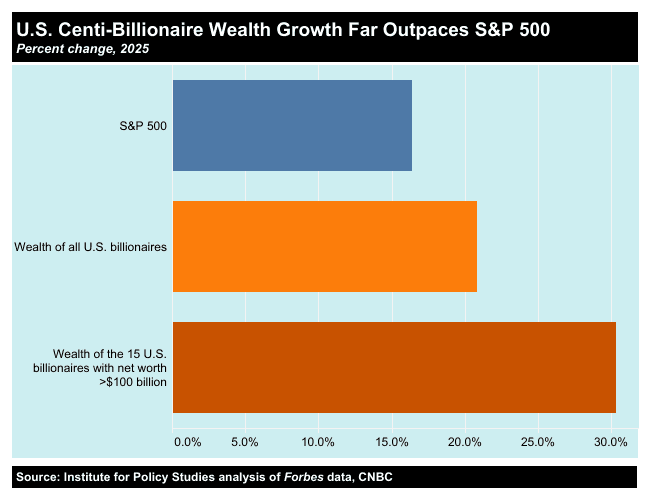
And, according to a new Institute for Policy Studies analysis of data from the Forbes real time billionaire list, the combined wealth of that 12-figure club grew from $2.4 trillion to $3.1 trillion over the course of 2025.


Oxfam Warns Record $18.3 Trillion in Billionaire Wealth ‘Highly Dangerous’ to Democracy


77% of Global Millionaires Agree: Extreme Wealth Allows Uber-Rich to Buy Political Influence

For context, that 30.3% rate of growth outpaced both the S&P 500 (16%) and billionaires in general (20.8%) over the last year. To put it succinctly, the wealthiest Americans are accumulating capital faster than everyone else.


The top 15 wealthiest billionaires aren’t the only ones doing well for themselves. Our analysis found that the number of US billionaires increased from 813 with combined wealth of $6.7 trillion at the end of 2024 to 935 US billionaires with combined assets of $8.1 trillion.

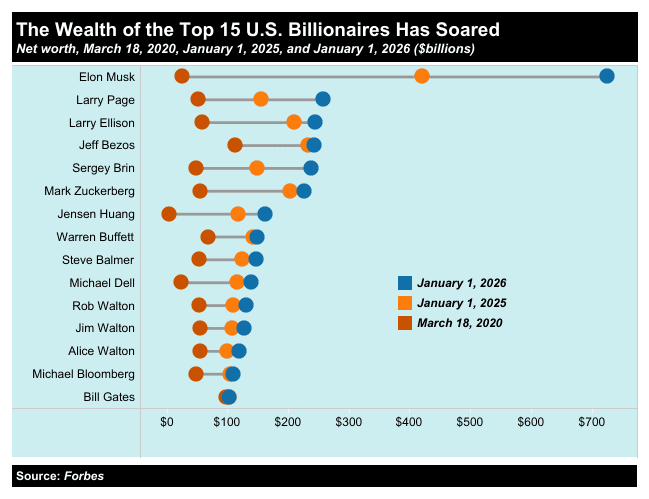
The top five wealthiest billionaires all saw huge wealth jumps in 2025.Elon Musk of Tesla-X and SpaceX with $726 billion, up from $421 billion a year ago.
Larry Page of Google, with $257 billion, up from $156 billion a year ago.
Larry Ellison of Oracle fame with $245 billion, up from $209 billion a year ago.
Jeff Bezos of Amazon with $242 billion, up from $233.5 billion a year ago.
Sergey Brin of Google with $237 billion, up from $148.9 billion a year ago.

The three wealthiest dynastic families in the US hold an estimated $757 billion, up from $657.8 billion at the end of 2024, a 16% gain. These are:Walton: Seven members of the Walton Family with combined wealth of $483 billion, up from $404.3 billion a year ago.
Mars: Six members of Mars family with combined wealth of $120 billion, down from $130.4 billion a year ago.
Koch: Two members of the Koch family have a combined wealth of $154.8 billion, up from $121.1 billion a year ago.

As we predicted it would at the time, the Covid-19 pandemic drastically accelerated wealth concentration.


On March 18, 2020, for example, Elon Musk had wealth valued just under $25 billion. A little over five years at the end of 2025, Musk’s wealth is $726 billion, a dizzying 2,800% increase from before the onset of the pandemic.

Jeff Bezos saw his wealth rise from $113 billion on March 18, 2020 to $242 billion at the end of 2025.

Three Walton family members—Jim, Alice and Rob—saw their combined assets increase from $161.1 billion on March 18, 2020 to $378 billion at the end of 2025.

The extreme concentration of wealth that our continued analysis of billionaires underscores is deeply concerning for the future of our country. These ultra-wealthy individuals have outsized influence on our democratic system—and have actively worked to undermine it. And these spectacular riches comes at the expense of workers, the ones who are actually generating wealth. Social services are being cut while tax burdens are eased on the rich.

Fighting back against wealth concentration will take a two-pronged approach. We have to empower the working class, strengthening unions and improving living conditions. We also have to raise and taxes and close wealth accumulation loopholes, or else billionaire power will only grow.


This work is licensed under a Creative Commons Attribution-Share Alike 3.0 License.


Chris Mills Rodrigo
Chris Mills Rodrigo is the managing editor of Inequality.org


NOT A LOG CABIN REPUBLICAN

Scott Bessent’s Tragic Transformation

Instead of a principled voice for sound economic policies and principles, Bessent has become a cheerleader for Trump’s dubious financial moves.


US Treasury Secretary Scott Bessent speaks at the 56th World Economic Forum Annual Meeting in Davos, Switzerland on January 20, 2026.
(Photo by Harun Ozalp/Anadolu via Getty Images)


Steven Harper
Jan 22, 2026
Common Dreams


Treasury Secretary Scott Bessent’s job is to calm the economic fears that President Donald Trump creates. He has followed a curious journey to get there, and now he’s sacrificing his integrity and legacy to remain.

Stage 1: Democratic Fundraiser

Born in a small South Carolina town, Bessent, 63, graduated from Yale College in 1984 with a bachelor’s degree in political science. Eventually he went to work for Soros Fund Management—founded by the Republicans’ favorite Democratic demon, George Soros.

Bessent is openly gay, married since 2011 to a former New York City prosecutor, and has been a strong advocate for gay rights and marriage equality. In 2000, he supported Democratic presidential candidate Al Gore, co-hosting a fundraiser for him in East Hampton, New York. He donated $2,300 to Barack Obama’s campaign in 2007. Although he donated $25,000 to support Hillary Clinton’s presidential aspirations, by then he was a major donor to Republican candidates.

Stage 2: Republican Oligarch


Bessent returned to work for Soros in 2011 as chief investment officer but left in 2016 to form his own fund for which Soros provided a $2 billion anchor. From 2018 through 2021, as the global stock market broke records, the performance of Bessent’s fund was mediocre. Still, he amassed an estimated wealth of $600 million, although some reports refer to him as one of “Trump’s billionaires.”

Bessent and his husband have two children studying in Europe. As they process the European reaction to Trump, they may ask him what he is doing to make the world a better place.

Bessent donated $1 million to Trump’s inauguration in 2016, but was not part of the first term’s inner circle. When Trump left office in disgrace after January 6 and under the cloud of other legal woes, most business leaders were reluctant to support him publicly. But as Bessent said on Roger Stone’s radio show in 2024: “I was all in for President Trump. I was one of the few Wall Street people backing him.”

The 68 senators who voted to confirm Bessent as Treasury secretary probably hoped that, like Marco Rubio at the State Department, Bessent would be an “adult in the room.” Unlike other members of the clown car comprising Trump’s cabinet, Bessent would save the nation from Trump’s worst financial impulses.

After all, the country has never had a president who declared bankruptcy six times (although Trump told the Washington Post that he had only four because he counted the first three bankruptcies as one).

Stage 3 :Trump Sycophant

Instead of a principled voice for sound economic policies and principles, Bessent has become a cheerleader for Trump’s dubious financial moves. At times, he has resorted to rhetorical gymnastics to explain away Trump’s plain language. For example:On April 2, 2025, on what Trump called “Liberation Day,” the president announced his first round of universal tariffs. The thoughtless imposition of across-the-board tariffs was often nonsensical, such as tariffs on uninhabited islands near Antarctica and on countries with which the US has a trade surplus. Trump sent global markets into a tailspin and US interest rates upward. Five days later, Bessent admitted that he was surprised by the “impatience” of commentators and the financial markets. He tried to stop the carnage by saying that Trump’s bizarre action was simply a clever negotiating strategy—which made little sense to the penguins of Antarctica.

In September, as major US companies announced the loss of billions of dollars resulting from Trump’s tariffs, Bessent dismissed their concerns.

Bessent—who is not an economist—has parroted the Trump line that tariffs are not a tax on American businesses and consumers because foreign exporters bear the cost. A broad consensus of economists has concluded otherwise, and a major study released on January 19 found that consumers and businesses—not foreign exporters—bear 96% of tariff costs.
As Trump touted tariffs as a boon to manufacturing, Bessent acknowledged that the US has been losing manufacturing jobs. But he insists that better days are coming.

When Trump tried to fire Federal Reserve Board Governor Lisa Cook, Bessent said that the Fed’s independence was important, but that Trump had the right to fire her. After reportedly trying to persuade Trump not to fire Fed Chair Jerome Powell, Bessent has now become one of Powell’s most vocal attackers—along with Trump’s Justice Department.

When the US Supreme Court heard oral argument in the case challenging Trump’s tariffs, Bessent sat in the front row. Now he’s criticizing Powell’s decision to attend the oral argument in Cook’s case.

Most recently, Trump blamed his threat of a global trade war on Denmark’s refusal to let the US take over its longstanding territory, Greenland. In a social media post on Saturday morning, January 17, Trump announced new 10% tariffs on Denmark and the countries who stood with it in resisting Trump’s demand: Norway, SwedenFrance, Germany, Britain, the Netherlands, and Finland, effective February 1. He threatened to increase the levies to 25% on June 1, unless Europe capitulated.

Sunday evening, January 18, NPR‘s Nick Schifrin posted a letter that Trump had previously sent to Norway’s prime minister, Jonas Gahr Støre. Trump revealed that after not winning last year’s Nobel Peace Prize “for having stopped 8 Wars PLUS,” he “no longer feel[s] an obligation to think purely of Peace, although it will always be predominant, but can now think about what is good and proper for the United States of America… The World is not secure unless we have Complete and Total Control of Greenland.”

Hours after the public disclosure of Trump’s message, Bessent held an impromptu press conference on the sidelines of the World Economic Forum in DavosSwitzerland. He tried to explain away Trump’s childish fit: “I think it’s a complete canard that the president will be doing this because of the Nobel Prize,” Bessent asserted. Accusing Trump’s critics of “hysteria,” Bessent said, “What I am urging everyone here to do is sit back, take a deep breath, and let things play out.” His words fell flat, and he looked as uncomfortable as he must have felt.

In Brussels on January 21, the European Parliament protested Trump’s demand by suspending its work on the previously negotiated US-EU trade deal. Meanwhile at Davos, Trump delivered a 90-minute screed that insulted many European leaders by name and reiterated his demand for Greenland. But later that day, Trump posted that he and NATO Secretary General Mark Rutte had worked out a “framework of a future deal with respect to Greenland and, in fact, the entire Arctic Region.” And he walked back the new European tariffs he’d threatened to impose on February 1.

Stage 4: The Coming Quest for Rehabilitation

Bessent seems destined to follow the paths of other Trump enablers who eventually left the fold, like former Attorney General William Barr. He neutered the Mueller Report on Russian election interference during the 2016 election, only to resign 18 months later as January 6 approached. Eventually, Bessent will find himself on the outs with Trump, write a book, pursue a public speaking “redemption tour,” and explain that his government service saved the country from Trump’s worst impulses.

Such a rationalization rings hollow.

Bessent and his husband have two children studying in Europe. As they process the European reaction to Trump, they may ask him what he is doing to make the world a better place. The answer is also his legacy: In the process of sacrificing his personal integrity, Bessent has disserved the nation.


Our work is licensed under Creative Commons (CC BY-NC-ND 3.0). Feel free to republish and share widely.


Steven Harper
Steven J. Harper is an attorney, adjunct professor at Northwestern University Law School, and author of several books, including Crossing Hoffa -- A Teamster's Story and The Lawyer Bubble -- A Profession in Crisis. He has been a regular columnist for Moyers on Democracy, Dan Rather's News and Guts, and The American Lawyer. Follow him at https://thelawyerbubble.com.
Full Bio >


Elon Musk's exploding rockets rain flaming debris on busy Caribbean flight paths


ProPublica
January 8, 2026 


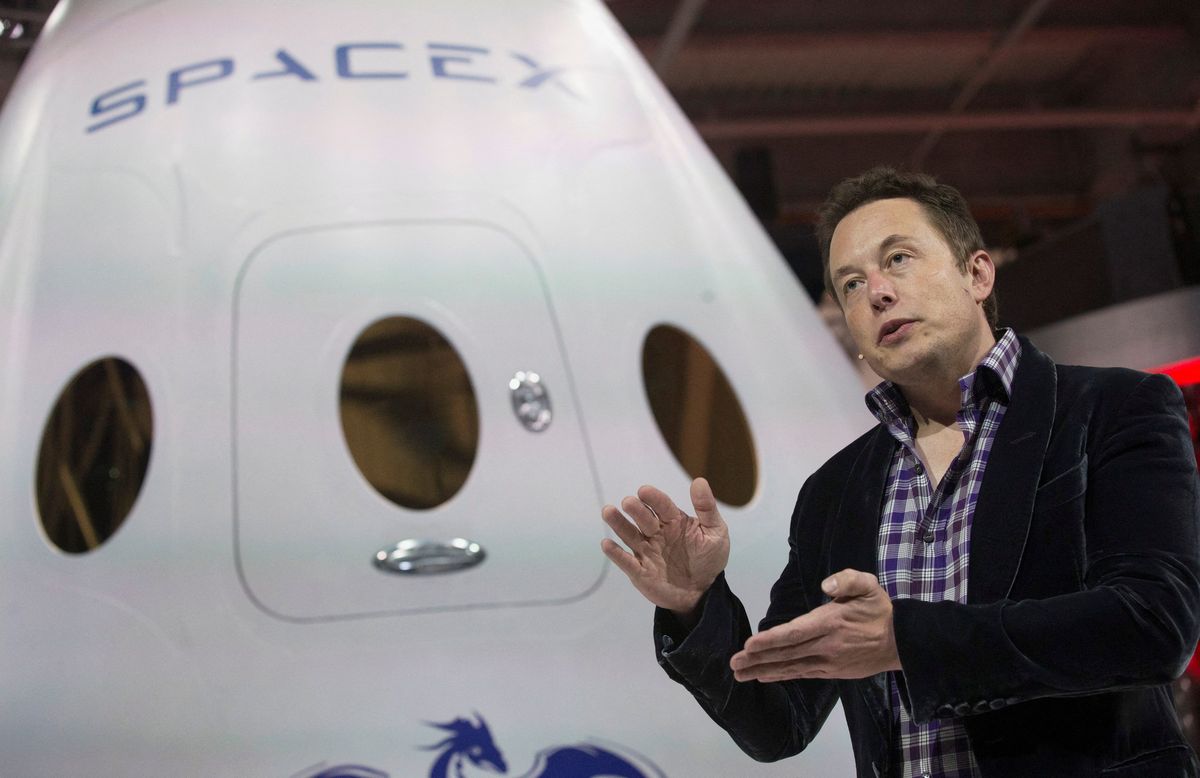
FILE PHOTO: SpaceX CEO Elon Musk speaks after unveiling the Dragon V2 spacecraft in Hawthorne, California May 29, 2014. REUTERS/Mario Anzuoni/File Photo

LONG READ


When SpaceX CEO Elon Musk chose a remote Texas outpost on the Gulf Coast to develop his company’s ambitious Starship, he put the 400-foot rocket on a collision course with the commercial airline industry.

Each time SpaceX did a test run of Starship and its booster, dubbed Super Heavy, the megarocket’s flight path would take it soaring over busy Caribbean airspace before it reached the relative safety of the open Atlantic Ocean. The company planned as many as five such launches a year as it perfected the craft, a version of which is supposed to one day land on the moon.

The FAA, which also oversees commercial space launches, predicted the impact to the national airspace would be “minor or minimal,” akin to a weather event, the agency’s 2022 approval shows. No airport would need to close and no airplane would be denied access for “an extended period of time.”

But the reality has been far different. Last year, three of Starship’s five launches exploded at unexpected points on their flight paths, twice raining flaming debris over congested commercial airways and disrupting flights. And while no aircraft collided with rocket parts, pilots were forced to scramble for safety.

A ProPublica investigation, based on agency documents, interviews with pilots and passengers, air traffic control recordings and photos and videos of the events, found that by authorizing SpaceX to test its experimental rocket over busy airspace, the FAA accepted the inherent risk that the rocket might put airplane passengers in danger.

And once the rocket failed spectacularly and that risk became real, neither the FAA nor Secretary of Transportation Sean Duffy sought to revoke or suspend Starship’s license to launch, a move that is permitted when “necessary to protect the public health and safety.” Instead, the FAA allowed SpaceX to test even more prototypes over the same airspace, adding stress to the already-taxed air traffic control system each time it launched.

The first two Starship explosions last year forced the FAA to make real-time calls on where to clear airspace and for how long. Such emergency closures came with little or no warning, ProPublica found, forcing pilots to suddenly upend their flight plans and change course in heavily trafficked airspace to get out of the way of falling debris. In one case, a plane with 283 people aboard ran low on fuel, prompting its pilot to declare an emergency and cross a designated debris zone to reach an airport.

The world’s largest pilots union told the FAA in October that such events call into question whether “a suitable process” is in place to respond to unexpected rocket mishaps.

“There is high potential for debris striking an aircraft resulting in devastating loss of the aircraft, flight crew, and passengers,” wrote Steve Jangelis, a pilot and aviation safety chair.


The FAA said in response to questions that it “limits the number of aircraft exposed to the hazards, making the likelihood of a catastrophic event extremely improbable.”

Yet for the public and the press, gauging that danger has been difficult. In fact, nearly a year after last January’s explosion, it remains unclear just how close Starship’s wreckage came to airplanes. SpaceX estimated where debris fell after each incident and reported that information to the federal government. But the company didn’t respond to ProPublica’s requests for that data, and the federal agencies that have seen it, including the FAA, haven’t released it. The agency told us that it was unaware of any other publicly available data on Starship debris.

In public remarks, Musk downplayed the risk posed by Starship. To caption a video of flaming debris in January, he wrote, “Entertainment is guaranteed!” and, after the March explosion, he posted, “Rockets are hard.” The company has been more measured, saying it learns from mistakes, which “help us improve Starship’s reliability.”


For airplanes traveling at high speeds, there is little margin for error. Research shows as little as 300 grams of debris — or two-thirds of a pound — “could catastrophically destroy an aircraft,” said Aaron Boley, a professor at the University of British Columbia who has studied the danger space objects pose to airplanes. Photographs of Starship pieces that washed up on beaches show items much bigger than that, including large, intact tanks.

“It doesn’t actually take that much material to cause a major problem to an aircraft,” Boley said.

In response to growing alarm over the rocket’s repeated failures, the FAA has expanded prelaunch airspace closures and offered pilots more warning of potential trouble spots. The agency said it also required SpaceX to conduct investigations into the incidents and to “implement numerous corrective actions to enhance public safety.” An FAA spokesperson referred ProPublica’s questions about what those corrective actions were to SpaceX, which did not respond to multiple requests for comment.


Experts say the FAA’s shifting approach telegraphs a disquieting truth about air safety as private companies increasingly push to use the skies as their laboratories: Regulators are learning as they go.

During last year’s Starship launches, the FAA was under pressure to fulfill a dual mandate: to regulate and promote the commercial space industry while keeping the flying public safe, ProPublica found. In his October letter, Jangelis called the arrangement “a direct conflict of interest.”

In an interview, Kelvin Coleman, who was head of FAA’s commercial space office during the launches, said his office determined that the risk from the mishaps “was within the acceptable limits of our regulations.”


But, he said, “as more launches are starting to take place, I think we have to take a real hard look at the tools that we have in place and how do we better integrate space launch into the airspace.”
“We Need to Protect the Airspace”

On Jan. 16, 2025, as SpaceX prepared to launch Starship 7 from Boca Chica, Texas, the government had to address the possibility the giant rocket would break up unexpectedly.


Using debris modeling and simulations, the U.S. Space Force, the branch of the military that deals with the nation’s space interests, helped the FAA draw the contours of theoretical “debris response areas” — no-fly zones that could be activated if Starship exploded.

With those plans in place, Starship Flight 7 lifted off at 5:37 p.m. EST. About seven minutes later, it achieved a notable feat: Its reusable booster rocket separated, flipped and returned to Earth, where giant mechanical arms caught it as SpaceX employees cheered.

But about 90 seconds later, as Starship’s upper stage continued to climb, SpaceX lost contact with it. The craft caught fire and exploded, far above Earth’s surface.

Air traffic control’s communications came alive with surprised pilots who saw the accident, some of whom took photos and shot videos of the flaming streaks in the sky:


Another controller warned a different pilot of debris in the area:

Two FAA safety inspectors were in Boca Chica to watch the launch at SpaceX’s mission control, said Coleman, who, for Flight 7, was on his laptop in Washington, D.C., receiving updates.

As wreckage descended rapidly toward airplanes’ flight paths over the Caribbean, the FAA activated a no-fly zone based on the vehicle’s last known position and prelaunch calculations. Air traffic controllers warned pilots to avoid the area, which stretched hundreds of miles over a ribbon of ocean roughly from the Bahamas to just east of St. Martin, covering portions of populated islands, including all of Turks and Caicos. While the U.S. controls some airspace in the region, it relies on other countries to cooperate when it recommends a closure.


The FAA also cordoned off a triangular zone south of Key West.

When a pilot asked when planes would be able to proceed through the area, a controller replied:

There were at least 11 planes in the closed airspace when Starship exploded, and flight tracking data shows they hurried to move out of the way, clearing the area within 15 minutes. Such maneuvers aren’t without risk. “If many aircraft need to suddenly change their routing plans,” Boley said, “then it could cause additional stress” on an already taxed air traffic control system, “which can lead to errors.”

That wasn’t the end of the disruption though. The FAA kept the debris response area, or DRA, active for another 71 minutes, leaving some flights in a holding pattern over the Caribbean. Several began running low on fuel and some informed air traffic controllers that they needed to land.

“We haven’t got enough fuel to wait,” said one pilot for Iberia airlines who was en route from Madrid with 283 people on board.

The controller warned him that if he proceeded across the closed airspace, it would be at his own risk:

The plane landed safely in San Juan, Puerto Rico.

Iberia did not respond to requests for comment, but in statements to ProPublica, other airlines downplayed the launch fallout. Delta, for example, said the incident “had minimal impact to our operation and no aircraft damage.” The company’s “safety management system and our safety culture help us address potential issues to reinforce that air transportation remains the safest form of travel in the world,” a spokesperson said.

After the incident, some pilots registered concerns with the FAA, which was also considering a request from SpaceX to increase the number of annual Starship launches from five to 25.

“Last night’s Space X rocket explosion, which caused the diversion of several flights operating over the Gulf of Mexico, was pretty eye opening and scary,” wrote Steve Kriese in comments to the FAA, saying he was a captain for a major airline and often flew over the Gulf. “I do not support the increase of rocket launches by Space X, until a thorough review can be conducted on the disaster that occurred last night, and safety measures can be put in place that keeps the flying public safe.”

Kriese could not be reached for comment.

The Air Line Pilots Association urged the FAA to suspend Starship testing until the root cause of the failure could be investigated and corrected. A letter from the group, which represents more than 80,000 pilots flying for 43 airlines, said flight crews traveling in the Caribbean didn’t know where planes might be at risk from rocket debris until after the explosion.

“By that time, it’s much too late for crews who are flying in the vicinity of the rocket operation, to be able to make a decision for the safe outcome of the flight,” wrote Jangelis, the pilot and aviation safety chair for the group. The explosion, he said, “raises additional concerns about whether the FAA is providing adequate separation of space operations from airline flights.”

In response, the FAA said it would “review existing processes and determine whether additional measures can be taken to improve situational awareness for flight crews prior to launch.”

According to FAA documents, the explosion propelled Starship fragments across an area nearly the size of New Jersey. Debris landed on beaches and roadways in Turks and Caicos. It also damaged a car. No one was injured.

Three months later, the National Oceanic and Atmospheric Administration, which was evaluating potential impacts to marine life, sent the FAA a report with a map of where debris from an explosion could fall during future Starship failures. The estimate, which incorporated SpaceX’s own data from the Starship 7 incident, depicted an area more than three times the size of the airspace closed by the FAA.

In a statement, an FAA spokesperson said NOAA’s map was “intended to cover multiple potential operations,” while the FAA’s safety analysis is for a “single actual launch.” A NOAA spokesperson said that the map reflects “the general area where mishaps could occur” and is not directly comparable with the FAA’s no-fly zones.

Nevertheless Moriba Jah, a professor of aerospace engineering at the University of Texas, said the illustration suggested the no-fly zones the FAA activated may not fully capture how far and wide debris spreads after a rocket breakup. The current predictive science, he said, “carries significant uncertainty.”

At an industry conference a few weeks after the January explosion, Shana Diez, a SpaceX executive, acknowledged the FAA’s challenges in overseeing commercial launches.

“The biggest thing that we really would like to work with them on in the future is improving their real time awareness of where the launch vehicles are and where the launch vehicles’ debris could end up,” she said.
“We’re Too Close to the Debris”

On Feb. 26 of last year, with the investigation into Starship Flight 7 still open, the FAA cleared Flight 8 to proceed, saying it “determined SpaceX met all safety, environmental and other licensing requirements.”

The action was allowed under a practice that began during the first Trump administration, known as “expedited return-to-flight,” that permitted commercial space companies to launch again even before the investigation into a prior problematic flight was complete, as long as safety systems were working properly.

Coleman, who took a voluntary separation offer last year, said that before granting approval, the FAA confirmed that “safety critical systems,” such as the rocket’s ability to self-destruct if it went off course, worked as designed during Flight 7.

By March 6, SpaceX was ready to launch again. This time the FAA gave pilots a heads-up an hour and 40 minutes before liftoff.

“In the event of a debris-generating space launch vehicle mishap, there is the potential for debris falling within an area,” the advisory said, again listing coordinates for two zones in the Gulf and Caribbean.

The FAA said a prelaunch safety analysis, which includes planning for potential debris, “incorporates lessons learned from previous flights.” The zone described in the agency’s advisory for the Caribbean was wider and longer than the previous one, while the area over the Gulf was significantly expanded.

Flight 8 launched at 6:30 p.m. EST and its booster returned to the launchpad as planned. But a little more than eight minutes into the flight, some of Starship’s engines cut out. The craft went into a spin and about 90 seconds later SpaceX lost touch with it and it exploded.

The FAA activated the no-fly zones less than two minutes later, using the same coordinates it had released prelaunch.

Even with the advance warning, data shows at least five planes were in the debris zones at the time of the explosion, and they all cleared the airspace in a matter of minutes.

A pilot on one of those planes, Frontier Flight 081, told passengers they could see the rocket explosion out the right-side windows. Dane Siler and Mariah Davenport, who were heading home to the Midwest after vacationing in the Dominican Republic, lifted the window shade and saw debris blazing across the sky, with one spot brighter than the rest.

“It literally looked like the sun coming out,” Siler told ProPublica. “It was super bright.”

They and other passengers shot videos, marveling at what looked like fireworks, the couple said. The Starship fragments appeared to be higher than the plane, many miles off. But before long, the pilot announced “I’m sorry to report that we have to turn around because we’re too close to the debris,” Siler said.

Frontier did not respond to requests for comment.

The FAA lifted the restriction on planes flying through the debris zone about 30 minutes after Starship exploded, much sooner than it had in January. The agency said that the Space Force had “notified the FAA that all debris was down approximately 30 minutes after the Starship Flight 8 anomaly.”

But in response to ProPublica’s questions, the Space Force acknowledged that it did not track the debris in real time. Instead, it said “computational modeling,” along with other scientific measures, allowed the agency to “predict and mitigate risks effectively.” The FAA said “the aircraft were not at risk” during the aftermath of Flight 8.

Experts told ProPublica that the science underlying such modeling is far from settled, and the government’s ability to anticipate how debris will behave after an explosion like Starship’s is limited. “You’re not going to find anybody who’s going to be able to answer that question with any precision,” said John Crassidis, an aerospace engineering professor at the University of Buffalo. “At best, you have an educated guess. At worst, it’s just a potshot.”

Where pieces fall — and how long they take to land — depends on many factors, including atmospheric winds and the size, shape and type of material involved, experts said.

During the breakup of Flight 7, the FAA kept airspace closed for roughly 86 minutes. However, Diez, the SpaceX executive, told attendees at the industry conference that, in fact, it had taken “hours” for all the debris to reach the ground. The FAA, SpaceX and Diez did not respond to follow-up questions about her remarks.

It’s unclear how accurate the FAA’s debris projections were for the March explosion. The agency acknowledged that debris fell in the Bahamas, but it did not provide ProPublica the exact location, making it impossible to determine whether the wreckage landed where the FAA expected. While some of the country’s islands were within the boundaries of the designated debris zone, most were not. Calls and emails to Bahamas officials were not returned.

The FAA said no injuries or serious property damage occurred.
FAA Greenlights More Launches

By May, after months of Musk’s Department of Government Efficiency slashing spending and firing workers at federal agencies across Washington, the FAA granted SpaceX’s request to exponentially increase the number of Starship launches from Texas.

Starship is key to “delivering greater access to space and enabling cost-effective delivery of cargo and people to the Moon and Mars,” the FAA found. The agency said it will make sure parties involved “are taking steps to ensure the safe, efficient, and equitable use” of national airspace.

The U.S. is in a race to beat China to the lunar surface — a priority set by Trump’s first administration and continued under President Joe Biden. Supporters say the moon can be mined for resources like water and rare earth metals, and can offer a place to test new technologies. It could also serve as a stepping stone for more distant destinations, enabling Musk to achieve his longstanding goal of bringing humans to Mars.

Trump pledged last January that the U.S. will “pursue our Manifest Destiny into the stars, launching American astronauts to plant the Stars and Stripes on the planet Mars.”

But with experimental launches like Starship’s, Jangelis said, the FAA should be “as conservative as possible” when managing the airspace below them.

“We expect the FAA to make sure our aircraft and our passengers stay safe,” he said. “There has to be a balance between the for-profit space business and the for-profit airlines and commerce.”
A More Conservative Approach

In mid-May, United Kingdom officials sent a letter to their U.S. counterparts, asking that SpaceX and the FAA change Starship’s flight path or take other precautions because they were worried about the safety of their Caribbean territories.

The following day, the FAA announced in a news release that it had approved the next Starship launch, pending either the agency’s closure of the investigation into Flight 8 or granting of a “return to flight” determination.

A week later, with the investigation into Flight 8 still open, the agency said SpaceX had “satisfactorily addressed” the causes of the mishap. The FAA did not detail what those causes were at the time but said it would verify that the company implemented all necessary “corrective actions.”

This time the FAA was more aggressive on air safety.

The agency preventively closed an extensive swath of airspace extending 1,600 nautical miles from the launch site, across the Gulf of Mexico and through part of the Caribbean. The FAA said that 175 flights or more could be affected, and it advised Turks and Caicos’ Providenciales International Airport to close during the launch.


The agency said the move was driven in part by an “updated flight safety analysis” and SpaceX’s decision to reuse a previously launched Super Heavy booster — something the company had never tried before. The agency also said it was “in close contact and collaboration with the United Kingdom, Turks & Caicos Islands, Bahamas, Mexico, and Cuba.”

Coleman told ProPublica that the concerns of the Caribbean countries, along with Starship’s prior failures, helped convince the FAA to close more airspace ahead of Flight 9.

On May 27, the craft lifted off at 7:36 p.m. EDT, an hour later than in March and two hours later than in January. The FAA said it required the launch window to be scheduled during “non-peak transit periods.”

This mission, too, ended in failure.

Starship’s Super Heavy booster blew up over the Gulf of Mexico, where it was supposed to have made what’s called a “hard splashdown.”

In response, the FAA again activated an emergency no-fly zone. Most aircraft had already been rerouted around the closed airspace, but the agency said it diverted one plane and put another in a holding pattern for 24 minutes. The FAA did not provide additional details on the flights.

According to the agency, no debris fell outside the hazard area where the FAA had closed airspace. Pieces from the booster eventually washed up on Mexico’s beaches.

Starship’s upper stage reached the highest planned point in its flight path, but it went into a spin on the way down, blowing up over the Indian Ocean.
The Path Ahead

SpaceX launched Starship again in August and October. Unlike the prior flights, both went off without incident, and the company said it was turning its focus to the next generation of Starship to provide “service to Earth orbit, the Moon, Mars, and beyond.”

But about a week later, Transportation Secretary Sean Duffy said he would open up SpaceX’s multibillion-dollar contract for a crewed lunar lander to rival companies. SpaceX is “an amazing company,” he said on CNBC. “The problem is, they’re behind.”

Musk pushed back, saying on X that “SpaceX is moving like lightning compared to the rest of the space industry.” He insulted Duffy, calling him “Sean Dummy” and saying “The person responsible for America’s space program can’t have a 2 digit IQ.”

The Department of Transportation did not respond to a request for comment or make Duffy available.

In a web post on Oct. 30, SpaceX said it was proposing “a simplified mission architecture and concept of operations” that would “result in a faster return to the Moon while simultaneously improving crew safety.”

SpaceX is now seeking FAA approval to add new trajectories as Starship strives to reach orbit. Under the plan, the rocket would fly over land in Florida and Mexico, as well as the airspace of Cuba, Jamaica and the Cayman Islands, likely disrupting hundreds of flights.

In its letter, the pilots’ union told the FAA that testing Starship “over a densely populated area should not be allowed (given the dubious failure record)” until the craft becomes more reliable. The planned air closures could prove “crippling” for the Central Florida aviation network, it added.

Still, SpaceX is undeterred.

Diez, the company executive, said on X in October, “We are putting in the work to make 2026 an epic year for Starship.”
ENVIROMENTAL POLLUTERS AGENCY

Corporate Polluters Running Rampant Under Trump as EPA Enforcement ‘Dying a Quick Death’


“Administrator Zeldin is removing all incentives for big polluters to follow the law and turning a blind eye to those who suffer from the impacts of pollution.”


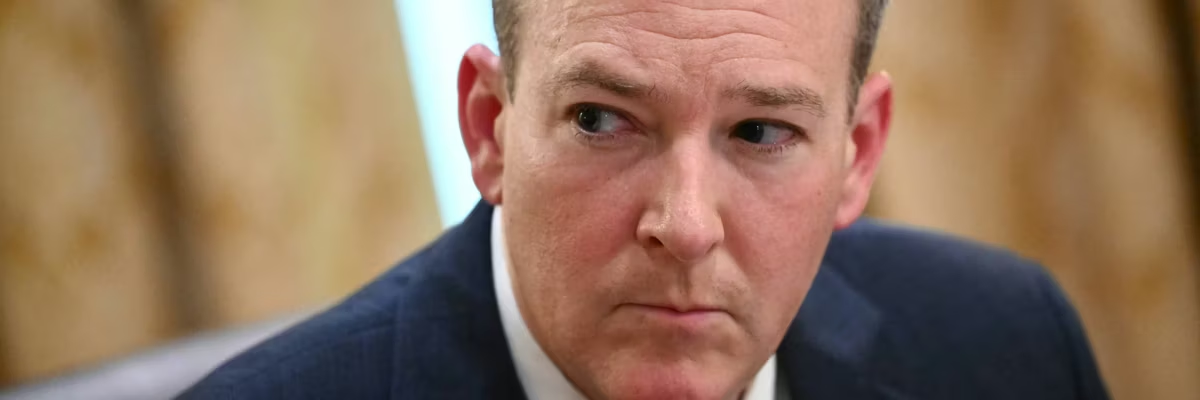
Environmental Protection Agency Administrator Lee Zeldin listens as President Donald Trump holds a Cabinet meeting in the Cabinet Room of the White House in Washington, DC on August 26, 2025
.
(Photo by Mandel Ngan/AFP via Getty Images)


Julia Conley
Jan 22, 2026
COMMON DREAMS


The Trump administration settled just 15 of the illegal pollution cases referred by the US Environmental Protection Agency in the first year of President Donald Trump’s second term in the White House, according to data compiled by a government watchdog—the latest evidence that Trump officials are placing corporate profits above the EPA’s mission to “protect human health and the environment.”

In the report, The Collapse of Environmental Enforcement Under Trump’s EPA, Public Employees for Environmental Responsibility (PEER) noted Thursday that in the first year of former President Joe Biden’s administration, 71 cases referred by the EPA were prosecuted by the US Department of Justice (DOJ).


EPA to Stop Counting Public Health Benefits When Setting Air Pollution Standards


New State Laws Aim to Protect Environment, Consumers as Trump Wages All-Out War on Climate

“Under [EPA Administrator] Lee Zeldin, anti-pollution enforcement is dying a quick death,” said Tim Whitehouse, executive director of PEER and a former enforcement attorney at EPA.

The DOJ lodged just one environmental consent decree in a case regarding a statutory violation of the Clean Air Act from the day Trump was inaugurated just over a year ago until now—signaling that the agency “virtually stopped enforcing” the landmark law that regulates air pollution.

“Enforcing the Clean Air Act means going after violators within the oil, gas, petrochemical, coal, and motor vehicle industries that account for most air pollution,” reads the report. “But these White House favorites will be shielded from any serious enforcement, at least, while Lee Zeldin remains EPA’s administrator.”

“For the sake of our health and the environment, Congress and the American people need to push back against Lee Zeldin’s dismantling of EPA’s environmental enforcement program.”

In the first year of his first term, Trump’s DOJ settled 26 Clean Air Act cases, even more than the 22 the department prosecuted in Biden’s first year.

The report warns that plummeting enforcement actions are likely to contribute to health harms in vulnerable communities located near waterways that are filled with “algae blooms, bacteria, or toxic chemicals” and near energy and chemical industry infrastructure, where people are more likely to suffer asthma attacks and heart disease caused by smog and soot.

“Enforcing environmental laws ensures that polluters are held accountable and prevented from dumping their pollution on others for profit,” said Joanna Citron Day, general counsel for PEER and a former senior counsel at DOJ’s Environmental Enforcement Section. “For the sake of our health and the environment, Congress and the American people need to push back against Lee Zeldin’s dismantling of EPA’s environmental enforcement program.”

EPA’s own enforcement and compliance database identifies 2,374 major air pollution sources that have not had a full compliance evaluation in at least five years, and shows that no enforcement action has been taken at more than 400 sources that are marked as a “high priority.”

Nearly 900 pollution sources reported to the EPA that they exceeded their wastewater discharge limits at least 50 times in the past two years.

The agency has also repealed its rules limiting carbon pollution from gas-powered cars, arguing that the EPA lacks the authority to regulate carbon.

As public health risks mount, PEER noted, Zeldin is moving forward with plans to stop calculating the health benefits of rules aimed at reducing air pollution, and issued a memo last month detailing a “compliance first” policy emphasizing a “cooperative, industry-friendly approach” to environmental regulation.

“Administrator Zeldin is removing all incentives for big polluters to follow the law,” said Whitehouse, “and turning a blind eye to those who suffer from the impacts of pollution.”
White House X account alters protester photo to add tears

By AFP
January 22, 2026


Image: — © AFP/File Nicolas TUCAT

Marisha Goldhamer and Anuj Chopra

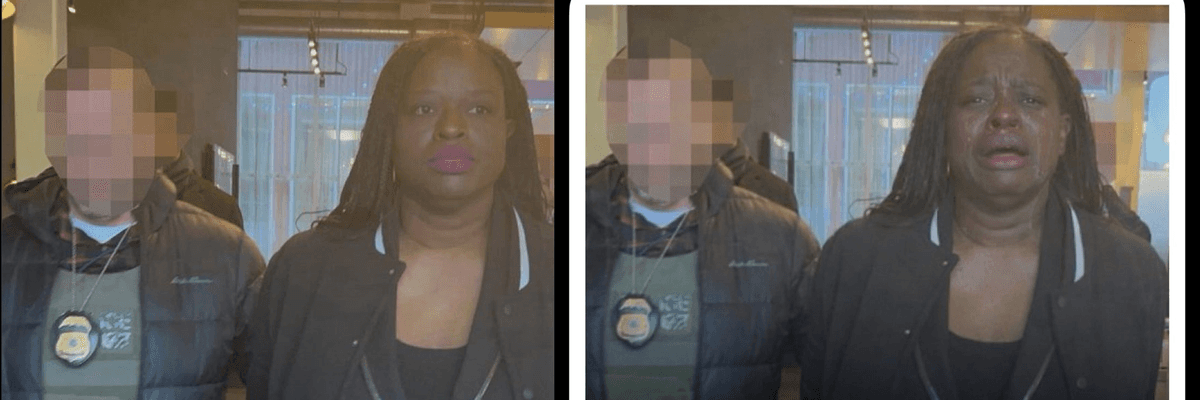
The White House’s X account on Thursday posted a doctored photo of a protester arrested in Minnesota, showing her face contorted with tears without disclosing that the photorealistic image had been altered.

The edited photo of Nekima Levy Armstrong — among three people arrested for allegedly disturbing a church service while protesting an immigration crackdown — illustrates how President Donald Trump’s administration is increasingly using deepfakes or AI imagery to make political arguments.

On Thursday morning, Secretary of Homeland Security Kristi Noem posted an image on X showing Armstrong’s arrest, her face calm and expressionless.

About 30 minutes later, the White House posted the same image on the platform, but altered to show Armstrong sobbing, her mouth open, forehead wrinkled, and tears streaming down her face.

A caption superimposed on the image read “ARRESTED,” labeling Armstrong a “far-left agitator.”

The White House post offered no disclaimer that the image had been edited, and it was not immediately clear whether the alteration was done using an AI tool or other photo editing software.

In the first year of his second term in the White House, US President Donald Trump ramped up his use of hyper-realistic but fabricated visuals on social media.

When reached for comment, the White House redirected AFP to a post on X by White House Deputy Communications Director Kaelan Dorr, who tacitly acknowledged that the image had been modified.

“YET AGAIN to the people who feel the need to reflexively defend perpetrators of heinous crimes in our country I share with you this message,” Dorr wrote on X, resharing the White House post featuring Armstrong’s altered photo.

“Enforcement of the law will continue. The memes will continue. Thank you for your attention to this matter.”

Underneath the White House post, several users questioned why the image had been altered to make Armstrong appear to be crying.

“We should be disturbed by any party using AI to manipulate photographs and presenting them as fact, which appears to be the case here,” one user wrote.

“This point of view should have bipartisan agreement.”

– ‘Lack of decorum’ –

In the age of deepfakes and AI, such edited images are now “commonplace in partisan politics,” said Walter Scheirer of the University of Notre Dame.

“They are frequently used to humiliate opposition figures or make exaggerated political statements that resonate with a political base,” Scheirer told AFP.

“One could consider this the contemporary version of newspaper political cartoons, but there is a notable lack of decorum when it comes through official government communication channels.”

During the first year of his second White House term, Trump ramped up his use of hyper-realistic but fabricated visuals on Truth Social and other platforms, often glorifying himself while lampooning his critics.

Trump or the White House have similarly shared AI-made images depicting the president dressed as the pope, roaring alongside a lion, and conducting an orchestra at the Kennedy Center — Washington’s premier arts complex — where he installed himself as chair of the board.

Underscoring the strategy’s potential appeal to younger voters, similar AI-driven messaging has also been adopted by other arms of the Trump administration as well as by some of the president’s political rivals.

‘Dark, Bizarre Stuff’: White House Posts Deepfake Image of Arrested ICE Protester Crying

“All of us are on full notice that this White House feels no compunction about concocting obvious lies, concedes nothing when its lies are exposed, and should be presumptively disbelieved in all matters.”


The official White House social media account posted a digitally altered photograph (R) of Nekima Levy Armstrong being arrested for her participation in a protest against US Immigration and Customs Enforcement (ICE) on January 22, 2025.
(Original photo from Secretary of Homeland Security Kristi Noem, altered photo from the White House)

Stephen Prager
Jan 22, 2026
COMMON DREAMS

Continuing its bizarre and often legally questionable use of social media to publicize law enforcement operations, the official White House account published an artificially generated deepfake image of a protester arrested on Thursday by the FBI.

Earlier that day, Secretary of Homeland Security Kristi Noem had posted about Nekima Levy Armstrong, one of three people who were arrested for disrupting a service last week at the Cities Church in St. Paul, Minnesota, where an Immigration and Customs Enforcement (ICE) officer and field office leader, David Easterwood, reportedly serves as a pastor.


‘Goebbels Could Not Have Improved On This’: DHS Spreads ‘Propaganda’ on ICE Killing as Violence Mounts


‘Filled With Lies’: Trump White House Releases False History of Jan. 6

Noem described Levy Armstrong, who leads a local civil rights organization known as the Racial Justice Network, as someone “who played a key role in orchestrating the Church Riots in St. Paul, Minnesota.”

There is notably no evidence that the protesters engaged in or threatened violence, as implied by her use of the word “riot.” Video shows protesters disrupting the service by chanting slogans like “ICE out” and demanding justice for Renee Good, who was fatally shot by an ICE officer in Minneapolis earlier this month.

Attorney General Pam Bondi said the protesters had been charged under the 1871 Ku Klux Klan Act, which makes illegal any conspiracy to “injure, oppress, threaten, or intimidate,” people from exercising “any right or privilege secured to him by the Constitution or laws of the United States.”

In her post, Noem shared a photo of Levy Armstrong being led away by an agent, whose face is pixelated to hide his identity. In the photo, Levy Armstrong appears stone-faced and unfazed by the arrest.

Hours later, the official White House account shared the exact same image—accompanied by text describing her as a “far-left agitator”—but with one notable difference. Levy Armstrong’s face was digitally altered to make it appear as if she was sobbing profusely while being led out by the agent. Nowhere did the account make clear that the image had been doctored.


“Did the White House digitally alter this image of Nekima Levy to make her cry???” asked Peter Rothpletz, a reporter for Zeteo, who described it as “bizarre, dark stuff.”

Sure enough, CNN senior reporter Daniel Dale later said the White House had “confirmed its official X account posted a fake image of a woman arrested in Minnesota after interrupting a service at a church where an ICE official appears to be a pastor,” and that “the White House image altered the actual photo to wrongly make it seem like the defendant was sobbing.”

Asked for comment, Dale said the White House directed him to a social media post by Kaelan Dorr, the White House deputy communications director, who wrote: “Enforcement of the law will continue. The memes will continue.”


Posting artificially generated images of their targets sobbing has become a house style of sorts for the White House account.


In March 2025, the account posted an image, altered to appear in the style of a Studio Ghibli film, of Virginia Basora-Gonzalez, an alleged undocumented immigrant and convicted fentanyl trafficker, crying while handcuffed during her ICE arrest in Philadelphia.

In July, the White House posted an AI-altered photograph of Rep. Jimmy Gomez (D-Calif.) after he criticized an ICE raid in which agents arrested hundreds of farmworkers in Ventura County, California. They edited Gomez’s congressional photo to make it appear as if he was crying, referring to him as “Cryin’ Jimmy.”


But the fake image of Levy Armstrong hardly appeared as a “meme.” It was subtle enough that, without having seen the original, it was not immediately apparent that it had been altered, raising concerns about the White House’s willingness to publish blatantly deceptive information pertaining to a criminal investigation.

Anna Bower, a senior editor at Lawfare, suggested that for the government to post a fake, degrading image of a criminal suspect could be considered a “prejudicial extrajudicial statement,” which can undermine the case against Levy Armstrong.

The Trump administration has been caught in an untold number of lies, particularly about those arrested, brutalized, and killed by its law enforcement agencies. This includes Renee Good herself, whom members of the Trump administration tarred as a “domestic terrorist” within hours after her killing, without conducting an investigation and despite video evidence to the contrary.

Bulwark journalist Will Saletan said that with this deepfake post, “all of us are on full notice that this White House feels no compunction about concocting obvious lies, concedes nothing when its lies are exposed, and should be presumptively disbelieved in all matters. Nothing they say should be accepted without independent confirmation.”


SINOPHOBIA

China bombards LinkedIn in 'astounding' effort to recruit US spies: experts


Alexandria Jacobson, Investigative Reporter
January 20, 2026 
RAW STORY


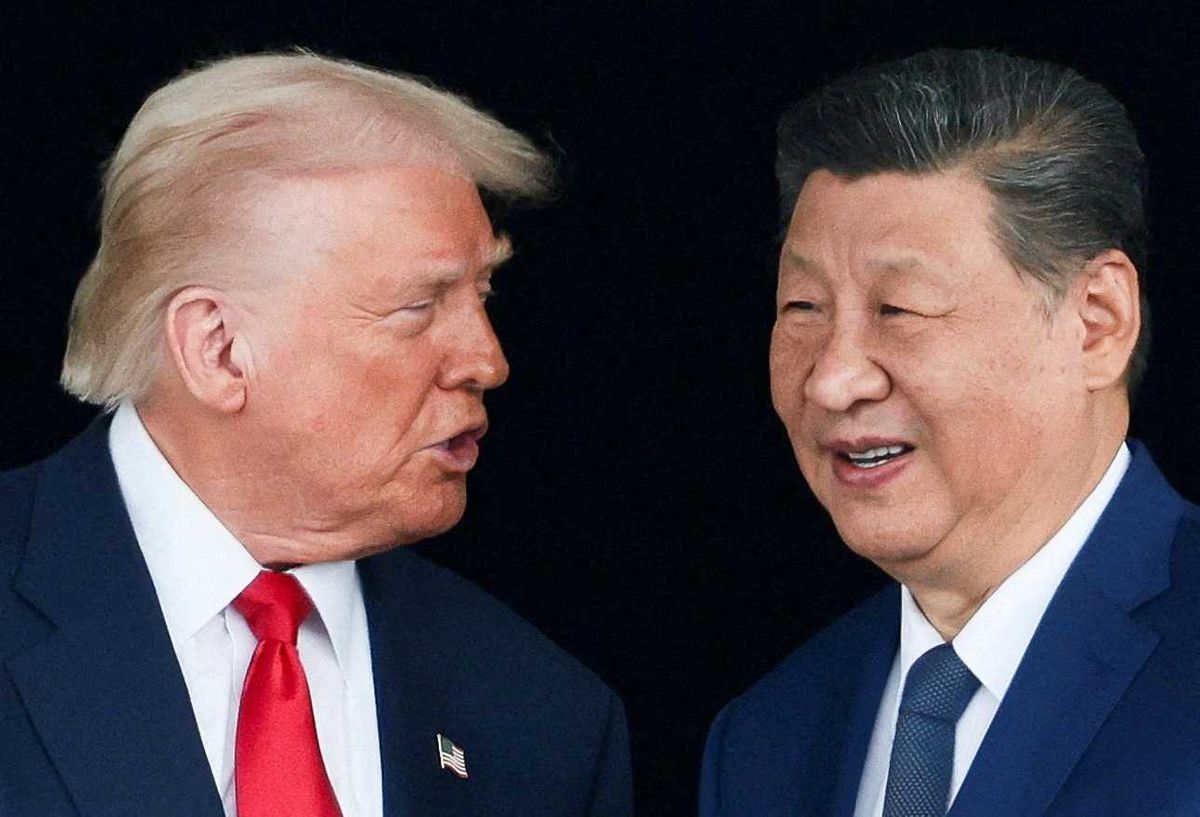
Donald Trump and Xi Jinping talk in Busan, South Korea, last October. REUTERS/Evelyn Hockstein

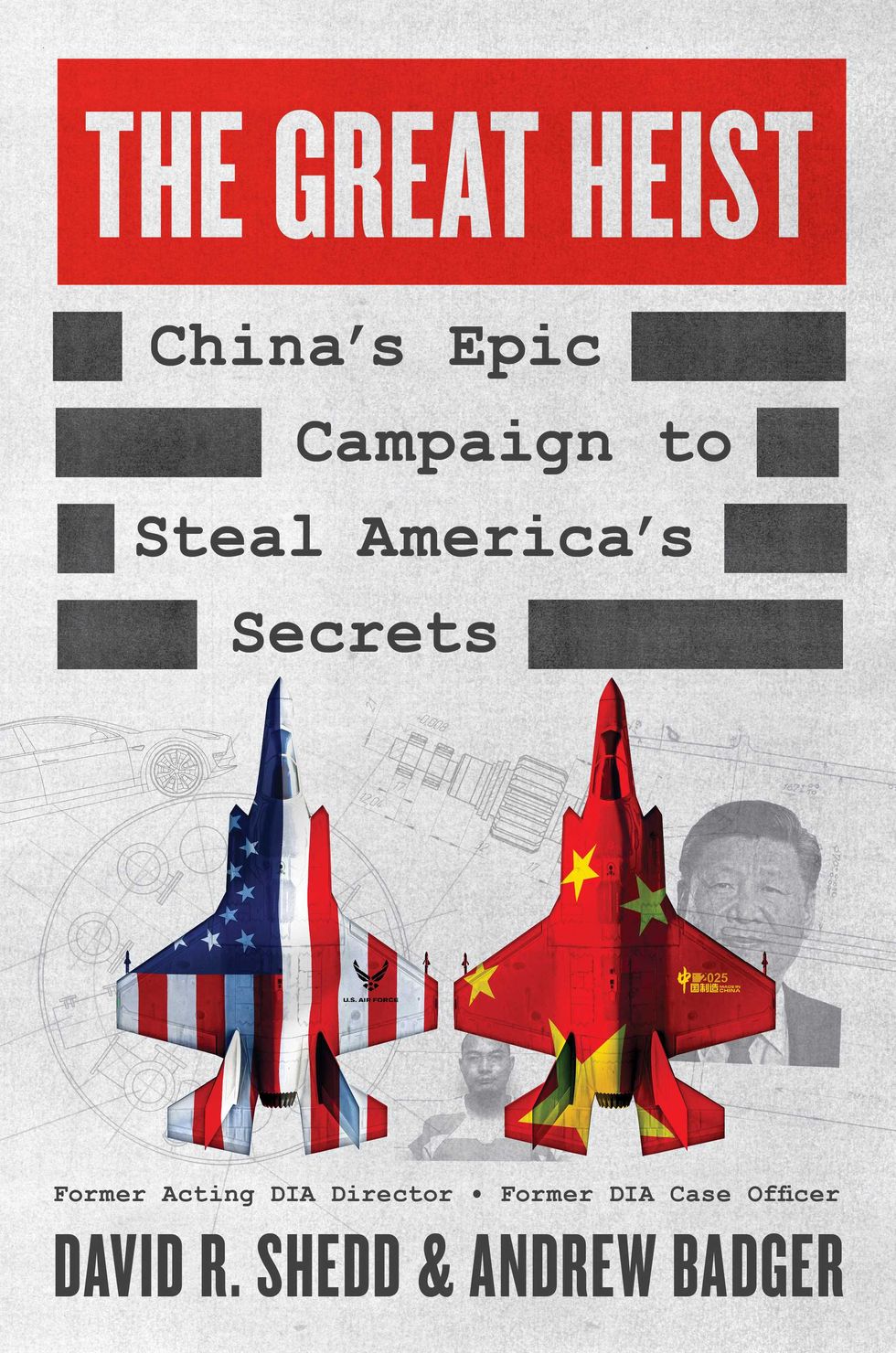
China is not recruiting its spies through meetings in dark alleys, nor by courtship over covert drinks. Rather, the intelligence agency and military of the Chinese Communist Party (CCP) are using LinkedIn, the professional networking site, to send as many as 30,000 messages per hour to recruit spies, according to a new book, “The Great Heist: China’s Epic Campaign to Steal America’s Secrets.”

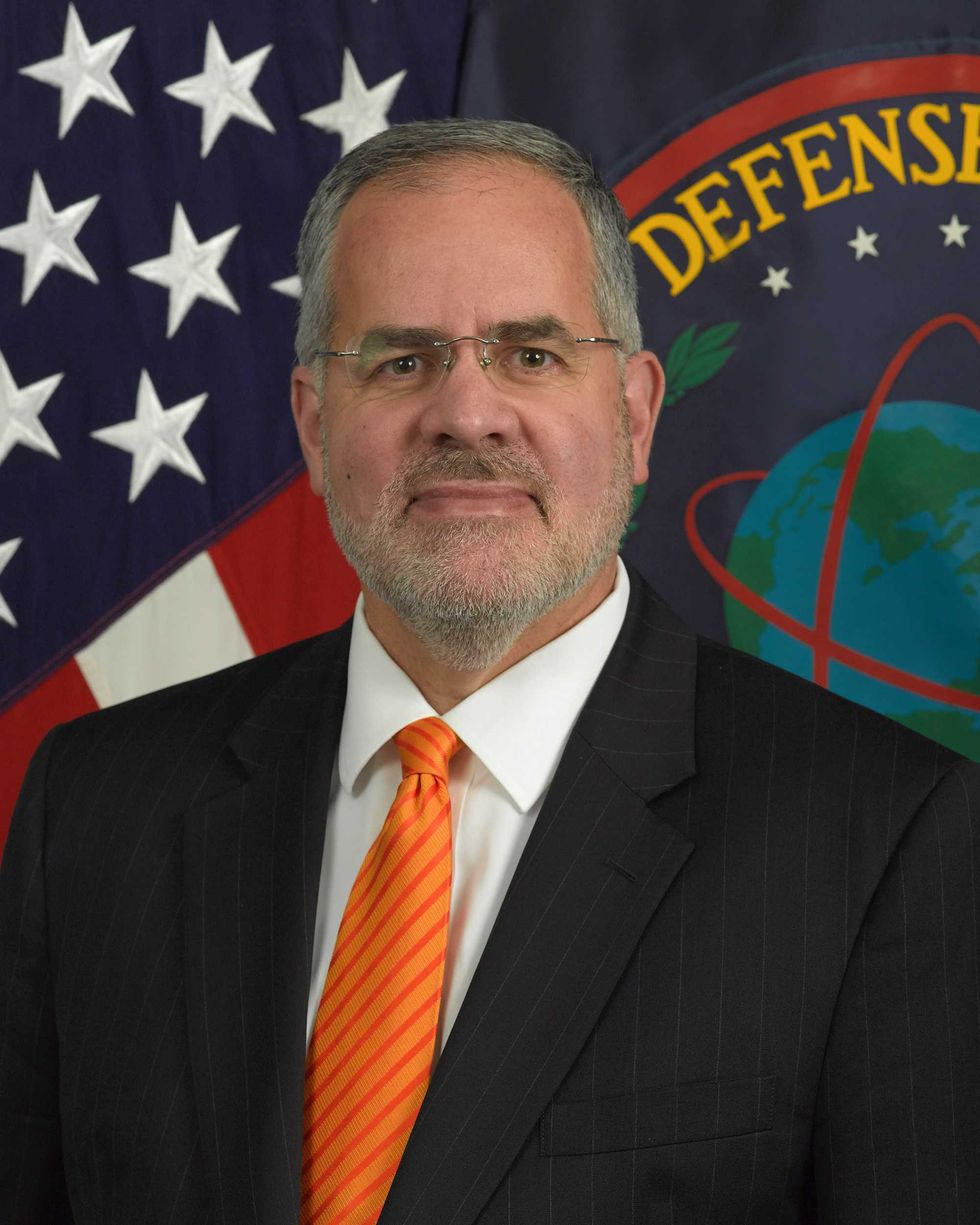
David R. Shedd, a former director of the U.S. Defense Intelligence Agency (DIA), called the book he co-wrote with Andrew Badger, a former DIA case officer, “a real, urgent call” to Americans, from corporations to government, to better respond to China’s success in stealing tech and defense innovations.

“I still don't think America has woken up on how serious the problem is,” Shedd told Raw Story.

“We’ve got to take this much more seriously, but also much more urgently, in terms of responding to the threats, because I don't see any let-up by China.”


David R. Shedd (provided photo)


From nanotechnology to chip manufacturing and artificial intelligence, Shedd said, China succeeded in accomplishing ahead of time eight of 10 objectives under “Made in China 2025,” a 10-year national strategic plan by President Xi Jinping to turn his country into a global technology and manufacturing powerhouse.


China is now the leader in 37 out of 44 emerging critical technologies, according to Shedd and Badger.

“They are on a trajectory to overtake us and have overtaken us already in a number of areas, and that's only going to get worse,” Shedd said.
‘An enormous behemoth’


Shedd and Badger interviewed William Evanina, former director of the U.S. National Counterintelligence and Security Center. He offered insight into the use of LinkedIn by China’s Ministry of State Security (MSS) and People’s Liberation Army (PLA) to contact intelligence targets.


Andrew Badger (photo provided by David Shedd)


“This astounding number — never before reported— showcases Beijing's commitment to mass recruitment that can be best described as a ‘flood the zone’ strategy,” the authors write.


“The MSS doesn't need all its targets to respond. Just a handful can be enough; a single successful recruit can make the entire endeavor worthwhile.”

Examples of LinkedIn outreach might include contacting an academic about writing a research paper or meeting a worker at a coffee shop to discuss their expertise, exchanges possibly unknowingly resulting in intelligence reported back to the MSS, the authors write.

“The MSS is the CIA, the FBI, the National Security Agency, Cyber Command and all other cyber components,” Shedd said.


“It is an enormous behemoth of internal or domestic and international security, and over the … last 13 years, it has become one, if not a premier, service in terms of its capabilities.”

In response to Raw Story’s questions about the use of LinkedIn by the MSS and PLA, Autumn Cobb, a LinkedIn spokesperson, shared links about verification and spotting scams.
‘Threatens lives’


When it comes to China stealing intellectual property from Americans, the stakes are high.

“American military technologies once considered strategic advantages — stealth aircraft, silent propulsion systems, hypersonic missile platforms – are now widely found in the inventories of China’s armed forces,” Shedd and Badger write.

“These thefts are not abstract; they represent the very real threats to the American warfighters who one day may have to face down such advanced technology. The theft of these assets doesn't just threaten markets; it threatens lives.”


Corporations are also threatened.

When Tesla became the first foreign-owned automaker in China, with CEO Elon Musk building a factory in Shanghai from 2019, concerns rose about theft of intellectual property.


The Great Heist (provided image)

Shedd and Badger quote a former senior Tesla staffer: “Elon always worried about the so-called billion-dollar thumb drive. A single USB stick with the Autopilot source code. That was the nightmare.”

Tesla did not respond to a request for comment.

‘National security at stake’

Since President Donald Trump returned to the White House, Shedd said, an apparent “diminishment” of U.S national security policies on China has been observable, compared to the first Trump administration, which took China more seriously.

Shedd speculated that the shift has to do with China’s control of the majority of rare earth minerals, which are used in magnets manufacturing and technology.

President Xi is definitely watching how Trump has made taking over Greenland a priority, as well as Trump’s decision to “run” Venezuela after capturing President Nicolás Maduro and his wife, Shedd said.

“My fear is the administration has turned it into everything's transactional,” Shedd said.

“Our national security is at stake, and I … fully expect Xi Jinping to move on Taiwan next year.”

Taiwan is a major U.S. trading partner. In December, the Trump administration announced the largest-ever U.S. arms package for Taiwan, valued at $11 billion.
‘Great Heist’

Prior to Trump’s arrival in the White House, Chinese threats to American intelligence and national security were not a priority for the FBI or DIA, Shedd said.

During his tenure at DIA from 2010 to 2015, Shedd said, much of the agency’s focus was on wars in Iraq and Afghanistan, concerns which became “all consuming.”

“There was this almost fear of taking on China operationally, and to really focus in on it was viewed in the FBI counterintelligence as second-rate to Russia,” Shedd said.

“China, I won't say it was a total afterthought, but it certainly wasn't the main focus.”

Shedd and Badger’s book explains how China pulled off its theft of so many American ideas, tracing the effort back to when President Bill Clinton advocated for China to join the World Trade Organization (WTO).

When China joined the WTO in 2001, both Democrats and Republicans had a “naivety” that China would “play by the rules of international trade,” Shedd said.

That set the stage for a flood of Chinese-made, cheaper versions of other country’s products.

“It was framed as diplomacy, as engagement with a potential trading partner, possibly even a future ally,” Shedd and Badger write.

“In hindsight, it was the moment the proverbial virus entered the global trade system and the launching pad for the CCP’s Great Heist against America.”

In 2017, China’s National Intelligence Law legalized espionage, meaning citizens could be required to spy for the CCP.

‘Counter Heist’

To take on China, Shedd said, the U.S. must invest in research and development as well as Science, Technology, Engineering and Mathematics (STEM) education, in which China is "leaping way ahead of us.”

Shedd and Badger also outline a seven-pillar “Counter Heist” strategy to put America on an “active counteroffensive” against China and disrupt the “Chinese espionage apparatus and to reassert America’s place as the world’s innovation superpower.”

If Washington doesn’t get ahead of Beijing’s spying, Shedd said, he fears China will beat the U.S. to a quantum computing breakthrough that will decode all cryptology.

“It will have enormous, dramatic implications for the United States and for the west more generally, and we won't ever have seen it coming,” Shedd said.

The Great Heist is out now


Alexandria Jacobson is a Chicago-based investigative reporter at Raw Story, focusing on money in politics, government accountability and electoral politics. Prior to joining Raw Story in 2023, Alex reported extensively on social justice, business and tech issues for several news outlets, including ABC News, the Chicago Sun-Times and the Chicago Tribune. She can be reached at alexandria@rawstory.com. More about Alexandria Jacobson.