Sunday, January 25, 2026


Indonesian Frigate Order Reflects SE Asian Naval Modernization
Indonesia shipbuilding
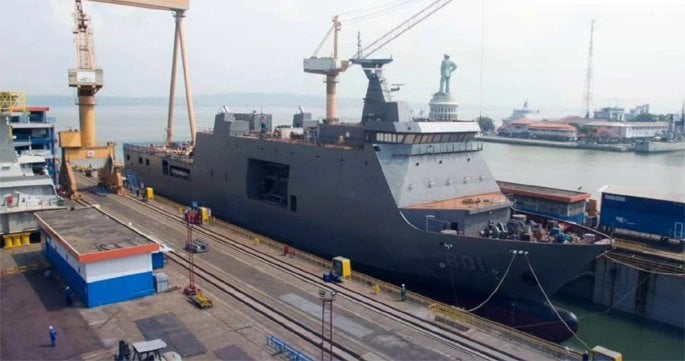
PT PAL Indonesia is implementing the shipbuilding and modernization efforts (PT PAL Indonesia)

Published Jan 23, 2026 7:24 PM by The Maritime Executive


During a visit of Indonesian President Prabowo Subianto to the United Kingdom last week, a Letter of Intent was signed by the Indonesians with David Lockwood, CEO of Babcock, for licenses to build two further general purpose frigates drawing on the Arrowhead 140 design. The Arrowhead 140 design forms the basis of the Babcock Type 31 frigates ordered by the Royal Navy and by Poland, and which are also in contention for orders from Denmark and Sweden.

The first two Arrowhead 140 vessels are nearing delivery from the PT PAL Indonesia shipyard at Surabaya. KRI Balaputradewa (F322), the first of what is formally the Balaputradewa Class but which are commonly referred to as the Merah Putih (or Red-White) frigates, was launched on December 18 last year. The second frigate, presumably F323, has not yet been named, but is following on about 18 months behind the lead vessel. Both frigates should be operational well before the originally-planned 2029 in-service date.

These frigates are the first to be built domestically in Indonesia, making this early delivery quite an achievement. The license from Babcock allows PT PAL to develop further the design for export purposes. The new frigates make extensive use of Turkish sub-systems provided by Aselsan, Havelsan and Roketsan, and give the Indonesian a considerable boost in combat capability.
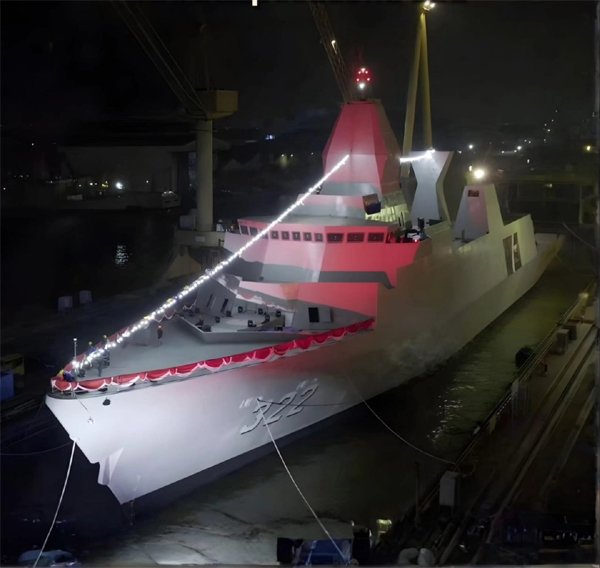
 

KRI Balaputradewa (F322) at its nighttime launch on December 18, 2025 (PT PAL Indonesia)


The Merah Putih frigates form part of a wider Indonesian naval expansion, the £4 billion Maritime Partnership Program, which started with a modernization of three F2000 frigates built by BAE in Glasgow and acquired half-price but nearly-new from the Royal Brunei Navy. The program upgrading KRI Bung Tomo (357), KRI John Lie (F358) and KRI Usman Harun (F359) is being overseen by Thales Netherlands and is due to be completed in 2028.  The Maritime Partnership Programme is aimed at developing local shipbuilding capacity, but also seeks to diversify international sourcing of weapons and sub-systems. PT PAL is at the same time building two French Scorpène Class diesel-electric attack submarines with air-independent propulsion; these will supplement the Korean-built submarines KRI Nagapasa (S403), KRI Ardadedali (S404) and KRI Alugoro (S405). Further submarine orders are under consideration. 

The naval expansion program has been supported by successive Indonesian presidents, predicated on Indonesia being a maritime nation spread across hundreds of islands from Sumatra in the West, across Kalimantan, Java, Bali, to New Guinea in the East. But another consideration must also be confrontation with China over disputed maritime borders in the South China Sea, which hitherto Indonesia has sought to downplay. In 2015, President Jokowi embarked upon a policy of destroying fishing vessels caught fishing illegally in Indonesian waters, amongst which were Chinese boats, but the policy has been relaxed in recent years. Under the Nine-Dash line dispute, China contests Indonesian control of the Natuna Islands, one of the smaller disputes China has with various ASEAN nations over the South China Sea. 

Other ASEAN nations are also building up their navies in response to clashes in the South China Sea. The Philippines is midway through its Horizon 2 expansion program, with the second of the Malvar Class frigates BRP Diego Silangnow (FFG07) in service, with possibly two more to follow, and the first of six 94m Offshore Patrol Vessels now delivered, all vessels being built by HD Hyundai Heavy Industries shipyard in Ulsan, South Korea. The Philippines Navy is also getting two 124-meter landing dock platforms, which are currently being constructed by the very busy PT PAL yard in Indonesia.

LA REVUE GAUCHE - Left Comment: Search results for PERMANENT ARMS ECONOMY


But Indonesia also has a number of other dormant territorial disputes over islands and sea areas with its ASEAN neighbors, strengthening its justification for building maritime capability. From its record of receiving naval port visits – recently from Australia, China, Iran, Russia, the United Kingdom, and the United States - it also seeks to maintain a neutral friend-with-all approach.

 

India Says Iran has Not Permitted Contact with Crew of Seized Tanker

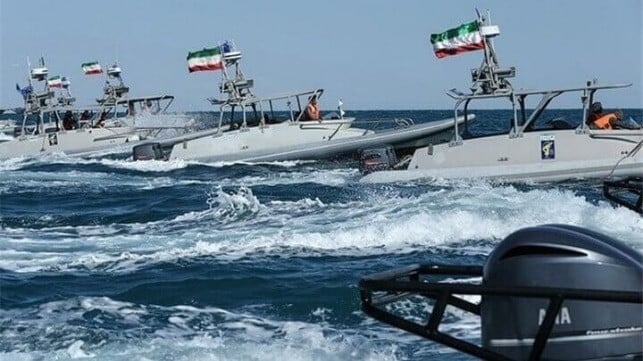
Iranian speed boats
Iranian forces are cracking down on fuel smuggling (Mehr file photo)

Published Jan 20, 2026 7:26 PM by The Maritime Executive


India’s Embassy and Consulate in Iran went public with their complaint that Iranian authorities have not permitted consular access to the crew of a small product tanker that was seized a month ago, accused of smuggling. The public statement posted on X came after the families of the 16 crewmembers made a personal appeal to India’s Prime Minister Narendra Modi.

According to the Embassy, Iranian authorities notified them in mid-December that the tanker Valiant Roar (13,754 dwt) had been stopped on allegations of fuel smuggling. The ship was brought into port in Iran, with the Embassy saying it was advised there were 16 Indian nationals aboard, as well as one from Sri Lanka, and another from Bangladesh.

The vessel was one of several that the Iranian authorities seized in a crackdown on fuel smuggling. Iran reported stopping a tanker in the Gulf of Oman in mid-December, which it said was smuggling six million liters of diesel fuel. The situation was further complicated by Iran’s assertion that the vessel was operating without “valid maritime travel documents or a cargo manifest for its fuel shipment.”

Less than two weeks later, Iran stopped another tanker near the Strait of Hormuz. They said the vessel had four million gallons of oil, which was being shuttled to another tanker waiting outside the Gulf.

In the past, Iran has reported prosecutions of the officers of the seized vessels. In the spring of 2025, it announced long jail sentences and fines for the captain and senior officers of two vessels stopped for smuggling.

The Indian Embassy says it filed a request on December 14 for access to the crew. It says both it and the consulate in Bandar Abbas have made formal requests in writing and in person for access to the crew. The ambassador has also become involved in seeking access. 

India wants to meet with the crew and is also asking the Iranian authorities to let the crew contact their families. The reports said Iran confiscated the crew’s phones and electronics. They are also asking the Iranian authorities to expeditiously complete any judicial proceedings

The Indian authorities said they also intervened with the Iranian Navy earlier this month after they received reports that the crew was running out of basic supplies. They wanted the Iranian Navy to aid in facilitating emergency provisions.

The vessel is reportedly owned and managed by a company based in Dubai. The Embassy said it immediately established contact with the UAE-based company as well as its agents in Iran. They are pressing the company to ensure the supply of food, water, and fuel for the ship. They have also asked the company to arrange legal representation for the crew in the Iranian court.


Video: Ukrainian Drones Damage Vital Russian Black Sea Oil and Gas Terminal

Russian oil and gas terminal Black Sea
Ukraine struck the terminal at Taman for the second time in a month (SBU video)

Published Jan 22, 2026 6:08 PM by The Maritime Executive


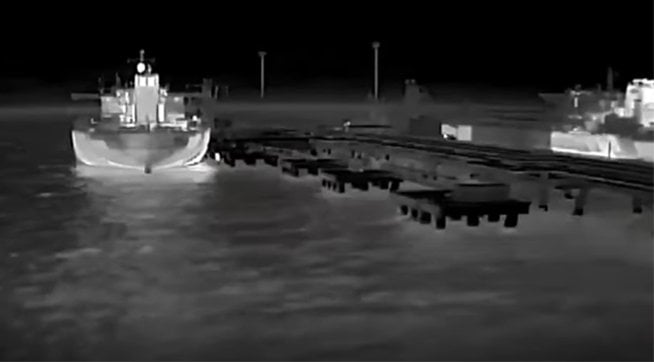
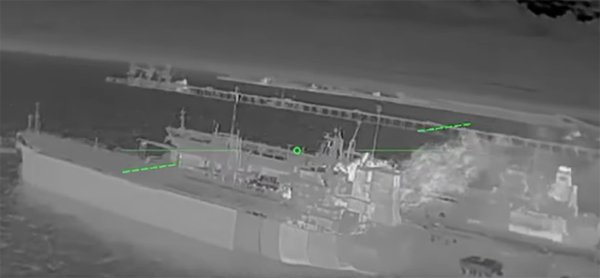
The Defense Forces of Ukraine announced a new strike on the oil and gas terminal at Taman on the peninsula on the eastern side of the Black Sea and near the Kerch Strait. Ukraine said the terminal, which was hit for a second time in less than a month, was targeted because it is being used to supply fuel to the Russian forces.

The drone attack was confirmed by Veniamin Kondratyev, Governor of the Krasnodar Krai region, who posted online that the area had been stuck on Wednesday, January 21, for the second day running. He called it a “massive attack,” with Wednesday’s strikes targeting the port terminals.


Ukraine's video shows two tankers at the terminal (SBU)


The report said that there was a large fire at the terminals and that four oil storage tanks were engulfed. The governor said that 97 people and 29 pieces of equipment were involved in the firefighting efforts.

He reported that two employees of the terminal were killed and that several others were injured. The Russian news agency Interfax issued an update on January 22, reporting that three people had died and that eight were injured. It said by Thursday the fires had been extinguished, while Ukraine said it was still working to ascertain the extent of the damage on the terminal and port area.


Taman is a major transshipment terminal for Russia, including LPG transshipments and an oil terminal. It is operated by Tamanneftegaz, which highlights it has a combined capacity of 19.9 million tons per year. It also handles petroleum products arriving by rail to sea transport, as well as grain, coal, fertilizer, and other cargoes in areas of the port. The tank farm is reported to have a total capacity exceeding 1 million cubic meters.

Ukraine targeted the same facilities in a series of attacks between December 21 and 22. Russian officials confirmed damage to two piers, a pipeline, and two vessels that were in the port at the time of the attack. Teams continued to fight the fires into the following day.

The attacks are part of a larger strategy by Ukraine to continue to strike at Russia’s oil infrastructure. It has attacked other oil terminals and also extended the strikes to the oil platforms in the Caspian Sea. It has also struck several tankers seeking to stop Russia’s oil exports and reduce the revenues from oil sales.


Tanker Crew Rescues Solo Rower in Rough Seas in Mid-Atlantic

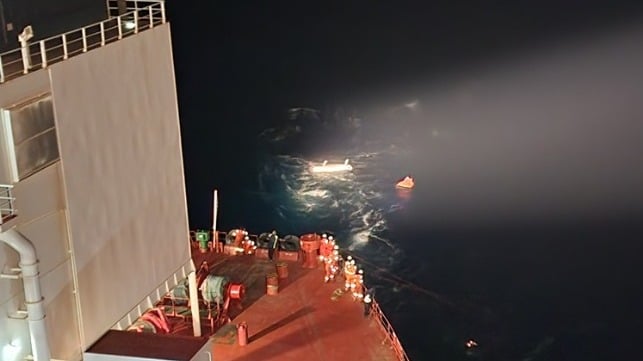
Courtesy Horten crew / Zodiac Maritime / USCG

Published Jan 22, 2026 6:59 PM by The Maritime Executive


Transoceanic rowing is among the most difficult of all undertakings on the water, and attempted crossings end in emergency rescues nearly every year, often made by merchant mariners who happen to be on a similar route. On Wednesday night, a tanker crew answered the call of duty and rescued a man who had run into trouble on a transatlantic rowing race, despite difficult conditions and rough seas. 

The survivor, 47-year-old Benoit Bourguet, had departed Spain in December and gotten under way for Antigua under his own power, accompanied by other competitors in the "World's Toughest Row." As of Wednesday, the fastest multi-rower teams in the race were already arriving at the finish line, but solo rowers like Bourguet still remained at sea. He had about 950 nautical miles left to go, per the race's online leaderboard.

In the early hours of Wednesday morning, Coast Guard Sector San Juan received an unregistered EPIRB alert at a position about 1,100 nautical miles to the east of Puerto Rico. A second alert from a PLB came in shortly after at the same location. The Coast Guard contacted the race organizers, who reported that they were unable to reach Bourguet. Though they did not know it, Bourguet's boat had been hit by two rogue waves in seas of 13-15 feet, capsizing the vessel. 

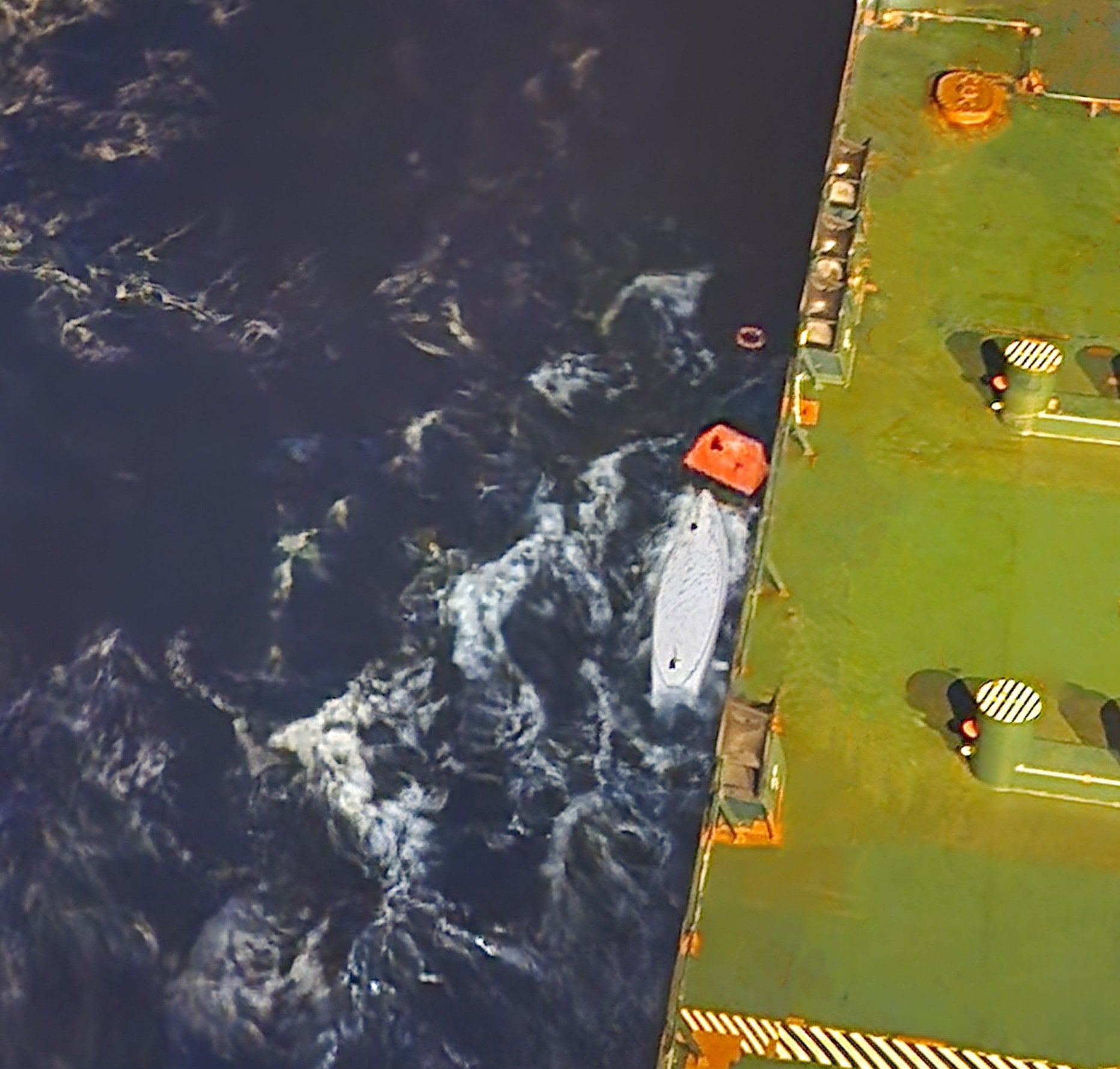
The mid-Atlantic location was far too far away for a helicopter rescue, so Sector San Juan activated an AMVER alert to request assistance from nearby shipping. The oil tanker Horten answered the call and deviated slightly south of her course in order to render assistance. Horten transited about 110 nm over the next 12 hours to reach the position of the beacon, and the crew found Bourguet alive in his life raft, which was still lashed to his upturned rowboat. 

The sea state was still rough for a raft-to-ship transfer, so the crew of Horten used a life ring to retrieve Bourguet and bring him aboard. He was in good condition, if dehydrated. The pickup was swift: AIS data shows that Horten only slowed for a few hours and then got under way.


"The Horten's participation in the AMVER program was critical and the crew's selflessness and swift response embody the spirit of this voluntary program, where mariners stand ready to help one another. It is a true reflection of professionalism and compassion that defines the maritime community," mission coordinator Lt. Kenneth Snyder said in a statement. He added that the case shows the importance of having - and properly registering - a working EPIRB on board. 

Bourguet remains on board as Horten continues on her voyage to the offshore FPSOs of Guyana, and arrangements for his disembarkation are still under discussion, the Coast Guard said. 


USCG Icebreakers Aid Great Lakes Shipping as Arctic Front Ices the Lakes

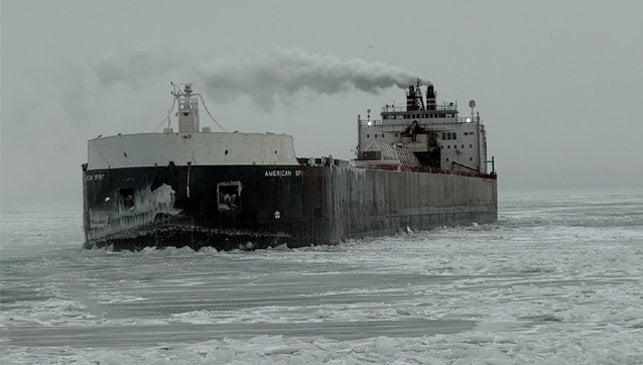
ship in ice on the Great Lakes
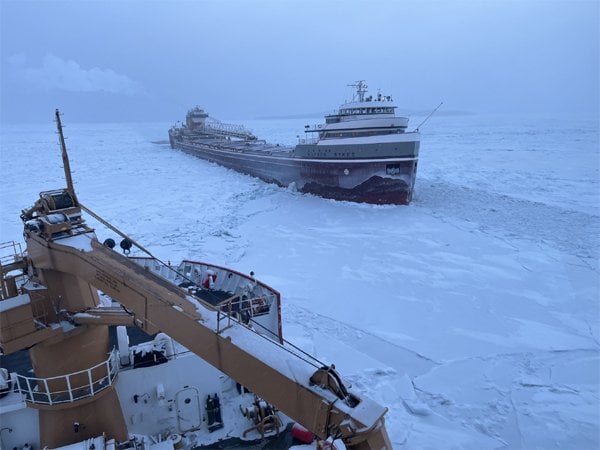
Icebrekers have been called out three times in a week to assist Great Lakes shipping (USCG Great Lakes)

Published Jan 23, 2026 3:48 PM by The Maritime Executive


The U.S. Coast Guard Great Lakes is reporting a series of callouts in the past days as an Arctic Front crossed the Midwestern region of the United States and interrupted shipping. Some of the shipping is providing critical winter supplies of coal and fuel, while others were attempting to reach port to begin their winter lay up as the shipping season on the Lakes has come to an end.

The local TV news station in Toledo, Ohio, WTOL News 11, reports ice coverage developed quickly on the Lakes and is now above average for this time in the season. It cites NOAA data reporting that Lake Erie quickly went to nearly 80 percent ice coverage as of January 20.

The Coast Guard reports it dispatched two icebreakers in recent days to aid shipping. On Lake Erie, the American Spirit, a 1,004-foot freighter operating on the Lakes since 1978, requested assistance on Wednesday, January 21. The Coast Guard said the vessel was making slow headway but was not stuck, although the TV station reports early on Wednesday, it appeared the vessel was stationary. 


The USCG Cutter Neah Bay was dispatched to the American Spirit. It helped by breaking the ice, and WTOL says the vessel was back underway by midday. The USCG escorted the vessel, and it reached Toledo, where it is going into winter layup.

It was the second time in days for the Neah Bay to aid shipping. On January 15 with was directed to aid the Lee A. Tregurtha, a 1942-built vessel that has been sailing the Great Lakes since 1961. The cutter aided in getting the vessel through 6 to 8 inches of brash ice in the St. Marys River and to proceed to the Soo Locks in Sault Ste. Marie, Michigan. It was the last day of the season for the Soo Locks, which were closing for the winter navigation season.


Wilfred Sykes was stuck on Lake Huron (USCG)


The Cutter Mackinaw was also called out on Lake Huron yesterday, January 21, to free the Wilfred Sykes, a 661-foot vessel operating on the Lakes since 1950, from the ice. It was escorted into the Straits of Mackinac.

The U.S. Coast Guard highlights that it has two operations, Coal Shovel and Taconite, in service on different parts of the Lakes to aid shipping and maintain winter navigation. Taconite, which focuses on Lake Michigan and Lake Superior, began in mid-December. Coal Shovel launched at the beginning of January, focusing on the region ranging from southern Lake Huron to the St. Clair-Detroit River and into Lake Erie and Lake Ontario, to maintain channels to icebound communities and for vessels carrying critical supplies such as food and heating oil.


USCG Polar Star Marks 50 Years by Freeing Cruise Ship Caught in Pack Ice

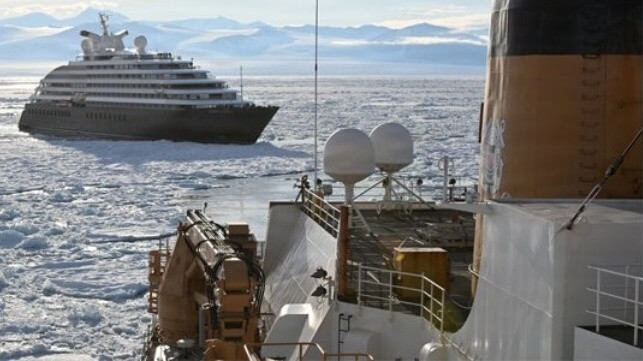
icebreaker freeing cruise ship in Antarctica
Polar Star aided the Scenic Eclipse II cruise ship (USCG)

Published Jan 23, 2026 4:29 PM by The Maritime Executive


USCG Cutter Polar Star marked 50 years since her commissioning with a special achievement, freeing a luxury expedition cruise ship that had been beset by pack ice. The United States’ only active heavy icebreaker is on her 29th deployment to Antarctica in support of the annual resupply and tactical mission named Operation Deep Freeze.

Commissioned on January 17, 1976, Polar Star is 13,500 tons and, according to the U.S. Coast Guard, remains the world’s most powerful non-nuclear icebreaker. The vessel, which is 399 feet (122 meters) in length and has a 34-foot (10-meter) draft, USCG data says, is capable of breaking through solid ice up to 21 feet (6.4 meters) thick using a backing and ramming technique. It can steam continuously through 6 feet (1.8 meters) of ice at 3 knots. She produces up to 75,000 shaft horsepower.


According to the report, the icebreaker, which has been on station in the Antarctica region all month, received a call Friday night, January 16, from the Scenic Eclipse II (17,592 GT) reporting it had “become beset in pack ice roughly eight nautical miles from McMurdo Sound.” The luxury yacht cruise ship has an ice-rated hull and carries up to 200 passengers when in Antarctica. 

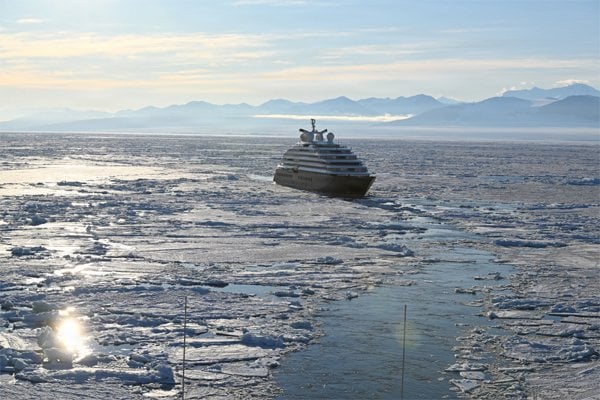
Polar Star went to the aid of the cruise ship, making two close passes to break the ice and free the cruise ship. The cutter then escorted the cruise ship approximately four nautical miles to open water.


Scenic Eclipse II was escorted to open water (USCG)


“At 50 years old, Polar Star remains the world’s most capable non-nuclear icebreaker,” said Cmdr. Samuel Blase, Polar Star’s executive officer. “That’s a testament to the crews that have maintained it over the decades. With years of service left to give, Polar Star will continue to guide the way in the high latitudes well into the future.”

The icebreaker departed Seattle on November 20 for the annual mission to Antarctica. While on station, her role includes breaking a navigable channel through miles of dense ice to allow the cargo and fuel vessels to reach the McMurdo Station. During the second week of January, the icebreaker was spotted in the Ross Sea and was recently seen bringing the fuel tanker Stena Polaris to the dock at the McMurdo Station ice pier.


The Stena Polaris (65,000 dwt) operates as a U.S.-flagged tanker to support operations. She came into Antarctica from South Africa with the key fuel delivery. The Dutch-flagged heavy lift vessel Plantijngracht is transporting containers and heavy cargo from California to Antarctica. She is currently reaching New Zealand before making her way to McMudro.

Polar Star has received extensive life extension work during the offseason in recent years. She is expected to remain in service at least till 2030, when the first of the new U.S. heavy icebreakers is due to be delivered.

Amsterdam Government Calls for Banning Ocean Cruise Ships by 2035

cruise ship in Amsterdam
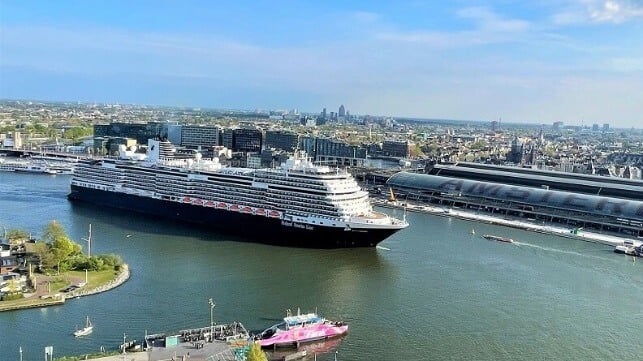
Cruise ships dock in the center of Amsterdam (Cruise Port Amsterdam)

Published Jan 21, 2026 7:43 PM by The Maritime Executive


After agreeing to limit and then relocate cruise ships out of the center of the Dutch city, members of Amsterdam’s coalition government, including the mayor and some aldermen, are now saying it would be more cost-effective to simply eliminate cruise ships. On Wednesday, January 21, they floated a plan to phase out all port calls by ocean-going cruise ships by 2035, while maintaining a smaller number of river cruise ship calls.

Concerns about pollution and overtourism have been growing in Amsterdam for nearly a decade. Cruise ships have typically berthed in the heart of the city, and as pointed out by industry officials, that makes them a more prominent target for critics. The environmental activists and now alderman in the coalition government are saying large cruise ships are highly polluting, emitting large amounts of CO2, particulate matter, and nitrogen. Of course, this ignores the EU’s low-sulfur fuel regulations and the cruise industry’s wide adoption of emission scrubbers even before the EU regulations mandating the use of shore power starting in 2030, at the EU’s main ports.

The move to ban cruise ships in Amsterdam gained momentum in 2023 and 2024, leading to a proposed solution. The agreement had called for limiting cruise ships starting in 2026 to one ship per day and no more than 100 port calls by ocean-going cruise ships per year. Starting in 2027, cruise ships would also be required to use shore power. City officials also moved to reduce but not eliminate river cruise ship port calls.

They also agreed to explore the feasibility of moving the cruise berth at the Passengers Terminal Amsterdam (PTA) from its current location to east of the city by 2035. The city council is yet to release its final report, but aldermen are speaking out, saying the study shows it is more effective to simply eliminate cruise ships.

The media is citing the alderman saying the cost of moving the cruise terminal operation would be €85 million, with no guarantee that they would recoup the investment. By contrast, they say over the next 30 years, cruise ships will only contribute €46 million in revenue to the economy.

The NL Times quotes local politician Rob Hofland saying, “We are finally going to free Amsterdam from these floating apartment blocks.”

The coalition government is pushing its plan to eliminate the cruise ships, but the final decision has to come from the city council. In addition, Amsterdam has elections in March for its new government, meaning any action will have to be taken by the new government.

In the past, the critics have said other ports, specifically Rotterdam, could take the cruise ships instead. Some cruise lines are already using Rotterdam and offering bus tours to Amsterdam for their passengers.

Amsterdam would join other European cities that have moved to reduce the impact of cruise ships. Barcelona also plans to limit cruise ship calls, while the French Riviera imposed restrictions both on the size of cruise ships and the number of port calls each year. Other destinations, such as the Greek Islands introduced new passenger taxes to help deal with the influx of passengers on the popular islands.


NGOs Welcome Guidance on IMO Plans for Reducing Underwater Noise

Clean Arctic Alliance

Published Jan 24, 2026 10:12 AM by The Maritime Executive


[By Clean Arctic Alliance]

As a meeting of the International Maritime Organization’s (IMO) Sub-Committee on Ship Design and Construction (SDC 12) closes today, the Clean Arctic Alliance welcomed the clear guidance on how the IMO must reduce underwater noise pollution and its impacts, and the recommendation of a two year extension of the three-year “experience building phase” (EBP). 
 
During SDC 12, Member States finalized a list of key technical aspects for reducing underwater noise from shipping, which will inform future policy considerations by the Marine Environment Protection Committee (MEPC) during the proposed two-year extension of the Experience Building Phase, and will be initially considered by MEPC 84 in April.
 
The Clean Arctic Alliance, made up of 24 not-for-profit organisations, is calling on member states to ensure the IMO continues to push for progress and action in reducing underwater noise from shipping, especially in Arctic waters where the levels of underwater noise are anticipated to nearly quadruple by 2030.
 
“During this week’s IMO meeting, member states agreed on clear guidance on how we must reduce underwater noise pollution and its impacts during the proposed extension of the experience building phase. At the two forthcoming MEPC meetings this year, we hope to pursue policy that will move beyond voluntary guidance”, said Sarah Bobbe, Senior Manager, Arctic Program at Ocean Conservancy, a member of both the Clean Arctic Alliance and the Clean Shipping Coalition. “So far, this work has not kept pace relative to the growing threats faced by regions experiencing increased shipping traffic, such as the Arctic, underscoring the need for parallel policy advancement through the IMO’s Marine Environmental Protection Committee in the coming months.”
 
For many marine organisms sound is the most important means of communication. Under water vision is restricted and without good hearing ability, elementary functions such as navigating, finding prey and partners can be hampered. This is of particular importance for marine mammals, and also for fish and even invertebrates.
 
“Much of the Arctic has been free of anthropogenic (human-sourced) sound for a long time, but with increased human activity, Arctic waters are becoming more noisy every year”, said Bobbe. “An important source of noise is shipping, specifically from propellers and engines. Since shipping has increased substantially during recent decades, underwater noise is a growing problem, contributing to serious impact on the Arctic ecosystem.”

 
Key IMO Papers:
 
A paper submitted to SDC 12 by WWF and presented during a lunchtime side event, SDC 12-INF.17 – Spatio-temporal information on Arctic whale migration routes for consideration in voyage planning and other measures to reduce the impacts of underwater radiated noise on marine life provides new maps that show, for the first time, the migratory corridors of Arctic whales across the Arctic Ocean. 

Marine mammal migratory corridors are specified in both the URN Guidelines and the Polar Code as areas of special concern because they contain high concentrations of animals sensitive to impacts of shipping. The maps provide mariners with new information on where they need to take measures in migratory months, which in the Arctic, are in spring and autumn. Operational measures, such as rerouting and restricting speed, can reduce impacts on migrating whales, and these measures go hand in hand with technical measures to quieten ships through new builds and modifications. WWF invites mariners to use the maps in voyage planning, and urges member states and the IMO to implement location-specific rules and recommendations to reduce impacts of underwater noise in migratory corridors.

“By putting migratory corridors on the map for these three whale species that we know to be especially sensitive to underwater noise, we hope to support the shipping community to take necessary measures to safeguard them”, said Melanie LancasterSenior Specialist, Arctic species conservation for WWF’s Global Arctic Programme and member of the Clean Arctic Alliance. “From the maps, we see that whales migrate impressive distances between their summer and winter habitats, some swimming thousands of kilometres across national borders and even into the high seas of the Central Arctic Ocean. It will take international cooperation among states, ship operators, shipping companies and IMO to ensure their safe and quiet passage.”

The WWF paper outlines how IMO Member States should consider adopting shipping measures in the Arctic that build on the practice within IMO to safeguard whales from the adverse impacts of shipping. 

Mandatory ship reporting systems and recommendatory seasonal areas to be avoided have been adopted for North Atlantic right whales along the United States east coast and recommendatory speed restrictions have been adopted as an Associated Protective Measure (APM) for whales in the North-Western Mediterranean Sea Particularly Sensitive Sea Area (PSSA). The paper provides the necessary information for similar preventative measures to be adopted to safeguard whales in the Arctic.

A paper submitted to SDC 12 by the Clean Shipping Coalition - SDC 12/8/3 and sent onto MEPC 84 for consideration, shares the findings of a study on the potential underwater radiated noise (URN) impacts of LNG development on marine mammals in the Gulf of CaliforniaThe paper examines the potential effects of URN from LNG tanker traffic on migratory and resident whales, as well as related impacts on air quality and greenhouse gas (GHG) emissions.

The proposed LNG terminals and the resulting increase in LNG tanker traffic are expected to pose serious threats to the Gulf of California's unique biodiversity and conservation areas, including those designated as a UNESCO "World Heritage Site" and "Important Marine Mammal Areas". These developments increase the risks of air, water, and underwater noise pollution. Given the Gulf of California's critical ecological role—particularly as a habitat for resident and migratory marine megafauna—a precautionary approach to industrial development is essential. It is increasingly evident that the region's ecological integrity is incompatible with the scale and nature of heavy marine traffic associated with proposed LNG facilities. 

Many regions, such as in the Arctic and the Gulf of California in Mexico, share similar potential impacts from underwater noise, and both have seen low shipping traffic in the past. Shipping traffic has been increasing in the last decade in the Arctic, while in the Gulf of California the developing LNG infrastructure will bring unprecedented vessel traffic to a marine area with enormous ecological value, in particular for marine mammals. 

“Our recommendations to SDC 12, and to the forthcoming discussions at MEPC 84, for the Gulf of California are equally important for the Arctic as both regions could see devastating impacts from future increased shipping, especially from LNG tankers, for marine wildlife particularly sensitive to noise, like marine mammals”, said Andrew DumbrilleCo-Founder and Director of Equal Routes - a member of both the Clean Arctic Alliance and the Clean Shipping Coalition“The recommendations include: acknowledging the irreversible impacts of underwater noise caused by LNG tanker traffic on marine mammals' behaviours and habitat; promoting the development of ship design that takes into account the serious damage underwater noise causes to the marine habitat; and opposing LNG traffic in critical ecological marine areas because of, among others, the underwater noise pollution it causes, affecting marine mammals and other marine species. Both the Gulf of California and the Arctic are marine areas of incredible ecological, social and biodiversity importance for the planet, the impacts of increased noise would change the quality of the marine habitats irrevocably.”
 
Relevant IMO Paper Submissions

 
About Underwater Noise:
For many marine organisms sound is the most important means of communication. Under water, vision is restricted and without good hearing ability, elementary functions such as navigating, finding prey and partners can be hampered. This is of particular importance for marine mammals, and also for fish and even invertebrates.
 
The Arctic has been almost free of anthropogenic (human-sourced) sound for a long time, but with increased human activity, the Arctic Ocean is becoming more noisy every year. An important source of continuous noise is shipping, specifically from propellers and engines. Since shipping has increased substantially during recent decades, underwater noise is a growing problem, contributing to serious impact on the Arctic ecosystem. 
 
According to a study by Transport Canada, the World Maritime University and WWF, the existing guidelines have not been effective in reducing underwater noise, namely because of their voluntary, non-regulatory nature. Research from the Arctic Council has shown that Arctic underwater noise has significantly increased in recent yearsShip traffic is also increasing in the Arctic, and given the unique special Arctic environment, underwater noise from ships has a much higher impact than in other parts of the global ocean.
 
The most important source of continuous underwater noise in shipping is cavitation, or production of vacuum bubbles by propellers. The noise produced by this process leads to masking, where the frequency of ship noise overlaps with sound produced and used by marine mammals.

The products and services herein described in this press release are not endorsed by The Maritime Executive.