Sunday, January 25, 2026


NGOs Welcome Guidance on IMO Plans for Reducing Underwater Noise
Clean Arctic Alliance

Published Jan 24, 2026 10:12 AM by The Maritime Executive


[By Clean Arctic Alliance]

As a meeting of the International Maritime Organization’s (IMO) Sub-Committee on Ship Design and Construction (SDC 12) closes today, the Clean Arctic Alliance welcomed the clear guidance on how the IMO must reduce underwater noise pollution and its impacts, and the recommendation of a two year extension of the three-year “experience building phase” (EBP). 
 
During SDC 12, Member States finalized a list of key technical aspects for reducing underwater noise from shipping, which will inform future policy considerations by the Marine Environment Protection Committee (MEPC) during the proposed two-year extension of the Experience Building Phase, and will be initially considered by MEPC 84 in April.
 
The Clean Arctic Alliance, made up of 24 not-for-profit organisations, is calling on member states to ensure the IMO continues to push for progress and action in reducing underwater noise from shipping, especially in Arctic waters where the levels of underwater noise are anticipated to nearly quadruple by 2030.
 
“During this week’s IMO meeting, member states agreed on clear guidance on how we must reduce underwater noise pollution and its impacts during the proposed extension of the experience building phase. At the two forthcoming MEPC meetings this year, we hope to pursue policy that will move beyond voluntary guidance”, said Sarah Bobbe, Senior Manager, Arctic Program at Ocean Conservancy, a member of both the Clean Arctic Alliance and the Clean Shipping Coalition. “So far, this work has not kept pace relative to the growing threats faced by regions experiencing increased shipping traffic, such as the Arctic, underscoring the need for parallel policy advancement through the IMO’s Marine Environmental Protection Committee in the coming months.”
 
For many marine organisms sound is the most important means of communication. Under water vision is restricted and without good hearing ability, elementary functions such as navigating, finding prey and partners can be hampered. This is of particular importance for marine mammals, and also for fish and even invertebrates.
 
“Much of the Arctic has been free of anthropogenic (human-sourced) sound for a long time, but with increased human activity, Arctic waters are becoming more noisy every year”, said Bobbe. “An important source of noise is shipping, specifically from propellers and engines. Since shipping has increased substantially during recent decades, underwater noise is a growing problem, contributing to serious impact on the Arctic ecosystem.”

 
Key IMO Papers:
 
A paper submitted to SDC 12 by WWF and presented during a lunchtime side event, SDC 12-INF.17 – Spatio-temporal information on Arctic whale migration routes for consideration in voyage planning and other measures to reduce the impacts of underwater radiated noise on marine life provides new maps that show, for the first time, the migratory corridors of Arctic whales across the Arctic Ocean. 

Marine mammal migratory corridors are specified in both the URN Guidelines and the Polar Code as areas of special concern because they contain high concentrations of animals sensitive to impacts of shipping. The maps provide mariners with new information on where they need to take measures in migratory months, which in the Arctic, are in spring and autumn. Operational measures, such as rerouting and restricting speed, can reduce impacts on migrating whales, and these measures go hand in hand with technical measures to quieten ships through new builds and modifications. WWF invites mariners to use the maps in voyage planning, and urges member states and the IMO to implement location-specific rules and recommendations to reduce impacts of underwater noise in migratory corridors.

“By putting migratory corridors on the map for these three whale species that we know to be especially sensitive to underwater noise, we hope to support the shipping community to take necessary measures to safeguard them”, said Melanie LancasterSenior Specialist, Arctic species conservation for WWF’s Global Arctic Programme and member of the Clean Arctic Alliance. “From the maps, we see that whales migrate impressive distances between their summer and winter habitats, some swimming thousands of kilometres across national borders and even into the high seas of the Central Arctic Ocean. It will take international cooperation among states, ship operators, shipping companies and IMO to ensure their safe and quiet passage.”

The WWF paper outlines how IMO Member States should consider adopting shipping measures in the Arctic that build on the practice within IMO to safeguard whales from the adverse impacts of shipping. 

Mandatory ship reporting systems and recommendatory seasonal areas to be avoided have been adopted for North Atlantic right whales along the United States east coast and recommendatory speed restrictions have been adopted as an Associated Protective Measure (APM) for whales in the North-Western Mediterranean Sea Particularly Sensitive Sea Area (PSSA). The paper provides the necessary information for similar preventative measures to be adopted to safeguard whales in the Arctic.

A paper submitted to SDC 12 by the Clean Shipping Coalition - SDC 12/8/3 and sent onto MEPC 84 for consideration, shares the findings of a study on the potential underwater radiated noise (URN) impacts of LNG development on marine mammals in the Gulf of CaliforniaThe paper examines the potential effects of URN from LNG tanker traffic on migratory and resident whales, as well as related impacts on air quality and greenhouse gas (GHG) emissions.

The proposed LNG terminals and the resulting increase in LNG tanker traffic are expected to pose serious threats to the Gulf of California's unique biodiversity and conservation areas, including those designated as a UNESCO "World Heritage Site" and "Important Marine Mammal Areas". These developments increase the risks of air, water, and underwater noise pollution. Given the Gulf of California's critical ecological role—particularly as a habitat for resident and migratory marine megafauna—a precautionary approach to industrial development is essential. It is increasingly evident that the region's ecological integrity is incompatible with the scale and nature of heavy marine traffic associated with proposed LNG facilities. 

Many regions, such as in the Arctic and the Gulf of California in Mexico, share similar potential impacts from underwater noise, and both have seen low shipping traffic in the past. Shipping traffic has been increasing in the last decade in the Arctic, while in the Gulf of California the developing LNG infrastructure will bring unprecedented vessel traffic to a marine area with enormous ecological value, in particular for marine mammals. 

“Our recommendations to SDC 12, and to the forthcoming discussions at MEPC 84, for the Gulf of California are equally important for the Arctic as both regions could see devastating impacts from future increased shipping, especially from LNG tankers, for marine wildlife particularly sensitive to noise, like marine mammals”, said Andrew DumbrilleCo-Founder and Director of Equal Routes - a member of both the Clean Arctic Alliance and the Clean Shipping Coalition“The recommendations include: acknowledging the irreversible impacts of underwater noise caused by LNG tanker traffic on marine mammals' behaviours and habitat; promoting the development of ship design that takes into account the serious damage underwater noise causes to the marine habitat; and opposing LNG traffic in critical ecological marine areas because of, among others, the underwater noise pollution it causes, affecting marine mammals and other marine species. Both the Gulf of California and the Arctic are marine areas of incredible ecological, social and biodiversity importance for the planet, the impacts of increased noise would change the quality of the marine habitats irrevocably.”
 
Relevant IMO Paper Submissions

 
About Underwater Noise:
For many marine organisms sound is the most important means of communication. Under water, vision is restricted and without good hearing ability, elementary functions such as navigating, finding prey and partners can be hampered. This is of particular importance for marine mammals, and also for fish and even invertebrates.
 
The Arctic has been almost free of anthropogenic (human-sourced) sound for a long time, but with increased human activity, the Arctic Ocean is becoming more noisy every year. An important source of continuous noise is shipping, specifically from propellers and engines. Since shipping has increased substantially during recent decades, underwater noise is a growing problem, contributing to serious impact on the Arctic ecosystem. 
 
According to a study by Transport Canada, the World Maritime University and WWF, the existing guidelines have not been effective in reducing underwater noise, namely because of their voluntary, non-regulatory nature. Research from the Arctic Council has shown that Arctic underwater noise has significantly increased in recent yearsShip traffic is also increasing in the Arctic, and given the unique special Arctic environment, underwater noise from ships has a much higher impact than in other parts of the global ocean.
 
The most important source of continuous underwater noise in shipping is cavitation, or production of vacuum bubbles by propellers. The noise produced by this process leads to masking, where the frequency of ship noise overlaps with sound produced and used by marine mammals.

The products and services herein described in this press release are not endorsed by The Maritime Executive.

 The International Transport Workers’ Federation (ITF)

Seafarer Abandonment is in Crisis Says ITF, Calling it a Disgrace

crew abandonment
ITF is calling the yearly record numbers of crew abandonment a "disgrace" to the industry (ITF)

Published Jan 23, 2026 6:08 PM by The Maritime Executive


Seafarer abandonment hit a record level in 2025, marking the sixth year in a row the number of vessels abandoned broke the record, and the fourth year in a row for seafarer abandonment. The International Transport Workers’ Federation (ITF), which plans to present that data to the International Maritime Organization, is calling the situation a “disgrace,” while it has become a systemic issue in the industry.

“In 2025, we’ve yet again seen the worst year on record for seafarer abandonment. But this isn’t just a story about numbers, these are the people – the workers – who keep our economy moving forward, being forced into absolutely desperate situations, far from home and often without any clear resolution in sight,” said ITF General Secretary Stephen Cotton. Calling for the industry to come together and asserting “Enough is enough,” Cotton said, “The International Maritime Organization must be given more power to play a coordinating role in eradicating abandonment.”

According to the data released by the ITF, a total of 6,233 seafarers were abandoned across 410 ships in 2025. It reports that the number of ship abandonments was up 31 percent over 2024, while crew numbers were up 32 percent year-over-year.

Financially, the ITF reports that seafarers were owed a total of $25.8 million in pay from the abandonment cases in 2025. The union organization reports it was able to recoup $16.5 million for the seafarers.

“It’s nothing short of a disgrace that, yet again, we are seeing record numbers of seafarers abandoned by unscrupulous ship owners,” said David Heindel, Chair of the ITF Seafarers’ Section.

According to its data, the worst region for abandonment was the Middle East, followed by Europe. The highest number of abandonments happened in Turkey (61), followed by the United Arab Emirates (54). Loosely administered registries, which it calls flags of convenience, it says account for 82 percent of the cases with a total of 337 vessels abandoned in 2025.

The legal definition of abandonment, as contained in the Maritime Labor Convention, cites failure to pay contractual wages for at least two months. However, it can also be failing to cover a seafarer’s cost of repatriation, or failing to provide necessary support such as food and water.

The ITF says Indian seafarers were the worst-affected national group in 2025, as in 2024, with 1,125 seafarers abandoned. Filipino seafarers were the second-worst affected, with 539 abandoned, followed by Syrians with 309 abandoned.

It highlights the announcement of the Indian Government at the end of 2025, reporting that it will begin “blacklisting measures” to protect seafarers from ships with a record of repeat abandonments and other bad practices. The ITF wants others to follow the Indian example and establish a “national blacklisting” for ships to protect seafarers from repeat offenders. 

The ITF is calling for an industry-wide cooperation and the involvement of flag states to stop abandonment and owners’ ability to walk away from ships. It calls for a requirement for flag states to log the details of a ship’s beneficial owner, including contact details, as a precondition for registration. 

The labor organization looks to the IMO to discuss the issue and take action at its Legal Committee meeting in April. It also notes the effort of the U.S. Federal Maritime Commission, which is collecting information on loosely administered flags, and says others should follow suit with government investigations. Under the IMO regulations, flag states are responsible when the owners fail to meet their obligations.


China and Philippines Rush to Save Seafarers After "K" Line Bulker Sinks

SAR bulker crew
China Coast Guard reports rescuing 15 survivors and two deceased from the Devon Bay (China Embassy Manila)

Published Jan 23, 2026 12:40 PM by The Maritime Executive


A Search and Rescue operation was underway in the South China Sea near one of the most disputed regions in the world after a Singapore-flagged bulker went down overnight. Both China and the Philippines dispatched ships and planes to the area, with the elements of political rivalry between the countries playing into the reporting of the incident.

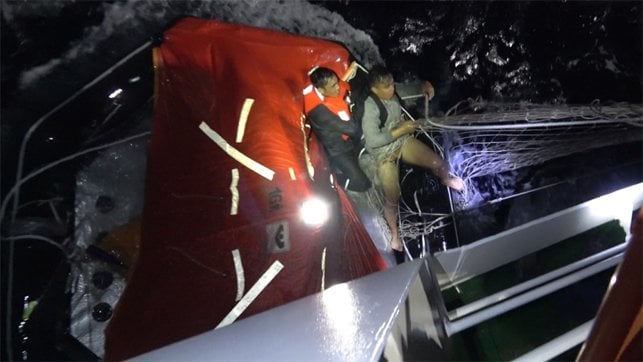
The dry bulk carrier Devon Bay (56,000 dwt) issued a distress call late on January 22, reporting the vessel was listing. No details were released on the nature of the incident, but the Philippine Coast Guard reports that when it received the distress report, the vessel was listing 25 degrees. China reports the vessel capsized, and the pictures show the crew in the life rafts.

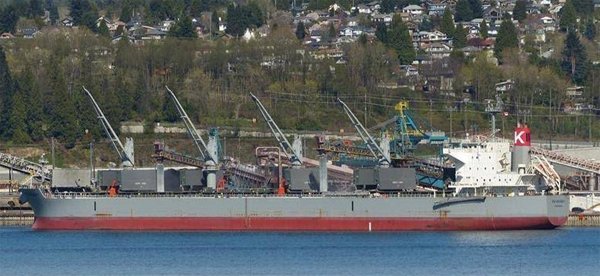
Built in 2013, the Singapore-registered vessel was a standard dry bulk carrier. It was 190 meters (653 feet) with a crew of 21 Filipinos. The ship is owned by a Singapore subsidiary of Japan's "K" Line (Kawasaki Kisen Kaisha).


Devon Bay reportedly capsized according to the Chinese reports (Philippine Coast Guard release)


The Chinese report the vessel’s position as 55 nautical miles northwest of Huangyan Dao (Scarborough Shoal) while the Philippine Coast Guard reported the position as 141 nautical miles west of Sabangan Point, emphasizing the vessel was in the Philippine Exclusive Economic Zone. There is an ongoing dispute over the shoal as China challenges the Philippines for control of the area.

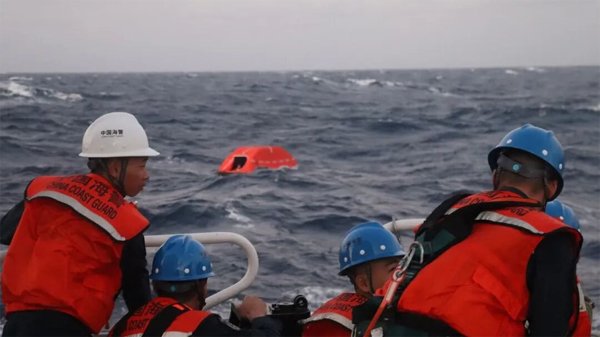
The China Coast Guard reports it dispatched two vessels to conduct the rescue operation. Early reports said it had rescued 10 seafarers later changed to a total of 17, including two who were deceased. It said 14 are in stable condition and one is receiving emergency medical treatment. The Philippine Coast Guard said it was trying to confirm the reports.


Both China and the Philippines said they were conducting the SAR for the missing four crewmembers (China Embassy Manila)


The Philippines highlights that it sent two vessels, BRP Teresa Magbanua and BRP Cape San Agustin, as well as two PCG aircraft, to conduct Search and Rescue (SAR) operations. Chinese officials said they were also continuing the search and rescue operation for the four missing crewmembers of the vessel.

It is unclear what caused the casualty. The vessel was loaded with iron ore according to the Philippine Coast Guard. It had departed Zamboanga, in the Philippines, and was heading for Yangjiang, China. The Philippines is emphasizing that it is a frequently traveled route by ships.

The Maritime and Port Authority of Singapore issued a statement saying that, as the flag state and because the owner is registered in Singapore, it would be leading the investigation. It says it continues to monitor the SAR operation and is in contact with the ship owner.


Op-Ed: Mental Health Care is Safety-Critical, Not an Added Benefit

Seafarers on bridge
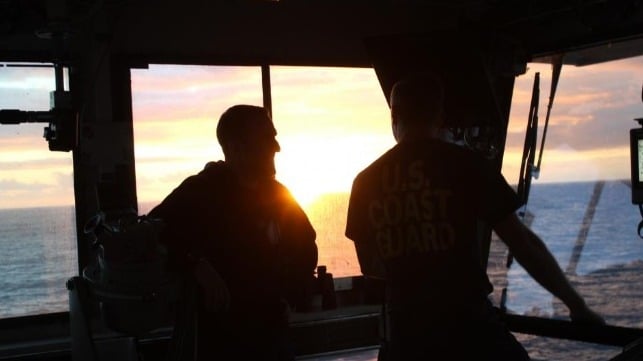
USCG file image

Published Jan 25, 2026 12:50 PM by Charles Watkins


If mental health is not treated as safety-critical, we risk losing a whole generation of seafarers who are not willing to sacrifice their health for a career, regardless of how well-paid it is.

Life at sea can be unforgiving, seafarers face long stretches away from home, shift patterns that disrupt sleep, demanding operational pressures, isolation, harsh weather, and often little privacy.

We are already seeing heightened anxiety in younger seafarers before they have even stepped foot on the ship. Some of this is genuine incidence, some is better recognition and willingness to disclose. Younger seafarers often report performance pressure, financial insecurity, and digital overexposure earlier in their careers.

Mental health is far too often treated as an added benefit for crew, but the industry must view it as safety-critical if we are to make any progress in reducing the number of serious mental health episodes and suicides among seafarers.

When mental health support is not embedded into a company culture, then it is likely more emergency situations will occur. This is when immediate expert intervention is essential to ensure the seafarer’s health is protected. There must be a support plan in place running all the way through from crisis to aftercare, and helping to ensure the crew member is mentally fit to return to work.

This comprehensive plan should involve connecting the seafarer with language-matched psychologists and safety protocols, ship-to-shore coordination, family liaison support when home crises drive onboard distress, and after-action support for crew.

For the industry to see a real impact on mental health, early intervention is key, as well as helping seafarers recognize their own triggers and how to prevent their mental health escalating in times of crisis.

It is a global concern that mental health is not prioritized or resourced well enough to address the issue and ensure sufficient support is in place. We must not forget that being out at sea can be a ticking time bomb for a seafarer suffering a decline in their mental health. They don’t have access to their support system, their freedom is taken away, lack of sleep and rest, and access to ordinary activities to reduce stress is limited. It really is the perfect storm for mental health to decline further where the crew member may end up feeling there is no way out. Therefore, it must be treated as a crucial aspect of a vessel’s safety management systems and should not be compromised.

Along with anxiety, one of the most common triggers for mental health episodes we are currently seeing is sleep and fatigue load. When you have watchkeeping, port rushes, time-zone shifts mixed with health, noise and an overstimulating environment, it results in cognitive strain, irritability and low mood.

Due to the nature of the job, seafarers have long suffered with isolation and family stress issues which are also common triggers. Operational pressure and uncertainty are another trigger. Inspections, tight turnarounds, manning shortages and contract and visa delays all lead to feelings of instability and uncertainty over their how their day-to-day life onboard will look like with no assurance over getting home on time.

Sadly, we are still seeing a high number of bullying and harassment cases and conflicts, as well as seeing 24/7 access to social media and toxic online content, leading to a negative impact on mental health.  

We are certainly making progress in increasing awareness and are seeing more companies place emphasis on crews’ mental health and wellbeing, but awareness alone isn’t enough. Where companies embed protocols, such as clear escalation, language-matched clinicians, fatigue controls, and family liaison, we see earlier help-seeking and fewer high-severity crises. The most progress occurs when mental health is integrated into ISM/SMS and leaders are trained to act on early warning signs.

We must treat mental health as safety critical, build protocols, ensure sleep and fatigue protections, and give crews fast access to clinicians who speak their language. That combination consistently lowers risk and improves outcomes.

Charles Watkins is Director of Clinical Operations, Mental Health Support Solutions, a member of OneCare Group.

The opinions expressed herein are the author's and not necessarily those of The Maritime Executive.

REST IN POWER

Gerry Gable

UK ANTI FASCIST FIGHTER/PUBLISHER


JANUARY 22, 2026

By Andy Bell

The death of Searchlight founder, publisher and sometimes editor Gerry Gable at 88 closes a chapter without which the story of British anti-fascism would look very different. For more than six decades he was a central, often controversial, but indispensable figure in the fight against fascism and the extreme right: an organiser, investigator and strategist who believed that understanding the enemy was the key to defeating it.

That belief found its clearest expression in Searchlight, the magazine to which he devoted much of his adult life. Under his stewardship, it became the most authoritative source of intelligence on Britain’s far right scene, remaining in print for half a century before moving fully online in 2025.

From the start, Gerry was driven by the belief that anti-fascism had to be intelligence-led.

That outlook was shaped early. In the early 1960s, as a young activist, Gerry confronted a far right that was openly neo-Nazi.

Street clashes with groups such as Colin Jordan’s National Socialist Movement were formative, but even more so was his involvement with the semi-clandestine 62 Group, a network of largely Jewish anti-fascist war veterans who brought military discipline and an acute understanding of intelligence work to the struggle against fascism.

These methods bore fruit repeatedly over the years. Intelligence gathered by Gerry and his collaborators helped disrupt violent plots, bring arsonists to justice and expose attempts to stockpile weapons. Informants and infiltrators – some motivated by conscience, others by more mercenary considerations – became a defining feature of Searchlight’s work.

Searchlight was launched by the leadership of the 62 group in 1964, as a short-lived tabloid newspaper. It appeared only four times.

Then, in the early 1970s, the electoral rise of the National Front led to a decision to re-establish it, this time as a magazine. It proved a hugely important decision.

As local anti-fascist groups sprang up, the magazine provided a trusted source of information and analysis about the far right. Its research fed directly into the Anti-Nazi League’s highly effective campaign to isolate and discredit the NF, helping to stem the advance of organised fascism at a critical moment.

Over the decades, that remained Gerry’s mission: to provide to the anti-fascist movement the intelligence and analysis it needed to make the fight against fascism effective.

It was a Searchlight ‘mole’, Ray Hill, who with Gerry managed to destroy two fascist organisations and thwart a plot to bomb the Notting Hill Carnival.

It was Searchlight ‘moles’ (three, no less!) who helped expose the activities and leadership of the proto-terrorist group Combat 18.

And it was a Searchlight mole, ‘Arthur’, who helped identify David Copeland as the London nail bomber.

Throughout, Gerry retained a deep faith in collective action, shaped by his background in the Communist Party, trade unionism and workplace organising. He believed unions were essential bulwarks against the far right, a conviction that remains embedded in Searchlight’s ethos.

His work came at a heavy personal cost. He faced threats, legal harassment and violent attacks, yet remained undeterred. The hostility shown by extremists after his death only underlines the impact he had. The far right in the UK has had markedly less success than its counterparts in Europe is establishing a foothold since the second world war and Gerry’s contribution to that was immeasurable.

Andy Bell was an investigative journalist with World in Action and former deputy editor of Panorama and a former editor of Searchlight. He is co-author with Ray Hill of The Other Face of Terror. He is on Twitter at @andybell2000.

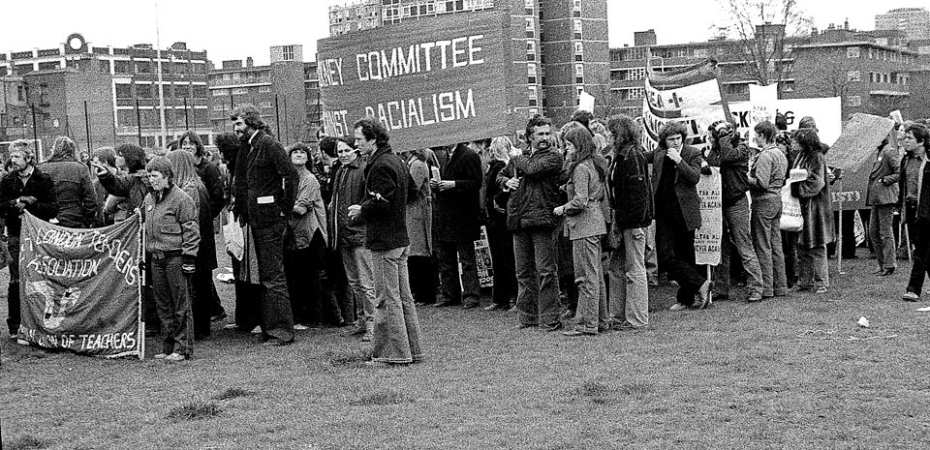
Image: Anti National Front demonstration. Shoreditch Park 1979. https://www.flickr.com/photos/alandenney/2449021440 Author: Alan Denney. Licence: Attribution-NonCommercial-ShareAlike 2.0 Generic CC BY-NC-SA 2.0 Deed

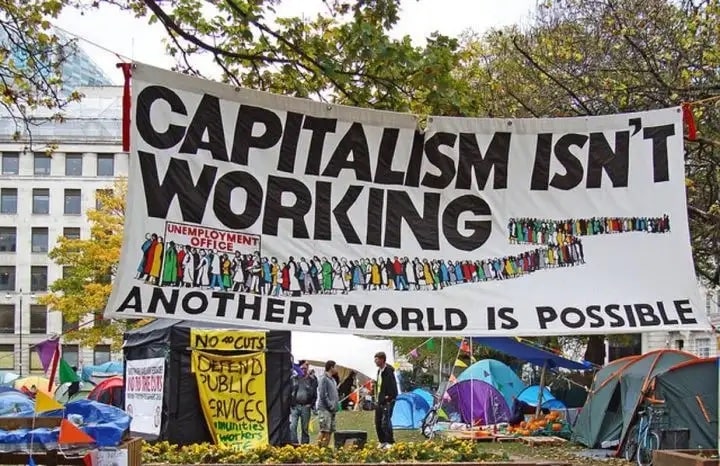
Imagining the End of Capitalism

Source: Foreign Policy In Focus

Ever since the 1990s, when to the longstanding cooptation of the Western working class by social democracy was added the collapse of the Soviet Union and its satellites, the saying has been popular among the chattering classes that “it is easier to imagine the end of the world than the end of capitalism.” As McKenzie Wark has noted, there was this weird consensus among both its partisans and its critics that “Capital is eternal. It goes on forever, and everything is an expression of its essence.”

Lately, however, there have been attempts to meet the challenge of imagining the end of capitalism.

How Will Capitalism End?

One of the early efforts was the 2014 essay titled “How Will Capitalism End?” by Wolfgang Streeck, the eminent former director of the Max Planck Institute for the Study of Societies in Cologne. Taking the bull by the horns, Streeck asserted, “I suggest we think about capitalism coming to an end without assuming responsibility for answering the question of what one proposes to put in its place. It is a Marxist—or better: modernist—prejudice that capitalism as a historical epoch will end only when a new, better society is in sight, and a revolutionary subject ready to implement it for the advancement of mankind.”

Streeck’s angle of approach to the question was quite original, one derived from his familiarity with the work of the great Hungarian sociologist Karl Polanyi. This was that capitalism had been so successful in commodifying everything—or converting not only land and labor but also formerly fenced off areas like knowledge, public infrastructure, and the environment into commodities for market exchange—that it was eliminating the very social, cultural, and political conditions needed for its reproduction. A central assertion was that the demands of profit-making had become so intense that capital was destroying the very basis of sustainable capital accumulation—labor—by pushing down living standards in the center economies while allowing only extremely low wages in the economies of the Global South to which it had fled.

Streeck was one of the first to advance the idea of a “polycrisis,” that is, that owing to capitalism’s ability to erode the traditional brakes put on its ability to transform everything into commodities, crises were breaking out along different dimensions of societal existence, and these crises had a negative synergy, enhancing the impact of one another and thus magnifying their collective impact. These interacting crises were producing what Streeck called the “five disorders”—economic stagnation, oligarchic distribution, the annexation of the public domain to private property, corruption, and global anarchy.

Delinking Accumulation from Social Reproduction

Richard Westra advances a similar argument in his book The Political Economy of Post-Capitalism. Capital accumulation can only take place if the profits extracted in the production process are devoted not only to capitalist consumption and investment but part of it is channeled into wages that enable those that produce surplus value to physically reproduce themselves. He agrees with Streeck that the social conditions for the reproduction of the labor force are disappearing at a global level, as capital flees to the poorer countries to avoid the high wages of workers in the advanced economies while paying the bare minimum to workers in the Global South.

But equally important, Westra asserts, is the fact that the industrial/manufacturing sector where the extraction of surplus value traditionally takes place has become, for all intents and purposes, a secondary part of the economy, one that is increasingly subordinate to the part of the economy that produces not commodities but “intangibles” like patents, databases, and design, where the cost of production is conventionally estimated at or near zero. More and more, profits are derived from the “intangible economy” compared to the tangible economy, and these are channeled not into the productive sector but into speculation, so that those who monopolize information technology that reproduce the intangible assets via patents and copyrights, such as Microsoft, Google, and Facebook, become exponentially richer, contributing to the creation of that steep inequality of income and wealth characteristic of our times.

The much-reduced role in capital accumulation of the traditional industrial/manufacturing sector and the dominant role of the monopolized intangibles sector that makes its profits mainly by controlling knowledge create what Westra has called “capitalists without capitalism,” though he himself expresses some doubt regarding the continuing utility of the term.

Burying Capitalism

For both Westra and Streeck, capitalism is undergoing a terminal crisis, but it is still alive. There are, however, theorists who argue that capitalism is dead, and it’s time for theory to catch up with reality.  For McKenzie Wark, in Capital is Dead: Is This Something Worse?, capitalism has been replaced by a new mode of production marked by control of the “vector.” Information technology is that “vector,” one that cuts through all dimensions of economic and social life, and it is those who control this vector that have supplanted the capitalist class and constituted themselves as the new ruling class. The capital versus labor conflict that was the engine of change in capitalism has been replaced by the struggle between the “hackers” that produce knowledge and the “vectoralist class” that is able to exploit that knowledge through control of patents and command of the logistics of information acquisition and delivery.   According to Wark,

If the capitalist class owns the means of production, the vectoralist class owns the vectors of information. They own the extensive vectors of computation, which traverse space.  They own the extensive vectors of communication, which accelerate time. They own the copyrights, the patents, and the trademarks that capture attention or assign ownership to novel techniques. They own the logistic systems that manage and monitor the disposition and movement of any resource. They own the financial instruments that stand in for the value of every resource and that can be put on the market to crowdsource the possible value of every possible combination of those resources. They own the algorithms that rank and sort and assign particular information in particular circumstances.

Wark says that capitalists were displaced by the vectoralists in what was akin to a bloodless coup. Information technology from the 1970s to the 1990s became an ally of the capitalists in their battle against the powerful labor movement, but upon winning that fight, they themselves were displaced by the vectoralists. The key reason is that the vectoralists were fighting with assets that were different, and this gave them the advantage:

Owning the means of production, labor materialized into capital in the sense of plant and equipment, is a rigid and long-term investment. Owning and controlling the vector, the hack of new information materialized into patents, copyrights, brands, proprietary logistics. It is more abstract, flexible, adaptive.  It is not more rational, but it is more abstract.

The Coming of Technofeudalism

Yanis Varoufakis, the former finance minister of Greece, broadly follows Wark’s line of analysis, and he credits Wark with having greatly influenced him and his new book Technofeudalism.

Like Wark, Varoufakis says we have embarked on a new mode of production. He does not say that capitalists no longer matter. They do, and they still engage in extracting surplus value or profit from workers in the process of production. But they themselves are subordinate to a new elite, the  “cloud capitalists” or “cloudalists,” who have privatized the commons that was cyberspace and now control access to it. The cloudalists, among the most powerful of which are Google, Microsoft, Apple, Amazon, and the chipmaker Nvidia, control the globe-spanning information highways that are sustained materially by massive data centers located in different parts of the world. Accessing these intermeshed networks in cyberspace known as the “cloud” is now vital for the traditional or “terrestrial” capitalists to get access to you to sell their products, and these corporate gatekeepers make their money by charging these capitalists rent. Without access to the net, capitalists cannot make profits, and, very much like the feudal lords of yore who controlled land, the cloudalists’ monopolistic control of the cloud allows them to directly or indirectly collect, from the “vassal capitalists” and anyone who uses the net, “rent,” or income that is not subject to the market competition on which profit depends. It is this reliance of most of the cloudalists on income and wealth derived from charging rent to everyone, not from traditional accumulation of value in the production process, that prompts Varoufakis to give the current mode of production the name “technofeudalism.”

As in “terrestrial capitalism,” it is not the cloudalists that produce value. The real sources of value are what Varoufakis calls the “cloud proles” and the “cloud serfs.” The cloud proles are the service workers at Amazon and other Big Tech facilities who are ununionized, paid meager wages, and in constant threat of being displaced by robots and Artificial Intelligence (AI). But these proles’ labor provides only a fraction of the value extracted by the cloudalists. It is the cloud serfs that create most of that value. Following Wark and Shoshana Zuboff, author of the influential The Age of Surveillance Capitalism, Varoufakis says the cloud serfs are most of us: we provide raw material for the cloud whenever we do a Google search, post a photo on Facebook, or order a book on Amazon, material that is then processed into information that the cloudalists and terrestrial capitalists can use to develop ever more sophisticated marketing strategies to get us to part with our dollars. The distinguishing characteristic of cloud serfs is they are doing unpaid work for the cloudalists even if they don’t realize it. As he remarks, “The fact that we do so voluntarily, happily even, does not detract from the fact that we are unpaid manufacturers—cloud serfs whose daily self-directed toil enriches a tiny band of multibillionaires.”

What is noticeably missing in Varoufakis’s exploited classes are the central producers of value in Wark’s paradigm, the hackers, a category that includes programmers, content providers, and data and logistics managers that produce the wealth of top dogs like Elon Musk, Jeff Bezos, and Mark Zuckerberg. It may be that Varoufakis has not yet decided where to theoretically locate them—whether with the proles and serfs or against them—owing to their ambivalent, volatile politics.

Whether they see the current mode of production as “terminal capitalism” or post-capitalism, all these authors see it as having brought humanity to a situation worse than that under conventional capitalism. For Westra, what makes the current arrangement distinctive in relation to other modes of production, including capitalism, is that for a mode of exploitation to be sustainable, it is necessary for it to provide the means by which the work force that creates the wealth of the ruling class can physically reproduce itself. That link has been broken in the post-capitalist era, with the ruling class preferring to channel its resources to speculative ventures rather than the provision of a living wage, condemning the workforce into deeper and deeper indebtedness in order to survive. “Even authoritarian regimes need to reproduce the material lives of human beings, as a byproduct of their social goal or project,” he notes. Invoking Rosa Luxemburg’s famous saying, he warns that “barbarism and social decomposition is a more real prospect if new socialist forms are not forthcoming.”

AI: From Promise to Threat

In the flush of the advent of information technology in the 1990s, there were those who saw the potential of that technology to bring about that transition from the realm of necessity to the realm of freedom, from prehistory to history, to use the famous words of Marx and Engels. According to Paul Mason, in a piece of writing known as “The Fragment on the Machine” that was part of the voluminous Grundrisse, Marx foresaw a time when, owing to the accelerated development of the forces of production, the main objective of humanity would be the attainment of “freedom from work.” At the dawn of communism, Mason theorized, “liberation would come through leisure time,” or as Marx put it, it would be possible for one “to do one thing today and another tomorrow, to hunt in the morning, fish in the afternoon, rear cattle in the evening, criticize after dinner, just as I have in mind, without ever becoming hunter, fisherman, shepherd, or critic.”

What kept people away from such a society of abundance based on technologies that allegedly reduced the marginal cost of production to zero or near zero was the control of these technologies by the information monopolies, assisted by government and the big banks.

Two decades on, such a rosy view of the potential of information technology to serve as the bridge to communism if only we could end the iron constraints of the “social relations of production” on the “forces of production” has withered. With the coming of AI, such liberation seems further away than ever, since the way information technology develops is determined by the interests of those that control it. Technological development is not class-neutral.

In her powerful expose of Sam Altman and Open AI, Karen Hao provides in Empire of AI a stark warning about the destabilizing impacts of the development of “centralized AI.” There is, of course, the threat of the creation of a “superintelligence” that can go its own way, eluding human control and subverting humanity itself, a fear promoted by sci-fi literature that is shared by key figures in the AI industry. But AI poses more immediate threats. The so-called zero-cost of-production intangible economy is not independent of the tangible economy. It does not float on thin air. Indeed, it entails massive ecological and human costs. Like capitalism and earlier modes of production, it is extractivist in nature, necessitating the accelerated mining of lithium, rare earth, and other minerals, and voracious in its demand for land and water to maintain data centers whose energy consumption contributes to global warming.

There is also the massive human effort needed to check, censor, and annotate data gathered by AI, which is leading the AI giants like Open AI, Google, and Microsoft to hire and exploit hundreds of thousands of workers in developing countries such as Kenya, Venezuela, and the Philippines, workers who are grossly underpaid and are prevented from unionizing owing to the threat of the AI giants to leave and recruit their workers elsewhere in the world.

If one adds to the drive for monopoly profits and the absence of regulation the desire of states to use AI for intensive surveillance of citizens, you end up with a Brave New World, even before the arrival of the superintelligence that will displace us at the top of the food chain and have us for dessert.

Barbarism…or Barbarism?

It is true that Hao speaks, with  guarded optimism, about an alternative path of AI that is based on community control, much like Varoufakis and Wark envision the emergence of cross-class alliances of cloud serfs, cloud proles, hackers, and terrestrial capitalists resisting the information elites and posing the possibility of liberation. Still Westra’s fear of a ruling class that has delinked its interests from that of the survival of the whole society must not be discounted and might, in fact, be more likely. A portrait of such a descent into barbarism instead of leap into communism is provided by a remarkable article by Naomi Klein that appeared in the Guardian:

The startup country contingent is clearly foreseeing a future marked by shocks, scarcity and collapse. Their high-tech private domains are essentially fortressed escape pods, designed for the select few to take advantage of every possible luxury and opportunity for human optimization, giving them and their children an edge in an increasingly barbarous future. To put it bluntly, the most powerful people in the world are preparing for the end of the world, an end they themselves are frenetically accelerating.

Indeed, some of our techno elites are preparing to literally leave the earth. As Klein notes, “Who needs a functioning nation state when outer space—now reportedly Musk’s singular obsession—beckons? For Musk, Mars has become a secular ark, which he claims is key to the survival of human civilization, perhaps via uploaded consciousnesses to an artificial general intelligence.”

Thanks to the writers we have surveyed, it is now easier to imagine the end of capitalism than the end of the world. But whether we regard the system that imprisons us as terminal capitalist, post-capitalist, or techno-feudal, we are more than ever faced with Rosa Luxemburg’s choice of socialism or barbarism. Unfortunately, barbarism, as Klein, Westra, and others warn us, appears to have had a headstart.Email

avatar

Walden Bello is currently the International Adjunct Professor of sociology at the State University of New York at Binghamton and Co-Chairperson of the Bangkok-based research and advocacy institute Focus on the Global South. He is the author or co-author of 25 books, including Counterrevolution: The Global Rise of the Far Right (Nova Scotia: Fernwood, 2019), Paper Dragons: China and the Next Crash (London: Bloomsbury/Zed, 2019), Food Wars (London: Verso, 2009) and Capitalism’s Last Stand? (London: Zed, 2013)


.

Source: Originally published by Z. Feel free to share widely.


As authoritarian politics harden in the United States, familiar channels of resistance are proving dangerously inadequate. Elections are constrained, courts are under siege, and dissent is increasingly met with repression in the streets. In this moment, questions of power — who has it, how it is exercised, and how it can be withdrawn — are no longer abstract. They are immediate and practical.

Labor historian and longtime organizer Jeremy Brecher has spent decades grappling with these questions, and in a recent series of reports, culminating in “Social Strikes: Can General Strikes, Mass Strikes, and People Power Uprisings Provide a Last Defense Against MAGA Tyranny?,” he argues that large-scale noncooperation may be one of the few strategies capable of halting an authoritarian slide.

Table of Contents

Introduction

Chapter 1: How People Power Has Defeated Authoritarian Regimes Around the World
– South Korea: “Our citizens, armed with nothing but conviction . . .”
– Serbia: Otpor
– Philippines: People power
– Puerto Rico: Rickyleaks

Chapter 2: Social Strikes in American History
– Social Strikes, Mass Strikes, and General Strikes
– General “Strikes”
“Imagine the Power of Working People…”

Chapter 3: Social Strikes vs. MAGA Tyranny

Chapter 4: Laying the Groundwork for Social Strikes

Chapter 5: Timelines

Chapter 6: Organization

Chapter 7: Goals

Chapter 8: Tactics

Chapter 9: Endgames

Conclusion: “The power is in our solidarity”

Read or download the full report PDF here.

CREDITS:

Author:
Jeremy Brecher is a co-founder and senior strategic advisor for the Labor Network for Sustainability. He is the author of more than fifteen books on labor and social movements, including Strike! Common Preservation in a Time of Mutual Destruction, and The Green New Deal from Below.

Video production & narration:
Dominick Conidi is a recent graduate from the University of Massachusetts Amherst and is a contributor at ZNetwork.org. He has organized previously with the Sunrise Movement and is a current member of North Jersey DSA.

Publishers:
The mission of the Labor Network for Sustainability is to be a relentless force for urgent, science-based climate action by building a powerful labor-climate movement to secure an ecologically sustainable and economically just future where everyone can make a living on a living planet.

ZNetwork.org is an independent media platform dedicated to advancing vision and strategy for a better world. Since 1977, we’ve produced a series of projects that go beyond critique to explore and organize alternatives, including: ZMagazine, Z Media Institute, ZNetwork.org, & the AllofUSDirectory.org.Email

avatar

Jeremy Brecher is a historian, author, and co-founder of the Labor Network for Sustainability. He has been active in peace, labor, environmental, and other social movements for more than half a century. Brecher is the author of more than a dozen books on labor and social movements, including Strike! and Global Village or Global Pillage and the winner of five regional Emmy awards for his documentary movie work.